RSS

Monthly Archives: June 2018

Was Anne Frank betrayed by a Jewish collaborator?

With her ‘satanic hunting instinct,’ the notorious Anna ‘Ans’ van Dijk is fingered to have tipped off Nazis about the Jews hidden in the ‘Secret Annex,’ leading to their murders

Anne Frank may have been betrayed by the infamous Nazi collaborator Anna “Ans” van Dijk, a Jewish woman who agreed to help capture other Jews in hiding in exchange for her freedom.

In his new book, “The Backyard of the Secret Annex,” author Gerard Kremer claims that van Dijk was responsible for betraying Anne and seven other Jews in hiding behind an Amsterdam office building. According to Kremer, his late father — also named Gerard Kremer — occasionally spotted van Dijk during her visits to a Nazi office building where Kremer worked during the war. There, she supposedly met with handlers and made phone calls.

The book’s major claim is that Kremer, who died in 1978, overheard van Dijk speaking about Jews who were in hiding on the Prinsengracht, the canal where Anne’s so-called “Secret Annex” was located. The conversation allegedly took place at the beginning of August, just days before the Nazis raided the annex on August 4, 1944.

Of the eight Jews in hiding, only Otto Frank survived the Holocaust.

This is not the first time van Dijk has been named as a suspect in the betrayal of Anne Frank. As the only woman executed by Dutch authorities for collaborating with the Nazis, her name has been associated with the diarist’s arrest for decades.

In the 1960s, when Dutch police conducted an investigation into the arrest of Anne and the other Jews, it was noted that van Dijk had betrayed two Jews who were in hiding close to the “Secret Annex.” Reportedly, her tip-off was received just a day or two before the Nazis arrested the eight Jews hidden behind Otto Frank’s office building.

The ‘Secret Annex’ in which Anne Frank wrote her diary, Amsterdam, January 2017
(Matt Lebovic/The Times of Israel)

It is possible van Dijk tapped into a network of people that led her to the Prinsengracht 263. In her book, “The Hidden Life of Otto Frank,” author Carol Ann Lee pointed out that van Dijk’s “handler” — the Dutch Nazi Peter Schaap — was responsible for the arrest of Hendrik van Hoeve, who had covertly supplied the annex with groceries.

‘The simple Jewish lesbian’

Born to Jewish parents, Ans van Dijk married a man named Bram Querido in 1927. The partnership lasted for eight years, at which point van Dijk set up shop with a woman named Miep Stodel.

Before the war, van Dijk opened a hat store in Amsterdam — called Maison Evany — in which she employed Stodel. The couple shared an apartment above the shop. Van Dijk remained under-the-radar until 1941, when her business was closed as part of the Nazi occupiers’ anti-Jewish laws. Shortly afterwards, her lover fled to Switzerland.

As the Nazis started to deport Jews from the city, van Dijk initially helped the resistance by supplying her fellow Jews with hiding places, identity papers, and necessities. In the process of making these connections, she went into hiding herself. On Easter in 1943, however, she was betrayed and arrested along with other Jews.
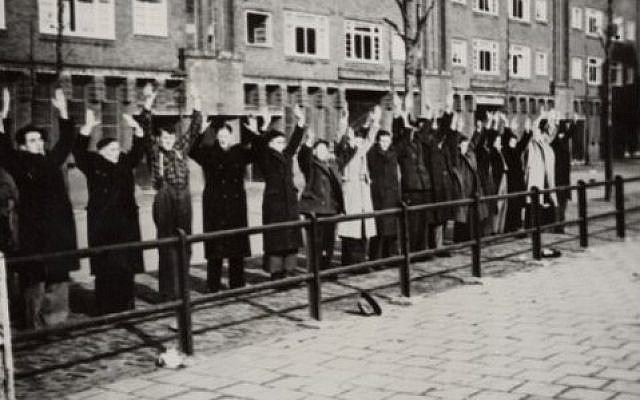
A Nazi round-up of Jews — a ‘razia’ — during the German occupation of Amsterdam
(public domain)

Fortuitously for her own survival, van Dijk was captured by Nazi security police detective Peter Schaap, a man who is said to have recognized something in van Dijk’s demeanor. Schaap offered her freedom in exchange for her help in capturing other Jews in hiding. Van Dijk accepted the offer, which in addition to sparing her life, included cash incentives.

“[She] was the best of the 10 who worked for me at the time,” said Schaap of van Dijk after the war. During her first weeks on the job, van Dijk betrayed nine Jews, including her own brother, his wife, and their three children.
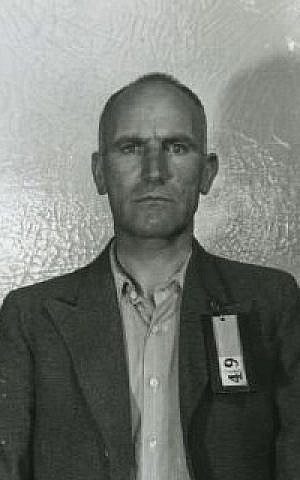
Nazi security police detective Peter Schaap, a ‘handler’ of people who hunted for Jews in Nazi-occupied Amsterdam (public domain)

Going by a fake name, the cunning van Dijk convinced dozens of Jews that she sought to help them. Instead, she betrayed their hiding places to Schaap, who in turn had the Jews arrested. Among her strategies, van Dijk maintained a “trap house” close to Anne Frank’s childhood home in the River Quarter, for the purpose of ensnaring unsuspecting Jews.

By the end of the war, more than 100,000 Dutch Jews had been deported to Nazi death camps and  murdered.

Within a couple of months of making her arrangement with Schaap, van Dijk found herself at the head of a group of women who were hunting Jews. According to historian Koos Groen, this promotion had a profound impact on the Nazi collaborator.

“[Van Dijk] was in any case of more than mediocre intelligence but also suffered from a lack of self-confidence,” wrote Groen. “She compensated for this by wanting to be ‘the best in the class.’ …Schaap complimented her again and again. That felt pleasant for a woman who was rarely or never praised in her life. It must have given her a sense of power, a feeling that the simple Jewish lesbian had never known before,” wrote Groen.

‘A satanic hunting instint’

After the war, van Dijk moved to The Hague, where she was arrested at a girlfriend’s home on June 20, 1945. Charged with 23 counts of treason, van Dijk appeared before a special court in Amsterdam and confessed to all the counts against her.

During her trial, van Dijk admitted to helping the Nazis capture at least 145 Jews, including her relatives. According to some estimates, she and the “hunters” she managed were responsible for the capture of as many as 700 Jews. The prosecutor famously accused van Dijk of having “a satanic hunting instinct,” and an ex-lover referred to her as “a devil in human form.”

Ans van Dijk on trial in Amsterdam for collaborating with the Nazis (public domain)

In her defense, van Dijk told the special court she had acted out of self-preservation and “wild fear.” Despite her pleas, the collaborator was sentenced to death. She filed appeals with the court and the Queen, both of which were denied.

On January 14, 1948, van Dijk was executed by a firing squad of 12 in Amsterdam. The day before, she had been baptized and joined the Roman Catholic Church in a final, desperate attempt to save her life. The 42 year old was given an anonymous burial.

According to Groen, discrimination was at play when Dutch officials chose to execute the Jewish van Dijk, as opposed to other people — including women — who had committed similar crimes and were let off the hook with light jail sentences.

“People were naturally bombarded with anti-Semitic propaganda for five years,” wrote Groen. “Second, [van Dijk] was a lesbian. That was totally unspeakable at that time. That ‘abnormal’ relationship was found dirty and placed her on the margins of society,” wrote Groen, who added that van Dijk’s homely appearance did not help her cause.

According to Groen, “No matter how crazy it may sound: [van Dijk’s] behavior gave her security by the certainty that as long as she was useful to Schaap, she . . . had a real chance of survival.

“Naturally it was not about a luxury life, but about survival. Because man is the only animal that knows that he will die,” wrote Groen.
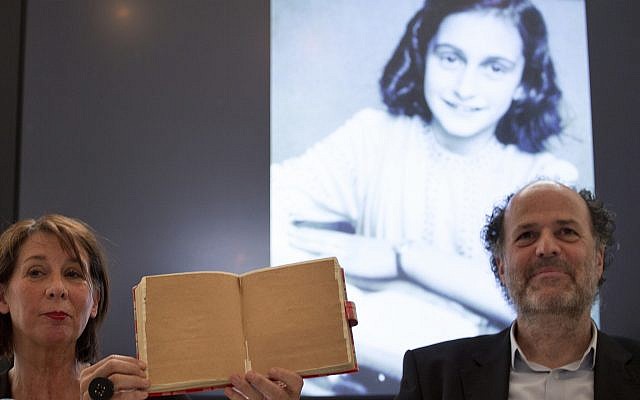
Teresien da Silva, left, and Ronald Leopold of the Anne Frank Foundation show a facsimile
of Anne Frank’s diary with two pages taped off during a press conference at the foundation’s
office in Amsterdam, Netherlands, Tuesday, May 15, 2018. (AP Photo/Peter Dejong)

For biographer Carol Ann Lee, the resurfacing of Ans van Dijk as a suspect in the betrayal of Anne Frank is not surprising. In the author’s assessment, however, a more likely suspect is Tony Ahlers, a shadowy figure who blackmailed Otto Frank for years.

“I’m very much looking forward to Vince Pankoke’s findings on the subject,” Lee told The Times of Israel, referring to a high-profile investigation being conducted into the Nazis’ raid on the annex. Led by former FBI agent Pankoke and no fewer than 19 forensics experts, the inquiry’s findings will be released on August 4, 2019 — the 75th anniversary of Anne Frank’s arrest.

“What I find most interesting of all is the fact that we are still discussing and researching the identity of the betrayer after so many theories have already been put forward,” said Lee.

“I think, more than anything, that shows how important Anne’s diary has been and continues to be for all of us,” said the biographer. “It does indicate too that people are keen to see justice is done insofar as it can be now — even if simply by putting a name to the person who committed such an unimaginably terrible act,” said Lee.
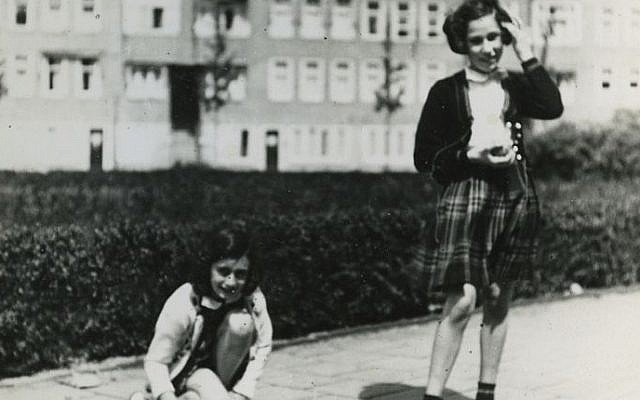
Anne Frank (L) plays with her friend Hanneli Goslar (R) on the Merwedeplein square in
Amsterdam, May 1941. (AP Photo/Anne Frank House Amsterdam/Anne Frank Fonds Basel photo collections)
 
Leave a comment

Posted by on June 3, 2018 in Uncategorized


This is why Israel must fight

This morning, browsing the news as I began another day of the Ramadan fasts, I read that the yard of an Israeli kindergarten had been hit by a mortar near the Gaza border. Frozen, the only thing I could think as my heart started to race was, “My babies.”

I have no biological children, yet I hold 30 children in my heart. This past winter, I visited a kindergarten in Sderot. The children there spoke no English. I spoke no Hebrew. A few spoke Russian. But the language of laughter knows no borders. When a child climbs on your back and rides you around the room like a horsey, you do not forget that child.

It was not their kindergarten that was struck, but it could have been. There were no casualties, but there could have been. Hamas did not succeed in murdering Jews this time, but they will try again. This is why Israel must fight.

Innocent people, whether Israeli or Palestinian, do not deserve to be killed. Every innocent life lost is a tragedy. I wept in fear for both populations the night before May 14 riots. So when I heard people saying, “Israel killed 62 Palestinians, before any Jews were even killed,” my jaw dropped. Can these people really think that Israel should wait until the border is breached and Jews are slaughtered before they act? How can they demand that the children in communities along the border are left in danger? How much Jewish blood spilled would suffice?

Make no mistake — those who rushed the border fence had one goal in mind, to end Jewish lives. The firebombs attached to swastika kites flown over the border were clear in their message. The guns, the rocks, the knives, the burning tires obscuring protesters’ visibility from the IDF with thick smoke were not just there for fun. According to the Washington Post, some protesters “talked about their enthusiasm to break into Israel and wreak havoc. [One said,] “We are excited to storm and get inside… [and do w]hatever is possible, to kill, throw stones.” Two other young men carried large knives and said they wanted to kill Jews on the other side of the fence.”

Israelis have the right to defend themselves and their families from those who openly declare their intent to murder them. They have the duty to do so. To insist that defending Jewish life is not permissible until some lives have already been lost is heinous.

Hamas has acknowledged that 50 of the 62 were their own terrorists. The Palestinians have removed the eight-month-old baby plastered across the front page of The New York Times from the list of riot-related casualties, as investigations continue into her illness. That leaves 11 deaths which may have been unnecessary, and if that is the case, each death is tragic. But Israel cannot be expected to wait until 11 or more Israelis are killed in order to stop 50 terrorists attempting to breach the border. My babies in Sderot should not have to be in constant danger from terrorist infiltration, mortars, rockets, and firebombs.

Israeli kindergarteners pose for a picture with college students on the Zionist Organization of America’s Student Leadership Mission to Israel, January 2018. Photo credit: Liora Levich

It is estimated that 75 percent of children in Sderot exhibit PTSD symptoms. These children have known nothing but impending doom. Running around on the playground turns into 15 seconds to run to a bomb shelter at the sound of an alarm. Yet, they laugh. They play. They smile and sing songs about diversity and world peace. They are still children. They should not be forced to grow up too quickly.

A child in Sderot asked me in Russian, “Where is your hair? Show me your hair!” He thought it was a game. “Pokazhi! Pokazhi!” he said, smiling and pulling on my hijab. He had never seen a Muslim woman before. A few decades ago, before the second intifada, plenty of Muslims could be seen shopping in Sderot. Terrorism and war has taken that away. Hamas has taken this from Gazans. Hamas sends its people, its children, to be killed for cheap propaganda. Hamas steals millions of dollars meant for aid and uses it to build terror tunnels. Hamas steals childhood innocence from both sides. Little Israeli Dovid and little Palestinian Muhammad will never get a chance to play together. They will grow up mere miles away from each other, yet in different worlds. And Allah forbid, if little Dovid and little Muhammad are taken from this earth by war, the world will only mourn one, and question why more little Dovids weren’t taken first.

It shouldn’t have to be this way.

As taken from, http://blogs.timesofisrael.com/this-is-why-israel-must-fight/

 
Leave a comment

Posted by on June 3, 2018 in Uncategorized


You’ve probably never heard of the world’s oldest Holocaust museum

Founded in 1933, London’s Wiener Library actively collected material in real time throughout WWII, later playing a key role in the Nuremberg, Eichmann and Irving trials

Established in 1933 by Alfred Wiener, a German Jew decorated with the Iron Cross in World War I, the Wiener Library in London is the world's oldest Holocaust museum. (Courtesy)

Established in 1933 by Alfred Wiener, a German Jew decorated with the Iron Cross in World War I,
the Wiener Library in London is the world’s oldest Holocaust museum. (Courtesy)

LONDON — It is a collection as extensive as its contents are horrifying. Step behind the imposing Georgian façade which houses the Wiener Library in central London’s picturesque, tree-lined Russell Square, and one enters the world’s oldest Holocaust museum.

Eighty-five years ago this year, Alfred Wiener, a German Jew decorated with the Iron Cross in World War I, fled his homeland and established the Jewish Central Information Office in Amsterdam. Its purpose was to alert the world of the dangers posed by Germany’s new rulers.

Wiener’s decision may have been prompted by the Nazis’ recent accession to power. But he had been aware, and trying to warn his fellow countrymen of, the growing menace posed by the German far right for almost the entire period of the Weimar republic.

Indeed, soon after completing his military service in 1918, Wiener published a pamphlet, “Before Pogroms?”, which presciently argued that, if left unchecked, right-wing anti-Semitism would lead to “bestial murders and violence” and the “blood of citizens running on the pavements.”

For more than a decade, Wiener, who worked for a Jewish civil rights group, regularly repeated his warning that anti-Semitism would destroy not just the Jews in Germany, but Germany itself. To inform and document his work, Wiener collected pamphlets, books, leaflets, newspapers and posters, charting the Nazis’ rise and their hatred of Jews.

It is the fact that the library is so deeply rooted in its history and subject matter which makes it so unique.

“Alfred Wiener was able to collect the kind of things that, if you were starting a museum today, you probably wouldn’t be able to find,” believes the library’s director, Ben Barkow.

Wiener Library director, Ben Barkow. (Mike Stone)

In the late summer of 1939 Wiener departed Amsterdam for Britain, where on the ill-fated date of September 1, 1939, he reopened the Jewish Central Information Office in London’s Marylebone, as Germany invaded Poland.

Scrambling to better inform themselves about the leaders, military commanders and institutions of the country with which Britain was now at war, the BBC and government departments such as the Ministry of Information paid Wiener to access the resources of what they began to informally call “the library.”

A fortnightly publication — The Nazis At War — was produced. It constituted what Barkow describes in “Alfred Wiener and the Making of the Holocaust Library” as “a fascinating commentary on the political developments of the war … [providing] the British government and the Wiener Library’s other clients with source materials for anti-Nazi propaganda.”

Today, the library has grown to house some 80,000 volumes, numerous periodicals, photographs and AV materials, and a 2,000-strong archival collection; each of those 2,000 items, moreover, may range from a slim folder to 100 boxes of material.

Among them are oral and written histories by survivors — many of them recorded by the library’s staff and volunteers in the early post-war years — together with their papers and photographs.

While the library’s focus remains primarily on the Holocaust, its causes and consequences, over the last decade it has also began to expand its work to collect materials on the wider question of genocide and to examine the relationship between it and the Jewish Shoah.

Alfred Wiener in the library. (Courtesy)

Examples of the library’s grim exhibits abound. In a brightly colored board game, players compete to arrest Jews and make a town judenrein (free of Jews). Manufactured commercially in the mid-1930s and targeted at families, the SS objected to the game on the basis that it trivialized the serious business of freeing Germany of the Jews’ pernicious grip. No such objections are, however, recorded to a book which allows children to cut out and color uniforms worn by members of the Hitler Youth.

Some of the items leave tantalizingly unanswered questions. An English-language copy of “Mein Kampf” published in 1939 has a picture pasted into it of a relaxed-looking Hitler. The Fuhrer’s signature lies below the snapshot, together with an all-too-brief note of explanation by the book’s owner, a woman identified only as Karen, who is also visible in the picture: “Our visit to Berchtesgarden when AH came into the village, shook hands with tourists, signed standing up in pencil just before our evacuation.”

Others — such as the library’s copies of “The Volunteer,” an SS-veterans monthly magazine which began publication in 1956 and only recently ceased to appear — leave a peculiar chill. Its pages may be glossy and appear contemporary, but they reek of a putrid nostalgia, containing advertisements placed by subscribers looking to reunite with, or honor the passing, of old comrades.

A new chapter

A move from a cramped space on Devonshire Street — its second home in London — to its present premises in 2011 has given the library a new lease of life. Between 8,000 to 10,000 people now visit each year, including students, academics and people in the arts — film makers, authors, playwrights and people staging productions who are looking for visual references. Visitors, who need no appointment to use the library’s facilities, can work in the light-filled reading room.

A large ground-level space is used to host talks and exhibitions, many of which then travel around the country, often visiting schools and campuses.

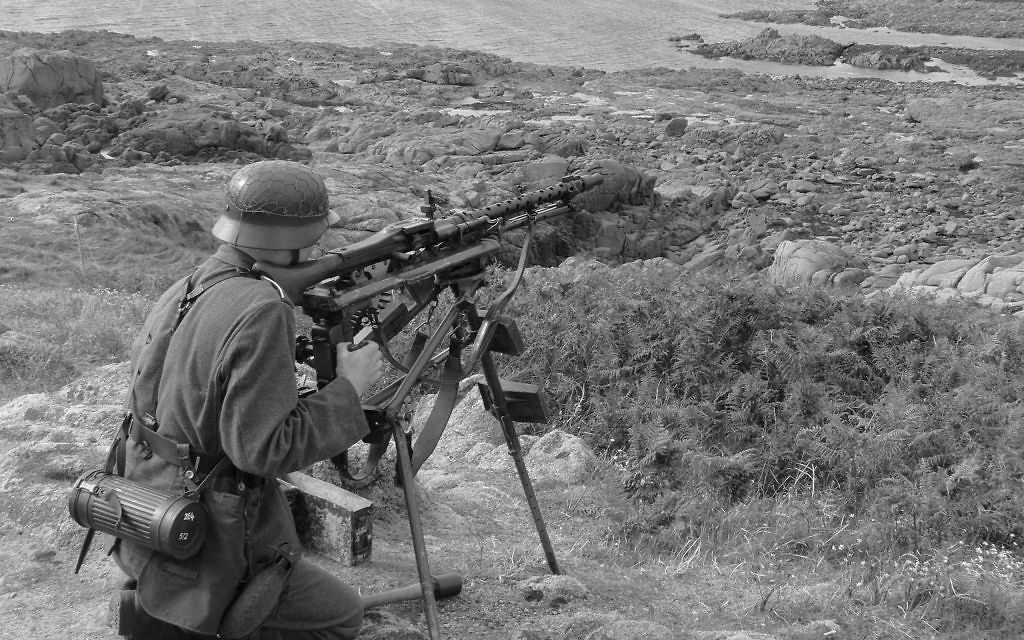
A German soldier guarding the Atlantic Wall in the Channel Islands during WWII. (Getty images/iStock)

No topic is too big, small or controversial to tackle. Earlier this year, the uncomfortable (and for many Britons unknown) story of the German occupation of the Channel Islands, and the consequent persecution and murder of Jews on British soil, was examined.

It followed previous exhibitions on Britain’s approach to the Jewish refugee crisis in the 1930s and 1940s and the country’s responses to the Holocaust, which touched on difficult questions such as the extent of anti-Semitism within British society, information about the Holocaust in the press, and the stance of the British government to the unfolding violence against Jews in Europe.

The library is also popular with family historians and those wishing to explore their own relationship to the Holocaust. Since 2014, the library has housed Britain’s copy of the Red Cross’ International Tracing Service. Every year, several hundred people — the occasional survivor, survivors’ families and relatives of refugees — now use the huge resource.

Barkow, who has worked at the library for 30 years, believes that “interest and curiosity” is stronger among the grandchildren of survivors and refugees than their children. He has also detected what he believes to be a less welcome trend in the manner in which this history is working its way through the generations.

Illustrative: A picture taken on January 24, 2013 shows shelves with boxes of index cards
keeping a record of German soldiers who died or went missing in war, in an archive room
at the German Red Cross Tracing Service offices in Munich. (AFP PHOTO / dpa / Victoria BONN-MEUSER)

“In my early days, when there were plenty of survivors and refugees about, they always spoke in terms of a willingness to forgive these events but never forget them,” he says. “Now that they’ve just about all gone, the younger people — their grandchildren — are often much more uncompromising and angry about these events and you hear a language of wanting revenge that was almost inconceivable in their grandparents.”

First-hand accounts of horrors

Wiener himself might not have appreciated this shift. He knew first hand the horrors that had befallen European Jews. While he spent much of the war in the United States collecting materials for the JCIO, his family were trapped in Amsterdam.

His daughters survived Bergen-Belsen but his wife, Margarethe, died of exhaustion and malnutrition hours after being liberated. Nonetheless, during the 1950s he traveled frequently to Germany, reaching out in particular to Christians and young people. The latter, he told the library’s bulletin in 1958, “seem willing to learn the lesson of the past, and they have decided, once and for all, to wash their hands of the terror of totalitarian reaction.”

During this period, and for much of the next three decades, the library’s very survival seemed at stake. After Germany’s defeat, funding began to dry up and the library led a hand-to-mouth existence. Complex, protracted proposals to incorporate it into the Hebrew University in Jerusalem and Yad Vashem were explored and abandoned.

Yad Vashem, ‘a hand and a name,’ was established in 1953 to commemorate the victims
of the Holocaust and recognize non-Jews who helped Jews survive the war. (Shmuel Bar-Am)

Long after Wiener’s death in 1964, a deal was struck with Tel Aviv University. In 1980, a swath of the collection was shipped there, but, at the 11th hour, money was raised in Germany and the US to microfilm what was being sent to Israel.

The existence, survival and struggles of the library were a testament to, and reflection of, Wiener’s personality. As Barkow describes in his book, its founder was both a charismatic “natural diplomat” — good at persuading people and winning them over to his project — and a secretive man with an authoritarian streak.

But what is undeniable is the critical role played by the library in adding to, and helping to shape, early post-war thinking about, and studies of, Nazi ideology, anti-Semitism and the Holocaust.

Gerald Reitlinger’s classic 1953 study of the Holocaust, “The Final Solution,” was, for instance, mainly researched at the library. It also supported Lionel Kochan’s 1957 book, “Pogrom: November 10 1938,” the first detailed analysis of Kristallnacht.

In later years, the library’s reputation was such that it was able to attract scholars of the caliber of Robert Wistrich, and directors Walter Laqueur and David Cesarani, to work there.

Crucially, the library also began to assemble and publish eyewitness accounts of the Nazis’ war on the Jews almost as soon as Hitler was dead.

Established in 1833 by Alfred Wiener, a German Jew decorated with the Iron Cross in World
War I, the Wiener Library in London is the world’s oldest Holocaust museum. (Courtesy)

From the mid-1950s, this work became more systematic and was regarded by the library as “a safeguard against any future attempts to falsify the events of those years.” It was, argues Barkow, “a remarkable instance of the foresight of the library. In the 1950s the phenomenon of so-called revisionism or Holocaust denial was little known, yet from the 1960s on it became an important issue.”

Making the history it records

But the library has not just related and recorded history, it has also helped to make it.

It provided documentation to the prosecutors at Nuremberg that was available nowhere else.

“The help [the library] has given has been invaluable in the preparation of charges against the leaders of Nazi Germany,” suggested the Belgian commissioner of the UN War Crimes Commission after the conclusion of the trials. A large proportion of the materials generated at Nuremberg were then deposited at the library.

Nearly 15 years later, it performed the same function at the trial of Adolf Eichmann. As well as providing background materials to the prosecutors in Jerusalem, the head of Israeli police, Chief Superintendent Abraham Selinger, visited the library shortly after Eichmann’s capture. The library’s assistant director, Caesar Aronsfeld, became its point man for the trial, helping Selinger gather the evidence to link the Nazi war criminal to specific crimes.

Holocaust denying writer and historian David Irving (AP/Alik Keplicz/File)

At the turn of the century, the library figured in another courtroom case, this time one played out in London, when the Holocaust-denying historian David Irving sued American author Deborah Lipstadt for claiming that Irving had deliberately distorted evidence. The library was the main source used by the researchers who authored Lipstadt’s expert report — an 800-page analysis of Irving’s writing and speeches which helped demolish his case.

Irving’s defeat – the judge’s excoriating verdict branded him an “active Holocaust denier … anti-Semitic and racist” – appeared to strike a deadly blow to those who seek to question the truth of the Shoah. Sadly, this provided a false dawn.

In its own modest way, the Wiener Library helps to continue the fight.

“Above all,” argues Barkow, “we hold this material. Anybody can come in and look at this and make their own mind up. The evidence is here. If other people are saying: ‘This didn’t happen’ or ‘It wasn’t nearly that bad,’ you can come here and you can check it out for yourself and you can learn the truth.

As taken from,  https://www.timesofisrael.com/youve-probably-never-heard-of-the-worlds-oldest-holocaust-museum/

 
Leave a comment

Posted by on June 3, 2018 in Uncategorized


The Jewish Vatican

June 2, 2018, 11:00 pm

Never before in Jewish history has there been a chief rabbinate that has sought to impose its views upon the entire Jewish world.

The position of chief rabbi was created in medieval Europe largely for secular purposes, such as collecting taxes and compiling statistics, and in order to provide an intermediary between the government and the Jewish community. During the period of the British Mandate of Palestine, the High Commissioner established the Chief Rabbinate as the religious authority for the Jewish community.

Israel’s Chief Rabbinate is a particularly problematic institution. First of all, there is not one chief rabbi but two — one for the Sephardim and one for the Ashkenazim! Its incumbents are not chosen on the basis of their knowledge or piety, but rather as a result of political wheeling and dealing. It is not by chance that the current holders of the office are the children of their predecessors.

One former chief rabbi was charged with bribery, money laundering and income tax violations, while another was accused of corruption in financial matters and of sexual harassment.

Yet, in spite of its shady history, Israel’s Chief Rabbinate has pretensions of being a Jewish Vatican. It has just released its proposed criteria for the recognition of rabbinical courts around the world for the purposes of conversions to Judaism and divorce.

Venice’s chief rabbi protested in the Knesset last week against the Israeli Rabbinate’s refusal to recognize his Orthodox rabbinical court and converts.

Some 160 rabbis, including several prominent American Orthodox leaders, appear on a list of rabbis whom Israel’s ultra-Orthodox-dominated Chief Rabbinate does not trust to confirm the Jewish identities of immigrants.

The Jewish world has always consisted of diverse streams with variant views as to how Judaism should be interpreted. There were the Sadducees, the Pharisees and the Essenes in the period of the 2nd Temple. There were the Karaites in the Geonic period, while Maimonides was accused by his opponents of misleading Jews into heterodoxy and placing the integrity of the community in danger.

The Vilna Gaon launched a systematic campaign against Hasidism and denounced the movement. Accusations of espionage were made by his opponents against Chabad’s founder and first rebbe, Shneur Zalman of Liadi, as a result of which he was jailed by the Russian government.

History shows that pluralism was always an integral part of Judaism and that the religious establishment never failed to do everything in its power to subdue opposition.

Prior to modern times the principle that operated in the Jewish world was marra d’atra marra, or recognition of the local religious authority. However, what we are witnessing today in our global village is a power grab.

Israel’s Chief Rabbinate is using the political power at its disposal to discredit many of the legitimate religious leaders of Diaspora Jewry by questioning their authority, thereby driving a further wedge between the State of Israel and world Jewry.

We cannot claim to be one people while at the same time alienating Jews who do not conform to the values and standards of a Haredi Chief Rabbinate. World Jewry is not going to allow Israel’s chief rabbis to disenfranchise them; nor will they submit to the demand that they pledge allegiance to a Jewish Vatican.

What will transpire, as is already happening in Israel, is that there will be a growing disconnect between the Israeli Chief Rabbinate and Jews throughout the world. Jews are voting with their feet.

As taken from, http://blogs.timesofisrael.com/the-jewish-vatican/

 
Leave a comment

Posted by on June 3, 2018 in Uncategorized


What would Jews say Jesus would say?

June 3, 2018.

In the mid-20th century, the great American Jewish theologian Abraham Joshua Heschel credibly wrote “Judaism today is the least known religion.” But recent decades have seen Christians making impressive efforts to fill in the knowledge gap. For many years, I have had the privilege of teaching groups of Christians who come to Jerusalem from throughout the world. Many of them are priests, pastors and nuns on sabbatical; some are lay people. They come from anywhere from a week to a year and my involvement varies, depending on the length and depth of the program. The programs are held at Christian institutions in and around Jerusalem.

I teach them about Judaism and about Israel. I give introductions to the Christians who visit our synagogue on Friday nights for prayers, and we sometimes also provide them with home hospitality for Shabbat dinners. It is fascinating to note what questions they ask. In one case, a young woman was surprised that our sanctuary was not decorated with pictures of Moses. Once, I told a group of seminarians that they were imposing Christian questions on Judaism; what interested them almost exclusively were concepts of Messiah, the afterlife, the resurrection of the dead and so on, things that most Jews rarely discuss. We Jews actually devote an inordinate amount of time to discussions about food.

The questions I encounter do not seem to vary much between Protestants and Catholics; but they do vary a great deal between Western Christians, who generally know some Jews, as friends, neighbors or colleagues, and those Asian or African Christians for whom I may be the first Jew they have ever met. I have been asked “Are Jews still offering animal sacrifices?” I doubt that any North American or British Christian would ask that; Africans sometimes do. When the only Jews you know are the ones in the Old Testament, it is a legitimate question. For a teacher, it’s a wonderful opportunity to teach about how Jewish practice and Jewish life changed after the destruction of the Temple.

One of my students, an Australian Catholic, asked about what he called a “strange tension” within Judaism. Almost immediately, he changed his definition to “a dance” between two poles. One pole, according to his words: You Jews always want “to get it right;” to serve God in the most “correct” way possible. It’s important to you, for example, what the correct dimensions of the Sukkah should be, when it is Kosher and when it is unacceptable, and so on. But, he continued, you also play with Judaism, you laugh, you enjoy.

He was evidently pondering our study of how the Midrash sometimes tells us: “Don’t read the text this way, read it that way.” For example, when Isaiah (54:13) says, “All your children shall be learned of the Lord, and great shall be the peace of your children,” the Midrash comments: “don’t read banayich, ‘your children’ but rather, bonayich,‘ your builders.’” (Masekhet B’rakhot 64a.) I don’t know if this Australian was fully aware of what we do on Purim or on Simhat Torah. To the best of my knowledge, there is no other religious culture in the world in which this kind of innocent tomfoolery, without orgies — known as Purim-Torah or a Purim-Spiel — is part of the religion itself. We serve God by poking innocent fun at His Torah. We dance with it, we have fun with it. Purim-Torah mocks our sacred prayers and Scriptures; the classical Purim-Spiel may mock Biblical stories. (The Spiel in my Jerusalem community, Kehillat Yedidya, usually just makes fun of ourselves).

I also take some Christian groups to visit Yad Vashem. Although I am by no means a scholar of the Shoah, I believe I have developed an understanding of how Christians experience Yad Vashem. On only one occasion did I hear “I have Holocaust fatigue.” Most of the Christians feel a deep sense of responsibility and sometimes even guilt. They immediately apply these feelings to contemporary situations in their own countries.

One of the problems with Yad Vashem is that the historical museum stresses the long history of Christian anti-Semitism as the background for the rise of modern anti-Semitism and the Holocaust. But then at no point does it mention any of the significant changes that have occurred within the Church over the last 50 years.

Another topic about which I teach is the Jewish-Christian relationship itself, the dialogue. As Christians are learning more about Judaism, I think that Jews have to become much more knowledgeable about Christianity, including some familiarity with the New Testament. I have often thought it strange that Jews, who are very quick to claim athletes, politicians and movie stars, not to mention Nobel laureates, as Jews — we sometimes play a kind of game, “Did you know that so-and-so is Jewish?” — generally ignore the most famous and arguably the most important Jew who ever lived, Jesus of Nazareth.

Some of my colleagues say that Judaism is the religion of Jesus while Christianity is the religion about Jesus. Yet the Muslims, too, consider him a prophet. In other words, he has affected more than half of humanity. The Hebrew Bible, or what Christians call the Old Testament, lies at the heart of Western civilization, largely because of the Christians, not so much us. Jews and Christians will never see Jesus in the same way; that is one of the most important differences between us. Yet I do think that more Jews should recognize Jesus as a great Jewish teacher and spiritual personality. (Emphasis mine)

Dr. Debbie Weissman is a retired Jewish educator. She served for two terms as President of the International Council of Christians and Jews and has written “Memoirs of a Hopeful Pessimist: A Life of Activism through Dialogue,” published by Urim\K’tav. She lives in Jerusalem, where she has resided since 1972.

As taken from, http://blogs.timesofisrael.com/what-would-jews-say-jesus-would-say/

 
Leave a comment

Posted by on June 3, 2018 in Uncategorized


¿Por qué romper el silencio?

En la nación judía siempre ha habido muchos valientes dispuestos a denunciar las distorsiones sociales y las injusticias

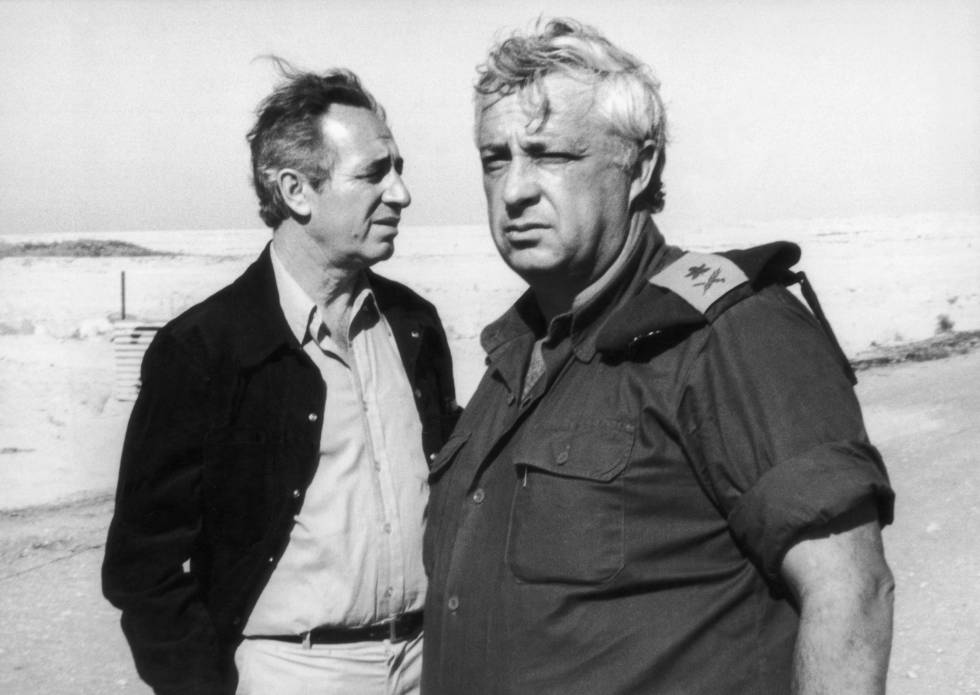
Simón Peres (izquierda) y Ariel Sharon visitan Egipto en 1975.
Simón Peres (izquierda) y Ariel Sharon visitan Egipto en 1975. Hulton Archive Getty Image

A menudo me pregunto por qué organizaciones [israelíes] como Romper el Silencio, B’Tselem y Paz Ahora suscitan sentimientos de miedo, rabia y hostilidad en tantas personas. No solo gente de extrema derecha, sino también otros que se consideran en el centro del espectro político. Esa hostilidad no puede explicarse solo diciendo que todos los que se oponen a Romper el Silencio son racistas. Ni que están intentando callar nuestras voces; la gran mayoría de nuestros adversarios no lo hace. Ni siquiera podemos decir que todos nuestros oponentes odian a los árabes, porque, en su mayor parte, no es así.

¿Cuál es el problema entonces? Muy sencillo: la gente quiere sentirse a gusto consigo misma, y Romper el Silencio se lo impide. La gente quiere que el Estado de Israel tenga una buena imagen y, a su juicio, Romper el Silencio y B’Tselem hacen que la tenga mala. Es algo completamente humano. No tenemos por qué despreciar la necesidad natural del ser humano de sentirse bien.

Es muy comprensible que la mayoría de los israelíes sienta bochorno e incomodidad cuando el Estado de Israel no tiene una buena imagen. Creen, equivocadamente, que los que promueven esa mala imagen son los que denuncian las distorsiones morales del país, del Gobierno y del Ejército. Les cuesta aceptar que el Estado de Israel, a veces, da muy mala imagen, no por culpa de los que denuncian esas distorsiones morales, sino por culpa de los que incurren en ellas.

Una de las maravillas secretas de la tradición judía, una de las razones de que el pueblo judío no haya sido erradicado después de miles de años, mientras que otras naciones más grandes han desaparecido, es que en la nación judía siempre ha habido muchos valientes dispuestos a romper el silencio y a luchar para curar la degeneración moral y denunciar las distorsiones sociales y las injusticias.

Amo Israel por su larga tradición de acalorados debates internos y búsqueda de la justicia

Podemos empezar por hablar del profeta Natán, el ejemplo por antonomasia de lo que es romper el silencio, y de cómo ensució la fama del rey David, el autor de los salmos, el antepasado del futuro Mesías. Aquel pequeño profeta se alzó y dijo al mundo —y a las futuras generaciones— que David había asesinado mediante artimañas y engaños a un hombre inocente, solo porque quería acostarse con su mujer.

El profeta Jeremías, el profeta Amos y otros profetas también censuraron sin piedad a la familia real, a los ministros, a los grandes de su época, y muchas veces al pueblo en general, a toda la nación: mancillaron nuestro país, sin la menor duda.

No tuvieron miedo de llamar a la injusticia, injusticia, y al derramamiento de sangre inocente, derramamiento de sangre inocente. Nunca se detuvieron a preguntarse si estaban proporcionando excusas a los que odiaban a Israel.

En sus poemas, Hayim Nahman Bialik arrojó fuego y azufre sobre los dirigentes, los funcionarios y toda la nación judía. También Nathan Alterman y S. Yizhar rompieron el silencio y nunca vacilaron a la hora de condenar la injusticia y los asesinatos cometidos por los soldados de las Fuerzas Armadas israelíes, ni siquiera durante las celebraciones y la euforia que siguieron a la gran victoria en la guerra de los Seis Días. Lo mismo que A. B. Yehoshua, Hanoch Levin, David Grossman, Yitzhak Laor, Meir Shalev y una larga lista.

Todos los que odian a Romper el Silencio deberían reflexionar sobre una cosa, al menos por un instante: que la fortaleza moral no es un lujo ni un mero adorno. La fortaleza moral es necesaria para la supervivencia de una nación, una sociedad y una persona. La fortaleza moral no es una especie de joya que guardamos en la caja fuerte y que nos ponemos solo en los días buenos para tener un aspecto mejor. La fortaleza moral no es una mercancía producida para la exportación, que se guarda en un cajón, por lo menos hasta que termine la guerra, hasta que vuelva la normalidad y el país viva 40 años de paz, de forma que solo entonces podremos blandir nuestra reluciente grandeza moral, exhibirla en el pecho y revelar al mundo lo maravillosos que somos.

No. La fortaleza moral, especialmente en tiempos de guerra, es tan urgente como los primeros auxilios en un campo de batalla. El papel del acusador, a veces, es similar al del médico o el enfermero: su labor es como la del médico que abre un absceso y extrae el pus, para que no se extienda ni contamine todo el cuerpo.

La fortaleza moral es necesaria para la supervivencia de una nación, una sociedad y una persona

No debemos menospreciar a quienes desean sentirse bien. Pero quizá convendría familiarizarlos con algo que sabe casi el mundo entero, salvo los que quieren acallar la crítica aquí, en Israel: que una de las pocas razones por las que los israelíes pueden seguir sintiéndose un poco bien consigo mismos y ante otros países es que tenemos Romper el Silencio, B’Tselem y Paz Ahora, que hay una lucha permanente para alcanzar la justicia social y que seguimos teniendo una prensa más o menos libre o, por lo menos, seguimos peleando para mantenerla. Y sigue habiendo libertad de expresión, cada vez más amenazada, pero sigue habiéndola. Estas son las cosas que dan una buena imagen de Israel. Estas son las cosas que permiten que Israel siga teniendo defensores en todo el mundo, gente que todavía nos mira con esperanza e incluso admiración.

A pesar de la fealdad y de la injusticia, a pesar de la ocupación y la explotación de los pobres y desfavorecidos de la sociedad israelí, yo sigo amando Israel. Lo amo incluso en los momentos en los que no puedo soportarlo. Lo amo por su larga tradición de acalorados debates internos y búsqueda de la justicia. Es una tradición que ahora está en peligro, es cierto, pero que se mantiene viva.

Cuánta gente dice: “Muy bien, pero ¿por qué no podemos resolver nuestras diferencias discretamente? ¿Por qué tenemos que hacerlo ante los ojos de todo ese mundo hostil?”. Pues bien, porque los tiempos han cambiado, y los “ojos del mundo” ya no lo son. Atrás quedan los días en los que uno podía susurrar algo en la cocina sin que todo el mundo se enterara de todo al día siguiente. Al contrario: cualquier esfuerzo por enterrar la vergüenza, disimular el crimen u ocultar la injusticia acabará acumulando pus, tarde o temprano, y estallará en la cara de los ocultadores con el doble o el triple de intensidad.

Es beneficioso abrir las heridas lo antes posible, delante de la nación y delante del mundo, no solo por las víctimas, sino por el bien de todos. Por el bien de la sociedad israelí. Incluso por el bien de la imagen de Israel en la comunidad internacional.

A veces —no siempre, pero a veces—, en la historia, algunos a los que la mayoría de su pueblo calificaba de traidores acabaron, con el paso de los años, siendo considerados maestros. No siempre; no todo el que alguna vez ha sido llamado traidor puede estar seguro de que al cabo de uno o dos siglos le van a dar las gracias y a aplaudir. Pero ha habido ocasiones en las que las futuras generaciones se pusieron de parte de los acusadores y de quienes rompían el silencio.

Es muy comprensible que la mayoría de los israelíes sienta bochorno e incomodidad cuando el Estado de Israel no tiene una buena imagen

Se pusieron de parte del profeta Jeremías, que dijo a los hijos de Jerusalén, ya fueran reyes o plebeyos: “No creáis que vuestro eterno aliado es verdaderamente vuestro eterno aliado, porque de pronto puede no ser de fiar. Cuidaos y no os emborrachéis de poder”.

Los contemporáneos de Jeremías le despreciaban. Le llamaron “izquierdista” y “traidor”, y las autoridades lo arrojaron a un pozo. Sin embargo, hoy, el pueblo de Israel recuerda con afecto a Jeremías, no a sus acusadores.

La historia de la aventura sionista empieza con Benjamin Ze’ev ­Herzl, el visionario que concibió el Estado judío, el hombre al que incluso el movimiento de extrema derecha Im Tirtzu —cuyos miembros critican a los de Romper el Silencio— honró, al utilizar unas famosas palabras suyas como nombre (Im Tirtzu significa “si lo quieres”). Quizá se olvidan de que fue Herzl quien, en determinado momento, desesperado, pensó en Uganda como alternativa a Israel para acoger la patria judía, y soportó que muchos de sus contemporáneos le llamaran traidor por ello.

David Ben-Gurión, el fundador del Estado judío, el hombre que, aunque apretando los dientes, estuvo de acuerdo con dividir la tierra de Israel entre dos naciones y crear dos Estados, fue un traidor para algunos.

Menahem Begin, que se retiró del Sinaí a cambio de que hubiera paz, fue un traidor para los miembros de su movimiento, que le acusaron de traicionar las ideas del partido y las del propio sionismo.

Simon Peres e Isaac Rabin, que le dieron la mano a Yasir Arafat e intentaron lograr un acuerdo para acabar con el conflicto entre Israel y los palestinos, fueron calificados de traidores por muchos. Los pintaron llevando kufiya [pañuelo palestino], dieron permiso para derramar su sangre, decretaron el asesinato de Rabin y santificaron ese asesinato.

Por su parte, también Anuar el Sadat, que fue a Jerusalén, habló ante la Knesset y firmó la paz con Israel, fue y es considerado un traidor por millones de árabes, y también él fue asesinado solo por haberse atrevido a romper el consenso de aquel momento.

A Ariel Sharon, cuyas excavadoras arrasaron los asentamientos judíos de Gaza que él mismo había aprobado, también le representaron con una kufiya y le llamaron traidor.

La lista de personas calificadas de traidoras por su propio pueblo es interminable. Si la comparamos con la lista de los políticos, líderes e intelectuales a quienes nunca llamaron traidores los suyos, no hay la menor duda de que es más respetable la primera que la segunda.

Es evidente que los ciudadanos tienen una deuda mucho mayor con aquellos que rompieron el silencio que con todos los que callaron, que mantuvieron en la línea oficial y echaron perfume por encima.

Romper el silencio no es necesariamente un asunto de izquierdas o de derechas. Al contrario. También en la izquierda israelí sigue habiendo silencios que deberían romperse de una vez por todas.

Casi cualquier afirmación nueva y desafiante es una forma de romper el silencio. El legado judío, desde la época de los profetas, ha pasado de generación en generación sobre los hombros de los valientes que se atrevieron a romper el silencio. Los judíos tenemos una larga tradición que nos ha enseñado que todo el mundo tiene el derecho e incluso el deber de censurar al pueblo y a sus dirigentes, a los ricos y a los sacerdotes, y a todos los que derraman sangre inocente.

Nuestra tradición nos permite incluso despotricar contra Dios. Existen acusaciones contra Dios desde los tiempos de la Biblia.

¿Y entonces? ¿El Ejército israelí es el único que tiene inmunidad eterna y absoluta? ¿Acaso es más sagrado que Dios? ¿Qué nos ha pasado?

No estoy diciendo que, un día, la historia vea a los activistas de Romper el Silencio como descendientes de los profetas: puede que sí y puede que no. El tiempo dirá. Pero lo que sí podemos asegurar en estos momentos es que quienes arrojan piedras son descendientes de quienes tiraron piedras contra los profetas de Israel.

Amos Oz (Jerusalén, 1939) es escritor israelí, autor de ‘Una historia de amor y oscuridad’ y ‘Queridos fanáticos’ (ambos en Siruela), entre otras obras.

Según tomado de, https://elpais.com/internacional/2018/06/01/actualidad/1527860998_662589.html

 
Leave a comment

Posted by on June 3, 2018 in Uncategorized


Y la utopía abandonó a Israel

70 años después de nacer como un ideal ético colectivo, el Estado hebreo acentúa su perfil nacionalista y militar con el Gobierno de Netanyahu

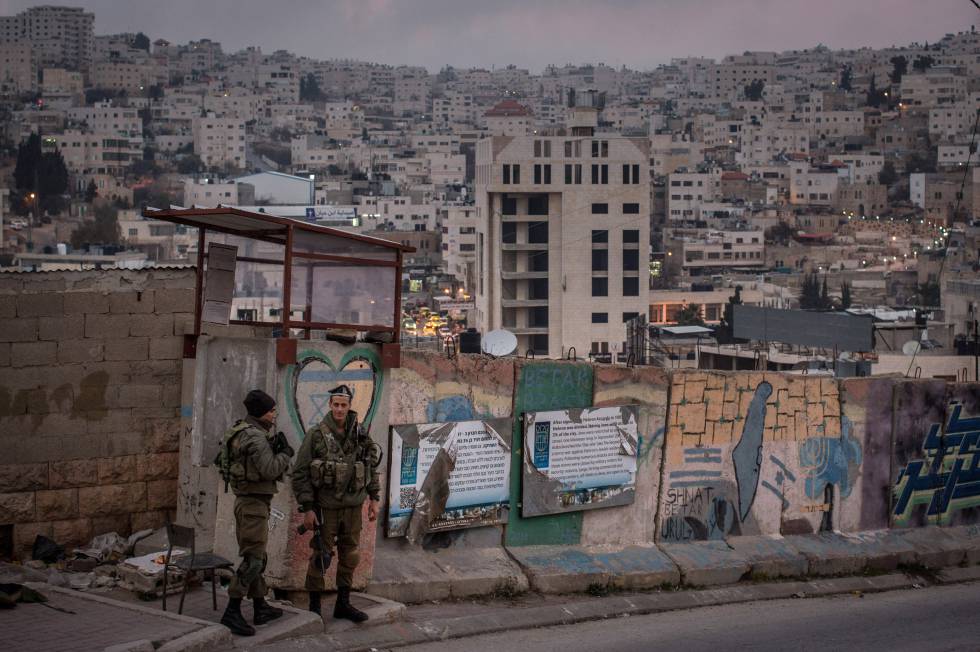
Dos soldados israelíes en 2017 en un puesto de control de un asentamiento en Hebrón.
Dos soldados israelíes en 2017 en un puesto de control de un asentamiento en Hebrón. Chris McGrath Getty
Decenas de jóvenes escuchan a un elenco de viejas glorias de la izquierda, pacifistas e intelectuales frente a la sede del Teatro Nacional de Israel, en la plaza de Habima en Tel Aviv, mientras un puñado de ultraderechistas les increpa desde la esquina del bulevar ­Rothschild, tras un cordón policial: “¡Marchaos a vivir a Gaza!”. Orillado por edificios de estilo Bauhaus, este paseo, donde se declaró hace 70 años la independencia del Estado hebreo, aún conserva el marchamo de la modernidad.

“Hemos olvidado la historia, los valores del judaísmo”, musita desde su silla de ruedas Yael Dayan, exdiputada del partido laborista. “En [las protestas de] Gaza ha habido muchos muertos por los disparos de nuestros soldados”, desgrana con una mueca de dolor, tras haber leído en la tribuna el testimonio de un francotirador militar anónimo que combatió en el enclave palestino. Antigua vicealcaldesa de Tel Aviv, Yael, la hija de Moshe Dayan —el general que derrotó en seis días a tres Ejércitos árabes e inauguró la ocupación—, mantiene a los 78 años la intensidad de la mirada de las generaciones pioneras de Israel.

“¡Fuera traidores!”, arrecian los gritos de los extremistas mientras hacen ondear banderas de la estrella de David, y los agentes los contienen con aire de aburrimiento. “También nos hemos vuelto racistas”, sostiene Dayan, conectada a un respirador. “Aunque nacimos como un país de inmigrantes perseguidos, el Gobierno ha intentado deportar a miles de refugiados africanos”. La veterana política ha venido a apoyar un acto público organizado por el movimiento de soldados veteranos Romper el Silencio, una de las organizaciones pacifistas que aspiran a ser la conciencia crítica de la sociedad hebrea, cada vez más escorada hacia el nacionalismo. “Solo unos pocos se atreven a decir hoy la verdad sobre la ocupación. El país ya no es el mismo”, sentencia Dayan, “pero no es tanto Israel el que ha cambiado como su liderazgo”.

La compleja división política israelí se debe a la fragmentación provocada por un sistema electoral con fuerte proporcionalidad en el reparto de los 120 diputados de la Kneset (Parlamento), según el analista político Daniel Kupervaser. “Si se revisan resultados y sondeos, se aprecia la solidez de un bloque de la derecha, con 57 escaños, formado por el partido conservador Likud de Benjamín Netanyahu, y la extrema derecha de Avigdor Lieberman [actual ministro de Defensa], al que se suma el nacionalismo religioso de los colonos y los ultraortodoxos. Luego, hay un segundo bloque de fuerzas de centro, que incluye al laborismo, con 45 diputados, y, por último, un tercer grupo que suma 18 escaños, en el que están Meretz [izquierda pacifista] y los partidos árabes israelíes”. Los partidos de este último bloque están considerados como “inadmisibles” para conformar “una coalición sionista”, así que el centro solo puede gobernar con la derecha, explica Kupervaser. Así, en las elecciones legislativas de 2009 la dirigente liberal Tzipi Livni obtuvo más votos que Netanyahu, pero no pudo formar un Gabinete de coalición por el veto de los partidos conservadores.

La compleja división política israelí se debe a la fragmentación provocada por un sistema electoral con fuerte proporcionalidad en el reparto de los 120 diputados

“El Likud de Netanyahu solo controla una cuarta parte del Parlamento”, advertía recientemente la liberal Livni en un encuentro con periodistas en Jerusalén. “Las alianzas pueden cambiar dentro de poco”. Sus palabras aludían a los casos de corrupción que planean sobre el primer ministro, Netanyahu, y amenazan con forzar su dimisión si el fiscal general le inculpa por fraude y soborno.

Livni ha ocupado el cargo de viceprimera ministra, y ha sido la titular de Exteriores, Justicia y de otras carteras, convirtiéndose en la mujer que más ha ascendido en la pirámide del poder en la historia de Israel, tras Golda Meir, jefa de Gobierno entre 1969 y 1974. También encabezó las últimas negociaciones de paz con los palestinos, suspendidas hace cuatro años. Desde la oposición de centro-izquierda, cita los sondeos para apoyar sus argumentos: “La sociedad está mayoritariamente a favor de la solución de los dos Estados, aunque no sabe cuándo se podrá alcanzar. Solo unos pocos defienden un Estado binacional [la anexión de los territorios palestinos]”. El partido de Livni, Hatnuah, está asociado al laborismo en la denominada Unión Sionista.

Coincidiendo con su 70º aniversario, en un mes Israel ha sentido el vértigo de una aceleración histórica. Ha habido una rápida sucesión de acciones y reacciones. En un alarde de protagonismo de Netanyahu, se presentó en televisión el archivo atómico secreto localizado por agentes del Mosad en Teherán, poco antes de la ruptura por parte de EE UU del acuerdo nuclear con Irán, y del ataque militar israelí a gran escala contra objetivos de la Guardia Revolucionaria de Irán en Siria. Pero el hito que ha marcado la conmemoración de la independencia ha sido sin duda el traslado de la Embajada estadounidense de Tel Aviv a Jerusalén, que ha consolidado el alineamiento del presidente Donald Trump con los intereses estratégicos del Gobierno de Netanyahu.

Mientras la hija del mandatario de EE UU Ivanka Trump inauguraba en su nombre la legación diplomática de la Ciudad Santa en un clima de euforia local, los disparos de los francotiradores del Ejército causaban la muerte de 62 manifestantes ante la valla de separación fronteriza. La Autoridad Palestina incluyó esos hechos en la denuncia por crímenes de guerra que días más tarde presentó en la Corte Penal Internacional de La Haya.

Esta misma semana, la escalada bélica entre Israel y Hamás —el movimiento islamista que gobierna de facto en el enclave— ha estado a punto de desbordarse, con el mayor lanzamiento de cohetes registrado desde la Franja, y los bombardeos más intensos de la aviación hebrea desde el fin de la guerra de 2014.

Las repercusiones de esta crisis en Gaza han ido más allá de la condena a Israel en foros internacionales. El cantante brasileño Gilberto Gil ha cancelado su concierto en Tel Aviv ante la situación en la Franja. El primer ministro francés, Édouard Philippe, ha pospuesto indefinidamente una visita oficial alegando problemas de agenda. Otros artistas y políticos han decidido retrasar viajes previstos a Israel tras los incidentes del 14 de mayo.

Pocas semanas antes de que se disparara la violencia en el territorio costero palestino, la actriz israelo-estadounidense Natalie Portman boicoteó la entrega en Jerusalén del Premio Génesis —considerado el Nobel judío— concedido a toda su carrera. No se encontraba “en condiciones de asistir a un acto en Israel con la conciencia tranquila”, declaró a través de sus representantes.

“El triunfo de la derecha en 1977 marcó el final de la utopía fundacional de los laboristas que gobernaron durante tres décadas”, dice el historiador Meir Margalit. “Empezó el declive de la experiencia de los kibutz (granjas colectivas) o de la hegemonía social del Histadrut (sindicato único). La sociedad israelí se ha vuelto mucho más individualista”.

Tras el giro político de 1977, los Acuerdos de Oslo alumbraron en 1993 la esperanza de una solución al conflicto

Margalit fue concejal de Jerusalén por el partido Meretz, tercera fuerza parlamentaria en 1992 en vísperas de los Acuerdos de Oslo. Pero la izquierda pacifista ha acabado siendo la lista menos votada en los últimos comicios legislativos, celebrados hace tres años. Meretz estuvo entonces a punto de no superar el umbral del 3% del sufragio que permite asegurarse una presencia en el Parlamento. “Israel pasó de ser una sociedad humanista a convertirse en una militarista a partir de la ocupación de 1967”, sostiene este intelectual de origen argentino. “El militarismo se ha asentado sobre las figuras de generales como Moshe Dayan, Isaac Rabin, Ehud Barak o Ariel Sharon, que alcanzaron la cima del poder civil”, explica. “Mientras, el humanismo ha quedado en manos de escritores como Amos Oz, David Grossman o A. B. Yehoshua, muy conocidos en el exterior, aunque sus ideas en Israel solo representan a una minoría”.

Compañero de generación de Etgar Keret y uno de los narradores más populares en el Estado judío, Assaf Gavron, de 49 años, ha visto publicadas en varios idiomas algunas de sus novelas, como La cima de la colina, una alegoría sobre la vida de los colonos en los asentamientos en Cisjordania. La única de sus obras traducidas al español, sin embargo, es un ensayo incluido en la antología Un reino de olivos y ceniza (Literatura Random House), que reúne escritos de 26 autores de 14 países en el 50º aniversario de la ocupación de Palestina. Keret es el único israelí que participó en el proyecto junto a escritores como el Nobel Mario Vargas Llosa o el premio Pulitzer Michael Chabon.

“Mis padres eran unos judíos sionistas convencidos que abandonaron Reino Unido para instalarse en Israel”, rememora Gavron, “pero años más tarde llegaron a plantearse regresar a Europa, ante la evolución política del país. La sociedad israelí, además, se ha sumido en el victimismo bajo los Gobiernos de Netanyahu: la gente acepta sus mensajes sin cuestionarlos”. El escritor alude a la estratagema del primer ministro en la campaña de las elecciones de marzo de 2015, cuando para movilizar a sus partidarios dijo que estaba alarmado porque los árabes con nacionalidad israelí —cerca de un 20% de la población del Estado hebreo—iban a votar “en manada”.

Gavron apunta precisamente a la ocupación como causa central del vuelco dado por la sociedad israelí en el último medio siglo. Las tropas israelíes protegen a unos 400.000 colonos en Cisjordania. Otros 200.000 israelíes se han instalado en la parte oriental de Jerusalén, ocupada en 1967 y anexionada en 1980. El movimiento colono cuenta con valedores políticos en el seno del actual Gobierno, tanto en la formación nacionalista religiosa Hogar Judío como en la ultraderechista laica Israel Nuestra Casa, que concentra el voto de la inmigración pos-soviética.

Tras el giro político de 1977, los Acuerdos de Oslo alumbraron en 1993 la esperanza de una solución al conflicto. “Lo pactado en Oslo no tuvo apenas tiempo de poder aplicarse. Tras el asesinato de Rabin, en 1995, Netanyahu ganó por primera vez unas elecciones y comenzó a desmontar todo lo que había sido negociado”, precisa el historiador Margalit. “Fue entonces cuando en sectores del laborismo empezó a cuajar la idea de que se podía alcanzar la paz sin tener que devolver los territorios ocupados. Y ya se sabe que cuando la izquierda empieza a imitar las políticas de la derecha, los votantes acaban prefiriendo el modelo original”.

El clima de violencia visible durante la Segunda Intifada (2000-2005) hizo que muchos israelíes dejaran de creer en las propuestas de Oslo. Los líderes que se alternaron en el poder en Israel —Barack, Sharon, Ehud Olmert— emprendieron fallidos procesos de negociación con los palestinos. El actual Ejecutivo, considerado el más derechista en la historia de Israel, no ha planteado iniciativas de paz. Y desde la llegada de Trump a la Casa Blanca, en enero de 2017, las vías de diálogo han quedado enterradas. “El conflicto palestino puede haber caído en el olvido tras la crisis económica en Europa y por la inquietud desatada en el continente por el temor a un aluvión de refugiados”, concluye el historiador. “Y en el mundo árabe, la barbarie yihadista del ISIS y la guerra de Siria han acaparado toda la atención”.

La mayoría de los israelíes también parece mostrarse convencida de que la gestión del conflicto está mejor en manos de la derecha. Después de un mes de efemérides, condenas internacionales y sangrientos incidentes, los sondeos reflejan el auge electoral de la derecha pura y dura de Netanyahu y Lieberman, cuyo respaldo por parte del público ha subido un 7%, hasta situarse en el 58% de satisfacción ciudadana con su Ejecutivo, según una encuesta publicada por el diario Maariv. De celebrarse ahora unos comicios, sus partidos sumarían, respectivamente, más de un tercio de los escaños de la Cámara, y con el apoyo de sus socios nacionalistas y ultraortodoxos revalidarían una cómoda mayoría en la Kneset. Los laboristas y su aliada Tzipi Livni parecen abocados, según el mismo estudio demoscópico, a perder la mitad de los diputados que tienen.

Vargas Llosa describía hace poco en EL PAÍS la transformación experimentada en la sociedad israelí: “Un pueblo que había levantado ciudades modernas y granjas modelo donde solo había desiertos, creado una sociedad democrática y libre, y en la que un sector muy importante quería verdaderamente la paz negociada con los palestinos. Ese Israel por desgracia ya no existe. Ahora es una potencia militar, sin duda, y en cierta forma colonial, que solo cree en la fuerza”. Amos Oz, el veterano escritor hebreo que acompaña estas páginas, se anticipó a las previsibles censuras de quienes no suelen tolerar un escrutinio crítico de su país. “No todo aquel que critica a Israel es un antisemita”, declaraba a este diario hace tres años. “Yo mismo lo hago”.

Según tomado de, https://elpais.com/internacional/2018/06/01/actualidad/1527873441_042219.html

 
Leave a comment

Posted by on June 2, 2018 in Uncategorized


La trampa del deseo

El pueblo empezó a quejarse… La multitud mezclada que había entre ellos desearon deseo y los hijos de Israel lloraron una vez más, diciendo: ‘¿Quién nos dará de comer carne? Recordamos el pescado gratis que comimos en Egipto y los pepinos, melones, puerros, cebollas y ajo, pero ahora nuestra vida está reseca, no hay nada; no tenemos nada por delante salvo el maná…’. Al pueblo le dirás: ‘Prepárense para mañana y comerán carne, pues lloraron a los oídos de Hashem diciendo: ¿Quién nos dará de comer carne? ¡Estábamos mejor en Egipto!’ Por eso Hashem les dará carne y comerán. No un día comerán, ni dos días, ni cinco días, ni diez días, ni veinte días. Hasta un mes entero, hasta que les salga por las narices y les cause repugnancia, pues rechazaron a Hashem que está en medio de ustedes y lloraron ante El, diciendo: ‘¿Por qué salimos de Egipto?’” (Bamidbar 11:1, 11:4-5 y 11:18-20).

Rav Yejézkel Levinstein, uno de los grandes Baaléi Musar del siglo XX, hace una observación muy profunda acerca de la dinámica del deseo a partir de uno de los versículos anteriores.1

El contexto es el siguiente: una parte del pueblo judío2 comenzó a quejarse contra Dios y Moshé por la falta de carne,3 buscando pretextos para regresar a Egipto.

El versículo señala: La multitud mezclada que había entre ellos desearon deseo y los hijos de Israel lloraron una vez más, diciendo: ‘¿Quién nos dará de comer carne?’”. La redacción del versículo exige atención: “la multitud mezclada desearon deseo… diciendo ‘¿Quién nos dará carne?’”. ¿A qué se refiere el versículo cuando dice “desearon deseo”? Aparentemente ellos no desearon deseo, ellos desearon carne. Sin embargo, el versículo es bastante explícito: ellos desearon deseo de carne.

Rav Yejézkel Levinstein explica: la mayoría de nosotros asume que los deseos son producto de la necesidad de satisfacer la carencia de aquello que me hace falta. Cuando carezco de algo, lo deseo para satisfacer esa carencia. Siendo así, cuando deseo algo es porque carezco de eso y por lo tanto uno asumiría que al llenar la carencia de aquello que me hace falta, dejaría de desear.

Sin embargo no sucede así, pues todos hemos experimentado que en ocasiones deseamos cosas que no necesitamos: no es la carencia lo que me produce el deseo de aquello que me hace falta, sino que el deseo produce deseo y por lo tanto en ocasiones deseo aquello que no me hace falta.

El deseo es una de los impulsos más poderosos del ser humano. Es cierto que gracias al deseo busco aquello que carezco, pero existe una trampa difícil de eludir: el deseo no solamente desea aquello que se carece, sino que también el deseo produce más deseo y deseará inclusive aquello que no se carece.

Los sabios lo dicen muy claramente: “Aquél que tiene cien, desea doscientos”.4 ¿Por qué es así? Muy sencillo: porque el deseo produce deseo. No es que el deseo satisface una carencia, sino que el deseo produce la carencia. Todo deseo crea una carencia, porque una vez que se satisface, deja de existir como deseo. El deseo necesita seguir deseando para seguir existiendo.

Los hijos de Israel tenían carne para comer. No era carne lo que ellos deseaban, sino que ellos deseaban el deseo de comer carne, tal como el versículo lo dice:La multitud mezclada que había entre ellos desearon deseo… diciendo: ‘¿Quién nos dará de comer carne?’”. Si es que sí tenían carne, ¿entonces qué era lo que ellos deseaban? Deseaban el deseo.

El deseo produce deseo y por lo tanto es imposible de satisfacer: si alguien tiene cien, siempre deseará doscientos.


1 En Or Yejézkel, volumen 4 sobre Midot, pagina 199.

2 Según varios comentaristas, entre ellos Rashí, era el érev rab, las personas no judías que eran esclavos en Egipto y aprovecharon la salida del pueblo judío para también salir con Israel.

3 En verdad, tal como Rashí lo señala, sí tenían carne para comer, pero estaban buscando pretextos para rebelarse y quejarse contra Dios.

4 Kohélet Rabá 1:34.

Según tomado de, http://www.aishlatino.com/tp/s/la-personalidad-humana/La-trampa-del-deseo.html?s=mm


Leave a comment

Posted by on June 1, 2018 in Uncategorized