RSS

Monthly Archives: June 2019

No depende de ti, depende de Dios

No depende de ti, depende de Dios

“Y Hashem habló a Moshé, para decir: Háblales a los hijos de Israel y diles: Al entrar a la tierra a donde Yo los llevo, sucederá que cuando coman del pan de la tierra deberán apartar una porción separada para Hashem. Lo primero de la masa de ustedes apartarán, una hogaza como porción separada, como la porción separada del silo, así la pondrán aparte. De lo primero de la masa le darán la porción separada a Hashem, a través de sus generaciones”(Bamidbar 15:17 – 21).

Esos versículos enseñan la mitzvá de jalá. Así como debemos separar el diezmo de todo lo producido y darle la porción apropiada al cohen (además de los otros diezmos que reciben el leví, los pobres, etc.), también debemos separar para diezmo una porción pequeña de cada hogaza (que tiene el tamaño requerido) y dársela al cohen. Esta porción del diezmo se denomina jalá, y la mitzvá de separarla se llama hafrashat jalá.

Rashi resalta la expresión “bevoajem el haáretz – al entrar a la tierra”. Por lo general, cuando la Torá se refiere a las mitzvot hatluiot baáretz utiliza la expresión “ki tavou -cuando entren. Rashi explica que esta discrepancia nos enseña que a diferencia de otras mitzvot que dependen de la tierra y que sólo comenzaron a tener efecto después de la conquista y de asentarnos allí, la mitzvá de jalá comenzó a tener efecto de inmediato, apenas entraron a la Tierra.

La pregunta obvia es: ¿a qué se debe esta distinción?

Al describir la mitzvá de jalá, el pasuk dice: “reshit arisoteijem, la primera de sus hogazas”. Nuestros Sabios explican que esta expresión implica que debe ser un pan propio, del que uno ya conoce su existencia. Sin embargo, en ese momento, los judíos aún no habían entrado a la tierra y no habían comenzado a hacer pan. Por lo tanto, dicen los Sabios, esto debe ser una referencia a la porción diaria de maná que recibían en el desierto. Los Sabios continúan explicando que esta correlación es para enseñarnos la cantidad de harina que debe tener la masa para que se deba separar de ella la porción de jalá. Sólo requiere hafrashat jalá una hogaza que tiene un tamaño igual o mayor al de las porciones de maná.

Podemos preguntar por qué se nos debía enseñarnos cuál es la cantidad necesaria de esta forma. ¿Por qué no decirnos explícitamente cuál es la cantidad?

La conclusión ineludible parece ser que Hashem deseaba que el acto de hafrashat jalá sirviera como un recordatorio constante del maná que recibimos en el desierto.

Mientras estuvimos en el desierto, nos sustentó completamente la gracia de Hashem; no necesitamos trabajar para obtener nuestra parnasá, nuestra manutención. En el desierto era absolutamente claro que Dios es el proveedor único y supremo.

Al pasar a una situación en la que debemos esforzarnos para ganarnos la vida, Hashem quiere que tengamos consciencia de que, en realidad, Él es Quien provee nuestra parnasá. Cuando nos esforzamos y nos concentramos en ganarnos la vida, existe el peligro real de llegar a olvidarnos de Hashem: “y dirás en tu corazón: ‘Es mi fortaleza y el poder de mi mano lo que acumuló para mí esta fortuna’(1). Hafrashat jalá nos ayuda a recordar que esos pensamientos son falsos. A través de su esencia y su asociación con el maná, esta mitzvá declara: “y recordarás a Hashem tu Dios, porque Él es Quien te da fortaleza para acumular riqueza”(2).

El pan es el sustento básico del ser humano. Por lo tanto, consumir ese pan ganado con tanto sacrificio manifiesta, más que ninguna otra cosa, que el hombre se beneficia del fruto de su labor. Por eso el momento en que uno consume su pan es el momento crucial y decisivo para establecer la perspectiva y la conciencia adecuadas.

Reshit arisoteijem – lo primero de la masa separarán”.

Antes de que se nos permita beneficiarnos del fruto de toda nuestra labor, se nos ordena separar una porción para Hashem, una porción que se le da al cohen y que nos recuerda que “A Hashem le pertenece el mundo y todo lo que hay en él” (3), y que en verdad Hashem es Quien nos provee nuestro sustento.

Con este enfoque, ahora podemos entender por qué esta mitzvá en particular entró en efecto apenas entramos a la Tierra de Israel.

Cuando entramos a la Tierra fue el momento crítico en que pasamos de tener todas nuestras necesidades satisfechas directamente por Hashem a una situación en la que debíamos comenzar a esforzarnos. En ese momento, estábamos obligados a comenzar a cumplir la mitzvá de conquistar la tierra, tomarla de las naciones que la ocupaban. Se nos ordenó crear un ejército y esforzarnos sistemáticamente para lograr el objetivo de conquistar la Tierra. Y, por supuesto, a medida que conquistaban cada porción de la tierra, seguramente algunas personas comenzaban a construir viviendas, a trabajar el suelo, etc., para que las mujeres y los niños (y todos los que no participaban en las batallas) pudieran tener un lugar en el que vivir y alimentos para comer.

Este cambio en la dinámica abrió la puerta a la posibilidad de que llegáramos a olvidar a Hashem. Por eso la mitzvá de jalá entró en efecto inmediatamente al entrar a la Tierra, para recordarnos constantemente la verdad de que Hashem luchará por ustedes” (4) y de que Él es nuestro verdadero proveedor. Esto sirvió como un recordatorio inmediato y constante de que todos nuestros esfuerzos son simplemente eso, esfuerzos, pero que Hashem es Quien nos da el éxito.

Quizás con esto en mente, también podemos proponer un enfoque novedoso para entender la costumbre de hornear jalot (5) para Shabat, en cantidad suficiente para realizar hafrashat jalá.

Shabat es un momento en el que nos sentamos a la mesa, completamente relajados, junto a nuestra familia, a menudo también con huéspedes y amigos. En esta situación, la persona realmente puede disfrutar la bendición que tiene: todos visten sus mejores ropas, usan su mejor vajilla y sirven las delicias más exquisitas. “Mimarse” en Shabat de esta forma puede tener la consecuencia negativa de llevar a la persona a sentirse arrogante. Por supuesto, una de las ideas centrales del Shabat es que descansamos de las labores y reflexionamos sobre Hashem, que es el verdadero Proveedor, pero eso no cambia la realidad de que una persona pueda, jas veShalom, terminar cayendo en un proceso de pensamiento opuesto.

Por eso, para alentarnos a reflexionar en Shabat de la forma correcta, las mujeres judías, con su biná ieterá (entendimiento adicional), se comprometieron a hornear panes especiales para Shabat que requieren hafrashat jalá. De esta forma, cuando comenzamos las seudot de Shabat disfrutando las jalot especiales del día (6), recordamos que debemos conservar y refrescar nuestra conciencia de que Hashem es el Proveedor verdadero.

Notas:

1. Parashat Ékev (Devarim 8:17).

2. Ibíd., 18.

3. Tehilim 24:1.

4. Shemot, parashat Beshalaj 14:14, Devarim 1:30.

5. Parece obvio que esta es también la razón por la que llamamos jalá al pan especial que comemos en Shabat: porque la costumbre principal es hacer jalot del tamaño necesario para realizar hafrashat jalá.

6. Coloquialmente no se le llama jalá a la porción separada, que es técnicamente la jalá, sino a los panes que comemos. Está prohibido comer la porción separada y, en la actualidad, debe ser desechada porque se asume que ninguna persona está ritualmente pura y, por lo tanto, tampoco el cohen la puede comer.

Segun tomado de, https://www.aishlatino.com/tp/i/reflexiones/No-depende-de-ti-depende-de-Dios.html?s=mm

 
Leave a comment

Posted by on June 26, 2019 in Uncategorized


El Shabat como activismo social

El Shabat como activismo social
por Akiva Gersh

Cuanto más Torá aprendía, más entendía que el objetivo del judaísmo es cambiar por completo al mundo.


En la universidad fui un activista.

Organicé, protesté, participé en manifestaciones, grité y sostuve carteles por causas en las que creía. En mi tiempo libre pegué anuncios, repartí panfletos y escribí artículos editoriales para alentar a otros a interesarse en las causas que yo defendía.

El activismo se convirtió en mi pasión, mi filosofía, mi círculo social, mi visión del mundo.

El activismo me cambió e impactó mi forma de vida. Desde los libros que leía y los alimentos que consumía, hasta los productos que compraba (o no compraba). Fue la primera vez en mi vida que invertí todo mi ser en algo.

Sin embargo, después de muchos años de trabajar para lograr un cambio social en una variedad de frentes (liberar al Tíbet, limpieza étnica en Bosnia, problemas del medio ambiente, etc.), sentí un gran desgaste. Estaba abrumado. A veces incluso me deprimía.

Cuando abres tus ojos a los problemas de nuestro mundo, cuando llegas a ser casi un experto en detectar los males de la sociedad que te rodea, es difícil no sentirse de esa forma.

Adonde miraba, siempre veía algo mal. Otra cosa que los humanos arruinaban. Otro problema que había que tratar de arreglar. Otra manifestación a la que debía asistir para despertar al mundo de su aletargamiento.

Aunque sabía que el activismo social era mi pasión y lo que se debía hacer, también sabía que esa forma de vida no era sustentable.

Entonces, a los 20 años, descubrí el Shabat. Y todo cambió.

Me convertí en una nueva clase de persona; y en una nueva clase de activista.

De repente apareció una visión más general. Una imagen diferente. Un contexto más amplio. Y una forma diferente de trabajar en pos del cambio social.

Conectarme con el Shabat fue la puerta que me permitió explorar más profundamente mis raíces judías y, eventualmente, me llevó a elegir un estilo de vida basado en los rituales y las leyes del judaísmo. Al aprender más sobre el contenido de la Torá, comencé a entender que la larga lista de obligaciones y prohibiciones de la Torá era, en realidad, un sistema cuidadosamente diseñado cuyo objetivo supremo es cambiar radical y completamente el mundo en que vivimos. Dar inicio a una era en la que toda la humanidad vivirá con más compasión y con una mayor conciencia espiritual.

Como judíos, debemos ser activistas en todo momento, y continuamente nos vemos enfrentados a oportunidades para generar un impacto positivo en el mundo que nos rodea.

Con este entendimiento comprendí que, en esencia, el judaísmo es un movimiento de activismo, quizás el mayor que alguna vez haya existido. Porque el judaísmo considera que el cambio social no sólo tiene lugar en eventos organizados como protestas, marchas y manifestaciones, sino que el trabajo para mejorar nuestro mundo debe realizarse cada día, a cada hora y en cada minuto. Como judíos, debemos ser activistas en todo momento, y continuamente nos vemos enfrentados a oportunidades para generar un impacto positivo en el mundo que nos rodea.

En el epicentro de todo, estaba el Shabat. El día judío de descanso que, probablemente, sea la más radical de las leyes y costumbres judías. Y la más esencial para la acción social.

El Shabat viene a recordarnos que debe haber un momento en el que simplemente nos detenemos y descansamos. Dejar de hacer todas las cosas que hacemos constante, regular y rutinariamente durante la semana. La interminable lista de quehaceres, la perpetua “tan sólo una cosa más” que simplemente tenemos que hacer, el constante ir y venir, incluso si todo esto está dirigido hacia el cambio social y la mejora del planeta. El Shabat nos permite retirarnos a un estado de existencia desacelerada, para recuperar nuestra energía y motivación para continuar haciendo el trabajo necesario para hacer de nuestro mundo un lugar mejor.

El Shabat es un momento para ser humildes y recordar que no todo gira a nuestro alrededor. Que el mundo puede existir sin nuestra constante intervención e interferencia. Que somos sólo una pequeña pieza en un rompecabezas gigante, que sólo tenemos un rol más en medio de una larga lista de personajes. Un día a la semana de disminución de acción puede ayudarnos a contemplar esa imagen más amplia de la que los humanos somos parte y, como resultado, entender mejor nuestro rol único en ella.

El Shabat es un tiempo de introspección. Un tiempo para mirarnos honestamente a nosotros mismos. Para evaluarnos. Para juzgar con amor nuestras acciones. Para hacer los ajustes necesarios y alinear mejor nuestros pensamientos, habla y acciones con el mundo que queremos ver y que tratamos de generar. Para asegurar que quién, cómo y qué somos sea un fiel reflejo del cambio que queremos ver en el mundo. Para recordarnos que nuestro crecimiento personal es crucial en el proceso de mejorar al mundo. Al esforzarnos para reparar nuestras imperfecciones, contribuimos a la reparación de nuestro mundo imperfecto.

A través de las plegarias del Shabat atestiguamos que el Shabat es un zéjer lemaasé bereshit, un recordatorio del acto de la Creación. Estas tres palabras contienen el más profundo secreto del Shabat y su conexión con la acción social. Por ser humanos, tendemos a olvidar. Desde el lugar donde dejamos las llaves del auto hasta la razón por la que fuimos creados e incluso por qué existe el mundo. El Shabat evoca un distante recuerdo de los comienzos mismos de la creación, un recuerdo grabado profundamente en nuestra psiquis, para reconectarnos con el objetivo original del mundo. Al recordar cómo debía ser el mundo, y cómo podría ser, recordamos lo que podemos hacer para tener un rol activo en el proceso de tikún olam, de reparar el mundo.

En el kidush del viernes a la noche decimos que el Shabat es zéjer leietziat Mitzráim, un recordatorio de la salida de Egipto. ¿Cuál es la conexión entre el Shabat y el éxodo judío de la esclavitud ocurrido hace unos 3500 años? Entre otras cosas, esto “utiliza” al Shabat como un recordatorio del sufrimiento pasado de nuestro pueblo para inspirarnos a tener consciencia del sufrimiento de otras personas en el mundo actual. Recordar que en medio de la vorágine de nuestra realidad cotidiana no deberíamos estar ciegos ni sordos ante quienes sufren opresión, persecución o maltrato. Que ser judío es un acto de equilibrio entre fortalecer y cuidar a Am Israel y mantener los ojos abiertos al mundo, para ver cómo podemos ayudar también a otros con sus sufrimientos y dificultades.

El Shabat nos obliga a detener las publicaciones en las redes sociales y nuestras críticas a la sociedad, y prestar atención a lo que ya es hermoso, inspirador y completo en el mundo.

En la universidad entendí que los miembros de una comunidad de activistas estábamos, por definición, siempre luchando contra de algo: en contra de lo que considerábamos equivocado o malvado, enojados ante la injusticia que prevalece en la sociedad. Pero era muy raro que nos detuviéramos para celebrar lo que realmente queríamos ver en el mundo y lo que ya era realmente bueno. El Shabat nos obliga, cada semana, a hacer exactamente eso. A detener el griterío y las marchas, las publicaciones en las redes sociales y nuestras críticas a la sociedad, y nos permite prestar atención a lo que ya es hermoso, inspirador y completo en el mundo. A agradecer por lo que tenemos y reconocer las abundantes bendiciones que nos rodean. El Shabat nos entrena a tener un “buen ojo”, a ver lo bueno que nos rodea, lo que a su vez nos ayuda a no vernos consumidos ni paralizados por los profundos problemas de nuestro mundo y a fortalecer nuestra esperanza en que un día la oscuridad que existe hoy se transformará en luz.

La idea está resumida en una línea de una canción popular de Shabat, que dice que Shabat es meein olam habá, que nos permite sentir el sabor del Mundo Venidero. A nivel espiritual, nos da una impresión, un indicio, un vistazo de lo que será el mundo cuando todo haya sido reparado y corregido. Es como si el Shabat viniera del futuro una vez a la semana para decirnos: “Sí, llegaremos allí y será parecido a esto”. Esto tiene un potencial gigante para mantenernos en el camino, para que no renunciemos ni cedamos y para fortalecer nuestra creencia en que, sí, un día triunfaremos.

El Shabat es el “día libre” perfecto para los activistas, libre de su activismo regular. Toma un descanso. Haz una pausa. Celebra lo bueno. Pero, más que eso, el Shabat es un poderoso “día de actividad” que nos permite afectar al mundo de formas diferentes, más sutiles, más reflexivas, personales y espirituales. Y comprender que dar cada semana un paso al costado y dejar nuestras acciones cotidianas puede llegar a ser lo mejor que podemos hacer por el mundo.

Segun tomado de, https://www.aishlatino.com/e/oe/El-Shabat-como-activismo-social.html?s=mm

 
Leave a comment

Posted by on June 22, 2019 in Uncategorized


La filosofía de la vida

Resultado de imagen de Henry Louis Bergson

por Alicia Korenbrot

Henry Louis Bergson, el segundo de siete hijos, de padre polaco y madre inglesa, ambos judíos, nació el 18 de octubre de 1859 en Paris, su vida fue un cumulo de aventuras y triunfos espectaculares. Fue el primero en elaborar una filosofía de proceso y no de búsqueda de verdades absolutas, de valores estáticos, buscaba una filosofía de cambio y evolución. Muy admirado en todo el mundo tuvo enorme influencia en la primera mitad del Siglo XX en la filosofía, en el arte. Maestro en estilo literario, tanto de atractivo académico como popular, recibió el premio Nobel en literatura en 1927 “en reconocimiento a su rico y fecundo ideario, expuesto con excepcional brillantez.” Años más tarde se comentó:” La popularidad del idealismo bergsoniano a principios del siglo XX….y la sustancial identidad del sistema de Bergson con el espíritu de Nobel salva de su aparente incongruencia la decisión de la Academia Sueca en conceder un premio de literatura a un filósofo.

En su filosofía, Bergson distingue dos modos profundamente diferentes de conocer: el método analítico característico de las ciencias y el método intuitivo informado por una simpatía intelectual que permite penetrar en el objetivo e identificarse con él. Todas las verdades metafísicas se pueden adquirir por intuición filosófica, por ella se llega a conocer el ser más profundo y la esencia de lo nuevo, lo que llamo duración o espíritu vital que mantienen el agente creativo en el mundo. Fue de los pensadores más inteligentes de finales de siglo XIX y principios del XX. Su fama decreció después de la II Guerra Mundial para volver a la primera plana, en especial, por su concepto de multiplicidad que encuentra la unificación por continuidad. En el presente se le considera revolucionario porque despeja el camino a una re-conceptuación de la comunidad. Revolucionario porque pone el pensamiento en contacto con la realidad finita, se puede alcanzar un orden intrínseco que es uno e idéntico con el orden experimentado en la vida misma. Afirma la creación como un continúo buscando una secuencia intuitiva más que lógica. En esa secuencia lo real es esencialmente positivo, obedece a cierta clase de organización de multiplicidad cualitativa. La intuición coincide con el espíritu y eventualmente con la vida misma, unifica la simplicidad del espíritu y la diversidad del cuerpo unificando el espíritu con la diversidad de la materia. Es una filosofía que se puede colocar en el impulso creativo y reestablece lo absoluto del conocimiento definido por su coincidencia con el llegar a ser absoluto.

Fue un alumno excepcional. Originalmente se dedicó a las matemáticas, ganó el prestigioso premio “Concourse General”, pero prefirió dedicarse a la literatura y las humanidades, inscribiéndose en la Escuela Normal Superior de Paris.

Se graduó en 1881 y se distinguió en filosofía. Fue maestro en el Liceo y en la universidad de Clermont-Fernand durante cinco años. Su primera publicación apareció en La Revista Filosófica, un ensayo sobre psicología adelantándose a Freud y Breuer.

En 1888 presento dos tesis doctorales: Ensayo sobre los Datos Inmediatos de la Conciencia, publicada un año más tarde como libro, Tiempo y Libre Voluntad. La segunda fue en latín como era requerido, Concepción del Tiempo en Aristóteles.

A diferencia de la fenomenología donde la multiplicidad de fenómenos se relaciona siempre en una conciencia unificadora, en Bergson los datos inmediatos de la conciencia son una multiplicidad y propone para definir la conciencia, la libertad, diferenciar entre espacio y tiempo; los datos son temporales, tienen duración, no hay causalidad mecánica. La duración es multiplicidad cualitativa no cuantitativa, se exteriorizan en un espacio homogéneo, es movilidad no mezcla y la libertad es movilidad. No hay dos momentos idénticos en la conciencia, por la memoria la duración tiene movimiento, no admite imágenes que carecen de movimiento. La serie de datos de lo que es otro es lo que constituye el método de la intuición, en la memoria el dualismo materia-espíritu se vuelve monismo en el movimiento de la duración.

Su segundo libro se publicó en 1896, Materia y Memoria, por su importancia lo nombraron miembro del Colegio de Francia. En 1898 recibió la Catedra de Filosofía en la Escuela Normal Superior y se rehusó a participar en los debates del Caso Dreyfuss.

Su libro, La Risa: Un Ensayo en el Significado de lo Cómico, apareció en 1900 y Bergson mereció la asignatura de la Catedra de Filosofía Antigua en el Colegio de Francia. Fue el principio de su gran fama. El libro responde a la tendencia de racionalizar lo aparentemente efímero y subjetivo para afirmar lo que reta al sentido común. La risa no expresa emoción, nadie ríe solo, pero, sin embargo, participa de una lógica inevitable.

El éxito del libro se debe al estudio de lo cómico y su novedad, a lo que trata incidentalmente, cuestiones importantes como una teoría general del arte. Además, es parte de la evolución del modernismo.Bergson no quiere aprisionar lo cómico en una d efinición, lo considera, sobre todo, una cosa viva. Por trivial que sea, lo trata con el respeto debido a la vida. El espíritu tiene una lógica propia, admite que suena, pero en sus sueños arma visiones que son aceptadas y entendidas por un grupo social. La risa alumbra una forma del funcionamiento de la imaginación nacida de la vida real y cercana al arte. Son tres los factores que descubre:

Lo cómico no existe fuera del marco estrictamente humano; descansa en una ausencia de sentimientos, parece que lo cómico tiene efecto en un alma que está en calma, la indiferencia es su ámbito natural, se dirige a la inteligencia, pura y simplemente. Esta inteligencia debe estar en contacto con otras inteligencias y este es el tercer factor, debe tener significado social, su medio natural es la sociedad, también su utilidad. Los tres factores convergen cuando un grupo de hombres concentra su atención en uno de ellos, imponiendo silencio a sus emociones y llamando a la inteligencia.

En 1903 publicó en la prestigiosa Revista de Metafísica un artículo: Introducción a la Metafísica, reproducido años más tarde en su libro La Mente Creativa y marcó el principio del bergsonismo y su influencia en el cubismo, la literatura y el pragmatismo de Estados Unidos.

La fuente de la leyenda bergsoniana fue la Evolución Creativa publicado en 1907, causó múltiples controversias y culminó en un culto. Sus clases en el Colegio Normal se llenaban, allí estaba la generación de filósofos y poetas jóvenes. En la Evolución Creativa distingue dos sentidos opuestos en la vida: 1} el movimiento absoluto temporal informado por la duración y sostenido por la memoria. 2} las necesidades practicas impuestas por el cuerpo y presentes en nuestro modo habitual de conocer en términos espaciales. La creación activa expone la continuidad de todo ser vivo –como creatura- y la discontinuidad implícita en la cualidad evolutiva de esta creación. Ambos se pueden conciliar examinando la vida real en cuatro pasos: 1, como causa, el impulso general común, su famoso impulso vital, elan vital. 2, un principio de divergencia y diferenciación que explica la evolución, 3, las dos tendencias divergentes se pueden identificar como instinto e inteligencia, la inteligencia no puede alcanzar la esencia de la vida, en cambio el instinto permite volver al impulso creativo original y vencer los obstáculos en el camino al conocimiento verdadero. Inteligencia e instinto coinciden, aunque sea parcialmente con el impulso vital original, fundamentando, finalmente, en 4, la intuición.

En 1913 viajó a Estados Unidos a impartir un curso en la Universidad de Columbia. El New York Times publicó un artículo sobre Bergson que despertó tal entusiasmo entre sus lectores que causó el primer embotellamiento en Broadway camino a la universidad. Ese año, en Londres, fue electo presidente de la Sociedad de Investigaciones Psíquicas. Su prestación se tituló “Fantasmas de la investigación Viva y Psíquica”. Al año siguiente fue electo miembro de la Academia Francesa, el primer miembro judío en su historia. Continuó con sus clases regulares mientras su fama internacional seguía creciendo. Viajó a Edimburgo para un curso especial en la universidad y terminó el año con la reacción de la Iglesia Católica opuesta a la teoría evolucionista que condenó la filosofía de Bergson.

Empezó la I Guerra Mundial y Bergson entró a la política: viajo a España en 1917 y, lo más importante, el gobierno francés lo mandó a Estados Unidos como emisario diplomático a reunirse con el presidente Wilson, sabía que la paz solo podía llegar de Washington.D.C. Después de su viaje dijo: “He vivido horas inolvidables, la humanidad parece transfigurada…Francia fue salvada, fue la alegría más grande de mi vida.”

También trabajo con el gobierno de Wilson para formar la Liga de las Naciones que incluiría representantes de todas las naciones con el objeto de establecer y mantener la paz. La liga existió hasta 1946 cuando fue reemplazada por las Naciones Unidas.

Bergson se hizo más famoso por su acción política. En 1919 publico Energía de la Mente y se retiró del magisterio. En ’22 fue nombrado presidente de la Comisión Internacional para la Cooperación Intelectual, precursora de la UNESCO, participó en un debate con Einstein, publico sus reflexiones en Duración y Simultaneidad, calificado y controvertido como “crisis de la razón”.

En los años siguientes, Bergson enfermó de artritis severa que lo forzó a retirarse de la vida pública. En 32 sorprendió a todos con la publicación de su último libro, fue de los más importantes: Las dos Fuentes de la Moralidad y la Religión, causando nuevos debates.

Las dos fuentes de la moralidad y la religión son: Una moralidad cerrada cuya religión es estática y una moralidad abierta cuya religión es dinámica. La primera se ocupa de cohesión social, es una especie natural de individuos que no pueden vivir solos, sus necesidades son la fuente de esta moral. Es una forma de la imaginación que crea ‘alucinaciones voluntarias’, asegurando una obediencia estricta y cohesión social. La segunda coincide con la creatividad y el progreso que incluyen a todos, es universal y su objetivo es la paz, su fuente son las ‘emociones creativas’, en ellas se tiene el sentimiento que después crea la representación.

Al lado de la fuerza del hábito y la obligación hay una segunda fuerza que Bergson llama ‘el ímpetu del amor’, una emoción creativa como la alegría o la simpatía que debe ser explicada en acción y representación. Creación y cohesión se mezclan en la razón que puede entrenar a la voluntad, la idea exige su realización porque las dos fuerzas son manifestaciones complementarias de la vida.
En 1934 se publicó la colección de sus ensayos en La Mente Creativa.

Corrió un rumor de que se había convertido, pero su esposa, su viuda, aclaró que era falso, Bergson dijo en su oportunidad: “me habría convertido al catolicismo si no hubiera visto durante muchos años la gran ola de anti-semitismo preparándose para expandirse por el mundo.”

Cuando los nazis llegaron a Paris, el gobierno de Vichy le ofreció exención de las regulaciones anti-semitas, Bergson lo rechazó. Quería ser judío como todos los judíos. En su silla de ruedas hacia las colas necesarias…También se dice que el resfrío que causó su muerte se originó mientras esperaba en la cola para registrarse como judío.
Henry Bergson murió el 4 de junio de 1941 en Paris.

Aparentemente, su testamento pedía que todos sus trabajos fueran quemados y su esposa cumplió quemando todos sus papeles. Sus archivos en París solo tienen los libros de su biblioteca personal a diferencia de los archivos masivos de otros filósofos inmortales.

Después de la Segunda Guerra Mundial, la filosofía de Bergson se debilitó con las inquietudes de los nuevos filósofos y la influencia de la filosofía alemana, la filosofía de Bergson sirvió y sirve a la rebelión contra la fenomenología con su conceptos de multiplicidad, de duración y misticismo que no armonizan con la fenomenología en boga y su crítica de la negación tan importante en la dialéctica. Sobre todo, porque el pensamiento Bergson es una alternativa en la cuestión de la vida misma y no la vuelta a la cuestión del ser; más la idea de la multiplicidad de una comunidad futura donde está la influencia siempre presente de la sociedad abierta y la paz.

Segun tomado de, https://diariojudio.com/ticker/la-filosofia-de-la-vida/300925/

 
Leave a comment

Posted by on June 20, 2019 in Uncategorized


The High Priest, the Pope and I

See the source image
Rabbi Dr. Nathan Lopes Cardozo

In your writings, you quote both rabbis and philosophers. On the one hand, you draw your insights from great rabbis such as the Rambam, the Kotzker Rebbe, Rav Kook, Rav Abraham Joshua Heschel, and Rav Eliezer Berkovits. On the other hand, you seem to equally find inspiration from great philosophers such as Baruch Spinoza, Emmanuel Levinas, Franz Rosenzweig, and Martin Buber. Rabbis tend to focus on loyalty to tradition, while philosophers seem to feel freer to question and seek truth regardless of tradition. Rav Cardozo, do you see yourself more as a rabbi, or as a philosopher? And part two of this question: Do you think that having the official title of “Rabbi Cardozo” suppresses your true thoughts, or does it rather help to express them? 


Nathan Lopes Cardozo:

Now, I’m going to make an unexpected switch. I know that I’m running the risk of having some readers not understand what I’m trying to get at, having them accuse me of arrogance, and even infuriating them. Still, I’ll take that risk for reasons that I will try to explain:

I often wonder how I would have done had I been the pope. Yes, that’s a strange question to ask. But I believe I would have done pretty well. The reason is obvious. There is no greater spiritual business opportunity than the papacy. The Catholic Church consists of 1.2 billion people spread throughout the world. When you follow the life of Pope John Paul II (1920-2005), you can see how great is the power of speech and how many people you can bring into “the faith.” John Paul was larger than life and possessed unusual charisma. He was known as “the flying pope,” because much of his time was spent in airplanes that took him to every corner of the world to preach the gospel. When you watch the massive Masses he conducted, where a gathering of a million—largely consisting of young people—was considered a small crowd, or if you see what happened at St. Peter’s Square in Rome when he appeared for the first time as pope, or how millions of people including non-Catholics came to bid him farewell after he died, you are utterly astonished by the outpouring of religious spontaneity, emotional responses, and spiritual upheaval.

This is unprecedented. The same seems to happen with the current Pope Francis. He, too, has a great deal of charisma; and his humility and desire to live an austere life makes him extremely popular and influential.

One must realize that the pontificate was originally founded on the position of the Kohein Gadol (High Priest) in the days of the Temple in Yerushalayim. Later on, the Church disconnected it from the position of High Priest and transferred it to Peter in the New Testament. So that’s really a later invention to avoid admitting that the papacy has its roots in Judaism, and is an attempt to reject Judaism in its entirety. While the High Priest was to primarily serve the Jewish people, the truth is that his task was to serve all of humankind, since the Temple was to be a place where all the nations of the world could worship God (Yeshayahu 56: 6-7); and it was the Kohein Gadol who stood at the center of the Temple service.

However blasphemous this may sound, the Kohein Gadol was to be the original pope. Basically, the papacy is a Jewish function, tasked not with the mission of spreading the gospel, but rather promulgating monotheism, morality and the Torah, as far as it is applicable to the non-Jewish world. I therefore claim that, while I doubt I have the charisma of John Paul II, or of Francis, I could have done a reasonable job as a Jewish pope. And so could other rabbis.

In fact, I can think of rabbis of the past and present who could have done a much better job than I could ever do: Maimonides, Rav Kook, Rav Abraham Joshua Heschel and, lehavdil ben chayim lechayim, Rav Yitz Greenberg, one of the most important Orthodox rabbis in the United States and, sadly, almost completely unknown in Israel. (By the way, Rav Kook was a Kohein, and so is Rav Greenberg. I, however, am not!)

Although I am not a follower of Chabad, I believe that the last Lubavitcher Rebbe, Menachem Mendel Schneerson z”l, would have been an excellent candidate. While he was a fervent traditionalist, he possessed a messianic and universal vision in which Judaism would play an important role in the future. Not only did he build the largest Jewish outreach program worldwide, which despite its shortcomings was and is remarkably successful even after his passing, but his shlichim (emissaries) are to be found in every corner of the world. (Not much different from the Catholic Church, but on a much smaller scale!) Moreover, he constantly emphasized the need to make contact with the non-Jewish world and promulgate “the seven mitzvot of Noach,” as expressed by the sages in the Talmud and by Maimonides (Sanhedrin 56a-60b, and Rambam’s Mishneh Torah, Hilchot Melachim 8:10; 10:12). These laws may be called the “Ten Commandments” for the non-Jewish world. They are the basis of all monotheistic morality and played an enormous role in the development of international law. (See the works of the great non-Jewish jurists: Hugo Grotius’s De Jure Belli ac Pacis, 1625, and John Selden’s De Jure Naturali et Gentium Juxta Disciplinam Ebraeorum, 1640.) The Rebbe asked President Ronald Reagan to publicly emphasize these seven commandments, which the president did on April 4, 1982, in celebration of the Rebbe’s 80th birthday.


However, the truth is that over time the Kohein Gadol was unable to do the job. There are several reasons for this.

Firstly, the position of High Priest was compromised in the days after Yehudah the Maccabee, when it was taken over by the Hasmonean dynasty in defiance of Jewish law. After the Roman conquest (63 BCE), and especially during Herod’s rule (37-4 BCE), the position of Kohein Gadol deteriorated and ultimately became a political tool in the hands of the Romans. It later fell into the hands of the Sadducees who rejected the Oral Law, after which the sages of Israel denied it any authority.

Secondly, convincing the non-Jews to accept pure monotheism was a very difficult, if not impossible, task. It required enormous manpower and power of persuasion, which the Jews were unable to provide. The non-Jewish, hedonistic world was deeply committed to idol worship. It just could not buy into pure, uncompromising monotheism. Nor were they ready to accept the moral values taught by the Torah, because they were deeply rooted in unethical practices including (possible) child sacrifices and other abominable rituals.

Thirdly, the Jews themselves had great difficulty extricating themselves from every form of idolatry and immoral practice, and they just could not muster the strength to take up this task of spreading monotheism and morality with the High Priest at its center. They also suffered from severe infighting and consequently didn’t have the time or energy to turn outward and focus on the non-Jewish world.

Somewhere along the way, we Jews lost the plot and left it to the non-Jews and the Church to take over. Instead of the High Priest or the chief rabbi becoming the pope, the task was left to a non-Jew. This is not a kind of “replacement theology”—as the Church wanted to see it—by which the Jews stopped being the Chosen People, but a “theology of missed opportunity.”

There may however be another primary reason why the task of High Priest fell into the hands of the pope. As mentioned before, the hedonistic world just could not fully accept monotheism and its ethical values. It was still too grounded in modes of idol-worship and immoral practices. The famous concept of Maimonides in relation to sacrifices in the Temple is that one cannot just go from one extreme to the other overnight and completely abolish sacrifices, which the (non-)Jewish world was originally used to as a major expression of religiosity. Based on this concept, a compromise to human weakness was necessary, and sacrifices were still permitted, but this time in the service of God (see A Guide for the Perplexed, 3:32), with the hope that one day it would just vanish.

One could argue that Catholicism is built on the Maimonidean concept of compromise due to human weakness. It provided and still provides a compromised kind of monotheism, which includes ideas such as the trinity and incarnation.

It was therefore not possible for the Kohein Gadol to take on the task of what would later be the pope’s, since there was one thing that Judaism could never compromise on and that was unadulterated monotheism. To put it differently: Judaism could never allow a compromised monotheism, even as an intermediate stage, and even if it was due to human weakness. It may have permitted this (according to Maimonides) with the sacrifices, but not with something as fundamental as monotheism. So it had to leave this to the Church and the papacy, until the Church would grow out of these beliefs and practices. I would even argue that “this was from God” (Tehillim 118:23). And so it fell into the hands of the Catholic Church and the pope, with the hope that one day they would grow out of these ideas (I think there are already signs of this) and would give up on these beliefs.

Then, the papacy would return to its original task, which means returning to its full glory by way of the High Priest. In other words: The pope is a compromised and diluted Kohein Gadol; and once the Church purifies itself from its weaknesses, it will have to return this task to the real High Priest in Yerushalayim.

This is closely related to the fact that—to use an expression by Rabbi Yitz Greenberg—we may be living (since the Holocaust and the establishment of the State of Israel) in the third epoch of Jewish history, which requires a new approach to religion, Halacha, and our attitude toward gentiles. It seems that the Lubavitcher Rebbe was aware of this, at least to a certain degree. (For a comprehensive overview of Rabbi Greenberg’s ideas, see A Torah Giant: The Intellectual Legacy of Rabbi Dr. Irving (Yitz) Greenberg, ed. Rabbi Dr. Shmuly Yanklowitz, Ktav-Urim Publications, Jerusalem/New York, 2018. See also LeNevuchei HaDor by Rabbi Avraham Yitzchak Kook.)

It is important to mention that whether there will indeed be a third Temple built on the Temple Mount is a matter of debate. It may be a metaphysical concept with no physical manifestation (See Rabbi Ovadia Sforno on Shemot 25:9 s.v. ve-chein ta’asu). Whether this will affect the position of the Kohein Gadol is unclear. That position may slowly transform into the role of the Mashiach. But we’ll have to leave that discussion for another time.

Well, I still have not answered all your questions, so we’ll continue next week.

As taken from, https://mailchi.mp/cardozoacademy/ttp-1352921?e=ea5f46c325

 
Leave a comment

Posted by on June 20, 2019 in Uncategorized


What Is a Yeshivah?

By Menachem Posner

A yeshivah is a place where Jews gather to study Torah and rabbinic traditions. Originally referring to an academy for advanced scholars, today the term also refers to Jewish elementary schools where Judaic studies comprise a significant portion of the curriculum.

History of the Yeshivah

According to tradition, the institution of the yeshivah predates even the giving of the Torah. Shem and Eber (Noah’s son and grandson) led a yeshivah, in which Abraham,1 Isaac,2 and Jacob3 all studied. Accordingly, before Jacob and his clan relocated to Egypt, he sent Judah to establish a yeshivah there as well.4

After the Torah was given, the yeshivah was where the Torah and the oral traditions were passed on from generation to generation. During the Second Temple era, there were large yeshivot led by the great sages of the day. The teachings of these academies were recorded in the Mishnah, Midrash, Gemara and other texts from that period.

This continued even after the Jewish people were exiled. As the Jewish community in the Holy Land truncated, the yeshivot of Bavel (modern day Iran and Iraq) rose in prominence as centers of Jewish scholarship.

During the period of the Rishonim (approximately 1000-1500 CE) they were replaced by yeshivot in Spain (Sepharad) and France-Germany (Ashkenaz).

In many communities, the rabbi of the city also led a yeshivah. These were often ad hoc affairs, in which students studied in a small annex to the rabbi’s home or the local synagogue.

The Yeshivah Movement

Throughout the 19th century, a new wave of yeshivot opened in Central and Eastern Europe. With official staff, curricula, and study halls, they infused Torah study with purpose, dedication, and pride. Notable examples include the Volozhin Yeshivah—a template which was duplicated all over Lithuania, and the Pressburg Yeshivah—in what is now Bratislava—which left an indelible mark upon Austro-Hungarian Jewry.

In 1896, Rabbi Shalom Dov Ber Schneersohn, the fifth Chabad Rebbe, opened a unique yeshivah in the Russian city of Lubavitch, where, in addition to the long hours dedicated to Talmud and Jewish law, a significant part of the day—morning and evening—was devoted to the study of Chassidic teachings. This yeshivah has spawned the many Chabad yeshivot one now sees all over the world (including the underground network of Chabad yeshivot that operated in the Soviet Union) .

Important Yeshivah Terms

Mesivta: The Aramaic word for yeshivah is metivta (or mesivta in Ashkenazi pronunciation). In many circles, mesivta may be used as a proper noun as part of the name of a given yeshivah, but it is not used as a generic term referring to a place of Torah study. In Chabad parlance, mesivta refers to a yeshivah ketanah (“small yeshivah”) for high school students.

Beit Midrash: (beis medrash in Ashkenazi pronunciation) means “house of study.” Unlike the synagogue, where the primary activity is praying, the beit midrash is used mostly for Torah study, although praying happens there as well. In addition to referring to the actual study space, it often refers to a yeshivah for older, post high school students, also known as a “yeshivah gedolah.”

Kollel: Literally “collective,” a kollel is a yeshivah program for married men, who often receive a small stipend to facilitate their devotion to Torah study.

Who Is Who in the Yeshivah?

Rosh Yeshivah: The “head of the academy,” the rosh yeshivah may teach all students or only the more accomplished scholars.

Mashgiach: The “supervisor” is responsible for the performance and wellbeing of yeshivah students. In some yeshivahs, the mashgiach may address the students regularly.

Mashpia: In the Chabad yeshivah system, many of the responsibilities associated with the mashgiach are in the domain of the mashpia (“giver”), who teaches the students Chassidic texts and provides guidance in matters of spiritual advancement and personal development.

Menahel: The director may be responsible for student admissions, logistics, policy decisions, and generally ensuring that everything is running well.

Talmid: Hebrew for “student,” the talmid is the backbone of the yeshivah and the raison d’être for its existence.

This can be further broken down into two categories:

Avreich: Hebrew for “peer,” it refers to a kollel fellow.
Bochur: Alternatively translated as “youth” or “chosen one,” it refers specifically to an unmarried student.


Footnotes

1. Yoma 58b.

2. Jerusalem Targum Genesis 24:62-63

3. Genesis Rabbah 63:27.

4. Genesis Rabbah 95:3. Presumably, even though the Torah had not been “given,” they studied the Divine knowledge and instruction as communicated to Adam, Noah, and others.

As taken from, https://www.chabad.org/library/article_cdo/aid/4407857/jewish/What-Is-a-Yeshivah.htm

 
Leave a comment

Posted by on June 19, 2019 in Uncategorized


Kyle Kashuv and the Limits of Forgiveness

Kyle Kashuv and the Limits of Forgiveness
by Judy Gruen

Harvard rescinds the acceptance of young man who survived the Parkland shootings for racist statements he made as a teen and has since regretted.


Late one night while studying with other students through a shared Google document, 16-year-old Kyle Kashuv, the son of Israeli immigrants, started a despicable rant filled with racist and anti-Semitic language. He also sent the vile content through text messages. Several months later, Kashuv was among the survivors after the shootings at Marjory Stoneman Douglas High School in Parkland, Florida.

This past fall, Kashuv, who graduated second in his class, was one of only two seniors from the high school to be admitted to Harvard College.

Recently, screenshots of Kasuv’s odious comments from two years earlier were bandied about online. Harvard College admissions directors took notice. They sent Kashuv a letter informing him his acceptance was being reconsidered.

Kashuv moved into damage-control mode. On Twitter, he wrote, “We were 16-year-olds making idiotic comments, using callous and inflammatory language to be as extreme and shocking as possible. . . the comments I made are not indicative of who I am or who I’ve become in the years since. This past year has forced me to mature and grow in an incredibly drastic way. . . I see the world through different eyes and am embarrassed by the petty, flippant kid represented in those screenshots.”

Pleading his case to Harvard, he wrote that he took full responsibility for what he had written. “I make absolutely no excuse for those comments. I said them, regret them, and by explaining the context and my subsequent experience I am not trying to excuse them. Instead, I am seeking to demonstrate the hurtful things I said do not represent the man I am today.”

Despite Kashuv’s statements of remorse, Harvard rescinded his acceptance. Kashuv asked to meet with admissions representatives in person to discuss the matter. Harvard refused.

The rejected applicant took to the court of public opinion on Twitter, arguing in part, “Throughout its history, Harvard’s own faculty has included slave owners, segregationists and anti-Semites. If Harvard is suggesting that growth isn’t possible and that our past defines our future, then Harvard is an inherently racist institution. But I don’t believe that.”

In his New York Times column from June 17, David Brooks suggested that Harvard’s decision may have been politically motivated. After the shooting, many Parkland high school students became activists for tighter gun control laws, and generally allied themselves with politically liberal views. In contrast, Kashuv lobbied for more gun rights, appeared on conservative media outlets, and lobbied for the STOP School Violence Act, which would create an annual $50 million grant to schools for training programs and reporting systems. It seems likely that some of Kashuv’s former classmates were out to get him, floated the old screenshots on social media, and actively campaigned to get him booted from one of the nation’s most elite colleges. It worked.

Harvard’s decision is being roundly criticized in many quarters, and for good reason. When an adult is discovered to have made odious, racist comments (think Mel Gibson), withholding forgiveness, at least until the individual demonstrates true remorse and establishes a positive track record, is understandable.

But to refuse to forgive an 18-year-old with an otherwise “clean” record of interactions with minorities is heartless and unfair. Some say that 16 was old enough to be held accountable for his outburst, and that Kashuv is reaping his just desserts. But how many of us could withstand the scrutiny of our teenaged private conversations or correspondence, held up to the light today?

I believe that our society’s acceptance of cursing in everyday language is linked to this situation. Harsh and offensive four-letter words pollute public spaces as well as private, and many people think this kind of talk is “no big deal.” Having defined coarseness down many levels, it shouldn’t be surprising that people – especially immature teenagers – might also find that racial and anti-Semitic slurs are also no big deal. As my son-in-law, Yonah, likes to say, “What you promote, you permit.”

In Judaism, we are not judged by our pasts, but by our present.

Most colleges look for applicants who have demonstrated emotional maturity appropriate for their ages. Many colleges ask applicants to write essays about a time when the applicant had a failure, and what they learned from those failures. Kashuv’s statements, and his activism on behalf of greater school safety, should have shown Harvard that he is capable of the kind of self-reflection and change that most colleges claim to value.

In Judaism, we are not judged by our pasts, but by our present. When Avraham sends Hagar and Ishmael away at Sarah’s insistence, Ishmael’s life is spared when he is close to death in the desert, despite his future as a perpetrator of violence. God judged him for who he was at that time. He still could choose teshuva (repentance) if he wanted to. And of all the 12 tribes, Jews are named not for the firstborn, but for Yehuda, because he was the first in the Torah to publicly accept responsibility for a misdeed. He owned up to having had a relationship with his daughter-in-law Tamar, and immediately withdrew his accusation against her for improper actions. Yehuda’s name comes from the root word “to thank” or “to admit.” The concepts are closely connected.

Change and growth are among the most inspiring and fundamental concepts in Judaism. They suffuse our daily lives. At night before the bedtime Shema, we offer to forgive anyone who might have wronged us that day. On Rosh Hashanah we greet one another with Shana Tova, a good year, but shana means ‘change’ as well as ‘year’. A new year means more growth and change.

Harvard’s cold refusal to accept his remorse gives the terrible message that people cannot change. Harvard may have rescinded Kyle Kashuv’s admission, but his maturity and willingness to take responsibility for his actions have earned my admiration and respect.

As taken from, https://www.aish.com/ci/s/Kyle-Kashuv-and-the-Limits-of-Forgiveness.html?s=trh

 
Leave a comment

Posted by on June 19, 2019 in Uncategorized


Fe y amistad

por Rabino Dr. Jonathan Sacks

En la perashá de esta semana, Moisés alcanza su punto más bajo. No es sorprendente. Después de todo lo que había sucedido: los milagros, el éxodo, la partición del mar, la comida que caía del cielo, el agua que salía de una roca, la revelación en Sinaí y el pacto que allí se forjó, la gente, una vez más, se quejaba de la comida. Y no porque tuvieran hambre; simplemente porque estaban aburridos. “¡Si solo tuviéramos carne para comer! Recordamos el pescado que comimos en Egipto gratis, y los pepinos, melones, puerros, cebollas y ajos.”

En cuanto al milagroso “pan del cielo”, el Maná, aunque los alimentaba, dejó de satisfacerlos: “Ahora nuestro apetito se ha ido; ¡No hay nada que comer sino este maná!”1

Cualquier líder puede desesperarse en un momento así. Lo que llama la atención es la profundidad de la desesperación de Moisés, la franqueza con la que lo expresa y la honestidad deslumbrante de la Torá al contarnos esta historia. Esto es lo que le dice a Di-s:

“¿Por qué has traído este problema a tu siervo? ¿Qué he hecho para disgustarte que pones la carga de todas estas personas sobre mí? ¿He concebido yo a todas estas personas? ¿Les dí a luz? ¿Por qué indicas que los lleve en mis brazos, como una enfermera lleva a un bebé, a la tierra que prometiste a sus antepasados? … Si así es como me van a tratar, por favor continúa y mátame, si he encontrado gracia en tus ojos, no permitas enfrentar mi propia ruina.” 2

Cada líder, quizás cada ser humano, en algún momento de su vida enfrenta el fracaso, la derrota y al abismo de la desesperación. Lo que es fascinante es la respuesta de Di-s. Él no le dice a Moisés: “Anímate; cálmate; eres más grande que esto.” En cambio, Él le da algo práctico para hacer:

“Reúne para mí a setenta de los ancianos de Israel… Tomaré un poco del espíritu que está sobre ti y lo pondré sobre ellos; y llevarán junto contigo la carga de la gente, para que no la soportes tú solo.”

Es como si Di-s le estuviera diciendo a Moisés: “Recuerda lo que tu suegro Itró te dijo. No trates de liderar solo. No trates de vivir solo. Incluso tú, el más grande de los profetas, todavía eres humano, y los humanos son animales sociales. Enrola a otros. Elije asociados. Termina con tu aislamiento. Consigue amigos.”

Lo que es conmovedor de este episodio es que, en el momento de la máxima vulnerabilidad emocional de Moisés, el propio Di-s le habla a Moisés como amigo. Esto es cardinal para el judaísmo en su conjunto. Para nosotros, Di-s no es (meramente) el Creador del universo, el Señor de la historia, el Soberano, el Legislador y el Redentor, el Di-s de los sustantivos en letras mayúsculas. También es íntimo, tierno, amoroso: “Cura a los quebrantados de corazón y les cierra las heridas”. 3 Es como un padre: “Como una madre consuela a su hijo, así te consolaré”. 4 Él es como un pastor; “Aunque ande por el valle de la sombra de la muerte, no temeré el mal, porque Tú estás conmigo”. 5 Él siempre está allí: “Di-s está cerca de todos los que lo invocan, de todos los que lo invocan en verdad.”6

En 2006, en Hope Square, a la salida de la estación de Liverpool Street en Londres, se erigió un memorial en recordación del Kindertransport, la operación que rescató a 10.000 niños judíos de la Alemania nazi poco antes del estallido de la guerra. En la ceremonia, uno de los oradores, una mujer de unos ochenta años que había sido rescatada, habló de manera conmovedora acerca del fervor que sentía hacia el país que la había refugiado a ella y a sus compañeros. En su discurso, ella dijo algo que me dejó una impresión indeleble. Ella dijo: “Descubrí que en Inglaterra un policía podía también ser un amigo”. Eso es lo que hizo a Inglaterra tan diferente de Alemania. Y es lo que los judíos descubrieron hace mucho tiempo acerca del propio Di-s. Él no es sólo un poder supremo. También es un amigo. Eso es lo que Moisés descubrió en la perashá de esta semana.

Los amigos importan. Ellos moldean nuestras vidas. Así lo demostraron los científicos sociales, Nicholas Christakis y James Fowler7 , usando datos del estudio sobre el corazón Framingham. Este proyecto, iniciado en 1948, ha seguido a más de 15,000 residentes de Framingham, Massachusetts, examinando su ritmo cardíaco, peso, niveles sanguíneos y otros indicadores de salud, en promedio cada cuatro años. Su propósito fue identificar los factores de riesgo para enfermedades del corazón. Sin embargo, Christakis y Fowler estaban interesados ​​en otra cosa, a saber, los efectos de la socialización. ¿Hay alguna diferencia en tú salud si tienes amigos y, de ser así, en qué tipo de personas son?

Sus descubrimientos fueron impresionantes. No solo importa tener amigos, también lo es tener los correctos. Si tus amigos son delgados, activos, felices y tienen hábitos saludables, lo más probable es que tú también lo hagas, y lo mismo ocurre a la inversa. Otro estudio, en el año 2000, mostró que si en la universidad tienes un compañero de habitación que trabaja duro en sus estudios, es probable que tú trabajes más duro. Un estudio en Princeton en 2006 demostró que si uno de tus hermanos tiene un hijo, es 15% más probable que tú lo hagas en los próximos dos años.

Los hábitos son contagiosos. Se propagan a través de las redes sociales. Incluso los amigos de tus amigos y sus amigos, pueden influir en tu comportamiento.

Jordan Peterson, en sus 12 Reglas para la vida, esgrime su propia experiencia y la de sus contemporáneos, creciendo en la pequeña y aislada ciudad de Fairview, Alberta. Aquellos que eligieron a los individuos con perspectivas ascendentes como amigos, extendieron su éxito. A los que cayeron en las malas compañías les fue mal, a veces desastrosamente. Podemos elegir a los amigos equivocados, dice, precisamente, porque aumentan nuestra autoestima. Si tenemos una falla y sabemos que la tenemos, podemos encontrar serenidad en el hecho de que las personas con las que nos asociamos tienen la misma falta. Esto calma a nuestra mente perturbada pero al precio de hacernos casi imposible escapar de nuestras deficiencias. De ahí su regla número 3: hacerte amigo con personas que quieran lo mejor para ti.8

Nada de esto sorprendería a los sabios, quienes señalaron, por ejemplo, que las figuras claves de la rebelión de Koraj acampaban una cerca de la otra. De esto llegaron a la conclusión, “¡Ay de los malvados y de su vecino!” En dirección opuesta, las tribus de Iehudá, Isajar y Zevulún estaban establecidas cerca de Moisés y Aarón, y se distinguieron por su experiencia en el estudio de la Torá. Por lo tanto, “Feliz el justo y feliz su vecino”. 9 De ahí, el axioma de Maimónides:

“Es natural ser influenciado por el carácter y la conducta de tus amigos y asociados, y seguir las modas de tus conciudadanos. Por lo tanto, uno debe asegurarse de que sus amigos sean virtuosos y que frecuenten la compañía de los sabios, para que aprendan de la forma en que viven y se mantengan alejados de la mala compañía.”10

O, como lo dicen los sabios más brevemente: “Hazte de un mentor y adquiere un amigo.” 11

Al fin y al cabo, eso es lo que Di-s hizo por Moisés, y terminó con su depresión. Le dijo que reuniera a su alrededor a setenta ancianos que soportarían la carga del liderazgo con él. No había nada que ellos pudieran hacer que Moisés mismo no pudiera: él no necesitaba de su ayuda práctica o espiritual. Pero sí aliviaron su aislamiento. Ellos compartieron su espíritu. Le dieron el regalo de la amistad. Todos lo necesitamos. Somos animales sociales. “No es bueno estar solo.” 12

Es parte de la historia intelectual de Occidente y del hecho de que desde muy temprano, el cristianismo se volvió más helenístico que hebraico, que la gente llegó a pensar que el propósito principal de la religión es transmitir información (sobre el origen del universo, milagros, vida después de la muerte, y así sucesivamente). De ahí el conflicto entre religión y ciencia, revelación y razón, fe y manifestación. Estas son falsas dicotomías.

El judaísmo tiene creencias fundamentales, sin duda, pero se trata fundamentalmente de otra cosa. Para nosotros, la fe es la redención de la soledad. Se trata de relaciones entre nosotros y Di-s, nosotros y nuestra familia, nosotros y nuestros vecinos, nosotros y nuestra gente, nosotros y la humanidad. El judaísmo no se trata de ser un alma solitaria. Se trata de los vínculos, que nos unen entre nosotros y con el Autor de todo. Se trata, en el sentido más elevado, de la amistad.

De ahí surge una idea que nos cambia la vida: tendemos a convertirnos en lo que nuestros amigos son. Así que, elige como amigos personas a las que aspiras ser.

Notas al Pie

1. Num. 11: 4-6.

2.Num. 11: 11-15.

3.Salmos 147: 3.

4.Isaías 66:13.

5.Salmos 23: 4.

6.Salmos 145: 18.

7 Nicholas Christakis y James Fowler, Conectados: el sorprendente poder de nuestras redes sociales y cómo dan forma a nuestras vidas, Little, Brown, 2011.

8. Jordan Peterson, 12 Rules for Life, Allen Lane, 2018, 67-83.

9.Tanjuma (Buber), Bamidbar 13; Bamidbar Rabah, Koraj, 18: 5.

10.Mishneh Torá, Hiljot Deot, 6: 1.

11.Mishna Avot 1: 6.

12.Genesis 2: 18.

Segun tomado de, https://es.chabad.org/library/article_cdo/aid/4415220/jewish/Fe-y-amistad.htm

 
Leave a comment

Posted by on June 16, 2019 in Uncategorized


The Kushite woman: Marrying otherness

by Yael Unterman

When Miriam and Aaron slandered their brother, what were they saying? And what really set Moses apart from his siblings? (Behaalotcha)

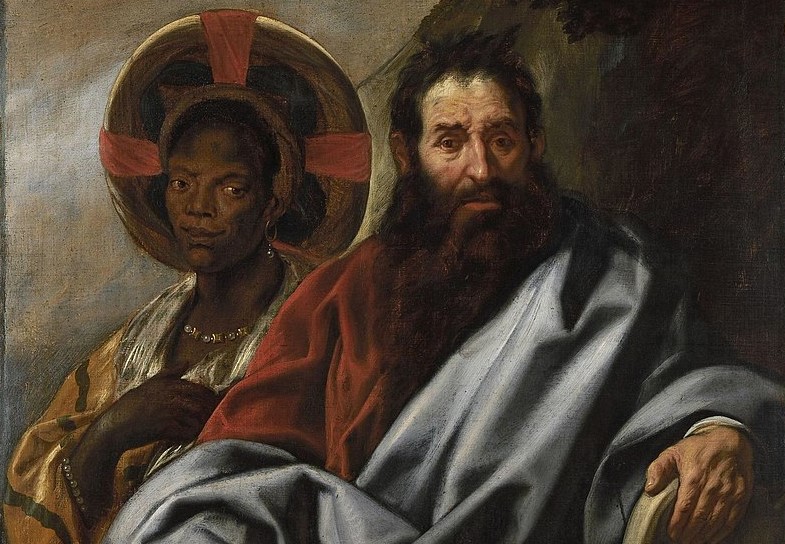
From Jacob Jordaens' painting, Moses and His Ethiopian Wife Zipporah. 1650. (Wikipedia)
From Jacob Jordaens’ painting, Moses and His Ethiopian Wife Zipporah. 1650. (Wikipedia)

At the end of Parshat Beha’alotcha, we find a mysterious and puzzling narrative, the first three verses of which do not seem to follow from each other at all:

1. And Miriam and Aaron spoke against Moses because of the Kushite woman whom he had married; for he had married a Kushite woman. 2. And they said, Has the Lord indeed spoken only through Moses? has he not spoken also through us? And the Lord heard it. 3. And the man Moses was very humble, more than any other men which were upon the face of the earth.

I am intrigued by verses 1 and 2 and the disconnect between them. What precisely is the complaint here? Is it that Moses has married a Kushite woman, as verse 1 implies (and if so, why is that a problem?); or is it to do with God speaking through people, as in verse 2 ? These appear to be two entirely different issues.

In attempting to explain the problem with marrying the Kushite woman, plus the connection between the two seemingly unrelated complaints, the Midrash, Rashi, and others suggest a non-literal interpretation: the complaint was that Moses had separated from his wife Tzipporah, and his siblings felt that that this was unnecessary and inappropriate, for they too were prophets and yet had not separated themselves thus from their own spouses.

This approach adequately explains the connection between the two verses, but it deviates from the plain meaning of the first verse. It is hard to read into the complaint that “Moses had married a Kushite woman” that he had in fact “separated from his Midianite wife Tzipporah.” What gives, with these hermeneutical acrobatics?

Yet trying to follow the plain meaning raises further questions, such as: Who was this woman? Where did he meet her? Why did he marry her? Both Rashbam and the Daat Zekenim Tosafist compendium cite a work entitled, The Chronicles of Moses Our Teacher, to the effect that somewhere between age 40 and 80, Moses married an Ethiopian queen and ruled over Ethiopia for 40 years! The Daat Zekenim commentary goes on to connect this idea with the second verse by suggesting that Moses ruled Ethiopia for 40 years and became proud.

They protested: “Moses became so proud, because G-d spoke to him face to face, that he married out of the tribe! We (Miriam and Aaron) also had G-d speak to us, and we did not marry out of the tribe.”

(Daat Zekenim then has to deal with the fact that Tzipporah was similarly a non-Jewish woman, so why does the criticism not extend to this marriage? They did not criticize Moses for having married Tzipporah, as he had done so in circumstances when he was a refugee from Egyptian justice at the time.)

All of this is very odd, and we begin to understand why Rashi prefers to depart from the actual words of the text, rather than bark up this particular tree.

Rather than continue to survey how other commentators resolve this tension (and it is conceivable that a less farfetched pshat is at hand), I’d like to turn now to a meaning that is both confronting and redemptive, with profound modern resonances. For the question in my mind is — how does an Ethiopian Jew feel reading this story (if not focusing on the Moses marrying the Ethiopian queen sub-plot, which is admittedly very romantic)? Also: Does the story encourage racism?

The word Kushite, is used in Amos 9:7, where God declares, “Are you not like Kushites to Me?”

One possible meaning given for this phrase is that of standing out. The idea is that just as people originating in Africa would have visually stood out, being dark skinned, to the Israelites who were of Mediterranean-hued skin, so too the Israelites stand out for God in their specialness and distinctiveness. This is a positive meaning associated with the word “Kushites.”  And yet, undoubtedly, the metaphor only works because they “stand out,” meaning that they are “other” in some way. And this “otherness” is key here.

Unlike Miriam and Aaron, who grew up in amongst the Israelites in Egypt, Moses grew up in Pharaoh’s palace as a non-Jew, disconnected from his own people. He then fled to Midian, lived once again among non-Jews, and married into the family of an idol-worshipping priest, Jethro.

In brief, Moses spent his life among those who were other to him. It was a mode familiar to him, for he had had long practice in doing so. Thus, when G-d chose him to receive prophecy on a level never before or since attained, and to give the Torah through him – making him the ultimate Other, a human being given an experience no other human had shared, impossible even to describe, setting him apart — he already had the inner psychological vessel prepared and available to contain such a role.

Miriam and Aaron, in all their greatness, lacked this vessel within them. They had grown up in the house of their parents, among their people. Their protest related to this very issue: they viewed Moses as breaking the rules in some way (separating from Tzipporah, or marrying out of the tribe), and attributed it to hubris following G-d speaking to or through him. They were mistaken however, as verse 3 clarifies for us: Moses was humble, not arrogant.

No, Moses was not arrogant; but he was outside the rules, in that he was quintessentially other.

Hence, speaking symbolically now, we can suggest that when Moses marries the Kushite woman, he is embracing (“marrying”) his own otherness to the full — perhaps accepting fully, finally, that he will never be like anyone else. The more God spoke through him, the less of a regular human he became. And perhaps Miriam and Aaron – to judge them a little more favorably — sensed this and could not bear to fully and finally accept the separation from him that this would entail, as their beloved younger brother whom Miriam saved from a watery death became not quite human. They did not wish him to “marry” his otherness; they wanted to keep him in this world, with them.

So they complained that they too had had God speak through them, and why could he not remain normal, not marry his “Kushite” otherness?

Miriam was then stricken by God with leprosy and had be confined outside the camp for seven days. She got to have a powerful educational experience of otherness for herself, and perhaps as she sat there, learned to embrace her own separation from the collective.

And what about the Ethiopian Jew reading this? And the racism? Well, I can’t speak for the experience of the Ethiopian Jew, but I imagine it might well be unpleasant to read oneself portrayed as a stereotypical representation of the quintessential other! Unless this is accompanied by a celebration and reinterpretation of what we do with otherness.

I would suggest that today, in the welcome move to respect all humans, people erroneously equate the fight against racism with ignoring and being blind to difference. Undoubtedly a divergence from the prevailing norm in terms of skin color, ability, or any other difference should not become the sum total of who someone is. We must train ourselves to see beyond such things to the image of God in us all, and never to discriminate against someone because of such differences.

Nonetheless — and without at all meaning to be naïve about the ills of racism — I ask: Can’t we celebrate and enjoy the diversity that makes life rich? Can’t we be open, relaxed, and genuine about the differences between us, rather than being afraid to make even the most innocent comment pointing out such differences – for fear of aggressive PC responses and crowdthink?

If the Kushites in Amos, standing out from the crowd, are used in such positive terms as a metaphor for how special the Israelites are to God, then each of us can celebrate whatever specialness or otherness we have within us that makes us a bit different from those around — and embrace it in other people too. Let’s not be as Miriam and Aaron, who, due to their own limitations, distanced their brother for becoming other. Let’s do the opposite and bring the other closer to be our brother.

As taken from, https://blogs.timesofisrael.com/the-kushite-woman-marrying-otherness/

 
Leave a comment

Posted by on June 16, 2019 in Uncategorized


Camp and congregation

by Rabbi Lord Jonathan Sacks

The parsha of Beha’alotecha speaks about the silver trumpets – clarions – Moses was commanded to make:

The Lord spoke to Moses, saying, “Make two trumpets of silver; make them of hammered work. They shall serve you to summon the congregation [edah] and cause the camps [machanot] to journey.” (Num. 10:1–2)

This apparently simple passage became a springboard for one of the most profound meditations of the late Rabbi Joseph Soloveitchik. It appears in his great essay Kol Dodi Dofek, on the Jewish approach to suffering.[1]

There are, says Rabbi Soloveitchik, two ways in which people become a group – a community, society, or nation. The first is when they face a common enemy. They band together for mutual protection. Like all animals who come together in herds or flocks to defend themselves against predators, we do this for our survival. Such a group is a machaneh – a camp, a defensive formation.

There is another, quite different, form of association. People can come together because they share a vision, an aspiration, a set of ideals. This is the meaning of edah, congregation. Edah is related to the word ed, witness. Edot (as opposed to chukim and mishpatim) are the commands that testify to Jewish belief – as Shabbat testifies to creation, Passover to the Divine involvement in history, and so on. An edah is not a defensive formation but a creative one. People join together to do what none could achieve alone. A true congregation is a society built around a shared project, a vision of the common good, an edah.

Rabbi Soloveitchik says these are not just two types of group, but in the most profound sense, two different ways of existing and relating to the world. A camp is brought into being by what happens to it from the outside. A congregation comes into existence by internal decision. The former is reactive, the latter proactive. The first is a response to what has happened to the group in the past. The second represents what the group seeks to achieve in the future. Whereas camps exist even in the animal kingdom, congregations are uniquely human. They flow from the human ability to think, speak, communicate, envision a society different from any that has existed in the past, and to collaborate to bring it about.

Jews are a people in both of these two quite different ways. Our ancestors became a machaneh in Egypt, forged together by a crucible of slavery and suffering. They were different. They were not Egyptians. They were Hebrews – a word which probably means “on the other side,” “an outsider.” Ever since, Jews have known that we are thrown together by circumstance. We share a history all too often written in tears. Rabbi Soloveitchik calls this the covenant of fate (brit goral).

This is not a purely negative phenomenon. It gives rise to a powerful sense that we are part of a single story – that what we have in common is stronger than the things that separate us:

Our fate does not distinguish between rich and poor…[or] between the pietist and the assimilationist. Even though we speak a plethora of languages, even though we are inhabitants of different lands…we still share the same fate. If the Jew in the hovel is beaten, then the security of the Jew in the palace is endangered. “Do not think that you, of all the Jews, will escape with your life by being in the king’s palace” (Est. 4:13).[2]

Our shared community’s fate leads also to a sense of shared suffering. When we pray for the recovery of a sick person, we do so “among all the sick of Israel.” When we comfort a mourner, we do so “among all the other mourners of Zion and Jerusalem.” We weep together. We celebrate together. This in turn leads to shared responsibility: “All Israel are sureties for one another.”[3] And this leads to collective action in the field of welfare, charity, and deeds of loving kindness. As Maimonides puts it:

All Israelites …are like brothers, as it is said, “You are children of the Lord your God” (Deut. 14:1). If brother shows no compassion to brother, who will? …Their eyes are therefore lifted to their brothers.[4]

All these are dimensions of the covenant of fate, born in the experience of slavery in Egypt. But there is an additional element of Jewish identity. Soloveitchik calls this the covenant of destiny (brit ye’ud) – entered into at Mount Sinai. This defines the people of Israel not as the object of persecution but the subject of a unique vocation, to become “a kingdom of priests and a holy nation” (Ex. 19:6).

Under this covenant, we became defined not by what others do to us but by the task we have undertaken, the role we have chosen to play in history. In Egypt, we did not choose to become slaves, that was a fate thrust upon us by someone else. We did, however, choose to become God’s people at Sinai when r said, “We will do and obey” (Ex. 24:7). Destiny, call, vocation, purpose, task: these create not a machaneh but an edah, not a camp but a congregation.

Our task as a people of destiny is to bear witness to the presence of God – through the way we lead our lives (Torah) and the path we chart as a people across the centuries (history).

G. K. Chesterton once wrote that “America is the only nation in the world that is founded on a creed.”[5]Chesterton was notoriously anti-Semitic, and this evidently prevented him from recalling that the reason America was founded on a creed was that its founders, Puritans all, were steeped in what they called the Old Testament. They took as their model the covenant made between God and the Israelites at Sinai, and it was this that linked nationhood and the idea of a specific task or mission. Herman Melville gave this one of its classic expressions in his 1849 novel, White-Jacket:

We Americans are the peculiar, chosen people – the Israel of our time; we bear the ark of the liberties of the world…. God has predestined, mankind expects, great things from our race; and great things we feel in our souls. The rest of the nations must soon be in our rear. We are pioneers of the world; the advance-guard, sent on through the wilderness of untried things, to break a new path in the New World that is ours.[6]

It is the concept of covenant that gives Jewish (and American) identity this strange dual character. Nations are usually forged through long historical experience, through what happens to them – rather than what they consciously set themselves to do. They fall into the category of machaneh. Religions, on the other hand, are defined in terms of beliefs and a sense of mission. Each is constituted as an edah. What is unique about Judaism is the way it brings together these separate and quite distinct ideas. There are nations that contain many religions and there are religions that are spread over many nations, but only in the case of Judaism do religion and nation coincide.

This has had remarkable consequences. For almost 2,000 years Jews were scattered throughout the world, yet they saw themselves and were seen by others as a nation – the world’s first global nation. It was a nation held together not by geographical proximity or any other of the normal accompaniments of nationhood. Jews did not speak the same vernacular. Rashi spoke French, Maimonides Arabic. Rashi lived in a Christian culture, Maimonides in a Muslim one. Nor was their fate the same. While the Jews of Spain were enjoying their Golden Age, the Jews of northern Europe were being massacred in the Crusades. In the 15th century, when the Jews of Spain were being persecuted and expelled, those of Poland were enjoying a rare spring of tolerance. What held Jews together during these centuries was shared faith. In the trauma that accompanied European Emancipation and the subsequent rise of racial antisemitism, many Jews lost that faith. Yet the events of the past century – persecution, pogroms, and the Holocaust, followed by the birth of the State of Israel and the constant fight to survive against war and terror – tended to bind Jews together in a covenant of fate in the face of the hostility of the world. So when Jews were divided by fate they were united by faith, and when they were divided by faith they were united again by fate. Such is the irony, or the providential nature, of Jewish history.

Judaism in the past two centuries has fissured and fractured into different edot: Orthodox and Reform, religious and secular, and the many subdivisions that continue to atomise Jewish life into non-communicating sects and subcultures. Yet in times of crisis we are still capable of heeding the call of collective responsibility, knowing as we do that Jewish fate tends to be indivisible. No Jew, to paraphrase John Donne, is an island, entire of him- or herself. We are joined by the gossamer strands of collective memory, and these can sometimes lead us back to a sense of shared destiny.

The duality was given its first expression this week in Beha’alotecha, with the command: “Make two trumpets of silver; make them of hammered work. They shall serve you to summon the congregation [edah], and cause the camps [machanot] to journey.” Sometimes the clarion call speaks to our sense of faith. We are God’s people, His emissaries and ambassadors, charged with making His presence real in the world by healing deeds and holy lives. At other times the trumpet that sounds and summons us is the call of fate: Jewish lives endangered in Israel or the Diaspora by the unremitting hostility of those who call themselves children of Abraham yet claim that they, not we, are his true heirs.

Whichever sound the silver instruments make, they call on that duality that makes Jews and Judaism inseparable. However deep the divisions between us, we remain one family in fate and faith. When the trumpet sounds, it sounds for us.

Shabbat Shalom.

NOTES

[1] Rabbi Joseph B. Soloveitchik, Kol Dodi Dofek: Listen, My Beloved Knocks, trans. David Z. Gordon ( Jersey City, NJ: Ktav, 2006). A translation also appears in Bernhard H. Rosenberg (ed.), Theological and Halachic Reflections on the Holocaust (Hoboken, NJ: Ktav, 1992).

[2] In Rosenberg, Theological and Halachic Reflections on the Holocaust, 84.

[3] Sanhedrin 27bShavuot 39a.

[4] Maimonides, Mishneh Torah, Hilchot Matanot LeEvyonim 10:2.

[5] G. K. Chesterton, What I Saw in America (New York: Dodd, Mead and Company, 1922), 7.

[6] Herman Melville, White-Jacket (Oxford: Oxford University Press, 2000), 153. See Jonathan Sacks, “The Universal Story”, in Pesach Haggadah (Jerusalem: Maggid, 2013), 75–84.

As taken from, https://blogs.timesofisrael.com/camp-and-congregation-behaalotecha-5779/

 
Leave a comment

Posted by on June 16, 2019 in Uncategorized


Is the Zohar an Ancient Book?

Ver las imágenes de origen
Rabbi Dr. Israel Drazin

Many mystics insist that the Zohar was composed by Rabbi Simeon bar Yochai around the year 130 CE. However, scholars recognize that Moses d’ Leon, a Spaniard living in Granada, wrote it around 1286, that parts of the book were added by others after his death, and that the work is a pious forgery.

Zohar means “luminous” and alludes to the notion that God illuminates the people through mysticism. But while ostensibly dealing with enlightenment, the Zohar is usually very difficult to understand and many of its ideas are not rational.

The Zohar’s basic teaching is the doctrine of the Sefirot, “numbers,” ten divine parts of God that function in ten different ways. The lowest entity is shekhinah, also called malkhut, which mystics see as the anthropomorphic feminine part of God that interacts with humans.

The mystics feel that the ten parts of God are not combined together and that humans have a duty to help God become one by having his ten disjointed parts reassembled, like putting Humpty Dumpty together again. When this is done, they say the messianic age will arrive.

Scholars have assembled a host of proofs showing that the Zohar was not an ancient document. The following are some of the many proofs.

  1. A renowned person visited Moses d’ Leon to see the ancient documents that d’ Leon claimed he used to copy the Zohar. Moses d’ Leon kept putting him off and later asserted that the documents had strangely disappeared. After his death, d’ Leon’s wife admitted that the documents never existed.
  2. The ideas in the Zohar are a later development of earlier mystical notions, showing that they were composed after these earlier works, and not in 130, as d’ Leon claimed.
  3. Neither the rabbis nor anyone else knew about the Zohar until d’ Leon introduced it.
  4. Moses d’ Leon had no sense of history; he describes the alleged second century author conversing with people who lived long after his death.
  5. The Zohar author knew of the existence of vowels and accent marks used in the Torah books and gave them mystical interpretations. However, these items were not invented until the ninth century, seven centuries after the alleged composition date of the Zohar.
  6. The terms “master of dikduk [grammar]” and “tenuah gedola” (long vowel) are used in the Zohar even though they were not coined until the tenth and eleventh centuries, respectively.
  7. The author inserted terms from Jewish philosophy that was not developed until the Middle Ages.
  8. The book contains ideas copied from the eleventh-century Kuzari of Yehudah Halevi.
  9. The author introduces Maimonides’ twelfth-century concept about physics.
  10. The volume mentions putting on two pairs of tefillin, a practice that arose in the twelfth century.
  11. The Zohar discusses the Kol Nidre prayer of Yom Kippur, a ceremony that began in the eleventh century.
  12. The language of the Zohar is later than its alleged date of composition.
  13. There are many incorrect quotations from the Bible and the Talmud. The latter did not exist in 130.
  14. Prophecies in the volume inform the reader that the Zohar will be revealed around 1300 C.E., a blatant attempt to justify its late appearance.
  15. There are parallel passages between the Zohar and other books that were indisputably composed by Moses d’ Leon, including mistakes in the original books that d’ Leon copied into his Zohar.
  16. There is no mention in the Talmud or Midrashim that the alleged author of the Zohar, Rabbi Simeon bar Yochai, was interested in mysticism. Thus, d’ Leon took the wrong hero for his work.
  17. The famous mystic Rabbi Jacob Emden (born 1697) recorded 280 contradictions, anachronisms and incorrect statements and concluded that the book is a forgery of the thirteenth-century with some later additions.

In summary, the Zohar is the most prominent book of Jewish mysticism and is considered holy by many people. It contains the majority of the most important notions of modern Jewish mysticism. However, the book is not what it claims to be, its ideas are at best obscure and incomprehensible, its concept of God is curious and polytheistic, and it gives people wrong ideas about Judaism, and it encourages a passivity that stifles people from intellectual and emotional growth.

As taken from, https://blogs.timesofisrael.com/author/israel-drazin/

About the author: Dr. Israel Drazin served for 31 years in the US military and attained the rank of brigadier general. He is an attorney and a rabbi, with master’s degrees in both psychology and Hebrew literature and a PhD in Judaic studies. As a lawyer, he developed the legal strategy that saved the military chaplaincy when its constitutionality was attacked in court, and he received the Legion of Merit for his service. Dr. Drazin is the author of more than 50 books on the Bible, philosophy, and other subjects.

 
Leave a comment

Posted by on June 16, 2019 in Uncategorized