Tanto nuestro cuerpo como nuestra alma necesitan nutrición y sustento.
¿Qué es esencial?
El término ha ganado considerable prominencia durante esta época de pandemia global. Las profesiones que se consideran esenciales reciben el privilegio de estar exceptuadas del mandato de tener que “quedarse en casa”.
Es sorprendente lo que algunos gobiernos están dispuestos a incluir en esta categoría de “esencial” y cómo estos oficios se anteponen a cualquier posible amenaza a la salud y al bienestar de la sociedad. En algunos lugares los floristas pueden repartir ramos de flores y en otros los campos de golf pueden permanecer abiertos. En Nueva York, aunque se prohíbe hacer ejercicio en gimnasios y comer dentro de restaurantes, incluso si se cuida el distanciamiento social y se usan máscaras, las tiendas que venden alcohol permanecen abiertas.
¿Qué es realmente “esencial”? Esta es una pregunta importante que debemos responder durante los días previos a Rosh HaShaná y Iom Kipur.
La mejor respuesta que escuché es que lo más esencial en la vida es ser suficientemente sabio como para saber qué es verdaderamente esencial. Y éste es el principal propósito de las Altas Fiestas.
A lo largo del año nos pasamos los días buscando cosas que realmente no tienen ningún valor ni significado. Pero una vez al año llega un momento en el cual nos bajamos de la rueda de la rutina de nuestra vida para detenernos y pensar. Mientras los gobiernos están ocupados tratando de resolver el significado real de lo que es esencial, el judaísmo nos proporcionó la respuesta más poderosa y profunda a través de una ley judía.
El judaísmo nos ordena innumerables bendiciones. De acuerdo con el Talmud, cada judío debe recitar por lo menos cien bendiciones diarias. Sí, Tevie, hay una bendición por una máquina de coser e incluso una bendición por el zar. Pero casi todas esas bendiciones son de origen rabínico. Ellas no tienen ninguna fuente en la Torá, sino que surgieron del deseo sincero de los Sabios de expresar su amor por Dios y sincero agradecimiento por las numerosas bondades que Él nos da. Sin embargo, hay dos bendiciones que tienen origen en la Torá misma y en consecuencia tienen la fuerza de los mandamientos bíblicos.
Hay dos, y sólo dos, aspectos esenciales en nuestras vidas.
La primera bendición es el ‘Agradecimiento después de las comidas’ (Birkat HaMazón). La segunda es el mandamiento diario de bendecir a Dios por habernos entregado la Torá. ¿Cuál es la conexión entre estas dos bendiciones? La primera, la bendición por el alimento, pone en palabras el agradecimiento que le debemos a Dios por mantenernos físicamente y darnos vida. La segunda nos recuerda expresar gratitud por nutrir nuestras almas y darnos una razón para vivir.
En Génesis, la creación del hombre se describe como una dualidad de dos fuentes. Fuimos creados del polvo de la tierra. Esa es la clave para nuestros cuerpos. Pero cuerpos sin almas no son nada más que cadáveres. La vida surgió cuando Dios insufló en la nariz de Adam parte de Su espíritu Divino. Fue entonces cuando fuimos creados a “imagen de Dios”. En Rosh HaShaná conmemoramos esta singularidad tocando el shofar, lo que replica ese momento en que nuestros cuerpos se unieron con una parte de la Divinidad. Dios y Su aliento entró a nuestro ser.
El idioma español registra de forma muy bella este momento histórico. En latín, aliento se dice spiritus. Estamos vivos mientras el alma permanece en nuestro interior. El aliento del shofar de Dios nos hizo humanos. Morir es expirar; ese es el momento en que el espíritu de Dios, Su aliento, nos deja.
Cuando nuestros cuerpos toman conciencia de nuestra espiritualidad, de la presencia de Dios en nuestro ser, nos sentimos inspirados. Nuestras almas sienten la presencia de Dios. Cuando Dios decide que ya hemos cumplido nuestro propósito en la vida o que ya no estamos inspirados para hacerlo, Su decreto es que expiremos, que le devolvamos Su aliento.
Las dos bendiciones bíblicas se refieren a dos aspectos esenciales de nuestra vida. Tanto nuestro cuerpo como nuestra alma necesitan nutrición y sustento. Nuestro cuerpo necesita alimento. Nadie puede negar que eso es esencial para la vida. Pero también nuestra alma requiere algo igualmente importante. Tal como comemos tres veces al día, también rezamos la misma cantidad de veces. La comida llena nuestros estómagos; la Torá satisface nuestras almas.
En los últimos meses llegamos a reconocer más que nunca el verdadero significado de la necesidad. Tuvimos que vivir sin muchas cosas y, afortunadamente, la mayoría hemos sobrevivido. Al llegar a las Altas Fiestas necesitamos reevaluar nuestras prioridades y rezar con todo el corazón por las dos bendiciones bíblicas que mejor nos definen. Somos cuerpos, pero también somos almas, y tenemos que bendecir a Dios por darnos la oportunidad de satisfacer las necesidades realmente “esenciales” de ambos.
Palestinian refugees in 1948. Photo: Wikimedia Commons.
Are Palestinians the descendants of the original inhabitants (Canaanites) of the Land of Israel, as claimed by the Palestinian Authority (PA), or are they descendants of recent waves of immigration?
Arab migration within the Middle East — including to/from the area between the Jordan River and the Mediterranean — has been an intrinsic feature of the region for millennia. Illinois University Economics Prof. Fred Gottheil wrote (The Smoking Gun: Arab Immigration into Palestine, 1922-1931): “According to the International Labor Organization, Middle East migrant workers — moving within and beyond the Middle East — make up approximately 9% of the world’s total.”
According to the Geneva-based Global Commission on International Migration, “The world’s highest share of migrant population is to be found in the Middle East.”
The scope of Egyptian emigration is highlighted by the Washington, DC-based Migration Policy Institute: “More than 6 million Egyptian emigrants lived in the Middle East North Africa region as of 2016, primarily in Saudi Arabia, Jordan and the United Arab Emirates.”
This busy traffic of Arab migrants was also prevalent during the 19th century and the first half of the 20th century, when Arab/Muslim emigrants — many of them from Egypt — pursued a better standard of living in various parts of the globe, including British-ruled Palestine.
According to Gottheil (ibid.), “Arab Palestinians were no less responsive than were Egyptians to the migratory impulse. According to 1998 UNRWA estimates, there were 275,000 Arab Palestinians in Saudi Arabia, 38,000 in Kuwait … 74,000 in Libya and over 100,000 in other Gulf countries. Hundreds of thousands left the Middle East entirely. … It would seem reasonable to suppose that for the same reasons Arab Palestinians and other Middle East populations migrated from the less to the more attractive economies at the end of the 20th century, they would have done the same during the early decades of the 20th century [and the 19th century].”
He argues that Arab migration to Israel was inspired by the rapid improvement of living standards there. “Arab migration flows were, in the main, illegal, and therefore unreported and unrecorded. … Commenting on the growth of the Palestinian population during the decades of the 1920s and 1930s, the Royal Institute for International Affairs reports: ‘The number of Arabs who have entered Palestine illegally from Syria and Transjordan is unknown, but probably considerable.’”
Hebrew University historian Dr. Rivka Shpak-Lissak, known for her wide and highly-diversified documentation of Arab/Muslim migration to Palestine (“When and how the Arabs and Muslims immigrated to the Land of Israel”, Hebrew, 2018) notes that the Land of Israel (named Palaistine by the Greek Empire and Palaestina by the Roman Empire, as derived from the Philistines, who migrated to the coastal plain of the Land of Israel from the Aegean Sea) was ruled by the Arabs only during 640-1099, when the overall population dwindled from 2.5 million to 500,000. The Arab rule was succeeded by the Crusaders, then the Ayyubid-Kurdish dynasty, the Mamluk Sultanate, the Ottoman Empire (beginning in 1516, when the population shrank to a mere 123,000), and the British Mandate.
Dr. Shpak-Lisak indicates that the substantial increase of the Arab/Muslim population of Palestine was initiated during the first half — and toward the end — of the 19th century. It was higher than the population growth rate in Egypt, Turkey, and Iran. Thus, there was an increase of 94% from the beginning of the 19th century (246,359) to 1914 (525,150).
This increase was largely due to waves of (mostly Egyptian) immigration to a sparsely populated and infrastructure-deprived Palestine, which were triggered by:
Significant economic growth (investment, banking, commerce), especially since 1900, compared to most Middle East and North African countries;
Enticement by the Ottoman Empire — which ruled Palestine during 1516-1918 — such as improved governance, infrastructure development, enhanced facilities at the port of Jaffa, and Ottoman military requirements (including the transfer of Egyptians to Palestine’s coastal plain, in order to restrain the Bedouin tribes and coalesce the Egyptian conquest of 1830-1840);
A considerable expansion of church activity.
According to Prof. Usiel Oskar Schmeltz, a leading demographer at the Hebrew University and Israel’s Central Bureau of Statistics, 53% of the Arab/Muslim population at the beginning of the 20th century were immigrants.
Bar Ilan University geographer Prof. David Grossman (“Rural Arab Demography and Early Jewish Settlement in Palestine”), determined that most of the population growth rate of Palestinian Arabs/Muslims was a derivative of immigration, rather than natural growth. Grossman estimated a 50% immigrant population among Palestinian Arabs/Muslims in 1914. He highlighted the Ottoman policy of encouraged immigration to Palestine.
The 1911 Encyclopedia Britannica recorded that “the inhabitants of Palestine are composed of a large number of elements, differing widely in ethnological affinities, language and religion. … Early in the 20th century a list of no less than fifty languages, [were] spoken in Jerusalem as vernaculars.”
Contrary to Palestinian claims, and in accordance with a litany of documentation (courtesy of Prof. Shpak-Lissak), most of the Arabs living between the Jordan River and the Mediterranean Sea are descendants of Arab/Muslim migrants, who arrived in the 19th and 20th centuries from Muslim countries in Central Asia, the Middle East, Africa, and Europe.
Yoram Ettinger is a former ambassador and head of Second Thought: a US-Israel Initiative.
Jews around the world today are known to be more educated – and even more likely to vote in elections – than their counterparts. But was this high level of literacy true thousands of years ago? Researchers at Tel Aviv University (TAU), together with a retired superintendent and senior handwriting examiner from the Israel Police Division of Identification and Forensic Science, have found that contrary to popular belief, many people in the ancient Kingdom of Judah could read and write.
The first-ever, special interdisciplinary study, just published in the Public Library of Science (PLoS One) was conducted by Dr. Arie Shaus, Shira Faigenbaum-Golovin and Dr. Barak Sober of TAU’s applied mathematics department; Prof. Eli Piasetzky of the Sackler School of Physics and Astronomy; and Prof. Israel Finkelstein of the department of archeology and ancient Near Eastern civilizations. The forensic handwriting specialist was Yana Gerber, a senior expert who served for 27 years in the Israel Police.
The researchers examined the writings found in Tel Arad – ostraca (fragments of pottery vessels containing ink inscriptions) that were discovered at the Tel Arad archaeological site in the 1960s. Tel Arad is one of Israel’s most important archaeological sites, where remains were found of a fortified Canaanite city and fortresses from the time of the kings of Judah, when it was a small military post on the southern border of the kingdom. Its built-up area covered about two dunams, and it housed between 20 and 30 soldiers. The fortresses include the remains of a unique Judean temple.
Literacy was not the exclusive domain of a handful of royal scribes, the team concluded after examining ink-inscribed pottery shards and identifying 12 different handwritings with varying degrees of certainty.
A high rate of literacy indicates the ability to compile biblical texts, such as the books from Joshua to Kings, before the destruction of the First Temple by the Babylonians.
Forensic handwriting examination of the Arad inscriptions had never before been conducted. In fact, to the best of the team’s knowledge, such an examination had never been performed on any ancient inscription for forensic chemical analysis in the context of historical texts. The researchers used state-of-the-art image processing and machine learning technologies to analyze 18 ancient texts from the Tel Arad military post dating back to around 600 BCE. They concluded that they were written by no fewer than 12 authors, a finding suggesting that many of the inhabitants of the Kingdom of Judah during that period were able to read and write, and that literacy not reserved as an exclusive domain in the hands of a few royal scribes.
“There is a lively debate among experts as to whether the books of Deuteronomy, Joshua, Judges, Samuel and Kings were compiled in the last days of the Kingdom of Judah or after the destruction of the First Temple by the Babylonians,” said Shaus. “One way to try to get to the bottom of this question is to ask when there was the potential for the writing of such complex historical works. For the period following the destruction of the First Temple in 586 BC, there is a very scant archaeological evidence of Hebrew writing in Jerusalem and its surroundings, whereas for the period preceding the destruction of the Temple, an abundance of written documents has been found.”
But then, Shaus continued, the question of who wrote these documents remains. Was this a society with widespread literacy or was there just a handful of literate people?
“We examined the question of literacy empirically from different directions of image processing and machine learning,” said Faigenbaum-Golovin. “Among other things, these areas help us today with the identification, recognition and analysis of handwriting, signatures and more. The big challenge was to adapt modern technologies to ancient ostraca. With a lot of effort, we were able to produce two algorithms that could compare letters and answer the question of whether two given ostraca were written by two different people.”
In 2016, the team published in Proceedings of the National Academy of Sciences of the United States of America (PNAS) that algorithmically, and with high statistical probability, 18 texts – the longest of the Tel Arad inscriptions – were written by at least four different authors. Combined with the textual evidence, the researchers concluded that there were in fact at least six different writers. This study aroused great interest around the world.
Now, in an unprecedented development, the researchers decided to compare the algorithmic methods, which have since been refined, to the forensic approach. To this end, Gerber from the Israel Police Division of Identification and Forensic Science joined the team. After an in-depth examination of the ancient inscriptions, she found that the 18 texts were written by at least 12 distinct writers with varying degrees of certainty. Gerber examined the original Tel Arad ostraca at the Israel Museum in Jeusalem, the Eretz Israel Museum in Tel Aviv, TAU’s Sonia and Marco Nedler Institute of Archaeology and the Israel Antiquities Authority’s warehouses at Beit Shemesh (located between Jerusalem and Tel Aviv).
“This study was very exciting, perhaps the most exciting in my professional career,” noted Gerber. “These are ancient Hebrew inscriptions written in ink on shards of pottery, using an alphabet that was previously unfamiliar to me. I studied the characteristics of the writing to analyze and compare the inscriptions while benefitting from the skills and knowledge I acquired during my bachelor’s degree from TAU in classical archaeology and ancient Greek. I delved into the microscopic details of these inscriptions written by people from the First Temple period, from routine issues such as orders concerning the movement of soldiers and the supply of wine, oil and flour, through correspondence with neighboring fortresses to orders that reached the Tel Arad fortress from the high ranks of the Judahite military system. I had the feeling that the time stood still and there was no gap of 2,600 years between the writers of the ostraca and ourselves.”
“Handwriting is made up of unconscious habit patterns,” Gerber explained. “The handwriting identification is based on the principle that these writing patterns are unique to each person and that no two people write exactly alike. It is also assumed that repetitions of the same text or characters by the same writer are not exactly identical and one can define a range of natural handwriting variations specific to each one. Thus, the forensic handwriting analysis aims at tracking features corresponding to specific individuals, and concluding whether a single or rather different authors wrote the given documents.”
The examination process, she went on, is divided into three steps: analysis, comparison, and evaluation. The analysis includes a detailed examination of every single inscription according various features such as the spacing between letters, their proportions and slant. The comparison is based upon these features across various handwritings. In addition, consistent patterns, common for different inscriptions, are identified, such as the same combinations of letters, words and punctuation. Finally, an evaluation of identicalness or distinctiveness of the writers is made. It should be noted that according to a ruling by Israel’s Supreme Court, a person can be convicted of a crime based on the opinion of a forensic handwriting expert.”
Shaus added: “We were in for a big surprise: Yana identified more authors than our algorithms did. Currently, our algorithms are of a ‘cautious’ nature; they know how to identify cases in which the texts were written by people with significantly different writing; in other cases, they refrain from definite conclusions. In contrast, an expert in handwriting analysis knows not only how to spot differences between writers more accurately, but in some cases may also arrive at the conclusion that several texts were actually written by a single person. Naturally, in terms of consequences, it is very interesting to see who the authors are. Thanks to the findings, we were able to construct an entire flowchart of the correspondence concerning the military fortress – who wrote to whom and regarding what matter”. This reflects the chain of command within the Judahite army.”
For example, in the area of Arad, close to the border between the kingdoms of Judah and Edom, there was a military force whose soldiers are referred to as Kittiyim in the inscriptions – most likely Greek mercenaries, said Shaus. “Someone, probably their Judahite commander or liaison officer, requested provisions for the Kittiyim unit. He writes to the quartermaster of the fortress in Arad ‘give the Kittiyim flour, bread, wine’ and so on. Now, thanks to the identification of the handwriting, we can say with high probability that there was not only one Judahite commander writing, but at least four different ones. It is conceivable that each time another officer was sent to join the patrol – they took turns.”
According to the researchers, the findings shed new light on Judahite society on the eve of the destruction of the First Temple and on the setting of the compilation of biblical texts.
“It should be remembered that this was a small outpost, one of a series of outposts on the southern border of the kingdom of Judah,” said Sober. “Since we found at least 12 different authors out of 18 texts in total, we can conclude that there was a high level of literacy throughout the entire kingdom. The commanding ranks and liaison officers at the outpost, and even the quartermaster Eliashib and his deputy, Nahum, were literate.” Someone had to teach them how to read and write, said Sober, “so we must assume the existence of an appropriate educational system in Judah at the end of the First Temple period. This, of course, does not mean that there was almost universal literacy as there is today, but it seems that significant portions of the residents of the Kingdom of Judah were literate. This is important to the discussion on the composition of biblical texts. If there were only two or three people in the whole kingdom who could read and write, then it is unlikely that complex texts would have been composed.”
“Whoever wrote the biblical works did not do so for us, so that we could read them after 2,600 years, they did so in order to promote the ideological messages of the time,” concluded Finkelstein. “There are different opinions regarding the date of the composition of biblical texts. Some scholars suggest that many of the historical texts in the Bible – from Joshua to II Kings – were written at the end of the 7th century BCE, that is, very close to the period of the Arad ostraca. It is important to ask for whom these texts were written. According to one view, there were events in which the few people who could read and write stood before the illiterate public and read texts out to them. A high literacy rate in Judah puts things into a different light.”
“Until now, the discussion of literacy in the Kingdom of Judah has been based on circular arguments, that is, on what is written within the Bible itself, for example on scribes in the kingdom,” he said. “We have shifted the discussion to an empirical perspective. If in a remote place like Tel Arad there was, over a short period of time, a minimum of 12 authors of 18 inscriptions, out of the population of Judah – estimated to have been no more than 120,000 people – it means that literacy was not the exclusive domain of a handful of royal scribes in Jerusalem. The quartermaster from the Tel Arad outpost also had the ability to read and appreciate them.”
Aishlatino.com conversó con expertos en educación. Esto fue lo que dijeron.
Dado que millones de niños en este momento estudian de forma remota, este es un año escolar sin precedentes. AishLatino.com conversó con expertos en educación respecto a cómo podemos apoyar a los niños que tienen que estudiar a distancia. Esto fue lo que dijeron los expertos.
Todo comienza con la actitud
La profesora Keisha Rembert, profesora de educación en la Universidad Nacional Lewis en Chicago, asegura que el primer paso para tener un año escolar productivo es “mantenerse positivo”. La profesora Rembert, ex profesora de escuela secundaria y madre, vio de primera fuente la fuerza que tiene la actitud parental. “Si los padres expresan desesperación, los hijos lo captan y esos sentimientos negativos impactan las relaciones del niño con sus maestros”.
En cambio, debemos tratar de adoptar una actitud positiva hacia la experiencia escolar de nuestros hijos este año. Por supuesto que hay desafíos y dificultades inherentes al estudio a distancia. Aunque no podemos cambiar la situación, podemos controlar la forma en que reaccionamos. Por el bien de nuestros hijos (y por nuestro propio bien), debemos tratar de encontrar lo bueno en las lecciones a distancia y ser modelos de una actitud positiva.
Debemos tratar de adoptar una actitud positiva hacia la experiencia escolar de este año.
Una estrategia es usar el humor. Ese es el consejo de la Sra. Olivia Friedman, maestra y coordinadora de tecnología educativa en la Academia judía Ida Crown en Skokie, Illinois. Ella observó a sus estudiantes y a sus familias luchar con las demandas del aprendizaje a distancia, y señala que dar lugar a momentos alegres y darnos permiso para reírnos puede ayudar a enfrentar el estrés.
“El humor ayuda a que las cosas funcionen mejor”, señala. “Miren videos graciosos, hagan chistes, encuentren lo que funcione para su familia”.
Organizar el tiempo y el espacio de los estudiantes
“Cuando se trata de educación a distancia, algo que aprendimos es que en general les fue mejor a los estudiantes que tenían un cronograma organizado”. Esto fue lo que observó Elliot John Farr, el director de “Tutor Me” en los Ángeles, una compañía de tutoría que ayudó a los alumnos a enfrentar los desafíos del estudio a distancia cuando las escuelas cerraron sus puertas en marzo, y continúa aconsejando a los estudiantes que comenzaron su año lectivo de forma remota.
Él aconseja fijar un cronograma de trabajo de aula, tareas y estudio independiente, y apegarse al mismo. La profesora Rembert señala que cuando la escuela tiene lugar en el hogar, es particularmente importante delinear el momento en el cual comienza y termina la escuela. “La estructura es realmente importante: que tenga un momento de comienzo y de fin, saber cuándo termina la escuela y comienza el tiempo en familia”.
Otro factor importante para tener éxito en el aprendizaje a distancia es asegurar que los estudiantes tengan suficiente espacio físico para hacer sus tareas sin interrupciones ni distracciones, y un lugar claro para mantener sus materiales y libros.
“No todo el mundo tiene el lujo de tener un espacio de trabajo separado en su hogar”, afirmó Olivia Friedman. “En un mundo ideal, trataríamos de tener espacios separados, o por lo menos espacios en los que los niños no se encuentren en áreas de mucho tráfico”. Ella alienta a los padres a que traten de fijar un espacio definido y separado para las tareas escolares, si es posible en las zonas más tranquilas de la casa, donde haya menos tráfico.
Cuando hay muchas personas trabajando en línea, también puede ser un problema tener suficiente amplitud de onda y buena conexión. Hay que tratar de ser creativos y dividir las tareas para que los niños puedan completar sus tareas en línea durante los momentos del día en que se usa menos internet. Especialmente para los niños más pequeños, la Sra. Friedman sugiere ponerse en contacto con los maestros y preguntarles si pueden ver un video asignado o imprimir una hoja con tareas en otro momento del día y no en las horas pico.
Dar prioridad al cuidado personal
Esta es una época muy difícil para todos, señala Julie Skolnick, fundadora de “With Understanding Comes Calm”, una consultoría educativa con sede en Maryland que asesora a clientes con desafíos de neuro-diversidad que afectan el aprendizaje. Dar un paso atrás y recordarnos que todos enfrentamos desafíos, y que está bien no estar bien ahora, puede ayudar a nuestros hijos a enfrentar mejor los diversos desafíos de la educación a distancia.
“Muchos de mis clientes no están comprometidos con el aprendizaje en línea y no hay ningún problema en ello”. Lo que puede ser una lección todavía más importante para impartir a nuestros hijos en este momento es que nos preocupamos por nosotros mismos y por los demás, que damos prioridad a nuestro bienestar sobre los hitos académicos.
La Sra. Skolnick sugiere que nos detengamos y nos preguntemos: “¿Los maestros se están cuidando a sí mismos? ¿Los padres se cuidan? ¿Estamos enfocados en lo académico en detrimento de nuestro bienestar? ¿O tratamos de meternos en un “modelo” que no funciona para todas las personas?
Olivia Friedman hace eco a este mensaje. “Hay mucha preocupación respecto a que este año los niños se queden detrás. ¿Pero detrás de quién? Todo el mundo entiende que este no será un año típico”.
Un mantra común entre los maestros estos días de estudio a distancia es “Maslow antes de Bloom”. Esto se refiere a la obra de dos pensadores judíos norteamericanos. Abraham Maslow (1908-1970) fue un psicólogo que creó una famosa jerarquía de necesidades humanas, en donde la salud y la seguridad son dos de las necesidades más fundamentales que tiene la persona. La Sra. Friedman señala que, en este momento, los maestros comprenden que tenemos que permitirles a las familias el tiempo y el espacio para enfocarse en esas necesidades humanas claves. En muchos casos, lo académico puede esperar.
Benjamín Bloom (1913-1999) fue un educador norteamericano que creó la “taxonomía de Bloom”, un método clásico para entender cómo los logros educativos se construyen unos sobre otros. Si bien normalmente los maestros están preocupados por lograr que sus alumnos aprendan y cumplan los objetivos educativos, en medio de una pandemia con tanta gente preocupada por su salud y por su manutención, hay momentos en los que estos logros académicos pueden dejarse en pausa para que en cambio los maestros puedan trabajar para proveer a sus estudiantes con un sentido de seguridad.
Hay momentos en los que tienes que tirar tu cronograma por la ventana.
Julie Skolnick sugiere que los padres discutan con simpatía los miedos y las preocupaciones de los niños. Recuerden que no necesitamos resolver sus problemas: a veces lo que los niños quieren de nosotros es simplemente que validemos sus sentimientos y sus temores.
“Estamos en modo de crisis. En este momento, todo el globo sufre de trastorno de estrés postraumático. Acomoden sus prioridades de acuerdo con esto. Necesitarán detenerse varias veces al día para revisar si algo es importante en este momento. Hay momentos en los que tienes que tirar tu cronograma por la ventana”.
Construir una relación con los maestros
“Manténganse en contacto con los maestros de sus hijos. Si pueden hacerlo, tengan una línea clara de comunicación con sus instructores”, aconseja Elliot John Farr. Él aconseja a los padres pedir a los maestros el currículo de cada semestre, para que los estudiantes sepan exactamente qué se espera de ellos y que los padres puedan seguir su progreso. “También deben mantener un intercambio por e-mail con los maestros”. Tener el hábito de enviar e-mails a los maestros de tus hijos asegura que puedas formular las preguntas y discutir las dificultades del aprendizaje a distancia a medida que se vayan presentando.
La profesora Rembert dice que una forma en que los padres pueden aprovechar de forma positiva los desafíos de la educación a distancia, es enseñarles a los niños a abogar por sí mismos frente a sus maestros. Si un niño tiene dificultades con una materia o con el estudio a distancia, traten de encontrar formas para que pueda expresarlo y pedir más ayuda.
“Los niños son más tecnológicos de lo que pensamos”, señala la profesora Rembert. Ella descubrió que incluso niños de primer grado pueden enviar e-mails a sus maestros con un poco de ayuda paterna. Ella alienta a los padres a conversar sobre la forma en que los niños se sienten más cómodos para comunicarse con sus maestros. “Un padre puede decir: ‘ si no te sientes cómodo para preguntarle en clase, vamos a escribirle un e-mail a tu maestra'”. Otra estrategia puede ser grabar un video de tu hijo formulando su pregunta y luego enviar el video al maestro. Esto da fuerza a los niños y asegura que permanezcan abiertos los canales de comunicación. Esta es una lección que ayudará a los niños en sus estudios mientras se siga estudiando a distancia.
Enfocar las lecciones desde un ángulo diferente
Los educadores afirman que todos siguen aprendiendo cómo crear modelos de aprendizaje en línea que sean efectivos. No todos los planes son adecuados para todos los niños. Si tu hijo tiene dificultades con las expectativas del maestro, debes comunicarte con el maestro o con la escuela y pensar en formas en las que él pueda lograr sus objetivos educativos utilizando otros recursos.
“Los padres pueden ver cómo responden los niños a las lecciones y quizás ver cómo se pueden modificar en su beneficio”, señala Olivia Friedman. “Se puede trabajar con los maestros para ver si es posible lograr su objetivo de una forma diferente”. Quizás un niño puede trabajar con hojas de tareas en vez de pasar horas en zoom. O tal vez un alumno puede hacerlo mejor al dedicarse a estudiar un tema de forma independiente.
La fatiga de Zoom
“Es agotador pasar muchas horas en Zoom”, señala Olivia Friedman. Respecto a los niños a los que les cuesta pasar muchas horas en línea, ella aconseja ponerse en contacto con los maestros y explorar soluciones alternativas.
Julie Skolnick aconseja que los niños, y los adultos, empleen el método “20-20-20”. Cada veinte minutos alejar la mirada de la pantalla durante 20 segundos, enfocándose en algo que se encuentre a 6 metros de distancia. Esto ayuda a reducir la fatiga que produce estar muchas horas frente a la pantalla.
Ella también adoptó un enfoque creativo para programar su día de trabajo y el día de clases de sus hijos. Aunque todos estudian y trabajan desde su hogar, ella insiste en que se vistan con ropa de la escuela y establece momentos específicos del día en los cuales ella está “en el trabajo” y sus hijos están “en la escuela”. Incluso se preparan el almuerzo tal como lo hacían cuando iban a la escuela y a trabajar, y lo comen juntos durante el receso del mediodía, en el patio cuando el tiempo lo permite. Esto les da tanto a ella como a los niños un orden y la sensación de que separan el trabajo, la escuela y los momentos personales del día.
No saltearse el recreo
Es fundamental incluir en el día de clases el recreo. “Los niños necesitan ahora más que nunca momentos de recreación que no se basen en las pantallas”, observa la profesora Rembert. “Esto es esencial tanto para los más pequeños como para los mayores. Las investigaciones demuestran que los niños precisan los recreos y cuando se estudia a distancia es imperativo que los padres creen esos recreos”. La profesora Rembert señala que en su hogar ella insiste en que los niños jueguen afuera. Ella y su esposo también organizan caminatas familiares.
La cena familiar
Otro de los consejos claves de la profesora Rembert es encontrar tiempo para cenar en familia y diferenciar el tiempo de “escuela” que se pasa en el hogar del tiempo en familia que también se pasa en el hogar. “Nuestras vidas se han vuelto muy confusas y el tiempo en el hogar también se volvió confuso. Mis hijos abandonan sus llamadas de zoom y después tienen que completar sus tareas”. Puede resultar difícil saber si están en tiempo de escuela, de tareas escolares en casa, o disfrutando del tiempo personal no laboral.
Sentarse juntos restaura y crea un espacio para mantener conversaciones importantes con nuestros hijos sobre cómo fue su día escolar y qué preocupaciones o problemas pueden tener.
Abordar proyectos en familia puede ayudar a que los niños y los padres se unan. Participar juntos en algo creativo provee el respiro necesario después de horas de trabajar en línea.
Todos estamos luchando para crear un nuevo año lectivo significativo para nuestros hijos. Comparte lo que funciona para tu familia más abajo, en la sección de comentarios.
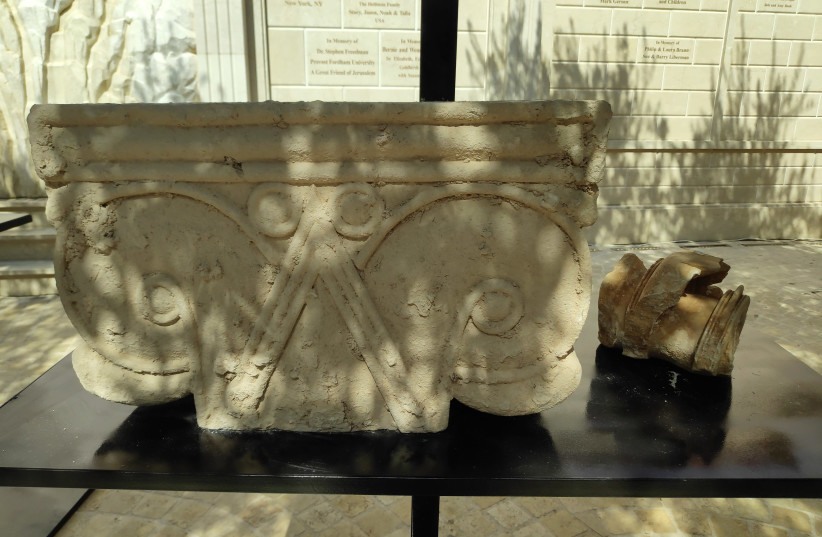
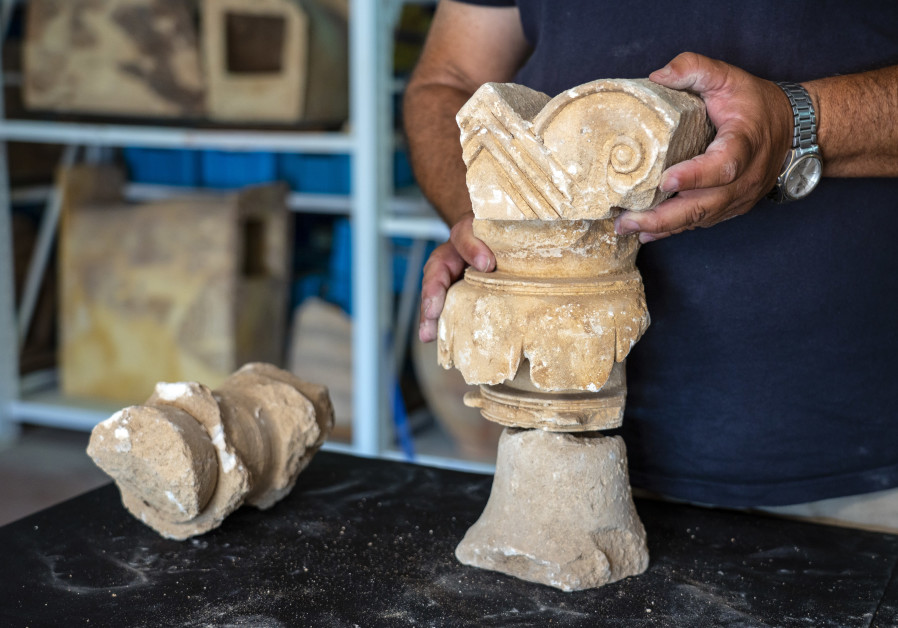
The symbol of the Davidic dynasty(photo credit: TZVI JOFFRE)
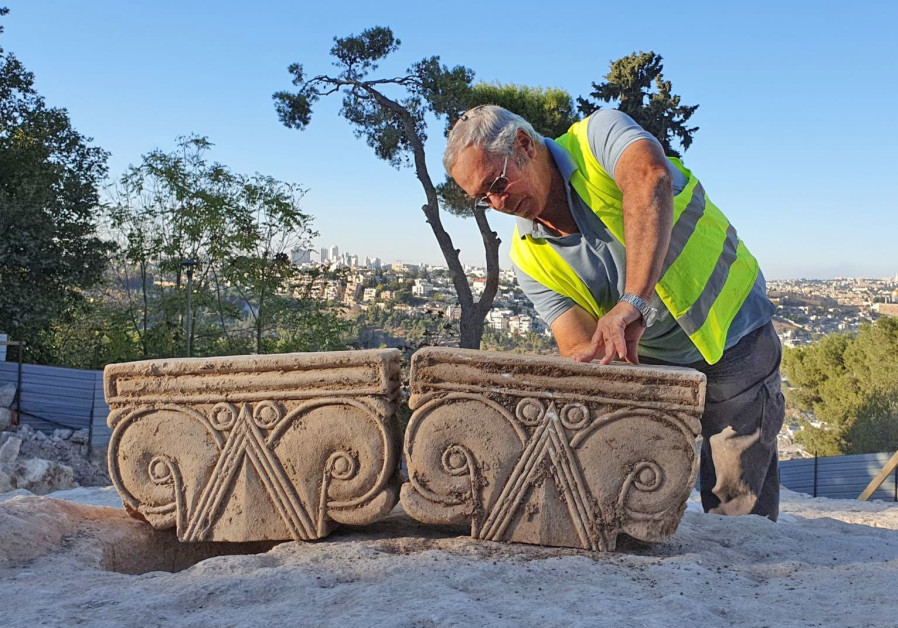
A “once in a lifetime” find is how the City of David described three immaculately preserved 2,700-year-old decorated column heads, or capitals, from the First Temple period that indicate a connection to the Davidic Dynasty.
“I’m still excited,” said Yaakov Billig, an archaeologist with the City of David who began exploring the Armon Hanatziv area about 30 years ago.He was working at the site when the sound of a spade scraping a stone slab surprised him. After a careful excavation, archaeologists at the site uncovered the capital, whose style is found in royal and official buildings in the kingdoms of Israel and Judea during the First Temple period.“I thought, ‘Yaakov, maybe you’ve been in the sun too long.’ But I looked again, and it was still there,” Billig told The Jerusalem Post.
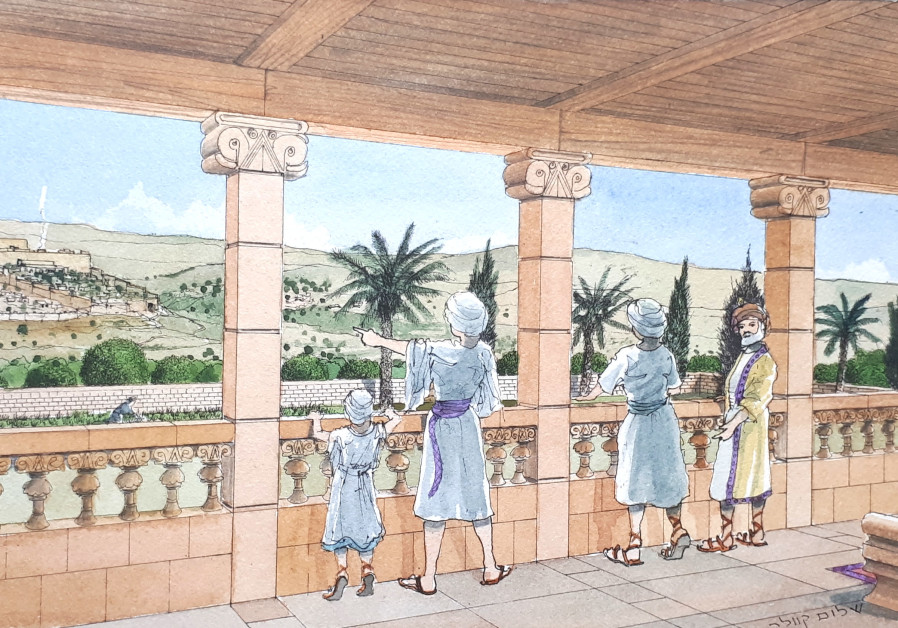
While lifting the capital out of the ground, they were stunned to find not only that the stone was decorated on both side, but that there was yet another identical capital directly underneath it. A third identical stone was found nearby.The stones seem to have been hidden intentionally due to their seemingly careful placement. It may have been the only thing that saved them from being destroyed, as the rest of the site was “just about leveled,” with many of the surviving stones being recycled in other buildings, Billing said. Why the stones were so carefully hidden may never be known, he added.The capitals are linked to the Davidic Dynasty because such designs from the period of the kingdoms of Israel and Judea have only been found within the areas they ruled. The design has been found from later periods in other locations throughout the Mediterranean and Middle East.The royal design can be found today on NIS 5 coins and on signs pointing to archaeological sites in Israel.Besides the capitals, additional artifacts found at the site indicate a royal or noble building as well, including a toilet, which was only found in the homes of the wealthy in that period, Billig said.The findings were revealed at a press conference attended by Billig, Israel Antiquities Authority archaeologist Dr. Yuval Baruch, Culture and Sports Minister Chili Tropper and City of David Foundation chairman David Be’eri.Using evidence from artifacts found at the site and the level at which they were found, archaeologists dated the capitals to the seventh century BCE, between the rule of King Hezekiah and the Babylonian conquest and destruction of Jerusalem.
The location of the site seems to indicate a sort of “exit from the walls” of Jerusalem, showing that the people felt more secure in their surroundings after the Assyrian siege of the city failed. The biblical story of the siege describes the defeat of the Assyrians as a miraculous event against all odds, which may explain why the residents of the city suddenly felt secure enough to settle outside the walls, Billig said.The other archaeological sites in the area tend to be from the Second Temple period, he said, adding that if additional digs are conducted, other mansions and palaces may be found in the strategically located area.About 20 to 30 similar capitals exist, but these are generally larger and reconstructed. The ones found in Armon Hanatziv are medium-sized and smaller than the more commonly found capitals and may have been used to decorate pillars in a courtyard or patio. Smaller stones of a similar design were found at the site as well and seem to have been used in a decorative window sill.Archaeological findings are usually revealed to the public only after a long process of research and study. But the City of David and the Israeli officials decided that these findings were too important to keep hidden. The decision to reveal the findings in such an early stage was made “based on the idea and deep belief that these archaeological remains – this built, physical legacy – are the inheritance of the entire public,” Baruch said.“We are making every effort so that the public will see how professional, scientific and impartial Israeli archaeology is – which is relevant to everyone, no matter where they’re located, whether in Israel or anywhere else,” he said.
“This discovery is really a once-in-a-lifetime discovery,” City of David Foundation vice president Doron Spielman said. “It’s not every day that we’re able to discover something that four billion people around the world – who have some type of identity to the bible, to ancient Jerusalem, to the idea of discovering the bible and unearthing the archaeology underneath the ground and connecting it to the actual place” – can relate to.A large number of additional artifacts from the same period were found at the site as well. But the capitals may be some of the greatest treasures, connecting the site to the stories of the Davidic kingdom in the Bible. The additional artifacts found at the site are being studied and will be revealed to the public at a later date.
Uno de los adversarios más formidables con quien uno tiene que lidiar es… uno mismo.
La razón es simple: las ideas y los sentimientos que uno mejor conoce son los suyos propios. Y dado que son ideas y preferencias personales, uno tiende a darles suma importancia. Si yo entiendo así o siento asá es justificación suficiente para hacer todo lo posible para poder llevar a cabo mis ideas y satisfacer mis deseos.
Sucede a menudo que ocurre todo lo contrario. El o la que fija su plan de vida basándose únicamente en lo que a él o a ella le parece, termina perdiendo oportunidades cuyo valor va mucho más allá de las ideas y sentimientos personales limitados y pasajeros cuyo impacto no perdura en el tiempo.
La comodidad y la familiarización pueden ser los enemigos más grandes de uno y no sus aliados.
En la lectura de esta semana, Nitzavim-Vaiélej (1), Moshé Rabeinu se dirige al pueblo judío diciéndoles que “Uds. están parados todos ante el Señor, vuestro Di-s, las cabezas de sus tribus …. Desde sus leñadores hasta los que sacan agua.” (29:11)
El fundador de Jabad, Rabí Schneur Zalman, conocido también como el Álter Rebe, explica las tareas de cortar leña y extraer agua, además de sus implicancias literales, también como tareas necesarias para el desarrollo personal: La palabra empleada por el texto en referencia a tu leña es “eitzeja” que se puede entender también como tus “eitzot”, ideas y consideraciones personales. El agua a la que hace referencia es el factor “agua” del alma animal, o sea la fuente y motor de los placeres físicos (2)
El mensaje aquí, dice Rabi Schneur Zalman, es que hay que eliminar las ideas y deseos personales que apuntan principalmente a la satisfacción material. Es recién cuando uno logra neutralizar y extirpar de sí mismo estos dos móviles que podrá estar en condiciones óptimas como para cumplir con su misión de vida, sin el soborno de la comodidad personal.
Uno podría suponer que dicha disciplina es aplicable únicamente a los estudiosos de la Torá, a los que se dedican a una vida espiritual o para tener éxito uno mismo en su búsqueda espiritual. ¿Qué pasa en el área del comercio o profesional, o sea en las áreas “no religiosas” de la vida? ¿No están como para que cada uno haga lo que le parezca y lo que le dé satisfacción personal?
El Rebe —que su mérito nos proteja— señala que la respuesta a esta pregunta está implícita en el comentario de Rashi sobre el versículo.
¿Quienes eran dichos leñadores y aguateros? Rashi explica que eran Cananeos quienes vinieron en la época de Moshé con la intención de que los convirtiera y Moshé los designó para que cumplan las funciones de leñadores y extractores de agua.
El Rebe explica que el término kenaaní implica también “comerciante”. La implicación aquí es que no solo en cuanto a ocupaciones celestiales y espirituales —”religiosos”— hay que liberarse de intereses personales —ya sean intelectuales o bien emocionales— sino también en cuanto a cuestiones de “comercio”, todas aquellas actividades que tienen que ver con lo físico y lo material, hay que poner a trabajar los “leñadores” y “extractores de agua”, o sea eliminar las ideas y deseos personales, y realizar las actividades con la intención de lograr por medio de ellas iluminar al mundo con la luz de la Torá y del alma divina.
Hay quienes pueden ver en eso una persecución, “no me dejan hacer lo que quiero”, o bien pueden ver en eso una gran oportunidad, “siempre —hasta en las actividades más aparentemente mundanas e insignificantes— tengo la oportunidad de lograr algo de valor infinito y eterno.
Así que la herramienta de esta semana es: si te sentís mal porque entiendes que gran parte de tu vida no tiene ningún sentido o valor especial, recuerda que depende de tí determinar el rumbo que vas a tomar: trazar el camino según tus ideas y sentimientos personales que no dejan huella, o liberarte de ellos y dedicarte a algo infinitamente más grande y valioso.
NOTAS AL PIE
Deuteronomio, 29:9 – 31:30
2. De acuerdo a las enseñanzas kabalísticas y jasídicas, la naturaleza e instinto de cada uno de nosotros se compone en distintas combinaciones de los cuatro elementos base: agua, fuego, tierra y aire, Cada elemento busca su expresión por medio de conductas determinadas. El elemento “agua” es el elemento esencial de los placeres. El elemento “fuego” se expresa por medio del enojo y altanería. El elemento “tierra” se expresa por medio de la pereza y la depresión. El elemento “aire” se expresa por medio de la vanidad, la burla, y palabras improductivas.
Al saludar el acuerdo Israel-Emiratos y ensalzar al liderazgo emiratí, algunos palestinos están haciendo control de daños ante lo que el presidente de la Autoridad Palestina, Mahmud Abás, y el liderazgo palestino están haciendo al atacar vehementemente al príncipe heredero de Abu Dhabi, Mohamed ben Zayed, acusándole de traidor. En la imagen (Jacquelyn Martin/AFP, vía Getty Images), el secretario de Estado de EEUU, Mike Pompeo, con Ben Zayed en Abu Dhabi el 24 de junio de 2019.
Mientras los líderes palestinos siguen librando una masiva campaña de incitación contra Emiratos por su acuerdo de normalización con Israel, algunos palestinos han mostrado su apoyo al mismo y acusado a aquellos de dañar las relaciones palestinas con los Estados árabes.
En las últimas semanas, el presidente de la Autoridad Palestina (AP), Mahmud Abás, y los dirigentes de su facción Fatah han acusado insistentemente a Emiratos y a su líder de facto, el príncipe heredero Mohamed ben Zayed, de “apuñalar a los palestinos por la espalda con una daga ponzoñosa” y traicionar a la mezquita de Al Aqsa, a Jerusalén y a la causa palestina; así como de violar lo contemplado en la Iniciativa Árabe de Paz de 2002, que estipulaba que los países árabes normalizarían sus relaciones con Israel sólo cuando este se retirara a las líneas de armisticio previas a 1967 y se estableciera un Estado palestino independiente con capital en la zona oriental de Jerusalén.
Las acusaciones han generado concentraciones de protesta en Jerusalén, la Margen Occidental y la Franja de Gaza, en las cuales se han quemado banderas de Emiratos y retratos de Ben Zayed.
No obstante, hay palestinos que no comparten el enfado de sus gobernantes con los emiratíes. Palestinos a los que les preocupa que la sobrerreacción de sus dirigentes ante el acuerdo Emiratos-Israel sea contraproducente y cause aún más daño a la causa palestina.
Pero a los barandas palestinos no parecen importarles lo que digan esas voces. Al ignorarlas, Abás y compañía demuestran una vez más que no tienen el menor reparo en ir contra los intereses de su propio pueblo. Peor aún: al condenar a diario el acuerdo Emiratos-Israel, están dejando claro que prefieren alinearse con Irán y con sus peones palestinos y libaneses –Hamás, la Yihad Islámica y Hezbolá– en el rechazo a cualquier compromiso con Israel.
Uno de los palestinos que se han atrevido a desafiar públicamente a la dirigencia es Suha Arafat, la viuda del exlíder de la OLP Yaser Arafat. Así, el otro día publicó en su cuenta de Instagram una disculpa que decía:
“En nombre de quienes, en el pueblo palestino, son honorables, quiero pedir disculpas al pueblo emiratí y a sus dirigentes por el destrozo y quema de la bandera de Emiratos en Jerusalén y Palestina, y por la afrenta a los símbolos de los amados Emiratos.”
Suha ensalzó a Emiratos por su apoyo al pueblo palestino y añadió:
“Nuestras generaciones han de leer correctamente la historia para saber que Emiratos apoyó en el pasado y apoya en el presente al pueblo palestino y a su causa. Pido disculpas al pueblo y a los dirigentes de Emiratos por cualquier daño que haya hecho cualquier palestino a este pueblo atento y generoso, que siempre nos ha dado la bienvenida.”
Las disculpas de Suha fueron criticadas por altos cargos que sostienen que no está facultada para hablar en nombre de los palestinos. Monir al Yagub, dirigente de Fatah, dijo: “Yo no he autorizado a nadie a disculparse ante Emiratos en mi nombre por normalizar sus relaciones [con Israel]”.
La pronta réplica de Al Yagub a la viuda de Arafat es indicativa de la determinación del liderazgo palestino en su campaña de incitación contra Emiratos y en no tolerar la menor crítica, aun cuando proceda de la anterior primera dama de Palestina.
Sin embargo, la crítica de Suha a la reacción palestina al acuerdo Israel-Emiratos es compartida por otros palestinos, muchos de los cuales temen expresar sus opiniones en público por miedo a las fuerzas de seguridad de la AP en la Margen Occidental.
Recientemente fue arrestado el artista y productor de televisión Abdel Rahmán Daher tras publicar un comentario en Facebook crítico con la postura del liderazgo palestino ante el acuerdo Israel-Emiratos. Su detención se ha contemplado como parte de la oleada represiva contra los críticos de la dirigencia y como un intento de disuadir a otros palestinos de respaldar públicamente el acuerdo de marras.
Merece la pena señalar que Suha Arafat reside en Malta y no en la Margen Occidental, donde probablemente habría sido detenida o interrogada por las fuerzas de seguridad.
Otros palestinos que se han atrevido a apoyar el acuerdo Israel-Emiratos son los que viven en el Golfo, sobre todo los residentes en los propios Emiratos, que tienen mucho que perder como consecuencia de la incitación de los dirigentes palestinos. Son decenas de miles los palestinos que viven y trabajan en Emiratos y otros Estados del Golfo.
El Dr. Muhamad Janfar, presidente del Comité de la Comunidad Palestina en Emiratos, destacó la profundidad de las históricas y estratégicas relaciones entre Emiratos y Palestina, según el diario de Dubai Al Bayán. Jafar ensalzó el apoyo emiratí a los palestinos, sobre todo en materia de ayuda humanitaria y en la financiación de proyectos relacionados con la vivienda, la sanidad y la educación en la Margen Occidental y la Franja de Gaza: “El pueblo palestino agradece esas posiciones, que dan cuenta de la fortaleza de las relaciones [entre los emiratíes y los palestinos”, declaró.
El poeta y periodista palestino Sameh Kaush, residente en Emiratos, destacó:
“El tratado de paz entre Emiratos e Israel supone un avance significativo en las negociaciones de paz árabe-israelíes, que llevan 30 años estancadas. Este importante logro reduce las expectativas árabes, que destrozaron muchas de nuestras vidas e ilusiones y desperdiciaron miles de millones de dólares que podrían haber sido invertidos en tecnologías modernas y en las generaciones futuras. Como palestino, tengo plena confianza en la sabiduría del liderazgo emiratí, en su perspicacia y en su auténtica filiación árabe. El que ha dado Emiratos es un paso importante para el logro de una paz integral.”
Salem al Qaisi, intelectual y hombre de negocios palestino residente igualmente en Emiratos, sostiene:
“Llevo 47 años en Emiratos, y estoy orgulloso de estar en este honorable país. El pueblo de Emiratos y sus gobernantes han defendido siempre los asuntos árabes. El acuerdo [Israel-Emiratos] es una decisión sensata y audaz que llevará la paz a toda la región.”
Moataz Fanús, asesor jurídico palestino también residente en Emiratos, comenta que los líderes emiratíes han mostrado al mundo que tienen un papel en la consecución de la paz y en el apoyo de la causa palestina. A su juicio, el acuerdo “viene en apoyo de los derechos e intereses palestinos porque abre una nueva puerta al diálogo y la negociación, y alienta la paz en Oriente Medio”.
Said Nuri, experto en educación, da las gracias a los dirigentes emiratíes “por respaldar los derechos palestinos y una paz justa”, destacando que en el pasado Emiratos ofreció apoyo material, político, económico y moral a los palestinos.
Al saludar el acuerdo israelo-emiratí y ensalzar al liderazgo emiratí, estos palestinos hacen control de daños ante lo que han hecho Abás y los dirigentes palestinos al lanzar su agresivo ataque contra el príncipe heredero Ben Zayed y acusarle de traidor.
Ciudadanos de Emiratos, Arabia Saudí y otros Estados árabes han condenado rotundamente los vehementes ataques del liderazgo palestino contra Ben Zayed, que han incluido la quema de la bandera emiratí, y acusado a los palestinos de “desagradecidos”.
Al insistir con sus ataques contra Emiratos y otros países árabes que, según se informa, están considerando establecer relaciones con Israel, Abás y los demás líderes palestinos están no sólo infligiendo un daño tremendo a las comunidades palestinas de la región, sino cebando al voraz campo contrario a la paz en los mundos árabe e islámico. Al detener y amenazar a los palestinos que se atreven a defender públicamente el acuerdo israelo-emiratí, están demostrando de nuevo que, como todos los demás dictadores árabes, consideran los derechos humanos un privilegio que sólo ellos merecen.
Many Gulf citizens described the Palestinian leaders as “merchants of the Palestinian issue” and accused them of financial corruption and embezzlement of public funds.
“The enemy of the Palestinian cause is not Israel, but the [Palestinian] comrades, the disgraceful merchants of Palestine, who don’t want the Palestinian issue to be resolved. Before you [Palestinian leaders] criticize others, you need to take a look at yourselves and your miserable situation and the condition of your people, whom you have destroyed.” — Shuja Al-Hothli, Saudi journalist and author, Twitter, September 7, 2020.
Palestinian leaders have accumulated huge personal fortunes, possibly in part thanks to donations from Western taxpayers and their unenquiring governments.
Some Gulf Arabs interpreted Hamed’s remarks as incitement to carry out terrorist attacks against the Gulf states. “The funny thing is that Mueen Hamed called for armed actions against the Gulf, not Israel.” — Saudi social media user who calls himself inthe_shade911, Twitter, September 6, 2020.
By alienating the Gulf Arabs, the Palestinian leaders are further ravaging their own people, especially those who live and work in these countries. Abbas has already wrecked the Palestinians’ relations with Israel and the US. By offending the Gulf states and depicting their residents as backward illiterates, Abbas and the leaders of the Palestinian factions are convincing yet more Arabs to stay as far away from Palestinians as they can.
Palestinian leaders are continuing to show contempt for other Arabs, including those who for many years provided them with financial and political aid. On September 3, during a videoconference meeting of leaders of several Palestinian factions, Palestinian Authority President Mahmoud Abbas (pictured) poured scorn on the Arabs of the Gulf states by hinting that they are illiterate and uneducated. (Photo by Alaa Badarneh/Pool/AFP via Getty Images)
Palestinian leaders are continuing to show contempt for other Arabs, including those who for many years provided them with financial and political aid. Some Palestinian leaders are even indirectly inciting their people to carry out terrorist attacks against Gulf countries that engage in normalization with Israel.
On September 3, during a videoconference meeting of leaders of several Palestinian factions, Palestinian Authority President Mahmoud Abbas poured scorn on the Arabs of the Gulf states by hinting that they are illiterate and uneducated. “There are 13 million Palestinians, and they are all educated,” Abbas said in a speech he delivered from his office in Ramallah, the de facto capital of the Palestinians. “We don’t have illiteracy like others.”
Mueen Hamed, a representative of As-Sa’iqa, a pro-Syria Palestinian Ba’athist group, is one of several faction leaders who spoke at the conference from Beirut. Hamed, too, mocked the Gulf Arabs.
Referring to the recent normalization agreement between Israel and the United Arab Emirates, he said:
“We blame the United Arab Emirates and the [Arab] countries that support it. As our comrades said, the Palestinian people were responsible for the advancement of all the Gulf states from 1948 and until today. Everyone acknowledges that the Palestinian worker is the most active in the Gulf. [The Palestinians] taught them how to read and write and lead.”
Hamed pointed out that there are 400,000 Palestinians in the UAE “who are capable of changing the society of the Emiratis.”
“Why shouldn’t these Palestinians play a role? Why shouldn’t the Palestinian factions be in contact with all these Palestinians so they could play an active role in preventing any country from following suit with the United Arab Emirates? The situation is dangerous.”
The statements of Abbas, Hamed and other Palestinian faction leaders drew strong condemnations from many Gulf Arabs, who denounced the Palestinians as arrogant liars. Many Gulf citizens described the Palestinian leaders as “merchants of the Palestinian issue” and accused them of financial corruption and the embezzlement of public funds.
The Arabs also rejected the Palestinian leaders’ claim that it was the Palestinians who contributed to the advancement and development of the Gulf states in the past five decades.
“The Palestinian factions have declared war on the Arabs,” commented a Saudi social media user called Al-Sagariah. “The merchants of the [Palestinian] issue are offending the Gulf.”
Some Gulf Arabs interpreted Hamed’s remarks as incitement to carry out terrorist attacks against the Gulf states. “This incitement makes the Gulf states wary of the Palestinians living on their lands,” wrote a Saudi social media user who calls himself inthe_shade911.
“[The incitement] authorizes the Gulf states to keep the Palestinians under constant security observation for fear that they might carry out terrorist acts under the direction of the Palestinian leaders. The funny thing is that Mueen Hamed called for armed actions against the Gulf, not Israel.”
Echoing the same fear, Saudi political researcher Emad Al-Mudaifer also accused the Palestinian faction leaders of inciting their people to launch terrorist attacks against the Gulf states. Commenting on the anti-Gulf statements of the faction leaders during the virtual conference, Al-Mudaifer warned: “This is an official declaration of the desire to carry out terrorist attacks by Palestinians residing in the Gulf.”
Monther Mubarak, another Saudi social media activist, sarcastically remarked:
“I have decided to establish a company named after the [Palestinian] cause. I will bring a team of the best traffickers in causes, but I’m facing a dilemma who to appoint as the company’s president in wake of the fierce rivalry between Fatah and Hamas and their skills in trade. Who do you think is most fit to manage this company? Mahmoud Abbas or [Hamas leader] Ismail Haniyeh?”
Saudi journalist and author Shuja Al-Hothli also lashed out at the leaders of the Palestinian factions and accused them of destroying the lives of their people:
“The enemy of the Palestinian cause is not Israel, but the [Palestinian] comrades, the disgraceful merchants of Palestine, who don’t want the Palestinian issue to be resolved… Before you [Palestinian leaders] criticize others, you need to take a look at yourselves and your miserable situation and the condition of your people, whom you have destroyed.”
Hassan Sajwani, an Emirati businessman and political activist, said that the “Palestinian leadership and their factions have shown their real colors — inciting Palestinians living in the UAE to revolt against the UAE!”
Dr. Zayed Al-Amari, a Saudi strategist and political commentator, wrote that the Palestinian issue has become a means for Palestinian leaders to accumulate wealth. Al-Amari pointed out that former PLO leader Yasser Arafat has allegedly accumulated a wealth of $8 billion, while Abbas’s wealth is estimated at $6 billion. The wealth of former Hamas leader Khaled Mashaal is rumored to be $5 billion, while the wealth of his successor, Haniyeh, is said to be $4 billion US dollars, he disclosed. “There are more than 1,800 billionaires living in the West Bank alone,” Al-Amari noted.
It is not clear if these figures are true and it is possible that they are exaggerated. The point he and others are trying to make is that Palestinian leaders have accumulated huge personal fortunes, possibly in part thanks to donations from Western taxpayers and their unenquiring governments.
Saudi journalist Salem Al-Sehman, responding to Abbas’s speech and the anti-Gulf statements made by Palestinian faction leaders, said:
“The clown Abbas and other beneficiaries of the [Palestinian] cause have to review their positions and respect the Arab and Gulf countries, particularly those that gave them money for decades. The Palestinian leaders need to hold themselves to account and solve their problems alone. Abbas – stop trading [with the Palestinian issue].”
The Gulf Arabs feel so offended and betrayed by the Palestinian leaders that they are now demanding an apology from Abbas. Nayef Al-Hajraf, Secretary-General of the Gulf Cooperation Council (GCC), called on Abbas to apologize “for the irresponsible rhetoric of incitement and threats against the Gulf states.” Al-Hajraf accused the Palestinian leaders of making “provocative and false statements that contradict the reality and history of relations between the Gulf states and the Palestinians.”
By alienating the Gulf Arabs, the Palestinian leaders are further ravaging their own people, especially those who live and work in these countries. Abbas has already wrecked the Palestinians’ relations with Israel and the US. By offending the Gulf states and depicting their residents as backward illiterates, Abbas and the leaders of the Palestinian factions are convincing yet more Arabs to stay as far away from Palestinians as they can.
Khaled Abu Toameh, an award-winning journalist based in Jerusalem, is a Shillman Journalism Fellow at Gatestone Institute.
In many traditional Jewish communities, women wear head coverings after marriage. This practice takes many different forms: Hats, scarves, and wigs (often referred to as sheitels [SHAYtulls) all cover and reveal different lengths of hair. Many women only don the traditional covering when entering or praying in a synagogue, and still others have rejected hair covering altogether. What is the basis for this Jewish practice, and what are some of the legal and social reasons for its variations?
Where This Practice Comes From
The origin of the tradition lies in the Sotah ritual, a ceremony described in the Bible that tests the fidelity of a woman accused of adultery. According to the Torah, the priest uncovers or unbraids the accused woman’s hair as part of the humiliation that precedes the ceremony (Numbers 5:18). From this, the Talmud (Ketuboth 72) concludes that under normal circumstances hair covering is a biblical requirement for women.
The Mishnah in Ketuboth (7:6), however, implies that hair covering is not an obligation of biblical origin. It discusses behaviors that are grounds for divorce such as, “appearing in public with loose hair, weaving in the marketplace, and talking to any man” and calls these violations of Dat Yehudit, which means Jewish rule, as opposed to Dat Moshe, Mosaic rule. This categorization suggests that hair covering is not an absolute obligation originating from Moses at Sinai, but rather is a standard of modesty that was defined by the Jewish community.
Having first suggested that hair covering is a biblical requirement — rooted in the Sotah ritual — and then proposing that it is actually a product of communal norms, the Talmud (Ketuboth 72) presents a compromise position: Minimal hair covering is a biblical obligation, while further standards of how and when to cover one’s hair are determined by the community.
Elsewhere in the Talmud (Berakhot 24a), the rabbis define hair as sexually erotic (ervah) and prohibit men from praying in sight of a woman’s hair. The rabbis base this estimation on a biblical verse: “Your hair is like a flock of goats” (Song of Songs 4:1), suggesting that this praise reflects the sensual nature of hair. However, it is significant to note that in this biblical context the lover also praises his beloved’s face, which the rabbis do not obligate women to cover. Though not all would agree, the late medieval German commentator Mordecai Ben Hillel Hakohen, known as the Mordecai, explains that these rabbinic definitions of modesty — even though they are derived from a biblical verse — are based on subjective communal norms that may change with time.
Historically speaking, women in the talmudic period likely did cover their hair, as is attested in several anecdotes in rabbinic literature. For example,Bava Kama (90a) relates an anecdote of a woman who brings a civil suit against a man who caused her to uncover her hair in public. The judge appears to side with the woman because the man violated a social norm. Another vignette in the Talmud describes a woman whose seven sons all served as High Priest. When asked how she merited such sons, she explained that even the walls of her home never saw her hair (Yoma 47a). The latter story is a story of extreme piety, surpassing any law or communal consensus; the former case may also relay a historical fact of practice and similarly does not necessarily reflect religious obligation.
Throughout the Middle Ages, Jewish authorities reinforced the practice of covering women’s hair, based on the obligation derived from the Sotah story. Maimonides does not include hair covering in his list of the 613 commandments, but he does rule that leaving the house without a chador, the communal standard of modesty in Arabic countries, is grounds for divorce (Laws of Marriage 24:12). The Shulchan Aruch records that both married and unmarried women should cover their hair in public (Even Haezer 21:2), yet the Ashkenazic rulings emphasize that this obligation relates only to married women. The Zohar further entrenches the tradition by describing the mystical importance of women making sure that not a single hair is exposed.
Varying Interpretation in the Modern Era
Today, in most Conservative and Reform communities, women do not cover their hair on a daily basis, though in some synagogues women still cover their heads during prayer. A Reform responsum (1990) declares: “We Reform Jews object vigorously to this requirement for women, which places them in an inferior position and sees them primarily in a sexual role.”
Both the Conservative and Reform movements allow, and in some cases encourage, women to cover their heads when praying or learning Torah, because of the requirement to wear a kippah. These rulings take head covering out of the realm of female sexual modesty, and instead define it as a ritual practice — for men and women alike — that signifies respect and awareness of God above.
In the contemporary Orthodox world, most rabbis consider hair covering an obligation incumbent upon all married women; however, there is variation in the form this takes. Some maintain that women must cover all their hair, for example the Mishnah Berurah forbids a man from praying in front of his wife if any of her hair is showing.
Other Orthodox rabbinic figures have suggested that hair is no longer defined as erotic in our day and age, because most women in society do not cover their hair in public. Based on this logic, the Arukh HaShulhan concludes that men are no longer prohibited from praying in the presence of a woman’s hair, and Rav Moshe Feinstein ruled that women may show a hand’s-breadth of hair.
A few Orthodox rabbis in the early 20th century justified women’s decisions not to cover their hair at all, including the Moroccan chief rabbi in the 1960s, HaRav Mashash, and the lesser known American Modern Orthodox rabbi, Isaac Hurwitz — though they drew criticism for this opinion. In their writings, they systematically review the sources surveyed above and demonstrate that those sources describe a social norm of modest dress, but not a legal requirement.
“Now that all women agree,” Rabbi Mashash wrote, “that covering one’s hair is not an issue of modesty and going bare-headed is not a form of disrespect — in fact, the opposite is true: Uncovered hair is the woman’s splendor, glory, beauty, and magnificence, and with uncovered hair she is proud before her husband, her lover — the prohibition is uprooted on principle and is made permissible.”
What Women Do
While only a few traditional rabbis have reinterpreted the law of hair covering, throughout the generations women have acted on their own initiative. The first sparks of rebellion occurred in the 1600s, when French women began wearing wigs to cover their hair. Rabbis rejected this practice, both because it resembled the contemporary non-Jewish style and because it was immodest, in their eyes, for a woman to sport a beautiful head of hair, even if it was a wig. However, the wig practice took hold and, perhaps ironically, it is common today in many Hasidic and ultra-Orthodox communities. In some of these communities the custom is for women to wear an additional covering over their wig, to ensure that no one mistakes it for natural hair.
As the general practice of covering one’s head in public faded in Western culture in the past century, many Orthodox women also began to go bare-headed. Despite rabbinic opinions to the contrary, these women thought of hair covering as a matter of custom and culture.
Many women who continue to cover their hair do not do so for the traditional reason of modesty. For example some women view head covering as a sign of their marital status and therefore do not cover their hair in their own home. Others wear only a small symbolic head covering while showing much of their hair. Also in many communities, women have persisted in covering their hair only in synagogue.
In recent decades, there is an interesting trend among women who have learned the Jewish legal sources for themselves, due to advances in women’s education, and have decided to adopt a stringent stance toward hair covering, rather than following the more permissive norms of their parents’ communities. An entire book, Hide and Seek (2005), tells these women’s stories.
Modesty, as a Jewish value, is continually being refined and redefined by Jewish women and their communities. Just as some women have chosen to deemphasize hair covering as a marker of modesty, in other communities women may choose to embrace it, developing and reinforcing a more traditional communal norm. As modesty is subjectively defined, the community to which one wishes to belong may play a large role in determining practice. The decision to cover one’s hair rests at the crossroads between law and custom, personal choice and community identification.
I cannot count the number of times I have been in a conversation about how the so-called organized Jewish community can facilitate Jewish experiences that are more “relevant,” “authentic,” “meaningful” and “accessible.” With abundant diversity inherent in the Jewish communities, it is only natural that there should be an equal abundance of ideas of what Judaism should look like today and could look like moving into the future. To my mind, Jewish tradition grounded in the Torah is actually very adept and inclined to evolving. Evolution need not mean abandoning past customs and laws; to me, it means that the religious practices, and our understanding of them, grow alongside the greater culture.
Looking to understand how can Judaism can do just that, one can gain an amazing insight from a few verses in Parashat Nitzavim.
There is incredible power and depth of wisdom in understanding Torah through the lens of the words in this portion: “The matter is very near to you; it is in your mouth and in your heart to do it.” (Deut. 30:14) These words imply that the concept of Torah is perpetually relevant, authentic, meaningful and accessible. So how can this be when so much of its contents, especially some of its seemingly irrational religious requirements and prohibitions, feel so out of touch to many contemporary Jews? To gain a deeper appreciation of what I think the Torah is compelling us towards, I am reminded of a teaching from Rabbi Menachem Nahum Twersky, the Chernobyl Rebbe (Ukraine and Poland, 1730-1787), on a different Torah portion.
The Chernobyl Rebbe teaches: “the Torah is eternal and relevant in every time, because if it were not the case then it would just be, God forbid, stories from a time past. If this were so, why would it be referred to as “Torah” which is an expression of teaching (hora’ah)?” In other words, the Torah is eternal because of its adaptability rather than because of its unchanging nature. The continuity of Jewish wisdom is not bound by the past, but its continued chain of transmission relies on each previous generation preparing the next generation to maintain a relationship with Torah that is “very near to you…in your mouth and in your heart…”
Our Sages of Blessed Memory interpreted the Torah understanding the concept that “Torah speaks with human language.” This has been used to contextualize, for example, the seeming contradiction that God has no form or body and yet the Torah says that God took the Children of Israel out of servitude “with an outstretched arm.” Likewise, how we understand the application of Torah in the lives of contemporary Jews needs to be viewed through the greater context of the contemporary world and the contemporary state of Jewish culture.
It is not enough to look towards the past to understand how to maintain a relevant and authentic Judaism, an eternal Torah so to speak. We also must keep an eye toward the future and ask ourselves if we are employing a language and a worldview consistent with the idea of Torah being near to our mouths and hearts. A language and a worldview will empower future generations to continue the evolutionary and adaptive nature of Jewish wisdom, culture and religion.





 Al saludar el acuerdo Israel-Emiratos y ensalzar al liderazgo emiratí, algunos palestinos están haciendo control de daños ante lo que el presidente de la Autoridad Palestina, Mahmud Abás, y el liderazgo palestino están haciendo al atacar vehementemente al príncipe heredero de Abu Dhabi, Mohamed ben Zayed, acusándole de traidor. En la imagen (Jacquelyn Martin/AFP, vía Getty Images), el secretario de Estado de EEUU, Mike Pompeo, con Ben Zayed en Abu Dhabi el 24 de junio de 2019.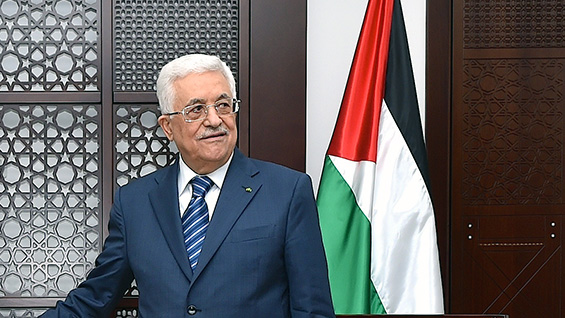
 Palestinian leaders are continuing to show contempt for other Arabs, including those who for many years provided them with financial and political aid. On September 3, during a videoconference meeting of leaders of several Palestinian factions, Palestinian Authority President Mahmoud Abbas (pictured) poured scorn on the Arabs of the Gulf states by hinting that they are illiterate and uneducated. (Photo by Alaa Badarneh/Pool/AFP via Getty Images)


 Centro Estudios Judaicos del Sur de PR