“We must believe in freedom of will, we have no choice.” This observation made by Isaac Bashevis Singer introduces one of the greatest problems in Jewish and general philosophy, freedom of will versus determinism. Many have attempted to solve the problem, but not one philosopher has been able to come up with a completely satisfactory response.
In Midrash Tanchuma, we read one of the most daring statements ever made in religious literature. It is a most telling example of the boldness of our sages, who were not afraid to deal with a problem “head on.”
On the words, “And Joseph was brought down to Egypt,” (Bereshith 39:1) the Midrash comments, “This is what is referred to when it says in Tehilim, (66:5) ‘Come and see the works of God. He is terrible in His dealing “allila” with men.’”
On the surface, this verse seems to express a general Jewish belief, which teaches man about the greatness of God. However, it is clear that the Midrash realizes that the expression, “allila,” is most unconventional, for it continues with the following words:
“Says Rabbi Yehoshua ben Karcha, ‘Even those events which You bring upon us, You bring with “allila.” Before God created the world, He created the Angel of Death on the first day.’ From where do we know this? Said Rabbi Barchiah, ‘Because it is written, (when the creation had just started) “there was darkness upon the face of the deep.” This is a reference to the Angel of Death who darkens the face of all creatures. The human being was created on the sixth day and an “allila” was placed before him so that the human being would bring death upon the world as it is written, “And on the day that you will eat from it (i.e. the Tree of Knowledge) you will surely die.” (Bereshit 2:17)
This means that from the outset it was determined that Adam and Eve would be forced to eat from the tree, because they had to be mortal since God had already created the necessity for death.’”
It now becomes clear what the word “allila,” according to the midrash means: false accusation, pretext or insidiousness. Yet, according to the plain text of the Torah, death came on the human being because Adam chose to eat from the tree.
In case we may have any doubt about the correctness of this interpretation, let us read the continuation of this Midrash in which the following analogy is brought:
“To what can we compare this case? To a man who wished to divorce his wife. Before he went home, he wrote a Get (bill of divorce) and entered the house with the Get in his pocket. He then sought an “allila” to give it to her. He told her, ‘Pour me a cup that I may drink.’ She poured it for him. When he took the cup from her, he said, ‘Here is your Get.’ She said to him, ‘What did I do wrong?’ He said, ‘Go out of my house because you poured for me a lukewarm cup.’ Said she to him, ‘Did you already know that I would pour for you a lukewarm cup, so that you wrote a Get and brought it in your hand?’ So Adam said to the Holy One blessed be He, ‘Lord of the universe, before You created the world ,the Torah was with You for 2,000 years (i.e. eternally). You wrote in the Torah about “a man who dies in a tent” (Bamidbar 19:14), and now you come to accuse me that I brought death to the world!!”
The midrash continues in a similar vein, telling of the case of Moshe and the waters of “meriba,” (Bamidbar 20) where it proves from the text that this sin was already determined long before Moshe made this mistake so that he should die on account of it—still, Moshe is blamed for having brought about his own death! The third example brought by the Midrash relates to Joseph and the exile in Egypt. In Bereshith, (15:13) we read that Avraham is told by God, ‘Know for sure that your descendants will be aliens in a land which is not theirs and will be slaves and oppressed for four hundred years.’ Therefore God brought the entire affair of Jacob and his sons, the jealousy and the hatred between the brothers and Joseph, the sale of Joseph, his elevation to his high office in Egypt and, ultimately, the coming of Yacov and his sons to Egypt, in order to fulfill what He had said to Avraham.”
In other words: Why should the brothers be blamed for having caused all this to happen when, in fact, the whole outcome was already decided in advance?! Therefore: It is an “allila” upon man!
Those who study these narratives very carefully will realize, however, that the Midrash was not forced to give this interpretation. It could have allowed for an explanation which would be much more open to freedom of will. Therefore we must conclude that it deliberately took this route to emphasize the paradox of freedom of will versus determinism and to teach us an important lesson. When Jews declare, “Hakol min hashamaim chutz me-yirath shamaim, everything is from heaven (determinism) except the fear of Heaven (freedom of will),” they pronounce a most profound condition of Jewish belief. It is not that there are times when determinism operates and other times when freedom of will is given to man. Rather, they function simultaneously.
On one level, the human being seems to have the opportunity to chose, however, on a different level, all is pre-determined. This is one of the great paradoxes of human existence. It was Friedrich Durenmatt who once said that “he who confronts himself with the paradoxical, exposes himself to reality.” (“21 Points,” The Physicists, 1962)
God who is beyond time and space, is the source of all what happens and so uses false accusations, pretexts, and insidiousness against human beings while teaching them simultaneously that they are free to act and that they carry full responsibility for their deeds.
How disturbing! Only God seems to know how this works! It is one of the great mysteries of this world!
The story of Joseph and his brothers, spread over four parshiyot, is the longest and most tightly-scripted of all the narratives in the Torah. Nothing is there by accident; every detail counts. One moment, however, seems gloriously irrelevant — and it is this that contains one of the most beautiful of the Torah’s ideas.
With great speed, we are introduced to the broad lines of the story. Joseph is envied and hated by his brothers. So deep has the animosity gone that they cannot talk peaceably with one another. Now the brothers have left home to tend their sheep, and Jacob tells Joseph to go and see how they are doing. This encounter will set in motion the central drama from which all else will follow: the moment when the brothers sell Joseph into Egypt as a slave.
But it nearly didn’t happen. Joseph arrived at Shechem where he expected his brothers to be, but they were not there. He might well have wandered around for a while and then, failing to find them, gone home. None of the events that take up the rest of the Torah would have happened: no Joseph the slave, no Joseph the viceroy, no storage of food during the years of plenty, no descent of Joseph’s family to Egypt, no exile, no slavery, no exodus. The entire story — already revealed in broad outlines to Abraham in a night vision — seemed about to be derailed.
Then we read the following:
A man found [Joseph] wandering around in the fields and asked him, “What are you looking for?” He replied, “I’m looking for my brothers. Can you tell me where they are grazing their flocks?” “They have moved on from here,” the man answered. “I heard them say, ‘Let’s go to Dothan.’” So Joseph went after his brothers and found them near Dothan. (Gen. 37:15-17)
I know of no comparable passage in the Torah: three verses dedicated to an apparently trivial, eminently forgettable detail of someone having to ask directions from a stranger. Who was this unnamed man? And what conceivable message does the episode hold for future generations, for us? Rashi says he was the angel Gabriel. Ibn Ezra says he was a passer-by. Ramban however says that “the Holy One, blessed be He, sent him a guide without his knowledge.”
I am not sure whether Ramban meant without Joseph’s knowledge or without the guide’s knowledge. I prefer to think both. The anonymous man — so the Torah is intimating — represented an intrusion of providence to make sure that Joseph went to where he was supposed to be, so that the rest of the drama could unfold. He may not have known he had such a role. Joseph surely did not know. To put it as simply as I can: he was an angel who didn’t know he was an angel. He had a vital role in the story. Without him, it would not have happened. But he had no way of knowing, at the time, the significance of his intervention.
The message could not be more significant. When heaven intends something to happen, and it seems to be impossible, sometimes it sends an angel down to earth — an angel who didn’t know he or she was an angel — to move the story from here to there. Let me tell the story of two such angels, without whom there might not be a State of Israel today.
One was a remarkable young woman from a Sephardi family who, at the age of 17, married into the most famous Ashkenazi family in the world. Her name was Dorothy Pinto; her husband was James de Rothschild, son of the great Baron Edmond de Rothschild who did so much to support the settlement of the land in the days before the proclamation of the State.
A critical juncture occurred during World War I that would eventually lead to the defeat of the Ottoman Empire and the placing of Palestine under a British mandate. Suddenly, Britain became absolutely central to the Zionist dream. A key figure in the Zionist movement, Chaim Weizmann, was in Britain, experimenting and lecturing in chemistry at Manchester University. But Weizmann was a Russian immigrant, not a prominent member of British society. Manchester was not London. Chemistry was not politics. The most influential and well-connected Jewish family was the Rothschilds. But Edmond was in France. James was a soldier on the battlefield. And not every member of the British Rothschilds was a Zionist.
At that moment, Dorothy suddenly assumed a leading role. She was only 19 when she first met Weizmann in December 1914, and understood very little of the political complexities involved in realizing the Zionist dream. But she learned quickly. She was perceptive, resourceful, energetic, delightful, and determined. She connected Weizmann with everyone he needed to know and persuade. Simon Schama, in his definitive account of Two Rothschilds and the Land of Israel, says that “young as she was … she combined charm, intelligence, and more than a hint of steely resolution in just the right mixture to coax commitment from the equivocal, enthusiasm from the lukewarm, and sympathy from the indifferent.”
His judgement on the effect of her interventions is that “through tireless but prudent social diplomacy she had managed to open avenues of influence and persuasion at a time when they were badly needed.” The result, in 1917, was the Balfour Declaration, a milestone in the history of Zionism — and we should not forget that the Declaration itself took the form of a letter to Lord (Walter) Rothschild.
Dorothy’s husband James, in his will, left the money to build the Knesset, Israel’s parliament building. In her own will, Dorothy left the money to build a new Supreme Court building, a project undertaken by her nephew Jacob, the current Lord Rothschild. But of all the things she did, it was those connections she made for Chaim Weizmann in the years 1914 to 1917 that were surely the most important. Without them, there might have been no Balfour Declaration and no State of Israel.
The other figure, who could not have been less like Dorothy de Rothschild, was Eddie Jacobson. The son of poor Jewish immigrants, born in New York’s Lower East Side, he moved with his family to Kansas City where he met a young man called Harry Truman. They knew one another in their youth and became close in 1917, when they underwent military training together. After the end of World War I, they opened a haberdashery business together. It failed in 1922 because of the recession.
From then on, they went their separate ways, Jacobson as a traveling salesman, and Truman as successively a county administrator, senator, vice president, and then, when President Roosevelt died in office in 1945, president of the United States. Despite their very different life-trajectories, the two stayed friends, and Jacobson would often visit Truman, talking to him about, among other things, about the fate of European Jewry during the Holocaust.
After the war, the position of America vis-à-vis the State of Israel was deeply ambivalent. The State Department was opposed. Truman himself refused to meet Chaim Weizmann. On March 13, 1948, Jacobson went to the White House and persuaded Truman to change his mind and meet Weizmann. Largely as a result of this, the United States became the first nation to grant diplomatic recognition to Israel on May 14, 1948.
Many years later, Truman wrote:
One of the proudest moments of my life occurred at 6:12 p.m. on Friday, May 14, 1948, when I was able to announce recognition of the new State of Israel by the government of the United States. I remain particularly gratified by the role I was fortunate to play in the birth of Israel as, in the immortal words of the Balfour Declaration, “a national home for the Jewish people.”
Two people, Dorothy de Rothschild and Eddie Jacobson, appeared on the scene of history and connected Chaim Weizmann with individuals he might otherwise not have met, among them Arthur Balfour and Harry Truman. They were like the stranger who connected Joseph and his brothers, but with infinitely more positive consequences. I think of them both as angels who did not know they were angels.
Perhaps this is true not only about the destiny of nations but also about each of us at critical junctures in our lives. I believe that there are times when we feel lost, and then someone says or does something that lifts us or points the way to a new direction and destination. Years later, looking back, we see how important that intervention was, even though it seemed slight at the time. That is when we know that we too encountered an angel who didn’t know he or she was an angel. That is what the story of Joseph’s stranger is about.
¿Qué haces cuando los gritos, el silencio o la indiferencia te impiden resolver tus conflictos?
¿Cuántas veces puedes pelear por lo mismo y no llegar a nada, o encontrarte con el mismo problema una y otra vez? ¿Qué haces cuando sientes que no te escuchan y si lo hacen, pareciera que no te entienden? ¿Qué sucede cuando parece que ni siquiera tratan de hacer el esfuerzo por ver tu punto de vista y ponerse en tus zapatos?
Los problemas que no se solucionan se pudren, se estancan y con el tiempo empeoran, convirtiéndose en cargas pesadas y fastidiosas y, con cualquier pretexto, resurgen y se repiten, imitando soluciones previamente intentadas que ya se sabe que no han dado un buen resultado.
Sin querer, se reviven heridas pasadas, se repiten los malentendidos y se perpetúan los diálogos rotos.
Con el tiempo, lo único que sucede, es que se pierde la paciencia y se olvidan las razones que nutren, fortalecen e inspiran la relación.
El dilema que impide solucionar los problemas… Si cedes al punto que no sientes que te validan, eventualmente la relación se resiente y se fractura. Pero si te “montas en tu caballo” y no te quieres bajar para tratar de dialogar, el orgullo se enfrasca y aliena, alejando a las personas que quieres.
El secreto entonces radica en encontrar un punto medio. Es decir, uno puede entender, aceptar, escuchar y hacerse responsable de lo que uno hace y no acusar al otro.
No se trata de averiguar quién tiene la razón. Tampoco se busca encontrar culpables o víctimas. Se trata de tener comunicación con empatía, donde se puedan reconocer las necesidades y los sentimientos de todos. Lo ideal sería poder hacer un compromiso común para beneficio de todos o por lo menos con un arreglo que todos puedan vivir sin reprocharse.
Para poder solucionar el problema y dejar de pelear, el primer paso debe ser, reconocer que uno no es perfecto y que desde luego no quiere lastimar, ni causar dolor, pero el otro tampoco es perfecto.
Hay que aprender a escuchar el dolor y lo que pide la otra persona, desde la perspectiva del otro, por más ridículo que esto parezca.
Existen comportamientos que son aceptados y otros que No son aprobados. Queda sobreentendido que las acciones, actitudes y palabras que lastiman o alteran no solucionan nada, por lo tanto, no hay razón para seguir utilizándolas.
Si se repiten las mismas acciones o actitudes, si se repiten los mismos diálogos, la relación no se queda igual. Cada vez que se repite la misma discusión, se llega al problema que no se resolvió antes, la relación se lastima un poco más, se deteriora y no se resuelve nada.
Para salir de ese círculo vicioso, hay que tomar conciencia y ser responsable de las acciones que no sirven y dejarlas de hacer, olvidar el orgullo y aprender a ceder.
La receta: Solucionar viejos problemas
Ingredientes:
Responsabilidad – reconocer la importancia de las acciones propias
Creatividad y sentido del humor – buscar nuevos puntos de vista, reír e innovar
Flexibilidad – aprender a ceder y dar lo mejor de uno para el otro
Decisión – Ganas de querer solucionar el problema
Respeto – aceptar las diferencias y las necesidades de cada quien
Afirmación positiva:
Soy parte del problema y también soy parte de la solución. Tengo el poder para cambiar mi actitud y mis expectativas, con el fin de poder solucionar los conflictos que me afectan. Poder solucionar mis viejos conflictos me libera, me regala paz y me llena de energía positiva. Tengo fe en que puedo arreglar lo que he lastimado y que puedo ser una mejor persona.
La importancia de resolver los conflictos:
Solucionar los problemas mejora la calidad de vida y promueve la felicidad. Cargar con problemas y discutir más de lo mismo toda la vida, reduce las posibilidades de tener una vida plena y armoniosa.
Eludir los conflictos no significa librarse de ellos. El problema, sigue a pesar de que se le niegue. Al evitarlo, se pierde la paz interna, creando ansiedad y un sentimiento de soledad.
Discutir más de lo mismo, sólo promueve la permanencia del problema y de la soledad. Los sentimientos que no se encauzan, se acumulan hasta que explotan y deshacen el alma de las personas.
“Liberarte de los viejos conflictos es la acción más gratificante y enriquecedora que existe”.
Why did our souls come down to earth? Rabbi Shneor Zalman of Liadi prepares us for a never-ending battle.
Many Chassidic discourses open by asking why our souls descended from the highest of the heights to the darkness of this world. Although the discourse will go on to give many good answers, explaining our wondrous mission to “make for God a dwelling place in the lower worlds” and the eternal gain that the souls receive from the descent-for-the-purpose-of-ascent, the next discourse will open with the same question. Apparently, this question is existential and constantly prods at our consciousness.
One of the ways to deal with the questions and difficulties that reality unleashes upon us – so much so that we may experience the words of our Sages, “It would be preferable to a person if he was not created, rather than being created” – is to empower ourselves with belief in God’s goodness. God desires to bestow good upon us. If God, the Good and Bestower of good, has brought us down to this “valley of tears”, then we can rest assured that good results are guaranteed. This applies not only to those who pass the trial with flying colors, but also to those empty people who have few mitzvot and who, on the surface, have done more spiritual harm than good. This experience of the difficulties of this world makes the powerful good promised in the next world more tangible. As our Sages say, “It is worthwhile for a person to endure all the suffering of purgatory in order to merit the pleasure of the World to Come”.
This week we will celebrate the 19th of Kislev, the new year of Chassidut, when tens of thousands will once again begin learning the book, Tanya, by Rabbi Shneor Zalman of Liadi, the Alter Rebbe. The Tanya is the basic book of Chassidut, defined also as “the book of advice for illness of the soul”. The Tanya, the “book of intermediary souls” brings us a sober-minded perspective on reality. The Alter Rebbe writes in his book that “all this world is difficult and evil and the wicked people dominate all the rest”. The ‘intermediary’ person can anticipate a life of never-ending struggle. As the Alter Rebbe asks, “If so, why did their souls descend to this world to exert themselves for nothing, God forbid, and to battle their evil inclination all their days and they cannot overcome it?”
Nonetheless, the Alter Rebbe comforts the ‘intermediaries’, guides them as to how to achieve joy in the purpose of creation and how to draw strength to serve God. The very name of the Book of Tanya holds the answer and a promise. In Hebrew, Tanya (תניא) is an anagram for Eitan (איתן). Tanya reveals the Eitan of the soul.
In the Bible, the word Eitan means hard-assertive and also ancient-primal. The Eitan of the soul is the essential, primal, root of the soul, whose wholeness is not sullied by the tribulations of reality, the crucible of our psyches and our human failings. It promises that nobody will ever be lost or pushed away from God. This is a constant, powerful point that exists in the heart of every Jew. It gives him the strength to withstand difficulties and to serve God in any situation. It promises that ultimately, he will successfully negotiate the path and fulfill his life’s mission.
How do we reveal this primal point of power? In Hebrew, the four letters of the word Eitan: alef, yud, tav, nun, are the four letters that we use to designate a word in the future tense (I will, he will, you will, we will). This alludes to the fact that the full revelation of the Eitan in the soul will be in the future. Thus, Eitan Ha’ezrachi, (Eitan the citizen) mentioned in Psalms, is, on the one hand, a local citizen from time immemorial (his tenure makes him well-based and assertive) and on the other hand, he will shine in the future (Ezrach also means “I will shine”). The revelation of our Eitan depends upon our ability in the present to affix our souls to the future good – to our faith and trust in God. While still experiencing the difficulties of life, the Eitan opens a skylight to the power of the good that will be revealed through our faith and trust in God’s goodness. This faith and trust reveal that this powerful good is concealed in our souls and is available as a source of strength – even in the present.
Projecting this “new light that will shine on Zion” from the future to the present is expressed by the original Torah thoughts that flow from “the new Torah that will go out from Me”, which will be revealed in the days of the Mashiach. The new, revolutionary, sweetening quality of all the Chassidic teachings heals and strengthens the soul. It exposes it to a new perspective on the ancient Torah – to a new light on the Torah of redemption.
¿Cuál es la enseñanza para nosotros del cambio de nombre de Jacob?
por Eliezer Shemtov
La conferencia rabínica en el Hotel Sofitel se había terminado y los rabinos se fueron para el aeropuerto.
“¿Y nuestras propinas?” preguntaron los mozos al Maitre.
“No sé. Estos judíos…..”
Al rato ven que dos de los rabinos vuelven. “No les vamos ayudar en nada,” dijeron todos.
El rabino principal se acerca al Maitre y dice: “Mirá, nos confundimos con la propina. Cuando llegué al aeropuerto y abrí mi bolso para sacar mi pasaporte, vi el sobre. Pensé que mi colega ya se lo había entregado. La verdad es que estamos muy agradecidos por el servicio. Les doy aquí USD100 de propina a cada uno.”
“Muchas gracias,” dijo el Maitre. “No sé si será verdad o no lo que me enseñaron en la escuela que mataron a nuestro dios. Pero de que lo hicieron sufrir, de eso estoy seguro.”
En la lectura bíblica de esta semana1 leemos sobre el encuentro de los hermanos Jacob y Esaú luego de 36 años de no haberse visto. Jacob iba al encuentro buscando aplacar la ira de su hermano mientras que Esaú vino a recibirlo con 400 hombres de guerra. Al final, en vez de atacar a Jacob, lo abrazó y lo besó.
La pelea con el ángel de Esaú
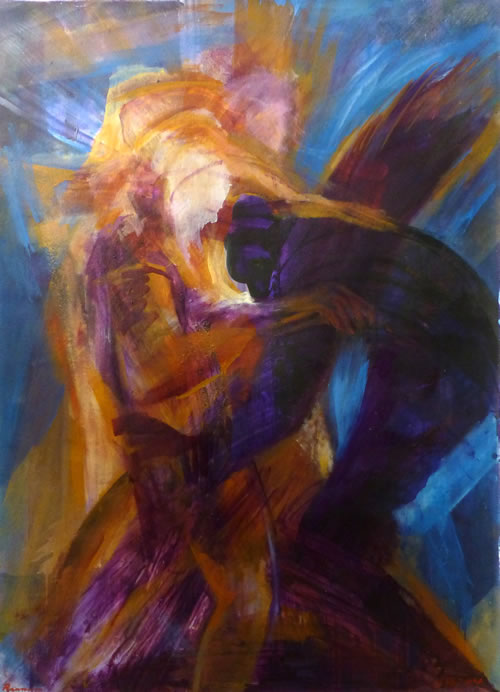
La Torá nos cuenta como la noche previa al encuentro, Jacob cruzó el río Iabok con toda su familia, ganado y bienes. Volvió a buscar unos pequeños jarrones y un hombre (que era, en realidad, el ángel protector de Esaú) lo atacó y se pelearon hasta que subió el alba. Cuando quiso irse, Jacob no lo dejó irse hasta que no lo bendijera. Lo bendijo con que en lugar de llamarlo Jacob, que implica que obtuvo las bendiciones de su padre por medio del engaño, se iba a llamar Israel que implica que peleó con ángeles y con hombres y los venció.
Resulta que durante la pelea el ángel le había tocado la articulación de la cadera, descolocándola, cosa que lo dejó rengo a Jacob. Como consecuencia de este episodio no comemos el nervio ciático hasta el día de hoy2 .
En la práctica, como consecuencia de no comer el nervio ciático abstenemos de comer toda la parte trasera del animal ya que es muy difícil sacar el nervio ciático que es un nervio muy largo y muy ramificado. Hay ciertas comunidades que mantienen una tradición milenaria en cuanto a la extracción del nervio ciático, y, luego de sacarlo, se permite comer la carne de la parte trasera del animal. Es una tarea muy engorrosa y costosa y generalmente se vende toda la parte trasera para el mercado no Kosher.
¿Cuál es la razón de este precepto?
El Séfer HaJinuj3 lo explica de la siguiente manera:
“De las raíces de este precepto es para que sea una señal para el pueblo judío que a pesar de sufrir muchas tribulaciones en los diversos exilios a manos de los pueblos y los descendientes de Esaú, tengan la seguridad de que no se van a destruir sino que perdurarán por siempre y vendrá un redentor y los redimirá de las manos del opresor.
“Al recordar siempre este tema por medio del cumplimiento de este precepto que servirá de recordatorio, perdurarán en su fe y comportamiento justo eternamente.
“El vínculo entre los hechos se debe al hecho que aquel ángel que peleó con nuestro patriarca Jacob, que sabemos por nuestra tradición que fue el ángel guardián de Esaú, quiso eliminar a Jacob y sus descendientes del mundo y no pudo, y lo hizo sufrir al tocarle la articulación de la cadera. De la misma manera, los descendientes de Esaú hacen sufrir a los descendientes de Jacob, y al final se redimirán de ellos como encontramos con el padre (Jacob) que el sol le amaneció para curarlo y se salvó del dolor. Así amanecerá el sol del Mashíaj para nosotros y nos curará de nuestro sufrimiento y nos redimirá rápidamente en nuestros días, Amén.”
Las enseñanzas jasídicas explican que el mensaje de este precepto es el tema de la Providencia Divina que nos acompaña en todos los detalles de la vida. Es por eso que se conmemora este hecho histórico por medio de algo muy específico como no comer el nervio ciático, en vez de algo más general.
Jacob e Israel
¿Cuál es la enseñanza para nosotros del cambio de nombre de Jacob?
En el caso del cambio de nombre de Avraham y Sará (en lugar de Avram y Sarai), los nombres nuevos desplazaron totalmente a los nombres originales y nunca más aparecen en la Torá con los nombres originales. En el caso de Jacob, en cambio, encontramos que retuvo el nombre original y a veces es llamado Jacob aún después del cambio de nombre a Israel.
¿A qué se debe?
Una de las explicaciones es la siguiente:
Tanto lo representado por el nombre Jacob como lo representado por el nombre Israel siguen teniendo lugar en la vida del pueblo judío en general y la vida de cada judío en particular.
Jacob implica “engaño” como también “talón”. Israel implica dominio, tanto sobre lo material (hombres) como también sobre lo espiritual (ángeles).
La idea que esto engloba es muy interesante. En cuanto a lo espiritual somos “Israel”; en cuanto a lo material somos “Jacob”. O sea, nuestro vínculo con lo material es uno de “engaño”. Nos “disfrazamos” de materialistas, cuando en realidad el objetivo es espiritual, elevar al mundo material a un nivel superior espiritual. Comemos para tener la fuerza de servir a D-os y de esa manera elevar el mundo mineral, vegetal y animal que nos sostiene. En cuestiones espirituales, en cambio, el vínculo es transparente: estudiamos Torá para lograr la conexión espiritual que proporciona y no para tener un beneficio en el plano material.
También: “Israel” representa aquel que está consustanciado y orgulloso de su condición de judío; “Jacob” representa aquel que le da vergüenza y se “agarra del talón” de su hermano, Esaú.
La edad de Bar Mitzvá
Luego del encuentro con Esaú, Jacob se asentó con su familia en la ciudad de Shjem. Ahí sufrió la violación de su hija, Dina, por medio del príncipe del lugar, Shjem ben Jamor. Los dos hijos de Jacob, Shimón y Levi, matan a espada a todos los hombres de la ciudad por su complicidad. Su padre, Jacob, los rezonga.
De acuerdo a la cuenta que podemos sacar a partir de los versículos, tanto Shimón como Levi tenían en ese momento trece años. La Torá se refiere a los dos como hombres: “agarró cada hombre su espada”4 . De ahí aprendemos que uno, al llegar a la edad de trece años se considera “hombre” y es responsable por sus acciones.
¿Por qué la Torá nos enseña este dato por medio de un episodio tan sangriento?
El Rebe lo explica de la siguiente manera:
Si bien Jacob criticó a sus hijos por cómo hicieron lo que hicieron, sin haberle consultado primero, lo que nos sirven de ejemplo positivo es el atributo de no quedarse indiferente ante las injusticias. Si bien lo que hicieron fue criticable, el hecho de reaccionar y querer hacer algo al respecto es lo que define al hombre judío: Manifiesta una sensibilidad madura en lugar de la inconsciencia de la niñez.
Notas al Pie
1. Génesis 32:4 – 36:43
2. ibid, 32:33
3. Libro publicado en el siglo XIII que trae motivos por cada uno de los 613 preceptos.
Iaacov se lo sigue llamando “Iaakov” en la Torá, aunque también es llamado por su nuevo nombre, “Israel”
por Yanki Tauber
Esta semana leímos (en Génesis 32) como Iaacov adquiere un nuevo nombre, “Israel”, después de descansar durante la noche con un ángel que representaba el espíritu de Esav. “Ya no será Iaacov tu nombre”, proclamó el ángel derrotado, “sino Israel, porque has luchado con Di-s y con los hombres, y has vencido”.
Y aun así, a Iaacov se lo sigue llamando “Iaakov” en la Torá, aunque también es llamado por su nuevo nombre, “Israel”; desde este punto en adelante, la Torá alterna entre los dos nombres. Lo mismo pasa con el pueblo judío en su conjunto: nosotros somos generalmente llamados “Israel” o los “Hijos de Israel”, pero también hay muchos lugares de la Torá donde se nos llama, como colectivo, “Iaakov” o “La simiente de Iaakov”.
Los maestros jasídicos señalan que el nombre Iaacov se usa cuando nos referimos a nosotros mismos como “sirvientes” de Di-s (como en Ieshaiahu 44:1: “Ahora, escucha, mi sirviente Iaakov”), mientras que el nombre Israel es utilizado al hablar de nosotros como como “hijos” de Di-s (como en Éxodo 4:22: “Mi primer hijo, Israel”).
La diferencia entre un sirviente y un hijo puede ser entendida en muchos niveles. La mayor distinción es, sin embargo, lo que motiva la relación. Ambos, un hijo y un sirviente, sirven al padre/amo y cumplen su voluntad. La diferencia está en por qué lo hacen. Cuando un hijo hace algo por su padre o su madre, lo hace por amor, placer y alegría. El sirviente, por otro lado, no lo hace porque quiere, sino porque debe.
Esta diferencia afecta la calidad de la relación en todo sentido. Mientras el “hijo” y el “sirviente” hacen técnicamente las mismas cosas, hay una enorme diferencia en la naturaleza, la calidad y el impacto de la acción si está hecha con amor y deseo o porque uno se siente forzado a hacerla.
Estos prototipos —el “hijo” y el “sirviente”— existen en todos los tipos de relaciones: en el matrimonio, en la familia, en el trabajo, etc. Hasta puede haber un hijo que en sus sentimientos y acciones hacia sus padres se parezca más a un sirviente, o un sirviente cuyos servicios a su amo se comparen con los de un hijo, por su amor y deseo.
En nuestras vidas como judíos y en nuestra relación con Di-s también existen estos dos prototipos. Nuestro judaísmo puede ser el judaísmo de un “sirviente”: el de alguien que no tiene opción en el asunto y simplemente acepta el hecho de que esto es lo que es y este es su deber. O podemos ser “hijos” de Di-s y regocijarnos en el rol, desearlo, celebrarlo y disfrutar de ello.
El “espíritu de Esav” con el que todos nosotros luchamos es nuestro yo material. Es la parte de nosotros que sólo quiere ser como todos los demás: ganarse la vida y transcurrirla con la menor dificultad posible. Es la parte de nosotros que “acepta” nuestro judaísmo como algo impuesto: hacemos nuestra parte, pero sin el amor, la alegría ni el deseo que conllevan hacer algo que realmente queremos hacer.
Esta es nuestra personalidad “Iaakov”: aquella parte de nosotros que aún lucha con el espíritu de Esav. Pero cada uno de nosotros tiene momentos de triunfo sobre el ángel del materialismo y la apatía. Momentos en los que hasta crecemos ser nuestro propio “Israel”: el nosotros que se regocija en nuestra relación con Di-s y en el rol especial que Di-s nos dio como judíos. Momentos en los que experimentamos nuestra mitzvá no como un deber, sino como un acto de amor y satisfacción personal.
Pero la Torá sabe que no es simplemente cuestión de vencer al ángel y “graduarnos” de nuestra personalidad Iaacov a nuestro yo Israel. Más bien, nos quedamos entre Iaacov e Israel y alternamos entre estos dos modos de nuestro judaísmo. Algunos de nosotros seremos Iaacov la mayor parte del tiempo, mientras que en otros predominará Israel. Pero realmente todos tenemos nuestros momentos Israel, como así también tenemos los momentos en los que volvemos al modo Iaakov.
Esto es porque, incluso después de que Iaacov derrotó al ángel y adquirió el nombre “Israel”, la Torá lo llamó a él —y a nosotros— por ambos nombres. El mensaje tiene doble sentido: en primer lugar, que Di-s valora también nuestro modo Iaacov y aprecia cada buena acción que hacemos, incluso —y quizá especialmente— cuando nos falta la alegría y el deseo y nos forzamos a realizar nuestro deber; y en segundo lugar, que la oportunidad para acceder a nuestro Israel oculto está siempre ahí, así como la de experimentar la alegría y la satisfacción que sentimos al desear y alegrarnos por quiénes somos y por lo que somos, y por nuestra misión en la vida.
La historia del hombre ha estado salpicada de episodios dramáticos en donde los derechos humanos de individuos y pueblos enteros son y han sido transgredidos sistemáticamente hasta nuestros días. Quizás uno de los grupos que se han caracterizado por haber visto sus más elementales prerrogativas conculcadas a lo largo de toda su existencia es el pueblo judío. Diversidad de factores han incidido para que en casi todas las latitudes y en todos los tiempos se haya legislado en contra de esta minoría, que ha sido víctima de la discriminación y de la marginación.
A pesar de que con los movimientos liberales de los últimos siglos se intentó restaurar a los judíos tanto sus derechos individuales como colectivos, las primeras décadas del Siglo XX evidenciaron lo que casi dos milenios de intolerancia fueron capaces de concebir, la bestia nazi que llevó a cabo en forma fría y calculada el genocidio de la tercera parte del pueblo judío.
Esta experiencia colectiva ha hecho al judío sumamente sensible a las cuestiones de los derechos humanos. Muchos de ellos han encabezado movimientos contemporáneos que propugnan por la igualdad del hombre y la justicia social. No es de extrañar, por lo tanto, que haya sido un judío el principal promotor de la Declaración Universal de los Derechos Humanos y que, el Holocausto, haya sido el elemento catalizador que ayudó a cristalizar este transcendental documento ya hace más de sesenta años.
A fines de 1948, los acontecimientos sin precedentes que se suscitaron dentro del contexto de la segunda guerra mundial permanecían latentes en la memoria de la humanidad. Diversos grupos cívicos de las fuerzas aliadas pugnaban porque se adoptaran medidas internacionales que coadyuvaran a salvaguardar los derechos del hombre. Con el derrumbe de las potencias que habían aspirado al dominio universal, muchas naciones en ruinas y pueblos inmersos en la miseria luchaban por vivir con dignidad. La Comisión de los Derechos Humanos de la recién constituida ONU, inició la elaboración de un documento en el que se consagrarían los derechos fundamentales del hombre y a donde se sentarían los principios para que las relaciones entre los pueblos fuesen regidas con justicia y respeto.
El presidente de la Comisión, René Cassin, jurista judío nacido en Bayonne, Francia en 1887, impulsó fuertemente la promulgación de la Declaración Universal de los Derechos Humanos. Desde 1924, después de la primera guerra mundial, Cassin se dedicó a luchar en contra de la injusticia. Fundó una asociación para inválidos de guerra y actuó como un destacado miembro de la resistencia, ocupando el cargo de comisionado para la justicia y la educación. Durante la segunda guerra mundial, muchos de sus familiares perecieron junto con los millones de judíos ejecutados por el aparato nazi. Como testigo de la crueldad humana llevada a su máxima expresión, se sintió especialmente responsable por la cruzada a favor de los derechos humanos que tuvo su culminación en la Declaración.
El diez de diciembre de 1948, la asamblea general de la ONU votó por el reconocimiento y el respeto de este documento histórico ante la actitud de reserva de algunos países del bloque comunista, ya que estos derechos cívicos y políticos resultaban incompatibles con ciertos regímenes autoritarios.
La Declaración constituye el ideal por el que todos los pueblos deben luchar: el amplio respeto a los derechos humanos y a la libertad, asegurando su aplicación universal y efectiva a través de medidas progresivas de carácter nacional e internacional.
Los antecedentes de esta Declaración los podemos encontrar en el Bill of Rights inglés, en la Declaración de Independencia de Estados Unidos y en la promulgación de la Declaración de los Derechos del Hombre defendidos en Francia en el siglo XVIII, todos los cuales se basaban en el concepto del hombre como poseedor de derechos absolutos e inalienables.
A pesar de que este documento es reciente, como concepción política, religiosa y moral, los derechos humanos son muy antiguos y se remontan más allá de los racionalistas franceses y de los colonialistas americanos. Podemos encontrar en la Biblia, por ejemplo, numerosas leyes, máximas y proverbios en donde se refleja la preocupación por los derechos inherentes a todo ser humano.
La idea central parte del libro de Génesis: “Y creó Dios al hombre a su imagen; varón y hembra los creó” (Génesis 1:27). De acuerdo a esta premisa, todo ser humano lleva en su esencia parte de la divinidad y mantiene así, un status de igualdad ante sus semejantes. De aquí se deriva también, que el hombre está dotado de atributos como el sentido de justicia y el libre albedrío, colocando al hombre fuera del determinismo divino.
A través de diversos recursos la Biblia enfatiza la esencia misma del judaísmo: “Amarás a tu prójimo como a ti mismo” (Levítico 19:18). Hillel, uno de los principales sabios judíos se explaya en este aspecto: “Lo que es malo para ti no lo hagas a tus semejantes. Esto es toda la Torá, lo demás es comentario”. (Shabbat, p. 312, Talmud Babli).
Es en la Biblia, también en donde encontramos los fundamentos morales del comportamiento humano con el propósito de preservar la justicia, la libertad y la paz, en el proceso de consolidación de una sociedad armónica. Los Diez Mandamientos (Exodo 20:1-7), pueden considerarse como una filosofía en sí mismos, que aseguran la convivencia entre los hombres a través de preceptos como el de “no matarás”, “no hurtarás”, “no codiciarás”, entre otros.
Estos postulados mantienen su vigencia y universalidad hasta la fecha. Sin embargo, considerando que las condiciones actuales son más complejas, se han tenido que concebir diversas legislaciones sobre derechos humanos que respondan a nuevas circunstancias y que se han visto enriquecidas por los conceptos morales que las anteceden.
En la Declaración se enumeran los derechos propios e inalienables de todo ser humano, los cuales deben ser respetados por todos los países que la suscriben.
A pesar de que en términos jurídicos este documento carece de normatividad, ha tenido un notable impacto moral. Su premisa básica es que todo hombre nace en condiciones de libertad e igualdad de derechos y que al estar dotado de raciocinio y de conciencia, debe buscar la convivencia con sus congéneres. De aquí se derivan las premisas de libertad de pensamiento y de conciencia, independientemente de raza, sexo o religión. Se atribuye, además, vital importancia al derecho de una vida libre y segura, y se subraya la unión esencial de la familia humana.
A más de sesenta años de su promulgación y a pesar de su reconocimiento universal, la humanidad continúa siendo testigo de múltiples casos de discriminación y persecución contra diversas minorías étnicas y religiosas.Día a día se violan los derechos humanos ante la inmovilidad de la comunidad internacional y más aún, con el apoyo de países soberanos que fomentan este flagelo en todos sus aspectos.
Sin embargo, a pesar de todo esto, la Declaración Universal de los Derechos Humanos representa sin lugar a duda un paso trascendental para garantizar la dignidad humana.La historia del hombre ha estado salpicada de episodios dramáticos en donde los derechos humanos de individuos y pueblos enteros son y han sido transgredidos sistemáticamente hasta nuestros días. Quizás uno de los grupos que se han caracterizado por haber visto sus más elementales prerrogativas conculcadas a lo largo de toda su existencia es el pueblo judío. Diversidad de factores han incidido para que en casi todas las latitudes y en todos los tiempos se haya legislado en contra de esta minoría, que ha sido víctima de la discriminación y de la marginación.
A pesar de que con los movimientos liberales de los últimos siglos se intentó restaurar a los judíos tanto sus derechos individuales como colectivos, las primeras décadas del Siglo XX evidenciaron lo que casi dos milenios de intolerancia fueron capaces de concebir, la bestia nazi que llevó a cabo en forma fría y calculada el genocidio de la tercera parte del pueblo judío.
Esta experiencia colectiva ha hecho al judío sumamente sensible a las cuestiones de los derechos humanos. Muchos de ellos han encabezado movimientos contemporáneos que propugnan por la igualdad del hombre y la justicia social. No es de extrañar, por lo tanto, que haya sido un judío el principal promotor de la Declaración Universal de los Derechos Humanos y que, el Holocausto, haya sido el elemento catalizador que ayudó a cristalizar este transcendental documento ya hace más de sesenta años.
A fines de 1948, los acontecimientos sin precedentes que se suscitaron dentro del contexto de la segunda guerra mundial permanecían latentes en la memoria de la humanidad. Diversos grupos cívicos de las fuerzas aliadas pugnaban porque se adoptaran medidas internacionales que coadyuvaran a salvaguardar los derechos del hombre. Con el derrumbe de las potencias que habían aspirado al dominio universal, muchas naciones en ruinas y pueblos inmersos en la miseria luchaban por vivir con dignidad. La Comisión de los Derechos Humanos de la recién constituida ONU, inició la elaboración de un documento en el que se consagrarían los derechos fundamentales del hombre y a donde se sentarían los principios para que las relaciones entre los pueblos fuesen regidas con justicia y respeto.
El presidente de la Comisión, René Cassin, jurista judío nacido en Bayonne, Francia en 1887, impulsó fuertemente la promulgación de la Declaración Universal de los Derechos Humanos. Desde 1924, después de la primera guerra mundial, Cassin se dedicó a luchar en contra de la injusticia. Fundó una asociación para inválidos de guerra y actuó como un destacado miembro de la resistencia, ocupando el cargo de comisionado para la justicia y la educación. Durante la segunda guerra mundial, muchos de sus familiares perecieron junto con los millones de judíos ejecutados por el aparato nazi. Como testigo de la crueldad humana llevada a su máxima expresión, se sintió especialmente responsable por la cruzada a favor de los derechos humanos que tuvo su culminación en la Declaración.
El diez de diciembre de 1948, la asamblea general de la ONU votó por el reconocimiento y el respeto de este documento histórico ante la actitud de reserva de algunos países del bloque comunista, ya que estos derechos cívicos y políticos resultaban incompatibles con ciertos regímenes autoritarios.
La Declaración constituye el ideal por el que todos los pueblos deben luchar: el amplio respeto a los derechos humanos y a la libertad, asegurando su aplicación universal y efectiva a través de medidas progresivas de carácter nacional e internacional.
Los antecedentes de esta Declaración los podemos encontrar en el Bill of Rights inglés, en la Declaración de Independencia de Estados Unidos y en la promulgación de la Declaración de los Derechos del Hombre defendidos en Francia en el siglo XVIII, todos los cuales se basaban en el concepto del hombre como poseedor de derechos absolutos e inalienables.
A pesar de que este documento es reciente, como concepción política, religiosa y moral, los derechos humanos son muy antiguos y se remontan más allá de los racionalistas franceses y de los colonialistas americanos. Podemos encontrar en la Biblia, por ejemplo, numerosas leyes, máximas y proverbios en donde se refleja la preocupación por los derechos inherentes a todo ser humano.
La idea central parte del libro de Génesis: “Y creó Dios al hombre a su imagen; varón y hembra los creó” (Génesis 1:27). De acuerdo a esta premisa, todo ser humano lleva en su esencia parte de la divinidad y mantiene así, un status de igualdad ante sus semejantes. De aquí se deriva también, que el hombre está dotado de atributos como el sentido de justicia y el libre albedrío, colocando al hombre fuera del determinismo divino.
A través de diversos recursos la Biblia enfatiza la esencia misma del judaísmo: “Amarás a tu prójimo como a ti mismo” (Levítico 19:18). Hillel, uno de los principales sabios judíos se explaya en este aspecto: “Lo que es malo para ti no lo hagas a tus semejantes. Esto es toda la Torá, lo demás es comentario”. (Shabbat, p. 312, Talmud Babli).
Es en la Biblia, también en donde encontramos los fundamentos morales del comportamiento humano con el propósito de preservar la justicia, la libertad y la paz, en el proceso de consolidación de una sociedad armónica. Los Diez Mandamientos (Exodo 20:1-7), pueden considerarse como una filosofía en sí mismos, que aseguran la convivencia entre los hombres a través de preceptos como el de “no matarás”, “no hurtarás”, “no codiciarás”, entre otros.
Estos postulados mantienen su vigencia y universalidad hasta la fecha. Sin embargo, considerando que las condiciones actuales son más complejas, se han tenido que concebir diversas legislaciones sobre derechos humanos que respondan a nuevas circunstancias y que se han visto enriquecidas por los conceptos morales que las anteceden.
En la Declaración se enumeran los derechos propios e inalienables de todo ser humano, los cuales deben ser respetados por todos los países que la suscriben.
A pesar de que en términos jurídicos este documento carece de normatividad, ha tenido un notable impacto moral. Su premisa básica es que todo hombre nace en condiciones de libertad e igualdad de derechos y que al estar dotado de raciocinio y de conciencia, debe buscar la convivencia con sus congéneres. De aquí se derivan las premisas de libertad de pensamiento y de conciencia, independientemente de raza, sexo o religión. Se atribuye, además, vital importancia al derecho de una vida libre y segura, y se subraya la unión esencial de la familia humana.
A más de sesenta años de su promulgación y a pesar de su reconocimiento universal, la humanidad continúa siendo testigo de múltiples casos de discriminación y persecución contra diversas minorías étnicas y religiosas.Día a día se violan los derechos humanos ante la inmovilidad de la comunidad internacional y más aún, con el apoyo de países soberanos que fomentan este flagelo en todos sus aspectos.
Sin embargo, a pesar de todo esto, la Declaración Universal de los Derechos Humanos representa sin lugar a duda un paso trascendental para garantizar la dignidad humana.
Un enfoque místico sobre las tendencias opuestas de la personalidad.
En artículos pasados hablamos sobre el desafío que enfrentamos todas las personas al tratar de vivir en paz y equilibrio con las fuerzas contrarias que habitan en nosotros. Todos nos vemos atraídos en cierta medida por una fuerza de orden y razón que nos da estructura y sentido, por un lado, y por otro lado, una fuerza totalmente diferente, de amor incondicional, creatividad y espontaneidad. Incluso se ha llegado a la conclusión de que cada una de estas tendencias están dirigidas por los dos hemisferios del cerebro (el cerebro izquierdo maneja la estructura rígida, mientras que el derecho la creatividad espontanea). Esta fascinante dualidad que existe en nuestras emociones y en nuestra personalidad, lejos de ser un trastorno, es lo que nos hace humanos y representa la base del trabajo de refinamiento de la personalidad y el carácter, sobre lo cual el judaísmo hace tanto hincapié.
¿Puede existir dualidad en Dios?
Rabí Moshé Jaim Luzzato, el “Ramjal” (1707-1747), en su libro Dérej Hashem, menciona y explica las fuerzas a través de las cuales el Creador mismo le da vida al mundo. Una de ellas, el din —expresada en los límites y el orden de la naturaleza— y la otra el rajamim —expresada en la misericordia y el amor ilimitado—. A estas alturas, es casi obligatorio empezar a relacionar las conductas de Dios del din y el rajamim, con las conductas que fluyen de aquellas dos tenencias en nuestra mente. Prestemos atención a la similitud que existe entre lo que llamamos “cerebro izquierdo” —con su orden y estructura— y la mencionada fuerza del din. Asimismo, veamos la similitud que existe entre lo que llamamos “cerebro derecho” —con su espontaneidad y amor incondicional— y la mencionada fuerza de rajamim. El paralelismo que existe entre estas conductas es realmente impresionante. La gran pregunta que surge es ¿Cómo coexisten estas dos conductas en la realidad de Dios, ¡si realmente Dios es uno!? A lo que los sabios del misticismo judío responden que realmente no existe dualidad en Dios, sino sólo para nuestro limitado entendimiento, pues incluso la justicia rigurosa de Dios, proviene de un profundo y absoluto amor puro.
Simple benevolencia
El Ramjal en su libro Mesilat Yesharim explica que Dios conduce el mundo con la cualidad de misericordia y amor (rajamim), pues, debido a la naturaleza animal del hombre, sería imposible conducir el mundo mediante la justicia estricta (din). Asimismo, en su libro Dérej Hashem el Ramjal enseña que todo el propósito de la creación es la manifestación absoluta de la benevolencia de Dios. Eso es en esencia todo lo que existe, solo la benevolencia, la generosidad, la gracia, el amor absoluto de Dios. Eso significa que, a fin de cuentas, la misericordia y el amor deben superar a la rigidez y el orden. Lo cual, no menosprecia el lugar de estas últimas, pues es claro que la naturaleza necesita reglas claras y ordenadas, sin embargo, eso es solo un medio y no el propósito final. Como las reglas de un juego, éstas no son el propósito final del juego, son más bien el medio que permite el desarrollo del juego mismo. El amor y la misericordia de Dios son la esencia de todo, pero el orden y la ley, son la infraestructura de la vida que nos permite funcionar en equilibrio. Eso significa, que en realidad, el din y el rajamim de Dios provienen de una misma fuente, la intención de Dios de dar y beneficiar a toda su creación.
La dualidad en la persona
Rabí Moshe Cordovero, el “Ramak” (1522 – 1577) enseña en su libro Tómer Devorá que la aspiración más grande que una persona debe tener en la vida es imitar las conductas de Dios para lograr parecerse a Él en su ámbito espiritual. Eso es una de las formas más simples de entender el concepto mencionado en Bereshit, de que el hombre fue creado a “imagen y semejanza” de Dios. Esa similitud, más allá del entendimiento físico, alude a una similitud espiritual cuya expresión física es la actitud y la personalidad. A la luz de lo estudiado, cabe preguntar en la vida de cada uno de nosotros, en dónde se enfrentan nuestras facetas de rigidez contra las de espontaneidad, ¿Cómo alcanzar un equilibrio óptimo? Y sobre todo ¿es posible aprenderlo o cada uno debe conformarse con su tendencia natural dominante? O sea, una persona cuya tendencia es actuar de forma rígida, ¿puede aprender a ser más espontánea y creativa? Y lo contrario, ¿una persona que actúa de forma demasiado espontanea, ¿puede aprender a vivir con más orden y estructura? ¡Por supuesto que sí!
Is there a person on Earth that does not, at times, experience tension? Yet, we are always in search for calm and peace.
Excellence in everything we do, whether it is personal, social, political, scientific, romantic or professional, is always defined by finding the right balance and harmony, the right symmetry between diverse forces.
Yet, try as we might, tranquility defies us. Who does not struggle, for instance, from the conflict between home life and career? Between your personal standards and the demands of the marketplace? Between the need to survive and the yearning for transcendence? Who has not in some ways compromised their idealism due to the peer and social pressure? In one way or another, we all suffer from various conflicts in our lives. Often these struggles lead to anxiety and other forms of emotional debilitation.
What would we do to eliminate anxiety in our lives, let alone discover the secret to finding balance in all our endeavors?
All tension results from the friction of dual forces rubbing against each other. If there were only one force in our lives there would be no possibility for anxiety. Imbalance by definition means two things that are in a state of disparity with each other. Agitation is a result of being in one place when you aspire to be in another.
Seemingly only two solutions are possible to resolve the tension of life: Either you cease aspiring, hence no more anxiety. Or you resign yourself to the fact that you will also be anxious about things that you cannot acquire.
There is however a third solution. And this lies in understanding that the conflicts in our lives are rooted in forces that are inherently in harmony with each other, yet at some point and for some reason their fusion was ruptured, and they turned against each other.
The secret of balance is, then, about discovering the rhythm that lies within the different forces in our lives. Like a dance, life is about cadence – learning how to navigate the vicissitudes, the rise and fall of the waves.
The ancient mystics teach it to us this way.
All of existence vibrates with pulsating energy. When we learn to recognize it, this energy manifests itself all around us – in light and sound, in your heartbeat and your breath, in your dreams and in your realism, in your tension and your resolve.
The secret of this balance is called “ROTZO AND SHUV”: Tension and resolution, yearning and returning, speaking and listening, exhaling and inhaling, contraction and expansion, action and reaction.
In order to create balance between two states of being – the present state and the one you aspire to – rotzo and shuv serve as a dual, to an fro movement: First you reach and yearn to something greater, then you return and internalize it.
All energy is generated through this dual movement: Like a pumping heart, the contraction is then followed by an expansion that propels the blood to flow through the body. Like an archer drawing back his bow in order to thrust the arrow forward.
The tension in our lives is, then, really a necessary step that propels us to reach a greater place. Our challenge in this process is twofold: 1) To ensure that the tension is healthy, one that is part of a growing process rather than obsessive and demoralizing. 2) To ensure that the tension is measured, tempered and followed by resolution. Once we internalize, we then experience a new rotzo, a yearning to reach yet a higher level, with the inevitable amount of tension this yearning will cause, and then to internalize this new level as well.
And so we climb from one state to a higher one. Rotzo and shuv are the two steps – the dual movement – that allows us to aspire and integrate.
Manifestations of this dual movement abound everywhere. Light, for instance, is an energy that consists of both wave and particle. Modern physics is just beginning to discover that which mystics were always aware of: All of existence consists of a pulsating dance of energy.
Please refer to the articles I wrote last year, The Physics of Chanukah and Chanukah Lite, which explore the dual nature of sound and light, the parallels between physics, psychology and mysticism – all applied in our personal relationships.
The first step in achieving balance is by beginning to recognize and identify the dual forces of particle and wave, rotzo and shuv, in everything around and within us.
The second step is to begin aligning ourselves to the inner rhythm of life.
At birth our bodies and souls are aligned. Like a hand in a glove, a newborn child, like untouched snow, reflects a seamless flow between matter and spirit (body and soul). Witness the symmetric breath of a young child, the perfect heaves of his/her chest as s/he inhales and exhales. But as we grow older and toxins fill our lives (and our lungs), the balance begins to waver, until they reach a state of utter dissonance.
This conflict manifests itself in the perpetual struggle of our lives between spirit and matter – between self-preservation and transcendence, selfishness and selflessness, between the animal soul and the Divine soul.
Indeed, the Kabbalah teaches us that the cosmic order of creation and existence parallels that of a child’s development, in which the first stages maintain a “smooth” balance between “light” and “container,” between energy and matter, wave and particle, rotzo and shuv. As the process evolves, the two forces begin to experience tension and dissonance, until they “explode” in what is known as “shevirat hakeilim” (breaking of the containers). The work that follows is called “tikkun” – the essential mission of our lives: to repair the rift between matter and spirit, and realign them into the seamless whole that they truly are.
This is also the central theme of the story of the twin brothers, Jacob and Esau, in this week’s Torah portion. The twins represent the two forces of matter (body) and energy (spirit), particle and wave, rotzo and shuv. The battle between them reflects the existing tension between these two poles. But inherently they are twins – in need of and complementing each other. And ultimately, they will reconcile and achieve complete integration (see The Plot Thickens).
~ ~ ~ ~ ~ ~ ~
As an exercise, create two columns on a piece of paper. In the first column list examples of “rotzo” in you life – experiences that cause you anxiety and tension. In the second, list experiences that bring you peace. What aspects of your life are “particle-like” in nature, limited to a specific time and space, and which ones are “wave-like” and all encompassing.
Next, identify an area (or areas) in your life where these two forces act in harmony with each other. Not as two entities, but as one continuous flow, like the throb of the heart, the rhythm of the breath, where the heart’s contraction and expansion and the lung’s exhale and inhale are but two steps of one movement, two notes in one musical composition.
It’s always easier to begin with examples of this rhythm in our professional lives – in music or the arts, in business or science, or in any other of our systems that be. The reason for this is because we are more detached and objective about these areas in our lives then the more personal and psychological ones, where we will encounter emotional resistance to getting beyond our anxieties and fears.
Once we begin to recognize patterns of the pulsating dance within life around us, we can then recognize by contrast the areas in our lives where the imbalance still prevails. This helps us apply the same principle of rhythm and symmetry to the more tenuous areas in which we encounter emotional resistance.
For next week’s workshop, try the following: Choose an area or system in which you have expertise and identify how its success is dependent on the dual movement of rotzo and shuv. Define how this dual “wave” movement creates balance. Identify its parallels with the dual movement in other systems. It may help to review the articles I mentioned earlier, The Physics of Chanukah and Chanukah Lite for a breakdown on some of the parallels.
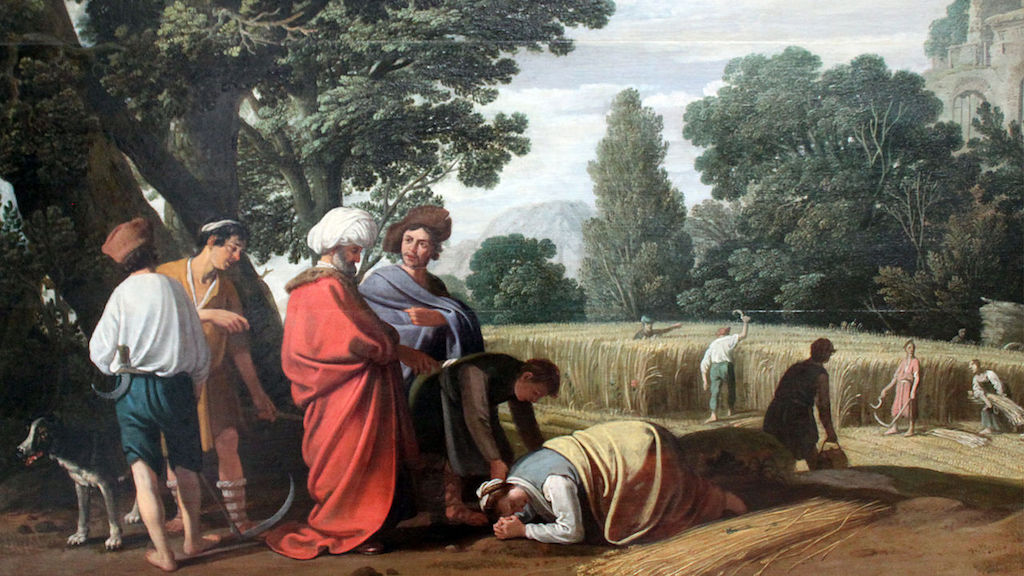
Detail of “Ruth and Boaz,” 1628, by Claes Corneliszoon Moeyaert (PD via Wikimedia Commons)
My mother was raised Catholic. She became Jewish while in university, going through a process — guided by her rabbi and supervised by a rabbinical court in San Francisco — of wide-ranging study covering Jewish practice, history and culture. I was born Jewish a few years later. Growing up, at our shabbat table in New York, we regularly hosted men and women who were becoming — or had recently become — Jewish through our synagogue. These individuals, some of whom became part of our own extended family, came to us through our rabbi, who knew that they would need a mentor and guide with a shared experience of becoming Jewish — a responsibility that my mother readily embraced.
I tell you this so that you understand where I am coming from when I say that we need to stop using the term “conversion” — denoting a process specifically of changing one’s religious faith — when talking about the journey to becoming Jewish.
The very concept of Judaism as principally a religion is quite recent. Dr. Leora Batnitzky of Princeton University, in her excellent work How Judaism Became a Religion, writes that it is only “from the eighteenth century onward (that) modern Jewish thinkers have become concerned with the question of whether or not Judaism can fit into a modern, Protestant category of religion.” This came as a reaction to Enlightenment era Protestant thinkers in Germany who conceptualized the public sphere of citizenship in a nation-state, as separate and distinct from the private sphere of the religion which one practiced. If it was possible to fit Judaism into this concept of religion, then we too could become fully equal citizens of the European nation-state — or so we hoped. Prior to that time, Judaism was an all-encompassing idea of self and community, with laws governing all aspects of life and identity; it was, quite simply a civilization to which we belonged, albeit one with distinct concepts of the Divine, and rituals related to that concept.
While the denominational structure that emerged through thinkers like Moses Mendelssohn and Samson Raphael Hirsch in 19th century Germany — and was then imported to America — formed around this concept of religion, there are within contemporary American Jewish life those who remain deeply commitment to our pre-Enlightenment concept of self. Examples include Hasidic communities that embrace a Judaism that encompasses all aspects of life, and the secular Yiddishists who built a deep Jewish community of culture without requiring a belief in God.
Throughout our history, to become Jewish was to join our civilization in all its facets.
The first journey we tell of someone becoming Jewish is, of course, the story of Ruth. At the side of the road she declares to her mother-in-law: “wherever you go, I will go; wherever you lodge, I will lodge; your people shall be my people; and your God my God…” For Ruth, and for everyone who followed her on this path, becoming Jewish is more than faith alone. It is where she will live and die, and who she will be as a citizen of our people and the mother of our kings.
To make this journey is termed in Hebrew as gerut. The one who makes this transition, a ger, begins the journey with the status of a stranger, the Other. It is a Hebrew root used in reference to those who are not Jewish, and also as well in our Bible for those who are excluded in other ways by our laws — whether that be the daughters of Zelophahad denied their inheritance in the land, or the funeral workers denied participation in the Passover meal for their ritual impurity.
In the Hebrew conceptualization, the path Ruth takes is a transition from a status of “Other” to a status of being “Of Us.”
For nearly 2,000 years in Diaspora, Jews have been unique among the nations of the world in that one could become a citizen of the Jewish people even without a state of our own. This process took place through rabbinical courts that historically had far more jurisdiction than on matters strictly of religion. In the self-governing shtetl, these courts oversaw both criminal and civil matters, in addition to adjudicating matters of a religious nature. Today, the State of Israel is unique among nation-states in that anywhere in the world, one can embark on this journey from Other to Jewish through a rabbinical court (or at least through one that is recognized by Israel’s government) and then become automatically eligible for citizenship in the state, under “the right of return.”
So why is it so important that we retire the term “conversion” as our poor translation of the concept of gerut?
First, because the reformulation of Judaism as religion failed to achieve our liberation in Europe. One cannot know what Mendelssohn and Hirsch might think of the world that came after them. We do know that in the century that followed, Political Zionism emerged from the sober lessons of the Dreyfus Affair; that even an “enlightened” France that would continue to see the Jew as Other. And, the devastation of the Holocaust made clear that we would always be vulnerable unless we had a nation-state of our own.
And, this very formulation, of Judaism as a religion, has come to be weaponized by those who seek to deny our legitimacy as a nation with the right to a state of our own. It is ironic to hear the voices of the “enlightened” descendants of the very same anti-Semitic philosophers of Europe to whom we reacted in the 18th century, now arguing that a religion should not have a country and that, therefore, Israel as a state is not legitimate.
Finally, and foremost, we should lose the term “conversion” for our own sake and for our understanding of who we are as a people. The term, in English, reinforces an ahistorical self-perception. It continues to ascribe to an idea of Judaism that was formed in response to external forces. To move beyond the Jewish condition as a reaction to our experiences in Europe and to embrace our authentic identity as a people will require greater precision in our language.
It is time to retire the poorly translated term of “conversion.” Rather, I propose that, in English, we commit ourselves to language that more properly conveys the concept of this journey from Other to Judaism both precisely and expansively. As with those who choose to become citizens of a new nation, like the United States, through a process known as “naturalization,” so to, gerut can be better understood as the process of becoming a naturalized citizen of the Jewish people, with all the rights and responsibilities inherent therein.






 Centro Estudios Judaicos del Sur de PR