And Abraham was old, advanced in days and the Eternal had blessed him in everything. Bereshit 24:1
God has given you one face And you make yourselves another — Shakespeare, Hamlet, 3. 1. 149
It is a remarkable fact that in western civilization, old age is seen by most people as a curse. According to statistics, more money and time is spent on concealing the signs of old age than on finding ways to prevent heart disease or cancer. One finds more people in beauty parlors than in hospitals. Old age is seen as a defeat. Many people consider being old synonymous with being retarded. There is a strong sense of uselessness and rejection, coupled with feelings of emptiness and boredom.
This stands in direct contrast to Judaism. According to Jewish tradition it was Avraham who specifically asked—even begged—that God not only grant him long, productive years, but also that he show the physical signs of aging. In Bereshit we read: “Avraham was old, well advanced in years.”[1] The Talmud points out the redundancy of this verse and asks; if Avraham was old, surely he was well advanced in years. What, then, does one add to the other? To this the Talmud gives a most remarkable answer: “Until Avraham, people did not grow old, meaning they did not show signs of becoming older. And (since Avraham and his son Yitzhak looked alike) people who saw Avraham said, ‘This is Yitzhak,’ and people who saw Yitzhak said, ‘This is Avraham.’ Avraham then prayed to grow old, that is, to show signs of aging. This is the meaning of ‘And Avraham was old.’”[2]
Avraham, then, was not only advanced in years, but he wanted to show his old age by way of his facial and bodily appearance. In this way, there would also be a distinctive difference between him and his son. This was in contrast to earlier generations in which people would continue to look young and resemble their children. They would advance in years, but with no outward indications, until they would suddenly die at a ripe age.
The loss of individuality
To fully appreciate the deeper meaning of this midrash, we need to remember another Talmudic teaching. In Bereshit[3] we are confronted once again with a redundant sentence: “And these are the generations of Yitzhak the son of Avraham, Avraham begat Yitzhak.” Here again, the Talmud asks why it is necessary to tell us that Avraham begat Yitzhak when in the earlier part of the verse we are already told, “These are the generations of Yitzhak the son of Avraham.”
To this the Talmud responds: “The cynics of the time were saying: Sarah became pregnant by Avimelech. Look at how many years she lived with Avraham without being able to have a child by him! [See Bereshit Chapter 20, where Sarah is taken into the palace of Avimelech, King of Gerar, who intended to marry her, but instead returned her to Avraham after realizing that Sarah was in fact married to him.] What did the Holy One blessed be He do? He made Yitzhak’s face exactly resemble that of Avraham, so that everyone had to admit that Avraham begat Yitzhak. This is what is meant by the words “And Avraham begat Yitzhak,” namely that there was clear evidence for everybody to see that Avraham was Yitzhak’s father.” [4] Thus, the integrity of Avraham and Sarah’s marriage was divinely protected.
But this came at a high price—the loss of individuality. If Yitzhak resembled his father to the extent that people could not differentiate between them, then a great injustice was done to the very essence of their identities. What is a man if he is not different from all others? Once two people are identical, their personal authenticity is exchanged for camouflage and deception.
Every individual is more than he imagines himself to be. He is unique. Parents are not meant to be their children, and children should not be replicas of their parents. Hilary Putnam referred to “the ‘right’ of each newborn child to be a complete surprise to its parents.” [5] Human beings should be told that by imitating, they detract from their true selves. Once we deny the uniqueness of all human beings, we breed resentment and violate the integrity of man. Roman Emperor and philosopher Marcus Aurelius wrote, “The best revenge is not to be like your enemy.” [6] Above all, we must ensure that originality stays at the center of our lives, as an expression of protest against replication.
In Western civilization there is a belief that human beings are valuable because they are part of the human race, but it was Judaism that proposed the exact opposite—the human race is of great significance because it consists of human beings. This can be true, though, only if it consists of a community of individuals, rather than a herd of nondescripts.
Our youth should begin at the end of our lives
The signs of old age are marks of experience and wisdom. It is true that wisdom is acquired, not by years, but by disposition, and many never live a meaningful life, but only accumulate unspent youth, remaining permanently immature even in old age. Still, it is true that wisdom comes with old age. How true is Mark Twain’s observation that our youth should start at the end of our lives! [7]
When Avraham asked God to make him appear old, he did not just request a “defacement”; he asked for his beauty to become inward. In that way, he would remain himself with added dimensions.
For the authentically religious personality, this is of crucial importance. Religion can be experienced and lived only in a state of originality. Any imitation of fellow worshipers is serving oneself and not God. In essence, religion is an attempt to search for God, the ultimate Original.
This essay is from my new book, Cardozo On The Parashah: Bereshit | Genesis (Kasva Press, 2019). The book is available at Amazon and other online booksellers. In Israel, the book can be found at Pomeranz Booksellers in Jerusalem.
The altar area of Canterbury Cathedral in England. Photo: Peter K Burian / CC BY-SA 4.0.
Widely reported in the British media last week was a Church of England “teaching document” on Christian-Jewish relations. The document, titled “God’s Unfailing Word,” was generally headlined as “historic”: a long-overdue “call to repentance” for antisemitism, and acknowledgment of Christianity’s role in the Holocaust.
For several years I have been campaigning against antisemitism in the Church of England, my own faith community. Earlier this year I wrote an essay accusing the Church of institutional antisemitism. Some of the responses I received vindicated my accusations, including clergy blaming Jews for antisemitism, comparing Israeli Jews to Nazis, and comparing Israeli military actions to the Holocaust. And yet these clergy deny that they are antisemitic! I have kept their responses, and in view of the fact that the College of Bishops accepted the International Holocaust Remembrance Alliance (IHRA) definition of antisemitism last year, I will challenge the Church on IHRA criteria.
The Church of England document has been described as historic because, as we read in the “Preface,” the Church has never before attempted to formally redefine post-Holocaust relations with Jews in the way that the Roman Catholic Church did in 1965 through the Nostra Aetate declaration.
My overall impression of “God’s Unfailing Word” is that it is implicitly and disturbingly antisemitic. It teaches anti-Zionism, and offers links to numerous anti-Zionist resources. The Church must not use this document, as it stands, to teach about antisemitism. Particularly worrying are the positive references to “Palestinian Liberation Theology,” led by Rev. Dr. Naim Ateek, an Arab Anglican clergyman. Ateek has famously used contemporary forms of blood libel against his Jewish “Occupiers,” such as referring to the State of Israel as a “crucifixion machine.” His theories of liberation and justice are ill-disguised calls for Christians to augment the violent revolution of Islamist irredentists.
Palestinian Liberation Theology is really a conflation of Palestinian Liberation Organisation (PLO) and Liberation Theology — a Marxist-Christian theory of revolutionary action to bring about “justice.” In my experience, the Church of England consistently supports, and is consistently duped by, Christian-Arab anti-Zionists. This is perhaps inevitable because the Arab Anglican clergy are in Communion with their London (Lambeth) administrative mother church. The Church is bound to consider the position of Anglican clergy in the Holy Land. And so the Church mistakenly sees the Arab-Israeli conflict as symmetrical.
The conflict is not symmetrical. One only has to read the founding covenants of Hamas, Palestinian Islamic Jihad, or Fatah (which controls the Palestinian Authority under Fatah Chairman Mahmoud Abbas) to see political and theological genocidal antisemitism calling to make the land Jew-free. In the Hamas covenant, we read that Jerusalem is to be cleansed of Jews, and that “Israel, Judaism and Jews challenge Islam and the Muslim people.”
The genocidal intent in contemporary Arabisation should be obvious to Christian clergy in the Holy Land. Israel is now the only nation in the Middle East and North Africa where it is safe to be a practicing Jew, Christian, Sufi, Bahá’í, or Druze. The Church of England knows this, because earlier this year the Bishop of Truro was commissioned by the former Foreign Secretary Jeremy Hunt to report on the “millions of Christians” in the region who have been “uprooted from their homes … killed, kidnapped, imprisoned and discriminated against.” Hunt said, “What we have forgotten in this atmosphere of political correctness is actually the Christians that are being persecuted are some of the poorest people on the planet. In the Middle East the population of Christians used to be about 20%; now it’s 5%.”
Uprooted. Killed. Kidnapped. Imprisoned. Imprisoned for what? Killed for what? Whatever the 22 Arab nations are seeking, it is not peace. And you cannot dialogue with an interlocutor (Christian or Muslim) whose very motivation is genocidal purification, and for whom multiculturalism is anathema. Hamas for instance – explicitly Jihadist and a branch of the Muslim Brotherhood – quotes The Protocols of the Elders of Zion on authority, as the Western Church did in the first half of the 20th century, not least Roman Catholic France, and not least Nazi Germany’s ecumenical Protestant Reich Church.
And yet the Church of England sees only a symmetry of conflict. As we read in its document: Israel/Palestine, An Unholy War (dated to the General Synod of 2002):
“It is difficult in such a report to convey the deep despair that leads young Palestinians to seek ‘martyrdom’, or the anguish felt by Israeli families mourning the loss of loved ones that legitimates military retaliation. What motives three 14-year old Palestinian classmates to mount a suicide attack on a Jewish settlement in Gaza, or a 20-year old Palestinian woman to blow herself up by a bus stop in central Jerusalem? Without an understanding of this despair, merely condemning suicide bomb attacks as immoral glosses over the deep-rooted social, economic and political disenfranchisement experienced by Palestinians. Such attacks are evil and must be condemned unequivocally. However, if peace is to be achieved the cycle of suicide bombings has to be broken. This requires the circumstances that give rise to them to be understood and resolved. Similarly, it is difficult to imagine the grief felt by Israeli families when a Jewish girl’s bar [sic] mitzvah party in Hadera turns into a bloody massacre leaving six dead and thirty wounded or when a night out in Tel Aviv at a discotheque or snooker club ends in horrendous circumstances…”
The Church of England, then, seems to be willfully blind, if not suicidal, in support of Arab irredentism. I think this is because of the innate antisemitism in the Church. There seems to be a deep psychological — and blasphemous — need to harm and scapegoat the Jew.
Throughout history, every Christian nation has raged against the Jews in its midst; today almost every nation rages against the Jewish nation in the midst of all nations. The Church of England, in attempting to create a document of historical significance, had the opportunity to properly repent and to right historical wrongs. The document has failed to do this. In fact, it is likely to make things worse for the world’s besieged and only sovereign Jewish nation.
Pray for the peace of Jerusalem.
Mark Pickles is a scientific technical writer with a deep interest in understanding theology in the light of modern knowledge. He was an atheist from ages 10 to 30, and since then has been an active and practicing adherent in the Church of England.
It’s a haunting question. Why did Isaac love Esau? The verse says so explicitly: “Isaac, who had a taste for wild game, loved Esau, but Rebecca loved Jacob” (Gen. 25:28). Whichever way we read this verse, it is perplexing. If we read it literally, it suggests that Isaac’s affections were governed by no more than a taste in a particular kind of food. Surely that is not the way love is earned or given in the Torah.
Rashi, citing a Midrash, suggests that the phrase translated as, “who had a taste for wild game,” and referring to Isaac, in fact refers to Esau, and should be read “there was hunting in his mouth,” meaning that he used to entrap and deceive his father by his words. Esau deceived Isaac into thinking that he was more pious and spiritual than in fact he was.
Bolstering this interpretation, some suggest that Isaac, having grown up in the household of Abraham and Sarah, had never encountered deception before, and was thus, in his innocence, misled by his son. Rebecca, who had grown up in the company of Laban, recognised it very well, which is why she favoured Jacob, and why she was later so opposed to Isaac’s blessing going to Esau.
Yet the text suggests undeniably that there was a genuine bond of love between Esau and Isaac. The Zohar says that no one in the world honoured his father as Esau honoured Isaac.[1] Likewise, Isaac’s love for Esau is evident in his desire to bless him. Note that Abraham did not bless Isaac. Only on his deathbed, did Jacob bless his children. Moses blessed the Israelites on the last day of his life. When Isaac sought to bless Esau, he was old and blind, but not yet on his deathbed: “I am now an old man and don’t know the day of my death” (Gen. 27:2). This was an act of love.
Isaac, who loved Esau, was not deceived as to the nature of his elder son. He knew what he was and what he wasn’t. He knew he was a man of the field, a hunter, mercurial in temperament, a man who could easily give way to violence, quickly aroused to anger, but equally quickly, capable of being distracted and forgetting.
He also knew that Esau was not the child to continue the covenant. That is manifest in the difference between the blessing Isaac gave Jacob in Genesis 27 (believing him to be Esau), and the blessing in Genesis 28 that he gave Jacob, knowing him to be Jacob.
The first blessing, intended for Esau, is about wealth – “May God give you of the dew of heaven and the fat of the earth” – and power, “Let peoples serve you, and nations bow to you.” The second blessing, intended for Jacob as he was leaving home, is about children – “May God Almighty bless you and make you fruitful and increase your numbers until you become a community of peoples” – and a land – “May He give you and your descendants the blessing given to Abraham, so that you may take possession of … the land God gave to Abraham.” The patriarchal blessings are not about wealth and power; they are about children and the land.So Isaac knew all along that the covenant would be continued by Jacob; he was not deceived by Esau. Why then did he love him, encourage him, wish to bless him?
The answer, I believe, lies in three extraordinary silences. The most pointed is the question, What happened to Isaac after the Binding? Look at the text in Genesis 22 and you will see that as soon as the angel has stopped Abraham from sacrificing his son, Isaac drops out of the picture completely. The text tells us that Abraham returned to the two servants who accompanied them on the way, but there is no mention of Isaac.
This is a glaring mystery, tantalising the commentators. Some go so far as to say that Isaac actually died at the Binding and was brought back to life. Ibn Ezra quotes this interpretation and dismisses it.[2] Shalom Spiegel’s The Last Trial is a book-length treatment of this idea.[3] Where was Isaac after the trial of the Binding?
The second silence is the death of Sarah. We read that Abraham came to mourn for Sarah and weep for her. But the primary mourner in Judaism is traditionally the child. It should have been Isaac leading the mourning. But he is not mentioned in the entire chapter 23 that relates to Sarah’s death and its consequences.
The third is in the narrative in which Abraham instructed his servant to find a wife for his son. There is no record in the text that Abraham consulted with Isaac his son, or even informed him.Abraham knew that a wife was being sought for Isaac; Abraham’s servant knew; but we have no idea as to whether Isaac knew, and whether he had any thoughts on the subject. Did he want to get married? Did he have any particular preference as to what his wife should be like? The text is silent. Only when the servant returns with his wife-to-be, Rebecca, does Isaac enter the narrative at all.
The text itself is significant: “Isaac had come from Be’er Lahai Roi.” What was this place? We have encountered it only once before. It is where the angel appeared to Hagar when, pregnant, she fled from Sarah who was treating her harshly (Gen. 16:14). An ingenious Midrash says that when Isaac heard that Abraham had sent his servant to find a wife for him, he said to himself, “Can I live with a wife while my father lives alone? I will go and return Hagar to him.”[4] A later text tells us that “After Abraham’s death, God blessed his son Isaac, who then lived near Be’er Lahai Roi” (Gen. 25:11). On this, the Midrash says that even after his father’s death, Isaac lived near Hagar and treated her with respect.[5]
What does all this mean? We can only speculate. But if the silences mean something, they suggest that even an arrested sacrifice still has a victim. Isaac may not have died physically, but the text seems to make him disappear, literarily, through three scenes in which his presence was central. He should have been there to greet and be greeted by the two servants on his safe return from Mount Moriah. He should have been there to mourn his departed mother Sarah. He should have been there to at least discuss, with his father and his father’s servant, his future wife. Isaac did not die on the mountain, but it seems as if something in him did die, only to be revived when he married. The text tells us that Rebecca “became his wife, and he loved her; and Isaac was comforted after his mother’s death.”
That seems to be the message of the silences. The significance of Beer Lahai Roi seems to be that Isaac never forgot how Hagar and her son – his half-brother Ishmael – had been sent away. The Midrash says that Isaac reunited Hagar with Abraham after Sarah’s death. The biblical text tells us that Isaac and Ishmael stood together at Abraham’s grave (Gen. 25:9). Somehow the divided family was reunited, seemingly at the instigation of Isaac.
If this is so, then Isaac’s love for Esau is simply explained. It is as if Isaac had said: I know what Esau is. He is strong, wild, unpredictable, possibly violent. It is impossible that he should be the person entrusted with the covenant and its spiritual demands. But this is my child. I refuse to sacrifice him, as my father almost sacrificed me. I refuse to send him away, as my parents sent Hagar and Ishmael away. My love for my son is unconditional. I do not ignore who or what he is. But I will love him anyway, even if I do not love everything he does – because that is how God loves us, unconditionally, even if He does not love everything we do. I will bless him. I will hold him close. And I believe that one day that love may make him a better person than he might otherwise have been.
In this one act of loving Esau, Isaac redeemed the pain of two of the most difficult moments in his father Abraham’s life: the sending away of Hagar and Ishmael and the Binding of Isaac.
I believe that love helps heal both the lover and the loved.
En un importante informe de tres años, la iglesia establecida en Inglaterra citó “la atribución de culpa colectiva al pueblo judío por la muerte de Cristo y la consiguiente interpretación de su sufrimiento como castigo colectivo enviado por Dios” como una de las ideas que “contribuyeron a fomentar la aquiescencia pasiva, si no el apoyo positivo, de muchos cristianos en las acciones que condujeron al Holocausto”.
El informe, “La Palabra Infalible de Dios: Perspectivas teológicas y prácticas sobre las relaciones cristiano-judías”, también instó a los cristianos a aceptar la importancia del sionismo para la mayoría de los judíos.
En un golpe oblicuo contra el líder de la oposición Jeremy Corbyn, advirtió que “algunos de los enfoques y el lenguaje utilizado por los defensores pro-palestinos recuerdan de hecho lo que podría llamarse antisemitismo tradicional”.
La Iglesia de Inglaterra se encuentra en el centro de la Comunión Anglicana, una red mundial de iglesias. En Inglaterra, es la iglesia estatal y está encabezada por la reina Isabel II.
En un epílogo a “La Palabra Infalible de Dios”, el principal rabino del Reino Unido reprende a la iglesia por no haber rechazado abiertamente el trabajo de los cristianos evangélicos que intentan convertir a los judíos.
Ephraim Mirvis elogia el informe de 105 páginas por ser “sensible e inequívoco al ser dueño del legado del papel del cristianismo en la amarga saga de la persecución judía”.
El Arzobispo de Cantebury Justin Welby (l) y el Gran Rabino Británico Ephraim Mirvis, visitan el Muro de los Lamentos, el lugar más sagrado del judaísmo, en la Ciudad Vieja de Jerusalén, el 3 de mayo de 2017. (Yonatan Sindel / Flash90)
Mirvis continúa, sin embargo, expresando su “considerable recelo” por su falta de voluntad para condenar los “esfuerzos de aquellos cristianos, por muchos que sean, que, como parte de su fiel misión, se dedican al objetivo específico de convertir a los judíos al cristianismo”.
Mirvis señala que una declaración del Vaticano de 2015 comprometía a la Iglesia Católica a “no llevar a cabo ni apoyar ninguna misión institucional específica dirigida a los judíos”. El documento de la Iglesia de Inglaterra, por el contrario, no hace tal compromiso general, sino que insta a los cristianos a “pensar cuidadosamente en la misión y la evangelización en el caso de sus vecinos judíos”.
El rabino jefe advierte de una “preocupación real y persistente, situada en un contexto histórico trágico, de que incluso ahora, en el siglo XXI, los judíos son vistos por algunos como una cantera a la que hay que perseguir y convertir”.
“La existencia perdurable dentro de la Iglesia Anglicana de un enfoque teológico que es permisivo de este comportamiento perjudica considerablemente la relación entre nuestras tradiciones de fe y, en consecuencia, perseguir un nuevo paradigma cristiano-judío en este contexto es excepcionalmente desafiante”, continúa Mirvis.
En un prólogo al informe, el principal clérigo de la Iglesia de Inglaterra, el arzobispo de Canterbury, Justin Welby, responde a las críticas del rabino principal.
“Sus palabras están escritas como un amigo, y son recibidas con un espíritu similar, por muy difíciles que sean de leer”, escribe Welby.
“El Gran Rabino ha abierto, con su honestidad y afecto característicos, un desafío sobre el que debemos reflexionar”, escribe. “No podemos hacer esa reflexión honestamente hasta que hayamos sentido la crueldad de nuestra historia”.
El documento es inquebrantable en su aceptación del papel histórico del cristianismo en la perpetuación del antisemitismo. “El reconocimiento por parte de la Iglesia de que tiene una considerable responsabilidad por la propagación del antisemitismo exige una respuesta de la Iglesia”, argumenta.
El actual arzobispo de Canterbury y obispo principal de la Iglesia de Inglaterra, Justin Welby, mira hacia arriba y a su alrededor fotografías de víctimas individuales del Holocausto en el Salón de los Nombres en el museo Memorial del Holocausto Yad Vashem en Jerusalén. 27 de junio de 2013. (Isaac Harari / FLASH90)
El informe continúa llamando la atención sobre “la persecución y los prejuicios experimentados por el pueblo judío a lo largo de la historia” y “la responsabilidad que tienen los cristianos por ello y su persistencia en el contexto contemporáneo”. La enseñanza cristiana, admite, ha proporcionado un “fértil semillero para el antisemitismo asesino en la era moderna”.
Citando las palabras de Welby en 2016 de que las enseñanzas teológicas de la Iglesia han “agravado la propagación del virus del antisemitismo”, el informe dice que “la atribución de la culpa colectiva al pueblo judío por la muerte de Cristo y la consiguiente interpretación de su sufrimiento como castigo colectivo enviado por Dios es un ejemplo muy claro de ello”.
“Dentro de la memoria viva, tales ideas contribuyeron a fomentar la aquiescencia pasiva, si no el apoyo positivo, de muchos cristianos en acciones que condujeron al Holocausto”, agrega.
En un crudo pasaje, Welby recuerda una visita a Birkenau con líderes cristianos en 2016: “El frío amargo y la silueta incolora del paisaje reflejaban el horror en nuestros espíritus, mentes y corazones de que esto había ocurrido y que los cristianos habían hecho mucho de ello”.
Liberación de niños de Auschwitz-Birkenau. (HistClo.com)
Aunque argumenta que “algunos encontrarían las semillas del antisemitismo cristiano en el propio Nuevo Testamento”, el informe llama especialmente la atención sobre el papel histórico del cristianismo en Inglaterra.
“Inglaterra tuvo su propio papel en esta historia, con la pretensión de ser el lugar de nacimiento de lo que se conoció como la ‘difamación de la sangre’, por la que se acusaba falsamente a los judíos de asesinar a niños cristianos para hacer matzot de Pascua con su sangre”, dice el informe.
Dos catedrales inglesas, Norwich y Lincoln, fueron asociadas con el desarrollo y la propagación de la difamación de la sangre en la Edad Media.
Su primer caso registrado fue cuando un niño de 12 años fue encontrado asesinado en las afueras de la ciudad de Norwich, en el año 1144. Miembros de su familia acusaron a los judíos de Norwich de matarlo.
El informe señala que “esta acusación, originada en Inglaterra, se convirtió en el catalizador del asesinato de muchos judíos en este país y en toda Europa, especialmente en los pogromos de Eastertide”.
En 1290, también reconoce que Inglaterra “se convirtió en el primer país en ordenar a toda la comunidad judía que se marchara, buscando así ser un territorio cristiano sin presencia judía”.
Más allá del Reino Unido, el informe reconoce la oscura historia de la experiencia judía en Europa.
“Los siglos de gobierno cristiano en la historia europea incluyen un largo catálogo de medidas antijudías, como la discriminación legal y la expulsión periódica, junto con brotes de violencia comunal que, en algunos casos, conducen a la masacre de comunidades enteras”, dice el informe.
El informe añade: “La creencia popular era generalizada que el miserable estado de los judíos, condenados a la indigencia, era el castigo de Dios por su intransigencia, el rechazo de Cristo y la responsabilidad de su muerte”.
Además de hacer frente a los “pecados del pasado”, el informe insta a la Iglesia a encabezar la lucha contra el antisemitismo. “Los cristianos han sido culpables de promover y fomentar estereotipos negativos del pueblo judío que han contribuido a graves sufrimientos e injusticias. Por lo tanto, tienen el deber de estar atentos a la continuación de estos estereotipos y de resistirse a ellos”, dice el informe.
En su introducción, Welby añade que “con demasiada frecuencia en la historia, la Iglesia ha sido responsable y ha actuado en connivencia con el antisemitismo, y el hecho de que el lenguaje antisemita y los ataques están en aumento en todo el Reino Unido y Europa significa que no podemos ser complacientes”.
El informe se publicó mientras Reino Unido se prepara para ir a las urnas en tres semanas en una elección general que ha visto la continua controversia sobre el antisemitismo en el partido laborista de la oposición. Aunque se dice que la fecha de lanzamiento se eligió antes de que se convocara la elección el mes pasado, algunos comentaristas han señalado que podría haberse pospuesto hasta después de la campaña.
El informe no aborda el tema directamente, sino que sugiere que “los recientes acontecimientos en el contexto del Reino Unido han puesto de relieve la capacidad del antisemitismo para encontrar eco en todo el espectro político, tanto a la izquierda como a la derecha”.
Ilustrativo: los activistas antiisraelíes reaccionan ante una reunión del Comité Ejecutivo Nacional del Trabajo en Londres, 4 de septiembre de 2018. (Stefan Rousseau / PA vía AP)
“Algunos de los enfoques y el lenguaje utilizado por los defensores pro-palestinos recuerdan lo que podría llamarse antisemitismo tradicional, incluyendo sus formas cristianas, y los cristianos deben ser conscientes de cómo esto puede aumentar las tensiones entre judíos y cristianos en Reino Unido”, señala el informe. Corbyn, un antiguo partidario de las campañas pro-palestinas, ha sido acusado en otros lugares de una aparente voluntad de asociarse con presuntos antisemitas, terroristas y negadores del Holocausto.
El informe continúa reconociendo “la profunda relación entre el pueblo judío y la tierra y el Estado de Israel”.
Aunque reconoce que la definición de antisemitismo de la Alianza Internacional para la Recordación del Holocausto dice que las críticas a Israel similares a las que se hacen contra cualquier otro país no pueden considerarse antisemitas, el informe advierte que “el impulso político en los contextos británicos para protestar contra la injusticia percibida por Israel ha…. en muchos casos ignorado el miedo y la angustia que sienten los judíos aquí presentes, especialmente los jóvenes judíos en las universidades del Reino Unido”.
En cuanto al conflicto entre Israel y los palestinos, el informe intenta adoptar un enfoque equilibrado.
“Mientras que los cristianos adoptarán diferentes enfoques a una serie de cuestiones contemporáneas relativas al Estado de Israel”, afirma, “todos deberían aceptar que (a) la mayoría de los judíos consideran que el sionismo es un aspecto importante y legítimo de la identidad judía, (b) el Estado de Israel tiene derecho a una existencia segura dentro de fronteras reconocidas y seguras de acuerdo con los principios comunes del derecho internacional, (c) los principios del derecho internacional también garantizan los derechos y la seguridad del pueblo palestino, (d) el aparente callejón sin salida en el que se encuentra actualmente presenta serias dificultades morales y, en última instancia, es insostenible”.
El informe también pide que se ponga fin al uso en el culto de himnos y obras litúrgicas que puedan “transmitir la enseñanza del desprecio” hacia los judíos.
“En qué medida la enseñanza y la práctica que transmite la fe cristiana, desde los sermones y la educación basada en la iglesia hasta los himnos y la iconografía, también transmiten, aunque sea inadvertidamente, un antijudaísmo que se utiliza para justificar el antisemitismo”, se pregunta.
El informe pide un “manejo preciso y veraz de las Escrituras”, pero dice que debe haber una “atención sensible a las oraciones litúrgicas y a los himnos en el culto y la enseñanza cristianos”.
Ve como ejemplo un conocido himno de Charles Wesley, uno de los fundadores de la Iglesia Metodista protestante, que incluye el pasaje:
Most Hollywood movies are not particularly memorable, even the good ones, and it is rare for a feature film to make the kind of impact on popular culture that will outlast its run in the theaters and the next round of award ceremonies.
In the movie version, Hathaway plays Andy Sachs, an aspiring young journalist who sidesteps her contempt for the fashion industry to get a job as assistant to Miranda Priestly, editor-in-chief of a major fashion magazine, played by Streep.
The film focuses on the gulf that separates these two women, and particularly their very different attitudes towards the world of fashion.
The most memorable moment follows Sach’s involuntary disparaging chuckle as Priestly struggles to choose between two seemingly identical belts for a photoshoot — because they are “so different.”
In the short exchange that follows, it becomes clear that Sachs cannot see the point in trying to detect the apparently meaningless differences between items of clothing or accessories, and why these things matter so much to those immersed in fashion.
Priestly gazes at Sachs contemptuously, noting her bright blue sweater. “OK, I see,” she says, “you think this has nothing to do with you. You go to your closet and you select that lumpy, loose sweater, for instance, because you’re trying to tell the world that you take yourself too seriously to care about what you put on your back. But what you don’t know is that that sweater is not just blue. It’s not turquoise. It’s not lapis. It’s actually cerulean.”
“And you’re also blithely unaware of the fact that in 2002, Oscar de la Renta did a collection of cerulean gowns, and then I think it was Yves Saint Laurent who showed cerulean military jackets, and then cerulean quickly shot up in the collections of eight different designers. And then it filtered down through department stores, and then trickled on down into some tragic Casual Corner where you no doubt fished it out of some clearance bin.”
“However, that blue represents millions of dollars and countless jobs, and it’s sort of comical how you think you made a choice that exempts you from the fashion industry when, in fact, you’re wearing a sweater that was selected for you by the people in this room from a pile of stuff.”
The idea behind this startling put-down — which has incidentally been hotly disputed by fashion industry insiders — is that there is a trickle-down effect in the clothing world that ordinary non-fashion obsessed individuals are utterly unaware of; but their ignorance does not change the fact that what appears on fashion runways, however ridiculous these displays may appear to the uninitiated, influences what ordinary people wear down the line.
Ultimately, we are all affected by things that go on far away from us, in arenas that are seemingly totally disconnected from our day-to-day lives.
Priestly’s monologue came to mind as I delved into a fascinating Kedushat Leviexplanation of the Torah’s cryptic introduction to Rebecca in Chayei Sarah.
When we first encounter Rebecca, she is presented to us as follows (Gen. 24:15): וְהִנֵה רִבְקָה יֹצֵאת אֲשֶר יֻלְדָה לִבְּתוּאֵל בֶּן מִלְכָּה אֵשֶת נָחוֹר אֲחִי אַבְרָהָם — “And behold Rebecca emerged, who was born to Bethuel, son of Milcah, wife of Nahor, Abraham’s brother.”
Rather than telling us that Rebecca was Bethuel’s daughter, the Torah describes her as having been “born to Bethuel,” deliberately detaching her from her biological father, while the remainder of the verse expressly connects her to Abraham.
For the Kedushat Levi, the explanation is simple. Everything boils down to cause and effect, even when we don’t relate an effect to the cause.
Rebecca was chosen by Eliezer to marry Isaac based on her superlative kindness towards him, an unknown stranger in need of assistance.
But where did Rebecca’s kindness come from? Her father was so nondescript that he barely registers in the narrative at all, while her brother Laban was evidently an unpleasant and unscrupulous villain. Rebecca certainly did not learn how to be kind from them.
But just as when fishing out a cerulean sweater from some clearance bin, we are unaware of the remote fashion industry world that resulted in that particular sweater being in that bin, the same is true in the spiritual realm.
When someone does a mitzvah, it has trickle-down energy that affects people and places well beyond that person’s immediate surroundings. The mitzvah brings a spiritual vibe into the world-at-large, and the knock-on effect results in numerous mitzvot by others, even people who have nothing to do with the person who did the mitzvah.
Moreover, if the source of the mitzvah is the equivalent of a top-rated fashion designer, namely an exemplar of that particular mitzvah, the effect of his mitzvah is magnified exponentially.
For example, as a result of one extraordinary person’s life-changing charity and generosity in New York, someone else will help a friend with carpool or collect their dry-cleaning in Los Angeles, and another person will volunteer to visit the sick in a hospital in Jerusalem. The world will have become a different place, with “chessed” energy abundant and dynamic.
The Midrash says that as a result of Abraham’s extraordinary kindness, human kindness changed forever. Which means that although Rebecca may have been Bethuel’s biological daughter, her amazing kindness marked her out as Abraham’s spiritual heir, and therefore as a perfect wife for Isaac.
This crucial detail of who Rebecca was is underscored by the Torah’s introduction of her as having been born to Bethuel, but actually being more closely related to Abraham, whose kindness emanated through her in everything that she did.
” And Abraham again took a wife, and her name was Keturah” Genesis 25:1
Hagar was the Egyptian maidservant of Abraham’s first wife, Sarah. When Sarah had failed to conceive a child after many years of marriage, she implored Abraham to have a child with Hagar.[2] Hagar did give Abraham a child, Ishmael, who turned out to be “a wild man, whose hand is against everyone and everyone’s hand is against him.’’[3] Sarah ultimately demanded of Abraham that he banish Hagar and Ishmael from their home. When Abraham hesitated, G-d instructed him, “Whatever Sarah tells you to do, harken to her voice.”[4] Hagar drifted back to the paganism of her homeland and found an Egyptian wife for Ishmael.[5]
Years later, however, we find Ishmael back in the Abrahamic fold, accompanying Abraham and Isaac to the Akeidah.[6]And then, three years after Sarah’s death, Abraham remarries Hagar. The reconciliation is now complete—indeed it is Sarah’s son, Isaac,[7] who brings Hagar back for her marriage with his father.[8]
“Everything that happened to the Patriarchs,” say our sages, “is a signpost for their children. This is why the Torah elaborates on…the events of their lives…for they all come to instruct the future.”[9] The same is true regarding the shifts in Abraham’s relationship with his “barbarous” wife and son: his expulsion of Hagar and Ishmael and their subsequent readmission into his family represent the different stages in our history of dealing with the “Hagars” and “Ishmaels” in our lives—the raw and unruly elements in our nature, society and environment.
The Spiritualist, the Miner, and the Future
There are three basic ways of dealing with the mundane in one’s life: disavowal, refinement or sublimation.
The first approach is that of the ascetic, whose reaction to mundanity is to escape it. Repelled by the corporeality of physical life, he reduces his involvement in the material to the bare minimum and devotes his life to spiritual pursuits.
Then there is the “refiner,” who approaches the untamed wilderness of materiality as a prospector panning for gold. He knows that much of what passes through his hands is profitless sludge, but he is searching for the nuggets of sublimity embedded within. So he doesn’t disavow the material, but neither does he embrace it unequivocally. His life is an exercise in selectivity: to extract the sparks of potential while rejecting the irredeemable dross.
The third approach is that of the “sublimator,” who refuses to regard any element of G-d’s creation as “irredeemable.” He insists that every creature, every force, every experience, no matter how lowly, can be transformed into something positive and holy. There is nothing that is intrinsically negative in G-d’s world, he argues; evil and corruption are never more than skin deep. Everything can, and should, be transformed into a force for good.
These three approaches are actually three stages in the history of human potential. On the second day of creation,[10] G-d divided His creation into two domains, decreeing that “The lower realms shall not ascend to the higher realms, and the higher realms shall not descend to the lower realms.”[11] The breach between the spiritual and the physical was absolute: the spiritual could not be actualized, nor could the physical be sanctified. Man had a choice—he could either succumb to the mundanity of the material, or he could transcend it. “Refining” or “sublimating” the material was beyond the capacity of a world in which an inviolable boundary separated the holy from the profane.
This state of affairs prevailed for the twenty-six generations from Adam to Moses. Then G-d rescinded His decree. On the sixth of Sivan in the year 2448 from creation (1313 BCE), “G-d descended upon Mount Sinai,” setting the precedent that the supernal may permeate the earthly, “and to Moses He said: ‘Ascend to G-d,’ ” empowering the earthly to be elevated.[12]
The era of “refinement” (birur) commenced. At Sinai, we were enfranchised to extract kernels of holiness from the husk of materiality. We were given a guidebook, the Torah, to teach us how to distinguish between that which can be positively utilized and that which must be rejected. The Torah spells out which foodstuffs are elevated when they energize our positive deeds, and which coarsen our minds and hearts and deaden our spiritual sensitivities; which relationships can bring love, joy and sanctity to our marital lives, and which are exploitative and debasing. The same applies to every area of life: the Torah instructs us which elements of physical life we are to embrace and develop, and which we are to reject and disavow.[13]To attempt to go beyond this guide–to seek to sublimate that which the Torah decrees to be irredeemable–is futile and counterproductive. Just as pre-Sinai man was incapable of bridging the divinely imposed barrier between matter and spirit, so, too, are we capable of sanctifying only that which the Creator of life has empowered us to sanctify.[14]
Finally, G-d promises that there will come a time when “I shall remove the spirit of impurity from the earth.”[15] A time when all evil and negativity shall cease from the earth and the positive essence of every creature and phenomenon in G-d’s world shall come to light. No longer will we face the daily challenge of winnowing the holy from the profane; no longer will we know the pain of being compelled to relinquish potent areas of our lives because of our inability to properly and constructively channel them. Instead, we will inhabit a world in which everything will naturally lend itself to a good and G-dly end.[16]
Abraham’s Sinai
Abraham lived in the pre-Sinai era. This means that, ultimately, his achievements were confined to the spiritual realm. He forged the Jewish soul, developing his own life into a paradigm of lovingkindness and commitment to G-d, and bequeathing these qualities to his descendants. He battled the near-universal paganism of his time, prevailing upon many of his generation to renounce their idols and recognize the one G-d. But the physicalsubstance of creation was largely unaffected; the divine demarcation between the spiritual and the material was still in force, precluding any human endeavor to sanctify the mundane.
Nevertheless, as “father” and archetype of the Jewish nation, Abraham embodied the entire history of our mission in life. So Abraham’s life also included a transcendent “pre-Sinai” period, a “refinement” period, as well as the futuristic “sublimation” era. These three phases in the life of Abraham are delineated by the three sidrot (Torah sections[17]) which the Torah devotes to Abraham’s life: Lech Lecha (Genesis 12-17), Vayeira (18-22) and Chayei Sarah (23-25).
The exclusively spiritual period in Abraham’s life lasted until his circumcision. The divine instruction to circumcise himself was Abraham’s “Sinai”—the first (and only) occasion on which G-d commanded a mitzvah (Torah commandment) to him. For the first time in his life, Abraham could perform a mitzvah—an act that carries a divine empowerment to transform a physical entity (in this case, his own body) into a vehicle of spirituality and G-dliness, through its utilization as an agent of divine will.
[This explains a curious detail of Abraham’s behavior related by the Torah. When Abraham wanted his servant, Eliezer, to take an oath, he told him to “place your hand under my thigh.”[18] An oath is taken while holding a sacred object such as a Torah scroll or tefillin; here Abraham is telling Eliezer to swear on the part of his own body sanctified by the mitzvah of circumcision. Yet our sages tell us that “Abraham observed the entire Torah” though it was yet to be given [at Sinai][19]—so Abraham studied Torah, put on tefillin, affixed a mezuzah on his doorpost, etc. It would therefore seem that he had no shortage of “sacred objects” available to him. Why, then, did he have Eliezer place his hand “under his thigh,” contrary to all common standards of modesty and propriety?[20] But as explained above, the import of Abraham’s pre-Sinai mitzvot were of a wholly spiritual nature. Since G-d had not commanded him to do them, they remained human deeds, subject to the natural law that separated the spiritual from the material; while they had a profound effect on his own soul, the souls of his descendants, and the spiritual essence of creation, they had no impact on the material substance of the universe. The single exception was the mitzvah of circumcision, whose commandment by G-d constituted an empowerment to sanctify the physical. Thus, this was indeed the only sacred object available to Abraham.]
The significance of this watershed event in Abraham’s life is emphasized by the fact that, upon commanding him to circumcise himself, G-d changed Abraham’s name. Originally, the first Jew’s name was Abram; G-d added the Hebrew letter hei to make it Abraham. “Abram” is an acronym for the Hebrew words av ram—“exalted father”; “Abraham” stands for av hamon goyim—“father of a multitude of nations.”[21] Before he was granted the commandment of circumcision, Abram was an exalted father—a progenitor of spiritual achievements and a bequeathor of a spiritual legacy; his deeds, however, remained “exalted,” beyond the realm of the material. Upon his circumcision, Abraham assumed a role of influence upon “a multitude of nations”—a role that involved his refinement and elevation of the pedestrian and the mundane (to the extent that this was possible before Sinai).
The Refining Female
“Male and female He created them,”[22] is how the Torah describes G-d’s creation of human life. Indeed, this duality extends to all forms of life, and to all elements of creation—heaven and earth, sun and moon, energy and matter, and the numerous other physical models of the masculine and feminine. The same is true of the spiritual essence of life—our relationship with G-d comprises both a “male” initiating and achieving aspect, and a “female” receptive and nurturing element.
Thus we find that many mitzvot are commanded solely to the man, while others are the domain of the woman: a husband and wife, our sages explain, embody the two halves of a single soul; the deeds of each contribute to their common soul’s fulfillment of both the “masculine” and “feminine” elements of its mission in life.[23] More specifically, each mitzvah is both a “male” and “female” act: it is an act of conquest, of aggressive appropriation of resources from an alien domain for holy purposes, as well as an act of nurture—of refining, purifying and developing the appropriated resource into a vessel of holiness. In the words of the Talmud, “Man brings home grain; but does he chew grain?”[24] Man wrests nutritive potential from the earth, but it is the woman who winnows the chaff from the cereal, sifts the fine flour from the coarse, and kneads, forms and bakes it to edible perfection.
Thus it was Sarah, the female half of Abraham’s soul, who effected the expulsion of Hagar and Ishmael. When Abraham hesitated, loath to relinquish the potent potentials implicit in his pagan mate and wild son, G-d said to him: “Whatever Sarah tells you to do, harken to her voice.” True, you are now Abraham, father of multitudes and elevator of the mundane, but in every refinement process there is the extractable ore and the unprofitable rubble. Hagar and Ishmael represent elements of My creation too crude, too volatile, to be redeemed by your efforts. Sarah, your feminine sense of differentiation, has rejected them—do as she says.[25]
However, Abraham’s life includes a post-Sarah era as well—an era in which the most savage of Ishmaels and the most foreign of Hagars have a place in Abraham’s family.[26] An era that is the forerunner and prototype for the age of sublimation, when “no longer will your Master be cloaked; your eyes shall see your Master”[27]—when the divine essence of creation will no longer be shrouded in a mantle of corporeality and the positive utility of every creature will be manifest and accessible.[28]
Based on the Rebbe’s talks and works, including an address delivered on Shabbat Chayei Sarah, 5737 (November 20, 1976)[29]
[10] “And G-d said: ‘Let there be a firmament in the midst of the waters, and let it divide water from water.’ And G-d made the firmament, and divided the waters beneath the firmament from the waters above the firmament; and it was so. And G-d called the firmament ‘heaven.’ ’’
[11] Midrash Tanchuma, Va’eira 15—see following note.
[12] Midrash Tanchuma, ibid.: “Once there was a king who decreed: ‘The people of Rome are forbidden to journey to Syria, and the people of Syria are forbidden to journey to Rome.’ Likewise, when G-d created the world, He decreed: ‘The heavens are G-d’s, and the earth is given to man’ (Psalms 115:16). But when He wished to give the Torah to Israel, He rescinded His original decree, and declared: ‘The lower realms may ascend to the higher realms, and the higher realms may descend to the lower realms. And I, Myself, will begin’-as it is written, ‘And G-d descended on Mount Sinai’ (Exodus 19:20), and then it says, ‘And to Moses He said: Go up to G-d’ (Exodus 24:19).”
[13] While no “reason” can explain the divine will, Chassidic teaching offers many insights into the function of our dual mission in life, which consists of both a positive, developmental element and a negative, receptive one. For one example, see Yes and No, WIR vol. XI, no. 8.
[14] Nevertheless, we enjoy a weekly “taste” of the future on Shabbat, when mundane activities such as eating and sleeping are transformed intowholly sacred activities (as opposed to our weekday physical activities, in which the G-dly utility most be “extracted” from its material husk—see A Private World, WIR, vol. V, nos. 25 and 28). Another example is teshuvah, through which “sins are transformed into virtues,” transcending the Torah’s division of reality into redeemable and irredeemable elements (see Sin In Four Dimensions, WIR, vol. VII, no. 3, and Knowledge and Naught, WIR, vol. VI, no. 29).
[16] Thus our sages have said: “Why is the swine called chazir? Because in the future, G-d will give it back (l’hachaziro) to Israel.” (See sources cited in Likkutei Sichot, vol. XII, p. 75.)
[17] The Torah is divided into 53 sidrot, or weekly Torah readings.
[18] Genesis 24:2; cf. Jacob’s similar administration of an oath to Joseph (Genesis 47:29).
[25] Thus Rabbi Menachem Mendel of Lubavitch explains the enigmatic passage in the Talmud (Bava Batra 58a) in which Sarah is described as holding Abraham’s head in her arms and picking lice out of his hair (Ohr Hatorah, Chayei Sarah 119b-125a).
[26] Thus Hagar is here called “Keturah,” connoting the fact that “her deeds were as pleasing as the ketoret.” For the ketoret, too, represents the transformation of the “irredeemable” elements of creation into a vessel of holiness (see Torah Ohr, Toldot 20b-c).
[28] Paradoxically, the Torah section that deals with the post-Sarah years of Abraham’s life is named Chayei Sarah— “the Life of Sarah”! In truth, however, this is no paradox, as these events represent the realization of the ultimate purpose of Sarah’s earthly life (see Likkutei Sichot, vol. XV, pp. 145-154).
[29] Likkutei Sichot, vol. XV, pp. 174-178; Reshimot #2, pp. 3-6.
“Avraham passed away and died at a good age, elderly and full of days and he was gathered to his people.” (Bereshith 25:8)
The day that Avraham our father departed from the world, the great men of the nations stood in line and said: Woe to a world that has lost its leader, and woe to a ship that has lost its captain. (Baba Batra 91a)
What is the difference between a leader and a captain to which this Midrash seems to elude? Are they not the same? And if so, why did the Midrash state both? If one is the mashal, the parable, and the other the moral, the Midrash should have first mentioned the captain (parable) and consequently the leader, the moral. We must therefore conclude that the Midrash tries to hint at a profound difference between both these tasks which throws light on the personality of Avraham.
There are two distinctive differences between a leader and a captain. A leader always walks in front of his followers; he is the first, while a captain is the last to leave the ship. Secondly a leader has a personal interest in his destination, while a captain does not.
A leader is not only a leader by virtue of his followers but also because he is part of the group he leads. Their destination is also his. He needs to get there as much as they do. As such he does not behave out of character. He himself benefits from leading the others. His self actualization comes about through emotionally participating in the actual journey.
This however is not true for the captain, who has no personal interest in his destination. His task is to bring his passengers to their destination, and in all likelihood will immediately turn around and head back from whence he came. He has no part in the group’s desire to reach a specific objective. He only travels with them for their sake.[1]
Leadership and walking in front often entail a neglect of those who were are left behind. The general is unable to turn around to take care of his last soldier at the back of the battalion. His mind is on his destination and his mission is accomplished when he reaches it. That some people pay the price for getting there is not his concern.
The captain’s concern is a totally different one. He wants to take care of all his passengers and will ensure the safety of the very last passenger before abandoning the sinking ship.
It is a combination of these two qualities which we find in Avraham’s personality. As a spiritual leader who started a revolution which turned the world around, he initiated a movement which until this day has had an unprecedented effect on mankind’s attitudes and behavior. His devotion to monotheism and ethics is legendary. As such he was an unparalleled leader and walked in front of everybody else. But he was also a captain who cared for the underdog and who pleaded with God not to leave the wicked people of Sedom and Amora behind. While his eyes were focused forward, his heart was alert to what happened behind him.
Simultaneously he was a leader who shared in some of the goals of his generation and showed them the way in their own personal lives. Above all, however, he was the man who traveled with his passengers, often getting involved in issues in which he was not instrumental and had no wish to be. On such occasions he was as selfless as a captain.
To be a Jewish leader is to be a captain as well.
Notes:
[1] See also Rabbi Avraham Yitzchak Kook, Midbar Shur, Chayei Sara.
This essay is from my new book, Cardozo on the Parashah: Bereshit | Genesis, (Kasva Press, 2019) The book is available at Amazon and other online booksellers. In Israel, the book can be found and Pomeranz Booksellers in Jerusalem.
¿Por qué Di-s necesitaba “poner a prueba” a Abraham, cuando ya conoce el corazón de los hombres mejor que nosotros mismos?
“Toma a tu hijo, tu único hijo, al que amas (Itzjak) y ve a la tierra de Moriá. Ofrece allí a tu hijo como sacrificio en la montaña que voy a mostrarte”. Así comienza uno de los episodios más famosos de la Torá, pero también uno de los más problemáticos desde el punto de vista moral.
La lectura tradicional de este pasaje nos dice que a Abraham se le pedía que mostrara que su amor por Di-s era supremo. La manera de mostrarlo era estar dispuesto a sacrificar al hijo al que había esperado toda una vida.
¿Por qué Di-s necesitaba “poner a prueba” a Abraham, cuando ya conoce el corazón de los hombres mejor que nosotros mismos? La respuesta del Rambam es que Di-s no necesitaba que Abraham probara su amor por él. El objetivo de la prueba era establecer para toda la eternidad cuán lejos deben ir el temor de Di-s y el amor por él.1
No hubo mucha discusión sobre este principio. La historia trata sobre el terror a Di-s y el amor por él. Kierkegaard escribió un libro al respecto, Temor y temblor,2 y afirmó que la ética es universal. Consiste en reglas generales. Pero el amor de Di-s es particular. Es una relación yo-tú. Durante la prueba, Abraham se sometió, según Kierkegaard una “suspensión teológica de lo ético”, es decir, a una voluntad de permitir que el amor yo-tú de Di-s prevaleciera sobre los principios universales que mantienen juntos a los seres humanos.
El rav Soloveitchik explicó este episodio en términos de su propia caracterización famosa de la vida religiosa como una dialéctica entre la victoria y la derrota, la majestuosidad y la humildad, el hombre como señor de la creación y el hombre como sirviente obediente.3 Hay momentos en los que “Di-s le dice al hombre que evite lo que más desea”. Debemos experimentar la derrota tanto como la victoria. Por eso, la atadura de Itzjak no fue un episodio singular, sino un paradigma de la vida religiosa en su conjunto. Donde sea que tengamos un deseo apasionado –al comer, al dormir, al mantener relaciones sexuales– la Torá pone límites a la satisfacción del deseo. Como nos enorgullecemos de poseer el poder de razonar, la Torá incluye jukim, estatutos, que son impenetrables a la razón.
Estas son las lecturas tradicionales y representan la corriente principal de la tradición. De todas maneras, como hay “setenta facetas de la Torá”, quiero proponer una interpretación diferente. La razón por la que hago esto es que una prueba de validación de una interpretación consiste en ver si es coherente con el resto de la Torá, el Tanaj y el judaísmo en su conjunto. Hay cuatro problemas con la lectura tradicional:
1. Sabemos del Tanaj y de evidencia independiente que la voluntad de ofrecer a tu hijo como sacrificio no era algo extraño en el mundo antiguo. Era de lo más normal. El Tanaj menciona que Mesha, el rey de Moab, lo hizo. También lo hizo Ieftaj, el líder menos admirable del Libro de los Jueces. Dos de los reyes más malvados del Tanaj, Ahaz y Manasé, introdujeron la práctica en el judaísmo, razón por la que fueron condenados. Hay evidencia arqueológica (los huesos de miles de niños pequeños) de que los niños eran sacrificados con frecuencia en Cartago y otros lugares fenicios. Era una práctica pagana.
2. El sacrificio de los niños es considerado algo horroroso a lo largo del Tanaj. Mijá pregunta en forma retórica: “¿Tengo que entregar a mi primogénito por mi pecado, el fruto de mi cuerpo por el pecado de mi alma?” y responde: “Él te ha mostrado, hombre, lo que es bueno. ¿Y qué espera Hashem de ti? Que actúes con justicia y ames con misericordia y camines con humildad junto a tu Di-s”. ¿Cómo pudo Abraham ser un modelo si estaba preparado para hacer lo que se les prohibió a sus descendientes?
3. Abraham fue elegido para ser un modelo en específico como padre. Di-s dice sobre él: “Lo he elegido para que enseñe a sus hijos y a su descendencia a mantener el camino de Hashem, a hacer lo que está bien y es justo”. ¿Cómo podría servir como padre modelo si estaba dispuesto a sacrificar a su hijo? Al contrario, debería haberle dicho a Di-s: “Si quieres que te pruebe cuánto te amo, tómame a mí como ofrenda, no a mi hijo”.
4. Como judíos (y por supuesto, como humanos) debemos rechazar el principio de Kierkegaard de la “suspensión teológica de lo ético”. Se trata de una idea que da carta blanca a los fanáticos de la religión para cometer crímenes en nombre de Di-s. Es la lógica de la inquisición y la bomba suicida. No es la lógica del judaísmo, entendido como debe ser.4 Di-s no nos pide que no seamos éticos. Es posible que no siempre entendamos la ética desde la perspectiva de Di-s pero creemos que “él es la piedra, su trabajo es perfecto; todos sus modos son justos” (Devarim 32:4).
Para entender la atadura de Itzjak, tenemos que darnos cuenta de que gran parte de la Torá, el Génesis en particular, es una polémica contra las cosmovisiones que la Torá considera paganas, inhumanas y erradas. Una institución a la que el Génesis se opone es la antigua familia como la describe Fustel de Coulanges en The Ancient City (1864)5 , replanteada hace poco por Larry Siedentop en Inventing the Individual: The Origins of Western Liberalism.6
Antes de que surgieran las primeras ciudades y las civilizaciones, la unidad social y religiosa fundamental era la familia. Como lo plantea Coulanges, en los tiempos antiguos había una conexión intrínseca entre tres cosas: la religión doméstica, la familia y el derecho de propiedad. Cada familia tenía sus propios dioses, entre ellos, espíritus de ancestros muertos, en los cuales buscaban protección y a quienes ofrecían sacrificios. La autoridad del jefe de familia, el paterfamilias, era absoluta. Tenía el poder de la vida y de la muerte respecto de su esposa y sus hijos. La autoridad invariable pasaba, cuando el padre moría, a su primogénito. Hasta entonces, mientras el padre viviera, los hijos tendrían el estatus de propiedad más que de persona. Esta idea persistió incluso luego de la era bíblica en el principio legal romano de patria potestas.
La Torá se opone a todos los elementos de esta concepción. Como señala la antropóloga Mary Douglas, uno de los aspectos que más llaman la atención en la Torá es que no incluye sacrificios a ancestros muertos.7 Buscar los espíritus de los muertos está prohibido de manera explícita.
Algo también notable es el hecho de que en las primeras historias la sucesión no pasa al primogénito: no pasa a Ishmael, sino a Itzjak; no pasa a Esav, sino a Iaacov; no pasa a la tribu de Reubén, sino a Levi (el sacerdocio) y Iehuda (la realeza); no pasa a Aarón, sino a Moshé.
El principio al cual toda la historia de Itzjak, desde su nacimiento hasta el sacrificio, se opone es la idea de que un niño es propiedad de su padre. Primero, el nacimiento de Itzjak es milagroso. Sará lo concibe luego de su menopausia. En este sentido, la historia de Itzjak es paralela a la del nacimiento de Shmuel, porque Jana tampoco podía concebir de manera natural. Es por eso que, cuando nace, Jana dice: “recé por este niño, y Hashem me ha dado lo que le pedí. Entonces ahora se lo daré a Hashem. Toda su vida será entregada a Hashem”. Este pasaje es clave para entender el mensaje del cielo que le decía a Abraham que debía detenerse: “Ahora sé que le temes a Di-s, porque no me has negado a tu hijo, tu único hijo” (la declaración aparece dos veces, en Bereshit 22:12 y 16). La prueba no era si Abraham sacrificaría a su hijo o no, sino si se lo entregaría a Di-s.
El mismo principio se repite en el libro de Shemot. Primero, que Moshé sobreviviera fue casi milagroso, porque nació en los tiempos en los que el faraón había decretado que todos los niños israelitas debían ser asesinados. En segundo lugar, durante la décima plaga, cuando morían todos los primogénitos egipcios, los primogénitos israelitas se salvaron por obra de un milagro. “Conságrenme todos los primogénitos hombres. El primer fruto de cada vientre israelita me pertenece, ya sea humano o animal”. Los primogénitos estaban en un principio destinados a servir a Di-s como sacerdotes, pero perdieron este rol luego del pecado del becerro de oro. No obstante, persisten vestigios de este rol original en la ceremonia de Pidión Habén, el rescate del primogénito.
Cuando Di-s le pidió a Abraham que le diera a su hijo, no le pidió al niño para sacrificarlo, sino para algo muy diferente. Quería que Abraham renunciara a la propiedad de su hijo. Quería establecer un principio no negociable de la ley judía de que los niños no son propiedad de sus padres.
Es por eso que tres de las cuatro matriarcas no fueron capaces de concebir sin ayuda de milagros. La Torá quiere que sepamos que los hijos que engendraron eran hijos de Di-s, y no el resultado natural de un proceso biológico. Con el tiempo, todo el pueblo de Israel sería considerado hijo de Di-s. Se transmite una idea similar en el hecho de que Di-s eligiera como vocero a Moshé, que no era “un hombre de muchas palabras”. Era tartamudo. Moshé se convirtió en el vocero de Di-s porque la gente sabía que las palabras que decía no eran suyas, sino que eran puestas en su boca por Di-s.
La evidencia más clara de esta interpretación se da en el nacimiento del primer niño humano. Cuando lo da a luz, Javá dice: “Con ayuda de Hashem, ahora he obtenido (kaniti) un hombre”. Ese niño, cuyo nombre viene del verbo “adquirir”, fue Cain, quien se convirtió en el primer asesino. Si buscas apropiarte de tus hijos, es probable que se rebelen violentamente.
Si el análisis de Fustel de Colanges y Larry Siedentop es correcto, de él se desprende que estaba en juego algo fundamental. En tanto los padres creyeran que sus hijos les pertenecían, el concepto de individuo era algo imposible. La unidad fundamental era la familia. La Torá representa el nacimiento del individuo como figura central en la vida moral. Como los niños (todos los niños) pertenecen a Di-s, la paternidad no es más que una custodia. Tan pronto como alcanzan la adultez (según la tradición, las niñas a los doce y los niños a los trece), los niños se vuelven agentes morales independientes con su propia dignidad y libertad.8
El aporte de Sigmund Freud en este asunto también tuvo muchas repercusiones. Sostuvo que un eje fundamental de la identidad humana9 es el complejo de Edipo, el conflicto entre padres e hijos tal como se ejemplifica en la tragedia de Sófocles. Al crear un espacio moral entre padres e hijos, el judaísmo ofrece una resolución no trágica de esta tensión. Si Freud hubiera tomado su psicología de la Torá en lugar de tomarla de un mito griego, hubiera llegado a una perspectiva más esperanzadora de la condición humana.
¿Por qué entonces Di-s le dijo a Abraham que “ofreciera en holocausto” a Itzjak? Para dejar en claro a todas las generaciones futuras que la razón por la que los judíos condenan el sacrificio de niños no es que les falte valor para llevarlo a cabo. Abraham es la prueba de que no les falta coraje. La razón por la que no lo hacen es que Di-s es el Di-s de la vida, no de la muerte. Tal como muestran las leyes de pureza y el rito de la vaca roja, la muerte no es sagrada. La muerte profana.
La Torá es revolucionaria no sólo en relación con la sociedad, sino también en relación con la familia. Estemos seguros: la revolución de la Torá no se completó durante la época bíblica. La esclavitud todavía no había sido abolida. Los derechos de las mujeres todavía no se habían actualizado por completo. Pero el nacimiento del individuo –la integridad de cada uno de nosotros como un agente moral con derechos propios– fue una de las grandes revoluciones morales de la historia.
NOTAS
1. Guía de los perplejos 3:24.
2. Søren Kierkegaard. Temor y temblor. Madrid: Tecnos, 1987 [1843].
3. Joseph B. Soloveitchik, “Majesty and Humility”, Tradition 17:2, primavera 1978, pp. 25–37.
4. Este es un tema ya de por sí muy extenso sobre el que espero poder explayarme en alguna otra ocasión.
5. Fustel De Coulanges, The Ancient City: A Study on the Religion, Laws, and Institutions of Greece and Rome. Garden City, NY: Doubleday, 1956.
6. Larry Siedentop, Inventing the Individual. London: Penguin, 2014.
7. Mary Douglas, Leviticus as Literature. Oxford: Oxford UP, 1999.
8. Quizás no sea casual que la figura que se hizo más célebre por enseñar la idea del “derecho de los niños a ser respetados” fuera Janusz Korczak, creador del famoso orfanato de Varsovia, quien murió junto con los huérfanos en Treblinka. Ver Tomek Bogacki, The Champion of Children: The Story of Janusz Korczak (2009)
9. Planteó, en Tótem y tabú, que el complejo de Edipo es también central para la religión.
The most tragic figure in the Bible is God, said the famous Talmudic scholar Saul Lieberman. Indeed. No one has been more misunderstood than God. But let’s be honest; it’s His own fault. After all, one day He appears in the Torah as the Creator of the universe, full of mercy and love, while the next moment He’s utterly annoyed when He doesn’t get His way-especially when His creations don’t listen to His commands. He splits the Red Sea for the Jews, saving them from their arch enemies, the Egyptians, and then leaves them without food and drink in the desert until they rebel and ask whether He really exists.
The paradoxes abound. In several instances He rescues His people who are in Exile, while at other times He refrains from stretching out His hand as the Jews suffer one pogrom after another. He first carries them on His wings in Spain, but then makes them undergo the cruel Inquisition. He helps them find a safe haven in some northern European countries, but subsequently allows a Holocaust of such brutality that one is nearly forced to conclude that He no longer cares and has simply disappeared.
To further confuse His people, He performs miracles during the establishment of the State of Israel, and again with the astounding victory of the Six-Day War, only to make a sudden about-face and throw Israel’s citizens into the disastrous Yom Kippur War, which claims the lives of many Israeli soldiers and traumatizes the entire nation.
God seems to yo-yo through history, alternating between fits of anger and offers of mercy. By displaying these many inconsistencies He becomes downright impossible to handle.
Who else ever had such a track-record of the most radical paradoxes?
And this is not all. Things get worse. This God requires unconditional submission to His demands and threatens to wipe out His people if they don’t listen to Him. To add to the confusion, He seems completely surprised when many of His creations start sincerely wondering why they should follow Him.
It is especially the Jewish people, the “apple of His eye,” who constantly experience these devastatingly unsettling paradoxes. They pay the highest price, and the consequences are too overwhelming to deny. They begin to ask themselves what they should do with this God. Many feel no longer obligated to observe His commandments. Some deny His existence, but most see this denial as a copout and conclude that He is indeed the most tragic figure in history, and one needs to show Him mercy and be somewhat obedient.
Such is also the history of the first Jew. God promises Avraham that he will have a child who will father a special nation that will promote this God and His ethical demands. It is clear from the beginning that God is more in need of this nation than Avraham is. His prestige depends on it. Through this nation, He and His purpose for the world will be known.
Avraham can’t wait to embark on his great mission, and once he has a son he will do anything to build up this unique nation for the sake of God. Who wouldn’t want to serve such a God and take on this great assignment? Finally, Avraham gets his son, but the blow is not too far off. Not only is it disastrous, but it seems set up to destroy any possible belief that this God is merciful.
To his utter shock, Avraham is asked to sacrifice his son as a token of his complete commitment to this very God! The God Who is in dire need of this nation, and therefore of Avraham’s son, ruins His prestige and undoes His goals in one stroke-no son and no nation! God appears to be committing spiritual suicide.
After all, what will become of Him without this nation?
What is Avraham to do now? Should he rescue God from Himself and refuse to have a hand in this suicide attempt? Or perhaps he should become an atheist, since such a God cannot exist! But Avraham chooses neither of these options.
His total commitment to this God prompts him to make the greatest mistake in all of his life. He listens and is prepared to give up his son without even a fight, thinking that this is what it means to be really religious-even if it undermines God’s prestige and brings an end to His goals.
Avraham still lives in the world where man submits unconditionally to any god, whatever its demands. He is still a child of his times; subordination is seen as the pinnacle of religious devotion. Only when God, by way of His angel, shouts No! “Do not lay a hand on the boy,”[1] just a second before his knife touches the skin of his son, does Avraham wake up from his so-called religiosity.
Avraham still has to learn that his willingness not to kill his child far surpasses his earlier commitment to make an end to his son’s life. The angelic messenger calls, “Avraham, Avraham!” repeating his name twice because the command to desist and not sacrifice is harder to accept than the original commandment to kill. It goes against the trend of what it means to be religious.
Yet, not to listen is greater proof of commitment to this “Jewish” God than is the willingness to sacrifice in honor of this God. The wake-up call is loud and clear! The impact of this message is far more shocking and forceful than that of the earlier call to kill.
This God is an entirely different God. Capricious and unpredictable but, strangely enough, also demonstrating that human life is holy and may not be taken except in self-defense.
Until this incident, Avraham believed that it was permitted to object to God only if He was about to damage His reputation by doing a great injustice such as destroying the cities of Sedom and Amora. In that sense, he surpassed Noah whose reticence prevented him from even protesting when God told him that He would destroy all of mankind with the flood.
Avraham had already realized that the Jewish God is different from all the other gods among whose followers he lived. To let the world perish is not what this God desires. So Avraham fights back. But once he loses the battle and is unable to convince God to leave these cities of Sedom and Amora alone, he concludes that Noah must have been right after all. There is no point in fighting God’s will.
What Avraham fails to see is that while he loses this battle, God clearly encourages Him to give it a sincere try so as to win. God listens to his arguments. When Avraham contends that if there were to be 50, 40, 30, 20, even 10 tzadikim, then these cities should be spared, God doesn’t respond by telling him to mind his own business. On the contrary, He clearly indicates that He might be convinced, if Avraham’s arguments were better or the circumstances different. But Avraham apparently fails to get this point. He seems to conclude that since he didn’t succeed, there’s no point in arguing with God any longer. Why would God listen to man’s subjective arguments?
What could man possibly know about God’s reasoning?
So Avraham doesn’t argue with God when He asks him to sacrifice his son. God may be incomprehensible, but He is consistent. He knows what He is doing.
Who am I to argue?
This God, however, Who is the Creator of heaven and earth, teaches Avraham not to give up. He shows him that He is open to discussion and would have listened to his case in favor of his son. Now that Avraham is silent, God takes up the argument that Avraham ought to have made but didn’t. What Avraham should have done for God, God now does for him. He tells Avraham, You ought to have fought Me. You should have told Me, “Far be it from You! Shall the whole world’s Judge not do justice?”[2]
God now needs to save Himself and His mission despite Avraham’s religiosity! He must ensure that the Jewish people will come into being, notwithstanding Avraham’s readiness to forgo that possibility.
Avraham is thus exposed to an aspect of God that is both blasphemous and ethical. This God appears to be unstable, but He is also a God of incomprehensible magnitude, power and moral supremacy: One Who is prepared to listen to man, take him seriously, and even be defeated by him!
Who can make sense of this God? Avraham begins to learn that God is tragic because He makes Himself appear as a God Who lacks all qualities of a real god, but in truth is greater than all idols.
God appears to experience all the human emotions: love; anger; involvement; indignation; regret; sadness; and so on. By so doing, He gives the seal of divinity to the very essence of our humanity. He implicitly says to man:
“You cannot know what is above and what is below, but you can know what is in your hearts and in the world. These feelings and reactions and emotions that make up human existence are, if illumined by faith and rationality, all the divinity you can hope for. To be humane is to be divine: as I am holy, so you shall be holy; as I am merciful, so you shall be merciful.” Thus, there is only one kind of knowledge that is open to man, the knowledge of God’s humanity.[3]
Suddenly, Avraham learns that to be religious is to live with a God Who carries contradictions and incongruities. Consistent gods are idols because they don’t teach man how to live in a world that is full of dichotomies and inconsistencies. To be religious means to know how to navigate unresolvable conflicts, to be bold enough to negotiate, and to stand upright even when failing. It is in the unresolved that real life is lived. Only that can lead man to true religiosity. Avraham learns that a God Whom one fully understands is only half a God. Because a life without dichotomies is a life not lived. The overwhelming paradoxes are what portray life in its full force and reality.
Indeed, this God of many contradictions is the only God man can really worship: tragic, yet sublime. To serve Him means not only to obey, but also to protest.
At Mount Sinai, Moshe warned the Israelites, “Be careful not to climb the mountain and touch its edge.”[4] How true is the Kotzker Rebbe’s interpretation—be careful when you climb the mountain, not to touch just its edge. Go all the way!
Notes: [1] Bereishit 22:12. [2] Ibid. 18:25. [3] Dr. Yochanan Muffs, “God and the World: A Jewish View,” in his book The Personhood of God: Biblical Theology, Human Faith and the Divine Image (Woodstock, VT: Jewish Lights Publishing, 2005) p. 177. [4] Shemot 19:12.
I have written about the binding of Isaac many times in these studies, each time proposing an interpretation somewhat different from the ones given by the classic commentators. I do so for a simple reason.
The Torah, and Tanach generally, regard child sacrifice as one of the worst of evils. Child sacrifice was widely practised in the ancient world. In 2 Kings 3:26-27, we read of how the Moabite king Mesha, in the course of war against Israel, Judah and Edom, sacrificed his eldest son to the god Chemosh. Had the point of the trial been Abraham’s willingness to sacrifice his son, then in terms of the value system of Tanach itself he would have proven himself no better than a pagan king.
Besides this, the name Abram means “mighty father.” The change of name to Abraham was meant to signify “father of many nations.” God said that He chose Abram “so that he will instruct his children and his household after him to go in the way of the Lord,” meaning that Abraham was chosen to be a role model of fatherhood. A model father does not sacrifice his child.
The classic interpretation given by most of the commentators is beautiful and moving. Abraham showed that he loved God more than he loved his own son. But for the reasons above, I prefer to continue to search for different interpretations. Unquestionably, there was a trial. It involved Isaac. It tested Abraham’s faith to the limit. But it was about something else.
One of the most perplexing features of the Abraham story is the disconnect between God’s promises and the reality. Seven times, God promised Abraham the land. Yet when Sarah died, he owned not even a burial plot and had to buy one at an exorbitant price.
At the very opening of the story (see parshat Lech Lecha), God called on him to leave his land, his birthplace and his father’s house, and promised him, “I will make you into a great nation, and I will bless you.” Without demur or hesitation, Abraham left, began the journey, and arrived in the land of Canaan. He came to Shechem and built an altar there. He moved on to Bet-El and built an altar there as well. Then almost immediately we read that “There was a famine in the land.”
Abraham and his household were forced to go to Egypt. There, he found that his life was at risk. He asked Sarah to pretend to be his sister rather than his wife, thus putting her in a false position, (conduct which Ramban intensely criticised). Where, at that moment, was the Divine blessing? How was it that, leaving his land and following God’s call, Abraham found himself in a morally dangerous situation where he was forced to choose between asking his wife to live a lie, and exposing himself to the probability, perhaps certainty, of his own death?
A pattern is beginning to emerge. Abraham was learning that there is a long and winding road between promise and fulfilment. Not because God does not keep His word, but because Abraham and his descendants were charged with bringing something new into the world. A sacred society. A nation formed by covenant. An abandonment of idolatry. An austere code of conduct. A more intimate relationship with God than any people has ever known. It would become a nation of pioneers. And God was teaching Abraham from the very beginning that this demands extraordinary strengths of character, because nothing great and transformative happens overnight in the human world. You have to keep going, even if you are tired and lost, exhausted and despondent.
God will bring about everything He promised. But not immediately. And not directly. God seeks change in the real world of everyday lives. And He seeks those who have the tenacity of faith to keep going despite all the setbacks. That is what the life of Abraham was about.
Nowhere was this clearer than in relation to God’s promise of children. Four times, God spoke about this to Abraham:
“I will make you into a great nation, and I will bless you.” (Gen. 12:2)
“I will make your offspring like the dust of the earth, so that if anyone could count the dust, then your offspring could be counted.” (Gen. 13:16)
“Look up at the sky and count the stars—if indeed you can count them.” Then He said to him, “So shall your offspring be.” (Gen. 15:5)
“No longer will you be called Abram; your name will be Abraham, for I have made you a father of many nations. I will make you very fruitful; I will make nations of you, and kings will come from you.” (Gen. 17:5-6)
Four ascending promises: a great nation, as many as the dust of the earth, as the stars of the sky; not one nation but many nations. Abraham heard these promises and had faith in them: “Abram believed the Lord, and He reckoned it to him as righteousness” (Gen. 15:6).
Then God gave Abraham some painful news. His son by Hagar, Ishmael, would not be his spiritual heir. God would bless him and make him a great nation, “But my covenant I will establish with Isaac, whom Sarah will bear to you by this time next year.” (Gen. 17:21).
It is against this background of four promises of countless children, and a further promise that Abraham’s covenant would be continued by Isaac, that we must set the chilling words that open the trial: “Take your son, your only son, the son that you love – Isaac – and offer him up.”
The trial was not to see whether Abraham had the courage to sacrifice his son. As we saw above, even pagans like Mesha king of Moab had that courage. It was widespread in the ancient world, and completely abhorrent to Judaism.
The trial was not to see whether Abraham had the strength to give up something he loved. He had shown this time and time again. At the very beginning of his story he gave up his land, his birthplace and his father’s house, everything that was familiar to him, everything that spoke of home. In the previous chapter, he gave up his firstborn son Ishmael whom, it is clear, he also loved. Was there even the slightest doubt that he would give up Isaac, who was so clearly God’s miraculous gift, arriving when Sarah was already postmenopausal?
The trial was to see whether Abraham could live with what seemed to be a clear contradiction between God’s word now, and God’s word on five previous occasions, promising him children and a covenant that would be continued by Isaac.
The Rabbis knew that there were instances where two verses contradicted one another until a third verse came to resolve the contradiction. That was Abraham’s situation. He was faced with a contradiction, and there was as yet no further verse to resolve it. That was the test. Could Abraham live with uncertainty?
He did just that. He prepared himself for the sacrifice. But he told no one else. When he and Isaac set off on the third day on their own, he told the two servants who had accompanied them, “Stay here with the donkey while I and the boy go over there. We will worship and then we will come back to you.” When Isaac asked, “Where is the lamb for the burnt offering?” Abraham replied, “God Himself will provide the lamb.”
These statements are usually taken as diplomatic evasions. I believe, however, that Abraham meant exactly what he said. He was living the contradiction. He knew God had told him to sacrifice his son, but he also knew that God had told him that He would establish an everlasting covenant with his son.
The trial of the binding of Isaac was not about sacrifice but about uncertainty. Until it was over, Abraham did not know what to believe, or how it would end. He believed that the God who promised him a son would not allow him to sacrifice that son. But he did not know how the contradiction between God’s promise and His command would resolve itself.
The poet John Keats, in a letter to his brothers George and Thomas in 1817, sought to define what made Shakespeare so great compared to other writers. He possessed, he said, “Negative Capability – that is, when a man is capable of being in uncertainties, mysteries, doubts, without any irritable reaching after fact and reason.” Shakespeare, in other words, was open to life in all its multiplicity and complexity, its conflicts and contradictions, while other, lesser writers sought to reduce it to a single philosophical frame. What Shakespeare was to literature, Abraham was to faith.
I believe that Abraham taught us that faith is not certainty; it is the courage to live with uncertainty. He had negative capability. He knew the promises would come true; he could live with the uncertainty of not knowing how or when.


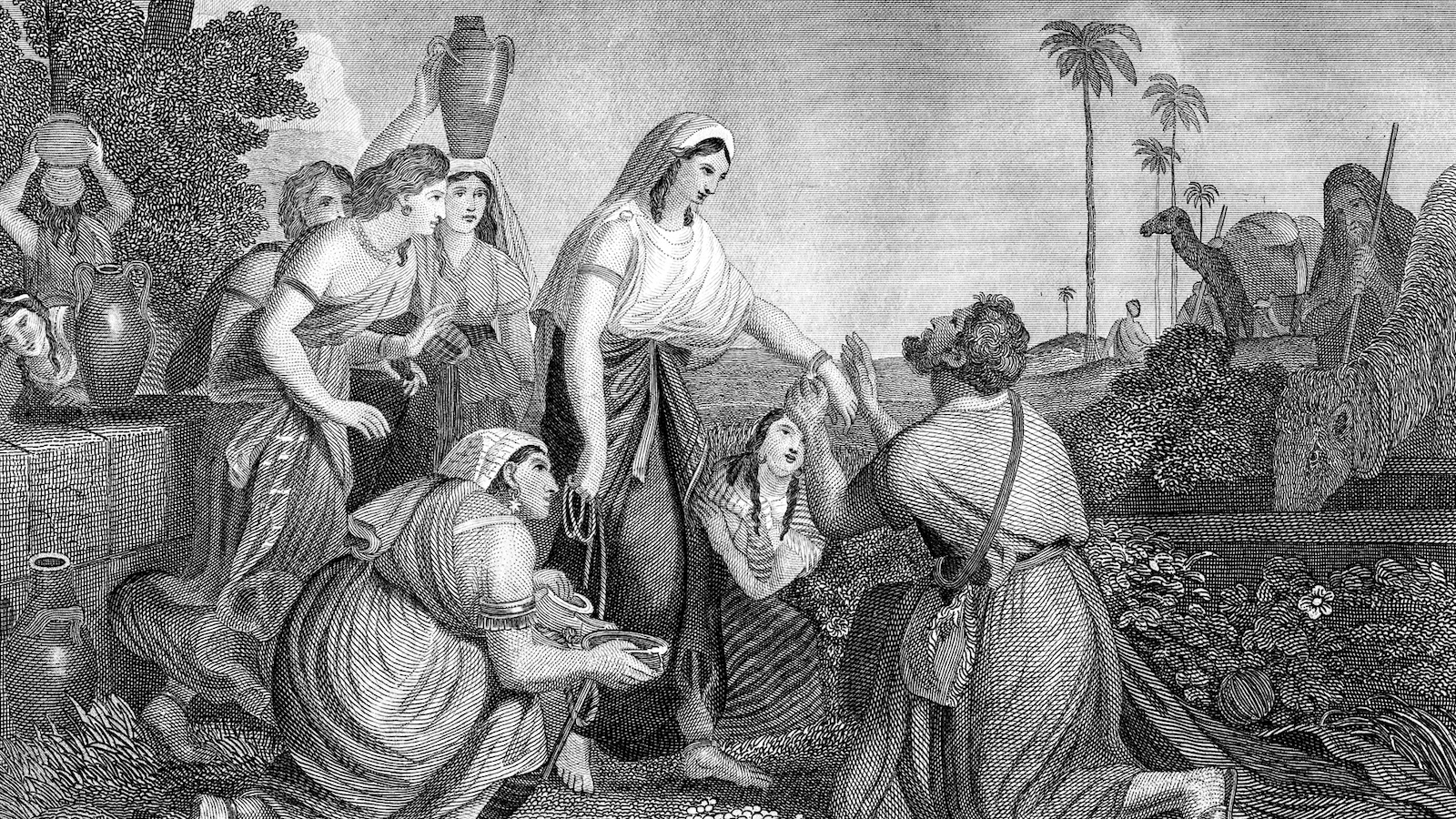






 Centro Estudios Judaicos del Sur de PR