The “Aron Haberit,”1 the holy ark of the covenant, is the most sacred artifact in all of Judaism. A golden box containing the tablets with the Ten Commandments, the ark stood in the Holy of Holies, the Temple’s innermost sanctum. Today, its location is unknown, hidden until the day Moshiach comes.
Design of the Ark
The ark, which represents G‑d’s love for his people, was built by the chief architect of the Tabernacle, Betzalel. G‑d instructed that the ark be built from acacia wood, and gave very specific dimensions: 2.5 cubits in length and 1.5 cubits in height and width.2 There were an additional two boxes, both made from gold, that encased the wooden box. In all, the ark comprised three layers: gold, wood, gold. The top of the outer box was lined with a gold decorative rim called the “zeir.”
The ark had no feet; it rested directly on the ground. Rings were fastened to each of its four corners, through which gold-plated wooden poles were threaded. The poles, which were never to be removed, were used by the priests from the Kehot house to carry the ark, for it was forbidden to transport it by wagon.
The “kaporet,” a golden cover one handbreadth thick, covered the outer box. Atop the cover, fashioned from the same piece of metal, sat the “keruvim,” cherubs—two childlike sculptures that faced each other, their wings towering above the ark.
Placement of the Ark
In the Holy Temple, the ark’s home was the most sacred chamber, the Holy of Holies. Only the High Priest was allowed inside, and only once a year, on the awesome day of Yom Kippur, when he would enter the Holy of Holies and perform the annual service before the ark.
When King Solomon constructed the first Temple, he built an alcove deep within the Temple Mount for concealing the ark. Toward the end of the first Temple period, King Josiah, divining the Temple’s destruction, had the ark hidden there.34 It remains hidden until today, and when Moshiach comes and rebuilds the third, everlasting Temple, he will uncover the ark and bring it home.
In the Temple, the ark rested directly on the “Even Hashetiyah”—the Shetiya stone, which is the foundation point of the entire world.5 In the second Temple there was no ark, only the Shetiya stone.
Contents
The ark housed the tablets (engraved with the Ten Commandments) that Moses brought down from Mount Sinai, the broken pieces of the first set of tablets,6 and a Torah scroll.7 A pitcher of manna and Aaron’s miraculous staff8 were placed right in front of it.
Miracles
Many miracles were associated with the ark. For one, “it carried its carriers.” When the Kohanim lifted it for transport, instead of them carrying the ark, the ark carried them.9
Additionally, when Joshua led the Jewish people into the Promised Land after Moses’ death, they camped alongside the Jordan river. At G‑d’s command, Joshua sent the ark toward the river. When the feet of the ark- bearers entered the water, the river split, allowing the Jews to cross. When the last Jew had crossed, the ark crossed the river, and the water began to flow again.
And when the Tabernacle stood in Shiloh, the priests mistreated the ark and removed it from the Temple, taking it into battle with them in the hope that it would provide protection. When the Philistines defeated the Jews, they captured the ark and brought it back with them to their lands. The ark wrought havoc on the Philistine cities, bringing terrible plagues and afflictions, even causing their god, the idol Dagon, to be destroyed. Frightened and fed up, they ultimately sent the ark back to the Jews.
Heaven on Earth
According to the Talmud, the space occupied by the ark did not take up space. What does that mean? The Holy of Holies of the Tabernacle was 10 cubits wide, and the ark, which stood in the center, had a length of 2.5 cubits. Yet, when measuring from the sides of the ark to the wall, one would find five cubits on each side.10 This paradox was entirely miraculous, something we cannot even wrap our heads around; the ark both taking up space and not taking up space at the same time.
Chassidic teachings explain its significance. In general, G‑d has two opposite modes with which He operates: revealed (the natural) or concealed (the supernatural). Nature, with its seeming lack of Divinity, is a result of G‑d’s power to conceal Himself. Miracles, on the other hand, when the laws of nature are broken, are the very expression of G‑dliness, His power openly revealed. In truth, however, G‑d is beyond both of those, He is neither entirely concealed, nor revealed. Neither locked into operating in a hidden, limited manner, nor bound by his infinitude. He is beyond both, and can unite the two modalities if He so desires.
It was in the Holy of Holies, the most sacred spot on earth, that this exact reality was revealed. The ark did occupy space—the natural, and at the same time it did not—the supernatural. It was the perfect kiss between Heaven and earth.
Footnotes
1.Joshua 3. Other names for the holy ark include “ark of testimony,” “ark of the covenant of G‑d,” and “ark of G‑d.”
2. There are two measures for a cubit: six handbreadths and five handbreadths. Bava Batra 14a records a dispute as to how big the cubits measuring the ark were. Rabbi Meir maintains they were the six handbreadth cubits, whereas Rabbi Yehudah holds they were the five handbreadth cubits.
6. Baba Batra 14a. See Sifri Beha’alotcha 24 who writes that in fact the broken tablets were placed in a different ark, the one which traveled at the front of the Jews in the desert, and which they took with them into battle.
7. Some say the Torah scroll was not placed inside the ark, but rather alongside it. See Bava Batra 14a-b.
8. When there was contention over which tribe should have the honor of serving in G‑d’s sanctuary, the leaders of the tribes placed their staffs in the Holy of Holies. Overnight, Aaron’s dry stick miraculously blossomed and grew almonds, a clear sign that his tribe, Levi, was truly chosen by G‑d.
The parsha of Terumah describes the construction of the Tabernacle, the first collective house of worship in the history of Israel. The first but not the last; it was eventually succeeded by the Temple in Jerusalem. I want to focus on one moment in Jewish history which represents Jewish spirituality at its lowest ebb and highest flight: the moment the Temple was destroyed.
It is hard to understand the depth of the crisis into which the destruction of the First Temple plunged the Jewish people. Their very existence was predicated on a relationship with God symbolised by the worship that took place daily in Jerusalem. With the Babylonian conquest in 586 BCE, Jews lost not only their land and sovereignty. In losing the Temple, it was as if they had lost hope itself. For their hope lay in God, and how could they turn to God if the very place where they served Him was in ruins? One document has left a vivid record of the mood of Jews at that time, one of the most famous of the psalms:
By the waters of Babylon we sat and wept as we remembered Zion…How can we sing the songs of the Lord in a strange land? (Psalm 137)
It was then that an answer began to take shape. The Temple no longer stood, but its memory remained, and this memory was strong enough to bring Jews together in collective worship. In exile, in Babylon, Jews began to gather to expound Torah, articulate a collective hope of return, and recall the Temple and its service.
The prophet Ezekiel was one of those who shaped a vision of return and restoration, and it is to him we owe the first oblique reference to a radically new institution that eventually became known as the Beit Knesset, the synagogue: “This is what the sovereign Lord says: although I sent them far away among the nations and scattered them among the countries, yet I have become to them a small Sanctuary [Mikdash me’at] in the countries where they have gone” (Ezekiel 11:16). The central Sanctuary had been destroyed, but a small echo, a miniature, remained.
The synagogue is one of the most remarkable examples of an itaruta de’letata, “an awakening from below.” It came into being not through words spoken by God to Israel, but by words spoken by Israel to God. There is no synagogue in Tanach, no command to build local houses of prayer. On the contrary, insofar as the Torah speaks of a “house of God” it refers to a central Sanctuary, a collective focus for the worship of the people as a whole.
We tend to forget how profound the concept of a synagogue was. Professor M. Stern has written that “in establishing the synagogue, Judaism created one of the greatest revolutions in the history of religion and society, for the synagogue was an entirely new environment for divine service, of a type unknown anywhere before.” It became, according to Salo Baron, the institution through which the exilic community “completely shifted the emphasis from the place of worship, the Sanctuary, to the gathering of worshippers, the congregation, assembled at any time and any place in God’s wide world.” The synagogue became Jerusalem in exile, the home of the Jewish heart. It is the ultimate expression of monotheism – that wherever we gather to turn our hearts towards heaven, there the Divine Presence can be found, for God is everywhere.
Where did it come from, this world-changing idea? It did not come from the Temple, but rather from the much earlier institution described in this week’s parsha: the Tabernacle. Its essence was that it was portable, made up of beams and hangings that could be dismantled and carried by the Levites as the Israelites journeyed through the wilderness. The Tabernacle, a temporary structure, turned out to have permanent influence, whereas the Temple, intended to be permanent, proved to be temporary – until, as we pray daily, it is rebuilt.
More significant than the physical structure of the Tabernacle was its metaphysical structure. The very idea that one can build a home for God seems absurd. It was all too easy to understand the concept of sacred space in a polytheistic worldview. The gods were half-human. They had places where they could be encountered. Monotheism tore this idea up at its roots, nowhere more eloquently than in Psalm 139:
Where can I go from Your Spirit?
Where can I flee from Your presence?
If I go up to the heavens, You are there;
If I make my bed in the depths, You are there.
Hence the question asked by Israel’s wisest King, Solomon: “But will God really dwell on earth? The heavens, even the highest heaven, cannot contain You. How much less this temple I have built!” (I Kings 8:27).
The same question is posed in the name of God by one of Israel’s greatest prophets, Isaiah:
The very concept of making a home in finite space for an infinite presence seems a contradiction in terms. The answer, still astonishing in its profundity, is contained at the beginning of this week’s parsha: “They shall make a Sanctuary for Me, and I will dwell in them [betokham]” (Exodus 25:8). The Jewish mystics pointed out the linguistic strangeness of this sentence. It should have said, “I will dwell in it,” not “I will dwell in them.” The answer is that the Divine Presence lives not in a building but in its builders; not in a physical place but in the human heart. The Sanctuary was not a place in which the objective existence of God was somehow more concentrated than elsewhere. Rather, it was a place whose holiness had the effect of opening hearts to the One worshipped there. God exists everywhere, but not everywhere do we feel the presence of God in the same way. The essence of “the holy” is that it is a place where we set aside all human devices and desires and enter a domain wholly set aside for God.
If the concept of the Mishkan, the Tabernacle, is that God lives in the human heart whenever it opens itself unreservedly to heaven, then its physical location is irrelevant. Thus the way was open, seven centuries later, to the synagogue: the supreme statement of the idea that if God is everywhere, He can be reached anywhere. I find it moving that the frail structure described in this week’s parsha became the inspiration of an institution that, more than any other, kept the Jewish people alive through almost two thousand years of dispersion – the longest of all journeys through the wilderness.
Genghis Khan as portrayed in a 14th-century Yuan era album. (Public Domain/ Wikimedia Commons)
Before his death in 1227, Genghis Khan divided up his empire among his four sons with overall leadership given to his third son Ögedei, who was chosen by his father to be the Great Khan.
Genghis’s eldest son, Jochi, died six months before his father, and his two sons, Genghis’s grandsons, Batu Khan and Orda Khan divided his inheritance between them — in what is today southern Russia and Kazakhstan. Their tribes were known as the Blue Horde and the White Horde, respectively. Eventually, they conquered new territories, the two groups merged to become the Golden Horde (also known as the Kipchak Khanate).
The Golden Horde held the northwest part of the Mongol Empire — an empire which was the largest contiguous empire in history, covering some 24 million square kilometers (9.27 square miles) or 16.11% of the world (it was the second biggest empire of all time, surpassed only by the British Empire which by 1920 covered 35.5 million square kilometers (13.71 million square miles) or 23.84% of the world). The Mongol Empire stretched from Eastern Europe and parts of the Middle East to the Sea of Japan, from Iran and Turkey to China.
Although the Mongols were feared as bloodthirsty and cruel, their dominance for 100 years (c. 1250-1350) had a stabilizing effect, known as Pax Mongolica, which improved the economic and social lives of people living under the Khans, due to improved trade and communications.
Reenactment of Mongol battle. (Public Domain, Official U. S. Marine Corps photo by Sgt. G. S. Thomas/ Wikimedia Commons)
In 1241 Batu was on the verge of conquering Vienna, when Ögedei Khan died, and all the Mongol chieftains were summoned back to elect the next Great Khan, in a gathering known as Kurultai. The Mongols would never get that far west again.
The Kurultai was an important aspect of Mongolian life. In a territory that vast, it was the gatherings of leaders around their central tent that reminded the people of their nomadic origins and ensured the unity of the empire.
The tent at the heart of the empire was central to crowning a new leader. Johann Schiltberger, a 15th-century German traveler, described the coronation of a new Khan as follows (cited on p. 210 in George Vernadsky, “The Mongols and Russia”):
“When they choose a king, they take him and seat him on white felt, and raise him in it three times. Then they lift him up and carry him round the tent, and seat him on a throne, and put a golden sword in his hand. Then he must be sworn as is the custom.”
The tent was so important, that it is likely to be the origin of the name Golden Horde.
Illustration of Batu Khan taking Suzdal in 1238, from “The life of S.Ephrosinia”, 18 century (CC BY-SA, shakko/ WIkimedia Commons)
The name may have originated with the yellow-colored tents that the Mongolia lived in, or may come from the golden-draped tent used by Batu Khan or by Uzbek Khan. Or it may be a corruption of the Mongolian words “sari ordu” meaning “central camp.”
Just as in Mongolian culture, the tent and encampment played an essential role for the Israelites during their 40-year trek through the desert. But instead of housing the king, it was the Divine Presence that was placed in the center of the camp.
Mongol expanstion in 13th century. (CC BY-SA Bkkbrad, Wikimedia Commons)
In this week’s Torah portion, Terumah, God instructs Moses and the people about the construction of the Tabernacle, known in Hebrew as the mishkan. The mishkan was a tent made of fabric and animal hides, and contained the ark of the covenant, the menorah, the table holding the showbread and the golden altar.
The mishkan remained the focus of religious life for the next several centuries. The Talmud (Zevahim 118b) says that the mishkan stood in the desert for 39 years, in Gilgal for 14 years, in Shilo for 369 years, and in Nov and Givon for 57 years. True, once the Israelites realized they would remain in Shilo for such a long time they replaced the wooden sides of the desert mishkan with stones, but the tent-like structure of the fabric covering remained in place (Zevachim 112b). Even though the stones of Shilo were destroyed (Megillah 16b), the wool, linen, silk, hide and leather fabric that had been draped over the mishkan remained, and was hidden away in a safe place.
The Midrash (Tanna d’vei Eliyahu Rabba chapter 25) gives the reason for this:
Why does the mishkan remain hidden until today? Because it was made by good people out of the goodness of their hearts and it is difficult for the Holy One, blessed is He, to destroy anything made by good people out of the goodness of their hearts.
The Midrash alludes to another difference between the Temple and the Tabernacle. The root of the Hebrew word for Temple — mikdash — is kadosh, holy. The Temple is a site of holiness, and according to many opinions the site of the Temple remains holy to this day. But the root of the word for Tabernacle — mishkan — is Shekhina, the Divine Presence. This has no defined place, but represents the relationship between the Jewish people and God. Once the Divine Presence has left the site of the mishkan the area is no longer holy.
Both Temples were destroyed and the Jewish people exiled. But however far they spread throughout the Diaspora, the relationship to the Divine Presence, represented by the mishkan remained at the center of their lives.
Just as the Golden Horde and the Mongol Empire spread far and wide, yet remained deeply rooted in the tent of their nomadic origin, so too, the Jewish people return over and over again to the concept of the mishkan, and the Divine Presence that rests within it, no matter where they are.
The vegetarian diet enjoys a degree of popularity in the West. Some choose to be vegetarian for aesthetic reasons: they don’t like the taste of meat, or they regard a meat-based diet as less healthy. Others are vegetarians because they find it morally wrong to kill an animal for food.
What does Judaism say about all this?
First, some background on the Jewish worldview:
Ideally there should be no barriers between one’s physical and spiritual existence. Life should be a seamless expression of connecting to the Master of the Universe, the Author of our being. From the Jewish perspective, activities that present themselves as mundane– eating, sleeping, conducting business, relationships, etc.– are part of serving God, no less than the ritual observance of prayer, study and giving charity.
The act of eating should be a means of bringing sanctity into our lives.
Earthly activities are the bridge through which we access higher realms. Therefore, the act of eating is not a meaningless, sensual indulgence, nor even a necessary means of maintaining our physical well being. It can and should be the proverbial ladder to heaven– a means of bringing holiness and sanctity into our lives.
The Talmud (Yerushalmi Kiddushin very end) says that at the end of one’s life, the first question God asks is: “Did you taste every fruit that I put on Earth?” We are enjoined to appreciate all of life’s bounty. Indeed, Maimonides deems it a mitzvah to partake of meat on the holidays, in order to increase one’s pleasure and rejoicing. (In practice, this does not apply to those who do not enjoy these foods.)
In general, Judaism permits the eating of meat, provided that the animal: is a species permitted by the Torah (Leviticus chapter 11); is ritually slaughtered (shechita) (Deut. 12:21); has the non-kosher elements (blood and certain fats and sinews) removed (Leviticus 3:17; Genesis 32:33); is prepared without mixing meat and milk (Exodus 34:26); and that appropriate blessings are recited (Deut. 8:10).
By eating in the Torah-prescribed manner, and with the proper focus and intent, says the Talmud, one’s table can become a virtual altar in the service of God.
Compassion for Animals
At the same time, the Torah stresses compassion for animals. Indeed, by no coincidence, many of our greatest biblical leaders were shepherds, and the Talmud describes how God chose Moses for Jewish leadership based on his tender care for flocks of sheep.
Here are some examples of Jewish legislation regarding the ethical treatment of animals:
It is prohibited to cause pain to animals – tzaar ba’alei chaim. (Talmud – Baba Metzia 32b, based on Exodus 23:5)
One is obligated to relieve an animal’s suffering (i.e. unburden it), even if it belongs to your enemy. (Exodus 23:5)
If an animal depends on you for sustenance, it is forbidden to eat anything until feeding the animal first. (Talmud – Brachot 40a, based on Deut. 11:15)
We are commanded to grant our animals a day of rest on Shabbat. (Exodus 20:10)
It is forbidden to use two different species to pull the same plow, since this is unfair to the weaker animal. (Deut. 22:10)
It is a mitzvah to send away a mother bird before taking her young. (Deut. 22:7)
It is forbidden to kill a cow and her calf on the same day. (Leviticus 22:28)
It is prohibited to sever and eat a limb off a live animal. (Genesis 9:4; this is one of the “Noachide” laws that apply to Jews and non-Jews alike.)
Shechita (ritual slaughter) must be done with a minimum of pain to the animal. The blade must be meticulously examined to assure the most painless form of death possible. (“Chinuch” 451; “Pri Megadim” – Introduction to Shechita Laws).
Hunting animals for sport is viewed with serious disapproval by our Sages. (Talmud – Avoda Zara 18b; “Noda BeYehuda” 2-YD 10)
To deal casually or cavalierly with the life of an animal is antithetical to Jewish values. This sensitivity is illustrated by the following story:
In a small European village, a shochet (ritual slaughterer) fetched some water to apply to his blade in the preparation process. At a distance, he observed a very old man, watching him and shaking his head from side to side disapprovingly. Finally, the young shochet asked the old man for an explanation.
The old man replied that as he watched him prepare his blade, it brought back memories from many years earlier when, as a young man, he had observed the saintly Rabbi Israel Baal Shem Tov (founder of the chassidic movement) doing the same thing. But the difference, he explained, was that Rabbi Israel did not need to fetch water in order to sharpen the blade– rather the tears that streamed from his eyes were adequate.
Hierarchy of Creation
While Jewish law protects the ethical treatment of animals, Judaism also maintains that animals are meant to serve mankind, as it says: “Let man dominate the fish, birds and animals” (Genesis 1:26). There is a clear hierarchy of creation, with man at the pinnacle.
Maimonides identifies four levels in the hierarchy of creation, in which every creature derives its sustenance from the level beneath it:
Level 1: Domaim – the silent, inanimate realm (i.e. earth and minerals) constitutes the lowest existence, and is self-sustaining.
Level 2: Tzomey’ach – vegetation is nurtured by the previous level, earth.
Level 3: Chai – the animal kingdom eats mostly vegetation.
Level 4: Medaber – human beings (lit.: the speaking being) derive nourishment by eating both vegetation and animals.
When food is consumed, its identity is transformed into that of the one eating it. Thus the Talmud (Pesachim 59b) regards it as morally justified to eat animals only when we are involved in holy and spiritual pursuits. It is only then that the human actualizes his highest potential, and the consumed animal is, so to speak, elevated to the level of “human.”
In Jewish consciousness, the highest level an animal can achieve is to be consumed by a human and used in the service of God. A chicken on a Shabbos table is a very lucky chicken! (see “Tanya” ch. 7)
If, however, the person is acting like an animal, then by what right may he consume his “peer”? What spiritual improvement can he confer upon this animal by eating it?
Therefore, before eating meat, we must ask ourselves the very sobering question of whether in fact, given who we are, are we indeed benefiting this animal?
When eating is not merely an act of “mindless consumption,” but rather an act with clear intent that the strength and energy one derives from the food will be utilized to benefit the world, then eating has been sublimated to an act of worship.
Radicalized Extension
Animal rights can be a double-edged sword: While the animal kingdom is important and must be treated ethically, we must recognize that there is no equivalence of species. Among all living things, humankind alone is created in the “image of God” (Genesis 1:26).
When the lines are blurred, when both human and animal life is considered equally sacred, this can trigger a dangerous philosophy that regards killing a human being as no more heinous than killing an animal.
Rabbi Yosef Albo (14th century) asserts that this philosophy has its roots in the biblical story of Cain and Abel. Genesis chapter 4 describes how Cain brought a sacrifice of grain, while his brother Abel offered animals. Rabbi Albo explains that Cain regarded humans and animals as equals and, accordingly, felt he had no right to kill them.
Cain then extended this misguided logic: If people and animals are inherently equal, then just as one could permit taking the life of an animal, so too could one permit taking the life of his fellow man. Thus Cain was able to justify the murder of his brother.
The Nazis passed laws protecting animals, while relegating Jews to the status of “sub-human.”
In modern times, the radicalized extension of Cain’s philosophy came afore during the 1930s, when the Nazis passed a number of laws protecting animals, e.g. restricting the use of live animals in biomedical experiments (“vivisection”). All the while, the Nazis were killing off millions of humans. (Actually, Jews were legally relegated to the status of “sub-human.”) The lines between human and animal had been totally obscured.
Today this radical vegetarianism is expressed by the organization PETA (People for the Ethical Treatment of Animals). As one example, PETA’s shocking multi-media display, “Holocaust on Your Plate,” juxtaposes photos of Nazi concentration camp victims with photos of chicken farms, drawing a gross moral equivalence.
In academia, too, Princeton University philosopher Peter Singer has written and lectured extensively on how the welfare of animals supercedes that of ill babies; he also calls for society to accept human-animal domestic partnerships.
Judaism’s permitting animals for food serves as a pragmatic hedge against such extremism: constantly reminding man of his unique status among God’s creation. The 18th century kabbalist, Rabbi Moshe Chaim Lutzatto, explains that all living things– humans and animals– have souls. However, not all souls are created equal. Animals have a soul which animates them and carries within it the instincts for survival, procreation, fear, etc. Only humans, with a Divine soul, have the ability to forge a relationship with God, the transcendent dimension. Only humans have the ability to choose higher “soul pleasures”– like helping the poor, even at the expense lower “body pleasures” like hoarding more food for ourselves. You’ll never see a hungry dog say to his friends, “Let’s not fight over this,” or “Let’s save some for the other dogs who aren’t here.”
Rabbi Abraham Isaac Kook (purportedly a vegetarian) writes that man was granted dominion over animals in order to underscore our spiritual superiority and heightened moral obligations. Were man to accord animals the same rights as humans, then just as we don’t expect high moral standards from animals, we would, tragically, lower our expectations of humans as well.
Historical Precedents
Historically, Adam and Eve were vegetarians, as it says: “vegetables and fruits shall be your food” (Genesis 1:29). God only permitted meat to Noah and his descendents after the Flood (Genesis 9:3; Talmud – Sanhedrin 59b).
Why the shift?
Some commentators explain that before the Flood, man was above the food chain, given the responsibility to take care of the world and everything in it. After the Flood, man sunk a level and became linked with the food chain, albeit at the top of it. Mankind had fallen in its ability to influence the animal world through actions and deeds, and it thus became necessary to influence the animal world more directly by ingesting them.
After the Flood, mankind had fallen in its ability to influence the animal world.
Rabbi Yosef Albo, mentioned earlier, asserts that Cain’s misguided philosophy was adopted by succeeding generations, and meat was permitted to Noah in order to emphasize the superiority of humanity over the animal kingdom.
Another commentator, the Malbim, explains the shift from a physical perspective: The post- diluvian era was marked by a general weakening of the human condition. As the quality of produce became nutritionally inferior, and as mankind became geographically dispersed and subject to varying climates, it became necessary to supplement the human diet with animal products.
Some cite the precedent of Adam and Eve as indication that in a perfect world, i.e. in the future time of the Messiah, humans will return to universal vegetarianism. The vast majority of rabbinic scholars, however, maintain that animal offerings will be resumed in the Messianic era. Indeed, the Talmud (Baba Batra 75a) declares that when the Messiah arrives, God will prepare a flesh-based feast for the righteous.
Summary
In conclusion, Judaism accepts the idea of a vegetarian diet, though dependent on one’s intention:
Vegetarianism based on the idea that we have no moral right to kill animals is not an acceptable Jewish view.
Vegetarianism for aesthetic or health reasons is acceptable; indeed, the Torah’s mandate to “guard yourselves carefully” (Deut. 4:15) requires that we pay attention to health issues related to a meat-centered diet. Some points to consider include the contemporary increase in sickness in animals created by factory farm conditions, and the administration of growth hormones, antibiotics and other drugs given to animals. All of these may be possible health risks to humans.
Rabbi Feinstein forbade raising veal in cramped and painful conditions.
In addition, there is the possible violation of tzaar baalai chaim (causing pain to animals) resulting from mass production methods of raising, transporting and slaughtering animals. The great 20th century American sage, Rabbi Moshe Feinstein, forbade raising veal in cramped and painful conditions, and forbade feeding animals chemicals in place of food, since this would deprive them of the pleasure of eating. (“Igros Moshe” EH 4:92)
Jewish consciousness requires constant attention to preserving and protecting our natural world.
Rabbi Benzion of Bobov was strolling with a disciple, deeply engrossed in scholarly conversation. As they passed a tree, the student mindlessly pulled off a leaf and unconsciously shredded it into pieces.
Rabbi Benzion stopped abruptly. The student, startled, asked what was wrong. In response, the rabbi asked him why he had picked the leaf off of the tree.
The disciple, taken aback, could think of no response.
The rabbi explained that all of nature– birds, trees, even every blade of grass– everything that God created in this world, sings its own form of praise to its Creator. If they should be needed for food and sustenance, they are ingested and become part of the song of the higher species. But to pull a leaf off a tree for no purpose at all is to wastefully silence its song, giving it no recourse, as it were, to join any other instrument in the symphony of nature.
Yes, Judaism permits the eating of meat, provided that proper intent and mindfulness are present: to elevate the Divine energy contained in meat to a higher human level; to use energy derived from eating to discharge spiritual and moral responsibilities; and to serve God through the pleasures of His world.
There are commands that leap off the page by their sheer moral power. So it is in the case of the social legislation in Mishpatim. Amid the complex laws relating to the treatment of slaves, personal injury and property, one command in particular stands out, by virtue of its repetition (it appears twice in our parsha), and the historical-psychological reasoning that lies behind it:
Do not ill-treat a stranger or oppress him, for you were strangers in Egypt. (Exodus 22:20)
Do not oppress a stranger; you yourselves know how it feels to be a stranger [literally, “you know the soul of a stranger”], because you were strangers in Egypt. (Ex. 23:9)
Mishpatim contains many laws of social justice – against taking advantage of a widow or orphan, for example, or charging interest on a loan to a fellow member of the covenantal community, against bribery and injustice, and so on. The first and last of these laws, however, is the repeated command against harming a ger, a “stranger.” Clearly something fundamental is at stake in the Torah’s vision of a just and gracious social order.
If a person was a son of proselytes, one must not taunt him by saying, “Remember the deeds of your ancestors,” because it is written “Do not ill-treat a stranger or oppress him.”
The Sages noted the repeated emphasis on the stranger in biblical law. According to Rabbi Eliezer, the Torah “warns against the wronging of a ger in thirty-six places; others say, in forty-six places.”[1]
Whatever the precise number, the repetition throughout the Mosaic books is remarkable. Sometimes the stranger is mentioned along with the poor; at others, with the widow and orphan. On several occasions the Torah specifies: “You shall have the same law for the stranger as for the native-born.”[2] Not only must the stranger not be wronged; he or she must be included in the positive welfare provisions of Israelite/ Jewish society. But the law goes beyond this; the stranger must be loved:
When a stranger lives with you in your land, do not mistreat him. The stranger living with you must be treated as one of your native- born. Love him as yourself, for you were strangers in Egypt. I am the Lord your God. (Lev. 19:33–34)
This provision appears in the same chapter as the command, “You shall love your neighbour as yourself” (Leviticus 19:18). Later, in the book of Deuteronomy, Moses makes it clear that this is the attribute of God Himself:
“For the Lord your God is God of gods and Lord of lords, the great God, mighty and awesome, who shows no partiality and accepts no bribes. He defends the cause of the fatherless and the widow, and loves the stranger, giving him food and clothing. And you are to love those who are strangers, for you yourselves were strangers in Egypt.” (Deut. 10:17–19)
What is the logic of the command? The most profound commentary is that given by Nachmanides:
The correct interpretation appears to me to be that He is saying: do not wrong a stranger or oppress him, thinking as you might that none can deliver him out of your hand; for you know that you were strangers in the land of Egypt and I saw the oppression with which the Egyptian oppressed you, and I avenged your cause on them, because I behold the tears of such who are oppressed and have no comforter…Likewise you shall not afflict the widow and the orphan for I will hear their cry, for all these people do not rely upon themselves but trust in Me.
And in another verse he added this reason: for you know what it feels like to be a stranger, because you were strangers in the land of Egypt. That is to say, you know that every stranger feels depressed, and is always sighing and crying, and his eyes are always directed towards God, therefore He will have mercy upon him even as He showed mercy to you [and likewise He has mercy on all who are oppressed].[3]
According to Nachmanides the command has two dimensions. The first is the relative powerlessness of the stranger. He or she is not surrounded by family, friends, neighbours, a community of those ready to come to their defence. Therefore the Torah warns against wronging them because God has made Himself protector of those who have no one else to protect them. This is the political dimension of the command. The second reason, as we have already noted, is the psychological vulnerability of the stranger (we recall Moses’ own words at the birth of his first son, while he was living among the Midianites: “I am a stranger in a strange land,” Ex. 2:22). The stranger is one who lives outside the normal securities of home and belonging. He or she is, or feels, alone – and, throughout the Torah, God is especially sensitive to the sigh of the oppressed, the feelings of the rejected, the cry of the unheard. That is the emotive dimension of the command.
Rabbi Chayim ibn Attar (Ohr HaChayim) adds a further fascinating insight. It may be, he says, that the very sanctity that Israelites feel as children of the covenant may lead them to look down on those who lack a similar lineage. Therefore they are commanded not to feel superior to the ger, but instead to remember the degradation their ancestors experienced in Egypt.[4] As such, it becomes a command of humility in the face of strangers.
Whichever way we look at it, there is something striking about this almost endlessly iterated concern for the stranger – together with the historical reminder that “you yourselves were slaves in Egypt.” It is as if, in this series of laws, we are nearing the core of the mystery of Jewish existence itself. What is the Torah implying?
Concern for social justice was not unique to Israel.[5] What we sense, however, throughout the early biblical narrative, is the lack of basic rights to which outsiders could appeal. Not by accident is the fate of Sodom and the cities of the plain sealed when they attempt to assault Lot’s two visitors. Nor can we fail to feel the risk to which Abraham and Isaac believe they are exposed when they are forced to leave home and take refuge in Egypt or the land of the Philistines. In each of the three episodes (Genesis chapters 12, 20, 26) they are convinced that their lives are at stake; that they may be murdered so that their wives can be taken into the royal harem.
There are also repeated implications, in the course of the Joseph story, that in Egypt, Israelites were regarded as pariahs (the word “Hebrew,” like the term hapiru found in the non-Israelite literature of the period, seems to have a strong negative connotation). One verse in particular – when the brothers visit Joseph a second time – indicates the distaste with which they were regarded:
They served him [ Joseph] by himself, the brothers by themselves, and the Egyptians who ate with him by themselves, because Egyptians could not eat with Hebrews, for that is detestable to Egyptians. (Gen. 43:32)
So it was, in the ancient world. Hatred of the foreigner is the oldest of passions, going back to tribalism and the prehistory of civilisation. The Greeks called strangers “barbarians” because of their (as it seemed to them) outlandish speech that sounded like the bleating of sheep.[6] The Romans were equally dismissive of non-Hellenistic races. The pages of history are stained with blood spilled in the name of racial or ethnic conflict. It was precisely this to which the Enlightenment, the new “age of reason,” promised an end. It did not happen. In 1789, in revolutionary France, as the Rights of Man were being pronounced, riots broke out against the Jewish community in Alsace. Hatred against English and German immigrant workers persisted throughout the nineteenth century. In 1881 in Marseilles a crowd of ten thousand went on a rampage attacking Italians and their property. Dislike of the unlike is as old as mankind. This fact lies at the very heart of the Jewish experience. It is no coincidence that Judaism was born in two journeys away from the two greatest civilisations of the ancient world: Abraham’s from Mesopotamia, Moses’ and the Israelites’ from Pharaonic Egypt. The Torah is the world’s great protest against empires and imperialism. There are many dimensions to this protest. One dimension is the protest against the attempt to justify social hierarchy and the absolute power of rulers in the name of religion. Another is the subordination of the masses to the state – epitomised by the vast building projects, first of Babel, then of Egypt, and the enslavement they entailed. A third is the brutality of nations in the course of war (the subject of Amos’ oracles against the nations). Undoubtedly, though, the most serious offence – for the prophets as well as the Mosaic books – was the use of power against the powerless: the widow, the orphan and, above all, the stranger.
To be a Jew is to be a stranger. It is hard to avoid the conclusion that this was why Abraham was commanded to leave his land, home and father’s house; why, long before Joseph was born, Abraham was already told that his descendants would be strangers in a land not their own; why Moses had to suffer personal exile before assuming leadership of the people; why the Israelites underwent persecution before inheriting their own land; and why the Torah is so insistent that this experience – the retelling of the story on Passover, along with the never-forgotten taste of the bread of affliction and the bitter herbs of slavery – should become a permanent part of their collective memory.
It is terrifying in retrospect to grasp how seriously the Torah took the phenomenon of xenophobia, hatred of the stranger. It is as if the Torah were saying with the utmost clarity: reason is insufficient. Sympathy is inadequate. Only the force of history and memory is strong enough to form a counterweight to hate.
The Torah asks, why should you not hate the stranger? Because you once stood where he stands now. You know the heart of the stranger because you were once a stranger in the land of Egypt. If you are human, so is he. If he is less than human, so are you. You must fight the hatred in your heart as I once fought the greatest ruler and the strongest empire in the ancient world on your behalf. I made you into the world’s archetypal strangers so that you would fight for the rights of strangers – for your own and those of others, wherever they are, whoever they are, whatever the colour of their skin or the nature of their culture, because though they are not in your image, says God, they are nonetheless in Mine. There is only one reply strong enough to answer the question: Why should I not hate the stranger? Because the stranger is me.
When I read your writings, I am impressed by your deep passion for religion in general and Jewish spirituality in particular. You possess a great yearning to connect to God, a powerful love and appreciation of ancient religious and philosophical texts, and an overall desire to share these ideas with people. In some ways, you remind me of Rabbi Abraham Joshua Heschel who, through his own spiritual and ethical personality, could inspire other people to follow this path. Would you say that you had this powerful spiritual personality as a young child, or is it something that you only developed later in your adult life?
Nathan Lopes Cardozo: I believe I had some of this spiritual personality since I was a youngster. There was always a dimension of amazement and mystery that accompanied me—an early fascination. Some kind of wonder at what this universe is all about; why we are here; and above all, what to do with this amazement.
(I was born breech, which I believe made me see everything differently (upside down?) than most people do! See my short spiritual autobiography: Lonely but Not Alone.)
I also had the desire to be holy, not just good, or nice. To this day, it is the most difficult challenge in my life—how to be holy. And what is holiness? It has something to do with the constant awareness that God is to be discovered in all that one does, speaks, thinks, and feels. But that’s nearly unattainable. How does one live up to this? In my case, it leads to a kind of religious frustration. (And what about all those people who don’t want to be holy? They just want a decent, moral life and to enjoy themselves. Is that possible? Perhaps it is. I keep wondering about this.)
But my desire to be religious was not at all connected to conventional religion. If anything, it was more connected to Spinoza’s famous insight: “Deus sive natura” (God is nature)—where he equates the two—which does not really allow for a personal God Who is the Creator of the universe but, rather, God is the universe. We call this “pantheism.” I discovered the full meaning of this idea only later when my father, who was a business man by profession, introduced me to Spinoza’s philosophy.
While many religious philosophers would say that this is heresy, I’m not so sure. First of all, I wonder whether there is something like heresy in Judaism. Secondly, we find some of Spinoza’s pantheism in the Kabbalah. Sometimes it is called “panentheism,” the belief that God is in everything but is also more than everything. This idea has been very well developed by Rabbi Shneur Zalman of Liady (1745-1813), the first Lubavitcher Rebbe, in his famous Tanya.[1]
I also believe that Spinoza was the first secular tzaddik who lived a holy life, although on many occasions, he deliberately misrepresented Judaism in his Tractatus Theologico-Politicus, probably because he wanted to find favor with the liberal Christians in Holland; had little knowledge of Judaism; was treated in a highly unfortunate way by the rabbis of the Portuguese Jewish Community of Amsterdam (of which I am a member); and was subjected to a devastating ban, which was probably more due to political reasons than to his so-called “heresy.”
I’m not sure that I am by nature a very religious person. You need to be born with this characteristic. Some people are religiously inclined, some are not. Also, I was brought up in a Dutch intellectual culture, which by definition is very skeptical, down-to-earth, and not very spiritual. God was more of a hypothesis than a living reality. There was a certain degree of contempt for religion. Reason reigned supreme. Over the years, I learned that intellectual unreasonableness is just as much a part of our lives as reason. There are many treasures that are inaccessible to reason because they are below it or far above it. Reason and faith are two wings with which the human spirit can ascend to the contemplation of Truth.
But I also remember that as a young boy of about seven, I was searching for the biblical personal God. I’m not sure where this need came from. Did I want to believe in God because it made the world a better place and would give me Someone to rely on? In other words: Did I want God to exist for psychological reasons, so as to feel protected (as per Freud)? I don’t believe that this is the whole story, because I also wanted God not to exist, since that would mean that I was free to do whatever I wanted—an idea that was very attractive to me.
In addition, I remember that I struggled greatly with the six days of creation as mentioned in the Bible; it seemed too simplistic and defied all that I had learned in science and biology. Strangely enough, I used to read the Dutch monthly Christian booklets on the Bible, distributed by the “YHWH Witnesses” who used to come to our neighborhood to convince people, especially Jews, of Christianity’s truth. In one of these booklets I read a profound explanation of the six days of creation—that these days were not to be taken literally, but rather as six long periods of millions of years. I was most excited when reading this, because it solved one major problem concerning the Bible’s genuineness. It certainly pushed me in the direction of religion, although not specifically Judaism.
I find it most amusing that I read those typical Christian booklets and ultimately ended up in an ultra-Orthodox yeshiva where I studied the KetzotHaChoshen and the Avnei Miluim.[2] Who would ever have thought that this would happen?
Over the years I have been searching for authentic religiosity, mainly because I felt that I did not possess it. I remember having had some kind of religious experience when I studied in Gateshead Yeshiva, Europe’s most famous ultra-Orthodox rabbinical institution—the equivalent of Ponevezh Yeshiva in Bnei Brak, Israel, and Lakewood Yeshiva in America. For the first time in my life I experienced Rosh Hashana and Yom Kippur in a way I had never imagined. It was so stirring, the singing and absolute devotion of a few hundred young men. I was completely transfixed.
Now I look at it more skeptically and realize that I was carried away, and that one could also have this experience in other religions, or with a great piece of music. But that’s not a contradiction. All of these could very well be religious experiences.
Great music can never be understood intellectually. There is no such human faculty. It is ineffable. Like love, and the feeling one has when making love. It is touching on divinity, meeting God in a physical act, which causes such ecstasy that one nearly leaves the physical realm. (This is a topic on its own; you should ask me about it one day!)
This is the reason why I believe that all religions carry a certain divinity, although the way this happens in other religions doesn’t speak to me personally, because I can’t identify with their theologies. I also believe that in Judaism this divinity is more refined.
I sometimes watch, on the internet, special religious gatherings at the Vatican, which profoundly touch me with their grandeur and deep religiosity, although my soul feels no affinity for Catholicism or any other Christian religion.
All these (tens of) thousands of people standing in total devotion in St. Peter’s Square; the rituals; the majestic environment; the whole “spiel” (drama), as we Jews would call it, is something out of the ordinary.
Even the spectacle around the pope is majestic. This (extremely dangerous) idolization of his personality, which is very cleverly done, is intensely emotional and uplifting, and clearly touches on deep religious sentiments in human beings. The ritual built around it is most skillful. Ritual in general is very powerful because it can touch on deep-seated emotional and religious dimensions in the human being, which cannot be reached any other way.
I don’t think that we Jews can compete with this spectacle of the Church. Ours is poor compared to that of the Catholic Church. Image-making is a form of avodahzarah (idol worship) when it is taken too far, and that is exactly what the Church does. We are poor at it because Halacha forbids it!
Still, the idolization of gedolei hador (the great rabbis of today) frightens me, especially when I think of this highly anti-Jewish idea called “Daas Toirah,” which makes these rabbis infallible. How did this become part of contemporary Judaism? Did we steal it from the Catholic Church?
Rabbinical (halachic) advice, sure! Rabbinical flawlessness, no way!
I am also taken aback by the way the pope appears in his white dress, very well instructed on how to walk, behave, speak and make physical gestures; how he lives in luxurious mansions like the Vatican. Again, all of it is very impressive and majestic. On the other hand, to their credit, and because of their integrity, our real great rabbis would never agree to this. In fact, they have an inherent aversion to it.
One last observation: There are many moments in my life when I live in a mode that I call: Living as if God exists. It means that I have lost the connection with the religious experience. I am not sure whether He is there. Maybe, maybe not. And above all: Who is He? I am unable to fathom Him. So Who am I speaking to? Is Anybody listening? (It reminds me of the joke around the prayer book of the famous Rabbi Mordechai Kaplan, creator of the Jewish Reconstructionist Movement in the USA, who did not believe in a personal God. At the opening page it said: To Whom It May Concern!)
During these moments, I continue to live a religious-halachic life because I see tremendous value in these rituals and halachot, even if there were no God. There is still much spirituality there; great symbolism and profundity. Even in the prayers. They are beautiful, and saying them is an experience in itself. Whether God exists or not is not so important in such a moment.
I think that before we can actually discover God we need to study religious awe and piety, but this is not an academic-philosophical problem that we can solve in the conventional sense of the word.
We need to enter another world—one of meta-existentialism. Yeshivot should see this as one of their main tasks, but completely fail to do so. The truth is that nearly none of the Yeshiva leadership know what this is all about. Only in biblical times and in the old schools of Chassidut was there some aspect of this, but it seems to have been lost even in these circles.
A real tragedy.
Notes:
[1]Shaar HaYichud VehaEmunah, Ch. 2. See, also, the fascinating responsum by the famous Chacham Tzvi, Rabbi Tzvi Ashkenazi (1656-1718) in his Teshuvot Chacham Tzvi, No. 18, concerning Chacham Chief Rabbi David Nieto of London (1654-1728) who was accused of being a secret Spinozist!
[2] Two major halachic works written by Rabbi Aryeh Leib HaKohen Heller (1745-1812), a rabbi, talmudist and halachist in Galicia. KetzotHaChoshen explains difficult passages in the Shulchan Aruch, Choshen Mishpat, which deals mainly with business and financial laws. Avnei Miluim explains difficult passages in the Shulchan Aruch, Even HaEzer, which deals mainly with marital issues. In both works, Rabbi Heller proposes his own novel ideas on the subjects.
El hecho que el primer ser humano fue creado como un ser andrógino nos deja mucho para aprender sobre la relación Hombre-Mujer.
Para tener una idea clara del rol de la mujer en el judaísmo, tenemos que ir al principio, a la Torá.
En el primer capítulo de génesis, la Torá se refiere a Adán en plural:
“Dios creó al hombre a su imagen; a su imagen Dios lo creó, hombre y mujer Los creó. Y Dios los bendijo” (Génesis 1:27,28)
¿Por qué la Torá dice ” los” creó? ¡Esto fue antes de la creación de Eva!
La tradición oral judía nos provee una fascinante explicación a esta irregularidad gramatical. La primera persona era verdaderamente un ser andrógino, era hombre y mujer en un solo cuerpo, sofisticado y autosuficiente.
Pero si Dios había creado un ser humano tan completo, entonces ¿por qué luego los separo en dos, Adán y Eva?
Una de las respuestas dadas, es que Dios no quería que este primer hombre estuviera solo, ya que esto iba a crear en él, una sensación de autosuficiencia. Podemos notar que en el hebreo clásico, no existe una palabra para referirse a “independencia”. (La que usamos ahora, atzmaut, es del hebreo moderno). El concepto de independencia no existe en la tradición judía. Aparte de Dios, nada ni nadie es realmente independiente. Ya que debemos enraizar en nuestro corazón que Dios es la fuente de todo, la autosuficiencia sería una derrota espiritual.
El ser humano no está destinado a estar solo, ya que no tendría con quien crecer, ni nada por lo cual esforzarse.
Dios quería crear al ser humano en dos seres distintos, para así crear una sana relación de dependencia, anhelo y entrega mutua. El ser humano no está destinado a estar solo, ya que no tendría a quien darle, no tendría con quien crecer, ni nada por lo cual esforzarse.
¿Por qué no los Creó Mellizos Idénticos?
Pero, ¿por qué entonces Dios no creó dos seres idénticos? La respuesta es, que para poder aumentar la acción de dar al prójimo, el receptor debe ser distinto al dador. Si los dos fueran idénticos, el darle al otro puede ocurrir, pero limitadamente. La persona daría, basado en sus propias necesidades, ya que el receptor tendría las mismas necesidades que el dador. Para ser verdaderamente un dador, la persona tiene que tener en cuenta lo que el receptor necesita y no lo que él quiere dar. Al darle a otro, que tiene necesidades diferentes, la persona aprende a pensar y a dar en términos que no son los suyos propios.
Entonces vemos, que la separación tenía que expresarse en dos seres distintos, para así nosotros llegar a apreciar, amar, dar y preocuparnos por personas distintas.
Esto es fundamental para todo crecimiento moral y espiritual. También podemos entender, porque Dios no creó dos seres desde el comienzo: al comenzar como uno, podemos saber, y sentir, que nuestra pareja es nuestro verdadero complemento y que la necesitamos con sus diferencias así como ella nos necesita con las nuestras.
Diferencia entre los Géneros
La Torá es el camino hacia el crecimiento espiritual. Hemos visto que para poder crecer, una persona no puede estar sola. Por lo tanto, dos seres fueron creados. Para aumentar el crecimiento, los seres necesitan ser distintos, y por ello el hombre y la mujer fueron creados como seres distintos. ¿Pero cuáles son estas diferencias?
En los textos que hablan de la creación, en el libro de Génesis, la forma en que Dios separa al hombre y la mujer nos da una idea acerca de la diferencia entre los dos géneros, el masculino y el femenino. Brevemente discutiremos acerca de las poderosas diferencias. Nótese, que las diferencias masculinas-femeninas que vamos a analizar, no aplican exactamente de la misma manera a cada hombre y mujer, ya que todos fuimos creados como seres únicos. Sin embargo, lo que la Torá describe se aplica a todas las personas en algún grado.
Adán no fue dividido en dos; sino que Eva fue creada de un órgano interno: su costilla.
Es interesante notar, que Adán no fue dividido en dos; sino que Eva fue creada de un órgano interno: su costilla. Al mencionar la costilla, la Torá nos enseña un principio para entender la naturaleza de la fuerza masculina y de la fuerza femenina, a saber, que la manifestación y fuerza femenina es más interna, mientras que el enfoque y expresión masculina es más externa.
La naturaleza interna femenina, puede ser observada en la enorme importancia que tienen las relaciones (que por definición son personales y privadas) para la mujer. La psicología moderna confirma esta diferencia. El best seller, “Los Hombres son de Marte y las Mujeres son de Venus” por el Dr. John Gray, extiende esta idea y dice que las mujeres están más orientadas a basarse en las relaciones que los hombres.
El énfasis en lo interno tiene muchas consecuencias prácticas. Mientras que la mayoría de los preceptos del judaísmo se aplican por igual al hombre y a la mujer, incluyendo las ideas centrales de celebrar el Shabat y comer casher, no todos los mandamientos se aplican de la misma manera. El sistema de la Torá para lograr el desarrollo espiritual y la felicidad, se aplica de manera diferente en los dos sexos.
Por ejemplo, las mujeres al ser su naturaleza más interna, y ser más reservadas, generalmente encuentran su conexión directa con Dios a través de los rezos personales. Por eso, el judaísmo las anima a expresar su conexión a través de los rezos diarios individuales, aunque obviamente, que de así preferirlo, pueden rezar en la sinagoga. Los hombres son más externos (vemos evidencias de esto en el mundo en que vivimos, ya que los hombres están más inclinados a ser parte de un grupo o un equipo). Esto forma parte del espíritu masculino, y explica porque el camino espiritual del hombre esta más relacionado con los rezos públicos.
Razonamiento Interno
La Torá también describe el proceso de la creación de Eva usando la palabra vayiven, “Dios construyó”. Esta palabra comparte la misma raíz en hebreo que la palabra biná, que significa “perspicacia” o entendimiento. Esto sugiere, como dice el Talmud, que las mujeres fueron creadas con una dosis extra de sabiduría yentendimiento.
Biná significa mucho más que “intuición femenina”, significa tener la habilidad de compenetrarse con algo y entenderlo desde su interior, lo que también se conoce como “razonamiento interno”.
Los hombres tienen más de lo que se llama daat, un entendimiento que viene del exterior
Los hombres tienen más de lo que se llama daat, un entendimiento que viene del exterior, un tipo de entendimiento que tiende a estar más conectado a los hechos y figuras.
La sociedad pierde un gran recurso cuando sólo uno de estos dos aspectos es valorado. Así como dos ojos nos permiten ver las cosas con más precisión, el ver las cosas desde la perspectiva masculina y femenina nos da un entendimiento más completo de la vida.
Hay que tener en cuenta que la ciencia moderna apoya este antiguo punto de vista del judaísmo de que la mente de los hombres y de las mujeres funcionan diferente.
Un caso acerca de esto ha sido investigado por Ralph Holloway, Christine de Lacoste-Utamsing, Jeanette McGlone y Doreen Kimura. Esta investigación ha probado más allá de toda duda, que el cerebro del hombre y de la mujer tienen diferencias físicas menores. Por ello, no es sorpresivo que cientistas sociales estén centrándose más y más en la fisiología como fuente de explicación de las diferencias en el comportamiento y el pensar, y así también como factor determinante en las áreas de interés y excelencia.
Igual pero diferente
El género es una cualidad crucial en la identidad de cada persona. El hombre y la mujer son totalmente iguales, pero diferentes – y esa diferencia es positiva. Con sus talentos y naturalezas especiales pueden dar el uno al otro y ayudarse mutuamente a lo largo del camino de la vida.
Ya que los géneros son distintos, sería contraproducente forzarlos a comportarse de manera idéntica
Dios, en Su infinita sabiduría, creó al ser humano en dos géneros distintos para permitirles complementarse y completarse. Cada género debe apreciar y usar su fuerza especial. Ya que los géneros son distintos, sería contraproducente forzarlos a comportarse de manera idéntica, lo que ayuda a un hombre, no necesariamente ayuda a una mujer y viceversa.
El bello poema del Rey Salomón llamado Eshet Jail, “Mujer Virtuosa”, describe toda la gama de roles que una mujer puede llevar a cabo, incluyendo profesora, mujer de negocios, madre, esposa, pero todos ellos como una mujer.
Cuando le preguntan a una mujer a que se dedica, ella generalmente responderá nombrando su profesión. Pero la verdad es que no somos meramente doctoras, ingenieras, secretarias, educadoras. Somos seres humanos tratando de realizar nuestro potencial.
Al darle las herramientas para crecer moral y espiritualmente, mientras que desarrolla sus fuerzas especiales, la Torá libera a la mujer para que sea ella misma con autoestima y alegría, y sin pedir disculpas.
¿Está permitida la destrucción de “preembriones” ya existentes para la investigación de células madre?
Hoy, un hombre está muriendo a causa de una insuficiencia hepática. Existen pocas expectativas de que sea uno de los pocos en recibir un transplante antes de estar demasiado enfermo como para salvarlo. Incluso si recibiera un transplante, tendría la carga de tomar múltiples medicamentos contra el rechazo del órgano por el resto de su vida, que en sí mismos podrían comprometer considerablemente su salud.
Mañana, los científicos desarrollan un método para construirle a este hombre un nuevo hígado, uno que sea perfecto para él, sin requerir drogas contra el rechazo en absoluto. Pero hay un inconveniente. Perfeccionar tal solución requeriría la destrucción de otras vidas. ¿Autoriza el judaísmo tal solución?
La ley judía prohíbe claramente tomar una vida para salvar otra. El Talmud prohíbe salvar la vida de alguien a expensas de otro al preguntar cómo se sabe que su vida es más valiosa que la de su prójimo. Quizás la vida de tu vecino es más valiosa.
Cuando el feto es una amenaza a la vida
Pero ¿qué pasa si la vida que sería necesario sacrificar es la de un feto? ¿Permitiríamos el aborto para salvar la vida de una persona ya nacida? La Mishná establece claramente que si la vida de una mujer en trabajo de parto se ve amenazada por su feto, el feto debería ser abortado. Pero una vez que una parte del bebé ha salido, no podemos abortar el feto, porque “uno no puede dejar de lado la vida de una persona en aras de otra”. El principio tras esta regla es que uno puede matar a alguien que está persiguiendo injustamente a una tercera persona para matarla. Ya que el feto, que todavía no es considerado una persona “completa”, está “persiguiendo” a la madre de manera que inevitablemente va a producir su muerte, podemos matarlo antes. Pero, una vez que ha salido si quiera parcialmente, es considerado una persona completa. Ahora nos enfrentamos a un dilema, establece el rabino Moshé Feinstein, uno de los más respetados rabinos del siglo XX: ¿Quién está persiguiendo a quién?
Cuando se Persiguen uno a otro
Imagina que eres transportado en el tiempo hacia el pasado, a Weehawken, New Jersey, al día 11 de Julio de 1804. Al salir de la maquina del tiempo ves a Aarón Burr, sacando un revolver para dispararle a Alexander Hamilton, en ese entonces el Secretario del Tesoro de Estados Unidos. Simultáneamente ves a Hamilton, ¡también sacando su revolver para matar a Burr! ¿Qué deberías hacer? ¿Matar a Burr? ¿Matar a Hamilton? La ley judía estipula que no podrías matar a ninguno de los dos, porque se están persiguiendo uno al otro y no sabes quien, si alguno de ellos, es el inocente.
En nuestro caso del bebé luchando por nacer, a expensas de la madre, y la madre luchando por vivir a expensas del feto, ¿no están acaso ambos, la madre y el bebé “persiguiéndose” uno al otro? En tal caso, la regla general es que no podemos escoger a ninguno, ya que cada uno es una persona completa y autónoma, y cada uno es tanto perseguidor como perseguido. Por suerte para nosotros, estas situaciones ocurren muy rara vez gracias a la cesárea.
Una situación en la que se vea amenazada la vida de un adulto, que no es la madre, no justifica el asesinato del feto.
Sin embargo, ya que el fundamento para el aborto en la ley judía se basa en que el feto se encuentra persiguiendo a la madre, una situación en la que se vea amenazada la vida de un adulto, que no es la madre, no justifica el asesinato del feto, ya que el feto no puede amenazar la vida de nadie excepto de la madre. Por lo tanto, no podemos permitir el aborto, incluso para salvar la vida de nuestro paciente con insuficiencia hepática.
Destruir “preembriones”
Pero hay esperanza. ¿Qué pasaría si los científicos “simplemente” necesitaran destruir óvulos fecundados en exceso, que sobraron de procedimientos de fecundación in vitro (FIV) que sólo tienen un par de días y todavía no han sido implantados en el útero de una mujer? ¿Es la destrucción de estos “preembriones” éticamente aceptable para nosotros? Ese es exactamente el debate que rige hoy en día respecto a la investigación en células madre.
Mientras que las células madre pueden ser sacadas de fetos abortados e incluso de adultos, la mejor fuente de células madre es una pequeña masa de células que componen el cigoto algunos días después de la concepción. Por lo tanto, para investigar mejor las posibilidades latentes, inherentes a las células madre, los científicos desean usar los aproximadamente 100.000 preembriones congelados en “exceso”, que han “sobrado” de intentos previos de FIV. ¿Es ético permitir la destrucción de preembriones, para obtener células madre para investigaciones, lo cual algún día podría salvar miles de vidas?
Las células madre jóvenes tienen la habilidad de diferenciarse en cualquier célula del cuerpo humano, con la potencialidad de formar un feto entero. Si fuéramos capaces de manipular las condiciones, controlando la diferenciación celular, podríamos crear células y órganos de reemplazo, curando enfermedades tales como la diabetes, Alzheimer y Parkinson.
Pero, la máxima promesa de la tecnología de células madre sería combinarlas con clonaciones. Imagina a nuestro hombre muriendo de insuficiencia hepática. Si pudiéramos clonar una de sus células, pero en vez de permitir a la célula clonada llegar a ser un feto, la colocamos en el ambiente apropiado que causaría que se diferenciara hacia un hígado, este sería, virtualmente, genéticamente idéntico al del hombre enfermo. Si pudiéramos “cultivar” este hígado hasta su madurez, podríamos ofrecerle al hombre enfermo un transplante de hígado sin el riesgo de rechazo y sin la necesidad de medicamentos contra el rechazo.
Desafortunadamente, todavía no sabemos si es posible clonar a un humano, y tampoco estamos seguros qué valor práctico se puede sacar de las células madre. Va a requerir años de muy costosa e intensiva investigación para determinar el potencial que las células madre presentan para el tratamiento, alivio y cura de las enfermedades humanas.
¿Están los “preembriones” incluidos en la prohibición del aborto?
¿Es ético sacrificar preembriones para experimentar con sus células madre, con la esperanza de algún día salvar muchas vidas? Mientras que surgen varios asuntos éticos, el más clave es si los preembriones están incluidos en la prohibición del aborto. El consenso hasta acá es que un embrión no está protegido por las limitaciones del aborto, hasta ser implantado en una mujer. La mayoría de las razones dadas por la Torá para prohibir el aborto, a excepción de que sea para salvar la vida de la madre, giran en torno al feto estando dentro de la mujer.
El consenso es que un embrión no está protegido por las limitaciones del el aborto, hasta ser implantado en una mujer.
La lógica de sólo atribuirle humanidad a un embrión una vez que está implantado en el útero es sencilla. Al dejarlo tranquilo, un embrión en el vientre de su madre muy probablemente seguirá creciendo y llegará hasta el parto. Pero el preembrión creado con FIV, si es dejado intacto en su “tubo de ensayo” morirá. El preembrión requiere de una intervención activa para llegar incluso a una situación en la que lo consideramos un potencial de vida. La alternativa a este razonamiento sería argumentar que el asesinato de células adultas está prohibido, ya que la persona podría potencialmente ser clonada de cualquier célula de un cuerpo adulto.
Otro fundamento
Adicionalmente, existe otra razón para permitir la destrucción de preembriones para salvar una vida. Cuando es necesario para salvar una vida, el judaísmo nos obliga a romper todas las leyes de la Torá, con la excepción del asesinato, las relaciones prohibidas y la idolatría. Por ejemplo, si alguien está gravemente enfermo en Iom Kipur, podríamos conducir en un auto para llevarle comida incluso que no sea casher, siempre y cuando sea necesario para salvar su vida. Si un preembrión no está incluido en el mandamiento Bíblico de “no matarás”, entonces podríamos permitir la destrucción de un preembrión para obtener sus células madre, si es que fuera a salvar la vida de una persona ya nacida. Ahora nos quedamos con la pregunta de si la investigación es considerada como salvar una vida. Este argumento se torna incluso más importante si el tratamiento de salvar vidas puede ser demostrado concretamente.
Por estas, como muchas otras razones, varias autoridades halájicas contemporáneas han dictaminado que la destrucción de preembriones para investigación de células madre está permitida (ver mi artículo más extenso sobre investigación de células madre y ley judía en: http://www.jlaw.com/Articles/stemcellres.html)
Rebajar el valor de la vida humana
No obstante, muchos rabinos se oponen a la creación deliberada de preembriones para el propósito de su destrucción, ya que ellos sería rebajar el valor de la vida humana.
El proceso halájico ofrece una perspectiva fascinante hacia todas la áreas de la ética, incluyendo la ética biomédica. Nos da la oportunidad de evaluar la explosión de tecnología que nos rodea desde un punto de vista judío, asegurando que nosotros sigamos siendo los dueños de nuestra ciencia y no viceversa. El judaísmo no tiene ningún problema con la tecnología. Sólo requiere el uso ético y responsable de la ciencia para mejorar nuestras vidas. Recemos que mañana, nuestro paciente con insuficiencia hepática sea curado.
Le dijo al dueño del burro: “¡Qué animal obstinado! Golpéalo con tu azote.”
por Yanki Tauber
Era de huesos fuertes, grueso de piel y de mente obstinada; y como todos los burros antes que él, desde el comienzo de la historia, nació al servicio de un dueño humano.
Su dueño ponía cargas pesadas en su lomo, artículos y frutos para llevar al mercado. Pero el burro se quedaba parado ahí, masticando pasto.
Un hombre pasó y le dijo al dueño del burro: “¡Qué animal obstinado! Golpéalo con tu azote.” Pero el burro solo hundió sus talones más profundamente en la tierra y se rehusó a moverse.
Otro hombre pasó y le dijo al dueño: “Tu bestia necesita que le enseñen su propósito. Su carga es demasiado liviana, piensa que todo lo que se requiere de él es que coma su pasto.” Entonces trajo más platos y cacerolas y repollos y libros para aumentar la carga del burro. El peso aumentó y aumentó hasta que el burro colapsó.
Un tercer hombre llegó y dijo: “¿Quién necesita a ese tonto animal? Estás mucho mejor sin él. Todas esas cosas en su lomo son totalmente inútiles, incluso, para los hombres de espíritu. Abandona a tu bestia y su carga y sígueme a mí, yo te mostraré la entrada al cielo.”
El dueño del burro todavía vacilaba. Le gustaba su burro. También le gustaban sus platos y sus cacerolas, sus repollos y sus libros. ¿Quizás los podría cargar él mismo? Pero sabía que no lo podía hacer solo. Un cuarto maestro apareció en escena. “No golpees a tu bestia,” le dijo al dueño del burro. “No lo sobrecargues y no lo abandones. Ayúdalo.”
“¿Ayudarlo?”, preguntó el hombre.
“Ayúdalo a llevar su carga. Muéstrale que su peso es un peso compartido, que no es sólo el haciendo el esfuerzo y tú recogiendo los beneficios, sino que es un proyecto en común en el que ambos trabajan y ambos se benefician. Cuando lo consideres un socio en vez de un esclavo, tu bestia se transformará. Su obstinación se convertirá en resistencia, su fortaleza se tornará de una fuerza de oposición a una fuerza de transporte.”
El hombre le puso su hombro a la carga del burro. La bestia se levantó del piso y tensó sus músculos; el hombre, también, se levantó y se esforzó. Juntos transportaron su mercadería al mercado.
El Rabí Israel Baal Shem Tov (1698-1760) vivió en una época de conflicto entre el cuerpo y el alma.
Era una época de toscos y ascetas. Los “toscos” eran en realidad personas inteligentes y sensibles, pero ampliamente ignorantes. La pobreza y la persecución conspiraron para disminuir su educación abruptamente y consignarlos al taller o al campo de sol a sol. Eran un sector deprimido, porque era comúnmente aceptado que una vida ocupada en asuntos materiales no era una vida digna de vivirse.
Los ascetas eran la comunidad de élite: hombres que pasaban sus días y noches estudiando el Talmud y analizando minuciosamente textos cabalísticos. Ayunaban frecuentemente, evitaban los placeres corporales y renegaban de toda ocupación con asuntos mundanos, porque generalmente se entendía que el cuerpo era el enemigo del alma.
El alma se libraba alegremente del insípido animal con el cual había sido forzada a unirse. Pero tenía un problema. Para servir a D-os apropiadamente, el alma necesitaba cumplir con “mitzvot”, mandamientos Divinos. Y necesitaba al cuerpo para cumplirlas. Necesitaba un cuerpo para atarse tefilín en su brazo y cabeza; necesitaba un cuerpo para comer matzá en Pésaj; incluso necesitaba un cuerpo para estudiar y rezar. El cuerpo, sin embargo, era una bestia tosca y obstinada, y prefería masticar torta y pickles a llevar la carga del alma.
De manera que el cuerpo y el alma permanecían atrapados en un matrimonio de mutua dependencia, enemistad y desdén. Los ascetas intentaron desnutrir y golpear a su cuerpo hasta la sumisión, y aumentar su carga en la esperanza de que finalmente entendiera el mensaje. Las personas comunes siguieron caminando con dificultad. La carga del alma era demasiado para que un cuerpo la cargue por si solo, y muchos cuerpos colapsaron en el camino.
Entonces llegó el Baal Shem Tov y dijo: “No golpeen a su animal. No lo sobrecarguen y no lo abandonen. Ayúdenlo.”
“¿Ayudarlo?”, preguntaron las masas deprimidas.
“¿Ayudar a la bestia?”, preguntaron los santos ascetas.
“Ayuden a la bestia,” enseñó el maestro jasídico. “El problema es que el cuerpo está cargando el peso del alma. Pero las mitzvot de D-os son tanto para el cuerpo como para el alma; ¡es tanto la mercadería del cuerpo como del alma! Las Mitzvot refinan el cuerpo, lo elevan, dándole propósito a su existencia. Una Mitzvá es una acción bilateral, ejecutada por una persona, por un alma y cuerpo unidos para actuar en unísono. El alma asciende a sus alturas espirituales y se conecta con D-os; el cuerpo perfora hasta la esencia de su ser y se conecta con D-os.
“Cuando el alma considera al cuerpo un aliado en vez de un enemigo; cuando el alma nutre e inspira al cuerpo en lugar de golpearlo; cuando el cuerpo siente que las Mitzvot son su propia carga y no sólo del alma, la fortaleza animal deja de resistir la carga y utiliza su poder para transportarla.”
El Baal Shem Tov solía citar el siguiente pasaje de la Torá:
“Si ves el burro de tu enemigo caído bajo su carga y te sientes inclinado a negarte ayudarlo; sin duda lo ayudarás con él.” (Éxodo 23:5)
Este pasaje es de la lectura de la Torá de Mishpatim, que registra muchas de las leyes que gobiernan el comportamiento civil apropiado y caritativo entre individuos. El significado básico del versículo se refiere a una persona que ve un burro sobrecargado colapsando en el camino y piensa ignorar la escena dado que nunca le cayó bien el dueño del burro. A él la Torá le dice: a pesar de que este es el burro de tu enemigo, debes ayudarlo. Pero, como todo en la Torá, hay un significado más profundo también, un significado que pertenece a nuestra vida interior.
Y así es como el Baal Shem Tov interpretó el versículo:
“Cuando veas al burro…” – Cuando mires a tu cuerpo (la palabra hebrea para burro, jamor, también significa “arcilla” (jaimor) y materialidad (jomer)) y lo percibas como,
“tu enemigo” – dado que tu alma anhela la Divinidad y espiritualidad, y tu cuerpo dificulta y obstruye sus esfuerzos,
“caído bajo su carga” – la Torá y las Mitzvot, que en verdad son su (del cuerpo) carga también, dadas a él por D-os para refinarlo y elevarlo; pero el cuerpo no la reconoce como suya, y la rechaza. Cuando mires todo esto, se te puede ocurrir,
“negarte a ayudarlo” – puedes pensar elegir el camino de la mortificación de la carne para quebrar la tosca materialidad del cuerpo. Sin embargo, en este enfoque no residirá la luz de la Torá. Sino,
“sin duda lo ayudarás con él” – nutre el cuerpo, inspíralo, refínalo y elévalo, para que el cuerpo y el alma se complementen, se satisfagan y se ayuden uno al otro a cargar su “mercadería” al mercado.
Considering the amount of original research that has been done in recent decades, is this number still considered accurate by scholars of the subject
An Ultra-Orthodox Jewish man visits the Hall of Names at the Yad Vashem Holocaust Memorial in Jerusalem.AP
One of the most well-known, if not iconic, facts known about the Holocaust is the number of Jewish victims killed by Nazi Germany up through the end of World War II. Perhaps not surprisingly, it is also this number – six million – that Holocaust deniers aim at when trying to discredit the essential nature of the Holocaust.
Where did the number six million come from? And considering the amount of original research that has been done in recent decades, is it still considered accurate by scholars of the subject?
The number seems to have first been mentioned by Dr. Wilhelm Hoettl, an Austrian-born official in the Third Reich and a trained historian who served in a number of senior positions in the SS.
In November 1945, Hoettl testified for the prosecution in the Nuremberg trials of accused Nazi war criminals. Later, in the 1961 trial in Israel of Adolf Eichmann, he also submitted to a lengthy series of questions from the prosecution, speaking under oath from a courtroom in Austria.
On both occasions, he described a conversation he had had with Eichmann, the SS official who had principal responsibility for the logistics of the Jewish genocide, in Budapest in August 1944. In the 1961 testimony, Hoettl recalled how “Eichmann … told me that, according to his information, some 6,000,000 Jews had perished until then — 4,000,000 in extermination camps and the remaining 2,000,000 through shooting by the Operations Units and other causes, such as disease, etc.”
On its website, Yad Vashem, Israel’s principal Holocaust research center, quotes the Eichmann reference, and then says that both early and more recent estimates by a variety of different scholars have fallen between five and six million.
Such estimates are arrived at by comparing pre-war census data with population estimates made after World War II. The Germans, though they treated their plan for annihilation of the Jews as a state secret of the highest order, also kept scrupulous records of deportations and gassings, which also serve as a vital source of data.
One of the earliest researchers, Raul Hilberg, came up with a figure of 5.1 million in his 1961 classic “The Destruction of the European Jews.” In the third edition, from 1985, he provides a lengthy appendix explaining how he calculated the estimate.
Lucy Dawidowicz, in her “The War Against the Jews” (1975), used prewar birth and death records to come up with a more precise figure of 5,933,900. And one of the more authoritative German scholars of the subject, Wolfgang Benz, offered a range of 5.3 to 6.2 million. Each used his or her own method to arrive at the totals.
Yad Vashem itself also has its Names Database, an ongoing project in which it attempts to collect the name of every Jewish victim of the Nazis. It relies on testimony from family and friends of those who perished, official archives from the period, and local commemoration projects. As of early 2012, Yad Vashem estimated that the database contained the names of a little over four million different individuals (an exact number is not yet possible because it believes that some hundreds of thousands of people appear in multiple records).
Beyond comprehension
One of the largest sources of uncertainty concerns the number of Jews murdered in the Soviet Union. Whereas the Jews of the countries of Europe occupied by the Germans were for the most part deported to death camps, where fairly good records were kept, the murders in the USSR were carried out by Einsatzgruppen (mobile killing units), as the German army made its way east. Their records were far less comprehensive, so that it is possible only to make a rough estimate of the numbers of Jews killed – generally between 800,000 and 1 million.
The overall death and destruction that took place during World War II may well be beyond human comprehension. Historians estimate that military casualties on all sides, in both the European and Pacific theaters, reached up to 25 million, and that civilian casualties ranged from 38 million to as high a figure as 55 million – meaning that somewhere between 3 and 4 percent of the world’s total population died in the conflict.
Nonetheless, the murder of the Jews of Europe is in a class by itself – not because of the numbers, but because of the ideology behind it, which placed the elimination of an entire people and their culture from the earth as one of its primary goals. It was unique because Nazi propaganda focused so intently on the Jews as an almost supernatural cause of evil, and the German war machine remained devoted to killing Jews up to the very last day of the war, long after it was clear that that war was lost.
That is to say: Murdering the Jews was an end in itself, and it was used to motivate the German nation to great sacrifices of its own.
That being said, there were other groups and peoples that were singled out by Nazi eliminationist ideology. Most notable among these were the Roma, or Gypsies, with estimates of the number killed ranging from 90,000 to 1.5 million. (One reason estimates vary so widely is attributed to a traditional secrecy and silence among the Roma regarding what they endured.) Proportionally, these numbers are as high or higher than the fraction of Jews who were killed. But it was the nomadic way of life, rather than their supposed racial background – which was Aryan – that made them enemies of the regime. And indeed, by late 1943, Nazi policy centered upon non-sedentary nomadic Gypsies, and declared those Roma who had settled in a single place to be considered like citizens of that place.
“Six million” is not, and was never intended to be, a precise accounting. But the number, which has now been part of the public consciousness for more than 50 years, would never have continued to be cited if it did not mirror the scholarly tallies that have followed in the succeeding decades, and confirmed that rough figure.
This article was originally published in August 2013


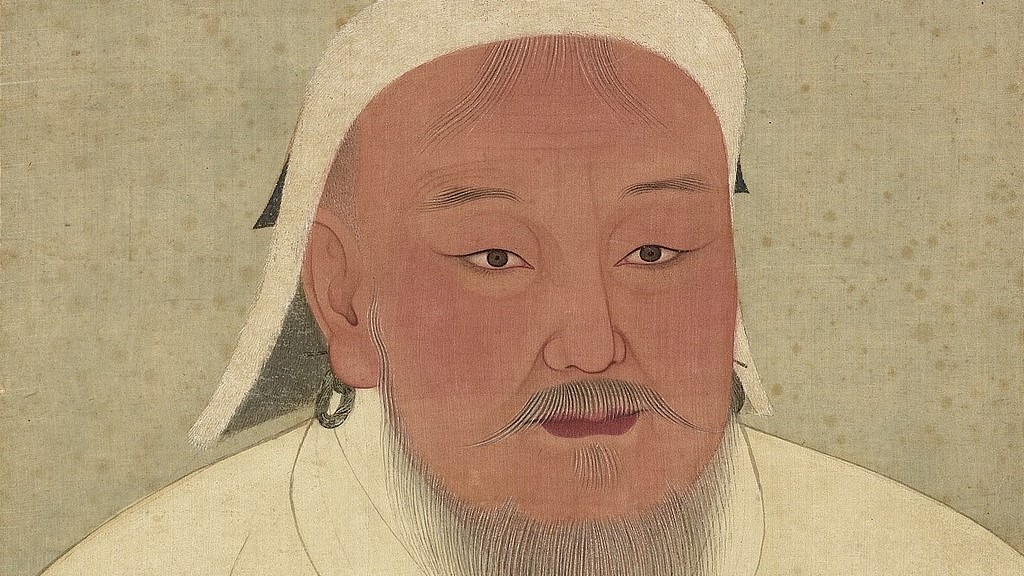


 Centro Estudios Judaicos del Sur de PR