Si soy una judía con pleno derecho, ¿por qué no soy suficientemente buena como para casarme con alguien de la tribu sacerdotal?
Por Aron Moss
Pregunta:
Me convertí al judaísmo y estoy muy feliz. Siempre me he sentido acogida por la comunidad. Pero estoy molesta por la ley que dice que una conversa no puede casarse con un cohen. Si soy una judía con pleno derecho, ¿por qué no soy suficientemente buena como para casarme con alguien de la tribu sacerdotal?
Respuesta:
Una conversa puede casarse con un rey. Una conversa puede casarse con un profeta. Una conversa puede casarse con un rabino, el escalón más alto de la sociedad judía. Por lo tanto, no tiene sentido decir que una conversa no puede casarse con un cohen porque son ciudadanas de segunda clase. Debe haber alguna otra razón.
Cuando la Torá prohíbe un matrimonio, nunca es porque una de las
partes no es lo suficientemente buena para la otra. Es porque las partes
no se corresponden entre sí. No son almas gemelas. En el caso del cohen
y la mujer conversa, las dinámicas de sus almas chocan, sus energías
espirituales se contradicen, y por eso no pueden casarse.
La santidad del cohen es hereditaria. Si tu padre es cohen, eres cohen. El sacerdocio es un derecho de nacimiento que no se logra a través del esfuerzo ni el mérito. Es un honor que se otorga al nacer.
La santidad del converso es exactamente lo contrario. El converso no nació judío. Él o ella lo eligió. Ellos logran el judaísmo por su propia iniciativa y con trabajo duro. Son almas hechas a sí mismas.
Entonces estas dos almas, el Cohen y el converso, se mueven en direcciones opuestas. El Cohen recibe su poder desde arriba. El converso crea su propia energía del alma desde abajo. El Cohen tiene la habilidad de traer bendiciones a otros, al igual que su alma le fue dada como una bendición. El converso tiene el poder de la innovación, de la iniciativa, de crear santidad desde cero. Por esta razón, sus almas no son pareja.
Tanto los cohenim como los conversos tienen una santidad impresionante. Es un gran privilegio ser dotado con el alma de un Kohen. Sin embargo, el alma de un converso que se ha hecho a sí mismo tiene un nivel de experiencia con la que la santidad heredada no puede competir. Sin duda no son almas de segunda clase.
El cohen está coronado con un legado de generaciones pasadas. Un converso crea su propio legado para las generaciones futuras. El pueblo judío es más rico contando con cada uno de ellos.
Rabbi Dr. Nathan Lopes Cardozo: This, I think, has created tremendous problems, because what we’re taking the halakha which developed in the diaspora for the last 2000 years, and we’re bringing it to the State of Israel, and applying it as if we are still living in the diaspora—when we are not. And therefore there are constantly problems in Israel about halakha, because the customary halakha speaks as if nothing has happened in Jewish history since 1948. But the truth is that the whole situation has radically changed. So the Shulkhan Arukh is in many ways outdated. And I’m sure that if Maimonides, or Rabbi Yosef Karo, author of the Shulkhan Arukh, lived today, they would say, “We never wrote our codifications for a time when the State of Israel would be established, why do you still apply our rulings which were meant for the time we lived in the diaspora?”
In last week’s Thoughts to Ponder
(no 623), we published the first half of an interview with Rabbi
Cardozo. At the end of his observations, Rabbi Cardozo discussed the
codification and dogmatization of Jewish Law and religious beliefs as
they took place in the diaspora and showed that these developments did
not do justice to—and in fact opposed authentic Judaism. Here is the
continuation of his arguments.
Interviewer: But the Mishneh Torah of Maimonides talks about the laws of the Temple and other areas of Jewish life in the land in the future!
NLC: Yes, but that is about the time after the coming of the mashiach. But Maimonides never wrote about a secular Jewish state before his coming.
That possibility was never contemplated. (The late chief rabbi of
Israel) Rabbi Yitzhak Ha-Levi Herzog writes in one of his letters, that
the halakha is not ready to take on the State of Israel. Because we
never developed the halakha in the diaspora to deal with a situation
where we’re running our own (secular) country. We were always under the
administration of the non-Jewish world.
The Shulkhan Arukh
starts by saying that in the morning we have to get up, and we must
imagine God before us and go to synagogue to pray. But let’s ask an
important question: What are the conditions where you’re able to get up
in the morning and go to synagogue to pray? It requires that the Turkish
government, under which the Shulkhan Arukh was written in
Safed, under Ottoman rule, will have created a legal system that enables
you—as a Jew—to get out of bed in the morning and walk to synagogue
without being attacked. So you have already taken on all sorts of
guarantees from a secular administration to allow you to adhere to your
religious obligations. But that was the Ottoman government. The
situation in Israel today is again drastically different. We have an
independent secular democratic state which, if it wants to survive,
needs to be deeply Jewish and influenced by the great foundations of
Halakha.
So
what is needed is to liberate the Halakha as it developed in the
diaspora, where it had to deal with anti-Semitism and the need of the
Jewish people to survive the Diaspora. And as I mentioned before, this
often meant that it became artificial, defensive, and not true to its
authentic nature. To allow it to become itself again, one needs to
return to its original disposition, which by definition is organic and
impossible to irrevocably codify. Only a few poskim fully understood
this. I mention two: Rabbi Chaim Hirschensohn (1857-1935) in his classic
work: Malki BaKodesh and Rabbi Shmuel Moshe Glasner, Chief
Rabbi of Klausenburg (1856-1924) in his powerful introduction to the
Talmudic Tractate Chulin, called, Dor Revi’i. But these were the exceptions to the rule. Till this day most poskim will go back to the Shulkhan Arukh and still see it, with some exceptions, as the final word in Halakha.
Lately,
I have been attacked by some rabbis for making these claims. This
demonstrates their ignorance. If they would survey works like the ones I
just mentioned, (by the way, both of these poskim saw themselves as
ultra-orthodox), they would realize that the story is very different
from what they think. (The same is true when I bring some Chassidic
interpretations of narratives such as the sacrifice of Yitzchak, which
are out of the box, but no doubt fully acceptable.) While they have the
right to disagree, they cannot use the cheap argument that I am
undermining the Jewish Tradition. In fact, it is very clear that I only
strengthen orthodox Judaism with these observations, because they show
the enormous flexibility and power of this tradition. For all of my
observations, I have rabbinical sources which, it seems, they have never
seen. What these rabbis have to understand is what Eric Hoffer once
said: “Far more crucial than what we know or do not know is what we do
not want to know.” It is much more comfortable not to have to
deal with unusual ideas. It does not disturb one’s comfort-zone. But it
is a deviation of the truth and most dangerous. I really pity these
rabbis.
The Role of the Posek
Int:
Should a modern posek (halakhic scholar) relate to halakha as
precedence law that must be consulted before ruling, or can they
approach the halakhic inquiry directly from their knowledge of the
Talmud? How much of the millennia of Shut (halakhik Q&A) should a
modern posek take into consideration?
NLC:
There’s no straight answer to this. Rabbi Moshe Feinstein z.l. would
sometimes make rulings directly from the Talmud. The Rogatchover Gaon
z.l. (Rabbi Joseph Rosen, 1858-1936) would often rule from the Talmud.
Rav Ovadia Yosef z.l., although he tried very hard to get the Shulkhan Arukh
to become the absolute voice within the Sephardi world, constantly
contradicted himself, in the sense that on one side he wanted to go by
the Shulkhan Arukh, and at the same time, he constantly put it aside and went directly to the Talmudic source.
My
feeling is that some poskim today are overwhelmed by their knowledge,
and they drown in it. And therefore they can’t think creatively any
more. If you have too much knowledge, then you can’t think on your own
anymore, because your mind is taken up by this encyclopedic amount of
knowledge; you can’t step out of the box. This is not only true of
halakha, it is true in many other departments of human knowledge as
well. We know so much, and therefore we get completely overwhelmed and
we no longer have space left in our brains to come up with something
new. This has been happening with poskim for quite a while now.
Therefore
the biggest religious Jewish scholars are not necessarily the greatest
poskim. But if you go one step below—and in Israel you have quite a few
of them—you will find people who know halakha very well, but they are
not stagnated by this staggering amount of knowledge. So they are
probably much better equipped to respond to the needs of the day.
To
only mention a few: Rav Daniel Sperber, Rav Yuval Cherlow, Rav Yoel Bin
Nun, Rav Ariel Holland, and Rabbi David Bigman. In Israel which is the natural ground in
which halakha can develop organically, you have people who think on
their own, have a lot of knowledge, and they can examine issues with a
critical eye.
Some
of these rabbis have come up with some unprecedented rulings, too many
to mention here. Sure, one can also go overboard. It all needs careful
consideration, which requires much knowledge, creativity, a proper
understanding of what real halakha is all about and obviously a lot of Yirat Shamayim, the awe of Heaven.
Electricity and Shabbat
Int:
When Edison invented the electric bulb, discussion began among US Jews
whether or not electricity is fire. It determined the appearance and
behavior of Shabbat for the next century. Today, when we have moved away
even from the light-bulbs with heated coils, and with solid state
devices, even issues of the labor of construction on Shabbat are no
longer present, and with major poskim already saying that devices like
the telephone are only a problem because of the danger of a slippery
slope — is it time to do away with our fear of the Shabbat slippery
slope?
NLC:
Think about another challenge: the “shabbat car”. I have not the
slightest doubt that in the nearby future, we will develop a car which
is completely automatic and which could bring you to the synagogue
without your ever having to transgress Shabbat. If you would ask me
whether I am in favor of allowing such cars to drive, or turning on
lights on Shabbat? My answer is No, but not for halakhic reasons—because
there are really no halakhic reasons to forbid it. My reason is this:
the fact that I’m not allowed to use electricity creates a certain
atmosphere, which I need and I think my fellow Jews need, to observe
Shabbat in the right spirit. Not because it is halakhically
forbidden—there are enough reasons to rule that using electricity does
not contradict the prohibitions of Shabbat.
The same is true of the “shabbat car”. Not all halakhic matters are pure halakha.
They have to do with ideology. How are we creating the spirit of
Shabbat? What is required there? Therefore, we may say, listen, let’s
not use electricity on Shabbat. This is what Shabbat has stood for, for
thousands of years. In the olden days there were candles, which were
prohibited to be lit. Over the years, this was applied to electricity as
well. So unless there are very specific circumstances where there is
really no solution but to use electricity, I would say, don’t turn on
electric lights. And do not use this kind of car unless there is no
other way to come to the synagogue. Nobody is paying a big price for
this. There’s no moral issue here. Let’s keep the system as it is.
This is the reason why I claim that the highest standards of Torah reaches beyond the boundaries of strict Halakha. If we would use halakhic criteria alone, we would destroy Judaism, and with it, the Halakha itself.
Take
for example the case of the “Shabbat goy”, a non-Jew doing work for us
on Shabbat. I think that the use of a Shabbat goy in Israel is highly
unnatural and unhealthy. After all, it still means that we are depending
on the non-Jews, even when we are living in an independent Jewish
state. In other words: We still need to have Arabs sitting in the
electric cooperation on Shabbat to make sure that we Jews have light on
Shabbat. I put a very big question mark behind this. I don’t see it as a
healthy situation. Perhaps we should find the technological means for
Jews to do this work themselves without transgressing Shabbat. There are
surely ways by which we can do this, and we don’t need non-Jews to do
it for us.
Which
brings me to the following: As long as they are not terrorists but law
abiding citizens, Arabs are surely welcome in our State. But what we
have to realize is that they are not our servants.
By
using them as the Shabbat goy on Shabbat, we are giving the impression
that the non-Jew is seen as a second class citizen—what we can’t do, he
has to do. In other words, we are the so-called Chosen People, and we
need to be served by the non-Jews. Now I know that this is not the
intention of the Jewish tradition, and I personally know non-Jews who
are very proud to be a Shabbat goy. But it can’t be denied that this law
created a negative attitude towards non-Jews in the orthodox Jewish
community—especially in Israel. It is very problematic and highly
un-Jewish. With tongue in cheek, I would love to see a “Sunday Jew”,
where we Jews can do some work for the non-Jews on their day of rest.
Then at least we would be equals without losing our specific identities.
Equal but different—the “dignity of difference” to use an expression by
Lord Rabbi Jonathan Sacks!
Int:
You also have thousands of religious kids who are texting on Shabbat.
Judging by the articles I’ve read on this issue I get the impression
that it’s the norm rather than the exception in certain religious youth
circles.
NLC:
It’s a great tragedy, because it’s a sign that these young people are
bored on Shabbat, that they don’t have something which replaces their
smartphone, and we are remiss in offering educational ways by which to
keep young people engaged so they wouldn’t even touch those devices on
Shabbat. When you take something away from somebody, you have to replace
it with something even better. And if you don’t do that, then you get
these situations, which in the Modern Orthodox world has become a real
problem.
Especially
in the Lithuanian Jewish world, there’s a lot of spirituality and
inspiration missing—the excitement about being a Jew, about wanting to
observe the commandments. Real authentic Hasidism had a much better
handle on this. Whether it still has, I do not know. The original
Hasidic thinkers of two hundred years ago, like Rabbi Tzadok Hacohen or
the Mey Hashiloach (Rabbi Mordechai Yosef Leiner of Izbica)—were able to
give the Jewish Tradition a new spirit. They knew exactly what they
were writing about, even being prepared to take risks and to be highly
controversial. They stated what they believed, and because of that, the
Hasidic world has given a spirituality to Judaism which the Lithuanian
world did not offer us and still does not.
Kashrut and Animal Suffering
Int: Should the suffering of meat animals influence their kashrut standard?
NLC:
I have doubts about the kashrut of kosher slaughtering of animals in
America and here in Israel. The meat industry today has overwhelmed us.
The number of cows and chickens which have to be slaughtered every day
is so enormous that I can’t see how this will ever work halakhically.
The method of shechita at the time was meant for a small town,
where once in a while, people would eat a piece of meat. You can’t
compare it with the reality of the meat industry today, where tens of
thousands of cows and chickens are killed every day.
I believe that the prohibition of tza’ar ba’ale chaim,
the needless suffering by animals, makes our whole system highly
problematic and probably non-kosher. Again this is not a pure halachic
issue; it is a Jewish religious-ideological issue. Because if indeed
there’s a lot of needless suffering of animals taking place, and I’ve
seen this personally—the way they deal with those animals is beyond all
description—then the Rabbinate should say: No way are we going to permit
this!
Now this is a very complicated story, because since we are a meat-eating society, we have to produce an amount of meat that the shechita laws can’t live up to. It has to go too fast. Too many animals get hurt before they undergo shechita. I don’t know how many shochtim there are in Israel—there must be lots of them—but how is it possible that the shechita
will nearly always go well? You can use statistical rules of thumb, you
can cite a permission here and an allowance there, but how far does
that go, especially when we are bound by laws about how to treat animals
mercifully? I don’t believe that any piece of meat today is Kasher l’mehadrin (perfectly kosher).
We
should start educating people to no longer eat meat. Or to replace it
with lab-grown meat. This is a process—an educational process. The
trouble is that if we slowly start to diminish the amount of meat which
we require, we’ll have an economic problem on our hands. What’s going to
happen to all of the people who are making their living from this
industry? And there are lots of them: Shochtim, butchers, supervisors
and lots of other people. You’ll have to find a financial solution for
these people; you can’t just say, we should stop eating meat. We have to
find a slow way by which we will get people off of eating meat. Finding
solutions to the financial problems of the people who will be left
without their livelihoods is going to take fifty, sixty years if not
longer. The trouble is that I’ve never seen the rabbinate or the
rabbinic courts really dealing with these issues.
Dismantle the Chief Rabbinate
Int: Do we really need the Chief Rabbinate in Israel?
NLC:
We need to end the Institution of the Chief rabbinate in Israel.
Although I strongly disagree with some halakhic rulings or proclamations
of the current Chief rabbis, I am sure they mean well. But they are the
victims of a system that isn’t working. The truth of the matter is that
the Rabbinate in Israel is the Knesset, and not the Chief rabbis. It is
a political institution. Some people in the Knesset are telling the
Rabbinate what they should say and do. There is corruption taking place.
The institution is no longer functioning. It was meant for the general,
often secular Israeli population. But it has been taken over by the
Haredim, the ultra-orthodox. This was not the intent when the Israeli
Chief Rabbinate was first instituted, because the Haredim have their own
Rabbinate which is absolutely fine.
The
Chief Rabbinate lacks halakhic poskim of great enough stature to deal
with some very urgent issues: conversions, agunot, feminism, kosher
slaughtering, democracy, running a modern state. All of which require
these people to be great authorities in halakha and be creative
thinkers, and the chief rabbis of today are not up to this. They don’t
seem to possess the prerequisite knowledge. Neither do I, but I never
made myself a candidate to become the Chief Rabbi.
Today’s
Chief rabbis are not like the famous Rav Avraham Yitschak Kook, Rav
Isaac Yitschak Herzog, or Rav Shlomo Goren. Most important is to realize
that in the Sefardi community there were Chief Rabbis such Rav Benzion
Uziel, Rav David Halevy of Tel Aviv, and the Chief Rabbi of Haifa, Rav
Joseph Mashash. All of them had a whole different approach to Halakha,
and were prepared to think out of the halakhic box. They came up with
the most far-reaching decisions and solutions which the Ashkenazi
community never contemplated, and in fact rejected (a huge mistake).
Int: So you would replace the Chief Rabbinate?
NLC:
Sure. The last Knesset had already decided that every local rabbinate
should be autonomous, and would have its own conversion system in their
own cities, no longer subject to the control of the chief rabbinate.
Orthodox rabbis who have the authority should decide in their own cities
who are the people eligible to become converts. This should not be left
up to the chief rabbinate, because the chief rabbinate doesn’t know
these people. So how can they decide without actually knowing the people
who are eligible for conversion?
I
am of the opinion, as is the well-known Israeli Rabbi Yoel Bin Nun,
that we should try to convert the nearly four hundred thousand Russians
of Jewish decent in Israel in a mass conversion, even though a priori
it’s not the best manner of conversion according to halakha. The reason
why I am in favor of this is this: if we do not convert these people,
they’ll marry our children, and in no time we’ll have a million halakhic
non-Jews here, to the point where it could undermine the security of
the State of Israel. It can create enormous social problems. So, here
you have to consider not just the halakhic religious conversion issue,
but the security of the state, too. A halakhic state issue. By
the way, the first mass conversion took place when the Israelites left
Egypt, or at mount Sinai when the Torah was given! No doubt, not
everyone was willing to accept all the commandments. But they all became
Jewish! Something to think about!
The
State of Israel is no longer a diaspora reality where you decide on
halakha for individuals who are Torah observant. We are dealing here
with the State of Israel, which requires that we remain a unified
political entity, and that we can marry each other and secure the State
of Israel.
But it seems that the Chief Rabbinate hasn’t even considered this point of view. That is a serious dereliction of duty.
“The
Beauty of the Jewish tradition is that it is not always precise and
consistent,” says Rabbi Dr. Nathan Lopes Cardozo. “And that is a very
wise thing. You have to have flexibility, because life is not clear-cut
or coherent. Moving here, moving there, you work out the different
opinions somehow, and you let it be. As such Jewish Law and beliefs stay
fresh and thriving. A musical symphony. But the moment we codify or
dogmatize it all, we are basically destroying it”.
One
of the areas where Dutch-Israeli Orthodox rabbi, philosopher, and
Jewish scholar Nathan Lopes Cardozo differs from the Orthodox mainstream
is the Torah’s commandments to annihilate whole peoples, such as the
nations of Canaan and the mythical nation of Amalek, God’s proverbial
enemy.
Rabbi Dr. Nathan Lopes Cardozo: I believe that in
the case where moral issues come up, there, even where the Torah says
that we have to annihilate these people, whether it is Amalek or the
nations of Canaan, my feeling is that these were challenges given to
Moses and the people to see how they would react, in the same way as
Abraham reacts in the case of Sodom and Gomorrah. God says, I’m going to
wipe them out, and Abraham responds: Will the Judge of the world do
such a thing? And God responds by saying, You have a point, let’s see
what we can work out.
And then you get this incredible dialogue,
between Abraham and God on how many righteous people you need so He will
keep the inhabitants alive… I think that should be the point of
departure whenever we discuss moral issues in the Bible, related to our
fellow man. There my feeling is that even when the Torah sometimes comes
with requirements which are problematic from a moral point of view,
that we have the option or even obligation, like Abraham, to say to God:
Sorry, this won’t go with us. And my reading, which I understand is
controversial, is that God is challenging these people: Let Me see how
they’ll respond. Did you, people, understand My larger picture of
righteousness? Are you understanding what I’m trying to say ? And as I
did in the case of Abraham, when I challenged him by telling him I’m
going to destroy Sodom and Gomorrah, and Abraham correctly said, No, or
at least he was willing to fight it, so I hope and expect you do as well
whenever I want you to annihilate people.
We see this reflected
in the sages’ opinion that these nations no longer exist and by doing so
they declared these laws inoperative. After all such a law can’t
operate unless you hear such a command from God Himself and not by
tradition. (And how will you ever know that it is really God speaking?)
Thirdly, did you object and fiercely protest?
Interviewer: And
yet shortly thereafter, God tells Abraham to execute his son Isaac, and
gives him kudos for the fact that he tried to comply.
NLC:
I am of the opinion that Abraham, by being prepared to do so, to
sacrifice his son, failed the test. I think that the reading of the
binding of Isaac should be different from the conventional approach as
some chassidic texts indeed seem to suggest . For an excellent overview
read: The Fear, the Trembling and the Fire by my dear friend, Professor
Jerome (Yehudah) I. Gellman, published by University Press of America in
1994.
Int: God no longer speaks directly to Abraham after the binding of Isaac. Does he lose his prophecy?
NLC:
It seems he did. There are all sorts of psychological issues which take
place after the incident with the binding of Isaac, which seem to mean
that God was not so pleased with the outcome, even though He says, Now I
know that you have fear of Me, but that may have a different meaning.
It may even mean something like, now that you went for it, you showed
you had the correct intentions, but you got My message wrong.
But
keep the following in mind, I only suggest such a reading when speaking
about moral problems, but when you speak about Shabbat, holidays and
other mitzvot, where there are no issues between the individual and his
fellow man, there we do not have the right to say, we’re changing the
commandments or refusing to accept these laws because they’re not
convenient.
CAN JEWS PERPETRATE A HOLOCAUST?
Int: In
the story of the prophet Shmuel and King Shaul, where Shaul has spared
the life of Agag, king of Amalek, and Shmuel takes a sword and finishes
the job — did Shmuel fail?
NLC: What was it that Shaul did
wrong, and why did God object to it? It seems that Shaul was more
concerned with the animals he had acquired and kept alive than about the
people he had killed. There is where the moral failure lies. It seems
that Shmuel was of the opinion that Agag was liable for the death
penalty. This is a very complicated story. I don’t think that Jewish
tradition is always consistent, very often it is not. And I think
there’s a reason for that, because it shows different sides of a very
complex situation. The Russian British philosopher Isaiah Berlin, who
was not religious but remained very close to his Judaism, has an essay
about morality where he says that morality is much more complex than
most people think it is. There’s no black and white — this is moral and
this is immoral. It depends on your perspective, on how you walk into
the problem. So there are cases where the complexity is so big that
whatever you do, from one point of view it is morally correct and from
another point of view it is absolutely morally unacceptable. So Berlin
speaks about a trade-off, which every judge and every legal system has
to make, to find a compromise: how much justice, how much mercy? A way
in-between, by which you remove excessive damage on both sides and
you’re left with a compromise which is far from ideal, but that’s part
of the human condition.
There is no such thing as black and white
responses to these sorts of issues, and I think that plays a role in
Jewish law as well. We have to deal with clashing Jewish moral forces.
There
are reasons to annihilate Amalek and there are reasons why not to do
so, especially when it comes to their women and children. (I even wonder
whether this really happened since there are sources that Amalek is a
theoretical concept and not a physical reality.) But because there’s
this tension of how you look into the story, which is purely subjective,
therefore in the end you will have to find a way in-between. Shmuel is
right and wrong at the same time. God says to him, Shmuel, I understand
your point of view, I will let you get away with it. But don’t think
that this is the ideal outcome. Under human circumstances we have to
wipe out these people of Amalek, they are very dangerous, even in the
future, and at the same time we have to keep them alive because who can
say that all of them will be evil? Some may study Torah in Bnei Berak!
Int: What do you mean? Amalek’s grandchildren studied Torah and were religious Jews?
NLC: Yes.
Jewish Law discusses the question of what to do in case an Amalekite
wants to become Jewish, and several authorities believe that we have an
obligation to convert him as long as he has no blood on his hands!! The
Talmud in Gitin (57b) and in Sanhedrin (96b) makes the observation that
the grandchildren of Haman, the Amalekite, were studying in the Beth
Midrash in Bnei Berak. This observation is most telling. It shows the
ambivalence of the Jewish tradition towards its arch enemy. Shall we
really annihilate this nation and its children? See what happened to its
descendants!!! They were great Talmudic scholars!
THERE’S MORE TO JUDAISM THAN MITZVOT
Int: Are you suggesting that there is a Jewish morality outside the realm of the commandments?
NLC: Yes,
I think there is, in the sense that there are certain intuitive moral
feelings that human beings have, Jews and non-Jews, which are of great
importance, and which do play a role in the halakhic decision making
process. While there is no doubt that our moral instinct is often very
subjective and we may often disagree, there are surely cases where we do
agree. Killing innocent children and women is one of them. Still there
is much in the Jewish tradition which believes that our moral intuition
may be the voice of God even in cases which are not as extreme. If you
look into the works of the great poskim (halakhic authorities), you see
differences of opinions between them. It is because of their intuitive
moral approach to certain issues. Sometimes a posek will say, I have to
find a heter (lenient ruling) for this problem. He may even have made up
his mind how he wants the decision to be before he starts to
investigate. And then he looks around all the arguments to justify his
position and puts it in an halakhic framework, after which he exclaims:
You see, I was right in what I said at the beginning! He knows quite
well that the arguments were all colored by his need to come to a
lenient conclusion. And the beauty of this is that this is completely
legitimate within Judaism.
You see it with Rabbi Moshe Feinstein,
you see it in some very Haredi literature as well, it all has to do with
a philosophical and ideological attitude which is deeply influenced by
the moral intuition of these particular people, and that’s also why
there are tremendous differences between the Ashkenazi and the Sephardi
poskim. The Ashkenazi outlook to life is much more pessimistic than the
Sephardi one. This has its roots in their different experiences in the
countries from which they hail, and consequently we find different
halachic responses.
There’s an ideology to halakha. And there are
different opinions as to what that ideology is. The halakha tells us
what to do and what not to do. But it is often a much larger
weltanschauung, an outlook to life, which lies behind these halakhic
requirements. They are never clearly stated anywhere in the Torah,
unless they are stated in very general terms, such as ‘you must be
holy’, but that still requires an explanation about what holiness really
is. So ideologies play a great role. The ideological differences
between the Haredi and the national-religious rabbis concerning the
State of Israel’s religious meaning is a good example.
Int: Are we practicing halakha the way we should?
NLC: Let
me tell you an interesting story. Rav Haim Zimmerman z.l. (1914-1995)
was one of the greatest Talmudic geniuses in our generation. In his
later years he lived here in Jerusalem. I was told that he was the study
partner of the famous Reb Shimon Shkop (1860-1939) back in Lithuania. I
met him once or twice. He had all of the Talmud at his fingertips. He
wasn’t so well known because he belonged to the Zionist camp and not to
the Chareidi one. He once gave a class and he quoted Maimonides and he
said, “Maimonides agrees with me.”. So his students objected and said,
“You mean to say that you agree with Maimonides.”. So he said, “No,
Maimonides agrees with me. I am today the living authority, Maimonides
is no longer alive. So he has no power any more to decide on halakhic
matters — I do. And if Maimonides wishes to disagree, please, let’s hear
his point of view, but I have the same say in this matter as Maimonides
himself had in his days and therefore I could overrule him. Today I am
the halachic arbitrator, not Maimonides.”
I think that is a most
important statement, which the yeshiva world has totally forgotten. And
this has a lot to do with the codification problem. I’ve written at
length about this problem. See my new book: Jewish Law as Rebellion.
Urim Publications) The Shulkhan Arukh (“Set Table,” the most widely
consulted Jewish legal code, published in 1563) was meant at the time to
be the abbreviated halakhic guide for the layman. It was the product of
an historical development. Since we were living in the Diaspora, we had
to make sure that Jews would somehow live within the same framework
where they were doing more or less the same things, to keep this little
nation alive. It required erecting big walls around us to keep the
non-Jews and their influence out. So the Shulkhan Arukh, a basic Jewish
code, is a typical sociological outcome of a diaspora condition . The
Shulkhan Arukh at the time correctly said, we need to make sure that we
all operate within the same framework and that requires conformity. This
is the only way we can create the powerhouse required to keep us alive
among a largely anti-Semitic world.
Both the Shulkhan Arukh and
earlier Maimonides’ famous codification of Jewish Law, the Mishneh Torah
(“Repetition of the Torah,” a code of Jewish religious law compiled
between 1170 and 1180) are tremendous scholarly achievements. But what
Maimonides did was extremely dangerous. By writing down the Mishneh
Torah, Maimonides finalized the halakha. He basically said, this is the
halakha and nothing else. He even wrote in the forward to this
masterpiece, that there is no longer any need to study the Talmud
because he had put it all in front of us. Here it is! For once and for
all. He provides no minority opinions, and decides on his own, as the
greatest talmudic genius of his time, and we—after a period of
resistance when his books were burned in some communities—have turned
him into an halachic idol: If Maimonides says so, then there’s nothing
left to discuss. We canonized him.
We never had, as the Catholic
Church did, a particular body such as a conclave which decided these
matters. Not even in the days of the Sanhedrin. With us it was always
fluid. A matter of moving forward and going back and so on. You actually
see it if you look in the Shulkhan Arukh, and you look into Maimonides,
the commentators around the texts often take issue with them. But they
can’t stand up against Maimonides; he is too overpowering. The same is
true with his famous thirteen principles of faith: he dogmatizes Jewish
belief and by doing so creates a crisis in Judaism for which we still
pay a heavy price. Since when are there finalized Jewish beliefs? There
are none.
Enlace Judío México.- Mi visita a Cuba en marzo de 2017 me llevó a un notable descubrimiento personal que iba en contra de todo lo que leí antes del viaje. Hoy, los judíos de Cuba, alguna vez llamados un remanente de la comunidad de 15,000 miembros, demuestran un fenómeno de renacimiento y reinvención. La pequeña comunidad de 1,000 en la isla de 11 millones de personas es robusta, tiene un fuerte sentido de identidad y es muy diferente de la comunidad judía antes de la revolución de 1959.
IRENE SHALAND
“Ser cubano y ser judío es ser dos sobrevivientes“.- Maritza Corrales, The Chosen Island
Escena de la calle de la Habana. (Foto por Alex Shaland)
La narrativa judía cubana contemporánea
muestra una trayectoria fascinante. Primero, un descenso de la vitalidad
y la prosperidad al casi olvido después del éxodo masivo de la década
de 1960 y los años de ateísmo impuesto. Luego, un reciente ascenso
repentino para convertirse en una “Celebridad de la Diáspora Tropical“,
podría decirse que es la más visitada y fotografiada de las comunidades
judías del mundo. La historia judía cubana no refleja una sola
comunidad, sino más bien un mosaico de varias, muy variadas en sus
idiomas y culturas, y que fue construida por cinco oleadas distintamente
diferentes de inmigrantes criptojudíos y judíos.
Llegan los conversos
Cuba ha sido un refugio acogedor para los judíos desde 1492, cuando los conversos buscaron refugio seguro de la Inquisición española.
No hay evidencia documentada que demuestre la llegada de los primeros
criptojudíos a Cuba. Sin embargo, supuestamente el primer colono europeo
en Cuba fue el converso Luis de Torres, nacido Yosef ben Levy Ha-Ivri. Un explorador y traductor, navegó con Colón en la Santa María,
y se le atribuye ser la primera persona de descendencia judía que se
estableció en la isla. ¡Además, de Torres a menudo se proclama que fue
el primer judío en poner un pie en las Américas! La sinagoga Luis de Torres
en Freeport Bahamas recibió su nombre. Muchos conversos se
establecieron en Cuba siguiendo a Torres, pero se sabe poco acerca de
ellos y su ascendencia judía. Los registros de la Inquisición de las Indias Occidentales contienen listas de presuntos judaizantes. Uno de esos marranos, Hernando de Castro,
construyó el primer ingenio cerca de Santiago y es considerado el
pionero de la industria azucarera en la isla. Los registros de la
Inquisición también muestran detalles de varios juicios y ejecuciones de
judaizantes cubanos, como la muerte en la hoguera en 1613 de un rico
terrateniente Francisco Gómez de León. El Santo Oficio en las colonias españolas fue abolido solo en los primeros años del siglo XIX, y hasta el final de la Guerra Hispanoamericana
de 1898, solo se permitieron los servicios religiosos católicos. Lo que
querían los colonos cubanos de ascendencia judía era mezclarse con los
españoles y “desaparecer” en Cuba.
Y lo hicieron.
El criptojudío más famoso de Cuba fue …
… el propio Fidel Castro,
que admitió en algunas ocasiones que sus propios antepasados eran de
origen judío. Patrick Symmes, en su notable estudio sobre Cuba, The Boys
from Dolores (2008), citó a los compañeros de Castro que recordaban que
el joven Fidel afirmó que, aunque muchos jóvenes de la década de 1930
estaban fascinados con Hitler, Franco o Mussolini, él nunca pudo serlo
porque esos líderes eran antisemitas. Y, como Fidel explicó, no podía
estar “en contra de los judíos” ya que él, Fidel, era uno: descendió a través de sus abuelas de los judíos de Galicia y Canarias.
El
monumento de Fidel Castro en el cementerio de Santa Ifigenia. Creció en
la plantación de caña de azúcar cercana a Santiago y estudió en el
colegio jesuita de élite, el Colegio Dolores, en la ciudad. El
legendario dictador admitió en algunas ocasiones que sus propios
antepasados eran descendientes de judíos. (Foto por Alex Shaland)
La historia judía del siglo XX antes de la revolución de Castro
Los Americanos
Nuestra primera parada en Cuba fue
Santiago, la ciudad que lleva a los peregrinos de la historia a las
raíces mismas de la historia cubana y judía. Colón
desembarcó en 1492 a unos 200 kilómetros al este de lo que es hoy
Santiago, que se convirtió en uno de los primeros asentamientos
españoles en la isla. En julio de 1898, la caballería de Teodoro Roosevelt
atacó la colina de San Juan y capturó la ciudad, poniendo fin a la
dominación española en Cuba y consiguiendo la victoria final tanto en la
Guerra Hispanoamericana como en la Guerra de Independencia de Cuba.
Los judíos estadounidenses comenzaron a llegar poco después. Fueron los
primeros judíos “reales” que se establecieron en la isla como parte de
la comunidad de expatriados estadounidenses, mucho más grande y de
rápido crecimiento. Atraídos por las oportunidades de inversión y la
promesa de riqueza, se vieron a sí mismos como los primeros y más
importantes estadounidenses, y buscaron replicar su entorno
estadounidense en Cuba. En 1904, fundaron la primera sinagoga en La
Habana, una Congregación de la Unión Hebrea reformada,
y en 1906 adquirieron una parcela para un cementerio judío. Estos dos
eventos a menudo se consideran el comienzo oficial de la comunidad judía
cubana, una comunidad judía cubanoamericana de habla inglesa para ser
precisos. Surgió una isla estadounidense dentro de la isla de Cuba. Y
los judíos estadounidenses crearon su propio rincón cómodo dentro de
ella.
Los Sefardíes
Los judíos sefarditas llegaron a continuación, en su mayoría refugiados de Turquía.
Hablando ladino, no tenían el mismo idioma o barreras culturales que
los otros grupos de inmigrantes judíos, por lo que les resultaba más
fácil aclimatarse a su nuevo hogar. El grupo más grande se estableció en
La Habana. En 1914, los sefardíes establecieron su propia organización
comunal Jevet Ajim
para proporcionar servicios religiosos ortodoxos a toda la comunidad
sefardí de Cuba. Construyeron su propio rincón seguro dentro de la “isla
judía” de Cuba, firmemente enraizada en estrictas tradiciones y
religión.
“Polacos”
Escapándose de la escalada del rabioso antisemitismo y los violentos pogromos en Rusia y Polonia,
los judíos asquenazíes comenzaron a llegar a Cuba a comienzos del siglo
XX hasta finales de la década de 1920. Los lugareños los llamaron
“Polacos” (polacos) a pesar de que muchos no eran de Polonia. A
diferencia de los sefardíes, los ashkenazim vieron su época en la isla
como una breve parada antes de entrar a Estados Unidos. Llamaron a Cuba Ajsanie Kuba
(“Hotel Cuba” en idish). En 1924, cuando las leyes de inmigración de
los Estados Unidos se pusieron rígidas, la laguna cubana se cerró. El
“hotel” judío cubano tenía que convertirse en un hogar.
Nacionalismo y la trágica historia del San Luis
Con el declive económico de finales de
la década de 1920, se produjo un renacimiento nacionalista centrado en
devolver a los cubanos sus derechos sobre su propio país. El
antisemitismo surgió de forma natural. Instigado por los nacionalistas
cubanos en cooperación con la Embajada nazi alemana en La Habana, la
hostilidad hacia los inmigrantes judíos de Europa alimentó tanto el
antisemitismo como la xenofobia. Estas actitudes jugaron un papel
importante en el trágico caso infame del transatlántico St. Louis, cuando este barco con sus 937 pasajeros a bordo, la mayoría refugiados del Tercer Reich, no pudo desembarcar en La Habana y se vio obligado a regresar a Europa.
Escapar del Holocausto
La quinta y última oleada de inmigrantes
judíos en Cuba trajo refugiados europeos y sobrevivientes de los campos
antes, durante y después de la Segunda Guerra Mundial.
A pesar de las actitudes antisemitas y el endurecimiento de las leyes
de inmigración en Cuba, más de 10.000 refugiados judíos lograron
ingresar al país entre 1933 y 1944. Después de la guerra, menos del 15
por ciento de ellos permanecieron en Cuba.
Comunidad de comunidades
La judería cubana permaneció dividida en
tres grandes sectores: estadounidenses, otros judíos asquenazíes (en su
mayoría de origen europeo oriental) y sefardíes. Cada comunidad se
mantuvo como una entidad separada en su rincón seguro de una “isla judía”
más grande dentro de la isla de Cuba; cada uno cómodo con sus propios
cementerios y servicios, necesidades y deseos, actitudes y expectativas.
Cuba los tomó a todos con tolerancia y aceptación, en su mayor parte. Las acciones de varios dictadores cubanos, como el infame Batista,
no afectaron a las comunidades judías: la mayoría de los judíos cubanos
se mantuvieron alejados de la peligrosa política en su isla natal.
Estaban bien y contentos, y querían que sus pequeñas “islas” seguras
duraran por la eternidad. Pero la revolución de Castro de 1959 había
destruido por completo su mundo, y parecía para siempre.
La Revolución y el ‘Triunfo’
Castro reinventó la historia y el
calendario. El año de 1959 se convirtió en el Año de la Revolución y los
años posteriores se llamaron Época del Triunfo.
Para los judíos de Cuba, estos eventos alimentaron un verdadero éxodo
y, a principios de la década de 1960, la comunidad judía de Cuba dejó de
existir. En palabras de Ruth Behar, una antropóloga renombrada de la
Universidad de Michigan y una judía cubana cuya familia huyó a los
Estados Unidos, “la disolución de la comunidad fue rápida como una vela
encendida inhalada por el viento” (An Island Called Home, 2007). Las
políticas de Castro nunca fueron antisemitas; más bien fue su
destrucción socialista de la clase media lo que incluyó a muchos judíos
que eligieron huir. De casi 15,000 judíos, menos de 1,000
permanecieron. La nueva Constitución declaraba que cualquier religión
era ilegal como manifestación de actitudes y acciones
contrarrevolucionarias. La mayoría de las sinagogas y las escuelas
judías estaban cerradas o abandonadas. El estado totalitario nació y los
judíos tuvieron que asimilarse y adaptarse una vez más. Ya no eran
judíos, sino ciudadanos y camaradas cubanos. Al igual que otros cubanos,
tuvieron que acostumbrarse a la pobreza y las raciones, el ateísmo
revolucionario y el temor a la persecución política. También se
enfrentaron con actitudes feroces anti-israelíes y retórica después de
que Castro rompió con Israel en 1973.
Sin embargo, la historia judía de la
isla desafía la racionalización. ¿Cómo se explicaría el hecho de que los
judíos restantes fueron señalados como el “pueblo elegido”
para un lujo raro? Durante nuestra conversación con el vicepresidente
de la sinagoga Beth Shalom en La Habana, aprendimos sobre …
La carnicería kosher
Protegida por una carta personal de 1962
de Fidel Castro, esta pequeña tienda sobrevivió a través de los años de
acciones gubernamentales para extinguir cualquier observancia
religiosa. La tienda está ubicada en el corazón del antiguo barrio judío
en la calle Cuba, a la vuelta de la esquina de la única sinagoga
ortodoxa en La Habana: Adat Israel. Nos enteramos que la tienda nunca
dejó de suministrar carne kosher a los judíos de La Habana.
Nuestro guía nos dijo que la carne de res es una rareza preciosa y se
asigna a los escolares solo como parte de su almuerzo gratis. Las vacas
se consideran propiedad del estado. Matar a una vaca sin permiso
especial es un delito federal. El gobierno decide no solo dónde y cómo
viven y trabajan las personas, sino también qué y cuánto consumen. La
libreta, o un libro de raciones, permite que cada persona reciba cada
mes seis libras de arroz, dos litros de aceite y 20 onzas de granos.
Cuando la carne está disponible para los titulares de libretas (o ahora,
para los que tienen dólares), es carne de cerdo. ¿Por qué Fidel
simpatizaba con la ley dietética judía? ¿Fue porque quería demostrar
buena voluntad a los pocos judíos que quedaban? ¿O fue por su reconocida
ascendencia judía?
Milagro del renacimiento: la historia del siglo XXI El Periodo Especial
La Unión Soviética colapsó a principios de la década de 1990, y la economía cubana se vino abajo. El “triunfo” de Fidel cambió a lo que él llamó el Período especial en el Tiempo de Paz.
En realidad, esa fue una profunda crisis económica definida por un
colapso casi total del transporte y la agricultura. Una de nuestras
guías cubanas compartió que su bebé murió durante el Período especial,
posiblemente por inanición: la leche desapareció. Otras guías nos
explicaron que el tráfico era ligero porque la gasolina y el combustible
diésel eran difíciles de encontrar y muy costosos. Desde 1959, los
cubanos aprendieron lo que los judíos habían sabido durante 2,000 años:
lo que se necesita para mantenerse a flote. La vida continuó y todos en
Cuba, incluidos los judíos, tuvieron que adaptarse para sobrevivir.
Ha vuelto la Navidad
En 1992, Castro creó un milagro: para
cambiar la economía de la dependencia de los soviéticos a la dependencia
del turismo, especialmente del turismo estadounidense, usó palabras
mágicas para enmendar la Constitución. Cuba se convirtió en un estado
“secular” frente al anterior “ateísta”. Luego, los “enemigos del pueblo”
que inmigraron después de 1959 se convirtieron en la “comunidad en el
exterior”. Una nueva ley permitió incluso a los miembros del Partido Comunista
participar en las celebraciones religiosas. Ir a una sinagoga o iglesia
ya no fue castigado con graves repercusiones. El pueblo cubano recuperó
la Navidad y los judíos cubanos podrían volver a ser judíos.
Entrando en la Cuba judía
La
sinagoga de Santiago. Fundada por los sefardíes en 1924, se cerró en
algún momento después de la revolución, y se volvió a abrir en 1996 para
dar servicio a su comunidad de aproximadamente 90 miembros. Pero en
marzo de 2017, las puertas se cerraron de nuevo: la última familia, nos
dijeron, se fue a Israel. (Foto por Alex Shaland)
La primera sinagoga cubana que visitamos
estaba en Santiago. Fundada por los sefardíes en 1924, se cerró después
de la revolución y volvió a abrirse en 1996 para atender a su comunidad
de alrededor de 90 miembros. El santuario estaba cerrado, pero el salón
comunal estaba bien conservado, y ver las fotos de los antiguos
congregantes en la pared fue una experiencia extraña y agridulce. Los
judíos cubanos están vivos y bien, simplemente no están en Cuba. La
Habana, sin embargo, nos presentó una historia completamente diferente.
Nuestra entrada a la Habana judía
comenzó en un lugar bastante inusual: ¡un hotel judío! El último
ocupante de ese hermoso edificio de estilo Art Nouveau fue la oficina de
la industria alimenticia, y luego, en la década de 1970, cayó en mal
estado. Pero con el gobierno poniendo en juego el crecimiento del
turismo, especialmente el de los grupos judíos de EE.UU., renació como
un hotel bellamente restaurado que lleva el nombre de la matriarca de la
Biblia: Raquel. El interior del edificio se asemeja a un museo de arte:
símbolos judíos entrelazados a la perfección y con buen gusto con los
exquisitos elementos de Art Nouveau. Cada habitación lleva el nombre de
una heroína de la Biblia, y el restaurante sirve guefilte fish y
blintzes.
El Hotel Raquel,
un establecimiento temático judío, es un edificio Art Nouveau
bellamente restaurado en la Habana Vieja. (Foto por Alex Shaland)
Para conocer a los judíos cubanos de hoy, dejamos la Habana Vieja y nos dirigimos al Vedado, un barrio formalmente exclusivo para visitar la bella sinagoga Beth Shalom. Construida a principios de la década de 1950 por los judíos ricos de Cuba o “mecenas” (el segundo nombre de la sinagoga es “Patronato“), Bet Shalom fue restaurado a su grandeza formal a principios de la década de 1990 por el American Joint Distribution Committee y la Miami Jewish Federation. El complejo ocupa casi un bloque completo.
Interior
del Hotel Raquel: símbolos judíos entrelazados a la perfección y con
buen gusto con los exquisitos elementos Art Nouveau. Cada habitación
lleva el nombre de una heroína de la Biblia y el restaurante sirve
platos judíos como guefilte fish o blintzes. (Foto por Alex Shaland)
Aprendiendo sobre los judíos de hoy
Nos encontramos con el vicepresidente del Patronato,
David Prinstein, quien nos mostró la sinagoga y compartió parte de la
historia de la sinagoga y su familia. Su abuelo llegó de Polonia; sus
padres se convirtieron en miembros fundadores del Partido Comunista de Cuba,
revolucionarios apasionados. Cuando la religión se consideraba un
crimen, nos dijo David, la mayoría de los judíos, como otros cubanos, se
separaron de la religión. Muchos nacieron en matrimonios mixtos y a
menudo se casaron con no judíos. La segunda esposa de David, Marlen, no
es judía de nacimiento. Pero incluso entonces, la vida judía se mantuvo a
flote al sobrevivir los recuerdos familiares y las personas mayores que
llegaban a sus destartaladas sinagogas. Tres sinagogas sobrevivieron en
La Habana después de la revolución: Adas Israel (una congregación ortodoxa), el Centro Sephardico y la más grande de La Habana: Patronato (una congregación conservadora).
David Prinstein, el vicepresidente de Beth Shalom. (Foto por Alex Shaland)
Un judío asimilado, David volvió a sus
raíces en la década de 1990, a través del estudio y la participación en
la vida de la sinagoga, y finalmente se convirtió en su líder. Su
familia vive prácticamente en Patronato.
Todos sus hijos tuvieron su bar mitzvá allí y están muy involucrados en
la vida de la sinagoga. Marlen, quien se convirtió al judaísmo, a
menudo dirige los servicios de Shabat el sábado. Ella también enseña
hebreo en la escuela dominical. Para la mayoría de alrededor de 800
miembros, Patronato es un segundo hogar. La comunidad judía se ha
convertido en un lugar para ir, estudiar, orar, celebrar, comer y
obtener medicamentos. Beth Shalom cuenta con el apoyo del American Joint Committee (“el Joint”) y recibe numerosas donaciones, incluidos suministros médicos, de varios grupos.
No hay ningún rabino en Cuba, pero el
Joint apoya visitas regulares del rabino de Chile. A menudo vienen
rabinos de Miami y Nueva York. David estima que actualmente hay 1.200 judíos
en Cuba, la mayoría viviendo en La Habana. La judeidad se define de
manera diferente en Cuba: con supuestos solo 20-25 judíos de sangre pura
en el país (nacidos de dos padres judíos), el resto son aquellos que
tienen ascendencia judía o, como Marlen Prinstein, convertidos en judíos
por elección. La mayoría proviene de un conocimiento mínimo del
judaísmo, pero todos están comprometidos con el estudio intenso y la
construcción de una vibrante vida judía.
Entrada principal a Beth Shalom. (Foto por Alex Shaland)
Regresamos al vestíbulo y miramos las
fotografías de Fidel Castro en Beth Shalom. Hay numerosas fotografías
del líder cubano, que visitó el Patronato después de que lo invitó Adela
Dworin, entonces vicepresidente de la comunidad judía. “¿Por qué nunca visitaste nuestra sinagoga?“, preguntó una vez durante una reunión con los funcionarios del gobierno. “Nunca me lo pediste“,
bromeó Fidel. Así que en 1998, Castro comunicó al mundo su apoyo al
renacimiento religioso asistiendo a Beth Shalom durante lo que llamó una
“fiesta revolucionaria” de Januca y encendiendo una menorá.
La
imagen de Fidel Castro y Adela Dworin, uno de los principales líderes
de la comunidad judía cubana, se exhibe de manera prominente en el lobby
de Beth Shalom. En 1998, Castro comunicó al mundo su apoyo al
renacimiento religioso asistiendo a Beth Shalom durante lo que llamó una
“fiesta revolucionaria” de Hanukkah e iluminando una menorá. (Foto por
Alex Shaland)
También visitamos el Centro Hebreo Sefaradi,
que tiene una pequeña exposición dedicada al Holocausto. Centro Hebreo
es la única institución que conserva el legado de los sefardíes cubanos.
Su antigua sinagoga, Jevet Ajim, ha estado cerrada durante años y está
en ruinas. La tercera sinagoga de La Habana es el pequeño shul ortodoxo Adath Israel, que mantiene la única mikve en
Cuba y supervisa la carnicería kosher. Ni Centro Hebreo ni Adath Israel
reciben la misma atención de los grupos judíos que están de gira, pero
sin embargo ambos prosperan.
La exposición del Holocausto en el Centro Sefaradi. (Foto por Alex Shaland)
Mientras un número creciente de familias judías, especialmente jóvenes, hacen aliá a Israel, el tamaño general de la comunidad se mantiene más o menos igual: Cada vez más personas pasan por la oficina de la sinagoga para averiguar qué pasos deben tomar para convertirse en judíos por elección o para hablar sobre su ascendencia judía. ¿Se sienten atraídos por la promesa de una buena comida algunas veces a la semana en un país de tiendas vacías, acceso a medicamentos cuando incluso una aspirina es una rareza y acceso a computadoras en una ciudad sin abundantes conexiones a internet? Quizás. Pero, sobre todo, lo que atrae a las personas a Beth Shalom es la idea de pertenecer a algo más grande que uno mismo: una comunidad sólida, más secular que religiosa, con un sentido de identidad orgulloso y líderes fuertes.
En la primera década del siglo XXI, la
comunidad judía de Cuba no solo renació, sino que se reinventó por
completo. Los judíos de Cuba, la más pequeña de las minúsculas minorías
en esa isla, se han convertido en lo que nunca habían sido: una entidad
unificada. También involuntariamente se convirtieron en una atracción
clave en La Habana para numerosas giras judías; apenas hay una sinagoga o
una federación judía en los EE.UU. que no organice viajes con temática
de herencia judía a Cuba casi todos los años.
Los judíos de Cuba, habiendo sobrevivido a la Inquisición y la revolución de Castro, ahora son una comunidad poderosa, no en números, sino en espíritu.
According to Jewish law, tribal affiliation (including whether one is a kohen)
follows the direct paternal line, while the question of Jewishness
follows the maternal line. Does this mean that genetic testing is a
valid way of ascertaining whether one is Jewish or a kohen?
First, some basics. Females have XX chromosomes and males have XY.
All females carry one X chromosome from their mother and one X
chromosome from their father. Males, on the other hand, get their X
chromosome from their mother and their Y chromosome from father. Since
these chromosomes are passed from one generation to the next, it is
theoretically possible to identify one’s ancestors through genetic
testing.
Jewish Ancestry and Mitochondrial DNA
As mentioned, Jewish identity follows the maternal line. If your
mother is Jewish, you’re Jewish. However, there is no such thing as a
“Jewish gene,” so genetic testing cannot conclusively state whether a
person is Jewish.
However, there does seem to be at least one way in which genetics may
be used to help determine a person’s Jewishness. This involves using
what is called mitochondrial DNA (or mtDNA), which is passed exclusively
from the mother through the female line.
In a fascinating study published in 2006, it was shown that 40% of all Ashkenazi
Jews are descended from just four Jewish women who lived more than
1,000 years ago. The study concluded that if someone bears specific
mitochondrial DNA markers, there is a 90-99% chance that he or she is
descended from one of these Jewish women.1
Of course, there are the other 60% of Ashkenazi Jews who do not come from these four women, as well as Sephardic Jews and converts.
Nevertheless, although still a matter of debate, there are some who
hold that in a case where there is some evidence of Jewishness but no
iron-clad proof, having this marker in conjunction with other supporting
evidence can be used to conclude that the person is indeed Jewish.2
(As a disclaimer, this article is for informational purposes only.
All practical questions regarding one’s Jewish identity should be
directed to a qualified rabbi.)
The Kohen Gene
We can now turn to the question of kohanim (Jewish priests).
All kohanim are directly descended—on their father’s side—from Aaron the High Priest (Moses’
brother). Knowing that a copy of the Y chromosome is passed from father
to son, Dr. Karl Skorecki, together with other colleagues, conducted a
study in the 1990s to analyze and compare the Y chromosomes of kohanim with those of the non-kohen Jewish population.
In addition to the genes in the Y chromosome that determine if a
person is male, the chromosome mostly consists of non-coding DNA, which
tends to accumulate mutations. Based on the fact that the Y chromosome
is passed down the paternal line without recombination, the genetic
information on a Y chromosome of a man living today is basically the
same as that of his ancient male ancestors, except for the rare
mutations that occur along the hereditary line. A combination of these
neutral mutations, known as a haplotype, can serve as a genetic
signature of a man’s male ancestry.
Looking at six kinds of the YAP haplotype of the Y chromosome and comparing their frequency in kohanim and Jewish non-kohanim, Dr. Skorecki found that the majority of self-identified kohanim,
both those of Sephardic as well as Ashkenazi descent, are all descended
from the same person who lived roughly 3,000 years ago.
It should be noted that this marker was found in a much lower frequency among Jews who had no tradition of being kohanim, and in an even lower rate among non-Jews (although interestingly, it was found in a higher rate among the Lemba tribe in Africa, who have a tradition of being descendants of Jews).3
However, kohen status is dependent not only upon being the
biological descendant of Aaron, but upon numerous other factors as well.
For example, if a kohen marries a divorcée (or certain other women), their offspring would not be kohanim. So if one carries the genetic marker of kohanim, then perhaps he had a kohen in his ancestry, but he himself may not be a kohen or even Jewish, since that is dependent upon the mother.
Our sages tell us that when Moshiach comes, he will clarify our lineage and determine who in fact is a kohen, Levite or Israelite.4 May we merit the messianic era speedily in our time!
Tyranny cannot destroy humanity. Moral courage can sometimes be found in the heart of darkness.
She is one of the most unexpected heroes of the Hebrew Bible.
Without her, Moses might not have lived. The whole story of the exodus
would have been different. Yet she was not an Israelite. She had nothing
to gain, and everything to lose, by her courage. Yet she seems to have
had no doubt, experienced no misgivings, made no hesitation. If it was
Pharaoh who afflicted the children of Israel, it was another member of
his own family who saved the decisive vestige of hope: Pharaoh’s
daughter. Recall the context. Pharaoh had decreed death for every male
Israelite child. Yocheved, Amram’s wife, had a baby boy. For three
months she was able to conceal his existence, but no longer. Fearing his
certain death if she kept him, she set him afloat on the Nile in a
basket, hoping against hope that someone might see him and take pity on
him. This is what follows:
Pharaoh’s daughter went to bathe in the Nile, while her maids walked
along the Nile’s edge. She saw the box in the reeds and sent her
slave-girl to fetch it. Opening it, she saw the boy. The child began to
cry, and she had pity on it. “This is one of the Hebrew boys,” she said
(Ex. 2:6).
Note the sequence. First she sees that it is a child and has pity on
it. A natural, human, compassionate reaction. Only then does it dawn on
her who the child must be. Who else would abandon a child? She remembers
her father’s decree against the Hebrews. Instantly the situation has
changed. To save the baby would mean disobeying the royal command. That
would be serious enough for an ordinary Egyptian; doubly so for a member
of the royal family.[1]
Nor is she alone when the event happens. Her maids are with her; her
slave-girl is standing beside her. She must face the risk that one of
them, in a fit of pique, or even mere gossip, will tell someone about
it. Rumours flourish in royal courts. Yet she does not shift her ground.
She does not tell one of her servants to take the baby and hide it with
a family far away. She has the courage of her compassion. She does not
flinch. Now something extraordinary happens:
The [child’s] sister said to Pharaoh’s daughter, “Shall I go and call
a Hebrew woman to nurse the child for you?” “Go,” replied Pharaoh’s
daughter. The young girl went and got the child’s own mother. “Take this
child and nurse it,” said Pharaoh’s daughter. “I will pay you a fee.”
The woman took the child and nursed it. (Ex. 2:7-9)
The simplicity with which this is narrated conceals the astonishing
nature of this encounter. First, how does a child – not just a child,
but a member of a persecuted people – have the audacity to address a
princess? There is no elaborate preamble, no “Your royal highness” or
any other formality of the kind we are familiar with elsewhere in
biblical narrative. They seem to speak as equals.
Equally pointed are the words left unsaid. “You know and I know,”
Moses’ sister implies, “who this child is; it is my baby brother.” She
proposes a plan brilliant in its simplicity. If the real mother is able
to keep the child in her home to nurse him, we both minimise the danger.
You will not have to explain to the court how this child has suddenly
appeared.
We will be spared the risk of bringing him up: we can say the
child is not a Hebrew, and that the mother is not the mother but only a
nurse. Miriam’s ingenuity is matched by Pharaoh’s daughter’s instant
agreement. She knows; she understands; she gives her consent.
Then comes the final surprise:
When the child matured, [his mother] brought him to Pharaoh’s
daughter. She adopted him as her own son, and named him Moses. “I bore
him from the water,” she said. (Ex. 2:10)
Pharaoh’s daughter did not simply have a moment’s compassion. She has
not forgotten the child. Nor has the passage of time diminished her
sense of responsibility. Not only does she remain committed to his
welfare; she adopts the riskiest of strategies. She will adopt him and
bring him up as her own son.[2] This is courage of a high order.
Yet the single most surprising detail comes in the last sentence. In
the Torah, it is parents who give a child its name, and in the case of a
special individual, God himself. It is God who gives the name Isaac to
the first Jewish child; God’s angel who gives Jacob the name Israel; God
who changes the names of Abram and Sarai to Abraham and Sarah. We have
already encountered one adoptive name – Tzafenat Pa’neah – the name by
which Joseph was known in Egypt; yet Joseph remains Joseph. How
surpassingly strange that the hero of the exodus, greatest of all the
prophets, should bear not the name Amram and Yocheved have undoubtedly
used thus far, but the one given to him by his adoptive mother, an
Egyptian princess. A midrash draws our attention to the fact:
This is the reward for those who do kindness. Although Moses had many
names, the only one by which he is known in the whole Torah is the one
given to him by the daughter of Pharaoh. Even the Holy One, blessed be
He, did not call him by any other name.[3]
Indeed Moshe – Meses – is an Egyptian name, meaning “child,” as in
Ramses (which means child of Ra; Ra was the greatest of the Egyptian
gods).
Who then was Pharaoh’s daughter? Nowhere is she explicitly named.
However the First Book of Chronicles (4:18) mentions a daughter of
Pharaoh, named Bitya, and it was she the sages identified as the woman
who saved Moses. The name Bitya (sometimes rendered as Batya) means “the
daughter of God.” From this, the sages drew one of their most striking
lessons: “The Holy One, blessed be He, said to her: ‘Moses was not your
son, yet you called him your son. You are not My daughter, but I shall
call you My daughter.'”[4] They added that she was one of the few people
(tradition enumerates nine) who were so righteous that they entered
paradise in their lifetime.[5]
Instead of “Pharaoh’s daughter” read “Hitler’s daughter” or “Stalin’s
daughter” and we see what is at stake. Tyranny cannot destroy humanity.
Moral courage can sometimes be found in the heart of dark- ness. That
the Torah itself tells the story the way it does has enormous
implications. It means that when it comes to people, we must never
generalise, never stereotype. The Egyptians were not all evil: even from
Pharaoh himself a heroine was born. Nothing could signal more power-
fully that the Torah is not an ethnocentric text; that we must recognise
virtue wherever we find it, even among our enemies; and that the basic
core of human values – humanity, compassion, courage – is truly
universal. Holiness may not be; goodness is.
Outside Yad Vashem, the Holocaust Memorial in Jerusalem, is an avenue
dedicated to righteous gentiles. Pharaoh’s daughter is a supreme symbol
of what they did and what they were. I, for one, am profoundly moved by
that encounter on the banks of the Nile between an Egyptian princess
and a young Israelite child, Moses’ sister Miriam. The contrast between
them – in terms of age, culture, status and power – could not be
greater. Yet their deep humanity bridges all the differences, all the
distance. Two heroines. May they inspire us.
Shabbat Shalom.
NOTES
1. “Seeing that she [Pharaoh’s daughter] wanted to save Moses, they [her handmaids] said to her, ‘Mistress, it is customary that when a king of flesh and blood issues a decree, even if the whole world does not fulfil it, at least his children and the members of his household fulfil it. Yet you transgress your father’s decree!'” (Sota 12b) 2. On the adoption of a foundling in the ancient world, see Nahum Sarna, Exploring Exodus (New York: Schocken, 1986), 31-32. 3. Shemot Raba 1:26 4. Vayikra Raba 1:3. 5. Derekh Eretz Zuta 1.
El mayor desafío para nuestra fe no es otra fe, sino la falta de fe.
Mis padres me dijeron muchas veces cuánto temían la temporada de Navidad.
Viviendo en un pequeño shtetl en Polonia, ellos sabían qué esperar. El sacerdote de la parroquia local daría su sermón lleno de improperios en contra de los judíos quienes fueron declarados culpables del crimen de deicidio, responsables de la brutal crucifixión de su dios, y por lo tanto justos merecedores de cualquier castigo que les fuera otorgado.
No es una sorpresa que la alegre época navideña significaba
justamente lo contrario para los judíos vecinos. Los días que
supuestamente debían ser dedicados a la “bondad hacia todos”, muy a
menudo estaban llenos de pogromos, palizas, y violentas demostraciones
antisemitas.
Gracias a Dios, aquellos días ya son parte del pasado. América es una tierra que predica tolerancia religiosa tanto por ley como por cultura. Los cristianos y los judíos son respetuosos de la religión de cada uno, y mientras que cada cierto tiempo un incidente aislado puede estropear las relaciones amistosas entre estas religiones, hemos en general aprendido a convivir en una sociedad pluralista.
Debido a las rarezas del calendario judío, Navidad y Januca pueden coincidir o aparecer en una variedad de diferentes permutaciones, pero casi siempre, tanto los cristianos como los judíos celebran sus respectivas tradiciones en diciembre.
La agresión de hoy en día es en contra de nuestros tímpanos, forzados a soportar las aparentemente interminables canciones de Navidad.
Y ese “conflicto de calendario” parecer molestarle a algunos judíos. Por supuesto, nuestro problema con Navidad no es nada comparado con el que afligía a mis padres en Polonia. La única forma en la que somos agredidos hoy día es a través de nuestros tímpanos, que se ven forzados a soportar los aparentemente interminables villancicos y canciones de Navidad que se han transformado en pan de cada día. No hay intentos de conversiones forzadas. Nadie nos hace poner una réplica en miniatura del árbol de Navidad en nuestros salones. Nadie nos golpea porque elegimos no saludar a otras personas con un alegre “Feliz Navidad”. Pero aún así…
Lo escucho todo el tiempo. Judíos verbalizando su descontento en contra de las exposiciones públicas de observancia cristiana. Judíos preocupados de que de alguna manera el Santa Claus de una tienda vaya a corromper a sus hijos. Judíos en el frente, protestando contra cualquier expresión de religiosidad que provenga de aquellos con un sistema de creencia diferente al nuestro. La Navidad, afirman ellos, es por definición una amenaza al judaísmo y al pueblo judío.
Y yo pienso que ellos están equivocados.
Sí, América fue suficientemente sabia al proponer la separación entre iglesia y estado. Nosotros conocemos el peligro de gobiernos favoreciendo una religión por sobre otra. Pero la intención de los Padres Fundadores nunca fue negar la importancia de cualquier religión. Estados Unidos se identifica a sí misma como “una nación bajo Dios”. La creencia en un poder superior ha sido la fuente de nuestra bendición divina. Y como judíos, yo pienso que deberíamos reconocer que hoy día la amenaza más grande para nuestra fe no es otra fe, sino la falta de fe. Nuestro temor más grande no debería ser “aquellos que veneran de una forma diferente” sino “aquellos que burlonamente rechazan la idea de venerar a un poder superior”.
Hoy día nuestros hijos e hijas son amenazados por el espíritu del secularismo más que por canciones dedicadas a proclamar la noche santa. Vivimos en una época en la cual millones de lectores devotos devoran los trabajos récord de ventas de Christopher Hitchens, God Is Not Great: How Religión Poisons Everything (Dios No es Genial: Como la Religión Envenena Todo), tanto como The Portable Atheist: Essential Reading for the Nonbeliever (El Ateísta Portátil: Lectura Esencial para el No-Creyente).
Vivir entre cristianos que demuestran compromiso con sus creencias religiosas es, en mi opinión, un ejemplo mucho mejor para mis correligionarios que un estilo de vida secular determinado exclusivamente por elecciones hedonistas.
Rodeado de celebraciones de Navidad, nunca he tenido dificultad para explicarle a mis hijos o a mis alumnos que aunque compartimos con los cristianos una creencia en Dios, tenemos caminos diferentes en términos de observancia. Ellos son una religión de creencia y nosotros somos una religión de acción. Ellos creen que Dios se convirtió en hombre. Nosotros creemos que el hombre debe luchar por hacerse más y más parecido a Dios.
Nosotros diferimos en innumerables formas. Sin embargo la Navidad nos permite recordar que no estamos solos en nuestro reconocimiento del Creador del universo. Tenemos fe en un poder superior.
Preguntarse porqué no celebramos la Navidad es el primer paso en el camino de la auto-conciencia judía.
Para ser completamente honestos, la época de Navidad en América ha sido responsable de ciertos resultados judíos muy positivos. Esta es la época en la que muchos judíos, en virtud de la preocupación y compromiso de sus vecinos con su religión, se motivan a preguntarse a sí mismos qué es lo que saben de su propia religión. Comenzar a preguntarse porqué no celebramos la Navidad es dar el primer paso en el camino de la auto-conciencia judía.
A mis padres se les “recordó” que eran judíos a través de la fuerza y la violencia. Nuestros recordatorios son mucho más sutiles, sin embargo siguen presentes. Y cuando los judíos se toman la molestia de buscar la alternativa judía a la Navidad y quizás por primera vez descubrir los hermosos mensajes de Januca y del judaísmo, su encuentro forzado con la festividad de otra fe puede terminar concediéndoles la santidad de una festividad judía propia.
Así que esta Navidad, agarren un buen libro judío o asistan a clases de judaísmo y exploren las diferencias filosóficas claves entre el judaísmo y el cristianismo.
Pueden llamarme ingenuo, pero hoy día realmente me encanta esta época. Ya que en conjunto, todas las personas de buena voluntad se unen en la tarea de poner lo sagrado por sobre lo profano.
No debemos hacernos a nosotros mismos lo que nos han
hecho nuestros enemigos: quemar el último remanente y recordatorio de
las personas que amamos.
Algunos se asustan ante la inevitabilidad de la muerte. Para quienes tienen fe en la tradición judía, que asegura que el alma continúa viva después que partimos de esta tierra, la muerte no es nada más que pasar de una habitación a otra, del pasillo al salón donde se realiza el banquete. La travesía que llamamos vida termina con nuestro nacimiento a la inmortalidad.
Tratar de entender la muerte implica entrar a un terreno que necesita indefectiblemente la fe como guía. Ningún mortal regresó alguna vez de la tumba para darnos un relato de primera mano. Sin embargo, la mayoría de los que creen en la Biblia, así como muchos de otras religiones, de alguna manera llegaron a conclusiones similares: hay vida después de esta vida. Los seres humanos somos una maravillosa combinación de cuerpo y alma. El alma tiene su fuente en Dios: tal como aprendemos en la historia de la Creación, Dios insufló en el cuerpo de Adam algo de Su propio espíritu. Por definición, Dios es inmortal. Y también lo es una parte nuestra, la parte que verdaderamente nos define, la parte que nos hace ser lo que somos, la parte que representa nuestra singularidad, la parte que es la clave de nuestra esencia y de nuestro ser.
La Torá comienza con la letra hebrea bet. En hebreo, esta letra significa dos. El primer mensaje de la Torá que nos cuenta la creación de este mundo alude a la existencia de un segundo mundo, el mundo que viene después de nuestra travesía aquí, en la tierra.
Es una verdad que exige cuidadosa atención en cuanto a la manera como dirigimos nuestras vidas y también debe guiarnos en la manera en que tratamos al cuerpo después de la muerte.
Lamentablemente, y con enorme dolor, debemos reconocer un fenómeno
contemporáneo que trata de reemplazar el entierro judío con la
cremación. Esta tendencia recibió especial publicidad hace poco, cuando
Rona Ramón, la viuda del primer astronauta israelí, Ilán Ramón, antes de
fallecer de cáncer de páncreas pidió en su testamento ser cremada.
Sólo tengo palabras de admiración hacia Rona Ramón. La manera en que
vivió no puede más que inspirarnos. Lamentablemente, la forma en que
decidió disponer de sus restos corporales es un trágico quiebre de la
tradición judía, una tradición que se remonta a Abraham, el primer
judío, quien estuvo dispuesto a pagar la fortuna que le pidieron para
poder enterrar a Sara en la “Cueva de las Parejas”, el lugar donde de
acuerdo con el Midrash también están enterrados Adam y Javá.
La razón que motivó a Rona a pedir ser cremada es angustiante. Rona tiene cuatro hijos, su esposo falleció cuando el transbordador espacial Columbia se desintegró al regresar a la tierra y sufrió la tragedia adicional de la muerte de su hijo en un accidente de entrenamiento cuando se estrelló el avión de combate F-16 que piloteaba. Con el terrible peso de estas tragedias, Rona concluyó que no deseaba que sus hijos y su familia se vieran obligados a pasar por otro funeral más. Eso es lo que ella escribió antes de fallecer.
No soy nadie para juzgarla ni criticarla. Claramente las tragedias de
su pasado son responsables de su decisión personal. Pero creo que es
necesario recordar lo que milenios de historia judía han considerado la
forma más adecuada y respetuosa de honrar a nuestros seres queridos una
vez que sus almas parten de este mundo.
Los judíos llevan a cabo un ritual simbólico ante el fallecimiento de los parientes más cercanos. Se llamakriá,y consiste en rasgar nuestra vestimenta. La gente piensa que el propósito es permitir aliviar el dolor físico, rasgar algo como una señal de enojo. Pero no es eso lo que explican los místicos de la cabalá sobre este ritual.
La relación entre la prenda y el cuerpo representa simbólicamente la conexión entre el cuerpo y el alma.
La relación entre la prenda y el cuerpo representa simbólicamente la conexión entre el cuerpo y el alma. La ropa nos cubre, no es nuestra esencia ni nuestra identidad. Si la prenda que vestimos es rasgada, en verdad eso no nos afecta. Nuestro verdadero ser sigue intacto. Así también nuestros cuerpos son las “prendas” de nuestra alma. Son externos al alma, uno es independiente del otro.
La muerte es desprendernos de nuestra prenda externa. Pero es más que
eso. Por eso los familiares de la persona fallecida cumplen la mitzvá
de kriá, para afirmar que a pesar de lo doloroso que es perder a
un ser querido, hay enorme consuelo en saber que el hecho de “rasgar la
prenda” no disminuye en nada a la persona.
A pesar de que la muerte disminuye el significado del cuerpo, no debemos dejar de enfatizar el poderoso nexo que sigue existiendo incluso después de que la muerte interrumpe la conexión, entre los restos físicos y el alma. El alma le debe al cuerpo su vida en la tierra. Durante mucho tiempo los dos coexistieron en una relación mutuamente beneficiosa. Cuando el alma parte con la muerte, la tradición nos dice que esto ocurre en etapas. Ella (alma) duda antes de despedirse definitivamente de su compañero físico. Como un imán, el alma sigue sintiéndose atraída hacia el sitio de su antigua residencia. Ella permanece cerca del cuerpo y le resulta difícil aceptar la realidad de esta separación definitiva.
Prácticamente todas las religiones y culturas reconocen que la relación entre el cuerpo y el alma se extiende más allá de la muerte. En el judaísmo hay una sensibilidad particular respecto a la preocupación del alma para que se trate con respeto a su “prenda terrena” que le permitió cumplir su misión en la vida.
El cuerpo se lava cuidadosamente, a pesar de que muy pronto se va a desintegrar. Mientras es posible, se le debe tratar con la dignidad que se ganó durante su vida. El cuerpo mantiene su derecho a la modestia: sólo mujeres preparan el cuerpo de una mujer para su entierro y sólo hombres preparan a un hombre. El cuerpo se coloca en un cajón cerrado para que los observadores no recuerden la forma disminuida de un ser humano.
Honrar el cuerpo es una manera de
manifestar nuestro respeto por el alma que sigue cerca hasta que está
segura de que su compañero recibió el trato adecuado.
Todavía más llamativo es que la ley judía prohíbe comer, beber o cumplir una mitzvá en la presencia inmediata del cuerpo, porque eso sería como burlarse, porque él ya no es capaz de hacer lo mismo. El cuerpo puede no saberlo ni importarle, pero al alma sí. Honrar el cuerpo es una manera de manifestar nuestro respeto por el alma que sigue cerca hasta que esté segura de que su “compañero” recibió el trato adecuado.
Sin duda, es significativo que a lo largo de la historia aquellos que más quisieron poner fin al pueblo judío trataron de hacerlo a través del fuego. Ambos Templos fueron incendiados. Los nazis construyeron crematorios para llevar adelante su “Solución Final”. En hebreo, basura se dice ashpá, una contracción de esh pó, aquí hay fuego, porque la forma más común de liberarnos de lo que no tiene ningún uso es quemarlo. No podemos justificar hacernos a nosotros mismos lo que fue y continúa siendo el camino de nuestros enemigos: quemar y destruir el último remanente y recordatorio de las personas que amamos.
Nuestros enemigos árabes hace mucho entendieron la pasión y el
compromiso judío por preservar la dignidad de los cuerpos que albergaron
almas judías. Es por eso que exigen rescates exagerados para devolver
los cuerpos de israelíes, cientos de terroristas palestinos a cambio de
los restos de un solo soldado judío.
Rona Ramón quiso evitarles a sus hijos y a su familia el trauma de su entierro. En los próximos años sus seres queridos no tendrán ningún lugar físico en el cual guardar duelo, visitar o recordarla y de alguna manera estar con ella en su tumba. Esto hace que la cremación sea otra causa para llorar.
No nos atrevemos a juzgar a Rona Ramón, una figura heroica que sufrió pérdidas incomprensibles. Pero sí reafirmamos las poderosas palabras del Rey Shlomó: “Vuelva el polvo a la tierra de la que vino y retorne el espíritu a Dios que lo dio”. (Eclesiastés 12:7).
What supports the claim that God spoke to the entire Jewish people at the foot of Mount Sinai?
Who did God give the Torah to at Mount Sinai? Most people reply, “God gave the Torah to Moses.”
And what were the Jewish people doing while Moses was receiving the Torah? “Worshipping the Golden Calf.”
Correct answers – but NOT according to the Bible.
The above answers come from Cecil B. DeMille’s classic film, “The Ten
Commandments.” Amazing the impact one movie can have on the Jewish
education of generations of Jews. It’s a great film, but DeMille should
have read the original.
The version found in the Torah is quite different. The Torah’s claim is that the entire people
heard God speak at Mount Sinai, experiencing national revelation. God
did not just appear to Moses in a private rendezvous; He appeared to
everyone, some 3 million people. This claim is mentioned many times in
the Torah.
[Moses told the Israelites]: ‘Only beware for yourself and greatly
beware for your soul, lest you forget the things that your eyes have
beheld. Do not remove this memory from your heart all the days of your
life. Teach your children and your children’s children about the day
that you stood before the Lord your God at Horev [Mount Sinai]…
God spoke to you from the midst of the fire, you were hearing the
sound of words, but you were not seeing a form, only a sound. He told
you of His covenant, instructing you to keep the Ten Commandments, and
He inscribed them on two stone tablets.’ (Deut.4:9-13)
‘You have been shown in order to know that God, He is the Supreme
Being. There is none besides Him. From heaven he let you hear His voice
in order to teach you, and on earth He showed you His great fire, and
you heard His words amid the fire.’ (Deut. 4:32-36)
Moses called all of Israel and said to them: ‘Hear, O Israel, the
decrees and the ordinances that I speak in your ears today ― learn them,
and be careful to perform them. The Lord your God sealed a covenant
with us at Horev [Mount Sinai]. Not with our forefathers did God seal
this covenant, but with us ― we who are here, all of us alive today.
Face to face did God speak with you on the mountain from amid the fire.’
(Deut. 5:1-4)
The Torah claims that the entire Jewish nation heard God
speak at Sinai, an assertion that has been accepted as part of their
nation’s history for over 3,000 years.
DeMille’s mistake is such a big deal because the Jewish claim of
national revelation, as opposed to individual revelation, is the central
defining event that makes Judaism different than every other religion
in the world.
How so?
History and Legends
Two types of stories are part of any national heritage.
The first kind is legends. Included in this category is George
Washington’s admission to chopping down the cherry tree, along with his
statement, “I cannot tell a lie.” Johnny Appleseed planting apple trees
across America with his discarded apple cores is another legend.
Then there is history. For example, George Washington was the first
president of the United States. William the Conqueror led the Battle of
Hastings in 1066 in which Harold, King of England, was killed. The Jews
of Spain were expelled from their country in 1492, the year Christopher
Columbus set sail.
What is the difference between legend and history?
A legend is an unverified story. By their very nature legends are
unverifiable because they have very few eyewitnesses. Perhaps little
George did chop down the cherry tree. We can’t know if it happened. This
does not mean that the legend is necessarily false, only that it is
unverifiable. No one thinks legends are facts, therefore they are not
accepted as reliable history.
History, however, is comprised of events we know actually happened.
It is reliable because we can determine if the claimed event is true or
false through a number of ways. One key to verification is the assertion
that large numbers of eyewitnesses observed the specific event.
Why is the number of claimed original witnesses a principal
determining factor in making historical accounts reliable? This can be
understood through looking at the nature of the following series of
claims and weighing their levels of credibility. The nature of the claim
itself can often determine its degree of believability.
The Believability Game
Gauge the level of credibility of the following scenarios.
Some claims are inherently unverifiable. For example, would you believe me if I told you the following:
Scenario #1:
“Last week after dinner, I went for a walk through the forest
near my house. Suddenly everything was awash in a tremendous light and
God appeared to me, designating me as His prophet. He told me to
announce this revelation to you at this time.”
Believable?
In theory this could have happened. It doesn’t seem likely, but you don’t know I’m lying. Would you choose to believe me?
Without any substantiating evidence, why choose to believe me? A foolish move, indeed.
Scenario #2:
Would you believe me if I told you the following:
“Last night while I was eating dinner with my family, the room
started to suddenly shake and God’s booming voice was heard by all of
us. He designated me as His prophet and commanded me to announce this
revelation.”
Believable?
This could have happened too. If I were to bring in my family to
confirm the story it would be more believable than the first story. You
certainly don’t know if I’m lying.
Would you believe me? Would you fork over $10,000 dollars if I told you God commanded you to do so?
No way. There is still not enough evidence to trust my claim ― because it is very possible that my family is lying.
Scenario #3:
There is another type of claim that you can know is false. For example, would you believe me if I told you this:
“Do you remember what happened 10 minutes ago just as you began
reading this article? Remember how the room started shaking, then the
ceiling opened up to the skies, and you and I together heard God’s
booming voice come down and say ‘Thou shalt hearken to the voice of
Nechemia Coopersmith for he is my prophet!’ And then the room went back
to normal and you continued reading. You remember that, don’t you?”
Is this believable?
This kind of claim is completely different. The two previous
scenarios at least had the possibility of being true. You chose not to
accept them because they were unverifiable. However this third scenario
is impossible to believe. I’m claiming something happened to you that
you know did not happen. Since you didn’t experience it, you know I’m
lying. I cannot convince you of something that you yourself know didn’t
happen.
I cannot convince you of something that you yourself know didn’t happen.
This first type of claim ― that something happened to someone else ―
is unverifiable, because you do not know for certain that the claim is a
lie. Therefore it is possible for a person to decide to accept the
claim as true if he really wanted to and take that leap of faith.
However, the other type of claim ― that something happened to you ―
you know if it is inherently false. People do not accept patently false
assertions, especially those that carry significant consequences.
Sinai: An Impossible Hoax
So far we have seen two types of claims ― one is unverifiable and the other is inherently false.
Could the revelation at Sinai have been a brilliant hoax, duping millions of people into believing that God spoke to them?
Let’s imagine the scene. Moses comes down the mountain and claims, “We all today heard God speak, all of you heard the God’s voice from the fire…”
Assuming Moses is making it up, how would the people respond to his story?
“Moses! What are you talking about?! Boy, you sure had us going there
for awhile. We may have even believed you if you came down and claimed
that God appeared to you personally. But now you blew it! Now we know
you’re lying because you’re claiming an event happened to us that we
know didn’t happen! We did not hear God speak to us from any fire!”
If the revelation at Sinai did not occur, then Moses is claiming an
event everyone immediately knows is an outright lie, since they know
that they never heard God speak. It is preposterous to think Moses can
get away with a claim that everyone knows is lie.
Revelation Claimed Later in History?
Perhaps a hoax such as this could have been attempted at a later
period in history. Perhaps the claim of national revelation did not
originate at Sinai, but began, for example, 1,000 years after the event
was said to have occurred. Perhaps the leader Ezra, for example, appears
on the scene, introducing a book purported to be written by God and
given to a people who stood at Sinai a long time ago.
Could someone get away with this kind of hoax? For example, would you believe the following:
“I want to let you in on a very little-known, but true fact. In 1794
over 200 years ago, from May until August, the entire continent of North
America mysteriously sank under the sea. For those four months, the
whole continent was submerged and somehow all animal, plant and human
life managed to adapt to these bizarre conditions. Then, on August 31,
the entire continent suddenly floated up to the surface and life resumed
to normal.”
Is there a possibility that I’m telling the truth? Do you know for a
fact that it is a lie? After all, it happened so long ago, how do you
know it didn’t happen? Maybe you learned about in school and just forgot
about it.
A significant event with many eyewitnesses cannot be perpetuated as a hoax.
You know that North America did not sink hundreds of years ago for
one simple reason: If it did, you would have heard about it. An event so
unique and amazing, witnessed by multitudes of people would have been
known, discussed, and passed down, becoming a part of history. The fact
that no one has heard of it up until now means you know the story is not
true, making it impossible to accept.
An event of great significance with a large number of eyewitnesses
cannot be perpetuated as a hoax. If it did not happen, everyone would
realize it is false since no one ever heard about it before. Thus, if
such an event was indeed accepted as part of history, the only way to
understand its acceptance is that the event actually happened.
Introduced Later?
Let’s assume for the moment that the revelation at Mount Sinai is
really a hoax; God did not write the Torah. How did the revelation at
Sinai become accepted for thousands of years as part of our nation’s
history?
Imagine someone trying to pull off such a hoax. An Ezra figure shows up one day holding a scroll.
“Hey Ezra – what are you holding there?”
“This is the Torah.”
“The Torah? What’s that?”
“It’s an amazing book filled with laws, history and stories. Here, take a look at it.”
Very nice, Ezra. Where did you get this?”
“Open up the book and see what it says. This book was given thousands of
years ago to your ancestors. Three million of them stood at Mount Sinai
and heard God speak! God appeared to everyone, giving His law and
instruction.”
How would you respond to such a claim?
The people give Ezra a quizzical look and say,
“Wait a second, Ezra. Something is a little fishy here. Why haven’t
we ever heard of this before? You’re describing one of the most
momentous events that could ever happen, claiming that it happened to
our ancestors – and we never heard about it?”
“Sure. It was a long time ago. Of course you never heard about it.”
“C’mon Ezra! It’s impossible that our grandparents or
great-grandparents would not have passed down the most significant event
in our nation’s history to some of the people! How could it be that no
one has heard about this up until now?! You’re claiming all my
ancestors, the entire nation, 3 million people heard God speak and
received a set of instructions called the Torah, and none of us have
heard about it?! You must be lying.”
If one cannot pull off a hoax with regard to a continent sinking, so
too one cannot pull off a hoax to convince an entire people that their
ancestors experienced the most unique event in all of human history.
Everyone would know it’s a lie.
For thousands of years, Sinai was accepted as central to Jewish history. How else can this be explained?
Given that people will not fall for a hoax they know is a lie, how
could national revelation have been not only accepted ― but faithfully
followed with great sacrifice by the vast majority of Jews?
The only way a people would accept such a claim is if it really happened.
If Sinai did not happen, everyone would know it’s a lie and it would
never have been accepted. The only way one can ever claim a nation
experienced revelation and have it accepted is if it is true.
Sinai: The Only Claim Of National Revelation
Throughout history, tens of thousands of religions have been started
by individuals, attempting to convince people that God spoke to him or
her. All religions that base themselves on some type of revelation share
essentially the same beginning: a holy person goes into solitude, comes
back to his people, and announces that he has experienced a personal
revelation where God appointed him to be His prophet.
Would you believe someone who claims that God appointed him a new prophet?
Would you believe someone who claims to have received a personal
communication from God appointing him or her as God’s new prophet?
Maybe He did. Then again, maybe He didn’t. One can never know. The claim is inherently unverifiable.
Personal revelation is an extremely weak basis for a religion since
one can never know if it is indeed true. Even if the individual claiming
personal revelation performs miracles, there is still no verification
that he is a genuine prophet. Miracles do not prove anything. All they
show ― assuming they are genuine ― is that he has certain powers. It has
nothing to do with his claim of prophecy.
Maimonides writes:
Israel did not believe in Moses, our teacher, on account of the
miracles he performed. For when one’s faith is based on miracles, doubt
remains in the mind that these miracles may have been done through the
occult and witchcraft…
What then were the grounds of believing him? The revelation on Sinai
which we saw with our own eyes, and heard with our own ears, not having
to depend on the testimony of others… (Mishna Torah – Foundations of
Torah 8:1)
A Bold Prediction
There are 15,000 known religions in all of recorded history. Given
this inherent weakness, why do all of them base their claim on personal
revelation? If someone wanted their religion to be accepted, why
wouldn’t they present the strongest, most believable claim possible ―
i.e. national revelation! It’s far more credible. No one has to take a
leap of faith and blindly trust just one person’s word. It is
qualitatively better to claim that God came to everyone, telling the
entire group that so-and-so is His prophet.
Why would God establish His entire relationship with a nation through
one man, without any possibility of verification, and still expect this
nation to obediently follow an entire system of instructions, based
only on blind faith?
Yet, Judaism is the only religion in the annals of history that makes
the best of all claims ― that everyone heard God speak. No other
religion claims the experience of national revelation. Why?
Furthermore, the author of the Torah predicts that there will never be another claim of national revelation throughout history!
‘You might inquire about times long past, from the day that God
created man on earth, and from one end of heaven to the other: Has there
ever been anything like this great thing or has anything like it been
heard? Has a people ever heard the voice of God speaking from the midst
of the fires as you have heard and survived?’ (Deut. 4:32-33)
Let’s consider the option that God did not write the Torah, and its
author successfully convinced a group of people to accept a false claim
of national revelation. In this book, the author writes a prediction
that over the course of history no one will ever make a similar claim.
That means if such a claim is ever made at some future time, the
prediction will end up being false and his religion is finished.
How could the author include in the book he is passing off as a hoax
the prediction that no other person will ever attempt to perpetuate the
same hoax when he just made that exact claim? If he could do it, he can
be certain that others will too, especially since it is the best
possible claim to make. If you are making up a religion, you do not
write something you know you cannot predict and whose outcome you would
think is guaranteed to be exactly the opposite.
However, aside from the Jewish claim of Mount Sinai, it is a fact
that no other nation has ever claimed such a similar national
revelation.
Let’s summarize two primary questions:
1. Out of 15,000 known religions in recorded history, why is Judaism
the only one that claims national revelation, the best of all claims?
Why do all other religions base themselves on the inherently weak
assertion of personal revelation?
2. If Judaism’s claim is indeed an example of a successful hoax that
falsely asserts national revelation, the author just got away with
passing off the best possible claim, and others will certainly follow
suit. Why then would he predict that no one else will ever make a
similar claim, a prediction he knows he cannot foresee, and whose
outcome is likely to be the exact opposite?
There is one simple answer to both questions. A national revelation ― as opposed to personal revelation ― is the one lie you cannot get away with. It is one event you cannot fabricate. The only way to make this claim is if it actually happened.
If the claim is true, the people will believe it because they are
agreeing to something they already know. Either they personally
witnessed it, or their ancestors collectively passed down the account as
part of their nation’s accepted history.
If the claim is false, it’s like trying to convince you that God
spoke to you or your parents and somehow you never heard of it. No one
would ever accept such a claim.
Therefore no other religion has ever made the best of all claims,
because it is the one claim that can only be made if it is true. One
cannot pass national revelation off as a hoax.
When inventing a religion, the originator must resort to personal
revelation, despite its inherent weakness, since it is a claim that is
unverifiable. The originator can hope to find adherents willing to take a
leap of faith and accept his or her religion. After all, no one can
ever know it is a lie. [Of course, no one can know if it’s true either.]
This simply cannot work with national revelation since it’s the one
claim that everyone will know is a lie.
It’s no wonder that all other religions are based on ‘personal’ revelation.
Only Judaism can claim national revelation since the Jewish people is
the only nation in the history of mankind who ever experienced it.
Furthermore, it is interesting to note that the other major religions
of the world both accept the Jewish revelation at Sinai, including the
Five Books of Moses in their Bible, and hold the Sinai revelation as a
key component of their religion.
When starting their own religions, why did they build upon the Jewish
claim? Why didn’t they just deny the revelation ever happened?
The answer is that they knew that if national revelation can never be
fabricated; so too, its validity can therefore never be denied.
Now it is understandable how the Author of the Torah can confidently
predict that there will never be another claim of national revelation in
history.
Because only God knew it would happen only once, as it did ― at Sinai over 3,000 years ago.
For generations, Jews have faced danger on this day.
For centuries, Christmas, along with Easter, was a time of terror
and danger for many European Jews. Christians would sometimes turn on
the Jews in their midst, blaming them for supposedly killing Jesus, and
often attacking and even killing Jews with impunity. Throughout Jewish
history, December 25 has seen some low points in Jewish life.
Many aspects of Christmas observance grew out of ancient celebrations of the Roman Saturnalia
holiday, in which ordinary moral rules were suspended. In the days of
the Roman Empire, Jews were often taunted during this period. One
popular pastime was to force Jews to run naked through the streets of
Rome for the amusement of others on December 25. These practices
continued into modern times: in 1836 the Jewish community of Rome sent a
letter to Pope Gregory XVI begging him to stop the abuse of the Jewish
community on Christmas, in which rabbis were forced to don clownish
outfits and run through the streets while spectators threw things at
them. Pope Gregory refused to intervene.
On Dec. 25, 1100, Baudouin de Boulogne, son of a French count, was
crowned King of Jerusalem after a wave of bloody Crusaders rampaged
through Europe. The Crusaders attacked and massacred Jewish communities
in their path. When they reached the land of Israel, they crushed
dissent and killed thousands of Jewish and Muslim residents in the area.
In 1312, anti-Jewish riots broke out in some Germanic lands on Dec.
25. In 1369, the King Frederick III of Sicily passed a decree on
Christmas that all Jews in his kingdom had to wear a special red badge
at all times. In 1881, Jews were blamed for a stampede in a crowded
Warsaw church on Christmas Eve that killed dozens of people. In the
ensuing violence, mobs rampaged through the streets, attacking and
killing Jews for three days in a massive Christmastime pogrom. Two Jews
were murdered, 24 were hospitalized, many Jewish women were raped, and
over a thousand Jews lost their homes and businesses.
Even in modern times, the Christmas season has been linked to
some anti-Jewish sentiment. The KKK was established on Dec. 24, 1865;
through the years it killed and terrorized countless Jews, as well as
African Americans. Following the lynching of the Jewish businessman Leo
Frank in Georgia in 1915 (widely thought to be the work of the KKK),
over half of Georgia’s 3,000 Jewish residents fled the state.
The Roonstrasse Synagogue
On Dec. 24, 1959, the Roonstrasse Synagogue in Cologne, West Germany
was daubed with a swastika and the words “Juden raus” (Jews out). The
attack sparked a wave of hate in West Germany; Jewish synagogues were
desecrated and an elderly Jew received a death threat.
In the face of this hatred and danger, some Jewish communities
responded by instituting rules minimizing their exposure during the
Christmas season.
It was common for Jewish schools to close on Dec. 24 and 25 for the
pupils’ safety. Many European Jewish communities prohibited their
members from going outside on Christmas, lest they be attacked. Jews
often stayed indoors with their windows and shutters closed.
Some other Jewish customs became indelibly associated with Dec. 24
and 25. Many Jews stayed up all night on Dec. 24, lest their homes be
attacked or burned. In some communities, people adopted the custom of
not learning Torah that night, lest passersby see a light on and decide
to attack the home. Some Jews had a custom of reciting the Aleinu prayer
out loud on Dec. 25 to ward off danger. A Yiddish proverb summed up the
danger to many Jews during the Christmas season: Niti iz a beyzer layd, or “Christmas is a severe burden”.
These strictures and traditions have all but died out today now that
Jews enjoy unprecedented safety and security, even during the Christmas
season. We’re more likely to regard eating Chinese food as a Jewish
activity on Dec. 25 than barring our doors and closing our shutters.
In memory of the countless Jews who came before us and feared this day, however, let’s not forget their customs and traditions entirely. This Dec. 25, let’s spare a thought for the many Jews whose lives were lost on this day.


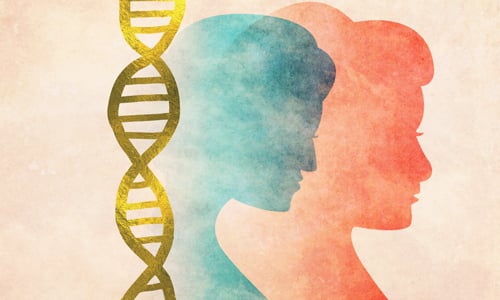


 Centro Estudios Judaicos del Sur de PR