We should not do to ourselves what our enemies have done to us – to burn the last remnant and reminder of people we loved.
For some, the inevitability of death is frightening. For those who
have faith in Jewish tradition which assures us of the continued
survival of the soul after our taking leave from Earth, death is nothing
more than moving from one room to another, from the corridor to the
main banquet hall. The journey which we call life ends with our birth
into immortality.
To understand death is to enter a realm that of necessity requires
faith as a guide. No mortal has actually ever returned from the grave to
give us a first-hand account. And yet most believers in the Bible as
well as those of many other religions have somehow come to very similar
conclusions: There is life after this life. Human beings are a wondrous
combination of body and soul. The soul has its source in God; as we are
told in the story of creation God blew into Adam’s body some of his
spirit. God by definition is immortal. So too is a part of us, the part
which truly defines us, the part which makes us who we are, the part
which represents our uniqueness, the part which is the key to our
essence and our being.
The Torah begins with the Hebrew letter beit. In Hebrew that
letter means two. The very first message of the Torah, which tells us of
the creation of this world, hints at the existence of a second world –
the world to come after our sojourn here on earth.
It is a truth which demands careful attention for the way in which we
lead our lives. More, it must guide us as well in the way in which we
deal with the body in the aftermath of death.
Sadly, and with great pain, we must take note of a contemporary
phenomenon which chooses to replace Jewish burial with cremation. This
trend recently received much publicity when Rona Ramon, widow of
Israel’s first astronaut Ilan Ramon, asked to be cremated in the will she left before her untimely death two weeks ago of pancreatic cancer.
I have nothing but the greatest admiration for Rona Ramon.
The manner in which she lived her life was inspirational beyond
measure. Unfortunately, the way she chose to dispose of her corporeal
remains was a tragic break with Jewish tradition, a tradition going back
to Abraham, the first Jew, who gladly paid the fortune demanded of him
in order to bury Sarah in the “Cave of the Couples” and a place where
according to the midrash Adam and Eve are buried as well.
It was heartbreaking to read the reason that motivated Rona to
request cremation. A mother of four when her husband perished as the
Columbia spaceship disintegrated upon its ill-fated return to earth, she
had to survive the additional tragedy of the death of her son in a
training accident after the crash of the F-16 fighter pilot he was
flying. With the heavy weight of these tragedies of the past upon her,
Rona concluded – as she wrote before her passing – she did not want her
children and family to be forced to go through yet another funeral.
It is not for me to judge her or God forbid to offer criticism.
Clearly the tragedies of her past were responsible for her personal
decision. But I believe it is necessary to remind ourselves what
millennia of Jewish history have identified as the most fitting and
respectful way to honor our loved ones once their souls have departed.
Jews perform an interesting symbolic ritual in response to the death of our closest relatives. It is called kriah – making
a rip in one’s garment. People think the purpose is to allow physical
release, to tear something as a sign of anger. That is not the way the
mystics of the Kabbalah explain this ritual.
The relationship between garment and body symbolically parallels the connection between body and soul.
The relationship between garment and body symbolically parallels the
connection between body and soul. Clothing covers us; it isn’t our
essence or our identity. If a garment we wear gets ripped it doesn’t
actually affect us. Our true selves remain intact. So too, our bodies
are the “garments” of our soul. They are external to it; one is
independent of the other.
Death is the rending of our outer garment. But it is no more than that. That’s why the mourners perform the mitzvah of kriah, to
affirm that as painful as the loss of a loved one may be, there is
great comfort in knowing that “the ripping of the garment” hasn’t
diminished the actual person.
Yet much as death diminishes the significance of the body, we
shouldn’t fail to emphasize the powerful linkage that remains even after
death severs the connection between the physical remains and the soul.
The soul owes its life on earth to the body. For a long time the two of
them coexisted in a mutually beneficial relationship. When the soul
departs at death, tradition tells us it does so in stages. It hesitates
before bidding final farewell to its physical partner. Like a magnet,
the soul continues to be drawn to the site of its former longtime
residence. It stays close to the body, finding it difficult to accept
the reality of ultimate separation.
Almost all religions and cultures acknowledge the relationship
between body and soul that extends beyond death. In Judaism there is
particular sensitivity to the soul’s concern for respectful treatment of
“the earthly garment” that enabled it to carry out its life’s mission.
The body is carefully washed,
even though it will soon disintegrate. For as long as possible it needs
to be accorded the dignity it earned during life. The body retains its
right to modesty; only women may prepare a female body for burial and
only men a male. The corpse is to be put into a closed coffin so that
onlookers not are left with the memory of a diminished human being.
Honoring the body is a way of showing our
respect for the soul that remains close by until it is assured that its
material partner received proper treatment.
More striking still, Jewish law forbids those in the immediate
presence of the dead to eat and drink or to fulfill a mitzvah – because
that would be mocking them, inasmuch as they are now incapable of doing
the same. The corpse may not know or care, but the soul of the departed
does. Honoring the body is a way of showing our respect for the soul
that remains close by until it is assured that its material partner
received proper treatment.
It is surely significant that throughout history those who most
wanted to bring about the end of the Jewish people sought to do it
through fire. Both temples in Jerusalem were put to the torch and burnt.
The Nazis built crematoria to carry out The Final Solution. In Hebrew
the word for garbage is ashpah – a contraction for aish poh, “fire
is here,” because the most common way to get rid of the useless was to
burn it. We cannot justify doing to ourselves what has been and
continues to be the way of our enemies – to burn and to destroy the last
remnant and reminder of people we loved.
Our Arab enemies have long understood the Jewish passion and
commitment to preserving the dignity of bodies which housed Jewish
souls. That is why they have demanded exorbitant ransoms for the return
of Israeli bodies, hundreds of Palestinian terrorists for the remains of
even one Jewish soldier.
Rona Ramon wanted to spare her grieving children and family the
trauma of her burial. In years to come her loved ones will have no
physical place to mourn, to visit, to remember and in some small way to
be with her at graveside. That makes her cremation another cause for tears.
We dare not judge Rona Ramon, a heroic figure who endured loss beyond comprehension. But let us reaffirm the powerful words of King Solomon, “And the dust will return to the earth from where it came and the spirit will return to God who gave it” (Ecclesiastes 12:7).
THE
SEDRA OF NITZAVIM IS ALWAYS READ ON THE SHABBAT BEFORE ROSH HASHANAH,
when our thoughts are directed toward teshuvah – the great mitzvah of
the ten days that begin with Rosh Hashanah and culminate on Yom Kippur.
Where, though, in the Torah itself do we find the mitzvah of teshuvah?
On this, two of the greatest sages of the Middle Ages, Maimonides and
Nachmanides, differed fundamentally.
Here is Maimonides’ account:
With
regard to all the precepts of the Torah, positive and negative, if a
person transgressed any one of them, either wilfully or in error, and
repents and turns away from his sin, he is under a duty to confess
before God, blessed be he, as it is said, “When a man or a woman shall
commit any sin that men commit, to do a trespass against the Lord, and
that person be guilty, then they shall confess their sin which they have
done” (Numbers 5: 6-7).
This means confess in words, and this confession is a positive command.
How does one confess? The penitent says, “I beseech you, O Lord, I have
sinned, I have acted perversely, I have transgressed before you and
have done such and such, and I repent and am ashamed of my deeds, and I
will never do this again.” This constitutes the essence of confession.
The fuller and more detailed the confession one makes, the more
praiseworthy he is.
According to Maimonides, teshuvah
has its origin in the Temple and its sacrifices, specifically those
brought for transgressions (sin offering, guilt offering etc.). Part of
the rite for such offerings was a verbal confession – vidui – on the
part of the wrongdoer. The conditions for the sincerity of such
confessions were an acknowledgement that one did wrong; remorse or
shame; and a determination not to repeat the offence in future. These
are the fundamental elements of teshuvah.
There are obvious
questions. If teshuvah is linked to the sacrificial order, what happened
to it once the Temple was destroyed and the sacrificial system came to
an end? What of teshuvah outside Israel and outside the confines of the
Temple? Maimonides answers these questions in his Sefer Hamitzvot
(positive command 73) by reference to the Mekhilta. The Mekhilta uses
various textual warrants to show that confession is in fact a separate
command in its own right, and applies with or without a sacrifice, in
and outside the land of Israel. Verbal confession, vidui, is the outer
act, teshuvah its internal correlate.
NACHMANIDES LOCATES TESHUVAH
in a completely different source, namely in today’s sedra. Moses,
having set out the terms of the covenant and its attendant blessings and
curses, then says this:
When all these blessings and
curses I have set before you come upon you and you take them to heart
wherever the Lord your G-d disperses you among the nations, and when you
and your children return to the Lord your G-d and obey him with all
your heart and with all your soul according to everything I command you
today, then the Lord your G-d will restore your fortunes and have
compassion on you and gather you again from all the nations where He
scattered you. Even if you have been banished to the most distant land
under the heavens, from there the Lord your G-d will gather you and
bring you back. He will bring you to the land that belonged to your
fathers, and you will take possession of it. He will make you more
prosperous and numerous then your fathers . . . You will again obey the
Lord and follow all His commands I am giving you today. Then the Lord
your G-d will make will you prosperous in all work of your hands and in
the fruit of your womb, the young of your livestock and crops of your
land. The Lord will again delight in you and make you prosperous, just
as He delighted in your fathers, if you obey the Lord your G-d and keep
His commands and decrees that are written in this book of the law and
turn to the Lord your G-d with all your heart and with all your soul.
The
next verse continues, “For this command which I am commanding you today
is not too difficult for you or beyond your reach.” Which command?
Nachmanides says: the command of teshuvah. Why so?
The most
striking feature of passage above is that it is a set of variations on
the Hebrew verb lashuv, the root of the noun teshuvah. This is almost
entirely lost in English translation. All the underlined phrases – “take
to heart”, “restore your fortunes”, “again” and “turn” – are, in the
Hebrew text, forms of this verb. The Torah often repeats a word several
times to emphasise its significance as a key-word: sometimes three or
five times, but usually seven, as in the present instance (taking
“restore your fortunes,” ve-shav et shevutekha, as one composite
phrase). Thus Nachmanides is quite right to see the subject of the
passage as teshuvah. What, though, is teshuvah in this context?
In
the Torah sin is something more than a transaction in the soul, or even
an act of wrongdoing narrowly conceived. It is an act in the wrong
place. It disturbs the moral order of the world. The words for sin –
chet and averah – both have this significance. Chet comes from the same
verb as “to miss a target.” Averah, like the English word
“transgression,” means “to cross a boundary, to enter forbidden
territory, to be in a place one should not be.” Only when we understand
this does it become clear why the deepest punishment for sin in the
Torah is exile. Adam and Eve were exiled from Eden. Cain was condemned
to be an eternal wanderer. We say in our prayers, “Because of our sins
we were exiled from our land.” Because a sin is an act in the wrong
place, its consequence is that the one who performs it finds himself in
the wrong place – in exile, meaning, not at home. Sin alienates; it
distances us from G-d, and the result is that we are distanced from
where we ought to be, where we belong. We become aliens, strangers.
Hence
the double meaning of teshuvah, most clearly expressed in our sedra,
but found throughout the entire prophetic literature. It has both a
physical and spiritual dimension, and the two are inseparable as if
bonded by superglue: it means the physical return to the land and the
spiritual return to G-d. Teshuvah is a double homecoming.
WE CAN
NOW SEE how deeply different are the approaches of Maimonides and
Nachmanides. For Maimonides sin-and-repentance are part of the world of
the priest (torat cohanim). They belong initially to the Temple and its
service. When an individual or group sinned in biblical times, they
brought a sacrifice and, as a token of their contrition, confessed their
wrong. The supreme example of this was the service of the High Priest
on Yom Kippur, when he made atonement “for himself, his household and
the whole community of Israel” (Lev. 16).
For
Nachmanides, sin-and-repentance are part of the broader sweep of Jewish
history. They belong to the world, not of the priest but of the prophet
(torat nevi’im), the figure who heard the voice of G-d in history,
warned the people that public wrongdoing would lead to defeat and exile
and who, when the exile eventually occurred, summoned the people back to
their vocation as a prelude to their return to the land. Every
individual act of teshuvah recapitulates, in some way, this larger
pattern of return. Teshuvah in this sense is less atonement than
homecoming – a subtle difference, but a difference none the less. It has
nothing to do with the Temple and everything to do with a sense of the
divine call (“Where are you?”) within the events that happen to us,
whether individually as personal fate or collectively as Jewish history.
The
primary feeling of sin in priestly consciousness is guilt; in prophetic
consciousness it is a sense of alienation (“alienation” became a key
word in both Marxism and existentialism: for the former as a symptom of
the capitalist system in the industrial age, for the latter as the mark
of “inauthentic” existence; Judaism, more ethically, links it with bad
conscience, the knowledge that we have not acted as we should). For the
priest, teshuvah is integrally linked with the idea of sacrifice and
leads to atonement (kapparah). For the prophet, it is associated with
behavioural change (teshuvah as “returning” to the right way) and leads
to healing, mercy, forgiveness and restoration. For the priest,
atonement relates primarily to individuals, whereas for the prophet (as
in the words of Moses above) the reference is often to the people as a
whole. It is individuals who sin and repent; it is the nation that
undergoes exile and return.
How does Maimonides interpret the
passage in this week’s sedra that Nachmanides takes as the source for
the mitzvah of teshuvah? He reads it, simply, not as a command but as a
prophecy and promise:
All the prophets charged the
people concerning teshuvah. Only through teshuvah will Israel be
redeemed, and the Torah has already given the assurance that Israel
will, at the end of its exile, finally repent and then be immediately
redeemed, as it is said, “When all these blessings and curses I have set
before you come upon you and you take them to heart wherever the Lord
your G-d disperses you among the nations, and when you and your children
return to the Lord your G-d and obey him with all your heart and with
all your soul according to everything I command you today, then the Lord
your G-d will restore your fortunes and have compassion on you and
gather you again from all the nations where He scattered you . . .”
This
difference of interpretation goes back to the Geonic period, three
centuries earlier, when R. Hefetz read the passage as did Nachmanides,
and R. Shmuel Gaon like Maimonides (Otzar haGeonim, Sanhedrin, 514).
THERE
IS NO DOUBT WHATSOEVER that Maimonides and Nachmanides were both right.
Priest and prophet were not in conflict: they were two voices in a
single conversation, two perspectives on a complex reality. When the
Second Temple was destroyed and both the priesthood and prophecy came to
an end as functioning institutions, both traditions merged into the
institution of teshuvah as we have it today.
On the one hand Yom
Kippur retains strong links with the service of the High Priest in
Temple times. We read the details of that service during Musaf; we
perform vidui, confession, in various ways; we make a point of giving
tzedakah (financial sacrifice substituting for animal sacrifice). On the
other, during the morning we read one of the greatest of all prophetic
calls to repentance (Isaiah 57-58), with its insistence that fasting is nothing – a mere ritual – without ethical conduct:
Is this not the kind of fasting I have chosen : To loose the chains of injustice and untie the cords of the yoke, To set the oppressed free and break every yoke? Is it not to share your food with the hungry and to provide the poor wanderer with shelter?
We
read another great example of a prophetic call to teshuvah, that of
Jonah, just before Neilah. Neilah itself ends with the words, repeated
seven times, “The Lord He is G-d” – the climax of one of the great
prophetic confrontations, between Elijah and the prophets of Baal on
Mount Carmel, when the people publicly abandoned idolatry and proclaimed
the kingship of G-d. It is wondrous how these two strands, priestly and
prophetic, have been woven together so seamlessly in our liturgy.
So
teshuvah is two things: a religious-metaphysical experience of sin and
atonement (Maimonides), and an ethical-historical drama of exile and
return (Nachmanides). For nearly two thousand years, the former
predominated while the latter was no more than a distant memory and a
pious hope. The Temple was gone, and so too were the prophets. But
whereas there was a substitute for the Temple (the synagogue as mikdash
me’at, “a temple-in-microcosm”) there was no real substitute for Israel
as a nation-among-nations in the arena of history.
In the course of the twentieth century, that changed. Jews returned. The state of Israel was reborn. The promise of the prophets, millennia ago, came true. Yet the word teshuvah – in the sense meant by Moses in this week’s sedra, and by Nachmanides in his construal of the command – has not yet been fully realised. There has been a physical homecoming to the land, but not yet a spiritual homecoming to the faith. Among a section of the population, yes; among the people as a whole, no. That challenge rests with us, our contemporaries and our children. The words of the prophets, never less than inspiring, have acquired a new salience. How it will happen, we do not know, but that it will happen, we do know, for we have G-d’s promise: that the faith of Israel will be reborn just as its land and state have been. May we live to see it, and work to be part of it.
Vivimos en un mundo próspero de 7 mil millones de personas; hay menos muerte por causa de la guerra y la pobreza; y nuestras vidas son más largas y saludables que nunca. La tecnología, los avances médicos, el comercio global y las comunicaciones siguen empujando hacia adelante.
Pero este progreso sólo es posible gracias a los valores en común que
tenemos como humanidad y sólo es bueno cuando nos ceñimos a ellos.
Valoramos la medicina cuando valoramos la vida, el comercio nos
beneficia cuando mantenemos nuestra palabra; la tecnología es
beneficiosa sólo cuando la usamos para construir un mundo mejor, más
justo y con mayores oportunidades y libertades para todos; las
comunicaciones globales tienen valor sólo cuando queremos compartir
nuestras ideas y colaborar con los demás.
Estos son algunos de los ejemplos de los valores judíos que contribuyen para que tengamos un mundo mejor:
A semejanza de Di-s
Es un mundo muy grande y aun así no hay dos personas iguales, que
piensen, se vean y vivan de la misma manera. Aun así, la Torá asegura
algo muy osado: que todo ser humano es creado a imagen y semejanza de
Di-s.
Niño o adulto, hombre o mujer, pobre o rico, discapacitado o no, miembro de tu pueblo o extranjero, el Autor del universo nos insufla un alma a cada uno de nosotros. Cada ser humano es a su manera, única e irremplazable, un representante del Creador dentro de su creación; lo que quiere decir que la vida de cada persona es sagrada.
Los sabios judíos enseñaron: “Quien termina con una vida, destruye el mundo entero. Quien salva una vida, salva el mundo entero”.
Esta es la única medida que podemos tener para la vida humana: cada una vale lo que el mundo.
Los derechos del individuo
Una ciudad es sitiada y el enemigo declara: “Dennos a uno de los suyos y los dejaremos en paz”.
¿Qué es lo correcto?
Los sabios judíos enseñaron que no tenemos permitido entregar la vida de ningún inocente, aun cuando el objetivo sea salvar otras vidas. ¿Por qué? Porque la Torá no nos permite dar la vida de un inocente aun cuando ello beneficie a una mayoría.
Durante la mayor parte del siglo XX, las potencias estuvieron en disputa. No era sólo un conflicto de poder, sino de ideologías. De un lado, estaban los que creían que el estado estaba por encima de los individuos: una persona podía ser desposeída de todo lo que tenía y una comunidad podía ser exterminada si era por el beneficio estatal. Del otro lado, estaban aquellos que creían en el derecho de cada persona a la vida, a la justicia, a su propiedad y a decidir cómo y dónde vivir.
El experimento del siglo XX ha mostrado claramente que el camino de
la Torá es, de hecho, el único que permite una sociedad viable.
Justicia social
Abraham, el padre del pueblo judío, creía tan fervientemente en la justicia que incluso puso a prueba a Di-s cuando Éste le informó que iba a destruir a Sdom y Amorá, las dos ciudades del pecado. Abraham lo discutió: “¿Qué pasa si hay personas justas en esas ciudades? ¿Acaso no deberías salvar esas ciudades por causa de ellos? ¿Acaso el Juez de toda la Tierra no hará justicia?”.
La justicia es el trabajo de Di-s: él creó el mundo y de él depende que funcione correctamente. Por eso es un gran privilegio que nos haga sus socios en esta tarea tan vital como divina.
“Justicia, justicia perseguirás”, nos manda Di-s en la Torá. Y como los sabios judíos enseñaron: “El mundo perdura gracias a tres virtudes: la justicia, la verdad y la paz”.
Para un judío, buscar la justicia es una manera de buscar a Di-s. En
la mañana de Iom Kipur, el día más sagrado del calendario, los judíos
leen al profeta Ieshaiau, quien dice lo que Di-s necesita de las
personas: “afloja todos los lazos que atan injustamente a los hombres,
libera a los oprimidos, rompe todos los yugos. Comparte tu pan con los
hambrientos, lleva a tu casa a quienes no tienen hogar, cuando veas
personas desnudas, vístelas, no rechaces a las personas necesitadas”.
Arreglar el mundo
¿Los humanos pueden hacer del mundo un lugar mejor?
Durante la mayor parte de la historia, las personas sabias se rieron
de esta idea y muchos consideraron al mundo como un lugar oscuro y
maldito. Nadie se imaginaba que pudiéramos lograr un cambio permanente.
Todo es circular, decían, a veces prevalece lo bueno y, otras, lo malo.
Pero la Torá de los judíos ve el tiempo como una gran historia que se dirige a una era de paz y sabiduría en la Tierra. Cada persona tiene el deber de dejar el mundo mejor de lo que lo encontró. Con nuestras acciones, todos somos los constructores del mundo que vendrá.
Los judíos llamamos a esta idea tikún, que significa ‘arreglar’ el mundo y hacerlo aún mejor de lo que el Creador lo hizo.
Di-s creó todo a partir del amor. Ama este mundo y sostiene a todas sus criaturas con amor. Nos da la posibilidad de asociarnos a él en la creación del mundo a través de la mejora y la armonización de nuestro planeta.
La tierra de Israel
Israel es la tierra del pueblo judío, prometida por Di-s como una herencia eterna. Los libros sagrados de los cristianos y musulmanes están de acuerdo en este particular.
Pero, al mismo tiempo, Di-s también dijo a los judíos que debían
respetar al extranjero que vivía entre ellos. Incluso si esa persona no
respetaba los rituales y no era un miembro de la tribu, el extranjero
debía ser tratado con dignidad, ya que los judíos y los no judíos son
igualmente responsables de cumplir con las leyes básicas que incumben a toda la humanidad.
En el siglo XVI, Europa se convirtió en el campo de batalla de la intolerancia religiosa. Las personas creían que aquellos que no estaban de acuerdo con sus creencias eran herejes y que debían convertirse a su religión, o ser asesinados. Pero cuando volvieron al camino de la Torá, la Biblia hebrea, aprendieron que ese no era el modo: Di-s quiere que hagamos la paz con los demás y eso sólo es posible cuando aceptamos las diferencias.
Entre los judíos siempre hay distintas opiniones. A los judíos nos gusta mucho discutir asuntos importantes. Por experiencia, saben que sólo mediante la diversidad de opiniones y el debate se puede llegar a la verdad. De hecho, el Talmud, uno de los textos judíos más estudiados y fundamento (junto con la Biblia) de las leyes judías, es una compilación de discusiones de los sabios.
Las personas deben respetar las leyes de sus países y aceptar que hay
una autoridad final, el Autor del mundo. Pero forzar a los demás a ser
iguales va en contra del plan de Di-s de tener un mundo diverso y
hermoso.
Monoteísmo
¿Cuál es la diferencia entre tener un Di-s, muchos dioses o ninguno?
¿No podemos apoyarnos en la razón humana y en el instinto como guía para
vivir en paz con los demás? La historia responde a estas preguntas con
un resonante “no”.
Esto es especialmente así luego del siglo XX, cuando la nación más educada del planeta, aquella que se enorgullecía de sus avances en ciencia, cultura, filosofía y ética, cometió los crímenes más atroces contra la humanidad. Y no lo hizo por locura o revancha, sino con la razón fundamental de lo que consideraban ciencia pura. Millones de personas inocentes fueron esclavizadas o gaseadas hasta la muerte porque simplemente fueron consideradas inferiores.
La naturaleza y la razón humana no son esencialmente malas. Naturalmente los seres humanos se preocupan por los demás y se indignan con las injusticias. La razón humana ha producido mucha sabiduría, pero la mente puede ser fácilmente engañada. Cuando la moral se vuelve inconveniente, encontramos la manera de esquivarla; cuando la ética se interpone en nuestro camino, encontramos razones para cambiar las reglas del juego. Y cuando se trata de personas que están fuera de nuestro clan, tribu o sociedad, determinamos con facilidad que no son humanos como nosotros y logramos justificarlo todo.
Por todo esto es vital que aceptemos una sola Autoridad, sobre todo
en nuestra sociedad globalizada, que no sea ni humana ni elegida por los
hombres y cuya palabra sea eterna e inmutable.
La paz del mundo
La paz, ¿es mejor que la guerra?
Aunque cueste creerlo, no hace mucho tiempo las personas creían que la guerra era un mejor negocio. Era la manera en la que los hombres y las naciones demostraban su poder. Aquellos que protestaban contra la guerra solían ser considerados tontos y locos.
Pero hace más de 2600 años, los profetas judíos Ieshaiau y Mijá
profetizaron un tiempo en el que las naciones elegirían no ir más a la
guerra y el mundo se llenaría de paz.
De hecho, para los judíos, la paz, Shalom, no es una palabra más, sino uno de los nombres de Di-s.
Recién a partir del final de la Primera Guerra Mundial, las personas
empezaron a entender que la humanidad, con su vasto arsenal de armas
tecnológicas, no podía permitirse más la guerra. Luego de la Segunda
Guerra Mundial, las naciones del mundo crearon una gran estructura, la
Organización para las Naciones Unidas (ONU), con el objetivo de discutir
la paz y no la guerra.
En una de las paredes de las oficinas de la ONU están talladas las
palabras de Ieshaiau y Mijá: “Forjarán sus espadas en rejas de arado y
sus lanzas en hoces; no alzará espada nación contra nación, ni se
adiestrarán más para la guerra”.
Que ese tiempo llegue pronto, mucho antes de lo que nos podamos imaginar.
The
scene that brings the book of Genesis to a close is intensely
significant. Joseph’s brothers were terrified that, after the death of
their father Jacob, Joseph would take revenge against them for selling
him into slavery. Years before, he had told them that he forgave them:
“Now, do not worry or feel guilty because you sold me. Look: God has
sent me ahead of you to save lives” (Gen. 45:5). Evidently, though, they only half-believed him.
Their
fear was based on the fact that, as is clear from the earlier story of
Esau, sons were not allowed to take revenge against their brothers in
the lifetime of their father. Esau had said, “The days of mourning for
my father will be here soon. I will then be able to kill my brother
Jacob” (Gen. 27:41). That is what the brothers now feared: that Joseph had not really forgiven them but was simply waiting until Jacob died.
That
is why, after Jacob’s death, the brothers sent word to Joseph saying,
“Your father left these instructions before he died: ‘This is what you
are to say to Joseph: I ask you to forgive your brothers the sins and
the wrongs they committed in treating you so badly.’ Now please forgive
the sins of the servants of the God of your father” (Gen. 50:16).
So Joseph had to tell them again that he forgave them:
“Don’t
be afraid,” said Joseph. “Am I in place of God? You intended to harm me
but God intended it for good, to accomplish what is now being done, the
saving of many lives.” (Gen. 50:19–20)
The episode is moving in itself, but it also resolves one of the central questions of the book of Genesis – sibling rivalry: Cain and Abel, Isaac and Ishmael, Jacob and Esau, Joseph and his brothers. Can brothers live peaceably with one another? This question is fundamental to the biblical drama of redemption, for if brothers cannot live together, how can nations? And if nations cannot live together, how can the human world survive?
Only now, with the reconciliation of Joseph and his brothers, can the story move on to the birth of Israel as a nation, passing from slavery to freedom.
These words of Joseph, though, tell us something more. I have previously argued that the entire drama Joseph put the brothers through when they came to buy food in Egypt – accusing them of being spies, and so on – was to test whether they had done teshuvah. Did they realise the wrong they had done in selling Joseph and had they really changed as a result? At the height of the drama, as soon as Judah said he would stay as a slave so that his brother Benjamin could go free, Joseph revealed his true identity to them and forgave them. Judah, who had proposed selling Joseph as a slave, had completely changed. He had done teshuvah. He was now a different person.
Yet something more is revealed in this last conversation between Joseph and his brothers. It concerns the most paradoxical of all rabbinic statements about teshuvah. It was said by one of the great baalei teshuvah, penitents, of the Talmud: the third-century sage known as Reish Lakish. Originally a highway robber, he was persuaded by Rabbi Yochanan to give up his lawless ways and join him in the house of study. Reish Lakish repented and became Rabbi Yochanan’s disciple and colleague (and also his brother-in-law: he married Yochanan’s sister).
Perhaps speaking from his own experience, he said: Great is repentance, because through it deliberate sins are accounted as though they were merits, as it is said, “When the wicked man turns from his wickedness and does what is lawful and right, he shall live thereby” (Ezekiel 33:19).[1] This statement is almost unintelligible. How can we change the past? How can deliberate sins be transformed into their opposite – into merits, good deeds?
The quotation from Ezekiel does not prove the point. If anything, it does the opposite. The prophet is speaking about a person who, having undergone teshuvah, now does good instead of evil – and it is because of his good deeds, not his earlier evil ones, that “he shall live.” The verse says that good deeds can overcome a previous history of wrongdoing. It does not say that they can turn bad into good, deliberate sins into merits.
Reish Lakish’s statement is intelligible only in the light of Joseph’s words to his brothers after the death of their father: “You intended to harm me but God intended it for good.” The brothers had committed a deliberate sin by selling Joseph into slavery. They had then done teshuvah. The result, says Joseph, is that – through divine providence (“God intended it”) – their action is now reckoned “for good.”
Not only is this the source of Reish Lakish’s principle; it also enables us to understand what it means. Any act we perform has multiple consequences, some good, some bad. When we intend evil, the bad consequences are attributed to us because they are what we sought to achieve. The good consequences are not: they are mere unintended outcomes.
Thus, in the case of Joseph, many positive things happened once he had been brought to Egypt. Eventually he became second-in-command of Egypt, overseer of its economy, and the man who saved the country from ruin during the years of famine. None of these consequences could be attributed to his brothers, even though they would not have happened had the brothers not done as they did. The reason is that the brothers neither foresaw nor intended this set of outcomes. They meant to sell Joseph as a slave, and that is what they did.
However, once the brothers had undergone complete repentance, their original intent was cancelled out. It was now possible to see the good, as well as the bad, consequences of their act – and to attribute the former to them. Paraphrasing Shakespeare’s Mark Antony, the good they did would live after them; the bad was interred with the past (Julius Caesar, act III, scene 2.). That is how, through repentance, deliberate sins can be accounted as merits, or as Joseph put it: “You intended to harm me, but God intended it for good.” This is a hugely significant idea, for it means that by a change of heart we can redeem the past.
This still sounds paradoxical. Surely time is asymmetrical. We can change the future but not the past. We can choose what is yet to be, but, in the words of the sages, “What has been, has been,”[2] and we cannot alter it.
We now see, through Joseph’s and Reish Lakish’s words, a revolutionary idea. There are two concepts of the past. The first is what happened. That is something we cannot change. The second is the significance, the meaning, of what happened. That is something we can change.
The great truth about the role of time in our lives is that we live life forwards, but we understand it only looking back. Consider an autobiography. Reading the story of a life, we see how a deprived childhood led to the woman of iron ambition, or how the early loss of a parent drove the man who spent his later years pursuing fame in search of the love he had lost.
It might have been otherwise. The deprived childhood or the loss of a parent might have led to a life dominated by a sense of defeat and inadequacy. What we become depends on our choices, and we are often free to choose this way or that. But what we become shapes the story of our life, and only in hindsight, looking back, do we see the past in context, as part of a tale whose end we now know. If life is like a narrative, then later events change the significance of earlier ones. That is what the story of Joseph and his brothers is telling us, according to Reish Lakish.
Joseph was saying to his brothers: by your repentance, you have written a new chapter in the story of which you are a part. The harm you intended to do me ultimately led to good. So long as you stayed the people prepared to sell a brother into slavery, none of that good could be attributed to you, but now you have transformed yourself through teshuvah, you have transformed the story of your life as well. By your change of heart you have earned the right to be included in a narrative whose ultimate outcome was benign. We cannot change the past, but we can change the story people tell about the past. But that only happens when we ourselves change.
We can only change the world if we can change ourselves. That is why the book of Genesis ends with the story of Joseph and his brothers. It tells on an individual level the story that the book of Exodus tells on a national level. Israel is charged with the task of transforming the moral vision of mankind, but it can only do so if individual Jews, of whom the forerunners were Jacob’s children, are capable of changing themselves.
Teshuvah is the ultimate assertion of freedom. Time then becomes an arena of change in which the future redeems the past and a new concept is born – the idea we call hope.
Albert Einstein was often asked about his views on God. In the 1920s and 1930s, he insisted that he was not an atheist
and that he believed “in Spinoza’s God, who reveals himself in the
harmony of all that exists, not in a God who concerns himself with the
fate and the doings of mankind.”
“[t]he word God is for me nothing more than the
expression and product of human weaknesses, the Bible a collection of
honorable, but still primitive legends…. For me the Jewish religion like
all others is an incarnation of the most childish superstitions. And
the Jewish people to whom I gladly belong and with whose mentality I
have a deep affinity have no different quality for me than all other
people. As far as my experience goes, they are also no better than other
human groups, although they are protected from the worst cancers by a
lack of power. Otherwise I cannot see anything ‘chosen’ about them.”
For those of us who claim Einstein as “one of our own” and feel
connected to our own Jewish identity, his “God Letter,” as it is called,
is likely to make us feel uncomfortable. How are we to reconcile our
embrace and celebration of Einstein with the content of this letter?
Quite simply, we must not – for lack of a better word – deify him.
Einstein may have been a brilliant scientist and great humanitarian,
but he was not a theologian. As physicist Brian Greene remarked in an interview for WNYC, the National Public Radio station in New York City:
“The fact of the matter is, Einstein’s expertise in
physics and in the ability to understand the force of gravity and the
nature of space and time and matter and energy doesn’t give him any
special insight into the nature of God.”
In that same radio interview, I said that
it’s all right for Einstein to say different things about God and
Judaism at different times in his life; as a human being, his life and
experiences made him change his perspective.
As a scientist, Einstein had a passion and a drive to join together
disparate theories. Indeed, for much of his life, Einstein was looking
for a ““unified theory”” that could bring together quantum mechanics and
gravity. That’s part of the job of science –– to find connections and
explanations for a variety of phenomena. Think of Newton and his laws of
motion, or Maxwell discovering the relationship between electricity and
magnetism, or, yes, Einstein and his most famous equation linking
matter with energy. A bedrock principle of science is that the universe
makes sense, and we can help figure it out. A single, simple explanation
for everything would be deeply satisfying.
That principle bleeds into how we view religion, as well. We want
there to be a “unified theory” of our lives and of God, since that will
help us make sense of the tragedies, the losses, and the setbacks we
experience. It can feel deeply unsatisfying when we can’t figure it out.
Yet that’s not how religion, or even our understanding of God,
works. Theology isn’t static; our views on God change throughout our
lives because our experiences often lead us to reexamine who we are and
how we understand ourselves.
To me, the most important question about God isn’t “Who is God?” or
“What is God?” but rather “When is God?” When do we find moments of
transcendence? When do we find moments of deep connection? When do we
bring more compassion, kindness, and justice to the world? These aren’t
simply intellectual questions; they are questions that are at the core
of who we are as human beings.
Einstein was one of the most brilliant thinkers in history, changing
the way we understand the universe. But as a human being, he was subject
to contradictions, limitations, and life’s challenges…just like the
rest of us.
Rabbi Geoffrey A. Mitelman is the founding director of Sinai and Synapses, an organization that bridges the scientific and religious worlds, and is being incubated at Clal – The National Jewish Center for Learning and Leadership. His writings about the intersection of religion and science have been published in the books Seven Days, Many Voices and A Life of Meaning (both published by the CCAR Press). He is an internationally sought-out teacher, presenter, and scholar-in-residence.
¿Hiciste algo mal? Todos lo hemos hecho. He aquí como arreglarlo, de una vez por todas.
Mucha gente malinterpreta el concepto de pecado. Piensan que alguien que peca es una “mala persona”.
En realidad, la palabra en hebreo jet no tiene ninguna relación en significado con la palabra pecado. Jet
aparece en la Torá refiriéndose a una honda que “erró en dar al
blanco”. ¡No hay nada inherentemente “malvado” respecto a esa honda! Más
bien, ocurrió un error – debido a una falta de enfoque, concentración o
habilidad.
Esto mismo se aplica a nosotros. Cuando nos comportamos de forma
irresponsable o destructiva, simplemente hemos errado nuestro tiro. Cada
ser humano tiene un alma, un pequeño trozo divino que nos diferencia de
los animales. Cuando hacemos algo mal, es porque la “voz” de nuestra
alma se ha quedado temporalmente muda debido al rugido del cuerpo
físico. Esta confusión es lo que nosotros llamamos “Ietzer HaRá”. Pero
nuestra esencia se mantiene pura. Sólo tenemos que hacer algunos ajustes
– ¡Y estaremos de vuelta en camino hacia nuestro blanco!
Esta es la idea de teshuvá, que literalmente significa “retorno”.
Cuando “hacemos teshuvá”, examinamos nuestras formas de ser,
identificamos en cuales estamos mal y “retornamos” a nuestro estado
previo de pureza espiritual. En este proceso “retornamos” también hacia
nuestra conexión con Dios.
El proceso de teshuvá involucra los 4 pasos siguientes:
Paso 1- Arrepentimiento. Darse cuenta de la medida del daño que se ha hecho y lamentarlo sinceramente.
Paso 2- Cesación. Parar inmediatamente la acción perjudicial.
Paso 3- Confesión. Articular el error y pedir perdón.
Paso 4- Resolución. Hacer un firme compromiso de no repetirlo en el futuro.
Ahora vamos a examinar cada uno de los pasos en detalle.
Paso 1: Arrepentimiento
A veces tratamos de justificar nuestras acciones, usando una variedad de excusas:
“Todos los demás lo hacen”.
“¡Por lo menos no soy como algunas personas que van por ahí, matando y robando!”.
“¿Quién eres TÚ para decir que está mal?”.
El arrepentimiento no es realmente posible, a menos que podamos
distinguir claramente entre el bien y el mal. De lo contrario, solamente
racionalizaríamos y nos engañaríamos para llegar a pensar que no hemos
hecho nada mal. Los estándares de nuestra sociedad, que constantemente
van cambiando, contribuyen a esta falta de claridad.
Por ejemplo, imagina que has crecido en una casa en la que el chisme era algo que se hacía constantemente. A menos que tengas conocimiento de la idea judía de Lashón HaRá (“lenguaje negativo”) y te hayas dado cuenta de su naturaleza destructiva, ¡es posible que nunca consideres que hablar así de los demás está mal!
(Por esta razón, es importante estar familiarizado con la Halajá, la ley judía, y tener un rabino que te conozca personalmente y te pueda aconsejar).
¿Cómo debemos sentirnos al reconocer un error propio? ¿Debemos
sentirnos culpables, despreciables o malvados? ¡No! “Culpa” es una
emoción negativa que dice “Yo soy malo”. Mientras que “Arrepentimiento”
es el reconocimiento positivo de que, mientras mi esencia sigue siendo
pura, he fallado en cumplir con lo que se espera de mi potencial.
Sentir arrepentimiento es una señal positiva de que estamos
nuevamente en contacto con nuestra esencia divina. Nuestra conciencia no
nos va a dejar tranquilos hasta que hayamos corregido nuestro error.
¿Acaso una persona malvada sentiría arrepentimiento luego de hacer una
transgresión?
Este primer paso de teshuvá es, de hecho, el más crucial. – Ya que, a
menos que una persona se sienta arrepentida, posiblemente continuará
con sus formas erradas.
Paso 2: Cesación
El Talmud dice:
Una persona que cometió un error y lo
admite, pero no renuncia a hacerlo otra vez, es comparada con el
sumergirse en la mikve sosteniendo un reptil muerto en la mano. Por que a
pesar de que se sumerja en todas las aguas del mundo, su inmersión es
inútil.
Sin embargo, si lo suelta [al reptil] de su mano, luego al sumergirse en
40 sehas de agua (la medida mínima de una mikve), su inmersión se hace
inmediatamente efectiva. (Tahanit 16a).
¿Te imaginas pedirle perdón a alguien mientras continúas haciéndole
mal al mismo tiempo? Si no se para la mala acción, ni siquiera todas las
buenas intenciones del mundo podrán ayudar.
Paso 3: Confesión y pedir perdón
Al admitir nuestro error, la ley judía prescribe que debemos
articularlo verbalmente. El Majzor ArtScroll de Iom Kipur da una hermosa
explicación de porqué esto es tan crucial para el proceso de teshuvá.
Al ser inteligente, pensante, e
imaginativo, el hombre tiene todo tipo de pensamientos pasando
constantemente por su mente. Incluso las reflexiones más sublimes de
remordimiento y mejoramiento personal, no le son extraños, sin embargo
no le duran. Para que estos pensamientos tengan un sentido duradero, él
debe destilarlos en palabras, ya que el proceso del pensamiento culmina
cuando las ideas son expresadas y clarificadas.
Esto no es tan simple como parece. Por
lo general, es terriblemente difícil para la gente admitir
explícitamente que han hecho algo mal. Nos excusamos. Nos negamos a
admitir la verdad. Le echamos la culpa a otro. Negamos lo obvio. Nos
destacamos por racionalizar. Pero la persona que arranca de sí misma la
incomoda verdad, “Yo he pecado”, ha llevado a cabo un grandioso y
significativo acto.
La Torá nos pide ser humildes y estar afligidos mientras pedimos
perdón. Esto es crucial para permitir que la “víctima” sane. ¿Alguna vez
alguien te ha pedido perdón y te has dado cuenta que no es sincera? No
es suficiente con tan sólo murmurar las palabras “lo siento”.
Incluso algunas cortes civiles están adoptando este principio;
algunos jueces requieren que los criminales demuestren un
arrepentimiento verdadero y que pidan perdón formalmente a las víctimas
antes de considerar una reducción en la condena.
Paso 4: Decidir no repetirlo
En Iom Kipur, decimos dos plegarias (“Ashamnu” y “Al Jet”) la cuales
contienen una extensa lista de errores. De hecho, al revisar esta lista,
¡encontrarás que la mención de errores Cubre cada aspecto de la vida!
Esto nos lleva a preguntar: Al decir estas plegarias, ¿Estamos realmente
haciendo un compromiso de no pecar nunca más? ¿Es esto realista?
Imagina a un niño que está dando sus primeros pasos frente a sus
orgullosos padres. Se pone de pie, da un par de pasos – y se cae sin
éxito. Los padres aplauden excitados y con regocijo. Pero analicemos la
escena, ¿No deberían los padres estar apenados? Después de todo, ¡El
niño se cayó!
La respuesta es obvia. Un padre no juzga a su hijo basado en si
camina o se cae, sino que según si dio algunos pasos en el camino
correcto.
Así es también, con Dios. No estamos compitiendo con nadie más que
con nosotros mismos. Lo que a Él le preocupa, es si estamos haciendo un
esfuerzo sincero para ir en la dirección correcta. Dios no te pide que
cambies en el área que todavía no es viable para ti cambiar. Estamos
comandados a ser seres humanos, no ángeles. Esto significa hacer un
serio compromiso a cambiar – y dar los pasos correctos en el momento
correcto.
Un individuo no tiene que tener todas las respuestas ahora mismo. La clave es el compromiso a cambiar. Debes tener en cuenta las situaciones en las que puedes tropezar, y mantenerte a una distancia segura de ellas. La Torá dice: Fortalece tu voluntad en cierta área y Dios te asegurará el éxito. No hay nada que se pueda interponer en el camino de la persistencia y la determinación. Tal como dice el Talmud (Makot 10b) “En el camino que una persona quiera ir, será guiado”.
Entendiendo la fuente de nuestra alma y su esencia eterna.
Una de las bases de nuestra fe es la creencia en la inmortalidad del alma y en la vida después de la muerte.
Si uno cree en la justicia de Dios entonces debe creer también en la inmortalidad del alma. Si no, ¿cómo podría entender el hecho de que muchos individuos rectos sufran en esta vida?
Asi como el niño que aún no ha nacido, tiene muchos atributos que en el útero no tienen ningún uso, pero que demuestran que nacerá en un mundo en el que sí serán usados, un humano tiene muchos atributos que no sirven de mucho en esta vida, pero que sí indican que el hombre renacerá en una dimensión más elevada después de la muerte.
En el plano físico, el hombre es indistinguible de los animales.
Los detalles de la inmortalidad no son mencionados en la Torá porque la revelación sólo se ocupa del mundo presente. Por lo tanto, cuando el profeta habló del Mundo Venidero, diciendo: “El oído nunca lo ha escuchado y ningún ojo lo ha visto, fuera de Dios; aquello que Él hará por quienes tienen esperanza en Él” (Isaías 64:3). Es decir, ni al más grande de los profetas se le permitió tener una visión de la recompensa que espera a los rectos en el Mundo Venidero.
El ser humano comparte los procesos fisiológicos y químicos con los animales y, en el aspecto físico, es indistinguible de ellos. Por eso decimos que tiene un ‘alma animal’ (néfesh behemit) que está contenida en la sangre, vale decir, en los procesos fisiológicos y químicos. Respecto a esta alma, la Torá dice: “La fuerza de vida de la carne está en la sangre” (Levítico 17:11).
Dado que el alma animal es lo que aleja al hombre de lo espiritual, el Talmud comúnmente la llama iétzer hará ‘el impulso hacia el mal’.
La esencia más íntima
Sin embargo, además de su ser material, cada persona posee un alma que es única entre las creaciones de Dios. Al describir la creación de Adam, la Torá dice: “Dios formó al hombre del polvo de la tierra, e insufló en sus fosas nasales un hálito de vida (nishmat jaim). El hombre se convirtió [por lo tanto] en una criatura viviente (néfesh jaiá)” (Génesis 2:7).
La Torá nos está enseñando que el alma humana vino directamente de la esencia más íntima de Dios, de la misma forma en que un aliento emana desde los pulmones y la cavidad pectoral de una persona. Por otro lado, el resto de la creación se realizó por decreto, o sea a través del habla; lo cual es un nivel más bajo porque tal como las ondas sonoras son generadas por la persona pero no contienen aire de sus pulmones, asimismo el resto de la creación emana del Poder de Dios pero no de Su Esencia.
Tres partes
El alma está formada por tres partes, cuyos nombres hebreos son: néfesh, rúaj y neshamá. La palabra hebrea neshamá está relacionada con neshimá, la cual literalmente significa‘respiración’. Rúaj significa ‘viento’. Néfesh viene de la raíz nafash, que significa ‘descanso’, como en el versículo: “En el séptimo día [Dios] cesó de crear y descansó (nafash)” (Éxodo 31:17).
Dios exhalando un alma puede ser comparado a un soplador de vidrio formando una vasija. El aliento (la neshamá) deja primero sus labios, viaja en forma de viento y finalmente descansa (néfesh) en la vasija. De los tres niveles del alma, neshamá es el más elevado y el más cercano a Dios, mientras que néfesh es el aspecto del alma que reside en el cuerpo. El rúaj está ubicado entre los dos, atando al hombre con su fuente espiritual. Por eso la inspiración divina es llamada rúaj hakódesh en hebreo.
La neshamá se ve afectada sólo por medio del pensamiento, el rúaj por medio del habla y el néfesh por medio de la acción.
Descomposición del cuerpo
Todas las almas fueron creadas en el comienzo de los tiempos y son
almacenadas en una cámara de tesoros celestial hasta el momento del
nacimiento.
El alma tiene su primer contacto con el cuerpo en el momento de la
concepción y permanece con éste hasta el momento de la muerte. Por eso
uno se refiere a la muerte como ‘la partida del alma’ (Ietziat HaNeshamá).
Nos fue enseñado que inmediatamente después de la muerte el alma se encuentra en un estado de gran confusión. Por lo tanto, acostumbramos permanecer cerca de una persona agonizante para que no muera sola.
El alma que ya se encuentra sin el cuerpo está intensamente
consciente del entorno físico de su cuerpo. Esto es particularmente
cierto antes de que el cuerpo sea enterrado. En ese período el alma está
literalmente de duelo por su cuerpo durante siete días. Esto es aludido
en el versículo: “Su alma está de duelo por él’ (Iov 14:22).
Durante los primeros 12 meses posteriores a la muerte, el alma revolotea alrededor del cuerpo.
Durante los primeros 12 meses posteriores a la muerte, hasta que el
cuerpo se descompone, el alma no tiene un lugar de descanso permanente y
consecuentemente experimenta una gran desorientación. Es por eso que
revolotea alrededor del cuerpo. Durante este tiempo, el alma está
consciente de la descomposición del cuerpo y se identifica con ella. El
Talmud nos enseña que “los gusanos son tan dolorosos para el muerto como
las agujas para la carne de los vivos, como está escrito (Iov 14:22): ‘Su carne se lamenta por él’”.
La mayoría de los comentaristas escribe que esto se refiere a la
angustia psicológica del alma al ver su hábitat terrenal en estado de
descomposición. Los cabalistas le llaman a esto el jivuthakéber, que significa ‘el castigo de la tumba’.
Nos fue enseñado que lo que le ocurre al cuerpo en la tumba puede ser incluso más doloroso que el Gueinom.
Esta experiencia no es ni remotamente tan difícil para los rectos,
quienes nunca consideraron que su cuerpo terrenal fuera extremadamente
importante.
Recompensa eterna
Esto es parte del juicio del alma que se lleva a cabo durante el
primer año inmediatamente posterior a la muerte. Además de esto, las
almas de los malvados son juzgadas durante 12 meses después de la
muerte, mientras que las demás almas son juzgadas durante un tiempo
menor.
Esta es la razón por la cual el Kadish se recita sólo durante
los primeros 11 meses, para no sugerir que el difunto era una persona
malvada. Por esta misma razón, al mencionar el nombre del padre durante
el primer año posterior a su muerte, uno debería decir: “Que sirva yo de
expiación para su lugar de descanso” (Hareini kaparat mishkavó/á).
Después de la muerte, el alma es limpiada con un fuego espiritual.
El juicio principal después de la muerte es el Gueinom, en donde el alma es limpiada con un fuego espiritual y es purificada para que pueda recibir su recompensa eterna.
Las almas de los rectos pueden progresar hacia niveles más y más
elevados en la dimensión espiritual. Respecto a esto Dios le dijo al
profeta: “Si caminas por Mis caminos… entonces te daré un lugar para que te muevas entre los [ángeles] parados allí”
(Zacarías 3:7). Dios le estaba mostrando al profeta una visión de
ángeles estacionarios y le estaba diciendo que él podría moverse entre
ellos. Pese a que los ángeles están atados a su plano espiritual
particular, el hombre puede moverse y progresar de un nivel a otro. Esto
también es aludido en el versículo: “El polvo vuelve al polvo como era, pero el espíritu vuelve a Dios quien lo dio” (Eclesiastés 12:7).
Algunas autoridades sostienen que lo que los sabios llaman Olam Habá
(el Mundo Venidero) se refiere a la dimensión espiritual en la que
entra el alma después de dejar el cuerpo. Sin embargo, la mayoría
considera que el Olam Habá es una etapa completamente nueva de la
vida en la tierra que será introducida recién después de la Era
Mesiánica y la resurrección de los muertos. De acuerdo a esas
autoridades, después de la muerte todas las almas pasan a una dimensión
intermedia llamada Olam HaNeshamot (Mundo de las Almas). Es allí donde son juzgadas y donde luego continúan hasta la resurrección y el juicio final.
Iosef se revela a sus hermanos, y a continuación les envía de regreso a casa para traer a nuestro padre Iaakov a Egipto, a vivir en proximidad a Iosef, toda la familia junta. Siguen siendo tiempos de hambruna en la tierra de Canaán, y con el fin de poder proveer para su familia, Iosef pide a su padre venir con todos los miembros de la familia, (que juntos suman 70 almas) a Egipto para vivir en un lugar muy especial y bello, de gran abundancia, llamado Eretz Goshen. Según la tradición, ésta fue la porción de tierra que el faraón de dos generaciones atrás había otorgado a Saráh, (nuestra primera judía, nuestra primer matriarca) cuando estaba en Egipto junto con Abraham Avinu . En realidad, esta porción de tierra, la tierra de Goshen, pertenece al pueblo judío de cierta manera; y ahí es donde vivieron, en proximidad a Iosef hatzadik .
Antes que Iaakov estuviese listo para el descenso, hace una última parada en la tierra de Israel (“ antes de ser enviado a Egipto” significa “entrar en estado de exilio”) y sabe que debe ir a Egipto a entrar en un estado de exilio junto a su familia, creyendo firmemente en la promesa de Dios de sacarle a él y al pueblo judío de allí. Y debido al sufrimiento del exilio en Egipto, es que tenemos el honor de merecer la entrega de la Torá, y la bendición divina más grande que nos da el poder de cumplir con el propósito de Dios en la creación. No obstante, antes de descender a la tierra de Egipto, el exilio, nuestro padre Iaakov es presa del miedo.
Su última parada en Israel es en la ciudad de Beer Sheva, y la Torá nos dice en Vaigash , la Parashá de la semana, que ofrendó sacrificios al Dios de su padre Itzjak. Este es un fenómeno muy interesante en nuestras observaciones, pues muy a menudo, especialmente de acuerdo a la Cabalá, hay una gran similitud entre Iaakov, el tercer patriarca, y el primer patriarca, Abraham, (y en toda la Torá se le refiere junto con sus dos padres). Era más cercano a su abuelo, su padre espiritual, que a su padre. Sin embargo, en este caso particular, acaba de realizar sacrificios al Dios de su padre Itzjak, ¿a qué se debe esto?
Se nos enseña (y esto es el centro de nuestra meditación) que Itzjak representa al temor, el temor de Dios, pero a la vez el epítome de transformar el miedo en risa, pues su nombre, Itzjak, significa reír. Y la razón por la cual sabemos que su servicio espiritual a Dios fue mediante el atributo del temor, es porque la Torá describe su servicio a Dios como “ pajat Itzjak ” (el temor de Itzjak), pero esa misma expresión “ pajat Itzjak ,” se lee además “el temor reirá”, puesto que eso es lo que el nombre Itzjak significa, “reirá.” Así, esa expresión “ pajat Itzjak ” en realidad significa que ese miedo se transformará en risa, en alegría.
Así que ésta es la unión espiritual necesaria para que Iaakov se hiciera uno con el alma de su padre antes de descender al exilio. Se nos enseña en el Zohar, que al exilio se le compara siempre con la noche, a la redención se compara con la luz del día. Pero el exilio es el estado de la noche, es oscuridad. En la noche hay sueños, en la noche el poder de la imaginación del alma se apodera de nuestro consciencia, ya sea en estado de sueño o de vigilia. Más todo es como un sueño, puesto que es de noche. ¿Cuál es la continuación del versículo justo después de donde dice: “cuando Iaakov vino a Beersheva él ofrendó sacrificios al Dios de su padre Itzjak”?
Allí, el siguiente versículo nombra a Elokim (hay dos nombres primarios de Dios que utilizamos en la Torá); Havaiá es el Nombre esencial de Dios, siempre representa al principio del amor, la bondad y la misericordia, más Elokim es el nombre de Dios que representa al atributo del poder y el temor. Y ese es el nombre utilizado en “ vaiomer Elokim Israel ” Elokim habló a Israel, Israel es el nombre otorgado a Iaakov, y dice vaiomer Elokim Israel vemaarot halaila, “ en las visiones de la noche”, esto es antes de descender a Egipto, sin embargo, esta expresión sólo aparece aquí en la Biblia, “ las visiones de la noche” es una expresión muy singular e intensa, “ en las visiones de la noche Dios habló a Israel y dijo Iaakov, Iaakov.” Él lo llamó por su nombre dos veces, signo de afecto, de amor, “ vaiomer ”, a continuación Iaakov respondió con humildad y dijo “aquí estoy,” y entonces Dios le habla y le dice “Anojí Kel Elokei Avija ” (Yo Soy el Dios de tu padre).
Así que una vez más, el sacrificio que Iaakov había ofrendado fue sólo para el Dios de su padre y esa es exactamente la forma en que Dios responde: “Yo Soy el Dios de tu padre” no es el Dios de “tus padres”, que incluiría tanto Abraham como a Itzjak, sino sólo “el Dios de tu padre”, el cual es Itzjak y luego dice: “No temas descender a Egipto, porque te haré allí en gran nación.” Y entonces el siguiente versículo dice: “Yo Mismo, Mi esencia,” “Anojí .”
Esta
es la primera palabra de los diez mandamientos, que es incluso más
elevada que el nombre esencial de Havaiáh , puesto que representa al Ser
mismo de Dios, que está por encima de cualquier nombre, y actúa tanto
como ser, como el ser esencial. El nombre esencial es Havaiá, pero por
encima del nombre está el propio ser, que sólo se puede representar con
la palabra Anojí, “Yo”, “Yo soy el que soy.” Así que esta palabra “ Yo ”
aparece varias veces en estos dos versos. Cuando fue entregada la Torá,
esta es la primera palabra que se utiliza, la expresión de los sabios
en la que hemos escuchado esta palabra, cuando escuchamos los diez
mandamientos dichos de la boca del “poder,” que una vez más, es el
atributo de Itzjak, por lo tanto, el atributo de Itzjak está hablando a
través de esta palabra “ Anojí”.
La palabra Anojí se repite tres veces, y cada vez que vemos un fenómeno que se repite tres veces se le llama jazaká , que significa que está dejando una impresión interior, un sello en la realidad. Las tres veces que dice Anojí son dos veces Anojí y una a continuación veanoji (“y Yo”), y luego hay otra alusión hacia el final del relato cuando Dios está hablando a Iaakov, donde en forma de guematria la palabra Anojí se está aludiendo 2 veces más después de los tres explícitos Anojí, en “Yo soy el que soy” donde hay dos anoji implícitos.
Ahora lee una vez más los dos versículos en los que Dios habla a Iaakov antes de descender, a fin de aliviar su miedo al exilio, el miedo a la noche, dice: “Yo Soy el Dios de tu padre” el Dios de tu padre es el hecho de que Itzjak representa al temor, significa que él es la prueba de que puede controlar el temor, le nombran “el propietario, el poseedor del temor,” puesto que él sabe cuándo sentir temor y cuándo no; y sabe cumplir lo que el padre del Baal Shem Tov le dijo a éste en su lecho de muerte, cuando el Baal Shem Tov era sólo un niño pequeño “No temas a absolutamente nada de este mundo, solamente a Dios;” ni al exilio, ni a la noche, ni a la muerte, ni a nada, sólo a Dios, eso significa que la persona está en posesión y control total del miedo.
Así
que esto es lo que Dios, hablando de Iaakov, dijo: “Yo Soy el Dios de
tu padre Itzjak; no temas ir a Egipto pues allí haré de ti una gran
nación, “Yo” ( Anojí) iré contigo a Egipto,” (ve anoji) , y te levantaré
y te sacaré; y te sacaré del exilio de Egipto. Y entonces la frase
final es “Y Iosef colocará su mano sobre tus ojos”, es decir, cuando
perezcas. Los sabios nos enseñan que Iaakov realmente no pereció como
otro ser humano, sino en un cierto sentido interno, nuestro padre
Iaakov, más que los otros dos padres, está siempre vivo, como está
escrito: Iaakov lo met, Iaacov no murió”. Sin embargo se dice que en ese
momento del aparente paso desde la fragmentada realidad de este mundo,
“Iosef colocará su mano sobre tus ojos”, esa palabra “ y Iosef ”
equivale a dos veces “ Anojí” en guematria. Así que estas son los dos
apariciones implícitas de “ Anojí mishe Anojí” (Yo soy el que soy).
Como ya hemos mencionado, hay tres “ Anojí” explícitos y dos “ Anojí” implícitos en la palabra Iosef. Esto es todo lo que Dios dice cuando promete a Iaakov que estará con él y que irá con él y le sacará de Egipto; y estará allí incluso en el momento de su muerte, manifestado en la mano de Iosef al cubrir y cerrar sus ojos .Y todo comienza, como hemos dicho antes, con esta expresión -que Elokim se le aparece a Israel, (a Iaakov cuyo nombre también es Israel), “ vemarot halila” (en las visiones de la noche).
Para
enriquecer y profundizar esta meditación, “ las visiones de la noche ”
se refiere a las visiones que recibimos en el exilio. Y aun en el
exilio, él también tuvo visiones, visiones correctas, visiones santas,
aunque fuesen como un sueño, el poder del alma que prevalece en realidad
es la imaginación, no la inteligencia clara como la inteligencia del
día. Es de noche, y las visiones de la noche es lo que nos mantienen con
vida en el exilio, mantienen viva la promesa en nuestra conciencia de
que Dios estará con nosotros en el estado más bajo del exilio, para
llevarnos desde el exilio hasta el nivel más alto.
Como
sabemos, el principio de cada descenso es: “todo es en aras de un
ascenso posterior”. Y el ascenso será mucho más alto que el estado
original antes del descenso; y se nos enseña algo aún más profundo: si
la persona es capaz de ver verdaderamente que este mundo es un mundo de
vanidad, de falsedad, si es capaz de ver todo minuciosamente, entonces
veremos que el descenso en sí es parte integral del ascenso por venir,
que experimentamos como descenso. Es de noche, pero hay algo sobre la
noche que es la luz de la luz, que es inclusive más luz que cuando es de
día, en cierto sentido. Pero que al final se revelará con el día y el
amanecer que viene al final del exilio.
Así que una vez más, la expresión más potente es “ maarot halaila ,” (las visiones de la noche) y que la frase “ vemarot halaila ” (en las visiones de la noche), equivale a los dos nombres de Iaakov, la guematria es de 723, el nombre de Iaakov es 182, su otro nombre, que es un nivel aún más alto, Israel 541, los dos nombres combinados equivalen a 723, que es exactamente el valor de “ vemarot halaila, ” utilizado aquí. Hay algo tan profundo en estas visiones que sus dos aspectos de, Iaakov, su nombre normal, que representa (ya que los padres son los apelativos de cada alma judía) al estado normal de cada alma judía, cuando el judío vive su vida cotidiana, mundana, pero la vive como judío, con fe y cumple todas las mitzvot de la Torá, entonces se conoce como Iaakov. Más cuando un judío alcanza un nivel muy alto, que por lo general viene con el aprendizaje profundo de la Torá, que todo su mundo y su perspectiva de la realidad se vuelve a través de los ojos de la Torá, que ve el mundo tal y como el reflejo de la Torá, así como Dios miró en la Torá y creó al mundo, así es la forma en la que el judío ve al mundo y lo experimenta, que su nombre es Israel, estos son dos aspectos.
Podríamos
pensar que durante el exilio no existe el nivel de “Israel” en
absoluto, tal vez sólo bastaba con el nivel de “Iaakov.” Pero la verdad
es que “en las visiones de la noche,” tiene en sí el potencial de unir
los dos aspectos de cada alma judía, al ser Iaakov y también Israel al
mismo tiempo.
Haremos una observación final: las tres primeras palabras que Dios le dice: “Yo Soy el Dios de tu padre,” ( Anojí Hakel Elokei avija) se nos enseña en Cabalá que las letras finales de estas tres primeras palabras: “Yo, ( Anojí ) Hakel (el Dios) Elokei” , en referencia a Itzjak, forman un Nombre Sagrado secreto de Dios; la Cabalá nos enseña que hay 72 Nombres Sagrados especiales de Dios. Cada uno de estos nombres tiene 3 letras, y el segundo de ellos es de un profundo poder, está continuamente activo en la creación y su mantenimiento, es llamado “ kium” porque sostiene la creación del mundo. Y cada uno de estos 72 Nombres tienen poderes muy especiales, , el segundo es iud lamed iud , que se deriva de las letras finales de las tres primeras palabras que Dios le dijo a Iaakov en la visión de la noche, justo antes de descender a la noche del exilio de Egipto.
El
segundo nombre en Cabalá, corresponde al segundo de los patriarcas (los
tres primeros de los 72 Nombres corresponden en ese orden a los tres
patriarcas; Abraham es el primero de los 72 Nombres, a continuación,
Itzjak es el segundo de los 72 Nombres, y Iaakov es el tercero) pero es
este segundo nombre con el que ahora Dios le habla a Iaakov, que
corresponde a Itzjak. Aquí se puede ver otro indicio de que todo el
poder que se le otorga Iaakov al descender al exilio es el poder de su
padre.
Itzjak nunca salió de la tierra de Israel, fue el único patriarca que pasó su toda vida allí. Nunca se le permitió abandonarla. Más Itzjak, su poder, iba junto a Iaakov para protegerlo, para fortalecerlo, para no temer a la noche, justo lo contrario, para entender que la mayor bendición vendrá “en las visiones de la noche.”
Una
meditación final sobre este nombre, ¿Cuáles son las tres letras de Su
nombre? “ Anojí Hakel Elokei” , ‘ ? ‘, la iud es la letra más pequeña,
se suspende en el aire, es sólo un puntito y la lamed, la letra más
grande de todas. Es exactamente la forma en que los sabios las
describen, que la iud está en el aire, es la más pequeña de todas las
letras, y la lamed es la “rav”, la más grande de todas las letras, “la
torre”. La lamed es la torre y la iud es un pequeño punto. Así que este
segundo nombre es el que corresponde al poder esencial de Itzjak, el de
superar y transformar el miedo en risa, el de ser capaz de darse cuenta
de la ventaja esencial del exilio, atravesar por el exilio, en la noche,
tener visiones, tener verdadera visiones sagradas en la noche. Su
sagrado Nombre cabalístico es: el pequeño, el grande y el pequeño, ‘ ?
‘, en ese orden.
¿Qué
es lo que nos enseñan en el servicio espiritual de HaShem? Hay una
expresión en el Zohar que dice: “Aquel que es pequeño, es muy grande,
más aquel que se considera muy grande, es el más pequeño de todos.” ¿Qué
significa esto? Hay una enseñanza muy simple pero muy profunda y
fundamental en nuestro servicio a Dios; se nos enseña que tenemos que
disminuir nuestro honor y nuestro propio sentido del ego siempre, con la
intención de que al disminuir nuestro propio ego, estamos “sellando” la
manifestación de Dios en la tierra.
La expresión se refiere a que si disminuimos nuestra propia gloria y honor con el fin de dar más gloria y honor a Dios, y después hacer eso, en cada mitzváh que realizamos, y después de eso, una vez más, cuando sentimos que hemos sido exitosos de cierta manera, cada uno de nosotros a nuestra propia pequeña manera, (pero para cada uno de nosotros, esa pequeña manera es muy grande) todo lo que sea podremos lograr para Dios. Luego, al final de hacer alguna mitzváh por el bien del Santo Bendito Sea, existe la posibilidad, llamada “en el talón.” “En el talón” significa que al final de la buena acción, puedes ser mordido y envenenado por la serpiente, por eso, al final del gran ensalzamiento de la gloria de Dios en la tierra, a través de lo que hagas, después de haberte disminuido ti mismo primero, tienes que disminuirte otra vez más al final para mantenerlo puro.
Éstas son tres etapas de proceso de la auto-disminución y de la ampliación de la conciencia de la presencia de Dios en la tierra, por medio de nuestras buenas obras, y después, al final, disminuirse a sí mismo una vez más a un punto, a la nada. Ese es el poder espiritual de Itzjak que debe acompañar a Iaakov al exilio. Y luego, ser capaz de revelar, incluso en lo más oscuro de la noche del exilio, las visiones sagradas de Dios que traen consigo la promesa de la redención, y la gran promesa de que cuando la redención llegue, la veremos en retrospectiva, que el exilio en sí era, en cierto modo, el milagro más grande de Dios: que mediante el temor potencial a la oscuridad de la noche, toda esa energía y poder se convertirán en risa infinita en el mundo por venir.
It
is one of the great questions we naturally ask each time we read the
story of Joseph. Why did he not, at some time during their twenty-two
year separation, send word to his father that he was alive? For part of
that time – when he was a slave in Potiphar’s house, and when he was in
prison – it would have been impossible. But certainly he could have done
so when he became the second most powerful person in Egypt. At the very
least he could have done so when the brothers came before him on their
first journey to buy food.
Joseph
knew how much his father loved him. He must have known how much their
separation grieved him. He did not know, could not know, what Jacob
thought had happened to him, but this surely he knew: that it was his
duty to communicate with him when the opportunity arose, to tell his
father that he was alive and well. Why then did he not? The following
explanation,[1] is a tantalising possibility.
The story of Joseph’s descent into slavery and exile began when his father sent him, alone, to see how the brothers were faring.
His
brothers had gone to graze their father’s flocks near Shechem, and
Israel said to Joseph, “As you know, your brothers are grazing the
flocks near Shechem. Come, I am going to send you to them.”
“Very well,” he replied.
So
he said to him, “Go and see if all is well with your brothers and with
the flocks, and bring word back to me.” Then he sent him off from the
Valley of Hebron.
What
does the narrative tell us immediately prior to this episode? It tells
us about the second of Joseph’s dreams. In the first, he had dreamt that
he and his brothers were in the field binding sheaves. His stood
upright while the sheaves of his brothers bowed down to him. Naturally,
when he told them about the dream, they were angry. “Do you intend to
reign over us? Would you rule over us?” There is no mention of Jacob in
relation to the first dream.
The second dream was different:
Then
he had another dream, and he told it to his brothers. “Listen,” he
said, “I had another dream, and this time the sun and moon and eleven
stars were bowing down to me.”
When
he told his father as well as his brothers, his father rebuked him and
said, “What is this dream you had? Will your mother and I and your
brothers actually come and bow down to the ground before you?” His
brothers were jealous of him, but his father kept the matter in mind. (Gen. 37:9–11).
Immediately afterwards, we read of Jacob sending Joseph, alone, to his brothers. It was there, at that meeting far from home, that they plotted to kill him, lowered him into a pit, and eventually sold him as a slave.
Joseph had many years to reflect on that episode. That his brothers were hostile to him, he knew. But surely Jacob knew this as well. In which case, why did he send Joseph to them? Did Jacob not contemplate the possibility that they might do him harm? Did he not know the dangers of sibling rivalry? Did he not at least contemplate the possibility that by sending Joseph to them he was risking Joseph’s life?
No one knew this better from personal experience. Recall that Jacob himself had been forced to leave home because his brother Esau threatened to kill him, once he discovered that Jacob had taken his blessing. Recall too that when Jacob was about to meet Esau again, after an interval of twenty-two years, he was “in great fear and distress,” believing that his brother would try to kill him. That fear provoked one of the great crises of Jacob’s life. So Jacob knew, better than anyone else in Genesis, that hate can lead to killing, that sibling rivalry carries with it the risk of fratricide.
Yet Jacob sent Joseph to his other sons knowing that they were jealous of him and hated him. Joseph presumably knew these facts. What else could he conclude, as he reflected on the events that led up to his sale as a slave, that Jacob had deliberately placed him in this danger? Why? Because of the immediately prior event, when Joseph had told his father that “the sun and moon” – his father and mother – would bow down to him.
This angered Jacob, and Joseph knew it. His father had “rebuked” him. It was outrageous to suggest that his parents would prostrate themselves before him. It was wrong to imagine it, all the more so to say it. Besides which, who was the “moon”? Joseph’s mother, Rachel, the great love of Jacob’s life, was dead. Presumably, then, he was referring to Leah. But his very mention of “the sun and moon and eleven stars” must have brought back to his father the pain of Rachel’s death. Joseph knew he had provoked his father’s wrath. What else could he conclude but that Jacob had deliberately put his life at risk?
Joseph did not communicate with his father because he believed his father no longer wanted to see him or hear from him. His father had terminated the relationship. That was a reasonable inference from the facts as Joseph knew them. He could not have known that Jacob still loved him, that his brothers had deceived their father by showing him Joseph’s bloodstained cloak, and that his father mourned for him, “refusing to be comforted.” We know these facts because the Torah tells us. But Joseph, far away, in another land, serving as a slave, could not have known. This places the story in a completely new and tragic light.
Is there any supporting evidence for this interpretation? There is. Joseph must have known that his father was capable of being angered by his sons. He had seen it twice before.
The first time was when Shimon and Levi killed the inhabitants of Shechem after their prince had raped and abducted their sister Dina. Jacob bitterly reprimanded them, saying:
“You
have brought trouble on me by making me a stench to the Canaanites and
Perizzites, the people living in this land. We are few in number, and if
they join forces against me and attack me, I and my household will be
destroyed”(Gen. 34:30).
The
second happened after Rachel died. “While Israel was living in that
region, Reuben went in and slept with his father’s concubine Bilhah –
and Israel heard of it” (Gen. 35:22). Actually according to the sages, Reuben merely moved his father’s bed,[2] but Jacob believed that he had slept with his handmaid, an act of usurpation.
As
a result of these two episodes, Jacob virtually broke off contact with
his three eldest sons. He was still angry with them at the end of his
life, cursing them instead of blessing them. Of Reuben, he said:
Unstable as water, you will no longer excel, for you went up onto your father’s bed, onto my couch and defiled it. (Gen. 49:4)
Of his second and third sons he said:
Shimon and Levi are brothers –
Their swords are weapons of violence.
Let me not enter their council, let me not join their assembly,
For they have killed men in their anger and hamstrung oxen as they pleased.
So
Joseph knew that Jacob was capable of anger at his children, and of
terminating his relationship with them (that is why, in the absence of
Joseph, Judah became the key figure. He was Jacob’s fourth son, and
Jacob no longer trusted the three eldest).
There
is evidence of another kind as well. When Joseph was appointed
second-in-command in Egypt, given the name Tzafenat Pa’neaĥ, and had
married an Egyptian wife, Asenat, he had his first child. We then read:
Joseph named his firstborn Menasheh, saying, “It is because God has made me forget all my trouble and all my father’s house.” (Gen. 41:51)
Uppermost in Joseph’s mind was the desire to forget the past, not just his brothers’ conduct towards him but “all my father’s house.” Why so, if not that he associated “all my trouble” not just with his siblings but also with his father Jacob? Joseph believed that his father had deliberately put him at his brothers’ mercy because, angered by the second dream, he no longer wanted contact with the son he had once loved. That is why he never sent a message to Jacob that he was still alive.
If this is so, it sheds new light on the great opening scene of Vayigash. What was it in Judah’s speech that made Joseph break down in tears and finally reveal his identity to his brothers? One answer is that Judah, by asking that he be held as a slave so that Benjamin could go free, showed that he had done teshuva; that he was a penitent; that he was no longer the same person who had once sold Joseph into slavery. That, as I have argued previously, is a central theme of the entire narrative. It is a story about repentance and forgiveness.
But we can now offer a second interpretation. Judah says words that, for the first time, allow Joseph to understand what had actually occurred twenty-two years previously. Judah is recounting what happened after the brothers returned from their first journey to buy food in Egypt:
Then
our father said, “Go back and buy a little more food.” But we said, “We
cannot go down. Only if our youngest brother is with us will we go. We
cannot see the man’s face unless our youngest brother is with us.”
Your
servant my father said to us, “You know that my wife bore me two sons.
One of them went away from me, and I said, ‘He has surely been torn to
pieces.’ And I have not seen him since. If you take this one from me too
and harm comes to him, you will bring my grey head down to the grave in
misery.” (Gen. 44:27–31)
At that moment Joseph realized that his fear that his father had rejected him was unwarranted. On the contrary, he had been bereft when Joseph did not return. He believed that he had been “torn to pieces,” killed by a wild animal. His father still loved him, still grieved for him. Against this background we can better understand Joseph’s reaction to this disclosure:
Then
Joseph could no longer control himself before all his attendants, and
he cried out, “Have everyone leave my presence!” So there was no one
with Joseph when he made himself known to his brothers. And he wept so
loudly that the Egyptians heard him, and Pharaoh’s household heard about
it. Joseph said to his brothers, “I am Joseph! Is my father still
alive?” (Gen. 45:1–3)
Joseph’s first thought is not about Judah or Benjamin, but about Jacob. A doubt he had harboured for twenty-two years had turned out to be unfounded. Hence his first question: “Is my father still alive?”
Is this the only possible interpretation of the story? Clearly not. But it is a possibility. In which case, we can now set the Joseph narrative in two other thematic contexts which play a large part in Genesis as a whole.
The first is tragic misunderstanding. We think here of at least two other episodes. The first has to do with Isaac and Rebecca. Isaac, we recall, loved Esau; Rebecca loved Jacob. At least one possible explanation, offered by Abarbanel,[3] is that Rebecca had been told “by God,” before the twins were born, that “the elder will serve the younger.” Hence her attachment to Jacob, the younger, and her determination that he, not Esau, should have Isaac’s blessing.
The other concerns Jacob and Rachel. Rachel had stolen her father’s terafim, “icons” or “household gods,” when they left Laban to return to the land of Canaan. She did not tell Jacob that she had done so. The text says explicitly, “Jacob did not know that Rachel had stolen the gods” (Gen. 31:32). When Laban pursued and caught up with them, he accused Jacob’s party of having stolen them. Jacob indignantly denies this and says “If you find anyone who has your gods, he shall not live”. Several chapters later, we read that Rachel died prematurely, on the way. The possibility hinted at by the text, articulated by a Midrash and by Rashi,[4] is that, unwittingly, Jacob had condemned her to death. In both cases, misunderstanding flowed from a failure of communication. Had Rebecca told Isaac about the oracle, and had Rachel told Jacob about the terafim, tragedy might have been averted. Judaism is a religion of holy words, and one of the themes of Genesis as a whole is the power of speech to create, mislead, harm or heal. From Cain and Abel to Joseph and his brothers (“They hated him and could not speak peaceably to him”), we are shown how, when words fail, violence begins.
The other theme, even more poignant, has to do with fathers and sons. How did Isaac feel towards Abraham, knowing that he had lifted a knife to sacrifice him? How did Jacob feel towards Isaac, knowing that he loved Esau more than him? How did Leah’s sons feel about Jacob, knowing that he loved Rachel and her children more? Does my father really love me? – that is a question we feel must have arisen in each of these cases. Now we see that there is a strong case for supposing that Joseph, too, must have asked himself the same question.
“Though my father and mother may forsake me, the Lord will receive me,” says Psalm 27. That is a line that resonates throughout Genesis. No one did more than Sigmund Freud to place this at the heart of human psychology. For Freud, the Oedipus complex – the tension between fathers and sons – is the single most powerful determinant of the psychology of the individual, and of religion as a whole.
Freud, however, took as his key text a Greek myth, not the narratives of Genesis. Had he turned to Torah instead, he would have seen that this fraught relationship can have a non-tragic resolution. Abraham did love Isaac. Isaac did bless Jacob a second time, this time knowing he was Jacob. Jacob did love Joseph. And transcending all these human loves is divine love, rescuing us from feelings of rejection, and redeeming the human condition from tragedy.
Shabbat shalom
NOTES
1] I am indebted for this entire line of thought to Mr. Joshua Rowe of Manchester.
3] Abarbanel to Bereishit 25:28.
Isaac loved Esau, Abarbanel argues, because he was the firstborn. Isaac
believed, therefore, that he would inherit the divine blessing and
covenant. From her oracle, Rebecca knew otherwise. On this reading, the
drama unfolded because of a failure of communication between husband and
wife.
4] Rashi to Bereishit 31:32; Bereishit Rabbah and Zohar ad loc.
La frase “pensador judío” puede significar dos cosas muy distintas. Puede tratarse de un pensador que es judío por nacimiento o descendencia –un físico judío, por ejemplo – o podría referirse a alguien que ha contribuído específicamente al pensamiento judío: como Yehuda Haleví o Maimónides.
Lo interesante de la pregunta es: ¿existe un tercer tipo de pensador judío, que contribuya al conocimiento universal, y que simultáneamente lo haga en una forma reconociblemente judía? La respuesta no surge inmediatamente, pero sentimos instintivamente que tal cosa existe. Como analogía, hay algo que se reconoce como judío en cierto tipo de humor. Ruth Wisse aporta algunas cosas interesantes al respecto en su libro, No Joke. (1) También lo hace Peter Berger en su Redeeming Laughter.(2) El humor es universal, pero se expresa con diferentes acentos en las distintas culturas.
Pienso que algo parecido ocurre en el psicoanálisis y la psicoterapia. Desde el inicio, fueron tantos los judíos que practicaron esta disciplina – con la singular excepción de Jung – que en la época de la Alemania nazi se le conoció como la “ciencia judía.” Yo he afirmado lo contrario – aunque mis ideas al respecto han sido resistidas -: que al utilizar el mito griego de Edipo como uno de sus modelos principales, Freud desarrolló una visión trágica de la condición humana, siendo esta una más helenista que judía.(3)
Por contraste, tres de los psicoterapeutas posteriores a la Segunda Guerra no fueron meramente judíos de nacimiento sino profundamente judíos en su aproximación al alma humana. Viktor Frankl, sobreviviente de Auschwitz, desarrolló, en base a sus experiencias en el campo de concentración, una disciplina que llamó Logoterapia, basada en “el hombre en búsqueda del sentido de la vida.”(4) Aún cuando los nazis anularon casi todo vestigio de humanidad de los confinados/as a esas fábricas de la muerte, Frankl planteó que había una sola cosa que no le podían arrebatar a los prisioneros: la libertad de cómo responder.
Aaron T. Beck fue uno de los fundadores de lo que se reconoce como una de las formas más efectivas de la psicoterapia: la terapia cognitivo-conductual.(5) Con pacientes afectados por depresión, descubrió que sus sentimientos estaban frecuentemente asociados con pensamientos negativos sobre sí mismos, sobre el mundo y sobre su futuro. Al hacerlos pensar en forma más realista, encontró que sus condiciones tendían a mejorar.
Martin Seligman es (6) el creador de la psicología positiva, cuyo objetivo no es sólo tratar la depresión, sino promover activamente lo que él llama “la auténtica felicidad” y el “optimismo aprendido.” La depresión, señala Seligman, en muchas instancias está ligada al pesimismo, que proviene de interpretar los eventos de una forma particular que él llama “impotencia aprendida.” Los pesimistas tienden a ver el infortunio como cosa permanente (“siempre es así”), personal (“es culpa mía”) y repetitiva (“siempre hago las cosas mal”). Eso les hace pensar que los males que les ocurren son inevitables y fuera de su control. Los optimistas piensan en forma diferente. Para ellos, los eventos negativos son temporales, resultantes de factores externos y, en general, excepciones a la regla. Por lo tanto (7) dentro de ciertos límites, se puede soslayar el pesimismo, y el resultado es más alegría, salud y éxitos.
Lo que liga a estos tres pensadores es que, 1) siempre hay más de una interpretación posible de lo que nos pasa. 2) podemos elegir entre las diferentes posibilidades y 3) la forma en que pensamos modela nuestra manera de sentir. Esto hace que los tres terapeutas tengan una marcada semejanza con un tipo particular de pensamiento judío, el del Jasidut Jabad, como fuera desarrollado por el primer Rebe de los Lubavitch, Rab. Shneur Zalman de Liady (1745-1812). La palabra Jabad proviene de las letras iniciales de tres formas de virtud: Jojma, bina y da-at, o sea sabiduría, comprensión y conocimiento, las cuales ejercen su influencia sobre los atributos emocionales: jesed, guevurá y tiferet, o sea, bondad, autocontrol y equilibrio emocional. A diferencia de otros movimientos jasídicos que ponen énfasis en los aspectos emocionales, el jasidismo de Jabad se concentró en el poder del intelecto para modelar la emoción. Fue, de alguna forma, un anticipo de la terapia cognitivo-conductual.
Sus orígenes sin embargo, son muy anteriores. La semana pasada argumenté
que Yosef fue el primer economista. Esta semana quiero sugerir que fue el primer
terapeuta cognitivo conductual. Fue el primero en comprender el concepto del
reencuadre : o sea, poder ver los aspectos negativos de la vida de una forma distinta,
y de esa manera poder liberarse de la depresión y de la impotencia adquirida.
El momento en que ello ocurrió tiene que ver con el ruego apasionado de
Yehuda para permitir a Benjamin volver a la casa de su padre Yaakov, y por fin Yosef
revela su identidad ante sus hermanos:
“Yo soy vuestro hermano Yosef a quien vosotros vendisteis a
Egipto. Y ahora, no deben estar acongojados ni enojados con
vosotros mismos por haberme vendido aquí, porque fue para salvar vidas
que Dios me envió antes de vosotros. Durante dos años ha habido hambre
en esta tierra y por los próximos cinco, no habrá arado ni cosecha. Pero
Dios me mandódelante de vosotros para asignarles una fracción de tierra
y salvar vuestras vidas con una gran entrega. Así pues, no fueron
ustedes los que me mandaron aquí, sino Dios.”
Observen lo que está haciendo Yosef aquí. Está reencuadrando los eventos para que sus hermanos no tengan que vivir con la insoportable carga de la culpa de haber vendido a Yosef como esclavo y haber engañado a su padre, provocando años de infinito dolor. Pero solo le resulta posible hacerlo con ellos porque ya ha logrado hacerlo consigo mismo. ¿Cuándo ocurrió esto? No sabemos a ciencia cierta. ¿Era consciente Yosef en todo momento de que los múltiples golpes de infortunio recibidos eran parte del plan divino, o solo se dio cuenta cuando fue sacado de la prisión para interpretar los sueños del Faraón y luego ser consagrado como virrey de Egipto?
El texto calla en este punto, pero es sugestivo. Más que cualquier otro personaje de la Torá, Yosef atribuye todos sus logros a Dios. Esto le permitió hacer lo que, en términos seculares, Frankl, Beck y Seligman le habrían sugerido hacer si hubiera sido paciente de alguno de ellos: pensar en la misión para la cual fue llamado (Frankl), reinterpretar el infortunio como posibilidad (Beck) y ver los aspectos positivos de su situación (Seligman). No solo fue liberado Yosef de la prisión física, también se liberó del encierro emocional: el resentimiento hacia sus hermanos. Pudo ver su vida, no en los términos de la competencia familiar entre hermanos, sino como parte de un movimiento de la historia modelado por la Divina providencia.
Eso es lo que me hace pensar que los trabajos de Frankl, Beck y Seligman son judíos de una forma que el psicoanálisis de Freud no lo es. En el corazón del judaísmo está la idea de la libertad humana. No somos prisioneros de los eventos sino modeladores activos de los mismos. Es cierto que podemos estar influenciados por pulsiones inconscientes como pensaba Freud, pero podemos superarlos mediante “hábitos del corazón” que pulen y refinan nuestra personalidad.
La vida de Yosef nos muestra que podemos vencer la tragedia mediante la
capacidad de ver nuestra vida, no como una secuencia de eventos injustos
infligidos sobre nosotros y los demás, sino también como una serie de movimientos
de intención divina, cada una de las cuales nos lleva más cerca de la situación
deseada por Dios.
No podemos todos ser Yosef, pero gracias al R. Shneur Zalman de Liady en términos espirituales, y a Frankl, Beck y Seligman en los seculares, podemos aprender lo que es cambiar la forma de sentir, mediante un cambio de nuestra forma de pensar. Y la mejor forma de hacerlo es preguntándonos: “¿Qué es lo que ésta mala experiencia me permite hacer, que de otra forma no hubiera sido posible?” Eso puede ser un factor de cambio de vida.
Rabino Jonathan Sacks
1. Ruth Wisse, No joke: Making Jewish Humor, Princeton University Press, 2013 2. Peter Berger, Redeeming Laughter: the comic dimension of human experience, Boston, de Gruyter, 2014 3. Había elementos indudablemente judíos en la obra de Freud, lo más notable era que él mismo denominó al psicoanálisis “la cura del habla”, que en realidad es la curación mediante la escucha, siendo que el acto de escuchar es un factor fundamental en la espiritualidad judía. 4. Frankl escribió muchos libros, pero el más famoso es El hombre en busca de sentido, uno de los libros más influyentes del siglo XX. 5. Ver Aaron T. Beck, Cognitive therapy and emotional disorders, Penguin 1989 y también su importante Prisoners of Hate: the cognitive basis of anger, hostility and violence, Harper Collins 1999. 6. Martin Seligman, Authentic Happiness, Free Press, 2002; Learned Optimism, Basic Books, 2008. 7. Seligman admite que existen cosas que no es posible cambiar, pero muchas sí. Ver Martin Seligman, What you can change and what you can’t, London, Nicholas Brealey, 2007




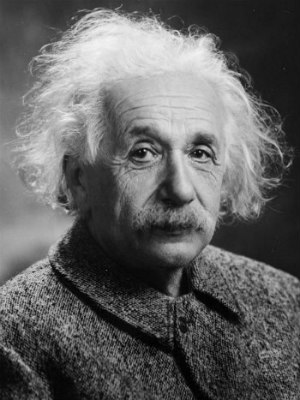


 Centro Estudios Judaicos del Sur de PR