RSS

Monthly Archives: January 2018

The Universal Commotion about a Little Jewish Boy Called Jesus: A Warning to Our Rabbis

Lonely, but not Alone

Print Friendly, PDF & Email

Last week our gentile brothers and sisters celebrated the birth of one little Jewish child who turned the world on its head as no child has ever done before, or since. Millions went to church and thanked the good Lord for his birth. If that wasn’t enough, last Sunday, the 1st of January, the world continued to celebrate him—this time, on the day commemorating his circumcision, which according to Jewish law must take place eight days after the birth. This, too, will generate major festivities around the world. It seems that his circumcision is so important to the gentiles that they decided long ago to change their calendar and begin their new year on that very day.[1] What is most remarkable is that all the countries, as well as some misguided Jews in Israel, who are now busy promoting the banning of circumcision, have joined these worldwide celebrations and will continue to do so, instead of demonstrating against the “barbaric act” of the most famous circumcision in all of history. It could not be more ironic!

No child has ever been given so much attention and inspired so many people. Yet, what nobody seems to realize is that this was a child who went to synagogue daily, ate kosher, went to cheider, spoke Hebrew, shook the lulav on Sukkot, and probably had payot (sidelocks) behind his ears.

The astonishing fact that one Jewish child is at the center of a universally celebrated holiday, in which billions of human beings participate, should make us wonder what this is all about. That he is considered the Messiah in the eyes of millions but utterly rejected as an apostate by his own people makes us wonder even more. What went wrong?

Maimonides informs us that there must be more than a little religious meaning in all this. In his Mishneh Torah,[2] he states that God caused Jesus to have such a great influence on the world so that all of mankind would become accustomed to the concept of the real mashiach’s impending arrival. The great Rabbi Avraham Yitzchak Kook (1865-1935), Chief Rabbi of Palestine before the State of Israel was established, even went so far as to call Jesus a man of “awesome personal power and spiritual flow” that was misdirected and led to his confusion and apostasy.[3]

The Talmud’s account of how Jesus became an apostate is most revealing. The passage was once censored by the Church but is now printed in nearly all the new editions.[4]

Our rabbis teach us: One should always push away with his left hand while drawing close with his right hand…unlike Rabbi Yehoshua ben Perachiah who pushed Jesus away with both hands…When King Yannai killed our Sages, Rabbi Yeshoshua ben Perachiah and his students [including Jesus] fled to Alexandria, Egypt. When peace returned, Rabbi Shimon ben Shetach sent a message to him: “From me in [Yerushalayim] the city of holiness, to you, Alexandria, my sister: My husband stays in your midst, and I sit forsaken.” He [Rabbi Yehoshua ben Perachiah] arose [to return to Yerushalayim] and went, and found himself in a certain inn, where great honor was given to him. He said: “How beautiful is this achsania [inn].” Thereupon Jesus said to him, “Rabbi, her eyes are narrow.” [The word “achsania” can mean inn or innkeeper; Jesus seems to have thought that Rabbi Yehoshua was speaking about the female innkeeper.] So, Rabbi Yehoshua said to him: “Villain, do you behave yourself like that [looking at women]?” He sent out four hundred trumpets and excommunicated him. He [Jesus] came before him and said to him: “Receive me [let me repent and accept me].” But he would not acknowledge him.

One day when he [Rabbi Yehoshua] was reciting the Shema [Hear, O Israel], he [Jesus] came before him. He, Rabbi Yehoshua, intended to receive him [and forgive him], and he gestured to him. He [Jesus] thought that he rejected him again [thinking that the gesture was dismissive]. He went and hung up a tile and worshipped it. He [Rabbi Yehoshua] said to him: “Return,” but he replied: “So I have understood from you that everyone who sins and causes the multitude to sin has no chance to repent”.[5]

There is much in this passage that is unclear (Probably parts of the original text are missing). Is it suggesting that had Rabbi Yehoshua ben Perachiah shown more tolerance toward Jesus, the latter may not have become an apostate and false mashiach, and that Christianity as we know it today would not have developed?[6]

Whatever the Sages may have had in mind, one cannot ignore the fact that they seem to be sending a strong warning to future generations. The tragedy of Jesus was not just his own fault, due to his stubbornness, but was also the result of mistakes made by great rabbis who were his teachers.

Unprecedentedly, the Talmud seems to suggest that one careless wave of the hand is enough to spark an outburst of animosity that may result in a new religion or movement. Had Rabbi Yehoshua ben Perachiah not rejected him, Jesus may have remained in the fold and even become a major spiritual force within Judaism, carrying it to higher spiritual levels, as Rabbi Kook seems to imply.

Ramban suggests something similar in his commentary on the incident where Sarah (then called Sarai) oppressed Hagar, which resulted in an ongoing Arab hatred of Jews.[7] The Talmud[8] agrees and mentions the cause of Amalek’s hatred of Jews as being an unnecessary rejection of his mother by the avot (the patriarchs).

In each of these cases, a minor mistake contributed to a major anti-Semitic ideology. Surely, many other issues are at work. Anti-Semitism is complex and may even be rooted in the fact that the Jews gave Jesus to the world, and not, as is claimed, that they killed him.[9]

The Talmud[10] relates the story of the Sage Elisha ben Avuyah, a most unusual and powerful figure who, after a certain incident, questioned Jewish tradition and stopped being religious. When Acher (“the other,” a name given by the Sages to Elisha ben Avuyah after he became a heretic) “heard a heavenly voice say, ‘Return, O wayward children’,[11] except for Acher,” implying that he could not repent, he completely renounced Judaism.

In his celebrated work Mekor Baruch, Rabbi Baruch HaLevi Epstein (1860-1941), best known for his Torah Temima commentary on the Torah, notes that a harsh approach to those who are on the verge of leaving the fold has caused much damage:

This phenomenon, to our sadness, seems to repeat itself in every generation. Whenever people quarrel over matters related to ideology and faith, and a person discovers that his more lenient opinion is in the minority, all too often—although his original view differed only slightly from the majority—the total rejection he experiences pushes him over the brink. Gradually, his views become more and more irrational and he becomes disgusted with his opponents, their Torah and their practices, forsaking them completely.[12]

Rabbi Epstein goes on to discuss the case of Uriel da Costa (1585-1640), a Dutch Sephardic Jew who denied the authenticity of Oral Law. The rabbi criticizes the Jewish religious leaders of Amsterdam who excommunicated Uriel da Costa:

Instead of instructing him with love and patience and extricating him from his maze of doubts by showing him his mistake, they disparaged him. They pursued him with sanctions and excommunication, cursing him until he was eventually driven away completely from his people and his faith and committed suicide, ending his life in a most degrading way.

Rabbi Epstein does not mention the ban put on the well-known Jewish Dutch philosopher, Baruch Spinoza, who became the fiercest critic of Judaism,[13] but he surely had him in mind. While Uriel da Costa did no real harm to Judaism, Spinoza became the father of a major philosophical school of thought that greatly damaged the image of Judaism and later encouraged anti-Jewish outbursts, similar to the case of Jesus and his followers thousands of years earlier.[14] It is clear that some of Spinoza’s critique was totally unfounded and showed great ignorance of Judaism, and that it was caused by his animosity toward his former community and teachers after they imposed the ban on him.

We wonder what would have happened if religious leaders such as Rabbi Yehoshua ben Perachiah and the leaders of the Amsterdam Portuguese-Spanish Community had shown more patience and tolerance. Perhaps Spinoza would not have created so much animosity toward Judaism. Perhaps he would have initiated a spiritual foundation to Judaism without a personal God but with respect for the Jewish tradition, as did Mordechai Kaplan (1881-1983), founder of Reconstructionist Judaism. Similarly, Jesus might have remained in the fold and not become the cause of so much Christian anti-Semitism in later days. Who would have imagined that one wave of the hand, almost 2,000 years ago, could cause such upheaval to this day?

Rabbis and other religious leaders of today may have to give much more attention to this candid Talmudic story and to Rabbi Epstein’s warning. How much might Judaism have benefited from people like Jesus, Elisha Ben Avuyah and Spinoza, had they not been rejected and had they contributed to the tradition in which they were raised?

As I argued at the Amsterdam symposium on Spinoza’s ban, in 2015, it would be better for the Rabbinate of the Portuguese-Spanish Synagogue in Amsterdam to revoke the ban on Spinoza. Few things have done as much damage to the image of Judaism as this unfortunate ban, which placed it in the same category as other conformist and constrained religions while, in truth, authentic Judaism is an entirely different story.[15]


Rabbi Cardozo’s new book, Jewish Law as Rebellion: A Plea For Religious Authenticity andHalachic Courage, Urim Publications, Jerusalem/ New York, December 2017, is now available at Pomeranz Bookseller in Jerusalem and will soon be available at other Judaica bookshops in and outside of Israel.


Notes:

[1] The Common Era calendar was instituted by Dionysius Exiguus in the year 525. However, he claimed that the first of January was the day of Jesus’ incarnation. (See Wikipedia on Common Era: Origins)

[2] Hilchot Melachim 11:4.

[3]Orot: Orot HaTechiya, and his letter of June 29, 1913, to the famous scholar Ridbaz, Rabbi Yaakov David Wilovsky.

[4] R.N.N. Rabinowitz, Ma’amar al Hadpasat ha-Talmud (Jerusalem: Mosad HaRav Kook, 1952) p. 28, n. 26.

[5]Sanhedrin 107b.

[6] There are scholars who dispute that Jesus in the Talmud and Jesus in the New Testament are one and the same, since they seem to have lived in different periods. See, for example, Rabbi Yechiel of Paris: Sefer ha-Vikuach, edited by Reuven Margoliot, 1920, 16f).

[7]Bereishit 16:6.

[8]Sanhedrin 99b.

[9] See my Thoughts to Ponder 341– “Unmasking Anti-Semitism.”

[10]Chagigah 15a.

[11]Yirmiyahu 3:14, 22.

[12]Mekor Baruch, chap. 13:5.

[13] For a full treatment of this topic in relation to Spinoza, see Steven Nadler, Spinoza: A Life (Cambridge: Cambridge University Press, 1999) chapter 6.

[14] See: Emil L. Fackenheim, To Mend the World (New York: Schocken Books, 1982) chap. 2.

[15] See my Thoughts to Ponder 471for elaboration: https://www.cardozoacademy.org/thoughts-to-ponder/spinoza-it-is-time-to-lift-the-ban/

As taken from, https://www.cardozoacademy.org/thoughts-to-ponder/universal-commotion-little-jewish-boy-called-jesus-warning-rabbis/#_edn4



Leave a comment

Posted by on January 8, 2018 in Uncategorized


51st Anniversary of First Scientific Attempt at Resurrecting the Dead

“Oh, let Your dead revive! Let corpses arise! Awake and shout for joy, You who dwell in the dust!— For Your dew is like the dew on fresh growth; You make the land of the shades come to life.” Isaiah 26:19 (The Israel Bible™)

On Friday, Dr. James Bedford will be celebrating an anniversary no other person has ever achieved in all of human history: the 51st anniversary of being frozen in what amounts to a scientific attempt at resurrecting the dead. While Dr. Bedford waits patiently on ice, scientists search for a method of reviving him and theologians discuss where his soul is.

Dr. Bedford was cryopreserved on January 12, 1967, after being declared legally dead. His remains are being preserved at the Alcor Life Extension Foundation. Dr. Bedford was science’s first attempt at cryonics, the low-temperature preservation of people who cannot be sustained by contemporary medicine. To date, Alcor has more than 1,618 members, including 354 associate members, with 149 in cryopreservation as whole bodies or brains.

Since the process of thawing the body has yet to be developed and the cure for clinical death does not currently exist, cryonics is performed with the hope that resuscitation and restoration to full health may be possible sometime in the future. Implicit in this process is the belief that will only consider a person properly preserved if they can be revived with all of their memories intact with the understanding that long-term memory is stored in cell structures and molecules within the brain.

Rabbi Doniel Katz, a Torah educator who lectures on consciousness, is skeptical of the attempts at cryonics and the reasoning behind it.

“So far, science has succeeded in freezing a person but has not succeeded in reviving a person,” Rabbi Katz told Breaking Israel News. “ Maybe the body could be revived, but to be tchiyat hametim (resurrection of the dead), their consciousness would need to be fully restored.”

Rabbi Katz emphasized that even though materialist philosophy dictates that consciousness and the ‘self’ are contained solely in the brain, there is no scientific proof of this theory.

“Science is still debating about the nature of consciousness,” Rabbi Katz said. “They believe that consciousness is in the brain, the information and data floating around inside your skull. That is not consciousness, and even scientists have not been able to pinpoint where this elusive concept of self actually exists, or even how it relates to the brain.”

The question of the nature of consciousness and how it relates to what happens after death is at the very core of religion, so the rabbi has a ready answer.

“In Kabbalah, your brain is the interface between the soul and the body,” Rabbi Katz explained. “Self and awareness are outside of the body and the brain brings awareness into the body. It may one day be possible to transfer your memory, all the data from your brain, into a computer, but this is not possible for the neshama (soul). The neshama is what guides the brain.”

“From a Torah perspective, it will never be possible to transfer the ‘self’, the free will, into a computer,” Rabbi Katz said. “The only way that will ever happen is through a true resurrection of the dead.”

Rabbi Moshe Avraham Halperin of the Machon Mada’i Technology Al Pi Halacha (the Institute for Science and Technology According to Jewish Law) sees cryogenics as a misguided attempt to preempt the resurrection of the dead and, as such, it is problematic spiritually and ethically.

“Even if they overcome the technical difficulties, it will in no way be similar to the resurrection of the dead,” Rabbi Halperin told Breaking Israel News. “Man is defined by his purpose in the world, by his reason to exist, which is to do mitzvot (Torah commandments) and to serve God. The resurrection of the dead is an extension of this aspect of life, allowing people to continue to serve God for yet another period. The goal of simply restarting the thought process ignores the basis of what man is.”

In addition to the theological shortcomings, the process goes against moral codes established in Jewish law.

“Jewish law is extremely careful in how we treat the body after death, Rabbi Halperin said, citing sources in the Bible.

By the sweat of your brow Shall you get bread to eat, Until you return to the ground— For from it you were taken. For dust you are, And to dust you shall return.” Genesis 3:19

You must not let his corpse remain on the stake overnight, but must bury him the same day. Deuteronomy 21:23

There are stringent laws pertaining to the handling of dead bodies in Judaism. One reason is that a dead body is the most powerful source of ritual impurity. Even though the soul is no longer connected to the body, the body is still an important aspect of the person.

“A man is composed not just of his thoughts,” Rabbi Halperin said. “What we call a soul is contained within the entirety of the mind and the body, the thoughts and the emotions. It is for this reason that the resurrection of the dead includes the body and is not just a mental or spiritual process.”

Read more at https://www.breakingisraelnews.com/100635/51st-anniversary-first-scientific-attempt-freezing-resurrecting-dead/#y4oKcE0ifyTslSxY.99

 
Leave a comment

Posted by on January 8, 2018 in Uncategorized


Vida entre líneas de los judíos medievales

Un proyecto del CSIC rastrea en documentos administrativos el quehacer cotidiano de las comunidades hebreas en la península entre los siglos XIII y XV

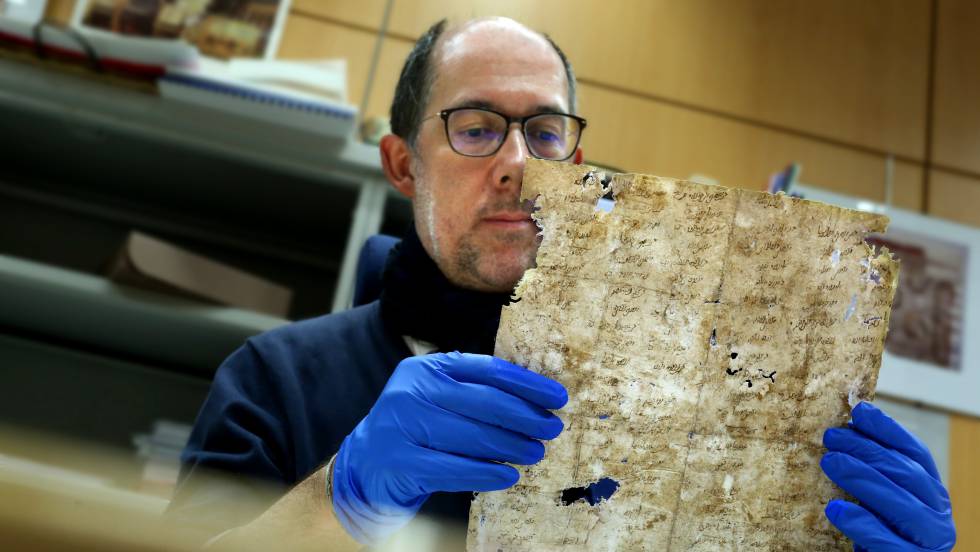
Javier Castaño, en su despacho del CSIC. Foto y vídeo: JAIME VILLANUEVA

La historia de los judíos medievales en la Península Ibérica es un puzle incompleto construido desde hace siglos principalmente a partir de fuentes documentales elaboradas por cristianos, las más accesibles para los investigadores. Las piezas que más escasean son las que nos hablan, desde dentro de las comunidades de judíos, de su día a día, sus mentalidades o sus valores. Un proyecto del Consejo Superior de Investigaciones Científicas (CSIC) las rastrea en contratos matrimoniales, escritos de últimas voluntades, misivas, nóminas fiscales, actas de procesos judiciales o inventarios de propiedades porque, sorprendentemente, los documentos más sobrios y administrativos esconden en ocasiones retazos de vidas. El equipo los busca y analiza, en ocasiones tras encargarse de su restauración. “Se trata de crear de manera virtual un archivo documental de los judíos medievales, reuniendo textos y fragmentos que están repartidos por multitud de colecciones”, explica su responsable, Javier Castaño.

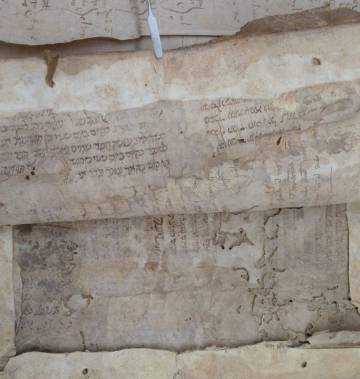
Libro de cuentas manuscrito del siglo XV en cuya cubierta hay capas de papel con escritura hebrea y latina.
Libro de cuentas manuscrito del siglo XV en cuya
cubierta hay capas de papel con escritura hebrea y latina. J. C.

Aquí no hay grandes hallazgos que detallen en varias páginas la vida y cultura de los judíos peninsulares entre los siglos XIII y XV. Son más bien pistas que brotan de inventariar y escudriñar centenares de manuscritos, o incluso fragmentos en pésimo estado de conservación, escritos por lo general en lengua hebrea o en aljamía o solitreo (textos romances en caracteres hebreos). “A partir de un papel puedes ver datos que iluminan historias familiares o perfiles biográficos. Se pueden ver como anécdotas o como indicios de una historia más grande. Es otra manera de hacer historia. A veces, por un pequeño resquicio puedes ver un panorama muy amplio. No soy el primero ni el único que hace esto, pero el proyecto tiene una ambición de globalidad”, apunta en su despacho Castaño, científico titular en el CSIC de historia de los judíos.

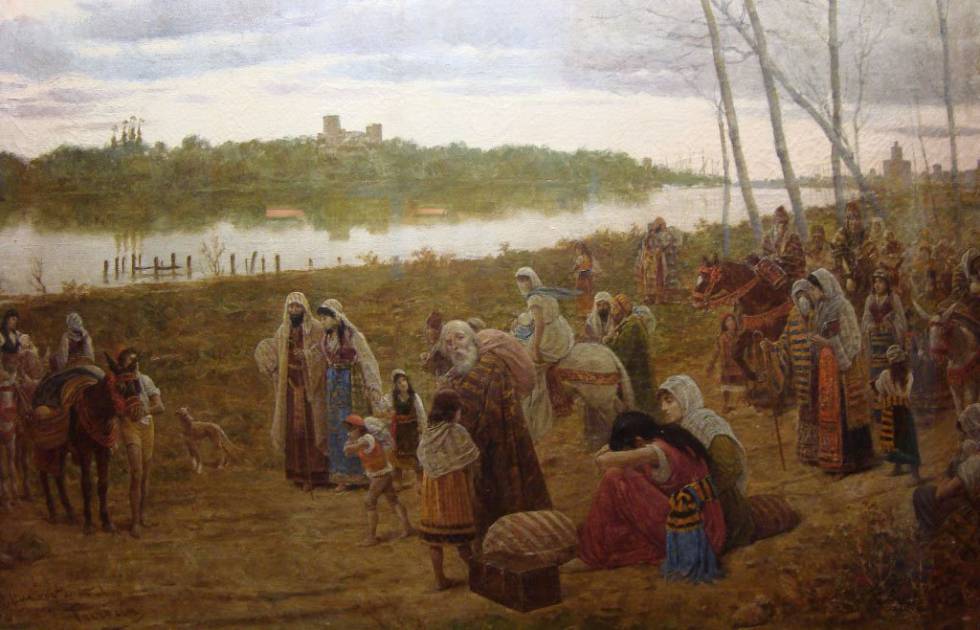
La labor del proyecto Guinzé Sefarad (‘los archivos de Sefarad’, en hebreo), en el que trabajan cinco investigadores y varios colaboradores externos, tiene un punto detectivesco. Si bien la existencia de buena parte de estos documentos se conocía previamente, otros han ido apareciendo en visitas a archivos o bibliotecas. Bastantes de ellos reutilizados para encuadernar, víctimas del empuje de la imprenta y de la dispersión geográfica tras las expulsiones de la Península a finales del siglo XV.

'La expulsión de los judíos de Sevilla', de Joaquín Turina.
‘La expulsión de los judíos de Sevilla’, de Joaquín Turina.

¿Qué se puede extraer de un manuscrito administrativo? Mucho, en el caso de un registro contable que desglosa los pagos efectuados entre 1406 y 1407 por la aljama (como se denominaba entonces a la comunidad judía) de Tarazona, en el Reino de Aragón. Como que “cient e cinco sueldos e siet dineros” (sic) fueron a los guardas contratados para evitar que la judería fuese apedreada en Viernes Santo por cristianos. La importancia que otorgaban a la protección se ve también en las partidas para reparar los cimientos del muro que rodea el barrio judío, el arreglo de unas piedras para reforzar las puertas de acceso ante posibles asaltos o los regalos que entregaban por Navidad a prohombres y autoridades concejiles y reales. También aparece el coste de -tal y como figura- “la protección del senyor rey, Dios le bendiga”. Los judíos tenían una relación de dependencia directa del monarca, que les amparaba, por lo que solían vivir en recintos bajo protección real.

Hay gastos que nos hablan de la pervivencia de las tradiciones, como la compra a escote de las “cuatro especies” para la Fiesta de “Cabanillas”, es decir, de las cuatro plantas que los judíos siguen usando hoy para celebrar Sucot. O de las tensiones internas, como los asientos derivados de la condena a muerte y ejecución de un malsín, una de las pocas palabras de origen hebreo que ha entrado al castellano, como “cizañero” o “soplón”. Era un judío que causaba daño a otro al denunciarle ante autoridades no judías. “A finales del siglo XIV era uno de los delitos más graves y en Aragón había un tribunal especial para juzgar la malsindad. En realidad, bajo el paraguas de la acusación, se escondía el faccionalismo que aquejaba a esas comunidades en la época”, señala.

Otros documentos ejemplifican cómo las religiones en la España medieval no eran impermeables. Por ejemplo, escritos de judíos preocupados por la salvación del alma, un concepto bastante ajeno a su fe pero muy presente en el cristianismo. “Ahí se ven los traspases de conceptos de una cultura a otra”, precisa Castaño.

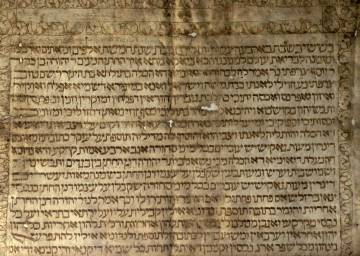
Cuerpo principal del contrato matrimonial de 1487 de una pareja judía de Jaca, oculto hasta fechas recientes en las cubiertas de un protocolo notarial del siglo XVI.
Cuerpo principal del contrato matrimonial de 1487
de una pareja judía de Jaca, oculto hasta fechas recientes
en las cubiertas de un protocolo notarial del siglo XVI. J. C.

En el proyecto, iniciado en 2009, se ha analizado asimismo una copia de las últimas voluntades de un judío que muere en Tafalla en 1462 y que fue presentada en 1537 para reclamar la herencia familiar. Entre esas dos fechas se produjo la conversión forzosa de los judíos: el Reino de Navarra les obligó a abrazar el cristianismo cuando ya estaban rodeados de territorios que les impedían el acceso. Al juicio acudieron los descendientes, ya como cristianos nuevos, con unas últimas voluntades en hebreo encabezadas por la abreviatura “con la ayuda del cielo” en el lugar que suele ocupar una cruz en los documentos cristianos. “Estoy convencido de que el tribunal ya no lo pudo leer porque no contaba con nadie que lo entendiese”, apunta el investigador. El documento, hallado en un legajo de un proceso judicial, es parte del rastro histórico dejado por cinco generaciones de una familia que habitaron la misma casa. Algo poco común y una muestra de que “la movilidad de los judíos es cierta, pero en algunos casos la sedentarización era mayor de lo que se creía”, agrega.

“Este tipo de detalles es difícil encontrarlos en fuentes cristianas. Un muro, a veces mental y a veces físico, les impedía ver lo que estaba pasando dentro”, asegura. Castaño insiste en que el proyecto no busca reivindicar voces apagadas por el paso de los siglos (“no es memoria, es historia”, matiza) ni lanzar una guerra de narrativas, porque los relatos cristianos y judíos se complementan. “Lo que pasa es que esa historia se ha hecho hasta ahora fundamentalmente a partir de fuentes externas. Es apoyarse en otra de las patas para hacerla. Tener -concluye- otros datos que nos dan una imagen de la vida interna judía mucho más rica”.

La sorpresa de las mujeres fuertes

A. P.

Uno de los integrantes del proyecto, la doctoranda Marina Girona, se llevó una sorpresa al indagar en los litigios por dotes y herencias iniciados por mujeres de origen judío entre 1475 y 1510. “Me encontré con unos diez casos de mujeres que se presentaron solas ante el tribunal, sin procurador ni compañía de un familiar, que era lo habitual. Allí no dudan en dar su parecer o responder a las alegaciones de la otra parte”, explica.

Uno de los documentos analizados por Girona refleja cómo una menor (entonces por debajo de los 25 años) se desplazó desde Zamora a Valladolid para denunciar ante la Audiencia Real, el máximo órgano judicial del Reino de Castilla, que había sufrido una violación y pedir justicia. El tribunal obligó al hombre a pagar una dote a la joven para compensar que le costaría más encontrar marido porque ya no era virgen.

Según tomado de, https://elpais.com/cultura/2017/12/27/actualidad/1514390598_421697.html

 
Leave a comment

Posted by on January 8, 2018 in Uncategorized


La expulsión de España fue para los judíos el fin de un drama, dicen profesores en la Menéndez Pelayo

Image result for judios en españa

Tres grupos sociales vivían en perpetuo pecado mortal. Los verdugos, por matar al prójimo; las prostitutas, por fornicar con él, y los judíos, por rechazar testarudamente la divinidad verdadera. El día especial de las prostitutas en la casa de baños coincidía con el de los judíos y sus mujeres. Encerrados en guetos, acosados cada vez más por el fundamentalismo cristiano, la expulsión de 1492 fue para los sefardíes un drama, pero también el fin de una pesadilla, la liberación tras el trauma, según las conclusiones de los participantes en el curso sobre Sefarad, que en la Universidad Internacional Menéndez Pelayo de Santander dirige el catedrático de Hebreo Ángel Sáenz-Badillos.

El fin del mal sueño en el que vivían los judíos en la España del siglo XV, entre campañas como la de San Vicente Ferrer o el Papa Luna, fue posterior. La expulsión de los judíos se sintió como una tragedia entre los que la vivieron, “pues toda emigración, salvo las de los que voluntariamente se lanzan a la búsqueda de otra realidad, es siempre coactiva”, según Eloy Benito Ruano, secretario perpetuo de la Real Academia de la Historia.Entre 60.000 y 80.000 fue la cifra dada ayer por el filólogo semítico José Ramón Magdalena, de los judíos que salieron de la península ibérica, “entre ellos personajes de una gran preparación y destreza manual, que dejaron desprovistas a las villas y ciudades donde trabajaban de un selecto cuerpo de funcionarios, mercaderes o artesanos que tenían un fuerte impacto en la vida comunitaria

José Ramón Magdalena pintó un siniestro panorama de la presión ejercida sobre los judíos en la zona oriental de la península, con disposiciones concretas como que el judío que tocara una fruta en el mercado debía comprarla obligatoriamente -réplica a la escrupulosidad hebrea con los alimentos- o el amontonamiento en barrios cuya expansión estaba prohibida, pese a que los judíos pagasen a los Reyes en su condición de pueblo de inquilinos en otros estados soberanos.

Los conversos

La pérdida para España tras la expulsión, también fue considerable en las ciencias, en la medicina y en la literatura, dice Sáenz-Badillos. “Lo que se dice ganar, se ganó poco, salvo lo que aportaron los conversos”. Añade que la sociedad cristiana no fue nunca receptiva ni transigente, y aquella expulsión sigue estando de actualidad porque refleja “la típica postura mayoritaria contra las minorías, que seguimos viendo, incluida España, con cualquier minoría molesta que quiera preservar su identidad”.

A pesar de las dificultades, el profesor estadounidense Norman Roth destacó que hubo muestras de convivencia real entre judíos y cristianos. Por ejemplo, hijos de judíos que trabajaban como aprendices en talleres cristianos; y obispos que hacían regalos a los judíos, o viceversa, en sus respectivas fiestas sagradas. Esa buena vecindad se frustró de pronto y el judío volvió a su lugar de siempre, entre los marginados, los que estorban, según la tesis del especialista en historia medieval israelí Eliezer Gutwirth.

Para Sáenz-Badillos, la verdadera razón del edicto de los Reyes Católicos es el triunfo de un fanatismo absurdo, del fundamentalismo de la sociedad hispana. Y cita otro edicto de esos monarcas, fechado en 1499, que le parece más impresionante que el de la expulsión en 1492. El documento da cuenta de que algunos de los exiliados se están atreviendo a volver a España, por lo que se cursa la orden de que sean ejecutados.

En el campo de la literatura, la época andalusí había sido magnífica, con un adelanto notable al Renacimiento y con la existencia de poetas judíos geniales, según afirma Sáenz-Badillos. Todo esto se perdió de un plumazo, “pero los conversos se mantuvieron en la misma línea de hombres avanzados a su tiempo”. Y aunque pueda haber discusiones al respecto, Sáenz-Badillos cita a Santa Teresa, Cervantes y Fernando de Rojas como miembros de familias de judíos conversos.

Según tomado de, https://elpais.com/diario/1992/08/14/cultura/713743203_850215.html

 
Leave a comment

Posted by on January 8, 2018 in Uncategorized


We Jews: Latino Jews

We Jews: Latino Jews

Jewbans, Mexi-Jews. Jewminicans, Jewtinas or Kosher-Ricans.

by Marnie Winston-Macauley

Geography! In my day, it wasn’t one of the hipper courses. How many of us were fascinated by the difference between an isthmus vs. a peninsula? I apologize to Ira Kazinsky in seventh grade who was heavily into the Isthmus of Panama, and is now making breakthroughs in Panamanian tombs.

Which brings me to Latin America and in particular, Latino and Latina Jews.

This fascinating population has long been overlooked, misunderstood, and little-known. More, I’ve found that despite being an “America,” many of us in North America view South and Central America as being “down there – somewhere.”

There are approximately 500,000 Latin American Jews, but to avoid persecution they often kept a low profile. More, a minority within a minority, whether Jews are still in Latin America or have ventured North, many have experienced difficulty “fitting in” among non-Latino Jews and U.S. Jews.

Yet, whether they put guacamole on matzo on Passover or drink kosher tequila on Cinco de Mayo, they are ardent Jews. As Jewish Latinos get little attention from Jews or Latinos in the U.S. let’s look at some little-known, but fascinating facts about our Latino MOTS.

WHO ARE LATINO JEWS?

Jewbans, Mexi-Jews, Jewminicans or Kosher-Ricans. Who are they? Many Jewish Latinos distinguish themselves from “Hispanics” – a term used interchangeably in the United States. In the interest of clarity, if possible, let’s dig deeper.

The origin of the word “Hispanic” is from the Latin word for “Spain.”

The origin of “Latino” is from the Spanish word for Latin. In English, it may be a shortening of the Spanish word latinoamericano, which in English means “Latin American.”

Got it? Not yet? We start with …

The Difference between “Hispanic” and “Latino.”

“Hispanic” refers to the people and culture from countries formerly ruled by the Spanish Empire, for example, Mexico, most of Central, South America and the Greater Antilles. The U.S. government adopted the term during the Nixon administration and “Hispanic” became part of the census wording in 1980.

“Latino” refers specifically to those in the U.S. who are of Latin American nationality along with their offspring. Latin America includes countries in South America and North America (including Central America the islands of the Caribbean, French-speaking areas of Haiti, French Guiana, the French West Indies, and even French-speaking Canada) whose inhabitants mostly speak Romance or even Native American languages.

Some find it offensive to be called Hispanic or Latino preferring to be called by their country origin, such as Mexican, Colombian, Cuban, Salvadoran, Bolivian, etc. In a survey released by the Pew Hispanic Center, about half said they identified themselves most frequently by their family’s national origin. In the U.S., Jews who are both Latino and Jewish number about 200,000 forming a small but thriving community. This minority within a minority are generally proud of their dual identities, yet feel they are distinct group – among the larger Jewish and non-Jewish Latino U.S. population.

SEPHARDIC OR ASHKENAZI?

While most of us might assume Latino Jews are from a Sephardic background, many are cut from the same Yiddish-speaking Ashkenazi cloth as the majority of U.S. Jews who ran from Eastern Europe in the early 20th century, but settled in Latin American countries and cities, rather than land at Ellis Island. Outside of the U.S., hundreds of thousands of Ashkenazi Jews live in Brazil, Argentina and Mexico. The Sephardim from Latin America are also an influential group and include for example, Jews who left Turkey and other countries in the Levant following WW1.

FASCINATING DEMOGRAPHIC FACTS

In general, the few studies done have found that Latin American Jews are both highly educated and earn more than $100,000 yearly, which is higher by 70% than U.S. Jewish households.

The majority feel strongly connected to Israel and their families’ Latin American homelands, even if they weren’t born there. Latino Jews while relating to the general Latin American community via the Spanish language, close family relationships, a love of parties, and an entrepreneurial mindset, nevertheless feel differences in class, income and education between themselves and non-Jewish Latinos.

LOOKING FOR A SPACE OF THEIR OWN

“[Latino Jews] are looking for a space of their own to articulate their multiple identities,” said Dina Siegel Vann, who is originally from Mexico City and directs an institute for Latino affairs at the American Jewish Committee.

The AJC commissioned a study, which was conducted by Latino Decisions, a public opinion firm that looked at 10 focus groups of Latin American Jews in five cities with significant Latino-Latina Jewish populations: Chicago, Houston, Los Angeles, Miami, and New York.

According to the survey, Latino American Jews while relating to the U.S. Jewish community’s customs and culture, focus group participants, overall, felt that U.S. Jews were more formal in their religious and social practices, “making it difficult to relate at a personal level” as many doubted that most U.S. Jews even knew of their presence.

When the focus groups were given seven “identity” choices, their preferences in order were: Jewish, 95%; Latin-American country of origin, 69 %; Latin American, 51%; Latino/a, 44%; immigrant, 41% percent; Hispanic, 34%; and American, 31%.

While more than 80 percent are U.S. citizens, and others, permanent residents, less than 1 in 3 identifies as American. “In previous generations … it was a moment of pride to say you were American, but now that’s changed,” said Siegel Vann. The reasons include:

“In L.A. or Miami, which have large concentrations of Latino Jews, there’s less pressure to integrate into American life. More significant is that even though Latino Jews felt they had good reasons to leave Latin America, they often did so with regrets, in contrast to previous generations of immigrants to the U.S. Some Latino Jews still own property in Latin America, and almost all have family and friends there. As a result, most still identify with the Latin American country they came from (69 %) rather than as American (31 %).”

But the group is stepping into the spotlight. For example, NYU Livewire reports that Los Angeles-based Ariana Lopez started the first clothing line aimed at Latino Jews with her label Jewtina splashing that name on shirts in sparkly silver letters to encourage pride and a sense of community.

Then there’s Simon Guindi Cohen, a third generation Mexican Jew who moved to the U.S. 10 years ago. Cohen revived a group for young Latino Jews in New York primarily through Facebook. With over 1300 members the focus is on socializing monthly and fund-raising.

THE FUTURE: A WIDER PRESENCE WITHIN THE JEWISH COMMUNITY

Activist Latino Jews are still looking for ways to leverage their identities to build local and world bridges and integrate into mainstream Jewish life. A higher profile would be of benefit to all Jews, given their education, wealth and passion for Israel which would add a strong voice to Jewish organizations and efforts.

More, the influence of Latinos in the U.S. is increasing. Siegel Vann says: “[Although we] don’t generally inhabit the same spaces, we have to come together and become aware of the commonalities, the linguistic, cultural and historical ties the two communities have. Latino Jews could play an important role in being the link between Jews and Latinos, so what we’re trying to do is create more and more spaces for this interaction and cooperation to happen.”

Bienvenido!

As taken from, http://www.aish.com/j/f/We-Jews-Latino-Jews-E-JEWS-LATINO-JEWS.html


Leave a comment

Posted by on January 2, 2018 in Uncategorized