RSS

Monthly Archives: June 2018

¿De verdad quieren volver a los sacrificios de animales?

Pregunta: Por favor, explíqueme toda esta cuestión del sacrificio de animales en el Templo. ¿En serio el plan es retomar esto en algún momento?

Respuesta: Cain y Ébel hacían sacrificios de animales y vegetales. Nóaj hacía sacrificios de animales. Abraham, Itzjak y Iaacov —todas personas muy iluminadas— hacían sacrificios de animales. Y la Torá prescribe muchos sacrificios que han de hacerse en el Tabernáculo, en el desierto, y luego más adelante en el Sagrado Templo de Ierushalaim. ¿Y adivina qué? En nuestros rezos, durante los últimos 2000 años, le hemos pedido a Di-s que nos permita reconstruir ese Templo para que podamos volver a realizar esos sacrificios, tal como Él nos lo pidió. Así que tiene que haber algo profundo aquí, más de lo que está a simple vista.

P: ¡Pero nada de esto tiene sentido! Tzedaká, rezar, estudiar… puedo entender todas esas cosas. Pero ¿por qué Di-s querría que quemáramos animales en un altar?

R: Bueno, no pienses que eres el primero en tener dificultades con esto. El mismo tema desconcertó a los estudiantes del Rambam en el siglo XII. Desconcertó a los estudiantes de los sabios del Talmud. En el Zohar está escrito que el secreto de los sacrificios alcanza el secreto de lo infinito. Es una de esas cosas que si no te desconcierta, es porque no has entendido bien. Creo que tenemos que mirar esto desde una perspectiva muy diferente para encontrarle el sentido.

P: La verdad es que no parece más que un vestigio de los ritos paganos.

R: Está claro que hay algunas diferencias importantes entre el orden sacrificial de la Torá y los ritos paganos típicos del mundo antiguo que mencionas. Para empezar, las normas fueron dadas abiertamente para que todos las leyeran. De hecho, cada judío tiene la obligación de estudiar los detalles de los ritos del Templo. Incluso se pretende que los niños pequeños aprendan todo lo que deben hacer esos sacerdotes. Esto está muy lejos del culto al secreto que dio poder a la clase sacerdotal en otros pueblos.

Había otras diferencias importantes: el Templo se consideraba propiedad del pueblo, y los sacrificios comunales diarios lo reafirmaban. No había prostitutos ni prostitutas por los patios, no había orgías ni fiestas de borrachos, ni tampoco automutilaciones. Los sacerdotes usaban atuendos modestos y estandarizados, y eran elegidos por una corte del pueblo que estaba allí mismo, en el perímetro del complejo del Templo. La mayor parte de la carne se comía, y se desperdiciaba mucho menos de lo que desperdicia Safeway o Stop & Shop. Y a los animales se los sacrificaba de un modo compasivo. Era un salto sublime respecto de los estándares anteriores. En términos generales, debe haber sido un lugar muy extraño para la persona promedio de la Antigüedad.

P: Pero no para lo que son hoy nuestros estándares. Si el punto es quitar de las costumbres del pueblo el cultismo sacrificial, entonces sirvió en aquel momento. Pero ¿por qué deberíamos rezar para que esto vuelva? Sí, está bien tener un lugar centralizado para rezar y meditar, con la menorá, el incienso, las tablas de Moshé… ¿pero por qué la carnicería?

R: Lo principal de un sacrificio no era el acto físico de matar al animal. Debes entender que la labor del sacrificio era principalmente espiritual.

P: ¿En qué sentido?

R: Bueno, para empezar, cuando una persona hacía un sacrificio, su concentración era crucial. Si no tenía la mente enfocada en el significado y la intención indicados para el sacrificio, toda la cuestión se podía considerar inútil, o incluso peor.

P: ¿Qué tipo de significados?

R: Bueno, si el sacrificio pretendía expiar algún pecado involuntario, la persona tenía que sentir arrepentimiento por lo ocurrido. Pero iba más allá de eso: los sacerdotes se enfocaban en las esferas espirituales más elevadas, según las tradiciones esotéricas. Esto explica por qué hacían que los levitas cantaran y tocaran música. Después de todo, si era sólo una enorme barbacoa, ¿para qué se necesitaba la música inspiradora? Era más bien una experiencia espiritual profunda para todos los involucrados. Te ibas de allí realmente elevado.

P: Okey, puedo ver la calidad experiencial de la cuestión: un templo antiguo con música celestial y canciones místicas; sacerdotes con largas túnicas en una profunda meditación; un ritual coreografiado e hipnótico. Es una imagen que no me había hecho antes.

R: La mayor parte de la gente no se la hace.

P: Pero creo que podríamos conseguir ese nivel de sublimidad sin la sangre y las tripas.

R: Bueno, de hecho, hoy nuestras plegarias ocupan el lugar de los sacrificios. Así que el aspecto principal de los sacrificios nunca desapareció. Sólo los aspectos exteriores que la Torá también ordena; esos son los que están suspendidos por el momento.

P: Entonces, si podemos tener la experiencia espiritual sin cortar carne sobre el altar, ¿por qué volver a ello?

R: Necesitamos ir más profundo en el entendimiento de los motivos detrás de los sacrificios y del Templo.

P: Si tienes una explicación, estoy abierto.

R: Bueno, quizás nuestro problema es que lo vemos desde una perspectiva plana.

P: ¿Plana?

R: Quiero decir, es como si tratáramos de entender un proceso multidimensional desde una sola dimensión.

P: ¿?

R: Aquí tienes una analogía: digamos que nunca has escuchado que existen los teléfonos, y ves que alguien que camina por la calle tiene una conversación intensa. Pero su interlocutor parece no estar. De hecho, lo ves muy compenetrado en una discusión con… su muñeca.

P: ¿Porque lleva la mano pegada a la oreja?

R: Sí. Y asiente con la cabeza mientras sacude el otro brazo. Luego grita. Luego se calla. Luego se ríe, y de repente se calla de nuevo…

P: Parece totalmente loco.

R: Pero la gente lo hace todo el tiempo.

P: Okey, pero tiene sentido porque sabemos que hay alguien del otro lado.

R: ¿Del otro lado de qué?

P: Del teléfono.

R: Eso parece incluso más absurdo. ¿Dónde está exactamente ese alguien?

P: Ya sabe a qué me refiero. Hay una red de teléfonos celulares. Hay señales que viajan por el aire.

R: ¿Dónde?

P: No podemos verlas, pero conectan a personas que están a grandes distancias. Lo que hace que ese hombre se vea ridículo es que ignoramos la existencia de esas señales y de esa red, y de toda esa sofisticada tecnología que hay detrás.

R: Exacto. Y ese es el mismo problema que tenemos con los sacrificios. Debemos darnos cuenta de que hay otra dimensión aquí que no podemos ver. Desde esa dimensión, todo cobra sentido.

P: ¿Y cuál es esa dimensión?

R: Bueno, hay planos de la realidad más elevados que el nuestro. Territorios espirituales. Y más allá. Hay toda una cadena de mundos que funcionan en el plano de la luz infinita hasta que llegan aquí abajo, a nosotros y a nuestro pequeño cosmos físico.

P: Cosas de la Cabalá.

R: También está en el Talmud: hay muchos detalles en el tratado Jaguigá sobre los siete cielos, etc.

P: Entonces, sobre los sacrificios…

R: Rabí Isaac Luria, el Arizal, explica que los sacrificios eran una manera de elevar la materia y la vitalidad de este mundo a un plano superior.

P: Sabe, leí una historia sobre unos tzadikim que meditaban y llevaban la conciencia a planos más elevados.

R: En realidad, cada vez que alguien medita y se concentra cuando reza está haciendo eso, en un grado menor.

P: Entonces volvemos al principio: ¿para qué la barbacoa?

R: Porque eso eleva sólo el alma humana. El alma humana tiene muchas capas. La divina. La racional. La animal, que está dentro. Los sacrificios en el Templo elevaban esas capas, además del animal real. Tocaban no sólo el espíritu, sino también el cuerpo.

P: ¿Entonces el animal se volvía sagrado?

R: Sí, con un efecto general en todos los animales del mundo; más la harina y el vino que se usaban con él, que implicaban el mundo vegetal; más la sal y el agua, que incluían el reino de lo inanimado…

P: A ver si entiendo: ¿lo que dice es que lo que las plegarias logran en un nivel espiritual, los sacrificios lo lograban en el mundo físico? ¿Dice que el Templo era una especie de transformador, que pasaba lo físico al terreno espiritual?

R: Lo estás entendiendo. Es por eso que el espacio del Templo era tan importante. Sabes que se repite en la tradición que el lugar donde estaba el altar del Templo es el lugar del que fue formado Adán. Cain y Ébel hicieron allí sus sacrificios. Nóaj hizo allí sus sacrificios luego del diluvio. El sacrificio de Itzjak tuvo lugar allí…

P: ¿Y por qué todos tenían que usar ese lugar? ¿Qué tiene de especial?

R: Es el lugar donde Iaacov tuvo el sueño sobre la escalera y los ángeles que subían y bajaban. Dijo: “¡Estas son las puertas del cielo!”.

P: Mm… Algo así como lo que en la jerga de la web se llama “portal”.

R: Claro. O un transformador. La interfaz entre lo físico y lo espiritual. A eso se referían los sabios cuando decían que cuando Di-s comenzó a crear el mundo, el lugar por el que empezó fue el Monte del Templo. Pero, me dirás tú, no había ningún espacio cuando Di-s comenzó a crear el mundo. Pero lo que quieren decir es que ese es el primer nexo entre los mundos más elevados y este mundo. Es allí donde el “arriba” termina y el “abajo” comienza. Del Cielo a la Tierra. Entonces, es allí donde se sitúa la línea de transmisión entre ambos. El portal.

P: ¿Qué pasa cuando toda esa carne y ese vino llegan allá arriba?

R: Por supuesto, ya no es más un jugoso trozo de carne cuando entra en dominio espiritual. Pero somos seres físicos, por lo que no podemos imaginar cómo luce un trozo de carne espiritual de verdad. Pero hay seres conscientes que no tienen cuerpo físico, y están del otro lado recibiendo todo esto.

P: ¿Ángeles, quiere decir?

R: Así se llaman en español.

P: Me cuesta entender la cuestión de los ángeles. Sé que hay muchas referencias a ellos en la Biblia y en la bibliografía rabínica…

R: El Ramban (Najmánides) dicen que nuestras almas están más relacionadas con los ángeles que con los animales. Después de todo, los seres humanos viven principalmente en un mundo de ideas y abstracciones más que en el mundo visceral y tangible.

P: Depende de a quién se refiera, rabino.

R: En cualquier caso, no hay razón para no creer que haya un estado de consciencia no asociado con un cuerpo físico. Y si le preguntáramos a uno de esos seres conscientes si los sacrificios del Templo tienen sentido para él/ella/ello, probablemente exclamaría que es una de las pocas cosas que hacemos los humanos que tienen algún sentido. Y apuesto que están muy molestos porque no lo hayamos hecho durante tanto tiempo.

P: ¿Qué obtienen de eso?

R: Según la Cabalá, recuperan energías.

P: ¿Te refieres a algo así como energía que rebota? ¿Para qué necesitan eso? ¿No tienen suficiente con la que baja hasta aquí?

R: Porque la energía que reciben es sólo energía directa, que se filtra luego en muchos pasos. A nosotros nos llega la energía creativa final, más condensada, para sostener nuestra existencia en este mundo. Pero como somos la última parada, también tenemos la esencia de esa energía. Eso es algo que sólo pueden conseguir cuando nosotros elevamos materia de nuestro mundo hacia el suyo.

P: ¿Me está diciendo que esos ángeles obtienen algo importante de nuestros sacrificios?

R: Obtienen algo importante de todo lo que nosotros hacemos. Toda mitzvá que hagamos eleva algún aspecto del mundo material; quizás no con la magnitud de los sacrificios, pero lo eleva. Sin embargo, los sacrificios nos dan un paradigma para entender de qué se tratan todas las mitzvot.

P: ¿Entonces estas conciencias sin cuerpo también están involucradas?

R: Sin ellas, no se haría ni una sola mitzvá. El Talmud dice que cuando una persona hace una mitzvá es sólo luego de que Di-s haya enviado a sus ángeles a que preparen todo para ello. Y además ellos completan el trabajo. A menudo, nuestra parte no es más que tomar la decisión consciente de que queremos hacer la mitzvá en cuestión.

P: Así que, en realidad, todas nuevas mitzvot suceden dentro de este contexto más grande, multidimensional.

R: Y por eso tantas de ellas son tan difíciles de entender. Es como tratar de escuchar sólo la parte de un instrumento en el marco de una sinfonía completa. Así es cada una de nuestras mitzvot, porque nosotros sólo vemos el plano material.

Según tomado de, https://es.chabad.org/library/article_cdo/aid/4057100/jewish/De-verdad-quieren-volver-a-los-sacrificios-de-animales.htm


Leave a comment

Posted by on June 18, 2018 in Uncategorized


¿Es verdad que la cabalá está prohibida antes de los 40 años?

¿La cabalá es para todo el mundo?

Pregunta:

Anoche tuve una discusión con un amigo sobre unas clases que tomo. Él decía que uno no debería estudiar la cabalá hasta los 40 años. ¿Es verdad? Y de ser así, ¿cómo puede ser que tantos rabinos y organizaciones educativas judías, incluido su propio sitio web, no parezcan preocuparse por ello?

Respuesta:

Entendamos primero a qué aludía tu amigo.

Luego de dedicar cuatro capítulos a los conceptos místicos del Creador y su creación (“Masé Merkavá” y “Masé Bereshit”), el Rambam concluye: “Sostengo que no es apropiado que una persona pasee por el Pardes (literalmente: ‘huerto’, en referencia a las enseñanzas esotéricas) hasta no haber llenado su estómago de pan y de carne. Con ‘pan y carne’ me refiero al conocimiento de lo que está permitido y lo que está prohibido, y cuestiones similares con respecto a otras mitzvot”.1 En otras palabras, uno no debería aprender los secretos místicos de la Torá hasta no haber dominado el nivel revelado de la Torá.

Del mismo modo, rabí Shabetai ha-Kohen (conocido por su acrónimo, el “Shaj”), un comentarista del Código de la Ley judía del siglo XVII, escribe: “Hay quienes dicen que uno debería esperar hasta tener 40 antes de aprender cabalá, porque en la Mishná dice: ‘cuarenta es la edad de la sabiduría’”.2

Esta es la base de la idea de limitar el estudio de la cabalá a los estudiosos mayores, consumados.

Sin embargo, si leemos con atención las palabras del Rambam dentro de su contexto, notaremos que: (a) él nunca dijo que uno no debiera aprender misticismo alguno (sino que escribe que uno debería hacerlo de la manera adecuada); y (b) las enseñanzas esotéricas sobre las que nos alerta no son necesariamente la cabalá clásica.

También habría que destacar que gran parte de la “cabalá” que se enseña hoy es una forma sintetizada que no tiene los mismos problemas que la cabalá pura.

Permíteme desarrollarlo.

El Rambam y pasear por el Pardes

La cita del Rambam antes mencionada está al final de los cuatro capítulos de su “Leyes de los fundamentos de la Torá”, que es la primera sección de su exposición sobre la Ley judía, el Mishné Torá.

Para abrir estas leyes, afirma: “El fundamento de todos los fundamentos y el pilar de la sabiduría es saber que hay un Ser Primario que dio vida a toda la existencia”. Luego pasa a destacar que es obligatorio “amar y temer a este glorioso y asombroso Di-s”3 , contemplar la grandeza de Di-s y sus asombrosas creaciones.

El sólo cuatro capítulos más adelante, luego de explayarse sobre una diversidad de conceptos místicos, cuando el Rambam dice para concluir que uno no debería “pasear por el Pardes” a menos que ya haya dominado la Torá revelada.

Esto, por supuesto, da lugar a una pregunta: ¿Cómo pudo el Rambam comenzar a escribir una obra que según él es para todo el mundo con información que es sólo para quienes ya han alcanzado cierto nivel? ¡La pregunta se complejiza cuando consideramos que el Rambam afirma que este conocimiento es necesario para cumplir con las mitzvot para conocer, amar y temer a Di-s!

Entonces es seguro decir que estudiar estos cuatro primeros capítulos no constituye “pasear por el Pardes”, sino meramente “echar un vistazo”. ¿Cuál es la diferencia? Quien “pasea” por los “huertos” de la Torá aprende sus secretos en gran profundidad y disfruta de sus misterios, pero tiene que tomar precauciones antes de aventurarse. Por su parte, quien sólo “echa un vistazo” al huerto sólo capta lo más básico de estos asuntos ocultos, cosa que el Rambam no sólo permite, sino que también exige.4 Por supuesto, comienza su codificación de la Ley judía con una introducción mística: ¡el sorbo de “vino” debería preceder al “pan y la carne”!

Escucha a los expertos en su área

Hay una regla general de que así como cuando tienes una duda médica le preguntas al profesional experto en el área correspondiente, también cuando se trata de la halajá hay que seguir a los expertos. Podemos ver un ejemplo de esto en las disputas entre los sabios talmúdicos Rav y Shmuel. Si la disputa gira en torno a lo que está permitido o prohibido, la halajá sigue a Rav, mientras que si tiene que ver con cuestiones de dinero, la halajá sigue a Shmuel,5 porque cada uno era un experto en su respectiva área.6

Del mismo modo, cuando tienes una pregunta sobre los aspectos místicos, más profundos, de la Torá, tienes que pedir la opinión de un “experto” en esa área.7

Así que aunque hemos hablado de la advertencia del Rambam con respecto a “pasear por el Pardes”, deberíamos señalar que un verdadero estudioso de la cabalá puede reconocer que el Rambam no se refería ni siquiera a la tradición cabalística, sino a un conocimiento metafísico de Di-s y de la creación.8 De hecho, según la mayoría, el Rambam no estaba familiarizado con la cabalá y nunca la había estudiado.9 Incluso quienes dicen que sí aprendió la cabalá dicen que no lo hizo sino hasta muy cerca del final de su vida.10

A la luz de esto, el renombrado rabí Eliahu de Vilna, conocido como el Gaón de Vilna o Gra, discrepa fuertemente tanto con el Rambam como con el Shaj sobre sus restricciones, y postula que no sabían lo suficiente sobre el tema.11 Él, por su parte, sostiene que no sólo está permitido estudiar la cabalá —sin ninguna restricción de edad—, sino que uno tiene la obligación de estudiarla.12

También ten en cuenta que algunos de los maestros de cabalá más importantes, como el Arizal y rabí Moshé Jaim Luzzatto (Ramjal), ¡ni siquiera llegaron a los 40 años!

Aprender cabalá hoy

Rabí Jaim Vital escribe en nombre de su maestro el Arizal que aunque en generaciones anteriores las enseñanzas de la cabalá se mantuvieran escondidas y fueran estudiadas sólo por unos pocos elegidos, hoy no sólo tenemos permitido estudiar la cabalá, sino que también tenemos la responsabilidad de difundirla y enseñarla.13

¿Por qué aprender los aspectos más internos de la Torá es tan importante hoy en día? La respuesta es doble:

a) Los rabinos escriben sobre el tremendo decaimiento de las últimas generaciones. Somos como una persona en una hibernación profunda o en un coma, que no es consciente de la santidad de Di-s y de la Torá, y está desconectada de ellos. Además, el mundo en su totalidad ha descendido a una oscuridad espiritual mucho más profunda. Bajo tales condiciones, el único antídoto es dar rienda suelta al poder de la luz interior de la Torá.14

b) Como expusieron ya el Zohar,15 el Arizal,16 el Baal Shem Tov17 y el Gaón de Vilna,18 entre muchos otros, aprender las enseñanzas internas de la Torá es una preparación crucial para la llegada del Mashíaj y la redención final.

¿No hay precauciones que tomar?

Aunque hemos discutido por qué está permitido aprender los aspectos místicos de la Torá, aún necesitamos referirnos a por qué las generaciones pasadas se cuidaron tanto de estudiar la cabalá.

Una razón es que ha habido instancias en la historia judía, incluso relativamente recientes, en las que el mal uso de la cabalá tuvo consecuencias desastrosas para el pueblo judío. Por ejemplo, hace unos 350 años un judío muy errado llamado Shabetai Tzvi se autoproclamó Mesías basándose en malas interpretaciones de la cabalá. Para el momento en que se probó que era un fraude, ya había provocado gran sufrimiento material y espiritual a una buena parte de los judíos.

El peligro de la Cabalá recae en su interpretación errada. El propio Baal Shem Tov advirtió sobre el aprendizaje profano de la cabalá pura sin la explicación jasídica.19 Aquí es donde entra el jasidismo, que si bien se basa en gran parte en la cabalá, la expresa de forma sintética y accesible, lo que mitiga la posibilidad de malinterpretarla.

La importancia de aprender del jasidismo no puede ser subestimada, como se evidencia en una visión del Baal Shem Tov referida a la redención venidera:

En Rosh Hashaná del año 5507 (1746), hice un juramento (cabalístico) y elevé mi alma… Vi cosas maravillosas en una visión, que no se parecían a nada que hubiera visto jamás desde que mi mente comenzó a despertar… subía de nivel en nivel hasta que entré en el Palacio del Mesías… Le pregunté al Mesías: “¿Cuándo vendrás, Maestro?”. Y me contestó: “Esto debería bastarte para saberlo: habrá un tiempo en el que tus enseñanzas sean divulgadas y reveladas al mundo, y tus manantiales habrán manado hacia el exterior…”.20

¡Que suceda pronto en nuestros días!

Notas al Pie
1. Mishné Torá, Hiljot Iesodei Hatorá 4:13.
2. Ver Shaj, Ioré De’á 246:6.
3. Hiljot Iesodei Hatorá 2:1.
4. Ver Shulján Menajem, vol. 4, p. 299; Likutei Sijot, vol. 26, p. 114.
5. Talmud, Bejorot 49b.
6. Ver Rosh sobre Talmud, Bava Kama 4:4.
7. Ver Igrot Kodesh, vol. 23, p. 57; Gra sobre Shulján Aruj, Ioré De’á 246:18.
8. Ver la introducción del Rambam a la Tercera parte de su Guía de los perplejos, donde escribe que lo que explica sobre Masé Merkavá, Masé Bereshit y los secretos de la Torá no lo recibió de ningún maestro ni llegó a él mediante ninguna profecía. Por el contrario, aquellas son sus propias ideas, surgidas a partir de su propio razonamiento. Por eso, dice, es posible que sean incorrectas, y que signifiquen algo por completo diferente. Ver también R. Iosef Ergas, Shomer Emunim 1:8-9.
9. Ver Shaar Haguilgulim, Introducción, sec. 36; comentario de rabí Shlomo Alkabetz sobre el Cantar de los Cantares; Shomer Emunim 1:13.
10. Respuesta de Maharam Alashkar 117; Shem Haguedolim, s.v. Rambam; Shomer Emunim 1:13; Igrot Kodesh, vol. 22, p. 129.
11. Gra sobre Shulján Aruj, Ioré De’á 246:18.
12. Gra, comentario a Proverbios 2:9; comentario a Heijalot, Pekudei 17:1–2; Even Sheleimá 11:3.
13. Introducción de rabí Jaim Vital al Shaar Hakdamot.
14. Ver Kuntres Eitz Jaim, cap. 13, y la carta impresa al final de ese trabajo, p. 82.
15. Ver Zohar 1:117a, 118a, 3:124b (en Raia Meheimna).
16. Ver introducción al Shaar Hakdamot.
17. Carta del Baal Shem Tov a su cuñado R. Gershon Kitover, publicada al comienzo de Keter Shem Tov.
18. Ver Even Sheleimá 11:3.
19. Por miedo a que alguien no fuera capaz de separar los conceptos cabalísticos abstractos de su corporalidad. Ver Dérej Mitzvoteja, Shoresh Mitzvat Hatefilá 2.
20. Carta del Baal Shem Tov a su cuñado R. Gershon Kitover, publicada al comienzo del Keter Shem Tov.


Leave a comment

Posted by on June 17, 2018 in Uncategorized


How I Find Meaning Within the Mystery of Judaism

By Hanna Perlberger

The best teachers are those who show you where to look, but don’t tell you what to see.”

Alexandra K. Trenfor

Forty-two is the number of stops we had during our 40 years in the desert, with some stops lasting a few days, and some for years. It is said that each of us also has many stops in the journey of our lives.

After my bat mitzvah and obligatory party, feted by champagne and my family’s business friends, I was released at last from the obligation of having anything more to do with Judaism. And so, my Jewish journey had a stop that lasted for the next 25 years.

The Wake-Up Call

Fast-forward to my mid-30s, and I was at a “duty funeral” for the wife of someone my fiancé knew. I could not have

Much to my surprise, I felt that I wanted to make a difference

anticipated that the death of a stranger would be a life-changing event for me. Hearing how active and vital this woman was in the Jewish community and feeling alarmed over the impact and void left by her death, my heart awakened and, much to my surprise, I felt that I wanted to make a difference.But how? Until that moment, I didn’t even identify as Jewish, much less being part of a community. And so I started on my spiritual journey again, making a series of stops here and there, looking for my Jewish identity and yearning for connection.

For a while, my journey took me to a synagogue, which had an unusual custom. The rabbi’s sermon was interactive and participatory. Once again, I could not have anticipated how a rabbi’s sermon would have a life-altering effect, but it did, and the sermon in question happened to be the Torah portion, Chukat, otherwise known as the “Red Heifer.”

The command to find a perfect and completely red cow, without a single white hair on its body (try to find one), sacrifice it and use its ashes for ritual purification are incomprehensible and irrational. Even more astounding is that the ritual results in opposite effects; it causes both purification and contamination.

Upon hearing this, a man stood up and said, angrily: “What is this, Nazi Germany, that we just have to follow blindly orders that make no sense?” I looked around at the heads nodding in agreement. Before I even knew what I was doing, I was on my feet protesting the comparison. The rabbi sincerely thanked me for my “G‑d-oriented comment,” and I sat down, my face flush and tears oddly in my eyes.

If one’s agenda is to conclude that Torah is arcane, obsolete and without relevance or purpose, and if you want to view those who live a Torah-observant life as blindly following irrational orders, then this Torah portion, Chukat, fits the bill.

People tend to think that Torah laws come in two categories: rational and irrational, laws that make sense and are good to live by . . . and everything else. Once we determine that something is “irrational,” we so-called “rational beings” feel free—obligated, even—to discard it and dismiss anyone who takes it seriously.

An Inconvenient Truth

But the problem with that much “certainty” is that it closes off exploration, and it shuts off possibility. You have come to the end of the line of inquiry, and you are also intellectually dishonest because you are selective with irrationality.

Anyone who thinks we don’t live in an irrational world has not had to apply for a driver’s permit in Pennsylvania or had to try a legal case in Rhode Island (where the courts shut down every week because there are insufficient sheriffs to unlock the courtrooms) or deal with divorce clients.

And if I were a truly rational person, I would never eat foods that I know are bad for me. I would never use negativity to try to create positive change, and I wouldn’t bother taking off glasses that weigh two ounces before I weighed myself. But I live an irrational life. We all do, and we just accept that quality in ourselves.

But the laws of the Red Heifer and many laws for which we see no rational basis are not irrational. They are, rather, “supra-rational”—meaning that they are outside of rationality. It’s just not “figure-out-able,” and your attitude to that gap between you and the unknowable is a good indicator of where you are in your faith and relationship with G‑d.

And so, if you want an example of the ability to live with the mystery of the supra-rational, and to find deep meaning and fulfillment in the encounter with another realm, then this Torah portion, Chukat, is also the Torah portion that fits that bill as well.

The Covered and the Uncovered

Fast-forward my life another 20 years, and many more stops, to my being at an Orthodox wedding. On the chair was a pamphlet explaining the different parts of the ceremony for

No relationship can fully uncover or unmask another

people who may be unfamiliar with the customs of Orthodox weddings, and I read the description of the bedecken, which takes place right before the ceremony when the groom looks at his bride and then covers the bride’s face with a veil. With this simple gesture, the groom is making a profound promise to his bride: I will cherish and respect not only the “you” that is revealed to me, but also that about you, which is “covered” from me. As I bond with you in marriage, I am committed to all of you, all of the time.I joyfully realized that this, at last, was the answer to the man who questioned blindly following G‑d’s decrees. When we, the Jewish people, stood at Mount Sinai and accepted Torah, we became eternally betrothed to G‑d—to the parts of G‑d that are revealed, as well as to the parts of G‑d that are covered—to all of the parts of G‑d, all of the time.

That is the basis of true commitment because no relationship, however deep and intimate, can fully uncover or completely unmask another. We contain unmapped territories, hidden even from ourselves. How much more so with G‑d?

When we accept that, then the very questions we ask change. We don’t have to be churlish and demand instant answers to everything, especially since answers can trivialize serious issues and are far from soul-satisfying.

So when you are challenged, frustrated, afraid or uncertain when aspects of G‑d, your spouse, yourself or your life are covered and unrevealed to you, or seem irrational or supra-rational, do not fall into an easy and false certainty that cuts off possibility, and stops your journey to growth and transformation.

Embrace the struggle that is part of a nuanced and complex life. Be humble and stay open to the lesson.

Internalize & Actualize:

  1. We all encounter situations that we can’t understand. Think about something you have been asked to do that doesn’t make any sense to you, then write down what positive lessons you can learn from doing something that you may not understand, but is important to someone or something else.
  2. Now think about your own needs. What is something you ask of someone else that may not make rational sense, but makes a difference to you? How does it make you feel when someone complies with this request even though it is not something this person would think to do on his or her own?
  3. Everyone in our lives knows us in a different way. Some of our characteristics are more revealed, some very concealed—sometimes, even from ourselves. Write down five things about yourself that few, if any, know. How do you think people would react if they did know these parts of you.

As taken from, https://www.chabad.org/tools/subscribe/email/view_cdo/i/8A35D917402345A2:D61F4DA01E4D8DA0CC58FE9412343CBC316A61A240C3D34782AD563C1753C9FA#utm_medium=email&utm_source=25_comment_en&utm_campaign=en&utm_content=header

 
Leave a comment

Posted by on June 17, 2018 in Uncategorized


How to strengthen the Israeli-Diaspora relationship

June 13, 2018, 9:50 am

A recent American Jewish Committee poll on the relationship between Israelis and American Jews demonstrates the widening gap between the two communities. Just a few examples:

  • 43% of US Jews believe that growth of non-Orthodox streams will improve the quality of Jewish life in Israel, whereas only 26% of Israelis feel the same way.
  • 73% of US Jews support a space for mixed-gender prayer at the Western Wall, while only 42% of Israelis agree.
  • Just 34% of US Jews support President Trump’s handling of Israel, while 77% of Israelis approve of how he has dealt with Israel.

These numbers are certainly a basis for concern, but I believe we can learn from them to develop a strategy to heal the wounds and strengthen this critical relationship.

A panel that I moderated at this week’s AJC Global Forum in Jerusalem provided some ideas which I believe can serve toward that goal.

Former Knesset member Dr. Einat Wilf analyzed the issue of mixed-prayer at the Western Wall to point the audience of Jewish-American leaders in a different direction.

She noted that the overwhelming majority of religious Israel does not support the idea of a mixed-gender prayer section at the Kotel. Mixed-gender prayers go against what has been done historically and traditionally in the Jewish faith, and they don’t want to see this changed at such a holy location.

Secular Israelis may support the philosophy that all people should be able to choose how and where to pray, but the issue of the Western Wall is not one which weighs on them personally, and thus they are not natural partners for a massive legislative battle in the Knesset. Wilf urged US Jewry to back away from the Western Wall battle and instead focus on issues in which they will find eager and enthusiastic partners in Israel.

Which issues? Wilf suggested the dismantling of the Chief Rabbinate. The Orthodox rabbinate’s control of religious life most certainly raises the ire of mostly non-Orthodox US Jewry, but it also directly impacts the life of non-religious Israel. The rabbinate controls lifecycle events, the country’s Sabbath and Kosher observance, and the country’s conversion policy. There is a massive outcry from broader Israel on this issue, one that can serve as a basis for the two communities working together.

Dr. Michah Goodman, who heads Beit Midrash Yisraeli, a pluralistic center of Jewish study, made an additional point regarding the weakening Israeli-Diaspora relations. He said after the Six Day War, US Jews revered Israel and for decades saw Israel as great and a basis for pride. That has since worn off – especially in light of the differences of opinion between the two populations. But we are still family.

The AJC poll revealed that 78% of Israelis see Diaspora Jews as members of their family, and close to 70% of US Jews feel the same about Israelis. So we cannot simply cut off the relationship, rather it must mature with each side finding ways to help the other. As panelist Uri Misgav, a Haaretz journalist, pointed out, Israelis must embrace US Jews even when they are critical of Israel’s policies, and US Jews must support Israel even if they disagree with its policies.

It was important for me to make one crucial point to this influential audience. The trend in Israeli society is working in favor of a significant acceptance and openness on issues of religion and state. The only reason why progress is currently being held up is because of the ultra-Orthodox political parties playing the role of coalition kingmakers, and vetoing any legislation changing the status quo.

But as more and more young ultra-Orthodox men enroll in higher education, enlist in the IDF, and enter the workforce – and we are currently at all-time highs in all three categories – they become more moderate and do not vote for the old guard and their policies. This is why polls show that the ultra-Orthodox parties are not increasing in numbers despite their community growing way beyond the birthrate of the rest of Israel.

As long as US Jewry remains engaged and considers a strategy of investing in programs which encourage and facilitate ultra-Orthodox integration into Israeli society, then not too far into the future, the political reality in Israel will allow significant legislative changes to enable US Jewry to feel more welcome and accepted in Israel.

A dream of 2,000 years has come true. The Jewish people has returned to its biblical and ancestral homeland. And we are a mere 70 years into this new development called a Jewish and Democratic state in the 21st century. History will judge very harshly any mass disengagement from Israel by Diaspora Jews at this point in time. Simply giving up is not an option. Jews on both sides of the ocean must remain completely engaged – standing up for their beliefs and wisely charting a course of partnership and brotherhood.

The AJC poll also revealed that 78% of US Jews believe that a thriving Israel is vital for the long-term success of the Jewish people, and that 78% of Israelis believe that a thriving Diaspora is important for the long-term future of the Jewish people.

So let’s get to work!

As taken from, http://blogs.timesofisrael.com/strenghtening-the-israeli-diaspora-relationship/

 
2 Comments

Posted by on June 16, 2018 in Uncategorized


Renowned British writer, a virulent anti-Semite, being considered for sainthood

Proposal for the canonization of author G.K. Chesterton has British Jews — and some Catholics — up in arms

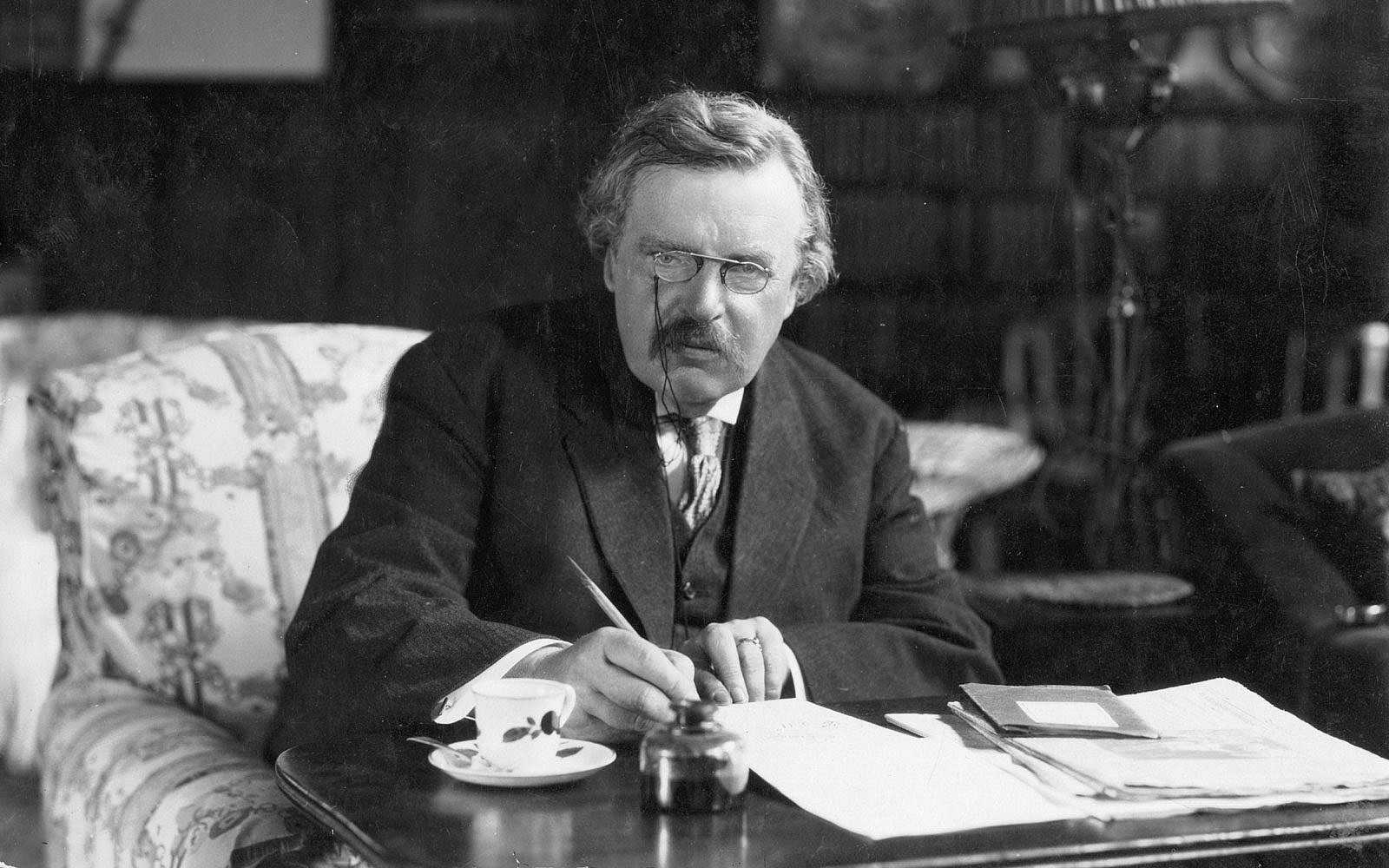
20th century writer G.K. Chesterton is up for canonization -- but critics say he espoused virulently anti-Semitic views. (Public domain)

20th century writer G.K. Chesterton is up for canonization — but critics say he espoused virulently anti-Semitic views. (Public domain)

LONDON — A renowned British novelist with virulently anti-Semitic views may soon be on the path to sainthood.

G.K. Chesterton, a journalist, author and dramatist whose works remain popular in the UK more than 80 years after his death, is the subject of an initial investigation by the Catholic church which will be published next month.

Commissioned in 2013 by the Bishop of Northampton, Peter Doyle, the report is the first step in the process of canonization.

The move is likely to prove highly controversial. Chesterton advocated Jews in public life being forced to wear distinctive clothes and littered his works with anti-Semitic tropes. He also continued to contest the innocence of Alfred Dreyfus, the French officer infamously at the center of an anti-Semitic miscarriage of justice in 1894.

According to the Daily Telegraph, the report is expected to suggest that infertile couples pray to Chesterton to ask for “miracle conceptions.” The Vatican demands evidence that those considered for sainthood must have been responsible for at least two miracles.

Chesterton, who wrote more than 80 books, several hundred poems, 200 short stories, and several plays, would become the first English saint since the 17th century. His novels include “The Napoleon of Notting Hill” and “The Man Who Was Thursday.”

He is best known for the fictional crime-solving priest, Father Brown, who features in 53 of his short stories. The BBC has recently screened the sixth season of a popular drama starring the cassock-wearing sleuth. It has become a global hit, sold by the UK’s public service broadcaster to the US, Scandinavia, Australia and Germany.

British author G.K. Chesterton. (Public domain)

Pope Francis is believed to be an admirer of Chesterton, who converted to Catholicism in 1922. As Archbishop of Buenos Aires, the Pontiff supported a conference on the writer in the Argentine capital.

Once the report is published, the Bishop of Northampton, one of 30 senior Catholic churchmen in Britain, will decide whether to ask the Vatican to open a formal inquiry or “cause” into whether Chesterton should be considered for sainthood.

Canon John Udris, the priest tasked by Doyle with examining Chesterton’s credentials, has made clear his sympathies. The writer was potentially a “huge model” for the Church who “breaks the mold for conventional holiness,” he told the Catholic Herald newspaper.

But when news of Doyle’s decision to commission a report was first announced in 2013 it sparked anger among some British Jews.

In an excoriating attack on Chesterton, leading Jewish historian Geoffrey Alderman argued, “I never cease to be amazed at the lengths to which some will go to excuse or belittle clear expressions of anti-Semitism articulated by public figures, present or past.”

Alderman highlighted the manner in which Chesterton’s opposition to capitalism had led him to defend Edward I’s expulsion of the Jews from England in 1290. In his “Short History of England,” Chesterton described those who were driven from the country as the “capitalists of their age” and praised the monarch as a “tender father of his people.”

Alderman also noted Chesterton’s attack on the British press’ sympathy for Dreyfus, criticizing the “acrid and irrational unanimity of the English press.” Five years after Dreyfus was exonerated, the writer continued to refer to Jews who were “a traitor in France and a tyrant in England.”

In his book “The Jews of Britain 1656 to 2000,” historian Todd Edelman has also implicated Chesterton in the “stream of crude anti-Semitism” which was unleashed at leading politicians during the 1912 Marconi scandal. Some of the members of the Liberal cabinet who were accused of improperly profiting from information about forthcoming government contracts were Jewish.

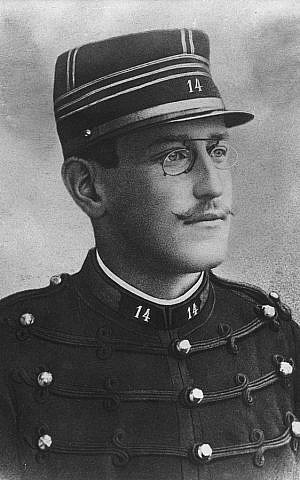
Alfred Dreyfuss, found guilty of espionage in
a kangaroo court in late 19th century France.
(Public domain/Wikimedia commons)

“The most virulent attacks in the Marconi affair,” Edelman writes, were launched by Chesterton, his brother Cecil, and the writer and politician Hilaire Belloc. Their “hostility to Jews was linked to their opposition to liberalism, their backward-looking Catholicism, and their nostalgia for a medieval Catholic Europe that they imagined was ordered, harmonious, and homogeneous.”

Chesterton repeatedly advanced the notion that British Jews were disloyal to their country.

At the end of World War I, he wrote to the Lord Chief Justice of England, Rufus Isaacs (then Viscount Reading), suggesting that he should not be involved in peace talks with Germany. “Is there any man who doubts that you will be sympathetic with the Jewish International,” Chesterton asked.

Three years later, Chesterton’s book, “The New Jerusalem,” advocated that Jews should be allowed to hold high office but should wear Oriental dress. “The point is that we should know where we are; and he would know where he is, which is in a foreign land,” he wrote.

In an interview with the Telegraph, Udris acknowledged the controversy surrounding Chesterton and said he would present the views of those who are “dead set against” the process progressing any further. However, the canon said he did not believe Chesterton had a “racist bone in his body.”

Chesterton’s canonization has also been opposed by some prominent Catholic voices in Britain.

If the Bishop of Northampton has any sense, he’ll park the matter of G.K. right there. Because Chesterton, for all his merits, was anti-Semitic

“For the Catholic Church to declare someone a saint says something about the Church as well as about the individual concerned,” wrote journalist Melanie McDonagh this week. “And if the Bishop of Northampton has any sense, he’ll park the matter of G.K. right there. Because Chesterton, for all his merits, was anti-Semitic.”

McDonagh has previously argued that making Chesterton a saint “simply doesn’t square with the spirit of modern Catholicism, which sees Judaism, as the Vatican Council put it, as elder brother to the Catholic Church.”

Udris’s report is believed to have found that infertile couples are praying to Chesterton.

“Very interestingly, I have noticed people saying that they are praying for him,” he told the Telegraph.

“Because they didn’t have any children, Frances and Gilbert [Chesterton], so they are finding him as a bit of a go-to person, if for example a couple is infertile and looking to have a child.

“[Miracles] will be, if the cause is opened, down the line, what will people be looking for. And of course, people have already been feeding back,” Udris said.

The initial push for Chesterton to be considered for sainthood came from the American Chesterton Society.

“I think he is very much a saint for our time and could draw many people into the Catholic Church,” suggested the president of the society, Dale Ahlquist, in 2013. He cited the fact that Chesterton’s writings had brought people to the Catholic faith.

Canonization, which can take decades to complete, takes place in several stages, with individuals normally be granted “venerable” then “blessed” status before being made saints.

As taken from, https://www.timesofisrael.com/renowned-british-writer-a-virulent-anti-semite-being-considered-for-sainthood/

 
Leave a comment

Posted by on June 16, 2018 in Uncategorized


Shabbos Candles: Questions And Answers

By Rabbi Doniel Neustadt | Series: Weekly Halacha | Level: Advanced

QUESTION:
How many candles should a woman light on erev Shabbos?

DISCUSSION:
This depends on family custom. While the basic halachah mandates that a minimum of one candle be lit,(1 ) it is universally accepted that no one lights fewer than two candles, representing the dual aspects of Shabbos – Zachor and Shamor.(2 ) Some women light seven candles, others ten,(3 ) while others light the number of candles corresponding to the number of people (parents plus children) in the family.(4)All customs are halachically acceptable, and each lady should follow her custom and not vary from week to week. (5 ) Should a lady, however, find herself away from home on Shabbos or Yom Tov, she may light just two candles even though she lights more when she is home. (6)

QUESTION:
Some women do not blow out the flame of the match, lighter, etc. after lighting candles on erev Shabbos; instead they allow the flame to extinguish on its own. They do this in order to avoid transgressing a Shabbos Labor – “extinguishing” – once they have accepted Shabbos with the kindling of the candles. Should all women observe this custom?

DISCUSSION:
No, they need not do so. It is permitted to extinguish the flame after lighting candles as long as one does so before reciting the blessing of le-hadlik ner shel Shabbos. Although Shulchan Aruch does note the custom of “some” women who are careful not to put out the flame after lighting candles,(7) this custom no longer applies today when all women(8) recite the blessing over the candles after kindling them. Since Shabbos does not begin until after the blessing is recited, there is ample time to blow out the flame before reciting the blessing.(9)

On Yom Tov, however, when many women follow the custom of reciting the blessing before lighting candles,(10 ) care should be taken not to put out the flame after lighting the candles. This is because once Yom Tov has begun, it is forbidden to extinguish a fire. The match, therefore, should be carefully put aside and allowed to extinguish on its own.(11) [A lady who is afraid to allow a match to extinguish on its own should light her candles first, blow out the match, and then recite the blessing, as she does on a regular erev Shabbos.(12 ) Of course, she may do this only if she lit candles before sunset. If she is lighting after Yom Tov has begun, she may not put out the flame.]

QUESTION:
Who should light the candles if the wife is unavailable to kindle them?

DISCUSSION:
The obligation to light Shabbos candles rests equally on all members of a household. Nevertheless, our Sages established that it is the wife’s responsibility to do the actual lighting. One of the reasons given(13 ) is that candle-lighting atones for Chavah’s part in the sin of the eitz ha-da’as (Tree of Knowledge). Chavah caused Adam to eat of the forbidden fruit for which mankind was punished by losing its immortality. Since Chavah “extinguished the candle of the world,”(14 ) it is the woman who sets aright Chavah’s misdeed by assuming the obligation of lighting candles for her household.(15) Consequently:

Even if a husband demands that he lights the candles, the wife has the right to protest and prevent him from doing so.(16 ) It is recommended, though, that the husband take part in the mitzvah by lighting and quickly extinguishing the candle wicks, which makes them easier to light.(17 ) If candles – or electric lights – are lit in other rooms in addition to the eating area,(18 ) it is the husband who lights them.(19)

If one has no wife, or if he sees that his wife is running late and will be unable to light on time, then he should light the candles with the blessing. (20)

If one’s wife is not home for Shabbos, it is preferable that the husband himself light candles and not one of the daughters.(21 ) If, however, a daughter who is over twelve years old lights for him, he fulfills the mitzvah through her lighting. One cannot, however, fulfill his obligation by having a daughter under twelve light candles for him.(22)

In the event that a brother and sister are at home without their parents, it is preferable that the sister light the candles (.23)

Years ago, it was customary for a woman who gave birth not to light candles on the first Friday night after giving birth. For that one Shabbos, candles were lit by the husband.(24 ) Several reasons are offered in explanation of this custom, but apparently the main concern was that women were too weak after childbirth to get out of bed and light candles. (25 ) In view of the improved health conditions prevalent nowadays, many poskim agree that the custom is no longer valid and the wife should light candles as she does every Friday night. (26)

QUESTION:
May a woman daven Minchah after she has lit candles on Friday night?

DISCUSSION:
L’chatchilah, all poskim agree that one must recite Minchah before lighting candles. When a woman lights candles, she automatically accepts upon herself the restrictions and obligations of the Shabbos day. This precludes her davening the previous day’s Minchah. If, however, a woman is running late and has not davened Minchah by candle- lighting time, the poskim differ as to what she should do. There are three views:

1) She should go ahead and light candles. She should then daven the Shemoneh Esrei of the Shabbos Ma’ariv twice to compensate for the lost Minchah(27.) Even though women do not usually daven Ma’ariv, she may do so in this case in order to make up the lost Minchah (28)

2) Before lighting, she should stipulate that she is not accepting the Shabbos until after she has davened Minchah(29.) This should not be done on Yom Tov if she recited shehecheyanu at the candle-lighting (30)

3) A minority view rules that she may daven Minchah after lighting candles even if she did not stipulate that she was not accepting the Shabbos (31)

Note that when men light candles, they do not automatically accept the Shabbos with their candle-lighting (32.) They may daven Minchah after lighting candles.

Rabbi Neustadt is Rav of Young Israel in Cleveland Heights. He may be reached at 216-321-4635 or at jsgross@core.com

FOOTNOTES:

1 And, indeed, under extenuating circumstances, one may light only one candle and recite the blessing over it; Mishnah Berurah 263:9.

2 Based on Rama O.C. 263:1.

3 Mishnah Berurah 263:6.

4 This custom, although widespread, is not mentioned in any of the classical sources.

5 Based on Beiur Halachah 263:1 (s.v. sheshachecha).

6 She’arim Metzuyanim B’halachah 75:13.

7 O.C. 263:10.

8 Of Ashkenazic descent. Most Sefaradim, however, recite the blessing before kindling; Yechaveh Da’as 2:33.

9 Aruch ha-Shulchan 263:14; Yechaveh Da’as 2:33 quoting Mateh Yehudah 263:2. [Note that Mishnah Berurah does not disagree with this; indeed, he repeatedly rules that Shabbos begins after the blessing is recited; see 263:21 and 27. See also Da’as Torah 263:5 (s.v. v’yesh).] Chayei Adam and Kitzur Shulchan Aruch, too, do not mention the custom of allowing the flame to extinguish by itself.

10 As ruled by Mishnah Berurah 263:27.

11 Harav S.Z. Auerbach (Shemiras Shabbos K’hilchasah 43, note 179).

12 Based on the ruling of the Magen Avraham (263:12) and Kitzur Shulchan Aruch (75:4) who rule that women should light on erev Yom Tov exactly as they do on erev Shabbos: first light the candles and then recite the blessing.

13 Tur O.C. 263.

14 This is how the Midrash (Tanchumah, Metzora 9) refers to Adam.

15 Some families have the custom that all the women in the household light candles and recite a blessing over them – Aruch ha-Shulchan 263:7. This was also the custom in the home of the Brisker Rav, as reported by his son Harav D. Soloveitchik (quoted in Az Nidberu 6:68).

16 Aruch ha-Shulchan 263:7.

17 Mishnah Berurah 263:12; 264:28.

18 See follow-up DISCUSSION for explanation of why candles [or electric lights] need to be lit in other rooms.

19 Shulchan Aruch Harav 263:5; Ketzos ha-Shulchan 74 (Badei ha-Shulchan 11). See also Beiur Halachah 263:6 (s.v. bachurim).

20 Mishnah Berurah 262:11.

21 Oral ruling by Harav M. Feinstein (quoted in The Radiance of Shabbos, pg. 7); Shemiras Shabbos K’hilchasah 43, note 46.

22 Shemiras Shabbos K’hilchasah 43:7.

23 Harav S.Z. Auerbach (quoted in Shemiras Shabbos K’hilchasah 45 note 34).

24 Mishnah Berurah 263:11.

25 See Toras Shabbos 263:4; Tehilah l’David 88:3; Aruch ha-Shulchan 263:7; Hagahos Imrei Baruch 263:6.

26 Oral ruling by Harav M. Feinstein (quoted in The Radiance of Shabbos, pg. 7) Shemiras Shabbos K’hilchasah 43:9.

27 This is the view of the Mishnah Berurah 263:43.

28 Harav S.Z. Auerbach (Shemiras Shabbos K’hilchasah 43:110).

29 Eishel Avraham 263:10; Kaf ha-Chayim 263:35; Harav S.Y. Elyashiv (oral ruling quoted in Avnei Yashfe on Tefillah, 2nd edition, pg. 201).

30 Tzitz Eliezer 10:19-5. This is because several poskim hold that one cannot recite shehecheyanu, which celebrates the arrival of the Yom Tov, and at the same time stipulate that he is not accepting Yom Tov’s arrival.

31 Several poskim quoted in Shemiras Shabbos K’hilchasah 43:128.

32 Mishnah Berurah 263:42. It is still, however, preferable even for men to stipulate that they are not mekabel Shabbos when lighting candles.


Weekly-Halacha, Text Copyright © 2004 by Rabbi Neustadt, Dr. Jeffrey Gross and Torah.org. Weekly sponsorships are available–please send email to the moderator, Dr. Jeffrey Gross jgross@torah.org.

Rabbi Neustadt is Rav of Young Israel in Cleveland Heights. He may be reached at 216-321-4635 or at jsgross@core.com.

As taken from, https://torah.org/torah-portion/weekly-halacha-5764-korach/

 
Leave a comment

Posted by on June 15, 2018 in Uncategorized


Lo que el café, la sopa de pollo, el helado y la ropa sucia tienen en común

Una pequeña gota de la sabiduría del Rebe

Está el agua de la taza de café ultracafeinado que tomo para despertarme a la mañana. Está el agua que con la que hago la nutritiva sopa de pollo que logra que se desvanezca cualquier enfermedad. Está el agua del refrescante helado que compré en la tienda y tengo en el congelador. Y está el agua que lava mi ropa sucia en el lavarropas.

Tiene muchos estados, formas, sabores y usos diferentes, pero en el fondo se trata de la misma propiedad esencial: pequeñas gotas de agua.

Las personas también pueden parecer radicalmente diferentes en situaciones diversas. Pero a veces, si miras con atención, puedes descubrir en su núcleo aquella pequeña gota, la cualidad o símbolo que las unifica. Por ejemplo, la manera en la que una persona reacciona ante la coerción o la tensión, o cómo elige responder de manera relajada, puede revelar algo muy profundo sobre su actitud en la vida.


La porción de la Torá de esta semana cuenta cómo Kóraj incitó una rebelión contra Moshé. Junto a Kóraj hay 250 miembros distinguidos de la comunidad que ofrendan el sacrosanto ketoret(incienso) para demostrar su valor para el sacerdocio y reclaman que “¡todo el pueblo (y no sólo Aarón o los sacerdotes) es sagrado!”.

La tierra se traga a los rebeldes y un fuego devora a los que ofrecen el ketoret. En conclusión, Di-s ordena que las bandejas de las ofrendas sean “convertidas en sábanas que se usen para cubrir el altar; porque fueron ofrecidas a Di-s y se han vuelto sagradas”. (17:2–3).

El Rebe aprende una increíble lección del hecho de que estas bandejas de cobre se hayan transformado en el altar en el que se ofrecían sacrificios en el Tabernáculo, el hogar de Di-s.

El mismo metal de esas bandejas fue santificado por un acto motivado por un deseo divino. A pesar de que los amotinados hayan pecado y como resultado hayan sido severamente castigados, detrás de su queja, por más errada que estuviera, había un deseo de acercarse a Di-s.

De esto, el Rebe extrapola: “Si ese es el aprecio que le tiene Di-s a un trozo de metal inanimado, definitivamente no hay ser humano irredimible. No importa cuán nocivos hayan sido sus actos, siempre esconden un deseo y una lucha, intrínseca a cada criatura de Di-s, por la bondad y la perfección divinas”.

Una breve enseñanza en un versículo de un episodio de la Torá. Una pequeña gota de sabiduría, trascendental en aquello a lo que atañe.

En lugar de castigar a un grupo de rebeldes pecadores, individuos celosos que merecen admonición eterna, el Rebe se concentra en los motivos positivos que subyacen a sus acciones. Además, a través de este episodio desafortunado, enseña el amor infinito que tiene Di-s para todos nosotros, incluso si pecamos o si elegimos el camino equivocado.

Y este abarcador modo de pensar: en la manera en la que el Rebe nos enseña a apreciar nuestro propio mundo, es un factor intrínseco cavar hasta encontrar el valor central positivo, porque nuestro mundo fue creado por Di-s para servirle y en consecuencia todo debe tener algún valor de redención, en especial el pueblo elegido por Di-s.

Una pequeña gota.

Y una profunda imagen que altera por completo la manera en la que nos acercamos a nosotros mismos, a los demás y al mundo.

Según tomado de, https://es.chabad.org/library/article_cdo/aid/3708803/jewish/Lo-que-el-caf-la-sopa-de-pollo-el-helado-y-la-ropa-sucia-tienen-en-comn.htm

 
Leave a comment

Posted by on June 15, 2018 in Uncategorized


Should I circumcise my child?

Circum-Decision

Should I circumcise my child? Here are the arguments for and against.


The mystique of Bris Milah is as old as Judaism itself. Throughout the generations, this mitzvah has been the pilot light, making sure that our spark would never be extinguished. For no matter how high the assimilation rate would rise, the importance of Bris, the seal of a covenant with God dating back to Abraham, was never questioned. Bris remained sacred to Jews of all stripes.

But now, for the first time in our history, that reassuring flame has begun to flicker.

“My husband and I are both Jewish, not practicing in the traditional sense, and we are debating whether to circumcise our son, soon-to-be born. We both have some problems with circumcision, and are researching a Jewish organization that opposes circumcision.”

So speaks a young American woman on a popular radio talk show, sharing her willingness to give up a 3,000-year-old legacy, based on the little she knows about the procedure, and almost nothing about its meaning.

The tip of a large organic carrot was severed.

Yes, this woman may represent a negligible minority. But anti-circumcision literature is proliferating rapidly through the Internet and on the airwaves, planting thoughts in people’s minds. Here is one example, which would be comical if it weren’t so sad, from “Mothering” magazine:

Last year a baby boy was born to Jewish parents. The parents wanted to give the child a Bris without inflicting the pain of circumcision. On the eighth day friends were invited to their home. A friend who is a rabbinical student read the appropriate scriptures, blessed the child with a Hebrew name, and at the time of circumcision, a large organic carrot was produced and the tip severed. It was a joyous moment for all involved… Perhaps this is the alternative some of you may have been looking for.

Facing the Issues

Issue #1 – “It’s cruel.”

I can’t do something barbaric to my child. It will psychologically scar him for life!”

Let’s be honest. No matter how undeveloped an 8-day-old baby’s pain receptors may be, it is obvious that between the diaper change, exposure to cold, and the excitement of the event, the baby would rather be sleeping than having a Bris.

Yet many observations made about pain levels are based on medical circumcisions, which have little in common with a traditional Bris. The methods are different, the circumstances are different, and the results are different.

For instance, a hospital circumcision, done far from the baby’s mother, is performed with painful clamps and can take up to 15 minutes. By contrast, the work of a mohel, with concerned “bubbies” looking over each shoulder, is completed in seconds.

A mohel, with concerned bubbies onlooking, completes his work in seconds.

In the hospital, the baby’s hands and feet are strapped down to an impersonal and restrictive circumcision board, while at a Bris he rests on the reassuring lap of a caring grandfather.

These and other differences were noted in 1997 by the Associated Press, which reported that “Jewish circumcisions are gentler” than those performed in secular settings, and that “mohels, the deft practitioners of the ancient Jewish rite of circumcision, appear to inflict less pain on their newborn subjects than most doctors do.”

Psychological scars, anesthetic requirements, barbarism and cruelty – this speaks of hospital-style circumcisions. In the words of one Californian mohel, “If I had to do a Bris using the hospital’s technique, I would not want to be a mohel.”

Issue #2 – Human Rights

“Why should I impose the Bris on my child without giving him a choice? It’s a violation of basic human rights!”

This represents a philosophical flaw in modern parenting.

As parents, we are expected to impose on our children. And we do this as a matter of fact. Don’t we choose their clothes, babysitters, and schools? Don’t we decide on inoculations which come with their own pain and degree of risk? Don’t we impose our values and behavioral standards?

How many of the things that are important to us (e.g. good character) do we wait for our children to choose for themselves? Would we allow them to cheat and steal until they get older so they can formulate their own opinion about those behaviors?

Don’t we decide on inoculations which come with their own pain and degree of risk?

Responsible parents try to ingrain values within their children in the hope that when they grow up, they will embrace them as well. Is that an unfair imposition, or is that our job as parents?

Shouldn’t we do the same for Jewish identity and values? If the Bris is the symbol of one’s Jewishness, why can’t we “impose” it, with all that it represents, on our child at birth?

One might argue: “But circumcision is different because it is permanent.” True, but impressions made on a child’s mind and heart are just as permanent. The way spouses interact, the method of parental discipline – in fact everything parents do – deeply affects their children. We, as parents often forget how empowered we really are over our children, and the Bris is only the first of many “impositions” we make upon them.

If Judaism is important, then parents have a responsibility to introduce children to it at the earliest age. Otherwise they may never reclaim it again. Even Leopold Zunz, a 19th century leader of radical reform Judaism, observed: “Circumcision is not a mere ceremony… The son who, on principle remained uncircumcised, will hardly, on principle, remain in Judaism.”

Issue #3 – Hypocrisy?

“We feel like hypocrites! We are not religiously observant, so why should we perform this mitzvah?”

Parents with this concern will be happy to know there is room for inconsistency with regards to Bris Milah. In Zechariah 9:11-12, the prophet predicts that at the end of days, the only Jewish merit will be that of Bris; all else will have been forsaken. Nachmanides explains:

At the time these prophecies were made, they must have surely sounded strange.

Ongoing Jewish tradition reflects these prophecies. The Midrash explains that during the days of Elijah the Prophet, King Ahab and Queen Jezebel led the Jews astray and, among other things, in rebellion against the mitzvah of Bris Milah. This distressed Elijah, and he decreed that the heavens should withhold rain. Seeing this, God reassured Elijah that Jews would recommit to Bris Milah and remain committed to it forever, regardless of how far they would stray.

God then appointed Elijah as the ongoing “Angel of Circumcision” to witness the Jews fulfilling the Bris. This is why we designate a chair for Elijah at every Bris.

At the time these prophecies were made, they must have surely sounded strange. After all, who would have thought that the one mitzvah to withstand assimilation would be that which imposes elective surgery on a helpless child? Yet incredibly, these prophecies have found fulfillment in recent times.

As Dr. Peter C. Remondino, one of San Diego’s most active and well-known physicians during the turn of the 20th century, observed:

The Mark of a Jew

All this said, we are still left to wonder, “Why Bris?” Couldn’t God have chosen a less intrusive symbol of faith – like, Tefillin, or tzitzit, or a kippah?

To speak intelligently about Jewish symbols, we ought to first explain what a Jew is. Exodus 19:6 defines the Jews as a “kingdom of priests and a holy people.” According to Rabbi Samson Raphael Hirsch, holy people are “moral masters over all of their energies and natural tendencies,” with the product of that mastery being holiness itself.

Holy people are moral masters over all of their energies and natural tendencies.

This concept is uniquely Jewish. Religions have very different views about the sexual drive – the strongest, and therefore most representative of “energies and natural tendencies.” The pagans espoused excessive, uninhibited sexual expression. Other belief systems have a begrudging concept of marriage and condemn all sexual activity as inherently sinful.

Judaism, true to its calling to holiness, promotes a balance by which man can master and optimize – not stifle or submit to – his energies.

This dynamic is explained by Lord William Rees-Mogg, former editor of The Times of London:

In the attempts which have been made to harness nuclear fusion – the power of the hydrogen bomb rather than that of the atom bomb – the problem which has so far defeated the scientists has been to control the energy of the reaction. Attempts have been made to hold the plasma of energy together, for only the briefest of periods, by wrapping it in a magnetic field from which it cannot break out. That wrapping is called a magnetic bottle.In the same way, the energy of the Jewish people has been enclosed in a different type of container – the law. That has acted as a bottle inside which this spiritual and intellectual energy could be held; only because it could be held has it been possible to make use of it. It has not merely exploded or been dispersed; it has been harnessed as a continuous power. If energy is not contained, it cannot be used over an indefinite period; uncontrolled energy is merely a big and usually destructive bang. In human nature, only disciplined energy is effective.

Indeed, the Torah is the magnetic bottle that enables us to master our “energies and tendencies.” It is the master plan that provides the discipline for bringing holiness to the world. And it is the Bris that serves as the permanent reminder of our commitment, at all times and under all circumstances, to that “chosen” task.

War of the Worlds

Bris represents the Jewish mission of ethics and holiness, a point that even our enemies have understood:

It is true, we are barbarians. It is an honored title to us. I free humanity from the shackles of the soul, from the degrading suffering caused by the false vision called conscience and ethics. The Jews have inflicted two wounds on mankind: circumcision on its body and a conscience on its soul. These are Jewish inventions.

The war for domination of the world is waged only between the two of us, between these two camps alone, the Germans and the Jews. Everything else is but deception.

Thus spoke Adolf Hitler.

If World War Two was waged against “the Jewish inventions of circumcision and ethics,” then we are still at war. And it is the parents of every newborn Jewish boy that stand at the frontlines of this battle, armed with the decision whether to choose Bris or not.

Our generation has been desperately trying to find ways to perpetuate the memory of the 6 million and eradicate that of their oppressors. The right choice will help strike a blow at the Nazi cause, to erect the most meaningful monument to our martyred millions.

What can we do? Build museums? Hold remembrance ceremonies?

More than anything, the answer is Bris Milah. There is something so central to Bris Milah that for its merit alone, we can be redeemed – even if nothing else is kept. So trust your Jewish instinct. Recognize, and don’t resist, the mystique of Milah, for as Spinoza observed, “it alone would preserve the nation forever.”

Bris is the ultimate statement of Jewish identification. And that is something that cutting a carrot can never achieve.

As taken from, http://www.aish.com/jl/l/b/Circum-Decision.html

 
2 Comments

Posted by on June 15, 2018 in Uncategorized


Cuestionando la “divinidad” de los Rabinos

por, Gustavo F. Barck

Los rabinos, líderes comunitarios, espirituales, su deber fue desde la destrucción del segundo templo de Jerusalén la de reemplazar a los sumos sacerdotes, así como las sinagogas fueron el reemplazo para el lamentable templo en ruinas. Pero hemos ido desvirtuando lo que en realidad significa ser un rabino, nosotros, el pueblo judío, los hemos divinizados, esperando de ellos bendiciones y soluciones a nuestros problemas que solo el mismísimo Hashem tiene el poder de otorgar.

Puede que en sus comienzos su deber y responsabilidad fueran tomadas con mucha más seriedad tanto por parte de ellos mismos como de nuestro pueblo ¿Pero realmente somos tan ingenuos de creer que siguen cumpliendo con los mismos roles de hace 2000 años? Nadie niega su saber y dedicación a la Tora, el Talmud y todos los textos sagrados judíos ¿Pero su dedicación para con el pueblo sigue siendo la misma? Creo que han asumido un puesto que no les corresponde, muchas veces a lo largo de la historia incluso muchos se han hecho llamar (En menor medida que en la antigüedad claro) profetas.

Pero antes de continuar aclaremos ¿Qué o quienes fueron los profetas? Un profeta no es lo que nos han hecho creer a los largo de la historia, no son hombres sobrenaturales con poderes de adivinación futurística, no son y nunca fueron oráculos (aunque bien tenían una cercanía especial con Di-s). Los profetas se dedicaban a plantearles a la sociedad de la época que si seguían por tal camino tendrían consecuencias buenas o malas, dependiendo de cómo veían encaminado a nuestro pueblo, por ejemplo si yo en hoy en día veo como contaminan al planeta, es por mera deducción y sentido común saber que una catástrofe ambiental es inminente, bueno, los profetas usaban la lógica, además de cumplir con ciertos roles encargados por Hashem como el de ungir a los reyes claro. Eran gente muy crítica de las instituciones, de las monarquías, de los líderes religiosos y de la política del momento. Hombres incomprendidos, muchas veces tratados como locos. Pero estas advertencias no venían de un poder exclusivamente divino, usaban la lógica, si veían corrupción y desviación no se necesitaba ser un genio para darse cuenta de que Israel iba en camino a un abismo.

Tampoco es del todo cierto que para hablar con Di-s se necesita específicamente ser un profeta o acudir con un rabino, todos podemos hablar con él y todos podemos escucharlo, solo tenemos que estar dispuestos y abiertos a hacerlo.
Entonces si todos tenemos tal grado de poder ¿Por qué vamos de rabinos que ya no recurren a la espiritualidad, sino más bien a la política institucional a la que cada uno de ellos pertenece? ¿Acaso ser rabino te acerca más a Hashem? ¿Tener ese título te da privilegios especiales? El tiempo de los rabinos se ha acabado y no porque ya no existan más, sino por el simple hecho de que no cumplen con la función espiritual que en un comienzo debían cumplir. ¿Dónde quedaron los guías espirituales, los consejos Talmúdicos?

Es cierto que estar en la posición de rabino te da las herramientas y el poder necesario para lograr cambios importantes, para ayudar, para guiar, para unir, para aconsejar. ¿Pero quedan rabinos que lo sigan haciendo? La frivolidad es lo único que derrocha la mayoría hoy en día.
No quiero generalizar pero no podemos permitir que mucha de esta gente se crea con el derecho de tomar decisiones en nombre de todos los judíos tanto dentro como fuera de Israel.

Muchos dicen que solo los ortodoxos tienen la capacidad de realizar un verdadero cambio dentro del judaísmo ¿Pero están dispuesto a hacerlo? Porque realmente pareciera que no. Hace más de 2000 años que siguen en el poder y con las mismas tradiciones retrógradas y excluyentes sin aparente intención de ayudar. Si realmente quisieran realizar un cambio ¿Porqué no comienzan por hacer un kotel mixto? ¿Porqué no comienzan por reconocer a los hijos de matrimonios mixtos? ¿Porqué no dejan de hacer comentarios homofóbicos y comienzan a auspiciar bodas igualitarias? ¿Porqué no comenzar por aceptar las conversiones tanto conservadoras como reformistas? ¿O porqué no dejan de intentar privatizar las mikve (baño ritual) solo para los ortodoxos y comienzan a permitir que todo judío pueda acceder a ellas? Sin mencionar porqué no salen de sus ieshivás (centros de estudios talmúdicos) y comienzan a defender al estado de Israel en las FDI como es obligatorio que todo ciudadano cumpla.

Si quieren realmente estar aferrados al poder como una garrapata a un perro que tengan como mínimo el valor de salir 3 años a defender al país que los acogió y los ayudó a escapar del antisemitismo. Pero no, en lugar de eso están chantajeando constantemente a la derecha Israelí para quedarse cómodos en sus casas cobrando un subsidio del gobierno. Y les aclaro por si les preocupa, ayudar a Israel en el ejército no implica dejar la Torá y a Hashem de lado, yo conocí a muchos soldados fieles a su judeidad que sin temor alguno, como buenos héroes que son, arriesgan sus vidas día tras día para defender al único estado soberano judío del mundo.

Pero cabe destacar el asqueroso comportamiento de muchos rabinos ortodoxos al escupir al suelo cuando ven pasar a estos jovencitos que dejan a toda su familia y comodidad atrás. A lo que yo les respondo, si no están de acuerdo con las leyes Israelíes y no están dispuestos a defender al pueblo judío como corresponde, les invito a retirase del país y volver a la diáspora, a ver qué tan libres son para expresar su judeidad, quisiera ver que tanta libertad tienen en Europa o los países árabes para llevar una kipá (solideo) sin ser atacados o insultados.
Y hago una última aclaración respecto a los jasídicos quienes se creen los dueños del judaísmo, cabe aclarar en Polonia el Gaón de Vilna (Uno de los primeros rabinos con postura reformista) los excomulgó por herejes y no fue sino hasta que falleció que volvieron a aparecer difamándolo diciendo que en su lecho de muerte él se había retractado de su decisión, una mentira aberrante sin mencionar que la difamación hacia otro judío y más aún si este ya ha fallecido es un pecado de enormes proporciones.

Así que, concluyo desmintiendo a los que afirman que sólo los ortodoxos o los rabinos en general tienen el poder de hacer cambios en el judaísmo ya que si así quisieran tuvieron más de 2000 años para realizarlo y ellos no son los únicos que tienen el poder o la potestad de hablar, rezar, dirigirse y ser escuchados por Hashem, todo judío de buen corazón tiene el mismo poder y nos corresponde a cada uno comenzar a realizar estos cambios. No se dejen engañar, todos juntos, el pueblo hebreo, tanto como uno solo como en nuestra propia individualidad puede y tiene el poder de lograr un cambio.

Que Hashem nos guíe hacia un mejor camino, el camino de la unidad y que nos de la sabiduría para comenzar a realizar el cambio que tanto necesitamos.

Según tomado de, http://aurora-israel.co.il/cuestionando-la-divinidad-de-los-rabinos-2/?utm_source=Noticias+diarias+S%C3%A1bado-TEA&utm_medium=16-06-2018%202da%20edic

 
Leave a comment

Posted by on June 15, 2018 in Uncategorized


Left Right Left

Moses is right. Korach is left.

The Torah is the golden mean that connects them

Korach and his followers’ uprising against Moses and Aaron has become a symbol of dispute for all generations, “Which is a dispute that is not for the sake of heaven? This is the dispute of Korach and all his congregation.” Their intimidating end comes when the earth opens its mouth and swallows them up. Is there any hope for them?

Korach in Contrast to the Spies

In the previous Torah portion of Shelach Lecha, the spies sinned because they preferred to stay in the wilderness, detached from reality. They chose living in a sheltered spiritual greenhouse rather than developing the agriculture of the Holy Land and creating a prosperous independent kingdom. The Zohar states that the spies were concerned about their personal status. In the wilderness they were highly respected leaders. They were afraid that when the Jewish People entered the land they would lose their prestige.

Korach’s sin was of a different breed. He was not necessarily opposed to establishing a state in the Holy Land. But, he was peeved by the fact Moses and Aaron, his first cousins, had been ordained by Divine choice, and not him. So, Korach contrived a new philosophy that captured many hearts. Based on the true claim the entire congregation is holy, he canvassed a campaign that would allow the people to choose their leader for themselves. He openly confronted Moses’ leadership, demanding elections. Long before the ancient Athenians arrived on the scene, Korach invented democracy!

Korach was confident that his wit, his status, his notorious prosperity and his excellent public relations would attain him a clear victory. He gained some fine successes and according to the most up-to-date public opinion polls, his democratic philosophy still rates sky-high… But, Korach’s political career ended abruptly when the earth swallowed him and all his followers alive.

Left Vs. Right

In current political jargon, “left” and “right” are common concepts. Most of us would think that these terms were initiated at the time of the French Revolution. But, right and left are fundamental concepts in Kabbalistic wisdom. Scientifically, left and right are irreversible. In general, just as the human body is divided between left and right, the entire system of the sefirot is based on the left-right axis. The Zohar teaches us that Moses belongs to the right. Korach was a leftist.

The highest right-left pair of sefirot are chochmah (the sefirah of wisdom) on the right and binah (the sefirah of understanding), its counterpart on the left. In the human body, they correspond to the right and left hemispheres of the brain.

Chochmah receives the initial flash of insight in the mind. It deals with abstract ideas and principles that are difficult to grasp in reality. In contrast, binah (the sefirah of understanding) develops ideas into detailed descriptions that can be envisioned in the mind’s eye and eventually put into practice. Whereas the right is concerned with lofty principles, the left deals more with activation from below.

Which Has the Greatest Power?

Moses brought the Torah down to earth from God above. The Torah is full of wise instructions how to behave: do this and don’t do that. The Torah is the essence of Divine wisdom, on the right.

But, Korach claims: With all due respect to Moses’ Torah, and his ability to teach abstract principles, when it comes to dealing with reality, I take the lead. I can build institutions, an army, a working educational system and a leadership and achieve better results in practice. And he is right (although he remains a leftist)!

What then is the problem with Korach’s approach? The Zohar finds three points of criticism for Korach’s view.

The First Flaw: Separation

The first issue – Korach disregards the right completely. He attempts to sever the right from the left as if he has no need for them at all. He is so self-assured in his success, that he makes no plans for a true coalition with the right. Let them discuss essence and principles to their heart’s delight, when it comes to the crunch their talk is inconsequential. The left with its pragmatic approach will take control of politics and art, the media and education, and every other facet of the state that will be established in the Holy Land. The institution is mine. I can therefore silence the right altogether. I can label their speeches about “Divine law” and eternal principles as dark, primitive statements. The ruling ideology will be: What the public says is law and there is none beside it. As long as I am in power, reality is my god and God’s law means nothing to me.

The Second Flaw: Taking Over

The second issue – Korach wants to rule so completely that he wants to coerce the right to conform to his position. He approaches the right with a persuasive suggestion to collaborate with him. You have your say and I will have my say and together we can create a leadership, as long as you are my underdog… This is not a true coalition. Whether consciously or unconsciously, his true intention is to subjugate the unique essence of the right and make it conform to the left. Korach expects the right, which justly represents the laws of the Torah, to bend itself beneath the dominancy of the left. Under Korach’s rule, the truth will turn from being an essential principle to folklore that can be modeled as needed to the demands of the public. At most it is nothing more than a pretty embellishment.

Third Flaw: There is no Peace

In Kabbalah, in addition to the right and the left, there is a middle axis. This axis is the most significant of all. One of the most important qualities of the central axis is peace. Peace balances the tendencies towards right and left in a harmonious blend. “Peace” (שָׁלוֹם) means “wholeness” (שָׁלֵם). In general, the Torah is situated on the central axis of the sefirot. The Torah is not merely wisdom. It is a complete way of life.

The third issue with Korach’s democracy is the absence of peace. Korach’s attempt to take control of the Jewish People is the gravest example of “A dispute that is not for Heaven’s sake.” His dispute is not for the sake of anything, but a dispute for argument’s sake. More than Korach and his congregation want to take over the leadership and the priesthood, they want Moses and Aaron out.

Korach does not believe that there can be true unity between left and right. For him, true Jewish solidarity is a naïve dream. In his mind, dispute is a matter of fact and one’s best interest is to exploit it.

Because Korach’s dispute was for the sake of dispute and because it brought Moses’ God-given mission into question, there was no choice but to find a quick and easy solution, “And they descended alive into the abyss.”

Inter-inclusion

Just as the right and left hemispheres of the brain function together, so too, in the long-term, we cannot do without the left. However, in its current state, after its descent into the abyss, the left must be rectified before we can allow it to reappear. In the brain, the right hemisphere controls the left side of the body and vice versa. Neither of them works alone. The right hemisphere includes an integral affinity towards the left, and the left includes a tendency towards the right. Discovering the right-ness that lies dormant in the left and the inert seed of left-ness in the right is the key to uniting them.

In Kabbalah, chochmah (the sefirah of wisdom) relates to the father principle and binah (the sefirah of understanding) relates to the mother principle. The right is relatively male and the left is relatively female. In Chassidic terms, like chochmah and binah, man is essence and woman is reality. The man deals with ideals and principles, sometimes he hovers over reality without quite touching it. The woman knows how to take control and turn ideas into reality, “the wisest of women constructs her home.” Yet, Kabbalah teaches us that every man is inter-included with a feminine aspect and every woman is inter-included with a masculine facet. Nonetheless, in the man the totality is male and in the woman, the totality is female. In order to create a happy marriage, each partner must find in him or herself an aspect of the opposite gender.

Similarly, in order to incorporate both left and right on the political scene, we need to find the leftist aspect of the right wing and the rightist aspect of the left wing. Then they will be able to come together in harmonious union.

In the words of the Zohar, we need to “include the left in the right.” Like the right hemisphere that controls the left hand, Moses’ right lends the tone, sets the values and deals with the essence. By his side we need Korach, who knows how to develop the abstract ideas into working models so that our national leadership will be right-handed. Abundance from above passes through certain Divinely selected figures. Korach’s statement that “The entire congregation are all holy” rings true because in its rectified state, the entire congregation represent reality.

Korach will Flourish like a Date Palm

The origin of unity between the right and the left lies in keter (the sefirah of crown), which lies above chochmah and binah. The collective soul-root of the entire Jewish People, rightists and leftists alike, lies in this sefirah. Keter is the source of the middle axis, where we find peace.

In a democracy, power is shared and allocated to different segments of society. Societies adopt democratic systems when they wish to allow conflicting values and goals to co-exist. In the body, such a system would wreak havoc. The brain could not function following democratic principles. “There is no peace in my bones because of my sins.”

By correctly integrating the right and the left hemispheres of the brain we empower the central nervous system (CNS) to respond correctly and in good timing to internal and external stimuli. Similarly, true solidarity between left and right political factions can be achieved by appointing a central control system in the form of a Divinely ordained monarchy that is accepted by the entire nation.

Both the souls of rightists, who follow Moses, and leftists, who associate themselves with Korach, sing the “Song of Shabbat,” which concludes, “A righteous individual shall flourish like a date palm.” The final letters of this verse spell out Korach (קֹרַח). Indeed, the Arizal teaches that Korach’s soul will eventually be rectified, when he uses his pragmatic leadership talents to help create a true Jewish state run according to Torah law.

Korach’s descent into the abyss was not his final word. Alive from his underground grave, he cries out, “Moses is true and his Torah is true!”

From Rabbi Ginsburgh’s class 28th Sivan 5772

As taken from, http://www.inner.org/parshah/numbers-bamidbar/korach/left-right-left

 
2 Comments

Posted by on June 15, 2018 in Uncategorized