RSS

Author Archives: yishmaelgunzhard

Tefilot- Oraciones

Introducción

Tefilá

La Tefilá – oración- es el lazo que une a D´s con su pueblo Israel. La persona que se dirige directamente a D´s se eleva y se acerca a Él. Este acontecimiento es recíproco: D´s se acerca a todo aquel que aspira a ascender a Él. De este acercamiento mutuo nace el contacto y se opera perfectamente el apego del hombre con el Creador.
La Tefilá tiene el valor de los korbanot (sacrificios). Por ser que éstos sólo se realizaban en el Gran Templo de Jerusalem (Bet Hamikdash) y no está permitido llevarlos a cabo en otro lugar, los Sabios establecieron su reemplazo por la Tefilá, como dice el versículo en Hoshea 14,3: “Reemplazaremos los sacrificios por nuestros labios”.
La Tefilá de Shajarit corresponde al “Korban Tamid” (sacrificio permanente) de la mañana. La Tefilá de Minjá corresponde al “Korban Tamid” de la tarde. La Tefilá de Arvit corresponde al holocausto de los sobrantes de los sacrificios diurnos, llevado a cabo por la noche. La Tefilá de Musaf que se recita en Shabat y días festivos (Yom Tov), es relativa al “Korban Musaf” (sacrificio adicional) que, en honor al evento, se ofrecía en el Templo en dichos días.

Horarios de Tefilá y Keriat Shemá

Los judíos tenemos el deber de rezar tres veces al día (excepto en Shabat y festividades, que se agrega una oración) por la mañana, tarde y noche y debemos decir el Shemá dos veces por día, a la mañana y a la noche.
La Tefilá matutina, Shajarit, puede rezarse desde el amanecer (según el Gaón de Vilna) o desde la salida del Sol (según el “Maguen Abraham”). En un principio sería mejor que se rece desde la salida del Sol, pero si lo rezó desde el amanecer lo hizo Bediavad y no tiene que rezar de vuelta. El Talmud establece que su tiempo es durante el primer tercio del día y que es Majloket (discusión) desde cuando.
Tefilá Minjá, vespertina, puede decirse desde media hora después del mediodía [ver Comienzo del Horario de Minjá Guedolá] y hay tiempo hasta trece minutos y medio después de la puesta del sol [ver Puesta del Sol, pag XX].
La Tefilá de la noche, Arbit, se extiende desde la salida de la estrellas [pag XX] hasta el amanecer [pag XX]. Según la tradición sefaradí, en presencia de un minián (quorum de diez hombres mayores de trece años) puede rezarse desde una hora y cuarto antes de la puesta del Sol.
Musaf, la Tefila agregada en Shabat y fiestas debe rezarse hasta la séptima hora del día.
El horario de Keriat Shemá de la mañana es desde el amanecer hasta tres horas luego de la salida del Sol. Quien por algún percance reza después de las cuatro horas, no pronuncia el nombre de D´s en las bendiciones de Kriat Shemá [ver Horario de Fin de Kriat Shemá con Brajot, pag XX].
El de la noche, Arbit, se extiende desde la salida de la estrellas [pag XX] hasta la medianoche, y Bediavad hasta el amanecer [pag XX].
Estos horarios corresponden a “Shaot Zemaniot” (horas de tiempo), siendo cada una la doceaba parte del tiempo en que el Sol ilumina a la Tierra, que se toma desde la salida del Sol hasta su puesta (“Yalkut Yosef”).

Estructura de las Tefilot (Jol)

SHAJARIT:
1. Oraciones preliminares: Korbanot (del principio hasta Hodú) – Kadish Al Israel.
2. Oraciones preparatorias: Zemirot (cánticos desde Hodú hasta Yshtabaj) – Jatzí Kadish.
3. Parte central: Kriat Shemá y Amidá (Kriat Shemá ubirjotea, Amidá, Jazará, Tajanun, Kriat Hatorá) – Jatzí Kadish.
4. Oraciones posteriores: Ashré, Lamnatzeaj (salmo 20), Ubá letzión – Kadish Titkabal – Tefilá leDavid (salmo 86), Bet Yaakov, Shir Hamaalot (salmo 124), Salmo del día – Kadish Iehé Shelamá – Pitum haketoret – Kadish Al Israel – Alenu leshabeaj.

MINJA:
1. Korbanot
2. Ashre – Jatzí Kadish.
3. Parte central: Amidá y Jazará.
4. Tajanún – Kadish Titkabal
5. Lamnatzeaj (salmo 67) – Kadish Iehé Shelamá- Alenu Leshabeaj.

ARBIT:
1. Versículos de Tehilim (salmos) iniciales [Hashem tzebaot imanu…] – Jatzí Kadish – Vehú Rajum, Barejú.
2. Parte central: Kriat Shemá – Jatzí Kadish – Amidá, Yehí Shem – Kadish Titkabal.
Shir Lamaalot (salmo 121) – Kadish Iehé Shelamá – Alenu Leshabeaj.

Conceptos Generales
El nombre de D’s

Al pronunciar el nombre de D´s es debido concentrarse y comprender frente a Quien estamos y a Quien nos dirigimos. Como dice el pasuk: “Sabe frente a Quien estas de pie: frente al Rey de reyes, el Santo, Bendito sea”. Al comenzar la Amidá decimos: “Señor, abre mis labios y mi boca dirá Tu alabanza”, ya que si entenderíamos realmente Quien es D´s, no tendríamos ni la fuerza ni el atrevimiento siquiera para abrir la boca frente Suyo.
Al pronunciar “Ado-nay” es correcto entender y pensar que Hashem estuvo, está y estará, es eterno y atemporal, el Dueño y Amo de toda la creación. Al decir “E-lohenu” se debe saber que es nuestro D´s, que es Todopoderoso, nada le es imposible y es el Dueño y la fuente de todos los poderes.
Por eso, al rezar o recitar bendiciones, debe entendienderse el significado, atender a lo que se dice, de forma respetuosa y no hacer otra actividad en ese momento.
Está prohibido pronunciar en vano el nombre de D’s, tanto en hebreo como en cualquier idioma.

Amén

“Amén” es una de las palabras hebreas más ampliamente conocidas y empleadas en el vocabulario litúrgico.
“Amén” tiene dos significados: uno presente y otro futuro.
El primero quiere decir “es verdad”, y de esta raíz deriva la palabra “EMET” (verdad).
Este es el “Amén” más común, el que pronunciamos luego de las Berajot, de la Amidá, del Kidush, etc.
El otro significado es: “Que así sea” simbolizado por los siglas hebreas de AMEN que forman las iniciales de “E-l Melej Neemán”, “D’s es el Rey en quien confiamos” para oír nuestras súplicas.
Este es el Amén que respondemos en el Kadish y al final de todos los ruegos (Sea la voluntad del Eterno, etc.) y súplicas a D’s.

Berajot – Bendiciones

Existen tres clases de bendiciones: 1) de D´s hacia Sus criaturas, traducida en crecimiento, florecimiento, incremento de la prospéridad; 2) de la que D´s es objeto por parte de Sus criaturas; 3) las que los hombres intercambian entre sí.
Todo goce, fenómeno natural, acontecimiento relevante, toda ocasión de cumplir una mitzvá, una buena acción, es óptimo para agradecer a D´s. Entre las bendiciones que dirigimos hacia D´s, se distinguen tres categorías:
1) Birjot Mitzvá: recitadas previo cumplimiento de los preceptos.
2) Birjot Hodaá: expresan alabanzas, gratitud, pedidos.
3) Birjot Hannenim: Nuestros Sabios establecieron que para tener provecho de los placeres de este mundo y los beneficios que D’s nos concede, es necesario expresar nuestro reconocimiento y agradecimiento al Creador, por medio de las Berajot (Bendiciones).

Estas deben ser recitadas con concentración y comprendiendo su significado.
En el caso de escuchar una Berajá (bendición) se debe responder después que fue pronunciado el nombre de D’s (Ado-nay): “Baruj Hu Ubaruj Shemó” (Bendito El y Bendito Su nombre), y al finalizar la bendición inmediatamente decir “Amén”.
En lugar de recitar la Berajá se puede cumplir con la obligación escuchándola atentamente de otra persona y respondiéndo Amén sin interrupción (ni siquiera “Baruj Hu uBaruj Shemo”). Esto es posible siempre y cuando tanto el que pronuncia la bendición tenga también intensión de hacernos cumplir con nuestra obligación y el que oye de salir de Jobá.
En caso de empezar una bendición y notar es innecesaria ó sin sentido (beraja levetala) y sólo dijo “Baruj Atá Ado-nay” concluye diciendo “Lamedeni Jukeja” (enseñame Tu Ley), completando de esta forma el versículo de Tehilim, ya que tratándose de estudio de Torá puede pronunciarse el nombre de D’s.
Si dijo ” Baruj Atá Ado-nay E-lohe… (sin decir “nu”)” y se percató del error, concluye como el pasuk, de la siguiente manera: “Israel Abinu meolam vead olam”.
Si continuó o ya recito la bendición sin sentido se dice de inmediato “Baruj Shem Kevod Maljutó Leolam Vaed” (Bendito Su Santo Nombre…)

Tefilot

Rezo de la mañana – Tefilat Shajrit
(A la mañana cuando se levanta)

MODE ANI

Al despertar por la mañana, agradecemos a D´s, Sustento de lo existente y Dueño de la creación, por habernos levantado nuevamente con vida.

Mode ani lefaneja melej jai vekaiam sehejezarta, bi nishmati, bejemla, raba emunatejá.
En castellano:
Doy gracias ante ti oh rey viviente y existente que me haz devuelto el alma con piedad, inmensa es tu fidelidad.

NETILAT YADAIM

El lavado ritual de manos por la mañana fue instituído por nuestros sabios por varios motivos (higiene, purificación y preparación para el servicio divino). Netilat Yadaim se realiza tomando un recipiente con la mano derecha, se lo llena de agua, se lo pasa a la mano izquierda y se lo vierte sobre la derecha; luego se hace el proceso inverso, realizando esta secuencia tres veces. Eleva las manos y, antes de secarse, bendice:

Baruj ata Ado-nay Elo-henu melej haolam, asher kideshanu bemitzvutav vetsivanu al nefilat iadaim.
En castellano:
Bendito seas oh eterno Dios Rey del mundo, que nos has santificado con tus mandamientos y nos recomendaste el lavado de las manos.

ASHER IATZAR

Al salir del baño (en todo momento del día) hace Netilat Yadaim (sin bendecir) y, tras secarse las manos, si en el baño hizo sus necesidades, bendice:

Baruj atá Ado-nay Elo-henu melej haolam asher yatzar et hadam bejojma ubará bo nekavim nekavim, jalulim jalulim, galui veiadúa lifne jise kevodeja sheim isatem ejad mehem o im ipateaj ejad mehem yefshar lehitkaiem afilu shaa ejat, baruj ata adonay rofe jol basar umafli laasot.

En castellano:

Bendito seas tu Eterno, Dios nuestro, Rey del mundo, que creaste hombre con la ciencia y formaste en él orificios y Le dotaste de órganos, revelado y sabido está frente a Ti que estas sentado en Tu glorioso trono, Señor que todos esos órganos y las funciones que les has asignado son necesarios para nuestra existencia pues si se cierra uno de ellos o se abre no es posible sobrevivir ni siquiera una hora, bendito seas tu oh Eterno que sanas a toda criatura y otras maravillas.

BIRCOT HASHAJAR

Nuestros Sabios instituyeron la recitación de las siguientes bendiciones por la mañana, en las cuales le agradecemos a D’s el habernos brindado todas nuestras necesidades físicas y espirituales para vivir con dignidad, las que se manifiestan -en su mayoría- por la mañana.

ADON OLAM

El Adón Olam se dice todas las mañana para alabar a D’s:

Adon olam, asher malaj, beterem kol ietzir nibrá; leet nasá bejeftzo kol, azai melej shemó nikra.
Veajarei kijlot akol, levadó imloj norá.
Vehú haia veu hove, veu ihé betifará.
Vehú ejad vein sheni leamshilo leajbira.
Vehú rishon vehú ajaron, lejol jomer ulejol tzura.
Beli reshit beli tajlit, veló aoz veamisrá.
Beli erej beli dimion beli shinui utmurá.
Beli jivur beli pirud, gadol koaj ugvurá.
Vehú E-lí vejai goali, vetzur jeblí beiom tzará.
Vehú nisi umanos li, menat kosí beiom ekrá.
Vehú rofe veu marpé, vehú tzofé vehú ezrah.
Veijadoafkid ruji beet ishan veaira.
Veim ruji gueviati, Ado-nay li velo irá.
Bemikdashá taguel nafshí meshijenu ishlaj meherá.
Veaz nashir bebet kodshí amén amén shem norá.

En castellano:
El Señor del Mundo reinó antes que ningún ser existiese.
Cuando todo existió según Su voluntad, entonces Se proclamó Rey.
Y cuando todo se concluya, Él permanecerá.
Él existía, existe y existirá siempre con gloria.
Él es Uno sin segundo; nadie se le puede comparar.
Él es el primero y sin fin con relación a toda materia y formas existentes.
Sin principios y sin fin; Suya es la fuerza y toda la potencia.
Sin proporción alguna con Su valor ni equiparación; no hay nada que pueda igualársele.
Sin unión y sin dispersión; es la potencia y el Poder Supremo.
El Eterno es mi Dios y mi Redentor, y mi amparo en las horas de tribulación.
Él es mi estandarte, mi refugio, la porción de mi cáliz de salvación cuando Le equivoco.
Él es médico y cura, Él protege y ayuda.
En Su mano deposito mi espíritu, cuando duermo y cuando despierto.
Y con mi alma y mi cuerpo el Eterno estará conmigo; no temo a nada.
Con Su Santuario se regocijará mi alma; a nuestro Ungido enviará pronto.
Y entonces cantaremos en la Casa de Su Santuario: Amen así sea el nombre del Temeroso.

Elo-hay neshama shenatata bi tehora hi, ata berata ata ietzarta ata nefajta bi veata meshamrá bekirbí, veata atid litela mimeni uleajzira bi leatid labo kol zemán shehaneshamá bekirbí modé aní lefaneja Ado-nay Elo-hay veelo-hei abotai ribón kol hamaasim, adon kol aneshamot, baruj atá Ado-nay hamajazir neshamot lifgarim metim.

¡Dios mío! El alma que tu has puesto en mi es pura, tu la has creado, tu la has formado, tu me la diste y tu la conservarás dentro de mi, tu la acogerás en mi muerte y me la devolverás para mi vida futura.
Todo el tiempo que esta alma este en mi confesaré ante ti oh eterno mi Dios y Dios de mis padres, soberano de todas las cosas, dueño de todas las almas, gobernador de todas las criaturas, bendito seas tu que devuelves la almas a los cuerpos muertos.

Baruj atá Ado-nay Elo-henu melej haolam, anotén lasejví biná leabjín ben iom ubén laila.
Bendito seas, oh Eterno, Dios nuestro, Rey del mundo, que das al gallo la inteligencia para distinguir entre el día y la noche.

Baruj atá Ado-nay Elo-henu melej haolam pokeaj ibrim.
Bendito seas, oh Eterno, Dios nuestro, Rey del mundo, que devuelves la vista a los ciegos.

Baruj atá Ado-nay Elo-henu melej haolam matir asurim.
Bendito seas, oh Eterno, Dios nuestro, Rey del mundo, que liberas a los presos.

Baruj atá Ado-nay Elo-henu melej haolam zokef kefufim.
Bendito seas, oh Eterno, Dios nuestro, Rey del mundo, que llergues a los que están doblegados.

Baruj atá Ado-nay Elo-henu melej haolam malbish arumim.
Bendito seas, oh Eterno, Dios nuestro, Rey del mundo, que das vestido a los que están desnudos.

Baruj atá Ado-nay Elo-henu melej haolam hanotén laiaef koaj.
Bendito seas, oh Eterno, Dios nuestro, Rey del mundo, que das fuerza a los cansados.

Baruj atá Ado-nay Elo-henu melej haolam roká haaretz al hamaim.
Bendito seas, oh Eterno, Dios nuestro, Rey del mundo, que has extendido la tierra sobre las aguas.

Baruj atá Ado-nay Elo-henu melej haolam amejín mitzaadé gaber.
Bendito seas, oh Eterno, Dios nuestro, Rey del mundo, que encaminas los pasos del hombre.

Baruj atá Ado-nay Elo-henu melej haolam sheasá li kol tzorkí.
Bendito seas, oh Eterno, Dios nuestro, Rey del mundo, que provees todas mis necesidades.

Baruj atá Ado-nay Elo-henu melej haolam ozer Israel bigburá.
Bendito seas, oh Eterno, Dios nuestro, Rey del mundo, que infundes fuerza a Israel.

Baruj atá Ado-nay Elo-henu melej haolam oter Israel betifará.
Bendito seas, oh Eterno, Dios nuestro, Rey del mundo, que coronas de gloria a Israel.

Baruj atá Ado-nay Elo-henu melej haolam sheló asani goi.
Bendito seas, oh Eterno, Dios nuestro, Rey del mundo, que no me has hecho idólatra.

Baruj atá Ado-nay Elo-henu melej haolam sheló asani abed.
Bendito seas, oh Eterno, Dios nuestro, Rey del mundo, que no me has hecho esclavo.

Baruj atá Ado-nay Elo-henu melej haolam (los hombres dicen:) sheló asani isha. (las mujeres dicen:) sheasani kirtzonó.
Bendito seas, oh Eterno, Dios nuestro, Rey del mundo, (el hombre dice:) que no me has hecho mujer. (la mujer dice:) que me hiciste como Tu voluntad.

Baruj ata Ado-nay Elo-henu melej haolam amablí, jeblé shená meená utnumá meafapay.
Bendito seas, oh Eterno, Dios nuestro, Rey del mundo, que quitas el sueño de mis ojos, la somnolencia de mis ojos.

BIRCOT HATORA

Así como al cumplir con la mayoría de los preceptos bendecimos previamente, antes del estudio de Torá, cuyo precepto es el más valorado por el Todopoderoso, bendecimos a D’s por habernos legado esta sagrada ley. Después de las bendiciones se recita los pesukim (versículos) siguientes para inmediatamente cumplir con el precepto.

Vehaarev na Ado-nay Elo-henu et dibré torateja befinu ubefifiot ameja bet Israel veniie anajnu vetzetzaenu vetzeetzaé tzetzaenu kulanu iodé shemeja velomdé torateja lishmá.
Baruj atá Ado-nay hamelamed Torá leamó Israel.

En Castellano
Haz, te rogamos; Eterno, Dios nuestro, agradables Tus palabras a nuestra boca y en las bocas de Tu pueblo Israel; y que seamos nosotros y nuestros descendientes y los descendientes de nuestros descendientes, todos conocedores de Tu nombre y estudiosos de Tu Ley por lo que ella vale.
Bendito seas, oh Eterno, que has enseñado Tu ley a tu pueblo Israel.

Baruj atá Ado-nay, Elo-henu melej haolam, asher bajar banu mikol haamim venatán lanu et Torató, baruj Atá Ado-nay, notén haTorá.

En Castellano:
Bendito seas Tú Dios Rey del universo que nos escogiste de entre todos los pueblos y nos concediste la tora bendito seas Tú Eterno que nos diste la Torá.

Bircat Cohanim

Vaidaber Ado-nay el moshé lemor: daber el Aharon veel banav lemor: ko tebarejú et bené Israel amor laem iebarejejá Ado-nay veishmereja iaer Ado-nay panav eleja vijuneka isa Ado-nay panav eleja veiasem lejá shalom.
Vesamú et shemú al bené Israel vaaní abarejem.

En Castellano:
Y Dios Le habló a Moisés diciendo: Habla ante Aarón y ante sus hijos, diciendo: Así bendecirás a los hijos de Israel, diciéndoles: Que Dios os bendiga y os proteja, Que Dios haga brillar Su rostro frente a vosotros y os otorgue Su gracia; Que Dios eleve Su rostro hacia vosotros y os dé paz. Y ellos pondrán mi nombre sobre los hijos de Israel y yo los bendeciré.

Hasta aqui, Bircot Hashajar (Bendiciones matutinas)

Antes de empezar a hacer Shajrit, se envuelve el Talet y se coloca los Tefilín.

Colocacion de Talet

Antes de vestir el talit se lo toma extendiéndolo (figura 1) y se pronuncia la bendición:
BARUJ ATA ADO-NAI, E-LO-HENU MELEJ HAOLAM, ASHER KIDESHANU BEMITZVOTAV VETZIVANU LEHITATEF BETZITZIT.
Bendito Tu, Eterno, nuestro D’s, Rey del Universo, Quien nos santifico con Sus preceptos y nos ordeno envolvernos en los tztitit.

Se cubre la cabeza toma el extremo derecho del talit y se lo pasa por sobre el hombro izquierdo, a continuación se arroja el extremo izquierdo del talit sobre el mismo hombro permaneciendo en esta posición durante el tiempo que tarda un hombre en recorrer 4 amot (codos) (aprox. 5 segunds) Luego se lo acomoda en la espalda, dejando dos puntas en el frente y dos atrás, de manera que uno esté rodeado por la mitzvá.

Colocación de Tefilin

Se coloca el tefilin shel yad (del brazo) sobre el biceps de la brazo débil (contrario al que realiza trabajos: escribir, cortar, etc), levemente inclinado hacia el corazón, antes de ajustar la retzuá (correa) se dice la bendición. Hay que tener en cuenta que esta bendición recae también en el tefilin shel rosh (de la cabeza), por lo tanto debe cuidarse de no interrumpir ni hablar hasta que no termine de colocarse ambos tefilin.

BARUJ ATA ADO-NAY E-LO-HENU MELEJ HAOLAM ASHER KIDESHANU BEMITZVOTAV VETZIVANU LEANIAJ TEFILIN

Bendito Tú, Eterno, D´s nuestro, Soberano del Universo, Quien nos santificó con sus preceptos y nos ordenó colocarnos Tefilin.
coloca la retzúa (correa) sobre el antebrazo, y continúa dando desde allí siete vueltas, hasta llegar a la muñeca. Sostiene la correa con la mano (para que no se suelte del brazo) y se coloca la tefilá shel rosh (de la cabeza) en la parte delantera de la cabeza, aproximadamente hasta donde comienza a crecer el cabello (no sobre la frente!), justo en el centro de la misma. El nudo de la tefilá de la cabeza debe estar más arriba del hueso de la nuca. Las retzuot (correas) penderán de ambas partes del cuello, sobre el frente. Sólo si interrumpió o habló entre la bendición y la colocación del tefilin shel rosh, mientras no haya sido por necesidad del Tefilín, dice la siguiente bendición:

BARUJ ATA ADO-NAY E-LO-HENU MELEJ HAOLAM ASHER KIDESHANU BEMITZVOTAV VETZIVANU AL MITZVAT TEFILIN

Bendito Tú, Eterno, D´s nuestro, Soberano del Universo, Quien nos santificó con sus preceptos y nos ordenó lo referente al precepto de Tefilin.

Concluye rodeando la correa del tefilin shel yad (de la mano) sobre el dedo mayor, primero dando una vuelta el el hueso medio de la falange, luego dos vueltas en el hueso de la falange que esta unida a la palma , de modo que forme la letra Shin, finaliza rodeando la correa sobre la palma. Mientras coloca la retzúa sobre el dedo medio recita lo siguiente:

VEERASTIJ LI LE OLAM VEERASTIJ LI BETZEDEK UBMISHPAT UBJESED UBRRAJAMIM. VEERASTIJ LI BEEMUNA VEYADAAT ET ADO-NAY.

Te desposaré conmigo para siempre. Te desposaré conmigo con rectitud y justicia, con amor y compasión. Te desposaré conmigo con fidelidad y conocerás a D´s.

Tefilat Shajrit

Se dice primero desde “Vatitpalel Janá” hasta “Lamnatzeaj Binguinot Mizmor Shir” inclusive. A partir de Baruj Sheamar, ya no se puede interrumpir la Tefilá hablando.

Baruj Sheamar

De pie, se acostumbra tomar los tzitzit delanteros del talit
Baruj sheamar vehaia haolam, baruj hu. Baruj omer veose, baruj gozer umekaiem. Baruj ose bereshit, baruj merajemal aaretz. Baruj merajem al abriot, baruj meshalem sajar tov lireav. Baruj jai laad vekaiam lanetzaj, baruj pode umatzil. Baruj shemo, baruj ata Ado-nay Elo-henu melej haolam, ael ab arajaman amehulal befé amó, meshubaj umfoar bilshon jasidav vaabadav uvshire David abdaj nealelaj Ado-nay Elo-henu, bishbajot ubizmirot, unegadelaj unshabejaj, unfaaraj venamlijaj, venazkir shimjá malkenu Elo-henu iajid jai aolamim melej meshubaj umefoar adé ad shemó hagadol baruj Atá Ado-nay melej mehulal batishbajot.

En castellano:
Bendito sea el Que hablo y fue creado el Mundo. Bendito Él, Bendito el Que dice y hace. Bendito el Que decreta y realiza. Bendito el Autor de la Creación. Bendito el Que se apiada de la Tierra. Bendito el que paga buena recompensa a los que Le reverencian. Bendito el Todopoderoso vivo y existente para siempre. Bendito el Que rescata y salva. Bendito sea su nombre. Bendito seas, oh Eterno, Dios nuestro, Rey del Mundo. Dios Padre Piadoso, el Que es alabado en boca de Su pueblo, exaltado y glorificado por la lengua de Sus fieles y servidores. Y con los cánticos de David, Tu siervo, Te alabaremos, oh Eterno, Dios nuestro; con loores y con cánticos; y Te agradeceremos, Te elogiaremos y Te glorificaremos, y Te aclamaremos como Rey, y recordaremos siempre Tu Nombre, Rey Nuestro, Dios nuestro, único y vivo eternamente; Rey exaltado y glorificado en Su Nombre Grande por toda la eternidad. Bendito seas, oh Eterno, Rey exaltado en loores.

hasta aquí se dice de pie.

Pesuké DeZimrá

Se dicen los mizmorim desde “Mizmor Le Toda” hasta “Az Iashir Moshé” inclusive. Si el Jazán ya está muy adelantado y no cree que va a llegar a alcanzarlo para la Amidá, puede saltearse algunos de los mizmorim, aunque debe tratar aunque sea de decir “Ashré”, “Haleluká Haleli nafshi”, “Haleluká Halelú et Hashem min hashamaim”. Luego se dice “Ki la Hashem Hameluja” e “Ishtabaj”.

Ishtabaj

Ishtabaj Shimja laad Malkenu, haE-l hamelej hagadol vehakadosh, bashamim ubaaretz. Ki-Leja nahe A-do-nai E-lo-henu vE-lo-he abotenu, leolam vaed. Shir ushbaja, halel vezimra, oz umemshala, netzaj, guedula, guebura, tehila vetiferet, kedusha umaljut, berajot vehodao, leShimja hagadolvehakadosh, umeolam vead olam Ata E-l. Baruj Ata A-do-nai, melej gadol umehulal batishbajot. E-l hahodaot, adon haniflaot, bore kol haneshamot, ribon kol hamaasim, habojer beshira zimra, melej, E-l, jai haolamim. Amen.

En castellano:
Que Tu nombre sea alabado por la etrernidad, nuestro Rey, D’s, Rey grande y santo en los cielos y sobre la tierra. Pues a Ti pertenecen, Eterno, nuestro D’s y D’s de nuestros padres, el canto y la alabanza, el himno y el cantico, el poderio y el dominio, el triunfo, la grandeza y la fuerza, el Salmo y la magnificencia, la santidad y la realeza, las bendiciones y las acciones de gracia, desde ahora hasta la eternidad. Bendito seas, Eterno, D’s Rey, magnifico por las alabanzas, D’s de la accion de gracias, Se;or de las maravillas, que eliges los cantos del cantico, oh Rey, D’s y Vida del universo.

KRIAT SHEMA (Shema Israel) y Berajot

Se dicen las primeras dos Berajot de Shemá “Iotzer” y “Ahabat Olam”.

Los tres fundamentos del judaísmo se encuentran implícitos en la lectura del Shemá Israel, en sus tres párrafos: Shemá, Vehaiá, Vayomer.
Shemá es una declaración de la fe en un D´s único y Creador del universo, el amor que debemos manifestarle y el estudio de su Ley.
En el segundo párrafo, Veahiá, están plasmados el concepto de la justicia universal, la recompensa del que se encamina por el bien y el castigo a quien practica el mal.
Vayomer, el tercer y último párrafo, recuerda el resto de los otros preceptos que componen la práctica del judaísmo.
De acuerdo a la prescripción bíblica, la lectura del Shemá Israel es uno de los 613 preceptos y se debe leer todos los días por la mañana, hasta el primer cuarto del día, y por la noche, a partir de la salida de las estrellas.

Shema Israel adonay elohenu adonay ejad
en voz baja: Baruj shem kevod maljuto leolam vaed

En castellano:
Oye Israel, el Eterno es nuestro Dios el Eterno es uno
en voz baja:Bendito sea el nombre de Su reino glorioso para la eternidad

Vehavta et Ado-nay Elo-heja bejol levavejá uvjol nafsheja uvjol meodeja. Vehaiú hadevarim haele asher anoji meztavejá haiom al levaveja, veshinantam levaneja vedivartá bam beshivteja bebeteja uveletejá baderej uvshojbeja uvkumeja ukshartam leot al iadeja vehaiu letotafot ben eneja ujtavtam al mezuzot beteja uvishareja.

Y amarás al Eterno tu Dios con todo tu corazón, toda tu alma y toda tu fuerza, grabarás en tu corazón las palabras que te ordeno hoy, las enseñaras a tus hijos y las meditarás estando en tu hogar y andando por tu camino, al acostarte y al levantarte, las atarás por señal sobre tu brazo y por ornamento sobre tu frente; las escribirás en el acceso de tu morada y en tus portales.

Vehaia, im shamoa tishmeú el mitzvotay, asher Anojí, metzvé etjem, hayom, leahaba et Ado-nai E-lo-hejem, ulovdo bejol lebabjem ubjol nafshejem. Venatatí metar artzejem, beitó, yoré umalkosh, veasafta deganeja, vetiroshejá, veitzareja, venatati eseb besadejá libehemteja, vehajaltá, vesabata, hishameru lajem, pen ifte lebabjem, vesartem, vaabadtem E-lo-him ajerim, veishtajavitem lahem. (en voz baja:) vejará af Ado-nai lajem, veatzar et hashamaim, velo ihé matar vehaadama lo titèn et yebulá, vaabadtem meherá meal haaretz hatobá, (hasta aquí en voz baja) asher Ado-nai notén lajem. Vesamtem et debarai ele, al lebabjem veal nafshejem ukshartem otam leot al yedejem vehayu letotafot ben enejem. Velimadtem otam et benejem, ledaber bam, beshibtejá, bebeteja, ublejteja baderej, ubshojbeja, ubkumeja, ujtabtam al mezuzot beteja, ubishareja.
lemaan irbú yemejem, vimé benejem, al haadama, asher nishbá Ado-nai laabotejem noten lahem, kimé hashamaim, al haaretz.

Y sucederá, si cumplen diligentemente los mandamientos que hoy les prescribo, amando al Eterno su Dios para servirle con todo su corazón y toda su almal, que haré llegar la lluvia en tu tierra a su tiempo, la primera lluvia y la última, para que coseches tu trigo, tu mosto y tu aceite. También daré hierba en sus campos para su ganado, y de él comerás y te saciarás. Cuiden que su corazón no se descarrie apartándolos para servir a otros dioses y postrarse ante ellos, porque si ello ocurriere se encendería la ira del Eterno contra ustedes e impedirá que el cielo les traiga la lluvia y que la tierra les dé su fruto, y van a perecer presto en la buena tierra que les dio el Eterno. Por lo tanto pondrán estas palabras en su corazón y su alma y las atarán por señal en su mano y por frontales entre sus ojos. y las enseñarán a sus hijos, hablando acerca de ellas cuando estén sentados en vuestra casa, cuando anden por el camino, cuando se acuesten y cuando se levanten, y las escribirán sobre las jambas de las puertas de su casa y en sus portales, para que sus días se prolonguen y también los días de sus hijos, en la tierra que Eterno juró dar a sus padres, como los días del cielo sobre la tierra.

Vayomer Ado-nai, el Moshe lemor. Daber el bené Israel, veamarta halehem, veasú lahem tzitzit al kanfé bigdehem, ledorotam, venatenú al tzitzit hakanaf petil tejelet. Vehayá lajem letzitzit, uritem otó, uzjartem et kol mitzvot Ado-nai, vaasitem otam, veló taturu ajaré lebabjem, veajaré enejem, asher atem zonim ajarehem. lemaan tizkerú vaasitem et kol mitzvotay, viytem kedoshim lE-lo-hejem. Ani Ado-nai E-lo-hejem, asher hotzeti etjem meeretz Mitzraim, lihyot lajem lE-lo-him. Ani Ado-nai E-lo-hejem. (Emet.) Ado-nai E-lo-hejem, Emet.

Y le dijo el Eterno a Moisés: Dile a los hijos de Israel que se hagan flecos en los bordes de sus mantos, por todas sus generaciones, y se pongan sobre los flecos del extremo un cordón celeste. Y los flecos les servirán para recordar, al verlos, todos los mandamientos del Eterno para cumplirlos, Y no se desviarán de ellos, siguiendo a su corazón y sus ojos, caminos usuales de sus idolatrías. Se acordarán así de cumplir mis mandatos para ser santos ante su Dios. Yo, el Eterno, su Dios, que los libró de la tierra de Egipto para ser vuestro Dios. Yo, el Eterno, su Dios. Así es.

AMIDA

El Shemoné´Esré ó Amidá es el rezo esencial que tenemos con D´s en el cual Lo alabamos, Le solicitamos nuestros pedidos y Le agradecemos por lo que nos dá.
La Amidá ha sido compuesta por los Hombres de la Gran Asamblea, siendo su origen el precepto bíblico de que cada hombre y mujer debe rezarle a D´s, para alabarlo, pedirle y agradecerle de acuerdo a sus criterios.
Los Sabios han compuesto un texto básico al cual cada uno puede incorporarle sus pedidos y agradecimientos específicos. También los Sabios han instituído en lugar de de rezar una vez por día, hacerlo tres veces: por la mañana, tarde y noche. La guemará Berajot discute si las tres tefilot son en recuerdo de nuestros tres Patriarcas (Abraham, Itzjak y Yaakob) o de los Korbanos (servicios) que se realizaban en el Gran Templo de Jerusalem (como quedó la Halajá).
La Amidá no es como el resto de los textos previos y posteriores a ella, que consisten en la recitación, lectura ó estudio de párrafos que estimulan el espíritu; sino que la Amidá es el rezo y conversación con D´s propiamente dicho. No es una recitación, es un diálogo que mantenemos con D´s.
Esta oración, compuesta de 19 bendiciones (sólo en días de semana), se divide en tres partes: las tres primeras bendiciones constituyen alabanzas a D´s; las trece intermedias (sólo en días de semana) conforman súplicas y pedidos personales y para toda la comunidad y las tres últimas bendiciones son de agradecimiento.

La Amidá se recita de pie, hacia Jerusalem (Oriente), con las piernas juntas. Se lee en voz baja, pronunciando cada palabra con concentración y comprendiendo su significado. Sólo ha que posternarse en cuatro oportunidades (en el texto de este Sidur estan subrayadas) inclinando el cuerpo y la cabeza al pronunciar “Baruj Atá”(Bendito Tu) ó “Modim anajnu Laj” (Reconocemos nosotros a Ti) según el caso; el nombre de D´s (Adonay) sebe decirse en pocisión erguida. No se interrumpe por ningún motivo la Amidá ni se responde Amen, Baruj Hu uBaruj Shemó o Kedushá.

En Las tefilot de Shajarit y Minjá (y Musaf en Shabat y fiestas) en el Bet Hakneset (sinagoga), luego de la lectura individual, el Jazán (oficiante) repite la Amidá en voz alta (Jazará), la cual fue fijada por nuestros Sabios a fin de que aquellos que no saben rezar puedan, escuchando la Jazará, satisfacer su deber. Durante la Jazará es correcto estar en silencio y prestando atención (quien así hace se considera como si huviera rezado dos veces) y se debe responder Baruj Hu Baruj Shemo (Bendito Él y bendito Su nombre) y Amen en cada bendición.
En la Jazará de Shajarit, Minjá y Musaf, entre la segunda y tercera bendición, toda la congregación recita la kedushá, santificando el nombre de D´s en conjunto -semejante a la santificación que pronuncian los angeles-, de pie y mirando hacia Jerusalem.

En la Jazará de Shajarit durante todos los días del año y Musaf en festividades se intercala “Bircat Cohanim” (Bendición sacerdotal) en la que los cohanim (ver comentario Cohen, Levi e Israel en la pag. XX) recitan una bendición de la Torá a la congregación. Durante Bircat Cohanim, la congregación permanece de pie con respeto y silencio, escuchando la bendición. No está permitido hablar siquiera decir un pasuk (versículo bíblico) en ese momento. Es bueno responder “Baruj Hu uBaruj Shemó”(Bendito Él y Bendito Su Nombre) luego de que los cohanim pronuncien el nombre de D-s. También es correcto decir Amen tras cada pasuk que recitan (pero no al Jazán).

Bendiciones para cuando es llamado a la Tora

Instituyeron nuestros Profetas que no pasen tres días sin que cada judío estudie y profundice parte de la Torá, es por eso que se implementó la lectura de la misma los días sábados, lunes y jueves. De tal manera que nunca estemos tres días seguidos sin estudiar Torá.
Fue Ezrá Hasofer el Sabio que formalizó esta costumbre y fijó que se lean no menos de diez versículos entre tres personas que suben a la Tebá (púlpito de la sinagoga) para leer del Sefer Torá por lo menos tres versículos cada uno.
La lectura de la Torá es un de las partes esenciales de la Tefilá. Instituída por Moshé Rabenu y regulada definitivamente por Ezrá Hasofer, es la fuente de la oración y de los principios de acción para la vida cotidiana. Escuchar su lectura equivale a recibir el mensaje divino del Sinai, por lo cual es debido poner particular atención y no distraerse en otros asuntos.

Suben 3 personas (4 en Rosh Jodesh) a leer del Sefer Torá (olim). Para la primera “aliá” (ascenso [al Sefer Torá, para su lectura]) se invita a un cohen*, segundo a un leví* y tercero un israel*. Si no hay leví el mismo cohen que subió primero, lee también la segunda aliá. Si no hay cohanim, suben directamente tres israel.

*Explicacionde Cohen, Levi e Israel
Cohen, Leví e Israel son las tres clases en que se divide el Pueblo Judío. Esta division corresponde principalmente a los roles y tareas relativas al servicio divino realizadas hasta la destrucción del Gran Templo de Jerusalem. Los Cohanim (plural de Cohen) descienden de Aharón Hacohen -hermano de Moshé Rabenu- y se desempeñaban como sacerdotes; los Leviím (pl. Leví) descienden de la Tribu de Leví y cumplían sus funciones en torno a lo religioso colaborando con los sacerdotes; Israel conforma el resto y la mayoría del pueblo. Esta herencia se transmite de padres a hijos (es decir, uno es lo que el padre) y es a tener en cuenta para ciertos casos detallados en la Ley Judía y con la reconstrucción del Gran Templo de Jerusalem con la llegada del Mashíaj volverán a desarrollar sus funciones naturales.

El Olé se fija en el Sefer Torá donde empieza la lectura de la aliá, cubre el texto y dice en voz alta:
Barejú et Ado-nay hamevoraj.
La Congregación responde:
Baruj Ado-nay hamevoraj leolam vaed.
El olé repite:
Baruj Ado-nay hamevoraj leolam vaed.
Y bendice:
Baruj Atá Ado-nay, Elo-henu melej haolam, asher bajar banu mikol haamim venatán lanu et Torató, baruj Atá Ado-nay, noten hatorá.

Inmediatamente después de la bendición, fija la vista en el texto del Sefer Torá y sigue atentamente la lectura del Baal Koré (quien lee la Torá en voz alta) pronunciando cada palabra junto a él, en voz baja.

Al concluír la lectura de la aliá, bendice:
Baruj ata Ado-nay Elo-henu melej haolam, asher natan lanu et Torató torat emet, vejayé olam natá betojenu, baruj Atá Ado-nay, noten hatorá.

el último olé (o el oficiante) dice Jatzí Kadish:

Itgadal veitkadash Sheme raba. (amén) bealma di bera kiruté veyamlij maljuté veyatzmaj purkané vikareb meshijé. (amén). Bejayejon ubyomejon, ubjaye dejol bet Israel, baagalá ubizmán karib, veimrú amén (amén, yehé Shemé…)
Yehé Shemé rabá mebaraj lealam ulalmé almayá itbaraj veishtabaj veitpaar veitromam veitnasé, veitadar veitalé veitalal Shemeh deKudshá Berij Hu. (amén) Leelá min kol birjatá, shiratá tishbejatá venejamatá, daamirán bealma veimrú amén (amén).

Exaltado y santificado sea el gran Nombre de D’s. En este universo de Su creacion que creo conforme Su voluntad. Llegue Su reino pronto, germine la salvacion y aproxime la llegada del Mashiaj (Mesias). en vuestra vida, y en vuietsros dias, y en la vida de toda la Casa de Israel, pronto y en tiempo cercano, y decid Amen. Bendito sea Su gran Nombre para siempre, por toda la eternidad. Sea bendito, loado, glorificado, exaltado, ensalzado, magnificado, enaltecido y alabado Su santisimo Nombre, por encima de todas las bendiciones, de los canticos, de las alabanzas y consuelos que puedan expresarse en el mundo, y decid amen.

KADISH

El Kadish (oración más sagrada para la revelación de la Gloria Divina, que se manifestará con la pronta llegada del Mashíaj) es un himno de alabanza a D´s y expresa la esperanza judía en el pronto restablecimiento de Su reinado sobre la Tierra. Compuesto de las más bellas y profundas alabanzas y exaltaciones a D´s, no contiene ninguna alusión a los difuntos, no obstante se ha convertido en la más destacada señal de reverencia por la memoria de nuestros seres queridos. La santificación del nombre de D´s y la admisión de Su voluntad en un momento de tristeza tienen sin duda una gran influencia sobre el deudo que lo recita y representa un homenaje incomparable hacia quien ya no esta con nosotros.
Compuesto en arameo, data de la época del Segundo Templo de Jerusalem.

Existen diferentes clases de Kadish:
· Jatzí Kadish: corresponde los primeros tres párrafos comunes a todos los Kadishim.
· Kadish de Barejú: recitado por el Jazán (oficiante) como inicio y fin de determinadas partes de la Tefilá.
· Kadish Titkabal: recitado por el Jazán (oficiante) después de la Amidá.
· Kadish DeRabanán: recitado por los fieles al finalizar un estudio o lectura de algún párrafo del Midrash, Talmud, Zohar
· Kadish de Hu Atid: recitado al finalizar las oraciones del día de Tishá beAv, y después de un sepelio, en los días que en la Tefilá no se dice Tajanún.
· Kadish Yatom (Yehé Shelamá): recitado por los deudos, durante el período de duelo.

Es recitado sólo en presencia de un minián (quorum de diez hombres mayores de trece años). No debe decirse sin que haya razón para hacerlo. Está prohibido pasar delante de quien está recitando Kadish. Al “onén” (persona enlutada antes del sepelio), no se lo cuenta para el minián para la recitación del Kadish. Los fieles que estuvieren de pie cuando se empezó a decir Kadish, pueden tomar asiento sólo antes del primer Amén, en caso contrario deberán permanecer de pie hasta que concluya el Jatzí Kadish. Cuando un fiel acompaña al Jazán (oficiante) en el Kadish, deberá rezarlo en voz más baja que el Jazán, y hacer del mismo cuando responda Amén.

La congregación debe escuchar el Kadish atentamente y responder cada Amén y el párrafo iniciado por “Yehé Shemé Rabá…” hasta “…daamirán ve’alma veimrú Amén” fervientemente y comprendiendo el significado de las palabras.

BIRCAT HAGOMEL

Solo se dice en presencia de minián, diez hombres mayores de trece años, y con un Sefer Torá. Dicen Bircat Hagamel aquellos que pasaron alguna de las siguientes situaciones:

– al haber estado enfermo en cama y se han recuperado
– al estar preso y ser liberado
– al haber viajado y cruzado zonas deshabitadas por mas de 72 minutos

Baruj Atá Ado-nai, E-lo-henu melej haoplam, hagomel lejayabim tobot sheguemalani kol tub.
la congregacion responde:
Amén, HaE-l sheguemaleja kol tub, Hu igmaleja kol tub Sela.
él responde:
Amén, ken iehí ratzon.

En castellano:
Bendito Tu, Eterno, D’s nuestro, Rey del universo, quien otorga a los deudores favores, que me dio todo lo bueno.
la congregacion responde:
Amén, El Eterno, que te dio todo bueno, te de siempre lo bueno, eternamente.
él responde:
Amén, que así sea su voluntad.

Segun tomado de, http://www.shabuatov.com/tefilot.php el jueves, 19 de marzo de 2015.

 
Leave a comment

Posted by on March 19, 2015 in Uncategorized


Descubren monedas de Alejandro Magno en una cueva del norte de Israel

Descubren monedas de Alejandro Magno en una cueva del norte de Israel

Arqueólogos descubrieron un inusual tesoro de la era de Alejandro Magno en una cueva de la Galilea (norte de Israel), que puede arrojar luz sobre el turbulento período que siguió a su muerte en el 323 a.C., cuando sus herederos se disputaban el imperio.
Un conjunto de monedas de plata con la efigie del mítico rey y varios objetos de bronce, entre ellos un brazalete, anillos y pendientes, han aparecido en una cueva de estalactitas y estalagmitas cuya ubicación es mantenida en secreto para evitar un posible saqueo, informó la Autoridad de Antigüedades.

“Es uno de los descubrimientos importantes realizados en estos últimos años en el norte, y descifrar los secretos de la cueva demandará mucho tiempo”, dice ese organismo oficial.

Las monedas fueron descubiertas por tres espeleólogos aficionados que se introdujeron en la cueva para preparar una visita guiada al lugar y que vieron un destello en el suelo.

Al levantar dos monedas se percataron de su antigüedad y alertaron a los arqueólogos, que desde entonces han desenterrado un pequeño escondite de la era de Alejandro Magno y otros enseres de cerámica que se remontan hasta el período calcolítico hace 6.000 años.

Lo más destacable son, sin embargo, las monedas que llevan la efigie de Alejandro, que conquistó la entonces Judea en manos de los persas en el 332 a.C.

El período helenístico duró en esta parte del Levante mediterráneo hasta el año 37a.C., período en el que alcanzó a cambiar de manos de Ptolomeos a Seleúcidas y también a vivir un breve período de independencia bajo la monarquía Asmonea (167-63 a.C). Después fue conquistada por el Imperio Romano.

Junto a las monedas han aparecido varias joyas de plata que se encontraban dentro de un pequeño saco de tela y que al parecer fueron escondidas por sus propietarios hace 2.300 años.

“Estos objetos valiosos fueron al parecer escondidos en la cueva por residentes locales que escapaban durante el período de desasosiego que siguió a la muerte de Alejandro, un momento en el que estallaron las Guerras de los Diádocos (323-281 a.C).

Posiblemente, creen los arqueólogos, el pequeño tesoro fue escondido para protegerlo, pero está claro que sus propietarios nunca pudieron regresar a recogerlo.

Otro elemento importante que está siendo investigado, este de carácter más científico naturalista, es la gestación de las estalagmitas a lo largo del tiempo, dado que muchos de los enseres de cerámica descubiertos están plenamente integrados en el sedimento calcáreo hasta el punto de ser totalmente inseparables.

Este descubrimiento de un tesoro arqueológico por ciudadanos comunes, sigue a otro de submarinistas el mes pasado, que desenterraron del fondo marino en el puerto romano de Cesarea (Caesarea) el mayor conjunto de monedas de oro hallado nunca en el país.

La legislación nacional estipula que cualquier descubrimiento arqueológico pertenece al Estado y establece una condena de hasta cinco años de cárcel por apropiación indebida de este tipo de bienes. EFE

Segun tomado de, http://www.aurora-israel.co.il/articulos/israel/Tecnologia/63561/ el jueves, 19 de marzo de 2015.

 
Leave a comment

Posted by on March 19, 2015 in Uncategorized


Brujería y Judaísmo

Brujería y judaísmo

Brujería y Judaísmo

Si la magia y las artes ocultas existen, ¿Por qué son tan malas?

por

La mayoría de los niños se emociona con las historias de brujas y demonios, con Harry Potter y Lord Voldemort. En un mundo seco y racional, esas fuerzas misteriosas le agregan un toque de diversión y excitación a la vida, además de estimular la imaginación. Les permiten a los niños sentir que hay una forma de vencer a un despiadado e insensible sistema.

¿Naciste pobre y no tienes la culpa? No hay problema: un hada mágica vendrá a tu puerta y te dará la fortuna que tanto deseas. ¿Un matón te está atormentando sin piedad? Alguien hará un hechizo que lo convertirá en ardilla por el resto de su vida.

Las películas de terror les dan una inyección momentánea de excitación y terror a los adolescentes junto con una fatídica ilusión de que quizás hay algo de cierto en la trama.

Tres enfoques generales

Cuando una persona madura, comienzan a surgir tres enfoques generales respecto a lo oculto y otras fuerzas extrañas.

Primero están las mentes serias y racionales que se ríen de todo. Para ellas, el mundo es racional y cuantificable y todo lo demás es una absoluta basura.

El mundo tiene una dimensión espiritual con misterios que no podemos comprender.

Hay un segundo grupo de personas, que tienden a ser espirituales, artísticas, poéticas, etc., las cuales sienten que el mundo tiene una dimensión espiritual y que existen todo tipo de fuerzas y misterios que la razón no puede comprender. El mundo de esta gente incluye la lectura de las hojas de té, el tarot, las bolas de cristal y las predicciones psíquicas.

El tercer grupo corresponde a las personas profundamente religiosas, cuyo entendimiento es que hay una gran batalla en el mundo entre dos fuerzas: el bien y el mal. El capitán del equipo bueno es Dios, y es ayudado por una muchedumbre de ángeles, santos, mártires, etc. El capitán del equipo malo es el diablo, y es ayudado por demonios, espíritus malvados y políticos. Su mundo se ve particularmente amenazado por los libros como Harry Potter, principalmente por la severidad con que la Biblia trata a la hechicería.

La visión judía

Ninguna de esas tres formas de ver el mundo se alinea con el judaísmo. ¿Cuál es la opinión de la Torá respecto a la hechicería?

La Torá tiene una actitud muy negativa respecto a la hechicería en sus varias formas. Como está escrito:

“A una hechicera no dejarás vivir” (Éxodo 22:17).

“Cuando vengas a la Tierra que te da Hashem, tu Dios, no aprenderás a actuar de acuerdo con las abominaciones de esas naciones. No se hallará entre ustedes… ningún brujo, nadie que lea presagios, ningún hechicero… o que consulte a los muertos. Pues todo el que hace esto es una abominación para Dios, y a causa de estas abominaciones Dios expulsa a las naciones de ante ti” (Deuteronomio 18:9-12).

Pero, ¿por qué? ¿Qué tienen de malo estas cosas?

El enfoque denominado el “diablo vs. Dios” es aborrecido por el judaísmo por causa de su inherente dualismo. Dios es Uno, y sólo Uno. Actúa de diferentes maneras, pero no hay dos bandos.

El judaísmo sí habla del Satán/diablo, pero considera que el Satán es un emisario de Dios que pone a prueba la sinceridad de las acciones del hombre, la fortaleza de sus convicciones y el vigor de su moral. Si bien este diablo pareciera tentar al hombre para que haga lo equivocado, no es inherentemente un ser malvado, sino que realiza una operación encubierta en la que aparenta tentar hacia el mal, pero en realidad está trabajando para Dios. Una lectura rápida del comienzo de Job transmite este mensaje: Dios envía al Satán para poner a prueba la rectitud de Job.

Tal como un dentista o un doctor ponen a prueba la firmeza de un hueso o de la carne y como un ejército pone a prueba la integridad y fidelidad de sus agentes de inteligencia, de la misma manera Dios pone a prueba al hombre. Una prueba tiene el poder de revelar el valor real de las acciones de una persona, demostrando cuál es su verdadero nivel.

Entonces, si la magia y lo oculto existen, ¿por qué son tan malos?

Magia buena, magia mala

También encontramos la mención de muchos tipos de “magia buena” en las fuentes talmúdicas, como las bendiciones, los amuletos, etc. ¿Cómo podemos distinguir entre los dos tipos de fuerzas espirituales?

El enfoque más aceptado es el de Najmánides, el gran pensador del siglo XII. Trataremos de adaptar y explicar su enfoque.

Si bien Dios fue el único creador del universo, Él creó un sistema autónomo que llamamos ‘naturaleza’, el cual sirve de intermediario entre Dios y el hombre.

El sistema de la naturaleza es independiente y tiene sus leyes, sus causas y sus efectos. Dado que este sistema puede utilizarse sin la asistencia directa de Dios, permite una especie de ateísmo: es fácil pensar que el sistema funciona por sí mismo, independiente de Dios. La gravedad, la inercia, el electromagnetismo, etc., funcionan tanto si la persona es recta como si es pecadora. Una persona que se deja engañar por el fenómeno de la naturaleza sin preguntarse sobre su causa, es engañada por el sistema y termina creyendo que Dios no existe.

El mundo de lo casi espiritual puede quebrar las reglas de la naturaleza por medio de los milagros y la magia.

Entre Dios y este mundo de la naturaleza hay otro puente, al cual llamaremos lo ‘oculto’ o lo ‘casi espiritual’, el cual tiene la capacidad de cambiar y torcer las reglas de la naturaleza por medio de milagros, magia, etc. Si bien este mundo casi espiritual es más elevado que la naturaleza, sigue sin ser Divino. También tiene sus reglas y leyes operativas. Quizás sea más poderoso que el mundo físico, pero con certeza no es omnipotente.

¿Podemos utilizar este mundo de la misma manera que podemos hacer uso del mundo físico?

Najmánides dice que por lo general Dios no quiere que utilicemos este mundo. Dios quiso que tomemos conciencia de Su existencia dentro del mundo natural y por medio de sus fenómenos. Quien subvierte el sistema natural utilizando constantemente el mundo sobrenatural está yendo en contra de la voluntad de Dios.

En las ocasiones en que algunas personas santas han utilizado fuerzas sobrenaturales, siempre han enfatizado que los milagros sólo demuestran la omnipotencia de Dios para pasar por sobre los fenómenos naturales. Esto es similar (aunque ciertamente no lo mismo) a los milagros que hizo Dios para Israel en Egipto con el objetivo de establecer ciertas verdades Divinas. Cuando una persona justa utiliza ocasionalmente la intervención Divina, refuerza esas grandes verdades.

Peligro de equivocarse

Es en este punto que existe el peligro de las grandes equivocaciones. Quien se da cuenta que las leyes de la naturaleza son insuficientes por sí mismas para explicar el mundo, se encontrará con este mundo más espiritual y conocerá una variedad de ‘seres espirituales’. Si entiende que son agentes de Dios, entonces la experiencia se volverá verdaderamente espiritual. Pero si se equivoca y cree que son independientes de Dios, ¡entonces comenzará a hacer idolatría! Por lo tanto, esas fuerzas se convierten en una fuente para el mal cuando son vistas como un poder alternativo a Dios.

Quizás la mejor ilustración de este enfoque dual es inherente a la historia de la serpiente de cobre:

El pueblo habló en contra de Dios y de Moshé… y Dios envió a las temibles serpientes en contra del pueblo y éstas mordieron al pueblo. Una gran multitud de Israel murió… y Dios le dijo a Moshé: “Hazte una serpiente temible [de cobre] y ponla sobre un mástil, y ocurrirá que todo el que fue mordido la mirará y vivirá”. Moshé hizo una serpiente de cobre y la colocó sobre el mástil; y ocurría que si una serpiente había mordido a un hombre, éste miraba a la serpiente de cobre y vivía” (Números 21:5-9).

La Mishná (Rosh Hashaná 29a) pone esto en perspectiva:

¿La serpiente curaba o mataba? [La verdad es que] cuando Israel miraba hacia el Cielo y dirigía su corazón hacia su Padre Celestial [eran sanados]; cuando no, eran eliminados.

Aquí tenemos ambas facetas de lo sobrenatural: al principio, la naturaleza milagrosa de la serpiente hacía que las personas se dieran cuenta de que la plaga provenía de Dios y trataban de mejorarse a sí mismas. En ese caso, fue una experiencia espiritual positiva.

Posteriormente las cosas empeoraron y la serpiente, en lugar de ser un medio para el reconocimiento de Dios, se convirtió en un punto focal, es decir, en la maravillosa serpiente curadora independiente del poder de Dios. Eso es idolatría. Por esta razón, muchos cientos de años después, el Rey Ezequías hizo que esta serpiente de cobre fuera destruida: porque la gente la trataba como un ídolo.

Entendiendo la idolatría

La idolatría es la percepción de que hay muchas fuerzas con muchos poderes sobre la humanidad que podrían actuar incluso sobre Dios. El idólatra cree que puede llegar a utilizar estos poderes en contra de Dios si tan sólo supiera cómo arrebatárselos.

Es como si el poder de Dios yaciera en una pistola que Él tiene en Su mano. El idólatra cree que si pudiera sacarle a Dios la pistola de la mano, entonces tendría ese poder; equipara los hechizos de la brujería con la capacidad de doblegar a Dios.

El mejor ejemplo de este pensamiento es el malvado profeta Bilam, a quien la Torá denomina hechicero. Él era una persona muy sabia en esta área. Se la pasaba tramando usar el mundo de la magia en contra de Dios. Creyó que entendía la mente de Dios y que, con suficiente manipulación, ¡podría superarlo!

En un aspecto, esta es la peor forma posible de idolatría. Por un lado, la persona tiene algo real. No es una roca extraña que una mente primitiva fantaseó que era un dios, sino que es un poder que realmente funciona. Pero de todos modos es esencialmente falso, porque nada es independiente de Dios.

La prueba de fuego de la espiritualidad es la moralidad. Sin moralidad, toda espiritualidad es falsa o malvada.

Para nosotros, la prueba de fuego de la espiritualidades la moralidad. Toda forma de espiritualidad que no le presenta exigencias morales a la persona, que no busca acercarlo a Dios ni materializar el potencial Divino del hombre, es falsa o malvada.

Si una persona practica ritos ocultos cuyo contenido es un mascullo de palabras extrañas, costumbres bizarras o ritos insólitos, entonces estos ritos o bien son falsos o bien son malvados. Por lo general son falsos, pero en los casos en que ha aprovechado esos poderes, son malvados porque la persona los ha divorciado de Dios.

Los grandes rabinos que realizaron actos sobrenaturales los utilizaron para transmitir un mensaje sobre Dios. Les ordenaban a las personas reconocer al Creador, desarrollar su carácter, ser amables con los demás, ser honestos y fieles, gobernar sus instintos, etc. En el contexto amplio de Dios, la Torá y la moralidad, esos inusuales milagros fueron realmente revelaciones Divinas.

Segun tomado de, http://www.aishlatino.com/e/f/Brujeria-y-judaismo.html?s=feat el martes, 17 de marzo de 2015.

 
2 Comments

Posted by on March 17, 2015 in Uncategorized


The Tallit is Much More than a Prayer Shawl

The Tallit is Much More than a Prayer Shawl.

Most of the Torah portion Tetzaveh is about two articles of the clothing that the high priest wore during the time of the Mishkan, the Tabernacle. They are of little use to us today or indeed over the last 2800 years, no matter how wondrous they were then. So why do we read about them in such tedious detail every year?
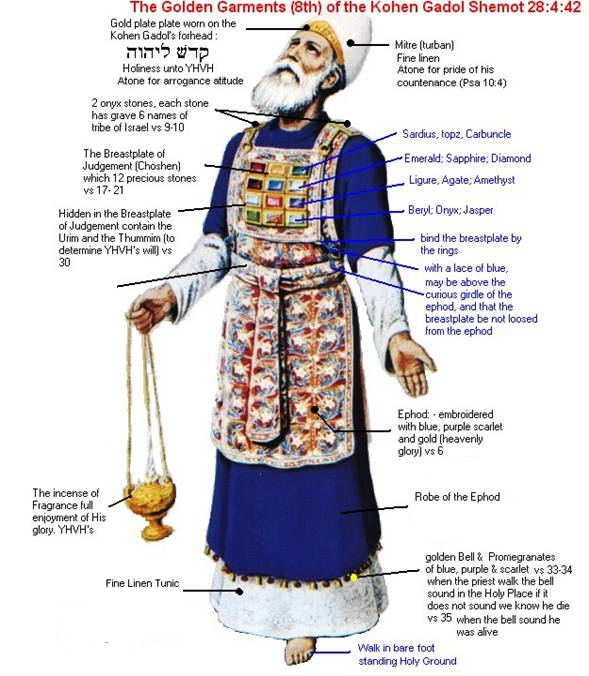
ks-kohengadolThe Choshen /חֹשֶׁן /breastplate and the Ephod /אֵפוֹד /apron are attached together and support each other as they cover the high priest. What made them special was the 42-Letter Name and 72-Letter Name that was folded up inside them, thus enabling the High priest to receive Divine answers to all the Israelites’ questions.

The Torah refers to the folded article with the Names on it as Umim and Tumim (את האורים ואת התמים) which is non-coincidentally reminiscent to the phrase Heaven and Earth (את השמים ואת הארץ) found in the Torah’s first verse which itself is derived from the 42-Letter Name. The Umim and Tumim were designed to be worn over the high priest’s heart which is where spiritually we should hold these names. While the word V’et (ואת) is a marker in the Torah whose square root of it’s numerical value is 20.17424, indicative of Moshiach Ben David (424) in the year 2017, the gematria of the first and final letters in Umim and Tumim (את האורים ואת התמים) is also 2017.  As in the beginning, Heaven and Earth will be once again unified. The Torah is giving us clues how we can do our part. 2017 CE or 5778 HC is the year given by Rav Ashlag for the coming of Moshiach (the Messiah) and the final redemption (Geulah).

The gematria of Choshen / חֹשֶׁן is the same as that of Mashiach (358) and the Ephod / אֵפוֹד contains the anabkoach160-ksword pad (redemption) whose gematria, as Rav Brandwein pointed out, is twice 42, representing the unification of the upper and lower Shem Mem-Bet (42-Letter Name) necessary for the geulah, final redemption. Moreover, the word Ephod/ אֵפוֹדis spelled later in the portion with a vav (ו) which brings the numerical value of the apron that supports the breastplate to 91, the same as amen and the unification of the Tetragrammaton with Adonai (יאהדונהי), the kabbalistic fusion of the upper and lower worlds that are made when we answer amen to a blessing.

These powerful connections makes perfect sense for the High Priest, as representative of the entire Israelite people before G-d, but what does it mean for us today?

The gematria of ”Choshen and Ephod” ו’אֵפד חֹשֶׁן = 449, which is the same as tallit / טלית, the prayer shawl many of us don everyday for prayers.

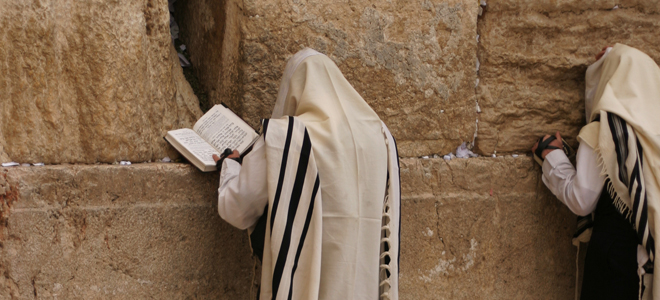
Man-praying-at-the-Western-wall-in-a-traditional-Tallit-or-Prayer-Shawl-_-by-Beggs_cropIt is no wonder then that the Torah goes into such detail in the making of the Choshen and Ephod; it is obviously something very powerful, and one to which we can connect everyday.

Whoever wears a tallit is most probably wearing it for all the right reasons; nonetheless, there is so much more we can get out of the experience.

For several years I was blessed to be able to stand beside Rav Berg of blessed memory and to say “amen” for him every morning when he donned his tallit; because there I learned close up what a wonderous moment it was for him and could be likewise for us.

Those first moments with the tallit wrapped across your face and over your shoulder should not be rushed through; besides the Ohr Makief (surrounding light) we receive they can be moments of clear and divinely-sent visions, and of receiving messages and images of the tzaddikim. As with the breastplate of the high priest, the shining light is available to us as well. We only need to know that we can connect to it.

Please pass this on to anyone who puts on a tallit; knowledge is power and armed with the knowledge of what their tallit connects to their prayers will be so much more powerful. Let us pray for the prompt arrival of Moshiach and for the final redemption at the appointed time. There is much work and preparation to be done; we can start by aligning our thoughts with Moshiach consciousness.

– See more at: http://kabbalahsecrets.com/?p=3287#sthash.FjwDseW6.dpuf

 
Leave a comment

Posted by on March 12, 2015 in Uncategorized


Can there be Compassion without Justice?

Can there be Compassion without Justice? (Ki Tissa, Covenant & Conversation 5775 on Ethics)
JONATHAN SACKS March 5, 2015, 7:00 pm 2
Jonathan Sacks
Jonathan Sacks
Rabbi Lord Jonathan Sacks is a global religious leader, philosopher, the author of more than 25 books, and moral voice … [More]

At the height of the drama of the Golden Calf a vivid and enigmatic scene takes place. Moses has secured forgiveness for the people. But now, on Mount Sinai yet again, he does more. He asks God to be with the people. He asks Him to “teach me Your ways,” and “show me Your glory” (Ex. 33: 13, 18). God replies: “I will cause all my goodness to pass in front of you, and I will proclaim my name, the Lord, in your presence … I will have mercy on whom I will have mercy, and I will have compassion on whom I will have compassion.” But, He said, “you cannot see My face, for no one may see Me and live” (Ex. 33: 20).

God then places Moses in a cleft in the rock face, telling him he will be able to “see My back” but not His face, and Moses hears God say these words:
“The Lord, the Lord, the compassionate and gracious God, slow to anger, abounding in love and faithfulness, maintaining love to thousands, and forgiving wickedness, rebellion and sin. Yet he does not leave the guilty unpunished … (Ex. 34: 6-7?)
This passage became known as the “thirteen attributes of God’s compassion.”

The sages understood this episode as the moment in which God taught Moses, and through him future generations, how to pray when atoning for sin.[1] Moses himself used these words with slight variations during the next crisis, that of the spies. Eventually they became the basis of the special prayers known as selichot, prayers of penitence. It was as if God were binding himself to forgive the penitent in each generation by this self-definition.[2] God is compassionate and lives in love and forgiveness. This is an essential element of Jewish faith.

But there is a caveat. God adds: “Yet he does not leave the guilty unpunished.” There is a further clause about visiting the sins of the parents on the children which demands separate attention and is not our subject here. The caveat tells us that there is forgiveness but also punishment. There is compassion but also justice.

Why so? Why must there be justice as well as compassion, punishment as well as forgiveness? The sages said that “When God created the universe He did so under the attribute of justice, but then saw it could not survive. What did He do? He added compassion to justice and created the world.”[3] This statement prompts the same question. Why did God not abandon justice altogether? Why is forgiveness alone not enough?

Some fascinating recent research in diverse fields from moral philosophy to evolutionary psychology, and from games theory to environmental ethics, provides us with an extraordinary and unexpected answer.

The best point of entry is Garrett Harding’s famous paper written in 1968 about “the tragedy of the commons.”[4] He asks us to imagine an asset with no specific owner: pasture land that belongs to everyone (the commons), for example, or the sea and the fish it contains. The asset provides a livelihood to many people, the local farmers or fishermen. But eventually it attracts too many people. There is over-pasturing or overfishing, and the resource is depleted. The pasture is at risk of becoming wasteland. The fish are in danger of extinction.[5]

What then happens? The common good demands that everyone from here on must practice restraint. They must limit the number of animals they graze or the amount of fish they catch. But some individuals are tempted not to do so. They continue to over-pasture or overfish. The gain to them is great and the loss to others is small, since it is divided by many. Self-interest takes precedence over the common good, and if enough people do so the result is disaster.

This is the tragedy of the commons, and it explains how environmental catastrophes and other disasters occur. The problem is the free rider, the person who pursues his or her self interest without bearing their share of the cost of the common good. Because of the importance of this type of situation to many contemporary problems, they have been intensively studied by mathematical biologists like Anatol Rapoport and Martin Nowak and behavioural economists like Daniel Kahneman and the late Amos Tversky.[6]

One of the things they have done is to create experimental situations that simulate this sort of problem. Here is one example. Four players are each given $8. They are told they can choose to invest as much or as little as they want in a common fund. The experimenter collects the contributions, adds them up, adds 50% (the gain the farmer or fisherman would have made by using the commons), and distributes the sum equally to all four players. So if each contributes the full $8 to the fund, they each receive $12 at the end. But if one player contributes nothing, the fund will total $24, which with 50% added becomes $36. Distributed equally it means that each will receive $9. Three will thus have gained $1, while the fourth, the free rider, will have gained $9.

This, though, is not a stable situation. As the game is played repeatedly, the participants begin to realise there is a free rider among them even if the experiment is structured so that they don’t know who it is. One of two things then tends to happen. Either everyone stops contributing to the fund (i.e. the common good) or they agree, if given the choice, to punish the free rider. Often people are keen to punish, even if it means that they will lose thereby, a phenomenon sometimes called “altruistic punishment.”

Some have linked participants to MRI machines to see which parts of the brain are activated by such games. Interestingly, altruistic punishment is linked to pleasure centres in the brain. As Kahneman puts it, “It appears that maintaining the social order and the rules of fairness in this fashion is its own reward. Altruistic punishment could well be the glue that holds societies together.”[7] This, though, is hardly a happy situation. Punishment is bad news for everyone. The offender suffers, but so do the punishers, who have to spend time or money they might otherwise use in improving the collective outcome. And in cross-cultural studies, it turns out to be people from countries where there is widespread free-riding who punish most severely. People are most punitive in societies where there is the most corruption and the least public-spiritedness. Punishment, in other words, is the solution of last resort.

This brings us to religion. A whole series of experiments has shed light on the role of religious practice in such circumstances. Tests have been carried out in which participants have the opportunity to cheat and gain by so doing. If, without any connection being made to the experiment at hand, participants have been primed to think religious thoughts – by being shown words relating to God, for example, or being reminded of the Ten Commandments – they cheat significantly less.[8] What is particularly fascinating about such tests is that outcomes show no relationship to the underlying beliefs of the participants. What makes the difference is not believing in God, but rather being reminded of God before the test. This may well be why daily prayer and other regular rituals are so important. What affects us at moments of temptation is not so much background belief but the act of bringing that belief into awareness.

Of much greater significance have been the experiments designed to test the impact of different ways of thinking about God. Do we think primarily in terms of Divine forgiveness, or of Divine justice and punishment? Some strands within the great faiths emphasize one, others the other. There are hellfire preachers and those who speak in the still, small voice of love. Which is the more effective?

Needless to say, when the experimental subjects are atheists or agnostics, there is no difference. They are not affected either way. Among believers, though, the difference is significant. Those who believe in a punitive God cheat and steal less than those who believe in a forgiving God. Experiments were then performed to see how believers relate to free-riders in common-good situations like those described above. Were they willing to forgive, or did they punish the free-riders even at a cost to themselves. Here the results were revelatory. People who believe in a punitive God, punish people less than those who believe in a forgiving God.[9] Those who believe that, as the Torah says, God “does not leave the guilty unpunished,” are more willing to leave punishment to God. Those who focus on Divine forgiveness are more likely to practice human retribution or revenge.

The same applies to societies as a whole. Here the experimenters used terms not entirely germane to Judaism: they compared countries in terms of percentages of the population who believed in heaven and hell. “Nations with the highest levels of belief in hell and the lowest levels of belief in heaven had the lowest crime rates. In contrast, nations that privileged heaven over hell were champions of crime. These patterns persisted across nearly all major religious faiths, including various Christian, Hindu and syncretic religions that are a blend of several belief systems.”[10]

This was so surprising a finding that people asked: in that case, why are there religions that de-emphasize Divine punishment? Azim Shariff offered the following explanation: “Because though Hell might be better at getting people to be good, Heaven is much better at making them feel good.” So, if a religion is intent on making converts, “it’s much easier to sell a religion that promises a divine paradise than one that threatens believers with fire and brimstone.”[11]

It is now clear why, at the very moment He is declaring his compassion, grace and forgiveness, God insists that He does not leave the guilty unpunished. A world without Divine justice would be one where there is more resentment, punishment and crime, and less public-spiritedness and forgiveness, even among religious believers. The more we believe that God punishes the guilty, the more forgiving we become. The less we believe that God punishes the guilty, the more resentful and punitive we become. This is a totally counterintuitive truth, yet one that finally allows us to see the profound wisdom of the Torah in helping us create a humane and compassionate society.

[1] Rosh Hashanah 17b.

[2] The Talmud in Rosh Hashanah 17b says that God made a covenant on the basis of these words, binding himself to forgive those who, in penitence, appealed to these attributes. Hence their centrality in the prayers leading up to Rosh Hashanah and Yom Kippur, and on Yom Kippur itself.

[3] See Rashi to Genesis 1:1.

[4] Garrett Harding, “The tragedy of the commons,” Science 13 December 1968: Vol. 162 no. 3859 pp. 1243-1248.

[5] Long before Garrett Harding there was an old Hassidic story about the village where the people decided each to donate an amount of wine to fill a vat to present to the King on his forthcoming visit to the village. Secretly at night over the next few weeks each of the villagers took some wine, arguing to themselves that such a small amount would not be noticed. Each added an equal amount of water to the vat so that it stayed full. The king arrived, the villagers presented him with the vat, he drank from it and said, “It’s just plain water.” I guess many folk traditions have similar stories. This is, in essence, the tragedy of the commons.

[6] See Robert Axelrod, The Evolution of Cooperation. New York: Basic, 1984. Matt Ridley, The Origins of Virtue, Penguin, 1996. Daniel Kahneman, Thinking, Fast and Slow, Allen Lane, 2011. Martin Nowak and Roger Highfield, Super Cooperators: Evolution, Altruism and Human Behaviour or Why We Need Each Other to Succeed, Edinburgh: Canongate, 2011.

[7] Kahneman, Thinking, Fast and Slow, 308.

[8] Ara Norenzayan, Big Gods: How Religion Transformed Cooperation and Conflict, Princeton University Press, 2013, 34-35.

[9] Ibid., 44-47.

[10] Ibid., 46.

[11] Ibid.

Read more: Can there be Compassion without Justice? (Ki Tissa, Covenant & Conversation 5775 on Ethics) | Jonathan Sacks | The Blogs | The Times of Israel http://blogs.timesofisrael.com/can-there-be-compassion-without-justice-ki-tissa-covenant-conversation-5775-on-ethics/#ixzz3TcV5L5ZE
Follow us: @timesofisrael on Twitter | timesofisrael on Facebook

Segun tomado de, http://blogs.timesofisrael.com/can-there-be-compassion-without-justice-ki-tissa-covenant-conversation-5775-on-ethics/?utm_source=The+Times+of+Israel+Daily+Edition&utm_campaign=086151483e-2015_03_06&utm_medium=email&utm_term=0_adb46cec92-086151483e-54798245

 
Leave a comment

Posted by on March 6, 2015 in Uncategorized


Who wrote the Book of Esther?

Who wrote the Book of Esther?

Tradition says Mordechai wrote the Book of Esther, but surely he wouldn’t have gotten the timing of his own expulsion a century wrong?

By Elon Gilad | Mar. 4, 2015 | 2:55 PM

Women of the Wall costumed for Purim (Miriam Alster)
Women of the Wall costumed for Purim reading the Megillah (Book of Esther) at the Western Wall, March 3, 2015. Photo by Miriam Alster

At the very core of the Jewish holiday of Purim lies the Book of Esther, which tells they story of how two Jews, Mordechai and Esther, who ascended in the ancient Persian court of Ahasuerus, saved the Jews from genocide by the evil prime minister Haman.

Jews have been ritualistically reading the book every Purim as long as the holiday has existed, which is over 2,000 years. But who wrote it? And could it be based on fact?

Tradition has it that the core of the book was written by Mordechai, its main character and the cousin of Esther, and that the text was later redacted by the Great Assembly (a Jewish council of sages in antiquity).

It could well be true. Certainly the author exhibits impressive knowledge of the royal palace in the Achaemenid capital of Shushan, and of the customs and traditions of this court. The writer most probably lived in Shushanand was privy to court life.

Places where the text contravenes, or does not support, known history as we understand it today could be the result of this much-later redactment of the core text.

But while the writer gets the general characteristics of the court right, we cannot be sure whose reign he is describing.

Who was Ahasuerus exactly?

Ahasuerus is the Aramaic form of Xerxes, who reigned in 485-465 B.C.E., but Xerxes’ queen is known to have been named Amestris, not Vashti, or Esther.

So it seems either Xerxes had more than the one wife, or Ahasuerus wasn’t Xerxes. Some even think “Ahasuerus” might have been Artaxerxes I or even Artaxerxes II, though their names in Aramaic were “Artahashta.”

In any case, none of these kings were documented, outside the Book of Esther, as having wives named either Vashti or Esther. Again, this could be an artifact of belated redactment by people not cognizant of the specifics.

The timing of King Jeconiah

There is a problem with the timing, too, which could also be an artifact of the book having been redacted long years after the event.

The Book of Esther says Mordechai was exiled from Judah with King Jeconiah: “Now in Shushan the palace there was a certain Jew, whose name was Mordechai… Who had been carried away from Jerusalem with the captivity which had been carried away with Jeconiah king of Judah, whom Nebuchadnezzar the king of Babylon had carried away” (Esther 2:5-6).

But King Jeconiah was expelled from Judah by Nebuchadnezzar 130 years before Xerxes ascended the throne. Surely a contemporary writer like Mordechai would have known that.

And then there’s the language of the book. On the one hand, the fact that no Greek influence made it into Esther is strong evidence that the book was written before the Achaemenid Dynasty was destroyed by Alexander the Great in 330 B.C.E., marking the start of the Hellenistic period.

On the other hand, the form of the Hebrew of the book, and, even more so, the form of the many Persian loanwords embedded in it, both indicate that the book was likely written toward the end of the Achaemenid Dynasty.

Taken together, the evidence of the vagueness about the king and the timeline problems, and the language, indicate that the redaction was by a Jewish scribe writing in Shushan in the middle of the 4th century B.C.E., about events that apparently happened more than a century before.

The Babylonian legend theory

One theory holds that the elaborate story is based on a Babylonian legend that lay at the center of a Babylonian holiday commemorating the victory of the Babylonian gods over the Elamite gods.

Advocates argue that the names of the characters in Esther – Mordechai, Esther, Haman, and Vashti – are Marduk, patron deity of the city of Babylon, Ishtar, Babylonian goddess of fertility, Khumban, the Elamite god of the sky, and Mashti, an Elamite goddess.

But the theory has a fatal flaw: there is no known Babylonian myth or holiday describing the victory of the Babylonian gods over the Elamite gods.

Another flaw in the “Babylonian legend” theory is that a pious Jew, fiercely protective of his identity in exile, would be unlikely to have borrowed a foreign myth from the neighbors. So let’s look inside Judaism to seek a source for the story.

The Jewish source theory

A Jewish scribe, living in exile in Shushan, would have known at least parts of the Jewish canon that would later become the Bible. It is at least possible that the inspiration for the Esther story is the story of Joseph in the court of Pharaoh.

Joseph’s story begins with him being taken in captivity to Egypt. Mordechai’s story begins with him being taken into captivity to Babylonia.

Joseph refuses to lay with his master’s wife and Mordechai refuses to bow down to Haman – they both get in trouble.

Joseph interprets the dreams of Pharaoh’s ministers, and Mordechai saves Ahasuerus from an assassination attempt – yet both go unrewarded.

Pharaoh can’t interpret his dreams and is told of Joseph, Ahasuerus can’t sleep and is told of Mordechai; both provide the needed service and get the king’s ring; both are paraded on the street; and both become close advisers to the crown.

Once again the language can be brought in as evidence. The writer of Esther seems to have known the story of Joseph and Pharaoh: he uses many of the same words. A great example of this is the word it-a-PAK – “he held back” – which, in the Bible, only appears in these two stories.

Enter King Saul

But while the story of Esther could be based on the story of Joseph, it also bears a close relationship to the story of King Saul. It might even be seen as a kind of sequel, a theory supported by the way the author introduces the characters.

Mordechai is introduced as a descendant of Saul, while Haman is introduced as a descendant of Agag the Amalekite king. This parentage is no trivial fact. In 1 Samuel, Saul loses his kingship to David because he defied the will of God and did not kill Agag. In Esther, Mordechai, a descendant of Saul, kills Haman, a descendant of Agag, and his children.

Why would a Jewish scribe writing in Shushan in the 4th century B.C.E. write about events that settled the score between Saul and God in the preceding century? Jona Schellekens, a sociologist at the Hebrew University, came up with a theory for this, which he published in a paper in 2009.

The Jewish propaganda theory

According to Schellekens’ interpretation, the Book of Esther is a fanciful family history of a rich and powerful Jewish family in 4th century B.C.E. Shushan, a legendary account of how the family’s ancestor Mordechai gained power in court, and of the source of the family’s wealth and authority.

But beyond being family folklore, it’s also propaganda, says Schellekens. It’s as if the Book of Esther is saying that Mordechai’s family should be kings in place of the House of David. Not only did they once a long time ago save all the Jews (you weren’t there, it was awesome, just trust us on this!), they also descended from Saul, the first king of Israel.

If this theory is true, the attempt was unsuccessful, as we don’t hear of this family again in Jewish history. This is also the main weakness of this theory. How do we know they ever existed?

We don’t know, but Schellekens points to the very last verse of Esther, indeed to the very last word: “He [Mordechai] was great among the Jews and popular with many of his countrymen, for he sought favor for his people, and spoke of peace and prosperity for all of his posterity.”

That one word “posterity” is the only reference to his family. It could be that the family did exist, but that its fortunes changed soon after Esther was written. Alexander the Great deposed the Achaemenid Dynasty in 330 B.C.E., which could have pushed the family off the stage of history.

Segun tomado de, http://www.haaretz.com/jewish-world/jewish-world-features/.premium-1.645283 el miércoles, 4 de marzo de 2015.

 
Leave a comment

Posted by on March 4, 2015 in Uncategorized


Was Columbus secretly a Jew?

Was Columbus secretly a Jew?

Christopher Columbus bids farewell to his son Diego at Palos, Spain, before embarking on his first voyage on August 3, 1492.

Story highlights

  • Sunday marks the 508th anniversary of the death of Christopher Columbus
  • Charles Garcia: Columbus was a Marrano, or a Jew who feigned to be a Catholic
  • He says that during Columbus’ lifetime, Jews became the target of religious persecution
  • Garcia: Columbus’ voyage was motivated by a desire to find a safe haven for Jews

Today marks the 508th anniversary of the death of Christopher Columbus.

Everybody knows the story of Columbus, right? He was an Italian explorer from Genoa who set sail in 1492 to enrich the Spanish monarchs with gold and spices from the orient. Not quite.

For too long, scholars have ignored Columbus’ grand passion: the quest to liberate Jerusalem from the Muslims.

During Columbus’ lifetime, Jews became the target of fanatical religious persecution. On March 31, 1492, King Ferdinand and Queen Isabella proclaimed that all Jews were to be expelled from Spain. The edict especially targeted the 800,000 Jews who had never converted, and gave them four months to pack up and get out.

Charles Garcia

The Jews who were forced to renounce Judaism and embrace Catholicism were known as “Conversos,” or converts. There were also those who feigned conversion, practicing Catholicism outwardly while covertly practicing Judaism, the so-called “Marranos,” or swine.

Tens of thousands of Marranos were tortured by the Spanish Inquisition. They were pressured to offer names of friends and family members, who were ultimately paraded in front of crowds, tied to stakes and burned alive. Their land and personal possessions were then divvied up by the church and crown.

Recently, a number of Spanish scholars, such as Jose Erugo, Celso Garcia de la Riega, Otero Sanchez and Nicholas Dias Perez, have concluded that Columbus was a Marrano, whose survival depended upon the suppression of all evidence of his Jewish background in face of the brutal, systematic ethnic cleansing.

Columbus, who was known in Spain as Cristóbal Colón and didn’t speak Italian, signed his last will and testament on May 19, 1506, and made five curious — and revealing — provisions.

Two of his wishes — tithe one-tenth of his income to the poor and provide an anonymous dowry for poor girls — are part of Jewish customs. He also decreed to give money to a Jew who lived at the entrance of the Lisbon Jewish Quarter.

On those documents, Columbus used a triangular signature of dots and letters that resembled inscriptions found on gravestones of Jewish cemeteries in Spain. He ordered his heirs to use the signature in perpetuity.

According to British historian Cecil Roth’s “The History of the Marranos,” the anagram was a cryptic substitute for the Kaddish, a prayer recited in the synagogue by mourners after the death of a close relative. Thus, Columbus’ subterfuge allowed his sons to say Kaddish for their crypto-Jewish father when he died. Finally, Columbus left money to support the crusade he hoped his successors would take up to liberate the Holy Land.

Estelle Irizarry, a linguistics professor at Georgetown University, has analyzed the language and syntax of hundreds of handwritten letters, diaries and documents of Columbus and concluded that the explorer’s primary written and spoken language was Castilian Spanish. Irizarry explains that 15th-century Castilian Spanish was the “Yiddish” of Spanish Jewry, known as “Ladino.” At the top left-hand corner of all but one of the 13 letters written by Columbus to his son Diego contained the handwritten Hebrew letters bet-hei, meaning b’ezrat Hashem (with God’s help). Observant Jews have for centuries customarily added this blessing to their letters. No letters to outsiders bear this mark, and the one letter to Diego in which this was omitted was one meant for King Ferdinand.

In Simon Weisenthal’s book, “Sails of Hope,” he argues that Columbus’ voyage was motivated by a desire to find a safe haven for the Jews in light of their expulsion from Spain. Likewise, Carol Delaney, a cultural anthropologist at Stanford University, concludes that Columbus was a deeply religious man whose purpose was to sail to Asia to obtain gold in order to finance a crusade to take back Jerusalem and rebuild the Jews’ holy Temple.

In Columbus’ day, Jews widely believed that Jerusalem had to be liberated and the Temple rebuilt for the Messiah to come.

Scholars point to the date on which Columbus set sail as further evidence of his true motives. He was originally going to sail on August 2, 1492, a day that happened to coincide with the Jewish holiday of Tisha B’Av, marking the destruction of the First and Second Holy Temples of Jerusalem. Columbus postponed this original sail date by one day to avoid embarking on the holiday, which would have been considered by Jews to be an unlucky day to set sail. (Coincidentally or significantly, the day he set forth was the very day that Jews were, by law, given the choice of converting, leaving Spain, or being killed.)

Columbus’ voyage was not, as is commonly believed, funded by the deep pockets of Queen Isabella, but rather by two Jewish Conversos and another prominent Jew. Louis de Santangel and Gabriel Sanchez advanced an interest free loan of 17,000 ducats from their own pockets to help pay for the voyage, as did Don Isaac Abrabanel, rabbi and Jewish statesman.

Indeed, the first two letters Columbus sent back from his journey were not to Ferdinand and Isabella, but to Santangel and Sanchez, thanking them for their support and telling them what he had found.

The evidence seem to bear out a far more complicated picture of the man for whom our nation now celebrates a national holiday and has named its capital.

As we witness bloodshed the world over in the name of religious freedom, it is valuable to take another look at the man who sailed the seas in search of such freedoms — landing in a place that would eventually come to hold such an ideal at its very core.

Segun tomado de, http://www.cnn.com/2012/05/20/opinion/garcia-columbus-jewish/ el miercoles, 4 de marzo de 2015.

 
Leave a comment

Posted by on March 4, 2015 in Uncategorized


PBS Traces 350 Years of Jewish Migrations

PBS Traces 350 Years of Jewish Migrations

jewish migrations in america
Passengers on board the S.S. Imperator arriving in New York City, June 19, 1913. (Library of Congress)

“You survive, you honor us by living,” said Martin Greenfield, now a New York master tailor, recalling his father’s words after he was liberated from the Buchenwald concentration camp.

The quote could easily be taken as the theme of “The Jewish Journey: America,” a PBS documentary tracking the migrations over 350 years of Jews fleeing Latin America, czarist Russia, Nazi Germany and the Muslim world for these shores.

The one-hour program, opening with a majestic rendition of “America the Beautiful,” will air on PBS stations nationwide in March and April. The show is produced, directed and written by Andrew Goldberg, who has become the semi-official Jewish chronicler for PBS, with such productions as “The Yiddish World Remembered” (2002), “Anti-Semitism in the 21st Century” (2007) and “Jerusalem: Center of the World” (2009).

While many Jews arrived in the United States seeking refuge from persecution, millions more came for economic reasons — to build better lives for themselves and their children in the New World.

The first Jews to arrive in the future United States were 23 Sephardim who fled the Portuguese Inquisition in Brazil in 1654. They settled in New Amsterdam, later known as New York.

They were followed by Jews fleeing failed revolutions in Europe in the 1840s and later by Gold Rush fortune seekers. But by the 1870s, Jews in the United States numbered no more than 200,000.

By 1927, the American Jewish population had skyrocketed to more than 4 million, spurred by the massive influx of 1.5 million Jews from Eastern Europe, predominantly Russia, between 1880 and 1910. It speaks to the Jewish penchant for founding and then splitting into separate groups that there were some 17,500 Jewish organizations in the United States in 1927.

The mass immigration from the Pale of Settlement gives the film a chance to draw on various archives to illustrate the lives of poor Jews — the wealthy ones mostly stayed put – both in the shtetl and then on New York’s crowded Lower East Side.

Often overlooked in the triumphant rendition of the American Dream is the film’s description of the emotional price paid by emigrants as they separated from families and traditions that had bound them together for generations.

Though the new immigrants endured hard times in their adopted country, they usually wrote glowing letters of their success to the folks back home, which triggered even more immigration.

With the post-World War I recession and fear of the communist revolution in Russia came growing xenophobia, culminating in the 1924 Immigration Act, which narrowed the once wide-open entrance to the United States, especially to applicants from Eastern and Southern Europe.

A small but steady trickle of Jews arrived after World War II from displaced persons camps. More came after establishment of the State of Israel, fleeing hostility to Jews in Islamic countries in North Africa and the Middle East. Another wave arrived after the 1979 Islamic Revolution in Iran, followed by Soviet Jews in the 1990s.

Integration of the new immigrants was rarely easy. In an illuminating interview, New York Rabbi Marc Angel recalls the dual pressure from his grandfather to strive for success in the new country but still retain Jewish traditions.

Yet, Angel concluded, the real miracle was that after so many generations in America, Jews have remained Jews.

Producer-director Goldberg, who founded and heads Two Cats Productions, ascribes much of his interest in Jewish-themed films to his own heritage. But there are other reasons as well.

“For one, PBS likes our work, and also there is a community that is willing to fund such documentaries,” he said.

Only about one-third of Goldberg’s productions are on Jewish themes. Now in the pipeline are a documentary on animal cruelty and another on the interpretation of classical music.

“The Jewish Journey: America” will begin airing nationwide on March 3-2015.

Segun tomado de, http://www.virtualjerusalem.com/news.php?Itemid=16179 el martes, 3 de marzo de 2015.

 
Leave a comment

Posted by on March 3, 2015 in Uncategorized


Shalom Alejem – Guía paso a paso

Shalom Alejem – Guía paso a paso

Shalom Alejem – Guía paso a paso

Dándoles la bienvenida a los ángeles antes de comenzar la cena del viernes.

por

¡Shalom Alejem! – el saludo que se utiliza tradicionalmente cuando dos judíos se encuentran, también es el nombre de la canción con la que comienza la cena del viernes. Shalom Alejem – que la paz esté con ustedes.

Shalom… paz… viene de la palabra hebrea shalem, que significa completo.

En el nivel más básico, al cantar esta canción, le estamos pidiendo a Dios que bendiga nuestro hogar con paz, que no haya conflictos entre amigos ni familiares, especialmente en Shabat.

El Talmud dice que cuando una persona vuelve a casa desde la sinagoga el viernes a la noche, es acompañada por dos ángeles, uno bueno y uno malo. Si la mesa está bellamente preparada y hay una atmósfera de paz en la casa, el ángel bueno dice: que así sea la próxima semana, y el ángel malo está forzado a decir, ¡Amén, que así sea! Pero si la casa es un desorden (tanto físico como emocional), el ángel malo dice, que así sea la próxima semana, y el ángel bueno está forzado a decir ¡Amén!

Sin embargo, en otro nivel, estamos pidiendo completitud: sentir realmente que no nos falta nada – sentir que en Shabat el mundo está completo. Nos sobrecogemos ante esta revelación. Nuestro trabajo de la semana está terminado.

El único trabajo que hay para hacer ahora es el de Shabat, que es mucho más profundo, y a menudo también mucho más difícil de realizar: consiste en trabajar en uno mismo, en la completitud real, en convertirnos en la persona que podemos ser.

En Shabat dejamos de estar divididos. Durante la semana hay un tú que trabaja, un tú familiar, el tú del día a día. Pero en Shabat estás enfocado, todo está en armonía: la familia, el estudio, la alegría por la vida…

¡Shalom Alejem!

Se acostumbra cantar tres veces cada verso:


La paz sea con vosotros, ángeles guardianes, ángeles del Altísimo,
del Rey de reyes, el Santo, Bendito es.

Arribad en paz, ángeles de la paz, ángeles del Altísimo,
del Rey de reyes, el Santo, Bendito es.

Bendecidme con paz, ángeles de la paz, ángeles del Altísimo,
del Rey de reyes, el Santo, Bendito es.

Partid en paz, ángeles de la paz, ángeles del Altísimo,
del Rey de reyes, el Santo, Bendito es.

Escuchar esta bendición

Imprimir el texto de esta bendición

Reflexiones

Recuerdo muchas cosas de mis primeros Shabatot, pero lo que más resuena en mi mente son las canciones.

En mi casa paterna sólo cantábamos en familia cuando era traída una torta de cumpleaños.

Entonces, cuando me senté en una mesa de Shabat y escuché el canto de Shalom Alejem, en el que participaban tanto los jóvenes como los ancianos, me emocioné hasta las lágrimas. Pensé: yo también quiero esto, algún día, en mi propia mesa de Shabat.

Creo que esa música es fundamental para Shabat. Abre el cielo. Ni siquiera hace falta que sepas la letra, sólo tararea y sigue la corriente, y podrás sentir el poder de una canción de Shabat.

Adaptado de Friday Night and Beyond, por Lori Palatnik (Jason Aronson Pub.).

Segun tomado de, http://www.aishlatino.com/sh/csh/Shalom-Alejem.html?s=feat

 
Leave a comment

Posted by on March 1, 2015 in Uncategorized


What is oral suction circumcision and where does it come from?

What is oral suction circumcision and where does it come from?
How the interpretation of the ancient Hebrew words ‘metzitzah b’peh’ has changed can be a matter of life and death for baby boys.
By Elon Gilad

The herpes simplex virus (CDC)

The herpes simplex virus (CDC) Transmission electron micrograph of herpes simplex virus, which the baby can catch from physical contact with an infected mohel’s mouth. Photo by Dr. Erskine Palmer, CDC, Wikimedia Commons

Limor Edrey
A Jewish baby during his circumcision ceremony Photo by Limor Edrey

Health officials have reached a tentative agreement with New York City’s ultra-Orthodox community over regulating the controversial practice known as metzitzah b’peh, or “oral suction circumcisions,” the Associated Press reported Tuesday.

The tradition of metzitzah b’peh goes back to biblical times but has created a modern-day dilemma for religiously observant mankind. New York City officials linked the practice to 17 cases of infant herpes since 2000, of whom two died. In the latest development, the city will stop requiring mohels who use oral suction to have parents sign consent forms, which many hadn’t complied with anyway. Instead the city will focus its efforts on educating members of the ultra-Orthodox community about the risks and dangers of the practice. “Our goal is to achieve awareness of the risks,” city representative Avi Fink stated.

What is oral suction circumcision, or metzitzah b’peh, and where did it come from?

Though to a small number of observant communities, the practice is routine and normal, to cosmopolitan sophisticates it may seem pretty gruesome. After the mohel cuts off the foreskin, he uses his mouth – oral suction, rather than say a sponge – to effectively clear the wound on the baby’s penis of blood, lest it clot and decay.

As for where it arose, metzitzah b’peh is a time-honored tradition codified in the most important Jewish scripts, much like circumcision itself.

Ancient Greek medical theory

We first encounter the practice in the Mishnah, the first compendium of laws of rabbinic Judaism (c. 200 CE): “We perform all the requirements of circumcision on the Sabbath: We circumcise, uncover, suck, and place a compress with cumin on it” (Sabbath 19b).

The critical word here is the Hebrew word for suck: metzitzah.

In the Talmudic commentary on this passage in the Mishnah (Shabbat 133b), the 4th century rabbi Papa of Babylon writes that failure to perform this suction is dangerous for the baby, and any mohel who neglects to perform the ritual should be fired.

In other words, the rabbis viewed metzitzah as a health measure. Their thesis of medicine and disease was informed by the prevailing theory of the time – Hippocrates’ theory of the four humors, authoritatively expanded upon by the prominent Greek physician Galen in the 2nd century.


A 12-century mural showing Galen and Hippocrates, though they lived hundreds of years apart, from Anagni, Italy. Photo by: Nina Aldin Thune, Wikimedia Commons
One of the main treatments Galen prescribed for an assortment of ailments was bleeding, which he believed was a way to restore the “equilibrium” between blood and the other three humors – phlegm, yellow bile, and black bile. He also believed that stagnating blood decays.

Specifically when it came to treating wounds, his theory led Galen to prescribe that blood be prevented from building up in and around the wound, lest it clot and rot, causing the wound in turn to rot.

Oral suction then, seems to have developed as a way to ensure that the circumcised baby is properly bled, that no clots form and cause decay, and that all his humors are in equilibrium.

The science of medicine and outbreaks

Jews obeyed this health directive for generations. But by the 19th century, science had acknowledged the microscopic agents of disease, the theory of the four humors was contested and the science of medicine began to change.

A turning point came in 1836, when an outbreak of sickness was observed among newborn Jewish babies in Vienna.

Rabbi Elazar Horowitz observed that all the infants, some of whom died from the illness, had all been circumcised by the same mohel. Moreover, all exhibited the same symptoms – an outbreak on their skin that progressed from their penis to the rest of the body.

Horowitz consulted with doctors, who postulated that the oral suction could be the origin of the trouble. His friend Dr. S. Wertheim, chief physician at the city’s Jewish hospital, suggested that the same cleansing, suction effect could be achieved by use of a wine-soaked sponge applied to the incision while the mohel pressed down on the penis.

Horowitz then wrote to his rabbi, Moses Sofer, the head of the Bratislava Yeshiva – one of the most important rabbis of the day – asking for guidance on whether to instruct his flock to stop using oral suction and use Dr. Wertheim’s method instead. Rabbi Sofer replied early in 1837 that the new method was acceptable, based on careful study of the etymology of the Hebrew and Aramaic verbs for suck – matzatz.

The word implied suction, Sofer wrote – but not necessarily with the mouth. If anything, the method of circumcision itself had already changed, the rabbi pointed out: the Mishnah calls for the use of cumin in the bandage protecting the circumcised penis, but over the generations, the spice had been replaced by other substances.

Following Sofer’s authoritative decision, during the 19th century, many rabbis began to instruct their community mohels to forgo oral suction and use other methods, though some leading figures in the ultra-Orthodox community argued that metzitzah b’peh was part of the commandment to circumcise and thus could not be omitted or altered.

In the late 19th century, as the West recognized the role of microscopic agents in disease, studies began to appear in medical journals tying oral suction to infant illness and mortality.

These days the practice is very rare, having been replaced, when at all, by alternative methods of suction.

Yet a minority of mohels in the ultra-Orthodox community continue to practice metzitzah b’peh, insisting that otherwise they would not be following the full letter of the law, and citing the Rabbi Papa saying that a mohel who doesn’t do so should be dismissed. Also, suction with the mouth is more efficient than trying to achieve it with, say, a dry cloth, they explain. And at least 11 infant boys contracted herpes in New York City since 2000, and two died. It seems that for some infants the exact meaning of the word metzitzah is the difference between life and death.

Segun tomado de, http://www.haaretz.com/jewish-world/jewish-world-features/.premium-1.644138 el miercoles, 25 de febrero de 2015.

 
Leave a comment

Posted by on February 25, 2015 in Uncategorized