RSS

Author Archives: yishmaelgunzhard

19 Facts You Should Know About Sephardic Jewry

By Menachem Posner

1. Sepharad is the Ancient Hebrew Word for Spain

Since Biblical times, the Jewish people have referred to Spain as Sepharad. We see this in the Book of Obadiah, where we are told that “the exile of Jerusalem which is in Sepharad shall inherit the cities of the southland.” Where is Sepharad? The Targum Jonathan identifies it as “Espamia,” Spain. Thus, the Jewish people living in Spain and the Iberian Peninsula (as well as their descendants) became known as Sephardim.

Read: An Overview of Ashkenazi and Sephardic Jews

2. Sephardic Culture and Scholarship Rose in the 10th Century
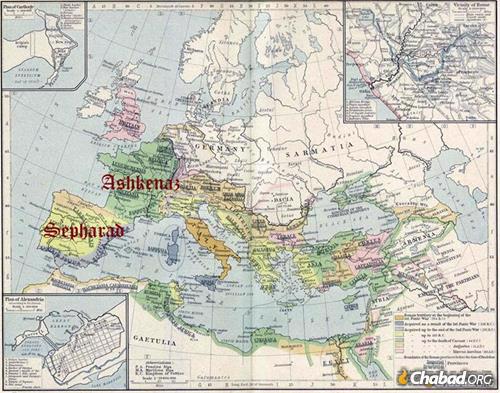
After the decline of the Jewish communities in the Holy Land and Babylon, Jews found new life in Europe, where they blossomed into Ashkenaz and Sepharad.

After the decline of the Jewish communities in the Holy Land and Babylon, Jews found new life in Europe, where they blossomed into Ashkenaz and Sepharad.

Even though Jews had been living there for centuries, in the 10th century the Jews of Spain took a leading role in guiding the spiritual and cultural development of the Jewish people as a whole, in large part due to the influence of Rabbi Chasdai ibn Shaprut, a wealthy scholar, physician and statesman. Under his stewardship, Cordoba became a thriving center of Jewish life and learning. At that time, Spain was an Arabic-speaking Muslim land, and Jews took part in the explosion of scientific and linguistic scholarship that abounded.

Read: Chasdai ibn Shaprut

3. Sepharad Soon Spread All Over

In the mid 12th century, much of Spain was overrun by the Almohads, a sect of fanatical Muslims. Many Sephardic Jews fled to avoid forced conversion to Islam, planting the seeds for the Sephardic diaspora that would flourish around the world.

Among the best-known Jews forced to leave Spain at that time was Maimonides, who was born in Cordoba and later gained acclaim as one of the greatest Jewish scholars and philosophers of all time in his adopted homeland of Egypt.

Read: Maimonides: His Life and Works

4. Jewish Life in Spain Effectively Ended in 1492

Isabella and Ferdinand are known for completing the Reconquista, ordering conversion of the Jews and Muslims in Spain.

Isabella and Ferdinand are known for completing the Reconquista, ordering conversion of the Jews and Muslims in Spain.

Despite the oppression of successive Muslim and Catholic rulers, Jews continued to form an integral part of Spanish life. In 1492, however, Ferdinand and Isabella expelled all Jews who refused to convert to Christianity. Hundreds of thousands set sail for Morocco, Portugal, Turkey and beyond, and those who remained were forced to hide their Jewish identity.

The Spanish exiles became prominent in their new homes, and often greatly influenced (and sometimes overshadowed) the communities that had existed there prior to their arrival. As a result, Jews from lands far from Spain are known as Sephardim. Since the big-tent Sepharad includes many more Jews than just the Spanish refugees and their descendants, a more accurate term for Jews of eastern provenance that has gained popularity in recent years is Eidot Hamizrach (“Communities of the East”).

Read: The Spanish Expulsion

5. Ladino Is the Lingua Franca of Sephardic Jewry
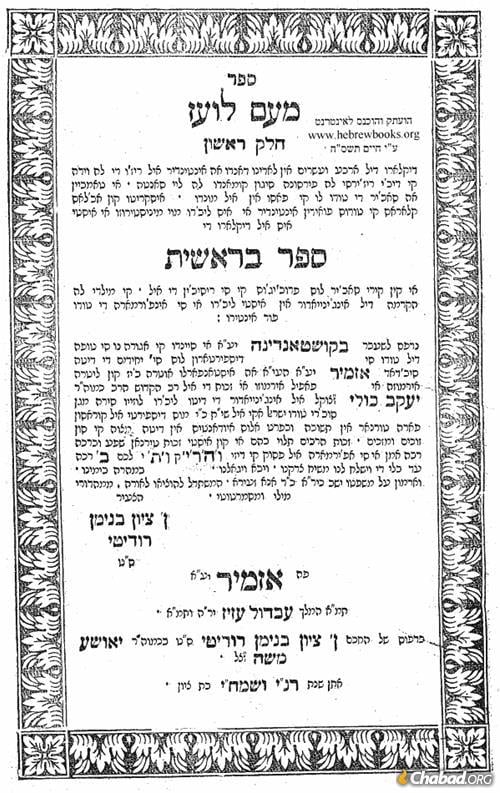
The first page of Me'am Lo'ez, a classic commentary on the Tanakh written in Ladino.

The first page of Me’am Lo’ez, a classic commentary on the Tanakh written in Ladino.

Many of the Sephardic exiles and their descendants proudly clung to the beautiful culture they had developed in Spain. Thus, even 500 years later, there are still Sephardim who speak Ladino, the Jewish version of Spanish, which contains many Hebrew words (and has since incorporated many others picked up from Arabic, Turkish and Slavic speaking neighbors). Like Yiddish, Ladino is written in Hebrew characters with its own system of spelling.

Read: 10 Ladino Words to Use All the Time

6. The Safed Kabbalists Were Sephardim

Following the composition (and publication) of the Zohar, the most significant advancement of the Kabbalah was due to the prolific and Divinely inspired teachings of the cadre of Kabbalists who lived in 16th-century Safed (Tzefat).

These men were all Sephardim. Even the Arizal, who was sometimes called the Ashkenazi Rabbi Isaac, was the son of a Sephardic mother and was raised by his Sephardic uncle, Mordechai Frances of Cairo.

Read: Safed and the Attempt to Revive Semichah

7. Sephardic Communities Were Decimated by the Holocaust
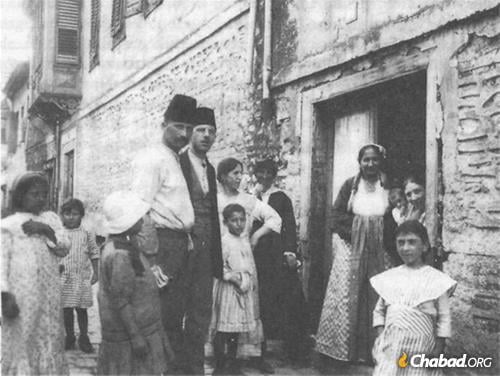
A large and lively Sephardic community once lived in Thessaloniki, Greece.

A large and lively Sephardic community once lived in Thessaloniki, Greece.

Most contemporary Sephardic Jews hail from Turkey, North Africa and the Middle East, places that were largely unscathed by the Holocaust. However, there were once thriving Sephardic communities in Greece, Italy, the Balkans, and Romania, which were almost completely decimated by the Nazis and their local collaborators.

Cities like Thessaloniki (once referred to in Ladino as La Madre de Israel, “Mother of Israel), were bereft of their Jewish denizens, with few survivors left to carry on their rich traditions.

Read: Jewish Salonica Today

8. Persians, Yemenites, and Others Are Not Sephardim
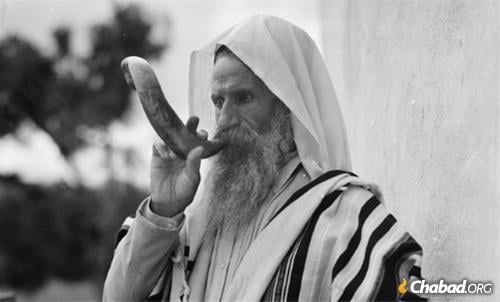
A Yemenite Jew blows shofar (circa 1930s).

A Yemenite Jew blows shofar (circa 1930s).

People rarely fit neatly inside the boxes we try to squeeze them into, and many cultures that are mistakenly (and conveniently) placed under the rubric of Sepharad are actually not Sephardic at all. Some examples are the Yemenite Jews, whose unique Jewish tradition is even more ancient and did not come by way of Spain; Persian Jews, who speak Judeo-Farsi and trace their lineage to the Babylonian exiles; indigenous Italian and Greek Jewish communities, whose culture lies somewhere between Ashkenaz and Sephard with plenty of unique elements; as well as the Mustarabim, Jews native to Arabic lands, who were were overshadowed by and merged into the Sephardic majority.

Watch: Jewish Life and Culture in Italy

9. Rabbi Yosef Caro Is the Final Sephardic Arbiter of Jewish Law
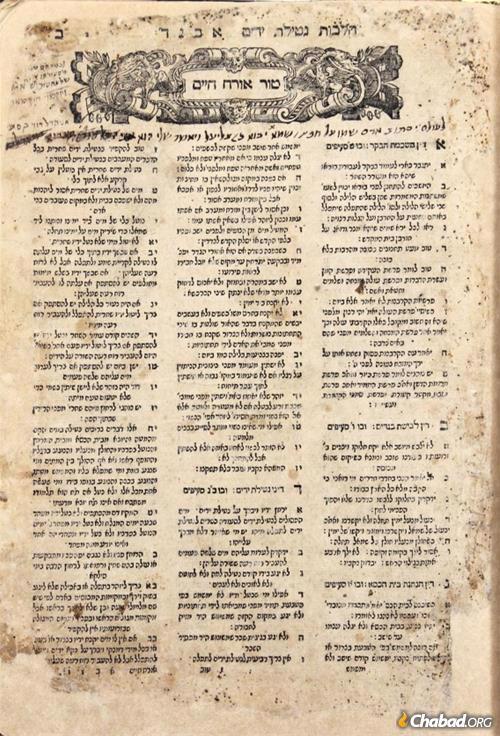
The first page of the Shulchan Aruch, printed in Venice during the lifetime of the author.

The first page of the Shulchan Aruch, printed in Venice during the lifetime of the author.

In the 16th century, Rabbi Yosef Caro, who was born in Toledo shortly before the expulsion, composed the Code of Jewish Law (Shulchan Aruch), in which he summarized and drew conclusions from the teachings of Maimonides, Rabbi Isaac Alfasi (Rif), and Rabbi Asher ben Yehiel (Rosh) in one highly-readable work.

While Ashkanazim often follow the rulings and insights inserted into the text by the Polish Rabbi Moshe Isserles, Sephardim are more inclined to act according to the rulings of Rabbi Yosef Caro.

Read: 14 Facts About Shulchan Aruch

10. Sephardim Have a Unique Form of Hebrew Cursive

Modern Hebrew generally appears in two forms: block and cursive. While contemporary cursive is similar to the script used for generations among Ashkanazim, it would have been illegible to Sephardim who favored an older form of Hebrew cursive that looks much more like what is now known as Rashi Script.

Read: What Is Rashi Script and Where Did It Come From?

11. Approximately Half of Israel’s Jews Are Sephardim

In the first years after the declaration of the State of Israel, Jews poured in from the Muslim lands where they had lived for generations, having suddenly found themselves unwelcomed by their erstwhile neighbors.

In those years, they often faced discrimination and had a hard time integrating into a society where many of the bureaucratic and political leaders were filled by Ashkanazim. In recent decades, many of those old rifts have faded, and Israel’s Sephardim have risen in prominence.

Read: 22 Facts About the Land of Israel

12. Sephardic Family Names Are Often Hundreds of Years Old

With notable exceptions, most Ashkenazi family names are only about 200 years old. Many Sephardim, on the other hand, have held onto their surnames for much longer than that. Thus, it is not uncommon for Sephardim to have names such as Toledano (“from Toledo”), Cardozo, and others that can be traced back to Spain.

Read: 10 Keys to Understanding Ashkanazi Last Names

13. Sephardim Call Their Rabbis Chacham
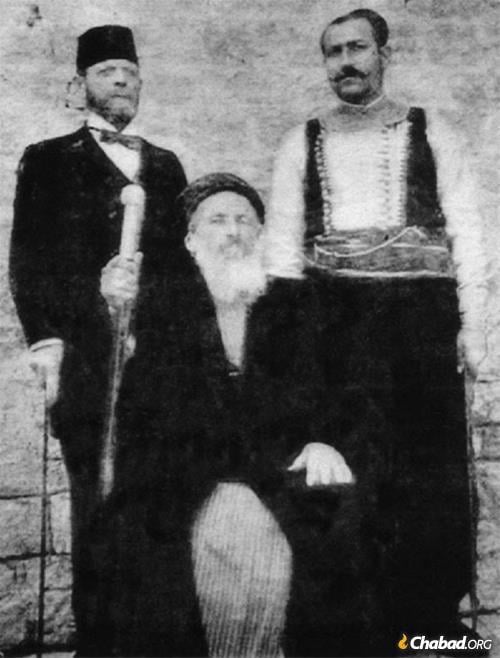
Rabbi Jacob Saul Dwek, Chacham Bashi of Aleppo, Syria, 1908.

Rabbi Jacob Saul Dwek, Chacham Bashi of Aleppo, Syria, 1908.

Many Sephardic communities use the word chacham to refer to a rabbi. At its zenith, the Ottoman Empire encompassed large segments of the Sephardic world. As such, the chief rabbis of various major Sephardic population centers were known as chacham bashi (bashi is the Turkish word for “head”). In addition to providing spiritual and social guidance, the Chacham Bashi had legal standing as the representative of his community in governmental affairs.

Read: The Bio of an Early Chacham Bashi

14. Sephardic Pronunciation Is More Nuanced Than Modern Hebrew

There is a common misconception that Modern Hebrew, spoken in contemporary Israel, is the Sephardic Hebrew. This, however, is a gross simplification. While Modern Hebrew does have certain elements of Sephardic pronunciation (such as not differentiating between a kamats and a patach, or between a tav with a dagesh [dot] and one without), it also misses some important nuances of Sephardic pronunciation, such as the difference between be the chaf and the chet (which is pronounced gutturally) and between the aleph and ayin, which is pronounced as a velar nasal.

Read: The Hebrew Alphabet

15. The Majority of English Jews Were Once Sephardic
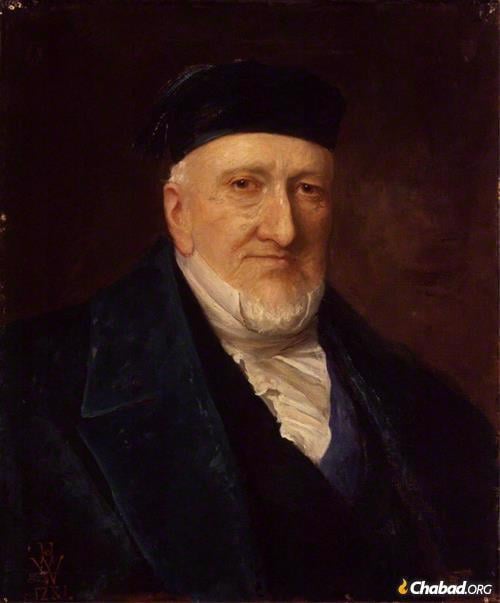
Sir Moses Haim Montefiore was a British financier and banker who worked tirelessly on behalf of Jews everywhere.

Sir Moses Haim Montefiore was a British financier and banker who worked tirelessly on behalf of Jews everywhere.

For centuries Amsterdam had a prosperous Sephardic community, made up primarily of Spanish Jews who came there by way of Portugal (until this very day, they still use Portuguese as part of their synagogue service). In 1655 Sephardic Dutch Rabbi Manasseh ben Israel of Amsterdam advocated successfully that Britain allow Jews back into its borders, almost 400 years after they had expelled their (Ashkenazi) Jews back in 1290. Jews began to trickle into England, and for a long time the majority of Anglo Jewry was of Sephardic stock. A prime example is Sir Moses Montefiore, the British knight who traveled the world to assist Jews everywhere.

Read: Sir Moses Montefiore

16. The First Jews in America Were Sephardim
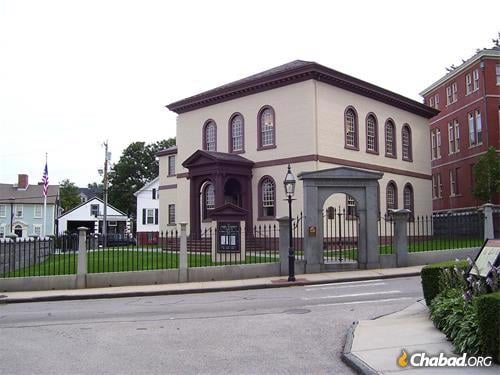
2009 photo of Touro Synagogue in Newport,Rhode Island, the oldest synagogue in North America

2009 photo of Touro Synagogue in Newport,Rhode Island, the oldest synagogue in North America

It was no accident, some say, that Columbus set sail on the very same day that the Jews were expelled from Spain. Indeed, while there is much unresolved speculation regarding the provenance of Columbus himself, it is clear that his trip was financed by Jews, desperate to find a place they could live and worship in peace.

Over the next centuries, the Caribbean, Latin America, and even North America were settled by Sephardim. Thus, the first Jews in what would become the US and Canada were of Sephardic origin.

Read: The History of Jews in Newport, RI

17. Nusach Sepharad Is Actually Ashkenazic

The traditional liturgy of Ashkenazi Jewry is known as Nusach Ashkenaz (Ashkenazi Rite). With the rise of the Chasidic movement, many began to incorporate various elements of the Sephardic rite into their prayers, since the Sephardic tradition was favored by the Kabbalists and more in tune with the meditations behind the prayers. This new Chassidic hybrid came to be known as Nusach Sepharad (or Nusach Arizal, since it conformed to the meditations of the Arizal).

Thus, a Nusach Sepharad synagogue is most likely populated by Ashkenazi Chassidim, and Sephardim prefer to refer to their rites as Eidot Hamizrach or Sephardi (with the added ‘i’) just to keep things clear.

Read: Is Chabad Ashkenazic or Sephardic?

18. Sephardic Jews Have Unique Cuisine

What Americans commonly refer to as Jewish food (chicken soup with kneidlach, kishke, potato latkes, sweet tzimmes etc.) is actually Ashkenazi food, which is not terribly dissimilar to the foods eaten by the gentiles in the lands where Ashkanazim originate.

Not surprisingly, these foods are unfamiliar to Sephardim, who enjoy an entirely different cuisine, reflective of the Mediterranean climate where they lived and prospered for generations.

Tired of Gefilte Fish? Make Some Sephardic Spicy Chraime!

19. Reform and Conservative Are Virtually Unheard Of

As social reforms swept through Western Europe, many Jews felt the pressure to “update” Judaism to conform with their newly acquired “enlightened” views. This led to the creation of Reform congregations, and by extension, Conservative ones, where the changes were not as drastic.

Sephardic Jews were largely untouched by those changes, and virtually all Sephardic Jews worship in the traditional Orthodox manner of their ancestors. By and large, even those Sephardim who have drifted from observance tend to be closer to tradition, with a warm place in their hearts for Torah, Torah scholars, and Jewish tradition.

As taken from, https://www.chabad.org/library/article_cdo/aid/4838207/jewish/19-Facts-You-Should-Know-About-Sephardic-Jewry.htm

 
Leave a comment

Posted by on August 17, 2020 in Uncategorized


Los Emiratos Árabes Unidos, los judíos e Israel

por Dra. Ivette Alt Miller

Los Emiratos Árabes Unidos, los judíos e Israel

Los Emiratos Árabes Unidos e Israel llegaron a un acuerdo histórico para normalizar los lazos entre las dos naciones.


El histórico acuerdo de paz entre Israel y los Emiratos Árabes Unidos (EAU) del 13 de agosto del 2020 ha enfocado la atención en esta pequeña nación árabe compuesta por siete emiratos ubicados en la Península Arábiga: Abu Dabi, Ajmán, Dubái, Fuyaira, Ras el Jaima, Sarja and Um el Kaiwain.

En años recientes estos emiratos se volvieron cada vez más tolerantes hacia los judíos; asi la vida judía comenzó a florecer en la región por primera vez en muchos siglos. Aquí les presento siete hechos sobre los Emiratos Árabes Unidos y la comunidad judía.

1. Una comunidad medieval

El área que en la actualidad conforma los siete emiratos de los EAU en una época albergó una comunidad judía. En el siglo XII un sabio judío que vivía en España, Rav Benjamín de Tudela, emprendió el largo viaje de una década a través del Medio Oriente, visitando las comunidades judías en la Tierra de Israel y los países vecinos. Él visitó Ras Al Khaimah, la cual hoy dia es uno de los siete emiratos de los EAU, y que tiene la historia más larga de residencia en el país.

Allí lo recibieron los judíos que vivían en un pueblo llamado Kis. Aunque hoy dia no queda ningún rastro del pueblo ni de los judíos que habitaron allí, el relato de Rav Tudela es un valioso registro de la presencia judía en la Península Arábiga.

2. Una tierra convulsa y la experiencia judía

Los EAU se independizaron de Gran Bretaña en 1971 y se vieron plagados por abusos a los derechos humanos. Allí son habituales la pena capital y duros castigos corporales. Los siete emiratos mantienen sin compromiso la ley de Sharia. El Islam es la religión oficial del país. Human Rights Watch, una organización que supervisa los derechos humanos en el mundo, señala que “el gobierno continúa deteniendo arbitrariamente y haciendo desaparecer a los individuos que critican a las autoridades” y que los trabajadores extranjeros tienen pocos derechos. Los EAU también participan en las fuerzas armadas en Arabia Saudita que toman parte en la guerra civil de Yemen y “llevaron a cabo decenas de ataques ilegales en Yemen”.

Durante años, los israelíes tenían formalmente prohibido visitar los EAU, e incluso periodistas judíos no israelíes dijeron sentirse incómodos en sus visitas a los Emiratos. Sin embargo, a medida que los EAU desarrollaron su infraestructura y su industria, en silencio buscaron ayuda de algunos científicos judíos. La historiadora Judith Friedman Roses señala que este fue el caso de su padre, Gerald Friedman, un sobreviviente judío del Holocausto que llegó a vivir en Israel y se convirtió en un experto en sedimentología petrolera. A pesar de la prohibición oficial de los EAU de recibir a israelíes, a Friedman le permitieron trabajar y conducir investigaciones en los Emiratos. Ella señala que su padre no fue el único. “Históricamente, durante décadas los EAU recibieron en secreto a expertos judíos e israelíes de agricultura, agronomía y agua”.

3. El crecimiento de la vida judía

Los EAU ganaron prominencia y población desde su independencia, y en los últimos años se convirtieron en un importante destino turístico. El Museo del Louvre de París ahora tiene una sucursal en Abu Dabi. En el 2010, la Universidad de Nueva York abrió un campus en el país. A medida que más turistas y empresarios llegan a vivir y a trabajar en los EAU (ya viven allí personas de más de 200 países), fue surgiendo una pequeña y vibrante comunidad judía. Ahora viven en los Emiratos cientos de judíos.

Eli Epstein, un empresario de Nueva York, estuvo viajando por trabajo a Dubai durante más de 30 años. En el 2018 él dijo en Bloomberg News que le habían dicho que “evitara usar su apellido porque sonaba demasiado judío”. Sin embargo, Epstein asegura que hoy día “Recorrimos un largo camino” en términos de la aceptación de los judíos en los Emiratos.

Durante años, Epstein y otros judíos que viven en Dubái se reunieron en sus hogares para los servicios de rezo judíos. En el 2015 alquilaron una casa para funcionar como una sinagoga no oficial. La casa brindó amplio espacio para los servicios, una cocina kasher y algunas habitaciones para que los judíos que viven demasiado lejos para caminar en Shabat y las festividades puedan quedarse allí. Aunque los judíos no marcaron el edificio de ninguna manera y mantienen relativamente en secreto el funcionamiento de su sinagoga no oficial en los Emiratos musulmanes, en los últimos años se sintieron más confiados y comenzaron a ser más abiertos respecto a su observancia. En el 2018, Eli Epstein incluso donó un rollo de la Torá a la sinagoga no oficial y habló con los periodistas respecto a su donación.

David Zabinsky se mudó de los Estados Unidos a Dubai en el 2015 y recientemente dijo al periódico saudí Al Arabiya que descubrió su religión judía después de unirse a la “floreciente” comunidad judía local, cuando comenzó a celebrar el Shabat y las festividades. “Irónicamente, fue necesario que me mudara de los Estados Unidos a Dubái para volverme un judío más observante”, señaló.

4. Nuevo Gran Rabino

En el 2019, los EAU tuvieron su primer Gran Rabino. El país, estrictamente controlado otorgó este título al Rabino Iehudá Sarna, capellán y director ejecutivo del Centro Bronfman para la vida estudiantil judía de la Universidad de Nueva York.

Rav Iehudá Sarna

Como líder de la vida judía en la Universidad de Nueva York, Rav Sarna primero fue invitado a visitar los Emiratos en el año 2010, cuando la universidad abrió allí su sucursal. Inicialmente se mostró escéptico. “Cuando en el 2010 me sugirieron que comenzara a visitar la Universidad de nueva York en Abu Dabi, donde también hay algunos estudiantes judíos, dije que sólo iría si era suficientemente seguro como para que me moviera de la forma que acostumbro” (como un judío ortodoxo). “Me dijeron que podía ir y cuando viajo voy a todas partes con una kipá y tzitzit. Fui cada año, últimamente dos veces al año”, y nunca tuvo ningún problema.

Las obligaciones de Rav Sarna como Gran Rabino de los EAU incluyen viajar varias veces al año a los Emiratos para ayudar a crecer a la comunidad judía. Es un puesto voluntario y Rav Sarna lo considera una gran oportunidad. “Lo que vemos es la emergencia de la primera nueva comunidad judía en el mundo árabe después de muchos siglos”.

5. Antisemitismo

A pesar de la tolerancia que muchos judíos experimentaron en los Emiratos, allí también hubo instancias preocupantes de antisemitismo.
En 1999, una Universidad británica con una sucursal en los Emiratos, la Universidad de Lincolnshire y Humbershide, reveló que en su campus de los Emiratos se habían prohibido libros que mencionaban a judíos. Cualquier libro de un judío, así como libros que mencionaban a judíos en sus bibliografías, habían sido prohibidos. “Hay cierto grado de censura en todas las universidades de los Emiratos Árabes Unidos” explicó un funcionario universitario, y los judíos son considerados persona non grata en el estado musulmán.

Ese mismo año, el Consejo Británico, una organización dirigida por el gobierno que promueve la cultura británica en otros países, también admitió que sus bibliotecas en los EAU sufrieron censura de cualquier mención de judíos. Ellos simplemente cooperaban con “las leyes políticas, religiosas y morales de publicaciones” de las bibliotecas de los EAU, explicaron.

En el año 2000, La Escuela de Teología de Harvard aceptó dos millones y medio de dólares del Centro Zayed, una organización de investigaciones fundada por Zayed bin Sultan Al Nahyan, el previo dictador de los EAU (y padre del actual gobernante, Khalifa bin Sultan Al Nahyan). El Centro que lleva su nombre tiene el objetivo de promover la educación sobre el islam y el dialogo religioso. Tres años más tarde, una estudiante del Centro Teológico llamada Rachel Fish investigó el Centro Zayed y reclamó que Harvard rechazara los fondos del Centro Zayed y sus odiosas declaraciones antijudías.

El Centro Zayed presenta programas con títulos tales como “La colusión sionista con los nazis” y “el control judío del gobierno y de los medios de comunicación norteamericanos”. Su director ejecutivo dijo que los judíos son “los enemigos de todas las naciones”. El Centro emitió un informe declarando la mentira de que los sionistas y no los nazis fueron los responsables del Holocausto. El centro donó dinero a famosos antisemitas, entre ellos a Thierry Meyssan, el escritor francés que dijo que los Estados Unidos planificaron los ataques del 11 de setiembre. La esposa del Sheik Zayed donó 50.000 dólares a alguien que niega el Holocausto. Eventualmente Harvard rechazó los fonfos y el Sheik Zayed ordenó que cerraran el centro.

6. Una nueva sinagoga y comida kasher

Modelo de la Casa Abrahámica en Abu Dabi

Los EAU designaron al 2019 como el “Año de la Tolerancia” en el país. Una serie de eventos interreligiosos reunió en todo el país a cristianos, musulmanes y judíos. La nación musulmana incluso organizó una gran conferencia internacional sobre la lucha contra el antisemitismo y alentó a los participantes a firmar un compromiso para luchar contra el odio antijudío. En el 2020 esto continuó con una importante declaración: en Abu Dabi se construiría una nueva Casa Abrahámica de la Fraternidad, que estará terminada en el 2022. Este complejo incluirá espacio para una sinagoga, la primera sinagoga oficial de la que se tenga memoria en los Emiratos.

Elli Kriel en la Feria Kasher del 2019 en Nueva Jersey con el Cónsul General de los EAU en Nueva York, H. E. Abdalla Shaheen. (Cortesía de Elli Kriel)
Este reconocimiento de alto perfil de la comunidad judía de los EAU también brindó ímpetu para otra primicia: el establecimiento del primer negocio de catering kasher en la Península Arábiga, la Cocina Kasher de Elli, establecida en mayo del 2020. Elli Kriel, originaria de Sudáfrica, se mudó a Dubai en el 2013 cuando su esposo aceptó allí un trabajo. Durante muchos años ella preparó comida kasher para los visitantes judíos. Ahora, después del Año de la Tolerancia, tuvo suficiente coraje como para abrir públicamente un comercio kasher. “Comprendí que era una oportunidad para hacer más y en un momento de coraje decidí dar el paso”, explicó. “El reconocimiento simultáneo de nuestra comunidad (judía) también me dio más confianza. No creo que lo hubiera podido hacer antes”.

Los clientes de Kriel no son sólo judíos. Ella señala que la comida kasher es aceptable para los musulmanes religiosos, y descubrió que los consumidores musulmanes de los EAU la recibieron tan bien como sus hermanos judíos. Hace poco ella ofreció un menú de Ramadán para sus clientes musulmanes, y también vende comida para una diversa gama de expatriados que viven en los Emiratos. Elli también está trabajando en un nuevo libro de cocina adaptando a la cocina kasher platos tradicionales del Emirato.

7. Paz con Israel

El 13 de agosto del 2020, Israel y los Emiratos Árabes Unidos revelaron un sorprendente plan de paz que llevará a la “completa normalización de las relaciones” entre las dos naciones. Esto convertiría a los EAU en la tercera nación árabe después de Egipto y Jordania que firma un tratado de paz con Israel, reconociendo formalmente al estado judío.

“Este acuerdo es un paso significativo para construir un Medio Oriente más pacífico, seguro y próspero”, explicó el presidente Donald Trump cuando se anunció el inesperado acuerdo. “Ahora que se quebró el hielo, espero que más países árabes y musulmanes sigan las huellas de los Emiratos Árabes Unidos”.

Esa noche, la municipalidad de Tel Aviv fue iluminada con los colores de la bandera de la UAE alternados con la estrella judía azul de la bandera israelí. La municipalidad de Tel Aviv publicó en Twitter imágenes de las banderas y el mensaje en árabe: “Con amor desde Tel Aviv”.

Según tomado de, https://www.aishlatino.com/iymj/mo/Los-Emiratos-Arabes-Unidos-los-judios-e-Israel.html?s=sh1

 
Leave a comment

Posted by on August 17, 2020 in Uncategorized


Israel-UAE Deal is a Win-Win for Peace

by Alan M. Dershowitz

  • The United Arab Emirates will derive many benefits from closer relationships with the Middle East’s most stable and advanced county. These include economic and technological partnerships, military and intelligence sharing, mutual tourism and better relationships with the US and much of the rest of the world.
  • The deal also demonstrates how quickly changes occur in this volatile part of the globe. It was only a few decades ago when Israel’s strongest allies were Iran and Turkey, and its most intractable enemies were Egypt, Jordan and the Gulf states. Now the reverse is true. The only constant constructive element in the region is a democratic Israel, with its close ties to the United States.
  • The other constant — but a destructive one— has been the Palestinian leadership. They constantly say no to everything that involves normalization with Israel. This stance goes back to the 1930s when they rejected the Peel Commission recommendation that would have given them a state in the vast majority of the British Mandate. But because it would also have given the Jews a tiny, non-contiguous state, the Palestinians said no. They wanted there not to be a Jewish state more than they wanted there to be a Palestinian state. This naysaying… continues today with their refusal even to negotiate over the Trump peace plan.
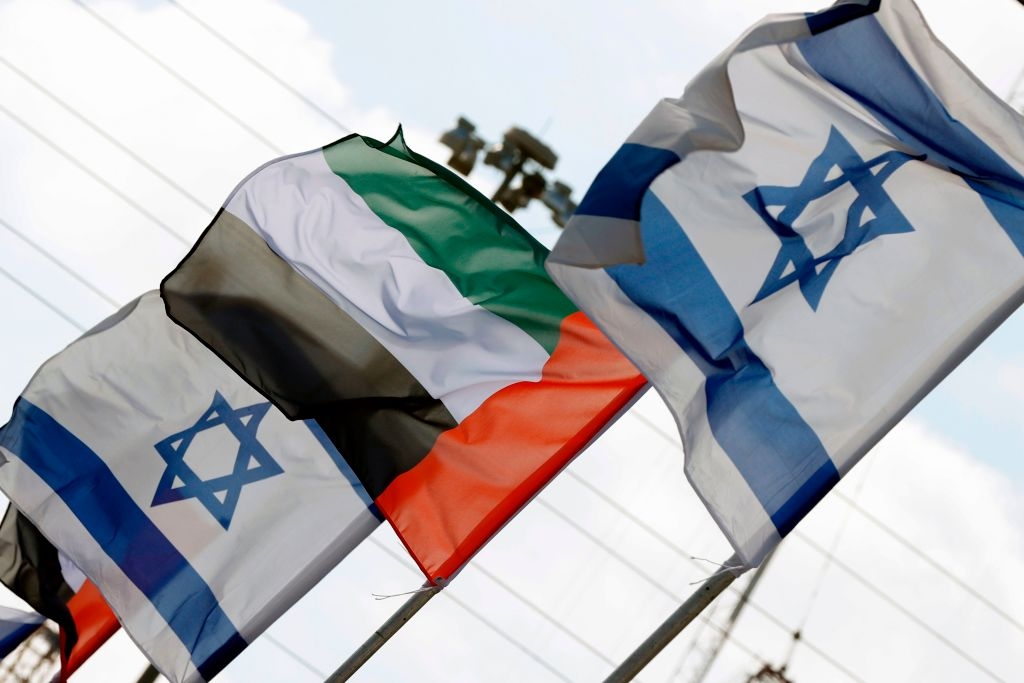
The agreement by the United Arab Emirates (UAE) to normalize relations with Israel bodes well for the future of Israel and the dangerous region in which it lives. Pictured: Israeli and UAE flags line a road in Netanya, Israel on August 16, 2020. (Photo by Jack Guez/AFP via Getty Images)

The agreement by the United Arab Emirates (UAE) to normalize relations with Israel bodes well for the future of Israel and the dangerous region in which it lives. It was not the first such agreement — there were peace treaties with Egypt (1979) and Jordan (1994) — but it will probably not be the last. It is likely, though not certain, that other Gulf nations may follow. Even the president of Lebanon, Michel Aoun, has “hinted at the possibility of peace talks with Israel.” In any event, he has not precluded eventually joining other Arab countries in normalizing relations with Israel.

Although the Palestinian leadership opposed the deal — it always opposes everything — it too may benefit from it. The UAE will press for a two-state solution and its voice will be more influential both in the United States and in Israel. A two-state solution that assures Israel’s security would require a demilitarized Palestine with an Israeli military presence in the Jordan Valley and territorial swaps that keep the current settlement blocks as part of Israel. This would allow for a contiguous, viable Palestinian state that could thrive if it maintained peace with Israel. The Palestinians could secure such a state if they agree to negotiate with Israel over the current Trump plan that is now on the table.

The deal makes clear that the Palestinian leadership no longer has a veto on the actions and attitudes of its Arab neighbors who will do what it is in their own best interest. It has also become clear that strengthening ties with the militarily, technologically and economically powerful Israel is the best protection against the dangers posed by an Iran that for decades has been seeking to have its own deliverable nuclear weapons capability.

Most US Democratic Party leaders including presidential candidate Joe Biden and his vice-presidential pick, Kamala Harris, have praised the deal. One of the very few prominent Americans who belittled the agreement, nevertheless, was Ben Rhodes, a foreign policy adviser to former President Barack Obama, who was instrumental in making the terrible deal with Iran that essentially green-lighted the mullahs’ quest for a nuclear arsenal. Ironically and perversely, it was the pro- Iranian policy of Obama and Rhodes that contributed to the fear that drove the UAE closer to Israel. The Emirates know that Israel will never allow Iran to develop or acquire nuclear weapons, no matter what it takes to stop them. For the rest of the world — including the US— a nuclear Iran is a regional diplomatic problem. For Israel, it is an existential threat. For the Gulf States, it poses a serious threat to their regimes.

The deal, however, is more than “the enemy of my enemy is my friend.” The UAE will derive many benefits from closer relationships with the Middle East’s most stable and advanced county. These include economic and technological partnerships, military and intelligence sharing, mutual tourism and better relationships with the US and much of the rest of the world.

The deal also demonstrates how quickly changes occur in this volatile part of the globe. It was only a few decades ago when Israel’s strongest allies were Iran and Turkey, and its most intractable enemies were Egypt, Jordan and the Gulf states. Now the reverse is true. The only constant constructive element in the region is a democratic Israel, with its close ties to the United States.

The other constant — but a destructive one— has been the Palestinian leadership. They constantly say no to everything that involves normalization with Israel. This stance goes back to the 1930s, when they rejected the Peel Commission recommendation that would have given them a state in the vast majority of the British Mandate. But because it would also have given the Jews a tiny, non-contiguous state, the Palestinians said no. They wanted there not to be a Jewish state more than they wanted there to be a Palestinian state. This naysaying approach continued in 1948, 1967, 2000 and 2008. It continues today with their refusal even to negotiate over the Trump peace plan. As Abba Eban once put it: The Palestinians can’t take yes for an answer and never miss an opportunity to miss an opportunity. But the UAE can take yes and does not miss opportunities. The rest of the Arab world should follow. Maybe then the Palestinian leadership will realize that they, too, should sit down and negotiate a full peace with the nation state of the Jewish people.

Alan M. Dershowitz is the Felix Frankfurter Professor of Law, Emeritus at Harvard Law School and author of the book, Guilt by Accusation: The Challenge of Proving Innocence in the Age of #MeToo, Skyhorse Publishing, November 2019He is the Jack Roth Charitable Foundation Fellow at Gatestone Institute.

As taken from, https://www.gatestoneinstitute.org/16358/israel-uae-deal-peace
 
Leave a comment

Posted by on August 16, 2020 in Uncategorized


Why Do Some Jews Still Believe the Messiah Is Coming?

MESSIAH THE ANOINTED ONE | preceptaustin

by Jeremy Rosen

Whenever a major crisis hits, I encounter people who love to talk about the Messiah. Originally, the Messiah was simply an anointed king who would hopefully do a half-decent job of running fractious Israelite life. Then he became the focus of a return from Babylonian exile. The Talmud actually includes opinions to the effect that there would be no such phenomenon in the future. But since that time, Messianism has become deeply embedded in Jewish religious life as an article of faith.

Chabad-Lubavitch has been promoting the Moshiach for many, many years. But if I were a betting man, I would lay heavy odds against an imminent appearance. After all, Jews can’t even agree on who a Jew is, let alone accept one single religious authority. There are fanciful stories about the Messiah coming to Earth, not being recognized, and going away in disgust.

But the idea has gripped our imagination since Roman times — that someone surely will come to get us out of the agonies of persecution and exile. This was why claims that Jesus was the Messiah gained no traction in Jewish circles, because the mess continued long after he came and went.

This Jewish aspiration was first met by Bar Kokhba, who led a rebellion in Judea against Rome in 132-135 CE. He had coins printed declaring himself the Messiah. Initially, it looked as if he might just kick the Romans out and revive the Judean state. Rabbi Akiva called him the Messiah. The rest of the rabbis laughed it off  — “Grass will grow out of your cheeks, Akiva, if you think he is the Messiah.”

This failure did not stop the long roll call of people who either declared themselves the Messiah, or claimed to be the saviors of the Jewish people. There was Ishak ben Yaakov Ovadia of Isfahan (744-750) who was killed in battle. David Alroi, another Persian Jew, lived around 1160 and promised to lead the Jews back home. He has a street named after him in Jerusalem. The English prime minister and novelist Benjamin Disraeli wrote a novel based on him.

There were anonymous false Messiahs in Morocco and Yemen a thousand years ago. Maimonides wrote to refute the latter’s claims in his “Letter to Yemen.” There would be another Yemenite false Messiah, Shuker Kuhal, in the 19th century. Moshe Botarel was a rabbinic scholar who lived in Spain around 1413 and claimed to be the Messiah. He disappeared mysteriously. Asher Llamlein known as Asher Chai appeared in Istria, in 1502. He too vanished without a trace.

The duo of David Reubeni (1490–1541) and Shlomo Molcho (1500–1532), a former Marrano who reverted to Judaism, had more success for a while. They even met the Pope and Emperor Charles the Fifth and managed to get some relief for the persecuted Marranos. But Reubeni just fell away and Molcho, who called himself the Messiah, was burnt by the church as a heretic.

Perhaps the most successful false Messiah of all was Shabtai Zvi (1626- 1676), a charismatic Kabbalist of Smyrna, whose influence impacted the whole of Jewry. Samuel Pepys records that in London, they were taking bets on him. Glückel of Hamelin started salting provisions to take on the journey to the Holy Land. Communities split into gangs of rival supporters. Unfortunately, when he went to Constantinople to get approval from the Sultan to bring the Jews back to Israel, he was told he had a choice: convert or die. He converted to Islam. But the bubble did not completely burst.

Many of his followers declared themselves Messiahs. Most notorious of all was Jacob Frank (1726-1791), another charismatic pseudo-Kabbalist. He organized controversial gatherings that turned into orgies. He claimed that sexual delight offered the way to the Divine. For a while, his message proved very popular amongst the poor  and uneducated of Eastern Europe. The authorities did not approve. He was forced to leave the Jewish community. In 1759, he converted to Christianity. Then he ran afoul of the Catholic Church too and was imprisoned for heresy. Eve Frank, his daughter (1754–1816), hedging her bets, was declared the incarnation of the Virgin Mary as well as God. Some claim she was the only woman to have been declared a Messiah.

Almost all these false Messiahs rose during periods of harsh oppression — from Christianity, Islam, the Crusaders, the Spanish Expulsion, the Chmielnicki massacres, and Russian antisemitism — when Jews were under so much pressure they inevitably longed for a superman to come and rescue them. These false Messiahs also explain why Kabbalah got something of bad name and was considered dangerous for the masses.

The rise of Hasidism, an amalgam of popular piety as well as mysticism, ensured that the flame of Messianism continued to burn brightly while remaining part of the mainstream of Judaism. Some Rebbes were either seen as the harbingers of the Messiah, or indeed as the Messiah himself. None of these claims have successfully met the aspirations of Messianism.

There was a movement within Religious Zionism inspired largely by the great Rav Kook that thought that the establishment of the State of Israel was the beginning of the Messianic era — and the conquest of Jerusalem in 1967 gave added impetus to the claim. So far, the Messiah has not obliged.

So where do we stand today?

In historical terms, the Jewish emphasis on a Messiah was simply to refute the Christian concept. Over time, it has become a core belief in Judaism. But ideologues have over the years interpreted its significance in different ways.

One is the optimism that the world can become a better and more humane and just place. Either this can be achieved by human endeavor and hard work or by Divine intervention. I cannot imagine someone surviving in the Nazi death camps thinking that they could in any way make the world better. Inevitably, many likely prayed for miracles, for an army of liberation. But we, with the freedom, knowledge and means we have, do indeed have the tools to solve many of our human problems. The Messianic idea allows for both of these possibilities.

In the current COVID-19 crisis, we can look for solutions from Heaven. But at the same time, we must take precautions however inconvenient. We can work hard to find solutions, both social and medical. To re-examine the way our societies function. But the Talmud is clear: we do not rely on miracles or Messiahs.

Rabbi Jeremy Rosen has worked in the rabbinate, Jewish education and academia for more than 40 years, in Europe and the US. He currently lives in America, where he writes, teaches, lectures and serves as rabbi of a small community in New York.

As taken from, https://www.algemeiner.com/2020/08/14/why-do-some-jews-still-believe-the-messiah-is-coming/

 
Leave a comment

Posted by on August 16, 2020 in Uncategorized


¿Por qué los Emiratos hicieron la paz con Israel?

por Pablo Sklarevich

Post thumbnail

El tren de la paz entre Israel y el mundo árabe partió, y a pesar de las amenazas de los Guardianes de la Revolución de Irán y su filial libanesa, Hezbollah, y las protestas de Turquía y los palestinos, no es previsible que se vaya a detener.

El veterano periodista, Ehud Yaari, del Canal 12, reportó que fueron los funcionarios emiratíes los que apuraron la iniciativa. Ellos vieron el asunto de la suspensión de la “anexión”, o la extensión de la soberanía israelí a partes del territorio de Judea y Samaria (nombres bíblicos de Cisjordania), como un paraguas, una oportunidad, para envolver el paquete del acuerdo con los israelíes y los norteamericanos.

De esta manera, los Emiratos Árabes Unidos (EUA) oficializan las relaciones “extramatrimoniales” clandestinas desde hace casi dos décadas con Israel, en el ámbito diplomático, de inteligencia y militar.

Yaari agrega que el primer ministro, Benjamín Netanyahu, deja como legado un cambio radical en el paradigma trazado por sus antecesores, especialmente Itzhak Rabin y Ehud Olmert. Y esto es que no se precisa entregar territorios ni acordar con los palestinos para normalizar las relaciones con el mundo árabe.

Netanyahu comprendió que de cualquier manera no contaba con el apoyo de la coalición gobernante para la anexión en Cisjordania, como tampoco de Estados Unidos, ni de los colonos más radicalizados. De hecho, EUA e Israel firmarán acuerdos e intercambiarán embajadores; mientras que las fuerzas israelíes no se retirarán de Judea y Samaria.

Tal vez el pacto revela la incipiente creación de un nuevo bloque estratégico formado por Israel y los países árabes sunitas moderados contra Irán y el extremismo islámico, que está transmitiendo un fuerte mensaje al candidato estadounidense Joe Biden, favorito en las encuestas para las elecciones de noviembre.

El periodista judío estadounidense, Elie Lake, explicó en su columna en el sitio web del canal Bloomberg, que Emiratos ha comprendido, a través de la experiencia, que el Estado judío no tuvo nada que ver con el colapso de Yemen, Siria, Libia e Irak, sino los regímenes y grupos que más se oponen a Israel son en realidad quienes están prendiendo fuego a la región.

Lake sostiene además que los Emiratos han visto a Israel desarrollarse y crecer mientras sus vecinos caen el caos. Los líderes del mundo árabe, señala Lake, entienden mejor algo que muchos occidentales defensores de los palestinos no comprenden, y que alguna vez apuntó el extinto líder de Al Qaeda, Osama bin Laden: “cuando la gente ve a un caballo fuerte y a uno débil, elige naturalmente al fuerte”.

Según tomado de, https://www.aurora-israel.co.il/por-que-los-emiratos-hicieron-la-paz-con-israel

 
Leave a comment

Posted by on August 16, 2020 in Uncategorized


El poder del replanteamiento

por Mendel Kalmenson

Después de completar su educación en Montreal, R. Mendel Lipskar fue a estudiar a la yeshivá de Jabad en Nueva York. Como era costumbre, cuando cumplíean año, los estudiantes tenían una audiencia corta con el Rebe; el Rebe ofrecía una bendición y el alumno podía pedir orientación.

Ese año, Mendel estaba teniendo dificultades con su compañero de estudio: no podían dejar de discutir. Lo que él decía, su compañero lo contradecía; fuera lo que fuera lo que su compañero dijera, Mendel lo contradecía. Cuando llegó su cumpleaños y habló con el Rebe, Mendel expresó su frustración con la situación: “Rebe, debe haber algo mal conmigo. Me encuentro discutiendo constantemente con mi compañero de estudio…” Luego pidió orientación a este respecto.

El Rabino Lipskar recordó:1

“El Rebe me dijo: ‘Parece que tienes un don para pilpul’. Por pilpul, se refería a la capacidad de participar en un debate crítico talmúdico en un intento de aclarar el significado de los textos difíciles. Me animó a perfeccionar este método. Y de repente, una situación que parecía ser bastante negativa apareció ante mí como una gran oportunidad para la superación personal.

Después de eso, cuando estudié con mi compañero, tuve un sentido completamente diferente de lo que se trataba nuestro argumento. Era algo positivo: discutíamos porque no estábamos satisfechos con una lectura superficial del texto; ¡cada uno quería encontrar un significado más profundo!”

Este es un ejemplo clásico de lo que los terapeutas y entrenadores llaman “replanteamiento”, una técnica utilizada para ayudar a las personas a ver una situación, persona o relación particular, desde una perspectiva diferente. También conocida como “reestructuración cognitiva”, la idea es que el punto de vista de una persona depende del marco a través del cual se ve, y define el enfoque y los límites de su alcance. Cuando se cambia ese marco, el significado cambia, y el pensamiento y el comportamiento de la persona a menudo también cambian.

Como se evidencia en su respuesta a la queja del estudiante de yeshivá, el Rebe era un maestro de la redefinición redentora. A través de un breve encuentro o incluso una sola palabra, el Rebe podía replantear una visión del mundo, una relación, un evento o un camino de vida.

Las historias de tales cambios espontáneos profundos de perspectiva en el diálogo con el Rebe proporcionan un marco revelador que muestra su sesgo de positividad en el trabajo en tiempo real.

Conejilla de Indias o pionera

Cuando Sheindel Itkin tenía 14 años, se abrió una nueva escuela secundaria avanzada para niñas Lubavitch en el vecindario, a la que su padre la animó a asistir. Afirmando voluntariamente su independencia y no queriendo sentirse como un “bicho de prueba” para el nuevo programa, Sheindel se negó rotundamente, deseando en cambio asistir a la escuela más consolidada en el distrito. Desilusionado, su padre le instó a escribir una carta al Rebe pidiéndole información y guía.

De hecho, Sheindel escribió una carta audaz al Rebe, que concluyó con las siguientes palabras provocativas: “No quiero ser un conejillo de Indias”.

Reflexionando sobre esto años más tarde, ella admitió: “Tal vez fue un poco inapropiado escribir esto, tal vez no tenía derecho a hacerlo. Pero yo era una adolescente y mi pensamiento era muy independiente. Y estaba muy firme sobre no ir [a la nueva escuela]”.

Unos días después, Sheindel recibió una respuesta del Rebe que cambió por completo su perspectiva. Su carta original le había sido devuelta, con una ligera modificación, hecha de la mano del Rebe. El Rebe simplemente tachó el término “conejillo de Indias” y, en su lugar, escribió “jalutza”, que significa “pionera”.

“¿Jalutza? ¿Me estás diciendo que sea una pionera? ¡Subiré a la montaña, cruzaré el río, haré cualquier cosa!”

“El Rebe sabía cómo llegar a una adolescente con una sola palabra. Una palabra simple que entendía la esencia de quién era yo. Mi necesidad de ser única, ser especial, ser diferente y forjar nuevos caminos… Entonces, por supuesto, fui a la [nueva] escuela secundaria. Éramos la clase “pionera”.2

Después de ese año inaugural, Sheindel mantuvo una participación de por vida en la Escuela Secundaria Beis Rivka en Crown Heights, y actualmente se desempeña como directora. El Rebe reformuló su situación y cambió el curso de toda su vida con una sola palabra.

Invierte en el futuro

Bobby Vogel, un hombre de negocios en Londres, jugó un papel decisivo en el establecimiento de una reconocida escuela secundaria para niños de Lubavitch. Durante la que iba a ser su última audiencia con el Rebe, Bobby expresó su remordimiento por no poder seguir manteniendo financieramente la escuela. La carga, dijo, estaba en su mayor parte descansando sobre sus hombros, y se sentía demasiado para una persona.

El Rebe sonrió y dijo: “Te hablaré en el idioma de un hombre de negocios. Imagina que tratas con diamantes. Si tuvieras una bolsa llena de diamantes y colocara algunos diamantes azul-blancos adicionales, ¿te quejarías?

El Rebe concluyó cálidamente: “Estás llevando diamantes. Nunca los dejes; sigue”.3

En esta metáfora aparentemente simple, el Rebe volvió el marco de Bobby al revés. Lo que inicialmente se percibió como una carga se reveló como una bendición. Cada estudiante es una gema preciosa para ser pulida y preparada para una vida que ilumine y enriquezca su entorno. Desde esta perspectiva, la educación de un niño no es una obligación costosa sino una oportunidad de oro.

Como resultado duradero del “replanteamiento” del Rebe, Bobby continuó su apoyo financiero a múltiples escuelas y proyectos educativos durante los próximos 40 años.

Ciudadano de segunda

Un joven estudiante de yeshivá que, a pesar de sus mejores esfuerzos, solo era académicamente promedio, se sintió mal por no lograr el nivel de excelencia escolar al que aspiraba en función de las expectativas de su familia y su comunidad.

Esto hizo que cayera en una depresión. Cuando uno de sus compañeros le preguntó qué sucedió, explicó que había ido al rosh yeshivá, el decano, para hablar sobre sus sentimientos de insuficiencia, fracaso y temor de que nunca alcanzaría el renombre por la Torá que tanto esperaba.

Tratando de consolarlo, el rosh yeshivá le explicó que incluso si él nunca llegaba a convertirse en un erudito o maestro de la Torá, siempre podría dedicarse a los negocios y usar su éxito para apoyar a otros académicos e instituciones de la Torá.

Aunque bien intencionadas, estas “palabras de consuelo” hicieron que el joven estudiante cayera aún más en la desesperación. Había sido criado con la creencia de que el mayor logro posible era ser un gran erudito de la Torá. Ahora le decían que esta aspiración y sueño de la infancia estaban más allá de sus habilidades, y que a lo sumo podía apoyar los logros de los demás.

El amigo con quien se había desahogado le aconsejó que escribiera una carta al Rebe para expresar sus amargos sentimientos, lo cual hizo.

El Rebe le respondió lo siguiente:

“Hay una Mishná que articula claramente la declaración de la misión de la existencia humana: ‘Fui creado para servir a mi Creador’”.4

Según esta enseñanza simple pero profunda, el objetivo de toda la existencia humana, nuestra razón de ser, es servir a Di-s. Existen numerosas vías para hacerlo. Una de ellas es el estudio de la Torá, pero otro, igual de importante, es el apoyo del estudio de la Torá.

Algunas personalidades y habilidades son adecuadas para un camino en particular, y otras son más adecuadas para otro camino, pero el objetivo final para todos los seres humanos es el mismo, sin importar el camino.

Nuestras habilidades únicas son la forma en que Di-s nos enseña qué camino hacia ese objetivo universal es el adecuado para nosotros.

La carta del Rebe reformuló por completo la comprensión del joven estudiante del propósito de su vida y redirigió sus aspiraciones y ambiciones.5

Como resultado, su espíritu se levantó y su sentido de dignidad y propósito fueron restaurados. En la explicación del Rebe, no es que haya ciudadanos de primera clase (es decir, académicos de la Torá) y ciudadanos de segunda clase (personas de negocios y laicos) que sirven y apoyan a los ciudadanos de primera clase. Ni el erudito ni el que lo apoya son superiores ni inferiores. Simplemente tienen diferentes formas de lograr el mismo objetivo, que es el servicio a Di-s. En todos tus sentidos, reconoce a Di-s, y Él dirigirá tus caminos.6

Arar es parte del proceso

Cuando R. Avrohom Glick comenzó a enseñar en la escuela diurna de la yeshivá de Jabad en Melbourne, coordinó varias actividades juveniles. Después de tres años, su papel se volvió más administrativo como coordinador de Estudios Judíos. Una parte importante de su día ahora se dedicaba a disciplinar a los estudiantes que le enviaban desde la sala de estudio. Según el rabino Glick: “Comencé a sentir que no estaba usando mi tiempo de la manera más productiva. En lugar de ser un educador, me había convertido en policía”.

En su próximo viaje a los Estados Unidos, mientras se reunía con el Rebe, el rabino Glick mencionó estos sentimientos negativos sobre su papel actual. Sin perder tiempo, el Rebe respondió:

Arar es una de las treinta y nueve categorías de trabajo que están prohibidas en Shabat. Esto, sin embargo, plantea una pregunta. La regla general es que una actividad que es destructiva no se considera “trabajo” y no está prohibida por la Torá. Arar un campo, que implica romper la tierra, parece ser un acto destructivo y, por lo tanto, no debe prohibirse en Shabat.

La respuesta es que arar es un requisito previo esencial para plantar. Las semillas no crecerán si el suelo no está preparado adecuadamente. Y si las semillas no crecen, no habrá trigo y, a su vez, no habrá pan. La disciplina en la escuela funciona de la misma manera. Es un prerrequisito necesario para la enseñanza, y sin ella, el aprendizaje adecuado no puede tener lugar. No estás malgastando tu tiempo en mantener la disciplina. Lejos de eso, ya que en realidad estás facilitando la enseñanza y el aprendizaje reales.7

Este replanteamiento reorientó la visión del rabino Glick sobre el ángulo completo del proceso educativo.8

En pocas palabras, el Rebe tranquilizó al Rabino Glick y al mismo tiempo le enseñó una profunda lección. Lo que podría parecer una tarea negativa cuando se mira de forma aislada, en realidad sirve a un fin positivo y a un propósito superior cuando se ve en el contexto extenso de un proceso más amplio.

¡Tal es el poder del replanteamiento!

Traducción: María Sánchez Varón

Traducción, corrección y estilo: Carlos Sánchez Corrales

NOTAS AL PIE

  1. http://www.myencounterblog.com/wp-content/uploads//2016/02/161.-Terumah-5776-Color.pdf

2. Como lo relató la Sra. Sheindel Teichtel.

3. http://www.chabad.org/1395114

4. Kidushín 82a.

5. Como lo relató el rabino Yoel Kahan.

6. Proverbios 3:6.

7. http://www.chabad.org/3752414

8. Además, las treinta y nueve categorías de trabajo prohibidas en Shabat se basan en los treinta y nueve tipos de trabajo empleados para construir el Mishkán, el Tabernáculo en el desierto. El Rebe estaba comparando la facilitación de la educación infantil con la construcción del Tabernáculo, el más alto honor.

Según tomado de, https://es.chabad.org/library/article_cdo/aid/4725840/jewish/Captulo-24-El-poder-del-replanteamiento.htm

 
Leave a comment

Posted by on August 12, 2020 in Uncategorized


Learning from Rabbi Adin Steinsaltz

by Dr. Ivette Alt Miller

Learning from Rabbi Adin Steinsaltz

A long-ago lecture by Rabbi Steinsaltz inspired me to tap into 4,000 years of Jewish wisdom.


I was in college, exploring Jewish classes and activities at Hillel. Someone said an eminent rabbi named Adin Steinzaltz was visiting campus – he was embarking on an ambitious project translating the Talmud into Hebrew, English and French. His interpretations were penetrating and insightful, they said, and his translation was a major addition to Jewish knowledge. Did I want to come along and hear him?

I wasn’t sure that any rabbi attempting to translate the Talmud would have much to say to me. I pictured him as dry and stern, concerned only with dusty old texts. What could he possibly have to say to me?

As the auditorium filled up, I saw that Rabbi Steinsaltz wore a black coat and skullcap and sported a long beard that was turning white – exactly as I’d pictured him. Surely he’d disapprove of me and the other non-religious students in the room. Suddenly, he turned to the blackboard behind him, picked up some chalk and began sketching. Was he writing some obscure formula or Hebrew text I wondered? He drew a smiling cartoon mouse, finishing the sketch with whiskers and turned to face his audience with a huge grin on his face and launched into his talk.

Turned out that Rabbi Steinsaltz understood our worldview very well. After all, he’d grown up in a non-religious family too, in Jerusalem, in the 1940s and 1950s. As a teenager, Rabbi Steinsaltz felt the tug of religion and asked his parents if he could study Jewish subjects with a local rabbi. They agreed and eventually Adin Steinsaltz was leading an Orthodox life. By the time he was 23 years old, he was a high school principal – the youngest in all of Israel. In 1965, when he was 38, he began his monumental translation of the Talmud.

For Rabbi Steinsaltz, responding to the pull of the Divine in our lives was akin to answering a great cosmic telephone, he told his rapt student audience.

In the Torah, Abraham, Jacob, Moses and Isaiah all hear God call out their names, and each of these towering figures replies in the same way: Hineni – “I’m here.” Rabbi Steinsaltz said, “The call goes everywhere, in every time, and never stops. But most people don’t hear it. When you hear the call you say, ‘Hineni – I’m here.’”

Rabbi Steinsaltz had a genius for making big ideas fun. That phone call he talked about – the pull of the Divine – is like someone in outer space looking for life in the universe. “Just imagine a person sitting on a star,” he said, “sending messages to other planets: he’s sending messages over and over. Now what will be the breakthrough point? The breakthrough point is when there is any answer. When at the end of nowhere, somebody answers.” That somebody can be each of us, if only we pay attention to the call of the Divine in our lives.

As I sat in that lecture hall, I realized I wanted to start making some decisions about my own life. I wanted to answer the call Rabbi Steinsaltz had described. I too wanted to say “I’m here”. I too wanted to build a life dedicated to making the world a better, more holy place. Rabbi Steinsaltz seemed so wise and kind – so happy – and I wanted to be able to use Jewish teachings to feel as confident and optimistic as well.

“Torah is the shared inheritance of all the Jewish people. We have a responsibility to share our common heritage with all Jews.”

Rabbi Steinsaltz often reiterated that “Torah is the shared inheritance of all the Jewish people. We have a responsibility to share our common heritage with all Jews.” I bought his books and read his wisdom. The thousands of pages he wrote are bursting with his unique style of humor, wisdom, encouragement and love.

Rabbi Stensaltz’s book The Essential Talmud first introduced me to the Talmud, describing its history and purpose. The last lines have always stayed in my mind: in a chapter called “The Talmud Has Never Been Completed,” he made the case that it’s up to us to continue studying the Talmud. He explained that even the most learned sages study the Talmud over and over, finding new knowledge each time. It helped give me the courage to begin studying Jewish texts.

His essays in Simple Words: Thinking About What Really Matters in Life (1999) has helped me cope with some of my most difficult decisions, applying Jewish wisdom to real world dilemmas. “(W)e may discover that God has always existed within us,” by thinking deeply about the words we use in our lives and what their deeper meanings are, Rabbi Steinsaltz wrote. Each challenge we face in life, no matter how hard, can help us improve and refine ourselves, uncovering our God-given purpose.

When I heard of Rabbi Steinsaltz’s death at the age of 83 this past Friday, August 7, 2020, I knew I would spend Shabbat rereading some of his books, and honoring his life by studying Torah in his memory. Rereading his works felt like hearing from a wise old friend, reminding me that I can achieve great things, bringing untold measures of holiness into the world if I only try to listen to that insistent, constant call of the Divine in the world. That message is his powerful legacy to us, the Jewish people.

As taken from, https://www.aish.com/jw/s/Learning-from-Rabbi-Adin-Steinsaltz.html?s=hp2

 
Leave a comment

Posted by on August 12, 2020 in Uncategorized


Los Genes Judíos

Los Genes Judíos
 por Rab Iaacov Kleiman

Esta investigación confirma la ascendencia y el origen geográfico común del mundo judío.


Una investigación publicada en el campo de la genética molecular – el estudio de las secuencias del ADN – indica que las poblaciones judías de las distintas comunidades de la diáspora no han perdido su identidad genética a lo largo de todo el exilio. A pesar de las enormes distancias geográficas entre las comunidades y el paso de miles de años, las alejadas comunidades comparten un perfil genético común. Esta investigación confirma la ascendencia y el origen geográfico común del mundo judío.

Los hombres judíos de comunidades que se desarrollaron en el Cercano Oriente – iraníes, iraquíes, kurdos y yemenitas – y los judíos europeos tienen perfiles genéticos muy similares, casi idénticos.

“A pesar de un largo período de residencia en diferentes países y un aislamiento entre las comunidades, la mayoría de las poblaciones judías, no son significativamente diferentes en un nivel genético. Los resultados, apoyan la hipótesis que plantea que el gen paterno de las comunidades de Europa, África del Norte y el Medio Oriente descienden de una antigua población común del Medio Oriente, y sugiere que la mayoría de las comunidades han permanecido relativamente aisladas de comunidades vecinas no judías durante y después del exilio” (M. F. Hammer, Academia Nacional de Ciencias, 9 de mayo del 2000).

La base de este nuevo campo de investigación de poblaciones es el estudio del cromosoma Y, que es transmitido, prácticamente sin cambio alguno, de padre a hijo. Las mutaciones raras – que son cambios en la porción no codificada de su ADN – pueden servir como señalizadores que pueden distinguir a las personas. Al estudiar las señales genéticas de varios grupos se pueden hacer comparaciones para determinar las relaciones genéticas entre estos.

La investigación del cromosoma Y del pueblo judío comenzó como resultado del estudio de los cohanim – la familia sacerdotal judía. Estos estudios mostraron una gran afinidad genética entre los cohanim de hoy en día – indicando que tienen un antepasado paterno común que vivió estimadamente hace 3000 años.

Esta investigación genética consiste en obtener muestras de ADN y hacer un análisis de laboratorio comparando los señalizadores de ADN en el cromosoma Y – que es transmitido de padre a hijo – y en el mtADN (ADN mitocondrial) – que es transmitido de madre a hijo. Esta antropología genética promete ser particularmente informativa para trazar la historia de las poblaciones judías y para ayudar a resolver el debate de los orígenes y emigraciones de las comunidades judías en la diáspora.

Los investigadores propusieron contestar a la siguiente pregunta: ¿Los grupos dispersos de judíos modernos son realmente los descendientes de los antiguos hebreos de la Biblia, o algunos grupos de judíos modernos son conversos (no judíos que se han convertido al judaísmo) o el resultado de los matrimonios mixtos, y como consecuencia de eso les queda muy poco de sus “genes judíos”?

La compleja historia registrada de la dispersión de la Tierra de Israel y subsecuentemente la residencia y movilización entre varios países de Europa, el Norte de África y el Medio Oriente, se espera que produzca un patrón complejo de relaciones genéticas dentro de las poblaciones judías, y entre estas mismas poblaciones y las poblaciones no judías dentro de las cuales vivieron.

La investigación se ha basado en muestras de 29 poblaciones, 7 judías, categorizadas principalmente en cinco divisiones: judíos, no-judíos del Medio Oriente, europeos, africanos del norte y del África subsahariana.

Los resultados de la investigación fueron que la mayoría de las comunidades judías, separadas unas de las otras en Europa, el Norte de África, el Cercano Oriente y la península Arábica, realmente parecen ser genéticamente similares, y parecen estar muy relacionadas unas con las otras, compartiendo un origen geográfico común.

Estas comunidades judías están mucho más relacionadas unas con las otras y con las poblaciones semitas del Medio Oriente – palestinos, sirios y drusos – que con sus comunidades vecinas de la diáspora.

Los resultados también indican un bajo número de mezcla (matrimonios mixtos, conversiones, violaciones etc.), en el contenido genético de estas diversas comunidades judías.

Dentro de las comunidades que fueron tomadas en consideración para este experimento, los norafricanos (Marruecos, etc.), fueron los más relacionados con los judíos babilonios (iraquíes). Estas poblaciones pueden ser las que representan mejor el contenido genético paterno de las antiguas poblaciones judías-hebreas con origen en el período del Primer Templo, antes del exilio babilónico (hace 2500 años aprox.).

Las señales del cromosoma Y de los judíos yemenitas son también similares a aquellos de otras poblaciones semitas y judías. En contraste, el contenido del gen paterno de los judíos etíopes se asemeja más a los de los etíopes de origen no judío.

El Nexo Ashkenazí

Aunque la comunidad ashkenazí (europea) se separó de sus antepasados del mediterráneo hace 1200 años y vivieron dentro de comunidades gentiles del centro y este de Europa, su contenido genético paterno todavía se asemeja a los de otros judíos y grupos semitas con origen en el Medio Oriente.

Una baja taza porcentual de matrimonios mixtos entre judíos de la diáspora y gentiles es la razón principal para esta continuidad. Ya que los judíos se establecieron primeramente en Europa hace más de 50 generaciones, se estimó que los matrimonios mixtos fueron sólo del 0.5% en cada generación.

El contenido genético paterno ashkenazí no parece ser similar al de los pueblos de habla turca de hoy en día. Este hallazgo se opone a la sugerencia que indicaba que los ashkenazies son descendientes de los kuzares, el imperio turco-asiático que se convirtió masivamente al judaísmo en el siglo VIII de la era común.

Los investigadores continúan expandiéndose en sus estudios, particularmente sobre la comunidad ashkenazí. Ellos esperan que al examinar los señalizadores del ADN en las poblaciones judías de diferentes partes de Europa, van a poder obtener patrones demográficos e históricos de las poblaciones ashkenazies.

Además de preguntas de interés médico, existen muchas posibilidades interesantes concernientes al origen de las comunidades ashkenazies y sus migraciones a Europa. Parece ser que los judíos comenzaron a llegar al este de Europa probablemente hace 1000 ó 1200 años, cuando la infraestructura ya estaba lo suficientemente desarrollada como para proveerles oportunidades de vida.

Una teoría plantea que los judíos del este de Europa descienden predominantemente de los inmigrantes de las zonas del Rin o de Italia, siendo así descendientes directos de las antiguas poblaciones judías/hebreas.

Una segunda teoría sugiere que fue una inmigración desde los Balcanes o del centro de Asia, con la posibilidad de conversiones en masa de eslavos y kuzares al judaísmo.

Esta discusión es similar a la controversia que existe con respecto al origen del idish – el idioma de los judíos del este de Europa. Una teoría propone que los judíos inmigrantes de las zonas del Rin y regiones vecinas hablaban un antiguo alemán que llegaría a ser la base del idish.

Otros estudiosos niegan que el alemán sea el origen del idish. Estos expertos en lingüística ven la gramática del idish como fundamentalmente eslava, con el idish moderno desarrollado mediante la incorporación de un gran número de palabras hebreas y alemanas dentro de un contexto básicamente eslavo en gramática y sintaxis.

No ha habido suficiente evidencia histórica para decidir sobre esas teorías. Hoy en día, con los desarrollados métodos genéticos, es posible probar estas ideas, por ejemplo probar si hubo alguna contribución significativa de los eslavos a la comunidad ashkenazí. Indicaciones tempranas de este estudio parecen apoyar el patrón que plantea la corriente “Mediterráneo – Europa – Este de Europa”.

Los investigadores planean continuar su estudio, investigando la variación genética en las poblaciones que pueden trazar sus antepasados judíos a comunidades de Europa, para un mejor entendimiento de la historia y el desarrollo de la comunidad ashkenazí.

Estos estudios genéticos, apoyan la tradición judía – tanto la escrita como la oral.

Después de mil años de historia en la Tierra de Israel, los judíos se esparcieron por muchas y distantes localidades alrededor del mundo.

Algunas comunidades judías exiliadas estuvieron relativamente estables durante dos milenios – como por ejemplo Babilonia (Irak) y Persia (Irán). Otras comunidades se desarrollaron unos siglos después, siguiendo con migraciones al norte de África y Europa.

Todas estas comunidades mantuvieron sus costumbres judías y su observancia religiosa, a pesar de largos períodos de persecuciones. Los judíos permanecieron, en general, culturalmente aislados de sus vecinos no judíos. Estos estudios genéticos son un testimonio de la fe familiar judía.

Sólo el pueblo judío en la historia de la humanidad, ha retenido su identidad genética por más de 100 generaciones estando esparcidos alrededor del mundo. ¡Esto es realmente único e inspirador!

Probablemente lo más fascinante, es que todo este gran descubrimiento científico, Dios ya se lo había adelantado al pueblo judío ¡hace más de 3000 años!

“Y te esparcirá Dios entre todos los pueblos,

desde un confín de la tierra a otro,

y adorarás allí otros dioses, que no has conocido,

ni tú ni tus padres; de madera y piedra” (Devarim 28:64).

“Y retornará Dios a tus cautivos y se apiadará de ti,

y volverá y te reunirá de entre todas las tierras

donde te había dispersado tu Dios allí” (Devarim 30:3).

“Así ha dicho Dios: así como no podrá ser medida la altura del cielo arriba,

y ser mensurada la profundidad de la tierra,

Yo jamás despreciaré a toda la descendencia de Israel

por todo lo que han hecho, palabra de Dios” (Iermiahu 31:36).

Según tomado, https://www.aishlatino.com/a/cym/48419957.html?s=mpw

 
Leave a comment

Posted by on August 6, 2020 in Uncategorized


El síndrome del impostor: Una vision judía

por Rav Jack Abramowitz

El síndrome del impostor: Una vision judía

El síndrome del impostor no se limita a los logros profesionales o académicos. También se puede sufrir de síndrome del impostor religioso.


¿Cuál es el significado profundo de la famosa historia de Hans Christian Andersen, El traje nuevo del emperador?

¿Recuerdas la historia? Una vez hubo un emperador que fue víctima de su propia vanidad. En particular, él estaba obsesionado con su propio y elaborado guardarropa. El emperador contrató a dos sastres importantes para que le hicieran unas prendas fabulosas. Pero los sastres en verdad eran estafadores. Ellos le dijeron al emperador que estaban preparando su nuevo traje de una tela que era tan especial, que sería invisible a los ojos de cualquiera que no fuera digno de su puesto. Los sastres fingieron coser las prendas de este material milagroso y provocaron que el emperador y todos los miembros de su corte mintieran y dijeran que podían ver esas prendas maravillosas.

¿Cuál es el mensaje de esta historia? A mí personalmente no me parece que se refiera al tema de “adultos tontos y niños sabios”. Tampoco se trata de la credulidad o de ceder por culpa de una “mentalidad de rebaño”. No, los personajes de la historia se comportaron de esa forma por temor a que se descubriera que no eran “dignos de sus puestos”. El traje nuevo del emperador habla sobre el síndrome del impostor.

El síndrome del impostor es un término acuñado en los años 70 por Pauline Clance y Suzanne Imes, psicólogas de la Universidad del Estado de Georgia. El síndrome es un sentimiento experimentado por las personas exitosas, que las lleva a sentir que no merecen el éxito que han alcanzado. Quienes sufren del síndrome del impostor atribuyen sus logros no a sus propias habilidades sino a la suerte o a las circunstancias. Ellos viven con un miedo constante de que descubran que son el fraude que ellos mismos creen ser.

Originalmente, pensaron que sólo las mujeres sufrían del síndrome del impostor, pero las investigaciones posteriores revelaron que un 70% de las personas, tanto hombres como mujeres de todos los niveles sociales, experimentan el síndrome del impostor en algún momento de sus carreras.

Aquí hay un impresionante ejemplo del síndrome del impostor. El libro de Olivia Cabane del 2013, El mito del carisma, presenta los resultados de una encuesta que demuestra que más de dos tercios de los estudiantes que ingresaron a la Escuela de Negocios de Stanford creían que sólo fueron aceptados por un error de parte del comité de admisión. Otro estudio reveló que el 75% de los estudiantes de la Escuela de Negocios de Harvard sentían lo mismo. ¡La mayoría de los estudiantes de las dos universidades más prestigiosas de los Estados Unidos no creían estar en donde pertenecían, pese a su largo récord de logros académicos!

El síndrome del impostor no se limita a los logros profesionales o académicos. También se puede sufrir de síndrome del impostor religioso. Esto pueden experimentarlo los conversos y los baalei teshuvá (los judíos que vuelven a ser observantes). Pueden experimentarlo las personas que llegan a la sinagoga o al Séder de Pésaj sin saber qué esperar. Todos los que alguna vez sintieron que no eran “suficientemente judíos” lo han experimentado.

Puede consolarnos saber que también algunos de nuestros líderes más grandes también se sintieron inadecuados para las tareas que les encargaron. El caso más famoso es el de Moshé, que le dijo a Dios que él no era la persona indicada para ser Su representante. “¿Quién soy yo para ir ante el Faraón y sacar de Egipto a los hijos de Israel?”, protestó Moshé (Shemot 3:11).

Este no fue sólo el sentimiento de Moshé, sino que tuvo eco en otros de nuestros grandes profetas. Irmiyahu protestó respecto a su misión y dijo: “Yo no puedo hablar, ¡soy un niño!” (Irmiyahu 1:7). Yeshayahu objetó: “Soy un hombre de labios impuros” (Yeshayahu 6:5). Por supuesto, sabemos que todos estos profetas eran completamente dignos de sus misiones.

Aharón sufrió del síndrome del impostor cuando lo nombraron Gran Sacerdote. Rashi explica en Vaikrá 9:7 que Aharón temió acercarse al altar, porque consideró que no era digno de esa responsabilidad. Iaakov puede haber sentido un poco el síndrome del impostor cuando le dijo a Dios: “No merezco toda la bondad y la verdad que Tú has mostrado a Tu siervo” (Bereshit 32:11). Cuando Shaúl fue designado rey, él estaba escondido entre el equipaje (Shmuel I, 10) e incluso después de su coronación, siguió actuando como un granjero. Hay muchos ejemplos similares.

La buena noticia es que las personas que sufren del síndrome del impostor por lo general son perfectas para sus puestos. Los verdaderos impostores tienden a sobrestimar sus propias habilidades, en lo que se conoce como el efecto Dunning-Kruger. Si quieres ejemplos de personas que sobrestimaron su propia importancia o sus habilidades, no hace falta buscar mucho más lejos de Bilam, quien actuó como si él pudiera dictarle sus términos a Dios (Bamidbar 22) y Kóraj, que no pudo aceptar que él no era mejor que Moshé, quien había sido elegido personalmente por Dios para su misión (Bamidbar 16). Tampoco debemos olvidar a Hamán, que no podía concebir que hubiera otro fuera de él mismo que mereciera recibir el honor del rey (Ester 6:6).

Aunque nuestros ejemplos de aquellos que se desestimaron a sí mismos se encuentran entre quienes son nuestros modelos a seguir y los de quienes se sobrestimaron son de nuestros antagonistas, la verdad es que todos podemos sentir ambos extremos. En este sentido, Rav Simja Bunim de Peshisja dijo: “La persona debe tener dos notas en su bolsillo, y leer cada una cuando sea necesario. Una nota, para cuando se siente deprimido o desalentado, debe decir: ‘Todo el mundo fue creado para mí’ (Sanhedrín 4:5). La otra, para cuando se siente engreído o importante, debe decir: ‘No soy más que polvo y cenizas’ (Bereshit 18:27)”.

Dios sabe qué es correcto para nosotros y Él nos pone a cada uno en donde debemos estar. Él supo que Moshé, Aharón y Shaúl eran dignos de sus tareas, aunque ellos no estaban tan seguros al respecto. Asimismo, no debemos preocuparnos tanto de que la gente descubra que “el emperador no tiene ropa”. Cuando nos sentimos de esa manera, debemos recordar que “todo el mundo fue creado para mí” y que merecemos nuestro éxito. Y si nos vamos demasiado en la dirección contraria y pensamos: “¿Quién merece el honor del rey, fuera de mí?”, llegó la hora de recordar que “no soy más que polvo y cenizas”.

El truco es recordar cuándo leer cada nota.

Según tomado de, https://www.aishlatino.com/a/s/El-sindrome-del-impostor-Una-vision-judia.html?s=shl

 
Leave a comment

Posted by on August 6, 2020 in Uncategorized


Why Is the Ketubah Written in Aramaic?

by Yehuda Shurpin

Detail of an ornate Ketubah (wikimedia)

The Ketubah is the marriage contract that outlines the obligations of the husband to his wife, as well as the financial compensation due to the wife in the event of the marriage’s dissolution through divorce or widowhood. Similar to a Get (divorce document), the Ketubah is traditionally written in Aramaic, the common language of the Jews during Talmudic times.

Why was it originally written in Aramaic, not Hebrew? And why is it still written in that language today, when most of us are more proficient in English or another language?

Precise Legal Language

The importance of the Ketubah’s precise and exact language cannot be overstated, due to the legal nature of the Ketubah as well as its deeper spiritual significance.

In fact, having a properly written kosher Ketubah is so critical—not just to the marriage ceremony itself, but to married life in general—that it is problematic for a couple to live together, even temporarily, without a kosher Ketubah.1 (In the event that the document is lost or destroyed, or if a serious error is found in its text, the couple must immediately obtain a replacement from a rabbi.)

For centuries, going back to Talmudic times, the sages have pored over the Aramaic Ketubah formula, ensuring that each word is precise, and especially looking out for words that may have multiple meanings.

As with contemporary contracts, the more important the contract, the more experts you’d have review the language to tighten it and make sure it is precise. So it is no wonder that the contract for marriage, one of the most important and monumental steps that one takes in life, bonding two half-souls into one union, needs to have extremely precise language. Thus, we use the traditional Aramaic text, which has gone through the rigor of centuries of Talmudic scholars.2

Translations of the Ketubah

Although it is theoretically possible to have a Get or Ketubah in another language—if written precisely, in accordance with all the relevant laws, etc.—halachah only permits this in extreme situations.3

To be sure, there are many translations of the Ketubah, both in English and Hebrew (including on our site). And since the Ketubah is a legal document, one should certainly read a translation to understand what is written in it (or at the very least, have the rabbi explain the basics of the document).4 Nevertheless, the actual Ketubah used for the marriage should be the traditional text, ensuring that it is precise and kosher.

A Semi-Holy Language

Aside from the legal aspect of the Ketubah, there are deeper reasons for the Aramaic as well.

The Ketubah has been written in Aramaic going back to Second Temple times,5 imbuing the text with holiness and the tradition of our ancestors. Thus, using the traditional Aramaic text of the Ketubah links us and our future family to our ancestors’ rich and illustrious heritage.6

The Ketubah and the Get are actually written in Aramaic with a sprinkling of Hebrew. A document that alternates between two languages is generally invalid. So why is it OK here?

Among other explanations, Rabbi Moses Isserlis explains that Aramaic has a certain holiness to it (going back to Mount Sinai7 ) and can therefore go together with Hebrew, “the Holy Tongue.”8

In fact, parts of the Bible itself, as well as the Oral Torah as recorded in the Talmud, are written in Aramaic. Furthermore, some of the special prayers, such as the Kaddish, are also recited in Aramaic, signifying that Aramaic is considered a special and unique language.9

But why was Aramaic chosen over Hebrew?

The Angels Do Not Understand

On a homiletic level, many10 cite a Midrash regarding the time before G‑d gave the Jewish people the Torah. Wishing to keep the Torah in Heaven, some angels claimed that mere mortals could not be trusted to study the Torah. In reply, G‑d promised that the Jewish men would occupy themselves with learning Torah.

Yet, in the text of the Ketubah, the Jewish men accept upon themselves unconditionally to work their very hardest to support their wives. This can theoretically be used by the angels to bolster their case that the Jews cannot be relied upon to study Torah assiduously.

The sages teach us that the angels understand all languages except for Aramaic.11 Thus, some explain, by writing it in Aramaic we prevent the angels from using the Ketubah in their argument.

A Foundation of Peace

In a somewhat similar vein, some cite another Midrash.

When the time came for G‑d to create Adam, G‑d “consulted” the ministering angels. The Angel of Truth said, “Don’t create humans, for they will be full of lies.” The Angel of Peace said, “Do not create them, for they will be in constant strife!” What did G‑d do? He grabbed the Angel of Truth and hurled him to the earth.12

While that took care of the Angel of Truth, the commentaries ask, how did G‑d contend with the Angel of Peace?

The commentaries explain that, based on the halachah that one is allowed to bend the truth to keep the peace,13 now that the need for absolute truth had been thrown down, it was possible to maintain peace.

However, part of the text of the Ketubah reads, “I will work, honor, feed and support you in the custom of Jewish men, who work, honor, feed and support their wives faithfully.” The Aramic word translated as “faithfully,” בקושטא, literally means “in truth.” Thus, when we are creating a union that will, with the help of G‑d, result in more of mankind, we are stating that it will be with truth. This gives room for the Angel of Peace to again raise objections that there will be a lack of peace. To avoid this, we write it in a language that the angels don’t understand.14

These homiletical explanations, while not the main reasons for the Aramaic Ketubah, stress the importance of being mindful to imbue our new home with Torah and peace.

FOOTNOTES
1.See Shulchan Aruch, Even Ha’ezer 66:1-3.
2.Levush, Habutz V’argoman 126:1; Get Poshut 126:8.
3.Shulchan Aruch, Even Ha’ezer 126:1.
4.Igros MosheEven Ha’ezer 4:90.
5.In fact, the oldest text of a Ketubah is the one in Aramaic found in Tel Maresha, Israel. The text is from the year 176 BCE during Second Temple times.
6.See Pardes Eliezer ch. 32
7.See, for example, Talmud, Kiddushin 49a and commentaries ad loc.
8.Rama, Shulchan Aruch, Even Ha’ezer 126:1.
9.For a discussion about this, see Machshevot Lev, vol.1, p. 181.
10.Milsa B’Taima 1:159; Mishpat Hakesuva 1:5.
11.Talmud, Shabbat 12b.
12.Midrash, Bereishit Rabbah 8:8.
13.Talmud, Yevamot 65b.
14.See Pardes Eliezer, ch. 32.

As taken from, https://www.chabad.org/tools/subscribe/email/view_cdo/i/8A35D917402345A2:D61F4DA01E4D8DA0D31393624B6CC1E209367D1F79E6AC4EA53DDE70B4282C1B#utm_medium=email&utm_source=78_rabbi_y_en&utm_campaign=en&utm_content=header

 
Leave a comment

Posted by on August 6, 2020 in Uncategorized