Slow motion with center composition: Sprinkling salt on top of camera view with copy space and black background.
The command of the parah adumah, the Red Heifer, with which our parsha begins, is known as the hardest of the mitzvot to understand. The opening words, zot chukat ha-Torah, are taken to mean, this is the supreme example of a chok in the Torah, that is, a law whose logic is obscure, perhaps unfathomable.
It was a ritual for the purification of those who had been in contact with, or in, certain forms of proximity to a dead body. A dead body is the primary source of impurity, and the defilement it caused to the living meant that the person so affected could not enter the precincts of the Tabernacle or Temple until cleansed, in a process that lasted seven days.
A key element of the purification process involved a Priest sprinkling the person so affected, on the third and seventh day, with a specially prepared liquid known as “the water of cleansing.” First a Red Heifer had to be found, without a blemish, and which had never been used to perform work: a yoke had never been placed on it. This was ritually killed and burned outside the camp. Cedar wood, hyssop, and scarlet wool were added to the fire, and the ashes placed in a vessel containing “living” i.e. fresh water. It was this that was sprinkled on those who had become impure by contact with death. One of the more paradoxical features of the rite is that though it cleansed the impure, it rendered impure those who were involved with the preparation of the water of cleansing.
Though the ritual has not been practiced since the days of the Temple, it nonetheless remains significant, in itself and for an understanding of what a chok, usually translated as “statute,” actually is. Other instances include the prohibition against eating meat and milk together, wearing clothes of mixed wool and linen (shatnez) and sowing a field with two kinds of grain (kilayim). There have been several very different explanations of chukim.
The most famous is that a chok is a law whose logic we cannot understand. It makes sense to God, but it makes no sense to us. We cannot aspire to the kind of cosmic wisdom that would allow us to see its point and purpose. Or perhaps, as Rav Saadia Gaon put it, it is a command issued for no other reason than to reward us for obeying it.[1]
The Sages recognized that whereas Gentiles might understand Jewish laws based on social justice (mishpatim) or historical memory (edot), commands such as the prohibition of eating meat and milk together seemed irrational and superstitious. The chukim were laws of which “Satan and the nations of the world made fun.”[2]
Maimonides had a quite different view. He believed that no Divine command was irrational. To suppose otherwise was to think God inferior to human beings. The chukim only appear to be inexplicable because we have forgotten the original context in which they were ordained. Each of them was a rejection of, and education against, some idolatrous practice. For the most part, however, such practises have died out, which is why we now find the commands hard to understand.[3]
A third view, adopted by Nahmanides in the thirteenth century[4] and further articulated by Samson Raphael Hirsch in the nineteenth, is that the chukim were laws designed to teach the integrity of nature. Nature has its own laws, domains and boundaries, to cross which is to dishonour the divinely created order, and to threaten nature itself. So we do not combine animal (wool) and vegetable (linen) textiles, or mix animal life (milk) and animal death (meat). As for the Red Heifer, Hirsch says that the ritual is to cleanse humans from depression brought about by reminders of human mortality.
My own view is that chukim are commands deliberately intended to bypass the rational brain, the pre-frontal cortex. The root from which the word chok comes is h-k-k, meaning, “to engrave.” Writing is on the surface; engraving cuts much deeper than the surface. Rituals go deep below the surface of the mind, and for an important reason. We are not fully rational animals, and we can make momentous mistakes if we think we are. We have a limbic system, an emotional brain. We also have an extremely powerful set of reactions to potential danger, located in the amygdala, that lead us to flee, freeze or fight. A moral system, to be adequate to the human condition, must recognise the nature of the human condition. It must speak to our fears.
The most profound fear most of us have is of death. As La Rochefoucauld said, “Neither the sun nor death can be looked on with a steady eye.” Few have explored death and the tragic shadow it casts over life more profoundly than the author of Kohelet (Ecclesiastes):
“The fate of man is the fate of cattle; the same fate awaits them both, the death of one is like the death of the other, their spirits are the same, and the pre-eminence of man over beast is nothing, for it is all shallow breath. All end in the same place; all emerge from dust and all go back to dust” (Eccl. 3:19-20).
The knowledge that he will die robs Kohelet of any sense of the meaningfulness of life. We have no idea what will happen, after our death, to what we have achieved in life. Death makes mockery of virtue: the hero may die young while the coward lives to old age. And bereavement is tragic in a different way. To lose those we love is to have the fabric of our life torn, perhaps irreparably. Death defiles in the simplest, starkest sense: mortality opens an abyss between us and God’s eternity.
It is this fear, existential and elemental, to which the rite of the Heifer is addressed. The animal itself is the starkest symbol of pure, animal life, untamed, undomesticated. The red, like the scarlet of the wool, is the colour of blood, the essence of life. The cedar, tallest of trees, represents vegetative life. The hyssop symbolises purity. All these were reduced to ash in the fire, a powerful drama of mortality. The ash itself was then dissolved in water, symbolising continuity, the flow of life, and the potential of rebirth. The body dies but the spirit flows on. A generation dies but another is born. Lives may end but life does not. Those who live after us continue what we began, and we live on in them. Life is a never-ending stream, and a trace of us is carried onward to the future.
The person in modern times who most deeply experienced and expressed what Kohelet felt was Tolstoy, who told the story in his essay, A Confession.[5] By the time he wrote it, in his early 50s, he had already published two of the greatest novels ever written, War and Peace and Anna Karenina. His literary legacy was secure. His greatness was universally recognised. He was married, with children. He had a large estate. His health was good. Yet he was overcome with a sense of the meaninglessness of life in the face of the knowledge that we will all die. He quoted Kohelet at length. He contemplated suicide. The question that haunted him was: “Is there any meaning in my life that will not be annihilated by the inevitability of death which awaits me?”[6]
He searched for an answer in science, but all it told him was that “in the infinity of space and the infinity of time infinitely small particles mutate with infinite complexity.” Science deals in causes and effects, not purpose and meaning. In the end, he concluded that only religious faith rescues life from meaninglessness. “Rational knowledge, as presented by the learned and wise, negates the meaning of life.”[7] What is needed is something other than rational knowledge. “Faith is the force of life. If a man lives, then he must believe in something … If he does understand the illusion of the finite, he is bound to believe in the infinite. Without faith it is impossible to live.”[8]
That is why, to defeat the defilement of contact with death, there must be a ritual that bypasses rational knowledge. Hence the rite of the Red Heifer, in which death is dissolved in the waters of life, and those on whom it is sprinkled are made pure again so that they can enter the precincts of the Shechinah and re-establish contact with eternity.
We no longer have the Red Heifer and its seven-day purification ritual, but we do have the shiva, the seven days of mourning during which we are comforted by others and thus reconnected with life. Our grief is gradually dissolved by the contact with friends and family, as the ashes of the Heifer were dissolved in the “living water.” We emerge, still bereaved, but in some measure cleansed, purified, able again to face life.
I believe that we can emerge from the shadow of death if we allow ourselves to be healed by the God of life. To do so, though, we need the help of others. “A prisoner cannot release himself from prison,”[9] says the Talmud. It took a Kohen to sprinkle the waters of cleansing. It takes comforters to lift our grief. But faith – faith from the world of chok, deeper than the rational mind – can help cure our deepest fears.
The Palestinian Authority and Hamas famously deny any historic or religious connection of Jews to Jerusalem. To cite one example, Ikrima Sabri, the city’s mufti, announced in 2001 that “there is not the smallest indication of the existence of a Jewish temple on this place in the past. In the whole city, there is not even a single stone indicating Jewish history.” This bizarre fraud, Itamar Marcus has explained, is based on a simple switch: Take authentic Jewish history, “documented by thousands of years of continuous literature,” cross out the word “Jewish” and replace it with “Arab.”
So much for the rejectionist Palestinians. What about the moderate and sober Jordanian government, Israel’s long-time, discreet partner; what says it? Amman does not go so far as to deny any Jewish connection, but it too makes a hash of history.
Consider the just-issued 108-page, English-language-only white paper, “The Hashemite Custodianship of Jerusalem’s Islamic and Christian Holy Sites 1917–2020 CE,” published by The Royal Aal Al-Bayt Institute for Islamic Thought. (Aal al-Bayt means “family of the house,” or the family of Muhammad, the Islamic prophet.) Although nominally an independent non-governmental organization, the institute was founded by King Hussein in 1980 and since then has continuously been headed by a member of the royal family. Secretive about its lavish funding, it appears to depend completely on government largesse.
“Hashemite Custodianship” baldly states:
• “Jerusalem was always an Arab city.”
• “When the Ancient Jews came, they attacked, killed and destroyed everyone and everything they could.”
• “Even after they conquered the city of Jerusalem, however, [the Jews] were never able to expel all the original Arab inhabitants.”
• “The Palestinian Arabs of today are largely the direct descendants of the indigenous Canaanite Arabs who were there over 5,000 years ago.”
There are just a few problems with this account. The Arab (or more accurately, Arabian) identity does not go back 5,000 years; even 3,000 stretches the record. The Canaanites were not Arabians. The ancient Jews did a little bit more than “attack, kill and destroy everyone and everything they could”; does one really have to point out that the Bible they wrote serves as the basis of Judaism, Christianity and Islam, whose adherents make up over half the world’s population?
And while DNA evidence shows that descendants of the Canaanites in Palestine survive throughout the Middle East, the great majority of its Muslims and Christians descend from immigrants. Writing in 1911, before the many twentieth-century immigrations, Irish archeologist Robert Macalister already listed 19 foreign ethnicities in addition to native farmers and Jews in Palestine: Algerian, Arabian, Armenian, Assyrian, Bosnian, Circassian, Crusader, German, Greek, Italian, Kurd, Motawila, Nawar, Persian, Roman, Samaritan, Sudanese, Turkic and Turkoman.
How disappointing that the Hashemite Kingdom of Jordan, which wishes to be seen as responsible and moderate, publishes such twaddle in a purported scholarly study. It is the more dismaying when one recalls that King Abdullah II, Jordan’s ruler since 1999, has taken a brave and forthright stand against Islamists, denouncing them as “religious totalitarians … who seek power by intimidation, violence and thuggery.” He has also called for “a dynamic, moderate Islam—an Islam that upholds the sanctity of human life, reaches out to the oppressed, respects men and women alike, and insists on the fellowship of all humankind.” An Islamist-style white paper applauded by a Palestinian anti-Zionist substantially undercuts these bold words.
The white paper promotes a familiar Islamic imperialism. Other recent examples include Turkish President Recep Tayyip Erdoğan’s government insisting that the Hagia Sophia Cathedral was originally a mosque; Muslims pressing to use the Cordoba Cathedral as a mosque; and the so-called Ground-Zero Mosque near the obliterated World Trade Center in New York City.
Ironically, the English-language “Hashemite Custodianship” meant for international consumption distorts history more than Arabic materials intended for locals. For example, Jordan’s Royal Committee for Jerusalem Affairs only asserts Arabs founded Jerusalem 5,000 years ago, without the nasty corollary that Jews “attacked, killed and destroyed everyone and everything they could.”
The Jordanian government can and should do better. If falsifying ancient history seems like a small matter, it is not; such errors form opinions, shape governments, and potentially lead to renewed hostilities.
Where are the historians and theologians to denounce these falsehoods? Where are the friends of Jordan to urge a responsible course? Where are the Israelis, inhibited by an ever-present mistress syndrome, to protest this calumny?
No nos confundamos. Kóraj no fue desde el principio un hombre celoso y ávido de poder que eligió rebelarse contra Moshé y Aarón por ambición personal. De hecho, los cabalistas explican que Kóraj tenía una profunda disputa filosófica con el enfoque de Aarón respecto de la espiritualidad.
El argumento de Kóraj era más o menos así: la luz espiritual es sólo una manifestación de la infinita fuente de energía, así como los rayos del sol son emanaciones del sol. Pero el sol no tiene luz en sí mismo. Para entender la esencia, la luz debe estar sumergida en su fuente. Sólo la oscuridad puede capturar la verdadera esencia de la fuente infinita.
Kóraj le tenía resentimiento a Aarón, específicamente porque Aarón estaba vinculado con la luz. Todos los días se ocupaba de encender la menorá en el Tabernáculo así como de encender la menorá que habita, en sentido metafórico, en el corazón de cada judío. Aarón se dedicaba a inspirar a las personas a despertar la luz espiritual de sus vidas a través del estudio de la Torá y de la observancia de las mitzvot, a que emplearan su tiempo y su energía en búsquedas espirituales y a iluminar sus almas con el amor a Di-s. Aarón era la encarnación del atributo divino de la jésed, la amabilidad/el compartir/la luz.
Kóraj creía que el enfoque que tenía Aarón para desarrollar la espiritualidad carecía de una verdad más profunda.
Kóraj discutía: “Déjenme ser el sumo sacerdote y yo introduciré un modelo de espiritualidad por completo diferente. Enseñaré que no importa con qué se comprometan las personas, siempre son sagradas: ‘Porque toda la congregación, todos ellos son santos, y Hashem está en medio de ellos’.1 No se necesita luz espiritual. No se necesita inspirar a las personas para que busquen aferrarse a su fuente, que está en los cielos. No se necesita buscar inspiración para escapar de las tentaciones materiales. Lo que yo voy a predicar es la celebración de lo físico. Es precisamente gracias a que lo físico representa la ausencia de luz espiritual que es capaz de dirigir nuestra atención a la esencia, a la infinita fuente tanto de luz como de oscuridad”.
Kóraj despreciaba la luz. Según su visión, la oscuridad era la que rodeaba por completo la verdad absoluta del Creador infinito.
Según el plan de Kóraj, la gente viviría una vida materialista, sin tener que soportar la carga que implica buscar inspiración espiritual. Con el tiempo, cada vez más gente comenzaría a apreciar las cosas como él las entendía. Comprenderían que el materialismo podía satisfacerlos y que eso constituía una evidencia de que Di-s no se puede expresar en una medida limitada de luz.
¿En qué se equivocaba Kóraj?
Comencemos por señalar en qué tenía razón:
Tenía razón en que la oscuridad tiene una fuente más elevada que la luz.
Tenía razón en que lo material tiene una fuente más elevada que lo espiritual.
Y aun así, su filosofía era por completo errónea.
Estaba equivocado porque para entender la verdad de la oscuridad se necesita de luz. Sí, por supuesto que lo material es la más grande manifestación de la esencia. En la era mesiánica, lo material manifestará su propia fuerza, como dice el profeta: “Toda carne como una sola verá que la boca de Hashem ha hablado”.2 Aun así, la única manera en la que una persona puede penetrar la coraza de lo material y conectarse con su fuente es subyugar lo material a lo espiritual.
Sólo cuando permitimos que la Torá ilumine la vida con su luz espiritual, con un deseo de santidad, somos capaces de apreciar que lo material es expresión de la esencia de Di-s. Sólo un alma inspirada por Aarón puede revelar la esencia superior del cuerpo y conectarse con ella. Sólo la luz puede reconectar la oscuridad con su fuente noble.
Un alma iluminada con luz espiritual puede encontrar a Di-s adonde sea que mire. No sólo en la luz, sino también en la oscuridad; no sólo en lo sagrado, sino también en lo mundano; no sólo en el cielo, sino también en la tierra.3
NOTAS AL PIE
Bamidbar 16:3.
2. Ieshaiau 40:5.
3. Or Hatorá, Bamidbar, p. 722; Maamar Hasam Nafsheinu Bajaim 5718.
Transforma la rutina nocturna de tus hijos en un poderoso momento espiritual.
Llevar a los niños a dormir siempre fue mi parte preferida del día. Es cierto, algunas noches ese momento parece extenderse eternamente, y es a la vez la mejor y la peor hora del día. Pero ese es el momento cuando disfruto con mis hijos nuestros mejores momentos de “calidad”. También es la oportunidad en la que exploramos algunas ideas y tradiciones judías, y terminamos el día con plegarias y canciones judías.
Aquí hay cinco rituales judíos nocturnos corroborados que ayudan a que el momento de irse a la cama sea una oportunidad para conectarnos con nuestros pequeños y con las tradiciones judías.
Historias con un tinte judío.
Una buena amiga tuvo su primer bebé y cuando buscaba qué regalarle a ella y a su nueva beba, encontré un libro de historias judías para la hora de irse a la cama. Me preocupó un poco que el libro pareciera demasiado religioso, pero las ilustraciones eran llamativas y divertidas. Algunos años más tarde mi amiga me dijo que ese era el libro favorito de su hija para que le leyeran antes de irse a dormir.
Mi amiga y su hija no son particularmente observantes, y ese libro con historias judías se convirtió en su principal fuente de conocimientos. “A mi hija le fascinan las historias, son poco usuales”. Mi amiga terminó comprando para su hija una serie completa de libros con temas judíos. Ese era el lugar especial en el que aprendían sobre los valores y las tradiciones judías.
Shemá Israel
El Shemá es la plegaria judía básica antes de irse a dormir, en la que declaramos nuestra fe en un Dios único. Shemá Israel, Adonai Eloheinu, Adonai Ejad – Escucha oh Israel, Hashem es nuestro Dios, Hashem es Uno. Tradicionalmente nos cubrimos los ojos al decirlo, para ayudar a concentrarnos en el impresionante significado de estas palabras.
Estas palabras judías eternas ayudan a los niños a entender claramente quienes son. Una generación atrás, el Shemá incluso permitió que algunos judíos pudieran regresar con sus familias después del Holocausto.
Rav Iosef Kahaneman (1888-1969), un brillante erudito, educador, miembro del parlamento de Lituania y director de la famosa Ieshivá Ponevitz, reconoció el peligro que enfrentaban muchos niños judíos. Mientras la Segunda Guerra Mundial arrasaba en Europa, Rav Kahaneman abrió en Israel un orfanato para niños judíos europeos. En 1946 él regresó a Europa para buscar niños judíos que hubieran sobrevivido al Holocausto.
En un pueblo, le dijeron que muchas familias judías desesperadas habían entregado a sus hijos al orfanato local. El sacerdote cristiano que dirigía el lugar negó que allí hubiera niños judíos. Rav Kahaneman le pidió que tan sólo le permitiera encontrarse con los niños, y el sacerdote aceptó. Rav Kahaneman se paró en medio de los huérfanos y comenzó a recitar el Shemá. De inmediato, los niños judíos que habían escuchado esas palabras muchos años antes, comenzaron a llorar: “¡Mamá, mamá!” y colocaron sus manos sobre los ojos. Entonces, como ahora, escuchar el Shemá a la hora de irse a la cama es un momento judío definitivo para los niños judíos.
Decir gracias
Una forma maravillosa de poner fin al día es conversar sobre las cosas por las que estamos agradecidos, además de ser una manera creativa de dar comienzo a una charla. Sentirse agradecido también se asocia con la resiliencia emocional, mejora la salud y provee niveles más elevados de felicidad.
El profesor Robert A. Emmons de la Universidad de California, y el profesor Michael E. McCullough de la Universidad de Miami, le pidieron a dos grupos de estudiantes que escribieran un diario personal. A un grupo le pidieron que registrara sus actividades diarias y al segundo grupo le pidieron registrar aquellas cosas por las que estaban agradecidos. Los resultados fueron dramáticos. Los estudiantes que cada día dedicaron tiempo a registrar aquello por lo que se sentían agradecidos, se sentían mucho más optimistas y felices con sus vidas. (Los estudiantes que registraron en sus diarios eventos neutros no reportaron ningún cambio).
Sentirse agradecido es un profundo valor judío. Considera pedirles a tus hijos que compartan cada noche algo por lo que se sienten agradecidos y tú también pruébalo. Este ritual nocturno puede mejorar el estado de ánimo y el bienestar de todo el mundo.
Historias familiares
“¿Por quién me pusieron este nombre?” “Cuéntame otra vez la historia de cómo se conocieron los abuelos”. A mis hijos les encanta oír historias sobre sus parientes, y es especialmente divertido cuando algo de las historias les permite conectarse con ellos mismos.
Hace algunos años, un estudio de los psicólogos Robyn Fivush y Marshal Duke de la Universidad Emory, reveló la fuerza que tiene transmitir el legado familiar. Los niños que conocían detalles sobre las vidas de sus parientes e historias familiares, mostraban mayor resiliencia y más salud emocional. Dedicar tiempo a relatar lo que vivió nuestra familia y las experiencias que formaron a nuestros ancestros es uno de los mejores regalos que podemos darles a nuestros hijos. Los momentos de calma antes de irse a dormir son un momento ideal para comenzar a compartir estas historias.
Repasar el día
En el judaísmo se acostumbra a tomarse unos momentos antes de dormir para pensar en el día que termina y tratar de corregir los errores que podemos haber cometido. Muchos judíos repasan su día y se esfuerzan por perdonar a cualquiera que pueda haberlos dañado. Aunque esta idea puede parecer un poco difícil, para muchos niños repasar los acontecimientos del día con uno de sus padres antes de irse a dormir, permite que los padres sepan lo que ocurre en sus vidas y les da la oportunidad de compartir con los niños técnicas de resolución de problemas.
Formular preguntas como: “¿Cómo te sentiste cuando pasó eso?”, “¿Qué te gustaría haber hecho de otra forma?” y “¿Qué piensas que debes hacer la próxima vez?”, puede abrir la discusión y ayudar a los niños a resolver problemas. El momento de irse a la cama es un lugar de calma que permite hablar sobre los desafíos del día y las esperanzas para el día siguiente.
Those familiar with the history of British cinema will certainly have heard of a genre of films known as the Ealing Comedies, a series of comedy films produced by Ealing Studios in London between 1947 and 1957.
Among the light-touch dry comedic Ealing masterpieces were movies such as Kind Hearts and Coronets (1949), The Lavender Hill Mob (1951), and The Ladykillers (1955), starring, among others, Sir Alec Guinness, Alastair Sim, Margaret Rutherford, and Stanley Holloway.
But although all of these movies were groundbreaking, as well as hugely entertaining, there is one that sticks out in particular in terms of its originality — and its prescience. That movie is Passport to Pimlico (1949).
Pimlico is an upscale residential neighborhood in central London, just south of Belgravia, best known for its imposing Regency townhouses and famous residents, which in the past have included Sir Winston Churchill and Sir Laurence Olivier.
The rather far-fetched premise of Passport to Pimlico hinges on the discovery of a buried treasure in Pimlico after an unexploded wartime bomb is triggered by accident. Alongside the treasure is an ancient document which reveals that the area now known as Pimlico was originally gifted to the Duke of Burgundy in 1477 — and is in fact its own legal entity, and crucially, it is not governed by British law.
Overwhelmed by the opportunity this presents in the rather grim postwar climate, Pimlico residents decide to declare their independence from the United Kingdom. But although this leads to a short-term economic boom, very soon the area descends into complete chaos.
With its tongue firmly in its cheek, the movie explores the tension between the human desire to be free of any external control versus the benefits and safety that such control brings to society.
Although Passport to Pimlico principally reflects the irrepressible spirit of Londoners in the wake of the devastating war years and the difficult period of postwar austerity, in an uncanny way the film foreshadows many aspects of the political climate of today, with ordinary people banding together and resisting the ruling classes who they see as oppressive and retrograde.
But be that as it may, I never imagined in my wildest dreams that the movie’s central premise would one day become a reality. How wrong I was. Approximately two weeks ago, six blocks in Seattle, Washington, “ceded” from the United States after the Seattle Police Department (SPD) vacated its East Precinct building. This area is now a self-declared autonomous zone known as the Capitol Hill Autonomous Zone (CHAZ).
On June 9, the activists behind CHAZ listed 30 of their demands online, which, among other things, included the abolition of SPD and the Seattle court system; defunding SPD and reallocating those funds to health costs; banning police use of firearms, batons, riot shields, and chemical agents; the release of prisoners serving time for marijuana-related offenses or resisting arrest; mandatory retrials for people of color who are serving sentences for violent crimes; and prison abolition.
I have puzzled over why this group of urban anarchists think the US authorities should take any notice of the demands of self-declared foreign nationals, but I am guessing the irony of that particular observation would be lost on them.
It is also unclear to me what exactly the United States would get in return for agreeing to the demands, and it’s not as if CHAZ has either military or diplomatic leverage.
But most intriguing of all — I am really struggling to work out on what basis a bunch of street activists can decide to seize sovereign territory. At least the silver-screen Pimlico group had an ancient manuscript to underscore their claim. These guys have nothing.
John Lennon, a great songwriter who was simultaneously an insidious nihilist, released a song in 1971 titled Power to the People. The song utilized a slogan that had gained traction through the 1960s among antiwar protesters and radical elements of the civil rights movement whose aim was to foment rebellion against the establishment.
But like so many other slogans concocted and popularized by champagne revolutionaries, the reality of “people power” has always proven to be more suffering, not less. Abuses of power are the tragic consequence of power, and every system needs checks and balances to mitigate and reduce the ill effects of corruption.
But to abandon the system altogether and put the lives of ordinary citizens in the hands of people driven by slogans is unquestionably a far greater threat than anything a faulty system is guilty of.
The Book of Bamidbar contains a number of narratives featuring “people power” as their central theme. The most prominent of these narratives are the story of the spies in Shelach, and the story of Korach’s rebellion in Korach. In both of them the driving force was ostensibly a popular revolt against top-down authority, but that was not the case at all. In reality, sinister forces were at work, manipulating the masses into believing they would be better off, when actually it was not true, and nor was this the aim of those behind the insurgency.
The spies were all princes of their tribes, and their motivation was a desire to retain power over the people, who they feared would depose them if they moved into the Land of Israel. Meanwhile, Korach presented his revolt as a “people power” revolution, but he was really just a power-hungry plutocrat using popular discontent to propel him into a leadership position.
There is something strangely alluring about “people power” — a kind of idealism that seizes and dazzles us. Somehow we think, not unreasonably, that those in authority could be doing a better job, and that if we clipped their wings and devolved power to the people, the world would be a better place. But history has proven time and time again that the very opposite is true. Most “people power” revolutions have resulted in nothing but suffering and misery, even as a handful of devious insurrectionists have taken advantage of our idealistic naiveté and seized control in the power vacuum the revolution has created.
In Passport to Pimlico, Pimlico ultimately returns to the fold, abandoning its independence aspirations and reuniting with Britain while life returns to “normal.” The message seems to be that despite all the sacrifices and enthusiastic optimism, when push comes to shove, anarchy serves nothing but itself, and all efforts to completely rewrite the human rule-book are doomed to failure. Before it is too late, we need to realize that those behind CHAZ are not just a bunch of cheeky chaps thumbing their nose at the system; rather they represent a real threat to our hard-earned democracy and freedoms, and the sooner they are shut down for good, the better.
Seis preguntas que siguen siendo tan verdaderas como cuando fueron formuladas por primera vez.
Aunque toda la Torá es significativa y relevante, algunas líneas nos impresionan por su fuerza y su actualidad. A mí, por lo general lo que me habla de forma más directa son las preguntas de la Torá. Aquí hay seis preguntas que me resultan especialmente profundas.
1. Y Hashem Dios llamó a Adam y le dijo: “¿Dónde estás?” (Génesis 3:9)
Esta, la primera pregunta de la Torá, quizás es la más fuerte. Después de que Adam y Javá comieron del Árbol del Conocimiento, Dios fue a “buscarlos”. ¿Acaso un Dios omnisciente realmente tiene que preguntarle a Adam en dónde está?
Obviamente Dios sabía dónde estaban físicamente Adam y Javá. Pero su pregunta era mucho más profunda: ¿Dónde están realmente? Obsérvense honestamente. ¿Allí es donde quieren estar en la vida? ¿Están desarrollando su potencial? ¿O se están subestimando? Esta es una pregunta que debemos volver a formularnos constantemente a lo largo de nuestra vida.
2. Y Dios le dijo a Caín: “¿Dónde está tu hermano Ével?” (Génesis 4:9)
No puede haber una actitud menos judía que “ese no es mi problema”.
En claro contraste con la conocida respuesta de Caín, sí, somos responsables de nuestros hermanos. Debemos saber cómo le va a nuestro prójimo; debemos preocuparnos. Si mi hermano o mi hermana sufren, ya sea en la puerta del frente o en el otro rincón del mundo, debe importarme. No puede haber una actitud menos judía que “ese no es mi problema”.
3. ¿Acaso el Juez de toda la tierra no hará justicia? (Génesis 18:25)
Cuando Abraham le suplicó a Dios que perdonara a la malvada ciudad de Sodoma, lo desafió con esta pregunta. Seguro, en Sodoma había personas malvadas, ¿pero acaso era posible que no hubiesa personas buenas que no merecieran la destrucción? Abraham, con su profunda creencia en la justicia perfecta de Dios, no podía soportar que el mundo fuera juzgado con tanta dureza. Y no podía seguir viviendo callado en un mundo que no podía entender. Tenía que hablar.
Pero Sodoma era irremediablemente malvada y ninguna súplica de Abraham podía alterar esa realidad.
4. Yo soy Iosef. ¿Mi padre aún vive? (Génesis 45:3)
Esta es la primera pregunta que Iosef formuló a sus hermanos tras revelarles su identidad. ¿Acaso Iosef no sabía ya la respuesta? Ya les había formulado esa misma pregunta antes y le respondieron afirmativamente. (43:27-28).
El Midrash considera que esta pregunta es un reproche: “¿Mi padre sigue vivo a pesar de todo lo que le hicieron pasar durante todos estos años?” Los hermanos podían sentir que estaban justificados al condenar a Iosef a la esclavitud, ¿pero habían considerado realmente las ramificaciones de sus actos? ¿Habían comprendido cuánto dolor provocó su decisión a su anciano padre, cuántos años él sufriría por su culpa? Dios no nos juzga sólo por nuestro comportamiento personal, sino por todo lo que se desprende del mismo y cómo impacta a quienes nos rodean.
5. Moshé dijo: “Me apartaré ahora y contemplaré esta gran visión. ¿Por qué la zarza no se quema?” (Éxodo 3:3)
Esta fue la reacción de Moshé cuando vio la zarza ardiente. Moshé vio algo raro y fue a investigarlo.
¿Cuántas veces vemos algo extraño y simplemente encogemos los hombros y seguimos adelante?
¿Acaso el acto de Moshé fue tan extraordinario? Sí, lo fue. ¿Cuántas veces vemos algo extraño y simplemente encogemos los hombros y seguimos adelante? Podemos ver la milagrosa intervención de Dios en el mundo o podemos notar un rostro infeliz. ¿Pero nos detenemos a hacer algo al respecto o simplemente seguimos ocupados con nuestra propia vida?
Dios no llamó a Moshé desde la zarza ardiente. Él esperó a ver la reacción de Moshé. Sólo después de que Moshé se diera vuelta Dios lo llamó y le encomendó su misión cósmica.
6. ¿Qué es lo que te pide Dios excepto que le temas? (Deuteronomio 10:12)
Moshé les dijo esto a los hijos de Israel en sus palabras de reproche al fin de sus días. ¿Piensas que la religión es demasiado difícil y demandante? ¿Tienes miedo de comenzar? En definitiva Dios sólo nos pide una cosa: que Él nos importe. Vivir con la realidad de la presencia de Dios. Él nos ama y nos cuida, pero insiste en que vivamos de acuerdo con nuestro potencial. No podemos ocultarnos de Él. Si vivimos teniendo consciencia de esto, todo lo demás sigue de forma natural.
Filling the position of Posek HaDor, the leading halachic arbiter of the Jewish people, has become an almost hopeless undertaking in our complicated and troubled times. We are told that the Posek HaDor must be someone whose halachic knowledge is greater than anyone else’s; someone who is so imbued with Torah knowledge, and has acquired Torah values and refined his character to such a degree that he represents and is qualified to offer Da’as Torah (an authentic and authoritative Jewish view on all matters), which is close to prophecy thereby making him beyond reproach.[1] He has to decide on issues of life and death, literally and figuratively. He must make judgments about political matters—especially in and concerning the Land of Israel—which are so complicated that they are nearly beyond anyone’s grasp. People insist that this person must have wisdom that surpasses anything ordinary mortals could ever dream of. He is asked to singlehandedly decide on matters that will affect hundreds of thousands of Orthodox Jews and, by extension, millions of secular Jews.
This is most dangerous.
The establishment of the State of Israel cast all Jews around the globe into a new world order and created a need for pioneering religious leadership and a completely new kind of halachic arbiter. Social and economic conditions as well as ideologies have changed radically, creating major upheavals in Jewish life. As a result, unprecedented possibilities have arisen that need to be translated into reality. The question is whether the Posek HaDor will grasp these opportunities and turn them into major victories so as to inspire his people. Developments in the rabbinical world clearly show that we no longer have such extraordinary people. Most of the time, halachic authorities have withdrawn, living in denial and continuing to believe that the world has not evolved and nothing of substance has happened that requires an altogether new approach.
Today, halachic authorities need to lead religious Jewry through a new world order. They must realize that their views will affect Jews as well as gentiles, for their voice will be heard far beyond the Jewish community, transmitted via the Internet; and their observations may cause ridicule and even anti-Semitism if they misrepresent Judaism and Jewish law. Rather unfortunately, this has happened on more than a few occasions.
The posek has to understand that he may be called upon to give guidance to an often extremely secular and troubled world that is in great need of hearing the words of a Jewish sage. His decisions must reflect the imperative that we Jews are to be a light unto the nations—a light that must shine everywhere. It is no longer possible to focus on the often narrow world of Orthodoxy and look down on or ignore the secular and gentile world.
Most Jews today are no longer observant; nor are they even inspired by Judaism. To them, it has become irrelevant and outdated. The reasons for this tragedy are many, but no doubt a major cause is the failure to convey halacha as something exciting and ennobling, like the music of Bach, Mozart or Beethoven. Only when a Jew is taught why halacha offers him the musical notes with which he can play his soul’s sonata will he be able to hear its magnificent music.
Just as great scientists are fascinated when they investigate the properties of DNA, or the habits of a tiny insect under a microscope, so should even a secular Jew be deeply moved when he encounters the colors and fine subtleties of the world of halacha. But does the posek realize this, and does he know how to convey that message when he deals with halachic inquiries?
Many religious Jews are nearsighted and in dire need of a wider vision. Is making sure that a chicken is kosher all that there is to kashrut? Or, are the laws of kashrut just one element of a grand Weltanschauung that defines the mission of the People of Israel; a mission whose importance surpasses by far the single question of a chicken’s kashrut? Such inquiries are but one small component of a larger question concerning the plague of consumerism and mankind’s obsessive pursuit of ever-increasing comfort. Should the posek who is asked about the kashrut of someone’s tefillin not ask that person: And what about the kashrut of your much-too-expensive and ostentatious car? After all, the posek needs, foremost, to be an educator. Hard-line narrow rulings will not create the future for a deeply spiritual Judaism.
The first requirement of a posek is to live in radical amazement and see God’s fingers in every dimension of human existence, including the Torah, Talmud, science, technology, and above all the constant changing of history, which may well mean that God demands different decisions from those of the past. Today’s halachic living is severely impeded by observance having become mere habit. As Avraham Joshua Heschel put it so beautifully:
Indeed, the essence of observance has, at times, become encrusted with so many customs and conventions that the jewel was lost in the setting. Outward compliance with externalities of the law took the place of the engagement of the whole person to the living God.[2]
Over the years, this problem has become exacerbated because everything in Judaism has been turned into a halachic issue.
The future posek must reverse this crisis. He can do so only if he is touched by something much larger than himself. It is entirely impossible to pasken (render a halachic ruling) when his own soul is cold and all he does is go by the book. He must live the Divine, and the Divine must emerge from his decisions. To paraphrase Heschel: The posek must feel more than he understands in order to understand more than he grasps. He must touch Heaven while standing with both his feet on the ground, similar to what takes place when one hears the music of Bach, Mozart or Beethoven and suddenly feels that he is taken on a journey to unknown landscapes. I would even suggest that some poskim actually listen to this kind of heavenly music while contemplating halachic problems presented to them. It will broaden their minds and hearts, and they will see a world emerging that opens halachic possibilities they never contemplated before. They will sense God’s presence because music sets the soul free and evokes in us wonder about who we are and what we live for. As Swiss Protestant theologian Karl Barth once wrote, “Whether the angels play only Bach in praising God, I am not quite sure; I am sure, however, that en famille they play Mozart.”[3]
It is the posek’s task to ensure that Judaism is not identified only with legalism. There is an entire religious world beyond halacha—one of aggadah, philosophy, deep emotional experiences, devotion and often un-finalized beliefs. Shouldn’t these be part of the process of deciding how halacha is to be applied? The task of halacha has always been to ensure that Judaism does not evaporate into a utopian reverie, a superficial spiritualism. But the facts on the ground suggest something entirely different. Judaism has developed in a way that has destroyed the delicate balance between law and spirit, and it has turned into a type of sacred behaviorism. Halacha is supposed to be the practical upshot of even un-finalized beliefs. Judaism was never supposed to become a religion that is paralyzed in its awe of rigid tradition. It is a fluid liquid that must be transformed into a solid substance so as to enable the Jew to act. It must chill the heated steel of exalted ideas and turn them into pragmatic deeds without allowing the inner heat to cool off entirely.
Halacha is the midwife that assists in the birth of not only answers but also profound spiritual questions created by that very halacha. As such, we must ensure that the Posek HaDor does not turn into someone who gives automatic answers on the spot. Instead, he should walk the person through a landscape in which these questions are properly discussed.
It is high time that a group of women, particularly the posek’s wife, be deeply involved in certain halachic decisions when they touch on emotions and social conditions that they may understand better than the posek/husband. Why do we almost never hear about the wife of the Posek HaDor, her wisdom, and especially the sacrifice entailed in being married to such a great man who is needed by so many and often has little time for his own family?[4] And why not making sure that we have female Poskot HaDor who are able to decide on many matters, especially those relating to the concerns of women which male poskim will never fully grasp?
Today’s Posek HaDor is often absolutely sure of the truth of his religion but not informed or aware of the many challenges today’s world presents to religious faith and Judaism. How could such a person be able to understand the many issues of people who live in doubt? The first requirement is to sincerely appreciate the plight and pain of the confused teenager; the Jewish Ethiopian; the bereaved parent; the struggling religious homosexual; the child of a mixed marriage with only a Jewish father; even the Christian or Buddhist who has an affinity for Judaism and asks for guidance.
Is there anyone in this world who has all the qualities necessary to singlehandedly rule on these matters? It is entirely unfair and extremely dangerous to ask one person, however pious and wise, to adequately respond to all these issues. It requires teamwork with fellow rabbis and teachers, who may not be as learned in halacha but are much more familiar with many of the problems of which the Posek HaDor may not be aware. The Posek HaDor should be advised by a team of highly experienced professionals—psychologists, social workers, scientists and even poets and musicians—before giving a ruling, so as to prevent major pitfalls. Halacha should be decided by consensus instead of by one person, even if he is the greatest. Centralized authority has become a dangerous matter. It may be wise to allow people, with some guidance, to decide on their own after having heard all the halachic views and spiritual dimensions of their question.
Poskim should encourage new Torah ideas and shun the denunciation of those books that try to bring together religion and science in harmony. Instead of banning them, as the Vatican used to do in former times, they should encourage these works. In the last few years, powerful rabbis have tried to prevent books from being published, or have condemned them, because they did not agree with their content claiming them to contain heresy. In their ignorance, they tried to ban them and their authors, causing a terrible chilul Hashem (desecration of God’s name) after secular newspapers were informed of these condemnations and ridiculed them, since they indicated a total lack of scientific knowledge on the part of those who signed and endorsed them. Some of these great rabbis should stop the banning and instead learn to offer scientific and philosophical solutions to possible conflicts between Torah, science and philosophy. But to do so, they need to acquire enough knowledge! What is the point of labeling certain ideas as heresy when one does not have the knowledge to understand the issues involved? In any case, bans and inquisitions have no place in Judaism.
The Posek HaDor must have shoulders broad enough to carry and appreciate different worldviews, including Zionist, non-Zionist, ultra-Orthodox and Modern Orthodox. And he must ensure that all these denominations feel his impartiality and his allowance of space for their varied ideologies. Perhaps he could even have an open ear for Reform and Conservative Judaism and realize that many of their adherents are serious about their religion, even though he would not agree with these movements. And when he disagrees, he should be sophisticated enough to explain why he indeed differs.
A true posek should visit women’s shelters, speak personally with abused women and children, and perhaps deny himself food and drink so that he feels the real horror of poverty and rejection. Unless he is a very sensitive soul, he should perhaps get himself hospitalized and spend time observing and even experiencing the lives of sick people. They are in the hands of doctors and nurses who do not always deal with their patients in an adequately compassionate manner, whether due to lack of time, insensitivity, or some other reason. He should also carefully listen to the complaints, problems and frustrations of the medical staff.
Before dealing with the question of agunot and the refusal of husbands to grant their wives a get (writ of divorce), it would perhaps be a good idea for the posek to leave his wife for a period of time (with her consent, of course) and live in total loneliness, so as to understand what it means to live in utter silence and have no life partner.
Above all, it is the Posek HaDor’s responsibility to narrow the serious gap between the ultra-Orthodox and the rest of Israeli society and to come up with creative halachic solutions that will boggle the minds of all branches of Jewry.
Poskim must be people who will propose unprecedented solutions for the status of the tens of thousands of non-Jews with Jewish roots living in Israel. They must ensure that courses on Judaism are so attractive that halacha becomes irresistible. They should instruct their students to welcome these people with open arms, knowing quite well that otherwise we will be confronted with a huge problem of intermarriage in Israel, which threatens the very existence of the Jewish state.
The posek’s farsighted and long-term view must ensure that major problems, such as the exemption of yeshiva students from army service, will be resolved once and for all.
For nearly 2,000 years, Jewish Law has been developing into a “waiting mode” in which it has become the great “Preserver of the Precepts.” It has been protective and defensive, and mainly committed to conformity, in order to ensure the survival of Judaism and the Jews who were surrounded by a non-Jewish, mostly hostile society. It became a “galut halacha”— an exilic code — in which the Torah sometimes became too stultified. It may have worked in the Diaspora, but it can no longer offer sufficient guidance in today’s world and in Israel.[5]
The State of Israel is the great catalyst for this new situation, which we have not experienced during the past two thousand years. Consequently, we are in dire need of “prophetic halacha,” in which not only the rules of halacha are applied but also the perspectives of our prophets who spoke of burning social and ethical issues. This should be combined with melodious spiritual sounds that introduce new points of view on genuine and deep religiosity.
Isn’t it time to leave the final codification of Jewish law behind us; to unfreeze halacha and begin reading between the lines of the Talmud to recapture halacha’s authentic nature?
To be an arbiter of Jewish law is to be the conductor of an orchestra. It is not coercion but persuasion that makes it possible for the other to hear the beauty of the music and to accept a halachic decision, just as one would willingly listen to the interpretation of a conductor—because one is deeply inspired.
To be a posek means to be a person of unprecedented courage; one who is willing to initiate a spiritual storm that will shake up the entire Jewish community. A storm that will free conventional and codified halacha from the sandbank in which it has been stuck. In a revolutionary shift, poskim should lead the ship of Torah, in full sail, right into the heart of the Jewish nation, creating such a shock that it will take days, weeks, or even months before it is able to get back on its feet. With knives between their teeth, like the prophets of biblical days, these great halachic arbiters, of impeccable and uncompromising conduct, should create a religious uproar that will scare the moral wits out of both secular and religious Jews and weigh heavily on their souls.
Poskim should not be “honored,” “valued,” or “well-respected,” as they are now. As men of truth, they should be both feared and deeply loved. Jews of all backgrounds should be shaking in their shoes at the thought of meeting them, while simultaneously being incapable of staying away from their towering, fascinating, and above all, warm personalities.
Halachic decision-making is a great art. The posek should never forget that he is the soil in which the halacha is to grow, while the Torah is the seed and God is the sun.[6]
We are in need of decentralized rabbinical authority in which many more rabbis will have a personal relationship with their flock and consequently be able to respond to the often difficult and very personal questions their followers are asking. There are no longer such unusual great rabbis who know the art of reading people’s minds and hearts without having a personal relationship with them. This was exactly the point that Yitro made when he told his son-in-law Moshe Rabeinu to appoint princes “as leaders of thousands, leaders of hundreds, leaders of fifties, and leaders of tens.”[7] Only the major cases would be brought to a giant authority like Moshe. But alas, they no longer exist.
We should be very thankful that we witness the disintegration of rabbinical authority in our days. Nothing could be worse for Judaism and the Jewish people than having rabbis who are admired as great spiritual halachic leaders when for the most part they are not. We will witness, slowly but surely, the rise of a completely new rabbinical world, which will give us more reason to be proud Jews and live a spiritual halachic life. Yes, it will take time; but it will surely come.
Perhaps our future rabbis should first listen to the heavenly music of Bach, Mozart and Beethoven, after which they will be able to render a truthful halachic decision. It might do wonders!
With thanks to the David Cardozo Academy’s Think Tank.
Notes:
[1] The concept of Da’as Torah is highly questionable and in fact incompatible with Jewish Tradition. Too many rabbis whose Da’as Torah is accepted contradict each other in many profound and disturbing ways, which makes a farce of the whole idea. See the highly critical article by Professor Lawrence Kaplan, “Daas Torah: A Modern Conception of Rabbinic Authority” in Rabbinic Authority and Personal Autonomy—The Orthodox Forum, ed. Moshe Z. Sokol (Northvale, NJ: Jason Aronson, 1992) pp. 1-60. I would suggest that there is something we can call Ruach HaTorah according to which differing opinions are stated, which are all rooted in diverse readings of our traditional rabbinic literature.
[2] A. J. Heschel, God In Search of Man: A Philosophy of Judaism (Farrar, Straus and Giroux, 1976) p. 326.
[3] Karl Barth, “A Letter of Thanks to Mozart,” from the Round Robin in the weekly supplement of the Luzerner Neuesten Nachrichten, Jan. 21, 1956. This is also quoted in his obituary, The New York Times, December 11, 1968.
[4] Artscroll Publications did publish a book about the wife of Rabbi Chaim Kanievsky, well-known leader and halachic authority in Israel’s Chareidi community: Naftali and Naomi Weinberger with Nina Indig, Rebbetzin Kanievsky: A Legendary Motherto All (New York: Mesorah Publications Ltd., 2012). But this is a drop in the bucket to what should and could be done.
[5] See: Ha-Halacha, Koha V’Tafkida by Eliezer Berkovits, (Mosad Ha-Rav Kook, 1981) English: Not in Heaven, The Nature and Function of Halakha,( Ktav, NY, 1983).
[6] See Samuel H. Dresner, Heschel, Hasidism, and Halakha (Bronx, NY: Fordham University Press, 2002) p. 108.
In March 2020, whilst launching a new book,[1] I took part in a BBC radio programme along with Mervyn King, who had been governor of the Bank of England at the time of the financial crash of 2008. He, together with the economist John Kay, had also brought out a new book, Radical Uncertainty: decision-making for an unknowable future.[2]
The coronavirus pandemic was just beginning to make itself felt in Britain, and it had the effect of making both of our books relevant in a way that neither of us could have predicted. Mine is about the precarious balance between the “I” and the “we”: individualism versus the common good. Theirs is about how to make decisions when you cannot tell what the future holds.
The modern response to this latter question has been to hone and refine predictive techniques using mathematical modelling. The trouble is that mathematical models work in a relatively abstract, delimited, quantifiable world and cannot deal with the messy, unpredictable character of reality. They don’t and cannot consider what Donald Rumsfeld called the “unknown unknowns” and Nicholas Taleb termed “black swans” – things that no one expected but that change the environment. We live in a world of radical uncertainty.
Accordingly, they propose a different approach. In any critical situation, ask: “What is happening?” They quote Richard Rumelt: “A great deal of strategy work is trying to figure out what is going on. Not just deciding what to do, but the more fundamental problem of comprehending the situation.”[3] Narrative plays a major role in making good decisions in an uncertain world. We need to ask: of what story is this a part?
Neither Rumelt nor King and Kay quote Amy Chua, but her book Political Tribes is a classic account of failing to understand the situation.[4] Chapter by chapter she documents American foreign policy disasters from Vietnam to Iraq because policy-makers did not comprehend tribal societies. You cannot use war to turn them into liberal democracies. Fail to understand this and you will waste many years, trillions of dollars, and tens of thousands of lives.
It might seem odd to suggest that a book by two contemporary economists holds the clue to unravelling the mystery of the spies in our parsha. But it does.
We think we know the story. Moses sent twelve spies to spy out the land. Ten of them came back with a negative report. The land is good, but unconquerable. The people are strong, the cities impregnable, the inhabitants are giants and we are grasshoppers. Only two of the men, Joshua and Caleb, took a different view. We can win. The land is good. God is on our side. With His help, we cannot fail.
On this reading, Joshua and Caleb had faith, courage and confidence, while the other ten did not. But this is hard to understand. The ten – not just Joshua and Caleb – knew that God was with them. He had crushed Egypt. The Israelites had just defeated the Amalekites. How could these ten – leaders, princes – not know that they could defeat the inhabitants of the land?
What if the story were not this at all? What if it was not about faith, confidence, or courage. What if it was about “What is going on?” – understanding the situation and what happens when you don’t. The Torah tells us that this is the correct reading, and it signals it in a most striking way.
Biblical Hebrew has two verbs that mean “to spy”: lachpor and leragel (from which we get the word meraglim, “spies”). Neither of these words appear in our parsha. That is the point. Instead, no less than twelve times, we encounter the rare verb, la-tur. It was revived in modern Hebrew and means (and sounds like) “to tour.” Tayar is a tourist. There is all the difference in the world between a tourist and a spy.
Malbim explains the difference simply. Latur means to seek out the good. That is what tourists do. They go to the beautiful, the majestic, the inspiring. They don’t spend their time trying to find out what is bad. Lachpor and leragel are the opposite. They are about searching out a place’s weaknesses and vulnerabilities. That is what spying is about. The exclusive use of the verb latur in our parsha – repeated twelve times – is there to tell us that the twelve men were not sent to spy. But only two of them understood this.
Almost forty years later, when Moses retells the episode in Devarim 1:22-24, he does use the verbs lachpor and leragel. In Genesis 42, when the brothers come before Joseph in Egypt to buy food, he accuses them of being meraglim, “spies”, a word that appears seven times in that one chapter. He also defines what it is to be a spy: “You have come to see the nakedness of the land” (i.e. where it is undefended).
The reason ten of the twelve men came back with a negative report is not because they lacked courage or confidence or faith. It was because they completely misunderstood their mission. They thought they had been sent to be spies. But the Torah never uses the word “spy” in our chapter. The ten simply did not understand what was going on.
They believed it was their role to find out the “nakedness” of the land, where it was vulnerable, where its defences could be overcome. They looked and could not find. The people were strong, and the cities impregnable. The bad news about the land was that there was not enough bad news to make it weak and thus conquerable. They thought their task was to be spies and they did their job. They were honest and open. They reported what they had seen. Based on the intelligence they had gathered, they advised the people not to attack – not now, and not from here.
Their mistake was that they were not meant to be spies. They were told latur, not lachpor or leragel. Their job was to tour, explore, travel, see what the land was like and report back. They were to see what was good about the land, not what was bad. So, if they were not meant to be spies, what was the purpose of this mission?
I suggest that the answer is to be found in a passage in the Talmud[5] that states: it is forbidden for a man to marry a woman without seeing her first. The reason? Were he to marry without having seen her first, he might, when he does see her, find he is not attracted to her. Tensions will inevitably arise. Hence the idea: first see, then love.
The same applies to a marriage between a people and its land. The Israelites were travelling to the country promised to their ancestors. But none of them had ever seen it. How then could they be expected to muster the energies necessary to fight the battles involved in conquering the land? They were about to marry a land they had not seen. They had no idea what they were fighting for.
The twelve were sent latur: to explore and report on the good things of the land so that the people would know it was worth fighting for. Their task was to tour and explore, not spy and decry. But only two of them, Joshua and Caleb, listened carefully and understood what their mission was: to be the eyes of the congregation, letting them know the beauty and goodness of what lay ahead, the land that had been their destiny since the days of their ancestor Abraham.
The Israelites at that stage did not need spies. As Moses said many years later: “You did not trust in the Lord your God, who went ahead of you on your journey, in fire by night and in a cloud by day, to search out places for you to camp and to show you the way you should go” (Deut. 1:32-33). God was going to show them where to go and where to attack.
The people needed something else entirely. Moses had told them that the land was good. It was “flowing with milk and honey.” But Moses had never seen the land. Why should they believe him? They needed the independent testimony of eyewitnesses. That was the mission of the twelve. And in fact, all twelve fulfilled that mission. When they returned, the first thing they said was: “We went into the land to which you sent us, and it does flow with milk and honey! Here is its fruit” (Num. 13:27). But because ten of them thought their task was to be spies, they went on to say that the conquest was impossible, and from then on, tragedy was inevitable.
The difference between the ten and Joshua and Caleb is not that the latter had the faith, courage and confidence the former did not. It is that they understood the story; the ten did not.
I find it fascinating that a leading economist and a former Governor of the Bank of England should argue for the importance of narrative when it comes to decision-making under conditions of radical uncertainty. Yet that is the profound truth in our parsha.
Ten of the twelve men thought they were part of a story of espionage. The result was that they looked for the wrong things, came to the wrong conclusion, demoralised the people, destroyed the hope of an entire generation, and will eternally be remembered as responsible for one of the worst failures in Jewish history.
Read Amy Chua’s Political Tribes, mentioned earlier, and you will discover a very similar analysis of America’s devastating failures in Vietnam, Afghanistan and Iraq.[6]
I write these words while the Coronavirus pandemic is at its height. Has anyone yet identified the narrative of which it and we are a part? I believe that the story we tell affects the decisions we make. Get the story wrong and we can rob an entire generation of their future. Get it right, as did Joshua and Caleb, and we can achieve greatness.
Shabbat Shalom
[1] Morality: Restoring the Common Good in Divided Times, Hodder, 2020.
[2] John Kay and Mervyn King, Radical Uncertainty, Bridge Street, 2020. I referred to this book in Covenant and ConversationEmor.
[3] Richard Rumelt, Good Strategy/Bad Strategy, Crown Business, 2011, 79.
[4] Amy Chua, Political Tribes, Penguin, 2018.
[5] Kiddushin 41a.
[6] A more positive example would be to contrast the Marshall Plan after World War 2 with the punitive provisions of the Treaty of Versailles after World War 1. These were the result of two different narratives: victors punishing the vanquished, and victors helping both sides to rebuild.
El barco zarpó con más de 900 refugiados judíos y fue rechazado por Cuba, por la República Dominicana y por los Estados Unidos.
Durante la Primera Guerra Mundial, Max Loewe fue un héroe que luchó por su país, Alemania, y ganó la codiciada Cruz de Hierro. Veinte años más tarde, como el resto de los judíos en toda Alemania, se encontró en un país muy diferente. Bajo el nazismo, se les prohibió a los judíos ejercer casi todas las profesiones e incluso pisar muchos espacios públicos.
Max fue liberado de Buchenwald y él y su esposa trataron con desesperación salir de Alemania. En 1939, sólo podían partir los judíos adinerados porque tenían que pagar una gran suma para salir del país, y también eran altos los pagos que debían hacer a los otros países que estaban dispuestos a ofrecerles visas de ingreso.
Muchos judíos deseaban irse a los Estados Unidos, pero el Acta de Inmigración de 1924 fijó límites firmes al número de inmigrantes que podían ser admitidos anualmente. En 1939, el número para los inmigrantes alemanes era 27.370 y el cupo se llenó casi de inmediato. El sentimiento público en los Estados Unidos era firme en contra de permitir que llegaran refugiados judíos. Una encuesta de Gallup de noviembre de 1938, dos semanas después de la Noche de los Cristales, le preguntó a los norteamericanos: “¿Debemos permitir que vengan a vivir a los Estados Unidos un número mayor de exiliados judíos de Alemania?”. El 72% de los encuestados respondió que no.
También otros países se negaron a aceptar grandes cifras de refugiados. En Gran Bretaña, el famoso Libro Blanco de 1939 limitó la inmigración judía a Palestina a sólo 75.000 personas en cinco años. Una a una, las naciones del mundo cerraron sus puertas a los judíos.
Una excepción fue Cuba. La isla permitió la entrada de turistas sin una visa. Sin embargo, el corrupto director de inmigración de Cuba, Manuel Benitez, comenzó a emitir a los visitantes “permisos de entrada” que se veían como visas. Para él era una forma de ganar dinero que permitió que cientos de judíos desesperados pensaran que Cuba les permitiría escapar de los horrores de la Alemania nazi. Max Loewe fue uno de los muchos judíos que obtuvo una de estas “visas de Benitez”·.
A cientos de judíos les permitieron salir de Alemania con la condición de que se comprometieran a no regresar nunca. Ellos aceptaron términos draconianos: si alguna vez regresaban a la Alemania nazi volverían a ser enviados a un campo de concentración.
Más de 900 judíos, entre ellos Loewe y su esposa, compraron un pasaje para el crucero MS St. Louis, que partió de Hamburgo, Alemania, con destino a La Habana. El barco era un crucero de lujo, pero virtualmente ninguno de sus pasajeros estaba de vacaciones. Prácticamente todos los 937 pasajeros a bordo eran refugiados judíos. El 13 de mayo de 1939 el barco zarpó con gran fanfarria. Hubo una banda de música y los parientes los saludaban desde la costa. Los pasajeros observaron cómo su patria se convertía en un pequeño punto en el horizonte.
Antes de zarpar, el capitán Gustav Schroder convocó una reunión de los 231 miembros de la tripulación y les explicó que todos los pasajeros habían pagado sus pasajes y debían ser tratados con la mayor dignidad a pesar de que eran judíos. Él ordenó que sacaran un enorme retrato de Adolf Hitler del Gran Salón del barco para que los huéspedes judíos se sintieran más cómodos.
Esa noche, el Capitán Schroder escribió en su diario: “Hay cierto nerviosismo entre los pasajeros… A pesar de eso, todos parecen estar convencidos de que nunca a volverán a ver Alemania. Hubo emotivas escenas de despedida. Muchos parecían sentirse aliviados de dejar sus hogares. Para otros era difícil. Pero un buen clima, el aire puro del mar, buena comida y un buen servicio pronto proveerán la usual atmósfera despreocupada de los largos viajes marítimos. Las impresiones dolorosas de la tierra desaparecen rápidamente en el mar y parecen meros sueños”.
Durante dos semanas los pasajeros disfrutaron la sensación de libertad que durante tanto tiempo les había faltado en Alemania. Alice Oster, que tenía veinte años durante el viaje, recordó la emoción de escuchar a una orquesta interpretar a Strauss, algo que estaba prohibido a los judíos en Alemania.
En el barco no sabían que las “visas de Benitez” que tenían prácticamente todos los pasajeros del St Louis, no tenían ningún valor.
Sin que los pasajeros judíos lo supieran, en Cuba comenzaron a incrementarse sentimientos antijudíos y en contra de los inmigrantes. Las autoridades estaban bajo intensa presión para dejar de permitir que los refugiados judíos se instalaran en la isla. En una manifestación antijudía en mayo participaron 40.000 cubanos, la mayor convocatoria que hubo alguna vez en Cuba. El 5 de mayo, ocho días antes de que el St. Louis partiera, el presidente de cuba Federico Laredo Bru dejó de aceptar los derechos de ingreso de Benitez. En el barco no sabían que las “visas de Benitez” que tenían prácticamente todos los pasajeros del St Louis, no tenían ningún valor.
En las primeras horas de la mañana del 27 de mayo de 1939, sonó la sirena del St. Louis anunciando a los pasajeros que habían llegado a Cuba. Al principio a nadie le preocupó el hecho de que en vez de acercarse a un muelle el barco anclara en medio del puerto. Sin embargo, por la tarde los oficiales de policía cubanos comenzaron a montar guardia en los muelles del puerto y los pasajeros comprendieron que había un gran problema.
Más tarde, los oficiales cubanos subieron al barco y marcaron los pasaportes de los refugiados con una gran “R” de retorno. Los pasajeros entraron en pánico. Muchos tenían parientes viviendo en Cuba y ellos preocupados fletaron barcos para acercarse al St. Louis y poder gritar mensajes a los pasajeros atrapados a bordo. A cuatro ciudadanos españoles y dos cubanos les permitieron bajar, así como a 22 judíos que tenían visas cubanas que les permitían asentarse permanentemente en la isla. Pero para los otros 900 judíos no tenían los documentos necesarios, Cuba pareció un sueño lejano.
Liesl Joseph Loeb, que era un niño cuando viajó en el St. Louis, posteriormente recordó la desesperación de los pasajeros: “En ese momento estábamos en el puerto de La Habana y las cosas no se movían. Hubo algunos intentos de suicidio y pánico a bordo porque… muchos de los hombres tuvieron que firmar que nunca regresarían a Alemania y si regresaban el único lugar en donde terminarían era en un campo de concentración, porque no tenían más hogares. No nos quedaba dinero ni teníamos nada… Al mundo simplemente no le importaba”.
Uno de los pasajeros que contempló la idea del suicidio antes que regresar a Alemania fue Max Loewe. En la noche del 30 de mayo de 1939, cuando el St. Louis seguía anclado en el puerto de La Habana, Loewe se cortó las muñecas y saltó por la borda. Milagrosamente, otro pasajero que saltó detrás de él lo sacó del agua y lo llevaron al Hospital Calixto García en La Habana. Él fue el único judío sin visa que entró a tierra cubana.
Un grupo de pasajeros formó un comité para negociar con las autoridades cubanas y un representante del Comité del Joint de Estados Unidos viajó a La Habana para ofrecer al presidente Bru fondos si aceptaba a los refugiados. Por un momento pareció que Bru iba a aceptar el dinero a cambio de los judíos. El Joint le ofreció 125.000 dólares si aceptaba a los judíos. El presidente Bru insistió que quería cuatro veces esa suma, pero luego quebró abruptamente las negociaciones declarando que no permitiría que los refugiados bajaran del barco.
El capitán Schroder no quiso rendirse. En vez de dirigir el barco de regreso a Alemania, fue hacia el norte, a Florida. Él ancló en la costa de Miami, esperando que continuaran las negociaciones y que los Estados Unidos aceptaran a sus pasajeros.
Los pasajeros del St. Louis entraron en acción. Los niños del barco enviaron pilas de cartas a la Primera Dama Eleanor Roosevelt suplicándole que los aceptaran. Los pasajeros adultos enviaron un telegrama al presidente Roosevelt que decía: “Urgente repetición del pedido de ayuda para los pasajeros del St. Louis. Sr. Presidente ayude a los novecientos pasajeros entre ellos más de cuatrocientos mujeres y niños”.
Los periódicos norteamericanos cubrieron extensamente la situación del St. Louis. Muchos señalaron que el barco se estaba quedando sin agua y sin comida. Las estrellas de Hollywood enviaron telegramas al presidente Roosevelt urgiéndolo a aceptar a los refugiados, pero nada ayudó. La única respuesta oficial del gobierno de los Estados Unidos fue enviar barcos y aeroplanos de la Guardia Costera para seguir al St. Louis y asegurar que no llegara a tierra.
El capitán Schroder continuó tratando de encontrar islas locales en las que pudiera detenerse, pero su búsqueda resultó infructuosa. Por un momento pareció que le permitirían al St. Louis desembarcar en la República Dominicana o en una isla frente a la costa de Cuba. Pero nunca le dieron permiso y finalmente el 7 de junio comenzó el lento y prolongado viaje de regreso a Alemania.
El comité del Joint siguió trabajando febrilmente para evitar que los pasajeros regresaran a Alemania. El 13 de junio, cuando el St. Louis todavía estaba en el mar, anunciaron un acuerdo. El comité prometió 500.000 dólares a cuatro países y a cambio los gobiernos de Gran Bretaña, Francia, Holanda y Bélgica aceptaron recibir a los pasajeros. El barco casi había llegado nuevamente a Europa y los pasajeros sintieron que tuvieron una repentina salvación de una muerte casi certera. En vez de regresar a la Alemania nazi, seguramente ahora podrían construir una nueva vida. El 17 de julio, el St. Louis ancló en Amberes y desde allí los pasajeros fueron enviados a sus nuevos hogares.
Inglaterra aceptó recibir a 287 refugiados. Entre ellos estaba Max Loewe. Una vez que se recuperó lo suficiente como para viajar, lo obligaron a partir de Cuba y viajar a Inglaterra. Francia recibió a 224 pasajeros, Bélgica 214 y Holanda 181. Los refugiados no podían saber que muy pronto la mayoría de esos países formarían parte del Tercer Reich y sus comunidades judías serían destruidas.
Los pasajeros del St. Louis no eran los típicos judíos europeos y la tasa de supervivencia fue superior que la de muchos de sus compatriotas. Muchos tenían parientes en el exterior y algunos lograron obtener visas para otros países. De los pasajeros originales, 87 lograron emigrar fuera de Europa antes de que Alemania se apoderara de la mayoría del continente en 1940. Prácticamente todos los pasajeros que llegaron a Gran Bretaña sobrevivieron la guerra y recibieron ayuda económica del Comité del Joint para que no fueran una carga para el estado. Sin embargo, los pasajeros que fueron obligados a vivir en Francia, Holanda y Bélgica sufrieron toda la furia de la máquina asesina nazi. De los pasajeros del St. Louis, 274 fueron asesinados en el Holocausto, la mayoría en Auschwitz y Sobibor.
Mi abuelo vivía en Viena y sólo pudo escapar de la Europa nazi después de 1940. Él estaba en Alemania en julio de 1939, cuando el St Louis fue obligado a regresar a Europa y siempre me contaba que ese fue el peor día de su vida. Él escuchó a Hitler en la radio, despotricando que no era sólo él, no sólo los nazis odiaban a los judíos. Mi abuelo recordaba a Hitler gritando: “Lo ven, todo el mundo odia a los judíos”.
Al saber que el St. Louis con sus 900 judíos fueron rechazados no sólo por Cuba y por la República Dominicana, sino también por los Estados Unidos, mi abuelo, por primera vez, sintió que de hecho todo el mundo estaba en contra de los judíos de Europa.
“El que nazca bajo (el mazal o la constelación) de Marte, será un derramador de sangre. R. Ashi observó (que puede canalizar esa agresión convirtiéndose): ya sea en un cirujano, un shojet (faenador kosher) o un mohel (circuncisor).”–Shabat 156ª
A principios de la década de 1950, una pareja y su pequeña hija tuvieron una audiencia privada con el Rebe. Después de que los esposos pidieron consejo sobre varios temas, el Rebe se volteó hacia la niña y le preguntó si tenía alguna pregunta. Sus padres trataron de callarla cuando comenzó a hablar, para no tomar más tiempo valioso del Rebe, pero el Rebe la alentó a seguir adelante. Con una mirada preocupada en su rostro, la niña le preguntó al Rebe si pensaba que la energía atómica era buena o mala. “En la cocina de tu casa, hay un cuchillo. ¿El cuchillo es bueno o malo?”, Preguntó el Rebe.
La niña respondió: “Depende de para qué se use. Si se usa para cortar alimentos, entonces es bueno. Si se usa para lastimar a alguien, entonces es malo”.
“Esa es una respuesta verdaderamente buena”, le dijo el Rebe, “y lo mismo podría decirse de la energía atómica o de cualquier otra tecnología que el hombre haya desarrollado”.1
Aunque la historia anterior, que ocurrió durante el enfrentamiento nuclear de la Guerra Fría, se centra en cómo nos relacionamos con las tecnologías emergentes, el Rebe también aplicó este mismo enfoque “neutral” como principio general a numerosas áreas de nuestras vidas.
De hecho, un aspecto fundamental del sesgo de positividad del Rebe fue que (siempre que lo permita la Torá) todas y cada cosa tiene el potencial de iluminarse y elevarse, si se canaliza de la manera correcta. Este enfoque “tolerante” del Rebe, aunque con una advertencia halájica, contrastaba con los de muchos de sus contemporáneos rabínicos.
Por ejemplo, muchos líderes judíos ortodoxos de la época consideraban que las nuevas tecnologías de los medios, como la radio, la televisión y el desarrollo del Internet, eran espiritualmente peligrosas y, por lo tanto, debían evitarse a toda costa.
Sin embargo, el Rebe las vio como instrumentos neutrales con un inmenso potencial para el bien.
Del mismo modo, el Rebe cambió nuestra percepción de numerosos atributos psicológicos, revelando potenciales espirituales positivos encubiertos dentro de rasgos y comportamientos de personalidad aparentemente superficiales, poco profundos o egocéntricos.
En pocas palabras: el Rebe buscó canalizar y difundir la conciencia Divina por cualquier medio necesario.
Basado en su cálculo espiritual, las recompensas redentoras casi siempre superan los riesgos involutivos. Era solo una cuestión de localizar y amplificar la chispa divina en el interior.
Lo que sigue son numerosas historias en las que se puede ver al Rebe ofreciendo una visión contraria a los que comúnmente se consideran rasgos y comportamientos de carácter perjudiciales. El Rebe alentó a elevarlos hacia fines positivos.
Belleza: no solo superficial
Un domingo por la mañana, una ganadora de la competencia de Miss Israel visitó al Rebe para una bendición.
El Rebe la bendijo y luego dijo:
La Torá dice: “La belleza es falsa”, pero el versículo continúa, “una mujer temerosa de Di-s debe ser alabada”.2 Los comentaristas explican que si una mujer teme a Di-s, ella usa su belleza [física] para su bello empeño [espiritual]. Buenas noticias, y por favor transmitan este mensaje a sus amigos y a los organizadores del evento.3
Lo notable del mensaje del Rebe es que voltea el significado literal del versículo. En lugar de leer la segunda mitad del verso como una reprimenda o negación de la primera, es decir, que lo único digno de elogio es el carácter interno, el Rebe considera que la segunda mitad del verso califica la primera, lo que significa que la belleza es nada a menos que la mujer sea justa y temerosa de Di-s. Si es así, su belleza externa ya no es vacía o engañosa, sino que refleja y expresa una belleza espiritual interna. Si se utiliza adecuadamente, esa belleza se puede usar como un medio para inspirar gracia, fe y amabilidad en los demás.
Prestigio, títulos y estatus
Los filántropos Conde y Condesa Maklouf Elkaim se mostraron renuentes a usar sus títulos heredados, por considerar pretencioso hacerlo.
Durante una audiencia privada, el Rebe se dirigió a ellos acerca de esa renuencia:
Dado que, por Providencia Divina, poseen estos prestigiosos títulos, no duden en usarlos para abrir puertas a causas judías. La gente los tomará más en serio si se presentan como Conde y Condesa. Otros pueden usar sus títulos de manera egoísta, pero ustedes deben usar este privilegio único para impactar positivamente a las personas que conocen.4
La codicia por títulos o estatus elevados a menudo puede sacar lo peor de una persona cuando busca ascender en la escala social a expensas de cualquiera que se interponga en su camino. Además, una vez que se ha alcanzado ese estado, este puede fácilmente seducirlos para que piensen que son mejores que otros o están por encima de la ley. Sin embargo, aquí vemos al Rebe alentando a los privilegiados no a que rechacen tal posición, sino a poseerla y usarla para el bien de los demás.
En nuestra próxima historia, el Rebe alienta a alguien a trabajar para lograr un título profesional para ser más efectivo en sus ocupaciones espirituales.
Como estudiante de física en la Universidad Penn State, el Dr. Yaakov Hanoka se tomó un descanso de su doctorado durante un año para estudiar judaísmo en una yeshivá. Se enamoró tanto del judaísmo verdadero de la Torá que quiso permanecer en la yeshivá en lugar de continuar con su doctorado. Hacia el final de su primer año, tuvo una audiencia con el Rebe, durante la cual planteó sus planes para el futuro. Para su sorpresa, el Rebe dijo: “Quiero que regreses a la universidad para obtener tu PhD”. “Pero Rebe”, respondió el Dr. Hanoka con respeto, “si me quedo en la yeshivá, tal vez pueda convertirme en rabino del campus y así continúo compartiendo mi experiencia y pasión religiosa con estudiantes judíos, inspirándolos a aprender más sobre su herencia”.
El Rebe respondió con una sonrisa: “Lograrás más para yidishkeit (el judaísmo) con tres iniciales (PhD) después de tu nombre”.5
El Rebe entendió la psicología social de los títulos, marcas y empaques. En lugar de burlarse de la obsesión de la cultura en general con las meras etiquetas, el Rebe buscó emplearla para difundir un mensaje espiritual positivo al mayor público posible.
Después de que el Dr. Naftali Loewenthal completara su tesis doctoral sobre “El concepto de Mesiras Nefesh, autosacrificio, en las enseñanzas de R. DovBer, el Rebe Mitteler”, quería publicarlo como un libro para llegar a un público más amplio. Le preguntó al Rebe si debería enviarlo a una editorial judía general, a la Sociedad de Publicaciones Kehot, que se especializa en temas específicos de Jabad, o a una editorial académica. El Rebe respondió: “Deberías intentar que el editor académico más famoso lo publique”.6
Publicidad
Se acepta como principio general en el judaísmo que la forma más refinada espiritualmente de realizar mitzvot es hacerlas discretamente y por el bien que representan en sí mismas en lugar de para el reconocimiento público o la recompensa personal.
Las cualidades de espiritualidad y discreción con respecto a los méritos de una persona son muy valoradas en el jasidismo, ya que sirven para silenciar o anular nuestro ego dañino, que constantemente anhela la aprobación.
Maimónides lo explica claramente cuando escribe:7 “La forma más elevada de caridad es que el donante no sepa a quién le dio, ni el receptor de quien recibió”.
Sin embargo, el Rebe buscó y alentó a las personas a dar a conocer sus logros espirituales y sus logros positivos con la mayor voz posible. Al comentar sobre la naturaleza de los medios de comunicación contemporáneos, que se centran en los escándalos y el cinismo, el Rebe enseñó: “Si el ruido puede usarse para difundir el mensaje de negatividad, ¿por qué no podemos usar el ruido para bien?”8
En una ocasión diferente, el Rebe le dijo a una figura pública: “Sería bueno para ti estudiar la Torá regularmente, aunque solo sea unos minutos todos los días. ¡Y si haces esto sin mantenerlo en secreto, serías un ejemplo brillante para los demás!”9
En nuestro clima mediático actual, saturado de noticias sobre las faltas y fallas de las personas, el Rebe comprendió claramente la importancia de publicitar las buenas acciones y las cualidades positivas. La fe y la esperanza necesitan combustible para sus llamas espirituales. Las historias de victorias pequeñas pero significativas pueden encender las velas de otras personas.
De hecho, el Rebe una vez le dijo a un shaliaj (emisario): “No tenemos noticias tuyas”. El shaliaj envió al Rebe un informe detallado. El Rebe respondió y dijo: “Mitzvá l’farseim osei mitzvá (es una mitzvá dar publicidad a los que hacen una mitzvá)”.10 Basado en este comentario, el shaliaj se encargó de escribir un artículo sobre sus últimas actividades exitosas y lo publicó en numerosos periódicos locales.
Del mismo modo, en respuesta a un filántropo que deseaba dar caridad de forma anónima, para no estar motivado por el deseo de honor y reconocimiento, el Rebe le sugirió una perspectiva diferente: “Si un edificio está dedicado a su nombre, y su nombre es visible en un muro para todos los que pasan, otros también querrán dar. Por lo tanto, más personas se beneficiarán”.
Arrogancia
El Rebe contó la historia11 de un jasid de R. Schneur Zalman de Liadi, R. Mordechai Liepler, quien afirmó que su arrogancia era responsable de mantenerlo en el camino correcto. Dijo que cuando su ietzer hará (inclinación negativa) lo confrontara y le dijera: “Mottel, vamos, cometa un pecado”, la enfrentaría decisivamente y respondería: “Soy un jasid, sin mencionar que soy rico, muy respetado y sabio, ¡¿y estás intentando convencerme de transgredir?!
Una autoestima alta, si se relaciona con lo apropiado, en realidad puede servir como salvaguarda. De esta manera, incluso la arrogancia puede usarse para medios espirituales positivos, como un elemento disuasorio contra la disminución de la barrera espiritual o moral de uno.
Ego
Un hombre le preguntó al Rebe: “Rebe, ¿qué debo hacer para deshacerme de mi ego inflado?” “¿Por qué deshacerse de él?”, Respondió el Rebe. “¿Por qué no estar a la altura de tu gran expectativa de ti mismo? Sé la persona increíble que crees que eres”.
El pensamiento jasídico clásico enfatiza y valora el bitul, la anulación y la negación del ego o del autoengrandecimiento. De hecho, el fuerte sentido de la individualidad, que se basa en un sentido sesgado de la importancia personal, es considerado por los maestros jasídicos como el enemigo de la santidad.
Sin embargo, según el Rebe, el ego también puede ser canalizado hacia la santidad; de hecho, se debe hacerlo. Desde esta perspectiva, el ego no es inherentemente negativo. Además, si se integra dentro de una estructura espiritual más amplia, puede desempeñar un papel catalizador en nuestros intentos de servir a un bien mayor.
En una historia relacionada, un prolífico profesor de jasidismo visitó al Rebe para discutir una lucha interna. “Rebe”, dijo, “no sé si tengo suficiente ahavat (amor a) Israel para hacer lo que hago. La enseñanza a veces me hace sentir superior a mi público, y siento que mi ego se ha inflado como resultado de mis conferencias. Quizás otros estén mejor preparados para este trabajo, ya que no permitirían que se les subiera a la cabeza”. “No lo dudes por estos sentimientos”, respondió el Rebe. “Cuando se trata de hacer el bien, la acción es lo más importante”.12
Nunca dejes que un pequeño ego te asuste y te aleje de hacer el bien a los demás. La motivación inicial del gesto no le importa al receptor de la bondad. El sentimiento de este activista se expresa maravillosamente en una cita de R. Schneur Zalman de Liadi cuando habla a un estudiante preocupado por la presencia de su ego en el desempeño de lo que se suponía que eran actos desinteresados: “Aunque su donación caritativa puede carecer de sinceridad, yo puedo asegurarte que el pobre hombre come con sinceridad”.13
Egocentrismo
Si bien el egocentrismo a menudo tiene implicaciones negativas, el Rebe, al comentar sobre la pureza espiritual y la personalidad de los niños, enfatizó su esencia positiva:14 El sentido de que cada uno de nosotros desempeña un papel absolutamente central en el propósito de la Creación. Cuando dirigimos esta convicción innata hacia su expresión más elevada, lo hacemos con la fe de que nada carece de importancia y que todo tiene un efecto real, incluso cósmico.
En lugar de un sentido tiránico de derecho absoluto, el egocentrismo sagrado puede basarnos en una postura amorosa de responsabilidad absoluta. Como dicen nuestros Sabios,15 “Toda persona está obligada a decir: Por mí fue creado el mundo”. ¡Por lo tanto, su salud y vitalidad también dependen de usted!
Este asunto de nuestro impacto percibido en el mundo es esencial en la comprensión y enfoque jasídico al servicio de Di-s.
¡Lo que haces importa! ¡El mundo te necesita! ¡Vive como si todo dependiera de ti!
Inseguridad o inspiración
Un jasid fue con el Rebe para una audiencia privada y se quejó de que su comportamiento justo exterior con frecuencia era provocado por pensamientos internos y preocupaciones sobre su imagen pública. “A menudo estoy consumido y motivado por los pensamientos de lo que otros dirán o pensarán de mí”, dijo.
El Rebe respondió:
Esa no es una mala manera de pensar si se usa como motivador. La próxima vez que se debata entre quedarse y estudiar más tiempo, piense: “¿Qué dirá la gente sobre mí?” Y esto hará que estudie por más tiempo.16
En un mundo ideal, nuestro comportamiento positivo estaría motivado por una identificación interna de nuestros valores centrales más que por la forma en que otros nos pueden percibir o no. Sin embargo, la opinión del Rebe era que nuestras intenciones internas defectuosas nunca deberían interponerse en el camino de hacer una mitzvá o ayudar a alguien que lo necesita. Según este punto de vista, podemos aprovechar nuestra hambre aparentemente superficial de estatus y atención para inspirarnos a ir más allá de donde podríamos haber llegado con base en nuestras motivaciones “puras”.
Transforma la inseguridad en inspiración.
Insatisfacción
Itzjak Rabin, el difunto primer ministro de Israel, estaba en una audiencia privada con el Rebe. “¿Cómo estás?”, El Rebe le preguntó cálidamente. “No me puedo quejar”, respondió Rabin, “la vida es buena”.
El Rebe respondió: “Es cierto que nuestros Sabios enseñan17 ‘¿Quién es rico? Alguien que está satisfecho con lo que tiene’, pero esto se aplica solo a la riqueza material”.
“Sin embargo, cuando se trata de asuntos espirituales, una persona nunca debe estar contenta con su estado actual. No importa cuánto haya logrado, debe esforzarse por obtener más al día siguiente”.18
Una sensación cultivada de insatisfacción perpetua no está de moda en estos días, por decir lo menos.
Vivimos en una era de “estar aquí ahora”, en la que todos están trabajando en “aceptar lo que son”, en una búsqueda constante de satisfacción. Pero el Rebe señala que, aunque es positivo en relación con las riquezas materiales, esta conformidad iluminada no es productiva espiritualmente. En relación con el alma, debemos esforzarnos constantemente por sumergirnos profundamente y elevarnos.
Un jasid constantemente actualizaba al Rebe con noticias de sus actividades comunales. Preguntó si el Rebe estaba contento con su informe.
El Rebe sonrió y respondió: “Feliz, ciertamente lo estoy, pero por naturaleza, nunca estoy satisfecho con lo que ya se ha hecho en un área donde se puede lograr aún más”.
El Rebe continuó suavemente: “De alguna manera, siento que esto es parte de mi naturaleza y no necesito cambiar”.19
Envidia
Los celos y la envidia no son rasgos de carácter que a menudo se publiquen; de hecho, “No codicies”20 es uno de los Diez Mandamientos. Mezquino, vengativo, crítico, posesivo: estas son solo algunas de las descripciones de alguien bajo los celos. En las tradiciones espirituales de todo el mundo, estos rasgos se identifican para evitarlos.
Nuestros sabios, sin embargo, pensaron y enseñaron de manera diferente: “Los celos de los escribas aumentan la sabiduría”.21
En este sentido, el Rebe a menudo diría que, si usted ve a una persona que es mejor que usted en un campo en particular, no se rinda ni se desanime. Véalo como una indicación de que puede aprender de él y mejorar usted mismo.
Podemos ver esta dinámica en una carta dirigida al profesor Velvel Greene,22 en la que el Rebe dice que tiene envidia del destinatario debido a su habilidad única y su trabajo para difundir la Torá en los lugares más remotos.
Después de compartir una historia que escuchó de su suegro, el Rebe, sobre su abuelo, R. Shmuel, el cuarto Rebe de Lubavitch, en la que se expresaron sentimientos envidiosos similares a uno de sus seguidores, el Rebe escribió: “Solo agregaré lo obvio, que la envidia en asuntos de Torá y mitzvot es algo normal”.
En un mundo de redes sociales donde somos bombardeados con las historias de éxito de otras personas, es especialmente relevante para nosotros aprender cómo reaccionar ante los logros de los demás no con resentimiento sino con motivación para llegar más alto.
Testarudez
El Señor le dijo a Moisés: “¡He visto a este pueblo y obsérvalos! son personas de dura cerviz”.23
En una conversación con el Rebe, una joven estudiante contó sus dificultades para adaptarse a un nuevo programa en el que estaba inscrita. Aunque seguía sus sueños al sumergirse en este nuevo campo de estudio, se sentía fuera de lugar y carecía de experiencia y aprendizaje previo.
El Rebe respondió:
Puedes hacerlo. Tienes una fuerte voluntad. Y no solo eso, somos un pueblo obstinado; somos tercos acerca de lo que queremos lograr.24
Esta descripción clásica del pueblo judío, utilizada en la Torá para describir su inclinación a las quejas interminables, es utilizada aquí por el Rebe para describir un rasgo espiritual positivo: la terquedad necesaria para mantener el rumbo, nunca rendirse, lograr y sobresalir.
Falta de confianza
Un estudiante de R. Levi Itzjak de Berditchev llamó a su puerta un día. Él dijo: “Dices que puedes y debes elevar todo; todo tiene una chispa divina, y es nuestro trabajo encontrarlo y sacarlo a la luz. Tengo una pregunta: ¿qué se eleva en una falta de confianza en Di-s?
R. Levi Itzjak respondió calmadamente:
Cuando alguien llama a tu puerta y te pide ayuda, es mejor no confiar en que Di-s ayudará a esta persona, sino actuar como si su bienestar dependiera de ti. En ese momento, es bueno no ser tan confiado.
El conocido periodista israelí Shlomó Shamir una vez programó una audiencia privada con el Rebe. Durante la discusión, que giraba en torno a la fe en el mundo contemporáneo, el Rebe dijo:25
Hay muchos entre nosotros que viven en la desesperación. Se han desesperado por nuestra condición espiritual; ellos no creen que nada se pueda cambiar. Algunos levantan la vista al cielo y dicen: “Solo Di-s en el cielo puede ayudar”. Esto es peligroso.
Hoy en día es muy peligroso caminar desesperado, confiando solo en la ayuda del cielo.
Mi suegro, el Rebe, una vez me dijo: “El Talmud dice que antes de la llegada de Mashiach, la insolencia aumentará, la sabiduría de los sabios se usará para las cosas humildes, la verdad estará ausente, el rostro de la generación se parecerá a la cara de un perro, y así sucesivamente. Y el Talmud concluye: ‘¿En quién podemos apoyarnos [confiar]? En nuestro Padre Celestial’. Apoyarse [únicamente] en nuestro Padre Celestial es otra de las ‘calamidades’ que está enumerada en el Talmud”.
En otro caso de dar la vuelta al conocido dictamen de la Torá, ambos Rebes leen el final de este pasaje no como una advertencia contra lo que se dijo anteriormente, sino como otra prueba de la depravación de la generación. Al confiar solo en Di-s, renunciamos a nuestra agencia, el mismo poder que nos dota de la imagen y la bendición de Di-s.
De manera similar a la historia de R. Levi Itzjak de Berditchev citada anteriormente, el Rebe sugiere que tal “fe completa” puede interponerse en el camino de nuestra redención y la del mundo. Afirmar que “todo está en las manos de Di-s” puede ser simplemente tratar de absolverse de la responsabilidad. De tal manera, convertimos nuestra fe en un juego de manos teológico, una especie de acto de desaparición existencial, para liberarnos del estado del mundo o de nuestras propias almas.
“Si no eres tú, ¿quién? Si no ahora, ¿cuándo? ”—Hilel el Anciano.26
Melancolía
Un jasid que vivía en Londres tenía un hijo llamado Iaakov, que siempre era muy melancólico. Estaba retraído y no parecía entusiasmarse con nada. El Rebe dijo27 que debería usar esta melancolía para aprender. La introversión es realmente buena para el estudio, y la inclinación por el juicio crítico es beneficiosa para localizar lo que falta y articular lo que es necesario para el progreso.
El Rebe sugiere que la melancolía también es un signo de talento excepcional en potencia, y debe canalizarse adecuadamente. De hecho, sus cualidades generales (introversión y juicio crítico) son especialmente adecuadas para sobresalir en el estudio de la Torá, la contemplación y el refinamiento.28
Amargura
En 1982, en el aniversario del fallecimiento de su padre, el Rebe habló de la diferencia entre tristeza y amargura.29 La tristeza es un sentimiento que agota la energía de la persona y lo deja sintiéndose progresivamente más bajo y cada vez más perdido. La amargura, por otro lado, tiene más parecido a un mordisco o picadura. Por lo tanto, estimula a la persona a la acción. Su dolor concentrado nos presenta una dirección hacia adelante.
La sensación de tocar fondo nos deja con pocas opciones, pero en ascenso. Es nuestra responsabilidad transformar nuestra tristeza en amargura. Esto requiere que sintamos nuestra tristeza para incorporarla al propósito de nuestra alma, en lugar de sentirnos cómodamente entumecidos y abandonarnos a los ritmos depresivos de una existencia desorientada.
Ciertamente no es una coincidencia que el Rebe mencionó estos conceptos emocionales en el aniversario del fallecimiento de su padre:
Reflexionar sobre el fallecimiento de un ser querido rara vez es alegre y a menudo provoca sentimientos de tristeza e incluso amargura. Con respecto a la tristeza, el Tanya afirma que debe evitarse a toda costa, mientras que se permite una sensación de amargura. De hecho, R. Schneur Zalman de Liadi escribe que esto último puede conducir a resultados positivos, no solo para quienes conmemoran el evento, sino también para el alma de los difuntos.
Al darnos el tiempo y el espacio para sentir profundamente nuestra tristeza y pérdidas, podemos concentrar su esencia en una potente fuerza de crecimiento e inspiración en nuestras vidas, y en la vida de los demás, para el bien.
Canalizar la cultura popular y las nuevas tecnologías
“Todo lo que Di-s creó en su mundo, lo creó para expresar su gloria”.30
El Rebe buscó incorporar conscientemente cada posible avance y expresión de la era moderna en su misión redentora. Este enfoque se basó en una creencia firme del concepto cabalístico de que todo en la Creación tiene una chispa divina esperando ser liberada y reconectada a su fuente. Todo tiene su propósito, y no hay oscuridad que no albergue el potencial de la luz.
Esta preferencia por la recuperación de lo sagrado prácticamente se expresó en el uso sofisticado del Rebe de cada medio de comunicación emergente durante el siglo pasado. Donde otros líderes religiosos encontraron miedo y peligro en los nuevos desarrollos, el Rebe encontró fe y motivación en la creencia jasídica de que literalmente cualquier cosa podría ser utilizada para la santidad.
De hecho, durante muchos de sus discursos, transmitidos a todo el mundo por teléfono, cable y satélite, el Rebe alentaría el uso de comunicaciones modernas para unir a la humanidad. Explicó cómo las personas en todo el mundo, normalmente divididas por el espacio y el tiempo, ahora tenían la oportunidad de estudiar, rezar y resolver juntas para hacer una buena acción, formando así una ola universal de unidad.31
A través de la radio, las clases del Tanya podrían estar disponibles para aquellos que de otra manera no podrían asistir a una clase de Torá; a través de sus conversaciones televisadas, pudo comunicarse con muchos que nunca pensarían en asistir a una reunión espiritual; y a través de la tecnología satelital, se podrían organizar eventos de Janucá para reunir a personas judías de todo el mundo.32
“Uno podría pensar, ‘¿Qué puedo lograr si estoy sentado en este pequeño rincón de este enorme planeta de miles de millones de personas?”, Dijo el Rebe. “Hoy, vemos cómo una persona que enciende una vela en su pequeño rincón puede iluminar todo el mundo”.33 Además de las nuevas tecnologías y los medios de comunicación, el Rebe también buscó inspirar a artistas seculares exitosos a utilizar su oficio como un vehículo para transmitir la luz de la Torá a un mundo a menudo envuelto en la oscuridad, pero internamente con anhelo de iluminación.
Por ejemplo, el Rebe le pidió a R. Moshe Feller, shaliaj de Jabad en Minnesota, que alentara al cantautor Bob Dylan, con quien tuvo una relación cálida, a escribir una canción que transmitiera la importancia de las Siete Leyes noájicas, el código universal de moralidad para toda la humanidad.34
Existen numerosos relatos del Rebe, no solo no desalentadores, sino enfáticamente alentadores, sobre el uso creativo kosher de películas, música, novelas gráficas,35 formas no religiosas de meditación y arte moderno, como medios creativos a través de los cuales pueden transmitirse efectivamente los mensajes redentores del judaísmo.
No es la cobertura sino lo que está contenido dentro lo que realmente cuenta. Como hemos visto a lo largo de la historia judía, la Torá y la redención pueden surgir de las personas más inesperadas y lugares poco probables. De hecho, la Divinidad a menudo está justo en frente de nuestra cara, escondiéndose a plena vista. A veces solo necesitamos un Rebe para abrir los ojos y ver el verdadero potencial del mundo, y de nosotros mismos.
Traducción: María Sánchez Varón
Traducción, corrección y estilo: Carlos Sánchez Corrales



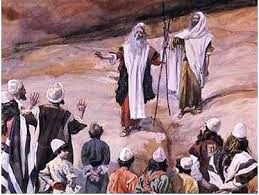






 Centro Estudios Judaicos del Sur de PR
