El poblado de Tzfat, el más alto de Israel ubicado a lo alto de los montes de la Galilea, es conocido ya como la “capital universal de la Cábala”. Esta disciplina, considerada una sabiduría mística milenaria que combina elementos religiosos y espirituales, atrae a decenas de miles de feligreses y turistas –judíos y no judíos- a este pintoresco enclave.
Si bien en el casco antiguo -famoso por sus estrechas callejuelas repletas de galerías de arte, históricas sinagogas o centros de estudios cabalísticos- había abundante información histórica y teológica en inglés, existía una evidente carencia para el público de habla hispana, cuyas cifras de visitantes aumentan cada año.
Ese fue el motivo del nacimiento del Centro Latino Israel: “el objetivo es situar a Tzfat como el centro mundial de la espiritualidad y la cultura judía, unido al contexto histórico del lugar, y hacerlo a través de actividades turísticas y educativas, así como la creación de una comunidad para los inmigrantes de habla hispana en la zona”, explicó a Aurora el rabino Eyal Riess, fundador del proyecto.
Riess tiene larga experiencia en el lugar: lleva 15 años en el Centro de Cabalá de Tzfat, donde se hacen eventos de todo tipo y por donde pasan hasta 50.000 personas al año. “La Cábala es una parte de la cultura judía y de la Torá, pero hoy día tiene un interés enorme fuera del público judío. Varias celebridades se encargaron de esto”.
El rabino contó que Luis Fonsi “recibió la inspiración para escribir “Despacito” aquí. Estuvo en mi casa hace cuatro años, y pidió que su mujer quedara embarazada y éxito en su carrera. Las dos cosas pasaron”.
El rabino Riess junto a Luis Fonsi y su delegación
“La ciudad de Tzfat está asociada al elemento aire, el único de los elementos que no se puede ver. Esto no es casualidad, Tzfat es la ciudad en donde floreció el estudio de todo lo que “no se puede ver” con el ojo físico, el conocimiento de todo lo místico, abstracto, e incomprensible”, detalla el Centro Latino Israel en su página. Y esto es lo que pretende transmitir a las delegaciones de periodistas, embajadores o influencers que llegan a este rincón de la Galilea.
Según diversos investigadores, en Tzfat ha habido vida judía ininterrumpida durante los últimos 2.100 años. A este enclave montañoso llegaron reconocidos sabios y rabinos, como Iosef Caro, que huyó de Toledo (España) por el año 1492, cuando se ordenó la expulsión de los judíos sefardíes.
Los judíos llegaron aquí desde Turquía o los Balcanes, pero también Marruecos o Egipto. “Eso explica el acento universal del lugar, y también la atracción que despierta en los latinos”, dijo refiriéndose a que en las callejuelas del pueblo se habló mucho ladino (o judeoespañol), el idioma de los judíos expulsados de la península ibérica.
“Antes, los latinos venían aquí por unas horas o un día, pero ahora nos piden seminarios para quedarse aquí una semana, de países como Puerto Rico o Costa Rica”, afirmó Riess. Según dice, detectaron una falta de organización para actividad turística y espiritual en español, y por ello se decidieron hace ocho meses a abrir el centro.
El centro está ubicado en un bello edificio en el caso antiguo, donde se hallaron restos arqueológicos con 4.000 años de antigüedad, de la época de bronce.
Avi Roitman es el director del Centro Latino Israel. Nacido en Paraguay y desde hace una década en Tzfat, se ha dedicado a educar e inspirar a gente de todo el mundo, transmitiendo los conocimientos de las dimensiones más profundas del judaísmo, a través de clases, seminarios, y una diversa gama de actividades atractivas al público internacional de turistas latinos de todo el mundo, y al mismo tiempo por otro lado crear y unir a la comunidad de olim jadashim (latinos inmigrantes) generando actividades en el ámbito local.
Avi Roitman, director del Centro Latino Israel, con un grupo de visitantes en Tzfat
“Detectamos un incremento del interés por la espiritualidad, que es algo auténtico que tiene mucha trascendencia. Los primeros centros de estudio estuvieron en Girona y Guadalajara (España), y de ahí se fue extendiendo”, explicó Roitman. Ahora, el Centro Latino Israel tiene estudiantes de países como El Salvador, que incluso se apuntan a seminarios online.
Uno de los puntos fuertes es la organización de actividades para olim jadashim, los nuevos inmigrantes judíos llegados a Israel. El próximo 22 de mayo se celebrará en el Centro Latino Israel un evento público para la festividad de Lag Baomer, con actividades culturales, musicales y gastronómicas para familias latinas. Además, celebran barmitzvot y otro tipo de festejos tradicionales. Asimismo, tienen diferentes programas y seminarios que pueden durar desde una hora hasta varios días así como también paseos interactivos guiados por la ciudad de Tzfat.
“También nos dedicamos a la hasbará, explicando a embajadores de países como Colombia o Panamá sobre la realidad de Israel. Debemos recordar que estamos muy cerca de la frontera con el Líbano”, concluyó Roitman.
El Centro Latino Israel también busca alcanzar al público que no llega físicamente a Israel y para esto tienen también actividades online como webinars sobre diversos temas de interés para el público.
Programas especiales para mujeres
El Centro Latino Israel también tiene un programa para mujeres, dirigido por Nathalie Levy Riess, que promueve el empoderamiento femenino.
Nathalie es coach de espiritualidad, empoderamiento femenino, autora, y guía de femineidad basada en la Cábala y espiritualidad judía. Nathalie enseña en webinars y ofrece sesiones privadas de empoderamiento de mujeres y parejas vía Skype, y viaja por el mundo dando charlas de diversos temas, como espiritualidad en la vida moderna, intimidad y relaciones de pareja.
A view of the debris inside Notre-Dame de Paris in the aftermath of a fire that devastated the cathedral, during the visit of French Interior Minister Christophe Castaner (not pictured) in Paris, April 16, 2019. Photo: Christophe Petit Tesson / Pool via Reuters.
JNS.org – The world was transfixed this week by the devastating images of flames and clouds of acrid smoke spewing from the roof of the Notre Dame Cathedral in central Paris. As Notre Dame burned, the charred ruin now missing its spire and roof, people around the globe stood with France in feeling the loss of this irreplaceable religious and cultural icon.
Notre Dame dates from the 12th century and provides a snapshot of what life was like eight centuries ago. When it was built, the vast majority of the population was illiterate; many people lived in what today would seem like abject poverty. Many of the elaborate friezes, statues, and stained glass windows served an educational function, illustrating Biblical and other religious stories, and seeking to impart messages to the Christians of Medieval Paris. Surprisingly, some of Notre Dame’s most prominent artwork concerns Jews.
Above the cathedral’s main doorway is a frieze, or raised carving, of two Christian saints: Anne and Joachim, who are thought to be the grandparents of Jesus. Since these individuals were Jewish, the artist used actual local Jews as models.
Jews were barely tolerated in France at that time. King Philip II expelled the Jews in 1182, but within a few years they began to trickle back into the country, settling in several cities and towns, including Paris. Their activities were severely restricted: the Lateran Council, convened by Pope Innocent III in 1215, banned Jews from all professions in Europe except for pawnbroking and selling old clothes. In addition, Jews were forced to wear special, ridiculous clothing that differentiated them from Christians.
We know what garments the Jews of Paris wore, because their likenesses have adorned Notre Dame Cathedral for 800 years. The Jewish wedding guests in the frieze are dressed in long robes and wearing tall pointy hats.
On the left, the frieze shows Anne and Joachim’s wedding and is a seemingly faithful reproduction of a medieval French synagogue. The rabbi conducting the ceremony is wrapped in a tallit. Nearby is an ark containing the Torah, a pile of books and a ner tamid, the lamp that remains eternally lit in synagogues.
On the right, the frieze depicts Anne and Joachim bringing an offering to a synagogue; the artist even carved a Torah scroll resting on a bima. Nearby is the likeness of two medieval Jews, deep in conversation in the synagogue.
At the time this frieze was being carved, Jews were relentlessly persecuted in Paris and elsewhere in Europe. In 1239, Pope Gregory IX sent letters to church leaders, as well as to the kings of England, Spain, and Portugal, enumerating dozens of charges against the Talmud. This led to calls to collect and destroy this Jewish holy work. Nowhere was this horrendous instruction carried out with as much zeal as in Paris. On March 3, 1240, church officials burst into synagogues throughout France. It was a Shabbat, and synagogues were full. France’s helpless Jews watched as their holy volumes were taken away.
French King Louis IX called for the Talmud to be put on trial. Four rabbis defended the Jewish holy books from a series of accusations; unsurprisingly, the rabbis were found to have lost and the Talmud was condemned to be burned. On June 17, 1242, church officials brought 24 wagons piled high with volumes of the Talmud, about 10,000 books in all — all known copies of the Talmud then in existence in France — to Paris’ Place de Grève, next to Notre Dame. There, they were publicly burned.
Rabbi Meir of Rothenburg, known as the Maharam, witnessed the burning. He penned a haunting lamentation afterward, recording, “My tears formed a river that reached to the Sinai desert and to the graves of Moses and Aharon. Is there another Torah to replace the Torah which you have taken from us?”
Two prominent statues on the facade of Notre Dame captured the feelings of Christians and Jews at this time. On the right, one woman stands ragged defeated, her eyes are covered by a snake and her head is bowed. She holds a broken scepter and tablets of Jewish law are slipping from her grasp. Under her feet lies a crown trodden into the dust: she is “Synagoga,” representing the synagogue or Judaism in general.
The Catholic Church wanted those entering Notre Dame to believe that Judaism was finished, downcast, and humiliated.
On her left is a finely dressed woman standing upright, carrying a chalice and a staff with a cross at its peak, seemingly triumphant. She is known as “Ecclesia,” representing the victorious Catholic Church.
So important were these allegories of Christian dominance and Jewish humiliation that when the originals were destroyed during the French Revolution, they were re-created and replaced in the 1800s.
Above them is yet another depiction of Jews: the Gallery of Kings, featuring 28 kings of ancient Judah and Israel. These too were replaced after being smashed during the Revolution.
In 1306, King Philip III of France took a drastic step. He was short of funds and decided to seize the belongings and assets of the Jews in his kingdom. This was not an unprecedented step: Jews in Medieval Europe were, in the Latin phrase of the time, servi camerae mosrae, or servants of the chamber of the king. As property, they were the king’s to do with as he saw fit.
On July 22, 1306, the day after Tisha Be’av, 100,000 Jews were arrested throughout France and forced into prison. There, they were told they were sentenced to exile; each Jew was permitted to bring only the clothes they were wearing and the very small sum of 12 sous each. In the ensuing months, King Philip III auctioned off the Jews’ property. His order of expulsion was reversed by his son King Louis X, but then reinstated in 1322. Only centuries later was it safe for Jews to once again live in France, as the territory of the expanding French kingdom grew to include areas to which French Jews had fled and established new communities.
As French officials survey the wreckage of Notre Dame, it’s becoming clear that the front facade of the cathedral is largely intact. These irreplaceable artistic treasures depicting the history of Jews in France seem to have been saved. They can teach us a great deal about Jewish history and fortitude in France and beyond.
La catedral destruida aún conserva un arte invaluable que representa la herencia judía en Francia.
Diario Judío México – El mundo quedó paralizado por las devastadoras imágenes de llamas y nubes de humo que salían del techo en llamas de la catedral de Notre Dame, en el centro de París. Mientras se quemaba Notre Dame, la ruina carbonizada ahora extrañaba su aguja y su techo, la gente de todo el mundo se quedó con Francia sintiendo la pérdida de un ícono religioso y cultural insustituible.
Notre Dame data del siglo XII, ésta proporciona una instantánea de cómo era la vida hace ocho siglos. Cuando se construyó, la gran mayoría de la población era analfabeta; Mucha gente vivía en lo que hoy parece una pobreza extrema. Muchos de los elaborados frisos, estatuas y vidrieras cumplían una función educativa, ilustrando historias bíblicas de otras religiones y procurando transmitir mensajes a los cristianos del París medieval. Sorprendentemente, algunas de las obras de arte más destacadas sobre Notre Dame tienen como referente a los judíos.
Sobre la entrada principal de la catedral hay un friso o talla de dos santos cristianos: Ana y Joaquín, que se cree que son los abuelos de Jesús. Dado que estas personas eran judías, el artista usó judíos locales reales como modelos.
Sabemos qué prendas especiales llevaban los judíos en París porque sus semejanzas han adornado la catedral de Notre Dame durante 800 años. Los invitados a la boda judía en el friso visten túnicas largas y sombreros puntiagudos.
A la izquierda, el friso muestra la boda de Anne y Joachim. Es ésta una reproducción aparentemente fiel de una sinagoga francesa medieval. El rabino que dirige la ceremonia está envuelto en un talit. Cerca hay un arca que contiene la Torá, una pila de libros y un Ner Tamid, la lámpara que permanece eternamente encendida en las sinagogas.
A la derecha, el friso muestra a Anne y Joachim trayendo una ofrenda a una sinagoga; el artista incluso esculpió un rollo de Torá descansando sobre una bima. Muy cerca se encuentra la semejanza de dos judíos medievales, profundamente en conversación en la sinagoga.
En el momento en que se tallaba este friso, los judíos eran perseguidos sin tregua en París y en otras partes de Europa. En 1239, el papa Gregorio I envió cartas a los líderes de la iglesia, así como a los reyes de Inglaterra, España y Portugal, enumerando docenas de cargos contra el Talmud. Esto llevó a los llamados a recoger y destruir esta santa obra judía. En ninguna parte se llevó a cabo esta horrenda instrucción con tanto celo como en París. El 3 de marzo de 1240, los oficiales de la iglesia irrumpieron en sinagogas en toda Francia. Era un Shabbat y las sinagogas estaban llenas. Los indefensos judíos de Francia vieron cómo sus volúmenes sagrados del Talmud eran confiscados y quitados.
El rey francés Luis IX pidió que el Talmud fuera llevado a juicio. Cuatro rabinos defendieron los libros sagrados judíos de una serie de acusaciones. Como era de esperar, se descubrió que los rabinos habían perdido y se ordenó que el Talmud fuera quemado. El 17 de junio de 1242, los funcionarios de la iglesia trajeron 24 carros apilados con volúmenes del Talmud, aproximadamente 10,000 libros en total, todas las copias conocidas del Talmud que existían en Francia fueron a la Place de Greve de París, junto a Notre Dame. Allí, fueron quemados públicamente.
El rabino Meir de Rothenburg, conocido como el Maharam, fue testigo de la quema. Escribió un lamento inquietante después, al registrar que “Mis lágrimas formaron un río que llegó al desierto del Sinaí y a las tumbas de Moshe y Aharon. ¿Hay otra Torá para reemplazar la Torá que nos has quitado?”
Dos estatuas prominentes en la fachada de Notre Dame capturaron los sentimientos de cristianos y judíos en este momento. A la derecha, una mujer se encuentra derrotada, sus ojos están cubiertos por una serpiente y su cabeza está inclinada. Ella sostiene un cetro roto y las Tablas de la ley judía se están escapando de su alcance. Bajo sus pies se encuentra una corona trillada en el polvo: ella es “Sinagoga”, representando a la sinagoga, o al judaísmo en general.
La Iglesia Católica quería que los que ingresaban a Notre Dame creyeran que el judaísmo estaba terminado, abatido y humillado. A su izquierda, una mujer finamente vestida, de pie, con un cáliz y un bastón con una cruz en la cima, aparentemente triunfante. Ella es conocida como “Ecclesia,” representando a la victoriosa Iglesia Católica.
Tan importantes fueron estas alegorías del dominio cristiano y la humillación judía que cuando los originales fueron destruidos durante la Revolución Francesa, fueron recreados y reemplazados en el siglo XIX.
Por encima de ellos se encuentra otra representación de los judíos: la Galería de los Reyes, con 28 reyes de la antigua Judá e Israel. Estos también fueron reemplazados después de ser aplastados durante la Revolución.
En 1306, el rey Felipe III de Francia dio un paso drástico. Le faltaron fondos y decidió apoderarse de las pertenencias y los bienes de los judíos en su reino. Este no fue un paso sin precedentes: los judíos en la Europa medieval eran, en la frase latina de la época, servi camerae mosrae, o sirvientes de la cámara del rey. Como propiedad, tenían que ver con el rey como él creyera conveniente.
El 22 de julio de 1306, un día después del sombrío día festivo judío de Tisha B’Av, 100,000 judíos fueron arrestados en toda Francia y obligados a ir a prisión. Allí, les dijeron que los habían condenado al exilio; a cada judío se le permitió traer solo la ropa que llevaban y la ínfima suma de 12 sous por persona. En los meses siguientes, el rey Felipe III subastó las propiedades de los judíos. Su orden de expulsión fue revocada por su hijo, el rey Luis X, pero luego se restableció en 1322. Solo siglos más tarde, los judíos pudieron volver a vivir en Francia, ya que el territorio del reino francés en expansión creció para incluir áreas de las cuales los judíos franceses habían huido, estableciendo nuevas comunidades.
Mientras los funcionarios franceses observan los restos de Notre Dame, se hace evidente que la fachada frontal de la catedral está casi intacta. Estos tesoros artísticos insustituibles que representan la historia de los judíos en Francia parecen haberse salvado, tienen la capacidad para enseñarnos mucho sobre la historia y la fortaleza judía en Francia, y más allá de este país.
As we soon hope to celebrate Pesach, we encounter a rather unusual biblical instruction which very well reflects the David Cardozo Academy and its unique philosophy.
The Torah (Shemot 12: 1-28, 43-47; Devarim 16: 1-8) states that the korban Pesach (Passover lamb) had to be eaten on the eve of the first day of Pesach in the Temple. It warns us that under no circumstances was it to be boiled. Instead it had to be roasted. This is very strange, since the Torah rarely tells us how to prepare our food. The only other exception is found in Bamidbar (6:19) concerning the Nazir whose sacrifice needs to be boiled.
What is the meaning behind this?
Maharal, in his commentary on the Haggadah, explains that there is a basic difference between boiling and roasting. Boiling is an act that assimilates, while roasting separates. When boiling, we draw several other ingredients into the object we are boiling. These ingredients assimilate with the object, which absorbs and even adapts itself to the added components. It also expands, absorbing the other ingredients, and becomes soft and begins to disintegrate.
Roasting, however, does the reverse: its main function is to expel. Not only does it remove all the blood, but it also separates all ingredients that are not essential to the meat. As such, it shrinks the meat and makes it tough and impenetrable. This, explains Maharal, is the symbolism of the korban Pesach. At the time of the Exodus, when the people of Israel are to become a nation for the first time, it is not yet possible to allow any (spiritual) absorption from outside. No external influences that could compromise its essential spiritual nature may be permitted. The formation of the nation must involve a courageous stand against the culture in which it endured a 210-year exile.
But this is not an ideal situation. No nation or religious movement can live in isolation. Nor should it have to. Rather, a nation must develop the inner strength to open itself up to other cultures and ideologies without losing its own identity, even in the slightest way. This is the reason why the Torah makes this requirement to roast only once a year and forbids boiling of the meal that celebrates the beginning of Judaism. But it does not prohibit cooking and boiling throughout the rest of the year.
This is characteristic of the Jewish Tradition. Once its foundations have been well established and the structure of Judaism stands like an unshakable mountain, it is able to weather any unwelcome influence from without. More than that, it is then capable of absorbing all forms of genuine human wisdom if they will add to a deeper understanding of Judaism, and will grant the Jew a greater commitment to his tradition. The great Jewish philosopher Franz Rosenzweig wrote, “…in being Jews we must not give up anything, not renounce anything, but lead everything back to Judaism.”
But to ensure that Judaism will succeed at this, it will first have to guarantee that it is well grounded.
Israel’s political and rabbinical leaders will have to learn this lesson. To believe that Judaism can survive without constant hitchadshut, innovation, is just as dangerous as believing that secular culture will provide the answers to Israel’s problems. Our nation must stand on tradition and innovation while being open to the great resources which the world offers us.
Modern Orthodoxy may have become too impressed with secular scholarship and no longer be able to offer its followers enough spiritual challenges, thus losing its appeal to our young people. On the other hand, the Chareidi / “ultra-Orthodox” community has gone to the opposite extreme; it must learn not to be afraid of the outside world. While it is true that the secular world has many attractions that are not in the spirit of Judaism, it cannot be denied that there is much to learn from its wisdom. It may not yet be holy, but it carries the potential to become holy.
We need to give our young people so many reasons to be proud of their great Jewish mission that non-desirable influences from outside will have no appeal. This, however, will require a type of education different from that which is offered by most Jewish high schools, Women’s colleges, and Yeshivot today.
There has perhaps never been a need for Judaism more than today. Many cherished hopes of mankind lie crushed, and Judaism holds profound answers to some of these problems. If we inspire our youth to be pioneers instead of just followers, we can create a new movement that young people would love to join. If they realize that the future of mankind depends on them as committed Jews, many would be equipped to overcome the often hollow challenges offered by some aspects of the secular world. Simultaneously there won’t be a need for withdrawal in isolation.
This is what the David Cardozo Academy stands for. It has already made a deep impression on many young people. It will press forward and will succeed.
As Jews, we must never forget what we are fighting for.
Como pudimos ver en la parashá Tazria, los sabios identificaron a tazra’at – la condición que afecta a la piel humana, las vestimentas y las paredes de las casas – no como enfermedad sino como castigo; y no por cualquier pecado sino por uno específico, lashón hará, el hablar mal de otro.
Esto plantea una pregunta obvia: ¿por qué este pecado y no otro? ¿Por qué hablar mal de otro es peor que, digamos, la violencia física? Hay un viejo dicho inglés que dice: “Palos y piedras me podrán romper los huesos / pero las palabras nunca me dañarán.” Es desagradable oír maldades de uno, pero nunca es más que eso.
Tampoco hay en la Torá una prohibición específica de hablar mal de otro. Sí existe una prohibición contra el chisme: “No debes dar vueltas como chismoso en tu pueblo” (Levítico 19: 16). Lashón hará es parte de este precepto mayor. Maimónides lo define de la siguiente forma: “Hay un pecado mucho mayor que entra dentro de esta prohibición (de chismosear). La ‘mala lengua,’ que se refiere a la persona que habla despectivamente de su semejante, aun cuando lo que dice sea verdad.” (1)
Los sabios van más lejos para enfatizar su gravedad. Es, dicen, como los tres pecados cardinales juntos – la idolatría, el derramamiento de sangre y las relaciones sexuales ilícitas. (2) Cualquiera que emplee la mala lengua, dicen, es como si negara a Dios. (3) Asimismo afirman: está prohibido vivir en la cercanía de los maledicentes, y aún más, sentarse con ellos y escuchar sus palabras. (4) ¿Por qué motivo meras palabras son tratadas tan seriamente en el judaísmo?
La respuesta se conecta con uno de los principios más básicos de la creencia judía. Existen culturas antiguas que adoraban a sus dioses porque veían en ellos los poderes: rayos, truenos, la lluvia, el sol, el mar y el océano que representaban las fuerzas del caos; y a veces animales salvajes que los conectaban con el peligro y el miedo. El judaísmo no era una religión que alabara el poder, a pesar de que Dios es más poderoso que cualquier deidad pagana.
El judaísmo, como otras religiones, tiene lugares sagrados, personas sagradas y rituales consagrados. Sin embargo, lo diferencial del judaísmo es que es de sobremanera una religión de palabras sagradas. Mediante palabras Dios creó el universo: “Y Dios dijo: que se haga…y así fue.” A través de las palabras Él se comunicó con la humanidad. En el judaísmo, el lenguaje en sí es sagrado. Es por eso que lashón hará, el uso del lenguaje para dañar, no es una ofensa menor. Significa tomar algo que es sagrado y utilizarlo con fines no santos. Es una señal de profanación.
Después de crear el universo, el primer regalo de Dios al hombre fue el de poder usar palabras para denominar a los animales, y de ahí el uso del lenguaje para clasificar. Ese fue el comienzo del proceso intelectual que es la señal distintiva del Homo Sapiens. El Targum traduce esta frase: “Y el hombre se transformó en un ser viviente” (Génesis 2: 7) como “espíritu parlante.” Los biólogos evolucionistas consideran que fueron las exigencias del lenguaje y la ventaja que esto les daba a los humanos sobre otras formas de vida, lo que dio lugar a la expansión masiva del cerebro humano. (5)
Cuando Dios buscó frenar el plan de los hombres de Babel de construir la torre que llegara al cielo, simplemente “confundió su lenguaje,” haciendo imposible la comunicación entre ellos. El lenguaje sigue siendo fundamental para la existencia de los grupos humanos. Fue el crecimiento del nacionalismo del siglo XIX lo que llevó a la disminución gradual de los dialectos regionales a favor de un único lenguaje compartido a través de todo el territorio sobre el cual la autoridad política tenía soberanía. Hasta el día de hoy, los diferentes lenguajes que existen en una nación son fuente de fricción social y política, como en el caso de los anglo y francoparlantes en Canadá; los que hablan holandés, francés, alemán y valón en Bélgica; y los que hablan español y vasco (también conocido como Euskadi) en España. Dios creó con palabras el universo natural. Nosotros creamos – y a veces destruimos – con palabras el universo social. Por lo tanto, el primer principio del lenguaje en el judaísmo es que es creativo. Creamos mundos con palabras. El segundo principio es no menos fundamental. El monoteísmo abrahámico introdujo en el mundo el concepto de un Dios que trasciende el universo, y por lo tanto no puede identificarse con ningún fenómeno dentro del mismo. Dios es invisible. De ahí que los íconos y toda imagen religiosa sean señales de idolatría.
¿Cómo hace entonces un Dios invisible para revelarse? La revelación no era problema para el politeísmo. Los paganos veían dioses en la panoplia de la naturaleza que nos rodea, haciéndolos sentir insignificantes en su vastedad e impotentes ante su furia. Un Dios que no puede ser visto ni siquiera representado mediante imágenes requiere un tipo de sensibilidad religiosa marcadamente distinto. ¿Dónde puede encontrarse ese Dios?
La respuesta, nuevamente es: en las palabras. Dios habló. Le habló a Adam, Noaj, a Abraham, a Moshé. En la revelación ante el Monte Sinaí, Moshé le recordó a los israelitas: “El Señor les habló desde el fuego. Escucharon el sonido de las palabras pero no había ninguna imagen; sólo una voz” (Deuteronomio 4: 12). En el judaísmo las palabras constituyen el vehículo de la revelación. Profeta es el hombre o la mujer que oye y enuncia la palabra de Dios. Ese era el fenómeno que ni Spinoza ni Einstein pudieron comprender. Podían aceptar la idea de un Dios que creó el cielo y la tierra, la fuerza de las fuerzas y la causa de las causas, El que originó lo que hoy día llamamos el Big Bang, el Dios arquitecto de la materia y generador del orden. Según la famosa frase de Einstein, “Dios no juega a los dados con el universo.” De hecho, la fe en el universo como producto de una única inteligencia creativa subyace detrás de la mentalidad científica desde sus inicios.
El judaísmo llama a este aspecto de Dios Elokim. Pero nosotros creemos también en otro aspecto de Dios que llamamos Hashem, el Dios de las relaciones – y las relaciones existen en virtud del lenguaje. Porque es éste el que nos permite comunicarnos con otros y compartir con ellos nuestros temores, esperanzas, amores, planes, sentimientos e intenciones. El lenguaje nos permite transmitir nuestra interioridad a otros. Está en el corazón mismo del vínculo humano. Un Dios que haya creado el universo pero que no pueda hablar o escuchar sería un dios impersonal – un dios incapaz de comprender lo que nos hace humanos. Adorar a ese dios es como inclinarse ante el sol o una computadora gigantesca. Podríamos cuidarla pero ella no podría hacer lo mismo con nosotros. Ese no es el Dios de Abraham.
Las palabras también son importantes de otra manera. Podemos usar el lenguaje no solo para describir o afirmar. También podemos usarlo para crear nuevos hechos morales. El filósofo de Oxford J. L. Austin llamó a este uso especial del lenguaje “expresión performativa.” El ejemplo clásico es el de hacer una promesa. Cuando la hago, creo una obligación que hasta ese momento no existía. Nietzsche consideró que la capacidad de hacer una promesa constituye el nacimiento de la moralidad y la responsabilidad humana. (7)
Así arribamos a la idea que está en el corazón del judaísmo: el brit, pacto, no es otra cosa que una promesa mutuamente vinculante entre Dios y los seres humanos. Lo que define la especial relación entre el pueblo judío y Dios no es que Él los condujo de la esclavitud a la libertad. Hizo eso también con otros pueblos, dice el profeta Amós: “No saqué a Israel de Egipto, a los filisteos de Caftor y a los arameos de Kir?” (Amos 9: 27). El hecho es que en Sinaí Dios e Israel pactaron un juramento mutuo que produjo un vínculo eterno.
Pacto es la palabra que une al cielo con la tierra, la palabra emitida, la palabra escuchada, la palabra aceptada y honrada de buena fe. Por esa razón, los judíos pudieron sobrevivir el exilio. Pueden haber perdido su hogar, su tierra, su poder, su libertad, pero aún tenían la palabra de Dios, la palabra que Él dijo que nunca rescindiría ni dejaría de cumplir. La Torá en el sentido más profundo, es la palabra de Dios, y el judaísmo es la religión de las palabras sagradas.
Se comprende que el mal uso o abuso del lenguaje para sembrar sospecha o disenso no solo es destructivo. Es sacrílego. Es tomar algo sagrado, la capacidad humana de comunicar y de esa forma juntar alma con alma, y usarla con los fines más abyectos, para dividir alma de alma y destruir la confianza de la cual dependen las relaciones no coercitivas.
Según los sabios, ese es el motivo por el cual el autor de lashón hará fue castigado con la lepra y forzado a habitar fuera del campamento. El castigo fue proporcional a la acción:
¿Qué tiene de especial la persona afectada por tzara’at que, según la Torá, debe “vivir solo; debe habitar fuera del campamento” (Levítico 13: 46)? El Santo, Bendito Sea dijo, “Ya que esta persona buscó crear la división entre el hombre y su esposa o entre una persona y su comunidad, (será castigado siendo dividido de la comunidad) que es el motivo por el cual dice “Que viva solo, fuera del campamento.”
Yalkut Shimoni I:552 (8)
En el judaísmo, el lenguaje es la base de la creación, de la revelación y de la vida moral. Es el aire que respiramos como seres sociales. De ahí la afirmación en Proverbios (18: 21): “El poder de la muerte y la vida está en la lengua.” De la misma manera en Salmos: “Cualquiera sea el que ame la vida y desee ver muchos días buenos, que guarde su lengua de la maldad y su boca de la mentira” (34: 13-14).
El judaísmo emergió como respuesta a una serie de preguntas: ¿Cómo pueden los seres humanos finitos conectarse con un Dios infinito? ¿Cómo pueden conectarse unos con otros? ¿Cómo puede haber cooperación, colaboración, acción colectiva, familias, comunidades y nación sin el uso coercitivo del poder? ¿Cómo podemos construir relaciones de confianza? ¿Cómo podemos redimir al ser humano de su soledad? ¿Cómo podemos crear la libertad colectiva de tal forma que la mía no pueda ser conseguida a costa de la tuya?
La contestación es: mediante las palabras, palabras que comunican, palabras que unen, palabras que honran al Otro Divino y al otro humano. Lashón hará, “hablar mal del otro”, al envenenar el lenguaje destruye la base misma de la visión judaica. Cuando hablamos despectivamente de otros y los disminuimos, nos disminuimos a nosotros mismos y dañamos la ecología misma de la libertad.
Es por eso que los sabios toman tan seriamente a lashón hará, porque lo consideran como el más grave de los pecados, y porque afirman que todo el fenómeno de la tzara’at, lepra en las personas, hongos en las vestimentas y en las casas, era la forma de Dios de hacerlo público y estigmatizarlas.
Nunca tomes livianamente al lenguaje, nos da a entender la Torá. Pues fue a través del lenguaje que creó Dios el mundo natural, y a través del lenguaje creamos y sostenemos nosotros el mundo social. Es tan esencial para nuestra supervivencia como el aire que respiramos.
Fuentes
Maimónides, Mishné Torá, Hiljot Deot 7:2.
Arajin 15b.
Ibid.
Arajin 15a.
Ver Steven Pinker, The Language Instinct (New York: William Morrow, 1994); Robin Dunbar, Grooming, Gossip and the Evolution of Language (Cambridge, Mass.: Harvard University Press, 1996); Guy Deutscher, Through the Looking Glass: Why the World Looks Different in Other Languages (New York: Metropolitan/Henry Holt, 2010).
J. L. Austin, How to Do Things with Words (Cambridge, Mass.: Harvard University Press, 1962).
Friedrich Nietzsche, ensayo número 2 en On the Genealogy of Morality, ed. Keith Ansell-Pearson, trans. Carol Diethe (Cambridge, UK: Cambridge University Press, 1994).
No country in history has ever given back to a sworn enemy militarily essential territory that has been captured in a defensive war.
Predictably, the European Union opposed the U.S. recognition of the annexation. But it provided no compelling argument, beyond its usual demand that the status quo not be changed.
Has any European country ever handed over high ground, captured in a defensive war, to a sworn enemy? Recall that at the end of the first and second world wars, European countries made territorial adjustments to help preserve the peace. Why should the European Union subject Israel to a double standard it has never demanded of itself? The answer is clear: The European Union has always acted hypocritically when it comes to Israel, and this is no exception.
No reasonable person would ask the Israelis to give the Golan Heights to the Syrian mass murderer Assad. It would be suicidal to hand the high ground overlooking Israeli towns and villages to a madman who would use it to target Israelis civilians with chemical barrel bombs, as Assad has done to his own citizens. No country has ever returned a battleship captured in a defensive war to an enemy sworn to its destruction. In addition, the Golan Heights is a big battleship that would be used to attack Israel.
The Golan Heights is not like the West Bank, which has a large population of civilians who regard themselves as occupied or displaced. The civilians who lived in the Golan Heights before Israel entered it on the last day of the Six-Day War were largely Druze. Whoever remained there are far better off living in Israel than in Syria. Since Assad began his campaign of murder, many Golan Druze have already become Israeli citizens. As one of the 25,000 Arab Druze stated in a recent LA Timesarticle, “No doubt that Druze and Israelis in the Golan enjoy a level of safety and security that can’t be compared to life on the other side… Each night at dinner, he says he reminds his children that while they are well fed, there are children in Syria with nothing to eat.”
So, Israel’s control of the Golan Heights is not about people; it is largely about military advantage. No country in history has ever given back to a sworn enemy, militarily essential territory that has been captured in a defensive war.
The issue is not whether Israel should give back the Golan Heights now. Virtually everyone agrees it should not. Moreover, it will not. No Prime Minister of Israel, no matter how far to the left, would ever think of ceding the Golan Heights to Assad. The area is high ground that the Syrians used to shoot down onto the Israeli farmers laboring in the valley: it was a shooting gallery.
Israel will remain in control of the Golan Heights for the foreseeable future. The only issue is whether Israel’s annexation of the Golan Heights should be recognized by the United States and other countries. It should, for several important reasons.
The reality on the ground is that Israel will never give up the Golan Heights to Syria, unless it is part of a negotiated resolution with a peaceful, democratic Syria that has agreed to end all belligerency and recognize Israel as the nation state of the Jewish people. This is unlikely to happen anytime in the foreseeable future. If it were to happen, there would be nothing to stop Israel from ceding the annexed Golan Heights to Syria as part of an enduring peace deal. There is therefore no real harm in Israel’s decision to annex it and the United States’ decision to recognize that annexation. Furthermore, the decision to annex and recognize the annexation removes the Golan Heights from the status of occupied territory and recognizes the status quo as both de facto and de jure realities.
I had the opportunity to discuss this issue with U.S. President Donald J. Trump two weeks before he announced his decision. I provided him with the battleship analogy, which he seemed to appreciate. I told him that I thought the Sunni Arab world might complain, but that they really do not care about the Golan, which has no religious significance to Islam. There were in fact, some minor protests, but nothing of significance.
Predictably, the European Union opposed the U.S. recognition of the annexation. But it provided no compelling argument, beyond its usual demand that the status quo not be changed. Israel’s control over the Golan Heights has been the status quo for more than half a century; and Israel’s legitimate need to control the heights has only increased over time, with war in Syria, and the presence of Iranian and Hezbollah military in close proximity. Would the European Union demand that Israel now hand over the Golan Heights to Assad? Has any European country ever handed over high ground, captured in a defensive war, to a sworn enemy?
Recall that at the end of the first and second world wars, European countries made territorial adjustments to help preserve the peace. Why should the European Union subject Israel to a double standard it has never demanded of itself? The answer is clear: The European Union has always acted hypocritically when it comes to Israel, and this is no exception.
So three cheers for President Trump for doing the right thing. I will continue to criticize him if and when he does the wrong thing — such as separating families at the U.S.’s southern border.
That is what bipartisan means: praising the President I voted against when he does the right thing, and criticizing presidents I voted for (such as Barack Obama) when they do the wrong thing (such as abstaining on the Security Council Resolution declaring Jewish holy places to be occupied territory).
Israel’s continuing control over the Golan Heights increases the chance for peace and decreases the chances that Syria, Iran and/or Hezbollah will be able to use this high ground as a launching pad against Israelis. That is good news for the world, for the United States and for Israel.
Alan M. Dershowitz is the Felix Frankfurter Professor of Law Emeritus at Harvard Law School and author of The Case against the Democratic House Impeaching Trump (Hot Books, January 2, 2019), and a Distinguished Senior Fellow of Gatestone Institute.
Sarah Blake, author of ‘Naamah.’ (Collage by Alma/via JTA)
JTA via Alma — In the Hebrew Bible, we get the stories of few women: There’s Eve, obviously. There are the matriarchs Sarah, Rebecca, Rachel, and Leah. There’s Queen Esther, our Purim heroine, and Judith, a Hanukkah heroine. There’s Miriam the Prophetess, Moses’s sister who danced the whole night long; Hannah, the first woman who prays; Ruth, the first convert.
But notable are the women who aren’t named. (Only around 10 percent of the 1,400 or so individuals given names in the Hebrew Bible are women.) Take Noah’s Ark, for example. We learn all about Noah, of course, but have you ever wondered about his wife, the woman who became the matriarch of all future generations of people? Me neither, before reading Sarah Blake’s new book, “Naamah.”
In “Naamah,” Blake reclaims the tale of Noah’s wife, who goes nameless in the Bible. In the novel, Blake has named her Naamah (she chose the name from the Book of Jubilees, an ancient text that tells the same stories that are in Genesis, but with greater detail; Noah’s wife, in this telling, is named Na’amah. But Judaism — outside of Beta Israel, the Ethiopian Jewish community – doesn’t recognize the Book of Jubilees as canonical).
We had the opportunity to chat with Sarah Blake about “Naamah,” matriarchs, feminist retellings, and how she never wants to break a reader’s heart.
This interview has been lightly edited and condensed.
What led you to want to tell Naamah’s story?
I was re-reading Genesis for a poetry project I was working on. I couldn’t believe in re-reading it how much of the story of the ark I hadn’t understood; it hadn’t really made it through to me that it was over a year that they were stuck on that ark. Looking at what that would’ve meant to the adults involved, given the task of being with every animal on earth, on an ark, for over a year … it just sounded hopeless and terrifying and noisy and sickening. I got really attached to the idea of the woman that would’ve been the wife and the mother and the person who had to survive all of that. I wanted to get to know her, and how she would’ve survived, and I wanted to offer her ways of escape and see what she would do with them. There were endless things that kept drawing me towards her story, and all the different parts of it.
Illustrative: Life-size figures of animals inside the Noah’s Ark in Dorderecht in 2013. (Courtesy of De Ark van Noach)
Did you learn the story of Noah’s Ark growing up?
I had heard it in — this is so bizarre — Quaker meetings, a few times when I was seven. But, I already knew the story at that point [because] I remember when they told me, I wasn’t surprised. I don’t know when I actually first heard it.
Do you wish it was taught differently to kids? Or told differently?
I do find it very surprising that the retelling of the story of the ark is quick. The 40 days and 40 nights is what you think is the long part; the rain is what’s quite impressive, or it always was to me. In my mind I was like, oh man, 40 days and 40 nights, and then there’s enough water on earth to cover trees and mountains! And then I just thought, the rains went away and then they got off.
So that was a big part that struck me, when [Genesis says], ‘Oh yeah, God didn’t think about it for a while, and then he did, and he’s like, okay, I’ll start this drying process. And here will come a wind, and here will come a place where it drains out.’ There are a few little details about it, but even then, it takes months. And then there’s the birds — in the story I was taught, I don’t even think I got the birds. So I’m not sure I necessarily need to see that… but I would like if more retellings got into how large and long and weird the 14 months is.
There’s implications that the building of the ark takes years. So the whole [story] is kind of flattened, and doesn’t seem as terrifying cause their lives are so long. If you were told now you’re gonna make a boat for three to five years of your life, and then live on it for a year, and then start from scratch, I would be like, ‘I’m gonna be older by then! I don’t know what I’ll be like, or capable of, or what hormonal situation I’ll be in!’ [Laughs]
But I do like how that adds to the magical nature of it — of everyone just being like, ‘Yeah, sure, we will do all of this, and we’ll do it in the time it takes, and we won’t stress about how long it takes, and we’ll just keep walking away from our life to build this giant ark, and return to people that we know are going to die.’ The whole time, did they not tell them they were going to die? There are still questions that I feel like I really didn’t get to answer that I want answered myself.
What was your research process like?
I did re-read Genesis more times than I can count. And I researched animals a lot, and I researched things as they came up. So, a lot of it would be extrapolations on better documented periods of history, like Sumerian culture and Egyptian culture. But mostly: I didn’t research too much, because I really wanted to have the freedom to give her what she needed and focus more on her emotional life. I tried to be just more faithful to Naamah herself, and what I thought she might do.
Illustrative: Noah’s Ark (1846), a painting by the American folk painter Edward Hicks
You write, “The longer she is on the boat, the less she trusts Him, and His feelings toward her, and His choice of her for matriarch.” I never really thought too deeply about the story of Noah’s Ark, that his wife would be the matriarch for everyone in the future. Can you talk a little about this, and how the idea of “matriarch” weaves through the story?
It was hard to imagine being the woman that would be told all of the rest of the world, for the rest of time, would be able to trace back to you.
I mean, that is insane!
That seems insane. It seems when it happens to other people — in stories, in mythical tellings — it’s less pronounced than it was here. Here, they were pulled away from everyone else, watched everyone die, got stuck on water, and didn’t know how long that would last. And then they knew that from there, it would be their job, and if they didn’t create all of life, that would be it. So it’s this incredible drive to want to create people, but also know that as you did, you were going to create a world that had begun with you.
I was really taken by Naamah’s relationship with Bethel, her lover before the flood. Why did you choose to include that story and create that character?
I was really taken by the idea of everyone being hundreds of years old. They’re not as specific about [age] with Naamah, but they are with Noah, [who is] around 500 or 600 years old [Genesis 5:32]. So, I assumed that she was, too. And I assumed their marriage was probably centuries old. Because the other little detail you get [is] that after the boat, you find out that [their son] Shem, when he has his first son, is 100 [Genesis 11:10]. Which meant that in their terms of thinking, that is young-ish. So, that implies to me that Naamah and Noah had probably been married since around 100 years old.
Now you’ve got a marriage that’s centuries old. And, to me, it seems quite natural that marriage was going to mean something different, and that other serious relationships would probably come in and out during that time period, and that wouldn’t be a horrible thing, but just an inevitable thing.
Bethel I saw as one of Naamah’s most recent loves. And I didn’t talk about whether [Naamah and Noah] had more over the years, and who those would’ve been, but in my head, they had existed. Bethel arose really naturally to me in understanding just the length of time [before the flood]. I fell in love with Bethel. I thought she was a really necessary character to put a little bit of release on the tragedy that was the flood; it was something that Bethel wasn’t terrified about. If you only had it from Naamah’s perspective the whole time, I think the flood would’ve been this one-faceted tragedy that I’d always imagined it as, and I wanted the flood to have a little more depth. It still confuses me, the ways in which some people thought it was a good thing. God obviously thought it was the right thing… I was really drawn to all of that.
Illustrative: Ark of Noah, a Dutch Christian organization, created a life-size replica of Noah’s Ark. (Courtesy of Ark of Noah Foundation)
How do you see your story fitting into other feminist retellings of the bible? Anita Diamant’s “The Red Tent” immediately came to mind for me.
I know, and I have to read “The Red Tent,” I can’t believe I haven’t read it! I know it’s about Dinah, and I’ve written a few poems about Dinah — and I think that story is remarkable as well.
But yeah, I can’t answer that question too well. In talking about retellings recently, I realized I haven’t read too many retellings outside poems because I’ve been a poet for so long. I do know a lot of [poetry] retellings, like Marie Howe’s work, a series of poems in “The Kingdom of Ordinary Time,” about Jesus’s mother Mary. And then her newest book of poems is called “Magdalene,” about Mary Magdalene. A. E. Stallings does these great poems about the Greek myths, and so does Louise Glück and Rita Dove, and there’s all these amazing persona poems that are often giving voice to character you’re somewhat familiar with. Like Carmen Jiménez Smith takes on some of the fairy tales. So the poetry world I feel like is what got me poised to really think about retellings. I’m just usually thinking about them happening much more quickly than a 300-page novel.
The novel feels a lot like prose poetry, it flowed so beautifully. I noticed your previous books are all poetry; what was this transition like for you, from the world of poems and shorter works to a novel-length story?
It was shocking to me, actually. In college, as part of the creative writing minor, I had to write short stories and I was dreadful at it. I just avoided fiction. I took a lot of classes in grad school studying short stories as a form; I loved to read them and write essays about them and how they work and all their craft choices and putting them in the context of their time — I love all of that. But I just avoided writing them forever, because I just didn’t understand prose.
My mother would always say, “Just wait ’til you’re older.” I didn’t know why she had such confidence, but she did! [Laughs.]
And then, in 2016 with the election, I was feeling kind of lost. I was working on these persona poems, and I had already written a few poems about Naamah. And a friend had asked me to write a short screenplay, just to see what that would be like, and I sent it to her, and that was about Naamah. I just couldn’t get her out of my head. And I [thought], I’m just gonna have to sit down and let whatever comes out, come out. I poured out a few thousand words of writing pretty quickly. And I was like, oh my gosh, I think I’m writing prose, and then I just kept making time for it as my son was in school, or at the Y doing classes.
I fell in love. I wanted to spend time with Naamah every day, and that meant writing this novel. She took me through a time of feeling really hopeless and unsure of how to move forward, unsure of what to look at and tell my son about what was happening. Naamah helped save me, it felt like.
Ensemble of ‘Jesus Christ Superstar.’ (IntensivTheater/ Jenny Brill)
Besides Naamah, what’s your favorite biblical story or heroine?
As a high schooler, I became quite obsessed with “Jesus Christ Superstar.” My mother always was playing soundtracks. We had cassettes, and I think I wore out my “Jesus Christ Superstar” cassette until it didn’t play anymore…
One side of my family is very Jewish, and one side is very Catholic, but neither of my parents were interested in having religion inside the house. We celebrated the holidays. And we had a lot of Jewish dinners. Because it was through the dinners, my experience of Judaism was the ritual. I saw more of the prayers, the seders — I didn’t get the stories until later.
Obviously, Eve is amazing. And I really enjoy Dinah’s story. I really enjoyed rewriting Lot’s wife in poems. [In my poem “Lot’s Wife”] I have it that she turned into salt, but that was like just for a minute, and then she turned back again, and she just runs away from everyone.
As an adult, I’m realizing that some of the reasons I was less interested in [biblical stories] was me making assumptions that I think were kind of passed down through the patriarchy. If I actually look at those stories with my own contemporary feminist understanding, they are women I can identify with. It kind of made the Bible open up to me in a whole new way, to realize those stories can look very different.
But I would say in my childhood growing up, I just loved Judas. I’m sure that’s “Jesus Christ Superstar” talking, but who doesn’t want to sing all of Judas’ parts really badly?!
Last question: What do you hope readers take away from “Naamah”?
I hope it’s a really empowering and joyful experience. I’ve been thinking about that a lot, especially as I start new projects: If I’m gonna write novels, which is totally new to me, and have this totally different relationship to a reader than I’ve had before, what interests me the most? For me, I think it is joy and empowerment. I don’t ever want to break a reader’s heart. Not that there can’t be heartbreaking things, but I don’t ever want to do that.
As we saw in Parshat Tazria, the Sages identify tzara’at – the condition that affects human skin, the fabric of garments, and the walls of a house – not as an illness but as a punishment, and not for any sin but for one specific sin, that of lashon hara, evil speech.
This prompts the obvious question: Why evil speech and not some other sin? Why should speaking be worse than, say, physical violence? There is an old English saying: “Sticks and stones may break my bones/but words will never harm me.” It is unpleasant to hear bad things said about you, but surely no more than that.
There is not even a direct prohibition against evil speech in the Torah. There is a prohibition against gossip: “Do not go around as a gossiper among your people” (Lev. 19:16). Lashon hara is a subset of this larger command. Here is how Maimonides defines it: “There is a far greater sin that falls under this prohibition [of gossip]. It is ‘the evil tongue,’ which refers to whoever speaks disparagingly of his fellow, even though he speaks the truth.”[1]
The Sages go to remarkable lengths to emphasise its seriousness. It is, they say, as bad as all three cardinal sins together – idol worship, bloodshed, and illicit sexual relations.[2] Whoever speaks with an evil tongue, they say, is as if he denied God.[3] They also say: it is forbidden to dwell in the vicinity of any of those with an evil tongue, and all the more to sit with them and to listen to their words.[4] Why are mere words treated with such seriousness in Judaism?
The answer touches on one of the most basic principles of Jewish belief. There are ancient cultures who worshipped the gods because they saw them as powers: lightning, thunder, the rain and sun, the sea and ocean that epitomised the forces of chaos, and sometimes wild animals that represented danger and fear. Judaism was not a religion that worshipped power, despite the fact that God is more powerful than any pagan deity.
Judaism, like other religions, has holy places, holy people, sacred times, and consecrated rituals. What made Judaism different, however, is that it is supremely a religion of holy words. With words God created the universe: “And God said, Let there be…and there was.” Through words He communicated with humankind. In Judaism, language itself is holy. That is why lashon hara, the use of language to harm, is not merely a minor offence. It involves taking something that is holy and using it for purposes that are unholy. It is a kind of desecration.
After creating the universe, God’s first gift to the first man was the power to use words to name the animals, and thus to use language to classify. This was the start of the intellectual process that is the distinguishing mark of Homo sapiens. The Targum translates the phrase, “And man became a living creature” (Gen. 2:7) as “a speaking spirit.” Evolutionary biologists nowadays take the view that it was the demands of language and the advantage this gave humans over every other life form that led to the massive expansion of the human brain.[5]
When God sought to halt the plan of the people of Babel to build a tower that would reach heaven, He merely “confused their language” so they were unable to communicate. Language remains basic to the existence of human groups. It was the rise of nationalism in the nineteenth century that led to the gradual downplaying of regional dialects in favour of a single shared language across the territory over which a political authority had sovereignty. To this day, differences of language, where they exist within a single nation, are the source of ongoing political and social friction, for example between English and French speakers in Canada; Dutch, French, German, and Walloon speakers in Belgium; and the Spanish and Basque (also known as Euskara) languages in Spain. God created the natural universe with words. We create – and sometimes destroy – the social universe with words.
So the first principle of language in Judaism is that it is creative. We create worlds with words. The second principle is no less fundamental. Abrahamic monotheism introduced into the world the idea of a God who transcends the universe, and who therefore cannot be identified with any phenomenon within the universe. God is invisible. Hence in Judaism all religious images and icons are a sign of idolatry.
How then does an invisible God reveal Himself? Revelation was not a problem for polytheism. The pagans saw gods in the panoply of nature that surrounds us, making us feel small in its vastness and powerless in the face of its fury. A God who cannot be seen or even represented in images demands an altogether different kind of religious sensibility. Where can such a God be found?
The answer again is: in words. God spoke. He spoke to Adam, Noah, Abraham, Moses. At the revelation at Mount Sinai, as Moses reminded the Israelites, “The Lord spoke to you out of the fire. You heard the sound of words but saw no form; there was only a voice” (Deut. 4:12). In Judaism, words are the vehicle of revelation. The prophet is the man or woman who hears and speaks the word of God. That was the phenomenon that neither Spinoza nor Einstein could understand. They could accept the idea of a God who created heaven and earth, the force of forces and cause of causes, the originator of, as we call it nowadays, the Big Bang, the God who was the architect of matter and the composer of order. God, Einstein famously said, “does not play dice with the universe.” Indeed, it is ultimately faith in the universe as the product of a single creative intelligence that underlies the scientific mindset from the outset.
Judaism calls this aspect of God Elokim. But we believe in another aspect of God also, which we call Hashem, the God of relationship – and relationship exists by virtue of speech. For it is speech that allows us to communicate with others and share with them our fears, hopes, loves, plans, feelings, and intentions. Speech allows us to convey our inwardness to others. It is at the very heart of the human bond. A God who could create universes but not speak or listen would be an impersonal god – a god incapable of understanding what makes us human. Worshipping such a god would be like bowing down to the sun or to a giant computer. We might care about it but it could not care about us. That is not the God of Abraham.
Words are remarkable in another way as well. We can use language not just to describe or assert. We can use it to create new moral facts. The Oxford philosopher J. L. Austin called this special use of language “performative utterance.”[6] The classic example is making a promise. When I make a promise, I create an obligation that did not exist before. Nietzsche believed that the ability to make a promise was the birth of morality and human responsibility.[7]
Hence the idea at the heart of Judaism: brit, covenant, which is nothing other than a mutually binding promise between God and human beings. What defines the special relationship between the Jewish people and God is not that He brought them from slavery to freedom. He did that, says the prophet Amos, to other people as well: “Did I not bring Israel up from Egypt, the Philistines from Caphtor, and the Arameans from Kir?” (Amos 9:7). It is the fact that at Sinai, God and Israel entered into a mutual pledge that linked them in an everlasting bond.
Covenant is the word that joins heaven and earth, the word spoken, the word heard, the word affirmed and honoured in trust. For that reason, Jews were able to survive exile. They may have lost their home, their land, their power, their freedom, but they still had God’s word, the word He said He would never break or rescind. The Torah, in the most profound sense, is the word of God, and Judaism is the religion of holy words.
It follows that to misuse or abuse language to sow suspicion and dissension is not just destructive. It is sacrilege. It takes something holy, the human ability to communicate and thus join soul to soul, and use it for the lowest of purposes, to divide soul from soul and destroy the trust on which non-coercive relationships depend.
That, according to the Sages, is why the speaker of lashon hara was smitten by leprosy and forced to live as a pariah outside the camp. The punishment was measure for measure:
What is special about the person afflicted with tzara’at that the Torah says, “He shall live alone; he must live outside the camp” (Lev. 13:46)? The Holy One, Blessed Be He, said, “Since this person sought to create division between man and wife, or a person and his neighbour, [he is punished by being divided from the community], which is why it says, ‘Let him live alone, outside the camp.’”[8]
Language, in Judaism, is the basis of creation, revelation, and the moral life. It is the air we breathe as social beings. Hence the statement in Proverbs (18:21), “Death and life are in the power of the tongue.” Likewise, the verse in Psalms, “Whoever of you loves life and desires to see many good days, keep your tongue from evil and your lips from telling lies” (Ps. 34:13–14).
Judaism emerged as an answer to a series of questions: How can finite human beings be connected to an infinite God? How can they be connected to one another? How can there be co-operation, collaboration, collective action, families, communities, and a nation, without the coercive use of power? How can we form relationships of trust? How can we redeem the human person from his or her solitude? How can we create collective liberty such that my freedom is not bought at the cost of yours?
The answer is: through words, words that communicate, words that bind, words that honour the Divine Other and the human other. Lashon hara, “evil speech,” by poisoning language, destroys the very basis of the Judaic vision. When we speak disparagingly of others, we diminish them, we diminish ourselves, and we damage the very ecology of freedom.
That is why the Sages take lashon hara so seriously, why they regard it as the gravest of sins, and why they believe that the entire phenomenon of tzara’at, leprosy in people, mildew in clothes and houses, was God’s way of making it public and stigmatised.
Never take language lightly, implies the Torah. For it was through language that God created the natural world, and through language that we create and sustain our social world. It is as essential to our survival as the air we breathe.
[5] See Steven Pinker, The Language Instinct (New York: William Morrow, 1994); Robin Dunbar, Grooming, Gossip and the Evolution of Language (Cambridge, Mass.: Harvard University Press, 1996); Guy Deutscher, Through the Looking Glass: Why the World Looks Different in Other Languages (New York: Metropolitan/Henry Holt, 2010).
[6] J. L. Austin, How to Do Things with Words (Cambridge, Mass.: Harvard University Press, 1962).
[7] Friedrich Nietzsche, essay 2 in On the Genealogy of Morality, ed. Keith Ansell-Pearson, trans. Carol Diethe (Cambridge, UK: Cambridge University Press, 1994).
In the early part of your life, you spent 12 years studying at various ultra-Orthodox Chareidi yeshivot, beginning with Gateshead, and later on at Mirrer Yeshiva and other kollels in Yerushalayim. Eventually you would leave that realm and enter the Modern Orthodox world, which fuses Torah with secular philosophy, psychology, academia, and non-Jewish religious texts.
Rav Shagar, who was a renowned Religious Zionist Rosh Yeshiva, encouraged his modern students to embrace what he called “the authentic Chareidi,” the good qualities found in the ultra-Orthodox world—their passion and dedication to God.
Rav Cardozo, even though you eventually left the Chareidi world, would you agree with Rav Shagar’s idea of the “authentic Chareidi,” that there is something modern Jews can learn from the Chareidi world? Do you see any positive qualities and values that you learnt from your time spent in the Chareidi world?
Nathan Lopes Cardozo:
This is a very complex question, and I’ll probably need several “Thoughts to Ponder” to explain what I stand for. I hope I’ll succeed.
I consider myself neither Modern Orthodox nor Chareidi. I have big problems with both denominations. And I definitely don’t identify with the Reform or Conservative movements. However, I certainly admire many aspects of the Modern Orthodox and Chareidi communities. And I’ve learned a lot from the Reform and Conservative ideologies, their religious struggles and crises, and their disagreements with the Orthodox perspectives.
I very much like the idea of Rabbi Shagar’s “authentic Chareidi.” Chareidim have a lot to offer in terms of passion, commitment, and religiosity. But they fail miserably in other extremely important matters. The same is true with the Modern Orthodox. They, too, have a lot to offer in terms of dealing with the modern world, but it seems to me that they’re obsessed with secular studies at the expense of religious passion, which has disastrous consequences.
All of this has to be properly explained, and I’ll try to do that later. First, something more personal as an introduction:
The Need for Multiple Conversions
Although, as you know, I converted when I was 16 years old after having discovered Judaism on my own, over the years I got so used to it that it nearly died within me, even though I honestly believed that I did very well, religiously speaking. One day, however, I woke up and asked myself: Where have you been all these years?Are you sure you still want to be religious and Jewish? I went through the motions but had lost the essence of what it means to be religious. Also, I started to question certain Jewish (Orthodox) beliefs, since my knowledge of the Jewish Tradition had increased considerably, as did my secular knowledge. Besides belief in the divinity of the Torah, which was challenged by the academic community of Bible scholars, there were some severe moral problems with the narrative of the Torah, even more so with some of the divine commandments, and certainly with several rabbinic edicts.
But above all, it was the feeling that I was really a completely secular person who lived a halachic life. This may sound strange but I think that to this day, many religious Jews—especially the Modern Orthodox—live with this kind of ambiguity. And I believe that I belong in the same category. Perhaps the difference is that I’m terribly disturbed by it and it gives me no rest, although I try not to show it.
So I really need to start all over again. It’s a kind of surgery, but this surgery is going on for years and the anesthetics are wearing off. It’s important to realize that nobody can inherit religion, not even from oneself. It has to be an ongoing discovery. I converted when I was 16, but over the years I’ve come to realize that to convert only once is almost meaningless. Nearly every Erev Shabbat I immerse myself in a mikveh (ritual bath), and when I step into the water I say to myself: Let’s see if this time it will make me into a real Jew. Last time I failed. I did not get it. I couldn’t and still can’t “touch” real Judaism—neither its implication nor its transforming power. Sure, this is not an easy way of living, but for me it’s the only way.
Johann Sebastian Bach, My Wife’s Wig and Leaving the Establishment
Whenever I listen to Bach’s phenomenal music, I feel as if I was hit with an uppercut to the chin and remained unconscious for several hours. That should also, and even more so, happen when I exit the mikveh and try to enter Judaism once more, but it doesn’t. And that’s my problem. I’m still not entirely Jewish in the spiritual sense of the word. I still don’t get as overwhelmed by Judaism’s music as I do by Bach’s. And what I would like to achieve is to have my students and fellow Jews enter the mikveh together with me and ask ourselves: Are we really Jewish? Are we constantly being transformed by the tradition called Judaism?
The awe-inspiring sense of the presence of God is the awareness of being known by God. God and Judaism are a challenge rather than a notion. How do I reach them? Is it possible? I still don’t know because I haven’t yet gotten out of the mikveh. I’m still standing in the water and waiting. If I don’t get out, I’m defeated. Or am I? Perhaps we only need to keep on trying. But seriously trying, and not just by being very careful halachically. And I want others to try as well. Perhaps more cannot be expected from us.
This is indeed very painful. But who says that a person should live without pain, especially if that means living a life of conventional notions and mental clichés? To be a Jew is to know and feel that one lives the unbelievable. I admit that my life is far from easy but spiritually it is surely unbelievable and “painfully beautiful.” But is that enough? Looking back, I believe that my life turned out to be very unusual if not a little absurd. When I was young and it all happened—my so-called transformation and conversion—I thought it was very ordinary. Who, after all, lives a normal life? But now that a good part is behind me and I’m surrounded by children, grandchildren and great-grandchildren, I realize that it’s all really very strange.
Here I am with these children, all of whom are religious, including some Chareidim with payot (sidelocks) behind their ears, and most of them living in Israel, and I wonder how this all happened.
When I see my wife with a sheitel (wig) on her head, I realize that in my earlier religious days I took this for granted, while now—more than 50 years later—I’m suddenly shocked and question the validity of it. I can’t see anything normal about it. Who in the name of God hides her hair and puts on a wig! This needs not only an explanation, but deep soul-searching to discover the meaning and the experience behind it.
It seems like yesterday that I was at a non-Jewish school playing with a non-Jewish girl whom I was sure I would marry one day; yet now my wife wears a sheitel and I find myself speaking with my grandchildren about a difficult Meshech Chochma (a famous commentary on the Torah by Rabbi Meir Simcha of Dvinsk [1843-1926]). I sometimes think that God has a great sense of humor. But why does He try it out on me?
I think that over the years I became more consciously religious, but that also meant I had to leave the religious establishment, as far as my ideology and sometimes even as far as conventional Halacha is concerned.
So it is not at all what some people think when I question Judaism or Halacha—that I have turned my back on Judaism. The truth is that today I have not only a much better appreciation of it, but also a deeper commitment to it.
The Calvinistic Dutch
However strange this may sound, there is another problem. I’m Dutch! Dutch Jews—and, by the way, German/Swiss Jews as well—have always been inflexible and terribly Calvinistic. Everything was done the “proper” way and neatly arranged in mental boxes. That was even truer of Orthodox Jews. I am reminded of a story concerning Rabbi Meir Shapira, the Rav of Lublin and one of the greatest Talmudic scholars of his time. When he came to Frankfurt’s Orthodox community, they showed him a kosher ice cream emporium. Rabbi Shapira saw a large notice stating: “All our products are frozen under the supervision of the Rabbinate.” “True,” he could not help saying, “of the whole of your Judaism!”
They were Calvinistic shomrei mitzvot (observant of the Jewish tradition and Halacha) with a flavor of Christian theological behavior. Their top hats were often just as important as their tallitot, if not more! I still see this in some of my Dutch friends—even those in Israel. They try hard to break out of this Calvinistic harness but don’t seem to succeed. And above all, I surely see it in myself as well. When I laugh at them I’m also laughing at myself! We can’t help it. It’s in our genes! There are positive aspects to it, of course, but it has confined many Dutch Jews, denying them the chance to try new worlds and turning them into constrained behaviorists. The difference with me is that while my mentality is not so far from theirs, my weltanschauung has totally broken with that world. But I carry the genes!
For all these reasons, I cannot relate to the great Chareidi rabbis who today are the spokesmen of this community. While there may be some great people among them, they do not speak my language and I don’t speak theirs. They remind me of Rabbi Shapira’s description: frozenness. Nevertheless, there are no doubt exceptions.
Being a Western Sephardic Jew
The same is true concerning me, being a Portuguese Sephardic Jew. The Sephardic rabbis in Israel are even further removed from my culture, since they came from Middle Eastern and North African countries with their own culture. They have very little in common with the Western Sephardic mentality, where I come from. The latter is really a very nice tradition: deeply religious, flexible, and very cultured. But over the centuries that the Portuguese Jews stayed in Holland they also became very Calvinistic.
Only in later years was I able to understand these worlds and appreciate them for what they are, although my views on many matters are far removed from theirs. It was, however, very refreshing that there were some Sephardic halachists who showed tremendous courage and clearly spoke my language. They understood the situation of Jewry in the 20th century better than most of their colleagues. I’m thinking of the first Sephardic Chief Rabbi of Israel, Chacham Ben-Zion Uziel, former Chief Rabbi of Haifa Rav Yosef Mashash, and some others.
So I get caught up between all these worlds.
The Idolization of Rabbis
Another factor that plays a role in my difficulties with the Chareidi community is the idolization of what they call the gedolei hador (the great ones of the generation). That never sat well with me. I had always understood that Judaism taught us to stand on our own feet, and to ask great rabbis for their halachic rulings only when the questions were complicated. One could, of course, also ask their advice on matters, but these were never to be considered halachic rulings that had to be followed. Around the time that I came to Israel, it started to become fashionable to view these people as faultless. They were turned into almost divine beings.
When I discovered the Religious Zionist world—including the writings of Rav Kook, Rav Eliezer Berkovits, Rav Yehuda Amital—and even some who didn’t belong to the Orthodox world but were deeply religious, such as Franz Rosenzweig and Rabbi Abraham Joshua Heschel— a new world opened up for me. Though they were never considered by the Chareidi establishment to be gedolei hador, they were, in my opinion, much greater than some of the Chareidi gedolim, but I was completely ignorant of them. Besides having a broad understanding of Jewish law, they were independent thinkers and real tzaddikim. But since no one gave them much attention, I wasn’t aware of them. This was also due to the fact that they were never seen as “gedoleihador” by their own followers because the whole concept of a gadol hador, as understood by the Chareidi world, is completely foreign to the Religious Zionist community.
One more word about the idolization of rabbis: When I was learning in Gateshead Yeshiva, a very Chareidi institution, there was little of that. Everyone had enormous respect for the rabbis, but there was no idolization. They gave advice, but it was never turned into a ruling if it was not of a purely halachic nature. In fact, any attempt to idolize them would have made them deeply upset. But now we’ve been introduced to an even more disturbing dimension of this—Da’as Torah—a type of semi-prophetic insight of the rabbis, which is to be seen as the final, objective word on any issue, as if God Himself has spoken. I find this a little amusing, since these rabbis, who have so many varied and even opposing opinions, all claim to have Da’as Torah. It’s difficult to see how that works. And if they would respond to this difficulty by saying that there are many opinions within Da’as Torah, then we’re back to square one!
I do, however, believe that there is something that I call “Ruach haTorah.” Something can be said in the spirit of the Torah, and that can include many opinions!
The Marvelous but Isolated World of Gateshead Yeshiva
Let me also say that my many years of learning in the Chareidi Gateshead Yeshiva in England were very important to me and gave me much happiness. Rabbi Chaim Rodrigues Pereira and Rabbi David Brodman, both remarkable people to whom I owe a lot for having taught me so much, were serving in the Amsterdam Rabbinate and fought for me to get into this illustrious yeshiva. But there was a lot of adjusting to do. When I got in, I was not prepared for the shock that I suffered. I still remember that my father took me there, and once we entered this strange world we were overwhelmed by the kindness of the families who hosted us, but it was millions of years away from anything we knew. Hundreds of bachurei yeshiva, all in black suits and hats, walking around nervously, shouting at each other while learning Talmud—this was not exactly what we were accustomed to. My father wanted to take me home immediately and rescue me from this obscure world. Remember, I was only 16! I recall asking myself what made me want to be part of this insulated world, which seemed to have no connection whatsoever with the outside world, not even the larger Jewish community. However, I kept silent and asked my father to let me stay. He left a few days later with a heavy heart. This was one of the most difficult moments in his life.
Anyway, I threw myself into the deep waters of yeshiva life, which was both very painful and wonderful. I missed my family and their lifestyle, and for many months I would write a letter to my parents weekly that I was coming home to attend university. But whenever I threw myself into the Talmudic studies, I felt great and would decide not to send the letter. I forced myself to get into this fascinating world of chakirot and pilpulim (sharp Talmudic inquiries and argumentation) only to once again long for the “other” world. It was a strange situation that I never really got used to. I believe that I remained the insider-outsider even to this day. Today I watch myself watching myself. It makes little sense but is a great experience! It feels like watching yourself in a mirror while looking in a couple of mirrors one behind the other, so that you see yourself in multiple copies, each one true but different from the others.
It’s important to mention that Gateshead Yeshiva was not Yeshiva University in New York. There were no secular studies, and there were no “enlightened” people in the conventional sense of the word. There was no place to have a coffee in a kosher restaurant, and surely no opportunity to meet a girl. The girl who later became my wife, Freyda Gnesin, was also in Gateshead at the same time. She studied in the famous Gateshead Jewish Teachers Training College, known as Gateshead Seminary. There were several hundred girls there and its many buildings were only a few hundred meters away from my yeshiva. But that was an optical illusion. In truth, they were living on another planet, light-years away. There was no contact with this seminary’s residents. I knew Freyda from the Dutch town of Haarlem, where we used to meet at the synagogue and had become friends. Sometimes I wanted to speak to her, but how could I in Gateshead? My trick was to try to get her on the phone by pretending that I was her brother. The problem was that everybody knew she had no brother! But it still worked. We would also meet at the home of a partially Dutch family that was extremely nice to me and helped me through this difficult time at yeshiva. The mother of this family was of Dutch origin and had some concept of a more secular Jewish community, such as the one in Holland. So their home became somewhat of an ir miklat (city of refuge).
The Timeless Yeshiva World and Spinoza.
The fascinating thing about the yeshiva was that it existed outside any concept of time. Once you were inside, you couldn’t sense that it actually operated in the 20th century. It could have been the 12th or 17th century, and no one would have known the difference. All externals disappeared. This was a world unto itself, made up of singularly focused people learning Torah in full force. There was no walking out to the street for a few minutes to get some fresh air. Not only was it dangerous, since so many drunken people wandered around, but it was considered bitul zman (a waste of time). There was only one thing: to throw yourself into the Talmud. This wasn’t a Jewish university for religious studies; it was life in the messianic age. Most of the yeshivot in Israel have nearly nothing in common with Gateshead. Perhaps in B’nei Brak or in Meah Shearim you can find a few, but even in those places there’s an atmosphere where one can walk around and have a talk over a cup of coffee in a restaurant next to the yeshiva. None of that existed in Gateshead.
And therein lies my problem. I loved this world and felt like a fish in water, but subconsciously I knew that this was not the real Jewish world. It couldn’t have been because there was a huge gap between this world and what the Talmud told us about real Jewish life. Something didn’t make sense. We were reading texts that described the greatest sages as farmers and businessmen who discussed the financial world, interest, damages, sexuality, agriculture, farming and so on. But in our world in Gateshead there were no farms, no animals running wild destroying a neighbor’s property, and not one of our rabbis was a farmer or peddler. There were only our shtenders (lecterns), on which the Talmud was placed and at which we were able to study its fascinating text. But the distance between what the text described and what the yeshiva was all about was the distance between heaven and earth. And that’s where I got stuck.
It reminded me of Spinoza, who in some way was a bachur yeshiva. He lived in a small room in Rijnsburg, the Netherlands. That was his beit midrash (study hall) and, like the yeshiva students, he almost never left it. There he built his universe and wrote his masterpiece, the Ethics. But just like in the yeshiva, his deep thoughts, insights and noble feelings, which are timeless, are not of this world. They are ahistorical, and that is exactly what makes them suspect. I love many of Spinoza’s ideas, but I am certainly not a Spinozist. His ideas are so beautiful that for most people they’re totally unreachable. His famous sub specie aeternitatis, in which he tried to see everything from the perspective of eternity, is beautiful but for the most part unreal. Spinoza’s problem was that he wasn’t married and didn’t have children, so he never had to deal with a crying baby in the middle of the night, or stepping on a toy while looking for a pacifier! Or making sure his marriage wouldn’t fall apart. To a certain extent, the same problem existed in Gateshead Yeshiva. While the Talmudic text was generally—although not always—very down to earth, the rabbis and students lived in Spinoza’s universe.
I kept asking myself how this would work in real life. Although the Talmud is down to earth most of the time, the question that needs to be seriously considered is whether its laws can be implemented in a sovereign Jewish state. I think they can. But only if we make use of its many minority opinions and understand the meta-halachic background to all these laws, which takes into account the social conditions, which have drastically changed in the last 1600 years since the Talmud was written. We should also not forget that there was a very different perception of religiosity then.
Judaism was badly compromised. It became purely religion, only to be experienced in the synagogue or Jewish home, because the Jews had lost their homeland and a large part of Judaism was made inoperable. The Talmud was actually a product of the diaspora and deeply influenced by it.
What if the Talmud had been written while the Jewish commonwealth was still fully operating? You get a partial taste of this in the Jerusalem Talmud, which was written in Israel. The truth is that this is a huge and complicated problem. The question that must really be asked is whether the Talmud needs an upgrade, since many of its presumptions are part of a world that no longer exists. But perhaps we can say something about this another time. (See my new book: Jewish Law as Rebellion: A plea for Religious Authenticity and Halachic Courage, Urim Publications.)
I never completely left the Chareidi world. It’s true that I became critical of it (more about that later), but my roots are definitely there. Gateshead Yeshiva shaped me and I have strong nostalgic feelings toward that world. What was most amazing about the yeshiva staff was its absolute integrity. The roshei yeshiva were close to being angels. They lived lives of absolute purity. There were no politics and no self-aggrandizement; only total simplicity. In the earlier days of the yeshiva, there was nothing to eat and the roshei yeshiva saved every little bit of food and gave it to their students.
They lived their lives as Spinoza lived in Rijnsburg, the only difference being that they had no arrogance, only humility. This made a deep impression on me. There was no competition between them, no scandals, and no quarrels—just Torah in all its sublimity. There was Rabbi Moshe Schwab z”l, who was the mashgiach ruchani (spiritual guide) of the yeshiva, brother of the famous Rabbi Shimon Schwab z”l of Washington Heights. Rabbi Moshe gave mussar shmoozen. They weren’t intellectual discourses like Kant’s sophisticated insights about ethics; they were emotional, often spontaneous, outbursts of love for God and humans. They would lift us up to heaven and ask of us to be supreme human beings and Jews. Those moments are unforgettable. Nothing in the world comes close to those experiences. Later, it was Rabbi Mattisyahu Solomon—today’s mashgiach in the illustrious Lakewood Yeshiva in the United States—who would give beautiful and inspiring talks on parshat hashavua (the weekly Torah portion). I would cling to every word. Today I may not agree with some of their opinions, but it was certainly deeply inspiring!
Anti-Semitic and racist graffiti spray-painted on a building in Oklahoma, April 3, 2019. (Facebook)
At a time when anti-Semitism is resurging in the world and there is a lot of discussion about what anti-Semitism is, the relevance of the early 20th century fabrication, The Protocols of the Learned Elders of Zion, has never been greater.
The Protocols, concocted by the Russian tsarist police in the early years of the 20th century, was allegedly the secret plans of Jewish leaders on how to take over the world. In 24 chapters the plans of the Jews to gain control of the banks, the media, armed forces and every institution were explicated and described.
Unfortunately, this total fabrication was widely believed to be the real thing, used to justify murdering hundreds of thousands of Jews after the Russian Revolution. It was also a key source of propaganda for the Nazis. It continues to circulate, particularly in the Arab world.
The Protocols’ relevance today lies in helping in the understanding of what are the unique characteristics of anti-Semitism.
By looking at why this particular fraud was perpetrated, why it was so widely believed, and why it has had such a devastating historical impact tells us much about what makes anti-Semitism different than other forms of hatred. And why it continually reemerges and why it is so difficult to combat.
Hatred of Jews shares with other forms of prejudice – racism, homophobia, Islamophobia, sexism – certain traits, including xenophobia, the fear of the other, discrimination, and stereotyping.
Recognizing the commonalities of hate enables groups to work together to combat hate in the broadest sense.
On the other hand, like a physician, one also needs to understand what makes a particular form of prejudice unique.
The Protocols speak to that hard-core unique element of Jew hatred. It is no accident that when individuals sought to create the ultimate anti-Semitic document they focused on an alleged conspiracy of secret Jewish power.
This is particularly noteworthy considering that at that time, in the early 20th century, the Jewish people had no real power. Indeed, even some 40 years later, when the Nazis were launching their Final Solution against the Jews of Europe, the great tragedy of the Jews was that at the worst possible moment, the Jews were completely powerless– no country, no military, no place to go, no political influence.
The reality of the Jew had nothing to do with the fantasies that predominated about Jews.
This was evident in the Middle Ages where Jews were accused of all kinds of things – blood libel, desecrating the host, poisoning the wells.
This was true in the modern world where Jews, often at the very same time, were accused of being the secret party behind capitalism and communism.
So, no surprise when enterprising anti-Semites came up with the idea of creating a document to put the Jews in the worst light, they expanded on the fantasy of Jews planning to gain world control.
They knew what they were doing because millions of people already believed such preposterous ideas. When the document first appeared, it rang a bell of recognition. Yes, that is what we always believed about the Jews, about why the world is what is. This was seen in a trial in Bern, Switzerland in which an individual was on trial for illegally disseminating the Protocols. Numbers of witnesses testified to it being a complete fabrication. When the defendant was asked about these testimonies, he responded: they make no impact because all one has to do to is look around and see that that is exactly what the Jews are up to.
And so to today’s resurgence of anti-Semitism. It is exactly because the essence of anti-Semitism is the notion of secret Jewish power that anti-Semitism is surging both on the right and the left. In an environment where each side sees the other often as the enemy sets the stage for conspiracy theories, the favorite of which is that about Jews and power.
On the right, it’s Jews who are seen as controlling government or Jews are not being loyal to the nation but to some external power, or Jews being behind liberal politics, like welcoming refugees.
On the left, it takes the form that Jews are the power behind evil capitalism, or Jews control Middle East policy or Jews again are loyal to a distant power. In Soviet days, Jews were accused of “cosmopolitanism” – today as loyalty to the Israeli “enemy.”
The centrality of the accusation of secret power means three important things about anti-Semitism. First, it means Jews can always be scapegoated by demagogic political leaders whenever there is a crisis. When Malaysia went through a difficult economic recession, Prime Minister Mahathir Mohamad suggested that his people were suffering because of Jewish control of international currency.
Second, because there is a strong political element to this core of anti-Semitism, it goes far beyond the personal and can inspire public action against Jews. If Jews are secretly poisonous and powerful, society has to protect itself from this threat.
Third, sometimes Jews are most in danger not when they are discriminated against but when they are doing well. The secret Jewish power accusation then seems even more valid. This is an unusual characteristic that applies more to anti-Semitism than other forms of bigotry.
This understanding of what is unique about anti-Semitism alerts society never to be complacent about this disease.
Because it is based on a fantasy about Jews, it means that whenever anxiety roils civilization, Jews undoubtedly will be a target.


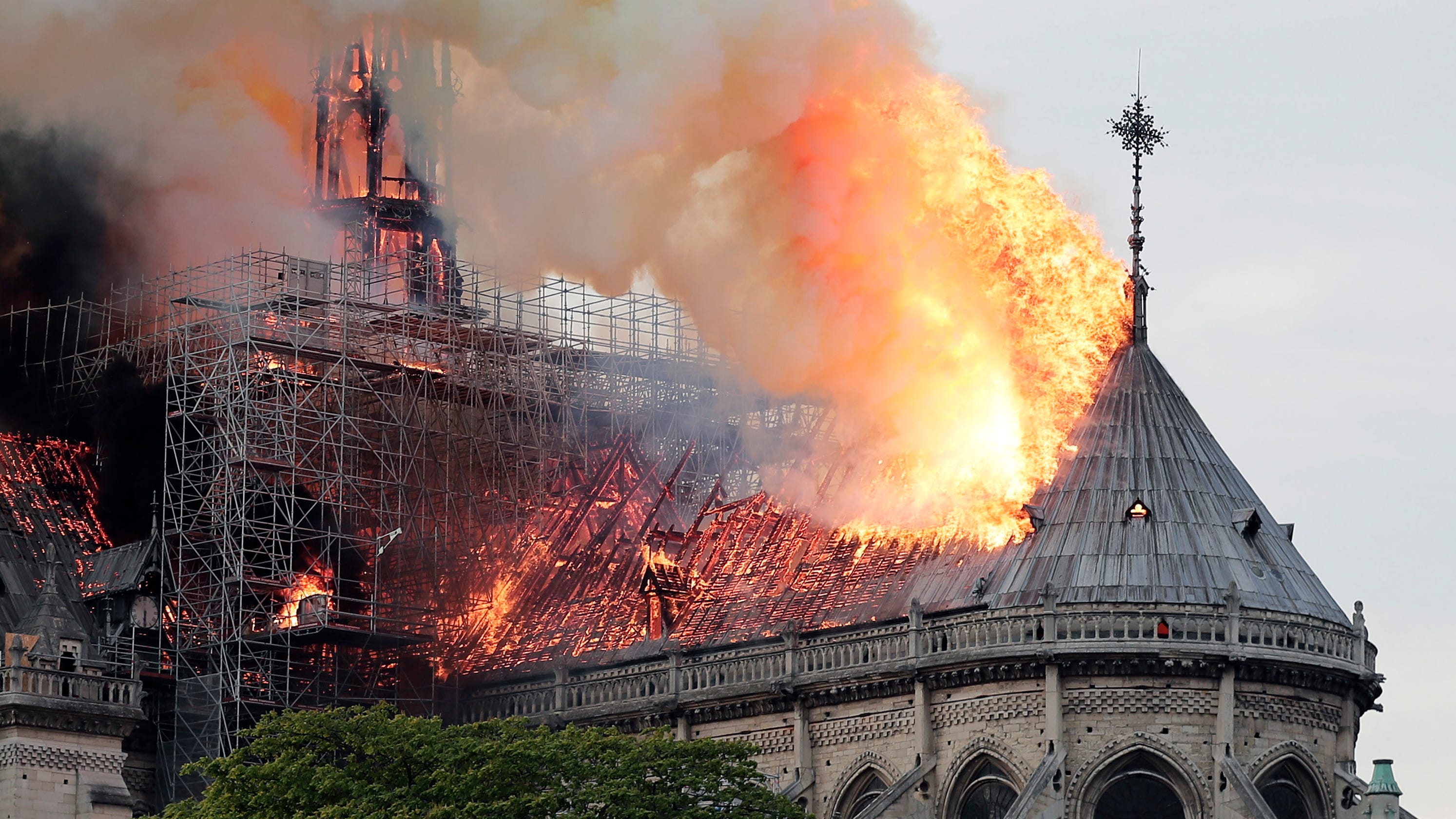



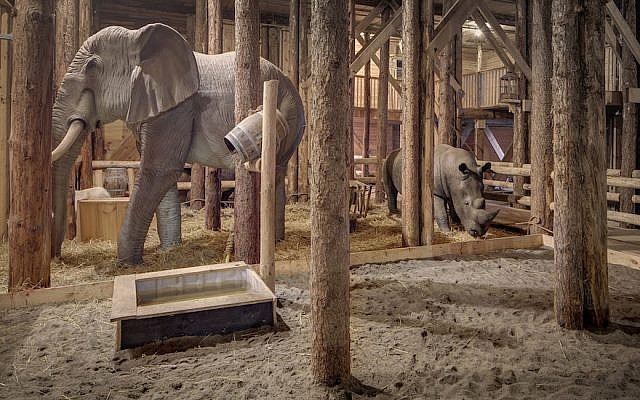

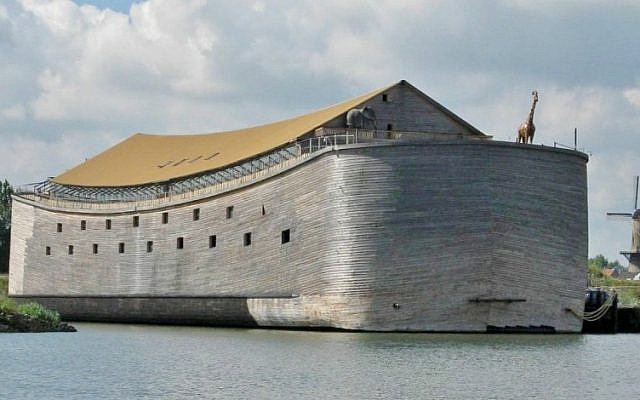


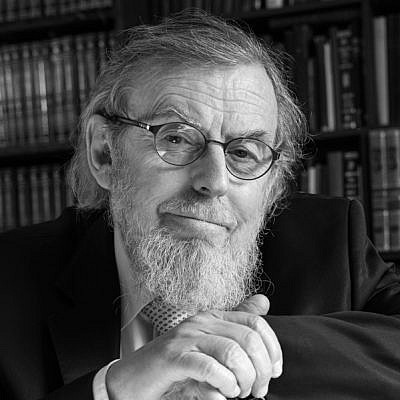


 Centro Estudios Judaicos del Sur de PR