RSS

Author Archives: yishmaelgunzhard

¿Por qué le pasan cosas malas a la gente buena?

¿Por qué le pasan cosas malas a la gente buena?
por Rabino Benjamin Blech

Si Dios es bueno, ¿por qué el mundo es tan malo?


Buena parte de lo que nos molesta sobre los caminos de Dios puede ser atribuido a las acciones del hombre. ¿Pero qué hay de las veces en que el mal emana directamente de Dios?

¿Qué pasa si un doctor te informa que tu hijo tiene un cáncer incurable? Nadie ha herido a tu hijo. Este mal parece estar viniendo de Quien supuestamente sólo hace bien. Si hubiese sido que una persona malvada le hizo daño a tu hijo, quizás no lograrías perdonarla, pero al menos sabrías a quién culpar – a la maldad humana. Pero si Dios mismo es quien le ha hecho el daño a tu hijo, entonces eso es algo que simplemente es demasiado difícil de soportar.

Sin embargo, hay niños pequeños e inocentes que sufren cada día. E invariablemente nos preguntamos: ¿Cómo puede un Dios bueno ser tan cruel?

Esta pregunta también le molestó al más grandioso líder judío: Moshé. Él se atrevió a hacerle esta pregunta a Quien sabe la respuesta. Y esa sabiduría eterna es compartida con nosotros en el Libro de Éxodo. Es aquí, dice el Talmud, que la Torá habla por primera vez del problema de por qué sufren los rectos.

A primera vista, la sección pareciera críptica:

[Moshé] Dijo [a Dios]: “Te ruego que me muestres tu gloria”. Él [Dios] dijo: “Yo haré pasar toda mi bondad delante de ti, y proclamaré con el nombre de Ado-nai delante de ti; mostraré gracia cuando elija mostrar gracia y mostraré compasión cuando elija mostrar compasión”. Y dijo: “No podrás ver mi rostro, pues ningún ser humano puede verme y vivir”. Y dijo Ado-nai: “He aquí que hay un lugar conmigo; y tú podrás pararte sobre la roca. Y sucederá que cuando pase mi gloria, te pondré en una hendidura de la roca y te cubriré con mi mano hasta que Yo haya pasado. Luego retiraré mi mano y verás mi espalda, mas mi rostro no será visto” (Éxodo 33:18-23).

La mayoría de la gente que lee esto literalmente asume que Moshé le estaba pidiendo a Dios saber cómo se ve y, en respuesta, Dios no le mostró Su cara, sino que dejó que Moshé viese Sus poderosos omóplatos.

Eso es, obviamente, absurdo.

Cuando veo un bebé con leucemia, y sé que morirá pronto, no entiendo lo que Dios está haciendo.

El Talmud (Brajot 7a) nos cuenta que Moshé no estaba pidiendo “ver” a Dios; Moshé era más sabio que eso. Moshé sabía que Dios no tiene ni cuerpo ni forma y que, por lo tanto, no puede ser visto por los ojos humanos. Moshé le estaba pidiendo realmente “ver” Su gloria, para poder entender Su plan. De hecho, Moshé le estaba diciendo a Dios: “Dios, Te amo, honro y respeto en todas las formas posibles, pero hay cosas de ti que no entiendo. Cuando veo un niño con parálisis infantil, cuando veo un niño con leucemia, cuando veo un niño sufriendo mucho dolor y sé que va a morir pronto, no entiendo lo que estás haciendo. Y me gustaría mucho tener un entendimiento total de Tus caminos, para poder darte todo el honor que mereces”.

Es muy importante el hecho de que este pasaje aparezca después de que Dios perdonó a los israelitas por el terrible pecado del Becerro de Oro. Dios había sacado a los israelitas de la esclavitud en Egipto, había realizado increíbles milagros ante sus ojos, les había hablado en el Monte Sinaí y luego, cuando Moshé subió a la montaña, los israelitas le retribuyeron toda esta bondad rechazando a Dios y construyendo un ídolo. Y sin embargo, cuando fueron perdonados por este gran pecado, Dios no sólo los perdonó, sino que también respondió describiendo Su esencia como un Ser de completa misericordia y compasión.

Es en ese momento que Moshé eligió hacer este pedido, como diciendo: “Si eso es cierto, entonces ¿puedes explicar cómo Tu gloria está reflejada en el sufrimiento de los niños y en el regocijo de los malvados? ¿Puedes dejarme ver cómo todo eso tiene sentido?”.

En resumen, Moshé quería saber por qué le pasan cosas malas a la gente buena.

La respuesta de Dios contiene lo que Moshé, al igual que todos quienes estamos leyendo estas palabras miles de años después, tenemos derecho a saber.

Por lo tanto, observemos cuidadosamente, punto por punto, lo que Dios nos está diciendo.

La imagen completa

“Yo haré pasar toda mi bondad delante de ti, y proclamaré con el nombre de Ado-nai delante de ti”.

Los nombres con los que Dios se identifica a Sí Mismo son extremadamente importantes. Aquí, Él usa el incomparable nombre de cuatro letras, conocido como el Tetragramatón, el cual está prohibido pronunciar; generalmente es traducido como “Señor” (Ado-nai). Como fue notado antes, este nombre significa bondad y compasión, en contraste con el nombre Elo-him, que se refiere a Dios como el juez duro pero justo. Por lo tanto, vemos que Dios se revela a Moshé con el nombre que está relacionado con Su misericordia.

Una vez que logremos ver la imagen completa, veremos al sufrimiento como una manifestación del lado compasivo de Dios.

Se nos dice que “toda” la bondad de Dios será testimonio de la cualidad misericordiosa del Eterno. Y, por implicación, que una vez que hayamos visto “todo”, cambiaremos nuestro entendimiento del dolor y del sufrimiento. Ver sólo la mitad de la historia nos lleva a pensar que Dios es cruel, pero una perspectiva más completa nos permitirá entender por qué cada juicio estricto fue, en realidad, un acto necesario de amor.

Una vez que logremos ver toda la imagen, veremos al sufrimiento como una manifestación del lado compasivo de Dios.

“… mostraré gracia cuando elija mostrar gracia y mostraré compasión cuando elija mostrar compasión”.

¿Acaso Dios está diciendo: “Haré lo que quiera sin importar lo que sea justo”? No, no está diciendo eso. Pero sí está diciendo: “Tendré gracia con quien Yo quiera tener gracia, y no con quien tú creas que debería tener gracia. Tendré misericordia con quien Yo quiera ser compasivo, y no con quien tú creas que debería ser compasivo”.

El Talmud (Pesajim 50a) enseña que en el Mundo Venidero todo será dado vuelta. Quienes están en el fondo estarán en la cima y viceversa. El punto al que se refiere es que, a menudo, nuestro juicio sobre quién es santo y quién es un pecador está muy errado. La forma en que el mundo ofrece honor está literalmente dada vuelta. Sólo en la vida después de la muerte veremos quiénes son realmente los merecedores.

El Baal Shem Tov, fundador del movimiento jasídico en el siglo 18, explicó lo que esto significa por medio de una maravillosa historia:

En una cierta casa vivían dos judíos y sus familias. Uno era un erudito y el otro un pobre trabajador. Cada día el erudito se levantaba de su cama al amanecer e iba a la sinagoga, donde primero estudiaba una página del Talmud. Luego, como hacían los hombres piadosos de antaño, esperaba un momento, dirigía su corazón al cielo y decía las plegarias matutinas tranquila y lentamente, estirando su rezo hasta casi el mediodía.

Su vecino, el pobre trabajador, también se levantaba temprano e iba a trabajar –rompiéndose la espalda con un trabajo que exprimía cuerpo y alma por igual- hasta el mediodía, sin tener tiempo para ir a rezar a la sinagoga con la congregación a la hora que correspondía.

Cuando llegaba el mediodía, el erudito dejaba la sinagoga para volver a casa, lleno de satisfacción. Se había ocupado con Torá y plegaria, y había realizado escrupulosamente la voluntad de su Creador. Cuando iba volviendo de la sinagoga, se encontraba con su vecino, el pobre trabajador, quien iba con gran apremio a la casa de rezos, donde recitaría las plegarias matutinas con gran rapidez, angustiado y arrepentido por su tardanza. Ellos se cruzaban uno con el otro en la calle.

Cuando el pobre trabajador pasaba al lado de su vecino, hacía un gemido de lamento, enojado porque el otro ya había terminado su estudio y plegaria holgadamente antes de que él pudiera siquiera comenzar: “Oy, aquí estoy recién yendo al shul. Él ya ha terminado. Yo no lo he hecho bien, ¡ay, ay, ay!”. Mientras tanto, los labios del erudito hacían una mueca burlona, y en su corazón pensaba: Amo del Universo, ¿ves la diferencia entre esta criatura y yo? Ambos nos levantamos temprano en la mañana; yo me levanto para Torá y plegaria, pero él…

Pasaron los días, semanas, meses y años. Las vidas de ambos hombres fueron vividas de forma diferente, una con la libertad de la Torá y la plegaria, la otra en la esclavitud de tener que ganarse un sustento. Cada vez que sus caminos se cruzaban, el erudito sonreía burlonamente y el trabajador gruñía.

Como le pasa a todos los hombres, la muerte le llegó al erudito y, poco tiempo después, a su vecino el trabajador. El erudito fue llamado ante el tribunal celestial para rendir cuenta por sus acciones. “¿Qué has hecho con los días de tus años?”, preguntó la voz de arriba.

“Estoy agradecido”, contestó el erudito con la voz firme, en la que podía detectarse un poco de orgullo. “Todos mis días Le serví a mi Creador, estudiando mucha Torá y rezando de todo corazón”.

“Pero”, comentó el acusador celestial, “él siempre se burló de su vecino, el pobre trabajador, cuando se encontraban cerca de la sinagoga”. La voz de arriba dijo: “Traigan la balanza”.

De un lado, pusieron toda la Torá que había aprendido y todas las plegarias que había realizado, mientras que del otro lado pusieron las sonrisas burlonas que estuvieron en sus labios cada día en que se encontró con su vecino. Y entonces, el peso de las sonrisas burlonas inclinó la balanza hacia ‘culpable’.

Después de que el caso del erudito fue completado, llevaron delante del tribunal celestial al pobre trabajador. “¿Qué has hecho con tu vida?”, preguntó la voz de arriba.

“Toda mi vida he trabajado duro para proveer a mi esposa e hijos. No tuve tiempo para rezar con la congregación en el momento adecuado, y tampoco tuve el tiempo para estudiar mucha Torá, ya que había bocas hambrientas que alimentar”, respondió el trabajador avergonzado y con pena.

“Pero”, comentó el defensor celestial, “cada día, cuando se encontraba con su vecino el erudito, emitía un quejido desde lo más profundo de su alma. Sentía que no había cumplido con sus obligaciones con Hashem”.

De nuevo, se trajo la balanza, y esta vez el peso del quejido del pobre trabajador inclinó la balanza a ‘inocente’.

La misma idea fue explicada por el famoso talmudista y filósofo del siglo 12, Moshé Maimónides, en el Mishné Torá (Leyes de Arrepentimiento, 3:2). En su obra maestra él concluye que, ante los ojos de Dios, las buenas acciones de las personas, al igual que sus errores, son juzgados cualitativamente – y no cuantitativamente. Un pecado terrible puede pesar más que una vida entera de buenas acciones; una buena acción especial puede eliminar muchos pecados. Sólo Dios sabe realmente qué hay en el corazón de cada persona, al igual que el valor real de nuestras acciones.

Por lo que cuando Dios le dijo a Moshé: “Tendré misericordia con quien tenga misericordia”, le estaba diciendo: “Sé mejor que tú quién es justo y quién es malvado, quién merece y quién no. No presumas que puedes mejorar Mi juicio”.

***

“Y Él [Dios] dijo: ‘Ningún ser humano puede ver mi rostro y vivir'”.

¿Qué significa eso?

Moshé quiere “ver” a Dios, entender Sus caminos. Pero Dios le dice a Moshé: “Mientras estés vivo, nunca ‘verás’ todo”. La imagen completa no es visible desde nuestra limitada perspectiva en este mundo.

Imagina que estás parado con tu nariz aplastada sobre una pintura impresionista. En un lugar ves manchones del más asombroso azul, en otro hay un gran manchón de negro, en otro un manchón de blanco. No es sino hasta que te paras unos metros atrás que puedes ver lo que bosqueja la escena – es “Irises” de Van Gogh.

Esto es igual de cierto cuando se trata de entender los planes de Dios. En ocasiones vemos las partes coloridas, en ocasiones las oscuras, pero nunca podemos pararnos a la distancia suficiente como para ver toda la imagen. Pararse lo suficientemente lejos significa pararse en el mundo venidero.

Nuestra existencia aquí en la Tierra, y nuestra comprensión del significado real de nuestras vidas, es muy limitada. Ese es el mensaje que le da Dios a Moshé, y es el mismo mensaje que le da a Iov cuando ese hombre tan sufrido pidió entendimiento. Dios le dijo: “Los hechos a tu disposición, en el escenario de la vida, son insuficientes para el tipo de conocimiento que deseas poseer”.

En sociedad con Dios

Y dijo Ado-nai: “He aquí que hay un lugar conmigo; y tú podrás pararte sobre la roca”.

Para ayudar a Moshé a entender las razones de la presencia del mal en la tierra, Dios le dijo que se pare “a su lado”. Esta frase hace reminiscencia a una idea similar en Génesis: cuando el hombre es creado a imagen de Dios. El hombre recibió un rol – completar el trabajo de Dios – acorde a su grandeza. Se le dijo que él es un socio de Dios, que está arriba; no es sólo un observador pasivo aquí abajo.

¿Por qué se le dijo a Moshé que se ponga sobre una roca? Porque la palabra hebrea para roca, tzur, viene de una raíz que significa forma. La roca alude al propósito del hombre en la Tierra. Al igual que Dios es un Creador, también lo es el hombre. De hecho, el hombre es socio de Dios en la creación; un socio en la consumación y perfeccionamiento del mundo.

El mal es una manifestación de un mundo que aún es incompleto, esperando que el hombre haga su parte y termine el trabajo.

Para darle al hombre una oportunidad para ejercitar esta función, Dios ha dejado intencionalmente el mundo sin terminar; el mundo fue creado incompleto. Eso es lo que significa que Dios descansó al final del sexto día. Es obvio que Dios no estaba cansado, “Dios descansó” significa que se detuvo a la mitad del trabajo. ¿Por qué? Para que el hombre tuviera la oportunidad de colaborar en perfeccionar el mundo. Dios permite la existencia de enfermedades para que el hombre pueda tener un rol inventando curas. Dios permite hambrunas para que el hombre pueda tomar parte inventando nuevos métodos de agricultura. Dios permite que haya sequías para que el hombre pueda participar en el acercar al mundo a su estado ideal inventando nuevos métodos de irrigación, y construyendo represas y plantas de desalinización

Por lo tanto, el mal en el mundo simplemente nos señala el trabajo que aún tenemos que hacer. El mal es una manifestación de un mundo que aún está incompleto, que está esperando que el hombre haga su parte y termine el trabajo.

“Y sucederá que cuando pase mi gloria, te pondré en una hendidura de la roca y te cubriré con mi mano hasta que Yo haya pasado. Luego retiraré mi mano y verás mi espalda, mas mi rostro no será visto”.

Aquí que es brindada la parte más importante de la respuesta. Al decirle a Moshé que no podrá ver Su cara, pero sí Su espalda, Dios está diciendo que será imposible que Moshé entienda los eventos mientras estén ocurriendo. Pero después, en retrospectiva, será posible entender lo que ocurrió.

Mientras estés confrontando una crisis, mientras estés en el medio de la tormenta, no podrás comprender el objetivo ni la lógica de Dios. Pero una vez que la crisis haya pasado, mirando hacia atrás en el tiempo te será posible entender los caminos de Dios.

Todos podemos mencionar eventos de nuestras vidas que parecieron ser terribles cuando ocurrieron, pero que cuando los vemos en retrospectiva resultaron ser buenos. Un hombre está apurado camino al aeropuerto. Se le pincha un neumático y entra en pánico – sabe que va a perder el avión. Está enojado con el destino. En ese momento, parece ser algo terriblemente malo. Cambia el neumático y maneja como un loco hasta llegar al aeropuerto, pero no sirve de nada – el avión ha despegado sin él. Una hora más tarde, se entera que el avión se estrelló. Ahora, la rueda pinchada que tanto maldijo unas horas antes, resultó ser una bendición.

Hay una historia memorable que es contada en el Talmud (Brajot 60b), la cual enseña el principio de “esto también es para bien”:

El renombrado erudito del siglo 1 EC, Rabi Akiva, iba viajando en burro por un pequeño pueblo y no pudo encontrar albergue en ningún hostal. Se lo tomó con calma y asumió que sus dificultades tenían un propósito divino. Acampó en los bosques, en la periferia del pueblo, feliz de tener su linterna para poder leer y su gallo para levantarse en la mañana. Pero enseguida fue visitado por más calamidades – su burro huyó, su gallo murió y su linterna se apagó. Pero Rabi Akiva aceptó pacientemente su destino.

A la mañana siguiente, cuando volvió al pueblo, encontró que una banda de pilladores había masacrado toda la población. De repente, entendió cada una de las dificultades que había atravesado: “Si me hubiese hospedado, hubiese sido asesinado. Si la lámpara hubiese estado encendida, me hubieran visto. El gallo podría haber cacareado, el burro podría haber rebuznado. Ahora veo que todo lo que me pasó fue para bien”.

La ilusión de lo bueno y lo malo

Cuando hacemos la pregunta: “¿Por qué le pasan cosas malas a la gente buena?”, a menudo estamos teniendo asunciones erróneas. Lo que percibimos como “malo” puede, en realidad, ser lo mejor que podría haber pasado.

Conozco un multimillonario que perdió su primer trabajo como encargado del correo. Dado que le fue imposible encontrar empleo, se vio forzado a comenzar una empresa propia. Él ahora dice: “Sólo logré el éxito porque fui despedido”.

Conozco un joven que en su época de estudiante estuvo tan perturbado por una ruptura con una chica, que se quería suicidar. Claramente pensaba que ese era el peor trauma de su vida; yo pasé toda una noche hablando con él, confortándolo.

Veinte años después, me encontré con este hombre de nuevo. “¿Me recuerda?”, dijo sonriendo.

“Claro que sí. Me debes una noche de sueño”, le dije.

“Vine para contarle el final de la historia”, respondió. Y compartió conmigo lo que le había ocurrido a partir de ese momento. Su vida había estado llena de bendiciones; tenía una hermosa esposa e hijos y estaba muy feliz. En tanto, la mujer por la que había considerado terminar su vida se había convertido en alcohólica y, hasta donde él sabía, ya se había casado y divorciado tres veces.

Por lo que al final, en retrospectiva, él se dio cuenta que gracias a esa “trágica” ruptura terminó estando mucho mejor. Por supuesto que cuando quería suicidarse y yo traté de hacerle entender que todo estaría bien, él no quería escuchar, y mucho menos podía entender por qué era mejor de esa forma.

El Zóhar, el principal trabajo sobre Cábala – misticismo judío – comenta que cuando Dios creó el mundo lo llamó tov meod, “muy bueno”. Pero cuando vemos el mundo, cuando estudiamos historia, cuando vemos las noticias, nos resulta muy difícil concordar con este juicio divino.

“La vida sólo puede ser entendida en retrospectiva, pero debe ser vivida hacia adelante”.

Por lo tanto, el Zóhar señala que Dios nos da una pista en el nombre que elige para el primer hombre – Adam. En hebreo, Adam se deletrea usando las mismas letras que la palabra meodmem, alef, dálet – pero en una secuencia diferente: alef, dálet, mem. Más aún, el Zóhar dice que Adam es un acrónimo que representa los tres eventos más importantes de la historia humana. La alef, que es la primera letra del alfabeto hebreo, representa el comienzo de la historia de la humanidad con Adam. La dálet, por David, representa el punto más alto de la historia judía. La mem representa Mashíaj (Mesías), quien llevara al mundo a su anhelado estado de realización.

Cuando finalmente lleguemos al momento de la historia aludido por la mem, los días del Mashíaj, seremos capaces de ver todo lo que alguna vez pasó en toda la historia, desde la alef de Adam y pasando por la dálet de David, y junto con Dios podremos proclamar no sólo que el mundo es bueno, sino que es muy bueno – tov “meod”.

Como dijo elocuentemente el filósofo danés Søren Kierkegaard: “La vida sólo puede ser entendida en retrospectiva, pero debe ser vivida hacia adelante”.

En resumen

El intercambio bíblico entre Dios y Moshé nos enseña que debemos cuidarnos de las suposiciones incompletas y erróneas, suposiciones que nos llevan a cuestionar la bondad de Dios.

Moshé le dice a Dios: “Dios, quiero honrarte por completo, pero mi falta de entendimiento de Tus caminos interfiere. ¿Cómo puedo honrarte completamente cuando veo gente buena a la que le va mal y gente mala a la que le va bien?”.

Dios responde: “Espera un momento. No estoy de acuerdo con dos de tus premisas”.

“¿Qué premisas?”.

Número uno, no te apresures tanto a llamar a algunas personas ‘buenas’ y a otras ‘malas’, porque no puedes estar seguro. Número dos, cuando dices que les va mal o que les va bien, ¿estás seguro de tus definiciones? ¿Estás seguro de saber de lo que estás hablando? No puedes estar seguro. Y no puedes estar seguro porque no puedes ver Mi rostro, sólo lograrás verme en retrospectiva. En retrospectiva, algo terrible podría ser lo mejor. En ocasiones te tomará años verlo, y en ocasiones no lo verás en tus días en la tierra”.

Sin embargo, lo que le molesta a tanta gente son las muchas ocasiones en las que incluso el regalo de la retrospectiva no pareciera darnos una mayor claridad. Mirar hacia atrás en la vida puede ser esclarecedor, pero también puede dejarnos con muchas preguntas sin responder. ¿Qué hacemos en ese caso? ¿Significa que terminaremos nuestra vida en este mundo con problemas no resueltos, heridas nunca sanadas, crueldades nunca explicadas, injusticias nunca ajusticiadas?

Es fácil decir: “Bueno, perdió su trabajo. Encontrará otro que le gustará mucho más – no es tan malo”. Pero cuando vemos a alguien morir lentamente a causa del cáncer, y lo vemos sufrir con cada suspiro, no es tan fácil – de hecho, es casi imposible – decir: “Esto también es para bien”.

Una mujer me dijo: “Mi esposo enfermó, continuó enfermo durante el resto de sus días, y luego murió. ¿Dónde está el bien en eso? No me digas que tengo que esperar el final de la historia, ya lo he visto: Murió”.

Y, sin embargo, Dios nos dice: “El hombre no puede verme y vivir”. Ni siquiera al momento de morir podemos apreciar la imagen completa. La muerte es el portal al grandioso más allá – y esa misma descripción nos recuerda que hay más después de nuestro paso por la tierra. Dios pareciera decirnos que lo que aún no es claro durante nuestra existencia finita, será entendible una vez que seamos bendecidos con la perspectiva divina de la eternidad.

Puede que quienes están de duelo por sus seres queridos encuentren difícil ver la muerte como algo positivo; para ellos representa una pérdida atroz. Pero para los fallecidos, la muerte no es un problema, sino una solución al problema. Para la persona involucrada, la muerte es el comienzo de todas las respuestas.

Según tomado de, http://www.aishlatino.com/e/f/Por-que-le-pasan-cosas-malas-a-la-gente-buena.html?s=trh

 
Leave a comment

Posted by on January 16, 2019 in Uncategorized


Los Huesos de José

Ellos dicen adáptate o muere. ¿Pero debemos deshacernos de lo viejo para adoptar lo nuevo? ¿La elección está limitada a moderno o anticuado, o podemos ser tradicionalistas contemporáneos? ¿Pueden coexistir el pasado y el presente?

Al comienzo de la Parashá de esta semana leemos que Moisés mismo estaba ocupado con una misión especial mientras los judíos abandonaban Egipto. Moisés tomó con él los huesos de José. Más de cien años antes del gran Éxodo, José hizo jurar a los Hijos de Israel que lo llevarían con ellos cuando eventualmente abandonaran Egipto. Como virrey de Egipto José no podía esperar ser sepultado en Israel cuando muriera, como lo fue su padre Jacob. Los egipcios no tolerarían que su líder político fuera sepultado en una tierra extranjera. Pero él hizo que sus hermanos se comprometieran solemnemente a que cuando llegara el momento y todos los israelitas partieran tomarían sus restos con ellos.

Y fue así que mientras todos los demás estaban ocupados empacando, cargando sus burros y preparándose para el Gran Viaje por el Desierto, Moisés estaba ocupado con esta misión, cumplir la sagrada promesa hecha a José generaciones antes.

Pero José no fue el único re sepultado en la tierra santa. Sus hermanos también recibieron el mismo honor y último homenaje. Sin embargo es sólo a José a quien menciona explícitamente la Torá. ¿Por qué?

La respuesta es que José fue único. Mientras que sus hermanos eran simples pastores que atendían a sus rebaños, José se encargaba de los asuntos de estado de la más poderosa superpotencia de la época. Ser un judío practicante mientras se pasea plácidamente por las praderas no es complicado. Sólo en los campos, comulgando con la naturaleza, y lejos del ajetreo y el bullicio de la vida en la ciudad, uno puede ser más fácilmente un hombre de fe. Pero manejar una gigantesca infraestructura gubernamental como el hombre de estado más elevado en la tierra y aun permanecer fiel a las tradiciones de uno —no es sólo una novedad, es inspiración absoluta.

Fiel como fue desde la vida simple de un joven pastor hasta el centro de la capital para hacer equilibrio con los roles de virrey y judío, José representa la tradición en medio de la transición. Es posible, enseñó al mundo, ser un tradicionalista contemporáneo. Uno puede cabalgar exitosamente en ambos mundos.

Ahora que estaban por abandonar Egipto, los judíos estaban enfrentando un nuevo orden mundial. Atrás quedaban la esclavitud y la opresión, y en su lugar estaba la libertad. Durante ese tiempo de transición, sólo José podía ser su modelo de conducta. Necesitarían su ejemplo para mostrarles el camino hacia esa tierra desconocida, la nueva frontera.

Es por eso que la Torá sólo menciona a José como aquel cuyos restos salieron con el pueblo. Necesitaban tomar a José con ellos así, al igual que él, también harían su propia transición exitosamente.

Desde que dejamos Egipto, hemos estado deambulando. Y cada traslado ha traído con él sus propios desafíos. Desde Polonia a América o de Lituania a Sudáfrica, toda transición vino con choques culturales para nuestra psiquis espiritual. Cómo ganarse la vida y seguir cuidando el Shabat como lo hacía en el shtetl cuando el dueño de la fábrica dice “Cohen, si usted no viene el sábado, ¡no se moleste en venir tampoco el lunes!” Era una prueba de fe que no era para nada fácil. Muchos sucumbieron. Pero muchos otros se mantuvieron firmes y sobrevivieron, y hasta florecieron. Fue la prueba de la transición —y aquellos que tomaron como modelo a José pudieron hacer la transición mientras permanecían comprometidos con la tradición.

La democracia y la cultura de los derechos humanos han hecho que parte de la vida judía fuera de alguna forma más fácil, pero aun abundan los desafíos. En todas nuestras transiciones de hoy, debemos continuar aprendiendo de José.

Por Yossy Goldman

Según tomado de, https://es.chabad.org/library/article_cdo/aid/1097592/jewish/Los-Huesos-de-Jose.htm

 
Leave a comment

Posted by on January 15, 2019 in Uncategorized


The Mystery of Miriam’s Song

Did the women actually sing? And why the musical instruments?
by Yehuda Shurpin

After the great miracle of the Splitting of the Sea, Moses led the Jewish people in singing praises to G‑d. The Torah then describes how Miriam led the women in singing their own song of praise, while dancing and playing musical instruments:

Miriam, the prophetess, Aaron’s sister, took a timbrel in her hand, and all the women came out after her with timbrels and with dances. And Miriam called out to them, “Sing to the Lord, for very exalted is He; a horse and its rider He cast into the sea.”1

This is the only instance recorded in the Torah where women sang their own song. Why is that, and why was Miriam the one to lead it?

Righteous Women

The Talmud tells us that the Jews were redeemed from Egypt in the merit of the righteous women.2 Many men had lost hope and chose not to procreate so as not to subject their offspring to a fate of slavery and suffering. The women kept hope alive, trusting that they would soon be redeemed. With that in mind, they enticed their husbands to procreate.

This faith is reflected in the words “a timbrel in her hand.” The Midrash explains that the righteous women were so confident that G‑d would perform miracles that when they left Egypt, they took musical instruments with them “in hand,” ready to sing praise.3

Did the Women Actually Sing?

The Torah refers to the song Moses sang as a shir, a “song.” Conversely, the words used regarding the women’s song is vata’an, “and she answered” or “called.” Some commentaries (including Targum) explain that the women didn’t actually sing.4 Apparently this is because it is generally considered immodest for a woman to sing in the presence of men who are not her relatives. Others are of the opinion that they did sing (more on that below).5 According to the Yalkut Reuveini, they played the musical tune with their instruments but didn’t sing.6

Following the opinion that they did sing, the Midrash explains the curious use of the word vata’an. The angels wanted to sing G‑d’s praise before the women, but Miriam “answered” them and called for the women to sing first.7

Others explain the “answering” as referring to how the song was sung: either they repeated the same song as the men, or the women repeated the stanzas after Miriam.8

Why the Need for Instruments?

Some explain that the women specifically chose to play their instruments since it is considered immodest for women to sing in front of a male audience, so the instruments drowned out their voices.9 Alternatively, as mentioned, they didn’t sing at all and only played music due to these considerations of modesty.10

Others, like Rabbi Chaim Yosef David Azulai (known as the Chida), explain that although in general it may be considered immodest for women to sing in front of men, due to the fact that the Shechinah (Divine Presence) rested upon the Jewish nation at that time, there was no prohibition for the men to listen to the singing.11 Thus, the women played instruments simply to enhance the singing.

Miriam the Prophetess, Aaron’s Sister

In the above verse, Miriam is referred to as “the prophetess, Aaron’s sister.” This is the first time Miriam is mentioned by name in Scripture. She had two brothers, Aaron and Moses. Why is she specifically referred to as a prophetess and as the sister of Aaron?

The Talmud and Midrash teach that Miriam prophesied before Moses was even born, when she was only the sister of Aaron. Miriam was about 6 years old when Pharaoh decreed that all Israelite baby boys be killed. Hearing this, Miriam’s father, Amram, divorced his wife, Yocheved, because he couldn’t bear the possibility of having a son who would be killed. Seeing the actions of Amram, one of the leaders of the generation, all of the other Israelite men followed and divorced their wives as well.12

Miriam told her father, “Your act is worse than Pharaoh’s! He decreed that only male children not be permitted to live, but you decreed the same fate for both male and female children!” She then predicted that her parents would give birth to a son who would save Israel from Egypt.13 Now that the Egyptians were completely vanquished, “Miriam the prophetess, the sister of Aaron,” finally saw the fulfillment of her prophecy and burst into song.14

The Meaning of Miriam

The sages explain that the name “Miriam” is from the root word mar, “bitter.” She was thus named because the bitterness of the enslavement increased right around the time she was born. As a result, throughout her young life, people viewed her negatively, associating her with the bitter suffering.

But Miriam would respond with encouragement, explaining that like childbirth, when the closer it is to the time of “birth,” the more painful it is, so too, this extra bitterness was a sign of the impending redemption.15

Indeed, the Midrash explains that G‑d intensified the harshness and bitterness of the exile so that the quota of suffering would be completed faster than originally anticipated.

Now that the Egyptians were destroyed, Miriam declared, “Now you can see that it was true that ‘from the bitterness, salvation shall emerge.’ ”16

Our sages teach us that just as the redemption from the first exile was in the merit of the faith of the righteous women, so too, redemption from the final exile will be in their merit. May it be speedily in our days!

FOOTNOTES
1. Exodus 15:20-21.
2. Talmud, Sotah 11b.
3. Mechiltah D’Rabbi Yishmael, Shirat Hayam 10.
4. See, for example, Targum Onkelos and Targum from R’ Saadia Gaon ad loc.; Rabbi Avraham ben HaRambam, Exodus 15:21; Oznayim L’Torah, Exodus 15:21.
5. See, for example, Mechilta ad loc.; Yalkut Shimoni, Hosea 518.
6. Yalkut Reuveini ad loc. and Likutei Sichot, vol. 21, p. 381.
7. See Midrash Sechel Tov on Exodus 15:21; Torah Shelemah on Exodus 15:21, no. 240.
8. See Torah Shelemah on Exodus 15:21, no. 239, for some of the varying opinions on how this responsive singing was structured.
9. See Yalkut Meam Loez and Tzofnat Paneach ad loc.
10. See Yalkut Reuveini ad loc. and Likutei Sichot, vol. 21, p. 381.
11. Devash Lepi, Ma’arechet Kuf.
12. See Talmud, Sotah 12a; Midrash, Shemot Rabbah 1:31; Mechiltah D’Rabbi Yishmael, Shirat Hayam 10.
13. Mechiltah D’Rabbi Yishmael, Shirat Yayam 10.
14. See Shach al Hatorah and Meam Loez on Exodus 15:20.
15. Ibid.
16. Ibid.

As taken from, https://www.chabad.org/tools/subscribe/email/view_cdo/i/8A35D917402345A2:D61F4DA01E4D8DA05992FFEAA9D1B6CC8CEC82875EC993520B5482A3F5634DC3#utm_medium=email&utm_source=6_essay_en&utm_campaign=en&utm_content=header

 
Leave a comment

Posted by on January 15, 2019 in Uncategorized


The Most Troubling Verse in the Bible

Man holding an open Bible in the palm of his left hand

By Rabbi Stephen Lewis Fuchs

The Hebrew Bible contains 23,145 verses and if I had permission to excise only one, I have no doubt which it would be: “Happy the one who seizes and smashes your infants against the rock” (Psalm 137:9).

Psalms 137 is a stirring lament over the destruction of Judah in 586 B.C.E. and the exile of a significant percentage of its population to Babylon. The rage and humiliation of the exiles, with their “harps hung on the willows near Babylon’s rivers,” is palpable as they commit to remember their beloved Jerusalem even as Judah’s captors taunt them: “Sing us some of Zion’s songs!” (Psalm 137:2-3, 5).

Coming as it does, so abruptly at the end of one of Scripture’s most poignant passages, verse 9 stuns the reader, and as Robert Alter writes in The Book of Psalms: A Translation with Commentary, “No moral justification can be offered for this notorious concluding line.”

Perhaps the greatest strength of the Hebrew Bible is its honesty. As I wrote in What’s in It for Me? Finding Ourselves in Biblical Narratives, “The Hebrew Bible knows no perfect people. All of its characters have significant flaws.”

The same must be said of the biblical author. We understand his (or her) anger at seeing his homeland conquered, his beloved Temple razed to the ground, and loved ones savagely tortured and killed. But to wish to brutally murder the infant children of the captors … that is too much. I find myself ardently wishing the editors had deleted the psalm’s final words.

Aside from the sheer horror they evoke, they distract readers from the power and beauty of connecting to the Jewish homeland, the way the poet, our people, and we ourselves do.

In the current debate about whether being anti-Israel is a form of anti-Semitism, we must remember that the land of Israel has been an inextricable part of our people’s covenant with God since God first charged Abram to go forth from the land of his birth “to the land that I will show you” (Genesis 12:1). And this, too: Since God first called us to be a people, the land of Israel has been part of what it means for us to be Jews.

Of course, it is possible to support Israel and criticize the actions or policies of her government just as those of us who love this country freely take its leaders to task for things they say and do. But saying Israel has no right to exist as a Jewish state while failing to question the right of more than 20 Arab and Islamic states to exist is crossing a line to anti-Semitism.

In Leviticus Rabbah 36:5, Resh Lakish told the parable of a king who had three sons, each one brought up by one of his maidservants. So, whenever the king inquired about the well-being of his sons, he would add: Inquire also about the well-being of her who brought them up.  So, too, whenever the Holy One mentions the patriarchs, God mentions the Land with them.

Psalm 137 is a magnificent statement of the centrality of Israel to our being. Can we ever forsake or forget Jerusalem? Never. Nonetheless, I would love to forget the psalm’s final verse!

As taken from, https://reformjudaism.org/blog/2019/01/14/most-troubling-verse-bible

 
Leave a comment

Posted by on January 15, 2019 in Uncategorized


Is Your Optimism Grounded in Reality?

By Hanna Perlberger
Art by Michelle Gaynor
Is he an optimist or is he foolish?

After delivering a lecture on optimism to a large tech company, Shawn Achor, one of the gurus of Positive Psychology, was being driven to the airport by the CEO. Ignoring the persistent and annoying dinging of the alarm for not using his seat belt, the CEO smiled at Shawn and explained that he was just being “optimistic.”

“Optimism is good for a lot of things,” thought Shawn, “but it will not prevent this CEO from getting into a car accident, nor will it prevent him flying through the windshield.” This is not optimism; rather, it’s a form of insanity, otherwise known as “irrational optimism.”

In the Torah portion Beshalach, after the Jewish people left Egypt, Pharaoh sent his army of charioteers after them, cornering the Jewish people with Egypt at their back, the vast desert on both sides and the sea in front of them. Short of a new miracle, the Jewish people were facing imminent slaughter.

The Splitting of the Sea

According to Midrashic commentary, some people wanted to surrender and go back to Egypt. Some were ready to commit suicide. Some were willing to fight the Egyptians. And another group started to pray. Moses cried out to G‑d, and G‑d replied (in essence): “Stop praying and journey forth. Do something!” It was at that point that the famous Nachshon ben Aminadav moved into the sea, and when the water reached his nostrils, the sea began to part. Was he an optimist or insane? Irrational or grounded?

In his book, Learned Optimism, Martin Seligman, the father of Positive Psychology explains that there are two ways of looking at life: as an optimist and as a pessimist. And he gives an example. A young couple has their first baby. The father looks at her in her crib and he calls out her name. Although the baby is awake, she doesn’t respond. Dad picks up a toy with a bell and shakes it. No response. His heart starts to beat rapidly, and he summons his wife. The mother was also unable to get the baby’s attention with loud sounds. “My G‑d, she’s deaf,” concludes the father.

Mom consults a baby book for advice, reading how there is no reason for alarm since it takes time for the startle and sound reflex to kick in. Mom is reassured. Nevertheless, she leaves a voice message with the pediatrician’s office to schedule an appointment, and she goes about her weekend as usual. Dad, on the other hand, remains a worried mess, ruminating that he has a “bad feeling about this.”

On Monday, the pediatrician administers a neurological exam and finds the baby perfectly healthy. The father does not believe the test results, and still remains depressed and worried. A week later, when the baby startled at the noise of a backfiring car, the father began to recover his spirits and was able to enjoy his child once again.

These are the two basic outlooks on life. The pessimist “awful-izes” events, viewing harmful situations as long-lasting, if not permanent, and allowing the upset to permeate all areas of life, taking it personally. The optimist, on the other hand, doesn’t anticipate defeat but when it happens, sees defeat as a challenge to be surmounted, limits it to this pertinent situation, and sees the cause as something external.

OK, now it’s a little chutzpadik, but I think there is another explanatory style, which I am calling “Jewish optimism,” and since I’m coining the phrase, I get to define it. “Jewish optimism” takes the best aspects of optimism, such as looking at events in their most favorable light and rising to the challenge with an “I can” or an “it can be done” attitude.

But when it comes to causality, “Jewish optimism” would not regard events as external and impersonal. Just the opposite. In “Jewish optimism,” everything is “about me” (for my spiritual growth, that is). And this brings in the quality of faith—believing that the universe is not out to “get me,” but to “teach me.”

Getting back to the scene at the banks of the Sea of Reeds, in facing Pharaoh’s army, the same G‑d that liberated the Jewish people through His Divine intervention was now telling them to go, to “do something.” And so Nachshon, the Jewish optimist, walked calmly into the sea, and in so doing, he also paved the way for the Jewish expression of faith.

And this sets Judaism apart because Judaism calls for belief-driven behavior, and the expression of faith through deliberate action. Judaism teaches that the garments of the soul are for us to actualize our potential. The trick is knowing when the focus needs to be our thought, when it is about speech and when it must manifest through action.

So the next time you face a challenge, decide first whether grounded optimism is appropriate, and if so, try adding a little faith. Know that whatever test you are undergoing is the test you were meant to have—that you can pass it, and that you will emerge emotionally stronger, intellectually wiser and spiritually higher. Become a Jewish optimist, and there is no telling how many seas you will be able to part in your life.

Internalize & Actualize:

  1. Are you more prone to being an optimist or a pessimist? Write down five situations when your gut reaction was either positive or negative before you even knew what the actual outcome would be.
  2. Based on the above, was your gut reaction accurate? Did the situation unfold as you thought it would? If you were an optimist and it didn’t turn out as expected, how did you feel when the result was not positive? If you were a pessimist and the situation came out positively, did you regret the negativity and stress you felt for no reason?
  3. Think about a situation, right now, that you are facing where you still don’t know the outcome. What do you think will happen? Is that an optimistic response or a pessimistic one? If an optimistic one, are you being an “irrational optimist” or is your optimism grounded? Why? If a pessimistic response, rewrite below an optimistic view you can have of the situation. After you write that, write how this new thought makes you feel.

By Hanna PerlbergerMore by this author
Hanna Perlberger is an author, attorney, spiritual teacher and coach. She speaks to people from all walks of life and helps them in their search for greater happiness, meaning and spiritual engagement. This article is excerpted from A Year of Sacred Moments: The Soul Seeker’s Guide to Inspired Living. Art by Michelle Gaynor.

As taken from, https://www.chabad.org/tools/subscribe/email/view_cdo/i/8A35D917402345A2:D61F4DA01E4D8DA05992FFEAA9D1B6CC8C3CCAC4726D37B7EF18BC759E1CE0BD#utm_medium=email&utm_source=25_comment_en&utm_campaign=en&utm_content=header

 
2 Comments

Posted by on January 14, 2019 in Uncategorized


Who Were the Levites?

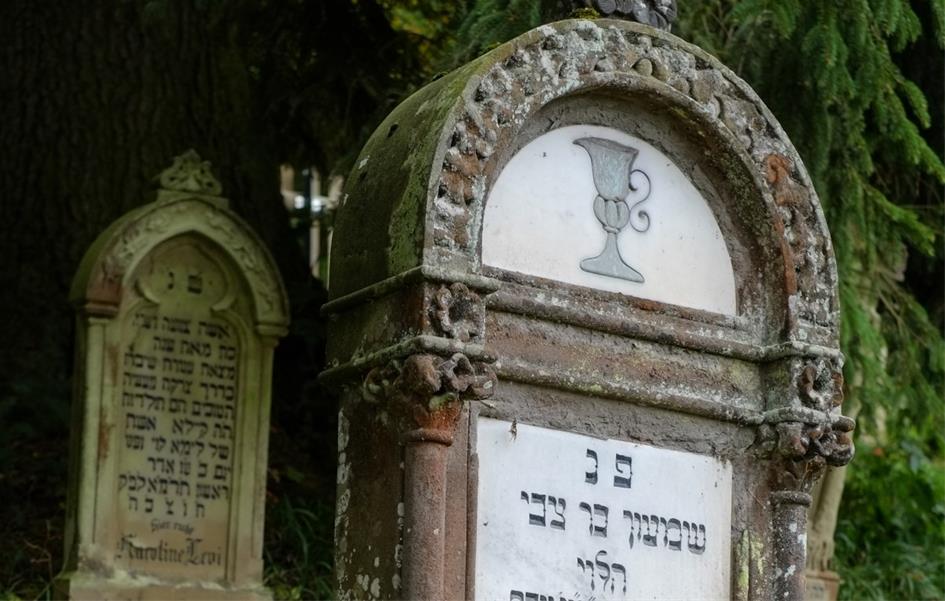
This pitcher graces a 19th century grave of a Levite in the Jewish cemetery in Baden-Württemberg, Germany (Photo: Dietrich Krieger).
by Menachem Posner

This pitcher graces a 19th century grave of a Levite in the Jewish cemetery in Baden-Württemberg, Germany (Photo: Dietrich Krieger).

The Levites, descendants of Jacob’s son Levi, were selected to serve G‑d in the Holy Temple. Most served in peripheral roles, playing music, opening and closing the gates, and standing guard. In the case of the portable Tabernacle (which preceded the Holy Temple in Jerusalem), they were responsible for packing up, transporting, and reconstructing the Tabernacle whenever the Israelites traveled to a new camp. The most sacred tasks, including bringing the sacrifices, were reserved for the kohanim (priests), descendants of Aaron, brother of Moses.

How Was Levi Selected?

Originally, the firstborn sons were to have been the priests. When G‑d spared the Jewish firstborns in Egypt, He “acquired” them and designated them for this special role.

When the Jewish people made and worshipped a golden calf after the giving of the Torah on Mount Sinai, the only tribe that did not participate was Levi. At this time, the firstborns lost their special status, and it was transferred to the Levites.

In truth, however, the Levites were special from beforehand. Even during the Egyptian bondage, they were exempt from the crushing labor and permitted to devote themselves to spiritual pursuits, providing the rest of the Israelites with much needed encouragement and a strong moral compass.

How Were the Levites Divided?

Levi had three sons, Gershon, Kehot, and Merari. When transporting the Temple, each clan had different duties. Kehot would transport the Holy Ark and other accouterments, Gershon carried the curtains, Merari carried the beams, sockets, and bars.

In later generations, as the population grew, the Levites were divided into 24 mishmarot (guards). Each group served one week in the Temple before relinquishing their place to the next mishmar in the roster.

The Priests

Aaron’s descendants had their own set of duties, honors, and responsibilities. Expected to be ready to serve in the Temple at a moment’s notice, they were forbidden to drink too much wine, defile themselves by coming into contact with corpses, or marry certain women.

In the Temple, they had their own uniform: a linen tunic, turban, and trousers, and a colorful sash.

The priests were given the mitzvah to bless the people of Israel using a special formula, which is still done today.

Explore: The Priestly Blessing

In every generation, there was a High Priest (Kohen Gadol), heir to Aaron, who was tasked with performing the most sacred Temple duties. His uniform comprised eight garments, richly woven of golden thread, and adorned with gems. On Yom Kippur, he performed the most sacred service, which included entering the Holy of Holies where the Ark of the Covenant was housed.

How the Levites Lived

Where Did They Live? When Israel was apportioned among the 12 Tribes, the Levites were not given any land of their own. Instead they lived in certain towns scattered all over Israel. Many of these were designated as cities of refuge, where people accused of manslaughter could live, safe from vengeful relatives of the victim, and be inspired by the devout Levites to become more caring and spiritual.

Priestly Gifts: With no land of their own, the Levites were not able to farm. Additionally, their Temple duties may have prevented them from investing themselves in working a trade. They were supported through a system of tithes and other “gifts” outlined in the Torah. Every Jewish farmer gave maaser, a tenth of his produce, to the Levite, and terumah, a smaller amount, to a kohen. The kohanim would also receive portions of the animals and meal offerings brought to the Temple.

Levites Today

Unique Family Names: Many Jewish families treasure the fact that they are of Levite or kohen heritage (following a direct line of males). Levine, Levy, Segal, Horowitz, and their various iterations are all trademark Levi surnames. Cohen, Kagan, Katz, and Azulay are some examples of common kohen names. It is important to note, however, that many people of kohen or Levite ancestry do not have surnames that reflect this aspect of their ancestry, and many people with these last names don’t have a tradition indicating that they are Levites.

Special Observances: In the absence of the Temple and most tithes, the Levites live pretty much the same as other Jews. There are some key things to keep in mind.

  • As a mark of honor, it is customary that the first aliyah (being called to the Torah) is given to a kohen and the second is given to a Levite. When they are called up, the words HaKohen or HaLevi are appended to their Hebrew names.
  • The male kohen is still to avoid contact with the body of a deceased person, unless it is immediate family. This includes not going to cemeteries or funerals, expect of those of his immediate family.
  • The kohanim bless the congregation with the priestly blessing. The widespread custom in the Diaspora is to do this only on holidays. In Israel, however, many do this on a daily basis. Before the blessing, the Levites wash the hands of the kohanim.
  • The kohanim (but not other Levites) can only marry certain women (read: Kohen Marriages).

Everyone a Levite

Despite the importance placed on the Levite lineage, it is important to note that anyone can accomplish greatness, and that G‑d is equally accessible to all. In the words of Maimonides:

Not only the tribe of Levi [was chosen by G‑d], but any human, man or woman, who is spiritually motivated and has the intellectual understanding to set himself aside and stand before G‑d to serve Him and minister to Him and to know G‑d, proceeding justly as G‑d made him, removing from his neck the burden of the many plans people pursue, he is sanctified as holy of holies and G‑d will be his portion and heritage forever…1

Footnotes

1.  Laws of Shemitah 13:13.

As taken from, https://www.chabad.org/library/article_cdo/aid/4254752/jewish/Who-Were-the-Levites.htm

 
Leave a comment

Posted by on January 13, 2019 in Uncategorized


La perspectiva judía

La perspectiva judía
Por Rav Ken Spiro

Quien salva una vida es como si salvara todo un universo.


Exploremos la perspectiva judía sobre los seis valores fundamentales.

Valor de la Vida – La santidad de la vida es unos de los conceptos más importantes en la visión judía del mundo. Esta idea está expresada, clara y simplemente, en el sexto de los Diez Mandamientos: “No matarás” (Éxodo 20:13).

Paz Mundial – La noción de la humanidad viviendo en paz y armonía es una invención judía. La paz es un concepto central de la Torá, como lo vemos bellamente descrito por los profetas (¡La palabra “shalom” aparece en la Biblia 240 veces!).

Justicia e Igualdad – “Justicia, Justicia perseguirás” (Deuteronomio 16:20). Los judíos están obsesionados con el concepto de la igualdad ante la ley. El requisito para un juez de ser recto y no apoyar a ninguno de los lados es constantemente reafirmado en la Torá, en donde la palabra “tzedek” (justicia) – aparece 120 veces.

Educación – La obsesión judía con la educación es bien conocida. Para asumir responsabilidad e incidir un cambio positivo en el mundo, un ser humano debe ser educado.

Familia – Una familia sólida es de importancia central para los judíos. En las áreas de sexualidad y de la relación entre hombres y mujeres, el judaísmo ha introducido algunas innovaciones altamente significativas.

Responsabilidad Social – El pueblo judío ve a cada persona como responsable por la sociedad y por el mundo entero. Esta conciencia social tiene sus inicios en la Torá.

El pueblo judío no siempre ha sido perfecto, ni tampoco los demás fueron siempre malvados. Los judíos han cometido abundantes errores, de índole individual y nacional. Sin embargo, el pueblo judío siempre ha defendido estos seis valores fundamentales, que comprenden nuestra visión de un mundo perfecto. El judaísmo le otorgó a la humanidad una visión moral única, un esquema para un mundo ideal.

A pesar de las horrendas persecuciones por siglos, el pueblo judío ha mantenido un nivel de humanidad y de cuidado que superó a las civilizaciones circundantes.

El Valor de la Vida

“No matarás” (Éxodo 20:13). El judaísmo dice que la vida es sagrada.

La ley judía prohíbe el infanticidio, el sacrificio humano y el asesinato por deporte. La Torá nos dice que prácticamente todos sus mandamientos pueden ser violados, y que no se debe escatimar en gastos ni esfuerzos, para salvar una vida.

Una de las expresiones más hermosas del valor de la vida es encontrada en el Talmud (Sanedrín 4:5):

“Quien salva una vida… es como si salvara un mundo entero. Quien destruye una vida… es como si destruyera un mundo entero”.

Esta afirmación fue dicha hace casi 2.000 años, por los sabios del Talmud, en la misma época en que los romanos estaban matando a miles de personas por deporte

El Concepto de Paz

“La paz no tiene precio, dado que el nombre de Dios es Shalom” (Midrash – Bamidbar Raba 11:18).

“La Torá ha sido dada a la humanidad para establecer la paz” (Midrash Tanjumá – Ki Tisá 96:3).

La Torá es llamada paz, como dice: “Sus caminos son placenteros, y todas sus sendas son de paz” (Proverbios 3:17).

“Hilel solía decir: ‘Sean de los discípulos de Aarón, que aman y persiguen la paz’” (Talmud – Ética de Nuestros Padres).

“El Maestro de la Paz desea la paz para todas Sus criaturas” (Séfer HaJinuj 206).

Maimónides (Rambam), quien vivió hace 850 años, fue uno de los eruditos de Torá más grandes de todos los tiempos. En su trabajo trascendental, una codificación de la ley judía llamada Mishné Torá, Maimónides explica la visión de la Torá del estado ideal de paz:

Los sabios y profetas no desearon la era mesiánica para regir sobre el mundo ni para subyugar a las naciones, sino para ser libres para perseguir la Torá y su sabiduría. En ese tiempo no habrá hambre ni guerra, no habrá celos ni conflictos. El mundo entero estará ocupado adquiriendo el conocimiento de Dios, como dice: “El mundo estará lleno del conocimiento de Dios como las aguas cubren el mar” (Isaías 11:9).

Se puede encontrar un testimonio de la visión judía de la paz mundial en los cuarteles de la institución moderna dedicada a la paz mundial: las Naciones Unidas. En la muralla exterior del Cuartel de la Asamblea General, en Manhattan, está el lema de la ONU esculpido en el “Muro de Isaías”:

“Y ellos cambiarán sus espadas por arados, y sus lanzas por tijeras de podar. Ninguna nación levantará espada en contra de otra. Ninguna de ellas aprenderá guerra nunca más” (Isaías 2:4).

La ONU reconoce que la visión utópica de paz, hermandad y armonía es una invención judía expresada por Isaías hace 2.500 años. El pueblo judío trajo la visión de paz al mundo, y hemos estado ansiando que llegue desde entonces.

Este ensayo está adaptado de “Mundo Perfecto: El Impacto Judío en la Civilización” (WorldPerfect: The Jewish Impact on Civilization). En esta notable obra, el rabino Ken Spiro analiza 4.000 años de historia humana para mostrar cómo los valores éticos y morales occidentales provienen de la Torá.

Según tomado de, http://www.aishlatino.com/sem/ump/Parte-8-La-Perspectiva-Judia.html

 
Leave a comment

Posted by on January 12, 2019 in Uncategorized


Biblical site tied to Ark of the Covenant unearthed at convent in central Israel

Excavation uncovers a unique, monumental structure previously unknown in the region. Was it a shrine — or the site of David’s triumphant parade of the legendary ark?

by Amanda Broschel-Dan

A massive 8th century BCE man-made platform discovered at a Catholic convent in central Israel may have served as an ancient shrine to the Ark of the Covenant, said leading Tel Aviv University archaeologist Israel Finkelstein. Unearthed at Kiriath-Jearim, the shrine gives potential new insight into the political machinations of the sibling kingdoms of Judah and Israel.

Remains of the monumental elevated podium have been unearthed on a Judean hilltop long associated with the location of biblical Kiriath-Jearim. According to the Hebrew Bible, the spot was the 20-year home of the legendary Ark of the Covenant until taken by King David and paraded to Jerusalem.

The joint expedition by Tel Aviv University and the College de France is not on the trail of the elusive ark, however. Indeed Finkelstein, the dig’s co-director, does not believe the Ark of the Covenant existed.

Rather, it is in search of physical evidence from almost three millennia ago of the geopolitical situation in the border town, located between the two monotheistic kingdoms.

The large elevated platform, Finkelstein believes, was constructed by the northern kingdom as a shrine to the biblical story of the ark.

“The excavations at Kiriath-Jearim shed light on the strength of Israel (the Northern Kingdom) in the early 8th century, including, possibly, its domination of Judah,” Finkelstein told The Times of Israel. “They also illuminate an important theme in the Bible – the Ark and its history.”

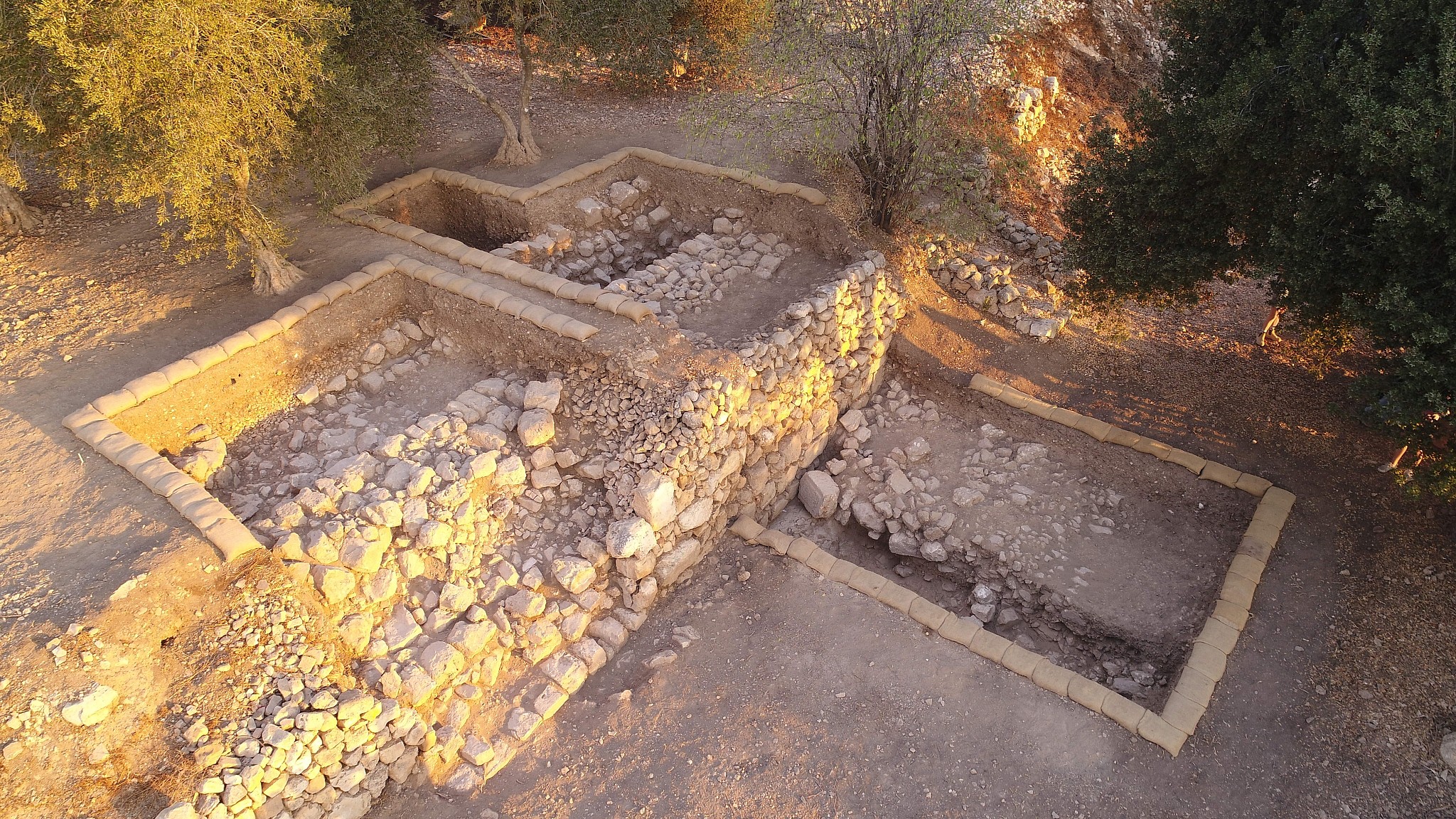
An aerial view of Area C, a broad terrace on the lower eastern slope, at the end of the 2017 season, looking north. (Shmunis Family Excavations at Kiriath-Jearim)

Alongside some 50 student volunteers, in the summer of 2017 Finkelstein and co-directors Thomas Römer and Christophe Nicolle broke ground on the Shmunis Family Excavations at Kiriath-Jearim on the private grounds of a Catholic nunnery situated near the central Israeli-Arab village of Abu Ghosh.

According to Römer, an internationally known expert on the Hebrew Bible, the biblical stories surrounding the Ark of the Covenant served pragmatic political purposes. “The kernel of the original narrative was to legitimate Kiriath-Jearim as the new sanctuary of the shrine after the destruction or the abandonment of Shilo,” wrote Römer in an email to The Times of Israel this week.

In 1995-96, there was a small salvage excavation headed by Gabriel Barkay ahead of convent construction on the hill. There were additional surveys conducted there by Amir Feldstein in the 1980s, and Boaz Zissu and Chris McKinny in 2013.

“The previous studies – both the salvage dig and the surveys – drew a similar picture of the settlement history of the site, but no find of note has been discovered,” said Finkelstein.

That is, until the recent game-changing discovery of a massive man-made platform. The elevated rectangular podium, report the archaeologists, can be reconstructed to have been circa 150-110 m in size and covering an area of some 1.65 hectares. Created with typical Iron Age walls, 3-m wide and which still stand 2-m high, it is oriented exactly north-south and east-west.

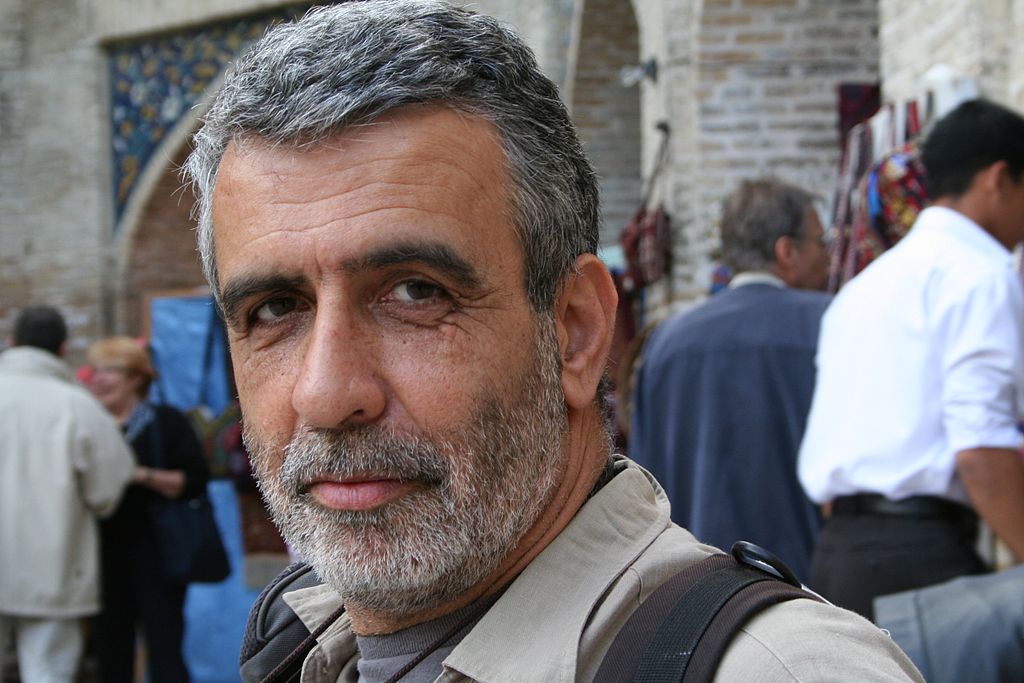
Israeli archaeologist, Prof. Israel Finkelstein. (Argonauter, CC-BY-SA, via wikipedia)

It is an oddity in the kingdom of Judah, which, according to the Bible, once ruled Kiriath-Jearim.

Finkelstein and his co-directors believe the platform may have been a shrine built by the Northern Kingdom in commemoration of the Ark of the Covenant story, a compelling narrative that speaks to a tradition shared with the kingdom of Judah.

Could it also be an indication of the power struggle in the region during the 8th century BCE?

“A Northern affiliation of the site in the early 8th century is not that surprising, because of the domination of Israel over Judah at that time and as the Ark Narrative in the Books of Samuel seems to be of Northern origin,” said Finkelstein.

According to the team’s preliminary excavation report, “The goal was probably to legitimate Kiriath-Jearim as the ‘new’ shrine of the Ark. Accordingly, in the case of a North Kingdom affiliation, the elevated platform was built in order to accommodate an Israelite administration compound, including a temple, aimed at dominating the vassal kingdom of Judah.”

A hill with a view

Modern Kiryat Ye’arim is bordered by Abu Ghosh, an Israeli-Arab village celebrated for its plethora of specialty humus shops. Today it is also known as Telz-Stone, after the European roots of the ultra-Orthodox community residing there. Located less than a kilometer north of the Tel Aviv–Jerusalem Highway, the hilltop upon which the convent sits is strategically placed.

According to the recent preliminary report “Excavations at Kiriath-Jearim near Jerusalem, 2017,” which was published in 2018 in the annual peer-reviewed Semitica journal, the hilltop “commands a sweeping view of large stretches of the coastal plain and the Mediterranean coast (from Jaffa to Ashkelon) in the west, the western neighborhoods of modern Jerusalem in the east and the Judean Mountains in the southeast.”

In the upper terrace at Kiriath-Jearim, a massive wall was unearthed some 15 cm below topsoil. The well-preserved wall is circa 3 m broad and preserved to 2.15 m on its outer face. (Shmunis Family Excavations at Kiriath-Jearim)

Today the hill is carved up by terraced slopes dotted with olive trees, which provide an evergreen relief to the stone construction of the old 1906 convent, slightly later hostel, and the 1924 Church of Our Lady of the Ark of the Covenant.

The archaeological dig is unusually located on private church property under the protection of the French government, a situation stemming from a 1949 agreement with the fledgling State of Israel. Today the site serves as the Convent of the Ark of the Covenant, which covers the hill’s summit, and is occupied by the Sisters of St. Joseph of the Apparition.

There is no possibility of excavating the summit, an important strategic location in the ancient world. “First, we cannot disturb the peace of the convent; second, the summit is probably eroded; third, it was built over by a large monastery in the Byzantine period,” Finkelstein enumerated.

Even with the church construction, it is somewhat surprising that such an important biblical site has not yet been excavated. “Perhaps this has to do with the fact that it is a private property; certainly, one can understand the wish of the nuns not to be disturbed. Now, with the College de France involved, it was easier to get the green light from the convent,” said Finkelstein.

From the initial planning stages, the team has worked closely with the nuns in finding appropriate spots between the compound’s structures. “The interaction with the nuns is cordial and friendly,” said Finkelstein.

At the dig’s conclusion, the sisters will be faced with the decision of whether to open up the site to tourists. The nuns, he said, have been very accommodating, but as the discoveries mount, are increasingly concerned about their peace of mind.

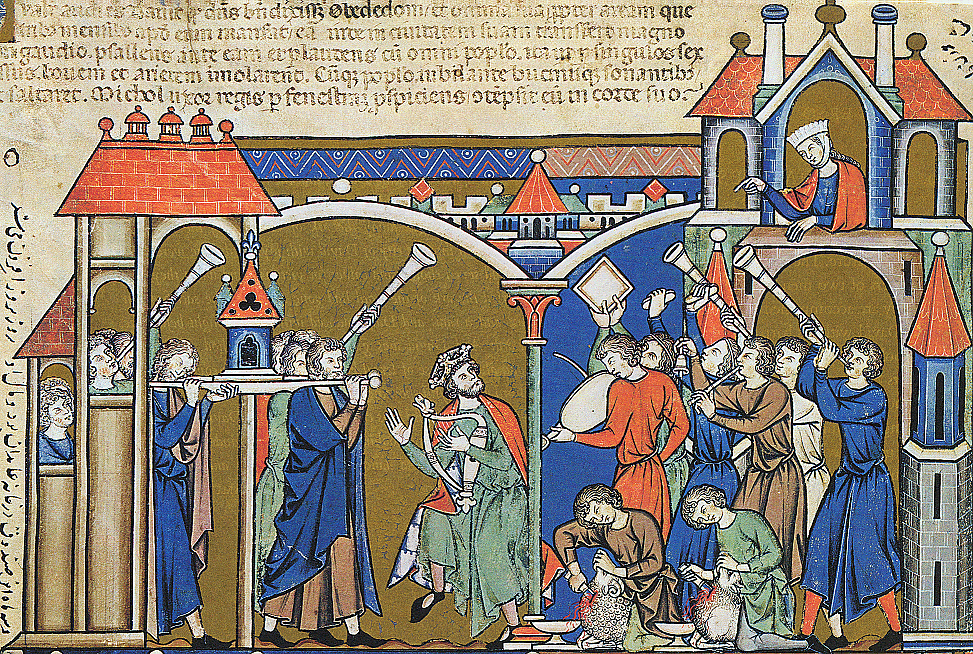
Illustration from the 13th century Morgan Bible of David bringing the Ark into Jerusalem (2 Samuel 6). (public domain via wikipedia)

Rightly so: analysis of the artifacts unearthed so far leave little doubt that this is the biblical site of Kiriath-Jearim. The name is mention in several books of the Hebrew Bible, including a detailed story in I Chronicles 13, 5-8, in which King David jubilantly transports the ark to Jerusalem.

“And David went up, and all of Israel, to Baalah, that is, to Kiriath-jearim, which belonged to Judah, to bring up from thence the ark of God… David and all the Israelites played, celebrating with all their might before God, with songs and with harps, lyres, timbrels, cymbals and trumpets,” reads the account.

Other historical texts, including the ancient name directory, the “Onomasticon” by Eusebius of Caesarea, a 3rd-4th century Church historian and counselor of Constantine the Great, also indicate this spot is the biblical site.

Likewise, the archaeologists note that the Arabic name of the site, Deir el-ʿAzar, “seems to be a corruption of ‘The Monastery of Eleazar,’ probably the name of the Byzantine monastery, which commemorated the name of the priest who was in charge of the Ark when it was kept at Kiriathjearim (1 Sam 7: 1).”

Technology to plumb ancient depths

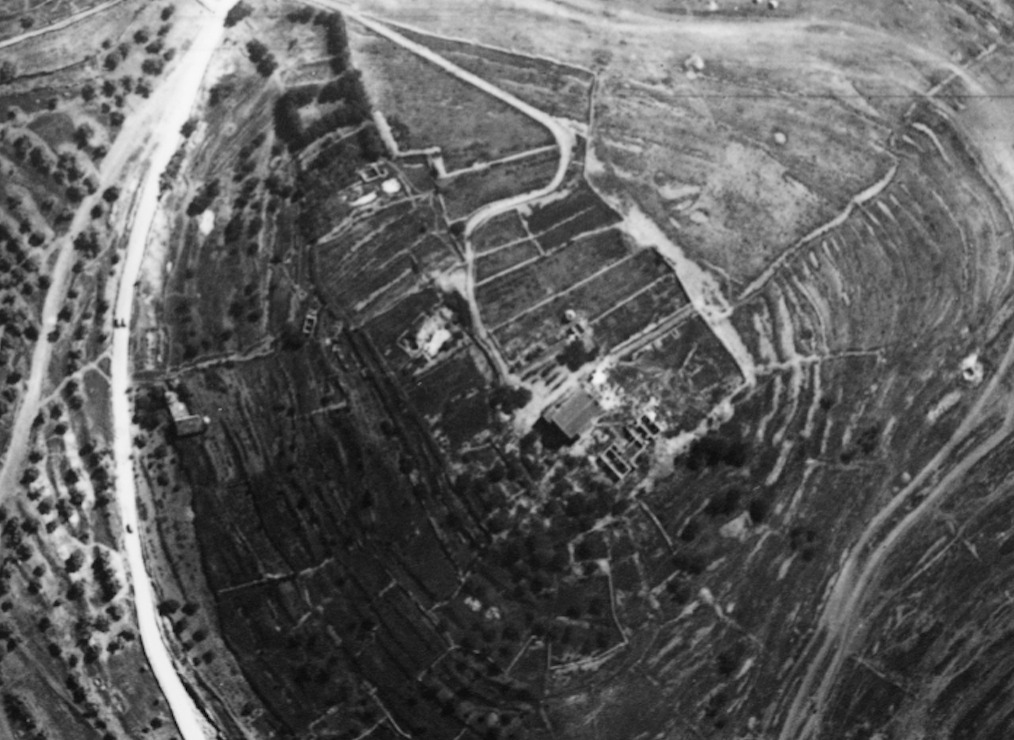
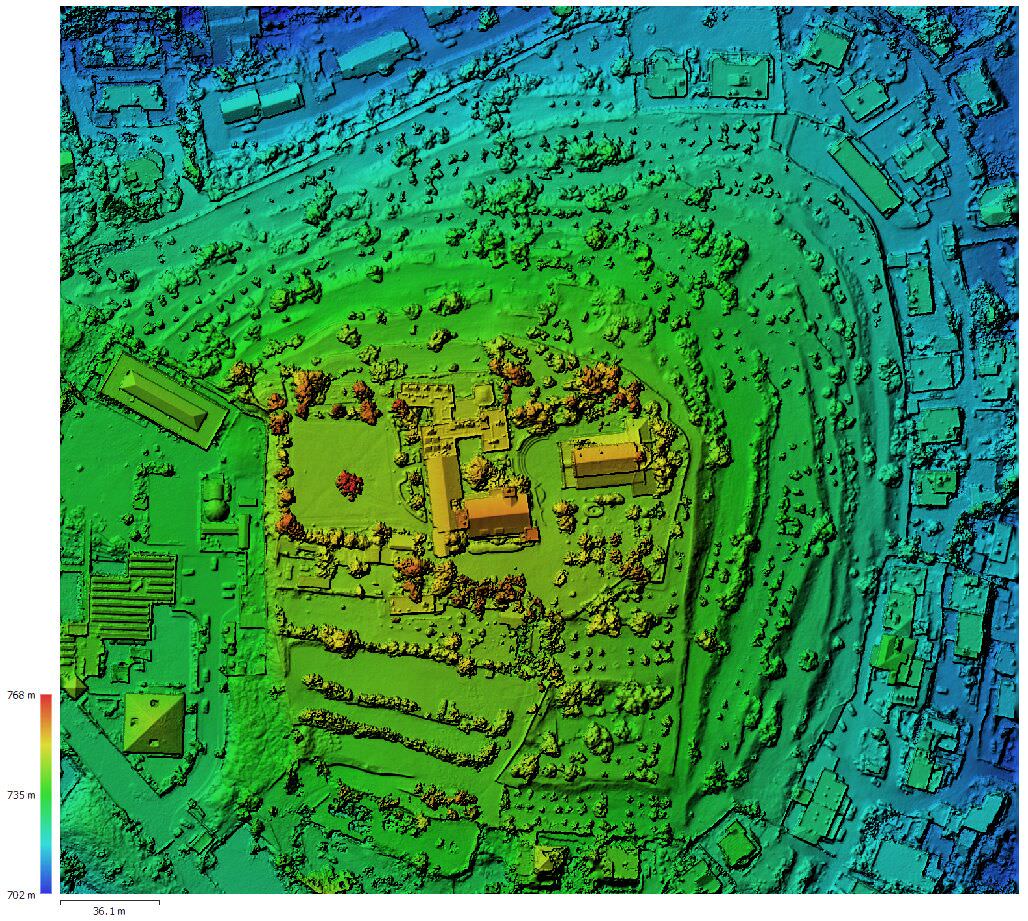
To locate the most likely dig spot between the compound’s buildings, the team consulted World War I Bavarian aerial survey images as well as modern aerial footage, and created a hi-tech orthophoto using a drone and Digital Elevation Model.

“The high-tech methods helped us to visualize the ancient topography and locate the lines of the main terraces. So these methods helped in dictating the fields of excavations, which indeed proved to be highly successful,” said Finkelstein.

Aerial view of the site, taken by the Bavarian air force in 1918, looking north. Note large western and eastern terraces. The modern building is the old house of the convent; to its north are the foundations of the northern sector of the hostel (the church was not built yet). (Courtesy Shmunis Family Excavations at Kiriath-Jearim)

While the team has unearthed countless artifacts, but the discovery of the Iron Age platform’s walls was clearly its biggest success.

“Indeed, the existence of these walls, which supported an elevated Iron Age platform, is the most important find so far,” said Finkelstein.

Due to the 3-D visualizations of the mound, when evidence of the platform was finally discovered, said Finkelstein, “I was surprised and not. Surprised, because this type of elevated podiums is known mainly in the Northern Kingdom (Israel) and here we are on their very southern boundary. Not surprised, because from looking at the topography and the orthophoto I suspected the existence of an elevated platform on the summit.”

The platform, a monumental architectural feat, compels the question of who built it? Which people would have had the ability to construct it in the era suggested by the pottery dating and the walls’ appearance? In an additional wrinkle, there is the paucity of culturally typifying finds. “There is nothing in the material culture, except for the podium, to hint at the north,” said Finkelstein.

Stymied, the scientists commissioned hi-tech Optical Stimulated Luminescence (OSL) dating, which suggested the time period of Iron IIB, or circa 8th century BCE

Digital Elevation Model of the mound of Kiriath-Jearim. (Shmunis Family Excavations at Kiriath-Jearim)

“Bearing in mind the monumentality of this endeavor, and the fact that no elevated platforms of this type are known in Judah, there are two possibilities within the Iron IIB: an Assyrian venture after 720 BCE, or a North Israelite construction before 732 BCE, in fact before the beginning of decline of the kingdom in 747 BCE,” write the archaeologists in their report.

According to the archaeologists, other similar platforms were well-known in the Northern Kingdom during the suggested window of time, including in the capital Samaria. Typically they consisted of massive support walls with land fills which create an artificial hill.

The pottery debris close to the wall dates to the Iron IIB (900-700 BCE), said the archaeologists and the timing of the construction could also point to the northern kingdom: “An elevated platform at Kiriath-Jearim could have been built by Israel following the subjugation of Judah by Joash,”  as noted in 2 Kings 14: 11-13.  “Accordingly, the days of Jeroboam II (788-747 BCE), in the middle of the 8th century, well-fit both the OSL and the ceramic data,” write the authors.

During the course of the excavation, and in comparing the findings from the smaller earlier digs, the archaeologists discerned continued, intensified settlement in the following Iron IIC period (700-586 BCE), as well as reconstruction of the platform. Further reconstruction occurred in the late Hellenistic periods. “The latter may be associated with the fortification efforts undertaken by the Seleucid General Bacchides,” suggest the scholars.

One platform to rule them all

The second excavation season will commence in August 2019 with an equally large team of professionals and volunteers. “This time too we plan to put the main emphasis on the big walls which support the elevated platform,” said Finkelstein.

Finkelstein, for whom the Ark of the Covenant is legend, not fact, said there is no physical evidence at Kiriath-Jearim of the ark having historically resided at the site — nor does he expect to find any. But why the legend was propagated is of interest to the team.

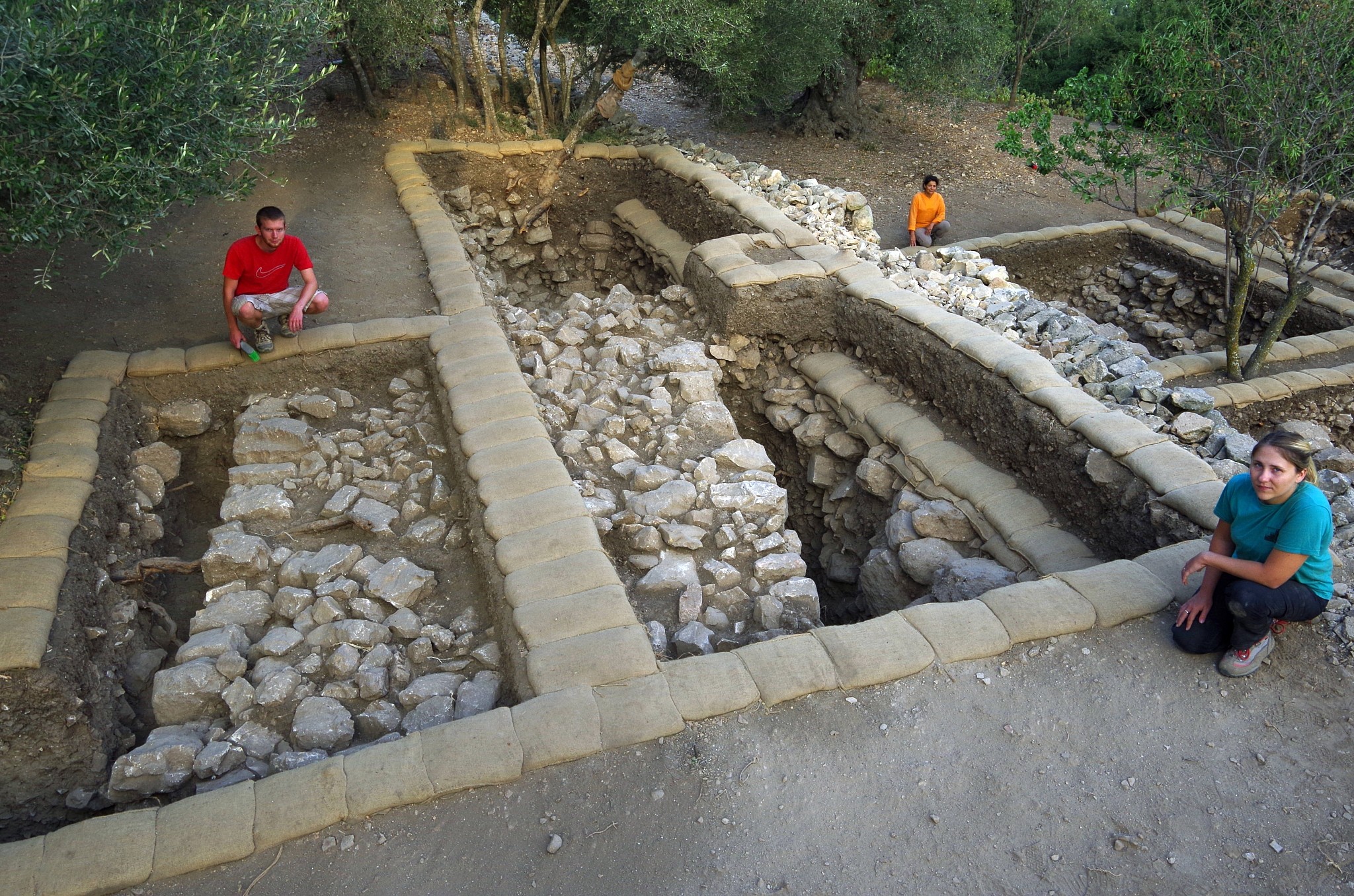
At Kiriath-Jearim, excavation of a set of terraces along the southeastern slope of the mound. (Shmunis Family Excavations at Kiriath-Jearim)

“Why the Northern Ark Narrative was introduced into the Bible is a very good question. It is one of a series of Northern traditions which found their way to the south. Perhaps the idea was to explain how the ark found its way to Jerusalem,” he said.

Finkelstein’s excavation co-director Römer weighed in, “The Ark narrative was introduced into the Bible because in its present form it legitimates Jerusalem as the only ‘official’ sanctuary of Yhwh, since according to the Biblical narrative, David transferred the Ark there from Kiriath-Jearim.

“Later redactors made of the stay of the ark in Kiriath-Jearim a short period [in 1 Samuel 7:2: it is written that the ark was housed for 20 years] in order to suggest that the ark arrived quite quickly in Jerusalem. But historically that happened much later, probably under King Josiah,” wrote Römer.

The large platform at Kiriath-Jearim would have been multi-functional — both as a shrine and a ruling center, said the excavators.

“A platform can of course contain a shrine,” said Römer, “and the fact that according to 1 Samuel 7:1 the ark did not return to Shiloh from where it was captured but came to Kiriath-Jearim clearly indicates the cultic function of the place.”

Finkelstein suggested that the story of the Ark “served the ideology of the Northern Kingdom in the time of Jeroboam II, as well as the actual territorial needs which stemmed from the domination over Judah.”

“I suspect that this shrine of the ark was part of a United Israel (ruled from Samaria) ideology – the forerunner of the later Judahite United Monarchy concept,” said Finkelstein.

As taken from, https://www.timesofisrael.com/biblical-site-tied-to-ark-of-the-covenant-unearthed-at-convent-in-central-israel/

 
Leave a comment

Posted by on January 12, 2019 in Uncategorized


Why I am controversial

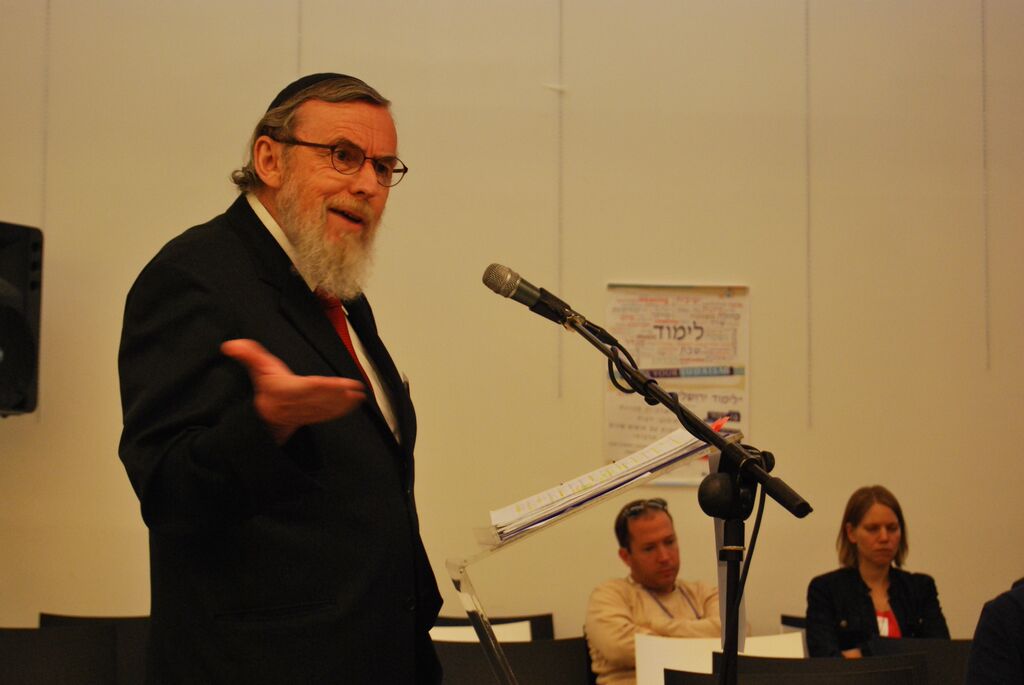
Nathan Lopez Cardozo teaching at a past Limmud. (Courtesy Limmud Jerusalem)

Nathan Lopez Cardozo teaching at a past Limmud. (Courtesy Limmud Jerusalem)

10 Questions for Rabbi Cardozo – An interview with Rabbi Cardozo by Rav Ari Ze’ev Schwartz

“I was hospitalized in Maimonides hospital in Haifa, and I suddenly realized that the Torah was also hospitalized. I was covered in bandages, and I saw how impossible it is to live in bandages. I decided that when I would go free from my bandages, I would not leave my teaching in bandages. I would also free the Torah from its bandages.”  —Rav Shagar (1)  (As told by his well-known student Rabbi Elchanan Nir (2))

Recently, I was invited to respond to 10 personal questions asked by Rav Ari Ze’ev Schwartz, co-founder and dean of the Society of Independent Spirituality, a learning center in Jerusalem, which combines Jewish spirituality and Zionism. (3)

I agreed to answer them honestly and to the best of my ability.

Here is the first question and my response.

* * *

Question One

You have taught and inspired so many different students over the years, in a variety of religious and spiritual institutions. And yet, I get a sense that your greatest impact is made through people studying your books in general, and reading your weekly spiritual articles in particular. I myself have never sat in your classroom, and yet I feel like a student of yours, having read your books and weekly articles for many years now.

Can you say a little about the educational and spiritual goals of your weekly articles? What do you want your readers to experience when they read these articles? How do you yourself experience these goals and articles?

Nathan Lopes Cardozo: The educational and spiritual goal in my writings and lectures is to create great religious and intellectual excitement about Judaism. I want people to understand that Judaism is a protest movement that challenges the human condition. It abhors religious plagiarism, self-contentment and (religious) behaviorism. Judaism is a challenge, not a drug that people can use to put themselves to sleep so as to feel good about themselves. Louis Jacobs once said that religion has been used to comfort the troubled. We should now use it to trouble the comfortable (4).

Judaism is there to disturb; not to take anything for granted, but to discover the miraculous behind the ordinary. With the passage of years, and because of the Galut experience, it could no longer grow in an organic way. It got stuck and lost its vibrant spirit. Instead, it often became rigid and unbending, and even produced dogmas, which completely undermined its true spirit. Simultaneously, it became overly codified, taken hostage by an uncompromising Halacha, eventually losing its essence.

We should never forget what the famous Danish thinker and father of religious existentialism, Soren Kierkegaard, said about Christians:

“The greatest proof of Christianity’s decay is the prodigiously large number of [same-minded] Christians.” (5)

This is also true about religious Jews. The more they behave alike and have identical beliefs, the greater the proof of Judaism’s deterioration. After all, it is impossible for people to be similar in the way they touch on the very meaning of their lives, how they deal with it, and how they stand before God. It can only be personal, different, and full of struggle accompanied by emotional upheaval.   

Judaism also became victimized by misrepresentation, deliberate rewriting, trying to mainstream it, and using religious tyranny in order to keep the crowds under control. Many famous rabbis, especially today, are guilty of this. It is the destruction of individuality and the preciousness of the (Jewish) human being.

Because of this, Judaism can no longer respond to new challenges on an intellectual and spiritual basis and, consequently, becomes more and more irrelevant. This is especially true in relationship to the State of Israel, which brought about the most radical changes in Jewish life during the last 2000 years and requires a completely new approach. (See my book Jewish Law as Rebellion: A Plea for Religious Authenticity and Halachic Courage, Urim Publications, 2018.) It’s true that many more young people have become observant and learn Torah, but often this has more to do with religious behaviorism and not with genuine religiosity. I am most concerned of a backlash.  

My writings and lectures are a protest against all this. I try to show how much genuine Judaism is (or should be) at the forefront of our time, leading the Jewish people and the world to new spiritual and intellectual dimensions.   

I have tremendous confidence in Judaism. It bursts with energy, which you can see throughout the Talmud in its multifaceted contents, its clashing opinions, and its invitation for new ideas. This energy is also apparent in Judaism’s many representations, such as the Ashkenazic, Sefardic and Lithuanian worlds; and, above all, through the innovative thinking of the outstanding Chassidic mentors with their immense rebellion against religious mediocrity. Even the Conservative and Reform movements reflect this. Although they frequently misfired and were too dedicated to “assimilationary” tendencies, they simultaneously warned against Judaism becoming stagnant.

There are, however, several other elements that I believe are crucial in making sure that Judaism will remain not just relevant but able to lead future generations who will live under drastically different spiritual and physical circumstances than we do.

There is too much lecturing and writing about Judaism that is often dry and does not convey its real mission. Judaism is not just an intellectual revolution. It is an encounter with the ineffable; it is the awareness that there is much more to life than what science or philosophy can offer us.

We need faith to penetrate into our very being in order to be really religiously Jewish. Faith is deeper than knowledge. The latter is absorbed by our brains and remains there. When one encounters real faith, all limbs quiver, and upheaval stirs the whole human being (6). Pure scientific knowledge and philosophical inquiry do not have that quality and do not know how to make the human being into a more sensitive person, surely not into a tzaddik. The question is not how much one has grasped Judaism by studying it, but how much of Judaism has permeated one’s very being. It is, above all, an experience that is highly personal and transformational. This doesn’t mean that one needs to behave in a certain way but rather to be a certain way. Its teachings must be transformed into an altogether different substance. It is almost ethereal without losing the ground under its feet. You need to passionately adore it. Once you have embraced it, it must result in your becoming a different human being. And if you didn’t, it means that you didn’t “get it,” although you may be living by its external demands.

So, I believe that Judaism is the most remarkable tradition around, standing head and shoulders above other religions and philosophies, although some of these religions and philosophies have much of importance to say.

But I believe that Judaism has not yet been (fully) born, is still undergoing many birth-pangs, and still stands in scaffolds. It is not yet sophisticated enough and suffers from immaturity.

Judaism’s beliefs have not yet been revealed on a level that gives full expression to what it potentially holds. The way in which it believes in God, “Torah min Hashamayim,” and Halacha are not yet properly expressed and lack sufficient sophistication.

I greatly struggle with these matters and have suggested other approaches to overcome these obstacles. But I am fully aware that my contributions are far from ideal.

I think this is due to the fact that I am unable to raise myself up to the level of kedusha (holiness) that opens up different aspects, which are outside of our run-of-the-mill sensation and way of thinking, and which are required in order to make a real breakthrough. I am still too much rooted in the purely academic world, which does not understand the spiritual qualities that are required to reach holiness. And so I somehow get stuck.

It is only in holiness — a difficult concept to define in Judaism — that we can penetrate these issues as we should. After all, it is kedusha (a holy way of living) that is the ultimate goal of Judaism. It requires such elevation of moral behavior—the nearly bursting of one’s soul out of one’s body, and honest humility—that I feel totally inadequate. Not only does that create a great obstacle, but I am caught in an ongoing moral dilemma. When I write and speak about all these matters and call on others to live a life of holiness, I sometimes feel like a scoundrel and a hypocrite. I know that I am not holy. I still have a long way to go. So how can I teach and write about these topics without feeling like a “pretender”? This causes me great anguish.

All I can say to justify myself is that I have never in my life met a genuinely religious person, but I have met many people who have sincerely tried and still try to be religious. Indeed that is all we can do: try; make the effort. And that is what I do. But deep down in my heart I know that it is not good enough! I could do better, but I don’t! Somehow I can’t pull it off.

But there is another element here that is probably more important than anything else, and it’s not easy to explain. There is an inner call, a shelichut, a mission that I am obliged to listen to and carry out. Even against my will. I feel that it is rooted in my unusual background: the child of a mixed marriage; an unusual secular education; many years of yeshiva learning; and going through much spiritual upheaval, all of which have made my life most beautiful, and often most uneasy if not painful.

I cannot escape this calling. It is too strong to ignore. In fact, it compels me and there is no turning back. Even if I would like to. I have often contemplated leaving this all behind and beginning to live a “normal” life. But when I tried, it completely failed. I have to accept it and turn it into something unique.  

It is the reason why I write and teach the things I teach. I know that these matters are unusual and controversial. But this is what I have to do. Especially because I know that by doing so, I am helping many sincere people who are struggling with Judaism as much as I have struggled and still do. If I would not continue, it would be a serious dereliction of duty.  

This is difficult for some people to accept, and I value that and understand their concern. Still, this is who I am and what I stand for. What some people don’t understand is that I have a strong affinity to the Haredi world. Its passion for Judaism is irresistible. I dream of it, and that’s the reason why I am so skeptical about this world. To be a Haredi, one cannot be average. One needs to be unique and live a life of such greatness, holiness, and honesty that the slightest deviation from these is a major catastrophe and chilul Hashem (desecration of God’s name). It should be an elite society, an example to all of us. But very often it is not. So how can it call itself Haredi, which means pious in the highest sense of the word? After all, the mitzvot were given to purge and refine us; when this is not the goal and endeavor of our religious life, why live by it?  

But in order to make this happen, I believe that Judaism must undergo a metamorphosis while remaining true to its core beliefs. Halacha needs to be reconsidered so as to be itself again – organic and creative. Because if it isn’t, it won’t be able to respond to the radical new conditions that God has granted us in these unusual days. And how then can we refine ourselves?

Notes:

[1] Rabbi Shimon Gershon Rosenberg (1949-2007), known by the acronym HaRav Shagar, was a Torah scholar and a religious postmodern thinker. His thought was characterized by Neo-Hasidism and postmodernism. In 1996, he established Yeshivat Siach Yitzchak in Efrat and was its head until his death. He is considered one of the great Jewish thinkers of this generation.

[2] This story will be included in an upcoming book: Rav Shagar: A quide to His life and Writings by Rabbi Ari Ze’ev Schwartz and Levi Morrow.

[3] Rabbi Schwartz received his rabbinical ordination at the Shehebar Sephardic Center in Jerusalem under Rabbi Yaakov Peretz, has a B.Ed. from Herzog Academic College, and is currently finishing a master’s in education at Herzog. Previously, Rabbi Schwartz served as the head rabbi of Bnei Akiva’s Hachshara program for three and a half years. In addition, he teaches the writings of Rav Kook and Rav Shagar, as well as Jewish philosophy and Tanach at several yeshivot and midrashot in Jerusalem. Earlier this year, Rabbi Schwartz published The Spiritual Revolution of Rav Kook: Writings of a Jewish Mystic through Gefen Publishing House. Together with Levi Morrow, he is now working on a book about the teachings of Rav Shagar. Rabbi Schwartz lives with his wife and two daughters in the Nachlaot neighborhood of Jerusalem.

[4] Quoted in Elliot Jager’s “Power and politics: Celebrating Skepticism,” The Jerusalem Post, Dec. 4, 2007.

[5] M.M.Thulstrup, “Kierkegaard’s Dialectic of Imitation,” in H.A. Johnson and N. Thulstrup (eds.), A Kierkegaard Critique (NY: Harper, 1962) p. 277.

[6] Abraham Joshua Heschel, A Passion for Truth (London: Secker & Warburg, 1973) p. 189.

As taken from, https://www.cardozoacademy.org/thoughts-to-ponder/ten-questions-for-rabbi-cardozo-part-1/?utm_source=Subscribers&utm_campaign=5dedcbfd07-Weekly_Thoughts_to_Ponder_campaign_TTP_548_COPY_01&utm_medium=email&utm_term=0_dd05790c6d-5dedcbfd07-242341409

 
Leave a comment

Posted by on January 10, 2019 in Uncategorized


Is it time to revisit the Law of Return?

Illustrative. New immigrants arrive to Ben Gurion airport in Israel. (Gideon Markowicz/ FLASH90)

Illustrative. New immigrants arrive to Ben Gurion airport in Israel. (Gideon Markowicz/ FLASH90)

For the first time in Israel’s history, Jewish immigrants were outnumbered by non-Jewish immigrants. On Monday, December 31, 2018, the Central Bureau of Statistics, released the following data: “17,700 of the 32,600 migrants who moved to Israel in 2018 came under the Law of Return but were listed as ‘having no religion.’ “

The principle of the Law of Return, חֹוק הַשְׁבוּת, is expressed in the first words of the Law, “every Jew has the right to come to this country as an oleh [immigrant].” It is a fundamental cornerstone of Zionism and is as relevant today as the day it was passed into law (July 5, 1950).

But the devil is in the details. The criteria for Jewishness, added in 1970, include children and grandchildren of Jews. Israel turned the infamous Nuremburg law on its head: the definition of Jewishness used by the Nazis to send people to death camps became the definition to save lives of Jews, in particular those from Eastern Europe and the former Soviet Union. But a great nation-building strategy in the 1950s, 1960s and 1970s, may not be a great nation-building strategy in 2018.

Today, the Law of Return should apply both to Jews by religion and Jews by culture, nationality or ethnicity – having a Jewish parent or grandparent by itself should not be enough.

The definition “Jewishness” by ancestry is out of step with the realty of Jewish life today. Identity today is a matter of choice, not of birth. This is true not only of Jewish identity, increasingly, identity world-wide is fluid, people create their own identities out of free choice and free will.

Thus, there are large numbers of Jews in Israel, the USA and around the world who are Jewish by culture, nationality, or ethnicity, but neither profess nor practice Judaism as a religion.

Increasing numbers of people in survey after survey conducted by Ukeles Associates, Inc.  answer “yes” to the question, “Do you consider yourself Jewish?” and answer “none” to the question, “What is your religion?”

Israel has historically conflated the religion question with the “considers self Jewish” question. It is time to disentangle these two. The 17,700 immigrants who came to Israel in 2018 who said they had no religion are in two groups — people who consider themselves Jewish by criteria other than religion and those who do not consider themselves Jewish.

The critical question from the point of view of the security and well-being of Israel is not whether people welcomed here under the Law of Return have a Jewish parent or grandparent, but does at least one person in a family see themselves as part the Jewish people?  If yes, they belong here as a matter of right, if not, they do not belong here as a matter of right. Perhaps people coming under the Law of Return should be asked to take an oath of allegiance to the Jewish people.

Ruth’s famous biblical formulation for joining the Jewish people needs to be subdivided today: “thy people shall be my people” should be the measure of being Jewish and being guaranteed a place in Israel. “Thy God is my God“ is the measure of a commitment to being Jewish by religion. Both are valid.

As taken from, https://blogs.timesofisrael.com/is-it-time-to-revisit-the-law-of-return/?utm_source=The+Blogs+Weekly+Highlights&utm_campaign=blogs-weekly-highlights-2019-01-10&utm_medium=email

 
Leave a comment

Posted by on January 10, 2019 in Uncategorized