
By Rabbi Jonathan Sacks Each year, as we near the end of the Mosaic books and Moses’ life, I find myself asking: Did it really have to end that way, with Moses denied the chance to even to set foot on the land to which he led the people for forty tempestuous years? In the Heavenly Court, could Justice not have yielded to Mercy for the few days it would have taken Moses to cross the Jordan and see his task fulfilled? And for what was Moses being punished? One moment’s anger when he spoke intemperately to the Israelites when they were complaining about the lack of water? Can a leader not be forgiven for one lapse in forty years? In the words of the sages: Is this the Torah and this its reward?[1] The scene in which Moses climbs Mount Nebo to see in the distance the land he would never enter is one of the most poignant in all Tanakh. There is a vast midrashic literature that turns Moses’ request “Let me cross over to see the good land beyond the Jordan” (Deut. 3:25) into high drama, with Moses mounting argument after argument in his defence only to be met by unbending refusal from Heaven: “Enough from you; do not speak to me of this matter again”. (Deut. 3:26) Why? This is the man who, eighteen times in Tanakh, is called “God’s servant.” No one else is so described except Joshua, twice. His own obituary in the Torah reads: “Never again did there arise in Israel a prophet like Moses” (Deut. 34:10). Why was he treated so seemingly harshly by God among whose attributes are forgiveness and compassion? Clearly the Torah is telling us something fundamental. What, though, is it? There are many explanations, but I believe the most profound and simplest takes us back to the beginning of beginnings: “In the beginning God created Heaven and Earth.” There is Heaven and there is Earth, and they are not the same. In the history of civilisation, one question has proved hardest of all. In the words of Psalm 8: “What is man that you are mindful of him?” What is it to be human? We are an infinitesimal speck in an almost infinite universe of a hundred billion galaxies each with a hundred billion stars. We know that our lives are like a bare microsecond set against the almost-eternity of the cosmos. We are terrifyingly small. Yet we are also astonishingly great. We dominate the planet. We have ever-increasing control over nature. We are the only life form thus far known capable of asking the question, ‘Why?’ Hence the two temptations that have faced Homo sapiens since the beginning: to think of ourselves as smaller than we actually are, or greater than we actually are. How are we to understand the relationship between our mortality and fallibility and the almost-infinities of space and time? Civilisations have regularly blurred the line between the human and the divine. In myth, the gods behave like humans, arguing, fighting and contending for power, while some humans – the heroes – are seen as semi-divine. The Egyptians believed that pharaohs joined the gods after death; some were seen as gods even during their lifetime. The Romans declared Julius Caesar a god after his death. Other religions have believed that God has taken human form. It has proved exceptionally difficult to avoid worshipping the human founder of a faith. In the modern age, the blurring of boundaries has been democratised. Nietzsche argued that we would have to become like gods to vindicate our dethroning of God Himself. The anthropologist Edmund Leach began his Reith Lectures with the words, “Men have become like gods. Isn’t it about time that we understood our divinity?” As Jews we believe that this is too high an estimate of our, or anyone’s, humanity. In the opposite direction humans have been seen, in myth and more recently in science, as next-to-nothing. In King Lear, Shakespeare has Gloucester say, “As flies to wanton boys are we to the gods. They kill us for their sport.” We are the easily discarded playthings of the gods, powerless in the face of forces beyond our control. As I pointed out in an earlier essay, some contemporary scientists have produced secular equivalents of this view. They say: there is nothing qualitatively to distinguish between Homo sapiens and other animals. There is no soul. There is no self. There is no freewill. Voltaire spoke of humans as “insects devouring one another on a little atom of mud.” Stephen Hawking said that “the human race is just a chemical scum on a moderate size planet, orbiting round a very average star in the outer suburb of one among a billion galaxies.” Philosopher John Gray wrote that “human life has no more meaning than that of slime mould.” In Homo Deus, Yuval Harari states that, “Looking back, humanity will turn out to be just a ripple within the cosmic data flow.”[2] Judaism is humanity’s protest against both ideas. We are not gods. And we are not chemical scum. We are dust of the earth, but there is within us the breath of God. What is essential is never to blur the boundary between Heaven and Earth. The Torah speaks only obliquely about this. It tells us that there was a time, prior to the Flood, when “the sons of God saw that the daughters of man were lovely, and they married whomever they chose” (Gen. 6:2). It also tells us that, after the Flood, humans gathered in a plain in Shinar and said, “Come, let us build ourselves a city and a tower that reaches heaven, and make a name for ourselves” (Gen. 11:4). Regardless of what these stories mean, what they speak of is a blurring of the line between Heaven and Earth – “sons of God” behaving like humans and humans aspiring to live among the gods. When God is God, humans can be human. First, separate, then relate. That is the Jewish way. For us as Jews, humanity at its highest is still human. We are mortal. We are creatures of flesh and blood. We are born, we grow, we learn, we mature, we make our way in the world. If we are lucky we find love. If we are blessed, we have children. But we also age. The body grows old even if the spirit stays young. We know that this gift of life does not last forever because in this physical universe, nothing lasts forever, not even planets or stars. For each of us, therefore, there is a river we will not cross, a promised land we will not enter and a destination we will not reach. Even the greatest life is an unfinished symphony. Moses’ death on the far side of the Jordan is a consolation for all of us. None of us should feel guilty or frustrated or angry or defeated that there are things we hoped to achieve but did not. That is what it is to be human. Nor should we be haunted by our mistakes. That, I believe, is why the Torah tells us that Moses sinned. Did it really have to include the episode of the water, the stick, the rock and Moses’ anger? It happened, but did the Torah have to tell us it happened? It passes over thirty-eight of the forty years in the wilderness in silence. It does not report every incident, only those that have a lesson for posterity. Why not, then, pass over this too in silence, sparing Moses’ good name? What other religious literature has ever been so candid about the failings of even the greatest of its heroes? Because that is what it is to be human. Even the greatest human beings made mistakes, failed as often as they succeeded, and had moments of black despair. What made them great was not that they were perfect but that they kept going. They learned from every error, refused to give up hope, and eventually acquired the great gift that only failure can grant, namely humility. They understood that life is about falling a hundred times and getting up again. It is about never losing your ideals even when you know how hard it is to change the world. It’s about getting up every morning and walking one more day toward the Promised Land even though you know you may never get there, but knowing also that you helped others get there. Maimonides writes in his law code that, “Every human being can become righteous like Moses our teacher or wicked like Jeroboam.”[3] That is an astonishing sentence. There only ever was one Moses. The Torah says so. Yet what Maimonides is saying is clear. Prophetically, there was only one Moses. But morally, the choice lies before us every time we make a decision that will affect the lives of others. That Moses was mortal, that the greatest leader who ever lived did not see his mission completed, that even he was capable of making a mistake, is the most profound gift God could give each of us. Hence the three great life changing ideas with which the Torah ends. We are mortal; therefore make every day count. We are fallible; therefore learn to grow from each mistake. We will not complete the journey; therefore inspire others to continue what we began. Shabbat Shalom. NOTES [1] Berakhot 61b. [2] Covenant and Conversation, Chukkat 5778. [3] Hilkhot Teshuvah 5:2. As taken from, http://rabbisacks.org/unfinished-symphony-vezot-habracha-5779/ |
Author Archives: yishmaelgunzhard
Unfinished Symphony
Sukkot and Impermanence
 by Jeremy Rosen

A Torah scroll. Photo: RabbiSacks.org.
In discussing the festival of Sukkot, the Talmud gives all the various possible explanations for the origin and purpose of a Sukkah. Its final idea is that of impermanence. “Leave your permanent home, and live in a temporary home.” In many ways, impermanence is in our genes: Our wandering forebears. Our movable Tabernacle. Exile. Return. Impermanence really resonates with us.
We humans are indeed transient. We live our lives in constant tension between permanence and impermanence. We can be snuffed out in a flash. We are specks on the timeline of life. We are driven by a desire for life and the struggle to avoid death. There are wars, persecution, political change and upheaval, as well as illness, plagues, and natural disasters. Life is a struggle. We struggle to work, to live, to love. As a result, many of us feel insecure, depressed, and stressed.
We need certainties — to know where we stand, where we live and where we work, what country we are citizens of, what party, what religion, what sect within a religion. We yearn for permanence. Resolution. To know how the world works and the reason for everything. We need to feel we belong. We need to feel comfortable, secure, loved, wanted, admired, and respected. We pay fortunes to psychiatrists, therapists, gurus, coaches, and rabbis to give us the easy answers. And we take drugs, alcohol, and pills. Anything to help us cope and ease the pain. But there are very few certainties in life “except death and taxes” as Benjamin Franklin is supposed to have said.
Once upon a time, we knew what our positions were in hierarchies — in states, classes, in religions, in nations. We lived in a world where these defined most of us. A few people in each generation were able to move up and rise. Most stayed put. In a world of constant conquest and change, we have always been at the mercy of forces beyond our control. But now, we seem to want to control everything, everyone, every space, and every argument. We want to have everything: money, power, freedom to do as we please. Not to be challenged or offended.
We have indeed advanced dramatically, combating poverty and disease. The latest figure just published in The Wall Street Journal is that extreme poverty is now down to 10% (but that’s still too much).
In Western countries, we have so much more than we used to. But that does not seem to bring much happiness or contentment. Look how angry and hypersensitive so many people have become, despite all the social welfare, safety nets, and preferences that never existed 70 years ago. Look how fractious identity politics has become, how aggressive the pressure groups. We have become neurotic when things don’t happen just the way we want them to. Yet, for all that, I’d rather live in a world of uncertainty and choice than have dictators or ideological fanatics tell me what to do.
No system is perfect or permanent. Each has aspects that are positive. The one common feature of our present world is Capisolism (my invented word) — the need for capital expansion and growth to fund the basic social needs of the poorest and the weakest. But that in itself is a variable. China has a command economy. It can do things better and faster, precisely because it can trample on individual wishes. America, on the other hand, values individual liberties and freedoms. But such liberties cause conflict, fragmentation, delays, and compromises. Both suffer from corruption.
To adapt Orwell, all states cause harm. Some states cause much more harm than others. Despite Fukuyama’s unfortunate title The End of History, there is no end. It cannot end, because humans are constantly changing. There is no final, no perfect state. Only constant fluidity and cycles. Rises and falls. Situations that seem desperate one moment become successful and peaceful the next. War turns to peace and peace to war. My liberalism is predicated on hearing other views, examining other ideas, and listening respectfully to other views.
I embrace impermanence because that has been my life. I know many who have had it far worse — far more tragic and unstable than I. But I have never had a permanent home, a permanent country, or a permanent job. I have always been wandering in the desert and finding my shade where I can. I have always been aware of people who hate me for who I am and what I am. Even personal life has had its impermanence, its ups and downs, good moments and bad ones. I do not expect perfection or resolution. I only know I have to try cope. I am fortunate to be a very happy fellow.
This impermanence, I suggest, is why the Torah gives us no ideal political or even social system, or a perfect example of how to run societies. Because there is no perfect solution. Different circumstances call for different responses. We cannot control the world or societies. All we can do is our best. The Torah constantly reminds us of the need to behave, to think, to bring spiritual ideas to mind, to enrich our lives, while at the same time reminding us that we have the freedom and choice to make crucial decisions. (Even if, as Moses predicted, many of us will get it wrong, and disappear from our people and merge with others.)
Sukkot is the festival of impermanence — throughout history, and now. How many will come and sit with us? How many will simply not be there? Sukkot reminds us that impermanence can be good. Perhaps not all the time. No one wants an impermanent marriage or impermanent children. But impermanence can be good and necessary too, if it helps us appreciate what we have and determine to preserve it.
In Manhattan, having a Sukkah in one’s home or apartment block is almost impossible (though some succeed). Meanwhile, there is nowhere easier to have a Sukkah, more available, more convenient, and widespread than in Israel. That, too, is part of our impermanence. That we always have in the backs of our minds on our festivals that we ought to think of where we came from and might want to go back to.
“The world runs according to its own rules,” says the Talmud. We humans need our rules, too. But if rules for human behavior have remained more or less constant, societies have always been unpredictable. Pendulums swing, and as Harold Wilson said, “A week in politics is a very long time.” People and states rise and fall. But the Sukkah has survived them all.
Rabbi Jeremy Rosen received his rabbinic ordination from Mir Yeshiva in Jerusalem. He has worked in the rabbinate, Jewish education, and academia for more than 40 years in Europe and the US. He currently lives in the USA, where he writes, teaches, lectures, and serves as rabbi of a small community in New York.
¿Cuál es el significado más profundo de Sucot?
por, Diego Edelberg
Es una genialidad del calendario judío que la primera festividad que continúa al comienzo de un nuevo año luego de la purgación de Rosh Hashana y Iom Kipur sea Sucot. Si bien Sucot tiene diferentes significados hay uno fundamental que atraviesa su enseñanza más profunda: nada es para siempre. El techo que cubre la Suca se llama en hebreo sjaj y debe estar hecho con ramas cortadas de la raíz que sabemos van a morir muy pronto por eso. Ni que hablar que toda la Suca misma es una estructura que no puede ser creada para durar eternamente. En palabras más simples, Sucot es la celebración de lo efímero, aquello que dura poco y que muy pronto pasará.
La bendición de la adultez
El aprendizaje de valorar lo efímero surge incluso en una historia que gira en torno al rey Salomón (el más sabio de todos según nuestra tradición) de quien leemos incluso Kohelet (el Eclesiastés) en estos días. La historia dice que el rey Salomón quería un objeto que le hiciera sentir mejor cuando las cosas estaban mal y ese mismo objeto le hiciera apreciar el momento si es que estaba viviendo algo bueno. Así fue que le hicieron un anillo que decía gam zeh yaabor, esto también pasará.
Si hay algo que podemos decir con certeza es que lo único constante en la vida es el cambio. ¿Cuantas veces escuchamos “este es el momento más importante…, es el principio…, el final…, el cataclismo…, o después de esto…” para luego descubrir que hay incontables momentos importantes, principios, finales, cataclismos y despuéses? Sabiendo esto tenemos una tendencia natural extraña a pensar que así no funciona el mundo sino al revés de lo que la vida misma enseña. Nos convencemos que hay cosas permanentes y hay finales. Pero en el fondo sabemos que eso nunca será así porque nunca lo ha sido.
La conciencia que nada se mantiene igual es una de las bendiciones de ser adulto. Cuando uno ve a un niño que le pasa algo malo uno nota que como aún no ha vivido lo suficiente no posee aún la conciencia que su estadio actual va a cambiar. Nosotros los adultos enfrentamos a lo largo de la vida distintos problemas que son como una galaxia llena de planetas diferentes. Hay algunos planetas tan grande que su fuerza gravitacional hace que orbitemos en ellos como un satélite durante mucho tiempo, quizás años. De hecho, cuando estamos en un momento oscuro o en un callejón momentáneo sin salida lo único que sentimos es que estamos orbitando en ese planeta y ese problema es lo único que vemos. Pero sabemos que tarde o temprano aparecerá un nuevo planeta (un nuevo problema) que no conocíamos en nuestro propio sistema solar y comenzaremos a orbitar hacia ese lado llevados por una fuerza de gravedad más grande. En esta galaxia los planetas no desaparecen. Los planetas/problemas permanecen allí por años luz pero la fuerza gravitacional hace que no estemos todo el tiempo orbitando allí sino que seamos satélites de varios planetas (es decir varios problemas) diferentes a lo largo de la vida. Como adultos podemos recordarnos que no importa lo mal que estamos, sabemos que tarde o temprano lo que estamos viviendo también pasará.
La Sabiduría más profunda
A medida que crecemos la sabiduría de Sucot se convierte en la sabiduría de la vida y por eso leemos Kohelet. Confieso que Kohelet fue uno de esos pocos libros que leí cuando era adolescente y me deprimió terriblemente. Pensé, qué tipo tan depresivo y fatalista el autor de esta obra. “Vanidad de vanidades, todo es vanidad…” Y desde entonces me pregunté para qué hacer algo si todo será para nada. Curiosamente hoy no hay pasaje que contenga más sabiduría que aquél que me recuerda que hay un tiempo para todo en la vida. Es por eso mismo que disfruto tanto la vida y proyecto en plazos cortos y largos al mismo tiempo.
De todas formas comprendo lo difícil que es esta sabiduría judía pero lo imprescindible y necesaria que resulta para la vida. Es difícil porque cuando nos sucede algo malo nos resulta imposible pensar que en unos años ya no pensaremos en esto que está consumiendo hoy todo nuestro ancho de banda. Y es imprescindible justamente porque nos recuerda que todo tiene su tiempo bajo el sol y que tanto la alegría como el dolor que estamos atravesando en este momento no será para siempre. Muy pronto pasará. La alegría dará paso a momentos más tristes y la tristeza dará espacio para momentos alegres. Todo cambia. Nada se mantiene siempre igual.
La próxima vez que estén desesperados y no vean la salida hagan un pequeño ejercicio: respiren hondo y díganse, “Diego me dijo que esto también iba pasar”. Se los aseguro. Nos encontramos en un período hermoso de nuestro calendario para contar nuestras bendiciones, todo lo bueno que sí tenemos y recordar que lo difícil que estamos viviendo gam zeh yaabor –como decía el anillo de Salomón- “también pasará”.
¡Jag Sameaj!
Read more at http://www.judiosyjudaismo.com/2018/09/cual-es-el-significado-mas-profundo-de-sucot/#Voe6fUtTHUc4jz0k.99
The Yom Kippur War: When Israel’s Arabs didn’t rise up
At a traffic circle near Nazareth, I saw tables with soft drinks, sandwiches, cakes — set up for the troops. There were scenes like this nationwide, but here the women were Arabs
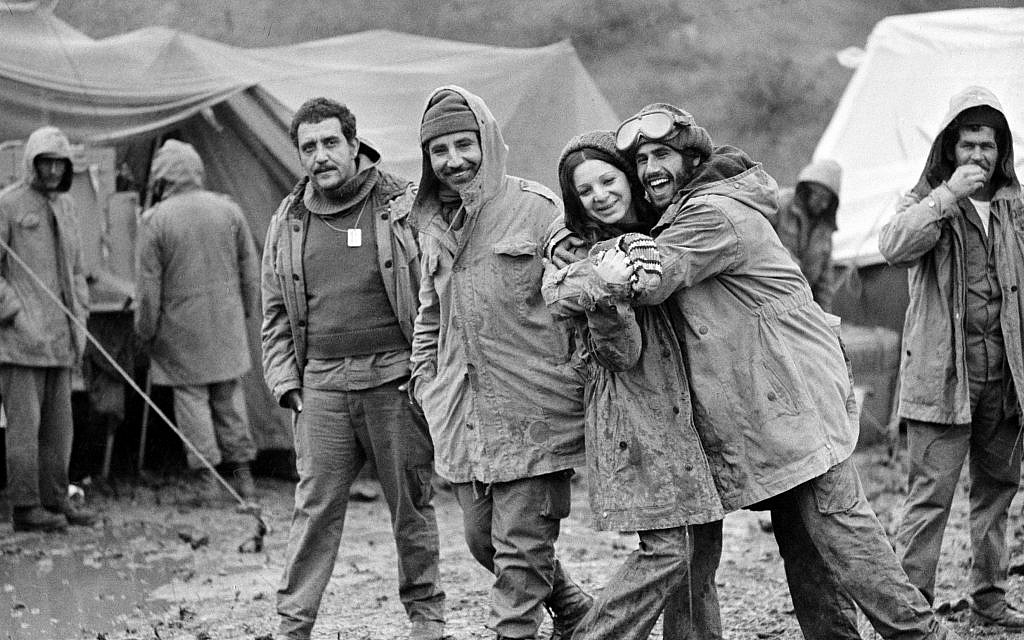
As Israel rushed its reserves to meet the surprise Syrian-Egyptian attack opening the Yom Kippur War in 1973, it simultaneously dispatched border police contingents to Arab Israeli enclaves for fear of unrest.
But Israel’s Arabs did not rise up. Instead, in this most trying period in Israel’s history, they volunteered to replace mobilized Jewish reservists, worked on kibbutz farms, signed up for civil defense work, gave blood, and bought government bonds to help finance the emergency.
For almost two decades after Israel was founded in 1948, its Arabs had lived under martial law, restricted in their movement and closely monitored by security services. They had cheered on the Arab armies which attempted to annihilate Israel at its birth and their loyalty to the Jewish state remained suspect, at best. However, in 1966 the government abolished military rule in the Arab sector, offering residents there a sense of normality for the first time.
“They have lived these recent years in a calm and positive atmosphere,” said Shmuel Toledano, the prime minister’s adviser on Arab affairs, in an interview at the time, referring to the seven years since the end of martial law. “They’ve gotten the feeling that it’s possible to live in Israel as a minority.”
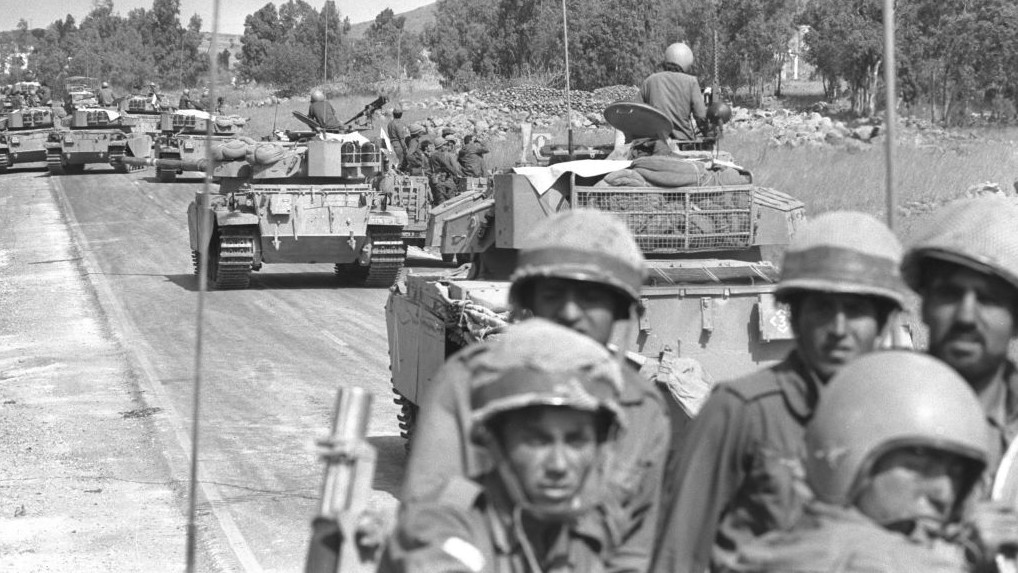
The government initially refrained from involving the Arab population in efforts to stabilize the home front. “But after a few days,” said Toledano, “we saw that they were offended by this attitude.” Offices were opened in seven Arab communities to register volunteers. The bonds sold to thousands in the Arab sector had the word “war” deleted from the “war bond certificates” they received. This way, Arab Israelis could express support for the state without overtly supporting a war against Arab states.
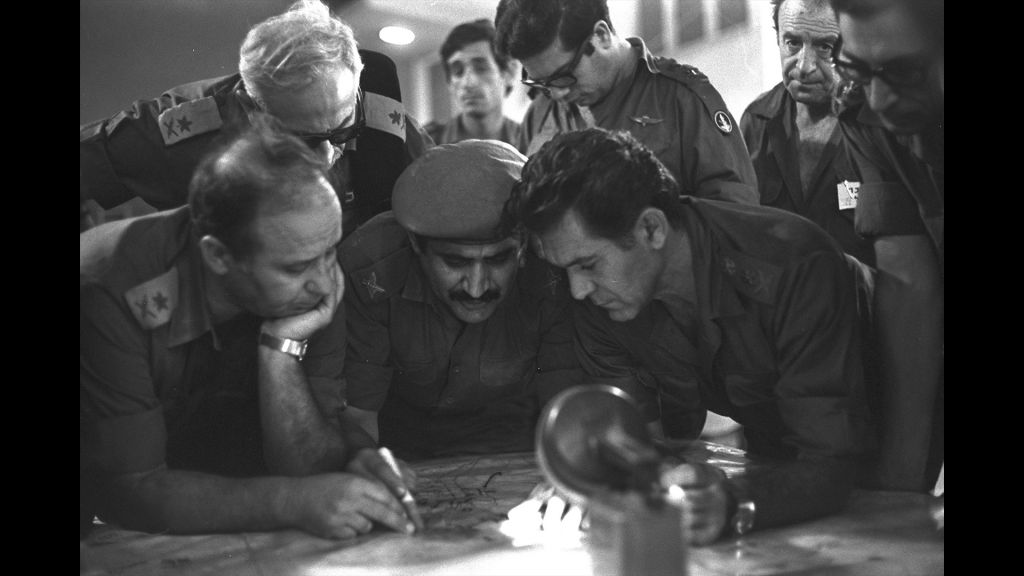
Some Israeli observers cautioned against reading too much into such demonstrations of loyalty. “Much of it is organized by Arab leaders who want to establish credit which can be drawn on in the future,” said a kibbutz leader familiar with the Arab community. “There’s nothing wrong with that and the volunteering is certainly a positive step. But we need to maintain perspective.”
Given the fierce war raging, virtually no notice was taken in the rest of Israel, then or thereafter, of this exceptional moment in Arab-Jewish relations. During the first days of the war, the Syrian and Egyptian armies broke through the Israeli defenses and looked like they might win. In volunteering their services at such a time, the Arab Israelis who did so were in effect identifying with the state. (Arab Israelis were not drafted.) It would be learned from Syrian military maps left behind on the Golan battlefield that the only specific objective designated by Syria inside Israel was Nazareth.
I stumbled on the story during the second week of the war as I was driving back to Jerusalem from the Golan, where I had been reporting for The Jerusalem Post. Passing a road sign, I glanced at it idly and then braked. “Nazareth,” it said. I had not thought about the impact of the war on Arab Israelis until that moment. What was happening with them? Nazareth was the largest Arab city in Israel. I turned the car around.
Climbing the Galilee hills, I came upon a roundabout that lay between Arab Nazareth and the Jewish town of Nazareth Illit, which had been founded in the 1950s as a sentinel overlooking the Arab city. The border of the traffic circle was lined with tables bearing soft drinks, sandwiches and cakes. Several military vehicles had stopped and soldiers emerged for hurried snacks. In villages and towns throughout the country local women had set up similar roadside refreshment points for soldiers heading for the fronts. But there was something different about this one. All the women at the tables catering to the soldiers were Arab.
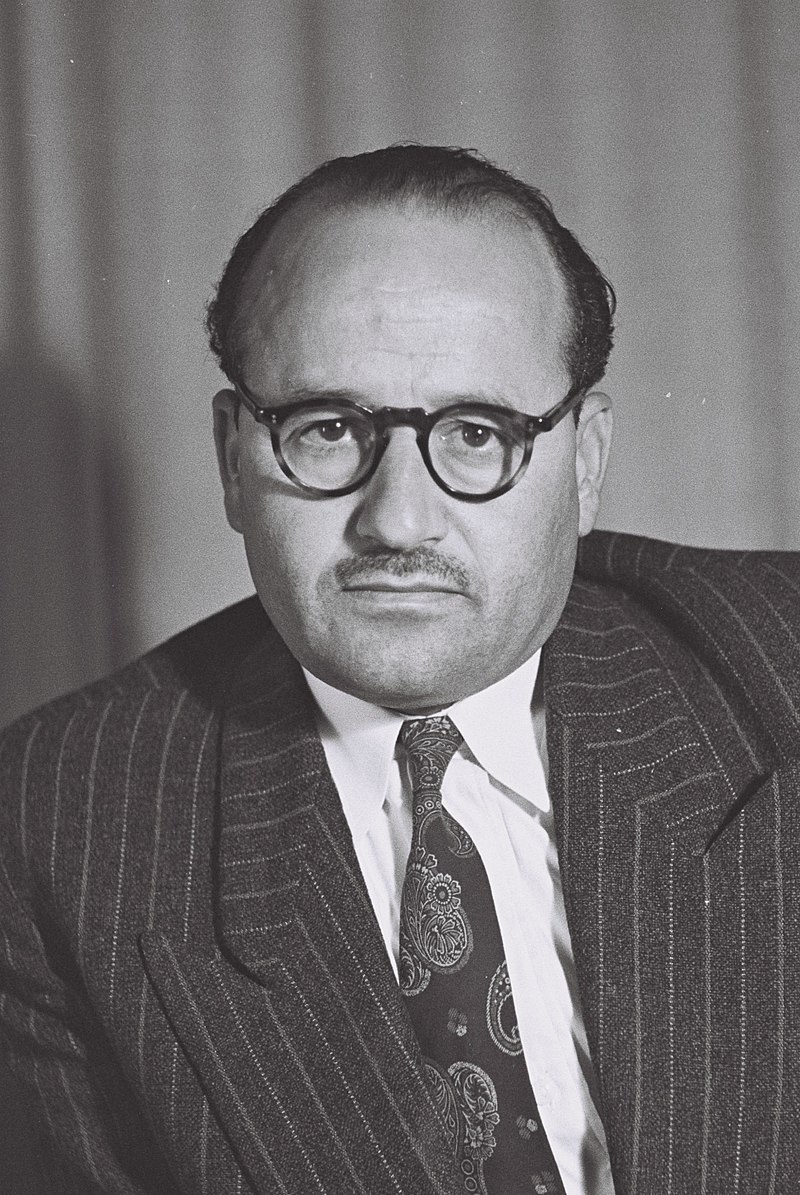
In his office in Nazareth Illit, Mayor Mordecai Allon told me that residents of Arab Nazareth and nearby villages had been driving up the hill since the war began to volunteer their services to the municipality. Jewish-Arab relations had never been better, he said. He urged me to visit “Seif,” his counterpart in Arab Nazareth, Mayor Seif e-Din Zouabi. He telephoned him to say that a reporter would soon be down to see him. The two chatted amiably, like old friends.
Zouabi told me that he and Mayor Allon had spoken on the phone to each other at least twice a day since the war began. On the second day of the war, Zouabi held a rally in the Arab city “to express support for the state.” Six hundred residents turned up.
The rally was clearly expedient politically in the charged circumstances — Israel was at war with Arab states and the authorities were closely watching the reaction of Arab Israelis. But Zouabi offered an insight that sounded more like empathy than expedience. “Arab Israelis appreciate that the Jews have sent their children to war,” he said, “while we sit home at night and count our children.”
Emotional Intelligence

by Lord Rabbi Jonathan Sacks
In March 2015 I had a public conversation at Yale with the University’s President Peter Salovey. The occasion was quite an emotional one. It celebrated the sixtieth anniversary of the Marshall Scholarships, created by the British parliament as a way of expressing thanks to the United States for the Marshall Plan, that helped Western Europe rebuild its economies after the Second World War. The scholarships fund outstanding young Americans to study at any university in the United Kingdom. So the gathering that evening was about the links between Britain and the United States, and the role of universities in cultivating that generosity of spirit, epitomised by the Marshall Plan, that understands the need to build peace, not just wage war.
But it had another emotional resonance. Yale is one the world’s great universities. Yet there was a time, between the 1920s and 1960s, when it had a reputation for being guarded about, even quietly hostile to, the presence of Jews among its students and staff.[1] Happily that has not been the case since 1960 when its President, A. Whitney Griswold, issued a directive that religion should play no role in the admissions process. Today it is warmly welcoming to people of all faiths and ethnicities. Noting that fact, the President pointed out that not only was Yale that afternoon hosting a rabbi, but he too – Salovey – was Jewish and the descendant of a great rabbinic dynasty. Salovey is an Anglicisation of the name Soloveitchik.
Thinking back to that occasion, I wondered whether there was a more than merely family connection between the university president and his great distant relative, Rabbi Joseph Soloveitchik, the man known to generations of his students at Yeshiva University as simply, “The Rav.” Was there an intellectual and spiritual link also, however oblique?
There is, and it is significant. Peter Salovey’s great contribution to the thought of our time is the concept he formulated together with John Mayer in a landmark 1989 article,[2] namely emotional intelligence – popularised in 1995 by Daniel Goleman’s best-selling book of the same title.
For many decades, IQ, or intelligence quotient, focused attention on a set of cognitive and reasoning tests as the primary measure of intelligence, itself considered as the best indicator of ability as, for example, a military officer. It took another brilliant Jewish psychologist of our time, Howard Gardner (of Harvard), to break this paradigm and argue for the idea of multiple intelligences.[3] Solving puzzles is not the only skill that matters.
What Salovey and Mayer did was to show that our ability to understand and respond to not only our own emotions but also those of others is an essential element of success in many fields, indeed of human interaction in general. There are fundamental elements of our humanity that have to do with the way we feel, not just the way we think. Even more importantly, we need to understand how other people feel – the gift of empathy – if we are to form a meaningful bond with them. That is what the Torah is referring to when it says, “Do not oppress a stranger because you know what it feels like to be a stranger” (Ex. 23:9).
Emotions matter. They guide our choices. They move us to action. Intellect alone cannot do this. It has been a failing of intellectuals throughout history to believe that all we need to do is to think straight and we will act well. It isn’t so. Without a capacity for sympathy and empathy, we become more like a computer than a human being, and that is fraught with danger.
It was precisely this point – the need for emotional intelligence – about which Rabbi Soloveitchik spoke in one of his most moving addresses, ‘A Tribute to the Rebbetzin of Talne.’[4] People, he said, are mistaken when they think there is only one Mesorah, one Jewish tradition handed on through the generations. In fact, he said, there are two: one handed down by fathers, the other by mothers. He quoted the famous verse from Proverbs 1:8, “Listen, my son, to the instruction of your father (mussar avikha), and do not forsake the teaching of your mother (torat imekha).” These are two distinct but interwoven strands of the religious personality.
From a father, he said, we learn how to read a text, comprehend, analyse, conceptualise, classify, infer and apply. We also learn how to act: what to do and what not to do. The father-tradition is “an intellectual-moral one.” Turning to “the teaching of your mother,” Soloveitchik became personal, speaking of what he learned from his own mother. From her, he said:
I learned that Judaism expresses itself not only in formal compliance with the law but also in a living experience. She taught me that there is a flavour, a scent and warmth to mitzvot. I learned from her the most important thing in life – to feel the presence of the Almighty and the gentle pressure of His hand resting upon my frail shoulders. Without her teachings, which quite often were transmitted to me in silence, I would have grown up a soulless being, dry and insensitive.[5]
To put it in other words: Torat imekha is about emotional intelligence. I have long felt that alongside Rabbi Soloveitchik’s great essay, Halakhic Man, there was another one he might have written called Aggadic Woman. Halakhah is an intellectual-moral enterprise. But aggadah, the non-halakhic dimension of rabbinic Judaism, is directed to the broader aspects of what it is to be a Jew. It is written in narrative rather than law. It invites us to enter the minds and hearts of our spiritual forebears, their experiences and dilemmas, their achievements and their pain. It is the emotional dimension of the life of faith.
Speaking personally, I am disinclined to think of this in terms of a male-female dichotomy.[6] We are all called on to develop both sensibilities. But they are radically different. Halakhah is part of Torat Cohanim, Judaism’s priestly voice. In the Torah, its key verbs are le-havdil, to distinguish/analyse/categorise, and le-horot, to instruct/guide/issue a ruling. But in Judaism there is also a prophetic voice. The key words for the prophet are tzedek u-mishpat, righteousness and justice, and hessed ve-rahamim, kindness and compassion. These are about I-Thou relationships, between humans, and between us and God.
The priest thinks in terms of universal rules that are eternally valid. The prophet is attuned to the particularities of a given situation and the relationships between those involved. The prophet has emotional intelligence. He or she (there were, of course, women prophets: Sarah, Miriam, Deborah, Hannah, Abigail, Huldah and Esther) reads the mood of the moment and how it relates to longstanding relationships. The prophet hears the silent cry of the oppressed, and the incipient anger of Heaven. Without the law of the priest, Judaism would have no structure or continuity. But without the emotional intelligence of the prophet, it would become, as Rav Soloveitchik said, soulless, dry and insensitive.
Which brings us to our parsha. In Ha’azinu, Moses does the unexpected but necessary thing. He teaches the Israelites a song. He moves from prose to poetry, from speech to music, from law to literature, from plain speech to vivid metaphor:
Listen, heavens, and I will speak;
And let the earth hear the words of my mouth.
May my teaching fall like rain,
My speech flow down like dew;
Like gentle rain on tender plants,
Like showers on the grass. (Deut. 32:1-2)
Why? Because at the very end of his life, the greatest of all the prophets turned to emotional intelligence, knowing that unless he did so, his teachings might enter the minds of the Israelites but not their hearts, their passions, their emotive DNA. It is feelings that move us to act, give us the energy to aspire, and fuel our ability to hand on our commitments to those who come after us.
Without the prophetic passion of an Amos, a Hosea, an Isaiah, a Jeremiah, without the music of the Psalms and the songs of the Levites in the Temple, Judaism would have been a plant without water or sunlight; it would have withered and died. Intellect alone does not inspire in us the passion to change the world. To do that you have to take thought and turn it into song. That is Ha’azinu, Moses’ great hymn to God’s love for His people and his role in ensuring, as Martin Luther King put it, that “the arc of the moral universe is long but it bends towards justice.” In Ha’azinu, the man of intellect and moral courage becomes the figure of emotional intelligence, allowing himself to be, in Judah Halevi’s lovely image, the harp for God’s song.
This is a life-changing idea: If you want to change lives, speak to people’s feelings, not just to their minds. Enter their fears and calm them. Understand their anxieties and allay them. Kindle their hopes and instruct them. Raise their sights and enlarge them. Humans are more than algorithms. We are emotion-driven beings.
Speak from the heart to the heart, and mind and deed will follow.
Shabbat Shalom.
NOTES
[1] Dan A. Oren, Joining the Club: A History of Jews and Yale, Yale University Press, 1988.
[2] Salovey, P., & Mayer, J. D. (1989). Emotional intelligence. Imagination, Cognition and Personality, 9(3), 185-211.
[3] Howard Gardner, Frames of Mind: the theory of multiple intelligences, New York, Basic Books, 1983.
[4] Joseph B. Soloveitchik, ‘A Tribute to the Rebbetzin of Talne,’ Tradition, 17:2, 1978, 73-83.
[5] Ibid. 77.
[6] There are, to be sure, serious thinkers who have made just this claim, about the superior emotional intelligence of women. See Steven Pinker, The Blank Slate, Allen Lane, 2002; Simon Baron Cohen, The Essential Difference, Penguin, 2004. See also Carol Gilligan’s classic, In A Different Voice, Harvard University Press, 1982.
As taken from, http://rabbisacks.org/emotional-intelligence-haazinu-5779/
Simchat Torah Technology and the Outdated Torah Scroll
by Rabbi Dr. Nathan Lopes Cardozo
We will soon be celebrating Simchat Torah, and Jews throughout the world will dance with Sifrei Torah in their synagogues, community centers, university campuses, and even in the streets. This is remarkable for many reasons. We Jews treat our Torah scrolls as if they are human. We hold them close, kiss them, dance with them, dress them in the most beautiful garb, and build magnificent structures—the heichal or aron hakodesh—to house them. So great is our love for these scrolls that when they are too old and worn to be used, we bury them in a cemetery, similar to the way human beings are buried.
This, however, is most strange. The scrolls that we carry in our arms do not at all fit the times in which we live. They are completely outdated.
We live in a world of sophisticated technology. We walk on the moon, travel through space, communicate via satellite, and make use of the Internet – all without batting an eye. Physicians transplant people’s hearts, and replace or repair other parts of the human body with the greatest of ease. Any time now we will witness more scientific breakthroughs that will utterly surprise us, and before we know it, even more amazing inventions will usher us into a world we never dreamed was possible. Everything is moving and changing so rapidly that the term “speed” no longer has any relevance.
Yet here we are, dancing with a scroll that is totally oblivious to it all. The text in this archaic scroll hasn’t changed since the day Moshe received it at Mount Sinai. Furthermore, even the manner in which the Torah scroll is written has not been altered. It is still the human hand that must write the text. No word processor can take over. The quill has not been replaced, and nothing dramatic has happened to the formula used to produce the special ink. The parchment, as well, is prepared in the very same way as it was in the days of the prophets. If someone looked at the scroll we carry in our hands, and didn’t know better, they would think we had discovered it in a cave where people thousands of years ago used to preserve their holy texts, such as the Dead Sea scrolls.
Jewish law always encourages integrating the latest scientific knowledge into our lives and has no problem with the newest developments in treating infertility, flying a spacecraft, and using technical devices to make it easier to observe Shabbat. Yet, when it comes to the writing of a Sefer Torah, no technological improvements are appreciated. They are basically rejected.[1]
Ours is a future-orientated religion. We are not afraid of the latest technologies because they allow us to fulfill, in ways unimagined by our forefathers, the divine mandate to cure diseases, create more pleasant ways to live our lives, and make the world a better place. All this is beautifully expressed by our Sages, who direct us to become partners with God in the work of creation. But the very text that demands this does not allow for any changes in its content and bars us from making use of the latest technological devices when it comes down to the physical preparation and writing of this same text!
What is the message conveyed by this paradox?
While living in a world that is constantly in a state of flux and where matters can change overnight, there must be a place of stability where we can take refuge. We need unshakeable foundations that won’t shift like quicksand. Without such footing we would be lost and dangerously overwhelmed by the very technology we have created. While we benefit from all these new inventions, we also pay a heavy price and become the victims of great confusion. Technology and science often create moral problems that overwhelm us. We then begin to wonder whether it would be better to reject our moral standards in order to accommodate all the new possibilities that have opened up. Though many of us know this will only lead to more problems, others are calling for such radical steps, thinking it will bring improvement.
We need certainty but can no longer find it. The situation has become so critical that we realize we have reached a place where our human identity is at stake, unlike our forefathers who had to deal primarily with problems related to ideology.
Looking at and taking notice of a Sefer Torah is therefore of great value. Here is an item that has not changed an iota. Its physical nature attests to its stability. It is the only thing in the world that would not give in to innovation. Its text informs us that while things indeed need to evolve and become more sophisticated, the basic moral positions in the Torah are not to be altered, and its physical representation as an “old-fashioned scroll” sends us that message. It does not want to accommodate everything, nor does it even want to accommodate itself. It is beyond time and space and hence disconnects itself from the so-called new developments that the passage of time always demands. It wants to remain itself, on its own terms, and therefore offers us a haven of stability and genuine identity in a stormy world. In that way, it reminds us of eternity, of another world in which enduring standards prevail and where there is tranquility, something we all long for.
A Sefer Torah teaches us that not everything old is necessarily old-fashioned. Making use of the word processor has in many ways led to depersonalization in our lives; running our world by remote control has not been good for our souls; and walking on the moon has not helped us to know our next-door neighbor any better. On the contrary, technological progress has robbed us of our own humanness.
It is therefore most meaningful that one item has maintained its constancy. It carries a text that has had greater influence in the world than any other we know of. It has changed the universe as nothing else has; it encourages people to move, to discover, and to develop. But it is written on parchment, by the hand of a person, holding a quill, as if to say: Be yourself. Don’t get run over by the need for progress.
Notes
[1] Although there are some slight changes in the way we produce all these components today, sometimes making things a little easier, basically the formula remains the same. In Ohr Yitzchak, the collection of responsa by Rabbi Yitzchak Abadi of Jerusalem, on Yoreh De’ah, siman 54, the author suggests ways in which a Sefer Torah can be written without the scribe actually writing the letters, making use of the latest technology. This suggestion has not been accepted by the vast majority of halachic authorities. I would add that it is not in the spirit of Judaism, nor is it what a Sefer Torah should stand for, ideologically. This matter indeed goes to the very root of the difficult question as to what extent ideology can play a role in halachic issues – a long and complex topic beyond the scope of this essay.
As taken from, https://mailchi.mp/cardozoacademy/ttp-1352709?e=ea5f46c325
New Eichmann Film Puts the Lie to Hannah Arendt’s ‘Banality of Evil’
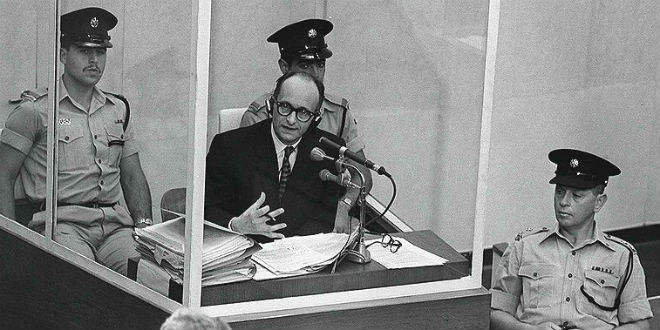
A photo taken during the trial of Adolf Eichmann.
 by Alan Dershowitz
One of the most notorious lines — and lies — that grew out of the trial of Adolph Eichmann for his important role in the Holocaust was what Hannah Arendt called the “Banality of Evil.” Arendt was assigned to report on the 1961 trial of Eichmann in Jerusalem, but according to contemporaries, she rarely attended the trial itself. She came to Jerusalem having made up her mind in advance that Eichmann in particular and others involved in the evils of the Holocaust were ordinary banal functionaries. She reported on the trial with an agenda. It was not necessary for her to actually observe and listen to Eichmann because to do so would undercut her thesis. So instead she wrote a mendacious screed in which she constructed a stick-figure caricature of one of the most significant perpetrators of the Holocaust.
I use the word mendacious deliberately, because Arendt knew better. One of Hitler’s key supporters was Professor Martin Heidegger, perhaps the most influential philosopher of his day. Arendt was his student and lover. After the war she tried desperately to rehabilitate him. He was anything but banal. Nor were Göring, Goebbels, Himmler, Hitler, and the numerous doctors and lawyers who were tried at Nuremberg. Neither were the university students who began by burning Jewish books and ended by burning Jewish children. The perpetrators of the Holocaust — from those who organized it in Berlin to those who carried it out in the death camps and killing fields — included some of the most brilliant young men and women in the country. Many left university to participate in the “final solution” and then returned to highly prestigious jobs in post-war Germany.
Adolph Eichmann was anything but banal, as a perusal of the trial transcript reveals. In the film “Operation Finale,” he is played by Ben Kingsley. Although the film takes Hollywood liberties — a romance between a beautiful doctor who in reality was a man and the film’s Israeli hero — Kingsley’s fictional portrayal of Eichmann is far more realistic than the allegedly non-fiction account by Arendt.
The late Professor Telford Taylor — who was my teacher, mentor, colleague, and friend — had been the chief prosecutor at the Second Nuremburg Trials. He was invited to report on the Eichmann trial as well. He invited me along as his assistant and translator, but I had just been elected editor in chief at the Yale Law Journal and could not accept his offer — a decision I have long regretted. When he returned, he gave me his account of the trial, which varied enormously from that of Hannah Arendt. Where she saw banality, he saw calculation, manipulation, and shrewdness. These characteristics come through far more clearly in the film than in Arendt’s deeply flawed account. In the film we see a highly manipulative, shrewd judge of character who seeks to use his psychological insights to his advantage.
Nor was Arendt’s book Eichmann in Jerusalem: A Report on the Banality of Evil, the only effort by Germans to attribute banality and ignorance to the perpetrators of the Holocaust. In Bernhard Schlink’s award winning book The Reader, turned into a critically acclaimed film staring Kate Winslet, a woman who actively participated in the mass murder of Jews is presented as embarrassed by her illiteracy. Readers and viewers come away believing that she may have been more typical of hands-on perpetrators than the SS and Einsatzgruppen.
Deliberately distorting the history of the Holocaust — whether by denial, minimization, unfair comparisons, or false characterizations of the perpetrators — is a moral and literary sin. Arendt is a sinner who placed her ideological agenda above the truth. To be sure, there are untruths as well in “Operation Finale,” but they are different in kind rather than degree. Some of the drama and chase scenes are contrived, but what else can be expected of Hollywood. What is important is that Eichmann is presented in his multifaceted complexity, in the manner in which Shakespeare presented Iago, Lady Macbeth, and many of his other evil villains — not as banal, but as brilliantly evil.
It is essential to the memory of the victims of the Shoah, as well as to future efforts to prevent recurrences of genocide, that we not engage in ideologically driven and historically false oversimplifications such as “the banality of evil.” That mendacious and dangerous phrase should be struck from the historical vocabulary of the Holocaust and the trial of Eichmann, lest we look in the future for banality and miss the brilliance of those who would repeat Eichmann’s crimes.
Alan M. Dershowitz is the Felix Frankfurter Professor of Law Emeritus at Harvard Law School and author of The Case Against Impeaching Trump, Skyhorse Publishing, 2018.
Yom Kipur y los judíos ocultos

Yom Kipur y los judíos ocultos
 Silvia Schnessel
Enlace Judío México.- Un inmenso cartel rojo. Debería haber sabido que eso significaba malas noticias. El museo judío de Córdoba Casa de Sefarad hacía alardes de un gran cartel rojo sobre las fiestas celebradas (o apenas celebradas) por los Marranos.
SHARON KATZ
El letrero explicaba que, a medida que la Edad de las Tinieblas avanzaba hacia los judíos ocultos de España, su observancia de las fiestas simplemente se desvanecía con sus recuerdos. Fingiendo ser cristianos fieles, los conversos / criptojudíos / marranos / anusim / etc. eran vistos con desdén por muchos judíos y con sospecha por la iglesia católica.
Cada año que pasaba, los conversos mantenían cada vez menos mitzvot, y limitadas incluso a las que se podía practicar en absoluta privacidad. Angustioso. Como en otros períodos de la historia judía, con frecuencia sólo las mujeres eran capaces de mantener la llama ardiendo (literalmente).
Durante los cuatrocientos años de la Inquisición, los conversos olvidaron mayormente el hebreo, el aprendizaje de la Torá, las oraciones y las costumbres que usualmente se celebraban públicamente. Sin embargo, Shabat se convirtió en una reunión social del viernes por la noche seguido de oraciones, Purim se atesoró como “Santa Esterica”, Pesaj se reprogramó como “El Cordero de Pascua” para coincidir con la fiesta de Pascua, y Yom Kipur siguió siendo “El Gran Día”.
Yom Kipur era la fiesta más importante de los conversos. Lo llamaban “El Gran Día” con “El Ayuno del Perdón”, y lo celebraban el 10 de septiembre, en lugar del 10 de Tishrei, cuando todos los judíos sospechosos eran vistos como un halcón. Yom Kipur fue el día que los mantuvo en marcha durante el resto del año.
Aprendí estos hechos hace dos semanas en un viaje de investigación a España para un próximo musical que estoy co-escribiendo con el talentoso Avital Macales. “OCULTOS – Los Judíos Secretos de España” sigue a una fiel familia judía en Andalucía, que sufre las consecuencias de la infame Inquisición. Teníamos tantas preguntas sobre la vida de los conversos, la inquisición llena de horror y la insistencia de tantos en permanecer en España a riesgo de sus vidas, que decidimos explorar estas preguntas de cerca. Participó en nuestra aventura española el productor asociado de OCULTOS Bati Katz.
En un viaje de torbellino, visitamos las Juderías (los barrios judíos), los museos judíos existentes, un museo de la Inquisición que apenas pudimos completar, y los palacios españoles y moriscos. Buscamos los escasos signos de herencia judía y tratamos de absorber las montañas de Sierra Nevada en nuestras almas. Muchas de nuestras preguntas quedaron sin respuesta en España, pero llegamos a casa con un respeto por aquellos judíos que fueron obligados a vivir una mentira, y que a menudo murieron por la verdad.
KOL NIDRE
La oración esencial para los conversos era el preámbulo de la fiesta, Kol Nidre. Bueno, no es ninguna sorpresa, Kol Nidre es una oración crítica para los judíos de todo el mundo.
Mi hijo el rabino me dijo que Kol Nidre fue escrito para los judíos conversos. Convertidos forzosamente al cristianismo o voluntariamente para salvarse de los horrores de la Inquisición, buscaron un perdón Divino por los votos y actos cristianos que emprendieron. Kol Nidre, sentían, limpiaba sus almas.
Ashley Perry, jefe de la organización Reconectar, que pretende reconectar a los descendientes de las comunidades judías española y portuguesa y el mundo judío, añadió: “En el Yom Kipur Machzor de los judíos españoles y portugueses, los Sefardíes occidentales, (por nuestros hermanos y hermanas en las cárceles de La Inquisición) … mientras que la Inquisición no puede ser físicamente activa, su efecto lleva a cabo en una oración de Mi Sheberach inmediatamente después de Kol Nidre: “A todos nossos Irmaos, prezos pela Inquisiçao” hoy en día con millones … todavía desconectados de su pueblo”.
MISTERIO EN LOS ORÍGENES DE KOL NIDRE
Mi hijo y generaciones de rabinos creían sinceramente que Kol Nidre fue creado en respuesta a la difícil situación de los conversos y su necesidad de anular sus votos de conversión. Sin embargo, sus verdaderos orígenes son un misterio.
Algunos creen que Kol Nidre fue introducido en 613 DC cuando los visigodos obligaron a 90,000 judíos españoles a convertirse al cristianismo. Algunos apuntan al período de conversiones forzadas al Islam por los Almohades españoles de 1146. Otros dicen que Kol Nidre fue la respuesta al dilema de los judíos de la Inquisición, a partir de 1478.
Sin embargo, otros niegan completamente cualquier conexión española y sostienen que los orígenes de Kol Nidre se encuentran en la Babilonia de los siglos VI y VII.
Quizás nunca descubriremos quién insertó la declaración de Kol Nidre como prefacio al servicio de Yom Kippur. Sin embargo, basta leer las palabras lentamente por un momento, casi podemos imaginar a los judíos conversos entonando estos enunciados con lágrimas en los ojos. Y si Kol Nidre fue escrito con los conversos de España en mente o cualquier otro judío amenazado de cualquier siglo o país, realmente no importa. Kol Nidre permitió a los judíos atormentados o judíos ocultos librarse de la carga de una falsa fe, al menos aquella noche.
“Con la aprobación del Omnipresente y con la aprobación de la congregación; en la convocatoria de la Corte de arriba y en la convocación de la Corte de abajo, sancionamos la oración con los transgresores. Kol Nidre, todos los votos, prohibiciones, juramentos … ahora los lamentamos … Nuestros votos no serán votos válidos; nuestras prohibiciones no serán prohibiciones válidas; y nuestros juramentos no serán juramentos válidos”.
Gmar jatimá tová.
Fuente: Jewish Press – Traducción: Silvia Schnessel – Reproducción autorizada con la mención: ©EnlaceJudíoMéxico
Según tomado de, https://www.enlacejudio.com/2017/09/28/yom-kipur-los-judios-ocultos/
Yom Kipur, el Sábado de Sábados

AGENCIA DE NOTICIAS ENLACE JUDIO MÉXICO
La celebración de Yom Kipur acontece diez días después de Rosh Hashaná. Llamado el Sábado de los Sábados, completa los cuarenta días dedicados al examen de conciencia y al balance del alma.
Su origen se remonta a los tiempos bíblicos, en los días en que existía el Templo en Jerusalém. Su origen está en la Torá: Levítico XXIII 26-27-28 (VAIKRÁ) “Ciertamente el día décimo de este séptimo mes (Tishrei) será el día de las expiaciones, convocación santa os será y afligiréis vuestras almas y presentareis ofrenda a D- s. Y no habréis de hacer ninguna clase de obra en este mismo día especial, porque es día de expiaciones por vosotros delante del señor, vuestro D- s”. Antes de estas palabras en Levítico XVI 30 de (VAIKRÁ) ya habla la Torá del concepto de purificación en Yom Kipur: “Porque en este día haréis para ser purificados y de todos vuestro pecados quedaréis puros delante de D- s.”
Yom Kipur es un día de perdón y expiación de los pecados entre el ser humano y D- s y entre el ser humano y el prójimo. En Rosh Hashaná los seres humanos son juzgados por sus actos, pero el veredicto del juicio es fijado en Yom Kipur.
La conducta pasada del hombre se pesa sobre una balanza y D- s registra y sella su destino en el “Libro de la Vida”.
Es frecuente notar que la gente considera a Yom Kipur como un momento triste. Esta imagen es errónea y debe ser modificada. Al comienzo de Yom Kipur recitamos la bendición: “Shehejeianu”, agradeciendo el hecho de haber podido llegar en vida a este momento decisivo.
Costumbres
Yom Kipur, como toda festividad judía, comienza en la víspera. Este día se debe guardar ayuno completo. No se come ni se bebe nada y está prohibido bañarse, untarse aceites y perfumes, tener contacto sexual y trabajar. Es un día de plegarias, arrepentimiento y penitencia. Según la tradición, se logra el perdón a través de la plegaria verdadera y auténtica, el arrepentimiento y la tzdaká. Las plegarias que se encuentran en el Majzor (libro especial para Iamim Noraim, Rosh Hashaná y Yom Kipur) tratan de penitencia y arrepentimiento. En el hogar se encienden las velas festivas y también una vela de recordación a los difuntos, llamada NER NESHAMA. El padre bendice a los hijos y se parte rumbo al templo.
Una acción fundamental de la víspera es la de pedir perdón a aquellos a los que se le ha hecho algún daño. Esta mitzvá refleja el interés de la religión judía no sólo por la relación del hombre con H’ sino con los otros hombres.
En la tradición judía los atuendos blancos son símbolo de pureza y humildad. Cuando el Cohen Hagadol- Sumo Sacerdote- entraba al Santo de los Santos en los días reverenciales, en lugar de usar sus vestimentas típicas doradas, con campanitas, vestía simplemente atuendos de lino blanco.
El uso de calzado de cuero era un lujo en los tiempos antiguos y por eso se hizo costumbre calzar zapatos de lona o goma, simbolizando el día de aflicción.
El comer y el beber y demás placeres corporales nos incitan a continuar en la persecución de lo material y evitan que el alma procure la verdad y no es digno presentarse al juicio delante de D-s comido y bebido. Es por eso que el hombre debe en este día fortificar la fuerza de su alma para que ella sea digna de recibir la expiación de H’.
Antes del anochecer, en la sinagoga,dice el Kol Nidré: declaración solemne de anulación de las promesas incumplidas e imposibles de cumplir. Esta es la primer plegaria con la que se inicia Yom Kipur. Se abre el arca, se sacan todos los rollos de Torá, que serán portados por notables de la congregación y de pie se reza con antigua melodía esta plegaria, cuyo origen se remonta a los primeros siglos de la Edad Media.
Kol Nidré se dice tres veces. Está escrita en arameo y su significado es que todos los votos y las promesas que el judío ha hecho durante el año y no los ha podido cumplir, solicita a D- s que le sean perdonados.
Por supuesto, de esto se excluyen las obligaciones económicas asumidas, que nada tienen que ver con este pedido de perdón. El contenido de las plegarias, muchas de ellas escritas por orden alfabético como Ashamnu, tiene como eje el reconocimiento de los errores cometidos los pecados y las transgresiones y el pedido a D- s clemente y piadoso que las perdone.
En Yom Kipur hay un servicio especial de recordación (IZKOR), donde se recuerda a los familiares fallecidos, a las personas que dieron su vida por el pueblo judío y su fe y a los muertos en atentados u otros actos criminales. A partir de 1973 incluye a los caídos en la guerra de 1 Kipur en Israel, cuando el Estado judío fue atacado en el día más sagrado del año.
El último servicio, Nehilá, es el cierre del Juicio Divino simbolizado por el cierre de las puertas del Arca. Las puertas habían sido abiertas en Rosh Hashaná para exponer los “errores” personales. En el momento en que se cierran el judío debe haber recibido el perdón, las puertas no volverán a abrirse hasta el año próximo.
Este día solemne culmina en el templo después de la Nehilá, cuando se dice siete veces “A-onai Hu Haeloim” (A-onai es el D- s) y se toca el Shofar (un solo y largo sonido llamado TEKIÁ GUEDOLÁ). Se estila también en los Iamim Noraim visitar las tumbas de familiares y de hombres piadosos, para que esto ablande nuestro corazón para hacer TESHUVÁ (arrepentimiento).
Se concluye el ayuno con una comida que celebra con alegría el haber sido perdonado.
En Yom Kipur terminan los diez días de penitencia y arrepentimiento. En la dimensión divina, alcanzará con el pedido de perdón a D- s, pero en la dimensión humana esto no alcanza, hay que pedir perdón a las personas que hemos ofendido o despreciado. Nuestros semejantes deben escuchar el perdón de nosotros, sincera y verdaderamente. Hay que lograr el perdón de aquel que hemos ofendido; sólo de esa manera seremos perdonados por D- s. a atmósfera y la liturgia de Yom Kipur están caracterizadas por la solemnidad. Los rezos culminan después de la caída de la noche con la proclamación de fe judía con el sonido de una Tekiá prolongada en el shofar y con el saludo de “¡El año próximo en la Jerusalem Reconstruida!”
Se culmina el día con regocijo, ya que el judío puede confiar en que ha obtenido el perdón. El saludo tradicional es “guemar tov” (un buen fin), y tras finalizar el servicio religioso en la sinagoga, cada judío debería dirigirse a su hogar para romper su ayuno y para iniciar la construcción de la sucá, pasando de una mitzvá a otra ininterrumpidamente.
¿No es contradictorio que la Torá diga que en Yom Hakipurim se expían todos nuestros pecados, y que luego prescriba que hay que hacer todos los años Yom Kipur?
Lo que la Torá quiere enseñarnos es que estamos en constante cambio, no existe la quietud en lo que a humanidad se refiere. O progresamos (y somos moralmente, culturalmente, socialmente, etc.), o regresamos a etapas más primitivas o menos evolucionadas.
Cada año tenemos la oportunidad de enfrentarnos a nosotros mismos y de compararnos con lo que son nuestros ideales y poder concluir: avancé o retrocedí. La Torá nos brinda el regalo de que cada año podemos girar para ver a nuestras espaldas y luego continuar avanzando.
Fuente: Sefarad-asturias.org
Según tomado de, https://www.enlacejudio.com/2014/10/02/yom-kipur-el-sabado-de-sabados/
The Issues that Divide Us: Are the Jews a Chosen Nation? Part II

In my last post, I explained what the idea of the Jews being a chosen people means to me, guided by the biblical texts and later Jewish philosophers. In this post, I want to talk about how Catholics understand Jewish chosenness.
In broad strokes, for over a thousand years, the universally accepted Christian doctrine was that the Jewish people, while once chosen, lost that special status after rejecting Jesus. Since then, Jews have been exiled and cursed and forfeited their covenant. In their stead, Christians have become the “new Israel.” Galatians 3:28 puts it this way:
“If you belong to Christ, then you are Abraham’s seed, and heirs according to the promise.”
In other words, after the coming of Christ, believing in Jesus became the new definition of being a Jew. So it follows that the Jews who continued to follow Old Testament law, rejecting Jesus, were replaced by the Church in regards to being the chosen people of God.
In a classic formulation, the early church father Melito (writing in the 200s C.E.) wrote that “the law was fulfilled when the gospel was brought to light, and the people (of Israel) lost their significance when the church came on the scene.”
This type of language is found all over the writings of the earliest church fathers like Melito and St. Augustine, medieval theologians like St. Thomas Aquinas), and popes of every century.
Fast forward to 1904 and Pope Pius IX sounded pretty similar to Melito when he responded to Theodore Herzl’s request for support of a future Jewish state in Israel by saying:
“The Jews have not recognized our Lord, therefore we cannot recognize the Jewish people.”
Thus, for about 1,700 years, the de facto position of Catholics and Protestants was that the Jews are no longer a chosen people. In their defense, it has a certain logic to it: if following the laws of the Old Testament no longer provides salvation —“a person is not justified by the works of the law, but by faith in Jesus Christ” (Galatians 2:16)—then the people of that Old Covenant are no longer special by virtue of following that law.
Put differently, If the old law is out, then the old people must be out too. Makes sense, right?
We’ll get back to that argument later.

Historically, however, the Catholic Church completely reversed herself on this issue in 1965, with the release of Nostra Aetate.
In that pivotal document, Catholics began to inch closer to accepting the idea that the Jews have in fact remained the chosen people after all, even after they rejected Jesus.
One revealing line from Nostra Aetate signals this shift:
“Nevertheless, God holds the Jews most dear for the sake of their Fathers; He does not repent of the gifts He makes or of the calls He issues-such is the witness of the Apostle.”
This line paraphrases an important verse from the New Testament about the eternal nature of the Jewish people and their covenant. Paul says about the Jews:
“As regards the gospel they are enemies of God, for your sake; but as regards election they are beloved for the sake of their forefathers. For the gifts and the call of God are irrevocable (Romans 11:28-29).”
In other words, because God chose the Jews way back when, He can never take that choice back, and so they remain eternally chosen.
Another line from Paul’s Letter to the Romans is even more explicit about Jewish chosenness:
“Theirs is the sonship and the glory and the covenants and the law and the worship and the promises… (Romans 9:4-5).”So the Church changed her mind about Jewish chosenness, but her “new” viewpoint is actually found in Paul’s Letters; Nostra Aetate was simply returning to scripture! And this old-new, scripturally inspired position asserts that the Jews remain chosen by God, their covenant with Him being eternal.
Pope John Paul II said this succinctly in an important speech in 1980 addressed to German Jews, calling them the “people of god of the Old Covenant, which has never been revoked.”
Zooming decades ahead to the year 2015, the Pontifical Commission on Religious Relations with the Jews released a document on Catholic Jewish relations. Although it isn’t an “official” church teaching, it contains some remarkable language about the Jews. Here is a critical paragraph:
“The Church is the definitive and unsurpassable locus of the salvific action of God. This however does not mean that Israel as the people of God has been repudiated or has lost its mission (cf. “Nostra aetate”, No.4). The New Covenant for Christians is therefore neither the annulment nor the replacement, but the fulfillment of the promises of the Old Covenant…God entrusted Israel with a unique mission, and He does not bring his mysterious plan of salvation for all peoples (cf. 1 Tim 2:4) to fulfilment without drawing into it his “first-born son” (Ex 4:22).”
Great! The Jews are still the chosen people of God, and even have a unique mission to bring about salvation for the whole world. That sounds pretty in line with the Old Testament covenant and promises.
However, this paragraph also raises a contradiction, which comes about from the logic of replacement theology that I mentioned earlier.
If indeed the Church is the definitive locus of God’s salvation, then how can the Jews still be considered chosen? The “New Covenant” of Jesus is for all peoples, and fulfills Old Testament law by replacing it with grace. Why would God still need a chosen people anymore if “there is neither Jew nor Gentile, neither slave nor free… for you are all one in Christ Jesus (Galatians 3:28)?”
That’s actually such a great question that the Commission throws its hands up and says that the Jewish role in God’s salvation is an “unfathomable divine mystery.” Because indeed, how could a people reject Jesus as savior and STILL be the chosen people with a unique mission from God?
This post will end with that question, because the Catholic Church has not yet arrived at an answer. I’m happy that the Church now acknowledges that the Jews are a people with a special divine purpose. It’s certainly better than Melito saying the Jewish people are a “thing without value!”
But I’m left unsatisfied with how the Church ends up defining the role of the Jews. My last pos showed how the Old Testament sets up Israel as a model nation to educate the world about justice, righteousness, and fearing God. But for Catholics and all Christians who believe that
A. Jesus is “the way and the truth and the life” (John 14:6), and
B. regard Old Testament law as ‘fulfilled’ through Christ,
what use should God have for a people that
A. rejected His Son and
B. continues to follow the Law, which has been replaced by grace?
I don’t know. Maybe Paul had it right all along:
“Oh, the depth of the riches of the wisdom and knowledge of God!
How unsearchable his judgments,
and his paths beyond tracing out!”
(Romans 11:33-34)
By Michael Weiner


 Centro Estudios Judaicos del Sur de PR