RSS

Monthly Archives: March 2018

Qué ocurre después de la muerte

Qué ocurre después de la muerte

Los sorprendentes descubrimientos de un estudio israelí hacen eco del misticismo judío.

por Rav Benjamín Blech

¿Qué nos ocurre al morir? ¿Es la muerte el final o un nuevo comienzo? En el siglo XXI, la fe sigue siendo nuestra única fuente de información sobre el final de la travesía en la tierra. Los hallazgos científicos aún no ofrecen respuestas.

Sin embargo, un fascinante estudio israelí revela parte del misterio. Realizado por investigadores de la Universidad Hadasa de Jerusalem y publicado en el periódico Consciousness and Cognition, el estudio hace eco de los detalles que recibimos a través de la tradición mística judía.

Elizabeth Kubler Ross dedicó su vida al estudio de la muerte y de quienes están a punto de morir. En base a sus observaciones, escribió que en todos los años que estuvo presente en el momento en que la vida se escabulle, lo que más la conmovió fue ver la repentina calma y serenidad que siempre acompaña el paso de un estado al otro. Ella describió la muerte como “salir de un capullo y emerger como mariposa”. Nuestros cuerpos, durante la vida, representan las limitaciones físicas. Sin ellos, podemos por primera vez alcanzar alturas que antes eran inasequibles.

Si bien la Cábala, el misticismo judío, llenó algunos vacíos de nuestro conocimiento con descripciones esotéricas de la muerte y la vida después de ella, la humanidad se enfrentó al misterio de la muerte sin contar con el testimonio personal de ninguna de sus víctimas. Sin importar lo mucho que deseemos penetrar el velo de secreto que bloquea nuestra visión del más allá, reconocemos nuestras limitaciones humanas. La muerte es sólo un viaje de ida que no permite regresar a la tierra para compartir sus secretos con los vivos. Incluso si aceptamos la idea de la supervivencia en otra forma cuando nuestros cuerpos dejan de funcionar, quedamos bloqueados por la carencia de evidencia real, simplemente porque los muertos no pueden hablar.

Pero en los últimos cincuenta años se agregó algo sumamente nuevo a la ecuación. Si bien muchos continúan descartándola por no ser verificable, la vida después de la vida lentamente va ganando terreno entre quienes jamás se identificaron como particularmente religiosos o espirituales. Gracias a los avances en las cada vez más sofisticadas técnicas de resucitación, hubo incontables casos de testimonios de personas que murieron y volvieron para contarlo.

Los profesionales que realizaron un revolucionario trabajo en el área, tales como Elizabeth Kubler Ross y Raymond Moody, acuñaron el nombre ECM, experiencia cercana a la muerte, para describir el fenómeno.

Podemos argumentar (y muchos lo han hecho) que, por definición, quien ahora está vivo jamás ha muerto. Sin embargo, lo que nos permite considerar que quienes vivieron esta clase de experiencias estuvieron más cerca del otro lado es que, clínicamente, estuvieron muertos. Sus cerebros no mostraron ni la más mínima actividad. Sus corazones dejaron de latir. Es imposible que hayan registrado sensaciones, que hayan grabado imágenes ni sonidos. Pero de todas formas, esas personas pudieron recordar lo que ocurrió en los cuartos donde descansaban sus cuerpos, describir quién había entrado y salido después de escuchar que los declararan muertos. Hasta pudieron repetir, con gran detalle, conversaciones que ocurrieron en presencia de sus cuerpos sin vida.

¿Con qué parte de sus cerebros inactivos recordaron? ¿Cómo pudieron ver y escuchar? Sus cuerpos físicos ya no eran capaces de realizar esas tareas. Llama la atención que casi todos los que atravesaron una ECM, tanto si antes eran creyentes, escépticos, agnósticos o ateos, terminaron creyendo firmemente en la existencia de un alma no física que sobrevive la muerte del cuerpo.

La muerte es acompañada por una revisión fundamental de la vida que nos da una perspectiva completa sobre la vida que vivimos.

Rav Jaim David HaLevi, quien fue gran rabino sefaradí de Tel Aviv, en su clásica obra maestra Asé lejá rav, escribió una extensa comparación entre la creencia judía tal como es registrada en el Talmud, el Midrash y las fuentes cabalísticas, y los reportes más recientes de ECM. En su opinión, es muy importante el despertar del mundo secular a una crucial verdad espiritual: la existencia del alma, cuya existencia continua no puede negarse con la muerte del cuerpo físico.

Ahora se descubrió otra parte de la historia. El misticismo judío también enseña que la muerte es acompañada por un importante análisis de la vida. Al acercarnos a una existencia no terrenal, se nos permite mirar hacia atrás y apreciar plenamente tanto nuestros pecados como nuestros logros, nuestros fracasos y nuestros triunfos. Antes de dejar esta tierra, recibimos la oportunidad de reflexionar sobre el significado de nuestra vida pasada y el legado que les transmitimos a quienes dejamos detrás.

Interesantemente, este nuevo estudio del hospital Hadasa, liderado por la Dra. Judith Katz, neuróloga de la Universidad Hadasa de Jerusalem, descubrió que las experiencias de revisión de la vida que acompañan el proceso de la muerte son frecuentes y tienen muchos elementos en común.

Las personas vieron sus vidas como si estuvieran mirando una película, pero el orden de los eventos que recordaron no era cronológico. Un participante dijo:

“No hay una progresión linear, faltan los límites del tiempo… fue como estar en la escena durante siglos. No había una limitación de tiempo/espacio, por lo que esa pregunta también parece imposible de responder. Un momento, mil años… ambos y ninguno. Todo pasó al mismo tiempo, algunas vivencias de mi experiencia cercana a la muerte ocurrían al mismo tiempo que otras, aunque mi mente humana las separa en eventos diferentes”.

La mayoría de los participantes en la investigación de ECM manifestaron una profunda empatía por las personas con las que compartieron momentos importantes en la vida. Un elemento común de las ECM fue la inclusión de vivencias profundamente emocionales, desde la perspectiva de seres cercanos a ellos. Esto es lo que dijo un participante: “Podía ir a cada una de las personas y sentir el dolor que tenían en su vida… se me permitió ver esa parte de ellas y sentir yo mismo lo que ellas sentían”.

Otra persona dijo: “Estaba viendo, sintiendo esas cosas sobre él [mi padre], y él estaba compartiendo conmigo las cosas de su infancia y por qué le resultaron difíciles”.

Quizás la conclusión más importante sea que “todos los entrevistados en el estudio dijeron que después de su ECM, experimentaron un cambio fundamental en su perspectiva respecto a las personas y a los eventos importantes de su vida”.

Los investigadores que registraron sus descubrimientos prefirieron no analizarlos desde una perspectiva espiritual, ni ligarlos a antiguos conocimientos rabínicos sobre el alma ni tampoco a explicaciones religiosas sobre nuestra última travesía. Los científicos no desean que la ciencia se convierta en súbdito de la creencia tradicional. En cambio, intentaron ofrecer otras explicaciones para sus hallazgos: cómo el lóbulo parietal, el temporal y la corteza prefrontal son particularmente vulnerables a la hipoxia y a la pérdida de sangre resultante de las ECM traumáticas.

Por supuesto que eso es posible. Pero en mi opinión, es mucho más probable lo que la sabiduría de nuestra tradición entendió durante miles de años. La muerte, como lo explica el Rabino de Kotzk, “es tan sólo pasar de un cuarto a otro, desde una especie de casucha a un domicilio magnífico en el cielo”. Y, como cortesía final, antes de partir hacia ese viaje Dios nos permite mirar atrás, para ver la película de nuestra vida.

Puede ser que en ese momento nos sintamos repletos de arrepentimiento o de alegría. Quizás, saber esto de antemano sea la mayor inspiración para vivir una vida plena de sentido y propósito.

Según  tomado de, http://www.aishlatino.com/e/f/Que-ocurre-despues-de-la-muerte.html?s=show

 
Leave a comment

Posted by on March 12, 2018 in Uncategorized


The Karaite synagogue of Ramle

The Anan Ben David Synagogue in Ramle is the world center of Karaite Judaism, and the simple grace of the sanctuary speaks volumes about this fascinating sect. The Karaite branch of Judaism regards only the Tanach (“The Old Testament”) as divinely given, while the Oral Law (The Talmud) in their view is merely the work of wise men.

This departure from Rabbinic Judaism led to a schism that has lasted to this day (though who departed from whom is precisely the debate). While the rabbinic sages, over the centuries, have added layers of interpretation, explanation and extrapolation to the commandments, the Karaite reading has simply taken the Torah at face value. In some cases this has made the Karaite version of halacha (Jewish law) more difficult to observe, in some cases easier. For example, the Karaites would never “cook a kid in its mother’s milk,” since the Torah forbids it. A chicken, however, does not make any milk at all. It’s a bird, so according to the Karaite reading, one need not separate it from dairy products, let alone keep an entirely parallel set of plates and cutlery. On the other hand, all of the Shabbat “workarounds” that prove so convenient to Rabbinic Judaism are irrelevant to the Karaite community. There is no fire kept burning, no “Sabbath setting” for the stove, no Sabbath food-warming timers or Sabbath elevators, and certainly no “Shabbos goy.”

Hanukkah, which does not appear in the Tanach, is not celebrated at all. From their perspective, there are 613 commandments in the Bible, and none of them could possibly include lighting a Hanukkah menorah to celebrate an event that occurred after the Bible was written. Therefore, to recite the blessing “He has commanded us to light the Hanukkah candles” (When did He command this? In which biblical text?) would be taking the name of the Lord in vain.

The Karaites wear tzitzit, which are specifically described in the Torah, but do not wear tefillin, which are, in their view, a physical invention to interpret a metaphorical verse. They do not use Aramaic (a language unknown to Moses) in any of their prayers, but women sing and can lead prayers in the synagogue, just as Miriam sang at the Red Sea.

The synagogue has no chairs or furniture. It is completely carpeted, because the bowing and prostrating referred to in the Bible is still practiced during Karaite prayer. Shoes are removed before entering, just as Moses removed his sandals when facing his Creator at the burning bush. To the innocent visitor, the chamber looks like a mosque — a mosque with an ark for Torah scrolls facing Jerusalem, instead of a prayer niche facing Mecca. The Karaites point out that they predate the birth of Islam, so it would be more appropriate to say that a mosque resembles a Karaite synagogue.

Here lies the heart of the matter. According to most accounts, Karaite Judaism split from Rabbinic Judaism in the eighth century, but there seems to be an inherent logical flaw in that version of history. A straightforward reading of the written law without any extra interpretation is how, one imagines, the prophets would have observed the commandments. In a sense, it is those who added extra books (63 tractates of the Talmud, for example, completed in the sixth and seventh century) who were the “splinter group.”

But the splinter group won. There are 40,000 Karaites today and around 15 million rabbinic Jews. The victor writes the history.

The Karaites, who will gladly show you their synagogue and give you a tour of their center in Ramle for a symbolic fee, do not emphasize this point. They might not even be thinking it. But in my view, they offer us an opportunity to consider what Judaism might have looked like had different approaches prevailed. Historical “what-ifs” can be a silly exercise (If the Vikings had stayed in North America, would “Saturday Night Live” be in Norse?) but in this case, there may be a lesson to be learned.

We Jews are guilty of a certain pride regarding other religions. True, we are smaller than Islam, less hip than Buddhism and have produced less art than Christianity. Still, we say to ourselves, we have been around longer, and remained true to our roots. We stuck with the original plan. We kept the faith. The Karaites can make a similar claim with a bit more authority. They are much, much smaller, and have weathered many storms, but they kept the faith, one might say, with even greater consistency. If Moses were brought to our day in some time machine, he would likely recognize more of the Karaite practices than the rabbinic ones.

Through the centuries, Judaism has faced many philosophical junctions, some in crisis, and others in slowly evolving movements. Jewish history sometimes seems like a long series of debates, rifts and forks-in-the-road from the Northern and Southern Kingdoms of the Bible, to the Vilna Gaon and the Baal Shem Tov of the 18th century leading right up to today’s face-off between an entrenched Orthodoxy and its progressive opponents. This millennia-long series of arguments around the Sabbath dinner table of our people is what makes being Jewish so interesting. Centuries from now, someone may be visiting the last Reform congregation (or the last Hasidic shtiebel) and writing a similar article.

I admit that I find the Karaite approach compelling. I also recognize that there are valid counter-arguments. Resistance to change is not, after all, an unassailable virtue. But it is worthy of admiration. It might be a good idea to get to know the Karaite way, while it’s still around.

The Anan Ben David Synagogue (Bill Slott)

As taken from, http://blogs.timesofisrael.com/the-karaite-synagogue-of-ramle/  (Emphasis mine)


Leave a comment

Posted by on March 11, 2018 in Uncategorized


What Does “Yahrzeit” Mean?

Yahrzeit (literally, “year time”) is the Yiddish word for “anniversary,” referring specifically to the anniversary (on the Hebrew calendar) of the date of a person’s passing. Observed from nightfall to nightfall (like all Jewish dates), the yahrtzeit is a special time to remember the departed and do good deeds for the merit of the soul, which ascends higher in heaven on this date.

How Is a Yahrzeit Observed?

  • In times gone by, people would fast on the date of the yahrtzeit, but that practice is rare nowadays.
  • On this day, make an effort to do mitzvahs in memory of the departed. This helps the soul ascend ever higher. The most common (but not the only) mitzvah is to lead the prayers and/or say Kaddish, a prayer of praise to G‑d, in memory of our loved one. Read why this prayer was chosen here. If you can use a little brushing up on the Aramaic words of the Kaddish, go here.
  • Since Scripture compares the soul to a flame, there is a time-honored custom to light a candle on the eve of the yahrtzeit and allow it to burn for the next 24 hours. Long-lasting candles, called yahrzeit candles, can be purchased in the kosher aisle of many North American grocery stories, but any candle (besides those used for non-Jewish religious purposes) is really perfect. Read the reason for this custom here.
  • There is a custom to provide tikkun: food and spirits to be served after morning services on the date of the yahrtzeit. Some people even sponsor a Kiddush, a Shabbat morning reception, on a Shabbat either before or after the yahrtzeit. Read why here.
  • If possible, many people make the effort to visit the gravesites of their relatives on their yahrzeits. Read about when to go and what to do when there.

How to Pronounce Yahrzeit

There are many ways of spelling yahrzeit in English. The most common one, yahrzeit, really does not tell an English reader that the word should be pronounced “YOUR-t-sight,” a cross between “you’re tight” and “your sight.” When someone wants to say that today is the anniversary of the passing of his grandmother, he might say, “I have yahrzeit for my bubby today.”

How Do You Know When a Yahrzeit Is Coming Up?

A yahrzeit follows the Hebrew calendar, so if you are in tune with the cycle of the Jewish holidays it is simple enough. However, since the Jewish dates can drift away from their Gregorian counterparts by as much as a month before bouncing back, this can be challenging for some. The good news is that Chabad.org’s powerful yahrzeit calculator can figure out when you have yahrzeit, and even send you reminders every year.

As taken from, https://www.chabad.org/library/article_cdo/aid/3947456/jewish/What-Does-Yahrzeit-Mean.htm


Leave a comment

Posted by on March 11, 2018 in Uncategorized


Los hombres son de los días de la semana, las mujeres son del Shabat

Los hombres son de los días de la semana, las mujeres son del Shabat

Judaismo, Shabat y la mística femenina.

por Miriam Kosman

Una mujer embarazada, ¿es una o dos personas? Es difícil estar seguro. Es cierto, el corazón del bebé late bajo el de ella, pero la mujer embarazada sigue viviendo su propia vida, pensando sus propios pensamientos y haciendo sus cosas. El bebé da vueltas en su interior, le gusta o no le gusta la música que ella escucha y se mantiene distintivamente separado, aunque su propio ser es nutrido por ella. Madre y bebé siguen siendo dos, aunque son uno.

Luego viene la etapa siguiente, cuando el nacimiento se convierte en el acto de separación para volver a unirse. Madre y bebé se abrazan nuevamente en un capullo de breve pero intensa unión durante el amamantamiento.

A pesar de que ese bebé que amamanta pronto dará los primeros pasos hacia la independencia, algunas madres sostienen que ese cambio de identidad —esa ampliación de los límites del yo— nunca desaparece realmente. La madre que entra a la sala de partos descubre que es un viaje en una sola dirección.

Biológicamente, las mujeres personifican una confusión de límites entre dos entidades separadas. En vez de claras demarcaciones entre dónde estoy yo y dónde estás tú, la femineidad mana por encima de esos límites con una fluidez ondulante.

Cuerpo y alma, imágenes espejo

Desde una perspectiva cabalista que ve al mundo físico como paralelo al mundo espiritual con una exactitud exquisita, la mujer biológica se convierte en una metáfora de lo que es la relación, la conexión y el vínculo. La “mujer”, creada opuesta al “hombre” porque “no era bueno para el hombre estar solo”, desde el primer día experimentó la vida como un dialogo.

Por otro lado, la masculinidad, en la cual la relación es externalizada, representa separación e individuación. Este deseo de autonomía e independencia fácilmente puede desviarse hacia un foco en la competencia, la codicia y la jerarquía, en el determinado intento de mantener rígidos los límites entre las personas.

Pese a esta metáfora biológica, por supuesto que no todas las mujeres están orientadas hacia una relación. Muchas mujeres nunca dieron a luz o amamantaron a un bebé y otras, a pesar de haberlo hecho, no se identifican con el concepto de los límites fluidos. Asimismo, está de más decir que hay muchos hombres que viven sus vidas centrados en las relaciones. El género aquí es usado para delinear dos ritmos diferentes que animan al alma humana; claramente ambos pueden manifestarse tanto en hombres como en mujeres.

Las relaciones con los demás, con Dios y con uno mismo son las características que definen la vida judía.

Interesantemente, de los dos modelos en el judaísmo resuena con más fuerza el femenino. Las relaciones con los demás, con Dios y con uno mismo —uniendo los abismos que nos separan— son las características que definen la vida judía. En el judaísmo el éxito se mide de acuerdo con nuestras relaciones: el bienestar emocional, espiritual y moral propio y de las personas en nuestra órbita.

En la vida real es difícil recordar esta verdad, porque la filosofía occidental valora lo masculino y por lo tanto considera a las personas como intrínsecamente egoístas. La filosofía occidental sostiene que lo mejor a lo que podemos aspirar es a convencer a la gente del beneficio de los contratos sociales. Gana amigos e influencia a los demás porque nunca sabes cuándo necesitarás a esas personas en tu resuelta carrera hacia el Monte Éxito.

En este contexto, la voz femenina que comprende que no sólo yo soy yo y tú eres tú, sino que también yo soy tú y tú eres yo, es pisoteada, ridiculizada y prácticamente ahogada.

Pero la voz femenina (la cual, por supuesto, también puede ser articulada por los hombres) tiene un crítico respiro: el Shabat.

¡Feliz día de las relaciones interpersonales!

Shabat es el día de las relaciones interpersonales, motivo por el cual en las fuentes cabalistas se refieren al mismo en femenino: la Reina Shabat, la novia Shabat. Shabat es el día en el cual guardamos nuestra lista de cosas por hacer dentro del cajón, bajamos de la cinta de correr y nos liberamos de esa sofocante venda que nuestros juguetes tecnológicos colocan sobre nuestros ojos. En Shabat respiramos profundo y miramos a nuestro alrededor a la familia y amigos, quienes estuvieron en la periferia de nuestra visión toda la semana; a Dios, que estuvo esperando todo este tiempo que lo viéramos; y a nuestras propias almas, malnutridas y descuidadas, esperando ansiosamente un poquito de atención.

Completamente desconectados, sin ningún trabajo al cual escapar, entramos a un mundo atemorizante y desconocido en el cual nos convertimos en seres humanos en vez de hacedores humanos.

Shabat es un día extrañamente vulnerable. Sin tener en la mano las llaves del auto, con nuestros dígitos tecnológicos ausentes, sin un trabajo al cual escapar, entramos a un mundo atemorizante y desconocido en el cual nos convertimos en seres humanos en vez de hacedores humanos. Habitamos un mundo en donde lo que es importante no es lo que logras sino quién eres.

Al encender las velas que iluminan nuestro camino hacia el mágico mundo del Shabat, nuestra familia y amigos buscan una guía que los ayude a pasar el umbral hacia ese misterioso lugar.

Las mujeres representan metafóricamente el concepto de la relación, y en la vida real a menudo son quienes protegen y nutren los lazos familiares (hay una razón por la que tardamos tanto más en cortar el teléfono cuando llama mamá que cuando lo hace papá). De esta forma, las mujeres brindan un regalo único a la experiencia del Shabat. Más allá de la sopa de pollo e incluso de la jalá recién horneada, es el regalo de tener a alguien que habla el idioma del Shabat.

Nacer en un cuerpo femenino no garantiza una inmediata afinidad con darle prioridad a las relaciones, pero dado que nuestros cuerpos son el medio a través del cual nuestras almas interactúan con el mundo, Dios les ha regalado a las mujeres una metáfora fácilmente accesible para ayudarlas a ayudar a sus familias y amigos —y a ellas misma — a entonar el cántico del Shabat.

El viernes antes del anochecer, las mujeres encienden dos velas —dos entidades separadas— faros brillantes que nos conducen al mundo del Shabat. El sábado por la noche, recitamos el servicio de havdalá usando una vela, la cual —nos dice la ley judía— debe tener al menos dos mechas. Después de un fin de semana en el mundo femenino del Shabat, esas dos velas separadas que encendimos el viernes por la noche se unen en una vela con dos mechas; dos que en verdad son uno, uno que es realmente dos, iluminando con el regalo de la femineidad el resto de la semana.

Según tomado de, http://www.aishlatino.com/a/m/Los-hombres-son-de-los-dias-de-la-semana-las-mujeres-son-del-Shabat.html?s=mpw


Leave a comment

Posted by on March 10, 2018 in Uncategorized


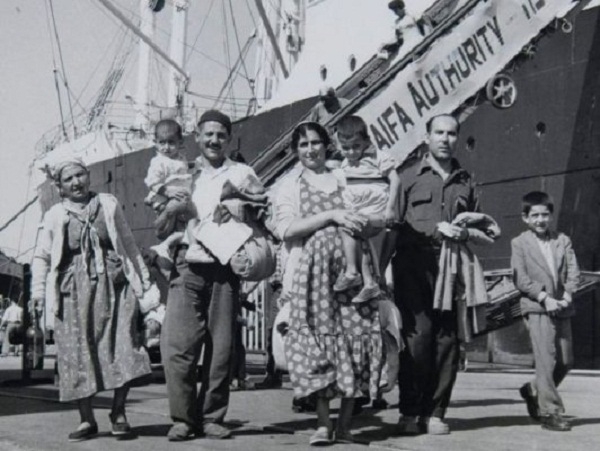
What Is a “Refugee”? The Jews from Morocco versus the Palestinians from Israel

 
Leave a comment

Posted by on March 10, 2018 in Uncategorized


Making Space (Vayakhel & Pekudei 5778)

Image result for jonathan sacks

With this week’s double parsha, with its long account of the construction of the sanctuary – one of the longest narratives in the Torah, taking a full 13 chapters – comes to a magnificent climax:

Then the cloud covered the tent of meeting, and the glory of the Lord filled the Sanctuary. Moses could not enter the Tent of Meeting because the cloud had settled on it, and the Glory of the Lord filled the Sanctuary. (Ex. 40:34-35)

That is what the building of the sanctuary was about: how to bring God, as it were, from heaven to earth, or at least from the top of the mountain to down in the valley, from the remote God of awe-inspiring power to the Shekhinah, the indwelling Presence, God as shakhen, a neighbour, intimate, close, within the camp, in the midst of the people.

Yet for all this, we wonder why the Torah has to go on at such length in its details of the Mishkan, taking up the whole of Terumah and Tetzaveh, half of Ki Tissa, and then again Vayakhel and Pekudei. After all, the Mishkan was at best a temporary dwelling for the Shekhinah, suited to the years of wandering and wilderness. In Israel, it was superseded by the Temple. For two thousand years in the absence of a Temple its place was taken by the synagogue. Why, if the Torah is timeless, does it devote such space to what was essentially a time-bound structure?

The answer is deep and life-transforming, but to reach it we have to note some salient facts. First, the language the Torah uses in Pekudei is highly reminiscent of the language used in the narrative of the creation of the universe:

Genesis 1-2 Exodus 39-40
And God saw all that He had made and behold it was very good. (1:31) Moses saw all the skilled work and behold they had done it; as God had commanded it they had done it. (39:43)
The heavens and earth and all their array were completed. (2:1) All the work of the Tabernacle of the Tent of Meeting was completed. (39:32)
And God completed all the work that He had done. (2:2) And Moses completed the work. (40:33)
And God blessed… (2:3) And Moses blessed… (39:43)
And sanctified it. (2:3) And you shall sanctify it and all its vessels. (40:9)

Clearly the Torah wants us to connect birth of the universe with the building of the Mishkan, but how and why?

The numerical structure of the two passages heightens the connection. We know that the key number of the creation narrative is seven. There are seven days, and the word “good” appears seven times. The first verse of the Torah contains seven Hebrew words, and the second, 14. The word eretz, “earth,” appears 21 times, the word Elokim, “God,” 35 times, and so on.

So too in Pekudei, the phrase “as the Lord commanded Moses” appears seven times in the account of the making of the priestly garments (Ex. 39:1-31), and another seven times in the description of Moses setting up the Sanctuary (Ex. 40:17-33).

Note also one tiny detail, the apparently odd and superfluous “And” at the very beginning of the book of Exodus: “And these are the names …” The presence of this connective suggests that the Torah is telling us to see Genesis and Exodus as inherently connected. They are part of the same extended narrative.

The final relevant fact is that one of the Torah’s most significant stylistic devices is the chiasmus, or “mirror-image symmetry” – a pattern of the form ABCC1B1A1, as in “(A) He who sheds (B) the blood (C) of man, (C1) by man (B1) shall his blood (A1) be shed” (Gen. 9:6). This form can be the shape of a single sentence, as here, or a paragraph, but it can also exist at larger levels of magnitude.

What it means is that a narrative reaches a certain kind of closure when the end takes us back to the beginning – which is precisely what happens at the end of Exodus. It reminds us, quite precisely, of the beginning of all beginnings, when God created heaven and earth. The difference is that this time human beings have done the creating: the Israelites, with their gifts, the labour and their skills.

To put it simply: Genesis begins with God creating the universe as a home for humankind. Exodus ends with human beings, the Israelites, creating the Sanctuary as a home for God.

But the parallel goes far deeper than this – telling us about the very nature of the difference between kodesh and chol, sacred and secular, the holy and the mundane.

We owe to the great mystic, R. Isaac Luria, the concept of tzimtzum, “self-effacement” or “self-limitation.” Luria was perplexed by the question: If God exists, how can the universe exist? At every point in time and space, the Infinite should crowd out the finite. The very existence of God should act as does a Black Hole to everything in its vicinity. Nothing, not even light waves, can escape a Black Hole, so overwhelming is its gravitational pull. Likewise, nothing physical or material should be able to survive for even a moment in the presence of the pure, absolute Being of God.

Luria’s answer was that, in order for the universe to exist, God had to hide Himself, screen His presence, limit His Being. That is tzimtzum.

Now let us come back to the key words kodesh and chol. One of the root meanings of chol, and the related root ch-l-l, is “empty.” Chol is the space vacated by God through the process of self-limitation so that a physical universe can exist. It is, as it were, “emptied” of the pure Divine light.

Kodesh is the result of a parallel process in the opposite direction. It is the space vacated by us so that God’s presence can be felt in our midst. It is the result of our own tzimtzum. We engage in self-limitation every time we set aside our devices and desires in order to act on the basis of God’s will, not our own.

That is why the details of the Sanctuary are described at such length: to show that every feature of its design was not humanly invented but God-given. That is why the human equivalent of the word “good” in the Genesis creation account is “as the  Lord commanded Moses.” When we nullify our will to do God’s will, we create something that is holy.

To put it simply: chol is the space God makes for humankind. Kodesh is the space humankind makes for God. And both spaces are created the same way: by an act of tzimtzum, self-effacement.

So the making of the Sanctuary that takes up the last third of the book of Exodus is not just about a specific construction, the portable shrine that the Israelites took with them on journey through the wilderness. It is about an absolutely fundamental feature of the religious life, namely the relationship between the sacred and the secular, kodesh and chol. Chol is the space God makes for us. Kodesh is the space we make for God.

So, for six days a week – the days that are chol – God makes space for us to be creative. On the seventh day, the day that is Kadosh, we make space for God by acknowledging that we are His creations. And what applies in time applies also in space. There are secular places where we pursue our own purposes. And there are holy places where we open ourselves, fully and without reserve, to God’s purposes.

If this is so, we have before us an idea with life-transforming implications. The highest achievement is not self-expression but self-limitation: making space for something other and different from us. The happiest marriages are those in which each spouse makes space for the other to be his or her-self. Great parents make space for their children. Great leaders make space for their followers. Great teachers make space for their pupils. They are there when needed, but they don’t crush or inhibit or try to dominate. They practice tzimtzum, self-limitation, so that others have the space to grow. That is how God created the universe, and it is how we allow others to fill our lives with their glory.

As taken from, http://rabbisacks.org/making-space-vayakhel-pekudei-5778/

Si desea leer el articulo en español vaya a: http://rabbisacks.org/wp-content/uploads/2018/03/SPANISH-Vayakel-Pekudei-5778.pdf


Leave a comment

Posted by on March 8, 2018 in Uncategorized


Collapsed Halacha and Moshe’s Mask

Image result for nathan lopes cardozo

… This feeling of wonderment is the source and inexhaustible fountain-head of his desire for knowledge. It drives the child irresistibly on to solve the mystery, and if in his attempt he encounters a causal relationship, he will not tire of repeating the same experiment ten times, a hundred times, in order to taste the thrill of discovery over and over again….The reason why the adult no longer wonders is not because he has solved the riddle of life, but because he has grown accustomed to the laws governing his world picture. But the problem of why these particular laws and no others hold remains for him just as amazing and inexplicable as for the child. He who does not comprehend this situation misconstrues its profound significance, and he who has reached the stage where he no longer wonders about anything, merely demonstrates that he has lost the art of reflective reasoning.
­—Max Planck, Scientific Autobiography and Other Papers, NY, Philosophical Library, 1949, pp91-93.

In Shemot (34: 29-35), we find a fascinating passage concerning Moshe’s descent from Sinai. We are informed that Moshe decided to cover his face with a mask after realizing that his facial skin had become radiant, causing people to withdraw and not dare to approach him.

What is utterly surprising, however, is that contrary to common belief, Moshe walked daily throughout the Israelite camp with his mask on, as long as he did not speak with the people to transmit God’s words. Once he had to speak to them, he deliberately took it off, revealing his luminous face. Instead of accommodating them by making it easier to approach him, it seems he wanted to bring them into an altogether different spiritual setting before repeating the words of God as he had heard them. By taking the mask off only when he had to repeat the words of God, he exposed them to this divine radiance, which caught them by complete surprise. The purpose, then, was to catch them off guard.

Human beings can quickly become desensitized to even the most astonishing stimuli once they get used to them. The wonder wears off. For Moshe’s radiance to have an ongoing effect, it had to be hidden so that when he would reveal his face the Israelites would be deeply moved by its luminance. Only under those conditions could they fully appreciate and value God’s words, realizing that every word Moshe spoke in the name of God was authentic. Otherwise, even the words of God would become mediocre and dubious. Familiarity breeds contempt.

Religion is the art of knowing what to do with amazement. To ensure that it does not fall back into complacency, it must never become everydayness. In fact, this has been of the greatest challenges to Judaism in the last few hundred years. While in the days of Moshe and the prophets Judaism was experienced with deep religious excitement, as a majestic representation of the new, over the centuries this wonder has been replaced by a devastating familiarity. Judaism has put on a permanent mask that is never removed.

Thoroughly misunderstanding what life is all about, and believing that we have solved most problems concerning its mystery, we have become mentally cut off from the possibility of the extraordinary and unprecedented. We have dulled our capacity for surprise.

With the passing of time, we have turned Judaism into an institution, a dogma, and a ritual into which everything needs to fit neatly. But Judaism is really about an upheaval in the soul and the need to break with all sorts of idols. It is about living with spiritual trepidation in which man realizes that he was created from dust but has the ability to reach Heaven. Whether or not man succeeds will depend on his willingness to stand in awe.

We have turned Judaism into a religion that comforts but does not challenge. We have made it into a lame doctrine in which the courage to shatter callousness has been sidetracked. It has been transformed into a sweet and comfortable religion in which man can slumber and never wake up.

Today’s Judaism has paradoxically made modern man believe that divine revelation is impossible. How, after all, can it claim that the Divine can enter our world when it has utterly rejected the notion that surprise is the great spiritual mover for authentic religious life? How can one uphold a belief in the revelation at Sinai when one simultaneously has bought into spiritual stagnancy by thinking that scientific investigation is all there is and wonder is no longer to be part of our experience?

Revelation is based on the notion of infrequency. Its authenticity and truth is to be found in its being different from all other experiences. Its uniqueness is that it cannot be compared to any other event. It is sui generis. Once we attempt to explain it, it loses its very essence and purpose. If we extinguish the spark of its singularity, it is reduced to insignificance.

Wonder is problematic for the law. The application of law would be much easier if the world were stagnant and consisted of endless repetition. The real difficulty arises when the sudden and the unconventional emerge. Such moments take the law by surprise.

Definite judgments become irrelevant since they cannot cope with the new and the unheard-of. In such cases, the lawmakers are forced to leave their comfortable ivory towers. Either they admit that the law has nothing to contribute, or they become inventors and show that the law leaves room for the unprecedented and the notion of wonder.

This is the great challenge for today’s halachic authorities. Are their decisions made in a sterile vacuum in which every surprise is ignored and even suppressed? Or are they made to stimulate a religious condition in which man will live in a state of great awe through which he can grow and feel halacha’s inner spirit?

Are today’s rulings transformative, or do they promote stagnation? Shall we have prophetic halacha, or collapsed halacha?

What we need is a new approach. We have to re-create halacha so that it once again becomes the manifestation of holy deeds that generate marvel and amazement in every part of our lives.

It may be time for rabbis to invite religious thinkers who still see the wonder of Judaism and can help them make suitable decisions before genuine religiosity is suffocated.

We need people who can teach us to take off our mask—which by now has merged with our skin—and show us the original glow of God’s word, as Moshe did.

As taken from, https://www.cardozoacademy.org/thoughts-to-ponder/collapsed-halacha-and-moshes-mask/?utm_source=Subscribers&utm_campaign=5bbd94a7df-Weekly_Thoughts_to_Ponder_campaign_TTP_548&utm_medium=email&utm_term=0_dd05790c6d-5bbd94a7df-242341409

 
Leave a comment

Posted by on March 8, 2018 in Uncategorized


What Is the Jewish View on Abortion?

Note: This short essay is meant purely as an educational overview. Jewish law approaches each case according to its particular circumstances. In any actual case, it is vital that qualified rabbis and medical professionals be consulted. If you have undergone an abortion, we recommend that you also read this article.

The question of abortion is perhaps one of the most sensitive and charged topics in the political sphere. As is often the case, Judaism’s view is quite nuanced and does not necessarily fit squarely into either side of the debate. We will try to present a basic overview of the Jewish approach to abortion by presenting the main sources on the subject, in both the Hebrew Bible as well as the Oral Torah.

Abortion in the Hebrew Bible

The first reference to abortion is in Genesis, when Noah and his descendants are forbidden to murder: “One who sheds the blood of man through man shall his blood be shed, for in the image of G‑d He made man.”1

The sages of the Talmud point out that the phrase “one who sheds the blood of man through man” is more accurately translated as “one who sheds the blood of man within man.” Based on this Rabbi Ishmael learns that under ordinary circumstances the killing of a fetus is considered a capital offense for all descendants of Noah, i.e., humankind.2

Read in isolation, one could conclude that abortion is akin to murder. But things are not so simple. Here is what we read in Exodus:

Should men quarrel and hit a pregnant woman, and she miscarried but there is no fatality, he shall surely be punished when the woman’s husband makes demands of him, and he shall give [restitution] according to the judges’ [orders].3

Since the Torah obligates only a monetary compensation but no capital punishment, the Torah seemingly views the fetus as property, not as a human life.

There are various ways of reconciling these verses (see footnote4). All agree, however, that under ordinary circumstances abortion is prohibited.

Life But Not Life

Under which circumstances would abortion be permitted? For one, if a pregnant woman’s life is endangered unless the pregnancy is terminated, “her life takes precedence over [the fetus’s] life.” The sages of the Mishnah add, “If, however, the majority of [the fetus] emerged, we may not touch it, for we do not push aside a life in place of another life.”5

Why may the unborn baby be sacrificed to save the mother? Maimonides explains that the fetus has the law of a rodef, one who is pursuing another with intent to kill, whose life may be taken in order to save the would-be victim. It is thus permitted to abort the fetus, surgically or through medication, since the fetus is seen as an active threat to the mother’s life.6

But why is it the fetus whose life is sacrificed for the mother, and not the other way around? Apparently, the unborn child, although a living being, does not yet have a status of personhood​ equal to its mother. Only once its head has begun to leave the birth canal, are the two considered on equal standing.7

To what extent is the fetus considered a danger to the mother? What if the mother is experiencing psychological or emotional suffering? As this is a very sensitive and nuanced area, a qualified rabbi—together with medical experts—must be consulted.

In addition to assessing the danger, the rabbi will take the duration of the pregnancy into consideration. Although abortion is generally forbidden even before the fetus is considered viable (in fact, simply “wasting seed” is in itself considered a serious transgression), depending on the stage of pregnancy there is considerable debate as to the exact nature of the prohibition.

For example, some explain that there is a difference between aborting in the first 72 hours (when it can still be classed as preventing conception), the first 40 days8 (before the limbs and organs form), the first three months, and until seven months (when the fetus is considered viable).

In the case of rape, for example, many would permit preventing conception by taking medication within 72 hours of coitus (and some, depending on the circumstances, may permit up to 40 days).9

With a Lit Lamp

We know that the fetus is not considered as “alive” as someone who has been born. But neither is it simply a mass of flesh without a soul. Indeed, the sages of the Talmud tell us the following:

A lamp is lit for the unborn child above its head, and with it the child peers and sees from one end of the world to the other. . . . There are no days in which a person experiences more bliss than during the days in the mother’s womb . . . while there, the child is taught the entire Torah . . . but as soon as he emerges, an angel strikes him on the mouth, causing the child to forget the entire Torah . . .10

Although the Talmud is not necessarily referring to the physical fetus, but rather to its soul, this passage lets us know that the fetus is already somewhat linked to its soul.

In summation:

  • Under normal circumstances it is forbidden to take the life of an unborn child, and it may be akin to murder (depending on the stage of pregnancy and birth, see footnote11).
  • As long as the unborn remains a fetus, it does not have a status of personhood equal to its mother, and therefore may be sacrificed to save the life of the mother.
  • In any case where abortion may be necessary, it is of paramount importance to consult halachic and medical experts as soon as possible.
Footnotes
1.Genesis 9:6.
2.See Talmud, Sanhedrin 57b.
3.Exodus 21:22.
4.For example: (a) The fetus might or might not have been fully viable, and there is no way to know for certain. Thus, this technicality prevents us from holding the assailant liable for capital punishment. (b) The context of this verse is about murder, but in fact there may be a number of other prohibitions that were transgressed. (See Rabbi Avraham Steinberg, “Abortion and Miscarriage,” in Encyclopedia of Jewish Medical Ethics, for a list of the different opinions.)
5.Mishnah, Ohalot 7:6.
6.Mishneh Torah, Hil. Rotzei’ach 1:9; Shulchan Aruch, Choshen Mishpat 425:2.
7.See commentary of Rabbi Akiva Eiger on Mishneh Torah, Hil. Rotzei’ach 1:9
8.It should be noted that, halachically, “40 days” are counted from when the woman immersed in the mikvah, not from the beginning of the last period, as doctors usually count. Thus, while the doctor may consider the fetus 40 days old, Jewish law would consider it only 26 days old.
9.See Nishmat Avraham, Choshen Mishpat 19:23.
10.Talmud, Niddah 30b.
11.Ending a viable life after 30 days since birth is considered “certain murder.” After 6 months of pregnancy, when the fetus may be viable, it is considered “possible murder,” and it is permitted to abort only when the mother’s life is endangered, as the fetus is classified as a rodef. Between 40 days and 6 months of pregnancy, the fetus is considered a “developing life.” Before 40 days it is considered “potential life” (which is why wasting seed is also forbidden). Aborting during these last two time periods may be permitted under certain circumstances that override “developing life” and “potential life”—as always, an expert Rabbi needs to be consulted.
 
Leave a comment

Posted by on March 7, 2018 in Uncategorized


The Answer to the Mother of All Questions

Based on the teachings of the Lubavitcher Rebbe

Why are we here?

This, the mother of all questions, is addressed in turn by the various streams of Torah thought, each after its own style.

The Talmud states, simply and succinctly, “I was created to serve my Creator.” The moralistic-oriented works of Mussar describe the purpose of life as the refinement of one’s character traits. The Zohar says that G‑d created us “in order that His creations should know Him.” Master Kabbalist Rabbi Isaac Luria offered the following reason for creation: G‑d is the essence of good, and the nature of good is to bestow goodness. But goodness cannot be bestowed when there is no one to receive it. To this end G‑d created our world—so that there should be recipients of His goodness.

Chassidic teaching explains that these reasons, as well as the reasons given by other Kabbalistic and philosophical works, are but the various faces of a singular Divine desire for creation, as expressed in the various “worlds” or realms of G‑d’s creation. Chassidism also offers its own formulation of this Divine desire: that we “make a home for G‑d in the material world.”

A Home For G‑d

What does it mean to make our world a home for G‑d?

A basic tenet of our faith is that “the entire world is filled with His presence” and “there is no place void of Him.” So it’s not that we have to bring G‑d into the material world—He is already there. But G‑d can be in the world without being at home in it.

Being “at home” means being in a place that is receptive to your presence, a place devoted to serving your needs and desires. It means being in a place where you are your true, private self, as opposed to the public self you assume in other environments.

The material world, in its natural state, is not an environment hospitable to G‑d. If there is one common feature to all things material, it is their intrinsic egocentrism, their placement of the self as the foundation and purpose of existence. With every iota of its mass, the stone proclaims: “I am.” In the tree and in the animal, the preservation and propagation of the self is the focus of every instinct and the aim of every achievement. And who more than the human being has elevated ambition to an art and self-advancement to an all-consuming ideal?

The only thing wrong with all this selfishness is that it blurs the truth of what lies behind it: the truth that creation is not an end in itself, but a product of and vehicle for its Creator. And this selfishness is not an incidental or secondary characteristic of our world, but its most basic feature. So to make our world a “home” for G‑d, we must transform its very nature. We must recast the very foundations of its identity from a self-oriented entity into something that exists for a purpose that is greater than itself.

Every time we take a material object or resource and enlist it in the service of G‑d, we are effecting such a transformation. When we take a piece of leather and make a pair of tefillin out of it, when we take a dollar bill and give it to charity, when we employ our minds to study a chapter of Torah—we are effecting such a transformation. In its initial state the piece of leather proclaimed “I exist”; now it says “I exist to serve my Creator.” A dollar in pocket says “Greed is good”; in the charity box it says “The purpose of life is not to receive, but to give.” The human brain says “Enrich thyself”; the brain studying Torah says “Know thy G‑d.”

The Frontier of Self

There are two basic steps to the endeavor of making our world a home for G‑d. The first step involves priming the material resource as a “vessel for G‑dliness”: shaping the leather into tefillin, donating the money to charity, scheduling time for Torah study. The second step is the actual employment of these “vessels” to serve the Divine will: binding the tefillin on the arm and head, using the donated money to feed the hungry, studying Torah, etc.

At first glance it would seem that the second step is the more significant one, while the first step is merely an enabler of the second, a means to its end. But the Torah’s account of the first home for G‑d built in our world places the greater emphasis on the construction of the “home,” rather than its actual employment as a Divine dwelling.

A sizable portion of the book of Exodus is devoted to the construction of the Sanctuary built by the children of Israel in the desert. The Torah, which is usually so sparing with words that many of its laws are contained within a single word or letter, is uncharacteristically elaborate. The fifteen materials used in the Sanctuary’s construction are listed no less than three times; the components and furnishings of the Sanctuary are listed eight times; and every minute detail of the Sanctuary’s construction, down to the dimensions of every wall panel and pillar and the colors in every tapestry, is spelled out not once, but twice—in the account of G‑d’s instructions to Moses, and again in the account of the Sanctuary’s construction.

All in all, thirteen chapters are devoted to describing how certain physical materials were fashioned into an edifice dedicated to the service of G‑d, and the training of the kohanim (priests) who were to officiate there. (In contrast, the Torah devotes one chapter to its account of the creation of the universe, three chapters to its description of the revelation at Mount Sinai, and eleven chapters to the story of the Exodus.)

The Sanctuary is the model and prototype for all subsequent homes for G‑d constructed on physical earth. So the overwhelming emphasis on its “construction” stage (as opposed to the “implementation” stage) implies that in our lives, too, there is something very special about forging our personal resources into things that have the potential to serve G‑d. Making ourselves “vessels” for G‑dliness is, in a certain sense, a greater feat than actually bringing G‑dliness into our lives.

For this is where the true point of transformation lies—the transformation from a self-oriented object to a thing committed to something greater than itself. If G‑d had merely desired a hospitable environment, He need not have bothered with a material world; a spiritual world could just as easily have been enlisted to serve Him. What G‑d desired was the transformation itself: the challenge and achievement of selfhood transcended and materiality redefined. This transformation and redefinition occurs in the first stage, when something material is forged into an instrument of the Divine. The second stage is only a matter of actualizing an already established potential, of putting a thing to its now natural use.

Making Vessels

You meet a person who has yet to invite G‑d into his or her life. A person whose endeavors and accomplishments—no matter how successful and laudable—have yet to transcend the self and self-oriented goals.

You wish to expand her horizons—to show him a life beyond the strictures of self. You wish to put on tefillin with him, to share with her the Divine wisdom of Torah.

But he’s not ready yet. You know that the concept of serving G‑d is still alien to a life trained and conditioned to view everything through the lens of self. You know that before you can introduce her to the world of Torah and mitzvot, you must first make her receptive to G‑dliness, receptive to a life of intimacy with the Divine.

So when you meet him on the street, you simply smile and say, “Good morning!” You invite her to your home for a cup of coffee or a Shabbat dinner. You make small talk. You don’t at this point suggest any changes in his lifestyle. You just want her to become open to you and what you represent.

Ostensibly, you haven’t “done” anything. But in essence, a most profound and radical transformation has taken place. The person has become a vessel for G‑dliness.

Of course, the purpose of a vessel is that it be filled with content; the purpose of a home is that it be inhabited. The Sanctuary was built to house the presence of G‑d. But it is the making of vessels for G‑dliness that is life’s greatest challenge and its most revolutionary achievement.1


FOOTNOTES
1. Based on Likkutei Sichot, vol. 25, pp. 424–435.

As taken from, https://www.chabad.org/parshah/article_cdo/aid/369223/jewish/The-Answer-to-the-Mother-of-All-Questions.htm#utm_medium=email&utm_source=6_essay_en&utm_campaign=en&utm_content=content

 
Leave a comment

Posted by on March 7, 2018 in Uncategorized


How the Fight Against Malaria Infected the Future Map of Israel

Nearly 100 years ago, Dr. Israel Kligler single-handedly eradicated the disease in the Holy Land – and gave birth to the Partition Plan

Dr. Zalman Greenberg, a Jerusalem microbiologist who is now retired from the Ministry of Health, has spent years researching the history of medicine in Israel. Twenty years ago he started compiling an extensive bibliography of microbiology studies done in the country. “One name kept popping up more than others,” he related this week. “Everywhere I looked I saw the name Kligler. I saw that he was a key researcher in the areas of microbes, worms, viruses, parasites and malaria. I thought he must be an American researcher but then I realized that he had lived and died in Israel.”

Since his discovery, Greenberg delved into the life and work of Dr. Israel Jacob Kligler. Seven years ago he was joined by Anton Alexander, a retired Jewish lawyer and history buff living in London. Through a number of studies and articles they cracked the character of a man who they claim is the founder of microbiology and public health in Israel – and most importantly, the greatest foe of malaria. He single-handedly defeated the disease not through medicine but through education and persistence.

During their research, Kligler and Alexander drew the map of malaria distribution 100 years ago. They showed that the eucalyptus trees brought here did not contribute much to warding off the disease and demonstrated the impact malaria had on shaping the borders of Israel.

“A hundred years ago, Palestine was a place that was impossible to live in,” says Alexander. Malaria killed thousands of people each year and 20 percent of the population suffered from the disease. Entire regions were abandoned due to malaria. Some people in the Zionist movement believed the disease would wipe out the Jewish community in Palestine. During World War I malaria was a bitter enemy of General Allenby’s Egyptian Expeditionary Force in Palestine. “This is one the most malaria-afflicted countries in the world,” wrote Allenby’s chief medical officer. In 1918 alone, more than 28,000 cases of malaria were reported among British soldiers in the Expeditionary Force.

1920 map contained in the British Mandate Dept. of Health review
of Malaria in Palestine (1918-1941), and showing the worst malaria
areas (the dark blue areas) in Palestine. Olivier Fitoussi

Kligler, a groundbreaking microbiologist, was the first person to devise a systematic plan to eradicate malaria in Palestine. He led this struggle for decades, but according to Greenberg and Alexander, never received the recognition he deserved.

Not doctors but entomologists

 Kligler was born in Galicia in Eastern Europe in 1888 and moved to the United States when he was 13. He excelled as a student and obtained a Ph.D. in microbiology from Columbia University. He later worked at the Rockefeller Institute for Medical Research, where he developed the Kligler culture medium, which is used to this day to identify the presence of gut bacteria. “He had an international reputation, and if he’d stayed there he would have received a Nobel Prize, but he got the Zionist bug, becoming an admirer of Louis Brandeis,” says Greenberg. U.S. Supreme Court Justice Brandeis was himself infected with malaria prior to visiting Palestine, and warned that Zionism would fail in settling the area if the disease wasn’t wiped out.
Dr Kligler (second from right) during WW2 with two Allied Army
senior commanding officers attending malaria-control teaching
courses at the Hebrew University arranged by Dr Kligler. Wellcome Library, London

Chaim Weizmann, president of the World Zionist Organization, “was mad at Brandeis, but [the latter] was right,” says Alexander. Brandeis asked Kligler to write a report on malaria in Palestine. In 1920 Kligler moved there, and Brandeis gave him a huge amount from his own pocket – $20,000 – so that Kligler could begin the campaign to eradicate the disease. “Even before arriving Kligler knew more about malaria in Palestine than anyone else,” says Greenberg.

Shortly after arriving, Kligler established the first malaria research station in Haifa and immediately began to carry out a well-planned campaign to fight the disease. In an article published a month and a half ago in the journal American Entomologist, Alexander summarized the main points of Kligler’s method. “The most important thing was to overcome fatalism, the belief of the local population that malaria was part of life. The first thing needed was to tell the local population that malaria can be defeated,” says Alexander.

The second stage involved mobilizing the locals for a systematic and prolonged fight against the Anopheles mosquito by locating, draining and treating any water reservoir that could serve as a breeding ground for the insect.

Education was the main tool in this fight. “He understood that the population needed to be educated and that these water sources needed to be dried. You needed to let the water flow so that mosquitos couldn’t breed and that if this was not possible, that one should spread a layer of oil over the water so the mosquitos wouldn’t be able to breathe,” explains Alexander.

Kligler believed that it was not the doctor but the entomologist who was most crucial in the campaign against malaria. Another one of his principles asserted that the fight against mosquitos must relentless and needs to be spread over years.

Alexander wrote the article for American Entomologist together with Dr. Florence Dunkel of the University of Montana. A team from there has been employing similar methods in 11 villages in Mali. Alexander notes that the method works, and that malaria there is in retreat.

Kligler developed his method during the 1920s and ’30s, working with the British Mandatory government. He established a network of inspectors and other employees; at its peak, there were hundreds of people taking part in the campaign against malaria. Most of the budget came from the coffers of the Zionist movement, but Palestinian villages were also recruited for the campaign. Alexander says that the anti-malaria network was one of the few services that continued to operate even during periods of violence between local communities. When Mufti Amin al-Husseini tried to prevent anti-malaria workers from entering Arab villages, they were accompanied by British soldiers.

The eucalyptus trees that were thought to assist in warding off the disease by drying swamps did not impress Kligler. “He realized the eucalyptuses weren’t working,” says Alexander, adding that the trees could actually cause damage since their roots sometimes blocked drainage channels. Greenberg says that Kligler preferred using Gambusia fish (also known as mosquito fish), which eat mosquito larvae. Kligler imported these fish, which are still used for the same purpose in water reservoirs across the country.

Dr Zalman Greenberg, left, and Anton Alexander with the 1941
Dept. of Health review of Malaria in Palestine. Olivier Fitoussi

This was the first time anyone in the world had tried to fight malaria on a national scale. Success came quickly: Within two years, the areas that were treated registered a drop in the number of malaria patients. This decline continued into the ’30s and ’40s and in 1968 Israel was declared to be malaria-free. It was the first country in Asia to be rid of the disease.

In 1925, only four years after the program was launched, a League of Nations delegation arrived in Palestine to study Kligler’s methods. After their visit they wrote that what they saw in Palestine could “overcome pessimism and raise hopes.” During World War II Kligler taught British medical officers how to avoid malaria. He also received a medal from Poland’s government in exile after trying a vaccine he had developed for Polish exiles on himself. Kligler also traveled to the Dominican Republic and later to Yemen on behalf of the American Jewish Joint Distribution Committee to help Jewish refugees establish a medical system.

Kligler was also an important and exceptionally prolific researcher. In 1926 he became one of the first four professors at the newly established Hebrew University, subsequently raising a generation of pupils. Over his years in Israel he published over 200 articles covering many areas of microbiology, at the rate of one per month. However, he did make some enemies among the old guard of physicians, who doubted his methods and mocked him since he was not one of them. He earned a reputation for being a meticulous and tough manager who was not particularly liked by his employees.

Unlucky in death

In 1933 Kligler suffered a blow following a sharply worded report by a commission of inquiry set up by Albert Einstein to investigate the financial and academic conduct of different departments at the Hebrew University. Greenberg says that it’s clear from the report that Kligler unwittingly got himself involved in a battle between university founder Yehuda Leib Magnes and his rivals. Kligler, who was close to Magnes, was a target of scathing criticism.

In the report, Greenberg found proof that the commission was out to get Kligler. He notes one incident discussed in the report, which occurred seven years before it was written: financing the purchase of a donkey for a doctor working at the malaria station in Rosh Pina. “Kligler stars in the report as if he was the arch-devil. I looked into it and I believe he didn’t know what it was all about,” says Greenberg. “The report suggested removing him from office, but that didn’t happen. But a pistol you see in the first act fires in the third. The report really hurt him and one sees in his letters that he became quite despaired.” Greenberg believes that the report contributed to Kligler’s death from a heart attack ten years later.

Greenberg’s house in Jerusalem has an entire bookshelf devoted to Kligler’s work. Among other things, he donated 50 kilograms of original documents he received from Kligler’s daughter-in-law, who lives in the U.S., to the Zionist Archives. Among these documents he found a 1941 British government report with a map from 1920 showing the distribution of malaria in Palestine. More than anything else, it shows the power this disease had in shaping Israel. The map has a remarkable similarity to the Partition Plan that was prepared 19 years later. The explanation for this is simple: Lands where malaria reigned, such as the valleys and coastal plains, were unusable. These were the lands sold to Jews and on which Jewish settlements were built. Malaria effectively drew the outlines of Jewish settlement in Palestine, which later became the boundaries of the Partition Plan.

Kligler was also fated to be unlucky in death. Kibbutz Amir in the Galilee initially named its clinic after him, but after a few years Kligler’s name was replaced with that of another important malaria researcher, Gideon Mer, who for decades headed the Rosh Pina malaria research station located not far from the kibbutz. The Jewish National Fund planted 10,000 trees in Kligler’s honor, but no one knows where.

As taken from, https://www.haaretz.com/israel-news/.premium.MAGAZINE-how-malaria-shaped-the-future-map-of-israel-1.5866664?utm_campaign=newsletter-daily&utm_medium=email&utm_source=smartfocus&utm_content=https%3A%2F%2Fwww.haaretz.com%2Fisrael-news%2F.premium.MAGAZINE-how-malaria-shaped-the-future-map-of-israel-1.5866664


Leave a comment

Posted by on March 6, 2018 in Uncategorized