RSS

Author Archives: yishmaelgunzhard

Dios y la Creencia Judía

Dios y la creencia judía

Dios y la Creencia Judía

Dios es al mismo tiempo la Fuerza de la creación y el Director de la historia.

por

Tanto el hombre como la naturaleza son significativos porque fueron creados por un Ser intencionado. Es a este Ser a quien llamamos Dios.

Si no hubiese un Creador, entonces el universo no tendría sentido, la existencia humana sería en vano y la vida carecería de significado y esperanza.

La existencia de un Creador intencionado es indicada por el hecho de que el universo inorgánico contiene todo ingrediente necesario para que la vida orgánica sea posible. El mundo existe como un escenario para la vida, y la probabilidad de que esto haya ocurrido por casualidad es infinitesimalmente pequeña.

La obra de Dios es discernible a partir del mismísimo hecho de que pueda existir el cuerpo humano.

En reconocimiento de esto, el Salmista dijo: “Le agradeceré a Dios, porque estoy hecho de manera asombrosa y maravillosa” (Salmos 139:14). También está escrito: “En mi carne, veré a Dios” (Job 19:26). Es decir, la obra de Dios es discernible a partir del mismísimo hecho de que pueda existir el cuerpo humano.

También es enseñado que incluso las cosas inanimadas alaban a Dios. Su existencia misma es un himno que muestra el trabajo hecho por Dios. De acuerdo a esto está escrito: “Los cielos declaran la gloria de Dios, el firmamento relata Su obra” (Salmos 19:2).

Es impensable concebir que el universo haya surgido por casualidad sin la existencia de un Creador intencionado, al igual que es imposible concebir que un hermoso poema haya sido escrito por un salpicón azaroso de tinta.

Fuerza motivadora

El primero de los Diez Mandamientos dice: “Yo Soy el Eterno, tu Dios, quien te sacó de la tierra de Egipto, de la casa de la esclavitud” (Éxodo 20:2). Este es un mandamiento positivo de creer en Dios. Este mandamiento depende del pensamiento, y puede ser cumplido en cualquier momento.

De su redacción se hace evidente que este mandamiento incluye un requerimiento de creer en Dios como el Dios de la creación y como el Dios de la historia.

Por lo tanto, el judaísmo rechaza el concepto deísta de que Dios creó el universo y luego lo abandonó, dejándolo sin gobernante, guía ni juez.

La existencia de Dios como el Poder ético y como la Fuerza motivadora detrás del universo es indicada por la experiencia de los hombres y de las naciones, la cual demuestra que sólo el bien es estable, mientras que el mal tiende a destruirse a sí mismo. Respecto a esto, está escrito: “Hay muchos pensamientos en el corazón del hombre, pero es el consejo de Dios el que perdurará” (Proverbios 19:21).

Ningún otro poder

El segundo de los Diez Mandamientos dice: “No tendrás otros dioses delante de Mí” (Éxodo 20:3). Éste es un mandamiento negativo de no creer en ninguna deidad más allá del único y verdadero Dios, el Creador del Universo. Este mandamiento también depende del pensamiento y puede ser observado en todo momento.

Este mandamiento nos prohíbe que aceptemos cualquier ser, entidad u objeto como una deidad y que la llamemos dios. Esto es cierto incluso si uno sigue creyendo en el Dios verdadero.

Este mandamiento también prohíbe aceptar a cualquier ser, entidad u objeto como mediador entre Dios y el hombre. Esto también es considerado idolatría.

Es por esta razón que el judaísmo rechaza absolutamente el concepto cristiano de un mediador entre Dios y el hombre.

Un no judío puede aceptar otro ser como una deidad, pero no puede adorarlo como un ídolo.

La mayoría de las autoridades extienden esta prohibición a los judíos y no judíos por igual. Sin embargo, otros sostienen que un no judío puede aceptar otro ser como una deidad o mediador, siempre y cuando no lo adore como a un ídolo y que crea también en Dios. Se basan en el versículo: “No sea que… seas desviado y los adores a ellos, los cuales el Eterno, tu Dios, les ha dado a los gentiles…”(Deuteronomio 4:19). De acuerdo a la segunda opinión, el cristianismo podría ser una religión permisible para no judíos, y podría estar de acuerdo al objetivo supremo de Dios.

De todos los Diez Mandamientos, sólo estos dos primeros están escritos en primera persona. De acuerdo a la tradición, sólo esos dos mandamientos nos fueron dados directamente por Dios, mientras que todos los otros fueron transmitidos a través de Moshé. Respecto a esto está escrito: “Dios ha hablado una vez, dos veces he oído esto” (Salmos 62:12).

Consciencia constante

Si una persona niega la existencia de Dios o acepta cualquier otro ser como deidad, está negando la esencia misma del judaísmo y es absolutamente rechazada por Dios. Este es el único caso en el que uno puede ser castigado por un mero pensamiento.

Se nos exige que siempre estemos conscientes de Dios y que no Lo olvidemos a Él ni a Sus milagros, como está escrito: “Cuídate, no sea que olvides a Dios, quien te sacó de la tierra de Egipto, de la casa de la esclavitud” (Deuteronomio 6:12). También se nos advierte no olvidar a Dios ignorando Sus mandamientos, como está escrito: “Cuídate, no sea que olvides al Eterno tu Dios al no respetar Sus mandamientos, Sus decretos y Sus leyes” (Deuteronomio 8:11). Algunas autoridades cuentan esto como un mandamiento negativo.

Por lo tanto, uno debería estar constantemente consciente de la presencia de Dios, como dijo el Salmista: “He puesto a Dios delante de mí todo el tiempo”(Salmos 16:8).

Asimismo, se nos alienta a no olvidar la revelación en Sinai, donde fueron entregados los Diez mandamientos. Respecto a esto está escrito: “Sólo cuídate y guarda muy bien tu alma, no sea que olvides estas cosas que tus ojos han visto y no sea que se aparten de tu corazón todos los días de tu vida, y hazlas conocer a tus hijos y a los hijos de tus hijos: el día en que te paraste delante del Eterno tu Dios en Jóreb…” (Deuteronomio 4:9-10). Esto es declarado en el más enfático de los términos, y es contado por algunas autoridades como un mandamiento negativo.

Segun tomado de, http://www.aishlatino.com/judaismo/filosofia/dios/Dios-y-la-creencia-judia.html?s=rab, el jueves 15 de enero de 2015.

 
Leave a comment

Posted by on January 15, 2015 in Uncategorized


Si Tú fueras Dios


Si tú fueras Dios

Si tú fueras Dios

Siempre cuestionamos los caminos de Dios. Pero si se nos diera la oportunidad, ¿cómo lo haríamos nosotros?

por

Se te da una isla donde habitan varias tribus.

Por naturaleza estas tribus son guerreras. Esto trae como resultado el que haya mucho sufrimiento en la isla, causado por las guerra, la pobreza y el prejuicio.

Han vivido de esta forma durante siglos sin ninguna señal de progreso.

Tu responsabilidad:

Tratar de mejorar esta sociedad.

Enseñarles a sus miembros a vivir juntos en armonía y reducir el sufrimiento a lo mínimo o eliminarlo por completo.

Crear una sociedad sana.

Tus recursos:

Tienes todos los recursos que la alta tecnología puede ofrecer.

Tienes la isla entera bajo tu supervisión y puedes ver lo que está pasando en cualquier lugar en cualquier momento.

Tienes herramientas para crear nubes y puedes plantar explosivos por debajo de la tierra. Dentro de lo normal, puedes controlar el clima, las inundaciones, los volcanes y los terremotos, y puedes producir cualquier fenómeno natural.

También tienes las herramientas que se pueden usar para implementar ideas por medio de sugestión subliminal. Puedes introducir ideas en poblaciones enteras o a un cierto grupo de líderes.

Sin embargo, debes tomar en cuenta las severas limitaciones de la sugestión subliminal. Si tratas de implementar ideas que van en contra de la naturaleza básica de la población, serán completamente rechazadas y tus esfuerzos serán en vano.

Tus restricciones:

Bajo ninguna circunstancia los nativos de la isla pueden estar conscientes de tu presencia.

Esto precede cualquiera de las otras consideraciones.

El shock cultural causado por revelarte a ti mismo destruiría la estructura social de la isla. Causaría mucho sufrimiento y cancelaría cualquier bien que pudieses lograr.

Los nativos se reducirían a un estado de dependencia casi vegetal, de lo cual sería muy difícil que se recuperaran. Si llegaran a recuperarse, probablemente se rebelarían tan violentamente que eliminarían cualquiera de los valores positivos que originalmente tenían.

Por lo tanto la restricción de no revelarte a ti mismo debe ser cumplida sin excepción bajo toda circunstancia.

Pero fuera de esta restricción, tienes la libertad de proceder humanamente o violentamente de la forma que quieras.

En resumen, tienes la posibilidad de jugar a ser Dios.

¿Qué harías?

Las preguntas

Mucha gente dice que en estos días es muy difícil creer. Vivimos en una generación que ha visto el brutal asesinato de seis millones de personas. Hemos visto niños quemados en Vietnam, bebes muertos de hambre en Biafra y una nación sistemáticamente diezmada en Bangladesh. Vemos hambre, pobreza y desigualdad donde quiera que vayamos. La gente buena sufre y la deshonesta parece estar muy bien.

Mucha gente pregunta lo que parece ser una pregunta legítima: ¿Por qué permite Dios estas cosas? ¿Por qué no hace algo al respecto?

Hasta cierto punto, la respuesta debe ser obvia. Es el hombre y no Dios quien trae la mayoría del mal al mundo. Dios no hace guerras – los hombres las hacen. Dios no mató a 6 millones de personas – el hombre lo hizo. Dios no oprime a los pobres – el hombre lo hace. Dios no tira napalm – el hombre lo hace.

Pero la gente regresa y discute que esto no contesta realmente a la pregunta. El dilema básico permanece: ¿Por qué creo Dios la posibilidad del mal? ¿Por qué deja que exista?

Para empezar a entender esto debemos de entender el propósito mismo de la creación.

Este propósito requiere una criatura responsable de sus propias acciones. Esto a su vez requiere que la gente tenga libre albedrío.

Si Dios hubiera querido una raza de títeres, entonces hubiera creado títeres. Si hubiera querido robots hubiera creado robots. Pero esto no es lo que Dios quiso. Quiso seres humanos, con libre albedrío, responsables de sus acciones.

Imagen de Dios

Pero en cuanto tienes libre albedrío, tienes la posibilidad del mal.

Cuanto más lo probamos, más claro esto se hace.

Ante nuestro mejor entendimiento, Dios creó el universo como un acto de amor. Fue un acto de amor tan inmenso que la mente humana no puede entenderlo. Dios creó el mundo básicamente como un vehículo que le permitiese depositar Su bien.

Pero el amor de Dios es tan grande que cualquier bien que deposita debe ser el máximo bien posible. Menos que esto no sería suficiente.

Pero ¿cuál es el bien máximo? ¿Cuál es el bien supremo que Dios pudo depositar en Su creación?

Si piensas por un momento la respuesta debe ser obvia. El bien supremo es Dios mismo. El bien máximo que Dios puede depositar es Él mismo. No hay mayor bien que el lograr un grado de unidad con el Creador. Es por esta razón que Dios le dio al hombre la posibilidad de parecerse a Él.

Es por eso que Dios le dio al hombre libre albedrío.

Así como Dios actúa como un ente con libre albedrío, así también lo hace el hombre. Así como Dios opera sin restricciones, así también el hombre. Así como Dios puede hacer el bien como resultado de Su elección, también puede el hombre. De acuerdo con muchos comentaristas, este es el significado de que el hombre fue creado a “imagen” de Dios.

Libertad de elección

Pero si el propósito de Dios no permite que el hombre sea un robot, tampoco le permite ser un prisionero.

Así como el hombre tiene libre albedrío, también tiene que tener libertad de elección. Un hombre encerrado en una prisión puede tener el mismo libre albedrío que todos los demás, pero no puede hacer mucho al respecto. Para que el hombre se asemeje a su Creador lo más posible, debe existir un lugar en donde tenga la máxima libertad de elección. Cuanto más el hombre se asemeje a Dios en su omnipotencia, más se asemejará a su libre elección del bien.

Para que esta libertad de elección sea real, Dios tuvo que crear la posibilidad del mal. Si sólo el bien fuese posible, no produciría ningún beneficio. Usando una metáfora Talmúdica, sería como cargar una lámpara a plena luz del día. El Zohar dice: “la ventaja de la sabiduría viene de la oscuridad. Si no hubiera oscuridad, entonces la luz no sería discernible y no produciría ningún beneficio… Por eso está escrito: “Dios ha hecho una cosa opuesta a la otra” (Eclesiastés 7:14).

Así como el propósito de Dios no permite que el hombre sea un prisionero físico, tampoco le permite vivir en una prisión intelectual. ¿Cómo se comportaría una persona si Dios se revelara constantemente? ¿Sería libre? Si el hombre estuviera todo el tiempo consciente de que está parado frente al Rey, ¿acaso podría ir en contra de Su voluntad? Si la existencia de Dios fuera constantemente evidente, esta conciencia haría al hombre un prisionero.

Esta es una de las razones por las cuales Dios creó el mundo para que siga leyes naturales, y de esa forma se oculta. Por eso nos enseñan nuestros sabios que “El mundo sigue su patrón natural, y los tontos que hacen el mal eventualmente serán juzgados”.

Este es el concepto de Shabat. Después del acto inicial de la creación, Dios se retiró (por decirlo así) y permitió que el mundo opere de acuerdo a las leyes de la naturaleza que Él creó. El “reloj” ya estaba hecho y se le había dado cuerda, y ahora con un mínimo de interferencia podía funcionar. Cuando observamos el Shabat, similarmente nos abstenemos de interferir y hacer algún cambio permanente en el orden de la naturaleza.

El árbol del conocimiento

Pero se puede profundizar aún más todavía. Se puede preguntar: ¿Por qué permitió Dios tanto mal en la naturaleza humana? ¿Por qué es tan natural para el ser humano oprimir a su semejante y hacerlo sufrir?

Pero aquí también, nos tenemos que dar cuenta de que el área de acción del hombre es el mundo físico y por lo tanto debe ser parte de un universo en donde la presencia de Dios está oculta. La parte espiritual del hombre puede habitar en los mundos más trascendentales, pero el cuerpo del hombre es esencialmente el de un animal. Nuestros sabios nos enseñan que el hombre toma parte tanto de los animales como de los ángeles. El Zohar va un paso más allá y dice que aparte del alma divina que separa al hombre de las formas más bajas de vida, el hombre también posee un alma animal.

Cuando el hombre fue recién creado, había una armonía básica entre estas dos partes de su naturaleza. Su intelecto y su naturaleza animal eran capaces de existir conjuntamente sin ningún conflicto intrínseco. Tenía la oportunidad de vivir en armonía con la naturaleza usando sus energías físicas para lo espiritual. Sin embargo, en este Jardín del Edén había un elemento de tentación. El destino del hombre era trascender su naturaleza animal a un plano espiritual. Pero también tenía una tentación de trascenderlo en un plano físico, de comer del árbol del Bien y el Mal.

El hombre se dejó llevar por esta tentación.

Este conocimiento entró entre los dos elementos básicos del hombre, el animal y el humano. El hombre ya no era más como el animal, unido a la naturaleza, en armonía con su naturaleza básica. Todavía tenía todos los deseos, tentaciones y la naturaleza agresiva de un animal. Pero también adquirió la habilidad de utilizar su intelecto para que su naturaleza animal fuese dirigida en contra de sus semejantes. Es este conflicto entre la naturaleza animal y la humana la que empujo al hombre en dirección del mal. Por lo tanto, se nos enseña que es la naturaleza animal del hombre la que es responsable del Ietzer HaRá, el mal en el hombre.

Pero aquí otra vez, Dios no puede ser culpado.

La decisión de tomar parte del árbol del Conocimiento – de trascender su naturaleza animal en un plano mundano – fue la decisión que el hombre tomó como resultado de la libre elección.

En cuanto el hombre tomó parte del árbol del Conocimiento, supo lo que es bueno y malo. La moral se hizo una cuestión de conocimiento y elección consciente, en lugar de ser la naturaleza básica del hombre. A partir de ese momento tuvo que luchar con una nueva naturaleza, donde el animal y el ángel dentro de él están en conflicto.

Avances tecnológicos

Pero podemos ahondar aún más. Podemos preguntar: ¿Por qué no se hizo al hombre de una forma mejor? ¿Por qué no hizo Dios al hombre de una forma que sea más ángel y menos animal?

Aquí otra vez, la culpa fue del hombre. Nuestros sabios nos enseñan que la prohibición en contra de probar la fruta del árbol del Conocimiento era sólo temporal. La naturaleza espiritual del hombre estaba desarrollándose gradualmente de una forma que eventualmente hubiera estado lo suficientemente fuerte como para dominar sus instintos animales. Cuando habría llegado a este momento, hubiera podido tomar parte del árbol del Conocimiento sin poner en peligro su esencia espiritual.

El hombre estaba en verdad destinado a ser más ángel y menos animal. Sin embargo, esto iba a ser un proceso gradual. Fue abortado por la impaciencia del hombre al tomar el “conocimiento” antes de tiempo. Fue este conocimiento el que le trajo el conflicto con su naturaleza animal y detuvo su desarrollo espiritual, haciendo dominante a la bestia.

Este argumento corre a través de toda la historia de la humanidad. El conocimiento del hombre le dio una tecnología con la que puede crear instrumentos de destrucción, pero su fuerza moral no es lo suficientemente fuerte como para evitar que los utilice erróneamente. Esto ha llegado a su tope en nuestra generación, donde el hombre tiene el poder de destruir el planeta entero, ya sea por medio de armas nucleares o envenenando el ambiente. El conocimiento le da al hombre un poder tremendo, pero aún no ha entendido cómo utilizar su poder para el bien. Esta es la razón por la cual la era mesiánica debe llegar pronto. Sólo entonces el hombre aprenderá a usar su conocimiento para el bien.

Hasta que llegue ese momento, el hombre enfrenta este gran dilema. Tiene el conocimiento de crear grandes sociedades, pero siempre se salen de control y se degeneran. Puede hacer grandes avances tecnológicos, pero no tiene la fuerza moral de usarlos para el bien. Uno de los comentarios más tristes sobre el predicamento humano es el hecho de que muchos de los avances tecnológicos más avanzados se han hecho para continuar con la causa de la guerra.

Reacción a los milagros

Sin embargo, parece todavía que la pregunta sigue en pie. Hay que reconocer que el hombre tiene una naturaleza mala y es su culpa. Pero ¿por qué no interfiere Dios? ¿Por qué no abre las puertas del cielo y detiene este mal? ¿Por qué no mandó un trueno y acabó con los campos de concentración? ¿Por qué no manda un tipo de maná a los niños que se están muriendo en Biafra y Bangladesh? ¿Por qué no detuvo las bombas de napalm para que no quemen a niños vietnamitas inocentes? ¿Por qué no hace un milagro y hace desaparecer todas las bombas nucleares? Después de todo es Dios. Seguro que lo puede hacer, ¿por qué no lo hace?

Sin embargo, se nos enseña que una sobre abundancia de luz no rectifica las vasijas sino que las rompe.

¿Qué le pasaría a nuestra sociedad si de repente empezaran a ocurrir milagros? ¿Cómo reaccionaríamos?

¿Podríamos vivir nuestra vida cotidiana como si no hubiese pasado nada? ¿Acaso las vastas y complejas estructuras sobre las cuales está basada nuestra sociedad continuarían existiendo si esta conciencia de Dios fuese de repente puesta sobre nosotros?

Toma una ciudad como Nueva York. Toma el esfuerzo de miles de personas el proveer la comida y demás necesidades de una ciudad tan grande, y otros miles de personas para transportar estas necesidades. Se precisa otro ejército para proveer a la ciudad de agua, electricidad, calefacción y para remover la basura. ¿Acaso podría sobrevivir esta estructura la conciencia de milagros? Y si no, ¿acaso no sería el sufrimiento mayor? Si Dios empezara con su intervención milagrosa, ¿acaso no lo tendría que hacer por completo? De hecho, esto probablemente pasará en la época mesiánica, pero para ese entonces el tiempo será el indicado.

¿Cómo reaccionaríamos nosotros ante los milagros? Probablemente de manera similar a la forma en que las sociedades primitivas reaccionaron a los “milagros” de aquellos que eran más avanzados. La primera reacción es de shock, o lo que los sociólogos llaman shock cultural. Los nativos primero pierden interés de todo y se hacen completamente dependientes de la cultura más avanzada. Dejan de tener una mente propia y desarrollan una apatía en que la vida continua carente de significado. La degeneración del orgulloso y autosuficiente nativo es tanto trágica como inevitable.

Si una sociedad no está completamente destruida por el shock cultural inicial, entra en otra etapa de rebeldía. La cultura primitiva se rebela tanto en contra de los invasores como de sus valores. Esta es la razón por la cual muchos misioneros acabaron en una olla.

Si el hombre se asemeja al animal, entonces se asemeja a un animal salvaje en lugar de a uno doméstico. Es el destino del hombre ser libre, y no estar sujeto a otros hombres. Por lo tanto, el resultado inevitable de la introducción de una cultura más elevada es la destrucción de la cultura primitiva.

Cuando una cultura más elevada es introducida, la reacción inicial de los nativos es domesticarse, ser como borregos o vacas. Si la domesticación es completa, la humanidad del nativo se desvanecerá hasta que asimile la cultura dominante. De otra forma, los nativos se rebelan y reestablecen su humanidad natural.

Lo mismo es esencialmente cierto de nuestra relación con Dios. Mientras esté oculto, podemos luchar para buscarlo y alcanzar lo divino. Pero hacemos esto como resultado de nuestro libre albedrío y no estamos abrumados por ello. Pero si Dios se revelara, entonces el hombre ya no podría existir como un ente con libre albedrío. Sabría que siempre ha estado bajo el escrutinio de su amo y eso lo haría sentirse más bajo que un humano. Se convertiría en un tipo de mascota o robot, con un ingrediente esencial de su humanidad destruido. La única alternativa sería la rebelión.

Habría demasiada luz y las vasijas se quebrarían.

Revelación nacional

Sólo hubo un momento en el cual Dios literalmente se reveló y cambió el curso de la historia. Esto fue en el Éxodo de Egipto, donde realizó milagros tanto en Egipto como en el mar Rojo. Este episodio tuvo su clímax en la revelación en Sinai, donde una nación entera literalmente escuchó la voz de Dios.

¿Qué paso entonces ahí?

La primera reacción en Sinai fue de shock. La gente simplemente no pudo soportar la majestuosidad de la palabra de Dios, nuestros sabios nos enseñan que sus almas literalmente los dejaron. Su reacción está expresada en el relato Bíblico del Sinai, donde inmediatamente después le dijeron a Moisés (Éxodo 10:16) “Tú nos hablas a nosotros y nosotros escucharemos, pero no dejes que Dios hable más con nosotros, pues moriremos”.

Cuando la gente se sobrepuso a su shock inicial, procedieron a la siguiente fase, aquella de rebelión. Esto tomó lugar 40 días después de la revelación en el Sinai. Se fueron en contra de Dios y sus enseñanzas, al servir al Becerro de Oro. Habían escuchado los Diez Mandamientos de Dios mismo 40 días antes y ahora estaban violando cada uno de ellos.

Aprendemos una lección muy importante de esto. Que Dios se rebele a sí mismo a una “vasija” no preparada, puede hacer más mal que bien. Esta es una razón importante por la cual Dios no muestra Su “mano”.

Mucha gente dice que creerían si sólo pudieran atestiguar alguna señal o algún milagro. La experiencia en el Sinai nos enseñó que aquello no es suficiente si la gente no quiere creer.

De todo esto podemos empezar a entender una de las restricciones básicas que Dios se impuso sí mismo. Es un Dios oculto, y no se revela a sí mismo. Esto es necesario por la psicología del hombre y por el propósito mismo de Dios en la creación. Dios sólo se revela a sí mismo ante aquellas personas cuya fe es tan grande que la revelación no les hace ninguna diferencia en su creencia. Como Maimónides escribe: la única excepción a esta regla fue el Éxodo.

Las soluciones

Tomando en cuenta las restricciones más básicas de Dios, podemos ahora tratar de ponernos en Su lugar.

Nuestra restricción más básica es que no revelemos nuestra mano.

Tomando esta restricción en cuenta, podemos regresar a nuestro problema inicial, e imaginar un microcosmos en donde estamos en la posición de jugar a ser Dios.

Este problema fue discutido en diferentes grupos y mucho de lo que sigue es el resultado de sus conclusiones. Sin embargo, antes de seguir leyendo, puede ser bueno que vuelvas a leer el problema y trates de hacer tus propias conclusiones.

Muchas discusiones giraron alrededor de soluciones que incluían cosas como un inmenso juego de ajedrez con la Isla entera como tablero. Habrían movidas y contra movidas con una estrategia de tratar de manejar a los nativos a la posición deseada. Como un experto en ajedrez, tratarías de mantener el control del juego en todo momento. Tu “victoria” sería obtener el resultado deseado.

Mientras tienes los recursos suficientes para eventualmente ganar, inmediatamente se hacen aparentes ciertos problemas. El mayor problema es que cada movida puede tomar décadas o inclusive siglos. Puede que obtengas resultados, pero es un proceso muy largo y desgastador. Puede que tengas todo el tiempo del mundo, pero cada año hay más sufrimiento.

Hay un problema aún más profundo. Inclusive más importante que influenciar eventos, nuestro objetivo más importante es cambiar los valores de los nativos. Sin embargo, inclusive que una lección pueda ser estudiada por una generación, podrá ser igual de olvidada por la siguiente generación. Crear valores positivos como una parte integral de la cultura de la isla es una recomendación formidable.

Una sugerencia constante en estas discusiones incluyó la infiltración. Trataríamos de influenciar la isla a través de infiltrados. Mientras que no fuera obvio, estaría dentro de las normas.

Tal infiltración podría servir para dos propósitos. Primero que nada podríamos usar a los infiltrados como ejemplo. Ellos podrían hacer una sociedad modelo y si perdura lo suficiente podría interesar a la gente y darles ganas de emularla o aprender de ella.

Los infiltrados también podrían servir para enseñarles directamente a los nativos. Parte de su cultura sería gradualmente introducida en la isla elevando su nivel moral. Esto podría acelerar rápidamente la conclusión del juego.

Estos infiltrados siempre estarían en una posición de gran peligro. Operando bajo otro sistema de valores, siempre serían considerados como extranjeros. Cuanto más su mensaje se desviase de aquel de la mayoría más resentidos estarían en contra de ellos. Al esparcirlos en la isla para enseñar su mensaje, muy probablemente, serían perseguidos como minoría. Por las reglas del juego, habría muy poco que podrías hacer para ayudarlos.

Como mucho, jugarías tu juego de una forma en la que tratarías de protegerlos lo más posible. Por el miedo de revelar tu mano, la comunicación con tus infiltrados tendría que ser mínima. Tendrían que vivir en esta isla por muchas generaciones, dispersos entre los nativos y tendrías que poner diversas medidas de seguridad para impedirles que se asimilen a los valores corruptos de la isla. Hasta cierto punto, su status de minoría perseguida probablemente ayudaría para prevenir tal asimilación. Pero esencialmente, tendrían que jugar su rol ignorando tu estrategia general.

Gradualmente, los habitantes de la isla tomaran conciencia de tu presencia. Una vez que el juego haya acabado, podrás revelar tu presencia. Los infiltrados también serán revelados. Como parte de tu organización, se convertirán en los líderes naturales y maestros de la isla.

La conclusión

Como lo habrás adivinado, examinar este microcosmos nos da un entendimiento considerable de la forma en la que Dios interactúa con el mundo. Dios está trabajando para traer al mundo a un estado de perfección, lo que es en nuestra tradición la promesa mesiánica. Es un proceso lento, donde Dios constantemente dirige las fuerzas de la historia hacia este fin. El “juego” es esencialmente la historia de la humanidad.

Probablemente también hayas reconocido a los infiltrados. Ellos son el pueblo judío, a quienes se les dio las bases para una sociedad perfecta en las enseñanzas de la Torá. Una sociedad viviendo de acuerdo a estos principios divinos puede ser el ejemplo de una sociedad sana; libre de las enfermedades sociales de las culturas que la rodean.

Cuando Dios dio la Torá, le dijo al pueblo judío (Levítico 20:26) “Tendrás que ser sagrado para Mí, por que Yo Dios soy sagrado, y Yo te he apartado de las naciones para que tu seas mío”. Es la misión de Israel el dar el ejemplo, como la Torá ordena (Deuteronomio 4:6) “Deberás observar estos (mandamientos) cuidadosamente y mantenerlos ya que son tu sabiduría y tu entendimiento en los ojos de las naciones. Cuando escuchen todos estos estatutos, dirán, seguro que esta gran nación es un pueblo sabio y con entendimiento”.

Es nuestra labor el dar testimonio del plan de Dios para la humanidad, así como lo encontramos en Isaías 43:10: “Ustedes son mis testigos, dice Dios, y mis sirvientes, a quien he escogido”. De la misma forma, Dios le dijo a Su profeta “Yo, Dios te he llamado en rectitud… y te he designado para ser un convenio para los pueblos, de ser una luz para las naciones” (Isaías 42:6). Por lo tanto se nos enseña que Israel es como el corazón de la humanidad, constantemente latiendo e infundiendo a toda la humanidad con fe en Dios y sus enseñanzas.

Fue en este espíritu en el cual el judaísmo le dio origen tanto al cristianismo como al islam. Aunque muy lejos de la perfección, estas religiones son un paso en el camino que se aleja del paganismo. El paso final está aún por ser dado.

Sin embargo, más importante aún, es el hecho de que el pueblo judío, al menos aquellos que cuidan la Torá, continúan siendo un ejemplo de una sociedad perfecta diseñada por Dios. La Torá y sus mandamientos, de hecho, representan la sabiduría máxima en perfeccionar la sociedad humana. El justo (tzadik) es lo más cercano a lo que denominamos un ser humano perfecto.

La posición única de Israel por haber aceptado la Torá de Dios eventualmente resultará en la disolución de todas las otras culturas. También resultará en ganarse temporalmente el odio de estas culturas. Nuestros sabios nos enseñan que así como una aceituna debe ser machacada antes de sacar su aceite, de la misma forma Israel es generalmente perseguido antes de que su luz brille.

Preguntas y respuestas

Vivimos en una época de muchas preguntas. Los periódicos y la televisión traen los horrores del mundo a nuestras puertas y a nuestras salas. Lo que una vez estaba bloqueado por las barreras de la distancia intercontinental está ahora frente a nuestros ojos. Vemos el sufrimiento, la matanza y el hambre, y preguntamos ¿cómo Dios puede tolerar ese mal? Para el judío la pregunta de los 6 millones siempre está presente en cualquier discusión.

Para aquel que entiende la profundidad del judaísmo, no hay pregunta. Cuando has probado la razón de la existencia y el propósito de la creación, no sólo encuentras respuestas, sino que las preguntas mismas dejan de existir.

Uno de los grandes líderes judíos del siglo pasado fue el Klausenberger Rebe. Perdió a su esposa, hijos y familia a manos de los nazis, y él mismo pasó dos años en Auschwitz. Sin embargo, salió de ahí para traer a una generación entera de refugiados de campos de concentración de regreso al judaísmo, fundó una comunidad en Williamsburg y eventualmente construyó un asentamiento en Israel.

Yo habitualmente escuchaba a este gran líder hablar de los campos de concentración y de los seis millones de personas. Hay lágrimas y tristeza, pero no hay preguntas. Aquí tenemos a un tzadik cuya mente puede ver más allá de lo inmediato. Cuando la mirada de uno está en lo Supremo, realmente no hay preguntas.

La cosa más importante que debemos recordar es que Dios es el bien supremo y por lo tanto, inclusive el peor mal se convertirá eventualmente en bien. Muchos seres humanos hacen el mal, pero esto será redimido por Dios y finalmente será convertido en bien. El Talmud nos enseña que en este mundo debemos bendecir a Dios tanto por el bien como por el mal, pero en el mundo venidero, vamos a darnos cuenta de que no hay nada más que bien.

Segun tomado de, http://www.aishlatino.com/judaismo/filosofia/dios/Si-tu-fueras-Dios.html el jueves, 15 de enero de 2015.

 
Leave a comment

Posted by on January 15, 2015 in Uncategorized


Netanyahu Agradece a Hollande su Firmeza frente al Antisemitismo

Netanyahu agradece a Hollande su firmeza frente al antisemitismo

El primer ministro, Biniamín Netanyahu, agradeció en la Gran Sinagoga de París, al presidente francés, François Hollande, y a su jefe de Gobierno, Manuel Valls, por su firmeza frente “al nuevo antisemitismo y el terrorismo” en Francia.

Netanyahu pronunció un discurso, luego que millones de franceses se manifestaran por la unidad frente al terrorismo.

El primer ministro también agradeció a Lassana Bathily, el empleado musulmán del supermercado de comida kosher que salvó a varios rehenes durante el ataque jihadista del viernes.

“Nuestro enemigo común es el Islam radical y extremista – no el islam normal –“, expresó Netanyahu, tras un breve encuentro con otros líderes mundiales en una gigantesca marcha contra el extremismo en la capital francesa, que congregó a 1,6 millones de personas.

Uno de los dibujantes, entre las doce personas masacradas en el atentado contra el semanario satírico “Charlie Hebdo” era judío, al igual que cuatro de las víctimas en el ataque contra el supermercado de comida kosher.

La hermana de Yoav Hattab, una de los cuatro judíos asesinados en el ataque al supermercado Hyper Cacher pidió a los presentes encender cuatro velas extras cada shabat “para que permanezcan grabados en nuestros corazones”, y encendió una grabación de la plegaria Modeh Ani cantada por Hattab.

Netanyahu instó a Europa y al resto del mundo a apoyar la lucha de Israel contra el terrorismo. Numerosas personas recibieron al primer ministro, cantando su apodo “Bibi” e “Israel vivirá, Israel vencerá”.

“Israel está hoy del lado de Europa; pero me gustaría que Europa estuviera también del lado de Israel”, manifestó Netanyahu.

“Aquellos que han asesinado y masacrado judíos en una sinagoga recientemente en Israel y aquellos que asesinado a judíos y periodistas en París son parte del mismo movimiento terrorista global”, expresó, refiriéndose al ataque en noviembre contra una sinagoga del barrio Har Nof de Jerusalén, en noviembre pasado.

“Debemos condenarlos y combatirlos de la misma manera”.

Netanyahu advirtió sobre el peligro que implica el terrorismo global que tiene el potencial de convertirse en una seria amenaza para toda la humanidad si los extremistas logran capacidad nuclear. Luego instó a las potencias mundiales a desbaratar las aspiraciones nucleares de Irán.

“No podemos dejar que Irán adquiera capacidades nucleares”, declaró. “Israel está del lado de Europa, y Europa debe estar del lado de Israel [en esta cuestión]”.

Netanyahu invitó nuevamente a los judíos franceses a emigrar a Israel.

“Los judíos tienen el derecho de vivir donde quieran”, apuntó el primer ministro.

“Pero los judíos de hoy tienen una oportunidad que no existía en el pasado, vivir libres en el único Estado judío, en el Estado de Israel”.

“Cualquier judío que elija venir a Israel será recibido con los brazos abiertos y el corazón abierto, no es una nación extranjera, y ojalá ellos y ustedes algún día vengan a Israel”, señaló.

En la sinagoga se entonó el himno de Israel, “Hatikva”, seguido de “La Marsellesa”

Segun tomado de, http://www.aurora-israel.co.il/articulos/israel/Newsletter/62422/?utm_source=Noticias+diarias+Lunes-TEA&utm_medium=12-01-2015%202da%20edic

 
Leave a comment

Posted by on January 12, 2015 in Uncategorized


Eretz Israel

Eretz Israel

Por Eliezer Shemtov

¿Existe, acaso, alguna parcela de tierra en el mundo entero por la cual se haya peleado tanto?

De hecho, no sólo se ha peleado por apropiarse de ella y dominarla; se ha peleado – y se sigue peleando – para definir su propia esencia, naturaleza y razón de ser.

¿A qué se debe tanta obsesión?

Quizás la respuesta está en su propio nombre: Eretz Israel. Significa no sólo tierra de los judíos, sino tierra judía. La pelea por la tierra de Israel, entonces, no es sólo una lucha por un territorio, es una lucha por cómo definir la propia esencia del judaísmo, el pueblo judío y el ser judío.

En su relato sobre su encuentro con el Rebe de Lubavitch, que su mérito nos proteja, el Primer Ministro Itzjak Rabin, z”l, contó: “Hablamos sobre el versículo bíblico que habla de la soledad del pueblo judío (Números 23:9); si era por elección propia o como consecuencia de presiones externas…“

He aquí el gran dilema. ¿Debería el pueblo judío aspirar a ser igual a las demás naciones o aspirar a retener su particularidad y unicidad?

La respuesta es: Israel.

¿Cuál es el origen de ese nombre?

Iaakov e Israel

El nombre original de nuestro patriarca Israel fue Iaakov. La raíz etimológica de la palabra Iaakov es Eikev, o talón. Fue denominado Iaakov porque nació agarrándose del talón de su mellizo mayor, Esav. Eventualmente, cuando el ángel protector de Esav lo atacó a Iaakov en una lucha mano a mano y no logró vencerlo, Iaakov accedió a soltarlo únicamente luego de que éste lo bendijera. “No te llamarás más Iaakov, sino Israel,” dijo el ángel de Esav, “porque peleaste con ángeles y con hombres y los venciste”. (Génesis 32:29)

Israel, a diferencia de Iaakov que representa la subyugación, representa el dominio.

¿Dominio de qué?

Dominio en la lucha iniciada por el progenitor del pueblo judío, nuestro patriarca Avraham.

La revolución iniciada por Avraham, heredada por su hijo Isaac y consolidada por su nieto Iaakov/Israel y sus descendientes es la afirmación y la propagación de la fe en el Creador del universo. La concientización del hecho que el mundo no es un accidente cósmico y que la vida de cada hombre no es un mero accidente biológico. Que el mundo y todos sus componentes fueron creados para cumplir con un sólo propósito: manifestar y cumplir con la voluntad Divina. Es un objetivo por el cual hay que luchar. Es una lucha milenaria, iniciada por Avraham contra las amenazas de Nimrod, Avimélej, y el Faraón, seguida por Isaac a pesar de las amenazas de los reyes y vecinos de su época y seguida por Iaakov haciendo frente a las amenazas de su hermano Esav y tío Lavan. A lo largo de la historia, tuvimos que pelear. Egipto, Babilonia, Grecia, Persia, Roma, España, Alemania, Rusia, Irán, y ¿quién no? Una y otra vez la bendición del ángel protector de Esav resuena…”porque peleaste con ángeles y con hombres y los venciste”.

Siempre que el pueblo judío se mantenía fiel a su misión divina, logró sobrevivir a sus enemigos…

¿Para qué una tierra?

Una pregunta que se escucha a menudo es: ¿qué tiene que ver un credo con una tierra? O ¿No es preferible que haya una separación entre “sinagoga” y estado? “La religión es para el cielo,” dicen; “déjanos la tierra para los terrenales…”

Una vez más, la bendición del ángel de Esav reverbera… “Porque peleaste con ángeles y con hombres y venciste…”

El judaísmo no es simplemente una religión. El judaísmo viene a definir la realidad: Tanto lo espiritual como lo físico son nada más que dos dimensiones de una y la misma creación divina. Nada escapa a Su autoridad y nada es impermeable a Su verdad. En la concepción judía D-os es una verdad que permea y abarca a toda la existencia, cielo y tierra, alma y cuerpo, ángeles y hombres. No hay escapatoria. Es una verdad absoluta y todo-abarcadora.

Fue para manifestar esa verdad que D-os le dio una parcela de tierra al pueblo “del cielo”. La consigna fue y sigue siendo: Mostrar cómo se trae el cielo a la tierra y cómo se eleva la tierra hasta el cielo. Conquistar la espiritualidad como también la terrenalidad y subyugar las dos verdades relativas a los dictámenes de la verdad absoluta.

Eretz Israel: una tierra donde lo espiritual y lo material se funden.

Eretz Israel: una tierra donde hasta las frutas y verduras que produce son sagradas.

Eretz Israel: una tierra cuyo latido anima al mundo entero.

Eretz Israel: una tierra cuya alma inspira y eleva a toda la humanidad.

Eretz Israel: una tierra solitaria. Única. Diferente. Divina.

Naturaleza y Milagros

Una vez le preguntaron a un general de la FDI si creía que la victoria en la Guerra de los Seis Días era natural o milagrosa a lo que respondió: en parte era milagrosa y en parte, natural. La parte milagrosa fue que el ejército de Israel pudo repeler a tantos ejércitos enemigos. La parte natural fue que D-os nos ayudó a nosotros….

Eretz Israel: la tierra donde la línea entre lo milagroso y lo natural es borrosa…

Recuerdo bien la situación durante la Guerra del Golfo con todos preocupados por las amenazas de Saddam Hussein. El Rebe, con una inquebrantable voz de apoyo, aseguraba una y otra vez que Israel era el lugar más seguro del planeta. “No había lo que temer,” dijo. “El Guardián de Israel no dormirá ni dormitará.”

En ese entonces, mandé un comunicado de prensa a los medios capitalinos para comunicarles la postura del Rebe. Del diario El País me respondieron que no lo iban a publicar porque “lo que dice su rabino va en contra de lo que dicen todos los expertos”.

“Por eso mismo es noticia,” dije. “Si dijera lo mismo que todos, ¿qué noticia sería?”

A pesar de toda lógica “experta”, como ya sabemos, los hechos reivindicaron la postura del Rebe. En Eretz Israel, el palacio Real, rige otro sistema de leyes.

Está en nosotros hacer reflejar esa realidad “Israelí” en nuestra vida personal y cotidiana en donde sea que la Providencia Divina nos lleva. Esto acelerará el día en el cual mereceremos volver a casa a vivir como Am Israel en Eretz Israel, mostrando el ejemplo de cómo se domina tanto lo espiritual como lo terrenal para canalizarlos hacia el servicio de su Creador.

¡Am Israel Jai!

Según tomado de, http://www.es.chabad.org/library/article_cdo/aid/2087513/jewish/Eretz-Israel.htm el lunes, 5 de enero de 2015.

 
Leave a comment

Posted by on January 5, 2015 in Uncategorized


Nazis declare: Karaites are not racially Jewish

Nazis declare: Karaites are not racially Jewish

However, the Nazis remained bewildered by this ancient community, which follows the Tanakh and shares some Jewish holidays.

By  | Jan. 5, 2015 | 4:33 AM
submit to reddit
A Karaite house of worship in Yevpatoria in Crimea.

A Karaite house of worship in Yevpatoria in Crimea. Photo by Leonid Dzhepko/Via Wikimedia Commons
A Jewish choir performs at the monument at the Babi Yar.
 On January 5, 1939, the Reich Office for Genealogical Research issued a written opinion stating that it did not view the Karaite community as being racially connected to the Jews.

Although this was hardly the last word on the subject from within the vast Nazi hierarchy, which was obsessed with pseudo-scientific questions of this type, the statement served as the basis for what became the fundamental German policy toward these descendants of this ancient non-Rabbinic Jewish sect. As a consequence, most of the approximately 7,000 Karaites living in those parts of the Soviet Union occupied by Germany were spared annihilation by the Nazi killing machine, even as their Jewish neighbors were deported or simply murdered on the spot.

Distinct from the Jews

The history of the Karaites, who differ ideologically from Jews in that they do not recognize the authority of Jewish oral law, extends back at least to the seventh-century, C.E., Middle East. For Karaites, only the Tanakh (the Hebrew Bible) has divine authority, whereas in the normative Judaism that came about in the centuries following the first-century, C.E., destruction of the Second Temple, the Talmud and other works of rabbinic interpretation of the Bible also have the status of holy writ.

Jumping ahead to the 20th century, Karaites – whose name derives from the Hebrew root “kara,” meaning “read” – broke down into two basic ethnic groups: those living in the Middle East, mostly in Egypt, who saw themselves as Jews, and who as a group mostly immigrated to Israel after 1948; and the Karaylar Karaites, whose presence in what became czarist Russia can be traced back to 1278. Although the Karaylar Karaites also believe in the divine origin of the Hebrew Bible, and they share a number of holidays with the Jews, they do not see themselves as Jews and racially seem to be descended from the Turkic or Tatar peoples of eastern Europe.

Already during the 19th century, the Karaylar Karaites of what are today Lithuania and Ukraine appealed to the Russian czarist government to be recognized as distinct from the Jews, who were subject to a wide variety of restrictions and punitive policies. For the most part, this recognition was forthcoming.

Serving with the Waffen SS

The subject became relevant to the Nazi Germans as early as 1937, when a group of 18 Karaites living in Germany requested official exemption from the Nuremberg Laws, passed in 1935, which placed severe limitations on Jews’ participation in public life. This request was passed on to the Reich Institute for Genealogical Research.

In his response, issued on this day in 1939, the head of the office wrote that “the Karaite sect is not considered a Jewish religious community.” At the same time, however, he noted that “it is impossible to determine that, as a group, the Karaites belong to another race.”

The question continued to occupy the Germans, however, particularly after the occupation of Lithuania, in June 1941, with up to 1,000 Karaites, and then, five months later, with the occupation of Crimea, where approximately 6,500 Karaites lived.

Although different opinions were voiced, the bottom line was that, on December 8, 1941, an oral order emanated from SS head Heinrich Himmler confirming that Karaites were not to be classified as Jews. The fact that Himmler’s order was not written left room for a possible future change in policy.

Scholar Kiril Feferman, an expert on the Holocaust in the Soviet Union, noted in a 2010 article that the Germans had political reasons to spare the Crimean Karaites, who were under the protection of the local Tatar population. Both the Tatars and the Karaites in Crimea volunteered for local police forces, and when the Germans withdrew from Crimea, writes Feferman, some 500-600 Karaites left with them and continued to serve in the Waffen-SS and the Wehrmacht.

According to Feferman, there were only two cases of Karaites being murdered during the war, in Kiev – where Karaites were killed together with Jews at Babi Yar; and in Krasnodar – where local Russian police murdered several dozen local Karaites, without their German overlords going to the trouble of undertaking a supposedly scientific inquiry into their Jewishness. These groups were the exception to the rule, however.

Segun tomado de, http://www.haaretz.com/news/features/this-day-in-jewish-history/.premium-1.635335 el lunes, 5 de enero de 2015.

 
Leave a comment

Posted by on January 5, 2015 in Uncategorized


Stephen Hawking y el Golem

Stephen Hawking y el Golem

Stephen Hawking y el Golem

Una aleccionadora historia sobre Inteligencia Artificial.

por

Hawking es claramente alguien que no se desanima frente a sus desafíos personales. Sin embargo, en una reciente entrevista para la BBC, Hawking confesó que estaba profundamente preocupado por el futuro de la humanidad. La causa de su preocupación es la Inteligencia Artificial, o IA, término que hace referencia a la creación de máquinas inteligentes que podrían “superar” a sus creadores. Lo que partió como el supercomputador de la IBM llamado Watson, el cual era capaz de vencer con facilidad a los grandes maestros del Ajedrez y a los mejores concursantes del concurso televisivo de preguntas Jeopardy!, podría llegar en el futuro —advirtió Hawking— a superar a sus diseñadores y convertirse en la especie dominante del mundo.

“El desarrollo de Inteligencia Artificial en su máximo nivel podría significar el fin de la especie humana”, dijo Hawking.

La ciencia ficción ya nos ha preparado para saber qué podría pasar ante tal escenario: películas como Terminator y Matrix muestran un enfrentamiento entre los débiles humanos y sus poderosos enemigos que funcionan en base a IA. La película Avengers: Era de Ultrón, la cual será estrenada este año, muestra el enfrentamiento de los superhéroes con Ultrón, una máquina de IA que está determinada a destruir a la humanidad.

Hay un mundo de diferencia entre la habilidad de crear y el poder de controlar.

Hay un mundo de diferencia entre la habilidad de crear y el poder de controlar. Como dijo el director de ingeniería de Google, Ray Kurzweil, “Probablemente sea difícil escribir un código moral algorítmico lo suficientemente fuerte como para limitar y contener a unsoftware súper inteligente”. El mayor peligro del progreso científico es la posibilidad de que lo que construyamos tenga vida por sí mismo y deje de ser servil a su creador o a los valores humanos.

Y ese ha sido el mensaje subliminal durante siglos de la famosa leyenda del Golem de Praga. Según la tradición judía, el Maharal, Rav Yehudá Loew, quien fuera rabino de Praga en el siglo XVI, utilizó sus conocimientos de misticismo judío para dar vida mágicamente a un inerte bulto de barro y convertirlo en un defensor superhumano del pueblo judío. En su frente escribió la palabra hebrea que significa verdad, “emet”, la cual le dio místicamente poder a la criatura.

Sin embargo el Maharal se dio cuenta prontamente que una vez que le había sido otorgada su formidable fortaleza, el Golem se había vuelto imposible de controlar por completo. Las versiones de la historia difieren. En una el Golem se enamoró y al ser rechazado se transformó en un monstruo asesino. En otra el Golem comenzó a asesinar gente sin una razón aparente. Y en la que es probablemente la versión más fascinante, el Maharal mismo cometió un error —que sería similar al error que podría cometer un programador de computadoras— al olvidar desactivar el Golem antes de Shabat, lo cual llevó a que el Golem profanara Shabat y mereciera por tanto la pena capital.

Cualquiera sea la causa, el Maharal llegó a la conclusión de que el Golem tenía que ser puesto a descansar. El rabino borró la primera letra de emet —la letraalef, la cual tiene un valor numérico de uno y que representa a Dios, que es el único que puede dar realmente vida—, dejando solamente las dos letras restantes, las cuales forman la palabra hebrea para muerto, met. Al dejar de representar la voluntad del Creador supremo y al no tener la marca de Dios en su frente, el Golem se transformó en polvo.

Muchos eruditos creen que fue la leyenda del Golem la que inspiró a Mary Shelley a escribir su famosa novela Frankenstein sobre un experimento poco convencional que generaba vida pero que terminaba causando horripilantes resultados.

La creación sin control es la fórmula para una catástrofe. La historia de los logros científicos da testimonio de la simple verdad que el progreso separado de los límites éticos y morales puede otorgarnos el conocimiento para penetrar los secretos de la fisión nuclear, pero al costo de poner a la humanidad en peligro de extinción total.

La historia del Golem de Praga es un paradigma de los peligros de permitir que nuestras creaciones vayan más allá de nuestras intenciones. La Inteligencia Artificial, como una extensión de nuestra habilidad intelectual, claramente tiene muchas ventajas. Sin embargo, no puede “pensar” realmente. No tiene sensibilidad moral. No comparte las limitaciones éticas de su programador. Y no está restringida por los valores de quienes la trajeron a la existencia.

Stephen Hawking nos ha hecho un gran favor al alertarnos de los verdaderos peligros de la Inteligencia Artificial. Pero lo que encuentro más sorprendente —y altamente afortunado— es la otra revelación que se le adjudicó recientemente a él: Hawking admitió públicamente que es ateo. En respuesta a un reportero que le preguntó sobre sus creencias religiosas, él dijo de forma inequívoca que “No hay un Dios”.

Quizás el Dios bíblico en el que yo y tanta otra gente creemos también se arrepienta de la “inteligencia artificial” que le dio a la humanidad. Quizás nosotros seamos la mejor muestra del miedo que ahora proyectamos en nuestra propia tecnología: creaciones que son capaces de destruir el mundo porque dudan de su Creador.

Segun tomado de, http://www.aishlatino.com/a/cym/Stephen-Hawking-y-el-Golem.html?s=show el lunes, 5 de enero de 2015.

 
Leave a comment

Posted by on January 5, 2015 in Uncategorized


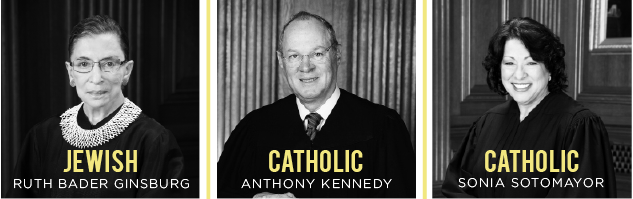
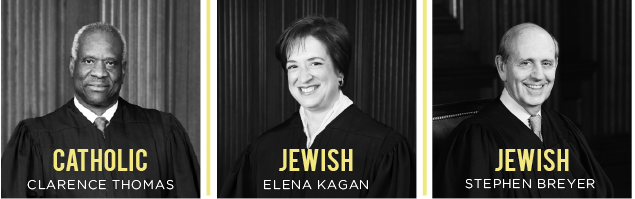
Do the religious beliefs of supreme court justices Influence their decisions?

Do the religious beliefs of supreme court justices Influence their decisions?

Screen shot 2015-01-01 at 7.15.29 PM

Symposium editor: Rachel E. Gross
Interviews by Sarah Breger, Marilyn Cooper, Rachel E. Gross, Amy E. Schwartz

A Moment Symposium with
Robert Barnes  / Lyle Denniston /  Tony Mauro / 
Sarah Posner / Leslie C. Griffin
Stephen Wermiel / Marshall Breger / Emily Bazelon  / Dahlia Lithwick

Robert Barnes

The justices’ beliefs affecthow others approach them

Recently, I was talking to a prominent law professor who was once a Supreme Court clerk. He told me that when he was clerking in the 1980s, if anyone had asked him if any of the justices were religious, he would have said no. None of them talked about it, and he saw no real evidence of them being religious. But he said he thought that this Court was very different.

The current justices talk about their faith much more. Certainly Justice Antonin Scalia is the most outspoken about it. He has said that intellectuals have to be what he called “fools for Christ” and to be able to say that some things aren’t about intellect, they’re about faith. And when you think about the justices, they all have an interesting connection to religion. Justices Sotomayor and Thomas talk about how parochial schools lifted them out of poverty in neighborhoods in which education was not terribly valued. Justice Kagan, who probably would say she is not that religious, nonetheless says she had religious instruction three times a week. She was the first girl to be a bat mitzvah at her synagogue. (Being Justice Kagan, she said the experience was good, not great.)

I don’t know whether any of us could say whether this new outspokenness about religion affects the way justices decide cases. I think that the difference has come in the way that people—advocates, lawyers—approach issues when they come to the Court and in some of the cases that the Court decides to takes on. For instance, in the Hobby Lobby case, the question was whether private business owners had a right to say that their religious objections exempt them from offering certain kinds of contraception. All the briefs were extremely respectful of the idea that these folks had deeply held religious beliefs. There was little challenge to whether or not they actually held those beliefs, or whether those beliefs were a pretext for not wanting to provide these services. I think that’s partly because they knew it wouldn’t go over terribly well with the justices to do that.

Barnes covers the Supreme Court for The Washington Post.

Lyle Denniston

The justices’ values are influenced by religion

In the past, Supreme Court justices were highly reluctant to allow their own values to come into play when ruling on religious matters. But more and more often, this is no longer the case. I’m not suggesting that this is inappropriate, but there used to be a studied effort to avoid bringing one’s own religious values into Court discussions. Personal religious identities now have a growing impact on Supreme Court decisions.

This is part of our generally more open culture in which private values tend to play a greater role in public policy decisions than they did in the past. We are now a society that is less concerned about privacy. We have largely given up the enormous value we used to place on it; We expose ourselves much more often. Whether or not they will admit it, the Justices are a product of their time.

This dynamic plays out differently with Jewish and Roman Catholic justices. The Roman Catholic polity has never been reluctant to try to influence the government to act in ways that benefit their faith. The most obvious examples are the attempts to persuade lawmakers and judges to adapt public policy to reflect the Church’s religious views on regulation of abortion and government subsidies for parochial education.

The abortion question is now driven in a considerable part by the Roman Catholic Church’s perspective on that issue. In his rulings on partial birth abortion, Justice Kennedy has especially been acting out his personal Catholic faith. While much of his jurisprudence is driven by liberty interests, when it comes to women’s liberty interests, he is tone deaf. Conversely, when ruling on gay marriage, he does not seem to be motivated by his Catholic values system.

Although it’s not uniformly what happens, Roman Catholic justices are more inclined to let personal religious values affect discourses and outcomes than the Jews on the court. Jewish justices are more likely to be separationists in terms of church and state. There is a strong Jewish tradition for this. While Jewish justices seem comfortable with religious dogma playing a role in Israel, they would not want that imported into the American legal system.

Personal values, however, also influence the Jewish justices. Justice Breyer was affected by his Jewish belief in social justice when writing in favor of women having access to birth control. From his own public statements, he has made it clear that the notion of tzedakah (charity) has informed his legal views, and that was clearly reflected in the position he took in the Hobby Lobby decision.

For all the claims that have been made that this is a Christian state founded on Christian values, this is not true. The Puritans fled to the Plymouth Plantation to escape religious doctrine in England. The separation of church and state was a central principle for Thomas Jefferson and James Madison when founding the United States. Separation of church and state is a core American value.

Denniston is an American legal journalist and SCOTUSblog reporter.

Screen shot 2015-01-01 at 7.15.40 PM

Tony Mauro

The Catholic Church has an outsized influence

The justices today are more outspoken about their religious faith in general. Part of the reason may be that Protestants speak less about their faith outwardly than some Catholics and some Jews. But it’s also that whenever they say anything, people are watching much more than they used to. Twenty years ago, it would not have been uncommon for justices to talk about their faith, but people just weren’t listening. In this digital age, the public has greater interest in the personalities as well as the opinions.

An extraordinary phenomenon that demonstrates the changing place of religion in the public sphere is the Red Mass, which is put on by the Catholic Archdiocese of Washington and occurs on the Sunday before the first Monday in October when the Supreme Court term begins. It has become such a regularized ritual that it’s like the celebratory kickoff of the Supreme Court term. Looking at it cynically, this is an opportunity for the Roman Catholic Church to have a captive audience—that includes six of the nine justices—for sermonizing about issues that concern it. I can’t think of any other institution that has that kind of access to the Court.

For 25 years, I’ve been covering the Red Mass as a news event. Back in the 1980s, the sermons were very politicized. They would rail against abortion as a form of murder and that any law that advances abortion is immoral. But that kind of rubbed certain justices the wrong way. In fact Justice Ginsburg was so annoyed and upset with one of the sermons that was against abortion that she vowed that she would never go again. And she said that even the Scalias, whom she is close friends with, were embarrassed at the stridency of the sermon. Since then it’s gotten much more toned down, although there still is quite a bit of talk in the sermons about the separation of church and state, and how it is appropriate for people of faith to bring their faith to work with them.

Mauro is the Supreme Court correspondent at The National Law Journal.

Sarah Posner

Politics outweighs religion on the Court

Their political ideology affects their decisions much more than their religion does. Sometimes what you think they would do based on their religion is the opposite of what they actually do. InZirotofsky vs. Kerry, or the Jerusalem Passport case, for example, you would think that perhaps a Jewish justice would be on the side of the plaintiff. (In the case, still before the court, the justices are reviewing whether Congress can order the State Department to record an American child’s place of birth as Israel rather than Jerusalem if the child was born in that city.) But it was Justice Kagan who was really questioning the claim of the plaintiff, asking if it would have any real-world consequences, and it was Justice Kagan who described Jerusalem as a tinderbox. The thing about the Jewish justices is that none of them is outspokenly Orthodox or observant.

The other big decision this year was the Hobby Lobby case, where the split was more of an ideological split than a religious split. Justice Sotomayor is Catholic but her gender played more of a role, and for the conservatives it had more to do with political ideology. Scalia retains a lot of that very Catholic natural law point of view. But I do think it’s an oversimplification to say religion is an overriding factor, since Justice Sotomayor is also Catholic.

We have a very religiously undiverse Supreme Court right now, in that we have the first Supreme Court in history with Catholics and Jews but no Protestants. It is very unrepresentative of the American public, and there is a lot of focus on that, questioning if the Supreme Court should reflect the gender and ethnic diversity of the United States. Should presidents also be considering religion when nominating someone? 

In my lifetime I would be shocked if we had an avowed atheist on the Court. I think that would even be a harder sell than a Muslim Supreme Court justice. We may have had an atheist justice but we don’t know. I think polling data shows that a lot of the American public thinks someone who believes in God to be more morally guided—it’s a misconception, but many Americans believe that misconception.

Posner is senior editor for Religion Dispatches and the author of God’s Profits: Faith, Fraud, and the Republican Crusade for Values Voters.

Screen shot 2015-01-01 at 7.15.49 PM

Leslie C. Griffin   

The Court’s new makeup has impacted recent cases

People aren’t completely predictive on where they are in religion, so they don’t always neatly fall into place. American Catholics are known as being “cafeteria Catholics”—they pick and choose. Justice Kennedy, for example, has supported abortion rights in the past and was the most reluctant voter in Hobby Lobby. Justice Breyer, who voted to uphold some of the ruling to display the Ten Commandments on government grounds (Van Orden v. Perry, 2005), will frequently split away from Justice Ginsburg and Justice Kagan. This shows several things. Unsurprisingly, if we are honest, people are affected by their religious upbringings. But there’s diversity even among people who go through the same religious training.

The blockbuster case last year was Hobby Lobby, where the three Jewish justices were also in dissent. I think the perspective there is that Catholics are taught that morality is universal, so the Catholic Church thinks contraception is wrong for everybody, abortion is wrong for everybody. In the majority opinion, Justice Alito cited Catholic theologians. Basically what Justice Alito said was that all the families in Hobby Lobby had to believe IUD caused abortion even if that’s scientifically inaccurate. The Court here was willing to just accept the religious beliefs and say that the state had to defer to them. I think that the male Catholic justices start out very sympathetic to the world view that opposes contraception and abortion, whereas Judaism is much more mixed and traditionally more supportive of women’s rights.

One of the strangest things about this Court is that, without a Protestant, no justice on the Court in the prayer case had a strict separationist perspective. For good and for ill, there are now no strict separationists. In that sense, it’s very significant that we have six Catholics and three Jewish justices. That shows where our politics has gone. We have a lot of religion in politics now, and so the Court, in a way, is reflecting the country. And yet, the biggest-growing religious group in the United States right now is people who are not affiliated with any religion. It’s interesting to contemplate what the Court will look like when it shifts to reflect the current American landscape—and when that will be.

Griffin is the William S. Boyd Professor of Law at the University of Nevada.

Stephen Wermiel

The separationist view has all but disappeared

Justice William J. Brennan, who was on the Court from 1956 to 1990, was the most ardent separationist in the modern history of the Court. I think it was precisely because he was Catholic; That’s where his Catholicism took him. He believed deeply in religion, but he believed that it was private and personal and that having religion in the public square and in public life was divisive. He participated in the decisions prohibiting school prayer and was vilified by the Catholic Church for doing so. He felt strongly enough about his views in those cases to write a separate 50-page concurring opinion in the second school prayer decision in 1963, a case called Abington School District vs. Schempp.

In his 1963 opinion, Justice Brennan talks about how the establishment clause embodied the framers’ conclusion that government and religion have discrete interests that are mutually best served when each avoids too close a proximity to the other. It is not only the nonbeliever who fears the injection of sectarian doctrine and controversies into the civil polity, but to a high degree it is the devout believer who fears the secularization of a creed that becomes too deeply involved with and dependent upon the government. That was the essence of his separationist view—that having government involved in your religion demeans your religious beliefs. As a serious Catholic, he believed that he needed to bend over backwards to make sure he was separating his religious views from anything he did as a justice.

That view is gone. I’m not sure there’s anybody on the Court who would share that view to that degree. It’s not that the Catholics or Jews on the Court want to proselytize the American people: it’s that they are much more willing to be a product of their religion when they approach cases. For instance, I don’t think that Justice Scalia’s approach to abortion is dictated by the Catholic Church. But I think Justice Scalia believes himself to be a religious person who is willing to share the values of the Catholic Church that have helped shape him when he makes decisions.

The most stark example is the Court’s recent decision in the Town of Greece case. Because the justices in the majority are themselves to some degree religious people, they seem to be somewhat insensitive to what the impact of prayer at the start of a town council meeting might be on people who are less religious or who are not religious or who have a different religion. The Court seemed to take a “no harm, no foul” approach. They think: Why does this offend anybody or bother anybody to have a small prayer at the start of a meeting? And I think that’s who they are. That’s part of their background and part of their traditions. Prayer is and ought to be a part of public life and it’s not offensive to them. So, today’s justices don’t feel the need to go so far out of their way to avoid favoring the presence of religion in public life.

Wermiel is a professor of law at American University Washington School of Law and the author of Justice Brennan: Liberal Champion.

Marshall Breger

Religion is only one element of a justice’s background

What you bring to the Court—your experiences, your background—says something about how you’re going to approach cases. But we shouldn’t over-determine the effect of religion. I don’t think that someone being a Catholic, a Jew or even a Protestant tells you much about how they’re going to make decisions. That’s partly because there are so many ways of being a Catholic, so many ways of being a Jew and so many ways of being a Protestant.

I think what we see in Justices Kagan and Ginsburg is the ethnic Jewish narrative of New York liberalism, which became a part of their understanding of cultural Jewishness, and that affect their views on law and life—which is exactly what you would expect. When Justice Sotomayor spoke about being a “wise Latina,” there was some sense to that. Similarly, there’s no doubt that as a black man, Thurgood Marshall also brought a certain sensitivity and perspective to the Court.

Having said that, the topic is also very interesting because it no doubt has to do with the process of selecting justices. There’s a sensitivity that has to do with the notion of representation—that important social sectors should have a “representative” on the Court. For instance, when Sandra Day O’Connor was appointed the first woman on the Court, it was very important to the increasingly vocal women’s rights community. The nomination of Louis Brandeis, while bitterly fought by some, was seen as a breakthrough for the Jewish community. Eisenhower said, “Find me a qualified Catholic.” One of the things in Antonin Scalia’s favor, aside from his awesome intellect, was that he would be the first Italian on the Court.

Jerome Frank, a judge and law professor, said in an opinion for the U.S. Court of Appeals for the Second Circuit (1943): “Much harm is done by the myth that, merely by putting on a black robe and taking the oath of office as a judge, a man ceases to be human, strips himself of all predilections and becomes a passionless thinking machine.” I agree with that. You don’t have to give up all your humanity. At the same time, a judge is in a different position than if you’re an advocate or you’re a social worker. If you have a prisoner in front of you to sentence, you’re supposed to look at what the law says. In some cases you cannot look at the whole human person, you have to look at the person in relation to that person’s violation of the rule. You have to look at it as a judge.

Breger is professor of law at Columbus School of Law of The Catholic University of America.

Emily Bazelon

Religion plays a role in hot-button cases

The official line is that the religious views of the justices do not matter, in the sense that their beliefs don’t dictate the kind of decisions they make. At the same time, religious beliefs are part of the sensibilities of some judges, and can inform how they approach cases, even if they don’t say so. It doesn’t make sense to think of the Court as Olympian and objective. The justices are just people, informed by personal background and history. Religion is a component of that.

It’s worth looking at the decision the Court made about legislative prayer in the case Town of Greece v. Galloway last term. It was 5 to 4, and the joke was that it was the Catholics v. the Jews (plus Justice Sotomayor, who is also Catholic). Justice Anthony Kennedy wrote in the majority opinion that religion was a unifying force for the community—the people at the town legislative session listening to the prayer, which was almost always led by a Christian member of the clergy. That depends on seeing religion as neither threatening nor divisive. People from minority religions may come to this question from a different perspective. That was clear in Justice Elena Kagan’s dissent. There was something poignant about the difference in these two portrayals of how people feel about public expression of a particular, sectarian religious belief. Justice Kennedy is saying it’s good to have prayers before legislative sessions, because people are going to feel like they are part of a community, and Justice Kagan is saying, “Wait, will they? What about people who are not Christian?”

It doesn’t concern me that some of the justices could be coming to cases like this in part out of their own religious experience. What I don’t like is when people pretend their experience and values have no effect whatsoever. I don’t think the Court is purely driven by the justices’ personal values or politics, but I also think those factors do come into play when the Court decides really hard cases, involving hot-button social issues, in which there is no obvious right legal answer.

Bazelon is a staff writer at The New York Times Magazine and the Truman Capote Fellow for Creative Writing and Law at Yale Law School.

Dahlia Lithwick

Catholic justices are influenced by being part of a Christian majority

Any Supreme Court reporter would tell you that any time we write about this, the backlash is ferocious on all sides. You can talk about gender, race, even the justices’ sex lives, but when they get to religion it’s just absolutely taboo. Why is it so impermissible? Why is it so fraught?

For me, the really interesting thing that came out of the Town of Greece case was the discussion of politeness and civic religion. When you read Justice Kennedy or Alito on this, you get the impression that they see religion as fundamentally civilizing, something that enriches all of us and brings us together. That’s a very American view, and very informed by certain Christian experiences. The understanding in the interstices of some of the majority opinions [Town of Greece] seemed almost to be saying, “What’s wrong with someone who can’t listen to a sectarian prayer? Religion lifts us all up.” There’s almost a sort of clubby, homogenizing view that religion is just a civic good, and if we would all stop stomping around and protesting, we’d realize it makes us all better people, and what kind of big crybaby isn’t enriched by that?

When Justice Kagan then dissents by saying, we should not be asked to get up and leave during a prayer for a different religion, it’s something more profound than Christians vs. Jews. She’s trying to say, unless you’ve experienced being a religious minority, you can’t really talk about how religion elevates us all. And Justices Alito’s and Kennedy’s Catholicism in this regard is not the Catholicism of a religious minority group, the Catholicism of John F. Kennedy’s time—it’s of a Catholic church that is quite powerful and yet still feeling under siege.

You have to be of a certain background and privilege to believe that religion is fundamentally universal and uplifting. Religion can be messy and horrible and isolating, and Jews and religious minorities know that. Justice Kagan’s dissent speaks to that—it could only have been written by someone who’s been part of a religious minority for her whole life.

The new civil rights battleground in this country is clearly religion. We’ve moved into an era where the framing mechanisms we’ve had around race and gender are being pressed to serve for religious freedom. Whether Hobby Lobby or the people who refuse to frost wedding cakes for gay couples, this is the new civil rights—Christian groups using the full force of civil rights legislation to press on the wall between church and state. And I think this Court is very receptive to that. The single most important shift at the Court was when Justice O’Connor left and Justice Alito came in. She was the crucial fifth vote in church-state cases. When she left, that era was over. Justice Alito has a very strong doctrinal and personal history of having great solicitude for religion.

Lithwick is a senior editor and legal correspondent for Slate, where she writes the column “Supreme Court Dispatches.”

Segun tomado de, http://www.momentmag.com/symposium-religion-supreme-court/?utm_campaign=Magazine+Subscribers+Upcoming+Issue&utm_source=hs_email&utm_medium=email&_hsenc=p2ANqtz–_JMsp4x56c-4NspA9v2B51IjJOiYsFwQ6T-K99ZWFzzZplEb5Y8yBn_9VwgBiavLKmEGc6EUmqw-PvIfiTZXHqM0Jdg&_hsmi=15446382&utm_campaign=Magazine+Subscribers+Upcoming+Issue&utm_source=hs_email&utm_medium=email&utm_content=15447593&_hsenc=p2ANqtz-9aA_4kFNVIBBkcA18WWmqoN9JSzL8BFPuf4lqBxJxwjdLVh0OYxaXKhDK7X3Gd_W9Yl8QoQkRHWHSrACfo3dH51E9A0YyZftnUGgVYTedp3XYDGEc&_hsmi=15447593  el viernes, 2 de enero de 2015.

 
Leave a comment

Posted by on January 2, 2015 in Uncategorized


‘Lost Gospel’ depicts a married political activist Rabbi Jesus

‘Lost Gospel’ depicts a married political activist Rabbi Jesus
Simcha Jacobovici and Barrie Wilson’s bestseller portrays a Jesus married to Canaanite priestess Mary Magdalene, who, after the crucifixion, founds the Church of the Gentiles
BY MICHAEL POSNER December 30, 2014, 4:50 pm 102
Detail from 'Noli me tangere' by Titian, c. 1512, depicting a meeting between Jesus and Mary Magdalene. (public domain via wikipedia)

Detail from ‘Noli me tangere’ by Titian, c. 1512, depicting a meeting between Jesus and Mary Magdalene. (public domain via wikipedia)NEWSROOM

For almost 1,700 years, Christian theology has been dominated by Pauline orthodoxy – a faith based on the New Testament gospels of the apostles, Mark, Luke, Matthew and John. Concurrently, smaller numbers of Christian adherents have also been drawn to a minor, second strain: a Torah-observant faith originally centered in Jerusalem, led by Jesus’ brother, James the Just.

But in recent years, a growing number of scholars have made claims for a third, more esoteric branch of the Jesus movement — Gnosticism — that flourished in the first centuries after his death.
In the long battle for supremacy among Christians, the Gnostics were ultimately the losers. In 325 CE, the Roman emperor Constantine declared the winner — the Pauline church — and thereafter destroyed or suppressed any gospel that strayed from the mainstream view of Christ.

Our fragmentary knowledge of Gnostic theology derives largely from a series of documents discovered in 1947, hidden in jars in Nag Hammadi, Egypt. These writings, comprising among others the gospels of Thomas, Peter, Mark, Judas and Mary, depict a Christianity connected with a more human Jesus, perhaps more like the historical Nazarene rabbi of the first century.

Now, a controversial new book (and accompanying documentary film) is attempting to add another gospel candidate, to the collection — and to significantly advance the Gnostic case. Since its November release, “The Lost Gospel: Decoding the Ancient Text That Reveals Jesus Marriage to Mary the Magdalene” (Pegasus), has soared to the top of best-seller lists.

Documentary filmmaker Simcha Jacobovici shows a life-size replica of one of the ossuaries found in 'Patio Tomb', a first century burial cave located beneath an apartment building on April 4, 2012 in Jerusalem,Israel. The artifacts, believed to date from the first century, are the subject of Jacobovici's documentary The Resurrection Tomb, which aims to unearth new findings on Jesus' earliest followers. The limestone Jewish ossuaries, or 'bone boxes', were captured on film using a camera on a robotic arm and have prompted scepticism from certain quarters over the objects' veracity. PHOTO BY Lior Mizrahi / FLASH 90Documentary filmmaker Simcha Jacobovici shows a life-size replica of one of the ossuaries found in ‘Patio Tomb’, a first century burial cave located beneath an apartment building on April 4, 2012 in Jerusalem,Israel.


The artifacts, believed to date from the first century, are the subject of Jacobovici’s documentary The Resurrection Tomb, which aims to unearth new findings on Jesus’ earliest followers. The limestone Jewish ossuaries, or ‘bone boxes’, were captured on film using a camera on a robotic arm and have prompted scepticism from certain quarters over the objects’ veracity. PHOTO BY Lior Mizrahi / FLASH 90
Documentary filmmaker Simcha Jacobovici shows a life-size replica of one of the ossuaries found in ‘Patio Tomb,’ a first century burial cave located beneath an apartment building on April 4, 2012 in Jerusalem, Israel. (Lior Mizrahi / FLASH 90)

Written by Canadian-Israeli journalist and documentary filmmaker Simcha Jacobovici and Canadian religious scholar Barrie Wilson, the book makes a series of provocative claims. Among them is not only that that Jesus and Mary Magdalene were husband and wife, but that she gave birth to two sons by him; that more than a decade before his Crucifixion by the Romans, Jesus was deeply embroiled in political activism, and had, with his family, become the target of assassination attempts; and that, after his death, Mary Magdalene — a Canaanite priestess — became the revered center of a Church of the Gentiles movement based on his teachings.

At the core of that controversial message lay a belief in the importance and sanctity of sex – the very antithesis of the desexualized version of Christ promulgated by the celibate Pauline Church.

In the orthodox Christian school adopted by the Romans in the fourth century, salvation was gained not in life, but in death. Gnosticism turned that idea precisely on its head, insisting that what mattered most was not suffering and salvation in the after-life, but life itself, symbolized by the marriage bed.

Mary Madalene’s Church of the Gentiles is the link that connects Jesus’ earliest followers with the emergence of Gnosticism in second-century Egypt
Indeed, Jacobovici and Wilson believe that Mary Madalene’s Church of the Gentiles is the link that connects Jesus’ earliest followers with the emergence of Gnosticism in second-century Egypt.

The thesis of The Lost Gospel is based on an ancient vellum manuscript called The Chronicle of Pseudo-Zacharias Rhetor, archived in the rare books section of the British Library in London. The library acquired it from the British Museum, which bought it in 1847 from a trader who claimed it came from the St. Macarius Monastery in Egypt. Other scholars that have studied the manuscript have considered it marginal.

At least 1,450 years old, the chronicle is written in Syriac, a later form of Aramaic, the language that Jesus spoke. The so-called lost gospel is a chapter from that book, called the Story of Joseph and Aseneth.

Wilson and Jacobovici retained York University scholar Tony Burke to provide the first ever translation of the chronicle’s text into English. But the sixth century Syriac account is itself a translation of a much older, Greek version that the authors think may date from the time of Jesus himself.

Joseph Accused by Potiphar's Wife, by Rembrandt van Rijn, 1655. (public domain via wikipedia)

Joseph Accused by Potiphar’s Wife, by Rembrandt van Rijn, 1655. (public domain via wikipedia)


On the surface, the Story of Joseph and Aseneth appears to chronicle the union of the Biblical Joseph and Aseneth, daughter of the Egyptian priest of On (Heliopolis). But Jacobovici and Wilson argue that, properly deciphered, Joseph and Aseneth are encrypted stand-ins for characters Gnostic Christians would have understood to be Jesus and Mary Magdalene.

This form of typology— in which Old Testament personages are said to represent or foreshadow the emergence of New Testament figures — was commonly adopted by Gnostic writers trying to evade the long, censorial arm of mainstream Christianity, which, as of the fourth century, outlawed all non-canonical texts. Only by speaking and reading in a kind of code could Gnostic adherents avoid repression or worse.

Thus, Aseneth and Joseph are described in language more appropriate to Jesus and Mary, and engage in rituals that have nothing to do with biblical Judaism and far more to do with Christianity.

Joseph, for example, is called the son of God, while Aseneth is dubbed “the Bride of God.” At one point in the narrative, after an angel-like figure marks a piece of honeycomb in blood with the sign of the cross, Aseneth eats a section of honeycomb, and is told: “Now you have eaten the bread of life and drunk the cup of life.”

“None of this is remotely Jewish,” Jacobovici tells The Times of Israel. “But it is deeply resonant of Christianity, specifically, the Communion ritual.”

‘Never once does Paul argue that Christians should be celibate, because Jesus was celibate’
Aseneth, the manuscript also says, lives in a tower. The Hebrew for “tower” is “Migdal,” the town Mary Magdalene hails from. Hence, Mary the Magdalene is Mary the Tower Lady.

The notion that Jesus and Mary Magdalene were married, he maintains, is almost the historical equivalent of a slam dunk. Jesus was a rabbi and, then as now in Judaism, rabbis were traditionally married. Moreover, none of the four traditional Gospels makes reference to his celibacy. Jesus as Celibate was the invention of the apostle Paul.

Cover of 'The Lost Gospel: Decoding the Ancient Text That Reveals Jesus Marriage to Mary the Magdalene' (courtesy)

Cover of ‘The Lost Gospel: Decoding the Ancient Text That Reveals Jesus Marriage to Mary the Magdalene’ (courtesy)

“Had Jesus been celibate, Paul would certainly have invoked him as an example when arguing for celibacy,” Jacobovici argues. “But he doesn’t. Never once does Paul argue that Christians should be celibate, because Jesus was celibate.”

Finally, the Gospels record that Mary Magdalene prepared Jesus’ body for burial. But in the first century, no woman would touch the naked body of a dead rabbi, unless she was family.

“Jesus was whipped, beat and crucified,” Jacobovici, an observant Jew, says. “No woman would wash the blood and sweat off his private parts unless she was his wife.

If the allegory of Aseneth equals Mary Magdalene, and Joseph equal Jesus is correct, then the sexual nature of Jesus’ marriage is not in doubt. After a seven-day wedding feast, the text reads, “Joseph had intercourse with Aseneth… And Aseneth conceived from Joseph and gave birth to Manasseh and his brother Ephraim in Joseph’s house.”

The suggestion that there might indeed be a hidden layer of meaning in the Joseph and Aseneth story is supported by two letters
The suggestion that there might indeed be a hidden layer of meaning in the Joseph and Aseneth story is supported by two letters, written to Moses of Ingila, the monk charged with translating the work from Greek to Syriac. These were found attached to the manuscript. One of the letters explicitly says the document contains an “inner meaning” about “our Lord, our God, the Word.” But just as the letter is about to reveal what that meaning is, the letter is literally excised — according to the Lost Gospel authors, a blatant act of censorship. Elsewhere, the unknown author of the letters uses the ancient equivalents of “loose lips sink ships,” writing to Moses of Ingila, “The babbling mouth draws ruin near,” and “he who guards his mouth will preserve his life.”

Early reaction to the “Lost Gospel,” now being translated into French, Russian, Hungarian and Portuguese, has varied widely, from reflexively dismissive to cautiously positive. In the former category is University of Iowa professor of religion Robert Cargill, Jacobovici’s long-time intellectual adversary.

In a blog posting, Cargill contends that the lost gospel is neither lost (because it has long been known to scholars) nor a true gospel. It was written, Cargill contends, “to solve the later theological problem of Joseph, a Hebrew patriarch, marrying a non-Israelite woman (Aseneth), in direct violation of biblical commands (albeit later commands) that prohibit Hebrews/Jews/Israelites from intermarrying with other peoples.”

‘We’re pattern-making animals, so we love a conspiracy’
Diarmaid MacCulloch, professor of the History of the Church at the University of Oxford, was equally dismissive. “We’re pattern-making animals, so we love a conspiracy,” he told the Daily Beast. “The Bible has never said enough about the lives of its characters to satisfy piety, so pious folk make things up.”

In the supportive camp stand Hartford University professor Richard Freund (“The book is sure to revolutionize future scholarship and excavations in the history of ancient Christianity and Judaism.”), and James Tabor, Professor of Ancient Judaism and Early Christianity at the University of North Carolina (“The public will find it fascinating, clerics will denounce it, and some academics will likely dismiss it as sensational—but it is well worth a careful read.”).

The most reasoned analysis so far has come from University of St. Andrews scholar Richard Bauckham, who has web-posted a detailed seven-part critique. Bauckham agrees that Joseph and Aseneth is a Christian manuscript, but sees no evidence for associating Aseneth with Mary Magdalene, or of reading the text as coded. He even finds echoes of Pauline ideas embedded in the story.

September 5, 2012, file photo shows a fragment of papyrus that divinity professor Karen L. King said is the only existing ancient text that quotes Jesus explicitly referring to having a wife. (photo credit: AP/Harvard University, Karen L. King, File)

September 5, 2012, file photo shows a fragment of papyrus that divinity professor Karen L. King said is the only existing ancient text that quotes Jesus explicitly referring to having a wife. (photo credit: AP/Harvard University, Karen L. King, File)

Nor is the theological linkage of the Aseneth-Joseph tale with Mary Magdalene and Jesus of Nazareth the end of Jacobovici and Wilson’s story. “The Lost Gospel” deconstructs the last portion of the ancient text to proffer more details of Jesus’ history.

In the Aseneth tale, the son of the pharaoh tries to kill Joseph and is himself later murdered. Jacobovici and Wilson find the first century CE parallel in Germanicus, adopted son of the Roman emperor, Tiberius, who was living in the region. He may have orchestrated unsuccessful plots on the lives of Jesus, Mary Magdalene and their sons, and was later killed.

Wilson, a professor of religious studies at York University in Toronto, acknowledges the book’s many detractors, but tells The Times of Israel, these are “typically people with a vested theological interest who either dismiss the book out of hand because of its findings, or who argue that the divine Jesus couldn’t have been married. While Christianity affirms that Jesus was both divine and human, many Christians… think of him as divine and therefore exempt from sexuality, marriage and family life.”

Other critics, he adds, have commented negatively without having read the book, “the publishing equivalent of a restaurant critic attacking an establishment he never even bothered to visit.”

The heel bone and nail from the ossuary of Yehohanan. (photo credit: Courtesy of the Israel Museum. Photographer: Ilan Shtulman)

The heel bone and nail from the ossuary of Yehohanan. (photo credit: Courtesy of the Israel Museum. Photographer: Ilan Shtulman)

Jacobovici, who made aliyah to Israel several years ago, is an Emmy-award winning filmmaker who has lately specialized in Biblical archaeology. His recent films have claimed to have found tombs belonging to Jesus’ family and his followers and the actual nails used at his crucifixion — attracting a loud chorus of criticism.

But Jacobovici thinks the reception accorded the new book has been significantly different in tone.

“Having Barrie Wilson gives the whole endeavour more credibility, “ he says. “And we are starting to see serious scholars assessing the work, not just knee-jerk dismissals from underwear bloggers. And at a minimum, we are getting credit for doing a service, providing the first English translation of the work.”

Read more: ‘Lost Gospel’ depicts a married political activist Rabbi Jesus | The Times of Israel http://www.timesofisrael.com/lost-gospel-depicts-a-married-political-activist-rabbi-jesus/#ixzz3NX1S9t9P
Follow us: @timesofisrael on Twitter | timesofisrael on Facebook

 
Leave a comment

Posted by on December 31, 2014 in Uncategorized


How the Palestinian UN Bid Was Defeated

How the Palestinian UN Bid Was Defeated

(Photo: wikicommons/ Patrick Gruban)

In today’s Daily Dispatch, we report on the Palestinians’ failed bid for statehood – struck down yesterday by the United Nations Security Council – that called for Israel’s withdrawal from the West Bank, as well as East Jerusalem being established as the Palestinian capital. Yediot Achronot’s Itamar Eichner analyzes just how the resolution was defeated, in large part due to the close bond between Israel and the United States:

“There was a clear message from the international community to the Palestinians: Do not try to use tricks to replace negotiations,” a top Foreign Ministry official told Ynet, but the American effort to torpedo the Palestinian’s UN Security Council resolution demanding Israel end its ‘occupation’ of the West Bank proved once again the importance of maintaining good relations with Washington.

Furthermore, the abstention by African nations also demonstrated the importance of the visits made by Foreign Minister Avigdor Lieberman to the African continent. However, the change of power set to take place in the Security Council on Thursday will change the balance of power against Israel. 

The rejection of the Palestinian resolution by the UN Security Council on Tuesday night was a reminder of the great extent to which Israel-US relations serve as a critical factor in Israeli national security. It only strengthens the need for Israel to maintain good relations with Washington in general and more specifically with the White House, and prevent disagreements such as the one that occurred between Defense Minister Moshe Ya’alon and US Secretary of State John Kerry.

Israeli diplomats say that the US played a crucial role in the effort to block the Palestinian resolution which sought to set a time table for Israel’s disengagement from territories for a future Palestinian state without direct negotiations.

“The US had a very significant role,” said a high-ranking official at the Foreign Ministry in Jerusalem. “Not only were they willing to veto, they also worked side-by-side with Israeli diplomats in order to prevent support for the decision within the Security Council. It’s not that they just said they would vote against it. They worked. There were phone calls and messages. The American diplomatic effort is noteworthy.”

Read more: http://www.blog.standforisrael.org/articles/how-the-palestinian-un-bid-was-defeated#ixzz3NVbqFCJ6
Follow us: @StandForIsrael on Twitter | StandforIsrael on Facebook

 
Leave a comment

Posted by on December 31, 2014 in Uncategorized


¿Acabará algún día el terrorismo?

¿Acabará algún día el terrorismo?

Un ejemplo de vida

La masacre terrorista ocurrida en Jerusalem nos impactó a todos. El hecho dejó como saldo cinco viudas y muchos más niños huérfanos. Esto parece reforzar el sentimiento de desesperanza que existe en relación con este conflicto. ¿Acabará algún día? ¿Existe todavía algún tipo de esperanza? ¿Cómo ganaremos esta guerra?

Respuesta:

Una vez más, el pueblo judío se aúna en el sentimiento de luto. Esos sagrados hermanos, cuyas almas regresaron junto a su Creador en medio de rezos, se suman a la larga lista de mártires inocentes que cayeron a lo largo de los años y cuyas vidas fueron cruelmente arrebatadas sin motivo alguno más que por el simple hecho de ser judíos.

Pero hubo otro mártir en este ataque. El policía Israelí Zidan Saif, quien heroicamente entró a la sinagoga luego de escuchar que un grupo de terroristas había desatado una matanza en el interior de la institución y quien, a pesar de ser simplemente un policía de tránsito y de no contar con el equipamiento necesario para una misión de esa magnitud, logró salvar cientos de vidas. Pero, lamentablemente, Zidan fue baleado y falleció a causa de sus heridas, dejando atrás a su mujer y a su hija de solo siete meses.

Zidan es un héroe de Israel. Sin embargo, no era judío sino árabe. A pesar de estar más cerca en términos étnicos de los terroristas que de las víctimas judías, ideológicamente no podía estar más alejado del pensamiento de los perpetradores.

Zidan era miembro de la comunidad Drusa, una religión monoteísta que se desprendió del Islam pero que sin embargo difiere de éste en muchos aspectos. Uno de ellos es que los Drusos ejercen su lealtad hacia la comunidad que los alberga, donde sea que vivan. En Israel, participan en el ejército y muchos drusos, como Zidan, han hecho un sacrificio supremo por su país.

Los Drusos rinden culto a Itró, el suegro de Moisés, quien es su mayor profeta. Curiosamente, la tradición judía enseña que luego de que Itro se convirtiera al judaísmo, no acompañó a los judíos en su travesía hacia la Tierra Prometida, sino que regreso con su pueblo para enseñarles la Torá. No existe un registro en las escrituras judías acerca de si Itro tuvo éxito predicando el mensaje de Moisés. Pero quizás los Drusos son el fruto de dicho esfuerzo. En la actualidad, este pueblo respeta las Siete Leyes de Noé que constituyen el código moral de la Torá para toda la humanidad.

La historia de Zidan nos muestra claramente que la batalla en Israel no es racial ni territorial, sino ideológica. Existe una ideología que se rehúsa a convivir en paz con otras. Ése es el Islam fundamentalista.

La tradición Talmúdica registra una profecía escalofriante acerca del Final de los Tiempos, cuando los hijos de Ishmael – los árabes – causarán un dolor extremo a los hijos de Israel. Sin embargo, el nombre Ishmael significa “Di-s escuchará”. Y así será. Di-s escuchará el llanto de las víctimas y responderá, y en ese momento llegará el Mashiaj.

Zidan fue enterrado en una ceremonia rodeado de sus hermanos Drusos y acompañado por cientos de judíos de sombrero negro quienes se acercaron para brindar sus respetos a un hombre justo. En medio de la tragedia, debemos aferrarnos a estas muestras de unidad entre pueblos de diferentes religiones, sirviendo a Di-s codo a codo, con mutuo respeto. Una pequeña luz puede disipar hasta la oscuridad más profunda. El Bien triunfará.

Segun tomado de, http://www.es.chabad.org/library/article_cdo/aid/2810228/jewish/Acabar-algn-da-el-terrorismo.htm el domingo, 28 de dic. de 2014.

 
Leave a comment

Posted by on December 28, 2014 in Uncategorized