The Netziv (Naftali Zvi Yehuda Berlin, 1816–1893, dean of the yeshiva in Volozhin) made the astute observation that Isaac and Rebecca seem to suffer from a lack of communication. He noted that Rebecca’s “relationship with Isaac was not the same as that between Sarah and Abraham or Rachel and Jacob. When they had a problem, they were not afraid to speak about it. Not so with Rebecca.” (Ha’amek Davar to Gen. 24:65)
The Netziv senses this distance from the very first moment Rebecca sees Isaac, as he is “meditating in the field” (Gen. 24:63), at which point she fell off her camel and “covered herself with a veil” (Gen. 24:65). He comments, “She covered herself out of awe and a sense of inadequacy, as if she felt she was unworthy to be his wife, and from then on this trepidation was fixed in her mind.”
Their relationship, suggests the Netziv, was never casual, candid, and communicative. The result was, at a series of critical moments, a failure of communication. For instance, it seems likely that Rebecca never informed Isaac of the oracle she had before the twins, Esau and Jacob, were born, in which God told her “the elder will serve the younger” (Gen. 25:23). That, apparently, is one reason she loved Jacob rather than Esau, knowing that he was the one chosen by God. If Isaac had known this foretelling of their sons’ futures, would he still have favoured Esau? He probably did not know, because Rebecca had not told him. That is why, many years later, when she hears that Isaac was about to bless Esau, she is forced into a plan of deception: she tells Jacob to pretend he is Esau. Why does she not simply tell Isaac that it is Jacob who shall be blessed? Because that would force her to admit that she has kept her husband in ignorance about the prophecy all the years the children were growing up.
Had she spoken to Isaac on the day of the blessing, Isaac might have said something that would have changed the entire course of their, and their children’s, lives. I imagine Isaac saying this: “Of course I know that it will be Jacob and not Esau who will continue the covenant. But I have two quite different blessings in mind, one for each of our sons. I will give Esau a blessing of wealth and power: ‘May God give you the dew of heaven and the richness of the earth … May nations serve you and peoples bow down to you.’ (Gen. 27:28-29) I will give Jacob the blessing God gave Abraham and me, the blessing of children and the promised land: ‘May God Almighty bless you and make you fruitful and increase your numbers until you become a community of peoples. May He give you and your descendants the blessing given to Abraham, so that you may take possession of the land where you now reside as a foreigner, the land God gave to Abraham.’” (Gen. 28:3-4).
Isaac never intended to give the blessing of the covenant to Esau. He intended to give each child the blessing that suited them. The entire deceit planned by Rebecca and carried out by Jacob was never necessary in the first place. Why did Rebecca not understand this? Because she and her husband did not communicate.
Now let us count the consequences. Isaac, old and blind, felt betrayed by Jacob. He “trembled violently” when he realised what had happened, saying to Esau, “Your brother came deceitfully.” Esau likewise felt betrayed and experienced such violent hatred towards Jacob that he vowed to kill him. Rebecca was forced to send Jacob into exile, thus depriving herself of the company of the son she loved for more than two decades. As for Jacob, the consequences of the deceit lasted a lifetime, resulting in strife between his wives and even between his children. “Few and evil have been the days of my life” (Gen. 47:9), he said to Pharaoh as an old man. So many lives scarred by one act which was not even necessary in the first place – Isaac did in fact give Jacob “the blessing of Abraham” without any deception, knowing him to be Jacob not Esau.
Such is the human price we pay for a failure to communicate. The Torah is exceptionally candid about such matters, which is what makes it so powerful a guide to life: real life, among real people with real problems. Communication matters. In the beginning God created the natural world with words: “And God said: ‘Let there be’”. We create the social world with words. The Targum translated the phrase, “And man became a living soul,” (Genesis 2:7) as “And man became a speaking soul.” For us, speech is life. Life is relationship. And human relationships are built through communication. We can tell other people our hopes, our fears, our feelings and thoughts.
That is why any leader – from a parent to a CEO – must set as their task good, strong, honest, open communication. That is what makes families, teams and corporate cultures healthy. Everyone must know what their overall aims are as a team, what their specific roles are, what responsibilities they carry, and what values and behaviours they are expected to exemplify. There must be praise for those who do well, as well as constructive criticism when people do badly. Criticism must be of the act, not the person; the person must feel respected whatever their failures. This last feature is one of the fundamental differences between a “guilt morality” of which Judaism is the supreme example, and a “shame morality” like that of ancient Greece (namely, guilt makes a clear distinction between the act and the person, which shame does not).
There are times when much depends on clear communication. It is not too much to say that there are moments when the very fate of the world depends upon this.
One such instance happened during the Cuban Missile Crisis of 1962 when the United States and the Soviet Union were on the brink of nuclear war. At the height of the crisis, as described by Robert McNamara in his film, The Fog of War, John F. Kennedy received two messages from the Soviet leader Nikita Khrushchev. One was conciliatory, the other far more hawkish. Most of Kennedy’s advisers believed that the second represented Khrushchev’s real views and should be taken seriously.
However, one man offered a different perspective. Llewellyn Thompson Jr. had been American ambassador to the Soviet Union from 1957 to 1962 and had come to know the Russian president well. He had even spent a period of time living with Khrushchev and his wife. He told Kennedy that the conciliatory message sounded like Khrushchev’s own personal view while the hawkish letter, which did not sound like him, had probably been written to appease the Russian generals. Kennedy listened to Thompson and gave Khrushchev an opportunity to back down without losing face – and the result being that a potentially devastating war was averted. It is terrifying to imagine what might have happened, had Thompson not been there to establish which was and which was not the real act of communication.
So many aspects of our lives are impacted by misinformation and enhanced by genuine communication. This is why friends, parents, partners and leaders must establish a culture in which honest, open, respectful communication takes place, and that involves not just speaking but also listening. Without it, tragedy is waiting in the wings.
DISCUSSION QUESTIONS FOR TOLDOT1. If God knew that Rebecca and Isaac did not communicate freely, why was the prophecy only given to Rebecca before the twins were born?
2. Can you think of other examples from the Torah when communication issues had consequences?
3. Is it ever better to hold back and communicate less?
There’s a great deal more at stake in Exodus than getting the slaves out of Egypt. What might it be?
The essay below is adapted from Founding God’s Nation: Reading Exodus by Leon R. Kass, forthcoming from Yale University Press in January 2021.
The biblical book of Exodus, writes Kass in his Introduction, “not only recounts the founding of the Israelite nation, one of the world’s oldest and most consequential peoples, . . . but also sheds light on enduring questions about nation building and peoplehood.” His scintillating, profound, and meticulously close reading of Exodus, “one of humankind’s most important texts,” masterfully draws out, line by line and chapter by chapter, its enduring moral, philosophical, and political significance for its time and ours.
In our excerpted essay, Kass focuses on the events of the night before and the morning of the Israelites’ departure from Egypt—the events rehearsed each year at the Passover table—and on their significance in the formation of the Jewish people and nation. Its appearance here follows by almost seven years the first monthly essay in the then-newly founded Mosaic:“The Ten Commandments: Why the Decalogue Matters,” by Leon R. Kass (June 2013). As we took pride in publishing that early taste of a larger study-in-progress, we take pride in presenting this offering from the now-completed work.
—The Editors
In chapter 12 of the book of Exodus, the long-awaited deliverance of the Children of Israel from their centuries of bondage in Egypt is finally at hand. But, for its own good reasons, the Torah does not go straight to the event.
Instead, the departure from Egypt, to be accomplished in consequence of the tenth and final plague—the death of Egypt’s firstborn—is preceded among the Children of Israel first by the communal enactment of a ritual sacrifice and meal and then by clear instructions regarding a special commemorative practice that the Israelites must follow in the future, indeed forever: the annual seven-day festival of Passover.
The one-time enactment is a modest (yet impressive) people-forming event, as each family declares its willingness to be delivered by killing a lamb, marking the doorposts of the house with its blood, and eating the prescribed meal of fire-roasted lamb, flatbread (matzah), and bitter herbs. The annual commemorative practice will be an elaborate people-renewing event, as each family relives the deliverance by telling its story and by re-creating the festive meal. Later on, post-deliverance, the commandment about the annual celebrations of Passover will be supplemented by another commemorative practice of redeeming firstborn sons (and sacrificing firstborn animals).
The commandment to celebrate Passover, the first national Israelite law, honors the first step in the Children of Israel’s becoming the people Israel: their deliverance by the Lord, as the Lord’s people, from the land of Egypt and the house of bondage. On the eve of their redemption, and for seven days annually thereafter, the Israelites are to remember, reenact, and celebrate—family by family, yet all at the same time and in the same way—their emergence as a united community, independent and out of Egypt, and grateful to the Lord Who delivered them.
If that is the big picture of what the text is up to, why does it not proceed directly to the main action? I have two suggestions.
To this point, the contest with Pharaoh has remained inconclusive. By now, we readers of the story may well suspect, as Pharaoh does not, that the decisive conclusion will soon be upon him. But while we await the finale, the text teaches us, as the Lord teaches the Children of Israel, that there is more at stake than getting the slaves out of Egypt.
In framing the actual Exodus by these first Israelite laws, the Torah clearly hints that the essence of the story lies not in mere (political) liberation from bondage but in liberation for a (more than political) way of life in relation to the Liberator. In this perspective, getting the Israelites physically out of Egypt is the easy part; much harder will be getting Egypt—both the Israelites’ slavish mentality and the abiding allure of Egyptian luxury and mores—out of their psyches. The first national laws thus give them and us a foretaste of what should replace Egypt in their souls. Even while still in Egypt, they are being primed for Sinai.
Second, until now the Israelite slaves have been almost entirely passive. They have cried out from their miseries. They have turned a deaf ear to Moses’s promise of divine redemption. They have watched from a distance the destructive effects of the plagues on their Egyptian masters. But they have done nothing to show that they deserve emancipation or even that they want to be redeemed.
If they are to make the transition from slavery toward the possibility of self-rule, the people themselves must do something to earn their redemption. The tasks they are given, both before and after their deliverance, are intended in part to make them worthy of being liberated: they are to act, and they are to act in obedience to God’s instructions; they are to act trusting in God and in His servant Moses.
Obedience as the ticket to liberation seems paradoxical. But in fact the text never speaks of the deliverance of Israel from Egypt in terms of freedom. The Torah’s Hebrew words for liberty, d’ror and ḥofesh, do not even occur. To be sure, the Israelites will be politically free from the house of bondage, in that they will not be slaves to Pharaoh in Egypt. And they will have the power and opportunity to exercise choice. What they eventually will be invited to choose, however, will not be “freedom” but something else: righteousness and holiness, gained through willing obedience.
I. What to Expect From Exodus
If these are the goals of the prescribed rituals, the details of each reveal that there is even more going on. The contents of the ritual enactments are multiply meaningful. They convey teachings and inspire attitudes that will embody the way of life for the sake of which Israel is to be constituted as the Lord’s people. They simultaneously speak to the now-rejected way of life represented by Egypt. And they address those permanently dangerous aspects of the human soul that, when unchecked, gain disastrous expression (in Egypt and elsewhere) but, when regulated, carry the marks of God’s Way for humankind.
This last suggestion requires some explanation. As I tried to show in The Beginning of Wisdom, my book on Genesis, the seemingly historical stories at the very beginning of the Torah, before the call to Abraham, are also vehicles for conveying the timeless psychic and social roots of human life in all of their moral ambiguity. Adam and Eve are not just the first but also the paradigmatic man and woman. Cain and Abel are paradigmatic brothers. Babel is the quintessential city. By means of such stories, Genesis shows us not so much “what happened” as “what always happens” in the absence of moral and political instruction.
Although God’s Way, initiated with Abraham, begins to address some of man’s dangerous tendencies, several of these—such as sibling rivalry to the point of fratricide—plague each generation of the patriarchs. As a result, the reader coming upon Exodus hopes and expects that God’s plan for humankind—a plan to be carried forward by His chosen people, Israel—will directly address the evils that naturally lurk in the hearts of men.
Not accidentally, therefore, the substance of the rituals and laws framing the Exodus from Egypt will address such fundamental and highly problematic human matters as how we relate to the divine, how we relate to the rest of living nature, and how we relate to our mortality and our future—or, in the biblical context, to sacrificing, eating, and procreating.Many peoples in the ancient world practiced animal sacrifice, even child sacrifice. But the Torah, at least at the start, is not at all keen on sacrificing.
The impulse to sacrifice has deep but conflicting roots in the human soul: on the one hand, the wish to control the powers-that-be by bribing them to do our bidding; on the other hand, the impulse to surrender to the powers-that-be by acts of violent self-abnegation. Many peoples in the ancient world practiced animal sacrifice, even child sacrifice. But the Torah, at least at the start, is not at all keen on sacrificing, which it regards as a problematic human invention. The voluntary offerings of Cain and Noah God neither requests nor even seems to want: He rejects the sacrifice of Cain (the inventor of sacrifices), and He makes a most negative comment on the animal sacrifice of Noah. Indeed, until now, God had asked only Abraham to bring a sacrifice—and He did so only to teach Abraham that He does not really want child sacrifice but only the father’s dedicated awe and fear of God.
Eating, though necessary to all animal and human life, is also problematic: to sustain life and form, eating destroys the life and form of others. The problem is especially severe in the human animal. Voracity, an emblem of man’s potentially tyrannical posture toward the world, extends all the way to cannibalism, just as the impulse to sacrifice can extend also to human—and child—sacrifice.
Finally, regarding procreation, life’s answer to mortality, the firstborn son—as herald and emblem of the next generation—represents both the strength of the father, extending his potency beyond the grave, and a threat to the father’s power, a living proof of his mortality and limited influence. Although fathers take pride in their paternity, they and their sons often struggle for supremacy. We remember Ham’s act of metaphorical patricide against his drunken father Noah, and Noah’s retaliatory curse of Ham’s son Canaan; Reuben’s sleeping with his father Jacob’s concubine; Pharaoh’s ambivalent relation to and desire to control childbirth, and not only among the Israelites.
In all of these fundamental aspects of human life, absent the coming of moral instruction and law, there is the possibility—indeed the likelihood—of two extremely dangerous and wrong-headed tendencies. On the one hand, there is the danger of imposing human reason and will on the world through manipulating sacrifices to the gods, through omnivorous transformation of nature (as food), and through the denial of procreation. On the other hand, there is the danger of surrendering human reason and will to wildness and chaos.
The way of life that the Lord has in store for humankind addresses both of these dangerous tendencies. Human life will be rationally ordered, but the order will not be man-made; it will not be willful, but reasonable. At the same time, the wilder and chaotic passions will be given room for expression, but within measure and under ritualized constraint.
Our animals, the produce of the earth, and the fruit of the human womb will be recognized as ours, but ours no thanks to us. Rather, they embody and reflect an ordered world that we did not make and from which we profit largely as receivers of blessings. Against the luxurious ways of Egypt, the way of Israel begins with modest and restrained animal sacrifice—animal, not human, and no more than can be eaten—with removal of the blood, the essence of life, used instead to consecrate the entire household in dedication to the Lord’s command. The flatbread or matzah—modest, simple, uncorrupted human food, made afresh each time as “mortal” bread and not transformed by human artfulness—limits appetites, moderates our belief in our permanence and our conceit of self-sufficiency, and reminds us that the bread of the earth, no less than the deliverance soon to be procured, is a blessing, not a solely human achievement.
Under the new way, the firstborn, including the human firstborn, will be seen as belonging to the Lord, not to nature or to our prideful selves—neither those who celebrate male potency nor those who celebrate maternal creativity in the opening of the womb. Yet the way of Israel eschews sacrificing the human firstborn, insisting squarely on reclaiming him from the Lord by an act of redemption. It is a repetition of the teaching of the binding of Isaac: God does not want child sacrifice, nor does He want His people to wish to sacrifice their children. He wants them to be dedicated to rearing their children in His ways.
Indeed, the practice of redeeming the firstborn commemorates not only the spared firstborns of Israel but (perhaps) also the humanity of the lost sons of Egypt. Those Egyptian children may have been justly taken as punishment for Pharaoh’s misdeeds and intransigence, and their deaths may have been necessary for Israel’s deliverance and for Egypt’s recognition that “I am the Lord.” But there is pathos, not to say iniquity, in this massive destruction of life, some of it surely guiltless: it is a fact that requires of Israel not so much atonement as acknowledgment. The Israelite lives that were saved and delivered, like the Egyptian lives that were destroyed, hang by a thread. Only by God’s grace—and not solely for our own merit—do we ourselves still dangle.
Keeping this synoptic overview in mind, we turn to the text.
II. Preparing to Leave: Calendar, Passover Sacrifice, and Meal
Their own work with Pharaoh having been completed with their warning him of the tenth plague, Moses and Aaron must now return to the Israelites to prepare them for deliverance. Their orders come immediately in the form of the Lord’s detailed instructions. Spanning twenty verses of uninterrupted speech, they are sometimes surprising, especially at the beginning:
And the Lord spoke unto Moses and Aaron in the land of Egypt, saying: This month shall be unto you the beginning of months; it shall be the first month of the year to you. (12:1-2; emphasis added)
Before the Lord gives any orders about what the people must do, He declares in advance a change in the calendar: a new age is dawning for you, and this month, the spring month of Aviv, which launches your long-awaited destiny, shall be forever reckoned as the beginning of your calendar year. Time in Israel will have a new basis and a new meaning. With sun worship defeated and left behind in Egypt, Israel’s calendar will no longer be based on the sun’s (imagined) revolutions in the heavens or the correlated seasons of the year and the earthly sproutings and harvests they provide.Time in Israel will have a new basis. With sun worship defeated and left behind in Egypt, Israel’s calendar will no longer be based on the sun’s (imagined) revolutions.
This seemingly unprecedented innovation completes the Bible’s quiet but insistent polemic against living in thrall to the sun, the moon, and the stars—and the earth. The very beginning of Genesis had demoted the sun to a mere marker for the preexisting day and for seasons. Instead, it instituted a regular weekly seventh day, the Sabbath, independent of lunar change and commemorating instead the Creation and its Creator. Similarly, here, the annual calendar is redefined in commemoration of a historical rather than a natural event. The target is no longer Babylonian “moon time” but Egyptian “sun-and earth” time.
That is not all. At precisely the time of year when there is the greatest reason to celebrate nature, we get instead a celebration of God’s beneficent action on behalf of His people. Aviv is made the first month not because it is the time of renewed sprouting and growth but because it is the month of Israelite deliverance and the beginning of progressive history. To put it another way, the month that is for everyone else the time of nature’s springing forth will be for Israel the time of the people’s “sprouting,” resulting not from natural necessity but from divine choice and deliberate intervention. This change in the calendar is not merely symbolic. The first step to freedom and dignity is to live not on nature’s time but on your own.
The Lord next gives Moses and Aaron orders to transmit to the people. They begin with instructions for a communal sacrifice:
Speak you unto all the congregation of Israel, saying: in the tenth day of this month they shall take to them every man a lamb, according to their fathers’ houses, a lamb for a household; and if the household be too little for a lamb, then shall he and his neighbor next unto his house take one according to the number of the souls; according to every man’s eating you shall make your count for the lamb. Your lamb shall be without blemish, a male of the first year; you shall take it from the sheep, or from the goats; and you shall keep it unto the fourteenth day of the same month; and the whole assembly of the congregation of Israel shall kill it at dusk. (12:3-6)
In His striking beginning, the Lord refers to the Israelites for the very first time as the congregation of Israel (not as the Children of Israel)—using the term eydah, “a group fixed by appointment or agreement” (from ya‘ad, “to fix upon”). He continues by describing the common obligation that will earn them this new designation: by special appointment, all of the Israelites, household by household, will at the same time (the tenth day of the month and year just beginning) select an unblemished lamb or kid to sacrifice unto the Lord. And at dusk of the fourteenth day the whole assembly of Israel shall kill the lambs together.
Not since they first cried out in complaint against their servitude (2:23) have the Israelites done anything together. What they are asked to do here will be their first positive people-forming event: an event comprising sacrifice, eating, and blood, each element of which holds great significance. The planning for this event itself builds a community of freedom, for only free people are able to plan for themselves in advance.
The killing of the lamb is to take place on the night of the fourteenth day of the new month: the night of the full moon, called Shabbatu by the Babylonians and regarded by them and other ancient Near Eastern cultures as a night of dread, bad luck, and evil. But in Israel, the night of this full moon will be the blessed night on which the people will “vote with blood” for their deliverance. The Lord, having given the instructions, will briefly “withdraw” from view so that the congregation of Israel can assemble themselves as an identifiable and united community, as the whole assembly of the congregation of Israel. What they have to do, they will not do in secret; thanks to the moonlight, the Egyptians may see them, even as they sacrifice animals that the Egyptians hold sacred.What the Israelites have to do, they will not do in secret; the Egyptians may see them, even as they sacrifice animals that the Egyptians hold sacred.
This is no small matter. During the New Kingdom (1550–1070 BCE), the ram was the sacred animal of two Egyptian gods: Amun the king of the gods, who was syncretized with the sun god as Amun-Ra, and Khnum, the god who made human beings on the potter’s wheel. Sacrificing lambs would thus be offensive to the Egyptians and a danger to the Israelites. But, danger aside, as a symbolic gesture the killing of the lamb represents the active entrance of the hitherto passive people into the battle against Egypt and its gods. Their deed here foreshadows their willingness—which will not come easily to them—to take responsibility for themselves and not rely exclusively on Moses and God.
Although the sacrifice is to be performed by the whole congregation of Israel, we should not overlook its household-by-household character. The importance of this arrangement is highlighted by the recurrent mention of bayit, house or household, which occurs four times in these four verses and will occur eleven more times in this chapter of Exodus.
There are several reasons for this emphasis, both positive and negative. In rejection of their situation in Egypt, where their families were threatened by crushing toil and the policy of infanticide, the Israelites, even before their liberation, will reaffirm the importance of family life. Israel will be a nation born of households (not, for example, of isolated individuals entering into a proto-Lockean social contract). Although God is authoring a political revolution, unlike most revolutions this one will be family-affirming rather than family-denying: the attachment to the community and to the Lord will not require renouncing the love of one’s own flesh and blood.
On the contrary, the family in Israel will remain the core of society and will have the educative function of transmitting the covenantal way of life. Far from aspiring only to feather their own nests, in Israel all families will be devoted to something beyond family. Moreover, that higher devotion will enable families to be partners rather than rivals to each other: small households are told to reach out to one another, to make sure that everyone is able to eat, and to eat (only) to satiation, without excess, spoilage, or waste.
At the same time, the household principle is being subordinated to the communal principle and to divine service, in part to acknowledge and remedy the evils that (naturally) lurk in the uninstructed human family: the dangers of patricide, infanticide, and especially fratricide. Thus the familial offering tacitly acknowledges the impulse within families to bloody their own nest, an impulse that must and will be redirected and tamed. (Recall, in Genesis, the Noahide permission to eat meat—but not the blood—in order to avoid homicide, or the substitution of the ram for Isaac in the story of his binding.) It may also serve as belated, symbolic penance for the intended fratricide that brought Israel into Egypt in the first place: the story of Joseph and his murderous brothers, who brought his coat, stained with the blood of a goat, to their father Jacob as (phony) evidence that a wild beast must have devoured him.
The Lord continues with instructions about what should be done with the killed lamb:
And they shall take of the blood, and put it on the two side posts and on the lintel, upon the houses wherein they shall eat it. And they shall eat the flesh in that night, roast with fire, and unleavened bread; with bitter herbs they shall eat it. Eat not of it raw, nor sodden at all with water, but roast with fire; its head with its legs and with the inwards thereof. And you shall let nothing of it remain until the morning; but that which remains of it until the morning you shall burn with fire. And thus shall you eat it: with your loins girded, your shoes on your feet, and your staff in your hand; and you shall eat it in haste—it is the Lord’s passover [pesaḥ]. For I will go through the land of Egypt in that night, and will smite all the firstborn in the land of Egypt, both man and beast; and against all the gods of Egypt I will execute judgments: I am the Lord. And the blood shall be to you for a token upon the houses where you are; and when I see the blood, I will pass over you, and there shall be no plague upon you to destroy you, when I smite the land of Egypt.” (12:7-13)
The instructions begin with a directive about the blood and end with an account of its function: the houses whose doorposts are marked with blood will be spared the devastation of the Lord’s final plague, the slaying of the firstborn. But the marking of the doors has additional significance, as does the use of blood for this purpose.
Did the Lord really need a marked door to tell an Israelite home from an Egyptian? Not likely. The exercise is for the Israelites, not for Him. Each Israelite household must earn its deliverance. Painting one’s door was a freely chosen vote—in broad moonlight—for one’s own redemption, an act at once obedient and faithful, as well as courageous and dignified. It was, to exaggerate but slightly, an act of liberation preceding actual deliverance.Painting one’s door was a freely chosen vote—in broad moonlight—for one’s own redemption, an act at once obedient and faithful, as well as courageous and dignified.
Every Israelite household had a free choice to make. Those who made it in accord with God’s directive, trusting His promise of deliverance, were not only worthy of redemption but were also already partly free of Egypt, where one’s lot in the world was given, not chosen. Those who did not mark their doors, we never hear of. If there were any such, they presumably suffered the same fate as the Egyptians.
And why mark the doorposts with blood? Blood, which the ancient world widely regarded as “the life,” was in some cultures eaten or drunk, often as part of wild cultic practices, as a way of augmenting one’s own powers or communing with the gods. In other cultures, precisely because blood is “the life,” it was more than a physical liquid; it had metaphysical power and could redress the cosmic balance in mankind’s favor. Putting blood on the door would, in those cultures, be a way of warding off evil forces—not by magic but by re-balancing or appeasing the powers-that-be.
In stark contrast, this Israelite use of blood rejects—or, rather, transforms—those ideas and practices, even as it serves to protect the house. When used as God commands, it expresses a personal dedication to a known and benevolent deity and, especially, a trust in His promise of deliverance. “The life” is symbolically returned to its source or owner in a gesture of sacrifice that simultaneously consecrates the house. In addition, Israelite life is surrendered into God’s care and protection through this symbolic substitute for firstborn sons who will not be taken by the Lord from their blood-marked houses. (The Paschal lamb may have a better claim to being such a symbolic substitute.) At the same time, the blood may betoken a willingness to dedicate the sons of the house to the Lord, and even to shed their blood—and the blood of others—in His defense.
God’s central instructions concern the Paschal meal, whose main points have already been anticipated. The meal comprises (1) flesh, the food that (like blood) answers to the animal-like wildness and violence of the human soul, and (2) bread, the so-called human food, which bespeaks man’s rational power to transform external nature for human use (by planting, harvesting, threshing, and grinding grain into flour and by baking moistened flour into bread) and to tame his own appetites through delayed gratification (toiling to sow today what he cannot enjoy for months).The frugal meal before the Exodus rejects Egyptian delicacy and luxury; it is meant to teach the Israelites to leave their Egyptian appetites behind.
The meal enjoined by the Lord is to be simple, only modestly embellished by culinary art. The meat is to be eaten not raw and not boiled or sauced as a delicacy but fire-roasted and consumed that night in its entirety. The modest bread is not to be leavened; it is the pure and plainest staff of life. Accompanying the meat and flatbread are bitter herbs, a reminder of the bitterness of the slaves’ hard service in mortar and brick (1:12). Taken all in all, it is a meal that meets necessity and rejects Egyptian delicacy and luxury. The frugal meal before the Exodus is meant, among other things, to teach the Israelites to leave their Egyptian appetites behind.
The same teaching of “leaving behind” is underlined by the manner in which the Paschal lamb is to be eaten: ready for departure, with loins girded, shoes on feet, staff in hand, in haste. The anti-Egyptian meal is to be eaten, so to speak, halfway out the door and not looking back.
But the point is not only to be anti-Egypt. Once again, God undertakes to reconfigure the Israelites’ experience of time. Please understand, He implicitly says to them: this is not your ordinary meal, enjoyed in ordinary times. In fact, this is not your time at all: something much more momentous is taking place, something that will change the time of your lives and that of the entire world. Get ready. Get set. It is time to go into a new, forward-looking age.
The instructions conclude with a summary and explanation of their significance: “It is the Lord’s Passover” (12:11; emphasis added). This expression seems to imply familiarity with some preexisting (presumably Egyptian and naturalistic) festival of passover, which, like the sabbath and the calendar, here receives a completely different meaning: it is the occasion of sparing—passing over—the houses of the Israelites when the Lord crosses through the land of Egypt smiting all the firstborn of man and beast and executing “judgment against all the gods of Egypt; [for] I am the Lord” (12:12).
It is easy to see how the execution of this tenth plague will be a catastrophe for Egypt and a fitting punishment for Egypt’s abuses of Israel, the Lord’s “firstborn.” But how, exactly, does smiting the firstborn of man and beast constitute judgment against all the gods of Egypt?
To begin with, we note that the firstborn has a meaning beyond the birth order. The firstborn is the representative of the whole class, a representative promoted by none other than nature herself. Second, all the so-called gods of the Egyptians had their sacred animal or animal emblem. To attack the firstborn of every animal is to hit the representative emblem of the Egyptian pantheon. The Egyptian “gods” are thus humiliated and exposed as powerless or indifferent, incapable of fulfilling their most essential duty: protecting the people who worship them. In this sense too, the tenth plague constitutes judgment against the gods of the Egyptians.To attack the firstborn is to attack the taking of direction from nature, which alone determines birth order.
But there is more. To attack the firstborn is to attack taking direction from nature, which alone determines birth order. Bestowing social and political significance on birth order and the firstborn—for example, through primogeniture—is in effect living in deference to nature (not to say necessity or chance). To kill the firstborn is thus a more than symbolic way of overthrowing the widespread human tendency to regard nature as primary and authoritative—which is to say, worthy of reverence or “divine.”
With this reference to the gods of Egypt—the only one in the entire Egypt narrative—we have it confirmed from the Highest Authority that the contest with Egypt has ultimately been about the divine. When the Lord reveals His solicitude for His people, His keeping His word, and His utterly supernatural ability to distinguish not only Israel from Egypt but also, within each household, the firstborn from the rest, the so-called gods of Egypt—including Pharaoh himself—are exposed as nonentities. What “god” worshipped in Egypt can do all that?
III. From One Night to Every Year
In the remarkable next directive, issued without a pause or transition, the Lord moves from instructions for this one night to instructions for its annual commemoration.
And this day shall be unto you for a memorial, and you shall keep it a feast to the Lord; throughout your generations you shall keep it a feast by an ordinance forever. Seven days shall you eat flatbread; surely, the first day you shall put away leaven out of your houses; for whosoever eats leavened bread from the first day until the seventh day, that soul shall be cut off from Israel. And in the first day there shall be to you a holy convocation, and in the seventh day a holy convocation; no manner of work shall be done in them, save that which every man must eat, that only may be done by you. And you shall observe the Feast of Flatbread; for in this selfsame day have I brought your hosts out of the land of Egypt; therefore shall you observe this day throughout your generations by an ordinance forever. In the first month, on the fourteenth day of the month at evening, you shall eat flatbread, until the one and twentieth day of the month at evening. Seven days shall there be no leaven found in your houses; for whosoever eats that which is leavened, that soul shall be cut off from the congregation of Israel, whether he be a sojourner, or one that is born in the land. You shall eat nothing leavened; in all your habitations shall you eat flatbread. (12:14-20)
In a directive probably unmatched in human affairs either before or since, a fledgling people—a mere mass of oppressed slaves—are told, even before it happens, how to celebrate forever the event of their (not-yet) deliverance. The reason is to educate the Israelites about how they are to regard time in the world and themselves in relation to it. The Children of Israel must leave Egypt already thinking about their own children and their children’s children, indeed, about their generations forever. Just as God is taking away Pharaoh’s future, He teaches the Israelites how to think about theirs: an unlimited future informed by memory of their God-delivered past.In a directive probably unmatched in human affairs either before or since, a fledgling people are told, even before it happens, how to celebrate forever the event of their (not-yet) deliverance.
The heart of the seven-day memorial is a feast, ḥag, a word that comes to be synonymous with festival. Passover will be the only holiday in Israel’s liturgical calendar for which a ritual meal is biblically prescribed and in which specific foods are designated as obligatory. Unlike the meal on the original night of Passover, the annual Passover feast, as noted, emphasizes the obligation to eat flatbread. The bread of protracted affliction, turned by the Lord’s hand into the bread of hasty exit and instant deliverance, embodies the essence of what needs to be remembered.
Almost equal emphasis, however, is given to what is not to be eaten, indeed not even to be found in the house. In place of the blood-marked doors, there are to be leaven-free houses; twice we are told that anyone who eats leavened (read: Egyptian) bread during the seven days of Passover will have his soul cut off from his people—a fate analogous to that suffered by those Israelites who failed to mark their doors and consecrate their houses. All tokens of Egyptian indulgence, fermentation, and superfluity are to be banished. Those who refuse to banish them will themselves be banished: nay, will banish themselves. By clinging to the ways of Egypt, they effectively excommunicate themselves.
Armed with these instructions about the future observance of Passover, the Children of Israel receive their deliverance on condition that it be understood as a forward-going enterprise in which their chief task is to be mediators. Gratitude and recompense for their deliverance must be expressed by undertaking the tasks of instruction of and transmission to future generations.
What they are to transmit is at this point almost completely unknown, but their orientation in the world has been established in advance. Their obligation to commemorate and reenact the people-forming act of their deliverance by the Lord stands as the keynote teaching. And when Moses, after receiving these instructions, delivers them to the elders of the people, he makes the point explicit:
And you shall observe this thing for an ordinance to you and your sons forever. And it shall come to pass, when you come to the land that the Lord will give you, according as He has promised, that you shall keep this service. And it shall come to pass, when your children shall say unto you, “What mean you by this service?” that you shall say: “It is the service of the Lord’s Passover, for that He passed over the houses of the Children of Israel in Egypt, when He smote the Egyptians and delivered our houses.” (12:24-27)
In calling for the elders of Israel and giving them a condensed version of what the Lord told him to say, Moses is eager to renew relationships, confident that he and the Lord will deliver on their promises and the elders can help get the message across. In speaking with them, he adds specific instructions on how to get the blood on the doorposts and lintel (with a bunch of hyssop, dipped into the basin of blood), directs them not to leave their houses until morning, and tells them why: “For the Lord will cross through to smite the Egyptians; and when He sees the blood . . . the Lord will pass over the door, and will not suffer the destroyer to come into your houses to smite you” (12:23).
Moses concludes by informing the elders of the ordinance about Passover to be observed by “you and your sons forever,” finishing with the lines just quoted: “for that He passed over the houses of the Children of Israel in Egypt, when he smote the Egyptians and delivered our houses” (12:27). In speaking to the people, Moses leaves himself and his deeds entirely out of the account (just as he is missing from the Haggadah, the text read at the Passover seder). For the future people of Israel, the first nine plagues—performed through the agency of Moses and Aaron—do not count. All that matters is the Lord’s mighty hand, taking them out Himself.
IV. Enter the Children of Israel
And now we hear at long last from the Children of Israel. When, before the contest with Pharaoh, Moses came to them bearing the Lord’s new promise, they had refused to hearken to his words, “for impatience of spirit and for cruel bondage” (6:9). This time it’s a wholly different story. When Moses finishes, without saying a word, “the people bowed their heads and prostrated themselves. Then the Children of Israel went and did as the Lord had commanded Moses and Aaron; thus they did.” (12:27-28)
The nine plagues that wreaked havoc in Egypt have not moved Pharaoh, but it seems they have moved the Israelites. Having witnessed from afar the power commanded by Moses and Aaron, and having marveled at their own immunity from the devastation wrought by that power, the Children of Israel have at last overcome their skepticism. They bow their heads in humble obeisance—the text does not say to whom; could it have been Moses?—and they then proceed to do as “the Lord had commanded Moses and Aaron.” In so doing, they tacitly vote for and begin to earn their deliverance. They are ready to be redeemed.
But wait: surely a word of caution is warranted. Once before the people believed Moses and Aaron when they promised the Lord’s deliverance. Then, too, “they bowed their heads and prostrated themselves” (4:31). But their faith was fickle, and easily destroyed when Pharaoh increased their burdens. Might it be fickle again? And in noting their obedience now, are we claiming too much for their freedom of choice? Their circumstances have long been desperate. What have they now to lose by hearkening? Besides, they have been threatened with destruction should they disobey and fail to mark their doors, and the evidence of the first nine plagues has made those threats quite credible. In short, what looks to us like a free choice may have been experienced as compulsion.It must have been a terribly anxious night, from dusk to deliverance; the Israelites could have had no certitude that the Lord would strike selectively as promised.
Still, these cautions do not finally persuade—at least, not if we try to imagine ourselves in the existential situation of the Children of Israel. Granted, they were between a rock and a hard place: marking their doors is risky, should the very visible Egyptians take notice; but so is leaving them unmarked, should the invisible Lord in fact pass through. Yet the Children of Israel did not waver. They unhesitatingly took the risk and place their trust in the promise of the Lord as communicated to them by Moses.
What followed for them must have been a terribly anxious night, from dusk to deliverance; they could have had no certitude that the Lord would strike selectively as promised, or that the Egyptians would not avenge their putting sheep’s blood on their doorposts. But they were not paralyzed, they were not cowed, and they were not compelled. They chose, and chose freely.
V. The Plague of the Firstborn
Compulsion is precisely what the Lord has in store for Pharaoh. The day of reckoning has arrived:
And it came to pass at midnight, that the Lord smote all the firstborn in the land of Egypt, from the firstborn of Pharaoh that sat on his throne unto the firstborn of the captive that was in the dungeon; and all the firstborn of cattle. And Pharaoh rose up in the night, he, and all his servants, and all the Egyptians; and there was a great cry in Egypt; for there was not a house where there was not one dead. And he called for Moses and Aaron by night and said: “Rise up, get you forth from among my people, both you and the Children of Israel; and go, serve the Lord, as you have said. Take both your flocks and your herds, as you have said, and be gone; and [or ‘but’] bless me also.” (12:29-32).
In elevated style, but with economy of expression, two verses suffice for the climactic tenth plague. Without warning, in the middle of the night, catastrophe strikes every Egyptian household, exactly as Moses has told Pharaoh. Also as predicted, there was “a great cry in Egypt” as the ubiquity of death and grief leveled all distinctions, from palace to pit. Overthrown symbolically are also the “gods” of the Egyptians, who—like the “divine” Pharaoh—are impotent to stave off the slaughter imposed by a greater-than-natural power that can strike with discriminating accuracy.
Pharaoh, whom we last heard banishing Moses with the threat “never see my face again; for in the day you see my face you shall die” (10:28), is compelled to summon Moses and Aaron in the middle of the night and, in abject capitulation, grant all of their demands. He begins in the imperative mode: “Rise up, get you forth.” But the content is entirely a humiliating concession to all of Moses’s prior demands: separate yourselves from among my people; not only you but your children; go serve Y-H-V-H “as you have said”; not only your children but take also your flocks and herds “as you have said.”
The end of Pharaoh’s speech—his last ever to Moses and almost his last altogether—is full of pathos: it begins with a face-saving attempt to assert authority—“And be gone!”—but then in a submissive about-face, recognizing that the Israelites have been blessed and that only the Lord of Israel can save him, Pharaoh pleads for a blessing also for himself.Pharaoh’s speech is full of pathos: it begins with a face-saving attempt to assert authority—“And be gone!”—but ends in a submissive about-face.
As did Pharaoh with Moses and Aaron, so do the terrified Egyptians with the Israelites: they press them hard to leave:
And the Egyptians were strong upon the people, to send them out of the land in haste; for they said: “We are all dead men.” And the people took their dough before it was leavened, their kneading troughs being bound up in their clothes upon their shoulders. And the Children of Israel did according to the word of Moses; and they asked of the Egyptians jewels of silver, and jewels of gold, and raiment. And the Lord gave the people favor in the sight of the Egyptians, so that they let them have what they asked. And they despoiled the Egyptians. (12:33-36)
Encouraged by their Egyptian neighbors, the Israelites do not need much convincing to leave. Hastily taking their unrisen dough, but keeping it under their clothes in the hope that their bodily warmth might cause it to rise, they make their exit from the land. But as they are leaving, they remember Moses’s instructions—delivered much earlier at their first meeting with him and Aaron (4:29-30) when they received the plan that God had presented to Moses (3:21-22)—to ask their neighbors for gifts of jewelry and clothing. Exactly as the Lord had then predicted, the Egyptians now oblige, because “the Lord gave the people favor in the sight of the Egyptians.”
What does this mean? Why, and in what spirit, do the Israelites ask for wealth? Why, and in what spirit, do the Egyptians oblige?
The alternative to asking is taking. The instruction to ask, whatever else it may be, is a means to prevent looting and pillage. Just because we are reading the Torah, with its high-minded teachings, we shouldn’t imagine that this large mass of aroused, soon-to-be former slaves would, on their own, act differently from any other mob overthrowing their oppressors. They will want revenge and they will want payback for their labor and suffering, so they will take what they think is coming to them and more. Thanks to divine instruction, that does not happen here.
And what might they be asking for? Most likely, they are seeking compensation for their years of service. God had said, in his original prophecy and instruction, “When you go, you shall not go empty” (3:21), a phrase that will be repeated years later when Moses sets down the proper treatment in Israel of the manumitted Israelite slave:
And when you let him go free from you, you shall not let him go empty; you shall furnish him liberally out of your flock, and out of your threshing-floor, and out of your winepress; of that wherewith the Lord your God has blessed you, you shall give unto him. And you shall remember that you were a bondman in the land of Egypt, and the Lord your God redeemed you; therefore I command you this thing today. (Deut. 15:13-15)
Since the Israelite master has profited from the slave’s service, the slave is entitled, when gaining his freedom, to some share of the accumulated profit. And the reason given to the master for his duty to be liberal is none other than “his own” bondage in Egypt, from which the Lord his God redeemed him—also not empty-handed.
The Egyptians comply with the request because, we are told, “the Lord gave the people favor in the eyes of the Egyptians.” A rosy, not to say utopian, interpretation of this expression would suggest that comity, even brotherly feeling, had wondrously broken out between the Egyptians and their erstwhile enemies. Having themselves been terrorized and attacked, with slaughtered sons in every home, the Egyptians at last have fellow-feeling for the brutalized and long-suffering Israelites. As if repudiating Pharaoh and his policies, they are eager to make amends for their complicity in the Israelites’ oppression, and their gifts are intended as restitution and healing.
On such a hopeful reading, however, we can only be terribly disappointed to learn at the end that the Israelites “despoiled the [neighborly] Egyptians.”
I prefer a more hard-headed reading. The favor the Israelites win in the Egyptians’ eyes comes from the fact that the Lord is clearly on their side. The disaster that has just struck every Egyptian household is all the Egyptians need to understand where power really lies. The multitudes always love a winner, especially when they have more to lose by clinging to the losing side. Thanks (only) to the Lord’s display of matchless power, the Egyptians now look favorably upon His people. The gifts they give the Israelites are both tributes for victory and bribes to avoid further punishment. In the eyes of the Egyptians, the Israelites’ request was an offer they could not refuse. “And so they [the Israelites] despoiled the Egyptians,” getting freely some portion of the recompense their former service deserved.
There is a third, and perhaps better, interpretation of the Egyptians’ behavior. At the penultimate stage in the contest of the plagues, just before Moses warns Pharaoh about the tenth plague, we readers were told that “the man Moses was very great in the land of Egypt, in the sight of Pharaoh’s servants and in the sight of the people” (11:3). As Pharaoh’s credibility and reputation sank with each mounting plague, the Egyptians—everyone other than Pharaoh—came to see that Moses was for real, and so, therefore, might be the people and the divinity he claimed to represent. Having previously thought of the Israelites as lowly and powerless, the Egyptians had not respected them, but their attitude was changing. Now, with the final attack on the firstborn, every Egyptian household can see that the Israelites are aligned with a powerful deity and therefore worthy of respect. The Egyptian gifts, given on request, are signs not of affection but of grudging—and awe-filled—respect.
VI. The Departure
At long last, the Israelites leave Egypt. For such a momentous event, the text’s description is almost anticlimactic:
And the Children of Israel journeyed from Rameses to Sukkot, about six-hundred-thousand men on foot, beside children. And a mixed multitude went up also with them; and flocks, and herds, even very much cattle. And they baked unleavened cakes of the dough which they brought forth out of Egypt, for it was not leavened; because they were thrust out of Egypt, and could not tarry, neither had they prepared for themselves any victual. (12:37-39)
The account is brief, spare, and straightforward. The numbers departing are staggering. Some non-Israelites—“a mixed multitude”—have joined the Exodus. From the start, all were under-supplied with food; what they had was only unleavened flatbread. They were free but hungry. Before long, they will regret their choice.
Israel is out of Egypt. The story of their servitude is over. In concluding this phase of Israel’s experience, the text invites us to look back at the long history of exile:
Now the time that the Children of Israel dwelt in Egypt was four-hundred and thirty years. And it came to pass at the end of four-hundred and thirty years, even the selfsame day it came to pass, that all the battalions of the Lord went out from the land of Egypt. It was a night of watching [“observance” or “vigilance”] unto the Lord for bringing them out from the land of Egypt; this same night is a night of watching unto the Lord for all the Children of Israel throughout their generations. (12:40-42)
The prophesied 400 years of slavery (see Gen. 15:13) have ended. The 70 Children of Israel who came into Egypt as the sons of one man leave as the battalions of the Lord. Their night of watching unto the Lord for His deliverance becomes, in the final sentence, the basis for observing a night unto the Lord “for all the Children of Israel throughout their generations,” which is to say forever.
This last, forward-looking remark is the link to the first of the text’s two appendices to the Exodus, in which the Lord gives Moses and Aaron additional instructions about the ordinance of the Passover. Inspired perhaps by the presence of the “mixed multitude” among them, the seven succinct regulations are to make clear to the Israelites who is and who is not eligible to participate in the Passover sacrifice.
Participation in the sacrifice is to be restricted to Israelites, those within the Abrahamic covenant, including those who are willing to join the community (with their families) by being circumcised. Foreigners are not eligible to eat of the sacrifice; a manservant bought for money, when you have circumcised him, can participate, but settlers or hired hands who dwell among you but do not wish to join the community are to be excluded. The sacrifice is to be eaten in the house and not taken outside. The entire congregation of Israel—no exceptions—shall observe it. If a stranger sojourns with you and wants to keep the Passover, he may participate after all the males of his household are circumcised. After that, the sojourner shall be as a native of the land, but not until then: no uncircumcised person shall eat of it.
The regulations conclude with a general rule regarding outsiders: “One law (torah) shall be to him who is native and to the stranger that sojourns among you” (12:49). There is to be no discrimination against strangers who are willing to join the community.As the Israelites set off on their journey to independent nationhood, it is striking how accepting of strangers they are encouraged to be, how generous are the criteria for allowing outsiders to join their ranks.
These regulations, easily overlooked because they do seem anticlimactic, are in fact quite remarkable. As the Israelites set off on their journey to independent nationhood, something need be said about how porous the boundaries of membership should be between them and their neighbors. What is striking is how open to accepting strangers the Children of Israel are encouraged to be and, even more, how generous are the criteria for allowing outsiders to join their ranks.
The critical requirement for membership is not the blood tie of birth and ethnicity (or the ability to contribute to the gross national product) but commitment to the covenantal purposes to which the community is dedicated. One need not be a natural child of Israel to become a covenantal child in Israel. What is required is only male circumcision, the voluntary acceptance of the (nature-altering) sign of God’s covenant with Abraham and all of his future descendants: a covenant intended from the start to establish, perpetuate, and transmit a way of life devoted, in the first instance, to righteousness and justice (Gen. 18:19) and later also to holiness. Only people who willingly enter this same covenant can become full members of the nation that has been liberated from bondage in order to build a righteous and just political community—one where, among other things, strangers will be welcomed and justly treated.
These regulations having been communicated to the Israelites, the story of the deliverance comes to an end:
Thus did all the Children of Israel; as the Lord commanded Moses and Aaron, so did they. And it came to pass the selfsame day that the Lord did bring the Children of Israel out the land of Egypt by their hosts. (12:50–51)
VII. Consecration of the Firstborn
One more matter pertinent to the deliverance from Egypt is still to be addressed: the status of the firstborn. Just as the law prescribing future Passover observance immediately preceded the Exodus, so the law prescribing redemption of the firstborn immediately follows the Exodus. It appears at the start of the second appendix:
And the Lord spoke unto Moses saying, “Consecrate unto Me all the firstborn, whatever is first to open the womb among the Children of Israel, both of men and of beast—it is Mine.” (13:1-2)
We discussed at the start the import of this requirement: to counter parental pride in producing and possessing offspring, as well as contrary paternal (and cultural) impulses toward child sacrifice; to commemorate the sparing of the firstborn in Israel, purchased by the killing of the firstborn in Egypt; to overturn the widespread (including the Egyptian) presumption that what is naturally first should be humanly first (primogeniture); to teach that children are a gift, not of nature but of the Lord.
The Lord’s instruction, as far as we hear it, is contained in this single sentence. Looking ahead to the time of settlement in the Promised Land, He demands that He be inserted into the relationship between a father and his firstborn son (the b’khor: the one having priority according to birth or nature, the preferred one) and between a landowner and his firstborn animals. Against the natural belief that my son and my calf and lamb are mine, the Lord insists that they are His. Moreover, He asks that they be set aside or consecrated unto Him.
If we read only this sentence, we would think that He is demanding that they be sacrificed to Him. What other form of consecration could embrace both humans and animals? Only in the sequel, a fourteen-verse address by Moses, is this impression corrected. But the correction does not come right away. First, Moses sets forth the context in which the obligation is to be understood.
Before examining the content of Moses’s speech, which relates to memory and the education of children, I must comment on the mere fact of it. Most interpreters assume that Moses is simply conveying further instructions that the Lord gave him in private. I prefer to think that he is speaking on his own, perhaps intuiting what the Lord intends with his commandment about the firstborn but mainly seizing the opportunity for basic cultural instruction.
Here, and several times earlier, God has put into Moses’ mind the need to think about the future, about the children, and about how the children should be related to God. Moses grabs this occasion to expand on the subject, whether from newfound confidence in the people or from fear of their prospective waywardness. In the process, he creates the catechism for parents to use with their children. He turns their attention from liberation from to liberation for, to what they were liberated from Egypt to do: to their mission.
It is at this moment that Moses the statesman becomes Moses the teacher, or, as he is known in the tradition, Moshe rabbeynu: Moses our teacher. He uses his status as founding leader to devolve some of the responsibility for national perpetuation onto the people themselves, family by family, fathers to sons. He teaches parents the central importance of teaching itself, while also creating the national narrative that is to be taught.
He begins with the obligation to remember the Exodus and to celebrate Passover:
And Moses said unto the people: Remember this day, in which you [plural] came out from Egypt, out of the house of bondage; for by strength of hand the Lord brought you out from this place; there shall no leavened bread be eaten. This day you go forth in the month of Aviv. And it shall be when the Lord shall bring you [henceforth singular] into the land of the Canaanite, and the Hittite, and the Amorite, and the Hivite, and the Jebusite, which He swore unto your fathers to give you, a land flowing with milk and honey, that you shall keep this service in this month. Seven days you shall eat unleavened bread, and on the seventh day shall be a feast to the Lord. Unleavened bread shall be eaten throughout the seven days; and there shall no leavened bread be seen with you, neither shall there be leaven seen with you, in all your borders. And you shall tell your son on that day, saying: “It is because of that which the Lord did for me when I came forth out of Egypt.” (13:3-8)
The Children of Israel are told to remember this day, on which the Lord delivered them out of the house of bondage in Egypt, as a day for eating no leavened bread. Even (or, better, especially) when they come to the rich Promised Land, a land flowing with milk and honey—as prosperous as Egypt—they must keep this annual service to the Lord, a bulwark against any Egyptianizing temptation.
The essence of this service, repeated four times in two verses, is the eating of flatbread and the abstention from leaven. And what is the point? To be able to tell your son that you eat this flatbread and do this service because of your personal deliverance from slavery, a gift of the Lord. You are not only to remember but you are also to “remind” your children of your personal debt to the Lord.
In reading this account, imagining ourselves among Moses’s listeners, it may occur to us to ask: are we eating flatbread and telling our children because God took us out of Egypt, or did God take us out of Egypt so that we could eat flatbread and tell our children—so that we could serve Him by keeping the memory of His beneficence alive from generation to generation? Have we been liberated not to be free but to have a story to tell—to ourselves, our children, and indirectly to the world? Have we been liberated so that everyone, forevermore, shall know and remember the Lord?
The obligation of memory is the subject of Moses’s next instruction:
And it shall be for a sign unto you upon your hand, and for a memorial between your eyes, that the law [torah, teaching] of the Lord may be in your mouth; for with a strong hand has the Lord brought you out of Egypt. You shall therefore keep this ordinance in its season from year to year. (13:9-10)
The plain meaning of “sign upon your hand . . . memorial between your eyes” is unclear. We cannot be sure whether it is meant literally or metaphorically. Either way, however, the sign upon the hand recalls the Lord’s mighty hand; the memorial between the eyes recalls the deliverance from Egypt. But the main thing is the purpose of these reminders: that the (not-yet-given) law of the Lord may be in your mouth, to guide your life and teach your children, from year to year, indefinitely.
It is in the context of teaching the children the Lord’s torah that Moses finally gets around to the consecration of the firstborn. He introduces a distinction, not present in God’s original one-sentence directive, between what is to be done with the firstborn of beasts and with the firstborn of humans:
And it shall be when the Lord shall bring you into the land of the Canaanite, as He swore unto you and to your fathers, and shall give it you, that you shall cause to pass over [that is, to be sacrificed] unto the Lord all that first opens the womb; every firstling that is a male, which you have coming of a beast, shall be the Lord’s . . . but all the firstborn of man among your sons you shall redeem. And it shall be when your son asks you in time to come, saying, “What is this?,” that you shall say unto him: “By strength of hand the Lord brought us out from Egypt, from the house of bondage; and it came to pass, when Pharaoh was hard about sending us off, that the Lord slew all the firstborn in the land of Egypt, both the firstborn of man, and the firstborn of beast; therefore, I sacrifice to the Lord all that opens the womb, being males; but all the firstborn of my sons I redeem.” And it shall be for a sign upon your hand, and for frontlets between your eyes; for by strength of hand the Lord brought us forth out of Egypt. (13:11-16)
When the Israelites come to inhabit the Promised Land—lest they forget how they got it, what they owe, and to Whom—they will be obliged to sacrifice the firstlings of their flocks and herds, presumably as acts of thanksgiving, unto the Lord to Whom all life belongs. But in repudiation of child sacrifice, including the sort that Pharaoh’s recalcitrance yielded among the Egyptians, the Children of Israel will be obliged to redeem their firstborn sons in memory of the Lord’s redemption of His firstborn son, Israel, from the house of bondage.
The human firstborn, no less than the animal firstborn, each a representative of its distinctive kind, is a creature of the Lord. But the human child may be redeemed—ransomed, bought back—because there are higher ways for him to be consecrated to the Lord.The Bible has from the beginning silently inveighed against the father’s preference for his firstborn, making it clear that the naturally first is not the humanly best.
The law regarding redemption of the firstborn in Israel has a distinctly political target: the practice, especially in settled agricultural societies like Egypt, of primogeniture, in which the naturally first is automatically the heir of his father’s domain. The Bible has from the beginning silently inveighed against the father’s preference for his firstborn—instead favoring Abel over Cain, Isaac over Ishmael, Jacob over Esau, Ephraim over Manasseh, Moses over Aaron—and making it clear that the naturally first is not the humanly best, especially if the standard is not might but right, especially if human affairs are not yet “set” according to God’s plan.
By claiming the firstborn for Himself and by insisting that consecration and redemption are the result of a human decision (“you shall consecrate unto Me,” “you shall redeem”), God is warning Israel against the complacent view that things are permanently settled or that mindless nature will properly order human affairs, and against the arrogant view that what is produced by nature and us suffices for human life.
But as the language of consecration implies, there is also more here than politics or the teaching of moderation. The point is decidedly spiritual and God-centered. Human children can be consecrated unto the Lord in ways other than sacrifice. Moses connects this teaching—about the redemption of the firstborn in Israel—to the subject of teaching itself.
Once again there is a child in need of instruction: he is puzzled by the laws of the firstborn and the different treatment of the animal and the human. “What is this?,” he asks—that is, what is the meaning of these precepts about the firstborn? The answer he gets explains the difference: we sacrifice the animal firstborn in gratitude for our deliverance from Egypt, and we redeem the human firstborn in memory of the price paid for our redemption. At the same time, we tacitly teach our children that, unlike other so-called gods, the Lord does not want child sacrifice. He wants only that our children be dedicated to His ways; He wants only that we remember gratefully His beneficence; He wants only that we continue to tell the story of how the world came to know Him.
Consecrating our children to the Lord is not only compatible with their remaining alive: it will be the basic condition of their flourishing.
VIII. What Liberation Is For
Israel is out of Egypt. Many of the Lord’s additional purposes have been accomplished. The Children of Israel, formerly passive, have started to act, and to act communally. Pharaoh has been compelled to send the people away, and he seems (for now) to acknowledge the superior power of the Lord, even asking Moses for a blessing. The Egyptians have also come around, looking with favor on the Israelites, formerly the objects of their contempt. Moses’s stature among both Israelites and Egyptians has risen; no longer worried about being a man with “uncircumcised lips” (6:12), he has gained confidence in his abilities to lead and to teach.
We are thus tempted to conclude that the contest with Egypt is over, and we can move on to the next steps in nation-building. But there is unfinished business. One more act must follow, and will follow in the next chapters of Exodus. Still, we have seen enough to be able to add a few new thoughts on the subject of freedom—of liberation from and liberation for.
As we noted at the start, the actual departure from Egypt, described in very few verses, is surrounded by instructions regarding ritual enactments of sacrifice, eating, and procreation. Some acts (marking the doors, preparing and eating the Paschal meal) were prerequisites for being redeemed from Egypt, while others (the annual Passover holiday, the consecration of the firstborn, the teaching of the children) are perpetual obligations into the future, intended to memorialize God’s deliverance of His people.
Before they could be liberated, the people had to choose to mark their doors, to deny and defy the gods of the Egyptians, and to vote for their deliverance, manifesting in all of these choices their obedience to the Lord and their trust in Him. After their liberation, the people were summoned to choose to keep the annual seven-day festival of eating flatbread and avoiding leaven; they were called upon to choose to consecrate their firstborn sons and animals to the Lord; they were invited to remember the Lord’s deliverance, to tell its story to their children, to educate their children in the meaning of the ritual observances by which Israel would forever define itself as a people—grateful to God for their existence as a people and devoted to keeping that relationship alive for themselves and future generations.
In brief, they were to use their freedom from Egyptian despotism and their own free choices to relive their national beginnings—the Exodus always first among them—and thus re-experience God’s presence in their lives.Soon enough, the Israelites will be invited to enter into a covenant with the Lord, to choose to serve.
Soon enough, the Israelites will be invited to enter into a covenant with the Lord in which they will be given many laws to guide their conduct toward each other and many additional rituals through which they are to relate to the Lord. The explicit goals of that covenant will be justice and holiness, the terms being defined by divine command, which terms they then freely choose to obey. They will be asked to choose to serve the Lord so that they may be lifted up to a higher plane of existence, making good on the promise inherent in their being made in the image of God.
That is what liberation from Egypt is ultimately for. The events and the teachings we have been reviewing here provide a beginning, and put them on the upward path.
Born within four years of each other, David Ben-Gurion and Abdullah bin Hussein emerged out of the same political womb to forge Israel and Jordan in battle. Both nations should be grateful.
Seventy-five years ago, a world map would not have shown the names of either Israel or Jordan. Both states, the one Jewish, the other Arab, are relatively new, the products of two national movements. Although both had many founders, two men stand out as founding fathers: David Ben-Gurion, the first prime minister of Israel, and Abdullah bin Hussein, the first king of Jordan.
The two men, born within four years of each other in the 1880s, forged their respective states in battle and established them on firm foundations. Although one is a democracy and the other a monarchy, both emerged out of the same political womb: the British mandate for Palestine (including Transjordan), conferred by the League of Nations in 1922. In that sense, the two states were twins—far from identical twins but still inextricably tied to each other in conflict or cooperation. As for the founding fathers themselves, they never met face to face, but their personal stories are inseparable.
Those stories unfolded over four historical stages. First, as young men, both Abdullah and Ben-Gurion were drawn into the early-20th-century whirlwind of a world war, the collapsing Ottoman empire, and the stirrings in the Middle East of national revival. Next, both spent the better part of two decades, the 1920s and 1930s, building up their personal and political base in the shadow of other men. Then, in the 1940s, a second world war and a second retreating empire, in this case Great Britain, put the two men on a collision course. Finally, in 1948-49, in the aftermath of that collision, they reached an armistice and a de-facto partition of the contested land, and in so doing realized the better part of their respective dreams.
The four-part story ended in 1951 when Abdullah was cut down by an assassin; Ben-Gurion would have another decade-plus in politics. But there’s more to it than just a sequence of historical events. At a closer look, the two men’s biographies and political evolution disclose, in each stage, a remarkably striking pattern of similarity—of parallelism.
Let’s take a closer look.
The initial parallelismis that neither Abdullah nor Ben-Gurion was born within the territory of the state he would eventually found. Abdullah, the elder of the two, was born in 1882 in Mecca, then part of Ottoman Arabia—more than 900 miles from Amman, the capital of the future state of Jordan. Ben-Gurion was born in 1886 in Płońsk, a town in Poland 2,500 miles from Jerusalem, the capital of the future state of Israel. In their youth, both men were thus strangers to the geographical, social, and political landscapes of the states they would found.
In this case, the parallelism was hardly decisive. For one thing, their birthplaces were in no way comparable. Płońsk, lying about 40 miles from Warsaw, was a typical market town of Jews and Poles whose only claim to fame today is that David Ben-Gurion was born there. By contrast, Mecca, the birthplace of Abdullah bin Hussein, was and is the great holy city of Islam, made so by the Prophet Muhammad in the 7th century: the place to which Muslims around the globe turn in prayer five times a day and to which millions of Muslims undertake pilgrimage every year.
For another thing, the two men’s family backgrounds were wholly disparate. Ben-Gurion’s father was a lawyer and the leader of a local branch of the early Zionist movement Ḥovevei Tsion. But the family had no link to Jewish aristocracy in the form either of a rabbinic dynasty or of one of the great Jewish houses of banking or commerce. His biographer Anita Shapira refers to his origins as “plebeian”; he himself would recall his family as belonging “to the middle or professional group, neither rich nor poor but comfortably off.” However defined, it was these Jews who flocked to the nascent Zionist movement, and Płońsk itself, in Ben-Gurion’s telling, “sent the highest proportion of Jews to the Land of Israel from any town in Poland of comparable size.” Such obscure places, fertile ground for the Zionist revolution, could carry obscure people into history.
Abdullah, for his part, not only was born in the center of Islam but possessed a pedigree stretching back in an unbroken patrilineal line to Muhammad. That is, he was a sharif, a nobleman, a 39th-generation direct descendant of the prophet through the Hashemite line. True, Mecca had never been the capital of an independent state, but Abdullah’s ancestors often governed it as vassals of the Muslim rulers of Egypt or Syria or later of the Ottoman Turks. Hence the title “emir of Mecca” held by some of his ancestors. Being born to Arabian aristocracy would be important later for Abdullah, helping him to gain British support for his family’s ambitions as well as Arab support from sources outside Arabia.
Finally, more than geographical distance—Płońsk and Mecca are 3,400 miles apart—or communal status lay between David Ben-Gurion and Abdullah bin Hussein. The greater distance was between Jew and Arab, Judaism and Islam, Europe and Asia, people and tribe, commoner and nobleman.
And yet, history would propel them along not only parallel but finally convergent tracks. One of those tracks was nationalism. Both Ben-Gurion and Abdullah started life on the edges of large empires ruled from far away. Płońsk was in so-called Congress Poland, part of the former Polish commonwealth incorporated by conquest into the Russian empire. Mecca was in the Hijaz, part of Arabia incorporated by conquest into the Ottoman empire. It was at the margins of such fraying empires that nationalist ideas took root and spread in the late 19th century as it became possible to imagine liberating oneself and one’s countrymen from the shackles of a distant imperial capital. This was the shared DNA of both Jewish and Arab nationalism in the modern era: the conviction that a people subject to rule by another people could not be free.
For Jews in the Russian empire, entailed in this conviction was the need to move elsewhere. For the Arabs of the Ottoman empire, entailed was the need to rebel. Neither option was easy. Situating themselves at the forefront of the national awakenings of their peoples, Ben-Gurion and Abdullah faced a shared problem: the particular territory on which each wished to write a new, national history was still in the grip of the Ottomans, an empire that refused to fall. Long known as the “sick man of Europe,” the Ottoman empire had been in retreat since the 17th century but still survived on the Bosphorus, its grip in Asia still unbroken.
Both men, then, first tried their hand at politics in the imperial capital of Istanbul. Abdullah boasted the longer experience. In 1893, when he was only twelve, his father, the Sharif Hussein bin Ali, was summoned to Istanbul and kept as a kind of prisoner there with his family while a rival branch of sharifs was installed by the Turks in Mecca. Over the next sixteen years, Abdullah grew up in Istanbul, added fluent Turkish to his native Arabic, and after the 1908 revolution of the Young Turks became a deputy himself in the Ottoman parliament, representing his father who by then had been restored to Mecca.
Abdullah served in the parliament for five years, learning the strengths and weaknesses of the Turks and deciphering the designs of foreign powers. He was, in short, no simple Bedouin.
Ben-Gurion arrived in Palestine only in 1906. After a stint of pioneering, he came up with the idea that he, too, would go to Istanbul, study law, and become a deputy in the Ottoman parliament. In 1911 he moved to Saloniki, now in Greece but then a major Ottoman port with a large Jewish population. His purpose: to learn Turkish. In 1912, he moved on to Istanbul to study law at the university. His friend Yitzḥak Ben-Zvi, a future president of the state of Israel, accompanied him; a famous photograph shows the two of them wearing the tarboush. Ben-Gurion stayed and studied in Istanbul until 1914; with the outbreak of World War I, the Turks expelled both him and Ben-Zvi from the empire.
To be in Istanbul in those years was to see an empire in its death throes. The Hashemites, Abdullah’s clan, had to be cautious, and so did the Zionists: no one knew for sure how the war would end. But, early on, Abdullah and Ben-Gurion placed the same bet: Britain would defeat the Turks and push them out of Arabia, Palestine, and Syria. Render service to Britain, and one would be rewarded in the aftermath.
World War Iwas the big break that both Zionists and Arab nationalists had hoped for. The British mobilized both parties to fight the Ottomans, who were then allied with the Central Powers of Germany and Austria-Hungary. To win Zionist support, the Balfour Declaration of 1917 promised the Jews a “national home” in Palestine. To prompt an Arab revolt, the British promised Sharif Hussein and his sons an independent Arab kingdom in expansive borders.
Neither Ben-Gurion nor Abdullah was a star player in either the war-making or the diplomacy. It was Chaim Weizmann in London who secured the Balfour Declaration and represented the outward face of Zionism. Ben-Gurion, a largely unknown figure, had left Palestine after the war began and spent some time organizing in New York. Returning to Palestine late in the war, he served in the British-commanded Jewish Legion where he reached no higher a rank than corporal. The legion would be associated not with his name but with those of Joseph Trumpeldor and Ze’ev Jabotinsky.
Abdullah played a much greater wartime role as the effective foreign minister and representative of the Hashemites to the British, in which capacity he conducted the negotiations to secure British support of the Arab Revolt against the Turks. He also took command of one of the armies in Arabia, a force numbering as many as 4,000 men. As T.E. Lawrence (“of Arabia”) later wrote, “the Arabs thought Abdullah a far-seeing statesman and an astute politician. . . . [R]umor made him the brain of his father and of the Arab Revolt.”
But Abdullah very quickly lost the initiative to his younger brother, Emir Faisal, whom the British regarded as the more serious and reliable of the siblings. Lawrence especially took to him. With guns and funds lavished upon him by the British, Faisal, advised by Lawrence, led the main column of the Arab Revolt toward Damascus. Meanwhile Abdullah languished in Arabia, laying siege to the well-entrenched Ottoman garrison in Medina.
Seven Pillars of Wisdom, Lawrence’s famous war memoir, devotes several devastating pages to Abdullah, whom the author portrays as Faisal’s opposite: indolent, ambitious, pleasure-loving. In a contemporary report, Lawrence dismissed Abdullah as “incapable as a military commander and unfit to be trusted, alone, with important commissions of an active sort.” In 1919 Abdullah lost a crucial battle to the marauding Saudis, who coveted the Hashemite domains in Arabia’s western provinces. It was a humiliation.
In brief, no one in 1919 would have imagined that either Ben-Gurion or Abdullah would become the founder of a state. That particular bet would have been placed instead on Weizmann and Faisal, who in that same year reached a tentative agreement between the Zionist and Arab movements and then presented their respective national claims at the postwar Paris peace conference. It was Weizmann who ran the Zionist organization and its diplomacy, and it was Faisal whose followers would declare him king in Damascus, the precious jewel in the Arab crown.
How, then,did Ben-Gurion and Absdullah rise to the top? It happened slowly, in parallel, over the 1920s and 30s.
For Ben-Gurion, two things came together. First, with the inauguration of the British mandate in Palestine, Zionists began to shift their emphasis from diplomacy to building up the yishuv, the Jewish settlement in the land. Diplomatic declarations were all well and good, but Jews made up less than 10 percent of the country’s population—only 60,000 persons in 1920—and most of them weren’t even Zionists. Strengthening the yishuv could be achieved only by young immigrant workers and pioneers. Ben-Gurion duly began his political career as a grassroots labor organizer. This was labor Zionism, represented by the Histadrut, the Jewish labor and trade union. His position as general secretary of the Histadrut became his steppingstone to political power as head of the Mapai workers’ party and the Jewish Agency.
Second, the mandate years marked, on the part of the British, a gradual retreat from their commitment to Zionism. One of its effects was to undermine Weizmann. By the 1930s, his authority had weakened to the point where Ben-Gurion could challenge him and, eventually, shunt him aside.
An analogous change propelled Abdullah to the top. In 1920, the French threw his brother Faisal out of Damascus in order to establish their own mandate over Syria. The emir’s British backers recycled him, making him king of Iraq: a mission impossible as the Iraqis were divided into feuding sects and had no use for an Arabian monarch imposed from the outside. Then, in 1933, the fifty-year-old Faisal died of a heart attack.
It was now the turn of Abdullah to shine. In the interim, since his arrival in Transjordan in 1921, he had made himself indispensable. At that time, there were perhaps 3,000 inhabitants in Amman, and half of them weren’t Arabs but Circassians: Muslim refugees from the Caucasus who were settled there by the Ottomans. As-Salt, the biggest city in Transjordan, boasted only 10,000 inhabitants. No one imagined this border region could or should be independent; at best it should be ruled from either Jerusalem or Damascus. Abdullah himself initially saw it as a mere waystation on the road to the latter destination.
But if his ambitions ran large, he had to start somewhere: he needed a base. He cut a deal with Winston Churchill, then secretary of the colonies, who made him “emir” of Transjordan and then, after adding that territory to the Palestine mandate, severed it from the mandate’s provisions of a “national home for the Jewish people.” This allowed Abdullah to run his dirt-poor emirate as a purely Arab buffer zone—with, of course, the aid of a British subsidy.
In this capacity, Abdullah showed himself to be both pragmatic and savvy. He would start with next to nothing, and build on it—exactly as Ben-Gurion did on the other, western side of the Jordan River.
In the 1920s and 1930s, these two men—underestimated, ambitious, and driven—laid the foundations of two states. Ben-Gurion built his mostly on the party of labor. Abdullah built his largely on the tribes of the desert. Both had the same aim: to emerge from the mandate with independence.
But the British still defined the parameters of each project, and defined them narrowly. The Jews could build a “national home” in mandate Palestine, but there was no British promise of an eventual Jewish state. Similarly, while setting aside the cross-river area of Transjordan for an Arab emirate under Abdullah, the British put a damper on his expansionist dream of a greater Arab kingdom.
In the late 1930s,the British thought to get out of Palestine by partitioning the country between Jews and Arabs and linking the Arab part to Transjordan. From this point onward, Ben-Gurion and Abdullah were fully engaged with each other. But even earlier, the Zionists not only had a line out to Abdullah but were also providing him a subsidy; nor was he shy about asking for it. In a kind of symbol of the two sides’ practical cooperation, Abdullah also benefited from the power plant built by the Jews at Naharayim on the Jordan River.
The Zionists strongly favored the 1937 plan to partition the country that had been put forward by the British Peel Commission, and they hoped to enlist Abdullah’s support as well. At first he signaled his approval, but then in 1938 he came up with his own solution. In Abdullah’s plan, all of Palestine would unite with Transjordan in something he called the “United Arab Kingdom,” with presumably himself as king. In this grand scheme, the Jews would have their own self-governing administration and Jewish immigration would be allowed on a “reasonable scale.”
If this was the sum and substance of Abdullah’s first attempt to reach his hand across the Jordan river, it could not but bring home to Ben-Gurion the essential elusiveness of his putative Arab partner.
And then came World War II. As in the earlier world war, both Ben-Gurion and Abdullah aligned with Britain. For the Zionists, supporting Britain against the Nazis was not so much a choice as a foregone conclusion—a fact of which the British were well aware and quickly took advantage. In the British “White Paper” of 1939, a gesture of appeasement toward the Arabs, Britain severely limited Jewish immigration to Palestine and ruled out the establishment of a Jewish state. Ben-Gurion, by then the acknowledged leader of the yishuv as chairman of the Jewish Agency and the Zionist Executive, responded in a famous formulation: “We will fight the war [with the British against the Axis] as if there were no White Paper, and we will fight the White Paper as if there were no war.” In practice, the Jews fought only the war.
All of this makes Abdullah’s wartime stand with Britain less remarkable than it might otherwise seem. Still, in the Arab world, his stance was anomalous. Syria to the north came under Vichy French rule; Iraq in the east fell to a pro-Axis coup; the mufti of Jerusalem went to Berlin as an honored guest of Hitler; the king of Egypt flirted with fascist Italy. For an Arab to stand squarely by Britain was thus something rare, but Abdullah did it.
In May 1943, Glubb Pasha, Abdullah’s wartime British adviser (and himself a kind of Lawrence-of-Arabia figure), wrote this:
Not only have no combatant British troops been stationed in Transjordan, but Transjordan herself has provided troops, which have assisted to garrison Syria, Iraq, and Palestine. Transjordan is the only state in the Middle East the troops of which have actually fought on the British side in the present war.
Indeed, by virtue of this anomaly, Abdullah also enjoyed a favorable reputation among many Zionists. Striking evidence is to be found in a portrait of Abdullah by the Polish-Jewish-American illustrator Arthur Szyk, who in the 1930s and 40s won fame for his devastating caricatures of Hitler, Nazis, and other fascists. Moreover, Szyk himself was a member of the Bergson Group, the activist pro-Jabotinsky circle in America that believed Transjordan should be part of the future Jewish state. Yet Szyk’s 1941 portrait of Abdullah is flattering: bedecked with medals attesting to his valor, the Arab leader appears deeply thoughtful, benevolent, noble, dignified. For what reason? Because, in 1941, he stood firmly by Britain.
And here a larger fact intrudes. By this time, both Ben-Gurion and Abdullah were preparing for the postwar future—a challenge they handled in parallel, but differently.
Given the experience of the mid-to-late 1930s, Ben-Gurion had plentiful evidence that the British were in full retreat from their earlier support of Zionism. The Jews in Palestine would have to fight for themselves, and under their own command. It was in this period that he began to forge the individual self-defense militias formed by Palestinian Jews into a national army (a process I’ve analyzed in an earlier essay for Mosaic).
Ben-Gurion also anticipated the postwar rise of the United States. Going forward, American sympathy, and American Jews, would be crucial. Although he admired the fortitude of Britain and Churchill during the years of the Blitz, whose devastations he witnessed first-hand, he also spent much of the war in New York and Washington, building up the support he would need later.
Abdullah, too, appreciated the rise of the United States. But he remained dependent on Britain, the country that had honored him with a defense treaty, had helped to finance his military operations and used his territory as a base, and had dispatched advisers and commanding officers to trained his army (the Arab Legion). Even had he wanted to, Abdullah couldn’t pivot away from the British. While he never visited Washington, after the war he was a regular in London where he met with Prime Minister Clement Attlee and Foreign Secretary Ernest Bevin.
As World War IIended, it became apparent that Britain would be leaving Palestine soon. Between 1946 and 1948, the Zionists and Abdullah entered into an almost continuous dialogue. The Zionists were represented by various emissaries, all of whom reported to Ben-Gurion. The divergent interests of the two men were clear. On Britain’s departure, Ben-Gurion wanted as large a Jewish state as possible west of the Jordan. On Britain’s departure, Abdullah wanted to include part or all of that same territory in his kingdom.
Could they nevertheless, somehow, cut a deal? To his credit, Abdullah understood, unlike other Arabs, just how far the Zionists had progressed since the Balfour Declaration. Indeed, he was perhaps the only Arab truly to appreciate the new reality created by Zionism. In November 1947, after the United Nations passed its own partition plan for Palestine, he said this to a Zionist emissary:
For the past 30 years, you have grown in numbers and strength, and your achievements are many. It is impossible to ignore you and it is a duty to come to terms with you. Now I am convinced that the British are leaving, and we shall remain, you and we, face to face. Any clash between us will be harmful to both of us.
If most others, including many observers in the West, felt certain that the Arabs would crush and sweep the Zionists aside as soon as the British left, Abdullah knew otherwise. This was well attested by the British diplomat Alec Kirkbride, who spent three decades managing his government’s relations with Abdullah: “The king was the only Arab ruler who had the moral courage to voice his fears about the outcome of an appeal to arms.”
At the same time, Ben-Gurion knew that—again thanks to British help—Abdullah possessed a serious military capability. The Arab Legion under its British commanders had earned a fabled wartime reputation as the best Arab fighting force in the Middle East.
Yet in May 1948, despite this mutual respect for each other’s power, and despite the desire to avoid war, Abdullah greeted Ben-Gurion’s declaration of Israel’s independence by joining the other Arab states in invading Palestine. The war between Israel and Jordan, between Ben-Gurion and Abdullah, was a fierce one. In Jerusalem, it resulted in the evacuation of the Jewish Quarter of the Old City. In the Etzion Bloc, more than a hundred Jews perished in a battle and a massacre. In the corridor to Jerusalem, where the Arab Legion at Latrun successfully held off repeated Israeli assaults, hundreds of Israelis and Jordanians died in pitched battles.
Could it have been avoided?
If Abdullah had been willing to strike a deal with Ben-Gurion and join in a British- or UN-proposed partition of Palestine, he would have had to break with the other Arabs. In November 1947, he assured Golda Meyerson (later Meir) that he would do just that. According to the Zionist report of their conversation:
He went on to ask what our attitude would be to his attempt to seize the Arab part of the country. We replied that we would look favorably on it if it did not hinder us in the establishment of our state. . . . He answered: “I want that part for me, in order to annex it to my state.” Once in Palestine, he said, he would “guard against any clash between Jews and Arabs.”
Abdullah had also warned, in his own words, that he favored “partition, but a partition that won’t embarrass me in the Arab world.” That turned out to be a very high bar. As May 1948 approached, it became clear that Abdullah was working with the other Arab states in preparing for war. Meyerson went to see him again just a couple of days before independence. Ben-Gurion, she noted, thought nothing would be lost by trying. Disguised as an Arab woman, on roads crammed with Jordanian armor and troops, she succeeded in making her way to Abdullah and confronted him with a single blunt question: “Have you broken your promise to me?”
His answer: “When I made that promise, I thought I was in control of my own destiny and could do what I thought right, but since then I have learned otherwise. I am one of five”—a reference to the five Arab states that planned to invade. Then he returned to his proposal from 1938: don’t declare independence, wait a few years, become a part of my state, you’ll be treated well.
This was a non-starter. According to Meyerson, she told him that “If war is forced upon us, we will fight and we will win.” Abdullah replied: “Yes, I know that.” At least he had no illusions.
An interesting question here is why Abdullah and Ben-Gurion didn’t meet in person. Abdullah reportedly wanted such a meeting; Ben-Gurion reportedly didn’t. Historians wonder whether Ben-Gurion missed a chance for peace. But he was convinced that in order to make a deal, Abdullah would have had to be wrestled to the negotiating table, and in any case the deal would not hold. Only war would make him treat the Jews as his equals.
Above all, for Ben-Gurion there could be no compromising on the state. He wouldn’t delay its announcement; nor would Jewish public opinion in Palestine have tolerated a delay. Just as Abdullah dreamed of a united Arab kingdom, Ben-Gurion dreamed of an independent Jewish state. There was no reconciling those fundamentally discrepant visions.
After three rounds of fierce fighting, punctuated by two truces, both sides were badly bloodied and both Ben-Gurion and Abdullah were ready to conclude a partition agreement, now between the new state of Israel and the newly named kingdom of Jordan. They reached an armistice, drew up a map, and their commanders shook hands. Ben-Gurion received what he wanted: a Jewish state in more defensible borders than those of the 1947 UN partition plan. Abdullah received what he most wanted: an expansion of his kingdom across the Jordan River and including the Muslim holy places in Jerusalem. Almost immediately, he moved to annex both eastern Jerusalem and the West Bank of the river.
Almost immediately, too, negotiations commenced on a permanent peace, with Israeli officials crossing the Jordan for secret meetings. But those negotiations soon stalled. Abdullah wanted Israel to give up some of the territory it had won in the war, especially in areas from which Arab refugees had fled. Accused at home of having betrayed the cause of the Palestinian Arabs, he needed to gain something back: perhaps Lydda and Ramleh, perhaps parts of the Negev. Eventually the talks broke off. Jerusalem became a divided city, its two parts separated by barbed wire and sniper fire. Deadly incidents made the armistice lines dangerous.
The Zionist view of Abdullah had also changed. The change is captured in another caricature by the same Arthur Szyk, this one from 1948 and the very reverse of his 1941 portrait. A bloated Abdullah, now entitled “The Melancholic Baby” and described in the accompanying text as “a fake king of a British fake called Transjordania,” sits on a rug. He keeps a begging cup marked “British subsidies” and an open copy of Hitler’s Mein Kampf inscribed “To my faithful servant Abdullah with love, Ernie Bevin.” This Abdullah is a British stooge, sent by Ernest Bevin to complete the work of the Nazis.
Of course it was a caricature, and wildly exaggerated. But the favorable Zionist and Israeli view of Abdullah had evaporated. Too much blood had been spilled.
In 1951,Abdullah went to his part of Jerusalem to pray. There, at the Aqsa mosque, he was assassinated by a Palestinian Arab conspirator. A British newsreel grandiloquently summarized his life:
In the capital of Amman, there is mourning in the palace and great sorrow in the hearts of the people. The king who made them a nation is no more. In the Great Arab Revolt, King Abdullah fought alongside Lawrence. He learned to love Britain, and in these days of trial, he was our friend. For this, he died. . . . A young fanatic killed the one man who might have brought peace to the Middle East.
On the last point, historians differ. Abdullah wasn’t that old, not even seventy, but he had aged badly. Could he have negotiated a peace agreement based on the status quo reached in the 1949 armistice? And would it have held? We can’t possibly know. We do know that, after his death and until 1967, the relations between Israel and Jordan were hostile, tense, and fraught with anticipation of another round. The de-facto partition didn’t last.
And here the parallel lives part ways. As I alluded at the start, Ben-Gurion still had more than a decade ahead as prime minister and defense minister. During that time, he built the ground floor of the state on the foundations laid before.
Still, there are a couple of final parallels. In the 1950s, Ben-Gurion’s Israel had to absorb hundreds of thousands of Jewish refugees, mostly from Muslim countries: an influx that transformed it from a European Ashkenazi society into a multicultural one. In the same decade, Abdullah’s Jordan had to absorb hundreds of thousands of Palestinian Arab refugees: an influx that fundamentally transformed it from a tribal society into a modern one. In both countries, postwar refugees became citizens. More: they and their descendants became the majority, a process that created huge stresses. In the course of that process, Israel proved a shining example of immigrant absorption, while Jordan did far better than other Arab countries in absorbing Palestinian refugees.
Perhaps this example of parallelism can be traced to Ben-Gurion and Abdullah’s analogous ideas of the nation. In Ben-Gurion’s view, Israel should welcome all Jews, from wherever they might come, as Israelis. In Abdullah’s view, Jordan should accept all Palestinians as Jordanians, since they were all Arabs.
Finally, although Ben-Gurion and Abdullah fought over Jerusalem and divided it between them, neither one is buried there. This is no coincidence: both were personally ambivalent about the city even as they would stop at nothing to ensure its inclusion in their respective states.
In his first two years after arriving in Palestine in 1906, Ben-Gurion didn’t visit Jerusalem even once. Only after returning to the country from a visit home to Płońsk did he set foot there. His indifference—or reluctance, or disdain—was common among many of his fellow ḥalutsim (pioneers). For them, Jerusalem was a city of the Old Yishuv—that is, of religious Jews who weren’t Zionist—and surly Arabs.
Only later, when the British made Jerusalem the capital of mandate Palestine and Zionists set up the Jewish Agency there, did Ben-Gurion spend much time in the city. Even so, in Jerusalem today there is no place associated with his legacy. His house, now a museum, is in Tel Aviv, and it was there, in the city’s art museum, that he declared Israel’s independence. When he retired from politics, he moved to a kibbutz, S’deh Boker, in the Negev, and decided he wanted to be buried there and not with other illustrious Zionist figures on Mount Herzl in Jerusalem.
But if, for Ben-Gurion, Israel’s future lay in the Negev, western Jerusalem was a place that, in the late 1940s, Israel had to possess. In order to fend off the persistent demand voiced by many world leaders and institutions, including the United Nations, that the city be internationalized, in 1949 he not only incorporated it into Israel but made it the nation’s capital—even though Tel Aviv would have been a more convenient choice. For Ben-Gurion, elevating Jerusalem had nothing to do with his own preferences or with any religious vision; after all, western Jerusalem did not include the sites holy to Judaism. It was a political and strategic necessity.
For Abdullah, though he died in Jerusalem by an assassin’s hand, the eastern part of that city had been the site of one of his greatest victories: the 1948 conquest by the Arab Legion of the Jewish Quarter, an operation that also secured for the Arabs the Aqsa mosque and the Dome of the Rock. He was thus able to see himself as the savior of these holy places—despite the ingratitude of Arab Jerusalemites themselves, many of whom owed greater allegiance to his rival, the mufti, than to him.
Yet his funeral and burial took place in Amman, the village he had put on the map as a capital city. Like Tel Aviv, Amman was the new city, the creation of modern nationalism. There he truly belonged. Abdullah’s tomb in Amman is the center of a royal funerary complex, where his grandson, the late King Hussein, is also buried.
This prompts another question: after the 1948-49 war, why didn’t Abdullah, like Ben-Gurion, transfer the capital of his own state to eastern Jerusalem? In addition to matching Ben-Gurion’s move, such a transfer would have secured his grip in the city. Imagine for a moment that he had done so: would there have been a Six-Day War in June 1967? If there were such a conflict, would Israel have dared to occupy eastern Jerusalem, and then to annex it? Taking and keeping an Arab capital would have proved a far more difficult task, perhaps an impossible one.
Instead, however, Abdullah held back. His reasons were understandable: he didn’t trust the Arabs of Jerusalem. But this set the stage for the permanent loss of the city in 1967. In sharp contrast, Ben-Gurion’s action in 1949 set in motion the unification of the city and its de-facto acceptance as Israel’s capital. Yes, both men had reservations about Jerusalem, and neither is buried there. But Ben-Gurion built it up, while Abdullah and his successors played it down.
Of Ben-Gurionit may be said, as Germany’s Helmut Kohl once put it, that he was “one of the greatest leaders of our time.” It is a fair judgment: small as Israel is, its rebirth is one of the defining events of the 20th century.
Abdullah would not come close to deserving that title. Nevertheless, thanks in large part to him (and his descendants), Jordan represents one of the most successful instances of Arab state-building in the post-Ottoman Middle East. The elites of Syria, Iraq, and Lebanon looked down on him as, figuratively, an unreliable and grasping desert chieftain. But where are their countries today? When it comes to security and stability, most of the Arab world can’t hold a candle to Jordan, the country with which Israel is fortunate to share its longest border.
Jews everywhere must be thankful for David Ben-Gurion: history’s gift (in the phrase of the Zionist thinker Berl Katznelson) to the Jewish people. But they should never take for granted the Hashemites: history’s other, lesser gift to whom Israel owes much of its peace.
El pensamiento judío no es una única tradición continua, sino una mezcla variada de obras, que reflejan las posiciones ideológicas e históricas específicas de quienes las escribieron
La amplia gama de escritos filosóficos y teológicos que analizan el judaísmo desde un punto de vista conceptual dan cuenta de lo que llamamos pensamiento judío. Como tal, el pensamiento judío no es una tradición única y continua, sino más bien una mezcla variada de obras, que reflejan las posiciones ideológicas e históricas específicas de quienes las escribieron.
Como los eruditos han señalado a menudo, el análisis sistemático de ideas es ajeno al judaísmo bíblico y rabínico. Las ideas teológicas se pueden deducir de la Biblia, pero rara vez se expresan de manera explícita y sin ambigüedades. Incluso el monoteísmo, quizás la más significativa de todas las afirmaciones teológicas judías, no está claramente definido en la Biblia. Muchos estudiosos creen que la cosmovisión bíblica refleja, en muchos lugares, una perspectiva que es fundamentalmente monolatra (es decir, respalda la lealtad a un Dios específico entre muchos) en lugar de monoteísta.
Algunos libros bíblicos posteriores como lo son Job, Eclesiastés, Proverbios, clasificados como literatura sapiencial, debido a los consejos y la información que brindan sobre la vida diaria, tratan de manera más explícita temas intelectuales y conceptuales. Pero aun en estos libros, las ideas, la mayoría de las veces, se transmiten de manera anecdótica o aforística, no a través de la razón y la argumentación.
La Edad Media fue la época dorada de la filosofía judía. En España, los pensadores judíos abrazaron el pensamiento racional de los filósofos griegos clásicos y comenzaron a analizar sistemáticamente la religión judía. Pensadores como Saadiah Gaon y Maimónides intentaron reconciliar las afirmaciones de la razón y la revelación.
Aunque el misticismo judío se remonta al comienzo del primer milenio, si no antes, fue en la Edad Media cuando realmente se convirtió en una fuerza en el desarrollo de la teología judía. Los kabbalistas, como se conoció a los místicos judíos medievales, desarrollaron intrincadas teorías sobre la naturaleza de Dios y el mundo.
Debido a la inclinación no racional del misticismo judío y su interés en disciplinas como la magia y la demonología, la erudición tradicional ha tendido a verla como distinta y antitética a la filosofía judía. Sin embargo, algunos estudiosos recientes han cuestionado esta distinción, ya que muchos místicos fueron influenciados por la filosofía y muchos filósofos tenían inclinaciones místicas.
La Ilustración marcó el comienzo de una era cada vez más secular, una donde la filosofía occidental se alejó de las ideas religiosas tradicionales. En respuesta, los pensadores judíos modernos articularon visiones del mundo que integraban el judaísmo con esta nueva realidad secular.
Las tendencias en el pensamiento no judío siempre han influenciado en el pensamiento judío. Los filósofos medievales saquearon las fuentes griegas clásicas y estudiaron a sus contemporáneos musulmanes. En la era moderna, esta interacción entre el pensamiento judío y no judío continuó, ya que muchas tendencias filosóficas generales engendraron contrapartes judías. Moses Mendelssohn interpretó el judaísmo en términos de ideas racionales de la Ilustración; Hermann Cohen concibió el judaísmo en términos neokantianos; Martin Buber desarrolló un existencialismo judío.
Aunque la mayoría de las figuras, generalmente incluidas en el canon del pensamiento judío moderno están asociadas con el judaísmo liberal, los judíos tradicionales también han producido obras teológicas. Algunos, como el teólogo ortodoxo Joseph Soloveitchik, se basó en pensadores no judíos, como Søren Kierkegaard, mientras que otros se basan solo en fuentes explícitamente judías.
Una definición clara del pensamiento judío ha sido propuesta en los tiempos modernos por pensadores judíos, pero este trabajo no se enfoca en explicar el judaísmo, tanto como por la presencia de pensadores que compartieron su tiempo entre el razonamiento general y el pensamiento judío. ¿Fueron Karl Marx, el padre del comunismo, y Ludwig Wittgenstein, el filósofo del lenguaje, ambos de ascendencia judía, pensadores judíos? ¿Son todas las obras de Hermann Cohen, incluso sus comentarios sobre Immanuel Kant, “judíos”?
El filósofo francés contemporáneo Jacques Derrida representa un interesante ejemplo de estas incertidumbres. Derrida, cuya filosofía de la deconstrucción es uno de los movimientos intelectuales más influyentes de nuestro tiempo, rara vez ha escrito sobre temas y fuentes explícitamente judías. Sin embargo, la cuestión de su “judaísmo” ha generado un gran debate, el cual ha dado lugar a simposios, artículos y al menos un libro, el de Gideon Ofrat, The Jewish Derrida.
No existe una única y sola concepción judía acerca de Dios. Dios ha sido descrito, definido y representado de diversas formas a través de diversas obras en la literatura judía y en diferentes momentos históricos.
Acerca de Dios
Algo fundamental debe establecerse desde el inicio: Dios está más allá de la comprensión humana, pero eso no ha impedido que los pensadores judíos/as intenten describir a Dios. Se hace referencia a Dios, según la experiencia del pueblo judío, utilizando muchos nombres y eufemismos; aunque estos, tradicionalmente solo se pronuncian durante las actividades religiosas.
Creer en un solo Dios es una de las características definitorias del judaísmo. No obstante, algunas partes de la Torá parecen menos monoteístas que otras. Además, hay corrientes de pensamiento menores dentro del judaísmo que minimizan la importancia de creer en Dios.
Representaciones bíblicas y talmúdicas de Dios
El Dios de la Biblia tiene multitud de funciones y atributos que a menudo contrastan marcadamente entre sí. En este sentido, es como si Dios se comportara como una persona: experimentando variedad de emociones; las que a menudo se presentan en puro conflicto y/o competencia. El Dios de la Biblia hebrea se comunica con las personas a través de profetas quienes en ocasiones se manifiestan criticándolo. De las variadas representaciones bíblicas de Dios, las dos que se volvieron particularmente prominentes en el pensamiento judío son la unidad de Dios y el papel de Dios como Creador del mundo.
La literatura rabínica clásica describe a Dios de manera similar. Sin embargo, en los escritos rabínicos, notamos que ya Dios no se comunica con las personas a través de la profecía, y ya no se le considera [a Dios] como una autoridad legal directa. Una de las descripciones judías más radicales acerca de Dios se puede encontrar en la literatura heikhalot, un corpus temprano de textos místicos, en el que se describen las dimensiones físicas de Dios. Aunque la mayoría de los primeros pensadores judíos no rehuían representar a Dios en términos humanos, Filón, un filósofo del siglo I, fue una excepción. Éste fusionó la filosofía griega con el judaísmo y concibió a Dios de una manera más abstracta.
Dios en el pensamiento judío medieval
Los filósofos medievales se distanciaron de la teología no sistemática de la literatura bíblica y rabínica. Filósofos como Maimónides trabajaron incansablemente para hacer coincidir sus intereses filosóficos con las verdades de la Biblia. Escribieron apologías de la existencia de Dios, y lucharon con pasajes de la Torá que parecen comprometer la unidad de Dios. Los místicos medievales, o kabbalistas, también desarrollaron teologías sistemáticas. Postularon que Dios en sí mismo, conocido como el Ein Sof o Infinito, está más allá de cualquier discusión o descripción. Sin embargo, Dios se revela en las 10 sefirot, atributos o poderes divinos, y esta forma de Dios manifestarse sí es inteligible para la humanidad.
Puntos de vista judíos modernos de Dios
La secularización y los valores del mundo moderno han creado desafíos para las concepciones tradicionales del Dios según la interpretación judía. Los pensadores judíos/as realizaron ajustes ante el escenario generado por el universalismo racionalista de la filosofía moderna temprana. Éstos decidieron focalizarse en las implicaciones éticas de la creencia judía sobre el monoteísmo.
Más tarde, existencialistas como Martin Buber se centraron en la relación experiencial entre los humanos y Dios. Mordecai Kaplan y Richard Rubenstein tomaron tan en serio los desafíos del naturalismo científico y el Holocausto, que rechazaron a Dios tal como era interpretado por el judío tradicional. Finalmente, el feminismo planteó serias preguntas sobre los problemas de un Dios masculino.
Algunas modificaciones se han hecho para que tenga sentido en español.
NOTA del traductor: Debemos recordar que El Eterno NO CAMBIA, lo que SÍ cambia son las dinámicas y percepciones que los humanos tenenos de EL; y éstas, son válidas y comprensibles una vez se conocen los sucesos que las produjeron.
There is no single Jewish conception of God. God has been described, defined, and depicted in a variety of ways in different works of Jewish literature and at different historical moments.
God is beyond human comprehension, but that has not stopped Jewish thinkers from attempting to describe God. The Jewish God is referred to with many names and euphemisms, though God’s scriptural names are traditionally only pronounced during religious activities. Belief in one God is one of Judaism’s defining characteristics. Nonetheless, some parts of the Torah seem less monotheistic than others. In addition, there are minor currents of thought within Judaism that play down the importance of belief in God.
The God of the Bible has a multitude of roles and attributes that often contrast sharply with each other. In this sense, God is like a person — experiencing a range of emotions, often torn between competing allegiances and values. The God of the Bible communicates with people through prophets and is even open to critique. Of the varied biblical representations of God, the two that became particularly prominent in Jewish thought are God’s oneness and God’s role as creator of the world.
Classical rabbinic literature portrays God in a similar way. However, in rabbinic writings, God no longer communicates with people through prophecy, and God is no longer considered a direct legal authority. One of the most radical Jewish descriptions of God can be found in the heikhalot literature, an early corpus of mystical texts, which actually describes the physical dimensions of God. Though most early Jewish thinkers did not shy away from depicting God in human terms, Philo, a first-century philosopher, was an exception. He integrated Greek philosophy with Judaism and conceived of God in a more abstract way.ADVERTISING
The medieval philosophers departed from the non-systematic theology of biblical and rabbinic literature. Philosophers like Maimonides worked tirelessly to make their philosophical interests coincide with the truths of the Bible. They wrote proofs for the existence of God and struggled with passages in the Torah that seem to compromise God’s unity. The medieval mystics–or kabbalists–also developed systematic theologies. They posited that God in Himself–known as the Ein Sof, or Infinite–cannot be discussed or described. However, God is revealed in the 10 sefirot, divine attributes or powers, and this manifest form of God is intelligible to humankind.
Secularization and the values of the modern world have created challenges for traditional conceptions of the Jewish God. Jewish thinkers adjusted to the rationalistic universalism of early modern philosophy by focusing on the ethical implications of Judaism’s belief in one God. Later, existentialists like Martin Buber focused on the experiential relationship between humans and God. Mordecai Kaplan and Richard Rubenstein took the challenges of scientific naturalism and the Holocaust so seriously that they rejected the traditional Jewish God. Finally, feminism raised serious questions about the problems of a male God.
En su columna publicada el 13 de noviembre, 2020 en el diario del gobierno saudita ‘Okaz, Osama Yamani realizo comentarios llamativos bajo el título «¿Dónde se encuentra ubicada Al-Aqsa?». En el artículo este cuestionó el consenso sobre la centralidad y santidad de Jerusalén en el Islam, el cual tiene base en la creencia de que el lugar es la «primera qibla», es decir, la dirección en la que los musulmanes oraron inicialmente y la ubicación de Al-Aqsa mencionada en el Corán. La fuente de esta última creencia, dijo Yamani, son muchos libros de historia y exégesis que nombran a Jerusalén como el lugar de ubicación para Al-Aqsa. Sin embargo, otros creen que el Al-Aqsa mencionado en el Corán en realidad se encontraba ubicado en las cercanías de La Meca en la Península Arábiga. Este cita la opinión del historiador islámico Al-Waqidi, quien sostiene que el lugar llamado Al-Aqsa visitado por el Profeta Mahoma se encontraba en el pueblo de Al-Ju’arnah cercano a La Meca. En un intento por restarle importancia a Jerusalén en el Islam, Yamani también argumentó que no existe ningún consenso respecto a la identidad de Jerusalén como la primera qibla y citó a historiadores y comentaristas del Corán que afirmaron que la Kaaba en La Meca, en lugar de Jerusalén, fue la primera dirección de rezos para los musulmanes.
Yamani afirma además que el Domo de la Roca en Jerusalén fue construido en el año 691 por el quinto califa omeya ‘Abd Al-Malik bin Marwan, como destino alterno de peregrinación porque La Meca en ese momento estaba bajo el control de un gobernante rebelde que hizo difícil a los peregrinos que deseaban visitarlo.
En conclusión, Yamani señaló que las múltiples opiniones y narrativas encontradas en las fuentes islámicas indican que el atribuirle santidad a lugares particulares tales como Jerusalén y la actual Mezquita Al-Aqsa, a menudo posee motivaciones políticas y no tiene nada que ver con religión o con el profesar adoración.
Cabe señalar que el artículo de Yamani provocó estupor entre los árabes en las redes sociales, en donde muchos usuarios, incluyendo a destacados periodistas, que le atacaron a él y al diario ‘Okaz y los acusaron de difundir «estupideces» desviadas que contradicen el Corán y al Sunna. Algunos incluso señalaron a Yamani de «enfermo» o «demente», o lo acusaron de servir a la agenda sionista y al intento de los orientalistas judíos de negar el milagro del ascenso de Mahoma al cielo y la afirmación de que Al-Aqsa está ubicada en Jerusalén. Otros afirmaron que la publicación del artículo fue motivada con el objetivo político de justificar la normalización de relaciones con Israel. [1]
Mahmoud Habbash, el principal cadí palestino y asesor del Presidente de la Autoridad Palestina Mahmoud ‘Abbas en temas religiosos, también criticó el artículo, alegando que servía a los enemigos de la nación islámica. Solamente existe un solo Al-Aqsa, dijo: la de Jerusalén que millones de musulmanes han reconocido desde comienzos del Islam como la primera dirección de rezos y el lugar desde el cual el Profeta ascendió al cielo.[2]
Lo siguiente son extractos traducidos de la columna escrita por Yamani: [3]
«¿Dónde se encuentra ubicada la Mezquita Al-Aqsa? La respuesta, en lo que respecta a millones de musulmanes, es que la Mezquita Al-Aqsa mencionada en el Corán, en el Sura del Viaje Nocturno [Sura 17], está ubicada en Palestina. Muchos no saben que la ciudad de Al-Quds [Jerusalén] no fue llamada con tal nombre en la época del Profeta Mahoma y en la época de sus Compañeros. En el pasado su nombre era Ilyaa, en honor a Ilyaa hijo de Aram, hijo de Sem, hijo de Noé.[4] Más tarde se llamó Elia en honor al principal dios romano. El nombre fue cambiado en la época del emperador romano Constantino el Grande, quien murió en el año 337 y que fue el primer emperador romano en abrazar el cristianismo como religión oficial del imperio y su pueblo. Este eliminó el nombre de Ilya y restauró el nombre cananeo de la ciudad.
“De hecho, el nombre de origen de la ciudad era Ursalim, o Urshalim, que significa ‘ciudad de paz’.
«La razón por la que mucha gente piensa que la Mezquita Al-Aqsa [del Corán] se encontraba en Jerusalén es que muchos libros de historia y los libros de exégesis, especialmente los posteriores, afirman que Al-Aqsa se encuentra ubicada en Al-Quds y este es el origen de la confusión entre Al-Quds y la primera dirección de rezos de los musulmanes y la Mezquita Al-Aqsa.
«Al-Quds no es Al-Aqsa, porque la ciudad no se llamó así en el tiempo de la misión del Profeta Mahoma o en la época de los Califas Justos [es decir, los primeros cuatro califas]. Además, Al-Quds es una ciudad y Al-Aqsa es una mezquita y no existe conexión alguna entre la Mezquita Al-Aqsa y la primera dirección de rezos. De hecho, no existe consenso alguno en cuanto a cuál fue la primera dirección de rezos. Hay dos opiniones sobre este tema. Muchos afirman que la primera dirección de rezos fue hacia la Kaaba. Ellos afirman que ‘el Profeta oró en La Meca en dirección a la Kaaba y luego tras la migración [a Medina], le ordenó a los musulmanes orar en dirección de la Piedra Angular en el templo de Jerusalén. (Véanse los siguientes libros de tafsir [exégesis coránica]: Al-Kashaf, de Al-Zamakhshari, Parte I, pág. 100; Tafsir Al-Bidawi, Parte I, pág. 416; Tafsir de Al-Nishapuri, Parte I, pág. 355; y Fath Al-Qadir, de Al-Shawkani, Parte I, pág.234).
«El comentarista Al-Qurtubi resume el desacuerdo de la siguiente manera: «Mientras este se encontraba en La Meca, al Profeta primeramente se le ordenó orar. Existen dos opiniones sobre el tema de si oró en dirección al Templo en Jerusalén o en dirección a la Kaaba en Meca. Un grupo de comentaristas dice que este oró en dirección al Templo y continuó haciéndolo durante sus 17 meses en Medina y luego Alá le señaló hacia la Kaaba. Esto fue relatado por ‘Abbas. Otros decían que al Profeta se le ordenó desde el principio que orara en dirección a la Kaaba y lo hizo durante su estancia en Meca, pero cuando llegó a Medina, oró en dirección al Templo hasta que Alá le indicase la Kaaba. Abu ‘Omar dijo: «Yo creo que esa es la opinión correcta». (Tafsir Al-Qurtubi, Part II, p. 150)…
Esto también es deducible de la tradición narrada por Ibn ‘Abbas, quien dijo que la primera dirección de rezos era hacia la ‘casa antigua’ [es decir, la Kaaba]; luego fue cambiada al Templo y luego se cambió de nuevo a la Kaaba… (Tafsir Ibn Kathir, Parte I, p. 218)… De hecho, algunos llaman explícitamente a la Kaaba ‘la primera de las dos direcciones de rezos’ (Tafsir Al-Bidawi, Parte I, pág.420; Tafsir Ibn ‘Ajiba, Parte I, pág.115).
«Las declaraciones de nuestros antepasados citadas anteriormente indican de que no existe consenso alguno de que el Templo fue el primer lugar de rezos, a pesar de que esta afirmación a menudo es la gente que la hace y en los escritos de hoy día. ‘Abd Al-Malik bin Marwan [el quinto califa omeya, 646-705] construyó el Domo de la Roca en el año 691 EC para que la población realice su peregrinación a esta en lugar de ir a La Meca, luego de la frustración de estos por no poder realizar la peregrinación a La Meca debido a que el gobernante rebelde de Meca ‘Abdallah Ibn Al-Zubayr, le exigió a los peregrinos que juraran lealtad a su persona…[5]
«El historiador árabe musulmán Al-Waqidi [747-823] afirmó que Al-Aqsa se encontraba en la aldea de Al-Ju’aranah en el área de La Meca. Este dijo: ‘El Profeta Mahoma llegó a Al-Ju’aranah… y permaneció allí durante 13 días, hasta marcharse y emigrar a Medina… Este entró en un estado de santidad a fin de realizar la peregrinación a Al-Aqsa, es decir, la mezquita’ más alejada’, que se encontraba al otro lado del wadi en la ladera más lejana. El lugar de rezos del Profeta estaba, por lo tanto, en Al-Ju’aranah. Esta mezquita… fue construida por un miembro de la tribu Quraish y una pared fue utilizada junto a esta [para atar el corcel de Mahoma, Al-Burak]. Al-Ju’aranah es un lugar no santo, entre La Meca y Al-Taif, a 29 kilómetros al noreste de La Meca… Existen dos señaladores en el lugar que marcan el límite del distrito sagrado de La Meca, donde el Profeta se auto-santificó… antes de su tercer peregrinaje, tal como se relata en las tradiciones. También es el lugar de la mezquita donde este rezó y donde se santificó a sí mismo cuando regresó de Taif tras conquistar Meca…
«La lección que aprendemos por las diferencias entre estas diversas tradiciones e historias es que los temas políticos fueron aprovechados en aras de eventos políticos, problemas y posturas que no tienen nada que ver con la fe y el profesar adoración».
[1] Twitter.com/YZaatreh, twitter.com/drmerajmirza, twitter.com/man1432h1, twitter.com/Dr_aljezza, 13 de noviembre, 2020; /twitter.com/fadiramia, 14 de noviembre, 2020.
[2] Alwatanvoice.com, 14 de noviembre, 2020.
[3] ‘Okaz (Arabia Saudita), 13 de noviembre, 2020.
[4] La afirmación sobre el nombre Ilyaa no está del todo clara. En Génesis (10: 12-13) los nombres de los hijos de Aram se dan como Uz, Hul, Gether y Mash. El nombre romano de Jerusalén era Aelia Capitolina; «Aelia» proviene del nomen gentile de Adriano, Aelius, mientras que «Capitolina» es una referencia al dios romano Júpiter.
[5] Esto aparentemente tiene sus bases en afirmaciones hechas por Ahmad Al-Ya’qubi, un renombrado historiador árabe chiita del siglo 9.
¿Es posible entender – y perdonar – las relaciones íntimas e intelectuales entre Hannah Arendt y Martin Heidegger? ¿Los ató un amor más filosófico que sensual? ¿O el inconfesado secreto del íntimo vínculo fue más una experiencia filosófica que el diálogo de dos cuerpos? Y en fin, ¿cómo el repudio al nazismo totalitario por parte de la Hannah judía se borró en su cópula juvenil con el filósofo quien – por lo menos – respetó si no admiró a Hitler?
Los hechos se conocen: Heidegger (1889-1976) ejerce la cátedra de filosofía en la universidad de Marburg, Alemania, en los veinte, y tiene como devota alumna a Hannah (1906-1975), joven judía que apenas frisa los 18 años. En el curso de los encuentros entre ellos, el amor intelectual entre el severo pensador y la entregada alumna se enciende y prontamente se traduce en una apretada unión de cuerpos y reflexiones. Las notas que intercambian darán cuenta de esta íntima y compartida pasión que se mantuvo durante no pocos años
Al final, Hitler los distanció. Heidegger asumió la rectoría de la universidad de Freiburg en 1933, año y lugar donde las bibliotecas judías conocieron la hoguera. Quemazón que apenas molestó al filósofo, quien hasta el suicidio de Hitler en 1945 apoyaría sin excusas al nazismo en cuanto el evangelio de la nueva Alemania.
Por su lado, perseguida como judía, Arendt se refugió en Paris. Y al descubrirse su condición ilegal fue llevada a un campo de concentración. Cuando buenos amigos le consiguieron la visa a Estados Unidos, debió trepar a los Pirineos para al fin llegar a Portugal y de aquí reiniciarse como pensadora en los círculos neoyorkinos.
Pero no abandonó al filósofo. Su amor intelectual por él no conoció fronteras ni inhibiciones. Cuando Berlín fue despedazada por el invasor ruso y la familia Heidegger conoció el hambre, ella no dudó en enviarle alimentos. Y se reencontrarán en 1949 para refrescar los diálogos sobre la teología cristiana.
No una vez se le plantearon preguntas a Hannah sobre su romance entre intelectual y físico con Heidegger. Contestaba: …» cuando actuamos no sabemos todas las consecuencias…si no perdonamos somos víctimas…y la capacidad de perdonar permite un nuevo comienzo…» Palabras dichas con el infaltable cigarrillo en las manos.
Tal vez en el alma de Heidegger había algún destello de humanidad. Así se inclinaba a pensar su amigo el judío Edmund Husserl quien le concedió el doctorado a Hannah. Y así, tal vez creía un J. Lacan cuando el alemán se hospedó en su casa parisina en 1955, o cuando Martin Buber cenó con él dos años más tarde.
Un nexo de Hannah revela que tal vez la íntima convergencia de los cuerpos- más allá de sus años y de la agilidad que revelan – es parcial e incompleta si no se acompaña por la pasión y por la angustia que son los semáforos de la humana existencia.
The history of the world, the Talmud tells us, comprises six eras of one thousand years each. In his commentary on Genesis, Rabbi Moshe ben Nachman (Nachmanides) describes a unique theme for each millennium, corresponding to the themes of the six days in which the world was created. By this account, we entered the sixth and final day of history with the year 5001 by the Jewish calendar—corresponding to autumn of the year 1240 on the Gregorian calendar.
In autumn of 1902 Rabbi Sholom DovBer of Lubavitch addressed a select group, and mapped out, in part, the sixth millennium to the periods of a 24-hour day.1 That got me thinking: If I did a little more time-mapping, would that shed light on some of the puzzles of history? Yet more fascinating: Will it give me a better idea of where we’re going and how we’re going to get there?
Think of the topography of space. Human life inhabits a thin membrane of biosphere stretched over planet Earth, a well-varied two-and-a-half-dimensional space. Those variations answer a lot of questions about us. Why do these people eat cheese and these eat rice? Why do these build cities, while these live in huts? Why do these make war while these make commerce? Take a look at the topography of their environs, and you’ll have many of your answers.Does time, as well, have a topography?
Can we do the same with the topography of time?
In particular, here are a few enigmas of non-ancient history for which I’ve never received a satisfactory explanation:
Why did the center of philosophy, science and scholarship make its dramatic shift from Islam to Christendom when it did?
Why did Europe explode in renaissance and reformation so suddenly after a thousand years of stifled creativity?
The Industrial Revolution and the concomitant population explosion were a phenomenon unprecedented in human history. Again, why did they wait until they waited?
In our own times, the years 1989–1991 packed in the kind of global changes that one would expect to take many decades. Information technology, global politics, global business—suddenly everything changed. Why then?
History’s Arrow
Before we start, it’s important to keep in mind the directional sense of history that is idiomatic to the Jewish mind. To the Jew, history is not a spattering of stuff-that-just-happens. Neither is it a never-ending cycle. It’s going somewhere. As the Talmud puts it, the six millennia of time lead toward “a day that is entirely rest and serenity for eternal life.” Time leads to a time beyond time.
According to our six-millennium paradigm, we’re in the early afternoon before Shabbat. The tradition is that before that “day of serenity” and time beyond time enters, we must first pass through the messianic period.
What is supposed to happen then? A whole slew of things. But the central theme of that era is, as Maimonides writes, that “the only occupation of the entire world will be just to know G‑d.” Read that as: every occupation of this world will be a way of discovering the creator of this world within His world, by His creatures.
So let’s keep that in mind as we traverse the topography of the sixth millennium, looking for some sort of pattern in that discovery of the Creator within His creation.
Here’s a chart of the sixth millennium. Across the middle are the Hebrew dates that correspond with nightfall, midnight, dawn, noon and the entry of Shabbat. The horizontal axis shows us the secular date. The red line indicates the corresponding time of day, when you refer over to the vertical axis.
With a little calculation, it turns out:
One day = 1000 years
One hour = 41 years and 8 months
One minute = 0.7 years
1.44 minutes = one year
A simple formula for converting Hebrew years to Gregorian years is to add 240 years and subtract 4000. Keep in mind, however, that a Hebrew year begins in the autumn of the previous Gregorian year.
Since a day on the Jewish calendar begins at night—“and it was evening, and it was morning, one day”—that makes:
Nightfall: 1240
Midnight: 1490
Dawn: 1740
Sunrise: 1790
Noon: 1990
Now let’s look for some significance in those dates.
1240: Nightfall; Entry into the Sixth Millennium
Since the 10th century, the two largest cities in the world have been Cordoba and Baghdad. We’re talking about populations estimated over one million each. Both are centers of scholarship, literature, engineering, architecture and philosophy, with massive libraries, hospitals and academies. Yes, decadence had already begun to set in—the golden age of Arabic culture had long passed. But both these centers yet sustained a degree of civilization that Europe was not to match until the 16th century.
Now, just as the sixth millennium is about to enter, in 1236, Cordoba is sacked by Ferdinand III. The rest of Andalusia falls with the conquest of Seville in 1248. Ten years later, at the opposite flank, Baghdad is sacked by the Mongols, its dikes and canals ruined, books destroyed in fire and men of learning ruthlessly slaughtered. Within a period of only two decades, a double blow to Arabic civilization—one from which it has yet to recover.
At the same time, through the Crusades and the Mongol invasion, knowledge is becoming more mobile. Europe is introduced to a game-changing technology called paper. As you can see from the chart below, in the 12th century, suddenly, Europeans are producing manuscripts. It’s not until this period of the 13th century, however, that they are beginning to truly assimilate this knowledge, founding universities and establishing an intellectual approach to their beliefs. Think Roger Bacon, Thomas Aquinas and Dante Alighieri. The roots of modern European empiricism, scholarship and social liberties lie smack in the middle of this century.
If you’re looking for a watershed in the shift of civilization from Islam to Christendom, you’ve found it.
Meanwhile, what’s happening in the Jewish world?
Well, we’re the ones translating oodles of Arabic, Hebrew and Greek manuscripts into Latin, so that Christendom can study Aristotle and Plato with our favorite commentaries (which end up being their favorite commentaries). But we ourselves are shifting from fascination with Greek philosophy towards what they then called “true wisdom”—later termed “Kabbalah.”
A truly groundbreaking work of this time is Nachmanides’ commentary on the Five Books of Moses—to this day, the second most widely referenced Jewish commentary. Groundbreaking, because while composed for a popular audience, it includes much of what the author calls “the secret wisdom.” Yet the author tells us, “. . . do not deliberate over any of the allusions . . . for I tell you truthfully that my words will not be grasped and cannot be known at all, not by any intellect or understanding, but only from the mouth of a wise holder of the received wisdom to the ears of an understanding recipient. Any other attempts to explain these matters will only cause damage . . .”2
In 1243, twelve thousand manuscripts of the Talmud are burned in the town square of Paris, by order of Louis IX. The Jewish day begins with darkness, but the night oil shines.
1490: Midnight
Now, I’ll admit that when I started mapping this out, I was more than a little skeptical. More than anything, it was midnight that convinced me I really had something here.
Undoubtedly, the event of greatest impact in Jewish history from the destruction of Jerusalem until the Holocaust was the expulsion from Spain. Spain had become the second homeland of the Jewish people: most of us lived there, and from there issued a tremendous wealth of scholarship and culture. True, persecution had already begun to drive us out, especially in the century before. But the decree of Ferdinand and Isabella in 1492 still rings with bitterness in our bones. Two years after midnight.
I don’t have to tell you that it was at this same midnight that Columbus sailed the ocean blue and a whole new world was opened to Europe. But what I should point out is how the Spanish expulsion affected civilization.
Imagine hundreds of thousands of Jews flooding into a Europe that has just been decimated by famine and the Black Plague. They bring with them literacy, philosophy, literature, financial know-how, and crafts such as metallurgy and glass-blowing. What happens next? A Renaissance. And in just those lands of Europe where Jews arrive: Florence, Venice, Naples, Rome, and the south of France, where they had arrived yet earlier. Later, they migrate to England, the Netherlands, the north of France, Prague and Cracow, and a similar renaissance occurs in those lands.
What greater evidence of the Jewish influence behind this sudden bloom of European civilization than The Oratory on the Dignity of Man, generally considered, “the manifesto of the Renaissance.” Its author, Pico della Mirandola, had hired a Jewish apostate to teach him Hebrew and translate for him over 5,000 pages of Kabbalistic texts, principally the Zohar with the commentary of Menachem Recanati. His oratory is replete with references to the “Cabala,” exhorting his colleagues to study this wisdom. Any Jew listening to it would have recognized his own values and worldview well-articulated. The pope chased him out of Rome.
Along with this, a Reformation. Yes, Jews suffered terribly, but they were also mystified. Gentiles refusing to worship icons, discussing the meaning of the text with one another, giving their lives as martyrs to worship the true G‑d—in short, gentiles acting like Jews. Indeed, one respected Jewish author of the time, Shmuel Usque,3 declared that these could only be the children of Jews who had been forced to convert to Christianity.
What’s happening at this time in Jewish thought? In centers such as northern Italy, Prague, Cracow, and especially the Galilee, clear halachah is being determined and codified. At the same time—and often by the same great minds—Kabbalah and rationalism are merging to form a new synthesis. Tzfat, a prosperous haven filled with refugees from Spain and Portugal, becomes for over 50 years a center of Jewish culture and mysticism. Soon, it will spawn a new light that will illuminate all of Europe.
1573: The Morning Watch
Morning is a process. We don’t all wake up at once. In the Talmud, the first inkling of morning occurs at two-thirds of the night—“the morning watch”—at 2 AM.
This is where the mysterious text I previously mentioned kicks in. Originally cited as an “anonymous manuscript,” it was later discovered that this was a talk of Rabbi Sholom DovBer, the fifth rebbe of Chabad, and that it was said before a select elite in 1902. Here’s the excerpt that’s relevant at this point:
Although the soul of the Ari, of blessed memory [Rabbi Isaac Luria] had already been revealed in the year 5333 [15734], and he revealed the wisdom of the Kabbalah, however this was in a very small measure, only to his holy disciples. This is called “suckling.” It’s to this secret that the Talmud alludes when it says that in the third watch “a woman speaks with her husband, and a mother suckles her infant child.”
Rabbi Sholom DovBer explained that “the woman speaking with her husband” is an allusion to the Shechinah—the divine presence within this world, which is generally thought of as the feminine aspect of the divine. At this time of the morning watch, the Shechinah is beginning to rise. She is also suckling her infant—nurturing a small, inner circle of disciples with the core elements of a wisdom that would later unfold into full glory with the coming day.
Reading this text, you might think that the Ari invented Kabbalah. The truth is, he revolutionized Kabbalah. And not just Kabbalah alone, but the way a Jew sees his or her position within the world. Because, most radically, the Ari introduced the idea of tikkun.
What is so radical about tikun? Tikkun literally means “repair.” The Ari taught that through each mitzvah we do, as well as through prayer and intense study, we make a particular repair in the fabric of the cosmos. As the manuscript states, “in the times of the Ari, souls of Tikkun began to descend into the world.”
This is revolutionary,5 because it turns the traditional narrative of human fate on its head. Until the Ari, humankind played a fairly passive role in the cosmic scheme. G‑d made a magnificent world. Human beings messed it up. In the end, G‑d will clean up the mess. He will pat on the head those with clean hands, and punish those who contributed to the mess. Basically, human beings can make a mess, but they can’t clean up much more than their own selves, and neither are they so obliged.
In the Ari’s narrative, the mess is by G‑d’s purposeful design. We are put here to clean up that mess. Ultimately, we will benefit from the work of our own hands. We are, along with G‑d, a proactive party. It’s up to us.
I’m pretty sure that no one had ever thought of the world in this way. At the end of our thrice-daily prayers, we say that we are awaiting the time that G‑d will “repair the world”—not us, but G‑d.6 Yes, the Talmud tells us that “everything G‑d created requires tikkun”—but it’s only retroactively that we read that in terms of us repairing G‑d’s world. The Ari’s idea is the first seed of the concept of human-directed progress.
That was the latter half of the 16th century, and a new order certainly did begin, the period we call “the Enlightenment.” Historically, this was the period when Europe began to grapple with such ideas as scientific and social progress, religious tolerance, human dignity and equality, the work ethic, the comity of nations, international laws of commerce and the rights of the people—much of which was entirely foreign to previous eras. It is the period of the great “paradigm shift” in scientific thought described by Thomas Kuhn—when Aristotle gave way to Galileo, and the human mind began to think of the world in terms of measurable quantities rather than ethereal qualities.Humanity had begun, for the first time, to take up the reins of its own destiny.
Until this point, whatever shifts there were in society and reasoning could be seen as reminiscent of an earlier era, that of classic Greece and Rome. But now, something completely new was happening. Humanity had begun, for the first time, to take up the reins of its own destiny.
The similarity between the Ari’s revolution in Kabbalah and the revolution taking place in European thought is striking. Aside from the shift in the upper spheres, is it possible that there was a direct impact as well?
Allison Coudert, a scholar of that period who has published extensively on the relationship between Kabbalah and the Enlightenment, argues for just that:
. . . in Kabbalah, human beings are responsible for helping to bring the world back into its pristine unity and back into union with God. And I suggest to you this is a very positive view of human nature and human possibility that is so different from . . . the Calvinist or Lutheran view of human beings as utterly sinful, unable to do anything to effect their own salvation, they have to rely completely on an external saviour. So what I argue in my work is that this Kabbalistic idea of tikkun or restoration is a central idea in liberating human beings, giving them the power to feel they can change and affect their world, which is after all what modern science does.
The fascination of non-Jews with the Kabbalah continued to grow. By the 17th century, Baron von Rosenroth and Francis Mercury van Helmont had published the Cabala Denudata, incorporating key teachings and interpretations of the Ari. Van Helmont, in particular, held close friendships and extensive correspondence with intellectuals across Europe. Gottfried Leibniz, one of the most progressive and original thinkers of that period, even wrote a commentary on Genesis for van Helmont, publishing it under van Helmont’s name.
Whatever the mechanism of influence, the Ari provided an ideological basis for the spiritual person’s involvement in the material world. In a way, the Ari can be called the precursor of the modern revolutionary, for he turned around the entire focus of the enlightened individual. Drawn to its natural conclusion, the idea of tikkun said that enlightenment meant not hermitage and quietness, but social action and reform.
It would be misleading to leave you with the impression that the Ari made this one contribution of tikkun alone. What most impressed Jewish scholars of his time, and why his works spread so rapidly and were accepted almost universally as divine wisdom, was the detail with which he described the underlying G‑dliness that inhabits and encompasses all things. Yet, as often is the fate of maverick thought, his teachings were widely misconstrued. By some, they were even distorted into forms antithetical to fundamental traditions and beliefs.
Clarifying this wisdom in a way that would align with received wisdom as well as benefit the common man would have to wait until dawn.
1740: Dawn
In the town records of Mezhibuzh for the year 1741, Rabbi Israel ben Eliezer, later known as the Baal Shem Tov, is listed as a resident, and it is noted there that he was granted a house next to the synagogue by the Jewish community and was freed from paying taxes. 7
Tradition has it that he arrived in Mezhibuzh in 1740. Six years earlier, he had already abandoned secrecy and begun to teach in public.
About the same time as the Baal Shem Tov had begun revealing his teachings, Rabbi Chaim ibn Attar left Morocco to reach the Land of Israel. He was detained by the Jewish community in Livorno, Italy, for almost ten years, and there he wrote his classic commentary on the Five Books of Moses. In that work, he mentions the Hebrew year 5500 [1740] as the time of dawn, when the lights of the future redemption are to begin to sparkle.8
In 1742, he finally arrived in Jerusalem. The Baal Shem Tov left Mezhibuzh to meet him there, but was unsuccessful. Rabbi Chaim died in 1743. The Baal Shem Tov was quoted as saying that if the two of them had met, the Moshiach would certainly have arrived.
Dawn, in Talmudic terms, is when night has passed but the day has yet to begin. The sun’s rays begin to illuminate the sky, and the morning star shines bright above the horizon. The rooster crows, people open their eyes and rise from their beds, preparing for the coming day. It is calculated at seventy-two minutes before sunrise begins.
When dawn of the sixth millennium arrived, Rabbi Sholom DovBer explained, the Jewish people were not just asleep—they were in a faint. To wake a person from such a state, you must whisper his name in his ear—because your name relates to your very essence, and grabs you from there.9 Israel Baal Shem Tov was G‑d’s way of whispering the name of His people into their ear, tugging them from their very core, arousing them from their faint.
The Baal Shem Tov took the quintessence of the Ari’s teachings, burrowed to the core of the Jewish soul and found that same wisdom resonating within. The Ari taught his disciples to make tikkunim through intense mental focus on the words of their prayers. The Baal Shem Tov revealed that the simplest Jew was making just such tikkunim and even greater, just by exclaiming “Thank G‑d!” from the depths of his or her heart, just by doing any mitzvah with sincerity and joy.
The Ari had found G‑dliness pervading all of existence, and a spark of the divine vitalizing every creature, every blade of grass, every stone. The Baal Shem Tov found that the simple Jew, as well, believed in his heart that everywhere he looked there is nothing else but G‑d. He fanned the flames of that inner conviction, spreading it as fire throughout the Jew’s every limb and fiber, so that there was no longer fear, only love, awe and deep trust of the One Above.
What’s happening in the world at this time? Europe is bubbling like a kettle. Thinking people are dreaming of a much better world, one in which each individual has a say in his or her own destiny. At the same time, advances in agriculture and technology—including a promising new engine that can run without need of wind or waterways—are making that world a real possibility. Yet that world will require nothing less than upheaval in the protocol of power. The dynamite is set, ready to explode.
1790: Sunrise
Do yourself a favor: On a clear day this spring, get up a little earlier, find a quiet, natural setting, sit still and witness the sunrise. There is no point as dramatic in nature’s rhythm. It is nothing less than a four-minute explosion of life, as the sudden warmth and light transforms every aspect of the environment.
Sunrise of the sixth millennium, too, was about as dramatic as it could get. It began with a revolution underway in France. The Declaration of the Rights of Man and of the Citizen was passed in August of 1789, and by 1792 a republic was declared. Soon after, Louis XVI was executed. Then the Reign of Terror. The revolution continued until 1799, when Napoleon Bonaparte came to power and proceeded to forever change the social-political-commercial structure of Europe. The modern era had come in with a big bang.
Meanwhile, in Belarus, in the fall of 1789, Rabbi Schneur Zalman of Liadi began to compose a spiritual manual for the common man. Not another guide for the scholar, the intellectual, the enlightened soul. Those had all been written already. This guide was for the everyman, to discover within his or her soul the love and awe the Baal Shem Tov claimed were hiding there.
He called it Sefer Shel Beinonim. We call it the first book of Tanya.
The Tanya was published in 1796. In 1798, Rabbi Schneur Zalman was arrested and brought for interrogation to St. Petersburg. The charges, trumped up by his detractors: sedition, conspiracy against the government and high treason. With royal heads rolling in the streets of Paris, the Czar wasn’t ready to take any chances. The rabbi was to be treated as a revolutionary.
Which, indeed, he truly was. Because, to accomplish his task of lifting the everyman to the ecstasy of divine service, Rabbi Schneur Zalman had to snatch Kabbalah from the domain of mysticism, where it could be grasped only by the soul—and even then, only to the most lofty of souls—and bring it within the domain of the human mind. Once that gray meat inside the skull could grasp G‑dliness, the heart could be inspired as well.
The language of Kabbalah is soul-language—you get it only if you already got it. Many had dressed Kabbalah in the language of rationalism—but in doing so the inner flame was lost, the fire diminished. To burn gray matter with a divine fire, a new delivery strategy was needed.
The Baal Shem Tov, I was told, once ascended to the heavenly chamber of the Ari. He entered, and said, “I have a complaint.”
“So make your complaint,” answered the Ari.
The Baal Shem Tov then demanded, “How could you write G‑dliness in such coarse words?”
“If you don’t like it,” the Ari replied, “take your own pen and write it yourself.”
Those who tell this story then explain: The pen of the Ari was Rabbi Chaim Vital. The pen of the Baal Shem Tov was Rabbi Schneur Zalman of Liadi.
The pen of Rabbi Schneur Zalman drew ink from the human psyche—from the relationship of desire to intellect, intellect to emotion, emotion to communication. It now became possible for a person to grasp G‑dliness through contemplation of his own self—as Job had said, “From my flesh, I see G‑d.”
And yes, that was a revolution. Because the ultimate revolution is not some great revelation from above, but rather from within. As the prophet said, it will be when “the glory of G‑d will be revealed and all flesh shall see”10—when the light of the Creator will be seen within the creation, not just intellectually, but as a common experience, when “I will pour My spirit upon all flesh, and your sons and daughters will prophesy.”11 When G‑dliness will become a natural experience.
The Baal Shem Tov had awakened the Jewish people from their slumber, pushing away the darkness of night. Rabbi Schneur Zalman of Liadi brought them the first rays of the new day.
1840: The Flood
There’s another calculation here that doesn’t emerge from the cycle of the day, but from a passage concerning the Flood of Noah:
In the six-hundredth year of the life of Noah . . . all wellsprings of the great deep burst open, and the windows of heaven were opened . . .12
On those words, the Zohar provides a prediction of startling accuracy:
In the six-hundredth year of the sixth millennium the gates of supernal wisdom will be opened, as will the springs of earthly wisdom, preparing the world to be elevated in the seventh millennium.13
The Zohar seems to be referring to the entire sixth century, beginning in 1741 and lasting until 1840. At this time, both a supernal wisdom and an earthly wisdom would burst open, both of them necessary to prepare the world for the seventh millennium. Clearly the prediction was fulfilled with the Industrial Revolution, which brought in its wake a great wave of scientific advance, one we are still riding high.
Quantitatively, that wave reached its crest right at that six-hundredth year. You can see that in this chart created by Dr. Jonathan Huebner,14 relating the number of scientific and technological innovations to the number of people in the world.
In a talk published in 1977, the Rebbe, Rabbi Menachem M. Schneerson, describes the technology that came out of that revolution as a facilitator for the messianic era. He talks about how communications technologies allow us to spread wisdom rapidly, and also provide rich metaphors for understanding the Creator’s omnipresence. But what the Rebbe finds most significant is the discovery of the oneness of all existence through modern physics, culminating in Einstein’s relativity.
It was once thought that each of the forces of nature is an isolated force, and that matter . . . is a composite of many varied elements. But the more modern science investigated, the more it became apparent that this multitude of distinct elements and forces lies only at the surface, an artifact of the synthesis of parts, their contraction and expansion, etc. The number of basic elements was further reduced until it was realized that the world’s existence essentially consists of a union of two elements, quantity and quality (matter and energy).
(Simple oneness, void of duality, is found in G‑dliness alone. From a divine perspective, there is only oneness. But when a created being is seen as an entity in and of itself, it is a union of two elements—quantity and quality.)When the inner teachings of Torah are revealed, worldly sciences progress along with it.
Here we see how the progress of secular knowledge and (lehavdil) the revelation of the inner Torah are connected to one another, “preparing the world to be elevated in the seventh millennium”:
When the inner teachings of Torah are revealed, worldly sciences progress along with them. Why? Because we are already sampling the teachings of the Moshiach, who will reveal the oneness of G‑d within the world itself. We are tasting a sample—at the very least—of the prophecy, “And all flesh shall see . . .” A preview of a time when the world will become an instrument to express G‑d’s oneness, and the world itself will display that oneness.15
It’s clear that the Rebbe was referring to Einstein’s equivalence of energy and matter—the most famous equation in physics, E = mc2. But note that the Rebbe also mentioned science’s reduction of the number of forces. That must be a reference to Maxwell’s equations. Twenty years before Einstein’s work, James Clerk Maxwell demonstrated that magnetism, electricity and light are all manifestations of the same phenomenon—which he called the electromagnetic field. This was the “second great unification of physics”—the first being Newton’s. Einstein’s work built on what Maxwell started, and comprises the third great unification.
Could there be a significance to the dates when these discoveries were made? At first, I thought, “Now this is going too far.” But when I looked back in the maamar of Rabbi Sholom DovBer, I realized the calculation had been already made.
The maamar discusses the time of day when people rise from their sleep. That’s important in halachah, because the Shema Yisrael— “Hear O Israel, G‑d is our G‑d, G‑d is One”—is to be said at the time when people rise from their beds, and morning prayers are supposed to be said shortly after that.
People begin to rise at dawn, the Talmud says, but most are up with the sunrise. Some people, such as the king’s children, do not get up until the first quarter of the day has passed. So, the Mishnah tells us, the Shema can still be said until that time. As for the morning prayers, the latest they should be said is until the first third of the day has passed.
Rabbi Sholom DovBer also explains the Kabbalistic significance of those times. In the morning, a person is able to connect to a higher state that departs after the first quarter of the day. After the first third of the day, a union occurs between the higher and lower worlds, at which point prayers are received and fulfilled.
One-quarter of the day in our paradigm would be 125 years after 1740—the year 1865, when Maxwell published his famous paper on the electromagnetic field. One third of the day would land us in 1906. That was Einstein’s wunderjahr, when he published his famous equation—along with three other breakthrough papers—at the end of 1905. Both Maxwell and Einstein made it just on time.
Interesting to note, while the Vilna Gaon predicted the coming of the Moshiach in 1840, Rabbi Schneur Zalman once explained that it would occur in 1848. In that year, the rebbe of Chabad was Rabbi Menachem Mendel of Lubavitch, known as the Tzemach Tzedek. One of his sons asked him what happened to all the calculations—why hadn’t the Moshiach come? His father responded, “What do you want? The coming of Moshiach means that the innermost of the soul will be revealed. I published Likkutei Torah [an annotated collection of discourses of Rabbi Schneur Zalman, his grandfather], and through this the innermost of the soul will be revealed!”
When I first heard this story, I was amazed. You’ve heard the term Arab Spring? It is actually borrowed from the European Spring of 1848. In that year, revolutions broke out in about 50 countries in Europe and Latin America. The monarchy of France was forever gone, and society was now dominated by the middle class. In the same year, a very different book was published, The Communist Manifesto.
Moshiach, inner Torah and revolution, it seems, are finely intertwined.
The Industrial Revolution also brought with it a population explosion and an explosion of wealth incomparable to anything in human history. Here’s how Nobel Prize winner Robert E. Lucas, Jr., describes that event:
For the first time in history, the living standards of the masses of ordinary people have begun to undergo sustained growth . . . Nothing remotely like this economic behavior has happened before.
Until about the year 1820, if you met a human being, he was probably hungry. The average lifespan in Europe ranged from 40 (UK and the Netherlands) to 25 (Italy). The vast majority of humanity lived at subsistence levels. That meant that your major concern in life was to stay alive. Few were those who could afford to ask, “What do I want to be in life?”
The sixth century of the sixth millennium changed all that. Sustained industrialization requires consumers, people who can afford more than just the basics. Soon the middle class became the backbone of society. People were empowered to run their own lives.
It’s undeniable that this era brought us into an entirely new world. If an ancient Greek or Egyptian would be thawed out of an iceberg in the 18th century, he would probably still manage to find his way. Drop him in an industrialized area in the 19th century, and he would be dumbfounded. By the time you’ve arrived in the 20th century, he would likely suffer extreme trauma.
Holocaust
I don’t have any calculations for the Holocaust that fit within this paradigm. The Second World War began with the bombing of Warsaw on the eve of the Hebrew year 5700. That’s the opening of the eighth century of this millennium. It also happens to be exactly one-third of the way between sunrise and nightfall—but it’s hard to see why anyone would calculate that way. (We calculate the last time for the morning prayers as either one-third of the time between dawn and nightfall, or between sunrise and sunset—but how can we combine two variant opinions to get the calculation we want?)
At any rate, I’m in good company. There were many great tzaddikim before the Holocaust, and none of them, to my knowledge, foresaw the horror that was about to befall us. We’ll have to leave this one for the Moshiach to explain—along with much, much more.
The psalmist says, “G‑d counts by the counting of the nations.” It’s hard to escape the haunting spectacle that the two most catastrophic years in the past thousand years transpose into one another: 1492 to 1942.16
1990: Noon
This is the part many of us actually lived through. Personally, I can recall those years vividly. I worked in an upstart hi-tech company at the time, and I remember telling my employer in the spring of 1991, “We blinked and everything changed. This is an entirely different world than the one we lived in two years ago.”
I recall listening to the Rebbe’s talk at the close of 1990, telling us that we were entering a new era, a year of wondrous miracles. Yes, people said, that would be nice.
The next month, the Communist Party of Russia was in crisis. I recall the pundits on TV saying, “The USSR is not a banana republic. The Communist Party has been here for 70 years, and it will not disappear overnight.”
The next morning, the Communist Party was gone.
We grew up with a Cold War, under the threat that one day everyone on the planet would be vaporized by atomic weapons and their aftermath. That was gone.
We grew up with the notion of two worlds—the capitalist world and the communist world—competing over domination of the rest of the world. That was gone, too.
Never before in history had so much changed politically with so little violence. The people turned up to take down the Berlin Wall, and nobody came to stop them. The parliament of Czechoslovakia convened one day and decided they are no longer communist. Millions of Jews were suddenly free to practice their religion, with financial aid from the same agencies that had previously persecuted them. About one million of them made aliyah to Israel. These were stunning times.
More miracles occurred in the first Gulf War in February of 1991. The Rebbe saw these, too, as harbingers of a new age.
Consumer technology suddenly shifted, as well. Suddenly, our phones were in our pockets and not tied to a wall. Suddenly, e‑mail and cyberspace were no longer the territory of geeks, nerds, academics and the military, as AOL, Compuserve, BitNet and all those little BBS services spilled into the great ocean of the Internet so we could surf the World Wide Web.
Suddenly, you no longer had to study a manual to use the standard PC. American business had invested an estimated trillion dollars in business technology, with no measurable overall payoff. That all changed when Microsoft finally decided to mimic the Macintosh.
As with the Industrial Revolution, everything needed had been in place beforehand. But now, it suddenly all slid together to become the global community we live in today.
Arthur C. Clarke, the granddaddy of sci-fi, published a book at that time—I believe it was his very last book. But this time it was not fiction. Because the future had already happened. He called it The Way the World Was One.
High noon of the sixth millennium. Now tell me there’s no topography beneath history, that there was no mountain peak we went over just at that time.
Today
Today, we are more than half an hour after noon. We live in a very different world than not long ago. One hundred years ago, a child born in the Western World had about a 60/40 chance of making it to six years of age. Today, infant mortality is down to 0.2%, thank G‑d. In 1990, crime in America was at its height. Today, it’s about the lowest it’s ever been. There is still war, but overall per-capita casualties have decreased dramatically by about 90% since 1950. The planet supports over seven billion people, with fewer of them living in poverty than when the world supported one billion. Every day, thousands of people in India, China, Africa and elsewhere rise from poverty into the middle class, gaining ownership of their own destinies, and a better life.
But it’s still a mess. I don’t have to describe the mess—we all know about it far too well. Instead, I’ll tell a story.
Perhaps you’ve been in a Jewish home on a Friday afternoon. Here’s the best picture I could find to describe it:
Yes, it looks like a tornado just hit.
Picture the scene: Dead, feathered birds are lying on the kitchen counter; a bag of flour has spilled onto the floor, along with a orange juice—and so, the two-year-old is having a lovely time creating edible mud pies from the mix. From upstairs, a scream shakes the house—it’s the little one furious at the big one for making her bathtub too hot. Meanwhile, the big one is kvetching at the top of her voice because “there’s nothing for me to wear.” The father of the house is hiding somewhere, in full knowledge that if he shows his head, he’ll be sent out again on another urgent, last-minute errand.
At this point, the doorbell rings. It’s the nudnik guest, delivering his gift bottle of wine in advance, certain that the lady of the house has nothing better to do this afternoon than stand at the door and chat. She is careful to open the door only a slight 20 degrees, wedging herself into the space—first, so that the guest won’t see the state of affairs within; but also to prevent the little one who has just escaped from his hot tub from running out naked into the street.
The guest sniffs the air, and sighs, “Ahhh . . . Shabbos!”
Shabbos? Shabbos is a day of rest! Of peace! Of harmony! This is a total disaster zone!
But the guest smells what is coming. And the inhabitants of this house know as well. They know the dead birds will become a sumptuous chicken soup, the remainder of the flour will become fresh-baked challah, the children will be neatly dressed in their finest clothes, the father will turn up again, and they will all sit together at the table, singing in harmony and telling the stories and words of Torah they learned in school that week.
When you know the story, the scene becomes a different scene. The gadget in your pocket, the news on the tab before this one, the financial chaos and the promises of technological breakthrough, the void of leadership and the medical miracles that keep failing to come—think of those as the dead, feathered birds on the kitchen counter, soon to become a sumptuous chicken soup.
Science has opened our eyes to the awesome harmony of our world. The Kabbalah of the Ari, explained in the language of Chabad, can open anyone’s eyes to the G‑dliness behind that harmony. Shortly, we will sit at the Shabbos table with Moshiach, who will show how the earthly wisdom and the heavenly wisdom complement one another. While we are yearning for that knowledge, what is stopping us from tasting a spoonful of the soup right now?
FOOTNOTES
Printed in Migdal Oz (Kfar Chabad: Kehot, 1980), p. 397, and in slightly different form in Sefer Hamaamarim 5663(Brooklyn: Kehot, 1992), volume 1, p. 142. Also in Keser Shem Tov Hashalem (Brooklyn: Kehot, revised edition, 2004), p. 495. The Rebbe referenced it on several occasions. In a talk on Elul 18, 5710 (Aug. 31, 1950), he stated that he was in doubt whether it was the work of a rebbe or of a chassid. He made similar statements on other occasions. The version printed in 1992 in Sefer Hamaamarim 5663, however, is from a manuscript with a header “מאמר אדמו״ר מליובאוויץ לפני יחידי סגולה י״ט כסלו שנת תרס״ג”(Spoken before yechidei segulah [a select elite] by the Admor [Rebbe] of Lubavitch, Kislev 19, 5663 [Dec. 19, 1902]). When I spoke on this topic in St. Petersburg, Russia, the translator, Rabbi Zvi Pinsky, told me that he had in his possession a Tanya from his grandfather with this maamar written inside the back cover, with a similar heading.
2. Nachmanides, preface to commentary on Genesis, near end.
4. The Ari, by most accounts, passed away in the summer of 1572. His teachings, however, were not disseminated until shortly after his passing.
5. Credit goes to Dr. Lawrence Shiffman for pointing this out in a talk on the history of messianism in Judaism.
6. Credits to reader, Phil, for pointing out the article in Hakira Journal that throws into question whether the word “tikun” in this spelling was the original wording of this prayer: Aleinu: Obligation to Fix the World or the Text?
7. Moshe Rothman, Ha’Besht Mechadesh Chassidut(Jerusalem: Zalman Shazar Center for Jewish History, 1999), p. 217.
La hitbodedut comprende desde las cosas más simples de la vida hasta los niveles espirituales más elevados
¿Qué?
El Rebe Najman enseña: Es bueno comenzar la hitbodedut diciendo: “Hoy empiezo a apegarme a Ti”. Empieza de nuevo cada día. Si ayer fue todo bien, espero que hoy vaya aún mejor. Si ayer las cosas no salieron como yo esperaba, hoy es un nuevo comienzo y va a salir todo bien (Tzadik – La vida del Rebe Najman de Breslov 437). El mismo Rebe empezaba cada día “dejando” las actividades de ese día en las manos de Dios, y pidiendo que todo lo que hiciera fuera de acuerdo con Su voluntad. “De esa manera”, solía decir, “no me preocupo por nada. Confío en que Dios va a hacer lo que mejor le parezca” (Sabiduría y Enseñanzas del Rebe Najman de Breslov 2). Empieza el día haciendo hitbodedut y pidiéndole a El Eterno que todo vaya según Sus planes, que actúes de acuerdo con Su voluntad. Al hacerlo, tus plegarias automáticamente se centrarán en acercarte a Él. Una vez, el Rebe Najman estaba hablando con uno de sus seguidores sobre el tema de la ropa y le dijo que uno tiene que rezar por todo – si tiene la ropa rasgada, tiene que rezarle a Dios para que le dé ropa nueva. Y si bien lo principal es rezar por estar cerca de Dios, de todos modos, hay que rezar por todas nuestras necesidades, tanto grandes como pequeñas.
Empieza el día haciendo hitbodedut y pidiéndole a Hashem que todo vaya según Sus planes, que actúes de acuerdo con Su voluntad
La hitbodedut comprende el espectro total de la vida: desde las cosas más simples y más sencillas de la vida cotidiana hasta los niveles espirituales más elevados a los que el ser humano puede aspirar. Cuando el Rebe Najman enseñó que tenemos que expresarnos a través de la plegaria ante Dios por cada cosa, ¡literalmente se refería a cada cosa! Ya sea salud (¿y quién no necesita salud?), éxito en los negocios o un buen sustento (¿y quién no quiere ganar un buen sueldo?), ayuda en la crianza de los hijos (¿y quién no la necesita?), ayuda con los padres ancianos (o no tan ancianos), o cualquier cosa que uno desee en la vida, debemos alzar la vista, el corazón y la boca en una súplica a Dios. Debemos pedirle que todo vaya bien. Si todo va bien, excelente. Y si no, hay que seguir rezando. Otra vez. Y otra vez más. La hitbodedut no es algo que uno haga una sola vez y pare. Es algo que se hace a diario.
De hecho, cada persona debería enfocar sus plegarias en el objetivo último, que es servir a Dios. Reza, ruega, suplica, pídele a Dios que te revele Sus caminos, que te muestre Su compasión, que tengas el mérito de estar siempre cerca de Él. Reza para que te deje sentir la belleza de la Torá, para que puedas saborear la dulzura de las mitzvot. El Reb Najman Jazán una vez trabajó muy duro para construir la sucá del Reb Noson. Esa noche, estando sentado en la sucá, el Reb Najman señaló: “Uno siente una sensación de satisfacción y alegría muy diferente cuando está sentado en una sucá que le costó mucho esfuerzo construir”. Y el Reb Noson respondió: “Es posible, pero hay algo que todavía no probaste. Pásate todo el día llorando ante Dios: ‘¡Amo del universo, déjame probar el verdadero sabor de la sucá!’. Y entonces verás lo que uno es capaz de sentir dentro de la sucá” (Aveneha Barzel, p. 52-12).

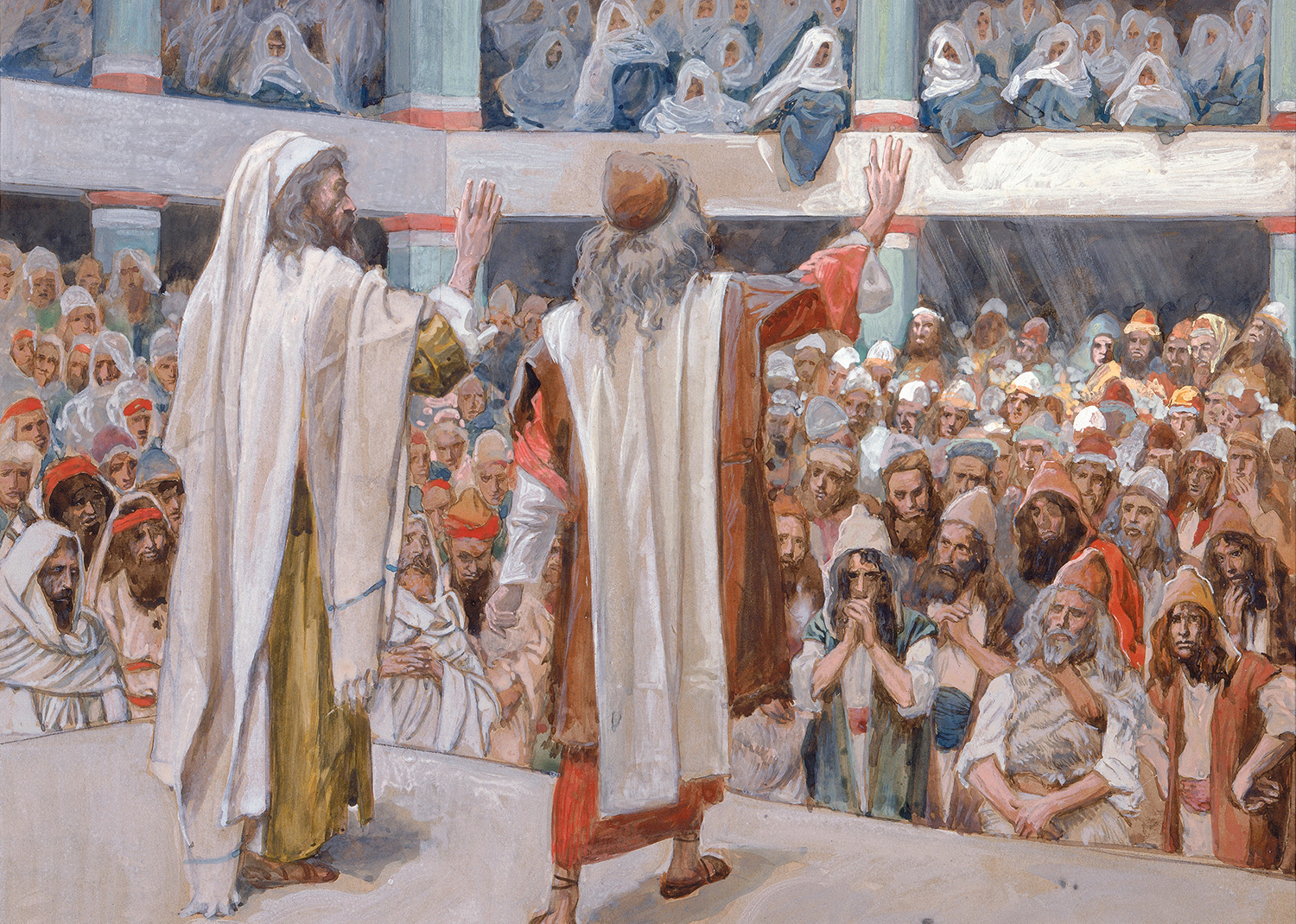
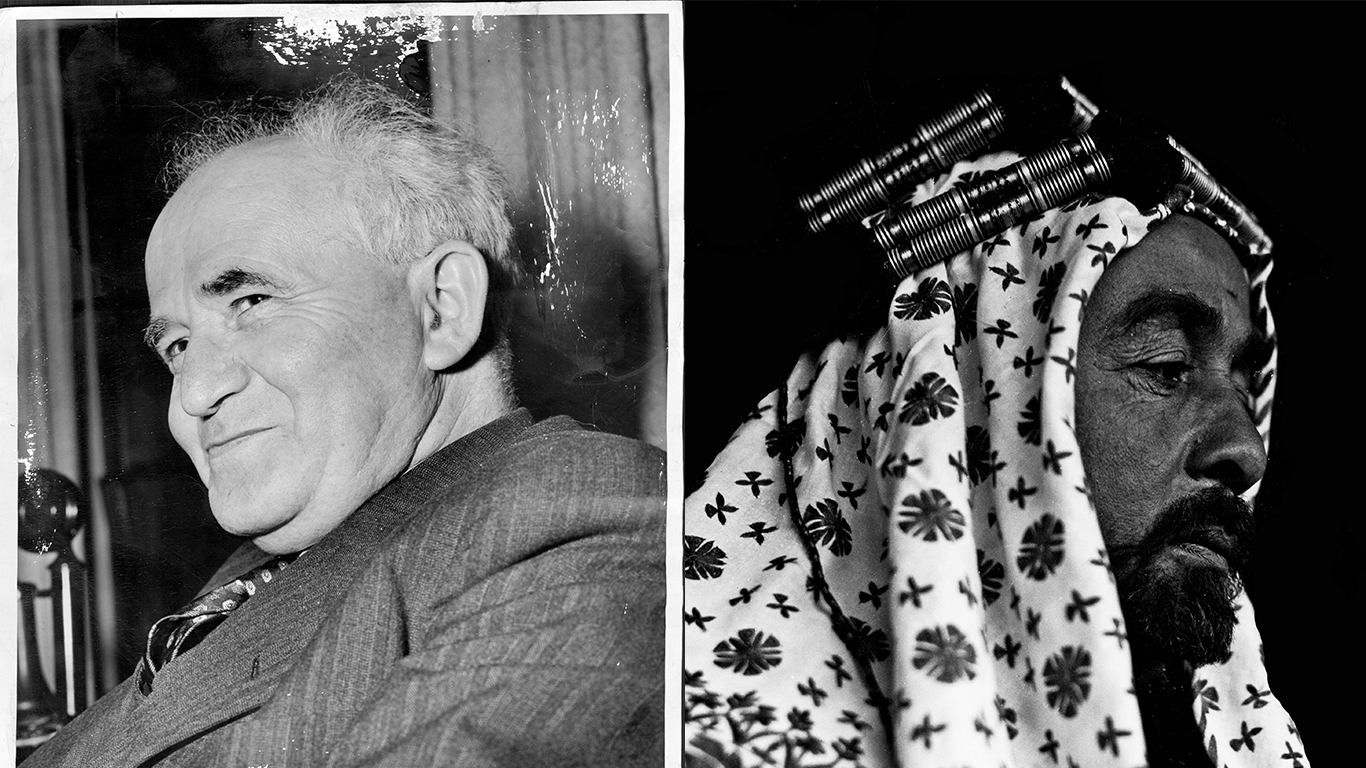



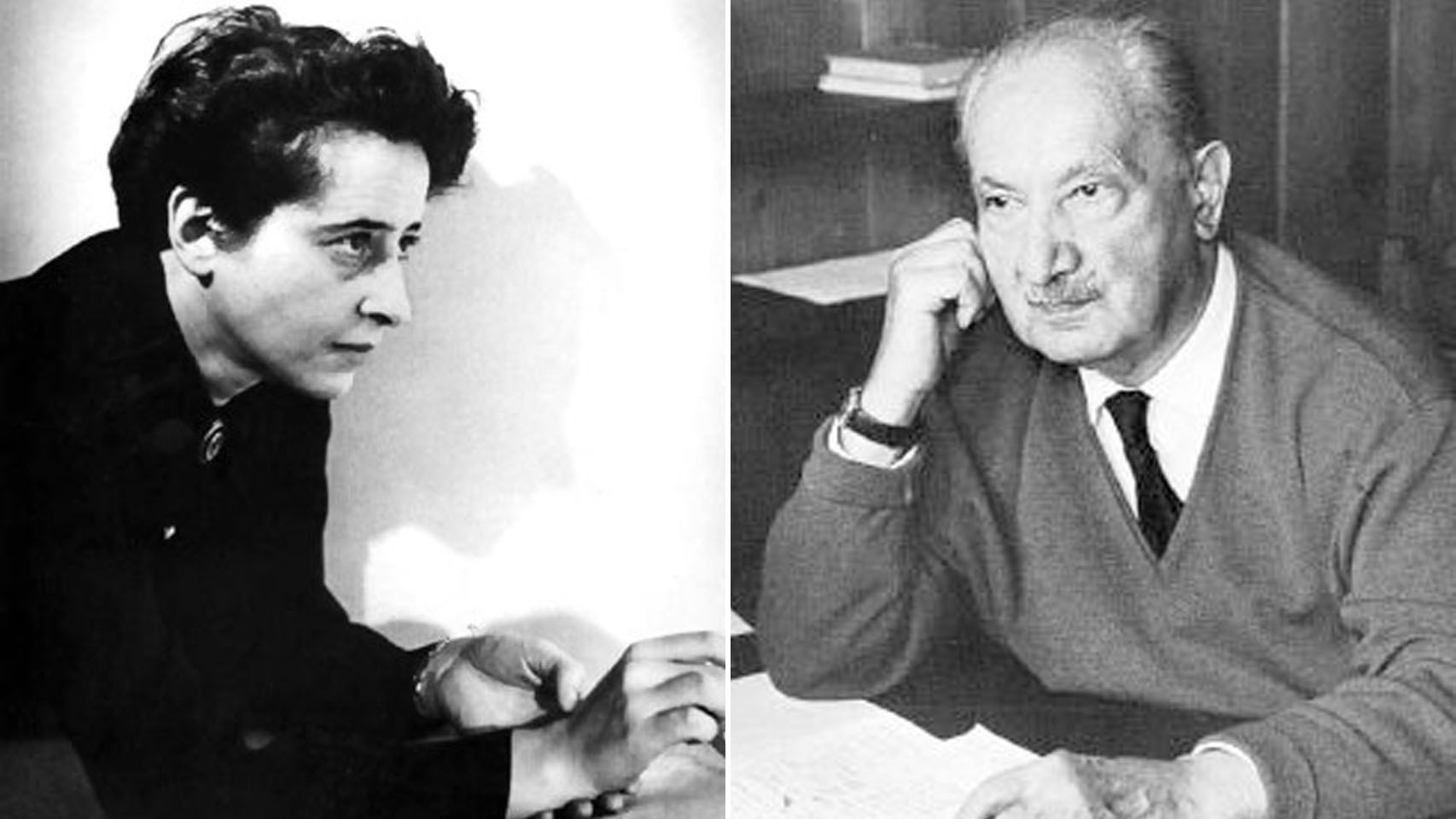


 Centro Estudios Judaicos del Sur de PR