Nitzavim, combined with the following parashah,Vayeilech, is one of the richest and most powerful in the entire Pentateuch. Our Reform practice is to reprise key verses from it in the morning service for Yom Kippur, so parts of it are likely to be extremely familiar. I would like to focus on one rather perplexing phrase that is not included in our Yom Kippur reading. It appears in chapter 29, verse 19, composed of five simple Hebrew words:
, (Lo yoveh Adonai s’lo-ach lo).
This is rendered in The Torah: A Modern Commentary, revised edition1 as, “The Eternal will never forgive such individuals,” and continues, “the Eternal’s anger and passion will rage against them.” This seems to be referring to an unforgivable offense, an unpardonable sin, which even sincere repentance will not mitigate. Is this really what the Torah teaches? Do we really believe in this? It is certainly a concept that is not very pleasant to ponder.
Knowledgeable Christians may well be familiar with this concept of an unforgiveable sin, for there is a passage in the Gospel of Matthew that reads, “No sin, no slander, is beyond forgiveness, except slander spoken against the Holy Spirit, which will not be forgiven. Anyone who speaks against the Son of Man may be forgiven, but anyone who speaks against the Holy Spirit, will not be forgiven either in this age or in the age to come” (Matthew 12:31–32). In classical Christian doctrine, then, the one unpardonable sin — even worse than speaking negatively about Jesus — is to blaspheme against the Holy Spirit by denying its power to transform one’s life. Some understood this to be the sin of despair. But what does the phrase mean in our Jewish context?
Surprisingly, even though the language of this verse seems so absolute and extreme, the classical Rabbinic literature applied it to acts that would probably not strike us as the ultimate of infamy. In Tractate Sanhedrin (76b) of the Babylonian Talmud, we read that Rav Judah said in Rav’s name: “One who marries his daughter to an old man or takes a wife for his infant son, or returns a lost article to an idolater — concerning him Scripture says, ‘The Eternal will never forgive such individuals’.” In the Midrash Pirkei D’Rabbi Eliezer we find, “One who is lax about washing his hands ritually before eating — concerning him Scripture says, ‘The Eternal will never forgive such individuals.’ ” These rather quirky statements seem to have been made somewhat tongue in cheek, expressing a particular peeve of the moment that happened to get preserved in our classical texts.
Medieval Torah commentators wrestled with the passage more seriously. The passage in Nitzavim refers to the establishment of the covenant between God and the entire people of Israel. Right before our phrase, the Bible says, “Perchance there is among you some man or woman … whose heart is even now turning away from the Eternal our God to go and worship the gods of those nations, … When [for example] a man hears the words of these sanctions, he may fancy himself immune, thinking, ‘I shall be safe, though I follow my own willful heart.’… The Eternal will never forgive such individuals. …” (Deuteronomy 29:17–19).
Abraham ibn Ezra paraphrased this dangerously misguided thinking as follows: “I’ll be OK, as I will survive through the merit of the righteous ones, for they are many and I am only a single individual who sins.” And here is another commentator, Ephraim Luntschitz of Prague: “Since the world is judged in accordance with the majority, the merit of the righteous will stand for me, and God will forgive me because of them.” In other words, the unpardonable sin is for me to shirk my responsibility to God and to other human beings by assuming there are enough good people out there for righteousness to prevail without me.
In a sense, such thinking reflects a situation opposite to what we encounter in the Book of Genesis. There, it was the problem of the good individual in a corrupt society: Noah in the generation of the flood, Abraham in Ur of the Chaldees, Lot in Sodom. Such loner individuals may think that nothing they can do will make a difference; there are so many people behaving sinfully that the tone is already set and it won’t help at all if an isolated person acts righteously.
Here in Deuteronomy it is the individual sinner, or shirker, in a basically decent society. “I don’t need to respond to a charitable appeal, I don’t need to support the synagogue, I don’t need to vote in the election, or write to my representative in Congress, I don’t need to be careful about the waste products that I throw away — there are others who will get the job done. Who is going to notice if I ‘follow my own willful heart,’ if I go my own way, if I indulge my own selfish impulses and desires?”
What this passage tells us is that Godwill notice, that God will not forgive this individual. Why? First, because one person does make a difference. The person in our parashah may be a rower in an eight-person crew who thinks he doesn’t need to train because the others are such good athletes, a violinist in a symphony orchestra who thinks she doesn’t need to practice because the others are such fine musicians, or a worker in a long assembly line. The truth is that the slacking of one individual may indeed undermine or even ruin the efforts of many.
And second, because if this individual slips by on the assumption that there are more than enough others who will do the right thing, everyone else would be entitled to draw the same subversive conclusion. There is a wonderful parable told by the 18th-century Maggid of Dubnow about the East European Jewish community that was always running short of wine on Purim; the leaders decided that they could guarantee there would be enough wine for everyone on Purim by having each adult pour a small cup of wine into a large barrel in the synagogue courtyard once a week. One of the Jews thinks to himself, “No one can see what I’m pouring into the barrel, and with all that wine, no one will notice if I pour in a cup of water instead.” And so, he did this throughout the year. When Purim came, the community discovered, to its horror and its shame, that the barrel was filled not with wine but with water — not because the one Jew’s water magically transformed all the wine, but because everyone turned out to have had the same idea.
At this time of year, we prepare to stand before God as part of a congregation, a community, a people — that indeed is how the parashah begins. But our individuality never gets submerged to the point where our unique identity is lost. Ultimately, we are accountable for ourselves. No one else can cover for us. It is only if each one of us fulfills our own obligations, our own potential, that the congregation, the community, the Jewish people , and ultimately all beings living on this planet, may be able to flourish.
W. Gunther Plaut, gen. ed., The Torah: A Modern Commentary, rev. ed. (NY: URJ Press, 2005), p. 1,374; based on the new Jewish Publication Society (NJPS) translation
Rabbi Professor Marc Saperstein, after having taught Jewish Studies at American universities for 29 years (Harvard, Washington University in St. Louis, George Washington University in D.C.), relocated in 2006 to England for a five-year term as Principal of Leo Baeck College. His recently completed book, Agony in the Pulpit: Jewish Preaching in Response to Nazi Persecution and Mass Murder, will be published by Hebrew Union College Press.
Maimónides escribió que si quieres encontrar a Dios, debes buscarlo en la naturaleza.
El físico, filósofo y teólogo del siglo XII, Moshé Maimónides, escribió que, si deseas encontrar a Dios, el primer lugar donde debes buscar es en la naturaleza. En La Guía de los perplejos, publicada en el año 1190, Maimónides escribió: Estudia la ciencia de la naturaleza (en hebreo: madá teva) si deseas comprender la ciencia de Dios (madá Elokut). De hecho, la ciencia ha descubierto a Dios y lo ha hecho al revelar los secretos de la naturaleza.
Hasta finales de los años 60, la opinión mayoritaria de la comunidad científica era que el universo era eterno; no tenía un comienzo y quizás tampoco un final. Esta opinión estaba tan impregnada en la psiquis científica que incluso Albert Einstein cambió su famosa ecuación cosmológica de un modelo dinámico (un universo en expansión o contracción) a un modelo estático inmutable. Edwin Hubble y Henrietta Levitt corrigieron ese error.
Basados en la elongación de las ondas de luz emitidas desde las galaxias distantes, ellos descubrieron que el universo está en expansión, que en realidad el espacio se extiende. Sin embargo, la idea de un universo eterno permaneció. Que un universo eterno contradecía por completo las primeras frases de la Biblia no era algo que pareciera molestar a la comunidad científica. La Biblia tiene enseñanzas éticas cruciales, pero sin duda no es una fuente para descubrir nuestra historia cósmica.
Entonces, a finales de los años 60, tuvo lugar el descubrimiento de Arno Penzias y Robert Wilson del “eco” del big bang de la creación, la energía residual de la energía original de la creación que hoy llena el espacio. La teoría era que, si el universo tuvo una creación, esta tuvo que ser un estallido de radiación súper poderosa (en esencia “rayos de luz” súper poderosos).
Durante eones de tiempo, a medida que el universo se expandió y se alargó, la energía inicial se fue diluyendo en el volumen creciente del universo. Basado en la distribución actual de materia en el universo, la densidad de energía estimada que queda de la ráfaga de creación inicial y que llena todo el espacio está en el rango de 2 a 5 grados por encima de lo que se conoce como cero absoluto (alrededor de menos 273 grados centígrados o menos 460 grados Fahrenheit). La distribución universal de 3 grados centígrados de fondo de radiación de microondas descubierta por Penzias y Wilson, coincide exactamente con la predicción de lo que debería ser esa energía si de hecho hubo un comienzo, una creación de nuestro magnífico universo (Cf. Génesis 1:1). De hecho, esa radiación representa aproximadamente el 1% de la estática que ves en la pantalla de tu televisor si sintonizas un canal en el que no hay transmisión.
Robert Jastrow, uno de los fundadores de la NASA, describió su relación con la religión de la siguiente manera: “Cuando un científico escribe sobre Dios, sus colegas asumen que está senil o que se volvió loco. En mi caso, debe entenderse desde el comienzo que soy un agnóstico en temas religiosos. Mi perspectiva en este tema es similar a la de Darwin, quien escribió: ‘Mi teología es un gran lío. No puedo considerar al universo como resultado del azar ciego, pero no veo evidencia de un diseño benéfico en los detalles'” (Dios y los astrónomos).
Con el enfoque “agnóstico” de Jastrow de la teología, su evaluación de los descubrimientos de la astronomía es un poco sorprendente:
“Los astrónomos ahora descubren que se han metido en un problema, porque probaron, con sus propios métodos, que el mundo comenzó abruptamente en un acto de creación del cual se pueden rastrear las semillas de cada estrella, de cada planeta, de cada ser vivo en el cosmos y en la tierra. Y ellos descubrieron que todo esto ocurrió como producto de fuerzas que no pueden esperar descubrir. En mi opinión, es un hecho científicamente corroborado que ahora mismo hay en funcionamiento lo que yo y cualquier otro llamaríamos fuerzas sobrenaturales”.
“Para el científico que vivió por su fe en el poder de la razón, la historia termina como un mal sueño. Él escaló las montañas de la ignorancia, estaba a punto de conquistar la cima y cuando llegó a la última roca, lo recibió un grupo de teólogos que estuvieron allí sentados desde hace siglos”.
“Que nuestro universo tuvo un comienzo, una creación, parece ser un hecho científicamente corroborado”. (Dios y los astrónomos, por Robert Jastrow).
El brillante entendimiento de que esta creación de nuestro universo físico rico en vida, pudo haber sido creado de nada físico a través de una fluctuación cuántica, es decir por las leyes de la naturaleza, fue concebido por primera vez por el profesor Ed Tryon.
El profesor Tryon resumió su visión de esta manera: “En 1973, se me ocurrió que la relatividad y la teoría cuántica podían implicar la creación espontánea de universos a partir de la nada. Si es así, la materia y la energía no serían fundamentales sino manifestaciones de leyes subyacentes. La máxima realidad serían las leyes mismas, la mente del Dios de Einstein”.
Él publicó primero su trabajo en la prestigiosa revista Nature, una de las dos revistas científicas más importantes del mundo, con el título: “¿Acaso el universo es una fluctuación del vacío? (Nature, diciembre de 1973). Información que se encuentra actualmente en el sitio web de la NASA atribuye la creación del universo a una “fluctuación cuántica”. Todo lo que hace falta para que tenga lugar una creación big bang del universo son las leyes de la naturaleza. Es decir que “todo lo que necesitas” es una enorme “necesidad”. ¿De dónde se originaron esas leyes creativas de la naturaleza? De acuerdo con el profesor Jastrow, se lo podemos preguntar a los teólogos.
Que para crear el universo Dios haya usado una fluctuación cuántica, que son las leyes de la naturaleza, no plantea ningún problema teológico. A lo largo de la Biblia, Dios usa consistentemente a la naturaleza cuando la naturaleza puede hacer el trabajo. ¡Quien crea las leyes también puede aprovecharlas! Dios utilizó un viento para partir el mar en el Éxodo (Éxodo 14:21) y otro viento trajo la plaga de langostas. Por lo tanto, al igual que con los vientos de la naturaleza, Dios puede haber utilizado como herramienta para la creación una fluctuación cuántica.
La expresión “big bang” fue acuñada por el profesor de astronomía Fred Hoyle como un término de escarnio, incluso de burla. Originalmente, Hoyle estaba en el grupo que favorecía la eternidad del universo. A comienzos de los años 50, durante una entrevista radial en la BBC, la persona que entrevistaba al profesor Hoyle le preguntó qué pensaba de los científicos que decían que hubo una creación. Él le respondió: “¡Ah! Ellos piensan que hubo un big bang”. La prensa rápidamente se apoderó del término y éste se convirtió en la forma secular de decir “creación” sin tener que decir “creación”, lo cual para una persona secular tiene la incómoda implicancia de la existencia de un Creador. (La investigación posterior de Hoyle sobre la generación de los elementos entre el hidrógeno {#1} y el uranio {#92} dentro de los núcleos de las estrellas en explosión, logró convencerlo no sólo de que hubo una creación, sino que incluso hay una inteligencia detrás de toda la empresa). El término big bang (el gran estallido) no explica qué fue lo que llevó a que el big bang hiciera “bang” (que estallara).
Hay cuatro declaraciones científicas que describen la naturaleza de la creación:
Nuestro universo no fue creado a partir de nada físico:
Fue creado a través de leyes naturales preexistentes;
Esta fue la única creación de materia física (en este caso en la forma de energía); y
La vida consciente emergió del estallido de energía caótica que marcó la creación del big bang, aunque no hay indicios de vida ni de conciencia en ese estallido inicial de energía caótica ni en los átomos y moléculas de materia que se formaron a partir de la energía de la creación.
La Biblia, 3.500 años antes, habló del comienzo de nuestro universo. Llevó algunos miles de años, pero la ciencia logró ponerse a la par de la Biblia. Igualmente significativo es que tanto la ciencia como la Biblia están de acuerdo en que hubo sólo una creación física. Todo lo que existe en el universo, desde las estrellas de las galaxias hasta las moléculas de nuestro cuerpo, fue creado de esa explosión inicial de energía.
Esto no es poesía ni ideología “new age”. Es la realidad. Cuando te miras en el espejo a la mañana, literalmente ves la energía de la creación de una forma muy especial. Esto es cierto de forma literal, tal como el hecho incuestionable de que cuando bebes agua estás bebiendo hidrógeno y oxígeno en una forma muy especial llamada agua.
Pero, ¿cómo se convirtió ese sorprendente flujo de materia inanimada en la complejidad intrincadamente equilibrada de la vida? ¿Qué fue lo que lo impulsó? Los rayos de luz de la creación del big bang literalmente cobraron vida, tomaron conciencia de estar vivos. Los rayos de luz aprendieron a amar, a sentir, a cuestionarse sobre su existencia. La maravilla de la vida no es cuánto tiempo tomó, si 6 días o 14 mil millones de años. La maravilla es que sucedió, y en esencia toda la ciencia está de acuerdo con este escenario.
Considera las fenomenales implicancias de esta declaración científica. Si las leyes de la naturaleza crearon el universo, ellas deben ser anteriores al universo. Preceden al mundo físico. Preceden a nuestro concepto del tiempo. Las leyes de la naturaleza no son físicas. Ellas crearon lo físico.
Ahora vamos a unir todo.
Una fuerza, no física pero capaz de interactuar con lo físico, externa y previa a nuestro entendimiento del tiempo, y externa y previa a nuestro universo, creó nuestro universo de algo absolutamente no físico.
¿Te suena conocido?
Puedes darte cuenta que esta es también la descripción de la creación de Dios en la Biblia.
En respuesta, los ateos me han dicho: “Si quieres llamarlo Dios, llámalo Dios”. Pero estos escépticos insisten en que el Dios que ha descubierto la ciencia no es un Dios que puede interactuar con sus creaciones. El Dios de la ciencia es un Dios deísta, un Dios que le dio cuerda al universo, insertó las leyes de la naturaleza y lo dejó funcionar por sí mismo. Sin embargo, la Biblia nos dice que el Dios de la creación se interesa y participa activamente en la creación a la que le dio existencia.
Entonces, ¿cómo determinamos si el Dios de la creación es el Dios de la Biblia, un Dios activo en Su creación?
En Deuteronomio 32:7, Moshé enseña que hay dos fuentes que revelan a un Dios activo en este mundo. Allí Moshé dice que, si buscas evidencia de un Dios activo, “Recuerda los días de antaño” (estudia el curso de los eventos durante los seis días de la creación), o “considera el flujo de generación en generación” (busca indicios de la intervención Divina en el curso de la historia).
Un ejemplo de un indicio de intervención Divina es cuando la información estadística muestra que una serie de eventos es tan improbable que la mejor respuesta es decir que fue “suerte”. En la primera Guerra del Golfo, Irak disparó 39 misiles Scud a partes densamente pobladas de Israel y a Tel Aviv. De esos 39 impactos, sólo murió una persona por las explosiones directas de las bombas o por el derrumbe de edificios. La revista científica Nature, una de las dos revistas científicas más estimadas del mundo, publicó un análisis estadístico del número esperado de muertes de acuerdo con la densidad de la población y la clase de edificios de los sitios bombardeados. Estadísticamente, la cantidad de muertes esperables era sumamente superior a lo que ocurrió. La conclusión de la revista respecto a la mínima tasa de muertes fue que, gracias a Dios, fue “suerte”. Un sitio tras otro tuvo “suerte”. Puede que haya sido buena suerte, pero no podemos dejar de preguntarnos: ¿por qué hubo suerte una y otra vez?
El origen de la vida y de una variedad de elementos a partir de rocas y agua inerte y luego el desarrollo de una vida compleja a partir de las primeras formas de vida, son dos acertijos para los que incluso el ateo declarado, Richard Dawkins, apela a la suerte. Y si no es la suerte, entonces al sueño de un reino eterno de existencia nunca observado, nunca probado, poblado por un número casi infinito de universos, cada uno con su propio conjunto de leyes naturales. Estas son las palabras de Dawkins respecto al origen y el desarrollo de la vida en su libro El espejismo de Dios:
“Podemos hablar del singular origen de la vida postulando una enorme cantidad de oportunidades planetarias [nunca probadas, nunca observadas y nunca ni siquiera insinuadas científicamente]. Una vez que tuvo lugar ese inicial golpe de suerte… puede ser que el origen de la vida no sea la única brecha importante en la historia evolutiva que se explica como mero producto del azar. El origen de la célula eucariota [nuestra clase de célula con un núcleo y varias otras características complicadas como la mitocondria, lo que no está presente en las bacterias] fue un paso más difícil y estadísticamente más improbable que el origen de la vida. El origen de la conciencia puede ser otra brecha importante que tiene el mismo grado de improbabilidad” (las negritas y los comentarios entre corchetes fueron agregados).
Francis Crick, uno de los científicos que recibió el Premio Nobel por descubrir la estructura y el rol de nuestro ADN en el código genético, y quien describió su creencia teológica como agnóstico con un prejuicio hacia el ateísmo, se esforzó por explicar la aparición de la vida en la tierra: “Un hombre honesto armado con el conocimiento que tenemos disponible en la actualidad, sólo puede declarar que en cierto sentido el origen de la vida hasta el momento parece ser casi un milagro, debido a la cantidad de condiciones que tendrían que haberse dado para que tuviera lugar”.
Sin embargo, a pesar de toda su complejidad, la vida en la tierra comenzó sorpresivamente rápido. Las rocas más antiguas que pueden tener registros fósiles ya tienen fósiles de microbios, algunos de ellos sufriendo divisiones celulares. El hecho de que el código genético del ADN y el sistema para leer la información que se encuentra dentro del código del ADN sean idénticas en todas las formas de vida, indica que desde la primera vez que se derivó el ADN el sistema funcionó bien.
Igualmente intrigante es que no hay evidencia de cambios o modificaciones evolutivas dentro del ADN, aunque podríamos haber esperado una evolución o un cambio de desarrollo para mejorar durante los miles de millones de años que el sistema ha estado operando. Otros sistemas básicos de almacenamiento y transferencia de información, como el lenguaje y la escritura, experimentaron cambios vastos y fundamentales a lo largo del tiempo y en las diversas localidades. Uno se pregunta si una naturaleza no guiada podría haber producido tal perfección genética de una sola vez.
Entonces, ¿cómo explica la comunidad científica secular el éxito de nuestro universo sustentando la vida? Al invocar la especulación de que hay un número casi infinito de otros universos, cada uno con sus propias leyes naturales singulares formadas por un aleatorio lanzamiento de dados cósmicos. Un número infinito de universos implica un número infinito de posibilidades de obtener de forma aleatoria exactamente las leyes naturales necesarias para formar la vida compleja. Por supuesto, vivimos en ese universo afortunado. No hay información directa que revele un número infinito de universos ni ningún universo fuera del nuestro.
En esos lugares singulares imaginados, pero nunca observados en el espacio, los átomos se acoplan y desacoplan aleatoriamente, probando una y otra vez una cantidad infinita de veces hasta que la vida surge por casualidad, o, de forma similar, del acoplamiento aleatorio de moléculas y luego de células surgieron las células eucariotas y luego la conciencia dentro de un grupo de células. Si este supuesto gran número de universos o planetas no existe, entonces la única explicación es la “suerte”, tal como la suerte en los ataques de los misiles Scud.
Como escribió Bernard Carr, profesor de matemáticas y astronomía en la Universidad Queen Mary de Londres: “Si no quieres a Dios, entonces es mejor que tengas múltiples versículos” (citado en Discover Magazine, diciembre del 2008). La conclusión lógica de Carr deriva de la realidad de que hay demasiadas constantes físicas que deben funcionar juntas a la perfección. Cambiar todas o incluso una de ellas puede evitar la posibilidad de la vida compleja.
¿Realmente podemos llegar a tener todas esas constantes físicas coincidentes por mera suerte en un juego de dados cósmicos?
De acuerdo con la revista científica más leída, Scientific American, estadísticamente esto sería casi imposible arrojando sólo una vez los dados cósmicos, porque las propiedades de las partículas atómicas y subatómicas conductivas a formar la vida son demasiado específicas.
Aquí hay sólo algunos de los muchos ejemplos de nuestra “suerte” para mantener la vida:
Para la existencia de cualquier forma de vida compleja, debe haber tres dimensiones espaciales (largo, ancho y alto) y una dimensión de una sola vez (el tiempo sólo avanza, nunca retrocede).
La carga eléctrica del protón (las partículas en el centro de los átomos que le dan a los átomos, y por lo tanto también a la materia, gran parte de su masa), debe ser exactamente igual y opuesta a la carga eléctrica de un electrón (las partículas que rodean el centro de los átomos), a pesar de que el protón tiene una masa 1.837 veces mayor que un electrón (el intercambio de estos electrones ultralivianos entre los átomos es lo que permite que se formen las moléculas. Sin moléculas, no hay vida).
La fuerza que mantiene unidos a los átomos, la fuerza nuclear, se equilibra en el filo de una navaja para permitir que los átomos de hidrógeno sean súper abundantes en el universo. Sin hidrógeno, no hay estrellas. Las estrellas producen su luz brillante fusionando hidrógeno, el más ligero de todos los elementos, en helio, el segundo más ligero de todos los elementos. En esa fusión, se libera energía. Esta es la energía de la luz del sol que nosotros vemos. Si esto no ocurriera, no habría elementos más pesados como el carbono y el oxígeno. Sin elementos más pesados, no hay vida. Como ocurre con todos los elementos más pesados que el hidrógeno, el carbono (el único elemento capaz de formar las complejas cadenas necesarias para la vida) se construye a partir de elementos más ligeros dentro de los núcleos de las estrellas. Pero el proceso implica una serie de reacciones complejas y exquisitamente sintonizadas.
El proceso de formación del átomo de carbono esencial es tan tenue, y no obstante tan abundante, que el astrónomo Sir Fred Hoyle (que comenzó su carrera científica como un teólogo escéptico), se sintió impulsado a escribir en la revista científica del estimado Instituto de Tecnología de California (CalTech):
¿No te dices a ti mismo: ‘Algún intelecto súper calculador debe haber diseñado las propiedades del átomo de carbono, de lo contrario, la posibilidad de que yo encuentre un átomo así [de carbono] a través de las fuerzas ciegas de la naturaleza sería absolutamente minúscula’? Por supuesto… Una interpretación a partir del sentido común de los hechos sugiere que un súper intelecto jugó con la física, la química y la biología, y que no hay en la naturaleza fuerzas ciegas de las que valga la pena hablar. En mi opinión, los números que se calculan a partir de los hechos son demasiado abrumadores como para dejar esta conclusión fuera de toda duda. (Revista de Ciencia e Ingeniería del Instituto de Tecnología de California, noviembre de 1981, págs. 8-112)
Pero increíblemente, el carbono es el elemento más abundante en nuestro universo que es sólido en el margen de temperatura en el que el agua es líquida. Agua líquida y carbono, dos materiales esenciales para la vida tal como la conocemos.
Por lo tanto, ahora tenemos un universo con propiedades físicas sumamente sintonizadas para la vida. Pero eso no garantiza que vaya a surgir la vida. Necesitamos una plataforma accesible para la vida. Esto es lo que llamamos Tierra. Ella tiene la masa exacta, la gravedad justa, la atmósfera precisa con suficiente oxígeno para permitir la combustión (para la producción de energía) pero con una abundancia de nitrógeno “inerte” en la atmósfera para que no haya una combustión espontánea de la materia orgánica.
También tenemos nuestro eje inclinado, lo que permite que la luz del sol se distribuya sobre una superficie mayor del planeta que si el eje fuera vertical u horizontal en relación al plano en el que gira alrededor del sol. Todo a una distancia del sol que permite que el agua sea líquida, y no todo hielo como en Marte, el siguiente planeta alejándonos del sol; o todo vapor como en Venus, el planeta que está antes que la tierra más cerca del sol (la temperatura en la superficie de Venus es de aproximadamente 460°C, la temperatura que funde el plomo).
Muchas personas señalaron que a medida que nos alejamos del sol, cada uno de los tiene planetas interiores y el cinturón de asteroides (lo que hubiera sido un planeta si la gravedad masiva de Júpiter no hubiese alterado su formación) está aproximadamente [+/- 10%] dos veces más lejos del sol que el planeta anterior, con una excepción: la Tierra. Con esa distribución, no habría una tierra donde está la tierra. Esta “ubicación terrestre fuera de secuencia” coloca a la tierra en la única zona habitable de nuestro sistema solar (donde llega adecuada energía solar para mantener al agua líquida, pero no tan caliente como para vaporizar el agua).
Incluso con toda esta sintonización, los seres humanos y todas las otras formas de vida terrestre no existirían de no ser por otro capricho “casual” de la naturaleza: en las primeras etapas de su formación, el planeta tierra estaba fundido. La gravedad formó la tierra fundida en una esfera [es por eso que la luna, los planetas y el sol son todos esferas y no, por ejemplo, cubos] que tenía una superficie más o menos “lisa”, no como la suavidad de una bola de billar, pero tampoco con altas montañas y profundas cordilleras. A medida que la superficie se fue enfriando, se formó una costra sólida en la superficie. La corteza se quebró en bloques del tamaño de un continente que se alejaron unos de otros, un fenómeno conocido como deriva continental.
Por ejemplo, si observamos el globo terráqueo vemos que la protuberancia de Brasil en América del Sur encaja en el hueco de África occidental. A medida que los bloques se movían [a aproximadamente 30 mm por año], la corteza que había ante ellos se amontonaba, incrementando la elevación de las superficies de los bloques, formando así los continentes. Si no se hubiera producido este desplazamiento (conocido como placas tectónicas) y el posterior incremento de la elevación, la tierra seca de los continentes no se hubiera formado. Esto no parece ser un problema, hasta que descubrimos que, si no hubiera tenido lugar la deriva continental, la tierra se hubiese mantenido relativamente lisa y la cantidad de agua de los océanos cubriría toda la tierra a una profundidad de 2,5 kilómetros. Incluso con los continentes, aproximadamente el 70% de la superficie de la tierra está cubierta de agua. Hay especies acuáticas inteligentes, pero ninguna con los logros de nuestra tierra basada en la tecnología.
Estos son sólo algunos de los muchos ejemplos de lo que se conoce como el “principio antrópico”. Como dijo el físico Freeman Dyson: es como si “el universo hubiera sabido que nosotros llegaríamos”.
Al buscar una respuesta al comienzo de la vida, el bioquímico laureado con el premio Nobel, Christian de Duve, escribió:
“Si equiparas la probabilidad del nacimiento de una célula bacteriana con el ensamblaje aleatorio de sus átomos, la eternidad no sería suficiente para producir uno… La velocidad a la que comenzó a moverse la evolución una vez que descubrió el camino correcto, por así decirlo, y la forma aparentemente auto-catalítica de su aceleración, son realmente asombrosas. [Sin embargo] el azar, y sólo el azar, hizo todo. Pero esta no es, como algunos dicen, la respuesta completa, porque el azar no operaba en un vacío. El azar operaba en un universo gobernado por leyes y hecho de materia dotada de propiedades especiales. Estas leyes y estas propiedades son las limitaciones que dan forma a la ruleta evolutiva y restringen los números que pueden aparecer… Frente a la enorme cantidad de sorteos que hay detrás del juego evolutivo, uno puede preguntarse legítimamente hasta qué punto este éxito realmente está escrito dentro de la estructura del universo”. (A guided Tour of a Living Cell, Christian de Duve).
En otras palabras, dado que el universo parece estar tan exquisitamente diseñado para la vida, no sería razonable concluir que el universo complejo y amigable con la vida es el resultado de un accidente.
A comienzos de su carrera, el bioquímico laureado con el premio Nobel, George Wald, afirmó enfáticamente que todo lo que la vida necesitaba era tiempo y suerte en las reacciones aleatorias. Sin embargo, basado en sus descubrimientos posteriores, Wald escribió:
“Últimamente se me ocurrió (debo confesar que al principio fue con cierto estremecimiento de mis sensibilidades científicas) que ambas preguntas [el origen de la vida a partir de materia no viva y el origen de la conciencia que surgió de una materia no viva] deben llegar a cierto grado de congruencia. Esto con la suposición de que la mente en vez de emerger como una consecuencia tardía en la evolución de la vida, siempre existió como la matriz, la fuente y la condición de la realidad física; que esa materia que compone la realidad física es la materia de la mente. Es la mente la que ha compuesto un universo físico que engendra vida y, por lo tanto, eventualmente evolucionaron criaturas que conocen y crean: animales que hacen ciencia, arte y tecnología. En ellos el universo comenzó a conocerse a sí mismo” (Life and Mind in the Universe; International Journal of Quantum Chemistry; Simposio de biología cuántica; 11 [1984])
La “mente” como la cualidad fundamental de toda la existencia y la “materia” como la expresión de una idea que está escrita en la estructura del universo. Esto no encaja en absoluto con el retrato de una naturaleza sin guía del Dr. Hawking.
Vale la pena señalar que la descripción científica de nuestro mundo consistentemente pasó de un entendimiento completamente físico a uno impregnado de lo metafísico.
Durante dos siglos Isaac Newton fue ciencia. La fuerza equivale a masa, tiempo y aceleración; las tres leyes del movimiento. Era un mundo lógico, totalmente materialista, clásicamente descriptible. Después vino Albert Einstein y las leyes de la relatividad. Entonces descubrimos que la velocidad del paso del tiempo varía de un lugar a otro del universo. Por extraño que parezca, el tiempo pasa más rápido en algunos lugares que en otros. El espacio se dobla. La energía puede cambiar de forma y convertirse en materia. Un universo mucho menos lógico que el que describió Newton.
Y ahora la física cuántica, la mecánica cuántica, y la solidez que percibíamos como materia metamorfoseó en lo que puede ser llamado un pensamiento, una idea, incluso una mente.
Cada avance de la ciencia llevó más lejos nuestro entendimiento de un mundo materialista a un mucho más próximo a lo metafísico. La ciencia ha abandonado el mito del materialismo.
Aquí tiene lugar la primera parte de Deuteronomio 32:7: “Recuerda los días de antaño”: la creación Divina del universo. La segunda parte del versículo, “considera el fluir de generación en generación”, afirma que podemos darnos cuenta de que Dios está activo en el curso de los eventos cuando estudiamos el flujo social de la historia. ¿Acaso la historia social arroja luz sobre un Dios bíblico, una Fuerza íntimamente interesada en la creación a la que le dio existencia, en oposición a la versión deísta de un Creador desinteresado?
La Biblia proclama que hay en la historia algo que indica la participación activa de Dios. La Biblia declara explícitamente que este “algo” es el pueblo judío. La Biblia afirma que el pueblo judío siempre se destacará, para bien o para mal, pero siempre será evidente de forma anómala en el flujo de la historia. La palabra “santo”, en hebreo kadosh, no significa mejor ni maravilloso. Significa separado, aparte. Este es un paralelo exacto de la palabra “hebreo”, que significa “del otro lado”, “separado”.
Dios usó al pueblo judío como un recordatoria de la presencia Divina para que Su Presencia sea reconocida entre las naciones. Un testimonio de esta realidad es el hecho de que el pueblo judío haya sobrevivido, incluso prosperado, en medio del exilio, la dispersión y el antisemitismo permanente.
Como escribió León Tolstoy:
¿Qué es un judío?… ¿Qué clase de criatura singular es esta a quien todos los gobernantes y todas las naciones del mundo han abusado, atormentado, oprimido y perseguido, pisoteado y masacrado, quemado en la hoguera y ahorcado, y a pesar de todo sigue viviendo y floreciendo? ¿Qué es este judío a quien nunca lograron tentar con todas las posesiones mundanas que sus opresores y perseguidores le ofrecieron para que cambiara su creencia y (repudiara) su religión y dejara de lado la fidelidad de sus antepasados?
El judío es el símbolo de la eternidad… Él es quien durante tanto tiempo fue el guardián de la profecía y es quien la transmitió al resto del mundo. Semejante nación no puede ser destruida. El judío es eterno como la Eternidad misma. (¿Qué es un judío?, impreso en el periódico judío mundial, 1908)
Tras discutir sobre algunos matices de física nuclear con el físico laureado con el premio Nobel, León Lederman, yo saqué el tema de la espiritualidad. Él me dijo que era “espeluznante” que después de 2.000 años de exilio el pueblo de Israel retornara a la Tierra de Israel. Espeluznante significa anormal. Sin embargo, la Biblia hace más de 3.000 años predijo que la nación judía se destacaría, que sería diferente.
En el acto de creación, la ciencia ha descubierto a Dios, Quien se mantiene activo en la historia de la creación a la que Él dio existencia. Como escribió Maimónides: si deseas comprender la naturaleza de Dios, estudia la naturaleza.
Estudios recientes muestran que, el 80- 90 % de los habitantes de USA dicen creer en Di-s, pero el 40-50 % declara no practicar religión alguna.
Ciertamente, si Di-s es Todopoderoso e infinito, y la religión es un compendio de leyes y rituales y una lista de cosas que uno debe ó no hacer, se hace difícil describir a Di-s como “religioso”. Tampoco pareciera que ser religioso acercará a la persona a Di-s. Si Él trasciende toda limitación y definición, ¿por qué la forma de acercarnos a Di-s debe ser el imponer más restricciones y axiomas a nuestras ya finitas y pesarosas vidas?
De todas formas, esta paradoja no está confinada únicamente al aspecto religioso- espiritual de la experiencia humana. A lo largo de la historia, cuando una persona deseaba escapar de los límites de lo mundano y frívolo, lo lograba a través de subyugarse a un estructurado y rígido código de conducta.
Mi ejemplo preferido para esto es la disciplina de la música. Hay una cierta cantidad de notas en la escala musical, y ninguno – ni siquiera el más grande de los músicos- puede crear una nueva nota o abstraerse de alguna. Quien desee ejecutar o componer música debe conformarse con este sistema absoluto e inmutable.
Más aún, sometiéndose a esta estructura, el músico creará una pieza de música que conmoverá la parte más profunda del corazón de la persona- ese sitio que no puede ser descrito, y mucho menos, definido. Usando esa fórmula precisa y matemática, el músico creará algo que transportará a quién la escuche a un lugar mucho más elevado de los confines y ataduras del diario vivir, muy por encima de las estructuras de la física y la matemática.
Imagine, entonces, una disciplina musical cuyas leyes hayan sido dictadas por el Inventor y Creador de la vida- Aquél que posee el conocimiento íntimo de cada fuerza, cada vulnerabilidad, cada potencial y cada sensibilidad.
La única pregunta que resta es: ¿Por qué tantas leyes? ¿Por qué esta disciplina dicta cómo debemos despertarnos y cómo debemos dormir, y virtualmente todo lo que entretanto hacemos?
Porque la vida misma en toda su infinita complejidad, es nuestro instrumento de conexión con Di-s. Cada “escala” en su “registro” debe ser aprovechada para alcanzar la conexión óptima.
Ya que la música es nuestra metáfora, no podemos dejar de citar la famosa anécdota en la que el Archiduque Ferdinand de Austria, según se dice, le dijo a Mozart: “Hermosa música, pero demasiadas notas”. A lo que el compositor respondió: “Si, su majestad, pero ni una más de las necesarias”.
“El equilibrio no significa evitar conflictos, implica la fuerza para tolerar emociones dolorosas y poder manejarlas” Melanie Klein
No hay duda de que el coronavirus ha puesto en juego gran preocupación sobre nuestra salud física y la de quienes nos rodean. Las personas que no se habían ocupado o atendido de padecimientos que ahora reflejan un riesgo, empezaron a prestarse atención y recurrir a sus médicos de confianza.
Pero no se puede dejar de lado el hecho de que el encierro y la incertidumbre que la pandemia ha despertado en todos, también nos llevó a procurar nuestra salud mental. Ha sido mucho tiempo en casa, intentando hacer lo que se puede, con los recursos emocionales, económicos, tecnológicos entre otros, que cada uno posee.
La pandemia, nos ha obligado a mirar hacia el interior de nosotros, de nuestras emociones y nuestra reacción ante los cambios. Hay quien ha logrado la capacidad de adaptación, la creatividad y la convivencia, otros oscilan entre días buenos y días donde la angustia los ha inundado. Es decir que una misma situación ha llevado a miles de personas a reacciones distintas.
¿Qué significa la salud mental? La Organización Mundial de la Salud la define como «un estado de completo bienestar físico, mental y social, y no solamente la ausencia de afecciones o enfermedades».
Resulta cierto que los consejos de profesionales de la salud, se han dirigido hacia: hacer una rutina diaria para mantener estructura; hacer ejercicio para disminuir el estrés; limitar la cantidad de noticias que leemos diario para bajar la ansiedad; comer balanceado; establecer contacto con la gente cercana y sobretodo, estar en comunicación con nuestros familiares que teniéndolos cerca, o a distancia, lo que preocupa es su estado de ánimo y las implicaciones de la soledad en algunos casos. Otras recomendaciones también han estado inclinadas hacia establecer límites e intentar encontrar espacios personales, creando así una convivencia óptima, con uno mismo, y con quienes se vive en la misma casa.
En resumen, a lo que apuntan estas recomendaciones y consejos, es a procurar la salud mental. A intentar encontrar el bienestar en épocas de crisis, angustia e incertidumbre.
No obstante, dichos consejos no siempre son suficientes, éstos ayudan y estructuran pero otras veces, hace falta un auxiliar externo.
Estudios actuales demuestran que los padecimientos psiquiátricos han aumentado (en niños, adolescentes, adultos y ancianos). La ansiedad, los trastornos alimentarios, la depresión, el consumo de sustancias y la violencia intrafamiliar. Ésto refleja un llamado a quienes padecen desde hace tiempo algo de lo mencionado que pudo haberse potencializado debido al encierro. Pero también, aquellos que sin antes tener algún padecimiento grave, ahora han sentido mucha ansiedad, dificultad para realizar tareas, irritabilidad, miedo constante y pérdidas significativas. El gran consejo para ambos casos es: Recurrir a un profesional de la salud mental, aquellos profesionales que de momento se les ha encaminado hacia la primera fila. A un lado de los médicos, ahora también se encuentran los psicólogos y psiquiatras.
Dicho lo anterior, vale la pena mencionar que el otro lado de la moneda, en cuanto a la salud mental, también debe ponerse sobre la mesa. Más personas se han prestado atención a sí mismos, a sus relaciones, a su mente y a saber pedir ayuda cuando les es necesaria.
Las paredes de los hogares se conviertieron en espejos en los cuales día con día nos hemos visto obligados a vernos reflejados, no en el sentido literal, sino simbólicamente hablando. Voltear a verse, reconocer necesidades y aceptar la vulnerabilidad frente a la que nos encontramos.
“La vida no tiene sentido sin la interdependencia. Nos necesitamos unos a otros, y cuanto antes nos enteremos, mejor para todos nosotros”Erik Erikson
There are some meanings of shalom that are anything but peaceful. (Photo: Patheos Media Library)
Shalom is the word that every seminarian who takes any Hebrew is proud that they have learned. Now, they know the word for “peace”! Little do they realize that the word shalom has a dark side; it has hidden shades of meaning that are anything but peaceful.
Yes, students quickly discover that shalom means more than absence of military or social conflict. Shalom is a word that describes wholeness (Isaiah 53:5), health (Psalm 38:3), prosperity (Psalm 35:27), and well-being (Genesis 37:14). When the Shunammite woman is asked if all is OK with her, she simply says, “Shalom” (2 Kings 4:26). When Biblical characters (and modern Israelis) meet, they ask about each other’s shalom (Exodus 18:7). In Esther 2:11, Mordecai stays close to the palace to stay informed about Esther’s shalom.
Many times the adjective form shalēm is used to refer to a heart that is “completely” or consistently “loyal” and not divided. Examples include 1 Kings 8:61, 1 Kings 11:4 (versus 1 Kings 15:14), and 2 Chronicles 15:17 and 25:2.Hezekiah pleads that he has walked before God with a “whole/complete” heart (2 Kings 20:3 = Isaiah 38:3).
Moses commands altars to be built with stones that are “whole/complete” (shelōmoth – Deuteronomy 27:6, Joshua 8:31). 2 Chronicles 8:16 – the work on the house of YHWH was “complete.” In Genesis 15:16, God says that the iniquity of the Amorites is not yet “complete.” Nehemiah 6:15 uses the verb form, “The wall was complete.” In Job 23:14, Job says that God “will complete (yashlim) what he has appointed for me.” The term “peace offerings” (shelamim) is also rendered as “offerings of well-being/wholeness.”
One landmark verse where the meaning of shalom embraces all of the above meanings is Jeremiah 29:7: “Seek the shalom (welfare) of the city where I have sent you into exile, and pray to the Lord on its behalf, for in its shalom, you will find your shalom.” In the same vein, in Job 9:4, Job asks, “Who has ever resisted [God] and prospered (or “come out OK” – wayyishlam)?”
But social justice proponents rightly point out that shalom cannot coexist with evil and injustice. Such obstacles to shalom must be eliminated. We find this meaning in the verb form of shalom. Its stative form (Qal) means “to be whole/be at peace.” In its transitive forms (Pi’el, Hifil, etc), it means “to establish peace” (2 Samuel 10:19). And that may include: restitution (Exodus 21:34), the repayment of debts (2 Kings 4:7), and the settling of scores (Proverbs 20:22). Ouch! Here is where we see the politically incorrect side of shalom, the dark side to which I refer. The verb form of shalom is used eleven times in Job, and six of them have to do with payback.
Who would have imagined that the shalom root would be found in this famous line? “Vengeance is mine, and shillem – recompense!” (Deuteronomy 32:35) A few verses later, we find Deuteronomy 32:41 – “I will repay (ashallem) my enemies.” But the repayment meaning is not always negative. In Isaiah 44, the verb refers to the fulfillment of God’s intentions to rebuild Jerusalem. In 2 Chronicles 5, the verb refers to Solomon “completing” his work on the Temple. The shalom verb is also a common way to express fulfillment of a vow (Psalm 65:1). In fact, the name Meshullam (used 17 times in the Hebrew Bible) is a Pu’al participle of the verb, a name that means “Repayment,” a name that may have been given to persons who were donated to service in the Temple as payment for a vow.
“Peace” is just one of the options by which we may translate the term shalom when we encounter it. Sometimes, it is entirely a matter of opinion whether peace, wholeness, welfare, well-being, or all of the above are being conveyed in any instance where the word is used. And yes, some of the extended meanings of the shalom root are anything but peaceful. If we really want to describe “peace” as in absence of violent conflict, we would do better to go to the root shaqat, which is used in Joshua 11:23 where the land “had rest” from war, and in 2 Kings 11:20, where the city “was quiet” after the overthrow of Athaliah. But that word might not fit in all of the wonderful scriptures where shalom is used.
The laws of marriage are derived from the Torah portion of Ki Teitzei. The Talmud explains that there are three ways to betroth a woman:
A woman is acquired by (i.e., becomes betrothed to) a man to be his wife in three ways, and she acquires herself (i.e., she terminates her marriage) in two ways. The Mishnah elaborates: She is acquired through money, through a document and through marital relations.
Although this description of marriage may sound legalistic, Judaism’s perspective and insight into the profound meaning, beauty, romance and mystery of marriage can be discovered by exploring the meaning behind the seemingly technical details of the law.
There are three ways to betroth a woman, not merely
Marriage has three dimensions
because the Torah would like to give us more options for creating the legal state of marriage, but rather because marriage has three dimensions. Each of the three methods of betrothal express one of the three dimensions of the relationship.
(Practically speaking, even one of the methods of betrothal suffice to usher in all three dimensions of the marriage. In fact, the rabbis prohibited betrothal through intimacy, and it has become the universal custom to betroth through a form of money. Yet, the law offers three forms of betrothal to teach us to be aware of all three dimensions that can be initiated by any one of these forms.)
The first form of betrothal is through money—the groom gives the bride something of monetary value. Money, which is tangible and physical, represents the physical aspects of the relationship. The couple will live under the same roof, eat dinner together, have a joint bank account and file a joint tax return. They will spend time together and enjoy each other’s company. Yet, while important, the physical aspect of the relationship is not all there is to marriage.
The second form of betrothal is through writing a legal document. The document itself does not have to have any monetary value; its value is abstract and intangible. The document represents the spiritual aspect of the marriage. The couple will share ideas with each other, and enjoy each other’s wit, wisdom and point of view.
Betrothal by document reminds us that marriage is more than just living together; marriage is about creating a bond between two souls (or, as the mystics say: reuniting two halves of the same soul).The document represents the soul connection that is established (or reestablished) through marriage.
The third form of betrothal, marital intimacy, represents the ultimate goal of
Intimacy is considered a holy experience
marriage. In Judaism, intimacy in the context of a sacred marriage is considered a holy experience, for it is a fusion of body and soul. It is when the first two dimensions of marriage, the physical unity and the spiritual unity, merge. The physical union expresses the deepest spiritual bond.
The marriage of man and woman is a reflection of the spiritual marriage between G‑d, the groom, and the Jewish people, the bride. Perhaps we can add that our relationship with G‑d is also expressed through these three forms of betrothal: 1) betrothal by money: G‑d blesses us with our physical life, health and necessities, allowing us to enjoy our physical life on earth; 2) betrothal by document: we enjoy a spiritual connection with G‑d, by studying His document, His Torah, which contains the mysteries of His deepest thoughts; and 3) betrothal by intimacy: the ultimate expression of our connection with G‑d is through performing a mitzvah. For the physical act of the commandment is an act of intimacy with G‑d, whereby our body and soul become one with His infinity.1
Documents reveal the private discussions behind both Pope Pius XII’s silence about the Nazi deportation of Rome’s Jews in 1943 and the Vatican’s postwar support for the kidnapping of two Jewish boys whose parents had perished in the Holocaust.
In early 1953, the photograph of a prominent nun being arrested was splashed across the front pages of French newspapers. Over the next several weeks, other French clergy—monks and nuns—would also be arrested. The charge: kidnapping two young Jewish boys, Robert and Gérald Finaly, whose parents had perished in a Nazi death camp. The case sparked intense public controversy. Le Monde, typical of much of the French media, devoted 178 articles in the first half of the year to the story of the brothers—secretly baptized at the direction of the Catholic woman who had cared for them—and the desperate attempts by surviving relatives to get them back. It was a struggle that pitted France’s Jewish community, so recently devastated by the Holocaust, against the country’s Roman Catholic hierarchy, which insisted that the boys were now Catholic and must not be raised by Jews.
What was not known at the time—and what, in fact, could not be known until the opening, earlier this year, of the Vatican archives covering the papacy of Pius XII—is the central role that the Vatican and the pope himself played in the kidnapping drama. The Vatican helped direct efforts by local Church authorities to resist French court rulings and to keep the boys hidden, while at the same time carefully concealing the role that Rome was playing behind the scenes.
There is more. At the center of this drama was an official of the Vatican curia who, as we now know from other newly revealed documents, helped persuade Pope Pius XII not to speak out in protest after the Germans rounded up and deported Rome’s Jews in 1943—“the pope’s Jews,” as Jews in Rome had often been referred to. The silence of Pius XII during the Holocaust has long engendered bitter debates about the Roman Catholic Church and Jews. The memoranda, steeped in anti-Semitic language, involve discussions at the highest level about whether the pope should lodge a formal protest against the actions of Nazi authorities in Rome. Meanwhile, conservatives in the Church continue to push for the canonization of Pius XII as a saint.
The newly available Vatican documents, reported here for the first time, offer fresh insights into larger questions of how the Vatican thought about and reacted to the mass murder of Europe’s Jews, and into the Vatican’s mindset immediately after the war about the Holocaust, the Jewish people, and the Roman Catholic Church’s role and prerogatives as an institution.
I. A Secret Baptism
Fritz Finaly, a medical doctor, was 37 and his wife, Anni, was 28 when the Germans came for them. Having escaped from Austria following its annexation by Nazi Germany, in 1938, they had hoped to flee to South America, but like so many desperate Jews at the time they found it impossible to find passage there. Settling in 1939 in a small town just outside Grenoble, in southeastern France, they did their best to make a life for themselves, although Fritz’s ability to practice medicine was hampered by the anti-Semitic laws installed by Marshal Philippe Pétain’s collaborationist Vichy government following the German conquest of France in 1940. In 1941, Robert, the Finalys’ first child, was born, followed by Gérald 15 months later. Despite a mounting official campaign against the Jews in France, the Finalys had both boys circumcised, in accordance with Jewish law, eight days after birth.
In February 1944, aware of the intensifying Gestapo roundups of Jews in their area, the Finalys placed their two small boys in a nursery in a nearby town. They confided the boys’ whereabouts to their friend Marie Paupaert, asking her to look out for the children in the event of their own arrest. Four days later, the Germans took Anni and Fritz. The couple was transported to Auschwitz, never to be seen again.
Terrified by what had happened to her friends, and fearing that the Germans would come looking for the children, Marie took Robert and Gérald to the convent of Notre-Dame de Sion, in Grenoble, hoping that the nuns would hide them. Deeming the children too young to care for, the sisters took them to the local municipal nursery school, whose director, Antoinette Brun, middle-aged and unmarried, agreed to look after them.
A little less than a year later, in early February 1945, with France now under Allied control, Fritz Finaly’s sister Marguerite, who had found refuge in New Zealand, wrote to the mayor of the town outside Grenoble where Fritz had lived to learn the fate of her brother and his family. When she heard what had happened, she immediately secured immigration permits for the two boys to join her in New Zealand. Marguerite wrote to Brun to thank her for taking care of her nephews and to ask for her assistance in arranging for their travel. To Marguerite’s dismay, Brun’s reply was evasive and made no indication that she would help return the children to their family. At the same time, concealing her knowledge of the existence of any Finaly relatives, Brun got a local judge to name her the provisional guardian of the boys, now 3 and 4 years old. (A good chronology of the basic events of the Finaly case, as previously known, is found in the French historian Catherine Poujol’s “Petite Chronique de L’affaire des Enfants Finaly,” published by the journal Archives Juives in 2004.)
The following year, the family made another attempt to have Robert and Gérald returned, this time by confronting Brun in person. Besides Marguerite, Fritz had two other sisters—one, Hedwig Rosner, living in Israel and the other, Louise, like Marguerite, living in New Zealand. Fritz had also had an older brother, Richard, who had remained in Vienna and perished in the Holocaust. But Richard’s wife, Auguste, had escaped to safety in Britain. Auguste now traveled to Grenoble, and on the morning of October 25, 1946, she appeared at Brun’s doorstep. It had been Fritz’s wish, his sister-in-law told Brun, that if anything were to happen to him and Anni, his sisters would look after the boys. She pleaded with Brun to show pity for a family that had been so recently torn apart. To Auguste’s shock, Brun grew hostile. “To all my prayers and pleas,” the boys’ aunt recalled later, “she had only a pitiless response, and she kept constantly repeating: ‘The Jews are not grateful.’ She would never give the boys back, she said.”
For many more months, Marguerite tried every avenue she could to retrieve her nephews. She sent pleas to the local mayor in France, to the French foreign minister, and to the Red Cross. At Marguerite’s urging, the bishop of Auckland sent a request through the archbishop of Westminster to the bishop of Grenoble, asking him to look into the matter. In his reply, in July 1948, the bishop explained that he had had a long talk with Brun, but she remained firm in her refusal to give up the children to their family. He made no offer of help himself, perhaps influenced by the fact that he had learned what no one in the family yet knew: Four months earlier, Brun had had the two boys baptized, meaning that under canon law they would now be considered by the Roman Catholic Church to be Catholics, and under longtime Church doctrine could not be returned to their Jewish relatives. When the family learned of the baptism, they turned for help to a Jewish family friend who lived in Grenoble, Moïse Keller. Frustrated by the difficulty of effectively fighting their cause from the other side of the world, the sisters in New Zealand decided it would be best if Fritz’s sister in Israel, Hedwig Rosner, took the lead.
With Keller’s help, the Finaly family took the case to court, but over the next years Brun kept refusing to obey a series of court orders giving Rosner custody of her nephews. Although the Catholic press would later present Brun as a surrogate mother to the boys, throughout these years the children were living not with her but in a variety of Catholic institutions. Robert and Gérald later recounted that they saw Brun only a couple of times a year, for brief visits. Shielding the boys from the authorities, by 1952 the nuns assisting Brun had arranged to place them under fictitious names at a Catholic school in Marseille. By then, the boys were 10 and 11.
A newly discovered Vatican document coming from Church sources in Grenoble offers insight into these months, noting that in July 1952 a local court had confirmed Hedwig Rosner’s guardianship of her nephews and ordered Brun to give the boys up to Rosner’s representative, Moïse Keller. Again Brun refused. The Vatican document notes, “Her attitude, motivated by her conscience from the fact that the boys are Christian, is approved by His Excellency Cardinal Gerlier”—the archbishop of Lyon, the archdiocese of which Grenoble is a part. At this time, too, Mother Antonine, the superior of the boarding school associated with the Notre-Dame de Sion convent, took on the leading role in keeping the children hidden. She was supported, according to the account provided by Grenoble to the pope, “by the directives of His Excellency Cardinal Gerlier.”
In November 1952, the local French court decided to stay its order for Brun to produce the Finaly boys, pending a decision by the Grenoble Court of Appeals scheduled for January 1953. By this time, Cardinal Gerlier was growing uneasy about the position in which he found himself. The press had gotten hold of the story. Now, as he wrote to the pope in mid-January 1953, in a letter found in the newly opened Vatican archives, he feared what the press reaction would be if the appeals court ruled against Brun and the Church: “The seriousness of the problem results notably from the fact that a profound agitation of public opinion is being created and growing around this affair. The Jewish press, the anti-Christian press, and many of the major neutral papers are seizing on this question. The communists of Grenoble are getting involved as well.”
The Holy Office, one of the major congregations that make up the Roman curia, was founded as the Congregation of the Roman and Universal Inquisition in the 16th century as part of the Church’s battle against heresy. By the early 20th century, when it was referred to simply as the Holy Office, it continued to operate as the Vatican body responsible for ensuring adherence to official Church doctrine. It would change its name once again in 1965 and is now known as the Congregation for the Doctrine of the Faith. For centuries, one of its functions had been to ensure that Jewish children who were baptized did not fall into the mortal sin of apostasy by returning to their Jewish faith. Although it was considered illicit under normal circumstances to baptize a child against parental wishes, once a child was baptized, whether licitly or illicitly, the baptism was considered valid and Church doctrine had to be followed.
A century earlier, another such case had caught the world’s attention. In 1858, the Holy Office and the pope at the time, Pius IX, learned that a 6-year-old Jewish boy in Bologna, Italy, had been secretly baptized by the family’s illiterate teenage Christian maid, who said she feared the boy was dying. They instructed the police of the Papal States, of which Bologna was then part, to seize the child, whose name was Edgardo Mortara. The boy was sent to a Church institution in Rome established for the conversion of Jews and Muslims. While Jews throughout the lands in which the pope ruled as king had long lived in fear of just such a fate for their children, times were changing, and Edgardo’s abduction set off a worldwide protest. Despite the pressure, the pope refused to have the child released. Ultimately, Edgardo Mortara became a monk, traveling through Europe and America as he preached in several languages and tried to convert Jews. (I recounted this story in a 1997 book, The Kidnapping of Edgardo Mortara, and covered another aspect of the case in a 2018 Atlantic article.) Shockingly, the Church’s position on baptism remains unchanged even now: “An infant of Catholic parents or even of non-Catholic parents is baptized licitly in danger of death even against the will of the parents.”
II. “The Indisputable Difficulties Caused by Judaism”
The Finaly case was not unlike that of Edgardo Mortara. Both involved the baptism of young Jewish children without family knowledge. Both involved the long-held Church doctrine that such children, now considered Catholic, must not be raised by Jewish families. Yet in mid-20th-century Europe, in the wake of the Holocaust, much had changed. Nearly two-thirds of Europe’s Jews had just been murdered. Thousands of Jewish orphans were scattered around the continent. Many of them had been hidden in convents, monasteries, and churches, as well as with Catholic families. In June 1945, the major French children’s relief organization estimated that in France alone some 1,200 Jewish children remained in non-Jewish families or institutions. It was thought that a much larger number were scattered across Poland, the Netherlands, and other countries. (The Canadian historian Michael Marrus provided a good overview of the situation in a 2006 Commonweal article, “The Missing: The Holocaust, the Church, and Jewish Orphans.”)
To the Jews of Europe who had survived the war, and to the Jews in America who were looking on, the idea that thousands of those orphaned children might be lost to their families and to the Jewish people provoked fear and resentment. The recollection of cases like that of Edgardo Mortara had instilled a special sense of suspicion toward a Church whose very doctrines stood in the way of the return to their Jewish families of any children who had been baptized.
For Pope Pius XII, who read Cardinal Gerlier’s plea for guidance in January 1953, the issue was not a new one. On September 21, 1945, the secretary-general of the World Jewish Congress, Léon Kubowitzki, had come to see him to make two requests. First, Kubowitzki had asked the pope to issue a public declaration denouncing anti-Semitism. “We will consider it,” the pope had replied, although he would not, in the end, make any such declaration. The Jewish leader then had come to his second request, asking for the pope’s help in ensuring that the Jewish orphans of the Holocaust living in Catholic countries be returned to the Jewish community. “We will give it all our attention,” the pope had said, asking that his visitor send him “some statistics” on the matter.
Several months later, on March 10, 1946, the pope received another distinguished Jewish visitor, the Polish-born, thickly bearded chief rabbi of Palestine, Isaac Herzog. Herzog’s visit came as part of a mission to help locate the missing Jewish orphans of the Holocaust. It would be of great assistance, said the rabbi, if the pope would issue a public plea to the priests of Europe calling on them to reveal the location of orphaned Jewish children who remained in the hands of Catholic families and institutions. Expressing sympathy for the disaster that had befallen the Jews of Europe, the pope said only that he would have the matter looked into and asked the rabbi to provide him with a detailed memorandum on the subject.
What the pope did next has not, until the opening of the Vatican archives this year, been known. Herzog returned to the Vatican on March 12 with the memorandum the pope had requested and was directed to the Secretariat of State. Following the death, in 1944, of his first secretary of state, Cardinal Luigi Maglione, Pius XII had taken the unusual step of not appointing a successor, instead dividing the work between his two chief deputies, Domenico Tardini and Giovanni Battista Montini. It was Montini—the future Pope Paul VI—to whom the pope would later entrust the management of the Finaly case. In the eyes of both Montini and the pope, there was one man viewed as the Secretariat of State’s expert on all Jewish questions. This was Monsignor Angelo Dell’Acqua, and it was Dell’Acqua with whom the rabbi was directed to meet.
Insight into Dell’Acqua’s attitudes toward the Jews is now available to us thanks to documents from the archives. Most telling is a remarkable pair of memoranda written as the pope considered whether he should take any action—or make any statement—following the Gestapo’s roundup, on October 16, 1943, of a thousand of Rome’s Jews for deportation to Auschwitz. As of that September, much of Italy was under German control, aided by a Mussolini-led puppet government established in the north. The Germans’ encirclement of the old Roman ghetto and their hours-long rousting of the terrified Jews had been traumatic for the Romans and presented the pope with a problem. Although he had a dim view of Adolf Hitler, as I discuss in my book The Pope and Mussolini, he had also taken pains to avoid angering him and was eager to maintain cordial relations with the Germans who occupied Rome and whose goodwill helped keep Vatican City unharmed. Meanwhile, more than a thousand Jews—mainly women, children, and old men—were being held for two days in a building complex right next door to the Vatican, awaiting deportation. The pope was well aware that a failure to speak out could be seen as an abdication of his moral responsibility.
In the end, he judged it imprudent to raise his voice. The Jews were herded onto a train to Auschwitz—and to death for all but a few of them. In the aftermath of this traumatic event, and amid a continuing roundup of Jews throughout German-controlled Italy, the pope’s longtime Jesuit emissary to the Italian Fascist regime, Father Pietro Tacchi Venturi, proposed that some kind of Vatican protest be made. What he suggested was presenting a brief to the German authorities—in the context of a private meeting, not issued as a public document—calling on them to put an end to their homicidal campaign against Italy’s Jews. Two months after the deportation of the Jews of Rome, he went so far as to write a draft of what the official statement should say. The text he wrote, newly discovered in the archives and reprinted verbatim in translation at the end of this article, was titled “Verbal Note on the Jewish Situation in Italy.”
The thrust of the plea was far from pro-Jewish. The proposed Vatican statement argued that Mussolini’s racial laws, instituted five years earlier, had successfully kept the Jews in their proper place, and as a result there was no need for any violent measures to be taken against them. Italy’s Jews, Tacchi Venturi argued, did not present the grounds for serious government concern that they clearly did elsewhere. Nor had they engendered the same hostility from the majority “Aryan” portion of the population that Jews engendered in other countries. This was partly because there were so few Italian Jews and partly because so many of them had married Christians. New laws confining Italy’s Jews in concentration camps, the Jesuit insisted, offended the “good sense of the Italian people,” who believed that “the racial Law sanctioned by the Fascist Government against the Jews five years ago is sufficient to contain the tiny Jewish minority within its proper limits.”
Tacchi Venturi wrote, “For these reasons one nourishes the firm faith that the German Government will want to desist from the deportation of the Jews, whether that done en masse, as happened this past October, or those done by single individuals.” He returned again to his earlier argument:
In Italy, with the above-cited racial law of 1938, observed rigorously, the unquestionable inconveniences caused by Judaism when it comes to dominate or to enjoy great credit in a nation were already taken care of. But since at present this is not happening in Italy, one does not understand why and what need there is to return to a question that Mussolini’s Government considered already taken care of.
Could the pope remain silent if the continuing deportation of Italy’s Jews to the death camps continued? In considering this question, the proposed message to the German authorities—again, to be delivered only verbally—ended by raising the possibility that the Vatican might speak out publicly at some point: “If one renews the harsh measures against the minimal Jewish minority, which includes a notable number of members of the Catholic religion”—that is, Jews who had converted to Catholicism but were still regarded as Jews by both German and Italian authorities—“how will the Church be able to remain silent and not loudly lament before the whole world the fate of men and women not guilty of any crime toward whom it cannot, without failing to carry out its divine mission, deny its compassion and all its maternal care?”
On receiving the proposed protest, the cautious Pius XII turned to Dell’Acqua for advice. Dell’Acqua responded quickly, sending the pope a lengthy critique (also newly discovered, and presented verbatim in translation at the end of this article) two days later, advising against using Tacchi Venturi’s verbal statement, not least because, in Dell’Acqua’s view, it was overly sympathetic to the Jews. “The persecution of the Jews that the Holy See justly deplores is one thing,” Dell’Acqua advised the pope, “especially when it is carried out with certain methods, and quite another thing is to be wary of the Jews’ influence: this can be quite opportune.” Indeed, the Vatican-overseen Jesuit journal, La CiviltàCattolica, had been repeatedly warning of the need for government laws to restrict the rights of the Jews in order to protect Christian society from their alleged depredations. Nor, thought the monsignor, was it wise for the Vatican to be saying, as Tacchi Venturi had proposed, that there existed no “Aryan environment” in Italy that was “decisively hostile toward the Jewish milieu.” After all, Dell’Acqua wrote, “there was no lack in the history of Rome of measures adopted by the Pontiffs to limit the influence of the Jews.” He also appealed to the pope’s eagerness not to antagonize the Germans. “In the Note the mistreatment to which the Jews are allegedly being subject by the German Authorities is highlighted. This may even be true, but is it the case to say it so openly in a Note?” It was best, he concluded, that the whole idea of a formal Vatican presentation be abandoned. Better, he advised, to speak in more general terms to the German ambassador to the Holy See, “recommending to him that the already grave situation of the Jews not be aggravated further.”
Dell’Acqua, who, during the early course of the Finaly affair would himself be elevated to the rank of sostituto of the Secretariat of State, one of the most prestigious positions at the Vatican, and would later become cardinal vicar of Rome, ended his memo to the pope with advice for the Jews who kept making so much noise about the dangers they faced and the horrors they had already experienced: “One should also let the Jewish Signori know that they should speak a little less and act with great prudence.”
It was this prelate who met with Isaac Herzog, the chief rabbi of Palestine, a little over two years later. In a long memo now found in the Vatican archives, Dell’Acqua told of the meeting and reviewed the rabbi’s arguments for the pope to help get the Jewish children returned. “The children in question,” the rabbi said, “are in large part orphans (their parents were killed by the Nazis), found especially in Poland; others, however, are also in Belgium, Holland, and France.” The rabbi, Dell’Acqua reported, asked for the Holy Father—or, if not the pontiff personally, the Vatican—to issue a public call for the release of the boys. “That,” the rabbi told him, “would immensely facilitate our task.”
After reporting the rabbi’s request, Dell’Acqua offered his advice on how the pope should respond to what he called this “rather delicate problem.” He began by ruling out any public statement by the pope or the Vatican. “Nor would I suggest responding with a document of the Secretariat of State directed to the Chief Rabbi because it would certainly be exploited by Jewish propaganda.” Rather, the best course, Dell’Acqua advised, was simply to instruct the papal delegate in Jerusalem to offer a generic verbal reply, saying that it would be necessary to look into each case individually. Nothing should be put in writing. This the pope ordered done.
III. “Advise the Woman to Resist”
On January 17, 1953, Pius XII sent Cardinal Gerlier’s urgent request for guidance on the Finaly affair to the Holy Office for its opinion. Although the pope was the titular head of the Congregation of the Holy Office, the cardinals who composed it, along with the cadre of theological consultants who advised them, met separately and typically sent their recommendations to the pope through Monsignor Montini. A Holy Office note discovered in the archives, presumably written by one of the consultants, offered some historical background: “According to the practice of the Holy Office up until the suppression of the Papal States in 1870, Jewish children baptized without their parents’ permission were not returned.” Given the sense of urgency conveyed by Cardinal Gerlier, the Holy Office took up the Finaly matter immediately. As was customary, the cardinals turned first to their group of consultants. The Church, the consultants advised, should make all possible efforts to prevent the Finaly children from being returned to their Jewish family. Should the French court case decide against Antoinette Brun and grant the boys’ aunt guardianship, “one must delay its execution as long as possible, appealing to the Court of Cassation and using all other legal means.” Should the final court ruling then go against the Church, the consultants wrote, “advise the woman to resist … unless the woman were to sustain serious personal damage and one were to fear greater damages for the Church.”
The cardinal secretary of the Holy Office then wrote directly, in French, to Cardinal Gerlier, giving the Holy Office ruling:
The dangers for their faith, should they be returned to this Jewish aunt, requires careful consideration of the following consequences:
by divine right, these children were able to choose, and they have chosen the religion that assures the health of their soul;
canon law recognizes for children who have attained the age of reason [age 7] the right to decide their religious future;
the Church has the inalienable duty to defend the free choice of these children who, by their baptism, belong to it.
What this meant, the cardinal secretary of the Holy Office advised Gerlier, was spelled out in the opinion the consultants had offered, which he appended.
Meanwhile, in France, Mother Antonine, afraid that the upcoming court ruling would go against them, had her own sister take the Finaly boys to a Catholic boarding school more than 500 kilometers from Grenoble, in Bayonne, near the Spanish border, and register them under false names. Her fears proved prescient. On January 29, 1953, the court ordered Brun arrested for failing to produce the boys. Brun would remain in prison in Grenoble for the next six weeks. Informed that the police were now looking for Robert and Gérald and afraid that they would not be safe as long as they remained in France, Mother Antonine made her way to Bayonne to discuss the matter with the local bishop. Two days after this visit, the boys disappeared. Shortly after that, Mother Antonine, charged with kidnapping, was herself imprisoned. The photograph of her arrest and the mystery of what had happened to the Finaly boys kicked off what would be many months of intense public interest in the case, in France and beyond. Over the next weeks, more monks and nuns would be arrested and imprisoned, charged with participating in a clerical underground that had spirited the boys across the Spanish border into the heart of Spain’s Basque country.
On February 24, in the wake of the French court decision and the arrest of Antoinette Brun and Mother Antonine, the Holy Office informed the pope that it had sent Cardinal Gerlier a new letter with the directive “to hold off as long as possible, that is up to when other more serious reasons might advise a different line of conduct.” The Holy Office, using one of the anti-Semitic themes routine within the Roman Catholic Church for many years, went on to inform the pope that “the Jews, tied in with the Masons and the socialists, have organized an international press campaign” around the case. In the face of this campaign, it complained, the reaction among France’s Catholics had been woefully weak, with only two of the Catholic periodicals having “energetically raised their voice in defense of the rights of the Church.”
Since the arrests, Cardinal Gerlier had agreed to negotiations with Jacob Kaplan, chief rabbi of Paris, to find a way out of the crisis. In its February 24 report, the Holy Office added its own cautious support for the negotiation. Given the situation they now found themselves in, with the Church taking a beating in the press and an increasing number of Catholic clergy imprisoned, something had to be done, the cardinals advised, to bring the case to an end. At the same time, the Holy Office insisted, any agreement requiring the boys’ return to France would have to meet two conditions. First, Robert and Gérald had to be placed in a “neutral” educational institution “in such a manner as not to get in the way of the boys’ practice of the Catholic religion.” Second, guarantees had to be given that Brun, Mother Antonine, and all the others charged with kidnapping either be absolved of the charges or amnestied. The Holy Office also suggested that Monsignor Montini speak directly with the French foreign minister, who happened to be visiting Rome, about the case, and called on Montini to send instructions to Cardinal Gerlier through the nuncio in Paris. Finally, it advised that in whatever action Gerlier took, no mention be made of the role being played behind the scenes by the Vatican, “so as not to compromise the Holy See in such a delicate and sensational dispute.”
The following day, Montini wrote back to the cardinal secretary of the Holy Office, informing him that the pope had accepted their advice. Montini reported that he had already spoken with the French foreign minister and sent the nuncio the instructions to agree to a settlement as long as it accorded with the Holy Office requirements. Following his conversation with the pope, Montini had added a clause to the language proposed by the Holy Office to make it even clearer that the children must be free to continue to practice their Catholic religion. The agreement, he told the nuncio, could only be reached “after having taken the opportune precautions to ensure that they [the boys] are not prompted to become Jews again.” Montini added a final instruction in his coded telegram to the nuncio: “E’bene che S.O. non apparisca” (“It is well that the Holy Office not be visible”).
The Vatican was between nuncios in Paris at the time, as the pope had recently notified the previous nuncio, Angelo Roncalli—later to succeed him, as Pope John XXIII—that he was being appointed a cardinal and would become patriarch of Venice. Just as the acting nuncio received Montini’s instructions, he was visited by Israel’s ambassador to France. The ambassador came on behalf of his government to ask the pope to issue a public plea to all good Catholics to assist in finding the Finaly boys and to disassociate himself from the monks and nuns who had hidden them. “I observed,” the papal emissary wrote in reporting the conversation to Montini, “that he dared to ask too much. The Holy See might be able to support an agreement, but only if certain guarantees were given with respect to the little ones’ Faith. It would never disassociate itself from and publicly condemn those who, it must be supposed, acted out of the righteousness of conscience.”
The following days saw intense negotiations between the priest deputized to represent Cardinal Gerlier and the Church on one side and Rabbi Kaplan on the other. Receiving a draft of the proposed agreement in early March, the pope called on his expert on Jewish affairs, Dell’Acqua, to prepare an analysis. The Finaly affair, Dell’Acqua advised, had stirred up a fierce press campaign against Church authorities in France, and so finding a way to bring it to an end was crucial. And yet, he concluded, the proposed agreement did not provide the guarantees the Church was looking for. “With all likelihood,” Dell’Acqua wrote, “the court proceedings in course will finish in favor of the Judaic thesis and the two young boys will end up in the hands of the Jews who, with ever greater ruthless obstinacy, will force a ‘Jewish’ education on them, with the resulting humiliation (at least in the eyes of a part of the wider public) of the Catholic Church.”
Any agreement, thought the monsignor, had to ensure the boys’ ability to continue their Catholic education. “If, then, the Jews do not observe the commitment they assumed”—here Dell’Acqua added in parentheses, “which is likely”—“the fault will then be theirs and the Church will always be able, with reason, to charge them with hypocrisy.”
The pope, too, was unhappy with the agreement that the negotiators had reached in France. Cardinal Alfredo Ottaviani, assessore of the Holy Office, had brought the text in mid-March to show the pontiff. “A positive approval cannot be given,” reads the cardinal’s handwritten note of what the pope told him, bearing the purple stamp marking an official papal decision. The agreement, the pope thought, did not offer sufficient assurances that the boys would not come under Jewish influence and revert to their parents’ religion. That said, and recognizing the public-relations disaster that the Church faced if no agreement were to be reached, the pope sought to place responsibility for the deal on Cardinal Gerlier.
As a result of these discussions with the pope, on March 16 Montini wrote again to the acting nuncio in Paris. After pointing out the Holy See’s unhappiness over the lack of sufficient guarantees provided in the draft agreement, Montini added, “If, however, the cardinal, considering the circumstances, believes he is able to assume responsibility for the execution of the agreement, the Holy Office does not oppose it and will give promised support for finding the boys.”
At the same time, the head of the liberal branch of Judaism in France, Rabbi André Zaoui, came to Rome to plead on behalf of the Finaly family. Although he was presumably eager to see the pope, it was Angelo Dell’Acqua he got to meet with, a meeting the monsignor then reported on in a memo for Pius XII. The Vatican, the rabbi had told Dell’Acqua, would be performing an act of “charity” in helping return Robert and Gérald to their relatives. “I responded,” the monsignor informed the pope, “that it was not a matter of charity but a question of principle and therefore of justice. The two boys, being Catholic, have some rights. The Catholic Church not only has rights with respect to them, but duties that it must fulfill.” As he got up to leave, the rabbi countered that the Jewish community also had rights and responsibilities. “Not, however,” Dell’Acqua told him, “of the same kind as those of the Catholic Church.”
After hearing from Cardinal Gerlier that he could get no further concessions from the Jewish side and that prolonging the concealment of the Finaly boys would prove disastrous for the Catholic Church in France, the pope reluctantly—the Latin expression aegre is used in the official record of the pope’s decision—gave his approval to the agreement. On March 23, Montini sent a telegram to the nuncio in Madrid informing him of the decision and advising the clergy to help find and return the Finaly children.
IV. A Flight to Tel Aviv
Hopes that the agreement would lead to the speedy return of the boys were soon to be disappointed. Although the nuncio in Madrid met with Spain’s cardinal primate to let him know of the Vatican’s desire for the boys to be returned, it seemed that neither the Spanish clergy nor, for its own reasons, the Spanish government was in any rush to have them found. The Spanish monks hiding the boys, Cardinal Gerlier wrote Rome, were still claiming that the pope was not eager to see them returned. In April, this prompted another telegram to the nuncio in Madrid: “Cardinal Gerlier reports that the local Spanish religious authorities where the Finaly brothers are found are said to declare that the guarantees contained in Gerlier’s agreement are insufficient and would not agree to the return of the children without an order from the Holy See.” In an accompanying note for the pope, Dell’Acqua stressed the “importance that the Holy See not appear directly. It is necessary to be attentive not only to the effects in France but also in the other Catholic and non-Catholic countries. If in some way it appeared that the boys were being returned due to the direct intervention of the Holy See, that might, at least in some countries, be judged unfavorably.” In other words, Church traditionalists familiar with Catholic doctrine might be displeased with the pope should he be seen calling for the return of the boys to their Jewish family.
In an effort to deflect attention from any Church responsibility for the continuing concealment of the Finaly children in Spain, Dell’Acqua, with the pope’s approval, drafted an article to be placed in a Swiss newspaper. It was not the “religious” aspects of the case that were preventing the boys’ return, it asserted, but political issues, “insofar as the two boys can consider themselves to be refugees who have invoked the right of exile.” On April 28, Montini sent the text of the article to the nuncio in Bern, with the instruction that he “examine how to have the press of that Nation publish the news contained in the Note, obviously without them knowing its origin.”
Still the boys could not be found. As part of the agreement he had reached with Cardinal Gerlier in March, Rabbi Kaplan had remained silent, but in early June, under growing pressure from France’s Jewish community, he called a news conference. High Church officials, he charged, had never publicly condemned the baptism of the Finaly children and the Church had taken no action to pry their whereabouts from the priests and nuns who knew where they were. He had been promised their return, the rabbi said, but now, almost three months later, Catholic clergy were still hiding them.
“The attitude of the Spanish authorities,” the French ambassador complained to the Vatican, as a newly available Vatican record of the conversation reveals, “remains less than clear. While the Minister of Foreign Affairs seems to be favorable to the desired solution, those under him come up with various pretexts to avoid the conclusion.” Indeed, the excuse that the Spanish officials repeatedly gave for their inaction was that it was Spanish Basque monks who were hiding the Finaly boys and they did not want to further inflame the government’s already tense relations with that region. On June 22, the French ambassador followed up with a memo he gave to Montini, which Montini in turn quickly forwarded to the nuncio in Madrid: “The Governor of San Sebastián [in Spain’s Basque region] continues to think … that the Spanish Basque clergy have the last word and that ‘without a formal order from Rome, the boys will remain in the shadows.’” The French government, the ambassador reported, found the Church’s failure to abide by the terms of Cardinal Gerlier’s agreement for the return of Robert and Gérald a matter of growing concern.
Four days later, a greatly relieved French ambassador called the Secretariat of State and got through to Dell’Acqua: The Finaly boys had just been handed over at San Sebastián to Germaine Ribière, the woman who had been shuttling back and forth across the border on Cardinal Gerlier’s behalf, trying to find them. The boys had already crossed the border into France.
As the saga approached its final chapter, the battle over Robert and Gérald Finaly would take on a new complexion. From the Vatican’s perspective, while it had agreed to the children’s return, it had not agreed to have them abandon their Catholic identity. Reacting to press reports that the boys’ aunt, who had left her husband and her own children behind in Israel during the months that she had been in France, was planning to take them back with her, Pius XII authorized a news story to be planted by the Holy Office in a Roman Catholic newspaper. A journalist at the Vatican’s own L’Osservatore Romano was charged with drafting it, and the final text was edited by the Holy Office.
The article, published on July 9, explained that any claim that the accord reached between Cardinal Gerlier and the Finaly family would permit taking the boys to Israel and becoming Jewish was erroneous. “The free will of the two boys, who have declared their wish to remain Catholic, is protected by the agreement. Thus they have the full right to profess and practice Catholicism, without being exposed to any pressure direct or indirect … It is clear that the prospect of the two boys’ ‘reeducation’ to Judaism would be in contrast with these premises.” The article then took a swipe at France’s Jewish community. Although French Church authorities had kept their word, the article stated, the press in recent weeks had been filled with sarcastic remarks about how long it was taking for the Church to locate the boys. “Even the chief rabbis lent themselves to these harmful suspicions with words that, apart from every other consideration, betrayed the most absolute lack of recognition for all that the Catholics had done in these years for the Jews, running the risk of the most serious personal dangers and without asking for anything, simply out of Christian charity.”
On July 19, Monsignor Montini followed up in a letter to the new nuncio in Paris. “Some newspapers,” he wrote, “are reporting that the Finaly brothers will soon be taken to Israel to be reeducated in Judaism. That is in contrast with the agreements that Cardinal Gerlier concluded some time ago.” He instructed the nuncio to call the cardinal’s attention to this fact and to report back on his response.
Six days later, Hedwig Rosner, having been awarded legal guardianship of her two nephews, boarded a plane with Robert and Gérald and flew to Tel Aviv.
What should the pope do now? Dell’Acqua offered a suggestion. The Jewish press, he wrote in a memo for the pope on July 29, was casting the outcome of the Finaly affair as a victory. “I wonder if it is not the case,” Dell’Acqua proposed, “to have an article prepared for La CiviltàCattolica to unmask the Jews and accuse them of disloyalty.” (This document is included in the appendix.) The pope apparently thought this worth considering, at least in some form; two days later, Montini prepared a message to the nuncio in Paris, complaining about Cardinal Gerlier and asking for his opinion on whether going ahead with the proposed article would be a good idea. The conclusion of the Finaly affair, Montini wrote, “had inflicted a serious blow to the Church’s right and also to its prestige in the world.” Meeting a few days later, the Holy Office supported the idea that some public action was called for, advising the pope to instruct Cardinal Gerlier to lodge an official protest.
Yet in the end, following the advice of the new nuncio in Paris that an article such as the one being proposed would be widely read as a condemnation of the action of the French episcopate, and especially of Cardinal Gerlier, the plan was dropped. Montini did, however, send a written protest in late September to the French government through its ambassador to the Vatican. The Holy See, Montini wrote, could only “express its great regret for the solution that was given to this affair without considering the religious interest of the two baptized youths. It likewise expresses the fear that these boys’ Catholic education will come to be compromised, contrary to the spirit of an agreement signed by the representatives of the family and those of the ecclesiastical authorities, and to which the latter have remained faithful.”
V. More to Come
Anni and Fritz Finaly had made it to within months of the Allied liberation of France when the Gestapo seized them and sent them to their death. While the danger to France’s Jews would soon pass, the horrors of the Holocaust were slow to move the Roman Catholic Church to consider its own history of anti-Semitism or the role it played in making the Nazis’ mass murder of European Jews possible. Pope Pius XII was undoubtedly horrified by the slaughter, but as pope or, earlier, as the Vatican’s secretary of state, he had never complained about the sharp measures taken against the Jews as one Catholic nation after another introduced repressive laws (Italy in 1938, for instance, and France in 1940). The only complaint Pius XII made about Italy’s anti-Semitic laws was the unfairness of applying them to Jews who had converted to Catholicism. That there might have been a link between the centuries of Church demonization of the Jews and the ability of people who thought of themselves as Catholics to murder Jews seems never to have crossed his mind. The fact that Mussolini’s regime relied heavily on Church materials—its newspapers and magazines filled with references to the measures popes had taken over the centuries to protect “healthy” Christian society from the threat posed by the Jews—to justify its anti-Semitic laws led to little rethinking of Church doctrine or practice under his papacy.
Among the revelations of the newly available documents is how little impact the Holocaust had on the Vatican’s view of its proper course of action in the case of the Finaly boys. While the documents show occasional allusions by the pope and those around him to the suffering recently experienced by the Jewish people, these expressions of sympathy did not translate into any special concern for the wishes of Robert and Gérald Finaly’s parents or for the Finaly family survivors who sought to take the boys in. What comes through clearly in reading the Vatican records is that the prerogatives of the Roman Catholic Church mattered above all else: that, according to Church doctrine, baptism, even against a family’s wishes, gave the Church the right to claim the children. This was what motivated the monks and nuns who moved the boys around, under fictitious names, from one hiding place to another.
The commitment of Pope Pius XII and the men of the curia to prevent the Finaly family from gaining custody of the children was tempered only by concerns about bad press, a worry constantly highlighted by Cardinal Gerlier in his increasingly urgent pleas to Rome. He especially feared bad press because it was, as he repeatedly reminded the pope and the Holy Office over these months, weakening the Church’s political position in France and its efforts to get the postwar French government to give state recognition to Catholic parochial schools.
No aspect of the pope’s attitude toward the Jews has received as much attention as the controversy over his silence during the war—his failure to denounce the Nazis and their accomplices for the systematic slaughter of Europe’s Jews. In an effort to respond to critics, it was Montini himself who later, as Pope Paul VI, commissioned a group of Jesuit scholars to pore through the Vatican archives—which have remained closed to other scholars until now—to bring to light all relevant documents regarding the pope’s and the Vatican secretary of state’s actions as they considered how to respond to the unfolding horrors of the Second World War. This resulted, from 1965 to 1981, in the publication of 12 volumes filled with thousands of documents. Volume 9, devoted to how the Holy See sought to help the victims of the war in the year 1943, contains 492 documents.
In light of the publication of this massive trove of documents, the claim has been made that nothing much new will be learned about the pope’s silence during the Holocaust from the recent opening of the Vatican archives. But scholars need not have worried about a lack of new material. Neither Pietro Tacchi Venturi’s proposed tepid, anti-Semitic Vatican protest of the Germans’ murderous campaign against the Jews in Italy nor Angelo Dell’Acqua’s memo in response was included in that massive publication. The single document published there on the episode is Cardinal Maglione’s somewhat cryptic comment in response to Tacchi Venturi’s proposal: “It is not the case to send Father Tacchi Venturi’s note (which would in any case have to be redone) nor even a more delicate note by us.” Dell’Acqua is not mentioned at all. A footnote by the editors of the Vatican volume does not make clear what Tacchi Venturi was proposing and only quotes the passages from his memo that offered a positive image of the Jews and of the lack of anti-Jewish sentiment in Italy. The new discoveries provide ample grounds to believe that the full story of Pius XII and the Jews remains to be written.
It would only be after Pius XII’s death that Church attitudes toward the Jews would change in a meaningful way, thanks to his successor John XXIII, who convened a Vatican Council devoted in part to rooting out the vestiges of medieval Church doctrine on the Jews. The culmination of those efforts came only after Pope John XXIII’s death; in 1965, the Second Vatican Council issued the remarkable declaration Nostra Aetate. Reversing long-held Church doctrine, it called on the faithful to treat Jews and their religion as worthy of respect.
Although I am not aware that anyone has made the link, it may not be too far-fetched to suspect that the Finaly case played a role in that historic shift and, with it, the abandonment of the Church’s centuries-long vilification of the Jews. The link is John XXIII’s successor, Paul VI, who presided over the council when it considered and then approved its revolutionary new doctrine. This was the same man who—under his given name, Giovanni Montini—had spent months managing the Vatican’s dealings on the Finaly affair a dozen years earlier.
If there was any distance between Pius XII and Montini in the actions taken in the Finaly affair, I have not found any trace of it in the Vatican archives. Montini’s ties with Eugenio Pacelli, the future Pius XII, could scarcely have been stronger. He had begun working for him as one of his two chief deputies when Pacelli was still the Vatican’s secretary of state and continued in the same role when, in 1939, Pacelli ascended to the papacy. In his final report to the government the following year, the outgoing French ambassador to the Vatican described Montini as the man closest to Pius XII’s heart and added, “Everyone agrees in predicting that Monsignor Montini will himself be pope.”
Yet, although heavily identified with his patron, Montini had a mind of his own. He came from an influential northern Italian Catholic family. His father had been a member in Parliament of the moderate Catholic Italian Popular Party until Mussolini abolished all non-Fascist parties in 1926. Montini was an intellectual with sophisticated tastes in art and literature. He had quietly worked behind the scenes, while Pius XII was pope, to prevent the Holy Office from condemning the works of the writer Graham Greene. The Vatican’s behavior in the Finaly case was a nasty business. Did Montini’s involvement on Pius XII’s behalf bother him at the time? Did it leave lasting scars? Did he think about the Finaly case as he was considering the proposals of the Second Vatican Council to change the Church’s long-held attitudes toward the Jews? We may not know the answers to these questions anytime soon; the archives of Paul VI’s papacy will most likely not be opened for many years.
Not long ago, I was able to reach Robert Finaly by email in Israel, where he and Gérald—now known as Gad—have lived since they were taken there by their aunt. Robert recalled the school environment in which they had been held, before their family was able to reclaim them, as one that was “100% Catholic.” Students were taught that Jews were destined for damnation. Had it not been for the persistence of his family, he and Gad would likely be living elsewhere—in France or Spain—and would, as Robert noted, remember their past very differently. The lives they have lived in Israel have been remarkably uneventful. Gad pursued a career in the Israeli military and subsequently as an engineer. Robert became a doctor, just like his father.
When I was 17, I began attending weekly Friday night services at our large Reform temple. When there was no simcha, the crowd was impossibly small. With barely a minyan, mostly older people, we sat in a circle on the bimah. Following one of these services I asked my rabbi why it was always older folks who attended these services. He told me, “It will always be older people.”
As a congregational rabbi, I’ve experienced the same thing. It’s not that younger people don’t participate, but it’s the empty-nesters—folks in their 50s, 60s and up—who participate in the widest range of activities. Their need for connections amplified by changing circumstances, they seek in Jewish community a family of choice.
Some have attributed this phenomenon to a search for God. I’m sure that’s true for many. Yet since I’m a Humanistic rabbi, that’s obviously not what I’ve observed. Our older members value Jewish identity and belonging, but they are not looking for sacred reassurances. They seek greater meaning in life, something many of us learn to appreciate only as we grow older. One of the strengths of Judaism—broadly defined—is that it provides us with so many rich and varied paths of continuing growth and exploration.
Rabbi Jeffrey L. Falick Birmingham Temple Congregation for Humanistic Judaism Farmington Hills, MI
INDEPENDENT
Being Jewish is an anomaly. From ancient times to the present, we have been perceived by the world as pariahs. Even when we occasionally chose to assimilate or convert, we failed to drop our Jewishness.
Hitler understood this and refused to take a chance on half-Jews, quarter-Jews or ex-Jews. The Spanish Inquisition had a heyday rooting out Jewish converts to the Church because they stuck out like a sore something-or-other, maybe unconsciously rolling their eyes when offered the wafer. The Jew simply cannot conceal Jewishness, and it intensifies with age because it is not cultural; it is fundamental. Bottom line, whether you are born Jewish or a “Jew by choice,” an elder Jew or a young ’un, you are notably different from everyone else across the planet. Even the very adamancy with which some older Jews disown their Jewish identity, claiming they’ve long ago grown out of it, is in itself characteristically Jewish. Reb Mendl of Kotzk once remarked how much easier it is to perform a miracle than to be a Jew. It is just as impossible to become less Jewish than you already are, regardless of age.
Rabbi Gershon Winkler Jewish Chaplain, Patton State Hospital Patton, CA
RENEWAL
You would think so. The common wisdom is that as people age, they reach for the existential comforts of religion. This may come from fear of death or from what sociologists call “gerotranscendence”—a desire for deeper meaning and a connection beyond oneself. I have seen this in my own congregations, where this spring we are celebrating ten adult b’not mitzvah by women who never had a bat mitzvah in their youth. But I have also seen, in nursing and retirement homes, a strong resistance among older Jews to prayer, God or religious tradition. Historical circumstance plays an enormous role here, as do older Jews’ perceptions of what it means to be Jewish.
RABBIS HAVE A RINGSIDE SEAT FOR ALL OF LIFE’S CHANGES, AND THE PASSAGE OF TIME IS NO EXCEPTION. WE WONDERED: IS IT TRUE THAT PEOPLE REBEL AGAINST RELIGION IN THEIR YOUTH, THEN RETURN? OR IS THAT A MYTH? AMID ALL OF THESE EXPLORATIONS OF CALENDARS AND CYCLES, HISTORICAL ERAS AND TURNING POINTS, HOW DOES TIME LEAVE ITS TRACKS IN INDIVIDUAL HUMAN LIVES?
I keep thinking about the verse from Psalm 37 recited in the grace after meals—I was a lad and now I have grown old/ and yet I have never seen a righteous person abandoned whose children are begging for bread. How can one say that with a straight face? But try adding four words at the end of the line—that I didn’t help—and it becomes a prescription for proper aging. How wonderful if, later in our lives, each of us could attest that we never passed by an adult or child needing food and compassion and did not help. Wouldn’t we all “get more Jewish”?
Rabbi Gilah Langner Congregation Kol Ami Arlington, VA
RECONSTRUCTIONIST
Mishnah Sanhedrin 4:5 teaches, “When humans mint many coins from one mold, all are alike; yet God mints everyone in the [Divine] image of the first human, and all are different.” Maturity develops fast in some, slowly in others. Deepened spirits and open hearts correlate only loosely with age. Eldering should include “paying it forward,” through mentoring, sharing, volunteering and nurturing; for some, though, it doesn’t.
Judaism commends these values and practices but can’t compel them. The same goes for communal involvement, spiritual development and other “Jewish” activities. Many seniors embrace these, not just because they have the time, but because they deeply appreciate the value of Jewish (and civic) engagement. Would that everyone of all ages felt that way! Seniority does not automatically confer wisdom and perspective. Let’s all be intentional about “spiritual eldering” and “wise aging.” And, whatever our age, what’s stopping us from getting “more Jewish” right now? Just do it! Practice one more ritual; support another cause or organization; embrace one more value. An ageless value to start with is the fundamental equality of all, young and old, created in the Divine image.
Rabbi Fred Scherlinder Dobb Adat Shalom Reconstructionist Congregation Bethesda, MD
REFORM
An older member of our community came to me troubled. After some family crises, seeing the troubles in the world, she wasn’t sure what she believed about God anymore—or whether she believed in God.
While her commitment to Judaism was not waning, she sensed that her self-understanding as a Jew was changing. Was she becoming “less of a Jew” if she didn’t view God in the same way as when she was younger? As we mature, the way we see the world and act in it shifts. Frameworks of human development can provide some insight. Theologian James Fowler identified stages of faith development that articulate differences in the ways we view our presence in the universe and make meaning in our lives. While humans advance through the stages in predictable order, not everyone progresses through every stage, and some move back and forth. Furthermore, one stage is not more faith-filled than the previous stage; rather, they are different ways of understanding one’s self in the world. As we experience life, as we reflect on and integrate those experiences, we change, we grow and we don’t get more Jewish—we get different Jewish.
Rabbi Dr. Laura Novak Winer Hebrew Union College Los Angeles, CA
CONSERVATIVE
Two-career families, child-rearing and elderly parents can be time consuming. Sadly, important questions about the meaning and purpose of life are often postponed. As people get older, they do turn to religion. This is not a 21st-century phenomenon. A passage in Plato’s Republic addresses it: “For let me tell you, Socrates, that when a man thinks himself to be near death, fears and cares enter into his mind which he never had before; the tales of a world below and the punishment which is exacted there…” For Plato, one becomes more engaged with religion because of a concern for the afterlife.
In contrast, many of the adults I have worked with turn to Judaism because they are looking for meaning and purpose in this world. They have time to explore important existential questions when their children are older or they are more established professionally. Sometimes an encounter with mortality inspires these questions. As they get older, adults become more Jewish in different ways. Some begin to attend daily or Shabbat worship; others read, take classes or travel to Israel.
Rabbi Amy Wallk Katz Temple Beth El Springfield, MA
MODERN ORTHODOX
As with most aspects of human behavior, some people do more as they get older and some do not. The Talmud tells that at the Celebration of the Drawing of Water in Second Temple times, there was dancing, singing, acrobatics and juggling (of flaming torches!) The pious men who led the celebration chanted, “We are grateful that our [behaviors in our] youth did not embarrass our old age”—meaning that they had been consistently observant and studious over their lifetime. However, the baalei teshuvah (returnees) would chant, “We are grateful that our old age atoned for our [behaviors in our] youth”—meaning that they had become more observant and learned in their old age.
Judaism does not pronounce that growing older will automatically make us better or worse Jews. That depends on the choices we make and the directions we take in life. Judaism does say that older people are entitled to extra attention and respect. There is a commandment,“Stand up in the presence of a hoary head [white-haired person] and honor [the face of] the elderly” (Leviticus 19:32). In the Talmud, some rabbis say this honor is due because people become wiser as they grow older. Other rabbis say no: Just living longer entitles people to extra care and honor. By respecting the elderly—whether or not they become wiser or more Jewish—we honor human life itself. (This only dramatizes what an enemy of human life the coronavirus is, since it targets and kills the elderly more than others.)
Rabbi Yitz Greenberg Riverdale, NY
ORTHODOX
Gerontologists tell us that as people get older, their focus and interests change. No matter how Type A they were, they come to value family and friends far more than before. Of course, those things are Jewish values. But there’s another level. There’s a commandment in the Torah to rise for an elderly person. The famed 16th-century rabbi known as the Maharal of Prague has a beautiful explanation of this mitzvah: According to Genesis, human beings are composites of physical and spiritual elements, animated by the breath of God. While Judaism values both, it puts the spiritual side on a pedestal. The Maharal observes that as people grow older, their sheer physicality begins to wane; we stand before them because we are seeing less of their material presence and more of their soul.
Recently we’ve seen the formation of Kollels, intensive study groups, for retirees, people throwing themselves into Torah study who never had time for it on a daily basis, sometimes getting deeply involved and doing it for years. I guess you could say it’s making them more Jewish, or more deeply in touch with the Judaism they always valued but never had a chance to really embrace. It’s a sharp contrast with the attitude that urges older people into retirement communities with golf courses and tennis courts, as if they can nurture the dream of youth until their dying day.
Rabbi Yitzchok Adlerstein CrossCurrents Los Angeles, CA
SEPHARDIC
Not necessarily. People follow different patterns. From my observation, changes in attitudes to religion depend on many factors, including personality, education, life experience and how they came to practice Judaism. Some rebel at an older age against everything they believed in because they feel betrayed by the blows that life, or God, has dealt them. Some practiced Judaism as a routine and later, usually after retirement, cling to these routines and habits as a lifeline. If before they would read and chant for an hour, now they will do it most of the day, finding comfort and solace in the familiar rituals and texts. And there are those whom I envy: thinkers and tinkerers whose curiosity and intellectual honesty are restless. Those people get more Jewish as they grow older because they keep asking questions. Their Judaism, in both faith and practice, is vibrant and alive, and even if their observance is perceived by the masses as “less Jewish” than what normative or mainstream Judaism dictates, for me they are the mentors we should seek. There are the great masters such as Arthur Green with his Radical Judaism, and there are many quiet masters hidden in synagogues, nursing homes and probably our own families. We only have to make the effort and find the wise elder, or as the rabbis’ wordplay suggests: “Zaken” (elder) = “Ze Kana” Hokhma—One who acquired wisdom (Talmud Bavli, Kiddushin 32:2)
Rabbi Haim Ovadia Potomac, MD
CHABAD
Many people (re)discover their Jewishness later in life, as they reflect upon their years and wish to embrace a more meaningful existence, or after a crisis or life-altering event like the loss of a loved one, especially one who was pious. At that stage, people tend to feel they’ve built themselves up, and now they need to decide how to go forward.
Others drift away as they age and become bored, complacent or disenchanted with their Jewish practice. Perhaps they want to relax, having been diligent in their younger years. This is usually a result of lacking continued and proper learning. While the practice of Judaism can be inculcated by parents and teachers and developed in the course of life, its active preservation in adult years is crucial. When the Torah refers to G-d giving us the Torah “on this day” or “today,” we must remember that it is really every day. It is up to us to invest the effort and time to keep our interest in Torah energetic and enchanting. If Torah and Jewish practice become rote, you seriously risk an evaporation in the spiritual fulfillment they provide. You miss the precious “connect” to G-d available in every mitzvah. One must constantly renew and nourish that. As we feed our bodies, so too must we feed our souls—for all of our days.
Rabbi Levi Shemtov Executive Vice President American Friends of Lubavitch Washington, DC
Una invitación a utilizar el poder depositado en uno.
Mientras vamos viviendo los primeros días del mes de Elul, surgen preguntas esenciales: ¿Somos víctimas del destino? ¿Nuestra vida está determinada por la suerte? ¿Cómo es que la Providencia nos guía en la vida y hasta qué punto coarta nuestra libertad de elección? Estas preguntas me han inquietado desde pequeño y la verdad es que, en esta era de coronavirus, se han intensificado. La idea de ser víctima de un destino predeterminado o de la suerte pareciera una limitación casi antinatural al poder creativo y al propósito individual de cada uno. El ser humano es un ente lleno de energía, capaz de expresar su autenticidad en distintos campos de la vida, los cuales debe dirigir al servicio íntegro del prójimo y de su Creador, ¿cómo podría el destino minimizar el poder de nuestro libre albedrío?
Una elección que puede hacer toda la diferencia
En el mundo del coaching se habla acerca del poder de la actitud.
La actitud es el mayor activo que una persona tiene en su vida, pero depende del uso que se le dé. La actitud puede ser el secreto del éxito de una persona o la causa de su fracaso. Una persona con actitud positiva hará frente a los desafíos de la vida con esperanza y confianza. Una persona con una actitud negativa perderá las oportunidades que la vida generosamente le brinde.
Winston Churchill dijo: “Un optimista ve las oportunidades que hay toda adversidad, mientras que un pesimista ve las adversidades que hay en toda oportunidad”, muy cierto. Al final del día, la actitud es el punto de elección más básico de la persona.
Criaturas creadoras
En mi libro “Propósito” – El eje central de una vida apasionante, hablamos sobre el poder de la mente para manifestar en la vida el propósito individual de cada uno. Lo que nos atañe aquí es principalmente el enfoque judío sobre este tema, por tanto, vamos a analizar algunas enseñanzas de nuestros sabios acerca del verdadero poder que se alberga en nosotros.
El libro Néfesh HaJaím (1:7), escrito por el Rav Jaim de Volozhin (1749-1821), enseña:
“Y sólo a él (al hombre) se le otorgó el poder de la elección para inclinarse a sí mismo e inclinar a todos los mundos (o dimensiones espirituales) hacia el sentido que él desee”.
Este poderoso mensaje nos dice que cada persona, con sus acciones o inacciones, afecta todas las dimensiones de su propia vida y del mundo entero. ¡Absolutamente impresionante!
“Eso es lo que dijo el Rey David (Tehilim 121): ‘Hashem es tu sombra junto a tu derecha’; es decir, así como la sombra de un objeto refleja los movimientos de aquel objeto, de la misma manera (…) Él, Bendito sea Su Nombre, se conectará [con las acciones del hombre] para inclinar los mundos [espirituales] de acuerdo con los movimientos y las inclinaciones de los actos del hombre abajo”.
El Rey David deja claro que la realidad que vemos en nuestra vida es un reflejo que Dios proyecta en ella, como la forma de una sombra que proyecta un objeto, pero no por consecuencia de la suerte o el destino, sino de nuestros propios deseos, emociones y decisiones, tal como una sombra o un espejo. Resulta que, uno es el creador de su propia realidad.
Si puedes creerlo, puedes crearlo
El Rav Jaim Shmulevitz (1902-1979), en su obra Sijot Musar (Cap. 64) asegura que las creencias de una persona tienen el poder de otorgarle fuerza a ella misma e incluso a otra persona o a objetos físicos para crear circunstancias en el mundo material.
Cuando uno cree en una persona y confía en ella, le da fuerzas y le transfiere poder. Asimismo, cuando uno está convencido de que puede lograr algo, adquiere la fuerza y el poder para lograrlo, aunque aún no sepa exactamente cómo lo hará.
Anticipa tu éxito
Durante los años que el pueblo de Israel deambuló por el desierto, dedicaba su servicio espiritual en un santuario movible. Éste fue construido por todos los integrantes del pueblo. Pero sólo algunos se dedicaron a la construcción y confección del mismo. En la literatura judía se menciona con sorpresa que estas personas no tenían formación en orfebrería ni en bordado, sin embargo, su corazón se llenó de confianza y de orgullo por cumplir la voluntad de Dios; y precisamente esa actitud fue la causa de que se despertara en ellos la inteligencia necesaria para llevar a cabo su labor.
El Ramban (1194-1270) enfatiza esta idea: “Al enorgullecerse por el servicio a Dios, le fue concedida a estos artesanos la creatividad para la confección del santuario” (1). Este concepto, lejos de ser misticismo, es más bien una ley natural del mundo. Cuando se tiene la fuerza de creer en algo, accede a un depósito de creatividad capaz de lograr lo que hasta ese momento parecía imposible.
Es claro que hay muchos elementos de la vida que uno no decide: la época de la historia en la que vive, la familia en la que nació y su situación socioeconómica. Sin embargo, existe una inmensa responsabilidad acerca de qué hacer con ese perfil.
Hemos citado solo algunas fuentes, pero existen muchas enseñanzas dentro de la literatura judía que sostienen que las decisiones que uno toma, así como su flujo de pensamientos y palabras, moldean su propia actitud, pero además afectan de manera directa las circunstancias que lo rodean y los resultados que se obtienen.
Querido lector, ¿Cómo crees que tu actitud puede darle forma a un escenario distinto en tu vida? Si la actitud tiene un poder tan grande ¿no valdría la pena intentar dirigirla hacia una vida de riqueza espiritual y material? ¡Seguro que sí!
La plegaria es nuestra oportunidad de hablar directamente con Dios.
Introducción
La plegaria es una obligación diaria para cada judío, como está escrito: “Servirás a Hashem tu Dios con todo tu corazón”. (1) El Talmud explica: “¿Cuál es el servicio del corazón? La plegaria”. (2)
Todavía más: cuando un individuo o una comunidad enfrentan un peligro inminente, la Torá requiere que eleven plegarias a Dios. (3) Esta obligación es tanto para los judíos como para los no judíos. (4) (5)
A través de la plegaria, el hombre mortal tiene la oportunidad de hablar directamente con el Creador del universo y expresar sus necesidades. Dios escucha y responde a nuestras plegarias. (6) En el judaísmo, todas las plegarias se dirigen directa y exclusivamente a Dios. No les rezamos a los ángeles. No les rezamos a las personas que han fallecido. Sólo Dios puede responder a nuestros pedidos. (7)
Cada día, hay tres servicios principales de plegarias:
Shajarit, la plegaria matutina
Minjá, la plegaria de la tarde
Maariv, la plegaria nocturna
De acuerdo con la tradición, estas tres plegarias fueron instituidas respectivamente por Abraham, Itzjak y Iaakov. (8)
Las tres plegarias diarias también corresponden a los tres servicios diarios que se efectuaban en el Templo Sagrado: la ofrenda Tamid de la mañana, la ofrenda Tamid de la tarde, y las partes de los sacrificios que se quemaban en el altar cada noche. (9)
En consecuencia, cuando alguien reza se considera como si hubiera llevado una ofrenda al altar. (10)
Al dedicarnos a rezar en diversos momentos del día, hacemos que Dios sea parte de cada aspecto de nuestras vidas. (11)
Quienes descubren por primera vez el servicio de plegarias, a veces pueden sentirse agobiados por la carga de las plegarias diarias. Lo recomendable es comenzar con unas pocas plegarias y gradualmente ir agregando otras al ritual diario. (12) Si es necesario, en un primer momento incluso puede limitarse a una sola plegaria diaria. Esto se puede hacer siempre y cuando sea con el entendimiento de que con el tiempo llegará a completar todas sus responsabilidades respecto a las plegarias diarias. Las plegarias más importantes que se dicen cada día son la Amidá y el Shemá. Más allá de esto, se debe pedir consejo a un rabino para saber a qué se le debe dar prioridad en este proceso de crecimiento.
El idioma de la plegaria
Las plegarias se leen de un sidur, (13) el texto religioso judío en mayor circulación, incluso por encima de la Biblia Hebrea. (14) Sidur significa “orden”, porque contiene el texto establecido para la plegaria. Para quienes hablan español, es sumamente recomendable tener una copia del sidur de ArtScroll. Este fue traducido por eruditos judíos que entienden las sutilezas tanto del hebreo como del español, e incluyen una explicación de todas las plegarias, leyes y costumbres, para los días de la semana, el Shabat, las festividades y los eventos especiales a lo largo del ciclo de vida. (15)
Técnicamente, las plegarias pueden decirse en el idioma que uno entiende, (16) sin embargo el idioma preferido para las plegarias es el hebreo. (17) Se puede rezar con el texto original en hebreo incluso sin entenderlo. (18) En cualquier caso, es una buena idea aprender hebreo lo antes posible para poder rezar de forma significativa en el idioma original.
Muchas de las plegarias se basan en versículos bíblicos, y la Amidá (por ejemplo) fue compuesta en el siglo IV AEC por los miembros de la Gran Asamblea, guiados por los profetas Nejemiá y Ezra. (19) Antes de eso, la gente rezaba manifestando lo que tenía en su corazón, (20) pero debido a las dificultades del exilio la nación judía comenzó a perder el contacto con sus “corazones”. Por eso la Gran Asamblea fijó el texto para las plegarias, incorporando en sus palabras profundos significados cabalísticos para que incluso el judío más simple pudiera ser capaz de comunicarse con Dios con las palabras más sagradas. En consecuencia, el libro de plegarias trasciende el tiempo y la geografía, permitiendo que cada judío se conecte profundamente con Dios usando las mismas palabras.
Es una buena idea fijar cada día un momento para leer y contemplar el significado de las plegarias diarias y de las plegarias especiales. (21)
Existen pequeñas variaciones en el texto de las plegarias, basados en las costumbres de las diversas comunidades. Los tres textos más comunes son:
Nusaj Ashkenaz (lit. edición alemana) – utilizado por los judíos de ascendencia ashkenazí. (22)
Nusaj Edot HaMizraj(lit. versión de las comunidades orientales) – usado por los judíos de ascendencia sefaradí. (23)
Nusaj Sefarad (lit. edición española) – utilizado en general por los jasidim, se basa en las enseñanzas del Arizal, sabio místico del siglo XVI.
Existen precedentes históricos para leves variaciones en el texto; los escritos místicos enseñan que hay 12 “ventanas” celestiales a través de las cuales envían sus pedidos cada una de las Doce Tribus. Por eso, originalmente los Sabios compusieron 12 ediciones de las plegarias, correspondientes a las características espirituales diferentes de los diversos segmentos del pueblo judío. (24)
Diversas obligaciones
Los hombres deben rezar con un minián siempre que sea posible. (25) Esto se debe a que es más probable que sea aceptada la plegaria pública, a diferencia de la plegaria privada que depende en gran medida del grado de concentración de la persona. (26) Además, hay ciertas partes del servicio que sólo se pueden decir en presencia de un minián: Kadish, (27) Barjú, (28) la repetición de la Amidá, (29) la bendición de los cohanim, (30) y la lectura de la Torá. (31) Siempre se debe tratar de rezar en una sinagoga, (32) incluso si en ese momento no hay presente una congregación. (33) En la clase “Leyes de la vida cotidiana – La sinagoga” se analizan más leyes relativas al minián.
También las mujeres están obligadas a rezar cada día. (34) Sin embargo, debido a que esta es una mitzvá “limitada por el tiempo”, la obligación específica es diferente. Una mujer que debe cuidar a sus hijos puede cumplir su obligación de rezar con una breve plegaria informal. (35) Los detalles se analizan en: “Leyes de la vida cotidiana – Las mujeres y las mitzvot”. (36)
Se debe enseñar a los niños a rezar de la forma debida. (37) Apenas el niño es capaz de hablar, se le debe enseñar a decir el primer versículo del Shemá. (38) Tradicionalmente, se lleva a la sinagoga incluso a niños muy pequeños, siempre y cuando no perturben la plegaria de los demás. (39)
Dónde rezar
Dios escucha nuestras plegarias sin importar en dónde estemos. Pero las plegarias son mejor recibidas cuando se recitan en un lugar fijo, (40) porque esto ayuda a tener concentración. Por lo tanto, se debe seleccionar un lugar particular para rezar, a menos que haya razones importantes para rezar en otro lado. (41)
En general, se debe tratar de no rezar en un área en donde otras personas puedan llegar a molestarnos. (42) Además, debido a que el Rey Jizkiahu se volvió hacia la pared para suplicarle a Dios, (43) siempre que sea posible es mejor rezar frente a una pared. (44)
Hay ciertos lugares en los cuales no se debe rezar ni decir bendiciones. Por ejemplo, no es ideal rezar en un área abierta que no tiene techo, (45) si hay otro lugar disponible. (46)
No se puede rezar ni recitar bendiciones en el baño (47) ni en ningún lugar donde hay mal olor o desperdicios expuestos. (48) Tampoco se puede rezar ante la presencia de alguien que no está suficientemente vestido. (49)
Focalizar la atención en la plegaria
Hay dos cosas que se deben tener presentes al rezar:
Recordar que estás de pie frente al Rey Omnipotente del universo
Prestar atención al significado simple de las palabras (50)
Durante la plegaria, se debe tener limpia la mente y el cuerpo. Es necesario esforzarse por alejar cualquier pensamiento ajeno (sobre negocios, trámites, etc.) y concentrarse solamente en las palabras de las plegarias.
Si alguien tiene dificultad para concentrarse en las plegarias, por lo menos debe concentrarse debidamente en el Shemá y la Amidá. Al decir la Amidá, es especialmente crítico mantenerse concentrado durante la primera bendición. (51)
Antes de comenzar a rezar, debemos entrar en un marco mental solemne. (52) No hay que rezar cuando uno está preocupado por algo. (53) Si en medio de la plegaria se nos cruza algún pensamiento ajeno, debemos esperar en silencio hasta que logremos sacarlo de la cabeza y luego seguir rezando. (54)
Para evitar que la mente se disperse, es una buena idea mantener los ojos fijos en el sidur. (55) De hecho, durante la plegaria no se debe sostener en la mano ninguna otra cosa fuera del sidur. (56)
Al rezar, la vestimenta debe reflejar la importancia de la experiencia. (57)
Asimismo, debemos lavarnos las manos antes de las plegarias, (58) y durante la plegaria no hay que tocar ninguna parte del cuerpo que normalmente esté cubierta. (59) Si es necesario, antes de rezar se debe ir al baño. (60)
El día judío
En la siguiente clase nos referiremos al cronograma diario de plegarias. Pero antes, necesitamos entender algunos conceptos básicos respecto a cómo está estructurado el día judío.
Para comenzar, es importante recordar que el día judío comienza a la noche, basado en Génesis 1:5 que menciona primero la noche: “…y hubo noche y hubo mañana”. (61)
Sin embargo, la mayoría de las personas intuitivamente piensan que el día comienza a la mañana, así que en pos de la simplicidad nuestro análisis comenzará con la salida del sol y continuará hasta llegar a la noche.
Terminología
Hay algunos términos claves que debemos entender y recordar:
Alot Hashajar – el comienzo del día, 72 minutos antes del amanecer
Netz HaJamá – el amanecer
Jatzot HaIom – el mediodía
Shkiá – la puesta del sol
Bein Hashmashot – el período entre la puesta del sol y el anochecer (tzet hakojavim) se considera como un momento “de duda” entre el día y la noche.
Tzet HaKojavim – el anochecer se define por la aparición de tres estrellas, (62) lo cual ocurre aproximadamente 30-40 minutos después de la puesta de sol, dependiendo de la estación y del lugar.
Hatzot Halaila – la medianoche
Tiempos de las plegarias
Cada plegaria específica se analizará con mayor profundidad en la próxima clase, pero por ahora lo básico es:
Shemá de la mañana – el momento más temprano en que se puede recitar el Shemá de la mañana es aproximadamente una hora antes del amanecer, (63) y se puede decir hasta la cuarta parte del día.
Shajarit– comienza con el amanecer y continúa hasta el final de la cuarta hora halájica, que es equivalente a un tercio del día.(64)
Minjá– el servicio de la tarde comienza media hora después del mediodía, (65) y continúa hasta la puesta del sol. (66)
El Shemá de la noche – se puede recitar al anochecer (tzet hakojavim) hasta la medianoche halájica. (67)
Maariv– el servicio nocturno comienza al anochecer (tzet hakojavim), (68) y continúa hasta la medianoche halájica. (69)
Horas estacionales
Las horas a las que nos referimos aquí son llamadas “horas estacionales” (en hebreo shaot zmaniot) y son diferentes de las horas convencionales. Una hora convencional consiste en 60 minutos. Pero una hora estacional judía puede tener más o menos de 60 minutos, dependiendo de la estación y de la ubicación.
Dicho de forma simple, las horas estacionales se determinan al dividir el día en 12 partes iguales, y la noche en 12 partes iguales.
Por ejemplo, digamos que en una ciudad en particular, en un día de verano, el sol sale a las 5 a.m. y se pone a las 8 p.m. Esto significa que hay 15 horas de “día” y 9 horas de “noche”. En términos judíos:
Dividimos el “día” en 12 partes iguales, Debido a que hay 15 horas de “día”, cada “hora estacional” tendrá 75 minutos (15 horas x 60 minutos = 900 minutos, luego lo dividimos por 12 = 75 minutos por “hora estacional”).
También dividimos la “noche” en 12 partes iguales. Como quedan sólo 9 horas de “noche”, cada “hora estacional” tendrá 45 minutos (9 horas x 60 minutos = 540 minutos, luego lo dividimos por 12 “horas” = 45 minutos cada “hora estacional”).
En invierno ocurre lo opuesto, las “horas estacionales de noche” son más largas, y las “horas estacionales de día” son más cortas.
En un día en el cual el sol sale a las 6 a.m. y se pone a las 6 p.m., cada hora estacional tendrá exactamente 60 minutos.
(5) De acuerdo con el Rambam (Tefilá 1:1 y Sefer HaMitzvot – Positiva N° 5), la obligación de las plegarias diarias es una obligación de la Torá en todo momento. Sin embargo, ver Mishná Berurá 106:4, que sigue el dictamen del Rambán respecto a que la obligación básica de la plegaria diaria es de origen rabínico.
(6) Rambán (Hasagot to Sefer HaMitzvot, Positiva N° 5)
(8) Talmud, Brajot 26b, basado en Génesis 19:27, 24:63 y 28:11. Ver también Salmos 55:18 y Daniel 6:11
(9) Talmud, Brajot 26b
(10) Talmud, Ioma 86b
(11) Ver Kuzari 3:5 y la introducción del Rav Dr. Elie Munk a World of Prayer (Feldheim).
(12) Oído del Rav Itzjak Berkovitz
(13) Hay un libro especial de plegarias para las festividades que se llama Majzor, “ciclo”.
(14) Rav Jaim HaLevi Donin: To Pray as a Jew
(15) Puede comprarse en línea en artscroll.com.
(16) Oraj Jaim 101:4, 62:2 con Mishná Berurá
(17) Mishná Berurá 101:13. La plegaria regular comunitaria debe pronunciarse en hebreo; una congregación no puede adoptar otro idioma oficial para las plegarias (Mishná Berurá 101:13).
(18) Mishná Berurá 62:3
(19) Talmud, Brajot 33a; Meguilá 17b
(20) Rambam (Tefilá 1:3)
(21) Rav E. M. M. Shaj citado en la introducción al Kuntras Avodat HaTefilá de Rav Meir Birnbaum; cf. Mishná Berurá 101:2
(22) Los judíos ashkenazim son aquellos cuyos ancestros provienen de la mayoría de los países europeos, incluyendo a Inglaterra, Francia, Alemania, Checoslovaquia, Austria, Hungría, Polonia y Rusia.
(23) Los judíos sefaradim por lo general son aquellos cuyos ancestros provienen de países que estuvieron bajo influencia musulmana, tales como España, Siria, Líbano, Egipto, Iraq, Irán, Túnez, Marruecos, Argelia y Turquía.

 , (Lo yoveh Adonai s’lo-ach lo).




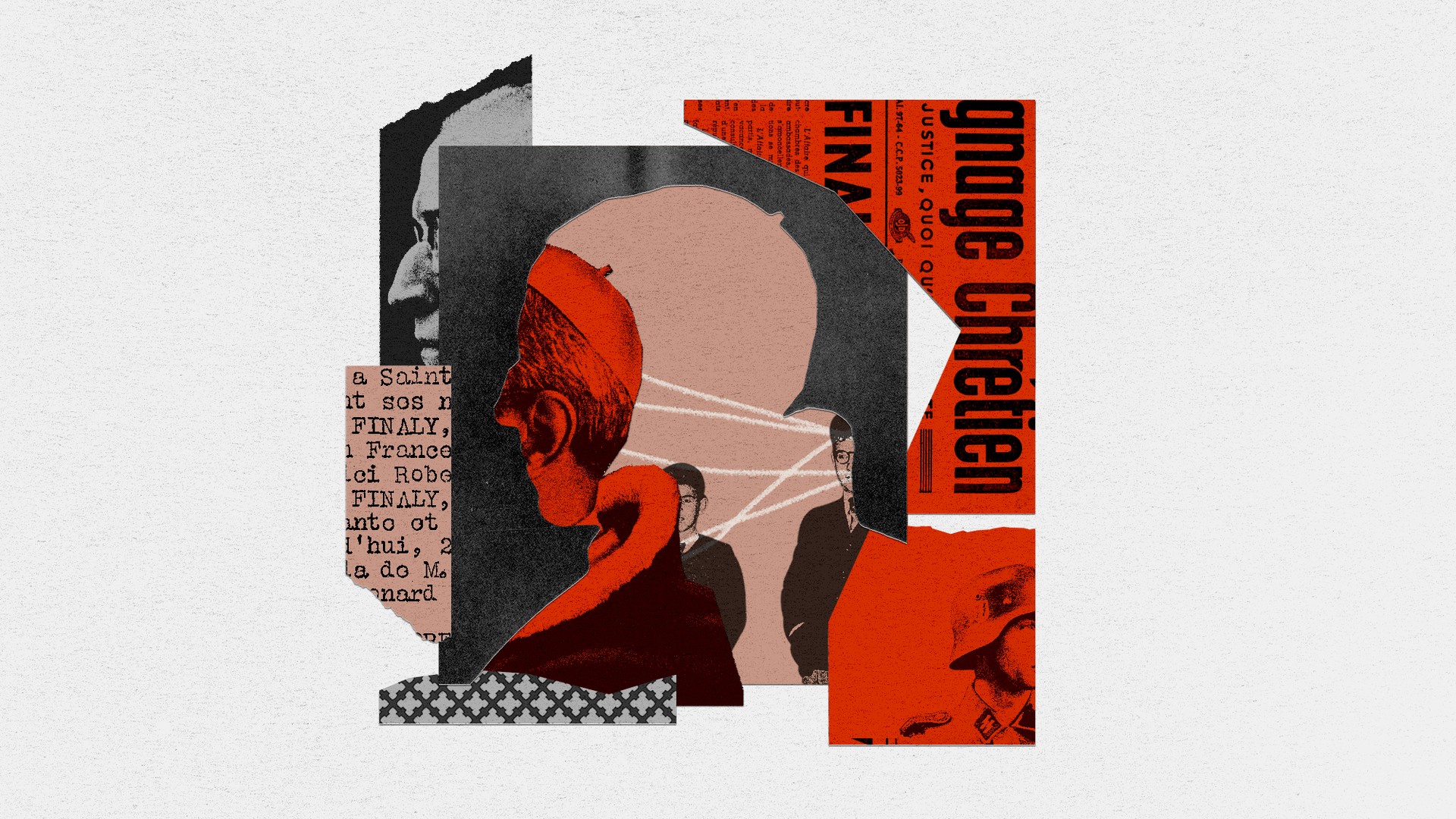
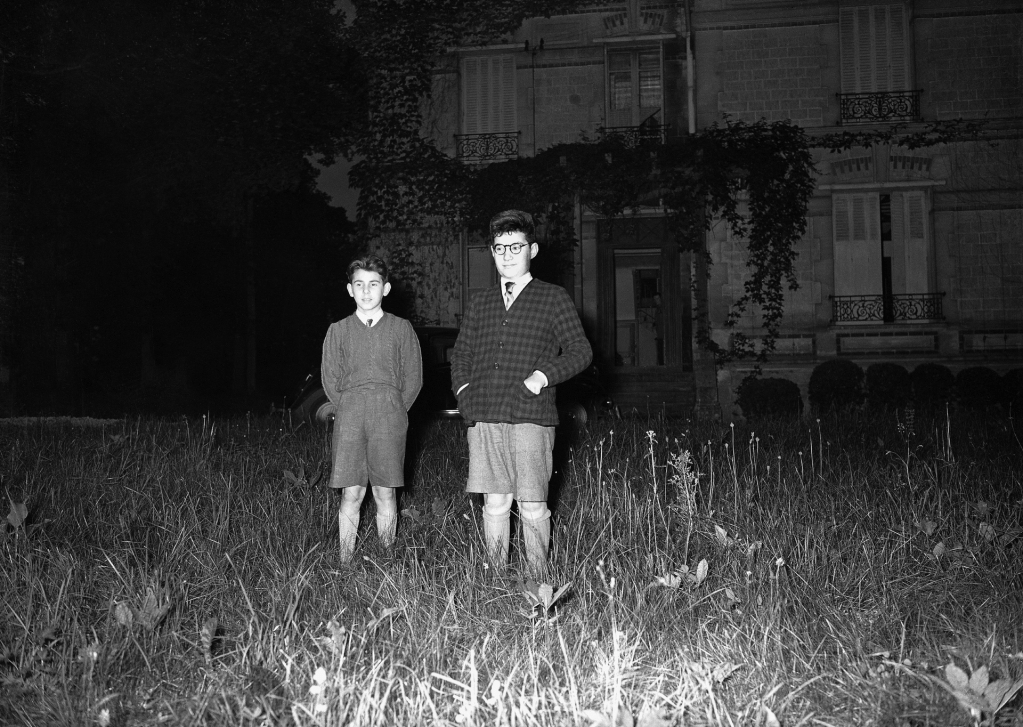


 Centro Estudios Judaicos del Sur de PR