RSS

Author Archives: yishmaelgunzhard

Seeing the Holy Land Through Einstein’s Eyes

Happy are the people whose strength is in You, whose hearts are set on pilgrimage. (Psalm 84:5)

In 1922, 42-year old Albert Einstein – arguably the greatest secular Jewish genius, and one of the most famous and admired people in the world for his publication of his monumental General Theory of Relativity – set off on October 6 of that year, with his second wife, and first cousin, Elsa, on his first, five-and-a-half-month lecture tour of the Far and Middle East.

It was a different age as Jews licked their wounds from persistent European pogroms; the “Great War” between the Allies and the Central Powers of Germany and Austria-Hungary ended in 1918; only18 years previously, the Wright Brothers sent the first gasoline-powered Flying Machine into the sky; and the British Mandate had just taken over from the Ottoman Empire and ruled the Jews and Arabs in Palestine (Eretz Yisrael).

Although the great Jewish theoretical physicist had left Europe in April 1921 to speak in New York for the first time, he did not document his experiences with pen and paper, and had never before traveled eastward. On that first visit to the U.S., he was accompanied by Chaim Weizmann (then president of the Zionist Organization in London who eventually became first president of the State of Israel in 1949 and a renowned chemist in his own right). The aim was to raise money for the planned Hebrew University in Jerusalem whose cornerstone was laid in 1918 and which opened in 1925, as well as to forge ties with the American scientific community in the wake of the World War I.

These personal connections were fortunate, because with the rise of Hitler and Nazism in 1933 and fearing anti-Semitic persecution, he and his family abandoned Europe forever – settling down at the newly founded Institute for Advanced Study at New Jersey’s Princeton University.

“… the revival of Palestine will mean the liberation and the revival of the soul of the Jewish people. I count it among my treasured experiences that I should have been able to see the country during this period of rebirth and re-inspiration.”

The visit to Palestine followed an invitation from Arthur Ruppin, director of the Zionist Organization’s Palestine Office in Jaffa, who thought the scientist’s visit would have “great propaganda value” not only for Jewish settlements but also for the Hebrew University. Einstein even spent a day in Singapore, specifically to raise money for the Jerusalem campus from Mannaseh Meyer, the wealthy leader of the Jewish community there.

Einstein, however, did keep a record in his diary in German every day of his trip eastward – a total of 182 lined pages, some of them with his own drawings of things he observed. Now, this unique document has been brought to light, with extensive comments by Ze’ev Rosenkranz, senior editor and assistant director of the Einstein Papers Project at the California Institute of Technology in Pasadena and formerly curator of the Albert Einstein Archives at the Hebrew University. Published by Princeton University Press, the hardcover, $29.95 book – The Travel Diaries of Albert Einstein – presents 357 fascinating pages.

“For the Zionists,” assessed Rosenkranz, “the visit of the most prominent… Jewish personality was an amazing propaganda coup. For Einstein, the tour was mainly a means to satisfy his curiosity about the country whose development he had been supporting for some years. It also afforded him the opportunity to be present at one of the defining moments of the Hebrew University, the Jewish cause that meant the most to him.”

Einstein referred to the news that he was selected to receive a Nobel Prize for Physics, but he did not attend the December 1922 ceremony because he was in the midst of his travels. Instead, a German diplomat spoke at the banquet and praised Einstein as both a scientist and a peacemaker.

The telegraphic-style diary entries record Einstein’s musings on science, philosophy, art and politics, as well as his immediate impressions and broader thoughts on events such as his inaugural lecture at the future site of the university in Jerusalem, a garden party hosted by the Japanese Empress, an audience with the king of Spain and meetings with prominent colleagues and statesmen. Entries also contain passages that reveal Einstein’s stereotyping of members of various nations and raise questions about his attitudes on race.

It includes facsimiles of the diary’s pages, accompanied by an English translation, Rosenkranz’s 77-page historical introduction, numerous illustrations and annotations. Supplementary materials include letters, postcards, speeches, articles, a map of the voyage, a day-by-day chronology of the visit, a bibliography and an index.

“We can be certain that he did not intend [his diary to be kept] for posterity or for publication,” writes Rosenkranz. “It was most likely intended both as a record for himself and as reading matter for his two step-daughters, Ilse and Margot, who remained at home in Berlin.” Both the harsh and positive words he uses “would account for the discrepancy between his more tolerant and guarded public statements and his candid and [at times] offensive private notes. The travel diary allows Einstein to explore his more irrational and instinctual side and to be freer in his expression of his personal prejudices.”

Another explanation is Einstein’s “pronounced elitism with regard to intellect. His humanism ends when he perceives a nation as intellectually inferior. Furthermore, it could be argued that in spite of his public advocacy of human rights, it was science, not humanity, that lay at the center of Einstein’s universe.”

Whatever is the reason, the diary has fortunately been published and opens a window on civilization a century ago, the state of the Jewish Yishuv in Palestine and Einstein’s personality.

The physicist made five more trips abroad (to South America and the US) and kept journals for all of them, but this first volume of his travel diaries offers an initial, intimate glimpse into a brilliant mind encountering the great, wide world. Yet he was not a saint, but a human-being shaped by his childhood experiences, the culture and society that encompassed him as an adult and his prejudices, some of which seem xenophobic and embarrassing to the contemporary reader.

Einstein was not a trained, objective anthropologist. The book’s editor himself notes that “a lot of comments strike us as pretty unpleasant…They’re kind of in contrast to the public image of the great humanitarian icon. I think it’s quite a shock to read those and contrast them with his more public statements. They’re more off guard, he didn’t intend them for publication.”

His reputation of caring about the poor and stateless was even used later by the United Nations High Commission for Refugees to promote positive feelings for refugees. “A bundle of belongings isn’t the only thing a refugee brings to his new country. Einstein was a refugee,” was the slogan of its campaign. But although he was regarded as a peace activist, a Zionist, a democratic socialist and a world federalist, the diaries contain various generalized insults to people he had observed for only a few hours or days.

For example, while spending less than a week in China, he describes its citizens as “industrious, filthy, obtuse people… Chinese don’t sit on benches while eating but squat like Europeans do when they relieve themselves out in the leafy woods. All this occurs quietly and demurely. Even the children are spiritless and look obtuse… It would be a pity if these Chinese supplant all other races. For the likes of us the mere thought is unspeakably dreary… A peculiar herd-like nation… often more like automatons than people.”

His views of the Arabs and the Jews of Palestine are also variable and conflicted. He and his wife crossed the Suez Canal by ferry and then took a train on February 1 to Lod, where they were welcomed the next day by Zionist dignitaries, changed trains and went on to Jerusalem, staying with Sir Herbert Samuel, the High Commissioner.

It was the early days of the Mandate, and Jewish newcomers mostly from Eastern Europe made up the Third Aliyah. There were about 86,000 Jews and 600,000 Arabs, with tensions high and Arab attacks on Jewish residents common. The economic conditions after World War I were dire. The landscapes Einstein encountered were very foreign to the eyes of a central European. “In all his accounts,” writes Rosenkranz, “he downplayed the potential explosiveness of the situation. Einstein’s first impression of the Arab inhabitants of Palestine reveals his idealistic (and somewhat condescending) perception of them: ‘extraordinary enchantment of this severe, monumental landscape with its dark, elegant Arabian sons in their rags.’”

Einstein wrote: “We are spending beautiful, unforgettable days in Palestine with the sun shining brightly and in joyous company… The spirit which reigns among the land and building workers is admirable. They take boundless pride in their work and have a feeling of profound love for the country and for the little locality in which they work.”

In the Old City of Jerusalem, he observed both beauty and squalor. “Walked with Sir Samuel into the city (Sabbath!) on footpath past the city wells to picturesque old gate, walk into the city in sunshine. Stern bald hilly landscaped with white, often domed white stone houses and blue sky, stunningly beautiful, likewise the city pressed inside the square walls.”

His view of the ultra-Orthodox who had set down roots before Zionist immigration was negative: “Then downwards to the Temple wall (Wailing Wall), where obtuse ethnic brethren pray loudly, with their faces turned to the wall, bend their bodies to and fro in a swaying motion. Pitiful sight of people with a past but without a present.”

Yet this negative description of religious Jews should not surprise us. His parents, salesman and engineer Hermann Einstein and his wife, Pauline Koch, were secular Jews who sent Albert to a non-Jewish elementary school in Munich between the formative ages of five to eight years old. His observations at the Kotel were probably not very different than those of some secular American Jews coming to the holy site today for the first time.

The physicist strongly supported the goals of labor Zionism, and he had great admiration for young Russian-Jewish pioneers in the collective kibbutzim and moshavim. He also enthused over the builders of homes and institutions in Tel Aviv (founded in 1909) on the shores of the Mediterranean Sea, the garden suburbs of Jerusalem and of the future site of the Hebrew University campus on Mount Scopus, where he delivered lectures: “The most blatant symbolic representation of Zionist efforts that would be of great benefit to the peoples of the region. Western knowledge was once again emanating from Zion,” wrote Rosenkranz.

In a letter to Ruppin, Einstein wrote: “We are spending beautiful, unforgettable days in Palestine with the sun shining brightly and in joyous company.” After a visit to Kibbutz Degania, the visitor notes: “The spirit which reigns among the land and building workers is admirable. They take boundless pride in their work and have a feeling of profound love for the country and for the little locality in which they work.”

Additional points on the itinerary were the Mikve Yisrael agricultural school, the “Jewish Rothschild colony, Rishon LeZion,” the Reali School in Haifa, Bethlehem, Nazareth, the Jezreel Valley, the Nahalal “colony” under construction (“virtually all Russians”) and Tiberias.

Palestine, wrote Einstein later, “will not solve the Jewish problem, but the revival of Palestine will mean the liberation and the revival of the soul of the Jewish people. I count it among my treasured experiences that I should have been able to see the country during this period of rebirth and re-inspiration.”

Today, the State of Israel has more Jews than any other spot on Earth and a sophisticated, productive and growing population and a healthy if imperfect society. One can only wonder after reading this diary what Einstein would have thought it he had had the opportunity to visit it today.

As taken from, https://www.breakingisraelnews.com/111604/judaism-genius-visit-holy-land/?utm_source=Breaking+Israel+News&utm_campaign=744f2b523c-BIN_morning_8_18&utm_medium=email&utm_term=0_b6d3627f72-744f2b523c-86605125

 
Leave a comment

Posted by on August 1, 2018 in Uncategorized


Desequilibrio: La diferencia fundamental entre Israel y Hamás

Desequilibrio: La diferencia fundamental entre Israel y Hamás

Comparar los ataques y el número de víctimas entre Israel y Hamás es insensato y tendencioso.

por Ana Jerozolimski

“Dos muertos en Gaza y cuatro heridos en la ciudad israelí de Sderot”. Esta podría ser una de las formas, simplistas, de resumir la dinámica de este sábado 14 de julio, la peor en los últimos cuatro años entre Israel y las organizaciones terroristas de la Franja gobernada por Hamas. También podría decirse que ha sido la escalada más seria desde la guerra del 2014. El problema es que esta terminología deja la impresión incorrecta de que hay aquí dos partes iguales que se enfrentan y son igualmente responsables por lo que sucede.

La realidad es diferente.

Las partes son desiguales, claro que sí. Pero no porque Israel es una gran potencia militar —sus enemigos le han obligado a serlo por no darle respiro desde su creación—ni porque tiene aviones que Hamas no tiene. La desigualdad central, que determina la realidad en el terreno, está en el abismo entre las intenciones y la actitud ante la vida de ambas partes. Y de ello deriva la responsabilidad por la situación actual.

Sin ataques desde Gaza hacia la población civil israelí, no habría ni un ataque israelí contra posiciones de Hamas en Gaza. El problema es que la información internacional, en general, no analiza a fondo.

Probablemente llame hoy más la atención informar que la Fuerza Aérea israelí destruyó un edificio de cinco pisos en la zona de Shatti en Gaza en el que había varias posiciones de Hamas, y atacó más de 40 blancos de Hamas en la Franja de Gaza, en lo que fue la jornada más dura en los últimos cuatro años. Ver un edificio alto, en plena luz del día, desmoronándose por un ataque aéreo, es sin duda impactante. Y muy especialmente, al haber informado los palestinos que a raíz de ello murieron los jovencitos Amir al-Numra (15) y Lu’ay Kuhail (16). De más está aclarar lo trágico que resulta que mueran dos muchachitos de esa edad que no estaban involucrados en ninguna actividad terrorista.

Pero esto es sólo parte de la historia. Este es el corolario de meses y meses de advertencias israelíes a Hamas, que ha estado provocando y atacando a Israel a distintos niveles, exponiendo a su propia población al peligro. Los ataques israelíes contra decenas de blancos de Hamas no son la provocación,sino la respuesta tras una constante contención que duró mucho tiempo.

Otra parte de la historia es explicar respuesta a qué. A constantes intentos de infiltrarse a territorio israelí. A los túneles terroristas que Hamas continúa cavando hacia Israel, de los cuales otros dos han sido destruidos este sábado. A ataques a la cerca fronteriza que protege a los poblados civiles ubicados a corta distancia. A numerosos disparos de morteros y cohetes en las últimas semanas. A  más de 100 cohetes y proyectiles disparados desde Gaza hacia los poblados israelíes adyacentes a la frontera con la Franja desde la 1 de la madrugada del sábado hasta las 3 de la tarde. Y luego se agregaron otros 100, hasta poco después de las 8 de la noche.

Y de fondo, los ya más de mil incendios provocados por cometas y globos incendiarios lanzados desde Gaza, en una nueva forma de terrorismo que podrá parecer muy romántica pero es letal y ha quemado ya más de 3 mil hectáreas. Esa es una superficie mayor que la de algunas ciudades enteras de Israel: Rehovot, Netanya, por mencionar algunas. Equivale a casi la mitad de la superficie de Haifa, la tercera ciudad de Israel.

Pero vayamos a otros lares para que las equivalencias sean captadas mejor. Para entender cuánto se ha “aguantado” Israel al no responder hasta ahora en forma contundente, quizás ayude “traducir” otro términos cercanos el daño que eso ha causado, con ejemplos concretos de otros lares. Los incendios provocados desde Gaza, que es cierto aún no han matado a nadie, han quemado una superficie de 30 kms2 en el sur de Israel. Eso equivale a:

  • Aproximadamente 2/3 de la superficie de San José de Costa Rica. O a más de tres veces la segunda ciudad del país, Alajuela.
  • Es como haber quemado un tercio de la capital de Guatemala. O casi la mitad de San Salvador, capital de El Salvador. Y un poco menos que la capital de Panamá.
  • Y en mi Uruguay natal, sería como haber quemado la ciudad de Piriápolis (con sus 25 kms2) y más todavía. O mucho más que el famoso balneario de Punta del Este, que tiene algo más de 20. Y dado que Montevideo tiene algo más de 200 kms2, el equivalente sería haber quemado varios barrios de la capital uruguaya.

¿Es normal que un país no responda ante una situación de este tipo?

Aún así, es importante saber que antes de atacar el edificio de Hamas en Shatti, Israel avisó a la gente que lo abandone. Llamó a cada uno a su celular, para tratar de minimizar el riesgo de víctimas.

Otra parte de la historia que no creemos se difunda ampliamente, es lo que pasa del lado israelí aunque no se vea imágenes dramáticas. El esfuerzo que Israel dedica a proteger a su población, se manifiesta en el impresionante éxito de la “Cúpula de Hierro” que intercepta a la enorme mayoría de los morteros y cohetes en el aire y los destruye, impidiendo que caigan dentro de los poblados civiles, donde de todos modos las habitaciones blindadas en cada casa salvan vidas.

Ayer algunos tuvieron menos suerte. Un cohete impactó en una casa en la ciudad de Sderot, junto a una sinagoga. Cuatro civiles resultaron heridos. El daño habría sido peor si en lugar de pegar, por milagro, en el techo de la pieza protectora, hubiera pegado en otra parte. El canal 2 de la televisión israelí transmitió además imágenes grabadas por alguien al parecer con un teléfono celular, mostrando lo que sucede en el terreno en Israel aún cuando no se reporta sobre ningún tipo de víctimas : una pareja tirada en el piso cubriendo con sus cuerpos a su bebé, y la mujer gritando histérica, llorando, que le tiembla todo el cuerpo, que no se puede mover.

Y  se tiraron al piso, ya que sabían bien, por experiencia de años, que tienen hasta 15 segundos para resguardarse, y cuando uno comprende que no llega, el peor de los males es al menos no estar parado, ya que una esquirla que vuela, puede matar, y al nivel del suelo, hay menos probabilidades de que eso suceda.

15 segundos. ¿Qué alcanzamos a hacer en 15 segundos?

Hay que alcanzar también en medio de la noche. Padres con hijos chicos. Con bebés. Gente mayor. Todos están alertas a las alarmas que suenan y advierten. A esa constante angustia de cómo tratar de preservar la cordura y la normalidad, cuando del otro lado hay terroristas que prefieren dedicar tiempo a todo esto y no a fomentar el desarrollo y ayudar a su propia población que tanto lo necesitaría.

Según tomado de, http://www.aishlatino.com/iymj/mo/Desequilibrio-La-diferencia-fundamental-entre-Israel-y-Hamas.html

 
Leave a comment

Posted by on August 1, 2018 in Uncategorized


La Primera Rabina, Regina Jonas (1902-1944)

Las religiones monoteístas han relegado de manera sistemática a las mujeres de las esferas del poder. Ellas han podido ejercer tareas secundarias pero nunca liderar una liturgia. Dentro de las muchas reivindicaciones de las mujeres a lo largo de los siglos ha sido la de encontrar un mejor lugar en el seno de las distintas creencias. Muchas mujeres han reclamado su papel en las liturgias. A pesar de que solamente algunas mujeres en el seno del protestantismo han conseguido ser nombradas sacerdotes, obispas o pastoras, aún queda mucho camino por recorrer. En el judaísmo, Sally Priesand fue considerada durante años como la primera rabina, ordenada en 1972. Dos décadas después se descubrió que no había sido la primera.

Diario Judío México –

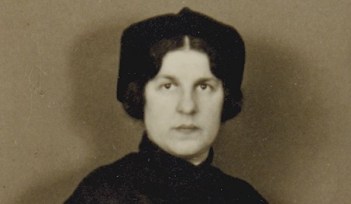
Tal reconocimiento lo tenía una mujer cuya identidad permaneció oculta tras el sólido muro de Berlín desde que fuera asesinada en Auschwitz en 1944. Se llamaba Regina Jonas y había nacido el 3 de agosto de 1902 en la capital alemana, en el seno de una familia judía muy humilde. Sara y Wolf Jonas inculcaron a Regina y su hermano mayor Abraham una profunda fe religiosa que marcaría para siempre la vida de Regina y en la que encontró consuelo toda la familia cuando Wolf falleció de tuberculosis en 1913.Regina estudió para ser maestra, profesión a la que habitualmente se dedicaban las mujeres, pero ella pronto descubrió que quería profundizar en sus conocimientos religiosos y llegar aún más lejos, convertirse en rabina. Para llevar a cabo su plan, Regina se matriculó en 1924 en la Academia de Ciencias del Judaísmo donde entró en contacto con hombres y mujeres con posturas liberales. En 1930 se diplomó como Profesora Académica de la Religión.

Dispuesta a cambiar las cosas, la tesis con la que obtuvo su diploma llevaba como título: ¿Puede una mujer ser rabino según la ley judía? La respuesta que ella dio en su tesis fue un rotundo sí. Durante cinco años estuvo dando clases de religión a niñas de Berlín mientras esperaba pacientemente que algún miembro de la comunidad judía con autoridad para hacerlo, la ordenara rabina. Algo a lo que muchos se negaron por miedo a romper con siglos de tradición. Hasta que Max Dienemann, responsable de la Asociación de Rabinos Liberales, decidió convertir el sueño de Regina en realidad.

Los siguientes años se dedicó a dar sermones en pequeñas congregaciones y a dar consuelo espiritual en comunidades y hospitales. Con el auge del nazismo, Regina Jonas, continuó en Berlín junto a su madre, y ayudó en diversas organizaciones judías.

A principios de noviembre de 1942, ambas mujeres fueron deportadas al campo de concentración de Theresienstadt donde continuó ejerciendo una importante labor como rabina junto a Viktor Frankl, un psiquiatra austriaco que ayudaba a sobrellevar la dura vida en el campo. Ambos trabajaron incansablemente para que los prisioneros no cayeran en la depresión y el suicidio. La vida de Regina Jonas terminó poco después de ser trasladada a Auschwitz a mediados de octubre de 1944. Pocos días después ella y su madre eran ejecutadas.

Según tomado de, https://www.mujeresenlahistoria.com/2018/07/la-primera-rabina-regina-jonas-1902-1944.html

 
Leave a comment

Posted by on July 31, 2018 in Uncategorized


Herman Shine, One of the Few to Escape Auschwitz, Dies at 95

He was born Mendel Scheingesicht in Berlin on Oct. 4, 1922, to Gerson and Therese Scheingesicht. His father had moved to Germany from Poland after World War I to work as a merchant and, in Berlin, developed a work program for veterans who had been blinded.

As a teenager in September 1939, not long after Hitler invaded Poland, setting off world war, Mr. Shine was taken to the Sachsenhausen concentration camp, about 20 miles north of Berlin, along with other Jews, including his friend Max Drimmer.

Conditions were brutal.

“The SS walked around with whips, with sticks, with steel bars, you know; they would beat you for any reason,” Mr. Shine told the Bay Area Holocaust Oral History Project in 1990.

In 1942, the two friends endured a five-day journey to Auschwitz in a packed railroad livestock car. Prisoners were divided after they arrived at the camp, some destined for labor, others for the gas chamber. Mr. Drimmer sneaked into a line with Mr. Shine, without knowing where they would be sent.

They were both spared, and wound up at Monowitz, a work camp also known as Auschwitz III. Mr. Shine became a roofer there and also worked at a subcamp called Gleiwitz, more than 30 miles to the northwest.

Image
The SS chief Heinrich Himmler, second from left, inspected a factory construction site at the Monowitz labor camp in Poland in July 1942, the year Herman Shine and his friend Max Drimmer arrived there.CreditGalerie Bilderwelt/Getty Images

“As long as you were keeping fairly healthy you had a chance to survive another day,” Mr. Shine told The San Mateo County Times in California in 2001.

By his account, he was working in Gleiwitz when he spotted a group of young women cleaning up the camp. Mr. Shine befriended one of them, Marianne Schlesinger, who told him that though she was forced to work for the Germans, she was allowed to live in her family home outside the camp because she was only half Jewish.

Mr. Shine told her about the mass murder of Jews that was underway, and she gave him her family’s address in the hope that he might find his way there at some point.

Around this time Józef Wrona, who had been hired as a civilian laborer at Monowitz, befriended Mr. Drimmer. Sometime in 1944 Mr. Wrona warned him that his luck was about to run out. He had overheard SS officers, who did not know he spoke German, talking about killing the remaining workers at Monowitz, he said.

Mr. Wrona devised a way to smuggle Mr. Drimmer out of the camp, a potentially fatal endeavor. Poles harboring escaped Jews could be killed, along with their families.

“He said, ‘I can take you out of here,’ ” Mr. Drimmer recalled in 2001. “I asked if he could help a friend.”

Mr. Wrona agreed to include Mr. Shine in his plan.

Mr. Wrona created a cramped hiding place at a construction site near Monowitz, and during a lunch break Mr. Shine and Mr. Drimmer ducked into it. They huddled there for more than a day, hidden underneath building insulation, until Mr. Wrona returned at nightfall with civilian clothes. Later, they emerged from the hiding place wearing workmen’s clothing and caps to cover their shorn heads and made their way to the camp’s wire fence, where Mr. Wrona had cut an opening.

Mr. Shine and Mr. Drimmer wriggled through the fence, free for the first time in five years, and crept away. Joined by Mr. Wrona, they headed for the Wrona family home, more than nine miles to the south.

On the way the three were stopped by a German soldier, but after questioning Mr. Wrona they were waved through, all assumed to be Polish workers.

At the home, Mr. Wrona hid the escapees in a barn and brought them food. He also agreed to mail their letters to friends, a service that could have been their undoing. In one instance Mr. Drimmer unwittingly endangered them all when he wrote to a friend named Herta Zowe.

Mr. Shine, who was born Mendel Scheingesicht in Berlin in 1922, in a videotaped interview in 2017.CreditDavid Richardson


German authorities later discovered the letter when they stopped Ms. Zowe and searched her. They then converged on Mr. Wrona’s home with dogs and searched the premises, including the barn. But they failed to check an upper loft, where Mr. Drimmer and Mr. Shine cowered in terror.

Mr. Shine knew they had to leave, he recalled. He remembered the address of Marianne Schlesinger. They could stay at her house, he told Mr. Drimmer.

“He said, ‘You’re crazy,’ ” Mr. Shine said in “Escape From Auschwitz: Portrait of a Friendship,” a 2001 documentary film about their escape. “ ‘How the heck we going to get on the railroad, it’s almost a hundred kilometers, this is war, we need papers.’ I said, ‘What choice we got?’ ”

They eventually made their way to Ms. Schlesinger’s home in Gleiwitz, where she and her family agreed to help them find shelter. When a rich German offered to take them in at his nearby villa, they hid there until the Allies defeated Germany in 1945.

The next year, Mr. Shine married Ms. Schlesinger and Mr. Drimmer married Ms. Zowe in a double ceremony in Berlin. Both couples emigrated to the United States in 1947 and settled near San Francisco. Mr. Shine and Mr. Drimmer remained close until Mr. Drimmer’s death in 2012.

“We lived all our lives together,” Mr. Shine told The Jewish News of Northern California in 2015. “We went through the bad times and the good life. We came to this great country and built a new existence.”

In California, having Americanized his name, Mr. Shine worked as a day laborer before starting a roofing company.

He never learned whether his parents had survived the Holocaust, but two of his sisters and two brothers lived through the war and settled in different countries. His survivors include his wife, Marianne; and a daughter, Sonja.

Mr. Shine and Mr. Drimmer did not see Mr. Wrona again until 1990, when he came to Los Angeles to be named one of the Righteous Among Nations by Yad Vashem, an honor reserved for gentiles who saved the lives of Jews during the war. Mr. Drimmer and Mr. Shine attended the ceremony. Mr. Wrona died in 1991.

“We want our story to be told to as many people as possible,” Mr. Shine told The Los Angeles Times in 1990. “Józef not only risked his life — our lives were worth nothing anyway — but he risked the lives of his entire family and his entire village.”

As taken from, https://www.nytimes.com/2018/07/30/obituaries/herman-shine-one-of-the-few-to-escape-auschwitz-dies-at-95.html?smid=fb-nytimes&smtyp=cur

Para información relacionada en español vea, https://www.abc.es/historia/abci-gran-evasion-salvo-judio-sadicos-castigos-nazis-auschwitz-201807311235_noticia.html

 
Leave a comment

Posted by on July 31, 2018 in Uncategorized


El órgano más poderoso del cuerpo

Related image

Todos tenemos arraigado saberes o conclusiones irrefutables sobre la vida que hemos ido adquiriendo. Nos convencemos con el paso del tiempo que las cosas “son así”. Nos decimos “esto yo ya lo vivi, ya lo sé”. Concluimos así que cualquiera que piensa las cosas bien (es decir, que las piensa igual que nosotros) probablemente estaría de acuerdo en cómo las cosas realmente son en la vida (es decir, como nosotros creemos que son también).

Estos saberes sobre “como la vida y las cosas son” las absorbemos de nuestras familias, amigos, maestros y la información que hemos experimentado en todo tipo de formato. Cada una de estas personas que nos influencian de una forma u otra también han absorbido sus saberes de otros. Y si bien todo este saber depende del lugar y el tiempo que a cada uno le toca vivir, es notable lo simplista que eventualmente somos y lo rápido que creemos tener siempre la razón -o peor aún LA Verdad- de cómo las cosas son o deberían ser. No es casualidad que muchos de nosotros nos pasamos la vida leyendo autores, escuchando maestros, siguiendo rabinos y leyendo textos que no hacen más que reforzar y validar lo que ya creemos en lugar de desafiarnos leyendo aquello que nos contradice para mejorar nuestros argumentos.

Mis estudios más profundos me demuestran cada día más que la Tora se encarga una y otra vez de derribar absolutos y verdades totalitarias que tenemos todos. Lo hace para ayudarnos a refinar nuestro carácter y nuestro ser en esta vida. Si bien la Tora tiene una narrativa de carácter mitológico con serpientes y animales que hablan, embarcaciones gigantes en la que conviven animales salvajes con seres humanos en paz durante un diluvio, seres gigantes y personas que viven casi mil años, también es profundamente anti-mítica. Por ejemplo, en los tiempos de Abraham era común que los padres sacrifiquen a sus hijos y la narrativa de la Tora es revolucionaria en su propio contexto histórico instituyendo que hacer eso es inmoral ya que al final Dios cancela la tensión generada con el supuesto sacrificio de Itzjak que nunca sucede.

Esto último significa que la Tora toma narrativas mitológicas y las transforma humanizándolas e imprimiendo un componente ético espiritual que es magistral. La Tora se encarga de ser contra-intuitiva constantemente para dejarnos la enseñanza más importante del judaísmo: evitemos la idolatría. La tradición judía estableció hace miles de años que la idolatría y transgresión más grande es la fijación de verdades como incuestionables. Cuando decimos “esto es así y no se discute más” acabamos de cometer una gran transgresión. Acabamos de convertir un pensamiento o idea en un ídolo fijo e incuestionable alejándonos de la dialéctica de los rabinos del Talmud y los comentarios a la Tora misma. Veamos un primer ejemplo de lo peligroso de la idolatría de ideas y la funcionalidad contra-intuitiva desde la Tora para comprender finalmente una lección contra-intuitiva que aprendí este año.

El judaísmo celebra que no todos tiremos para el mismo lado

La narrativa de la Torre de Babel es un un claro ejemplo de una mitología contra-intuitiva. Su objetivo como narración es enseñarnos una verdad opuesta a la que uno espera o intuye al leerla. Si lo recuerdan, según la Tora hubo un momento que todas las personas del mundo se unieron para hacer una cosa en conjunto y eso fue construir una Torre. Se unificaron así en una sola verdad. Metafóricamente hablando esto es lo que muchas personas dicen que deberíamos hacer para que el mundo y todo lo que nos rodea alcance esa era mesiánica: que todos estemos unidos tirando para el mismo lado. Hay quienes piensan que así debería ser el judaísmo y yo me pregunto, ¿están leyendo la misma Tora que leo yo?

Porque cuando Dios mira este emprendimiento de la Torre que construye la humanidad decide esparcirlos y confundirlos otorgándoles diferentes lenguajes para que no puedan entenderse mutuamente. La moraleja de esta historia parecería no tener sentido en tanto lo que hemos hecho como humanidad por el resto de la historia. Hemos intentado deshacer lo que Dios hizo con el episodio de la Torre de Babel una y otra vez sin entender la lección de la Tora. El mundo cada vez más globalizado y homogeneizado de la modernidad está intentado ver cómo podemos hacer para superar la diversidad con el objetivo de alcanzar una verdad absoluta que todos crean por igual. Por eso y paradójicamente sí todos los judíos hiciéramos lo mismo no sería tradicionalmente judío sino una nueva religión.

Hay un mensaje fundamental detrás de esta narrativa: las diferencias son buenas. La diversidad de tradiciones culturales tanto adentro como afuera de la tradición judía no debería ser algo que nos preocupa o nos hace sentir menos seguros de nuestras creencias y prácticas elegidas. Es maravilloso que existan las diferencias porque sino no sabríamos qué constituye al judaísmo como una práctica diferente a las demás. Muchas prácticas judías son definidas como “que no parezca como lo hacen los gentiles”. Si no estuvieran “los gentiles” ¡no podríamos definirlas! Por eso que los judíos tengamos entre nosotros mismos distintas maneras de hacer las cosas, diversas comidas, melodías y aproximaciones hacia nuestros textos y nuestra tradición es algo bueno. Que existan numerosas religiones muy distintas en el mundo es algo positivo y de hecho siempre ha sido así. Al menos eso es lo que nos enseña este texto sagrado en la narrativa contra-intuitiva y eterna de la Torre de Babel.

No vayas tras tu corazón

Finalmente la lección contra-intuitiva que aprendí este año aparece en el tercer párrafo del Shema que los judíos recitamos todos los días dos veces por día. El texto nos instruye sobre el uso de tzitzit (los flecos y nudos que cuelgan del talit) y nos recuerda que debemos observarlos para recordar y poner en práctica las mitzvot (mandamientos) para “no ir tras tu corazón y tras tus ojos” (Bamidbar 15:39). Algo llama la atención de RaShi, el comentarista judío por excelencia quien escribe, “el ojo ve y el corazón desea”. Sin embargo la Tora lo presenta literalmente escrito al revés: la indicación es primero no ir tras el corazón y segundo no ir tras lo que los ojos ven. En otras palabras, ¡la predisposición genera el deseo y no al revés!

Nuevamente estamos frente a una lección contra-intuitiva. Estudiando el texto en comunidad una persona muy querida de nuestro minian me recordó que el corazón es el primer órgano que se forma en el ser humano. El corazón es el instinto más visceral. El generador más profundo del deseo. Al vivir en una sociedad que nos sugiere seguir siempre el corazón que no falla, la Tora nos dice ¡no vayas tras tu corazón sino entrénalo para que no te domine! No actúes como una criatura que no tiene capacidad crítica para pensar y evaluar las consecuencias morales de su existencia y como su acción o inacción se replica en el mundo. Trabaja tu predisposición emocional interna para generar deseos nobles ante tus ojos en lugar de satisfacer tu voracidad humana dejándote llevar por la tentación de lo que se te aparece. Es más, ¡lo que se te aparece es producto de tu corazón y no de tus ojos!

En el sentido más práctico, si el corazón no está entrenado los ojos pueden hacernos ver cosas que no queremos ni necesitamos ver. Pero si el corazón ha sido trabajado nuestros ojos ni siquiera verán lo que no deben ni pueden ver. Una vez más, la invitación contra-intuitiva de la Tora es no satisfacernos con simplemente experimentar y ser sino intentar esforzarnos para ser aún más de lo natural que pensamos que somos.

Read more at http://www.judiosyjudaismo.com/2018/07/el-organo-mas-poderoso-del-cuerpo/#mjuuZKWIYpQkepyr.99

 
Leave a comment

Posted by on July 30, 2018 in Uncategorized


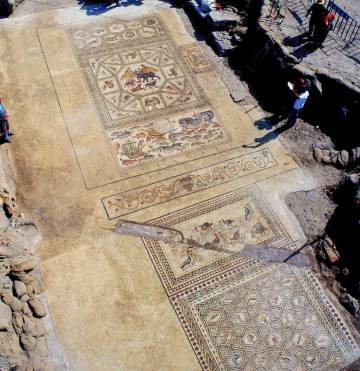
Hallado un lujoso mosaico romano en la población israelí de Lod

Los pavimentos artísticos pertenecían a una rica villa del siglo IV y representan figuras de animales reales e imaginarios

Mosaico descubierto en la ciudad romana de Lod (Israel) repleto de animales fantásticos, figuras geométricas y escenas marinas.
Mosaico descubierto en la ciudad romana de Lod (Israel) repleto de animales fantásticos, figuras geométricas y escenas marinas. NIKI DAVIDOV EFE

En Tierra Santa casi no hay piedra sin remover que no oculte un tesoro del pasado. Incluso cuando se construye un nuevo museo arqueológico afloran secretos de la historia del arte. Es lo que ha ocurrido en Lod, eje carretero en la zona metropolitana sureste de Tel Aviv, donde las obras de un centro de interpretación de los mosaicos romanos han desenterrado, precisamente, el pavimento de teselas que decoraba una lujosa villa romana del siglo IV. La Autoridad de Antigüedades de Israel ha echado las campanas al vuelo tras el hallazgo, que confirma la majestuosidad de una residencia imperial erigida a un tiro de piedra del actual aeropuerto internacional David Ben Gurion.

Amir Gorzalczany, director de las excavaciones, destaca que el mosaico recuperado revela que la villa romana “contaba con un triclinio [sala de banquetes] lujosamente pavimentado para recibir a los visitantes, con un claustro de columnas en torno a un patio interior y con un sistema de traída de aguas”. “Hemos hallado pruebas de que las paredes estaban decoradas con frescos, en el lujoso estilo que caracterizaba las mansiones del Mediterráneo oriental durante el Imperio Romano”, asevera el arqueólogo en un comunicado difundido por la Oficina de Prensa del Gobierno de Israel. “La excavación arqueológica que hemos llevado a cabo en el últimos mes ha sido relativamente pequeña”, apostilla 1.700 años después, “pero ha contribuido de forma significativa a entender la dimensión de la villa, que parece ser mucho mayor de lo que suponíamos”.

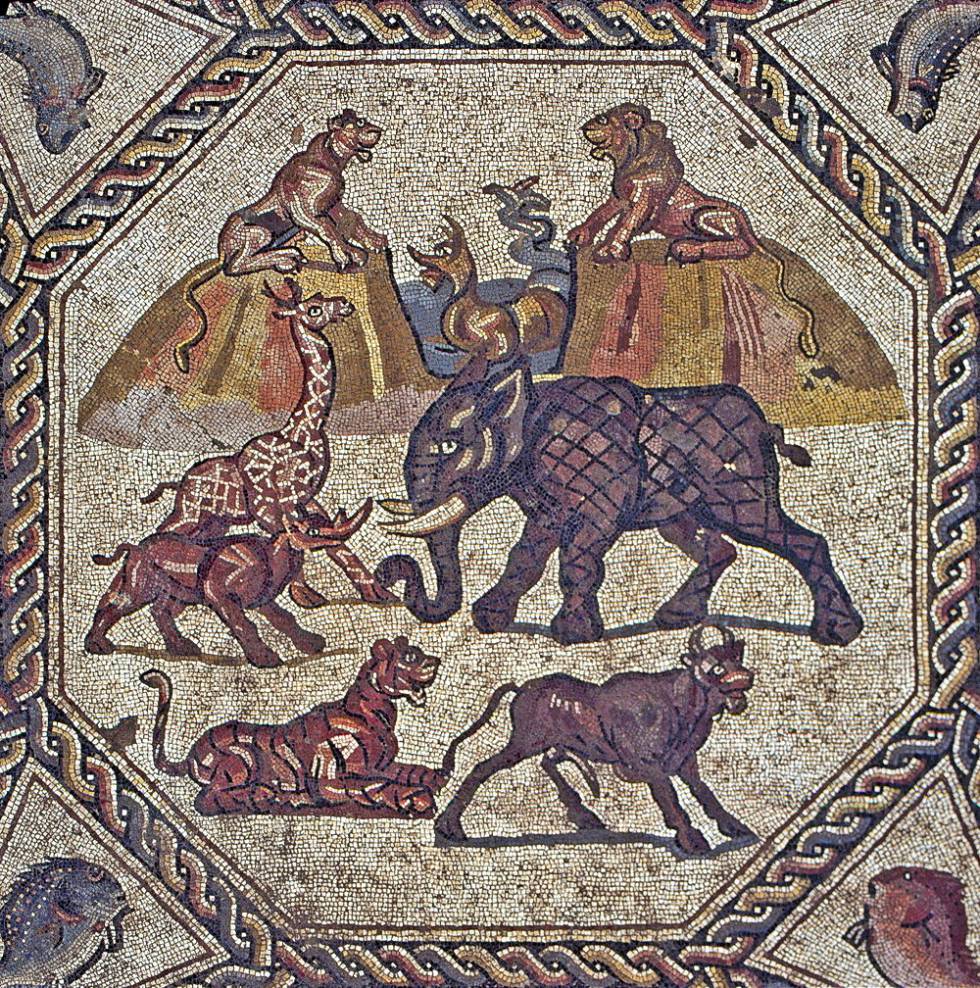
Animales reales o imaginarios. Complejos diseños geométricos. Escenas marinas con un surtido de peces y dos veleros mercantes romanos eran el gozoso paisaje —en el que no aparecía ninguna figura humana— que divisaban los comensales reclinados. La ubicación rectangular de sus tumbonas venía definida en el propio mosaico, como revela el pavimento ahora desenterrado en un comedor anejo. Si nuevos hallazgos no lo demoran aún más, el museo arqueológico de Lod tardará dos años en abrir sus puertas al público. Mientras tanto, publicaciones como National Geographic ya se han echo eco del reciente descubrimiento en las excavaciones del centro de interpretación para visitantes.

Detalle de los motivos centrales del mosaico romano hallado en Lod.
Detalle de los motivos centrales del mosaico romano hallado en Lod. NIKI DAVIDOV EFE

El pasado histórico reverdece —suele suceder— fruto de la causalidad. La construcción de una carretera en 1996 sacó a la luz los primeros restos de la villa romana excepcionalmente bien conservada en los accesos a la ciudad de Lod, que albergaba uno de los mosaicos más completos de los siglos III y IV. Las imágenes del panel central sobre las que descansaba la mirada de los ricos terratenientes del Imperio y de sus invitados se han convertido en un emblema cultural del Estado de Israel. A la espera de que quede definitivamente expuesto junto al lugar en el que fue hallado por unos obreros, ya ha sido exhibido en museos como el Louvre de París, el Hermitage de San Petersburgo o el Metropolitan de Nueva York.

Segun tomado de, https://elpais.com/cultura/2018/07/30/actualidad/1532957586_719630.html

 
Leave a comment

Posted by on July 30, 2018 in Uncategorized


In Jerusalem, Catholic sisters have Jews teaching the New Testament

The Notre Dame de Sion sisters were founded to pray for the conversion of Jews; today, they are pioneers in Jewish-Catholic relations at the Ecce Homo Center for Biblical Formation

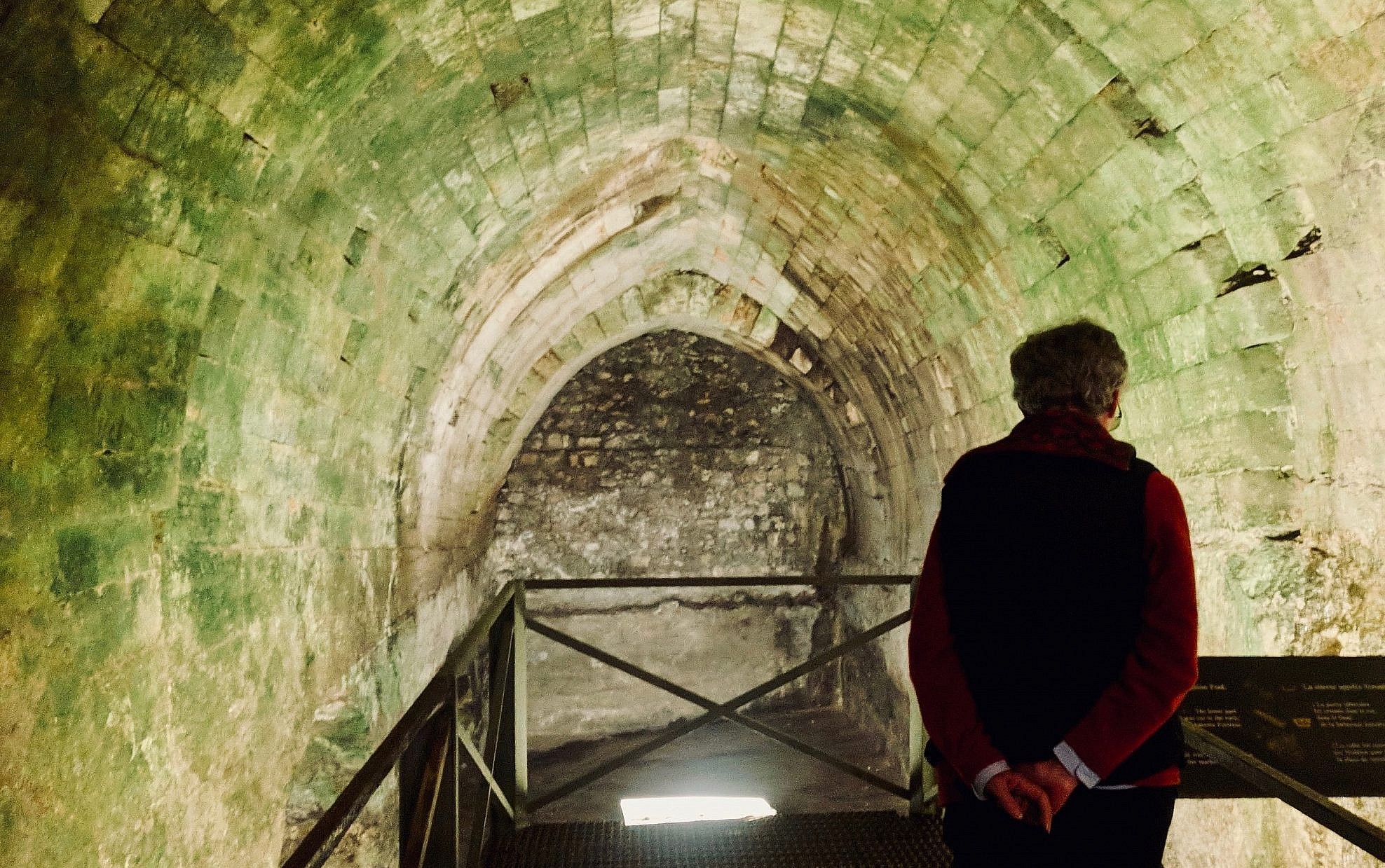
Sr Celia Martin, a Notre Dame de Sion sister, in the cistern located underneath the Ecce Homo building on January 3, 2018. The cistern likely provided water to the ancient Temple 2,000 years ago. (Melanie Lidman/Times of Israel)

Sr Celia Martin, a Notre Dame de Sion sister, in the cistern located underneath the Ecce Homo building on January 3, 2018. The cistern likely provided water to the ancient Temple 2,000 years ago. (Melanie Lidman/Times of Israel)

The prayer room at the Ecce Homo convent and Center for Biblical Formation looks exactly like you would expect such a space in an old, traditional Catholic convent located in Jerusalem’s Old City to look. Well-worn Jerusalem stone muffles the sounds of the bustling market outside, an imposing organ rises two stories over wooden pews, and the scent of incense wafts through the cool, dark air.

Twenty people gather to pray, opening up their prayer books, but rather than Latin, the words that come out of their mouths are Hebrew — the popular Jewish song “Heiveinu Shalom Aleichem,” or “Bring Peace on Us.”

The Notre Dame de Sion congregation of Catholic sisters run the Ecce Homo Center for Biblical Formation with a revolutionary approach to Bible education: teaching Christian texts from a Jewish perspective. Both Jewish and Christian teachers explore parts of the New Testament, examining how ancient Jewish culture influenced Christianity’s early leaders.

But the Notre Dame de Sion sisters weren’t always this open to interfaith exchanges.

Groups that come to visit the Lithostrotos (Roman paving) and archaeology sometimes hold prayers in the Ecce Homo chapel, pictured here on January 3, 2018. (Melanie Lidman/Times of Israel)

The congregation’s founding mission was clear-cut: its primary goal was to pray for the conversion of Jews.

Over the past century, the congregation has undergone a radical transformation, a 180-degree pivot in philosophy from praying for Jews to convert to inviting Jewish professors to teach the New Testament.

But rather than hide the less politically correct parts of their congregation’s story, the sisters are upfront about their journey, publicly grappling with the dark part of their history in a quest to encourage open-mindedness and tolerance among their students.

“We had terrible prayers in our liturgy that were very condescending to Jews,” said Sr. Margaret Zdunich, the director of the Ecce Homo Center for Biblical Formation. “We prayed for the conversion of the Jews, because that was normative. The church’s evangelization was that the ultimate goal was for everyone to be Catholic.”

‘The “in” thing of the day was for people to convert’

Theodore Ratisbonne, a prominent French Jewish banker, founded the Congregation of Notre Dame de Sion in 1843 with the support of his brother Alphonse Ratisbonne. Theodore Ratisbonne had converted to Catholicism in 1827, with his brother following in 1842. Prior to their conversions, both brothers were involved in supporting charitable endeavors within the Jewish community.

After their conversion, the brothers wanted to continue helping the Jews – but they felt the best way to do this was by praying for Jews to convert to Catholicism. “When we started, the ‘in’ thing of the day was for people to convert,” said Zdunich. “Theodore felt Jews needed to accept Jesus to come to God,” she said. “He forbade proselytizing, so we couldn’t be active about converting Jews, but we could pray for it.”

Following the Holocaust, the Notre Dame de Sion sisters were involved in the Catholic Church’s controversial policy not to return Jewish children to their families after the war if they had been baptized. Sometimes, Jewish children who were in hiding in Catholic institutions during World War II were baptized, in what the Church leaders believed was a strategy to save them from the Nazis. After the war, they worried about giving the children converted to Catholicism back to Jewish parents. “Children who have been baptized must not be entrusted to institutions that would not be in a position to guarantee their Christian upbringing,” stated a Vatican letter from 1946 examining the issue of baptized Jewish children.

The center of the controversy revolved around two French Jewish boys, Gerald and Robert Finaly. The boys’ parents sent them to a Catholic nursery in 1944, before the parents were deported to Auschwitz and killed. Their French Catholic nanny secretly baptized the children. During a lengthy court case, the Notre Dame de Sion sisters and some priests helped smuggle the children to Spain in 1953 in an effort to avoid giving the children to their Jewish relatives. Police arrested several sisters and priests who were involved in the kidnapping, and the Finaly children were reunited with their aunt and uncle after an eight-year court battle.

Robert and Gerald Finaly, the most notorious case of French baptized Jewish children hidden after World War II. (courtesy)

Not all Notre Dame de Sion sisters supported this position. Many sisters hid Jewish children during the Holocaust at great danger to themselves, did not try to convert or baptize them, and happily reunited the children with surviving family afterwards. Yad Vashem, Israel’s Holocaust museum, has recognized seven Notre Dame de Sion sisters and one Father of Sion as “Righteous Gentiles” for their work rescuing Jews during the Holocaust.

Advocating for a New Approach

The arrests during the Finaly affair were a turning point for the congregation. “The superior general at the time said, ‘Something is wrong. We need to examine why we’re doing this, why we have this attitude towards Jews,’” said Zdunich. “We were obedient to the Church but we started advocating for change. We ourselves were not squeaky clean.”

Just as the Sion sisters began a process of internal soul-searching and changing their direction, the Catholic Church also began undergoing a massive transformation with the Second Vatican Council. Pope John XXIII called for an Ecumenical Council, an assembly of 2,500 Roman Catholic religious leaders meant to settle doctrinal issues. Between 1962 and 1965, the Vatican released 16 documents that dramatically changed the Catholic Church, modernizing the Church to respond to the dramatic cultural changes happening across the world after WWII.

Sr Margaret Zdunich, the director of the Ecce Homo Center for Biblical Formation, at her desk on March 20, 2018. (Melanie Lidman/Times of Israel)

With the Second Vatican Council, the Church pivoted from being a closed fortress, concerned with its own survival, to a religious institution more open to the outside world.

Conversion was no longer the ultimate goal for interactions with non-Catholics. The Notre Dame de Sion sisters were instrumental in advocating for better Jewish-Catholic relations in the Second Vatican Council.

Changing a hierarchy as large as the Catholic Church was like trying to get an ocean tanker to do a 180-degree turn on a dime. Many members and leaders within the Church resisted the new approaches, and some factions continue to resist the changes today.

In 1965, Pope Paul VI published Nostra Aetate, “In Our Time,” about the Catholic Church’s new relationship with non-Christian religions. The document condemned anti-Semitism, recognized the kinship between Christians and Jews, and, perhaps most importantly, renounced the idea of “deicide” — that contemporary Jews are responsible for the murder of Jesus.

The document states: “What happened in Jesus’ passion cannot be blamed upon all the Jews then living, without distinction, nor upon all Jews of today. As the Church has always held and continues to hold, Christ in his boundless love freely underwent His passion and death because of the sins of all, so that all might attain salvation.”

Behold the Teaching

After Vatican II, the Notre Dame de Sion congregation continued to be a leader within the Catholic Church for its relationships with Jews. Today, the congregation is best known for its unique approach to Christian texts, inviting Jewish professors to teach parts of the New Testament.

In Jerusalem, the congregation runs the Ecce Homo Center for Biblical Formation, a pilgrim house and study center located in the heart of the Old City of Jerusalem’s Muslim Quarter. The building incorporates the “Ecce Homo arch,” built in 135 CE by Emperor Hadrian. The arch is located at the Second Station on Via Dolorosa, the path Christians believe Jesus followed on his way to crucifixion. Ecce Homo is Latin for “Behold the Man,” which is what Pontius Pilate said to the masses ahead of Jesus’ crucifixion, according to the New Testament.

The Center for Biblical Formation began in 1984 when a Dominican priest and a Sister of St Joseph started a French-language Bible study program in Jerusalem. The Bible study eventually moved to the Notre Dame de Sion building in the Muslim Quarter, which had previously served as a girls’ school. Today, the center offers intensive study programs focusing on common holiday themes like “Passover and Easter” and the Jewish holiday feast period in the fall. The center also offers courses on the New Testament, such as the Gospels of Matthew and Luke. The course examines different ways that ancient Jewish culture affected the lives of biblical figures.

“We look at the Gospel in the context of Judaism,” said Zdunich. “How does that inform our reading? We look at the Gospels as midrash or commentary.”

Around the same time as the Center for Biblical Formation started offering its first courses, Notre Dame de Sion Sr. Maureena Fritz helped found Bat Kol, another Christian study program in Jerusalem. Bat Kol focuses almost exclusively on teaching Jewish texts to Christians.

A quiet space for prayer and reflection on January 3, 2018, at the Ecce Homo pilgrim house and convent, which is located within the hustle of the Old City’s Muslim Quarter. (Melanie Lidman/Times of Israel)

“When we read the Old Testament, we say, ‘This is a community’s relationship with its God,’ so what does that mean for us today?” asked Sr. Celia Martin, the executive assistant at the Center for Biblical Formation. “We can’t understand the Second Testament unless we go back, dig into, and have a good understanding of the [First Testament] scripture from a Jewish perspective,” she said.

“A few years ago I did a course on Leviticus at Bat Kol, and all the teachers except two were Jewish,” said Martin. “Some Christians might say Leviticus is about purity laws. But by the time I finished the course, I had a significant understanding of Leviticus being about relationships: relationships to the land, relationships to people, relationships in all its spectrums.”

Dr. Marcie Lenk, one of the regular professors at the Center for Biblical Formation and the academic director of the Bat Kol Institute, said the Notre Dame de Sion congregation completely changed her life as a Jewish person and a teacher. Growing up an Orthodox Jew in Teaneck, New Jersey, Lenk said, her knowledge of Christianity was limited to what she heard from her community: “Jesus was a Jew, Christians have tried to kill us or convert us, so we should be afraid of them.”

Sr Celia Martin, the executive assistant at the Center for Biblical Formation with display cases on January 3, 2018, showcasing archaeological discoveries unearthed during the archaeological preservation of Ecce Homo pilgrim house. (Melanie Lidman/Times of Israel)

Lenk met some Notre Dame de Sion sisters in the 1990s at an interfaith study group in Jerusalem called Bnei Avraham. Her interactions with Christians in the group – and the realization that they weren’t trying to kill or convert the Jews around them – inspired Lenk to start studying more about Christianity and its connections to Judaism. Lenk eventually did her doctorate in Early Christianity at Harvard University, and today teaches Christian texts to Jews and Jewish texts to Christians.

Lenk sees the New Testament from a very Jewish perspective.

“The Sermon on the Mount [Jesus’s seminal sermon above the Sea of Galilee, outlining his morals and philosophy] is building on and expanding on laws from the Jewish scripture — that was the scripture of Jesus and other Jews around him,” said Lenk. “These are internal Jewish conversations about what it means to do God’s will… at the time that Jesus and the Apostles were talking about it, they were Jews having a Jewish discussion.”

Lenk, who identifies as a religious Jew, said she also helps Christians understand why parts of the New Testament are so offensive to Jews, especially the parts about how the Jews killed Jesus. “As a Jew, I try to help these Christian groups see what is noticed by a Jew who is reading this, which might not jump out at them,” she said. “We have a discussion about how the reading of the scripture itself can affect relationships between Christians and Jews.”

Professor Marcie Lenk (courtesy)

Although some Christian students have been uncomfortable with a “nonbeliever” teaching the New Testament, Lenk believes her mere presence brings a deeper level of understanding to the conversations. She teaches some of the classes together with a Christian or Catholic professor, with each offering their own perspective on the same text.

“If we’re having a discussion about race and racial issues and everyone in the room is white, the conversation will be on one level,” said Lenk. “When you bring people into the room who are black or brown, the conversation changes. There’s a sense of, ‘oh, we need to listen differently.’”

“I’m not sure that the words that I say or the passages I read or the interpretations I give to the readings are so different from that their own Catholic or Christian professors will give,” Lenk added. “But there’s a feeling, sometimes people hear differently when there’s an ‘other’ in the room. I’m the other. I think that it’s useful. It’s been an important in my life to have ‘others’ in conversation. I have learned a lot from people who are not like me, and now I am the ‘other.’”

Lenk, who is also the director of the Christian Leadership program at the Shalom Hartman Institute in Jerusalem, said the openness to hearing different perspectives in faith serves to strengthen connection to the text rather than weaken it. “When we retreat into our faiths, we don’t have so much respect for others. But actually opening ourselves up to a deep understanding of other religions or other communities challenges us to care about them, not because that the polite thing to do or the safe thing to do, but to actually see them. It makes for a better religion, and for a deeper faith. If I fear learning about anyone else, what does that say about the shallowness of my own faith, that it’s always in danger?”

Learning from ‘the other’

Over the past 50 years, the Notre Dame de Sion sisters dove into the idea of learning from Jewish communities. Zdunich recalls a number of sisters who attended Leo Baeck College, a Reform Jewish rabbinical school in London, while wearing their full nun’s habit and veil. The congregation no longer wears habits, but there is still a sister at Leo Baeck who is now completing a PhD.

Like many rabbinical schools, the congregation requires young women who want to become Notre Dame de Sion sisters to complete a year of studies in Jerusalem. Zdunich said they have found that one of the most important factors in building interfaith respect is physical presence in Israel, and being among a Jewish majority.

A panoramic view from the top floor of Ecce Homo on January 3, 2018, affords views of the Dome of the Rock sanctuary and area churches. (Melanie Lidman/Times of Israel)

“A big part of the [Center for Biblical Formation] program is taking the participants around,” said Zdunich. “We always take groups to Yad Vashem. It’s a really intense experience for people. Our students are very global; we have a lot of students from Asia, India, and Africa, places where there is not a big Jewish community and they don’t necessarily know the story of the Holocaust.”

“I can’t tell you how many people say this program has been life-changing,” Zdunich continued. “They say, ‘I’ll never read the Scriptures the same way again.’ They are meeting living Judaism, and this is huge in raising their awareness.”

Patricia O’Reilly, the director of Program Development at the Ecce Homo Center for Biblical Formation, said teaching Christian texts from a Jewish perspective is highly meaningful when it is done in Jerusalem.

“Look at this place,” said O’Reilly. Outside the classrooms, a terrace opens onto a panoramic view of the Old City. The Dome of the Rock Sanctuary glints in the sun, church spires stretch for the sky, and the white Jerusalem stone buildings hug the contours of the land.

“We’re a five minute walk from the Western Wall, the Church of the Holy Sepulcher, and the Temple Mount,” she said. “You can see archaeology and faith. As soon as they arrive, a lot of our job is done, because the location is so magnificent.”

As taken from, https://www.timesofisrael.com/for-pnina-in-jerusalem-catholic-sisters-have-jews-teaching-the-new-testament/?utm_source=The+Times+of+Israel+Daily+Edition&utm_campaign=66328b9d0b-EMAIL_WEEKEND_CAMPAIGN_2018_07_29_05_03&utm_medium=email&utm_term=0_adb46cec92-66328b9d0b-54798245

 
Leave a comment

Posted by on July 30, 2018 in Uncategorized


North Carolina honors scientist who was first Jew to arrive in the New World

In this photo taken in November 1991 and provided by First Colony Foundation, Ivor Noel Hume. left, speaks with J.C. 'Pinky' Harrington, known as the father of American archaeology, during a dig at the Fort Raleigh Historic Site, near Manteo, North Carolina (Nick Luccketti/First Colony Foundation via AP)

In this photo taken in November 1991 and provided by First Colony Foundation, Ivor Noel Hume. left, speaks with J.C. ‘Pinky’ Harrington, known as the father of American archaeology, during a dig at the Fort Raleigh Historic Site, near Manteo, North Carolina (Nick Luccketti/First Colony Foundation via AP)

RALEIGH, NC (AP) — In North Carolina’s colonial history, the best known tales concern the legendary Lost Colony of English settlers who had vanished mysteriously by 1590. Less widely known, but perhaps more significant, is a story from a few years earlier about the first science center in the New World, headed by the first known Jewish person to arrive on that land.

Archaeologists plan to return this fall to the site of the science center once headed by Joachim Gans, an expert metallurgist who came to America in 1585 at the request of Sir Walter Raleigh. They’re trying to uncover more evidence of the center at the Fort Raleigh National Historic Site in Manteo on North Carolina’s coast, best known for the colonists who disappeared.

“Everybody has in their mind this very simple story,” about vanished colonists, including an infant named Virginia Dare, said Phil Evans, president of the First Colony Foundation , which is sponsoring the fall excavation. “But it’s a much more textured, layered story.”

On Friday, the state will honor Gans. Among those scheduled to speak is Stephen King, the US ambassador to the Czech Republic. A historical highway marker will be placed along the old US Highway 64, near Fort Raleigh, later this year.

Gans, an expert metallurgist in Prague, initially came to England to help the country get more copper from its ore and do it more efficiently.

When Sir Walter Raleigh sent 108 people to the New World in 1585, under the leadership of explorer Ralph Lane, he included Gans as the mineral expert. Gans’ presence helped reassure investors who were skeptical about the commercial prospects in North America because other explorers had failed to find anything promising, said Brent Lane, a former venture capitalist and economic strategist who researches the financing of explorations as the ones undertaken by Raleigh.

Gans’ inclusion in the exploration also “marks the line where England was more interested in what he could contribute to the economy than holding onto religious prejudices,” said Leonard Rogoff, president of the Jewish Heritage Foundation of North Carolina and author of a book about Jews in North Carolina.

Gans launched a broad program of study at the science center, including metallurgical analysis of mineral specimens; chemical analysis of botanical specimens; and cartographic studies of landforms and maritime navigation, Lane said. He and Thomas Harriot, also part of Raleigh’s scientific team, identified sassafras, an herb that used to treat syphilis, and that became a lucrative export to England, he said.

Although Gans didn’t find gold, he did identify copper. And his research was enough to convince a group of civilians, who became the Lost Colony, to settle there in 1587. It also likely helped that the settlement had a high survival rate: 104 of the 108 returned to England.

In 1589, three years after his return to England, Gans was charged with heresy for denying the divinity of Jesus Christ. He was jailed, and it’s not clear what happened after that. Historians assume he wasn’t executed because there’s no record of that happening, leaving open the possibility that he returned to Prague. A historian at the Jewish Museum of Prague is researching that question, and a seminar on Gans is scheduled in November in Prague.

While the site of Gans’ work was discovered in the 1960s, it wasn’t identified as his science center until Ivor Noel Hume, who also discovered important artifacts at Williamsburg, Virginia, put the pieces together in the early 1990s.

In the past five years, the First Colony Foundation has sponsored two other digs at the science center, said Eric Klingelhofler, a foundation board member and archaeologist who participated in previous digs. They plan to return this fall because “we can only build up the story of the First Colony (the 1585 expedition) and the Lost Colony by assembling one clue after another, he said.

It’s a story that’s even more important than the Lost Colony, Lane said. “Globalization, scientific revolution and the rise of modern capitalism are all in his science lab on Roanoke Island,” Lane said. “That’s a whole lot different than Virginia Dare lost in the woods.”

As taken from, https://www.timesofisrael.com/north-carolina-honors-scientist-who-was-first-jew-to-arrive-in-the-new-world/

 
Leave a comment

Posted by on July 28, 2018 in Uncategorized


Me, Myself and I: Ethics of the Fathers 1:14

Me, Myself and I: Ethics of the Fathers 1:14

by Yaakov Astor

Finding your unique self and sharing it with the world.


Hillel says, “If I am not for myself, who will be for me? But if I am only for myself, who am I? If not now, when?” Ethics of the Fathers, 1:14

Hillel is widely recognized as one of the wisest people who ever lived. This Mishna is arguably his most famous aphorism. The first clause of the aphorism roughly translates: “If I am not for myself, who will be for me?”1

The phrase distinguishes between two selves – “I” (ani in Hebrew) and “me” (li). It implies that somehow we can have a self called “I” and a self-called “me.”

The “I” self is the deepest self. It is our personalized facet of the Divine image. By contrast, the “me” is the persona we develop during life. Elements of the “me” originate from others, from society – from that which is outside “I.”

The biblical paradigm for successfully wrestling with this identity crisis is Abraham.

“Go, get yourself [away] from your country, your birthplace, your father’s house.” (Genesis 12:1)

Literally translated, the words “Go, get yourself away” can be read: “Go to yourself!” The idea is that only by breaking away from the external forces that operate upon our “selves” can we hope to come to our true “selves,” our destiny.

Abraham was told to break away from three levels of “non-self” forces:

  • “Your country” – the nationalistic, political ideology.
  • “Your birthplace” – the more local, communal, ethnic undertows.
  • “Your father’s house” – even the particular familial expectations and norms.

Abraham’s future success began when he first broke away from those environmental forces.

Each of us has an authentic, unique self; an “I.” Hillel teaches us that if we do not reveal that “I” – the part of my self that is unique – then who are we? What value is there to “me,” the persona that operates in the world? It is just a shell, a conglomeration of societal elements originating in others.

A World of Others

The next clause in Hillel’s aphorism reads: “But if I am only for myself, who am I?” Here the word for “I” is anochi. This is also the first word God used when He revealed Himself on Sinai.

If we do not reveal that “I” – the part of my self that is unique – then who are we?

“I am [Anochi] God your Creator who took you out of the land of Egypt, out of the house of bondage” (Exodus, 20:2).

This is the revelation of God’s innermost being, bursting out behind its barrier and gushing forth like a subterranean fountain.

Commentators have asked why God identified Himself as “merely” the God who took the Jews out of Egypt. True, the Ten Plagues and the Splitting of the Red Sea were unparalleled miracles. But can they compare to the act of creating the universe? Wouldn’t it have been more impressive for God to identify Himself and the Creator of Heaven and Earth?

However, by describing Himself as the God who just took the Jews out of slavery, the Almighty is focusing on the key defining quality of His relationship to the Jewish people: He cares and is involved with others.

The God of the Torah is not the stoic Unmoved Mover of Greek philosophy. He is not the faceless, uncaring God of the Deist. He is intensely interested in human affairs. He came down into the Land of Egypt to free His people “from the house of bondage.”

If we want to emulate God, we cannot stay within the isolated ego.

And that is implied by the word “anochi.” Anochi is the proclamation of intimate nearness between the speaker and the listener.2 It is an “I” that encompasses “others,” and is thereby infinitely more whole. If we want to emulate God, we cannot stay within the isolated ego. We must start with the self (ani), but then move out into the world of others. By so doing, we free them and ourselves from bondage and reveal a greater self (anochi). It is a self that is simultaneously a part of a greater whole.

There is a unique “I” in the universe and it has only been entrusted to one human being: you. If that unique “I” does not somehow find expression, then the world will never know it. A precious unique “I” has failed to be experienced. That is a tragedy.

However, once that “I” has discovered and learned to express its individuality, it needs to take the next step and bring it out into the world. Each of us has something unique to contribute and no one else can bring it into the world.

If Not Now, When?

The third clause of Hillel’s aphorism reads: “If not now, when?” What does this somewhat enigmatic phrase have to do with the struggle of self?

The clause is describing an important step in bringing the process of self-actualization to fruition. It’s saying: “Stop procrastinating! If not now, when? If you’re not going to develop your self now – if you’re not going to make that trip, take that course, meet that person, read that book – when will you? Get moving on it NOW!”

Sometimes the very thing that can give us the most satisfaction – the key unlocking the doorway to our selves – is the very thing we deny most. It is the door we most fear opening. So we keep the key far out of sight to prevent it from reminding us that there’s even a door to be unlocked. We design our lives and busy ourselves from dawn to dusk with activities that rob us of the time to soberly take up the meaning of life and what we need to do to make it truly meaningful.

Even Moses, at the burning bush, when God told him He had chosen him to lead the Children of Israel out of bondage, said, “Who am I?” Even Moses didn’t recognize the full extent of his own greatness and acknowledge his hero/redeemer self.

Sometimes we’re the last to know how great we are.

Sometimes we’re the last to know how great we are, and how much greater we can become. So we procrastinate – even for precisely that which we long for most. And there’s nothing we long for more than the expression of our deepest self. That’s why Hillel feels it vital to remind us that it’s not enough to be aware of the need; we have to act on it. Continually. Relentlessly. Otherwise, what’s life for? And if not now, when?

A Glowing Coal

Whether one is in the midst of developing one’s basic “I” – his true inner self – or moving beyond that into development of one’s “anochi” and sharing himself with others, each of us has a natural holiness. At our core is a sacred, transcendent self. The self glows like an eternal light.

Why then can we feel at times so unholy, so mundane, so dark?

Because we let it get bombarded with influences that heap layers upon layers of soot on our inner, glowing light. We’re creatures open to inspiration. However, only one who nurtures the seed of inspiration succeeds in becoming an inspiration to others. A person feels a spark of holiness, has an inspiring experience, yearns momentarily for something more, but then does something unholy, or simply comes home and turns on the TV. Mindlessness becomes a way of life.

The soul – the sacred self – is the most precious organ. But it needs to be nurtured. It’s like a piece of coal – do nothing and it’s a cold, dark piece of rock; ignite and fan it, and it will glow. To glow is natural. Each of us has a natural beauty, a grandeur, and the absolute free will to experience a state of holiness. Our job is to keep our soul glowing. At the very least, we need to periodically extricate ourselves from negative influences to let it glow.

Find Yourself

A man once approached one of the great Chassidic leaders, who in turn asked him, “For what did you come here?”

“To find God.”

“Then you came for nothing. You’re wasting your time.”

“Why?”

“God is everywhere.”

“Then, tell me, master, why should I have come?”

“To find yourself.”

1 The words literally translate: “If there is no “I” (ani) to me (li), who is me?” Eam ain ani li, mee li.
2 Rabbi Samson Raphael Hirsch, Commentary to Torah, Exodus 20:2.

This article was written with my father, Chaim Benyamin ben Esther, in mind. May he have a refuah shlaimah.

As taken from, http://www.aish.com/sp/pg/48893292.html?s=mpw

 
Leave a comment

Posted by on July 28, 2018 in Uncategorized


The Meaning of “Adam”: Insights into the Hebrew Language

The Meaning of

by Rabbi Doniel Baron

The potential to sink lower than the animals and rise higher than the angels.


The first human ever to walk the earth was named Adam. The Torah explains the name. The Hebrew word for earth is adama. God formed man from the dust of the earth, and on the simplest level, that connection with adama, earth, is the basis for man’s name. Once Adam sinned and ate the forbidden fruit, he introduced death to the world and was sentenced to once again return to the earth from which God created him.

The mystics pointed to various deeper meanings within the name Adam, providing layers of insight that can make our own existence more meaningful. The name Adam does indicate one’s lower earthly nature. But are we really nothing more than the complicated mammals?

The Earth’s Potential

In addition to the adama being a low place in the world, there is another aspect of the adama which is perhaps its defining feature. The earth is a realm in which we can plant and yield fruits, giving rise to new life which was not there beforehand. Man’s kinship with the ground, therefore, hints to his greatest potential.

Man’s kinship with the ground hints to his greatest potential.

Before creating Adam, God said, “Let us make man” in the plural. With whom could God possibly partner when creating humankind? According to one approach, He consulted with His ministering angels and asked them what they thought about creating man. A fierce debate ensued.

Some of the angels argued against creating man and others were in favor. For example, the angel representing kindness was for man’s creation, for man bestows kindness. Truth opposed man’s creation, since humans are full of lies. God heard these arguments, and finally seized the angel representing truth and hurled it onto the ground, as it says in the verse, “and He threw truth to the ground” and created man anyway. The other angels protested. How could God abandon truth, which is known as His signature? God responded “may truth rise from the ground” and our Sages then cited the verse, “truth shall grow from the ground.”

The whole dialogue in the heavens appears bizarre at first glance. Why did God need to consult with His angels before creating man? Why did He reject truth in order to create Adam? Were the angels negotiating with Him? How did they convince Him to revive the angel of truth? Did He really change His mind? A core tenet of Jewish consciousness is that when the rabbis tell stories like this one, they really mean to convey a deeper message hidden deep within the parable.

The Maharal of Prague explained that throwing truth to the ground was by no means a rejection of truth. It was an investment in truth. The proof is in the verse our Sages used to explain the revival of truth: “truth shall grow from the ground.” God never rejected truth; instead He planted in the ground.

The metaphor of the ground and its centrality in man’s name is no coincidence. The simple act of planting a seed is a powerful symbol of man’s potential. Recall that day in kindergarten where you might have planted a bean in a plastic cup so that it would grow into a plant for Mother’s Day. Every day you checked to see whether anything had grown. At first, you were disappointed as you watched the seed. It looked like it was falling apart and rotting. You wanted to throw it out, but your teacher insisted that you wait. One day, a green shoot appeared from amidst the smelly decay. It continued to grow and grow, until there was a beautiful leafy plant, with the potential for an infinite number of new plants.

Therein lies the secret of God’s sowing truth. There is a very physical side to every human, and often it brings us to places of rot and decay, places in which we can wreak more havoc on creation than the most destructive animal. Yet we also have the ability to transcend that downward pull and grow from the earth into something greater with almost unlimited potential.

There were angels that opposed man’s creation. The angel representing truth argued that humans lie, and they have the potential to destroy the world. In contrast, angels are perfect. An angel is the manifestation of God’s will, and is completely unable to deviate even an iota from that will. An angel has a name that reflects its mission since that is all the angel is. Angels cannot choose to disobey and have no minds of their own.

Like the ground, man can produce a virtually unlimited bounty of fruits.

Humans, however, have free choice. Every person has the ability to decompose and succumb to the earthly pull, or to defy the gravity of physicality and elect to follow more spiritual pursuits. Like the ground, man can produce a virtually unlimited bounty of fruits. Man’s decision to live on a higher plane is infinitely more meaningful than an angel’s spiritual existence since it is the result of man’s choice and rejection of his lower self, or his channeling it to a higher place. We all have ups and downs, but we can choose the realm with which we most identify and whether or not we will bounce back after we have fallen.

Control or be Controlled

The name Adam alludes to man’s ability to transcend on an even deeper level. The word Adam is comprised of the letter aleph, followed by dalet and mem, the letters that spell the word dam which means blood. We need blood to sustain physical life, but it reflects the lower aspects of man. Blood has long been associated with hot temperament and loss of self control. Shakespeare described one of his quick tempered characters as “governed by a spleen,” an internal organ containing a reservoir of blood. The lowest aspect of one’s soul, an aspect of soul common to every animal, resides in one’s blood.

In the name Adam, the word dam is preceded by the letter aleph. The letter aleph is also a word which means to teach or inculcate. It similarly indicates leadership, as implied by the related word aluf which means a general or tribal head. God created man with many base desires that reside in the blood, but he also gave us the means to assert our control over them and be an aluf over the dam. By being in control instead of subject to the dominion of our impulses, man, who is created in the image of God, resembles God. In this connection, the name Adam also alludes to the word adameh which means I will liken myself, indicating one’s ability to emulate God.

From Eternity to Death and Back

Adam himself represented man’s colossal potential, as well as how far he could fall. Adam’s understanding of the world was vast, and his dominion complete until he ate from the forbidden fruit. God created Adam to be immortal, something that remains true of the soul, but not of the body. Adam himself succumbed to the dam in his name, and failed to rule over his inclination. He introduced death into the world, something which had not applied to human beings before that point in time. Yet although he shrank in stature, elements of the higher Adam, the potential for accomplishing greatness, remained.

Adam lived for 930 years. Our Sages explained that he really should have lived for a complete millennium, but he willingly gave up 70 years of his life to someone who would use them to reverse the death sentence that Adam had introduced to mankind. Adam prophetically saw that a potential descendent of his to be born thousands of years later had not been allocated years and he sacrificed 70 of his own so that person would live.

The recipient of those years was none other than King David, the scion of the messianic line which will usher in the end of time. Our tradition teaches that the Moshiach will help bring the world to its perfection and toward revival of the dead, reversing Adam’s colossal mistake. Adam knew this, and realized that it was critical for him to ensure that King David would live and accomplish his task in the world. Adam had brought death to the world, and to correct that, he ensured that there would be someone to bring us back to eternal life.

By confronting our lower aspects and overcoming them, we can accomplish things that no angel can.

The name Adam is therefore revealing. It describes our lower side, the tremendous downward pull and animal instinct within each of us. But it also alludes to our ability to become great — not in spite of our physical side but because of it and through our resisting its desires. By confronting our lower aspects and overcoming them, we can accomplish things that no angel can. Through our earthy nature, we are planted and have the opportunity to produce fruits through rising from the decay and becoming more than we were beforehand. The choice is ours. We can be governed by our blood impulses, as was Eisav in the Torah who killed when he did not get what he wanted and was therefore called Edom, red, alluding to his being controlled by blood instinct, or we can become stronger and loftier, remaining in control of our destinies as we always subjugate the dam in Adam to the aleph that precedes it.

Upright posture distinguishes humans from other beings, and that characteristic reflects more than just an anatomical difference. Unlike other mammals which look naturally down and connect to only their instinctual and physical nature, humans stand up straight and look ahead. We can choose whether to look up, to grow from the ground, or look down, and sentence ourselves to a life dominated by our lower side. Each one of us is created in the image of God with unbelievable potential, and the name Adam alludes to the pitfalls we must avoid, and the tremendous growth we can experience.

As taken from, http://www.aish.com/sp/ph/48956911.html?s=mpw

 
Leave a comment

Posted by on July 28, 2018 in Uncategorized