RSS

Author Archives: yishmaelgunzhard

El significado de algunos apellidos sefaradíes

El significado de algunos apellidos sefaradíes

Las raíces de algunos de los nombres más famosos de la comunidad sefaradí se encuentran en la época medieval.

por Miriam P. Raphael

Mientras que los apellidos ashkenazíes no fueron comunes hasta el siglo XVIII, los judíos españoles utilizaron apellidos desde la época medieval y estos siguen siendo usados por sus descendientes hasta la actualidad. Aunque los nombres sefaradíes y los ashkenazíes son diferentes, muchas veces tienen los mismos significados. Por ejemplo, el apellido italiano Montefiori es idéntico al apellido alemán Blumberg, y ambos significan “montaña de flores”.

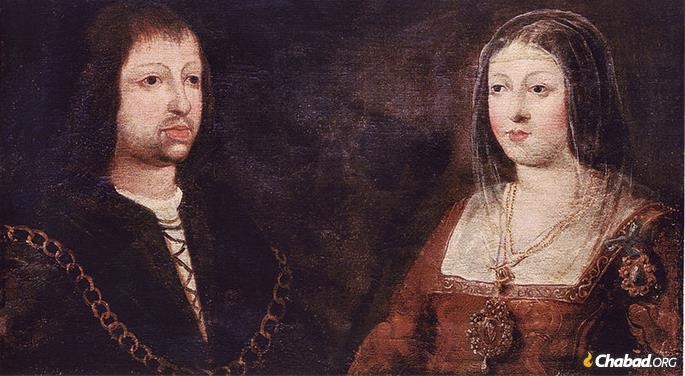
Antes de la expulsión de 1492 los judíos de España vivieron su era de oro. Sin embargo, en 1492 el rey Fernando y la reina Isabel emitieron el decreto de la Alambra en el cual ordenaron que todos los judíos que vivían en España abandonaran el país hasta el 31 de julio, el día que caía Tishá BeAv. Muchos huyeron como refugiados a Portugal, donde los obligaron a convertirse cinco años más tarde. Aquellos que se fueron de España o que lograron escapar de Portugal se dispersaron por el imperio otomano, Italia y la zona oriental y sur de Europa, donde se unieron a las comunidades judías que ya existían o establecieron nuevas comunidades. Salónica, Marruecos, Izmir, Estambul, Holanda y la Isla de Rodas son sólo algunos de los lugares en los cuales se establecieron prósperas comunidades sefaradíes. Muchos también huyeron a Gibraltar y al norte de África debido a su cercanía con la península ibérica, mientras que otros lograron huir hacia Israel o el Nuevo Mundo.

La mayoría de los nombres enumerados a continuación pueden encontrarse en los manuscritos de la Inquisición, los registros de la Iglesia, archivos notariales y otros registros de siglos atrás tanto en los reinos de España como de Portugal.

Los apellidos sefaradíes denotan los lugares de origen y estaban directamente relacionados con lugares geográficos antes o después de la expulsión de 1492 o fueron adquiridos durante las peregrinaciones forzadas a causa del exilio. Toledano (de Toledo), Soriano (de Soria) y Romano (de Roma), son sólo algunos ejemplos. Otros apellidos sefaradíes tales como Benzaquén, Ben-Ezra y Ohana derivan del hebreo o del árabe.

Muchos apellidos se relacionan con profesiones, tales como Melamed, Cabrera y Alhadeff. Como sus hermanos ashkenazíes, apellidos como Cohen y Levy también se encuentran entre las comunidades sefaradíes y denotan la descendencia de los cohanim o de los levitas. Algunos judíos que eligieron convertirse y permanecer en España después del edicto de expulsión adoptaron los apellidos de sus padrinos cristianos pero practicaron el judaísmo en secreto hasta que pudieron escapar a países cercanos tales como Holanda, Inglaterra y Francia, donde retornaron al judaísmo. Entre los apellidos sefaradíes se encuentran muchas palabras en italiano, español, francés y latín, así como muchas provincias y ciudades de la península ibérica derivan sus nombres de estos idiomas.

Placa conmemorativa en honor a las familias asesinadas por los nazis en Rodas.

Aquí hay una lista de algunos de los apellidos más famosos de la comunidad sefaradí.

Abarbanel: De la palabra hebrea “av” que significa “padre”, “rabán” que significa “sacerdote” y “El” que significa “Dios”. Uno de los apellidos más antiguos de España, cuyo origen se remonta al Rey David.

Abecassis: De la palabra hebrea “av” que significa “padre” y del árabe “kassas” que significa narrador de historias. En Argelia los líderes comunitarios y rabinos recibían el título de “Kassis”. Muchos judíos de Gibraltar, Portugal y Marruecos comparten este nombre.

Adatto: De la palabra italiana que significa “adecuado” o “apropiado”. Los judíos que salieron de España hacia Turquía a través de Italia adoptaron este nombre.

Alhadeff: El nombre significa “tejedor” y tiene origen español/moro. Se encuentra a menudo entre judíos que tras la expulsión de España se fueron a la isla griega de Rodas.

Alkana: En hebreo significa “Dios compró”.

Almo/Almosimo: Del español, significa “El que le da al pobre”

Ángel: Este apellido viene de la palabra hebrea “malaj” que significa “ángel”. El apellido Ángel se remonta a la España medieval y migró a Grecia y a la isla de Rodas.

Ashkenazi/Eshkenazi: Ashkenazí significa “alemán”. Los sefaradíes que llevan este apellido tuvieron algún ancestro ashkenazí que se mudó a países sefaradíes y se unieron y fueron adoptados por sus comunidades.

Azose: Versión inglesa del apellido “Azuz”. La raíz del nombre es la palabra hebrea “oz” que significa fortaleza.

Behar: El apellido Behar tiene muchos orígenes. Del hebreo “bejor” que significa “primogénito” y de la palabra turca “bahar” que significa “primavera”. También del español “abeja”. El origen de Behar es previo al período romano y es también el nombre de un pueblo en la provincia española de Salamanca, probablemente un nombre adoptado por muchos judíos de esa provincia. Muchos judíos sefaradíes de Bulgaria y Grecia tienen este apellido.

Benaroch: Un patronímico que en hebreo significa “hijo del líder”.

Ben Porat: Un patronímico que en hebreo significa “hijo del próspero”.

Benezra: Un patronímico del hebreo que significa “hijo del que ayuda” y un nombre popular entre los judíos españoles. Según la tradición este es un apellido de linaje sacerdotal (de los cohanim)

Benaroya: De “ben” que significa hijo y “arroyo” en español. Benaroya es una variación de BenArroyo o BenArollia.

Benveniste: Del latín “veniste” que significa “viniste” y del hebreo “ben”, hijo. Es una amplia familia originaria de España que se dispersó por el imperio otomano tras la expulsión.

Benzaquén: Patronímico del hebreo que significa “hijo del anciano”.

Cabrera: Del español-catalán y significa “manada de cabras”

Calvo: El nombre Calvo viene del latín “calvus” (hombre calvo) y tiene su propio escudo de armas. La familia Calvo es originaria de Galicia, España.

Carvalho: apellido sefaradí derivado de la palabra portuguesa que significa roble.

Cardoza: De “carduso”, de la palabra española cardos.

Coronel: De la palabra portuguesa “coronel” u “oficial”. Este apellido es originario de Galicia, España y tiene su propio escudo de armas.

Franco: Una variante del latín “Francis” que significa “libre”. Un apellido común de la península ibérica adoptado por familias judías y una referencia a los francos alemanes que invadieron la Francia moderna durante el primer milenio.

Gabay: De la palabra hebrea que significa “guardián” (de una sinagoga).Este título alude a una variedad de roles, pero la mayor parte está relacionado con la recolección de impuestos, cuotas y otros pagos de los judíos.

Galante: De la palabra francesa “galant” que significa caballeroso o noble. La familia Galante es de ascendencia portuguesa/italiana y floreció en Roma durante el siglo XVI.

Halfón: Palabra hebrea que significa “que cambia dinero”.

Harari: Del hebreo “de la montaña”. La familia Harari se originó en la ciudad de Montpellier al sur de Francia.

Hassan: De la palabra hebrea que significa “cantor”, y posiblemente también del árabe “hassan” que significa “apuesto”. Una familia de rabinos originalmente de España que se asentó en Marruecos e Italia luego de la expulsión de España.

Laniado: En español medieval significa “velludo”.

(De) León: De la región de León que formaba parte del antiguo reino español de Castilla-León.

Luzatto: Familia italiana que desciende de un judío que inmigró a Italia de la provincia de Lusatia, Alemania.

Maimón: Del árabe/hebreo y significa afortunado o dichoso. Destacada familia de rabinos de España. Maimónides fue conocido como “Moisés ben Maimón”.

Mansour: Del árabe y significa “ganador” o “victorioso”. También deriva de la ciudad egipcia de Mansura en el delta del Nilo.

Marcus/Marciano: del latín “Marculus” que significa “martillo”. Nombre italiano adoptado por judíos sefaradíes después de la expulsión.

Melamed: En hebreo significa “maestro”

Mitrani: Del hebreo y significa “de Trani”. De la ciudad portuaria de Trani al sur de Italia.

Mizraji: En hebreo significa “oriental”.

Montefiore: Del italiano “monte” y “fiore”, “montaña de flores”. Este apellido pertenece a judíos sefaradíes de origen italiano.

Naor: En hebreo significa “iluminado”

Nissim: Del hebreo y significa “milagros”

Ohana: Derivado del nombre hebreo “hana” (jana) y significa “gracia” o “favor”. Los judíos con este nombre se establecieron en Marruecos y en el norte de África después de la expulsión.

Ovadia: Del hebreo, significa “siervo de Dios”.

Pinto: De la palabra española que significa “pollo”. Pinto también es una provincia de España cerca de Madrid y lo más probable es que el nombre derive de los judíos que vivieron en esa provincia.

Russo: Del latín “rusos” que significa “rojo”. La mayoría de las personas que tienen este apellido tienen raíces en España o Italia.

(Ben) Quaknine: Patronímico que significa “hijo de Iaakov”. En beréber el diminutivo del nombre Iaakov es “Aqnin”. El nombre y sus variantes se registran en España y Marruecos en el siglo XIII.

Sasson: Significa “alegría”. Se encuentra entre judíos que tienen ancestros en Toledo, España y que tras la expulsión se fueron a Turquía.

Serfaty: en hebreo significa “francés”. Familia oriental con origen en Francia y que probablemente son descendientes de Rashi.

Serrano: De la palabra francesa “Serra” que significa “cresta” o del español “sierra”.

Silva/Silvera: Del pueblo español de Silva en Galicia, España. El nombre deriva del latín “silver” que significa “madera” o “bosque”. Los miembros de esta familia migraron a Italia tras la expulsión.

Soriano: De Soria (Castilla-León) al norte de España. Los judíos con este nombre se establecieron en Italia y en Rodas tras la expulsión.

Souissa: De Suesa, una provincia de Santander, España.

Spinoza: Del italiano “spinoso”, y del español “espinoso”. Este apellido se encuentra entre judíos que vienen de Italia y de Galicia, España.

Toledano: De Toledo, una provincia de España. Muchas familias de rabinos tienen su origen en Toledo. Tras la expulsión de España inmigraron a Safed, Grecia, Marruecos y luego a Holanda, Inglaterra y Turquía.

Varón: Del latín y significa “hombre”. Posiblemente también deriva de varios lugares en Castilla y Galicia que llevan este nombre.

Vidal: Del latín “vita”, “vivo” o “con vida”.

Según tomado de, http://www.aishlatino.com/iymj/mj/El-significado-de-algunos-apellidos-sefaradies.html?s=feat

 
Leave a comment

Posted by on August 11, 2018 in Uncategorized


Ashkenazim and Sephardim

Ashkenazim and Sephardim

After the decline of the Jewish communities in the Holy Land and Babylon, Jews found new life in Europe, where they blossomed into Ashkenaz and Sepharad.

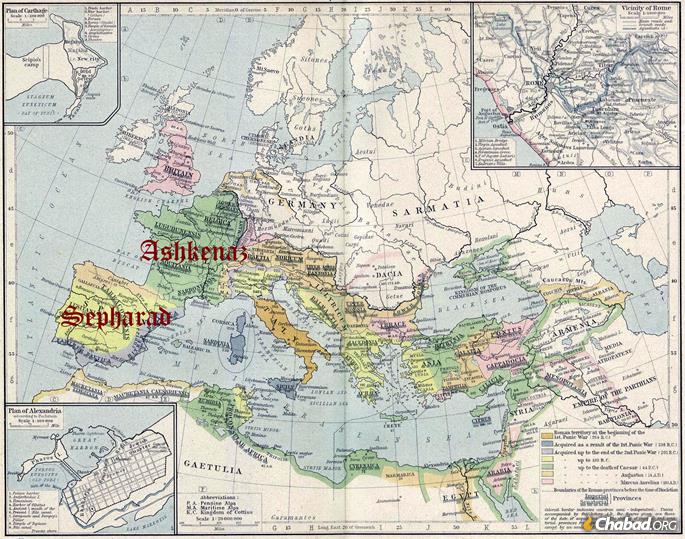
For the last 1,000 years the Jewish people have, for the most part, been grouped into two categories: Ashkenaz and Sepharad. Contemporary Ashkenazim are Yiddish-speaking Jews and descendants of Yiddish-speaking Jews. Sephardim originate in the Iberian Peninsula and the Arabic lands.

While there are differences in culture, language, genetics, and nuances of ritual observance, the commonalities between the two groups are much stronger than what divides them. Thus, a Sephardi from Morocco and an Ashkenazi from Moscow would immediately find common ground in a prayer service that is 95% identical, in mitzvah observance, and of course, the Hebrew language.

Where Sephardim Come From

The Cordoba synagogue was built by Sepharadic Jews in 1315. After Jews were expelled from Spain in 1492, it was converted to a hospital.

Sepharad is the Hebrew name for Spain. Thus, the Jewish people living in Spain and the Iberian Peninsula became known as Sephardim. The earliest recorded Jewish settlements in Spain date back to the 3rd century, and Jews may have been living in Spain since the First Temple period. King Solomon’s tax collector was said to have lived the end of his life there. Having grown in prominence under Muslim rule, they were arguably the most illustrious Jewish community in the world. Sepharad produced Torah scholars, scientists, financiers, and thought-leaders whose works are still being studied today, including Isaac Abravanel, Nachmanides, Maimonides and others. The Jews in Sepharad developed their own language, Ladino (Judeo-Spanish).

Ferdinand and Isabella expelled practicing Jews from Spain, forcing those who remained to worship in secret. The Spanish exiles formed a Sephardic diaspora that stretched from London to Aleppo.

In 1492, the Catholic king and queen of Spain, Ferdinand and Isabella, expelled all Jews from their lands (this was not the first time Jews had been expelled from Spain). Only those who converted to Catholicism were permitted to stay. Spanish Jews poured into Portugal (from whence they were soon expelled as well), North Africa and anywhere else they could find a safe haven.

In many places—from Amsterdam to Aleppo—they became the dominant Jewish culture in their new host communities. This explains why Jews from lands far from Spain are known as Sepharadim. Since the big-tent Sepharad includes many more Jews than just the Spanish refugees and their descendants, a more accurate term for Jews of eastern provenance that has gained popularity in recent years is Eidot Hamizrach (“Communities of the East”).

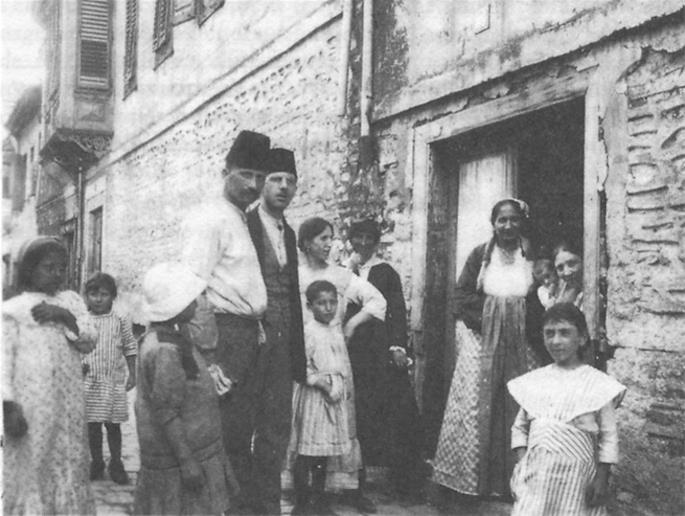
A large and lively Sepharadic community once lived in Salonica, Greece.

The Origins of Ashkenaz

While legends abound, it is not entirely clear when Jews began populating the Rhine Valley, or where they had come from. Details in liturgy and other clues point to the Holy Land as a possible point of origin. Beginning around the 10th Century, the Jewish communities straddling France and southern Germany rose to prominence as a learned and vital center of Jewish life.

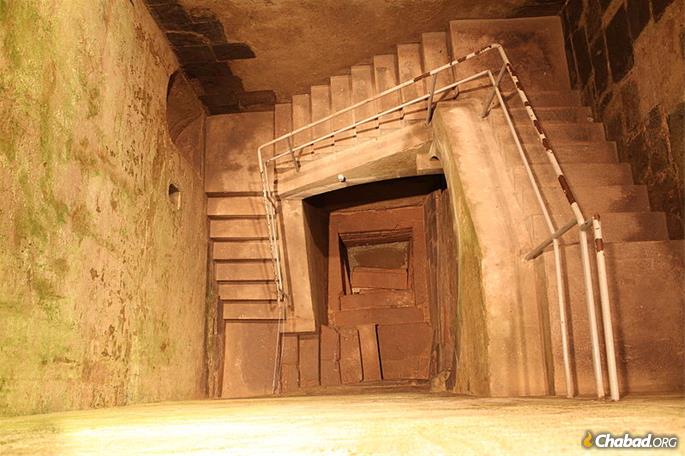
The ancient staircase leading down to the mikvah in Cologne, site of early Ashkenazi settlement.

Ashkenaz is the Biblical name of a grandson of Japhet, the ancestor of the Romans. Perhaps because the area had been part of the Roman Empire, the region, its language, and its (non-Jewish) inhabitants were associated with that name. In time, the Jews living there became known as Ashkenazim as well.

As Jews in Ashkenaz suffered successive waves of murderous crusades, Talmud burnings, massacres and severe repression, they made their way to the more welcoming lands to the east. There, Ashkenazi life flourished, and Yiddish (a Jewish concoction of German, Hebrew, Aramaic and more) became the dominant language of the Jews of Eastern Europe until the double scourges of Nazism and communism conspired to kill millions of Jews and squelch the Jewish identity of millions of others.

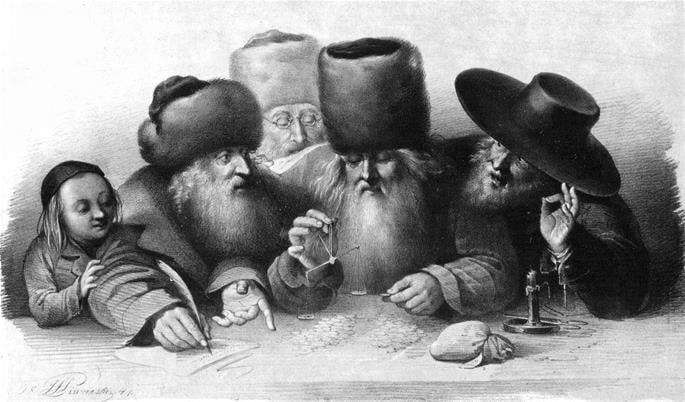
Jewish merchants in 19th century Warsaw.

Key Differences Between Ashkenaz and Sepharad

While the essentials of Judaism are the same for all Jewish people, there are some differences in Ashkenazi and Sephardic observance. Here are some of the more pronounced differences (in no particular order):

    • There are 22 letters and 12 vowel markers in standard written Hebrew, each one with a different sound. Pronunciation evolved over time, and Sephardim have lost the nuanced differences between some of them, while Ashkenazim have lost others. In addition, each tradition’s inflection was influenced by the other languages they spoke. Thus, a Sephardic Jew refers to the Sabbath day as sha-BAT and the Ashkenazi will refer to the same day as SHAH-biss. All Jews spell the word the same way, שבת. More importantly, they observe it on the same day, in the same way. More: The Great Shabbos vs. Shabbat Debate
    • Some of the foods most commonly considered “Jewish”—gefilte fish, kishke (stuffed derma), potato kugel (pudding), knishes, and chopped liver—are all Ashkenazi fare. Sephardim have an entirely different set of foods they prefer. Case in point: Ashkenazim eat cholent on Shabbat afternoon. Sephardim call their Shabbat-afternoon stew hameen or dafina, spice it liberally, and cook eggs in it. More: Why Do We Eat Cholent (or Hameen) on Shabbat?

    • The majority of Jews today speak English or Modern Hebrew. However, just a few generations back, most Ashkenazim (the majority in the centuries leading up to the Holocaust) spoke Yiddish, and Sephardim spoke mostly Ladino, Portuguese or Arabic. This still reflects the names that we give our children. Sephardim may name their children Fortuna or Salvatore, Spanish equivalents of the Hebrew names “Mazal” and “Yehoshua,” for example. Ashkenazi children, on the other hand, may have names like Golda or Velvel, which are Yiddish for “gold” and “wolf” respectively.
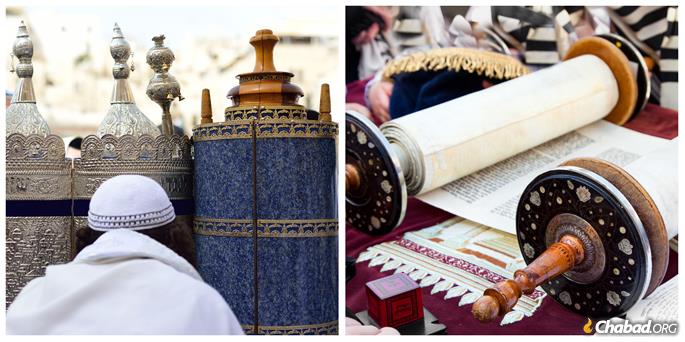
    • Ashkenazim store their Torah scrolls in velvet covers, which they remove before laying the scroll down flat for reading. Most Sephardim keep their scrolls in hard cylinders which can be opened (but not removed) for reading. More: Why Do Sephardim Keep their Torahs in Cylindrical Cases?
Left: Sephardi Torahs. Right: An Ashkenazi Torah
    • For 40 days before Yom Kippur, starting on the first of Elul, Sephardim rise early to recite penitential prayers, known as Selichot. Ashkenazim begin saying these early on Sunday morning just a few days prior to Rosh Hashanah. More: Why Do Selichot Follow Such an Odd Schedule?
    • On Passover, when food containing chametz (grain that has risen) is forbidden, Ashkenazim also avoid legumes, rice, corn and other foods known as kitniyot. Most (but not all) Sephardim have no such compunctions, happily serving rice (carefully checked for stray wheat kernels) as a Passover delicacy. More: Is Kitniyot Kosher for Passover?

  • For any Ashkenazi, a high point of the Jewish year is reciting the Kol Nidrei on Yom Kippur night along with the cantor. They would be surprised to learn that it’s absent from many Sephardic prayer books. Conversely, Sephardim have some treasured liturgical compositions (Hatanu Lefanecha, Keil Nora Alila and others), which Ashkenazim don’t say. More: Why Is Kol Nidrei So Special?
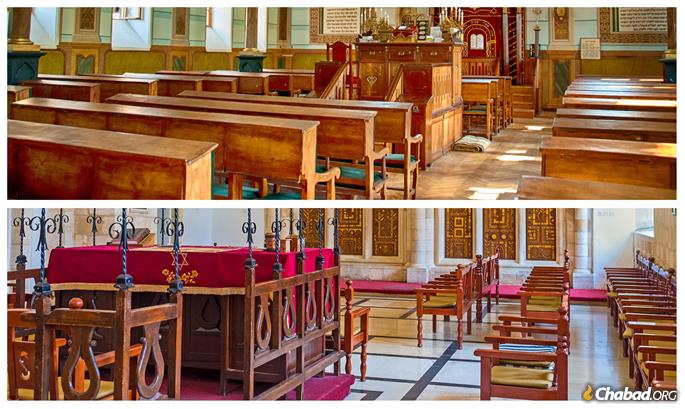
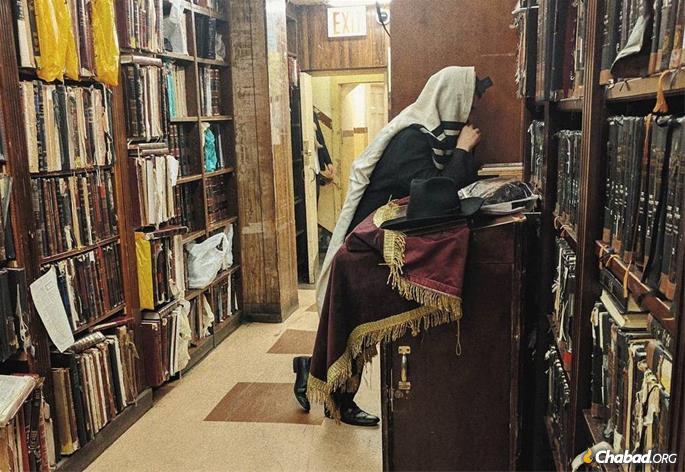
  • Both Ashkenazim and Sephardim have the bimah (reading table) in the center of their synagogues. However, typical Ashkenazi synagogue architecture has rows of pews or chairs facing the front of the sanctuary. Among many Sephardim, on the other hand, the seats are arranged around the room, with everyone facing toward the Torah reading table in the middle (they turn to face Jerusalem when praying the Amidah). More: Why Is the Bimah In the Middle of the Synagogue?
Top: An Ashkenazi synagogue with the seating facing east. Below: A Sephardi synagogue with the seating facing the center.

Some Great Ashkenazic and Sephardic Leaders

There have been thousands of great Sephardic and Ashkenazic rabbis, sages and teachers. Here we will list some of the most prominent rabbis, focusing on those who directly influenced the development of halachic tradition for their respective communities.

Rabbeinu Gershom Meor Hagolah (Ashkenaz, 960-1040): Known as the “light of the exile,” the first prominent rabbi in Ashkenaz, he is well known for his enactments, including bans on reading other people’s mail and polygamy.

Rif (Sepharad, 1013-1103): A native of Fez, Morocco, Rabbi Yitzchak Alfasi summarized the entire Talmud, highlighting salient points and resolving undecided issues.

Rashi (Ashkenaz, 1040-1105): Rabbi Shlomo Yitzchaki was the foremost commentator on the Torah and Talmud and the leader of the Jewish community in Alsace-Lorraine.

Rabbenu Tam (Ashkenaz, 1100-1171): A grandson of Rashi, Rabbi Yaakov Tam was the most prominent of a group of scholars who wrote the Tosafot (“Additions”), commentaries to the Talmud. Rabbeinu Tam narrowly escaped death at the hands of the crusaders. Many of his peers were sadly not so lucky.

Rambam (Sepharad, 1135-1204): Born in Spain and perhaps the most influential teacher of Torah in the past thousand years, Rabbi Moses ben Maimon (also known as Rambam or Maimonides) of Egypt wrote extensively on Jewish law, medicine, philosophy and Jewish beliefs, mostly in Arabic.

Rosh (1250-1327): Rabbi Asher ben Yechiel was born in Germany and flourished in Spain. He drew from both the Ashkenazic and Sepharadic traditions in his halachic commentary on Talmud.

Tur (1275-1349): The son of the Rosh, Rabbi Yaakov ben Asher used the teachings of his father, Rambam, and Rif to determine the rulings in his magnum opus, Arba Turim (Four Towers), which established the template upon which the Code of Jewish Law is based.

Mahril (Ashkenaz, 1360-1427): Longtime rabbi in his hometown of Mainz, Germany, Rabbi Yaakov Moelin wrote many responsa, which establish the customs of Ashkenazic Jewry, especially in matters relating to prayer and synagogue procedure.

Beit Yosef (Sepharad,1488-1575): Rabbi Joseph Caro is the author of the Code of Jewish Law. Born in Toledo just before the Spanish expulsion, he settled in Safed, Israel. An accomplished Kabbalist, he was considered by Sephardic Jewry to be the ultimate authority in halachah.

Rama (Ashkenaz, 1525-1573): The rabbi of Cracow, Rabbi Moshe Isserles wrote glosses on the Code of Jewish Law, adding in rulings of the great Ashkenazic teachers, allowing the single, amalgamated text to be used in the entire Jewish community.

Baal Shem Tov (Ashkenaz, 1698-1760) Rabbi Israel ben Eliezer founded the Chasidic movement, which taught that G‑d is to be accessed through sincerity, joy and love. His teachings, and those of his successors, have spread to both Ashkenazic and Sephardic communities, breathing vitality into Jewish life everywhere.

Not All Jews Are Ashkenazi or Sephardi

Of course, people rarely fit into the boxes we try to fit them into, and many cultures that are mistakenly (and conveniently) placed under the rubric of Sepharad are actually not Sephardic at all.

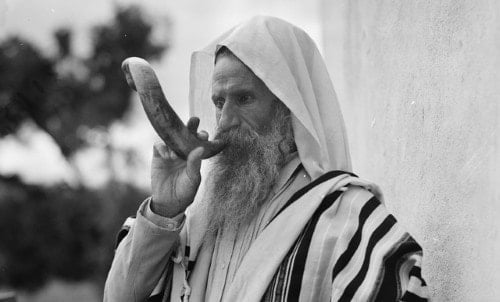
A Yemenite Jew blows shofar (circa 1930s).

A case in point would be the Yemenite Jews, whose unique Jewish tradition is even more ancient and did not come by way of Spain. A similar argument could be made for Persian Jews, who speak Judeo-Farsi and trace their lineage to the Babylonian exiles.

The Jews of Italy and Greece once had thriving cultures of their own, with customs and languages that were uniquely theirs. Today, other than some small pockets, their traditions have almost disappeared (most practitioners were killed by the Nazis), having been supplanted by Ashkenazi and Sephardi Jews who now live in these Mediterranean countries.

There were also once large numbers of Mustarabim, Jews native to Arabic lands. In time, they were overshadowed by and merged into the Sephardic majority.

When Did Judaism Divide Into Two?

From the very start, our people were divided into 12 tribes. After the death of King Solomon, this was divided into Judea in the south and Israel in the north. The northern kingdom (which comprised of 10 tribes) was eventually exiled and lost to history.

During the Second Temple era, the rabbis were grouped into the Houses of Hillel and Shamai. Where the students of Hillel were lenient, the students of Shamai were stringent. The law was almost always decided in accordance with the teachings of the House of Hillel.

Following the destruction of the Holy Temple, two distinct academies developed: one in the Land of Israel and the other in Babylon. The traditions of each were preserved in two Talmuds, the Jerusalem Talmud and the Babylonian Talmud.

In those days, there were some communities that were faithful to the directives of the scholars in the Holy Land and others who were influenced by the sages of Babylon.

Not unlike the Sephardim and Ashkenazim, these groups did have differences in rite and custom, but the fundamentals of Judaism were the same.

As the Jews in the Holy Land suffered under Christian rulership and their communal structure crumbled while the Babylonian academies continued to flourish, almost all Jewish communities gradually adapted the Babylonian traditions, which are now universally accepted.

The two major centers of Ashkenaz and Sepharad developed primarily after the center of Jewish life crossed over the continental divide from Asia to Europe around the turn of the second millennium. This happened on the heels of the diminishment of the Geonic leadership in Babylon, which had long been the primary center of Jewish learning.

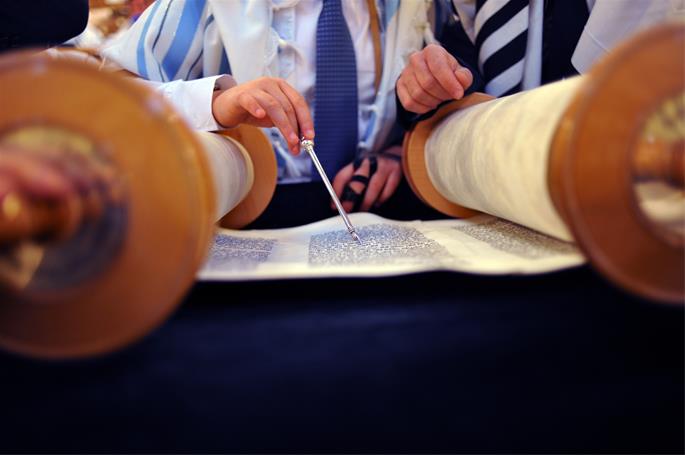
A boy wearing Sephardi tefillin reading from an Ashkenazi Torah.

Nusach Sepharad

Here is a fascinating (and somewhat confusing) aspect of the Ashkenaz-Sepharad cross-pollination. The traditional liturgy of Ashkenazic Jewry is known as Nusach Ashkenaz (Ashkenazic Rite). With the rise of the Chasidic movement, many began to incorporate various elements of the Sephardic rite into their prayers, since the Sephardic tradition was favored by the Kabbalists and more in tune with the Kabbalistic meditations behind the prayers. This new Chasidic hybrid came to be known as Nusach Sepharad (or Nusach Arizal, since it conformed to the meditations of the Arizal).

Thus, a Nusach Sepharad synagogue is most likely populated by Ashkenazi Chassidim, and Sephardim prefer to refer to their rites as Eidot Hamizrach or Sephardi (with the added ‘i’) just to keep things clear.

This is just one example of how Ashkenaz and Sepharad are not two distinct streams but two pillars upon which Judaism is firmly ensconced, rooted in tradition and anchored in dedication.

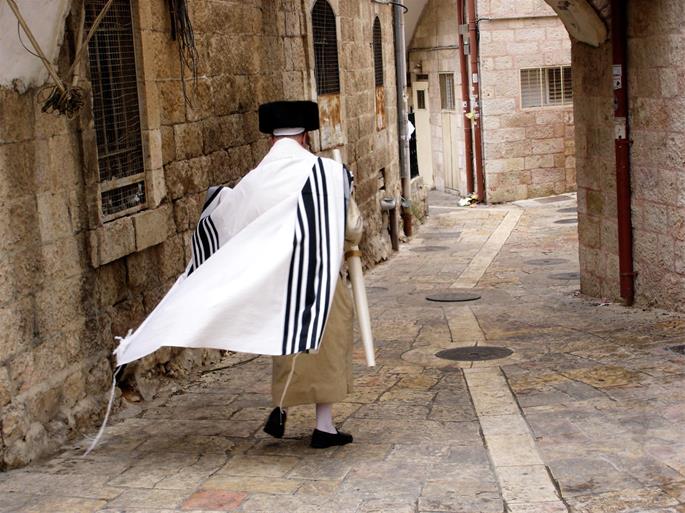
The distinctive garb of the Jerusalmite Chasidim includes elements of both Ashkenazi and Sepharadic traditions, which existed side by side in the Holy Land for centuries.
 
Leave a comment

Posted by on August 9, 2018 in Uncategorized


On Not Being A Victim

by Rabbi Jonathan Sacks

Making a series of programmes for the BBC on morality in the twenty-first century, I felt I had to travel to Toronto to have a conversation with a man I had not met before, Canadian psychologist Jordan Peterson. Recently he has recently become an iconic intellectual for millions of young people, as well as a figure of caricature and abuse by others who should know better.[1] The vast popularity of his podcasts – hours long and formidably intellectual – suggests that he has been saying something that many people feel a need to hear and are not adequately hearing from other contemporary voices.

During our conversation there was a moment of searing intensity. Peterson was talking about his daughter Mikhaila. At the age of six, she was found to be suffering from severe polyarticular juvenile idiopathic arthritis. Thirty-seven of her joints were affected. During her childhood and teen years, she had to have a hip replacement, then an ankle replacement. She was in acute, incessant pain. Describing her ordeal, Peterson’s voice was wavering on the verge of tears. Then he said:

One of the things we were very careful about and talked with her a lot about was to not allow herself to regard herself as a victim. And man, she had reason to regard herself as a victim … [but] as soon as you see yourself as a victim … that breeds thoughts of anger and revenge – and that takes you to a place that’s psychologically as terrible as the physiological place. And to her great credit I would say this is part of what allowed her to emerge from this because she did eventually figure out what was wrong with her, and by all appearances fix it by about 90%. It’s unstable but it’s way better because of the fact that she didn’t allow herself to become existentially enraged by her condition … People have every reason to construe themselves as victims. Their lives are characterised by suffering and betrayal. Those are ineradicable experiences. [The question is] what’s the right attitude to take to that – anger or rejection, resentment, hostility, murderousness? That’s the story of Cain and Abel, [and] that’s not good. That leads to Hell.

As soon as I heard those words I understood what had led me to this man, because much of my life has been driven by the same search, though it came about in a different way. It happened because of the Holocaust survivors I came to know. They really were victims of one of the worst crimes against humanity in all of history. Yet they did not see themselves as victims. The survivors I knew, with almost superhuman courage, looked forward, built a new life for themselves, supported one another emotionally, and then, many years later, told their story, not for the sake of revisiting the past but for the sake of educating today’s young people on the importance of taking responsibility for a more human and humane future.

But how is this possible? How can you be a victim and yet not see yourself as a victim without being guilty of denial, or deliberate forgetfulness, or wishful thinking?

The answer is that uniquely – this is what makes us Homo sapiens – in any given situation we can look back or we can look forward. We can ask: “Why did this happen?” That involves looking back for some cause in the past. Or we can ask, “What then shall I do?” This involves looking forward, trying to work out some future destination given that this is our starting point.

There is a massive difference between the two. I can’t change the past. But I can change the future. Looking back, I see myself as an object acted on by forces largely beyond my control. Looking forward, I see myself as a subject, a choosing moral agent, deciding which path to take from here to where I want eventually to be.

Both are legitimate ways of thinking, but one leads to resentment, bitterness, rage and a desire for revenge. The other leads to challenge, courage, strength of will and self-control. That for me is what Mikhaila Peterson and the Holocaust survivors represent: the triumph of choice over fate.

Jordan Peterson came to his philosophy through his own and his father’s battles with depression and his daughter’s battle with her physical condition.  Jews came to it through the life-changing teachings of Moses, especially in the book of Deuteronomy. They are epitomised in the opening verses of our parsha.

See, I am setting before you today a blessing and a curse: the blessing, if you heed the commandments of the Lord your God that I am giving you today; and the curse, if you do not heed the commandments of the Lord your God, but stray from the way I am commanding you today … (Deut. 11:26-28)

Throughout Deuteronomy, Moses keeps saying: don’t think your future will be determined by forces outside your control. You are indeed surrounded by forces outside your control, but what matters is how you choose. Everything else will follow from that. Choose the good and good things will happen to you. Choose the bad, and eventually you will suffer. Bad choices create bad people who create bad societies, and in such societies, in the fullness of time, liberty is lost. I cannot make that choice for you.

The choice, he says again and again, is yours alone: you as an individual, second person singular, and you as a people, second person plural. The result was that remarkably, Jews did not see themselves as victims. A key figure here, centuries after Moses, was Jeremiah. Jeremiah kept warning the people that the strength of a country does not depend on the strength of its army but on the strength of its society. Is there justice? Is there compassion? Are people concerned about the welfare of others or only about their own? Is there corruption in high places?

Do religious leaders overlook the moral failings of their people, believing that all you have to do is perform the Temple rituals and all will be well: God will save us from our enemies? Jeremiah kept saying, in so many words, that God will not save us from our enemies until we save ourselves from our own lesser selves.

When disaster came – the destruction of the Temple – Jeremiah made one of the most important assertions in all history. He did not see the Babylonian conquest as the defeat of Israel and its God. He saw it as the defeat of Israel by its God. And this proved to be the salvaging of hope. God is still there, he was saying. Return to Him and He will return to you. Don’t define yourself as a victim of the Babylonians. Define yourself as a free moral agent, capable of choosing a better future.

Jews paid an enormous psychological price for seeing history the way they did. “Because of our sins we were exiled from our land,” we say repeatedly in our prayers. We refuse to define ourselves as the victims of anyone else, Egyptians, Assyrians, Babylonians, fate, the inexorability of history, original sin, unconscious drives, blind evolution, genetic determinism or the inevitable consequences of the struggle for power. We blame ourselves: “Because of our sins.”

That is a heavy burden of guilt, unbearable were it not for our faith in Divine forgiveness. But the alternative is heavier still, namely, to define ourselves as victims, asking not, “What did we do wrong?” but “Who did this to us?”

“See, I am setting before you today a blessing and a curse.” That was Moses’ insistent message in the last month of his life. There is always a choice. As Viktor Frankl said, even in Auschwitz there was one freedom they could not take away from us: the freedom to choose how to respond. Victimhood focuses us on a past we can’t change. Choice focuses us on a future we can change, liberating us from being held captive by our resentments, and summoning us to what Emmanuel Levinas called Difficile Liberte, “difficult freedom.”

There really are victims in this world, and none of us should minimise their experiences. But in most cases (admittedly, not all) the most important thing we can do is help them recover their sense of agency. This is never easy, but is essential if they are not to drown in their own learned helplessness. No one should ever blame a victim. But neither should any of us encourage a victim to stay a victim. It took immense courage for Mikhaila Peterson and the Holocaust survivors to rise above their victimhood, but what a victory they won for human freedom, dignity and responsibility.

Hence the life changing idea: Never define yourself as a victim. You cannot change your past but you can change your future. There is always a choice, and by exercising the strength to choose, we can rise above fate.

NOTES

[1] The fact that he has been accused of being an anti-Semite makes me deeply ashamed of those who said this. There is enough real antisemitism in the world today for us to focus on the real thing, and not portray as an enemy a man who is a friend.

As taken from, https://mailchi.mp/rabbisacks/reeh-5778-243813?e=97ac870b13

 
Leave a comment

Posted by on August 9, 2018 in Uncategorized


Achieving Unity While Remaining Divided

by Rabbi Nathan Lopes Cardozo

In our day, the word “tolerance” has become very popular, as have words such as “pluralism,” “democracy,” and “unity.” These terms are used so often that one would hope most people have a proper understanding of their meanings. This is, however, far from true. In fact, it seems that the more these words appear in our papers, books, and conversations, the less they are comprehended. They are often used in ways that oppose the very values they stand for.

We can clearly see this when, for example, we focus on the word “tolerance.” People feel proud when they’re able to claim how tolerant they are. They see themselves as broad-minded and have little objection to any thoughts or views of others, since all attitudes and outlooks on life should be permitted in a free society. These views are then linked with values such as pluralism and democracy.

The shallowness of such thinking, however, is abundantly clear. If society were indeed prepared to be tolerant on all fronts, it would become hell and self-destructive. Little effort is needed to explain that we cannot condone anti-Semitism, racism, public nudity, crime, or sexual harassment of women and children.

Suddenly, we realize that there are moral principles that cannot be violated, and we should stand by these principles come what may.

Most people get confused when speaking about tolerance. They often use this word when in fact they are apathetic.

Alexander Chase once wrote:

“The peak of tolerance is most readily achieved by those who are not burdened with convictions.”[1]

Ogden Nash put it as follows:

“Sometimes with secret pride I sigh,
To think how tolerant am I;
Then wonder what is really mine:
Tolerance, or a rubber spine?”

Indeed, most of the time it is indifference that makes people believe they are tolerant. It is easy to be indulgent when one doesn’t care about values and principles, or about the moral needs of society and one’s fellow humans.

Tolerance has become the hideout in which many people turn their egocentricity into a virtue.

Looking at today’s Jewish scene, we see a similar phenomenon. This time it is tolerance and, above all, “unity” that have become a popular words used by the various factions within the Jewish world. All of them speak of tolerance and unity, and each one accuses the others of a lack of commitment to these values.

Nobody doubts that unity of the Jewish people is of crucial importance. If the Jews would split—even more than they have until now—in such a way that unity could no longer be maintained, we would indeed have an irreversible problem, which could quite well be detrimental to the future of Israel and the Jewish people. Still, we have to ask ourselves if in all cases unity is really the highest value to strive for.

To many, refusal by a major part of the Orthodox leadership to recognize the Conservative and Reform movements as legitimate representatives of Judaism is a sign of intolerance. The same is true about the Conservative and Reform movements. Recognizing Orthodoxy as the authentic representation of Judaism is seen as taboo and a misrepresentation of genuine Judaism.[2]

While it is fully understandable why many are disturbed by these attitudes, it would be entirely wrong to consider this denial of the absolute need for unity within the Jewish people as a mistake. To claim that all need to surrender to it is a fundamental misunderstanding of what human beings are all about.

Sure, there is a lot to say for cooperation and mutual recognition among all these movements. Indeed, agreeing to some sort of compromise shows strength and flexibility. Moreover, refusal by these movements to bend causes much damage. There is no attempt at mutual understanding and reconciliation. Instead, accusations fly back and forth on an emotional level, and any previous efforts to find solutions are completely undermined.

In the case of Orthodoxy, one could even argue that through some compromise Orthodox Judaism would be well served. It would benefit by no longer being identified as an extreme religious movement and, consequently, would be more readily accepted by the non-Orthodox, and even the anti-Orthodox. Some earlier opponents would perhaps even join its ranks.

There is, however, one “but.” All of the above would be true if religion belonged in the same category as politics, economics, science, and other such matters. But it does not. However important unity may be when referring to religious issues, it is not the absolute priority.

What is a priority is personal conscience.

Let us take a look at and understand the history of Judaism. Should Avraham have compromised with the world in which he lived, for the sake of unity? Wouldn’t this strong-minded man have been more influential had he not taken the stand he took? Clearly, Avraham created a great amount of emotional upheaval. He and so many prophets after him, like Shmuel, Yeshayahu and Yirmiyahu, were violent protestors and refused to go along with the values of their day. No doubt many saw them as inflexible extremists who shattered the tranquility of their societies.

Moreover, we can be sure that many “modern-minded” people in those days condemned them for their outdated ideologies and refusal to go along with the “up-to-date” values of the day.

It may be worthwhile to take notice of a major controversy that plagued the Christian world for a long time. One of the most famous Anglican theologians in the 19th century was John Henry Newman. After holding a most prominent position in the Anglican Church, he decided to join the Catholic Church and later became one of its most eminent cardinals. At the time, this move became a topic of intense debate throughout the Christian world. Many admirers of Newman felt he should have stayed in the Anglican Church. They correctly believed that from the point of view of reconciliation he would have succeeded in making a major contribution toward bringing both churches closer. He would have been seen as an authoritative Anglican with a strong leaning toward Rome. The Anglican Church would have been unable to ignore his position, and he could have brought both sides closer. But the moment he became a Catholic, the Anglican Church wrote him off.

When asked why he had not taken that route, remaining with the Anglican Church, Newman made a most important observation. After admitting that he would have indeed been considerably more influential had he stayed in the Anglican Church and contributed to a much needed reconciliation, he added that this option was not available to him; that one cannot put reconciliation over one’s conscience. In matters of truth one makes a choice between what one considers to be true and what one considers to be false. Newman had come to the conclusion that the theology of the Anglican Church was erroneous and had to be rejected. To remain there would have been a compromise on truth and, as such, a sign of weakness and lack of courage.

This historic event should be important for Jews to keep in mind when debating the authenticity of the Orthodox, Reform, Conservative, and other movements.   Neither Jewish identity nor the nature of Judaism can be decided simply on the basis of what will do less harm to Jewish unity. This is an instance where personal conscience—namely one’s perception of the truth—determines.

In mainstream Orthodox Judaism, the Torah and Oral Tradition are seen as rooted in the Sinai experience. The Torah is seen as a verbal revelation of God’s will, and no human being may reject anything stated therein. Likewise, the Oral Tradition is believed to be the authentic interpretation of the text and, while open to debate, may not be even partially rejected or ignored.

Obviously, anyone has the right to challenge this belief and reject it. But no one should impugn Orthodoxy for holding its ground and not compromising on these fundamental beliefs. To Orthodox Jews, this is a matter of truth or falsehood.   Similarly, no one can ask the Conservative and Reform movements to change their beliefs just for the sake of unity, when they believe that these two fundamentals of Orthodox Judaism are (partially) faulty.

The only recourse for these denominations is to challenge the other points of view and possibly defeat them with strong arguments, in a dignified way.

That Orthodoxy does not want to recognize Reform and Conservative views as authentic Judaism is not the outcome of weakness, or rejection of the great value of unity. It is something entirely different. In matters of religious truth, personal conscience and principle are more important than unity. The same is true for Reform and Conservative Judaism. In some fundamental matters, no compromise is possible, however inconvenient and disturbing.

Cardinal Newman would have understood.

Paradoxically, the only way to create unity among these denominations is for all to recognize that they are fundamentally divided. We need to stop asking for compromise on the very beliefs that are matters of personal conscience and therefore categorical.

Once all the parties accept this fact, it will be possible for members of these denominations to sit together and see how they can cooperate while leaving their fundamental beliefs untouched. After all, once their fundamental beliefs are left in place, they will be able to discover how much they do have in common and work toward unity.

Anyone who has an extensive grasp of Judaism and Halacha, their flexibility, and their many opinions will not have much difficulty seeing the many options available that will help realize this goal.

If that happens, there is a real possibility that through discussion and gentle persuasion a new Judaism can arise. Old prejudices will disappear, dividing lines will shift, and slowly, a much greater and deeper authentic Judaism will emerge.

NOTES

[1] Perspectives, 1966.

[2] In earlier generations, Reform was an attempt to reconcile itself with the non-Jewish world and ideas, and to turn Judaism into a “Sunday morning religion” involving little commitment and effort. But over the years, Reform thinkers became much more dedicated to the relevance of a serious Judaism in modern times, and on that point they clashed with Conservative and Orthodox thinkers.

As taken from, https://mailchi.mp/cardozoacademy/ttp-1352681?e=ea5f46c325

 
Leave a comment

Posted by on August 9, 2018 in Uncategorized


You Can Change God’s Mind

When Moses saves the Children of Israel through prayer, he teaches us one more way to know God (Ekev)
Illustrative: Moses and God, at the burning bush. (Painting from Saint Isaac's Cathedral, Saint Petersburg) by Eugene Pluchart

Illustrative: Moses and God, at the burning bush. (Painting from Saint Isaac’s Cathedral, Saint Petersburg) by Eugene Pluchart

This week’s parsha, Parshat Ekev, poses several theologically difficult questions, and in the process of understanding the challenges they pose, we are able to attain a more profound understanding of the relationship between God and humanity.

This idea that God can change His mind raises a serious theological question. When human beings “change” their minds, they are fundamentally admitting that the first decision had been incorrect — or, at the very least, not perfect — and therefore needed to be revised. But if God is all-knowing and just, then every decision He makes is — by definition — the correct, fair, right decision. How can Moses, or any other human being, for that matter, pray to change God’s mind — and succeed?!

For that is how Parshat Ekev opens. Moses is in the process of recounting the experiences of the Jewish people in the desert (chapter 9) — essentially reflecting on narratives that appear first in other, earlier, parshiot. Moses considers the Sin of the Golden Calf — the events themselves took place in Exodus, chapter 32. Similarly, he addresses the Sin of the Spies — which took place in Numbers, chapter, 13. He’s not just giving a history lesson, however. Moses informs the Children of Israel that these two sins had made God angry enough to destroy them: “At Horeb, you angered the Lord and the Lord was incensed with you to destroy you” (Deut. 9:8).

Indeed, God is harsh: “Leave Me alone and I will destroy them and obliterate their name from beneath the heavens…” (Deut. 9:14). But because Moses prayed on behalf of the Children of Israel, interceding on their behalf, the Divine does not wipe out the people. God changed His mind. To be sure, Moses’ prayer was not a rushed, half-hearted request for an acquittal; rather, he “fell down before the Lord, as before, 40 days and 40 nights.” He “neither ate bread, nor drank water, because of all your sins that you had committed, by doing evil in the eyes of the Lord to anger Him” (Deut 9:18). And it was to that devotion that God responded with mercy.

Our understanding that the One who is omniscient should not be able to reverse a decision is influenced by Maimonides’ rationalist understanding of the Divine.

In his Mishneh Torah, Rambam explains the nature of God: “He does not change, for there is nothing that can cause change in Him. There does not exist in Him… anger or laughter, happiness or sadness…” (Hilkhot Yesodei HaTorah 1: 11). If the Creator does not experience emotions, then there would never be motivation to mitigate against any divine decision. Moreover, how could Moses present God with a new argument against His decision? In all of His omniscience, surely He already knows any and all of the arguments that Moses might make.

This brings us to another sharp question: Why does God reveal to Moses, or to any other prophet, what He intends to do? Presumably, God does not need their permission to act. And if His purpose in doing so is to boost the prophets’ standing, giving them the means to impress others, when they predict the future, as revealed to them by God — it is worth nothing that, often enough, the prophets’ audiences are not impressed by them.

Consider, instead, Moses’ response to God’s revealed intent to destroy the people — namely, praying and fasting for the people’s salvation. It would seem that God reveals the intended destruction with this very outcome in mind. Namely, the prophet praying on behalf of the people, trying with all his heart to thwart the impending punishment. Additionally, one might suggest, in the context of other biblical prophets, that the revelation is designed to provoke the people to repent.  Either of these actions would cause God to change His divine plan.

Which is to say: When the Children of Israel sin, God renders a judgement based on the seriousness of the crime. He then puts the prophet in place to defend the people, and welcomes Moses’ argument for clemency.

Which is to say: God never wanted to destroy the people.

It seems a surprising role for the prophet to play. We are accustomed to think that a prophet’s job is to bring the word of God to humanity. The events of Parshat Ekev, however, indicate that prophets are also tasked with bringing the cries of humanity to God.

In fact, from the very first time the term “tefillah” (prayer) appears in the Torah (Genesis 20:7), the prophet’s role as a passionate advocate for the people is on display. God tells Abimelech to release Sarah back to Abraham: “…return the man’s wife, because he is a prophet, and he will pray for you, and (you will) live; but if you do not return (her), know that you will surely die – you and all that is yours.”

This turns the old adage that “God desires the prayers of the righteous” (Hullin 60b) on its head. That is, not only are the prayers of the prophets dear to God, as it were, but He precipitates the occasions for them to pray on behalf of their flocks. In that prayer, the prophet fundamentally partners with God to protect the people.

The second theological conundrum of our parsha is found in chapter 10, verse 12:

And now O Israel, what does the Lord your God demand of you? Only to fear the Lord your God, to walk in all His ways, and to love Him, and to worship the Lord your God, with all your heard and with all your soul.

From our first reading of this verse, we must understand this “walking” that people, who are physical beings, are to do in the ways of God, who is not, must be figurative. That is, if people are created in the image of God, then presumably humanity has the ability to imitate the Divine. But, given Maimonides sharp insistence that God is not corporeal in any way, that logic inherently defaults the verse to anthropomorphism.

The Talmud provides a concrete answer: “A person ought to walk after [imitate] the attributes of God. Just as the Lord clothes the naked, so you shall clothe the naked. Just as He visits the sick, so shall you visit the sick. Just as the Lord comforted the bereaved, so shall you also comfort the bereaved…” (Sotah 14a). The examples of this kind of imitatio Dei are extensive.

Maimonides bases his entire system of ethics on the notion that humanity must “emulate God in His beneficent and righteous ways to the best of one’s ability” (as Nachmanides formulates the principle in Sefer ha-Mitzvot, positive commandment 8). Rambam maintains that man achieves true glory by acquiring, “as far as this is possible for human beings, the knowledge of God, the knowledge of His providence, and of the manner in which it influences His creatures in their production and continued existence.” With that knowledge, he maintains, people will automatically be disposed to seek lovingkindness, justice, and righteousness, in so doing, imitate the ways of God” (Guide of the Perplexed, 3:54).

Which is to say that in order to be like God, people must attain whatever knowledge of Him is humanly possible.

These two theological conundrums taken together suggest that one way to imitate God is to pray to Him to change His decree. That is, when God engineers a situation designed to provoke the prophets to reach out to Him in prayer to save the Children of Israel, He implicitly highlights His capacity to change that decree. When human beings reach out to God in prayer, seeking that change, they acknowledge that capacity, increase their knowledge of the Divine, and imitate Him.

About the Author
Dr. Chana Tannenbaum lectures at Bar Ilan University, Michlelet Herzog, and Matan. She has worked as a Jewish educator, in teaching and administration, for more than 30 years. She earned her doctorate at Yeshiva University, where she was also the recipient of the Baumel award, given to the most outstanding faculty member throughout Yeshiva University. Dr. Tannenbaum made aliyah with her family in 1997, moving to Nof Ayalon.
 
Leave a comment

Posted by on August 4, 2018 in Uncategorized


16 Facts Everyone Should Know About Hasidic Jews

1. The Hasidic Movement Is About Love, Joy and Humility

Hasidim belong to a movement that was founded by Rabbi Israel Baal Shem Tov, who taught love, joy and humility—both in our service of G‑d and in our treatment of fellow human beings.

In the early 1700s, in the area today known as the Ukraine, a young orphan boy named Israel ben Eleazar loved to wander into the forest, even sleeping there overnight. His father’s last words echoed in his mind, “Fear nothing, fear no one, but G‑d Himself, and love every Jew as you love yourself.”

Eventually, he met up with a network of hidden tzadikim (“righteous ones”), who traveled throughout Eastern Europe, encouraging Jews to be better Jews and lifting their spirits. Israel rejected the harsh reproaches that had become standard fare of traveling preachers. Instead, he spoke of G‑d’s love for every Jew, and how much He treasured their every good deed.

By 1740, he was known as “the Baal Shem Tov” (“Master of the Good Name”), and settled in Medzibuz, where thousands came to hear his teachings. The Baal Shem Tov taught that every Jew, scholar and simpleton alike, could connect with G‑d through learning Torah and doing mitzvahs with love, joy and simple, earnest humility.

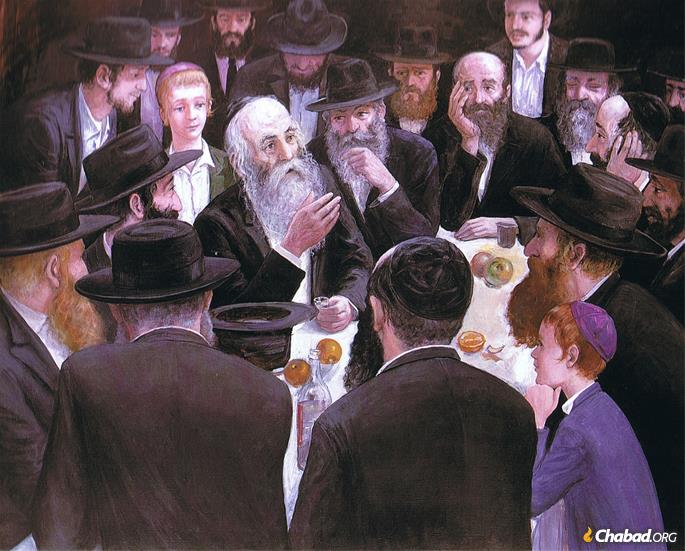
This painting by Hasidic artist Zalman Kleinman shows an early Hasidic master sharing inspiration with simple folk in the market place.

2. Hasidic Jews Are Mystics

The teachings of Hasidism are an extension of the Kabbalistic writings of Rabbi Shimon bar Yochai, Rabbi Isaac Luria and others. The Hasidic masters made these mystical teachings accessible and practical for the everyman.

A Hasid will study in-depth and reflect upon how these teachings bear upon our relationship to G‑d, His relationship to the world and of how the mitzvot intensify that relationship. That study is called Hassidus.

A Hasid, then, is one who strives to become a better person and a better servant of G‑d through studying, contemplating, and internalizing Hasidic teachings.

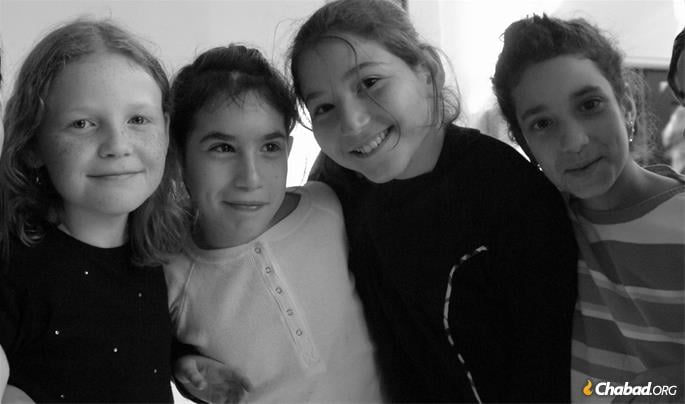
Hasidic girls during prayer © Mushka Lightstone

3. Not All Hasidim Are the Same

Every Hasidic group has its own unique flavor and focus. For example, the Hasidic groups influenced by the masters of Pshischa and (notably Gur Hasidim today) value simplicity, austerity and a devotion to the stark, unvarnished truth. Breslov Hasidim place supreme value on maintaining a joyful disposition, “hitbodedut” (private conversation with G‑d), and a trusting faith in G‑d at all times. And yet other Hasidim place their focus on kindness to others as the overarching quality.

Many hasidic groups today have taken an insular approach to self-preservation—some more than others. Chabad Hasidim, on the other hand, take personal responsibility for every Jew, with total disregard for denomination or lifestyle.

Hasidic Jewish men in Jerusalem © Norman Frankel

4. Hasidic Jews Use Technology

Hasidim use mobile phones, drive cars and use other forms of technology. Why not? After all, the sages taught that “All that G‑d created in His world, He only created for His honor.” (Avot 6:11)

Chabad Hasidim in particular say that this applies especially to the scientific discoveries of recent years—their purpose is to add honor to G‑d by using them for holiness, Torah and mitzvot, and bring the world to its ultimate, messianic state.

At the same time, Hasidim are very wary of Internet use, as should be anyone concerned about their moral and psychological well-being. Television is also considered off limits.

In virtually all Hasidic communities, minors are allowed zero or very limited access to the Internet. Those who use Internet for business are advised to employ filters and other safeguards. The principle concerns are exposure to pornography, FOMO addiction and other forms of compulsive behavior associated with unguided Internet use.

In the Hasidic enclave of Meah Shearim, Jerusalem © Norman Frankel

5. Hasidim Receive Guidance From Rebbes

Rebbe is simply the Yiddish pronunciation of rabbi. However, it has come to refer to the leaders of the various Hasidic groups.

There is no formal job description of a rebbe, nor is there an application or selection process to become one. So what is a rebbe?

In all times, there were people who devoted their lives to union with G‑d and to His service. But they often removed themselves from the common folk, so as to immerse themselves in study, contemplation and prayer.

The original leaders of the Hasidic movement assigned such people the task of providing guidance and inspiration to each member of their community, so that every person could feel close to G‑d and serve Him with love, awe and joy.

The relationship between a hasid and his or her rebbe is a close and intimate one—much more than that of teacher and student. The hasid must make his own decisions and work hard to achieve his goals, but the rebbe is there at every stage to guide and assist.

A couple in conversation with the Lubavitcher Rebbe

6. Hasidim Value Song

It’s for good reason that contemporary Jewish music is often referred to as Hasidic music. The great Hasidic master, Rabbi Schneur Zalman of Liadi, taught that “music is the pen of the soul.” Some Hasidic music is rousing and invigorating, and some is contemplative and sobering, each giving expression to another facet of the human experience and the man-G‑d connection.

Hasidic girls © Mushka Lightstone

7. Hasidim Love to Tell Stories

The Hasidic tale can take many forms. Often it is a parable carefully crafted to deliver a lesson. In other instances, the Hasidic story recounts the deeds, piety or adventures of rebbes and Hasidim of past generations. Lovingly told and retold, Hasidic stories from a rich oral tradition and an endless font of inspiration.

In this painting Hasidic artist Zalman Kleinman shows the “farbrengen,” a Hasidic gathering that features song, stories, Torah teachings and inspiration.

8. Hasidim Are Generous

Hasidim are disproportionately represented in volunteer ambulance corps and other communal organs of kindness. The bikur cholim (hospital visitation) of the Hasidic community is legendary, as are the gemachim, free loan organizations for everything from porta-cribs to to wedding gowns. The early Chabad Hasidim would say, “this piece of bread is yours like mine,” placing the “yours” before the “mine, since the focus was on the other.

9. Clothes Don’t Make the Hasid

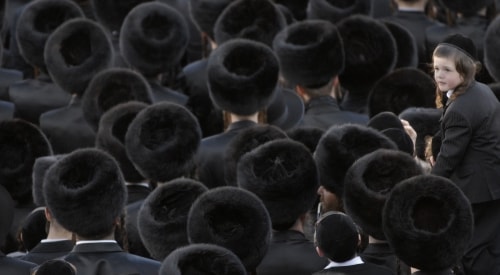
A Hasid’s headgear and clothing might be an indication of the group to which he belongs. A wide velvet hat is the hallmark of a Hungarian Hasid, a taller velvet hat worn backwards (so that the bow sits on the right) is a giveaway for a Vishnitzer Hasid, a rounded felt hat denotes a Gur Hasid, and a pinched fedora generally—but not always—sits atop the head of a Chabad Hasid.

Yet, the external trappings are just that—external trappings.

Really, there are two ways to define Hasidic Jews: as sociological groups, or as adherents of a certain ideology and way of life.

So you might be sociologically grouped as a hasid, but not ideologically. And vice-versa: You could be a sociological outlier, but a true hasid.

Really, to be a hasid, there’s a very simple formula: If you study the teachings of the Hasidic masters and bond strongly with one of them, show love to every Jew, strive to do G‑d’s mitzvahs and learn His Torah out of love and joy, then you are a hasid.

A winding Jerusalem street scene © Norman Frankel

10. Hasidim Were Once Persecuted

When Hasidim came into being in the latter half of the 18th Century, many viewed the new group with suspicion. Were the Hasidic Jews truly pious? Would they remain faithful to Torah and mitzvah observance? Some overzealous people took it upon themselves to harass and intimidate Hasidic Jews.

In 1798, Rabbi Schneur Zalman of Liadi was arrested by the Czarist authorities based on trumped-up charges of revolutionary activity concocted by jealous opponents. His release from prison on the 19th day of Kislev is marked in Chabad as the “New Year of Hasidism.”

Years later, in Communist Russia, Hasidim risked their lives to uphold Jewish life in the Soviet Union. While many Hasidim met their deaths at the hands of the Soviet Authorities and others endured decades in the gulag, they were victorious and the flame of Judaism burned bright even in the darkest of times.

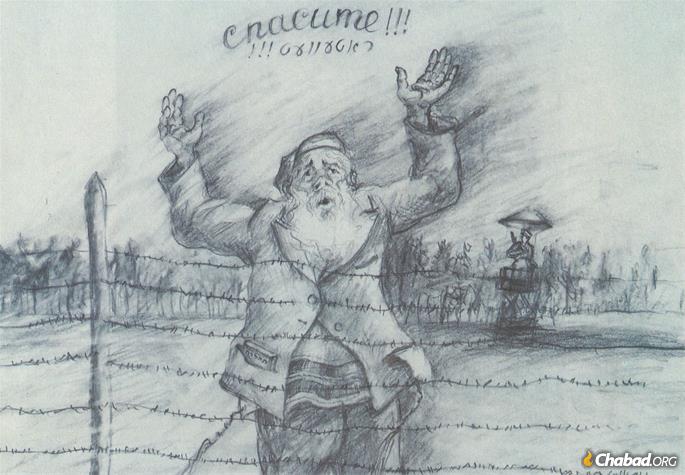
In this drawing, Hasidic artist Hendel Lieberman (who lost his wife and daughters to the Nazis) depicts his brother, legendary Reb Mendel Futerfas, who spent 14 years in Siberian gulags.

11. Hasidim Are the Most Rapidly Growing Group Within Judaism

By the mid-19th century, at least half of Eastern Europe’s Jewry considered themselves Hasidim—and most of the world’s Jewry lived in Eastern Europe.

But in the 20th century, the anti-religious communist regimes, together with the devastation of the Holocaust, almost completely wiped Hasidic Jewry off the map. Yet today the Hasidic community is burgeoning in ways in which the Holocaust survivors who planted the roots of their shattered European youths in Israel and North America could not even have imagined.

How did such a miracle occur?

For one thing, strong-willed, charismatic leaders worked hard to lift up the spirits of these refugees from Europe, to build up neighborhoods with schools and jobs.

For another, Hasidic Jews tend to marry young, have large families and remain within the fold.

Hasidic teachings are rapidly catching on today. Although not all who study these teachings join a Hasidic group, they nevertheless often take on a Hasidic way of life.

A group of Hasidic boys © Mushka Lightstone

12. The Largest Hasidic Groups

There are no censuses on Hasidic groups, and it would be pretty hard to determine in many cases. For example, estimates of the number of Chabad Hasidim range from 50,000 to 200,000. Altogether, counting adults and children, the number of Hasidim worldwide as of 2005 was estimated at 400,000 and rapidly growing due to a high birth rate. Most likely, half live in Israel, another 30-40% in America (mostly Brooklyn and New Jersey), and the rest spread out throughout the world, particularly in Great Britain, Antwerp and Montreal.

Hasidic groups are generally named after the town in which their rebbes held court. Some of the largest and most conspicuous groups today (in no particular order) are:

  • Gur (Poland, today, mostly in Israel).
  • Chabad Lubavitch (Lithuania and Belarus, today concentrated in Crown Heights, Brooklyn; and Kfar Chabad, Israel, but spread throughout the world).
  • Satmar (originating in Satu Mara, Romania, today concentrated in Williamsburg, Brooklyn, as well as Kiryas Yoel, Monsey and elsewhere).
  • Bobov (Galicia, today very prominent in Borough Park, Brooklyn).
  • Belz (Galicia, today mostly in Israel with significant communities in New York and Montreal).
  • Vishnitz (Ukraine, today, mostly in Israel and Monsey, N.Y.).
  • Breslov (Ukraine, today spread throughout the world).
  • Chernobyl (Ukraine, today in New Square, N.Y., and around the world).
  • Sanz-Klausenburg (Galicia, today concentrated in Netanya, Israel).
A group of spodik-wearing Gur chassidim (Photo: Ouria Tadmor/flash90).

13. Married Women Cover Their Hair

This is not unique to Hasidim, as Jewish law requires this from all married women. While some Hasidic women prefer kerchiefs or snoods, the Lubavitcher Rebbe encouraged women to use a wig. Often made of human hair, a well-crafted wig can be elegant and attractive.

© Binah Wigs
© Binah Wigs

14. Men Grow Their Beards

The full beard is not either unique to Hasidim, as Jews have been sporting beards since Biblical times. In two separate places, the Torah forbids a man to cut his facial hair. In addition, Kabbalah attaches great importance to the beard, teaching that the “thirteen locks” of the beard are representative of G‑d’s thirteen supernal Attributes of Mercy.

A Hasidic man in Uman, Ukraine

15. Yiddish Is the Lingua Franca of Hasidic Jews

The Hasidic Movement began in Eastern Europe, where the vast majority of Jews spoke Yiddish. Even today, Yiddish is the language of choice among many Hasidim. Since Hasidim is an open movement, which is constantly gaining new adherents, many Hasidim speak Modern Hebrew, English, French, Russian and Spanish.

Hasidic women in conversation in Los Angeles © Mushka Lightstone

16. Hasidim Are Just Regular People

Don’t get thrown off by the garb. Hasidim are unique individuals with their own predilections, dispositions, likes, dislikes, hobbies, interests, and life experiences. Like you, they have bad days, good days and in-between days. Some are shy, some are boisterous; some are diligent and others are daydreamers; some are leaders and some are followers.

So next time you meet a Hasid. Remember that he or she is a regular human being trying his or her best to serve G‑d in the world He created for us all.

 
Leave a comment

Posted by on August 4, 2018 in Uncategorized


Listen, Really Listen

By Rabbi Sir Jonathan Sacks

Some 20 or so years ago, with the help from the Ashdown Foundation, I initiated a conference at the Hebrew University, Jerusalem, on the future of Jewish peoplehood. I feared the deepening divisions between secular and ultra-orthodox in Israel, between the various denominations in the Diaspora, and between Israel and the Diaspora themselves.

It was a glittering array of Jewry’s brightest minds: academics from 16 different countries representing all the shadings of Jewish identity. There were professors from Harvard, Yale and Princeton as well as most of Israel’s universities. It was a scintillating success, and at the same time, a total failure.

Halfway through the second day, I turned to my wife Elaine and said, “The speaking is brilliant. The listening is non-existent.” Eventually I could bear it no longer. “Let’s leave,” I said to her. I could not handle yet more skilled presentations from minds that were parti pris, lucid, coherent, but totally closed to ideas that lay outside the radius of their preconceptions. Far from being a set of solutions to the divisions within Jewry, the conference perfectly epitomised the problem.

We decided to travel south to Arad, to meet for the first time the great (and very secular) novelist Amos Oz. I mentioned this to a friend. He winced. “What,” he asked, “do you hope to achieve? Do you really want to convert him?” “No,” I replied, “I want to do something much more important. I want to listen to him.”

And so it was. For two hours we sat in Amos’s book-lined basement study at the edge of the desert, and listened. Out of that meeting came, I believe, a genuine friendship. He stayed secular. I stayed religious. But something magical, transformative, happened nonetheless. We listened to one another.

I cannot speak for Amos, but I can for myself. I felt the presence of a deep mind, a feeling intellect, a master of language – Amos is one of the few people I know incapable of uttering a boring sentence – and one who has wrestled in his own way with what it means to be a Jew. Since then I have had a public dialogue with him, and another with his daughter Fania Oz-Salzberger. But it began with an act of sustained, focused listening.

Shema is one of the key words of the book of Devarim, where it appears no less than 92 times. It is, in fact, one of the key words of Judaism as a whole. It is central to the two passages that form the first two paragraphs of the prayer we call the Shema,[1] one in last week’s parsha, the other in this week’s.

What is more: it is untranslatable. It means many things: to hear, to listen, to pay attention, to understand, to internalise and to respond. It is the closest biblical Hebrew comes to a verb that means “to obey.”

In general, when you encounter a word in any language that is untranslatable into your own, you are close to the beating pulse of that culture. To understand an untranslatable word, you have to be prepared to move out of your comfort zone and enter a mindset that is significantly different from yours.

At the most basic level, Shema represents that aspect of Judaism that was most radical in its day: that God cannot be seen. He can only be heard. Time and again Moses warns against making or worshipping any physical representation of the Divine. As he tells the people: It is a theme that runs through the Bible. Moses insistently reminds the people that at Mount Sinai: “The Lord spoke to you out of the fire. You heard the sound of words but saw no form; there was only a voice” (Deut. 4:12). Even when Moses mentions seeing, he is really talking about listening. A classic example occurs in the opening verses of next week’s parsha:

See [re’eh], I am setting before you today a blessing and a curse – the blessing if you listen [tishme’u] to the commands of the Lord your God that I am giving you today; the curse if you do not listen [lo tishme’u] to the commands of the Lord your God. (Deut. 11:26-28)

This affects our most basic metaphors of knowing. To this day, in English, virtually all our words for understanding or intellect are governed by the metaphor of sight. We speak of insight, hindsight, foresight, vision and imagination. We speak of people being perceptive, of making an observation, of adopting a perspective. We say, “it appears that.” When we understand something, we say, “I see.”[2] This entire linguistic constellation is the legacy of the philosophers of ancient Greece, the supreme example in all history of a visual culture.

Judaism, by contrast, is a culture of the ear more than the eye. As Rabbi David Cohen, the disciple of Rav Kook known as ‘the Nazirite’, pointed out in his book, Kol ha-Nevuah, the Babylonian Talmud consistently uses the metaphor of hearing. So when a proof is brought, it says Ta shma, ‘Come and hear.’ When it speaks of inference it says, Shema mina, ‘Hear from this.’ When someone disagrees with an argument, it says Lo shemiyah leih, ‘he could not hear it.’ When it draws a conclusion it says, Mashma, ‘from this it can be heard.’ Maimonides calls the oral tradition, Mipi hashemua, ‘from the mouth of that which was heard.’ In Western culture understanding is a form of seeing. In Judaism it is a form of listening.

What Moses is telling us throughout Devarim is that God does not seek blind obedience. The fact that there is no word for ‘obedience’ in biblical Hebrew, in a religion of 613 commands, is stunning in itself (modern Hebrew had to borrow a verb, letzayet, from Aramaic). He wants us to listen, not just with our ears but with the deepest resources of our minds. If God had simply sought obedience, he would have created robots, not human beings with a will of their own. Indeed if He had simply sought obedience, He would have been content with the company of angels, who constantly sing God’s praises and always do His will.

God, in making human beings “in His image,” was creating otherness. And the bridge between self and other is conversation: speaking and listening. When we speak, we tell others who and what we are. But when we listen, we allow others to tell us who they are. This is the supremely revelatory moment. And if we can’t listen to other people, then we certainly can’t listen to God, whose otherness is not relative but absolute.

Hence the urgency behind Moses’ double emphasis in this week’s parsha, the opening line of the second paragraph of the Shema: “If you indeed heed [shamo’a tishme’u] my commands with which I charge you today, to love the Lord your God and worship Him with all your heart and with all your soul” (Deut. 11:13). A more forceful translation might be: “If you listen – and I mean really listen.”

One can almost imagine the Israelites saying to Moses, “OK. Enough already. We hear you,” and Moses replying, “No you don’t. You simply don’t understand what is happening here. The Creator of the entire universe is taking a personal interest in your welfare and destiny: you, the smallest of all nations and by no means the most righteous. Have you any idea of what that means?” Perhaps we still don’t.

Listening to another human being, let alone God, is an act of opening ourselves up to a mind radically other than our own. This takes courage. To listen is to make myself vulnerable. My deepest certainties may be shaken by entering into the mind of one who thinks quite differently about the world. But it is essential to our humanity. It is the antidote to narcissism: the belief that we are the centre of the universe. It is also the antidote to the fundamentalist mindset characterised by the late Professor Bernard Lewis as, “I’m right; you’re wrong; go to hell.”[3]

Listening is a profoundly spiritual act. It can also be painful. It is comfortable not to have to listen, not to be challenged, not to be moved outside our comfort zone. Nowadays, courtesy of Google filters, Facebook friends, and the precise targeting of individuals made possible by the social media, it is easy to live in an echo-chamber in which we only get to hear the voices of those who share our views. But, as I said in a TED lecture last year, “It’s the people not like us who make us grow.”

Hence the life-changing idea: Listening is the greatest gift we can give to another human being. To be listened to, to be heard, is to know that someone else takes me seriously. That is a redemptive act.

Twenty years ago I sat in a lecture hall in a university in Jerusalem and listened to a series of great minds not listening to one another. I concluded that the divisions in the Jewish world were not about to heal, and would never heal until we understood the deep spiritual truth in Moses’ challenge: “If you listen – and I mean, really listen.”

NOTES

[1] Technically, reciting the Shema is not an act of prayer at all. It is a fundamentally different type of action: it is an act of Talmud Torah, of learning Torah (see Menahot 99b). In prayer, we speak to God. In study we listen to God.

[2] See George Lakoff and Mark Johnson, Metaphors We Live By, University of Chicago Press, 1980.

[3] Bernard Lewis, “I’m right; you’re wrong; go to hell,” The Atlantic, May 2003.

As taken from, http://rabbisacks.org/listen-really-listen-eikev-5778/

 
Leave a comment

Posted by on August 2, 2018 in Uncategorized


In Praise of Tribalism

Thoughts on two eight-year-old converts—and Michael Chabon.

This is a column about Jewish belonging—which some call tribalism. It’s about group identification: the question of whether to count oneself into “the Jewish people” with its proud achievements and miraculous survival or, because of our internal divisiveness and the wrongs occasionally committed in our name, to count oneself out. More precisely, it’s about the raw emotions this topic can unleash in us when we least expect it.

On a recent spring morning, a Jewish colleague and I met at a Manhattan tea shop known for its pastries and its closely packed tables. To one side of us sat a brown-skinned couple speaking Arabic—the man bearded, the woman wearing a headscarf. On the other side of us was a young white family—mom, dad and boy-girl twins who appeared to be about eight years old. Noting the children’s damp hair, the boy’s blond helmet neatly parted and combed, the girl’s wet tendrils clinging to her neck beneath a beribboned ponytail, I pegged them as Middle American tourists, fresh from their morning showers at a nearby B&B.

Cliché or not, our comfortably contiguous breakfast parties struck me as a living rebuttal to Trumpian nativism. No need to “make America great again,” I thought. Let’s just reclaim the old motto, E pluribus unum—“Out of many, one.”

Just then, a server arrived and placed a three-tiered caddy containing a luscious array of tea sandwiches, tarts, cookies and petit fours before the wide-eyed twins. The seemingly WASPy mom and dad raised their teacups for a toast, grinned at their adorable children and, to my astonishment, bellowed, “Mazel tov!”

Upper West Siders are nothing if not nosy, so I asked the twins, “Are you celebrating your birthdays?”

“Not their birthdays,” the dad replied, brightly. “Their conversions! We’ve come straight from the mikvah!” He touched his daughter’s wet hair and further volunteered that the children were adopted and he and his wife had been raising them in Judaism, but they and the twins had decided to make it official. “You’re looking at two brand-new Jews!”

With no warning whatsoever, I burst into tears, not a mist of kumbaya but an unbidden flood of raw emotion. Visceral. Atavistic. Tribal.

I managed not to speak my first thought, the knee-jerk reaction some of us can’t seem to outgrow: “Take that, Hitler: two more!” But when I tried to say something coherent about the legacy, history and heritage that now belonged to those sweet little children, all I could do was whisper, “We’re Jewish, too,” before my voice turned to sobs.

The mother, observing my meltdown, explained to the children that I was crying happy tears for them because they’d become official members of the Jewish people. It showed that their conversions weren’t only important to their family but important to all Jews because we’re responsible for each other.

“Amen,” I breathed, at last. “Mazel tov! Welcome to the tribe!”

My next emotional spasm occurred some weeks later. I was reading the May 14 commencement speech given by the celebrated author Michael Chabon at Hebrew Union College-Jewish Institute of Religion in Los Angeles, during which he gored two of the American Jewish community’s most sacred cows: uncritical support for Israel and promotion of endogamous marriage (Jews marrying Jews).

While some defended it, many others have excoriated his one-two punch, delivered from the podium of Reform Judaism’s preeminent rabbinic institution, as a double-whammy betrayal of the Jewish people.

Since I agree with most of Chabon’s views on Israel/Palestine, I felt neither distressed nor betrayed. What inflamed me so unexpectedly was his fevered condemnation of in-group marriage. Although he’d married a Jew, fellow author Ayelet Waldman, and described how they’d raised four Jewishly well-educated children, he demanded that the rest of us avoid doing likewise. He didn’t just defend Jews who marry out; he rebuked Jews who marry in. Jewish couples are “a ghetto of two,” he said. Jewish endogamy is comparable to “a gated community, a restricted country club or a clutch of 800 zealots lodged in illusory safety behind a wall” in segregated Hebron.

Going even further, he conflated Israel’s right-wing government and ultra-Orthodox fanatics with any Jews—including rational, mainstream and progressive Jews—who prefer their children to marry within the tribe. He described how he had erased “the comforting line” he used to draw between “the nice kind of religion and the nasty”—between the ethical Judaism of “peace and justice and lovingkindness” and the extremist Judaism of mass murderer Baruch Goldstein, or the militant fundamentalists who throw rocks at little Jewish girls “for the sin of daring to learn.”

Like my involuntary tears in the tea shop, the intensity of my reaction to Chabon’s speech took me by surprise. I wanted to grab him by the neck and beg him not to give up on us; not to opt out of the “nice kind” of Judaism; not to indict in-marriage as ghettoizing. I wanted to persuade him to value and build on the positive aspects of tribalism—the power of solidarity in service of activism, the simple pleasure of belonging to and identifying with a particular group, whether it’s “Jews,” “fathers” or “writers”—to advance not just the group’s self-interest but its broader life-enhancing goals.

I wanted to plead the case for in-marriages, citing his own as Exhibit A. He and Waldman together have doubled down on their resistance to extremism, including racism and xenophobia perpetrated by Israeli or American Jews. Surely he could endorse unions of two questioning, conscience-bound Jewish partners who refuse to cede the Judaism of justice and lovingkindness to those who preach the Judaism of exclusion and hate.

Finally, I wished I could introduce him to two little brand-new Jews and the family who chose to opt into the Jewish people because, on balance, we’re a group worth belonging to. Unfortunately, I was so touched by them, I forgot I was a journalist and never asked their names.

Letty Cottin Pogrebin is working on her twelfth book, a personal exploration of shame and secrecy.

As taken from, https://www.momentmag.com/opinion-in-praise-of-tribalism/

 
Leave a comment

Posted by on August 1, 2018 in Uncategorized


A Haredi Rabbi’s Rumination on Racism

Rabbi Avi Shafran

Mr. Paskow, now long gone, was a transplant to these shores, an Eastern-European-born Holocaust survivor who, in the 1970s, attended services at the small shul where my late father served as rabbi. Like many of his generation, Mr. Paskow (not his real name) harbored some deep, overt racial prejudices against what he referred to as shvartzes, Yiddish for “blacks.” It was 1969, and race riots in a number of cities provided the elderly shulgoer with ample fodder for his racial railings. He would surely have dismissed as insane anyone who suggested that America might one day have a black president.

Waiting each day for mincha services to begin, congregants would gather in the shul, and Mr. Paskow would pontificate about political and social issues.

I was just a teenager and held my peace. To be sure, I had experienced black anti-Semitism. Like the boy who liked to yell “Heil Hitler!” at my father and me when we walked to the synagogue on the Sabbath, or the public school students who, having been invited by a group of us Jewboys to play a game of softball, lost interest in the ball when they were up to bat and wielded the wood against us. But I had also grown fond of my yeshiva’s black gym teacher and become close friends with a black neighbor. I tried to see people as just people. So I ignored Mr. Paskow’s ravings.

Until, one day, he was praising Lenny, a boy he had employed years earlier in his haberdashery. Another congregant asked Mr. Paskow whether Lenny, whom the elderly man had effectively adopted and whose college education he had actually underwritten, was Jewish. “No,” said the elderly man. “He was a shvartze who just walked into my store one day and asked for a job.”

I was, as the British say, gobsmacked. Old bigoted Mr. Paskow’s protégé was black? And he had given him a job for the asking? And paid his college tuition? Who could have guessed?

I filed that revelation away for future reference.

When my wife and I married and had children, we raised them to respect all people of whatever ethnicity. In the early 1990s, I was privileged to write a biography of a local man of African and Native American ancestry whose determination to become a Jew inspired me, and, if readers’ responses are any indication, many others as well.

None of that erased the hatred for Jews I had experienced from some African Americans. But I knew there’s no dearth of white haters either. And there’s racism among Jews toward blacks as well.

But from what I’ve seen in recent years, and aside from Louis Farrakhan and his tired tirades, I think that blacks and Jews have grown less wary of each other, learned that “the other” isn’t really quite so “other.” Blacks and haredim have increasingly interacted in politics, businesses and many professions.

In late April, the leading haredi newspaper Hamodia editorialized about the new museum in Montgomery, Alabama, memorializing those who, over the decades, were lynched because of their race. The editorial asserted “the need for all Americans, even those of us whose forebears were far from American shores when African-Americans were killed and seen as subhuman, to ensure that the tragic history of American racial violence, too, is not forgotten.”

My thoughts cycle back to Mr. Paskow. I suspect that the puzzle of his apparent racism and his real-life colorblindness derived from the fact that, although his attitude toward blacks was influenced by radicals and rioters, deep in his Jewish soul he could see beyond a nebulous group to an individual. And that allowed him to treat Lenny as, in effect, an adopted son.

Decades of thinking about racism leave me with the conclusion that it will always be with us, in people’s minds if not in their actions. Racism, I fear, may be a fact of life, and its eradication an unattainable goal. “Curing” racism would be a perfect thing, but, as so often, the perfect is the enemy of the good. But there is a way forward. Rather than trying to disabuse people of the biases they may coddle, we must charge them to focus on individuals.

Let people joke and grouse, if they must, about whites, blacks, Jews, Muslims or whoever else, specious though the stereotypes may be. It shouldn’t matter what people think about group X or group Y. It doesn’t matter to me, a visibly Jewish Jew, if someone assumes I possess traits that anti-Semites attribute to my tribe. I am, indeed, rather cliquish, preferring the company of my own people. No apologies there. But I’m neither wealthy, nor do I have business acumen. And I can’t control my weight, much less the world. All I ask is that others see me, whatever their beliefs about Jews, as an individual. Judge me as me.

It might seem radical to abandon the traditional assumption that fighting racism, sexism and anti-Semitism requires hitting some reset button. But what if there is no button, if looking for it is a fool’s errand?

Most Americans are not true bigots; they don’t hate anyone. But we all have prejudices. Maybe the best we can and should do is accept that fact but remind ourselves constantly that whatever we may think about a group of people, each of its members, in the end, is an individual.

Even Mr. Paskow was able to do that.

Rabbi Avi Shafran is director of public affairs for Agudath Israel.

As taken from, https://www.momentmag.com/a-haredi-rabbis-rumination-on-racism/

 
Leave a comment

Posted by on August 1, 2018 in Uncategorized


Why Jews Should Not Attend Church Funerals?

The father of a Catholic friend of mine died, and the funeral will be held in a church. A very close mutual friend of ours, who is a religious Jew, said that he cannot attend. I respect religious Jews and I ask in all sincerity, what’s the big deal about entering a non-Jewish place of worship to show respect? It’s just a building. And while we’re at it, can they at least attend a wake or viewing?

Entering a Church

According to Jewish law, there is generally no issue with attending a non-Jewish funeral or visiting a non-Jewish cemetery (unless one is a kohen).1 There is, however, a problem with entering a church.2

Judaism sees faith and worship as something very powerful and palpable. Thus, for example, a synagogue—a place where Jews come together to pray, worship and express their faith—is considered a holy place, and there are many laws regarding what may be done inside of it.

As people of faith, we view other people of faith as being sincere in their beliefs. As such, a non-Jewish house of worship is more than just a building. It is a place where that religion comes to life. Thus, a church is a place where Christianity and its teachings become palpable, pervading the very building itself.

To a person of faith, this has serious ramifications. You cannot simply enter a church without some aspect of the church’s religious experience entering you. And no matter how subliminal this experience is, it is inconsistent with Jewish faith and practice. To argue that a church is nothing more than a building is to trivialize the potent atmosphere of a house of worship. And that in itself is a form of disrespect for people of faith.

A person of faith—no matter what faith—can understand this and is sensitive to it. He believes that his religion’s symbology has meaning, and he sees real potency in the rituals he practices. He understands that when another person takes part in a religious ceremony in his place of worship, it is not possible for him to be there as a passive observer alone, but as a participant who cannot help but walk away changed by the ceremony.

Of course, a non-believer may find all this silly. But as you write that you respect religious Jews, I expect then, also, that you respect the beliefs of others as well. I also believe that any good anthropologist can vouch for the argument’s merits.

Wakes, Viewing and Open Caskets

Having explained that the general issue is not the actual funeral but where (and how) it is held, we can now turn to your question about viewings and wakes.

For many reason outlined in “Why Don’t Jews Have Open-Casket Funerals?” Jews don’t have viewings or gaze at the face of the deceased. Thus, a viewing would not be consistent with Jewish burial practices. However, if there is a need, and in consultation with a rabbi, a Jew may be permitted to attend a viewing to provide comfort and show respect to the mourners, without actually gazing at the face of the deceased.

When it comes to a wake, the answer depends on what it would entail. Originally, a wake denoted a religious rite or ceremony, which can be problematic from a Jewish perspective. Nowadays, however, the religious underpinnings are often very minimal or nonexistent, and the wake may be similar to a viewing. Nevertheless, it still has different meanings in different cultures, and one should try to ascertain what exactly is meant by a “wake.”

The above is meant as a general outline of how Jewish law approaches the question of entering a church and attending a non-Jewish funeral. However, each situation is individual and nuanced, and there are many factors to take into consideration. It is thus important to always consult with a competent rabbi who can advise you regarding your specific situation.

Let us pray for the day when G‑d “will swallow up death forever and . . . wipe away tears from off all faces!”3

Footnotes
1. See, for example, Talmud, Bava Metzia 114a.
2. See Shulchan Aruch, Yoreh Deiah 150:1; Shach, Yoreh Deiah 149:1; Darkei Teshuvah 150:2; Igrot Moshe, Yoreh Deiah 3:129:6.
3. Isaiah 25:8.
 
Leave a comment

Posted by on August 1, 2018 in Uncategorized