RSS

Monthly Archives: November 2020

The Sixth Millennium and the Age of Moshiach

If we map time, will we see where it’s leading us?

By Tzvi Freeman

The history of the world, the Talmud tells us, comprises six eras of one thousand years each. In his commentary on Genesis, Rabbi Moshe ben Nachman (Nachmanides) describes a unique theme for each millennium, corresponding to the themes of the six days in which the world was created. By this account, we entered the sixth and final day of history with the year 5001 by the Jewish calendar—corresponding to autumn of the year 1240 on the Gregorian calendar.

In autumn of 1902 Rabbi Sholom DovBer of Lubavitch addressed a select group, and mapped out, in part, the sixth millennium to the periods of a 24-hour day.1 That got me thinking: If I did a little more time-mapping, would that shed light on some of the puzzles of history? Yet more fascinating: Will it give me a better idea of where we’re going and how we’re going to get there?

Think of the topography of space. Human life inhabits a thin membrane of biosphere stretched over planet Earth, a well-varied two-and-a-half-dimensional space. Those variations answer a lot of questions about us. Why do these people eat cheese and these eat rice? Why do these build cities, while these live in huts? Why do these make war while these make commerce? Take a look at the topography of their environs, and you’ll have many of your answers.Does time, as well, have a topography?

Can we do the same with the topography of time?

In particular, here are a few enigmas of non-ancient history for which I’ve never received a satisfactory explanation:

  • Why did the center of philosophy, science and scholarship make its dramatic shift from Islam to Christendom when it did?
  • Why did Europe explode in renaissance and reformation so suddenly after a thousand years of stifled creativity?
  • The Industrial Revolution and the concomitant population explosion were a phenomenon unprecedented in human history. Again, why did they wait until they waited?
  • In our own times, the years 1989–1991 packed in the kind of global changes that one would expect to take many decades. Information technology, global politics, global business—suddenly everything changed. Why then?

History’s Arrow

Before we start, it’s important to keep in mind the directional sense of history that is idiomatic to the Jewish mind. To the Jew, history is not a spattering of stuff-that-just-happens. Neither is it a never-ending cycle. It’s going somewhere. As the Talmud puts it, the six millennia of time lead toward “a day that is entirely rest and serenity for eternal life.” Time leads to a time beyond time.

According to our six-millennium paradigm, we’re in the early afternoon before Shabbat. The tradition is that before that “day of serenity” and time beyond time enters, we must first pass through the messianic period.

What is supposed to happen then? A whole slew of things. But the central theme of that era is, as Maimonides writes, that “the only occupation of the entire world will be just to know G‑d.” Read that as: every occupation of this world will be a way of discovering the creator of this world within His world, by His creatures.

So let’s keep that in mind as we traverse the topography of the sixth millennium, looking for some sort of pattern in that discovery of the Creator within His creation.

Here’s a chart of the sixth millennium. Across the middle are the Hebrew dates that correspond with nightfall, midnight, dawn, noon and the entry of Shabbat. The horizontal axis shows us the secular date. The red line indicates the corresponding time of day, when you refer over to the vertical axis.

With a little calculation, it turns out:

One day = 1000 years

One hour = 41 years and 8 months

One minute = 0.7 years

1.44 minutes = one year

A simple formula for converting Hebrew years to Gregorian years is to add 240 years and subtract 4000. Keep in mind, however, that a Hebrew year begins in the autumn of the previous Gregorian year.

Since a day on the Jewish calendar begins at night—“and it was evening, and it was morning, one day”—that makes:

  • Nightfall: 1240
  • Midnight: 1490
  • Dawn: 1740
  • Sunrise: 1790
  • Noon: 1990

Now let’s look for some significance in those dates.

1240: Nightfall; Entry into the Sixth Millennium

Since the 10th century, the two largest cities in the world have been Cordoba and Baghdad. We’re talking about populations estimated over one million each. Both are centers of scholarship, literature, engineering, architecture and philosophy, with massive libraries, hospitals and academies. Yes, decadence had already begun to set in—the golden age of Arabic culture had long passed. But both these centers yet sustained a degree of civilization that Europe was not to match until the 16th century.

Now, just as the sixth millennium is about to enter, in 1236, Cordoba is sacked by Ferdinand III. The rest of Andalusia falls with the conquest of Seville in 1248. Ten years later, at the opposite flank, Baghdad is sacked by the Mongols, its dikes and canals ruined, books destroyed in fire and men of learning ruthlessly slaughtered. Within a period of only two decades, a double blow to Arabic civilization—one from which it has yet to recover.

At the same time, through the Crusades and the Mongol invasion, knowledge is becoming more mobile. Europe is introduced to a game-changing technology called paper. As you can see from the chart below, in the 12th century, suddenly, Europeans are producing manuscripts. It’s not until this period of the 13th century, however, that they are beginning to truly assimilate this knowledge, founding universities and establishing an intellectual approach to their beliefs. Think Roger Bacon, Thomas Aquinas and Dante Alighieri. The roots of modern European empiricism, scholarship and social liberties lie smack in the middle of this century.

If you’re looking for a watershed in the shift of civilization from Islam to Christendom, you’ve found it.

Meanwhile, what’s happening in the Jewish world?

Well, we’re the ones translating oodles of Arabic, Hebrew and Greek manuscripts into Latin, so that Christendom can study Aristotle and Plato with our favorite commentaries (which end up being their favorite commentaries). But we ourselves are shifting from fascination with Greek philosophy towards what they then called “true wisdom”—later termed “Kabbalah.”

A truly groundbreaking work of this time is Nachmanides’ commentary on the Five Books of Moses—to this day, the second most widely referenced Jewish commentary. Groundbreaking, because while composed for a popular audience, it includes much of what the author calls “the secret wisdom.” Yet the author tells us, “. . . do not deliberate over any of the allusions . . . for I tell you truthfully that my words will not be grasped and cannot be known at all, not by any intellect or understanding, but only from the mouth of a wise holder of the received wisdom to the ears of an understanding recipient. Any other attempts to explain these matters will only cause damage . . .”2

In 1243, twelve thousand manuscripts of the Talmud are burned in the town square of Paris, by order of Louis IX. The Jewish day begins with darkness, but the night oil shines.

1490: Midnight

Now, I’ll admit that when I started mapping this out, I was more than a little skeptical. More than anything, it was midnight that convinced me I really had something here.

Undoubtedly, the event of greatest impact in Jewish history from the destruction of Jerusalem until the Holocaust was the expulsion from Spain. Spain had become the second homeland of the Jewish people: most of us lived there, and from there issued a tremendous wealth of scholarship and culture. True, persecution had already begun to drive us out, especially in the century before. But the decree of Ferdinand and Isabella in 1492 still rings with bitterness in our bones. Two years after midnight.

I don’t have to tell you that it was at this same midnight that Columbus sailed the ocean blue and a whole new world was opened to Europe. But what I should point out is how the Spanish expulsion affected civilization.

Imagine hundreds of thousands of Jews flooding into a Europe that has just been decimated by famine and the Black Plague. They bring with them literacy, philosophy, literature, financial know-how, and crafts such as metallurgy and glass-blowing. What happens next? A Renaissance. And in just those lands of Europe where Jews arrive: Florence, Venice, Naples, Rome, and the south of France, where they had arrived yet earlier. Later, they migrate to England, the Netherlands, the north of France, Prague and Cracow, and a similar renaissance occurs in those lands.

What greater evidence of the Jewish influence behind this sudden bloom of European civilization than The Oratory on the Dignity of Man, generally considered, “the manifesto of the Renaissance.” Its author, Pico della Mirandola, had hired a Jewish apostate to teach him Hebrew and translate for him over 5,000 pages of Kabbalistic texts, principally the Zohar with the commentary of Menachem Recanati. His oratory is replete with references to the “Cabala,” exhorting his colleagues to study this wisdom. Any Jew listening to it would have recognized his own values and worldview well-articulated. The pope chased him out of Rome.

Along with this, a Reformation. Yes, Jews suffered terribly, but they were also mystified. Gentiles refusing to worship icons, discussing the meaning of the text with one another, giving their lives as martyrs to worship the true G‑d—in short, gentiles acting like Jews. Indeed, one respected Jewish author of the time, Shmuel Usque,3 declared that these could only be the children of Jews who had been forced to convert to Christianity.

What’s happening at this time in Jewish thought? In centers such as northern Italy, Prague, Cracow, and especially the Galilee, clear halachah is being determined and codified. At the same time—and often by the same great minds—Kabbalah and rationalism are merging to form a new synthesis. Tzfat, a prosperous haven filled with refugees from Spain and Portugal, becomes for over 50 years a center of Jewish culture and mysticism. Soon, it will spawn a new light that will illuminate all of Europe.

1573: The Morning Watch

Morning is a process. We don’t all wake up at once. In the Talmud, the first inkling of morning occurs at two-thirds of the night—“the morning watch”—at 2 AM.

This is where the mysterious text I previously mentioned kicks in. Originally cited as an “anonymous manuscript,” it was later discovered that this was a talk of Rabbi Sholom DovBer, the fifth rebbe of Chabad, and that it was said before a select elite in 1902. Here’s the excerpt that’s relevant at this point:

Although the soul of the Ari, of blessed memory [Rabbi Isaac Luria] had already been revealed in the year 5333 [15734], and he revealed the wisdom of the Kabbalah, however this was in a very small measure, only to his holy disciples. This is called “suckling.” It’s to this secret that the Talmud alludes when it says that in the third watch “a woman speaks with her husband, and a mother suckles her infant child.”

Rabbi Sholom DovBer explained that “the woman speaking with her husband” is an allusion to the Shechinah—the divine presence within this world, which is generally thought of as the feminine aspect of the divine. At this time of the morning watch, the Shechinah is beginning to rise. She is also suckling her infant—nurturing a small, inner circle of disciples with the core elements of a wisdom that would later unfold into full glory with the coming day.

Reading this text, you might think that the Ari invented Kabbalah. The truth is, he revolutionized Kabbalah. And not just Kabbalah alone, but the way a Jew sees his or her position within the world. Because, most radically, the Ari introduced the idea of tikkun.

What is so radical about tikun? Tikkun literally means “repair.” The Ari taught that through each mitzvah we do, as well as through prayer and intense study, we make a particular repair in the fabric of the cosmos. As the manuscript states, “in the times of the Ari, souls of Tikkun began to descend into the world.”

This is revolutionary,5 because it turns the traditional narrative of human fate on its head. Until the Ari, humankind played a fairly passive role in the cosmic scheme. G‑d made a magnificent world. Human beings messed it up. In the end, G‑d will clean up the mess. He will pat on the head those with clean hands, and punish those who contributed to the mess. Basically, human beings can make a mess, but they can’t clean up much more than their own selves, and neither are they so obliged.

In the Ari’s narrative, the mess is by G‑d’s purposeful design. We are put here to clean up that mess. Ultimately, we will benefit from the work of our own hands. We are, along with G‑d, a proactive party. It’s up to us.

I’m pretty sure that no one had ever thought of the world in this way. At the end of our thrice-daily prayers, we say that we are awaiting the time that G‑d will “repair the world”—not us, but G‑d.6 Yes, the Talmud tells us that “everything G‑d created requires tikkun”—but it’s only retroactively that we read that in terms of us repairing G‑d’s world. The Ari’s idea is the first seed of the concept of human-directed progress.

That was the latter half of the 16th century, and a new order certainly did begin, the period we call “the Enlightenment.” Historically, this was the period when Europe began to grapple with such ideas as scientific and social progress, religious tolerance, human dignity and equality, the work ethic, the comity of nations, international laws of commerce and the rights of the people—much of which was entirely foreign to previous eras. It is the period of the great “paradigm shift” in scientific thought described by Thomas Kuhn—when Aristotle gave way to Galileo, and the human mind began to think of the world in terms of measurable quantities rather than ethereal qualities.Humanity had begun, for the first time, to take up the reins of its own destiny.

Until this point, whatever shifts there were in society and reasoning could be seen as reminiscent of an earlier era, that of classic Greece and Rome. But now, something completely new was happening. Humanity had begun, for the first time, to take up the reins of its own destiny.

The similarity between the Ari’s revolution in Kabbalah and the revolution taking place in European thought is striking. Aside from the shift in the upper spheres, is it possible that there was a direct impact as well?

Allison Coudert, a scholar of that period who has published extensively on the relationship between Kabbalah and the Enlightenment, argues for just that:

. . . in Kabbalah, human beings are responsible for helping to bring the world back into its pristine unity and back into union with God. And I suggest to you this is a very positive view of human nature and human possibility that is so different from . . . the Calvinist or Lutheran view of human beings as utterly sinful, unable to do anything to effect their own salvation, they have to rely completely on an external saviour. So what I argue in my work is that this Kabbalistic idea of tikkun or restoration is a central idea in liberating human beings, giving them the power to feel they can change and affect their world, which is after all what modern science does.

The fascination of non-Jews with the Kabbalah continued to grow. By the 17th century, Baron von Rosenroth and Francis Mercury van Helmont had published the Cabala Denudata, incorporating key teachings and interpretations of the Ari. Van Helmont, in particular, held close friendships and extensive correspondence with intellectuals across Europe. Gottfried Leibniz, one of the most progressive and original thinkers of that period, even wrote a commentary on Genesis for van Helmont, publishing it under van Helmont’s name.

Whatever the mechanism of influence, the Ari provided an ideological basis for the spiritual person’s involvement in the material world. In a way, the Ari can be called the precursor of the modern revolutionary, for he turned around the entire focus of the enlightened individual. Drawn to its natural conclusion, the idea of tikkun said that enlightenment meant not hermitage and quietness, but social action and reform.

It would be misleading to leave you with the impression that the Ari made this one contribution of tikkun alone. What most impressed Jewish scholars of his time, and why his works spread so rapidly and were accepted almost universally as divine wisdom, was the detail with which he described the underlying G‑dliness that inhabits and encompasses all things. Yet, as often is the fate of maverick thought, his teachings were widely misconstrued. By some, they were even distorted into forms antithetical to fundamental traditions and beliefs.

Clarifying this wisdom in a way that would align with received wisdom as well as benefit the common man would have to wait until dawn.

1740: Dawn

In the town records of Mezhibuzh for the year 1741, Rabbi Israel ben Eliezer, later known as the Baal Shem Tov, is listed as a resident, and it is noted there that he was granted a house next to the synagogue by the Jewish community and was freed from paying taxes. 7

Tradition has it that he arrived in Mezhibuzh in 1740. Six years earlier, he had already abandoned secrecy and begun to teach in public.

About the same time as the Baal Shem Tov had begun revealing his teachings, Rabbi Chaim ibn Attar left Morocco to reach the Land of Israel. He was detained by the Jewish community in Livorno, Italy, for almost ten years, and there he wrote his classic commentary on the Five Books of Moses. In that work, he mentions the Hebrew year 5500 [1740] as the time of dawn, when the lights of the future redemption are to begin to sparkle.8

In 1742, he finally arrived in Jerusalem. The Baal Shem Tov left Mezhibuzh to meet him there, but was unsuccessful. Rabbi Chaim died in 1743. The Baal Shem Tov was quoted as saying that if the two of them had met, the Moshiach would certainly have arrived.

Dawn, in Talmudic terms, is when night has passed but the day has yet to begin. The sun’s rays begin to illuminate the sky, and the morning star shines bright above the horizon. The rooster crows, people open their eyes and rise from their beds, preparing for the coming day. It is calculated at seventy-two minutes before sunrise begins.

When dawn of the sixth millennium arrived, Rabbi Sholom DovBer explained, the Jewish people were not just asleep—they were in a faint. To wake a person from such a state, you must whisper his name in his ear—because your name relates to your very essence, and grabs you from there.9 Israel Baal Shem Tov was G‑d’s way of whispering the name of His people into their ear, tugging them from their very core, arousing them from their faint.

The Baal Shem Tov took the quintessence of the Ari’s teachings, burrowed to the core of the Jewish soul and found that same wisdom resonating within. The Ari taught his disciples to make tikkunim through intense mental focus on the words of their prayers. The Baal Shem Tov revealed that the simplest Jew was making just such tikkunim and even greater, just by exclaiming “Thank G‑d!” from the depths of his or her heart, just by doing any mitzvah with sincerity and joy.

The Ari had found G‑dliness pervading all of existence, and a spark of the divine vitalizing every creature, every blade of grass, every stone. The Baal Shem Tov found that the simple Jew, as well, believed in his heart that everywhere he looked there is nothing else but G‑d. He fanned the flames of that inner conviction, spreading it as fire throughout the Jew’s every limb and fiber, so that there was no longer fear, only love, awe and deep trust of the One Above.

What’s happening in the world at this time? Europe is bubbling like a kettle. Thinking people are dreaming of a much better world, one in which each individual has a say in his or her own destiny. At the same time, advances in agriculture and technology—including a promising new engine that can run without need of wind or waterways—are making that world a real possibility. Yet that world will require nothing less than upheaval in the protocol of power. The dynamite is set, ready to explode.

1790: Sunrise

Do yourself a favor: On a clear day this spring, get up a little earlier, find a quiet, natural setting, sit still and witness the sunrise. There is no point as dramatic in nature’s rhythm. It is nothing less than a four-minute explosion of life, as the sudden warmth and light transforms every aspect of the environment.

Sunrise of the sixth millennium, too, was about as dramatic as it could get. It began with a revolution underway in France. The Declaration of the Rights of Man and of the Citizen was passed in August of 1789, and by 1792 a republic was declared. Soon after, Louis XVI was executed. Then the Reign of Terror. The revolution continued until 1799, when Napoleon Bonaparte came to power and proceeded to forever change the social-political-commercial structure of Europe. The modern era had come in with a big bang.

Meanwhile, in Belarus, in the fall of 1789, Rabbi Schneur Zalman of Liadi began to compose a spiritual manual for the common man. Not another guide for the scholar, the intellectual, the enlightened soul. Those had all been written already. This guide was for the everyman, to discover within his or her soul the love and awe the Baal Shem Tov claimed were hiding there.

He called it Sefer Shel Beinonim. We call it the first book of Tanya.

The Tanya was published in 1796. In 1798, Rabbi Schneur Zalman was arrested and brought for interrogation to St. Petersburg. The charges, trumped up by his detractors: sedition, conspiracy against the government and high treason. With royal heads rolling in the streets of Paris, the Czar wasn’t ready to take any chances. The rabbi was to be treated as a revolutionary.

Which, indeed, he truly was. Because, to accomplish his task of lifting the everyman to the ecstasy of divine service, Rabbi Schneur Zalman had to snatch Kabbalah from the domain of mysticism, where it could be grasped only by the soul—and even then, only to the most lofty of souls—and bring it within the domain of the human mind. Once that gray meat inside the skull could grasp G‑dliness, the heart could be inspired as well.

The language of Kabbalah is soul-language—you get it only if you already got it. Many had dressed Kabbalah in the language of rationalism—but in doing so the inner flame was lost, the fire diminished. To burn gray matter with a divine fire, a new delivery strategy was needed.

The Baal Shem Tov, I was told, once ascended to the heavenly chamber of the Ari. He entered, and said, “I have a complaint.”

“So make your complaint,” answered the Ari.

The Baal Shem Tov then demanded, “How could you write G‑dliness in such coarse words?”

“If you don’t like it,” the Ari replied, “take your own pen and write it yourself.”

Those who tell this story then explain: The pen of the Ari was Rabbi Chaim Vital. The pen of the Baal Shem Tov was Rabbi Schneur Zalman of Liadi.

The pen of Rabbi Schneur Zalman drew ink from the human psyche—from the relationship of desire to intellect, intellect to emotion, emotion to communication. It now became possible for a person to grasp G‑dliness through contemplation of his own self—as Job had said, “From my flesh, I see G‑d.”

And yes, that was a revolution. Because the ultimate revolution is not some great revelation from above, but rather from within. As the prophet said, it will be when “the glory of G‑d will be revealed and all flesh shall see”10—when the light of the Creator will be seen within the creation, not just intellectually, but as a common experience, when “I will pour My spirit upon all flesh, and your sons and daughters will prophesy.”11 When G‑dliness will become a natural experience.

The Baal Shem Tov had awakened the Jewish people from their slumber, pushing away the darkness of night. Rabbi Schneur Zalman of Liadi brought them the first rays of the new day.

1840: The Flood

There’s another calculation here that doesn’t emerge from the cycle of the day, but from a passage concerning the Flood of Noah:

In the six-hundredth year of the life of Noah . . . all wellsprings of the great deep burst open, and the windows of heaven were opened . . .12

On those words, the Zohar provides a prediction of startling accuracy:

In the six-hundredth year of the sixth millennium the gates of supernal wisdom will be opened, as will the springs of earthly wisdom, preparing the world to be elevated in the seventh millennium.13

The Zohar seems to be referring to the entire sixth century, beginning in 1741 and lasting until 1840. At this time, both a supernal wisdom and an earthly wisdom would burst open, both of them necessary to prepare the world for the seventh millennium. Clearly the prediction was fulfilled with the Industrial Revolution, which brought in its wake a great wave of scientific advance, one we are still riding high.

Quantitatively, that wave reached its crest right at that six-hundredth year. You can see that in this chart created by Dr. Jonathan Huebner,14 relating the number of scientific and technological innovations to the number of people in the world.

In a talk published in 1977, the Rebbe, Rabbi Menachem M. Schneerson, describes the technology that came out of that revolution as a facilitator for the messianic era. He talks about how communications technologies allow us to spread wisdom rapidly, and also provide rich metaphors for understanding the Creator’s omnipresence. But what the Rebbe finds most significant is the discovery of the oneness of all existence through modern physics, culminating in Einstein’s relativity.

It was once thought that each of the forces of nature is an isolated force, and that matter . . . is a composite of many varied elements. But the more modern science investigated, the more it became apparent that this multitude of distinct elements and forces lies only at the surface, an artifact of the synthesis of parts, their contraction and expansion, etc. The number of basic elements was further reduced until it was realized that the world’s existence essentially consists of a union of two elements, quantity and quality (matter and energy).

(Simple oneness, void of duality, is found in G‑dliness alone. From a divine perspective, there is only oneness. But when a created being is seen as an entity in and of itself, it is a union of two elements—quantity and quality.)When the inner teachings of Torah are revealed, worldly sciences progress along with it.

Here we see how the progress of secular knowledge and (lehavdil) the revelation of the inner Torah are connected to one another, “preparing the world to be elevated in the seventh millennium”:

When the inner teachings of Torah are revealed, worldly sciences progress along with them. Why? Because we are already sampling the teachings of the Moshiach, who will reveal the oneness of G‑d within the world itself. We are tasting a sample—at the very least—of the prophecy, “And all flesh shall see . . .” A preview of a time when the world will become an instrument to express G‑d’s oneness, and the world itself will display that oneness.15

It’s clear that the Rebbe was referring to Einstein’s equivalence of energy and matter—the most famous equation in physics, E = mc2. But note that the Rebbe also mentioned science’s reduction of the number of forces. That must be a reference to Maxwell’s equations. Twenty years before Einstein’s work, James Clerk Maxwell demonstrated that magnetism, electricity and light are all manifestations of the same phenomenon—which he called the electromagnetic field. This was the “second great unification of physics”—the first being Newton’s. Einstein’s work built on what Maxwell started, and comprises the third great unification.

Could there be a significance to the dates when these discoveries were made? At first, I thought, “Now this is going too far.” But when I looked back in the maamar of Rabbi Sholom DovBer, I realized the calculation had been already made.

The maamar discusses the time of day when people rise from their sleep. That’s important in halachah, because the Shema Yisrael— “Hear O Israel, G‑d is our G‑d, G‑d is One”—is to be said at the time when people rise from their beds, and morning prayers are supposed to be said shortly after that.

People begin to rise at dawn, the Talmud says, but most are up with the sunrise. Some people, such as the king’s children, do not get up until the first quarter of the day has passed. So, the Mishnah tells us, the Shema can still be said until that time. As for the morning prayers, the latest they should be said is until the first third of the day has passed.

Rabbi Sholom DovBer also explains the Kabbalistic significance of those times. In the morning, a person is able to connect to a higher state that departs after the first quarter of the day. After the first third of the day, a union occurs between the higher and lower worlds, at which point prayers are received and fulfilled.

One-quarter of the day in our paradigm would be 125 years after 1740—the year 1865, when Maxwell published his famous paper on the electromagnetic field. One third of the day would land us in 1906. That was Einstein’s wunderjahr, when he published his famous equation—along with three other breakthrough papers—at the end of 1905. Both Maxwell and Einstein made it just on time.

Interesting to note, while the Vilna Gaon predicted the coming of the Moshiach in 1840, Rabbi Schneur Zalman once explained that it would occur in 1848. In that year, the rebbe of Chabad was Rabbi Menachem Mendel of Lubavitch, known as the Tzemach Tzedek. One of his sons asked him what happened to all the calculations—why hadn’t the Moshiach come? His father responded, “What do you want? The coming of Moshiach means that the innermost of the soul will be revealed. I published Likkutei Torah [an annotated collection of discourses of Rabbi Schneur Zalman, his grandfather], and through this the innermost of the soul will be revealed!”

When I first heard this story, I was amazed. You’ve heard the term Arab Spring? It is actually borrowed from the European Spring of 1848. In that year, revolutions broke out in about 50 countries in Europe and Latin America. The monarchy of France was forever gone, and society was now dominated by the middle class. In the same year, a very different book was published, The Communist Manifesto.

Moshiach, inner Torah and revolution, it seems, are finely intertwined.

The Industrial Revolution also brought with it a population explosion and an explosion of wealth incomparable to anything in human history. Here’s how Nobel Prize winner Robert E. Lucas, Jr., describes that event:

For the first time in history, the living standards of the masses of ordinary people have begun to undergo sustained growth . . . Nothing remotely like this economic behavior has happened before.

Until about the year 1820, if you met a human being, he was probably hungry. The average lifespan in Europe ranged from 40 (UK and the Netherlands) to 25 (Italy). The vast majority of humanity lived at subsistence levels. That meant that your major concern in life was to stay alive. Few were those who could afford to ask, “What do I want to be in life?”

The sixth century of the sixth millennium changed all that. Sustained industrialization requires consumers, people who can afford more than just the basics. Soon the middle class became the backbone of society. People were empowered to run their own lives.

It’s undeniable that this era brought us into an entirely new world. If an ancient Greek or Egyptian would be thawed out of an iceberg in the 18th century, he would probably still manage to find his way. Drop him in an industrialized area in the 19th century, and he would be dumbfounded. By the time you’ve arrived in the 20th century, he would likely suffer extreme trauma.

Holocaust

I don’t have any calculations for the Holocaust that fit within this paradigm. The Second World War began with the bombing of Warsaw on the eve of the Hebrew year 5700. That’s the opening of the eighth century of this millennium. It also happens to be exactly one-third of the way between sunrise and nightfall—but it’s hard to see why anyone would calculate that way. (We calculate the last time for the morning prayers as either one-third of the time between dawn and nightfall, or between sunrise and sunset—but how can we combine two variant opinions to get the calculation we want?)

At any rate, I’m in good company. There were many great tzaddikim before the Holocaust, and none of them, to my knowledge, foresaw the horror that was about to befall us. We’ll have to leave this one for the Moshiach to explain—along with much, much more.

The psalmist says, “G‑d counts by the counting of the nations.” It’s hard to escape the haunting spectacle that the two most catastrophic years in the past thousand years transpose into one another: 1492 to 1942.16

1990: Noon

This is the part many of us actually lived through. Personally, I can recall those years vividly. I worked in an upstart hi-tech company at the time, and I remember telling my employer in the spring of 1991, “We blinked and everything changed. This is an entirely different world than the one we lived in two years ago.”

I recall listening to the Rebbe’s talk at the close of 1990, telling us that we were entering a new era, a year of wondrous miracles. Yes, people said, that would be nice.

The next month, the Communist Party of Russia was in crisis. I recall the pundits on TV saying, “The USSR is not a banana republic. The Communist Party has been here for 70 years, and it will not disappear overnight.”

The next morning, the Communist Party was gone.

We grew up with a Cold War, under the threat that one day everyone on the planet would be vaporized by atomic weapons and their aftermath. That was gone.

We grew up with the notion of two worlds—the capitalist world and the communist world—competing over domination of the rest of the world. That was gone, too.

Never before in history had so much changed politically with so little violence. The people turned up to take down the Berlin Wall, and nobody came to stop them. The parliament of Czechoslovakia convened one day and decided they are no longer communist. Millions of Jews were suddenly free to practice their religion, with financial aid from the same agencies that had previously persecuted them. About one million of them made aliyah to Israel. These were stunning times.

More miracles occurred in the first Gulf War in February of 1991. The Rebbe saw these, too, as harbingers of a new age.

Consumer technology suddenly shifted, as well. Suddenly, our phones were in our pockets and not tied to a wall. Suddenly, e‑mail and cyberspace were no longer the territory of geeks, nerds, academics and the military, as AOL, Compuserve, BitNet and all those little BBS services spilled into the great ocean of the Internet so we could surf the World Wide Web.

Suddenly, you no longer had to study a manual to use the standard PC. American business had invested an estimated trillion dollars in business technology, with no measurable overall payoff. That all changed when Microsoft finally decided to mimic the Macintosh.

As with the Industrial Revolution, everything needed had been in place beforehand. But now, it suddenly all slid together to become the global community we live in today.

Arthur C. Clarke, the granddaddy of sci-fi, published a book at that time—I believe it was his very last book. But this time it was not fiction. Because the future had already happened. He called it The Way the World Was One.

High noon of the sixth millennium. Now tell me there’s no topography beneath history, that there was no mountain peak we went over just at that time.

Today

Today, we are more than half an hour after noon. We live in a very different world than not long ago. One hundred years ago, a child born in the Western World had about a 60/40 chance of making it to six years of age. Today, infant mortality is down to 0.2%, thank G‑d. In 1990, crime in America was at its height. Today, it’s about the lowest it’s ever been. There is still war, but overall per-capita casualties have decreased dramatically by about 90% since 1950. The planet supports over seven billion people, with fewer of them living in poverty than when the world supported one billion. Every day, thousands of people in India, China, Africa and elsewhere rise from poverty into the middle class, gaining ownership of their own destinies, and a better life.

But it’s still a mess. I don’t have to describe the mess—we all know about it far too well. Instead, I’ll tell a story.

Perhaps you’ve been in a Jewish home on a Friday afternoon. Here’s the best picture I could find to describe it:

Yes, it looks like a tornado just hit.

Picture the scene: Dead, feathered birds are lying on the kitchen counter; a bag of flour has spilled onto the floor, along with a orange juice—and so, the two-year-old is having a lovely time creating edible mud pies from the mix. From upstairs, a scream shakes the house—it’s the little one furious at the big one for making her bathtub too hot. Meanwhile, the big one is kvetching at the top of her voice because “there’s nothing for me to wear.” The father of the house is hiding somewhere, in full knowledge that if he shows his head, he’ll be sent out again on another urgent, last-minute errand.

At this point, the doorbell rings. It’s the nudnik guest, delivering his gift bottle of wine in advance, certain that the lady of the house has nothing better to do this afternoon than stand at the door and chat. She is careful to open the door only a slight 20 degrees, wedging herself into the space—first, so that the guest won’t see the state of affairs within; but also to prevent the little one who has just escaped from his hot tub from running out naked into the street.

The guest sniffs the air, and sighs, “Ahhh . . . Shabbos!”

Shabbos? Shabbos is a day of rest! Of peace! Of harmony! This is a total disaster zone!

But the guest smells what is coming. And the inhabitants of this house know as well. They know the dead birds will become a sumptuous chicken soup, the remainder of the flour will become fresh-baked challah, the children will be neatly dressed in their finest clothes, the father will turn up again, and they will all sit together at the table, singing in harmony and telling the stories and words of Torah they learned in school that week.

When you know the story, the scene becomes a different scene. The gadget in your pocket, the news on the tab before this one, the financial chaos and the promises of technological breakthrough, the void of leadership and the medical miracles that keep failing to come—think of those as the dead, feathered birds on the kitchen counter, soon to become a sumptuous chicken soup.

Science has opened our eyes to the awesome harmony of our world. The Kabbalah of the Ari, explained in the language of Chabad, can open anyone’s eyes to the G‑dliness behind that harmony. Shortly, we will sit at the Shabbos table with Moshiach, who will show how the earthly wisdom and the heavenly wisdom complement one another. While we are yearning for that knowledge, what is stopping us from tasting a spoonful of the soup right now?

FOOTNOTES

  1. Printed in Migdal Oz (Kfar Chabad: Kehot, 1980), p. 397, and in slightly different form in Sefer Hamaamarim 5663(Brooklyn: Kehot, 1992), volume 1, p. 142. Also in Keser Shem Tov Hashalem (Brooklyn: Kehot, revised edition, 2004), p. 495.
    The Rebbe referenced it on several occasions. In a talk on Elul 18, 5710 (Aug. 31, 1950), he stated that he was in doubt whether it was the work of a rebbe or of a chassid. He made similar statements on other occasions. The version printed in 1992 in Sefer Hamaamarim 5663, however, is from a manuscript with a header “מאמר אדמו״ר מליובאוויץ לפני יחידי סגולה י״ט כסלו שנת תרס״ג”(Spoken before yechidei segulah [a select elite] by the Admor [Rebbe] of Lubavitch, Kislev 19, 5663 [Dec. 19, 1902]). When I spoke on this topic in St. Petersburg, Russia, the translator, Rabbi Zvi Pinsky, told me that he had in his possession a Tanya from his grandfather with this maamar written inside the back cover, with a similar heading.

2. Nachmanides, preface to commentary on Genesis, near end.

3. Consolation for the Tribulations of Israel, Ferrara, 1553. See the Virtual Jewish Library article on the Reformation.

4. The Ari, by most accounts, passed away in the summer of 1572. His teachings, however, were not disseminated until shortly after his passing.

5. Credit goes to Dr. Lawrence Shiffman for pointing this out in a talk on the history of messianism in Judaism.

6. Credits to reader, Phil, for pointing out the article in Hakira Journal that throws into question whether the word “tikun” in this spelling was the original wording of this prayer: Aleinu: Obligation to Fix the World or the Text?

7. Moshe Rothman, Ha’Besht Mechadesh Chassidut(Jerusalem: Zalman Shazar Center for Jewish History, 1999), p. 217.

8. Commentary of Ohr Hachaim to Numbers 26:19 and Leviticus 6:2.

9. See Rabbi Schneur Zalman of Liadi, Shaar Hayichud Veha’emunah, chapter 1.

10. Isaiah 40:5.

11. Joel 3:1.

12. Genesis 7:11.

13. Zohar I:117a. See Likkutei Sichot, vol. 15, p. 42 and footnotes there.

14. Elsevier, Technological Forecasting & Social Change 72 (2005): 980–986. Thanks to Dr. Arnie Gotfryd for bringing this article to my attention.

15. Likkutei Sichot, ibid., pp. 47–48.

16. For an alternative map of the sixth millenium, see Sanhedrin 38b

As taken from, https://www.chabad.org/library/article_cdo/aid/2057885/jewish/The-Sixth-Millennium-and-the-Age-of-Moshiach.htm

 
Leave a comment

Posted by on November 16, 2020 in Uncategorized


Hitbodedut – Qué, cómo, cuándo, dónde… – 2ª parte

Autor:: Chaim Kramer

La hitbodedut comprende desde las cosas más simples de la vida hasta los niveles espirituales más elevados

¿Qué?

El Rebe Najman enseña: Es bueno comenzar la hitbodedut diciendo: “Hoy empiezo a apegarme a Ti”. Empieza de nuevo cada día. Si ayer fue todo bien, espero que hoy vaya aún mejor. Si ayer las cosas no salieron como yo esperaba, hoy es un nuevo comienzo y va a salir todo bien (Tzadik – La vida del Rebe Najman de Breslov 437). El mismo Rebe empezaba cada día “dejando” las actividades de ese día en las manos de Dios, y pidiendo que todo lo que hiciera fuera de acuerdo con Su voluntad. “De esa manera”, solía decir, “no me preocupo por nada. Confío en que Dios va a hacer lo que mejor le parezca” (Sabiduría y Enseñanzas del Rebe Najman de Breslov 2). Empieza el día haciendo hitbodedut y pidiéndole a El Eterno que todo vaya según Sus planes, que actúes de acuerdo con Su voluntad. Al hacerlo, tus plegarias automáticamente se centrarán en acercarte a Él. Una vez, el Rebe Najman estaba hablando con uno de sus seguidores sobre el tema de la ropa y le dijo que uno tiene que rezar por todo – si tiene la ropa rasgada, tiene que rezarle a Dios para que le dé ropa nueva. Y si bien lo principal es rezar por estar cerca de Dios, de todos modos, hay que rezar por todas nuestras necesidades, tanto grandes como pequeñas.

Empieza el día haciendo hitbodedut y pidiéndole a Hashem que todo vaya según Sus planes, que actúes de acuerdo con Su voluntad

La hitbodedut comprende el espectro total de la vida: desde las cosas más simples y más sencillas de la vida cotidiana hasta los niveles espirituales más elevados a los que el ser humano puede aspirar. Cuando el Rebe Najman enseñó que tenemos que expresarnos a través de la plegaria ante Dios por cada cosa, ¡literalmente se refería a cada cosa! Ya sea salud (¿y quién no necesita salud?), éxito en los negocios o un buen sustento (¿y quién no quiere ganar un buen sueldo?), ayuda en la crianza de los hijos (¿y quién no la necesita?), ayuda con los padres ancianos (o no tan ancianos), o cualquier cosa que uno desee en la vida, debemos alzar la vista, el corazón y la boca en una súplica a Dios. Debemos pedirle que todo vaya bien. Si todo va bien, excelente. Y si no, hay que seguir rezando. Otra vez. Y otra vez más. La hitbodedut no es algo que uno haga una sola vez y pare. Es algo que se hace a diario.

De hecho, cada persona debería enfocar sus plegarias en el objetivo último, que es servir a Dios. Reza, ruega, suplica, pídele a Dios que te revele Sus caminos, que te muestre Su compasión, que tengas el mérito de estar siempre cerca de Él. Reza para que te deje sentir la belleza de la Torá, para que puedas saborear la dulzura de las mitzvot. El Reb Najman Jazán una vez trabajó muy duro para construir la sucá del Reb Noson. Esa noche, estando sentado en la sucá, el Reb Najman señaló: “Uno siente una sensación de satisfacción y alegría muy diferente cuando está sentado en una sucá que le costó mucho esfuerzo construir”. Y el Reb Noson respondió: “Es posible, pero hay algo que todavía no probaste. Pásate todo el día llorando ante Dios: ‘¡Amo del universo, déjame probar el verdadero sabor de la sucá!’. Y entonces verás lo que uno es capaz de sentir dentro de la sucá” (Aveneha Barzel, p. 52-12).

Según tomado de, https://es.breslov.org/hitbodedut-que-como-cuando-donde-2a-parte/

 
Leave a comment

Posted by on November 16, 2020 in Uncategorized


Hitbodedut – Qué, cómo, cuándo, dónde… – 1ª parte

Autor:: Chaim Kramer

Habla con Él de todo lo que te pese en el corazón, usando palabras de ruego y súplica

¿Cómo? Reserva un tiempo cada día para meditar en una habitación o en el campo. Durante ese tiempo, habla con Él de todo lo que te pese en el corazón, usando palabras de ruego y súplica. Lo mejor es hablar en tu propio idioma, en el idioma que hablas a diario, para que puedas expresarte lo más claramente posible. Cuando hablas con Dios en el idioma que estás acostumbrado, las palabras están más cerca de tu corazón y fluyen con más facilidad (Likutey Moharán II, 25).

¿Cuándo? El momento ideal para hacer hitbodedut es de noche, cuando el mundo alrededor está durmiendo. Durante el día, la gente está ocupada yendo de un lado a otro tras asuntos materiales y los placeres físicos de este mundo. Si bien la noche es el mejor momento, todo momento es buen momento. Si no puedes levantarte en medio de la noche para hacer hitbodedut, ¿qué te parece encontrar el momento para conversar con Dios bien temprano en la mañana, ya sea antes o después del rezo matutino, antes de entrar en la vorágine del día laboral? Y si eso tampoco te resulta, entonces puedes hacer la sesión de hitbodedut a la hora que puedas. Donde quieras, cuando quieras, solamente recuerda: cuanto más tranquilo, mejor.

Cuando hablas con Dios en el idioma al que estás acostumbrado, las palabras están más cerca de tu corazón y fluyen con más facilidad

Lo principal es que seas persistente. Reb Abraham Jazán solía decir: “La hitbodedut persistente (que se hace todos los días) es millares de veces más valiosa que la hitbodedut que se interrumpe (Rabino Eliahu Jaim Rosen).

¿Dónde? Con respecto a dónde realizar la sesión de hitbodedut, el Rebe Najman enseñó que lo mejor es encontrar un lugar que sea propicio para la meditación y que te permita concentrarte en lo que estás diciendo sin que nadie te moleste. Una habitación privada está muy bien, un parque es mejor, o, mejor aún, puedes ir al campo o a un bosque. En una palabra: cuanto más tranquilo y más apartado sea el lugar, mejor es para hacer hitbodedut. Pero ¿qué ocurre si no puedes ir a un parque? ¿O si, cada vez que vas, te das cuenta que no estás tranquilo, porque estás preocupado por tu seguridad y no logras concentrarte en lo que estás haciendo? El Rebe Najman dijo que es muy bueno tener una habitación reservada especialmente para hacer hitbodedut y conversar con Dios. También puedes practicar la hitbodedut debajo del talit, o incluso bajo las cobijas en la cama.

Según tomado de, https://es.breslov.org/hitbodedut-que-como-cuando-donde-1a-parte/

 
Leave a comment

Posted by on November 16, 2020 in Uncategorized


Dos Mundos Separados

En ciertos momentos de la historia, si las cosas hubieran sucedido de acuerdo con la progresión natural de los eventos, el mundo habría sido completamente diferente. Esto es lo que pasó en la parashá de esta semana.

Jacob es el judío por antonomasia. Él pasaba días y noches estudiando Torá y trabajando para perfeccionarse espiritualmente. Tenía un nivel espiritual tan alto que el Rey David llamó a la generación de personas que buscan la espiritualidad “Jacob”, tal como está escrito: “Así es la generación de aquellos que lo buscan, de aquellos que buscan Tu rostro, Jacob, Sela.” (Salmos 24:6).

Jacob es el judío por antonomasia. Jacob pasaba días y noches estudiando Torá y trabajando para perfeccionarse espiritualmente.

Si bien Jacob vivió en este mundo físico, su alma constantemente centelleaba en dirección al Cielo. Él logró pasar por encima de las trivialidades y las pruebas de la vida debido a que vivía con el conocimiento de que todo lo que sucedía era por voluntad de Di-s, y que todo era por su bien eterno. Simplemente, impresionante!

Por el contrario, Esav estaba fuertemente arraigado a este mundo materialista. En hebreo, el nombre Esav ( עֵשָֽׂו ) comienza con las letras ain-sin, como en el término asiá (acción), que se refiere a nuestro mundo, el Mundo de la Acción, que es el más bajo de todos los mundos.

Mientras que la presencia de Di-s y Su voluntad son evidentes en los mundos superiores, el gran materialismo que reina en nuestro mundo hace que Di-s parezca estar oculto para nosotros. Debido a que Esav no vivía con el mismo sistema de creencias que su hermano, él no poseía la capacidad para elevarse por encima de las dificultades de este mundo. El resultado era una vida carente de alegría y de sentido.

A fin de llenar ese vacío, Esav llenó su vida de vanidades y de inmoralidad. Pero, si sus diferencias nos resultan tan obvias, entonces ¿cómo es posible que no hayan sido obvias para sus padres, Itzjak y Rivka? La Torá nos cuenta que Itzjak amaba a Esav debido a que “cazaba con la boca” (Génesis 25:28). El Targum explica que Esav le daba a comer a Itzjak de los animales que cazaba. ¿Acaso es posible que Esav haya podido realmente comprar a Itzjak por el precio de un plato de carne?

Todos los que trabajamos sabemos que, a diferencia de aquellos que se sientan en la tienda de la Torá a estudiar, el trabajo nos presiona y nos ocupa con una miríada de detalles. A veces nos sentimos abrumados y nos cuesta recordar que en realidad es Di-s el que mueve los hilos. Itzjak sabía que Esav, tal como su propio nombre lo implica, era un hombre mundano, pero él pensó que el rol de Esav consistía en salvar la brecha entre la voluntad de Di-s y Su aparente ocultamiento en este mundo.

Siendo que Esav había alimentado a su padre, Itzjak pensaba que Esav necesitaría sus bendiciones a fin de prosperar, para que entonces pudiera mantener a Jacob. La caridad, más que cualquier otra cosa, refleja la fe en que la riqueza es algo dirigido únicamente por Di-s. Al mantener a un erudito de la Torá como lo fue Jacob, Esav iba a elevar el Mundo de la Acción para que sirviera de catalizador para la santidad y revelara que incluso las cosas más mundanas, tal como el dinero, también reflejan la voluntad de Di-s.

Por lo tanto, Esav le preguntó a su padre: “¿Cómo se diezma la sal y la paja?” (Tanjuma, Toldot 8). Si bien estos dos elementos no necesitan ser diezmados, Esav quería engañar a su padre, haciéndole pensar que a él (Esav) le interesaba mantener a los kohanim en el más alto nivel. Al final, Jacob fue bendecido con riquezas mundanas y el potencial de Esav también pasó a ser nuestra función.

El trabajo y el materialismo amenazan con ponernos bajo su dominio, para que nos olvidemos de Di-s, y de la función de revelar Su presencia en nuestras vidas. Pero cuando recordamos que Él está oculto en todo lo que vivimos y que todo lo que Él hace lo hace para bien, entonces podemos anhelar experimentar Su Unidad en cada aspecto de nuestras vidas. Y entonces podemos transformar este mundo, su oscuridad y su lamento en una carroza para Su Luz y Su gloria. Amén!

Por Yossi Katz, Director Ejecutivo del Breslov Research Institute en los EEUU., que es la principal editorial de difusión de los libros del Rebe Najman de Breslov y sus discípulos. Además, él ha creado el BreslovCampus.org, que es el sitio educativo de Breslov más grande en existencia. Yossi es el autor de la columna semanal del sitio, así como también de numerosos artículos sobre las enseñanzas de Breslov. Yossi estudió en el Beth Medrash Gevoha y actualmente reside en Lakewood, NJ, USA.

Según tomado de, https://es.breslov.org/dos-mundos-aparte/

 
Leave a comment

Posted by on November 16, 2020 in Uncategorized


Jaiei Sara – haz hitbodedut allí donde te encuentras

Autor:: Chaya Rivka Zwolinski

En la parashat Jaiei Sara, aprendemos que Itzjak salió a rezar al campo hacia el atardecer. El rezo vespertino de Itzjak adoptó la forma de hitbodedut, que es hablar con El Eterno usando tus propias palabras, desde lo más profundo de tu corazón, sobre las cosas que te ocupan la mente.

La hitbodedut puede incluir preguntas, confesión y remordimiento, gratitud, anhelo, ruego, alabanzas, frustración – cualquier cosa, todo lo que necesites expresar. Igual que Itzjak, nosotros también podemos recurrir al poder de la hitbodedut y hablar con El Eterno. Y deberíamos hablar con Él con sinceridad. Después de todo, nadie conoce nuestros pensamientos y sentimientos mejor que Él.. ¿Quién mejor para hablar de todo ello?

Itjzak estaba haciendo hitbodedut en el campo. Rebe Najman nos cuenta que es muy bueno y beneficioso orar afuera, al aire libre, en el campo o en el bosque, rodeado por la naturaleza. Él nos dice que entonces las plantas se nos unen y ellas también cantan alabanzas a Adonai y entonces llenan de vigor nuestras plegarias.

El rezo vespertino de Itzjak adoptó la forma de hitbodedut, que es hablar con Hashem usando tus propias palabras, desde lo más profundo de tu corazón, sobre las cosas que te ocupan la mente.

En el Perek Shirá, aprendemos que la vegetación y el pasto cantan: “Que la gloria de Dios perdure por siempre, que Dios se regocije en Su creación”. Eso es lo que cantan las plantas junto a ti cuando haces hitbodedut al aire libre.

דווקא בפתח האוהל בימים הכי חמים קורים השינויים הכי גדולים

Pero no siempre tenemos la oportunidad de hablar con El Eterno en un entorno natural o en un lugar seguro al aire libre. Muchas veces, tenemos que hacer hitbodedut en nuestra habitación, en el coche o e un autobús. Ojalá siempre pudiéramos hacer hitbodedut en un bello lugar en medio de la naturaleza…

Por eso, conviene recordar: así como El Eterno te creó a ti y te dio todo lo que necesitas en la vida, así también Él te dio la capacidad de hablar con Él dondequiera que te encuentres. Él sabe que no siempre estás en un lugar bonito o que dispones de mucho tiempo, o quizá no tienes la tranquilidad que propicia la máxima experiencia de hitbodedut. Pero, a fin de cuentas, todo depende de ti.

Que tengas un día en el que logres trabajar con los medios que Hashem te dio.

Según tomado de, https://es.breslov.org/jaiei-sara-haz-hitbodedut-alli-donde-te-encuentras/

 
Leave a comment

Posted by on November 16, 2020 in Uncategorized


Introducción a la teología del rabino Jonathan Sacks

Un resumen de sus principales preocupaciones, creencias y recetas para un futuro mejor.

Cada necrología (discurso) escrita o hablada durante esta semana sobre el rabino Dr. Lord Jonathan Sacks lo saludaba como un kidush Hashem, una santificación ambulante del nombre de Dios, tanto en el mundo judío como en el no judío.

Que de hecho estaba, entre reyes, filósofos, teólogos, políticos, feligreses y estudiantes por igual. Nadie más en las últimas décadas hizo que el judaísmo fuera más relevante en el escenario mundial. El rabino Sacks era erudito y elocuente con una penetrante visión de la moralidad para la era moderna.

Pero, en lugar de profundizar más en sus logros y amplia influencia, ofrezco aquí una introducción a la teología del rabino Sacks: sus preocupaciones clave, creencias y recetas para un futuro mejor.

Secularización de la sociedad: a lo largo de sus obras escritas, y especialmente en sus volúmenes recientes sobre el enfrentamiento de la violencia religiosa, la moralidad y el Levítico (El Libro de la Santidad), el rabino Sacks siguió el desatrozo impacto de la secularización desde el siglo XVII, incluyendo la secularización del conocimiento, poder, economía y cultura, haciendo que la religión parezca redundante.

“Lo que olvidaron los secularistas”, escribió Sacks, “es que el Homo sapiens es un animal que busca significado”. La tecnología, el mercado y el estado democrático liberal “nos dan opciones, pero no nos enseñan cómo elegir. No proporcionan ni identidad ni el conjunto de sensibilidades morales que son inseparables de la identidad: lealtad, respeto y reverencia ”.

Su receta para la reparación fue la construcción de “comunidades de alianza” basadas en una conciencia del “nosotros”, donde las personas comparten preocupaciones entre sí, en lugar de la conciencia del “yo”, el individualismo que atomiza la sociedad. Posteriormente buscó mostrar cómo el tribalismo puede equilibrarse con la universalidad y cómo la cohesión espiritual y social se puede sintetizar con el respeto a la libertad de conciencia.

Familia: Nada era más importante para el rabino Sacks que la reconstrucción de la familia tradicional. Vinculó los terribles trastornos demográficos y sociales de hoy en día (adicción a las deudas y las drogas, altas tasas de depresión y suicidio, abuso infantil y soledad, incluso la creciente brecha entre los superricos y los pobres) con la ruptura de la cohesión familiar, que durante siglos ha asociado con la fe religiosa.

En un discurso que pronunció en el Vaticano frente al Papa y muchos cardenales, el rabino Sacks dijo: “Frente a una cultura profundamente individualista, ofrecemos comunidad. Contra el consumismo, hablamos de las cosas que tienen valor pero no precio. Contra el cinismo, nos atrevemos a admirar y respetar. Frente a familias fragmentadas, creemos en la consagración de las relaciones. Creemos en el matrimonio como un compromiso, la paternidad como una responsabilidad y la poesía de la vida cotidiana cuando está grabada, en los hogares y las escuelas, con el carisma de la santidad y la gracia ”.

La dignidad de la diferencia: el rabino Sacks argumentó que la verdad en el corazón del monoteísmo no es un Dios, una forma, una verdad, sino la unidad en los cielos que crea y legitima la diversidad aquí en la Tierra. Esto significa respetar, no solo tolerar, las diferencias de las personas para crear una sociedad verdaderamente libre. De hecho, la disidencia (el derecho a ser diferente) está incorporada en la Biblia y el ADN judío, siendo el judaísmo “una protesta sostenida contra el autoritarismo y el imperio”, la “voz contraria en la conversación humana” (lo que explica parcialmente la persistencia del antisemitismo . Vea abajo).

Dado que la humanidad básica precede a las diferencias religiosas, el rabino Sacks predicó un pacto de solidaridad humana, es decir, amistad entre religiones y acción social conjunta para mejorar el mundo “sobre el terreno”. Incluso, esbozó un camino hacia el respeto mutuo entre el judaísmo y el Islam, basado en una interpretación creativa de la historia bíblica de Abraham, Isaac e Ismael (que parecen haberse reconciliado más tarde en sus vidas).

Responsabilidad: el rabino Sacks rechazó el sentido de la vida trágico y fundamentalmente sin sentido propuesto por los griegos y las cosmovisiones secular-científicas contemporáneas. Por el contrario, las religiones de esperanza crean culturas saludables de responsabilidad, dijo. Esto nos permite asumir riesgos, participar en proyectos a largo plazo y negarnos a capitular frente a la desesperación.

“Las llamas de la injusticia, la violencia y la opresión no son inevitables. Debemos negarnos a aceptar el mundo tal como es … Estamos convocados a un largo viaje en cuyo final está la redención “.

Las “culturas de la culpa” exteriorizan el conflicto y el sufrimiento, para encontrar otro culpable y arremeter con violencia contra enemigos artificiales.

“El odio y la cultura de la culpa van de la mano, ya que ambas son estrategias de negación”. (El rabino Sacks identificó al Islam radical como una cultura de culpa odiosa).

Tenemos respuestas: el rabino Sacks creyó con cada sinapsis de su brillante mente y cada fibra de su alma que el pensamiento judío y la Biblia ofrecen sabiduría que es sumamente relevante para los mayores desafíos sociales y políticos de nuestros días.

“Mucho antes de Platón y Aristóteles, y mucho antes de Marx, Rousseau y Hobbes, el pacto del Sinaí enseñó la primacía del derecho sobre el poder y el coraje de desobedecer órdenes inmorales o ilegales. La política de la libertad nació en el Sinaí ”.

CIENCIA Y RELIGIÓN: El rabino Sacks no vio contradicciones entre religión y ciencia (y escribió un libro completo sobre este asunto) porque abordan dos temas muy diferentes.

“La ciencia desarma las cosas para ver cómo funcionan. La religión junta las cosas para ver lo que significan. Y los necesitamos a ambos, de la misma manera que necesitamos los dos hemisferios del cerebro.”

“La ciencia se ocupa de la explicación; la religión se enfoca en la interpretación. La ciencia analiza; la religión integra. La ciencia descompone las cosas en sus partes; la religión une a las personas en relaciones de confianza. La ciencia nos dice qué es; la religión nos dice lo que debería ser. La ciencia describe; la religión inspira, exhorta, llama.

“La ciencia practica el desapego; la religión es el arte de unir, el yo al yo, el alma al alma. La ciencia ve el orden subyacente del mundo físico. La religión escucha la música debajo del ruido. La ciencia es la conquista de la ignorancia. La religión es la redención de la soledad “.

Israel y el antisemitismo: el rabino Sacks vio al Israel moderno como un brillante ejemplo de lo que el pueblo judío renacido puede hacer como nación; verdaderamente una luz para las naciones. Pero más que tener éxito en la alta tecnología, vio a Israel como una oportunidad para construir una sociedad basada en la justicia, la ley, la bondad y la misericordia; una sociedad en la que todos tengan dignidad y sientan que pertenecen.

El rabino Sacks no emigró a Israel, un foco de la obra de su vida. Pero a medida que el antisemitismo global explotó durante la última década con el antisionismo como componente central, decidió defender poderosamente a Israel en la esfera política. Escribió uno de los ensayos más inspiradores de la historia sobre el nuevo y antiguo antisemitismo. (“No solo uno”, en su volumen de ensayos recopilados sobre Pesaj) y rompió con la tradición británica, al hablar de manera convincente contra el liderazgo del Partido Laborista de Jeremy Corbyn.

Le dijo a cada audiencia no judía que luchar contra el antisemitismo era su responsabilidad.

“Los judíos no pueden luchar solos contra el antisemitismo. La víctima no puede curar el crimen. El odiado no puede curar el odio … A la larga, el antisemitismo daña a quienes lo practican tanto como  a quienes lo sufren. El antisemitismo es una disfunción psicológica profunda, una enfermedad disfrazada de cura ”.

Cómo le habla Dios al hombre: Una de las enseñanzas más profundas del rabino Sacks fue que Dios se revela a sí mismo de tres maneras: a través de la creación, la revelación y la redención, y que estos tres prismas se expresan en tres voces distintas en la Biblia (reyes, sacerdotes y profetas). quienes a su vez sugieren tres formas diferentes (aunque reforzantes) de la vida moral.

El rabino Sacks asumió entonces el desafío de explicar la sensibilidad sacerdotal como se expresa en el Libro de Levítico en conceptos como santidad, pureza y sacrificio; términos que son ajenos al oído moderno y fuera de sintonía con la cultura contemporánea.

El rabino Sacks explicó la Halajá (ley judía) como “democratización del sacerdocio” en un sistema completo de servicio Divino para los judíos cotidianos, basado en los límites de lo sagrado y lo profano, lo permitido y lo prohibido.

Para el rabino Sacks, se trataba de vivir en la presencia constante de lo Divino, a través de una “coreografía de gracia”.

“Un sentido de lo sagrado es lo que nos eleva por encima del instinto y nos protege de nuestros impulsos disfuncionales”. Y advirtió: “Cuando los seres humanos pierden el respeto por Dios, eventualmente pierden el respeto por la humanidad”.

Orgullo e identidad judíos: No hay forma en que los judíos puedan llevar los mensajes anteriores al mundo sin estar primero verdaderamente informados y comprometidos. El rabino Sacks tenía un miedo mortal a la pobreza judía en el aprendizaje de la Torá y la lealtad a sus preceptos.

En los últimos años, invirtió grandes esfuerzos en la esfera digital, creando videos y presentaciones en pizarras, y dando conferencias TED y similares, sobre el orgullo de ser judío y la majestuosa belleza de estudiar Torá.

Además, estaba absolutamente convencido de que los no judíos respetan a los judíos que se respetan a sí mismos; es decir, judíos que conocen el judaísmo, que se enorgullecen de llevar sus banderas y se destacan por hacerlo. Los judíos ambivalentes, avergonzados e ignorantes, en cambio, suscitan sólo el desprecio o algo peor, además de condenarse al olvido de la identidad.

Que Dios nos envíe más príncipes, sacerdotes y profetas como el rabino Sacks para iluminar un camino que temenos por delante.

Escrito por: David M. Weinberg

Según tomado de, https://www.aish.com/sp/ph/A-Primer-on-the-Theology-of-Rabbi-Jonathan-Sacks.html?s=ss1

Traducido por drigs (CEJSPR)

 
Leave a comment

Posted by on November 15, 2020 in Uncategorized


A Primer on the Theology of Rabbi Jonathan Sacks

by David M. Weinberg

A Primer on the Theology of Rabbi Jonathan Sacks

A summary of his key concerns, beliefs and recipes for a better future.


Every eulogy written or spoken this week about Rabbi Dr. Lord Jonathan Sacks saluted him as a kiddush Hashem, a walking sanctification of God’s name in both the Jewish and non-Jewish worlds.

That indeed he was, among kings, philosophers, theologians, politicians, congregants and students alike. No one else in recent decades made Judaism more relevant on the world stage. Rabbi Sacks was erudite and eloquent with a piercing vision of morality for the modern age.

But rather than elaborate further on his achievements and wide influence, I offer here a primer on Rabbi Sacks’ theology: his key concerns, beliefs and recipes for a better future.

Secularization of society: Throughout his written works, and especially in his recent volumes on confronting religious violence, on morality, and on Leviticus (The Book of Holiness), Rabbi Sacks tracked the disastrous impact of secularization since the 17th century, including the secularization of knowledge, power, economy and culture, making religion seemingly redundant.

“What the secularists forgot,” wrote Sacks, “is that Homo sapiens is a meaning-seeking animal.” Technology, the market, and the liberal democratic state “give us choices, but don’t teach us how to choose. They provide neither identity nor the set of moral sensibilities that are inseparable from identity: loyalty, respect and reverence.”

His recipe for repair was the building of “covenantal communities” based on a “we” consciousness, where people share concerns for one another, rather than “I” awareness, the individualism that atomizes society. He subsequently sought to show how tribalism can be balanced with universality and how spiritual and social cohesion can be synthesized with respect for liberty of conscience.

Family: Nothing was more important to Rabbi Sacks than the rebuilding of the traditional family. He linked today’s terrible demographic and societal upheavals – addiction to debt and drugs, high depression and suicide rates, child abuse and loneliness, even the growing gap between the super-rich and the poor – to the breakdown of family cohesiveness, which for centuries has been associated with religious faith.

In an address he delivered at the Vatican in front of the pope and many cardinals, Rabbi Sacks said, “In the face of a deeply individualistic culture, we offer community. Against consumerism, we talk about the things that have value but not a price. Against cynicism, we dare to admire and respect. In the face of fragmenting families, we believe in consecrating relationships. We believe in marriage as a commitment, parenthood as a responsibility, and the poetry of everyday life when it is etched, in homes and schools, with the charisma of holiness and grace.”

The Dignity of Difference: Rabbi Sacks argued that the truth at the heart of monotheism is not one God, one way, one truth, but unity in the heavens that create and legitimize diversity down here on Earth. This means respecting, not just tolerating, people’s differences to create truly free society. In fact, dissent (the right to be different) is built into the Bible and the Jewish DNA, with Judaism being “a sustained protest against authoritarianism and empire,” the “contra voice in human conversation” (which partially explains the persistence of antisemitism. See below).

Since basic humanity precedes religious differences, Rabbi Sacks preached a covenant of human solidarity, meaning friendship between religions and joint social action to better the world “on the ground.” He even outlined a path toward mutual respect between Judaism and Islam, based on a creative interpretation of the biblical story of Abraham, Isaac and Ishmael (who seem to have reconciled later in their lives).

Responsibility
: Rabbi Sacks rejected the tragic and fundamentally meaningless sense of life posited by the Greeks and contemporary secular-scientific worldviews. By contrast, religions of hope create healthy cultures of responsibility, he said. This empowers us to take risks, engage in long-term projects, and refuse to capitulate in the face of despair.

“The flames of injustice, violence and oppression are not inevitable. We must refuse to accept the world as it is…. We are summoned to the long journey at whose end is redemption.”

“Blame-cultures” externalize conflict and suffering, to find another culprit and lash out with violence at contrived enemies.

“Hate and the blame culture go hand in hand, for they are both strategies of denial.” (Rabbi Sacks identified radical Islam as hateful blame culture).

We have answers: Rabbi Sacks believed with every synapse of his brilliant mind and every fiber of his soul that Jewish thought and the Bible offer wisdom that is exceedingly relevant to the greatest social and political challenges of our day.

“Long before Plato and Aristotle, and long before Marx, Rousseau and Hobbes, the covenant of Sinai taught the primacy of right over might, and the courage disobey immoral or illegal orders. The politics of freedom was born at Sinai.”

SCIENCE AND RELIGION: Rabbi Sacks saw no contradictions between religion and science (and wrote an entire book on this matter) because they address two very different issues.

“Science takes things apart to see how they work. Religion puts things together to see what they mean. And we need them both, the way we need the two hemispheres of the brain.

Science is about explanation; religion is about interpretation. Science analyzes; religion integrates. Science breaks things down to their component parts; religion binds people together in relationships of trust. Science tells us what is; religion tells us what ought to be. Science describes; religion inspires, beckons, calls.

“Science practices detachment; religion is the art of attachment, self to self, soul to soul. Science sees the underlying order of the physical world. Religion hears the music beneath the noise. Science is the conquest of ignorance. Religion is the redemption of solitude.”

Israel and antisemitism: Rabbi Sacks viewed modern-day Israel as a shining example of what the reborn Jewish people can do as a nation; truly a light unto the nations. But more than succeeding at hi-tech, he viewed Israel as an opportunity to construct a society based on justice, law, kindness and mercy; a society where everybody has dignity and feels a sense of belonging.

Rabbi Sacks did not immigrate to Israel, a focus of his lifework. But as global antisemitism exploded over the past decade with anti-Zionism as a core component, he took to powerfully defending Israel in the political sphere. He wrote one of the most inspired essays ever on new and old antisemitism (“Not Only One,” in his volume of collected essays on Passover), and broke with British tradition by speaking out compellingly against Jeremy Corbyn’s leadership of the Labour Party.

He told every non-Jewish audience that fighting antisemitism was their responsibility.

“Jews cannot fight antisemitism alone. The victim cannot cure the crime. The hated cannot cure the hate…. In the long run, antisemitism harms those who practice it no less than those against whom it is practiced. Antisemitism is a profound psychological dysfunction, a disease masquerading as a cure.”

How God speaks to man: One of Rabbi Sacks’ deepest teachings was that God discloses himself in three ways – through creation, revelation and redemption – and that these three prisms are expressed in three distinct voices in the Bible (kings, priests and prophets) who in turn suggest three different (yet reinforcing) forms of the moral life.

Rabbi Sacks then took on the challenge of explaining the priestly sensibility as expressed in the Book of Leviticus in concepts like holiness, purity and sacrifice; terms that are foreign to the modern ear and out of step with contemporary culture.

Rabbi Sacks explicated Halacha (Jewish law) as “democratization of the priesthood” into an entire system of Divine service for everyday Jews, based on boundaries of sacred and profane, the permitted and the forbidden.

To Rabbi Sacks, it was all about living in the constant presence of the Divine, through a “choreography of grace.”

“A sense of the sacred is what lifts us above instinct and protects us from our dysfunctional drives.” And he warned, “When human beings lose respect for God, they eventually lose respect for humanity.”

Jewish pride and identity: There is no way in which Jews can bring the above messages to the world without being truly knowledgeable and committed Jews themselves. Rabbi Sacks was deadly fearful of Jewish poverty in learning Torah and loyalty to its precepts.

In recent years, he invested great efforts in the digital sphere, creating videos and whiteboard presentations, and giving TED talks and the like, about pride in being Jewish and the majestic beauty of studying Torah.

In addition, he was absolutely convinced that non-Jews most respect Jews who are self-respecting; meaning Jews who are knowledgeable of Judaism, proud to carry its banners and conspicuous about doing so. Ambivalent, embarrassed and ignorant Jews, on the other hand, elicit only scorn or worse, in addition to condemning themselves to identity oblivion.

May God send us additional princes, priests, and prophets like Rabbi Sacks to shine a path forward.

As taken from, https://www.aish.com/sp/ph/A-Primer-on-the-Theology-of-Rabbi-Jonathan-Sacks.html?s=ss1

 
Leave a comment

Posted by on November 15, 2020 in Uncategorized


Sacerdote católico jesuita escribe un libro sobre la complicidad de su orden en el Holocausto

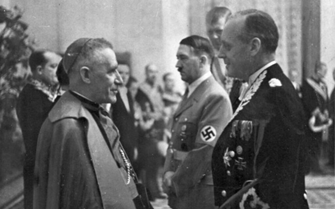
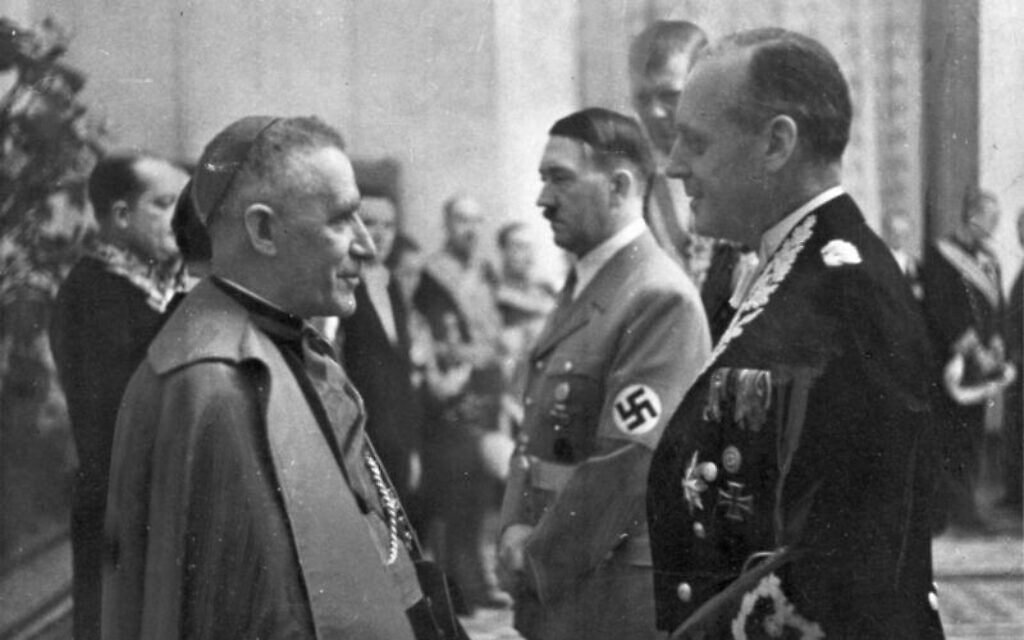
lustrativo: Cesare Vincenzo Orsenigo, que no era miembro de la orden católica jesuita, fue un importante vínculo diplomático del Vaticano con el régimen nazi. En esta foto de 1939, habla con el ministro de Relaciones Exteriores nazi, Joachim von Ribbentrop, con Adolf Hitler de fondo. (Bundesarchiv bild

El libro del historiador James Bernauer, “Jesuit Kaddish”, sorprende al orden académico católico con un estudio novedoso del antisemitismo de sus miembros, y rinde homenaje a quienes salvaron a judíos durante la Segunda Guerra Mundial.

Por RICH TENORIO

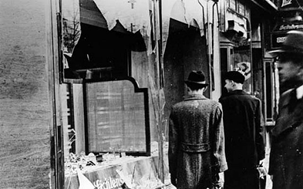
Cuando los nazis lanzaron el pogrom de la Kristallnacht contra los judíos entre el 9 y el 10 de noviembre de 1938, la reacción de muchos líderes religiosos fue silenciada. La mayoría de los líderes católicos en Alemania no criticaron el destructivo pogrom, al otro lado del Atlántico, hubo un silencio similar en la revista insignia de los jesuitas America.

Pero, un nuevo libro describe cómo no todos los jesuitas, miembros de la Compañía de Jesús, guardaron silencio sobre los nazis. El atrevidamente titulado, “Kaddish Jesuíta: jesuitas, judíos y el recuerdo del Holocausto”, describe cómo algunos sacerdotes se unieron a la resistencia, algunos entregaron sus vidas y 15 incluso fueron reconocidos como Justos de las Naciones.

Sin embargo, son aquellos que no se pronunciaron, o que incluso se unieron a la Wehrmacht como capellanes, quienes siguen siendo una fuente principal de preocupación para el autor James Bernauer, S.J., un jesuita que se retiró este año después de 40 años como profesor en el Boston College. El libro fue publicado por la University of Notre Dame Press en marzo.

A diferencia de estudios anteriores sobre la Iglesia católica que se han centrado en el papado durante el Holocausto, “Jesuit Kaddish” se enfoca en el orden internacional de los jesuitas, que fueron fundados en 1534 por San Ignacio de Loyola creando instituciones académicas en todo el mundo. Una de esas instituciones es Boston College, donde Bernauer fue director del Centro para el Aprendizaje Judío-Cristiano y se desempeñó como Profesor de Filosofía de la Familia Kraft. El jesuita más famoso es posiblemente el Papa Francisco, a quien Bernauer ha conocido y alaba.

Bernauer ve un contraste entre los jesuitas de hoy y del pasado. Su libro incluye una declaración en la que los jesuitas pueden ofrecer lo que él describe como “arrepentimiento y remordimiento” por los errores históricos.

El libro analiza la hostilidad de los jesuitas hacia los judíos y el judaísmo durante la Segunda Guerra Mundial, expresada ,no solo a través del antisemitismo, sino también a lo que Bernauer llama “asemitismo”: la creencia en un mundo sin judíos. Este último tema surgió en una famosa conversación posterior al Holocausto del siglo XX entre dos líderes religiosos que se muestran en la portada del libro: el rabino Abraham Joshua Heschel y el jesuita Gustave Weigel, pionero del ecumenismo en los Estados Unidos.

A principios de la década de 1960, Heschel le hizo a su amigo Weigel una letanía de preguntas, comenzando con “¿es realmente la voluntad de Dios que no haya más judaísmo en el mundo?” y terminando con “¿Realmente sería ad maiorem Dei gloriam tener un mundo sin judíos?” La frase latina, que significa “a la mayor gloria de Dios”, es el lema jesuita.

Bernauer explicó que la conversación entre Heschel y Weigel tuvo influencia en su elección poco convencional de un título. También lo hizo una exhibición en Frankfurt que caracterizó el proyecto nazi como “un esfuerzo por silenciar al Kadish para siempre”, lo que le ayudó a  ver las declaraciones de Heschel desde una nueva perspectiva.

Las preguntas [de Heschel] fueron un interrogatorio directo al pensamiento [pasado] de la Sociedad”, dijo Bernauer. “¿Era la ambición silenciar el Kadish y la oración judía realmente tan distinta de la ambición católica de superar al judaísmo y convertir a los judíos? Es una pregunta con la que todos vivimos: toda la noción de conversión de los judíos y su centralidad en el pensamiento católico y jesuita en ese momento “.

Bernauer se dio cuenta por primera vez del Holocausto mientras crecía en lo que entonces era el fuerte vecindario judío de Washington Heights en Nueva York. En Fort Tryon Park, veía judíos con los números de los campos de concentración tatuados en los brazos. Como estudiante de secundaria, él y el resto del mundo siguieron sin aliento el juicio de Eichmann. Luego de estudiar filosofía en la Universidad de Fordham y la Universidad Estatal de Nueva York en Stony Brook, sus áreas de especialización han incluido a la famosa cronista del ensayo de Eichmann, Hannah Arendt. Sus viajes académicos lo llevaron a Alemania, Francia e Israel mientras continuaba estudiando temas relacionados con el Holocausto.

La carta antirracista se pierde en el correo

Kristallnacht

En el libro, Bernauer comparte cómo un líder jesuita ayudó a sofocar una carta papal sobre el racismo, incluso cuando la necesidad creció durante el período de ascendencia fascista, cuando la Kristallnacht provocó la quema de sinagogas, negocios judíos y hogares en Alemania y Austria.

Como Europa se negó en gran medida a condenar el fascismo, el Papa Pío XI deseaba crear una encíclica, o carta papal a la Iglesia católica, que abordara el racismo. Fue supervisado por el Superior General (o jefe) de los jesuitas, Wlodimir Ledóchowski.

Wlodimir Ledóchowski.

“[Parece] que Ledóchowski deliberadamente se lo ocultó al Papa durante varios meses”, escribe Bernauer. Él llama a Ledóchowski “ferozmente anticomunista, y una fuente de su hostilidad hacia los judíos fue el hecho de que los consideraba parcialmente responsables del comunismo”.

En la Segunda Guerra Mundial, dijo Bernauer, los jesuitas motivados por el anticomunismo y el patriotismo sirvieron como capellanes militares alemanes en el Este, a pesar de que Hitler los había prohibido en ese puesto. Bernauer estima su número en 651, con 405 finalmente descartados debido a la prohibición de Hitler.

“Como forma de castigo, los judíos [en el este] fueron obligados a limpiar iglesias y calles, ocasionalmente bajo la supervisión de jesuitas”, escribe Bernauer.  Más tarde, señala: “A medida aumentaba la brutalidad de las acciones militares, algunos jesuitas se dieron cuenta de que la guerra que había sido considerada una lucha contra el comunismo impío se había convertido en sí misma en un ‘crimen contra la humanidad’. Pero tal vez esa comprensión llegó demasiado tarde. “

Unos pocos hombres buenos

(Jean-Baptiste Janssens, elegido Superior General o jefe de los jesuitas en 1946, en esta foto sin fecha.)

Bernauer encuentra consuelo en los jesuitas que actuaron heroicamente durante la guerra. Quince jesuitas han sido reconocidos como Justos de las Naciones por Yad Vashem. Bernauer le da crédito al profesor Vincent Lapomarda de Holy Cross, también jesuita, por haber encontrado los primeros nueve y dijo que él mismo encontró seis más “por casualidad”.

Entre los 15 estaba Jean-Baptiste Janssens, quien fue elegido Superior General en 1946 y ayudó a rescatar a niños judíos durante la guerra. Otro es Roger Braun, a quien Bernauer conoció mientras estaba en París. Braun también ayudó a rescatar a niños judíos e hizo que se recitara el Kadish en su funeral, un Kadish jesuita.

Bernauer expresó su esperanza de que más jesuitas sean considerados Justos entre las Naciones, incluyendo los polacos – “algunos de ellos fueron ejecutados, muchos más que en cualquier otro país” – y lamentó no tener más sobre Polonia en su libro.

Pero, señaló, hay suficiente material en sus páginas para promover una mayor discusión y comprensión.

“Creo que es importante transmitir a la comunidad judía el cambio fundamental en las actitudes católicas, el pensamiento católico”, dijo Bernauer. “Parte de ese cambio tiene sus raíces en una comprensión más crítica de nuestra fe. También debería ser una preocupación de los jesuitas.”


Augustin Rösch (centro) fue el provincial jesuita de Baviera durante la guerra y uno de los tres jesuitas en el círculo interior de Kreisau de la resistencia alemana al nazismo. Terminó la Segunda Guerra Mundial en el corredor de la muerte.

Según tomado de, https://www.timesofisrael.com/jesuit-catholic-priest-pens-book-about-his-orders-complicity-in-the-holocaust/?utm_source=The+Weekend+Edition&utm_campaign=weekend-edition-2020-11-15&utm_medium=email

Traducido por drigs, CEJSPR

 
Leave a comment

Posted by on November 15, 2020 in Uncategorized


Jesuit Catholic priest pens book about his order’s complicity in the Holocaust

Illustrative: Not a member of the Catholic Jesuit order, Cesare Vincenzo Orsenigo was a top Vatican diplomatic link with the Nazi regime. In this 1939 photo he speaks with Nazi foreign minister Joachim von Ribbentrop, with Adolf Hitler in the background. (Bundesarchiv bild)

By RICH TENORIO

Historian James Bernauer’s book ‘Jesuit Kaddish’ surprises academic Catholic order with a novel study of its members’ anti-Semitism — and honors those who saved Jews during WWII

When the Nazis launched the Kristallnacht pogrom against Jews during November 9-10, 1938, the reaction from many religious leaders was muted. Most Catholic leaders in Germany did not criticize the destructive pogrom and across the Atlantic, there was similar silence from the flagship Jesuit journal America.

But a new book portrays how not all Jesuits — members of the Society of Jesus — kept silent about the Nazis. The daringly titled, “Jesuit Kaddish: Jesuits, Jews, and Holocaust Remembrance,” depicts how some priests joined the resistance, some gave their lives to it, and 15 even became recognized as Righteous Among the Nations.

Yet it’s those who did not speak out — or who even joined the Wehrmacht as chaplains — who remain a primary source of concern for author James Bernauer, S.J., a Jesuit who retired this year from 40 years as a professor at Boston College. The book was published by the University of Notre Dame Press in March.

“This should have been written about years ago,” Bernauer told The Times of Israel in a phone interview, mentioning his surprise that many in the highly academic Jesuit order didn’t know about this part of their history.

Father James Bernauer, author of ‘Jesuit Kaddish.’ (Courtesy)

Unlike past scholarship on the Catholic Church which has focused on the papacy during the Holocaust, “Jesuit Kaddish” zooms in on the international order of the Jesuits, who were founded in 1534 by Saint Ignatius of Loyola and have created academic institutions worldwide. One such institution is Boston College, where Bernauer was director of the Center for Christian-Jewish Learning and served as the Kraft Family Professor of Philosophy. The most famous Jesuit is arguably Pope Francis, whom Bernauer has met and praises.

Bernauer sees a contrast between Jesuits of today and of the past. His book includes a statement he has written in which Jesuits can offer what he describes as “repentance and remorse” for historical wrongs.

The book discusses individual Jesuits’ hostility to Jews and Judaism through World War II, expressed not only through anti-Semitism but also what Bernauer calls “asemitism” — a belief in a world without Jews. This latter subject arose in a famous 20th-century, post-Holocaust conversation between two religious leaders shown on the book’s cover: Rabbi Abraham Joshua Heschel and Jesuit Gustave Weigel, a pioneer of ecumenism in the United States.

In the early 1960s, Heschel asked his friend Weigel a litany of questions — beginning with “is it really the will of God that there be no more Judaism in the world?” and ending with “Would it really be ad maiorem Dei gloriam to have a world without Jews?” The Latin phrase, which means “the greater glory of God,” is the Jesuit motto.The aftermath of the ‘Kristallnacht’ pogrom in Germany, November 1938 (public domain)

Bernauer explained that the conversation between Heschel and Weigel helped influence his unconventional choice of a title. So did an exhibit in Frankfurt that characterized the Nazi project as “an effort to silence the Kaddish forever,” which caused him to see Heschel’s statements in a new light.

Was the ambition to silence the Kaddish and Jewish prayer really that distinct from the Catholic ambition to surpass Judaism and convert Jews?

“[Heschel’s] questions there were a direct interrogation of the Society’s [past] thinking,” Bernauer said. “Was the ambition to silence the Kaddish and Jewish prayer really that distinct from the Catholic ambition to surpass Judaism and convert Jews? It’s a question we all live with — the whole notion of conversion of the Jews and its centrality to Catholic thought and Jesuit thought at the time.”Schoolchildren and others brought to watch the burning of synagogue furnishings on Kristallnacht in Mosbach, Germany, November 1938 (courtesy)

Bernauer first became aware of the Holocaust while growing up in what was then the heavily Jewish neighborhood of Washington Heights in New York. In Fort Tryon Park, he would see Jews with concentration-camp numbers tattooed onto their arms. As a high school student, he and the rest of the world breathlessly followed the Eichmann trial. Going on to study philosophy at Fordham University and the State University of New York at Stony Brook, his areas of expertise have included the famed chronicler of the Eichmann trial, Hannah Arendt. His scholarly travels took him to Germany, France, and Israel as he continued to study Holocaust-related topics.

Anti-racist letter gets lost in the mail

In the book, Bernauer shares how a Jesuit leader helped stifle a papal letter on racism even as the need for it grew during the period of Fascist ascendancy, when Kristallnacht led to the burning of synagogues, Jewish businesses, and homes in Germany and Austria.

An early undated photo of the Polish Jesuit Wlodzimierz Ledochowski, who was serving as the Superior General of the Jesuits at the outbreak of World War II. (Public domain)

As Europe largely declined to condemn fascism, Pope Pius XI wished to create an encyclical — or papal letter to the Catholic Church — that would address racism. It was supervised by the Superior General (or head) of the Jesuits, Wlodimir Ledóchowski.

“[It seems] that Ledóchowski deliberately kept it from the Pope for several months,” Bernauer writes. He calls Ledóchowski “fiercely anti-Communist, and one source of his hostility toward Jews was the fact that he held them partially responsible for Communism.”

In WWII, Bernauer said, Jesuits motivated by anticommunism as well as patriotism served as German military chaplains in the East, even though Hitler had banned them from that position. Bernauer estimates their number as 651, with 405 ultimately dismissed due to Hitler’s ban.

“As a form of punishment, Jews [in the East] were forced to clean churches and streets, occasionally under the supervision of Jesuits,” Bernauer writes.

Later, he notes, “As the brutality of the military actions increased, some Jesuits came to realize that the war that had been considered a struggle against godless Communism had itself become a ‘crime against humanity.’ But perhaps that realization came too late.”Jean-Baptiste Janssens, elected Superior General or head of the Jesuits in 1946, in this undated photo. (Public domain)

A few good men

Bernauer finds solace in Jesuits who acted heroically during the war. Fifteen Jesuits have been recognized as Righteous Among the Nations by Yad Vashem. Bernauer credits Holy Cross Prof. Vincent Lapomarda, also a Jesuit, with finding the first nine and said that he himself found six more “quite by chance.”

Among the 15 was Jean-Baptiste Janssens, who was elected Superior General in 1946 and helped rescue Jewish children during the war. Another is Roger Braun, whom Bernauer knew while in Paris. Braun also helped rescue Jewish children and had the Kaddish recited at his funeral — a Jesuit Kaddish.Augustin Rösch (center) was the wartime Jesuit Provincial of Bavaria and one of three Jesuits in the inner Kreisau Circle of the German Resistance to Nazism. He ended World War II on death row. (CC-BY-SA-3.0/ Ambrosius007)

Bernauer expressed a hope that more Jesuits will be considered as Righteous among the Nations, including Polish ones — “quite a few of them were executed, many more than any other country” — and regretted not having more about Poland in his book.

But, he noted, there’s enough material within its pages to promote more discussion and understanding.

“I think it’s important to convey to the Jewish community the fundamental change in Catholic attitudes, Catholic thinking,” Bernauer said. “Part of that change is rooted in a more critical understanding of our faith. It should be a Jesuit concern as well.”

As taken from, https://www.timesofisrael.com/jesuit-catholic-priest-pens-book-about-his-orders-complicity-in-the-holocaust/?utm_source=The+Weekend+Edition&utm_campaign=weekend-edition-2020-11-15&utm_medium=email

 
Leave a comment

Posted by on November 15, 2020 in Uncategorized


Shabbat y Meditación

por JAY MICHAELSON

Cómo la atención plena (mindfulness) puede profundizar su experiencia de Shabat, y viceversa

POR JAY MICHAELSON

Shabbat es un día de ser, no de hacer. Según la interpretación de los rabinos, la multitud de lo que se debe y no se debe hacer durante el día se trata esencialmente de no hacer nada, de no destruir nada y simplemente de tomar el mundo tal como lo encontramos, por un día. El resto de la semana, los judíos/as somos exhortados a mejorar el mundo, mejorarnos a nosotros/as mismos y hacer provisión para nuestras familias extendidas en cualquier situación en la que nos encontremos. Pero este día: solo sé. Sirva a Dios no para cambiar el mundo, sino para relajarse en lo que ya está aquí y allí.

Despertando

En un sentido profundo, ésta es también la práctica de la meditación. Hay muchas formas de prácticas meditativas, pero su esencia es observar claramente hacia lo qué es la verdad -algo como el Shabat-, no se trata de no hacer ni de cambiar nada, o de sentirse de una manera especial, sino simplemente despertar de una manera enfocada a lo que ya está aquí. La mayoría de las meditaciones judías clásicas hacen esto al contemplar un objeto en particular (una frase, una percepción sensorial, incluso una idea) y enfocar el pensamiento con tanta determinación que las distracciones desaparecen.

En otras tradiciones, se llama la atención sobre las percepciones más elementales de la respiración o el movimiento, no tanto con el propósito de contemplar, sino simplemente para anestesiar el movimiento de los pensamientos que discurren. En ambos enfoques, lo que uno encuentra cuando se aletargan las distracciones y los pensamientos, es que se libera una ilusión importante: que el mundo importa sólo en la medida en que me agrada a mí, a mi ego (fíjese que NO dice egoísmo) y a mis deseos.

Suponga que un poco de comida no es de su agrado, o que un sonido es áspero o chirriante. Si eres como yo, tu reacción inmediata es querer alejarlo, en otras palabras, cambiar las condiciones momentáneas de tu vida para mejorarlas. La meditación entrena lentamente la mente para que esté un poco menos centrada en lo que en, la tradición judía se llama el yetzer hará, o sea el mal o la inclinación egoísta. Al igual que con el Shabbat, la práctica es dejarlo ser. No es que esto hará que la comida se vuelva más sabrosa o que la calidad del sonido cambie, pero tu relación y/o actitud hacia ella puede ser diferente.

Todo esto puede parecer un poco irrelevante cuando se habla de alimentos y sonidos, pero no lo es tanto cuando se trabaja con enfermedades, sufrimiento o personas con las que es difícil llevarse bien. ¿Cómo sería llevar un poco de “Shabat”, un poco de “déjalo ser”, a lugares tan difíciles?

Bueno, para averiguarlo, tienes que experimentarlo. Leer sobre meditación sin implementarla es como leer un libro de cocina sin probar las recetas: puedes hacerte una idea general, pero nunca la entenderás realmente. Afortunadamente, meditar en Shabbat es fácil, ya que la tradición judía ya ha establecido las condiciones ideales para hacerlo. Veamos algunas formas prácticas de traer la luz, solo para abrir los ojos un poco más a los milagros cotidianos del ser.

La sensación de detenerse

En hogares de observantes religiosos, el viernes por la tarde suele ser un momento agitado. Alimentos que preparar, correos electrónicos que responder, pisos que limpiar, puede llegar a ser demasiado, especialmente si ha estado en el trabajo todo el día o atendiendo a los niños/as. Pero luego, cuando se encienden las velas, se produce un cambio. Ahora no hay nada que hacer. Lo hecho, hecho está, el Shabat ya inició. Cualquiera que sea su práctica para el Shabbat, le animo a que intente encender las velas antes del atardecer como una forma para marcar esta importante transición. No se preocupe por hacerlo bien; lo principal es hacerlo. Encuentre un rincón de su casa que no esté abarrotado, coloque uno o dos candelabros y enciéndalos. Cierre los ojos mientras recita la bendición (si es su práctica hacerlo; de lo contrario, simplemente cierre los ojos) y manténgalos cerrados por cinco segundos más. Escuche los sonidos que le rodean—recuerda: no tiene ninguna responsabilidad por ello– nada que agarrar o alejar; déjalos que te inunden como una sinfonía incidental. Fíjate en tu cuerpo: observa si hay tensión en tu cara o en tu espalda, para que puedas … relajarte. Y respire profundamente, sintiendo la deliciosa sensación de inhalar y exhalar, un placer ordinario que estamos demasiado ocupados para poderlo disfrutar.

En Shabbat, se dice que recibimos neshama yeteira, un alma extra. La palabra para alma aquí, neshamá, está relacionada con la palabra para aliento, neshima. Si lo desea, déle la bienvenida a esta “alma extra” que es producto de nuestra acción de relajarnos.

Abra los ojos lentamente, permítales deleitarse con la sensación visual de la vela (o velas), ardiendo. Concéntrese en la luz, no lo haga sobre una pared rígida; hágalo con la intención de recibir – de kabbalat shabat. Deja que lo que es, sea. El secreto de la espiritualidad es tener consciencia en cuanto a que no existe una solo forma o un solo camino correcto; que no hay ningún sentimiento especial que se supone que debas tener. Estamos hablando solamente de una relación abierta y amorosa con cualquier sentimiento, cualquier sensación. ¿Sonó la bocina de un auto justo cuando encendías las velas? ¿Tu bebé lloró? No hay problema. Como dice uno de mis profesores, “no es lo que está pasando en tu entorno, es cómo tú te relacionas con eso”.

Tómese el tiempo que desee para entretenerse con las velas de Shabat. Está bien llegar tarde a lo que venga después. Vea si, simplemente eliminando el sentido de “lo que hay que hacer”, puede percibir su luz con un poco más de claridad de lo habitual.

Momentos de silencio

Como no uso electricidad en Shabbat, mi casa está mucho más tranquila los sábados en comparación con los demás días de la semana. Sin música, sin televisión, sin computadoras, aun ante el ruido de la ciudad, mi hogar es una isla de silencio. Este silencio se extiende, en la observancia tradicional, a muchas partes del Shabbat, por ejemplo, entre el lavado ritual de las manos y al hacer la bendición motzi sobre el pan. Por lo general, el silencio puede resultar incómodo y, de hecho, muchas personas se esfuerzan por llenar estos momentos de tranquilidad con canciones o gestos durante una conversación. Pero el silencio es comparable a la esencia del Shabat y la meditación: no hacer, sino ser.

Te sugiero que tengas momentos de silencio al azar durante el Shabbat. Cuando descubras que tu mente está corriendo hacia algún lugar, o que la conversación se ha vuelto más ruidosa de lo que realmente deseas, simplemente has una pausa. Deje que su cuerpo entre en quietud, relajando nuevamente cualquier tensión involuntaria que pueda haber surgido. Haga una respiración artificial, o sea una inhalación profunda y completa, y luego una exhalación, con un suspiro, que realmente despeje los pulmones. Y escuche, no el silencio, ya que probablemente no habrá un silencio absoluto, sino el silencio del no hacer. Deja que el mundo sea transparente para ti, no teñido por cambios o preferencias, simplemente lo que es. Si estás con otras personas, está bien si piensan que eres raro; si practicas lo suficiente, aprenderás a relajarte tan instantáneamente que ellos/as se pondrán celosos.

Pero la relajación es solo la puerta de entrada. Intente, en cada momento de silencio, notar realmente algo que no había notado antes: la calidad de la luz, su estado de ánimo, o sus sentimientos por otra persona. Tal vez un aroma, un toque o una la presencia un pensamiento. Haga esto con la frecuencia que desee, varias veces por hora, si realmente le gusta. Simplemente haga una pausa, relájese y adéntrese en una especie de conciencia que normalmente pertence a la esfera de lo poético.

Oneg Shabat: Profundización del placer

La meditación no se trata de sentirse bien todo el tiempo, para eso son los narcóticos, no la espiritualidad. Pero, tampoco está de más sentirse bien, ¿verdad? En Shabbat, disfrutar de la vida es en realidad una mitzvá. Es posible que haya escuchado que el sexo es una “doble mitzvá” en Shabbat. Bueno, es verdad; el sexo es una mitzvá en sí mismo, y en Shabat, dado que es agradable, también es una mitzvá de oneg shabbat, disfrutar del Shabat.

Sin embargo, Oneg Shabbat, en la pronunciación Ashkenazi es, oneg Shabbos—estase extiende mucho más allá del dormitorio. Aquí, el judaísmo invita activamente al deleite de los sentidos (comer, beber y tomar largas siestas) así como en asuntos relacionados con el alma (leer, aprender y orar). En tiempos menos opulentos, simplemente tomar un poco de sopa de pollo habría sido un placer delicioso y poco común. Hoy día, sin embargo, creo que para poder disfrutar tenemos que esforzarnos. Con tantos medios mejorados para alcanzar objetivos no mejorados, probablemente tengamos demasiados placeres y no pocos. Y el resultado es, menos disfrute de cualquiera de éstos. Tenemos más, y disfrutamos menos.

Por lo tanto, oneg Shabbos, o sea sintonizarnos cada vez de forma más exquisita con el placer, requiere algo de esfuerzo. Suponga que está a punto de tomar ese primer bocado de jalah el viernes por la noche. Entonces, haga de la jalah (pan) el tema de la meditación. Sosténgalo en su mano, observe su textura, su olor. Cuando lo coma, no lo engulle todo de inmediato; mastíquelo diez, veinte, incluso treinta veces, saboreando su masa, su sedosidad. Permítase disfrutar como lo haría con una comida gourmet, ¿por qué no? La neshama yeteira no proviene por un acto mágico; viene de la atención.

O cuando estés orando, no pronuncies tantas palabras como puedas en par de minutos. Estíralo; qué importa si no da para todo el servicio. Deléitese con cada frase poética, o con un solo elevado tema de contemplación. Se habla de un rabino jasídico que, un día, nunca superó las primeras tres palabras del servicio de oración (modeh ani lefanejá, estoy agradecido ante Ti) porque estaba tan asombrado de estar en la presencia de la Divinidad.

Incluso, cuando esté dando un paseo: guarde el maratón para otro día. Camine más lento de lo normal, enfocándose en el cómo cambia su percepción cuando se mueve un poco más lento. Haga del oneg Shabbos parte de su práctica semanal, en cualquier forma que tenga sentido para usted: no agregues más cerezas al helado, sino disfruta profunda y sensualmente las que ya tiene.

El rabino Nahman de Breslov dijo: “El mundo está lleno de luz y misterioso, ambos maravillosos y asombrosos, pero nuestra pequeña mano cubre nuestros los ojos y nos impide ver”.

Shabbat es un día para alejar la mano; el deseo, el pequeño yo; la implacable atracción del ego. Lo que has leído son prácticas de meditación muy simples, sin cánticos que recordar, sin posturas que dominar, pero funcionan. ¡Buen Shabbat!

Según tomado de, https://www.myjewishlearning.com/article/shabbat-and-meditation-just-be-it/?utm_source=mjl_maropost&utm_campaign=MJL&utm_medium=email

Traducido por drigs (CEJSPR)

 
Leave a comment

Posted by on November 13, 2020 in Uncategorized